Showing posts with label SULLIVAN & CROMWELL. Show all posts

Monday, June 17, 2024

Sullivan & Cromwell’s Legal Work for Sam Bankman-Fried’s Crypto House of Fraud Is Getting a Closer Look in Two Federal Court Cases


SUBSCRIBE TO THIS NEWSLETTER TO RECEIVE TIMELY REPORTS!


Sullivan & Cromwell’s Legal Work for Sam Bankman-Fried’s Crypto House of Fraud Is Getting a Closer Look in Two Federal Court Cases

By Pam Martens and Russ Martens: June 17, 2024 ~
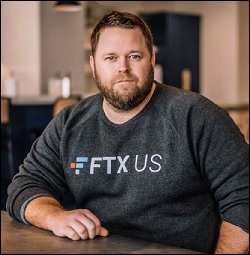
Ryne Miller, Former Sullivan & Cromwell Partner; Now General Counsel of FTX.US

Ryne Miller, Former Sullivan & Cromwell Partner Who Became General Counsel of FTX.US

Last Monday, Robert J. Cleary of law firm Patterson Belknap filed a motion in the bankruptcy proceeding of Sam Bankman-Fried’s collapsed fraud, the FTX crypto exchange, seeking to launch three new investigations into legal work done by Sullivan & Cromwell for Bankman-Fried and FTX prior to the collapse of the fraud.

Cleary is the independent examiner appointed by the U.S. Department of Justice’s U.S. Trustee, which acts as a watchdog in federal bankruptcy cases. Adding to the embarrassment for Sullivan & Cromwell with the announcement of the new investigations is the fact that Sullivan & Cromwell fought against allowing the U.S. Trustee to appoint an independent examiner after it had maneuvered itself into the position of lead counsel to the FTX bankruptcy proceeding, despite its multitude of conflicts with FTX. The presiding judge in the bankruptcy case, John Dorsey, had sided with Sullivan & Cromwell in the matter.

The U.S. Trustee was forced to take the issue to the Third Circuit Court of Appeals. On January 19, a sharp rebuke to Sullivan & Cromwell and the judge was handed down. The court wrote in its decision:

“Under the Bankruptcy Court’s interpretation, the appointment of an examiner under either subsection of Section 1104(c) would be subject to a court’s discretion and a judge would have the final say as to whether an investigation was warranted. But this interpretation runs counter to the statute’s plain language and established canons of construction.”

The court added this:

“First, an examiner must be ‘disinterested’… This requirement of disinterest is particularly salient here, where issues of potential conflicts of interest arising from debtor’s counsel serving as pre-petition advisors to FTX have been raised repeatedly….”

The independent examiner’s June 10 motion explains the three new areas it wants to investigate as follows:

“The first recommendation concerns S&C’s representation of Sam Bankman-Fried… in connection with his purchase of the Robinhood Shares…This inquiry would focus on (1) the scope and contours of that representation, and (2) based on that representation, what, if anything, S&C knew or should have known about the FTX Group’s misconduct and/or fraud…

“The second recommendation concerns potential claims against the former shareholders of Ledger Holdings, Inc [parent of LedgerX]…that sold their interests prepetition to West Realm Shires Inc. [a/k/a FTX.US]…This inquiry would (1) seek to determine whether an avoidance action(s) is warranted with respect to unreleased shareholders, and (2) enable the Examiner to report on the underlying details of the prepetition sale of LHI to WRS, which report and findings would be in the public interest…

“The third recommendation concerns the ‘holes’ or balance sheet shortfalls at FTX.US…This inquiry would center on (1) the existence of and the reasons these holes arose at FTX.US, (2) whether the balance sheet holes were the result of commingling of customer or corporate assets, (3) the frequency and magnitude of the holes, and (4) how they were resolved and by whom….”

The independent examiner is asking for 10 weeks and $3 million to conduct the three new investigations. A hearing on the matter is scheduled for today in the federal bankruptcy court in Delaware before Judge John Dorsey.

The independent examiner had released a preliminary report on May 23, which found no wrongdoing on the part of Sullivan & Cromwell. That report, however, indicated that further investigations would be requested by the independent examiner.

Adding pressure on the independent examiner is the fact that powerful sleuthing into Sullivan & Cromwell’s work on behalf of FTX is being done by law firms representing plaintiffs who are suing Sullivan & Cromwell (S&C) in federal district court in Florida. The plaintiffs write in their complaint:

“For its part, S&C facilitated the scheme to defraud and RICO enterprise by agreeing to provide and providing legal services to FTX US and FTX Trading Ltd…S&C did so knowingly, recklessly, or with willful blindness to the nature of the RICO enterprise but within the scope of the S&C’s employment and in furtherance of the firm’s business. In fact, in exchange for S&C’s counsel in these matters, FTX paid S&C significant fees.”

There is no question that Sullivan & Cromwell’s ties to FTX were significant. One of Sullivan & Cromwell’s law partners, Ryne Miller, moved to FTX.US and became its General Counsel. Another former Sullivan & Cromwell lawyer, Tim Wilson, became General Counsel for FTX Ventures, the venture capital arm of FTX. Sullivan & Cromwell had previously represented the kingpin of the fraud, Sam Bankman-Fried, who was convicted in November 2023 on seven counts of fraud and conspiracy.  The law firm had also previously represented the Head of Engineering at FTX, Nishad Singh, who pled guilty to fraud charges. According to Sullivan & Cromwell’s own bankruptcy court declaration, it had been involved in more than 20 legal engagements for FTX before it filed for bankruptcy on November 11, 2022. According to the declaration, the law firm’s legal work began 15 months prior to the collapse of the firm.

Among the three areas that the independent examiner is asking to investigate, the LedgerX deal may prove to be particularly problematic. The plaintiffs in the case in federal court in Florida allege the following:

“According to some FTX Insiders, S&C decided to intentionally keep FTX US Derivatives (formerly LedgerX) out of the FTX bankruptcy proceedings, with knowledge that it was in possession of approximately a quarter billion dollars of diverted FTX customer funds from which it could (and has) extracted significant revenue. In fact, from November 2022 to mid-January 2024, S&C’s income from matters just related to FTX has surged, exceeding $180 million—or 10% of the total revenue the 900-lawyer firm publicly stated it collected in all of 2022—with paralegals billing $595/hr. and partners billing up to $2,165/hr.”

The Florida complaint also raises the following bombshell allegation regarding the LedgerX deal:

“Through its work on the LedgerX acquisition and work in connection with LedgerX (d/b/a FTX US Derivatives) thereafter, S&C was privy to a software audit of the FTX systems, which Mr. Miller and then-CEO of LedgerX, Zach Dexter, oversaw. According to FTX Insiders, Mr. Miller became aware through that audit of the ‘back door’ in the FTX Platform code that allowed SBF [Sam Bankman-Fried] and his inner circle to embezzle FTX customer funds by funneling them to Alameda [Sam Bankman-Fried’s hedge fund], and communicated that fact to his mentors, Messrs. Dietderich and Eitel [lawyers at S&C], and others at S&C.”

The Florida case is Edwin Garrison, et al., v. Sullivan & Cromwell LLP. It has been filed in the U.S. District Court for the Southern District of Florida. The case number is 1:24-cv-20630. It is part of Multi-District Litigation (MDL) involving FTX.

Sullivan & Cromwell ranks among the oldest law firms in America. It was founded 145 years ago by Algernon Sydney Sullivan and William Nelson Cromwell in the financial district of lower Manhattan. During the Wall Street crisis of the 1930s, Sullivan & Cromwell built a reputation for defending Wall Street firms against shareholder lawsuits and antitrust actions. Sullivan & Cromwell also played a pivotal role in the 2008 financial crisis, the worst since the Great Depression. As Wall Street On Parade previously detailed, the firm’s Senior Chair, Rodge Cohen, paved the way for the Fed’s unprecedented $29 trillion bailout of Wall Street banks after their corrupt activities collapsed the U.S. economy in 2008.

Related Articles:

No One Trusts the FTX Bankruptcy Case: News Outlets Intervene; Justice Department Trustee Demands Independent Examiner; SEC Orders Disclosures

A Sam Bankman-Fried Company Loaned or Invested More than $1 Billion in Clients of its Law Firm, Sullivan & Cromwell

Sullivan & Cromwell, FTX Lead Counsel in Bankruptcy, Says It Has No Adverse Relationships, Despite Representing Four of FTX’s Crypto Exchange Competitors 

Bombshell Emails Raise Questions about What Sullivan & Cromwell Knew about Fraud at Sam Bankman-Fried’s Crypto Firms

Tuesday, March 26, 2024

Wall Street’s Go-To Law Firm, Sullivan & Cromwell, Got in Bed with Crypto; Now Its Reputation Is Being Hammered


SUBSCRIBE TO THIS NEWSLETTER TO RECEIVE TIMELY REPORTS

Wall Street’s Go-To Law Firm, Sullivan & Cromwell, Got in Bed with Crypto; Now Its Reputation Is Being Hammered

By Pam Martens and Russ Martens: March 25, 2024 ~

Ryne Miller, Former Sullivan & Cromwell Partner; Now General Counsel of FTX.US

Ryne Miller, Former Sullivan & Cromwell Partner Who Became General Counsel of FTX.US

Since January, the reputation of Wall Street’s go-to law firm, Sullivan & Cromwell, has been repeatedly hammered. It all stems from the law firm’s decision some years ago to involve itself in legal representations of crypto firms and/or their principals – an industry that 1,600 of the brightest scientific minds in technology have called a sham.

On January 19, the Third Circuit Court of Appeals sharply rebuked the law firm’s position that it didn’t need an independent watchdog appointed by the U.S. Department of Justice to oversee the way it was handling the collapsed crypto house of frauds (known as FTX) in bankruptcy proceedings – despite it having significant conflicts of interests in the matter, such as previously providing legal representation to the mastermind of the fraud, Sam Bankman-Fried.

On February 16, a federal lawsuit was filed against the law firm alleging civil conspiracy, aiding and abetting fraud, aiding and abetting breach of fiduciary duty, and violations of civil federal racketeering law in regard to its work for FTX, which had looted customer funds to the tune of billions of dollars.

This month Sullivan & Cromwell is the subject of a scathing academic review related to its work for FTX by two law professors, Jonathan Lipson of Temple University-Beasley School of Law and David Skeel of the University of Pennsylvania Carey Law School. The law professors name names – including the alleged activities of key law partners at Sullivan & Cromwell related to FTX.

Last year, Wall Street On Parade wrote 20 articles focusing on the glaring conflicts of Sullivan & Cromwell in the FTX matter. Common sense indicated it had rendered itself unfit for the role of lead counsel in the FTX bankruptcy proceeding. (See a relevant sample in Related Articles below.) We also provided much needed sunshine on the peculiar willingness of the presiding Judge, John Dorsey of the U.S. Bankruptcy Court for the District of Delaware, to sign off on a litany of orders that S&C requested as it enriched itself to the tune of $180 million in legal fees from the FTX bankruptcy proceedings in his court.

To even casual observers, Sullivan & Cromwell’s conflicts in the FTX case were stunning.

One of Sullivan & Cromwell’s law partners, Ryne Miller, had moved to FTX.US and became its General Counsel. Another former Sullivan & Cromwell lawyer, Tim Wilson, became General Counsel for FTX Ventures, the venture capital arm of FTX. Sullivan & Cromwell had not only previously represented Sam Bankman-Fried, who was convicted in November 2023 on seven counts of fraud and conspiracy, but it had also previously represented the Head of Engineering at FTX, Nishad Singh, who pled guilty to fraud charges.

According to Sullivan & Cromwell’s own bankruptcy court declaration, it had been involved in more than 20 legal engagements for FTX before it filed for bankruptcy on November 11, 2022. According to the declaration, the law firm’s legal work began 15 months prior to the collapse of FTX.

Sullivan & Cromwell’s conflicts with FTX and its demand to be appointed lead counsel in the bankruptcy case were so suspicious that in January of last year four sitting U.S. Senators (Elizabeth Warren (D-MA), John Hickenlooper (D-CO), Thom Tillis (R-NC) and Cynthia Lummis (R-WY)) sent a letter to Judge Dorsey. Senator Hickenlooper Tweeted a link to the letter with the comment: “Get this: FTX’s legal advisors *pre-collapse* want to be appointed to oversee investigations INTO the collapse.”

The Senators’ letter drilled down as follows:

“To name just one challenge: will the firm’s lawyers be able to effectively investigate their current and former partners who were central in FTX’s conduct? Additionally, given their longstanding legal work for FTX, they may well bear a measure of responsibility for the damage wrecked on the company’s victims. Put bluntly, the firm is simply not in a position to uncover the information needed to ensure confidence in any investigation or findings.”

That assessment was perhaps too gentle according to the federal lawsuit filed in February against Sullivan & Cromwell by the Moskowitz Law Firm on behalf of 16 customers of the FTX crypto platform. Among the allegations in the lawsuit are the following:

“…from November 2022 to mid-January 2024, S&C’s income from matters just related to FTX has surged, exceeding $180 million — or 10% of the total revenue the 900-lawyer firm publicly stated it collected in all of 2022 — with paralegals billing $595/hr. and partners billing up to $2,165/hr.”

“S&C attorneys served as the primary legal services providers for the RICO enterprise, assisting in the structuring of the enterprise operations.”

“When the FTX fraud was revealed in November 2022, Mr. Miller and S&C moved to consolidate power over the FTX Group without delay, quickly ousting SBF [Sam Bankman-Fried] and his lieutenants and appointing in their stead hand-picked successors to navigate FTX through the bankruptcy process. S&C’s post-collapse maneuvering seems particularly calculated, given that S&C was well positioned to see the collapse coming, via knowledge gleaned from prior engagements.”

“Mr. Miller and S&C moved to divert the $250 million FTX Guaranty Fund from LedgerX, one of the few entities S&C specifically chose not to include among the over 100 FTX entities it forced into bankruptcy, in order to secure receipt of a multi-million-dollar retainer to S&C before the FTX Group filed for bankruptcy, presumably to improve the Firm’s revenues throughout the extensive FTX bankruptcy process. With S&C’s assistance, SBF [Sam Bankman-Fried] and FTX caused billions in losses to Plaintiffs through at least two separate schemes, both of which contributed to the downfall of the FTX Group.”

Notwithstanding the myriad conflicts, Judge Dorsey was all-in on Sullivan & Cromwell becoming lead counsel in the FTX bankruptcy. When Sullivan & Cromwell argued against allowing the U.S. Department of Justice’s U.S. Trustee to appoint an independent examiner – a legally mandated position for bankruptcy cases exceeding $5 million — Judge Dorsey sided with the law firm.

Dorsey’s decision was sharply rebuked by the Third Circuit Court of Appeals on January 19. The court wrote:

“Under the Bankruptcy Court’s interpretation, the appointment of an examiner under either subsection of Section 1104(c) would be subject to a court’s discretion and a judge would have the final say as to whether an investigation was warranted. But this interpretation runs counter to the statute’s plain language and established canons of construction.”

The Appeals Court also insightfully noted the following:

“First, an examiner must be ‘disinterested’… This requirement of disinterest is particularly salient here, where issues of potential conflicts of interest arising from debtor’s counsel serving as pre-petition advisors to FTX have been raised repeatedly….”

The U.S. Trustee has tapped Robert Cleary of law firm Patterson Belknap as its independent examiner to conduct the FTX investigation. Cleary is a former U.S. Attorney for the District of New Jersey and the Southern District of Illinois and a former Assistant U.S. Attorney in the Southern District of New York. One of the areas that Cleary will examine is if Sullivan & Cromwell’s conflicts were adequately addressed prior to its appointment as lead counsel and if it failed to disclose any material conflicts.

Sullivan & Cromwell ranks among the oldest law firms in America. It was founded 145 years ago by Algernon Sydney Sullivan and William Nelson Cromwell in the financial district of lower Manhattan. During the Wall Street crisis of the 1930s, Sullivan & Cromwell built a reputation for defending Wall Street firms against shareholder lawsuits and antitrust actions. Sullivan & Cromwell also played a pivotal role in the 2008 financial crisis, the worst since the Great Depression. As Wall Street On Parade previously detailed, the firm’s Senior Chair, Rodge Cohen, paved the way for the Fed’s unprecedented $29 trillion bailout of Wall Street banks after their corrupt activities collapsed the U.S. economy in 2008.

Why Sullivan & Cromwell decided to leap with both feet into the dodgy world of crypto will, hopefully, inspire another academic paper very soon.

Related Articles:

No One Trusts the FTX Bankruptcy Case: News Outlets Intervene; Justice Department Trustee Demands Independent Examiner; SEC Orders Disclosures

A Sam Bankman-Fried Company Loaned or Invested More than $1 Billion in Clients of its Law Firm, Sullivan & Cromwell

Bombshell Emails Raise Questions about What Sullivan & Cromwell Knew about Fraud at Sam Bankman-Fried’s Crypto Firms


WALL STREEET ON PARADE


Sunday, October 22, 2023

JPMorgan Chase Paid $1.085 Billion in Legal Expenses in Last Six Months; It’s Still Battling Hundreds of Charges and Legal Proceedings on Three Continents

SUBSCRIBE TO THIS NEWSLETTER TO RECEIVE TIMELY INFORMATION 


JPMorgan Chase Paid $1.085 Billion in Legal Expenses in Last Six Months; It’s Still Battling Hundreds of Charges and Legal Proceedings on Three Continents

By Pam Martens and Russ Martens: October 20, 2023 ~

JPMorgan Building FacadeAt some point, federal regulators, the Senate Banking Committee and the criminal division of the U.S. Department of Justice are going to reach the same conclusion that Wall Street On Parade reached quite some time ago: JPMorgan Chase is a criminal enterprise in drag as a federally-insured bank.

JPMorgan Chase is the largest U.S. bank, with $3.9 trillion in assets and 4,863 Chase Bank branches sucking in mom and pop deposits across the United States. According to its regulators, it is also the riskiest bank in the United States. And, two trial lawyers have written a fact-intensive book describing how the bank resembles the Gambino crime family. The bank’s admission to five criminal felony counts since 2015 and spiraling rap sheet would seem to back up that theory.

Now comes the latest revelation in the bank’s own 8K filing with the Securities and Exchange Commission last Friday. Somehow, in just two quarters – the span of a meager six months – this one bank has managed to spend a stunning $1.085 billion on legal expenses. The bank spent $665 million on legal expenses for the three months ended September 30, 2023 and $420 million for the three months ended June 30, 2023. (See footnote (a) on page 4 of JPMorgan Chase’s October 13 SEC filing at this link.)

Reading deeper into its most recent 8K filing strongly hints that this bank is not only a serial criminal enterprise but it is also a full employment program for Big Law.

Throughout this year, Big Law firm WilmerHale has been racking up a lot of billable hours defending JPMorgan Chase from highly credible charges brought by the Attorney General of the U.S. Virgin Islands in a federal lawsuit that the bank “actively participated” in Jeffrey Epstein’s sex trafficking of minors by serving as his cash conduit for more than 15 years. While the Attorney General of the U.S. Virgin Islands filed extremely heavy evidence with the court to back up her charges, WilmerHale pursued a scorched earth legal strategy of smearing officials in the U.S. Virgin Islands that brought them to a cheap settlement of $75 million in September.

WilmerHale also represented JPMorgan Chase this year in a federal class action lawsuit on behalf of Jeffrey Epstein’s victims. Given that 15 JPMorgan Chase employees had visited Epstein at his Manhattan mansion where Epstein’s sex slaves were in abundance and their testimony at trial might have added new scandals to the bank, JPMorgan also settled that case for the generous sum of $290 million in June. (Plaintiffs lawyers were to get $87 million of the $290 million.)

WilmerHale also opened up another billing track (and damage control track) by suing one of JPMorgan’s former officials, Jes Staley, attempting to load the blame for the bank’s sleazy dealings with Epstein (a registered sex offender and well-documented sex trafficker of minors) onto Staley’s shoulders. That narrative pretty much fell apart when a former FBI official, hired by opposing counsel as an expert witness, introduced court documents showing that different bank employees had funneled more than $5 million in hard cash to Epstein over a decade, sometimes as much as $40,000 to $80,000 a month, without filing the legally required Suspicious Activity Reports (SARs) with the Financial Crimes Enforcement Network (FinCEN).

The Staley case was abruptly settled in September for an undisclosed sum of money.

JPMorgan Chase also paid more legal fees this year to the Big Law firm Paul Weiss to get a very problematic case dismissed in federal court. That case named the Chairman and CEO, Jamie Dimon, as a defendant, along with specific members of its Board of Directors. The thrust of the case was that the same members of JPMorgan’s Board of Directors who brought Jamie Dimon to the top leadership position at the bank, were also, verifiably, engaged in business dealings with Jeffrey Epstein. Before that case could be fleshed out for the public with depositions and discovery, Judge Jed Rakoff very conveniently dismissed it. (See Rakoff’s background with Paul Weiss here.)

Big Law firm Sullivan & Cromwell got a nice feather in its cap under former President Donald Trump (now indicted on 91 felony charges himself) by sending its law partner, Jay Clayton, to be the Chairman of the Securities and Exchange Commission (notwithstanding the fact that Clayton had represented 8 of the 10 largest Wall Street banks prior to becoming their “watchdog”). One of its clients was JPMorgan Chase. This year Sullivan & Cromwell brags on its website that it scored a big win “for JPMorgan Chase and the trillion-dollar syndicated loan industry, with the Second Circuit ruling that interests in a syndicated loan were not securities under federal securities laws.” One can’t be sued for securities fraud if the instrument in question is not defined as a “security.”

Big Law firm Covington & Burling, whose revolving door sent law partner Eric Holder to be the head of the U.S. Department of Justice under President Obama, along with its law partner Lanny Breuer to head the DOJ’s criminal division under Holder, represented JPMorgan Chase this year in resolving a federal lawsuit for $499 million among a group of banks over charges that they conspired to stifle competition in the stock lending business.

JPMorgan Chase discloses in its current 8K filing with the SEC that it is not just battling charges here in the U.S. It reports that it is under investigation by the Swiss Competition Commission relating to EURIBOR, the benchmark short-term lending rate in Europe. JPMorgan Chase also advises that “In December 2016, the European Commission issued a decision against the Firm and other banks finding an infringement of European antitrust rules relating to EURIBOR. The Firm has filed an appeal of that decision with the European General Court, and that appeal is pending.”

JPMorgan Chase is also under criminal investigation on the continent of Asia. It reports as follows in its 8K:

“India’s Enforcement Directorate (‘ED’) is investigating J.P. Morgan India Private Limited in connection with investments made in 2010 and 2012 by two offshore funds formerly managed by JPMorgan Chase entities into residential housing projects developed by the Amrapali Group (‘Amrapali’). In 2017, numerous creditors filed civil claims against Amrapali, including petitions brought by home buyers relating to delays in delivering or failure to deliver residential units. The home buyers’ petitions have been overseen by the Supreme Court of India and are ongoing. In August 2021, the ED issued an order fining J.P. Morgan India Private Limited approximately $31.5 million. The Firm is appealing the order and the fine. Relatedly, in July 2019, the Supreme Court of India issued an order making preliminary findings that Amrapali and other parties, including unspecified JPMorgan Chase entities and the offshore funds that had invested in the projects, violated certain currency control and money laundering provisions, and ordering the ED to conduct a further inquiry under India’s Prevention of Money Laundering Act (‘PMLA’) and Foreign Exchange Management Act (‘FEMA’). In May 2020, the ED attached approximately $25 million from J.P. Morgan India Private Limited in connection with the criminal PMLA investigation. The Firm is responding to and cooperating with the PMLA investigation.”

Adding to JPMorgan’s legal tab this year, not to mention its humiliation, a Judge in May ruled that the bank has to pay the legal bills for Charlie Javice, the 31-year old woman that scammed the bank (which has the biggest law firms in the world on retainer), to buy her allegedly fraudulently trumped up company. Those legal bills could turn out to be quite hefty. Javice is facing a civil lawsuit filed by JPMorgan Chase as well as criminal charges filed by the U.S. Department of Justice.

The cases we have cited here are just the tip of the iceberg. The bank indicated in a recent SEC filing that it is involved in “several hundred” legal proceedings.


https://wallstreetonparade.com/2023/10/jpmorgan-chase-paid-1-085-billion-in-legal-expenses-in-last-six-months-its-still-battling-hundreds-of-charges-and-legal-proceedings-on-three-continents/


Monday, March 20, 2023

Sullivan & Cromwell’s Crypto Clients Are in Growing Distress

 SUBSCRIBE TO THIS NEWSLETTER TO RECEIVE IT IN A TIMELY MANNER

Sullivan & Cromwell’s Crypto Clients Are in Growing Distress

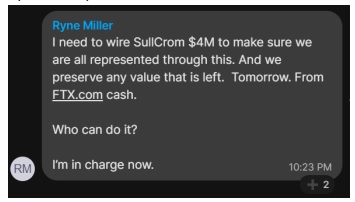
November 8, 2022 Screenshot of Message Sent by Former Sullivan & Cromwell Partner, Ryne Miller, to FTX Employees

Screenshot of November 8, 2022 Message Sent by Former Sullivan & Cromwell Partner, Ryne Miller, to FTX Employees, Three Days Before FTX Filed Bankruptcy (Source: Sam Bankman-Fried Draft Testimony to House Financial Services Committee)

By Pam Martens and Russ Martens: January 31, 2023 ~

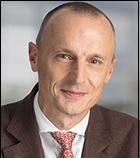
Andrew (Andy) Dietderich, Law Partner at Sullivan & Cromwell

Andrew (Andy) Dietderich, Law Partner at Sullivan & Cromwell Who Is Involved in the FTX Bankruptcy Case 

The 144-year old law firm, Sullivan & Cromwell, which previously prided itself on being the go-to law firm for Wall Street, decided a few years back to get deep in the swamp with all things crypto. That dicey decision is now playing out in negative headlines that are dragging down the reputation of the 900-attorney law firm.

Adding to questions swirling around its past legal representation of now indicted crypto kingpin, Sam Bankman-Fried, as well as his bankrupt crypto exchange, FTX, and his hedge fund, Alameda Research, is the fact that a growing number of Sullivan & Cromwell’s other crypto clients are also in various stages of distress. Notwithstanding that reality, the presiding judge in the FTX bankruptcy proceedings, John Dorsey, signed an order on January 20 naming Sullivan & Cromwell the lead counsel in the FTX bankruptcy case.

But long before Judge Dorsey’s order was signed, Sullivan & Cromwell was billing large bucks to FTX, acknowledging in a bankruptcy court filing that over the prior 16 months it had collected legal fees and expenses of $8,564,487.50 from FTX and its affiliates, plus a $12 million retainer for FTX bankruptcy work.

According to Bloomberg Law, Sullivan & Cromwell “has more than 150 people working on the FTX case, including 30 partners…” A court filing from Sullivan & Cromwell shows that its partners can charge as much as $2,165 per hour. The final tab in the bankruptcy case is expected to land in the “hundreds of millions of dollars” according to the Bloomberg Law article.

Sullivan & Cromwell snagged this very lucrative bankruptcy work, according to a screen shot (see above) shared by Sam Bankman-Fried in the testimony he was prepared to present to the House Financial Services Committee on December 13, because it had a friendly former partner at FTX. (Bankman-Fried was arrested by federal prosecutors from the Justice Department and thus prevented from delivering his testimony in person, but Forbes obtained a copy of the document.)

The inside man was Ryne Miller, who left Sullivan & Cromwell and went directly to FTX.US as General Counsel in August of 2021. Despite Miller’s eight years at Sullivan & Cromwell and more than three years working as legal counsel at a federal regulator, Miller somehow managed not to notice the following at FTX: there was no functioning Board of Directors; there was no accounting department; there was no functioning compliance department making sure that customer funds were not co-mingled with Sam Bankman-Fried’s personal piggy bank, his hedge fund, Alameda Research. This lack of corporate controls was described by the new FTX CEO, John Ray, at the December 13 hearing of the House Financial Services Committee.

Despite these failures by Ryne Miller, John Ray reported in a declaration filed on January 17 with the FTX bankruptcy court that Miller is “still employed” by FTX.US, which is also part of the bankruptcy proceedings.

As a direct result of this lack of corporate controls, Ray told the House panel that over $8 billion of customers funds are missing at FTX.

At a bankruptcy court hearing on January 20, a former FTX in-house attorney, Daniel Friedberg, was prepared to testify as follows to the court, according to a sworn declaration he filed:

“Mr. Miller informed me that it was very important for him personally to channel a lot of business to S&C as he wanted to return there as a partner after his stint at the Debtors. This bothered me very much and I told him that his job was to only hire the best outside counsel for the job, and that his allegiance was now to the Debtors and not S&C…”

And this:

“I told Mr. Miller that S&C was not the proper law firm to select [for the bankruptcy proceedings] because of the claims and conflicts, as well as the exorbitant costs of the firm. Mr. Miller told me that there was over $200 million cash in LedgerX and that he was going to send these funds to S&C, and that bankruptcy legal costs were therefore not a problem…”

Friedberg appeared via Zoom on the day of the January 20 hearing. A lawyer, Marshal Hoda, who was representing two FTX customers who were challenging Sullivan & Cromwell being named lead counsel, asked Judge Dorsey to question Friedberg. Dorsey denied the request and then signed the order making Sullivan & Cromwell lead counsel.

While Sullivan & Cromwell enjoys the potential for billing tens of millions of dollars in this bankruptcy case, this is a sampling of how its other crypto clients are performing. (The law firm filed a listing of its current and former crypto clients with the court so that potential conflicts could be explored by a correctly suspicious U.S. Trustee, who represents the U.S. Department of Justice in bankruptcy cases.)

BlockFi: BlockFi, a crypto exchange, is Sullivan & Cromwell’s current client. It filed bankruptcy last November. It revealed that FTX and Sam Bankman-Fried’s hedge fund, Alameda Research, owe it over $1 billion.

Coinbase: This publicly-traded crypto exchange is Sullivan & Cromwell’s current client. It finished last year with a market value loss of 86 percent. Coinbase announced last June it was slashing 18 percent of its workforce. It announced a further 20 percent headcount reduction this month.

Robinhood: This is a publicly-traded stock trading platform and Sullivan & Cromwell’s current client. Sullivan & Cromwell concedes in a bankruptcy court filing that it advised Bankman-Fried personally on a stock transaction involving his purchase of more than half a billion dollars of Robinhood stock. The monies to fund that transaction came from loans from his hedge fund, Alameda Research, which prosecutors say was looting the funds from FTX customer accounts. The Justice Department has seized those Robinhood shares.

CNN reported yesterday that the Justice Department is alleging in its criminal case against Bankman-Fried that “he attempted to obscure his criminal misuse of FTX customer property,” by purchasing the Robinhood shares “through a foreign special purchase vehicle with no public connection to FTX or Alameda.” The lawyer and law firm that performed this work for Bankman-Fried has yet to be explored in Judge Dorsey’s court.

Gemini is a current client of Sullivan & Cromwell. It has $900 million of customer funds frozen at another bankrupt crypto firm, Genesis. On January 12, the Securities and Exchange Commission charged both firms with selling unregistered securities.

Kraken is another crypto exchange that is a current client of Sullivan & Cromwell. It settled charges in November with the U.S. Treasury Department for evading sanctions on Iran; then announced later in the month that it was laying off 30 percent of its workers.

Sequoia Capital is a current client of Sullivan & Cromwell. It was also a large venture capital investor in FTX. It has now written down to zero its entire investment of $214 million in FTX.

Silvergate Bank’s parent (publicly-traded Silvergate Capital) is listed as a former client of Sullivan & Cromwell. Just exactly when that relationship ended is not indicated. Silvergate Bank has managed to pull off a replay of the panic bank runs in the early days of the Great Depression. On January 5, Silvergate reported that its “total deposits from digital asset customers declined to $3.8 billion” as of December 31, 2022 (down from the previously reported $11.9 billion on September 30, 2022.) That’s a shocking 68 percent drop in deposits in one quarter – at a (wait for it) federally-insured bank backstopped by the U.S. taxpayer that also decided to get deep in the crypto swamp. Silvergate’s publicly-traded stock lost 88 percent of its market value last year.

FTX was one of the crypto firms holding deposits at Silvergate. On December 6, U.S. Senators Elizabeth Warren (D-MA), Roger Marshall (R-KS), and John Kennedy (R-LA) wrote to Silvergate demanding answers regarding the funds it had transferred from FTX customer accounts to Bankman-Fried’s hedge fund, Alameda Research. The Senators inquired as follows:

“Your bank’s involvement in the transfer of FTX customer funds to Alameda reveals what appears to be an egregious failure of your bank’s responsibility to monitor for and report suspicious financial activity carried out by its clients. The public is owed a full accounting of the financial activities that may have led to the loss of billions in customer assets, and any role that Silvergate may have played in these losses.”

Despite all of this, Judge John Dorsey stated in open court on January 20 that he couldn’t see any evidence that Sullivan & Cromwell had a conflict that would prevent it from serving as lead counsel in the FTX bankruptcy. (Other than that, how was the play Mrs. Lincoln?)

LINK


Saturday, March 18, 2023

Two Indicted Masterminds of the FTX Fraud Were Clients of Big Law Firm Sullivan & Cromwell

SUBSCRIBE TO THIS NEWSLETTER TO RECEIVE REPORTS IN A TIMELY MANNER 


Two Indicted Masterminds of the FTX Fraud Were Clients of Big Law Firm Sullivan & Cromwell

By Pam Martens and Russ Martens: March 1, 2023 ~

Andrew (Andy) Dietderich, Law Partner at Sullivan & Cromwell

Andrew (Andy) Dietderich, Law Partner at Sullivan & Cromwell

On January 17, Sullivan & Cromwell law partner Andrew Dietderich filed a declaration in the U.S. Bankruptcy Court for the District of Delaware that acknowledged – after much prodding by the U.S. Trustee – the more than 20 legal engagements Sullivan & Cromwell had been involved in with Sam Bankman-Fried’s FTX Group before it filed for bankruptcy on November 11, 2022. According to the declaration, the law firm’s legal work began 15 months prior to the collapse of the firm. (See our previous report, Sam Bankman-Fried, BlockFi and Sullivan & Cromwell: A Viper’s Nest of Conflicts and Intrigue.)

This does not look good for the 144-year old law firm because the Securities and Exchange Commission is now charging that FTX was a fraud from the very beginning and Sam Bankman-Fried illegally used FTX customer funds from the very beginning. Making the situation even more dicey for Sullivan & Cromwell, its former law partner, Ryne Miller, was employed as General Counsel at FTX US as this fraud was expanding.

Raising reputational risk not only to Sullivan & Cromwell but also to the federal court system, none of the above information stopped the presiding judge in the FTX bankruptcy case, Judge John Dorsey, from signing an order making Sullivan & Cromwell the lead law firm overseeing the bankruptcy proceedings of the more than 100 companies involved in Sam Bankman-Fried’s collapsed crypto house of cards. Sullivan & Cromwell has already billed more than $20 million in legal fees in the bankruptcy case along with more than $239,000 in expenses – including more than $20,000 for “Conference Room Dining” and “Meals – Overtime.” (See Judge John Dorsey Has Effectively Privatized Justice in the FTX Bankruptcy Case.)

The January 17 disclosures to the Delaware Bankruptcy Court by Sullivan & Cromwell revealed that in addition to the 20 legal engagements for corporate entities of FTX or Alameda Research (Sam Bankman-Fried’s hedge fund), Sullivan & Cromwell had also done legal work on an individual basis for Sam Bankman-Fried and the Head of Engineering at FTX, Nishad Singh.

Bankman-Fried has now been indicted by the U.S. Justice Department on 12 criminal counts. He has pleaded not guilty to the first eight counts and has not yet entered a plea on the additional four counts, one of which is bank fraud. Yesterday, Nishad Singh pleaded guilty to a 6-count criminal indictment. (Two other top lieutenants at Bankman-Fried’s crypto empire have been indicted: Caroline Ellison and Gary Wang. Both have pleaded guilty and are cooperating with prosecutors, as is Singh.)

Sullivan & Cromwell explained in its January 17 filing with the Bankruptcy Court that it had worked for Bankman-Fried from April 14, 2022 to August 5, 2022. The work involved Bankman-Fried’s purchase of more than half a billion dollars in the stock of Robinhood Markets (a trading app). Bankman-Fried used loans he took from Alameda Research to purchase the Robinhood stock. Federal prosecutors have charged that Alameda Research was looting FTX customer funds from the very beginning of the creation of FTX in 2019. The U.S. Department of Justice seized the Robinhood stock in early January. The rightful ownership of the stock is the subject of multiple court battles.

Sullivan & Cromwell’s January 17 disclosure also revealed that it had worked on an individual basis for Nishad Singh during a period when he was Head of Engineering at FTX. The disclosure explains: “The work was primarily performed out of the S&C London office and supervised by a partner resident in London. The representation started December 16, 2021 and ceased on August 8, 2022. The work was arranged, and paid for, by Alameda.” According to the bankruptcy court filing, Sullivan & Cromwell’s legal work for Singh concerned “tax matters and estate planning.”

It doesn’t appear that Nishad Singh will have much use for that “estate planning” work by Sullivan & Cromwell. Singh signed a forfeiture order with the criminal court in Manhattan yesterday in addition to pleading guilty to the six criminal counts. While the specific properties and assets that he will forfeit have been redacted in the filing, the forfeiture agreement includes anything that is traceable to the six counts of fraud to which he has pleaded guilty.

The Securities and Exchange Commission (SEC) and Commodity Futures Trading Commission (CFTC) also filed charges against Singh yesterday. The SEC’s complaint provides far more damning detail than does that of the Justice Department. The SEC writes, for example:

“In 2020 and 2021, Singh executed promissory notes with Alameda totaling approximately $577.5 million. The funds borrowed under the promissory notes (referred to internally at FTX as ‘Founders Loans’) in Singh’s name were generally not intended for Singh’s personal use but were instead used by Bankman-Fried for other purposes, including additional venture investments and acquisitions. Singh also borrowed millions to donate to political campaigns and causes, as well as philanthropic causes associated with effective altruism. Some of these donations were funded through a line of credit that Bankman-Fried authorized Singh to provide himself on his personal FTX account. In 2021, Singh also borrowed $10 million in an undocumented loan and provided the funds to friends and family…Moreover, in September and October of 2022, when Singh was already aware that FTX customer funds had been used by Alameda and that Alameda was unable to repay the debt, Singh withdrew approximately $6 million from FTX for personal use and expenditures, including the purchase of a multi-million-dollar house and donations to charitable causes.”

Estate planning indeed.


LINK


Thursday, February 23, 2023

Judge John Dorsey Has Effectively Privatized Justice in the FTX Bankruptcy Case


Judge John Dorsey Has Effectively Privatized Justice in the FTX Bankruptcy Case

By Pam Martens and Russ Martens: February 23, 2023 ~

John T. Dorsey (2016 Photo from Internet Archives' Wayback Machine)

John T. Dorsey (2016 Photo from Internet Archives’ Wayback Machine)

Judge John Dorsey is the presiding judge in the bankruptcy proceedings for Sam Bankman-Fried’s collapsed house of cards, which includes the now frozen crypto exchange, FTX; his now shuttered hedge fund, Alameda Research; and more than 100 opaque affiliates operating in the shadows around the globe. Undisputed is the fact that despite FTX being represented by some of the most prominent law firms in America as it built this criminal enterprise – notably Sullivan & Cromwell – more than 10.3 million user accounts were looted of more than $8 billion right under the nose of Big Law.

We say “notably Sullivan & Cromwell” in the above paragraph because not only did it work on more than 20 matters for the FTX group of companies for 16 months prior to its bankruptcy filing but its former law partner, Ryne Miller, served as General Counsel of FTX US since August of 2021. In addition, Sullivan & Cromwell has conceded that it personally represented Sam Bankman-Fried on his purchase of more than half a billion dollars of stock in Robinhood Markets (a stock trading app) – the rightful ownership of which is now the subject of multiple court battles. Equally problematic, an email by Sullivan & Cromwell law partner, Andrew Dietderich, has surfaced in a court filing indicating that just four days before FTX filed bankruptcy, Dietderich had told another law firm that FTX is “rock solid.” (Dietderich is now one of the key law partners involved in the FTX bankruptcy proceedings.)

Given this set of facts, justice for the defrauded customers and the public interest would obviously demand that the pre-bankruptcy legal interactions between Sullivan & Cromwell, the FTX group of companies and Sam Bankman-Fried (as well as all other questionable activities by others) be investigated by an independent examiner, as is required under bankruptcy law when requested by the U.S. Trustee and debts exceed $5 million. Instead, Judge Dorsey ruled against the U.S. Trustee’s request for an independent examiner in the FTX bankruptcy proceeding and has signed an order making Sullivan & Cromwell the lead counsel overseeing the FTX bankruptcy case.

By doing this, Judge Dorsey has effectively privatized justice while sitting on the bench of a federal court.

Sullivan & Cromwell is a 144-year old Big Law firm with more than 900 attorneys. Its headquarters is located in the financial district in lower Manhattan on Broad Street. It filed the FTX bankruptcy case, not in U.S. Bankruptcy Court in lower Manhattan, but in U.S. Bankruptcy Court in Wilmington, Delaware – a two-hour drive for its law partners, some of whom are billing as much as $2,165 an hour in the FTX bankruptcy matter. (For 19 days in November and 31 days in December, Sullivan & Cromwell has thus far billed $20 million in legal fees and more than $239,000 in expenses. Part of those expenses include more than $20,000 for “Conference Room Dining” and “Meals – Overtime.”)

Judges in U.S. Bankruptcy Court in Delaware, including Judge Dorsey, have previously ruled on multiple occasions against the appointment of an independent examiner when requested by the U.S. Trustee. This might explain the two hour drive to Wilmington, Delaware by Sullivan & Cromwell’s high-priced attorneys.

As Sullivan & Cromwell’s partners are billing and eating their way through what’s left of defrauded crypto customers’ money, Judge Dorsey had the audacity to make the argument in turning down the U.S. Trustee’s request for an independent examiner, that it would cost too much money.

The U.S. Trustee program is part of the U.S. Department of Justice, a federal agency. Its statutory mandate is “to promote the integrity and efficiency of the bankruptcy system for the benefit of all stakeholders — debtors, creditors, and the public.”

The public’s vested interest in this matter could not be greater. The federal prosecutor who has thus far indicted Sam Bankman-Fried and two of his alleged co-conspirators (Caroline Ellison and Gary Wang), has called FTX “one of the biggest financial frauds in American history.” The entire life savings of some customers is gone with the allegation that their customer accounts were used as Bankman-Fried’s personal piggy bank to buy luxury real estate in the Bahamas; buy celebrity endorsements; slap his company’s name on sports stadiums; and funnel tens of millions of dollars to political campaigns. (And let’s not forget the millions of dollars in legal fees that went to Big Law firms – pre-bankruptcy – to keep this house of cards propped up. In addition to Sullivan & Cromwell, Forbes reported that the following U.S. law firms had worked for FTX prior to its bankruptcy filing: Fenwick & West; Gibson, Dunn & Crutcher; Hogan Lovells; Morrison Foerster; Paul Hastings; Perkins Coie; Quinn Emanuel Urquhart & Sullivan; Skadden, Arps, Slate, Meagher & Flom; and White & Case.)

Adding to the logical premise that the public is heavily vested in a transparent and independent investigation of FTX and its enablers – and what is transpiring in these bankruptcy proceedings – a total of 18 state attorneys general and/or state securities regulators filed statements with Judge Dorsey’s court endorsing the U.S. Trustee’s request for an independent examiner. But in another show of how Judge Dorsey has privatized these proceedings, he ignored the wishes of 18 states representing more than a third of the population of the United States.

We have made multiple requests to the offices of the U.S. Trustee, asking if the U.S. Trustee is planning to appeal the denial of its request to appoint an independent examiner. Thus far, no information on this topic has been provided to us. 

LINK


Top News | 'He’s Not Going to Run Unopposed': Sanders Rejects Schumer for Majority Leader

                                                               LOTS OF POSTS IGNORED BY BLOGGER..... OR REMOVED ON THEIR WHIM! ALL POSTS ARE...