Showing posts with label JES STALEY. Show all posts

Wednesday, February 28, 2024

$87 Million Buys This for Jamie Dimon: David Boies Can’t Utter the Words “JPMorgan Chase” in a Jeffrey Epstein Sex Trafficking Case


SUBSCRIBE TO THIS NEWSLETTER TO RECEIVE TIMELY INFORMATION


$87 Million Buys This for Jamie Dimon: David Boies Can’t Utter the Words “JPMorgan Chase” in a Jeffrey Epstein Sex Trafficking Case

By Pam Martens and Russ Martens: February 27, 2024 ~

On Friday, February 16, ahead of a three-day weekend, JPMorgan Chase quietly filed its 10-K (annual report) with the Securities and Exchange Commission. The document carried the bombshell that the bank had paid an astonishing $1.4 billon in legal expenses in 2023 – a 426 percent increase over the prior year’s legal expenses.

While the bank didn’t break down the names of the law firms that received the lion’s share of those legal expenses, public records can fill in most of the blanks.

Throughout 2023, JPMorgan Chase was paying the expensive lawyers at WilmerHale to defend it against a federal lawsuit brought by the David Boies law firm, Boies, Schiller & Flexner LLP, on behalf of the raped, assaulted, and sex trafficked underage victims of Jeffrey Epstein. JPMorgan was also paying WilmerHale lawyers throughout 2023 to defend it against Epstein-related charges brought by the Attorney General of the U.S. Virgin Islands. In both cases, the plaintiffs credibly alleged that the bank was actively-engaged in facilitating Epstein’s criminal sex-trafficking enterprise by providing the financial services and hard cash necessary to keep it going while willfully violating its duty to report the cash transactions to the Financial Crimes Enforcement Network (FinCEN).

Both cases were settled by JPMorgan last year, thus preventing the mountain of heavily redacted and sealed documents from seeing the light of day in a jury trial. The Epstein victims’ case was settled for $290 million while the U.S. Virgin Islands case was settled for $75 million.

Throughout last year’s scandalous headlines, the Chairman and CEO of JPMorgan Chase, Jamie Dimon, preposterously stuck to the story that he didn’t know the notorious Epstein was a client at the bank, from at least 1998 to 2013, and likely much longer.

The Boies law firm and another law firm involved in the Epstein victims’ case, Edwards Henderson Lehrman, received $87 million in legal fees from the $290 million settlement, plus more than $1 million in legal expenses.

Now we’re learning new details about what else WilmerHale and Dimon extracted from David Boies (in addition to a ton of  documents remaining sealed or redacted) in exchange for that $87 million payday.

Earlier this month,  David Boies filed a federal lawsuit against Darren Indyke and Richard Kahn, Epstein’s personal lawyer and accountant, respectively. There are two named plaintiffs who seek to become the class representatives in a class action against Indyke and Kahn: Danielle Bensky and Jane Doe 3.

Bensky’s allegations originate during the time-period in which JPMorgan Chase was funneling $40,000 to $80,000 a month in hard cash to Epstein so he could pay hush money to his victims and incentive cash to his recruiters of underage girls. But instead of Boies including what would be the very critical information against JPMorgan Chase that was obtained in discovery in last year’s cases, the bank’s name is not mentioned once in the 85-page court filing.

The heart of the case against Indyke and Kahn is that they were “personally essential to the Epstein Enterprise’s success—among other things, they helped structure Epstein’s bank accounts and cash withdrawals to give Epstein and his associates access to large amounts of cash in furtherance of sex trafficking.”

How a lawyer can prove this case without naming the bank that played a central role in the scheme from at least 1998 through 2013 is beyond our comprehension. Unless, of course, the strategy is to just grab another settlement.

Below is a sampling of the gut-wrenching charges that Boies made against JPMorgan Chase just last year in the victims’ case against the bank:

“To access the large amount of cash needed to maintain his active sexual abuse of young women, it was essential that the financial institution where he banked be complicit in his operation, and more specifically that Epstein bank at a financial institution that would allow him to constantly withdraw cash from his accounts without following anti-money laundering and reporting laws. To put it plainly, Epstein needed a bank that knew he was engaging in illegal activity and did not care, which Epstein had in JP Morgan.”

“Epstein’s aptitude as a sex-trafficker and appetite as a sexual abuser did not suffer because of his Florida incarceration in 2008. Even while he was in jail in Florida, Epstein brazenly continued to sexually abuse young girls and women from his work-release office.”

“At all relevant times, Epstein maintained numerous apartment units at 301 East 66th Street in New York City, where Epstein’s co-conspirators often stayed and which operated as stash houses where numerous victims were kept over the years.”

“JP Morgan knew of the 301 East 66th Street Epstein properties and knew that these units operated as victim stash houses.”

“In 2006, Jeffrey Epstein was arrested in Florida after state and federal law enforcement discovered that he had sexually abused more than 30 children in his Palm Beach, Florida mansion…As a consequence of the Florida investigation, Epstein pled guilty to two felonies, was permanently labeled a ‘Registered Sex Offender,’ and was jailed in 2008. Epstein also entered into a non-prosecution agreement with the U.S. Attorney’s Office for the Southern District of Florida barring his prosecution (and prosecution of his known and unknown co-conspirators) for violations of the TVPA [Trafficking Victim Protection Act] and other sex offenses in Florida. When the U.S. Attorney’s Office entered into that non-prosecution agreement with Epstein, it had not received reports from JP Morgan about vast sums of cash that it was providing Epstein. Nor did JP Morgan provide any other assistance in the investigation.”

“JP Morgan chose not to cooperate with law enforcement and other investigations into Epstein’s sex trafficking, because it knew it would be exposed as assisting in Epstein’s scheme.”

“As Epstein’s criminal sex trafficking venture expanded, he needed more protection and support from JP Morgan. Through [Jes] Staley and others, Epstein became more deeply involved with JP Morgan, providing JP Morgan with more financial benefits. And, as a quid pro quo, JP Morgan allowed Epstein to transfer massive amounts of hush money to his victims and recruiters. JP Morgan allowed Epstein to withdraw hundreds of thousands of dollars in cash so that all the payments were not traceable (the most obvious red flag for any criminal enterprise).”

“…JP Morgan failed to file with the federal government the required SARs that financial institutions must file with the Financial Crimes Enforcement Network (‘FinCEN’) whenever there is a suspected case of money laundering or fraud. Timely filing of these reports is required by the Bank Secrecy Act and related laws and regulations. These reports are tools that the federal government uses to detect and prosecute, among other illegal activities, sex trafficking in violation of the TVPA. While JP Morgan was providing Epstein vast sums of cash each year, it was required to timely file SARs about Epstein’s suspicious and unusual cash transactions. JP Morgan’s failure to timely file SARs about Epstein’s sex-trafficking venture, in spite of numerous red flags, was wrongful and purposeful.”

This is what passes for “justice” in the United States of America, circa 2024.

Related Articles:

JPMorgan and Jeffrey Epstein Explained: Twisted Banking Taps into Sex Fiend’s Network

Jamie Dimon Is Desperate to Pin the Jeffrey Epstein Scandal on Jes Staley; Bloomberg News Is Carrying His Water — Again

New Court Documents Suggest the Justice Department Under Four Presidents Covered Up Jeffrey Epstein’s Money Laundering at JPMorgan Chase

Mainstream Media Is Avoiding the Big Story on Jeffrey Epstein and Sealed Court Documents

17 Attorneys General and Two Claimants File Objections to JPMorgan Chase’s Tricked Up Settlement with Jeffrey Epstein Victims


https://wallstreetonparade.com/2024/02/87-million-buys-this-for-jamie-dimon-david-boies-cant-utter-the-words-jpmorgan-chase-in-a-jeffrey-epstein-sex-trafficking-case/

Sunday, October 22, 2023

JPMorgan Chase Paid $1.085 Billion in Legal Expenses in Last Six Months; It’s Still Battling Hundreds of Charges and Legal Proceedings on Three Continents

SUBSCRIBE TO THIS NEWSLETTER TO RECEIVE TIMELY INFORMATION 


JPMorgan Chase Paid $1.085 Billion in Legal Expenses in Last Six Months; It’s Still Battling Hundreds of Charges and Legal Proceedings on Three Continents

By Pam Martens and Russ Martens: October 20, 2023 ~

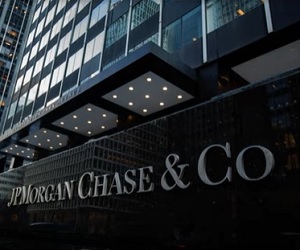
JPMorgan Building FacadeAt some point, federal regulators, the Senate Banking Committee and the criminal division of the U.S. Department of Justice are going to reach the same conclusion that Wall Street On Parade reached quite some time ago: JPMorgan Chase is a criminal enterprise in drag as a federally-insured bank.

JPMorgan Chase is the largest U.S. bank, with $3.9 trillion in assets and 4,863 Chase Bank branches sucking in mom and pop deposits across the United States. According to its regulators, it is also the riskiest bank in the United States. And, two trial lawyers have written a fact-intensive book describing how the bank resembles the Gambino crime family. The bank’s admission to five criminal felony counts since 2015 and spiraling rap sheet would seem to back up that theory.

Now comes the latest revelation in the bank’s own 8K filing with the Securities and Exchange Commission last Friday. Somehow, in just two quarters – the span of a meager six months – this one bank has managed to spend a stunning $1.085 billion on legal expenses. The bank spent $665 million on legal expenses for the three months ended September 30, 2023 and $420 million for the three months ended June 30, 2023. (See footnote (a) on page 4 of JPMorgan Chase’s October 13 SEC filing at this link.)

Reading deeper into its most recent 8K filing strongly hints that this bank is not only a serial criminal enterprise but it is also a full employment program for Big Law.

Throughout this year, Big Law firm WilmerHale has been racking up a lot of billable hours defending JPMorgan Chase from highly credible charges brought by the Attorney General of the U.S. Virgin Islands in a federal lawsuit that the bank “actively participated” in Jeffrey Epstein’s sex trafficking of minors by serving as his cash conduit for more than 15 years. While the Attorney General of the U.S. Virgin Islands filed extremely heavy evidence with the court to back up her charges, WilmerHale pursued a scorched earth legal strategy of smearing officials in the U.S. Virgin Islands that brought them to a cheap settlement of $75 million in September.

WilmerHale also represented JPMorgan Chase this year in a federal class action lawsuit on behalf of Jeffrey Epstein’s victims. Given that 15 JPMorgan Chase employees had visited Epstein at his Manhattan mansion where Epstein’s sex slaves were in abundance and their testimony at trial might have added new scandals to the bank, JPMorgan also settled that case for the generous sum of $290 million in June. (Plaintiffs lawyers were to get $87 million of the $290 million.)

WilmerHale also opened up another billing track (and damage control track) by suing one of JPMorgan’s former officials, Jes Staley, attempting to load the blame for the bank’s sleazy dealings with Epstein (a registered sex offender and well-documented sex trafficker of minors) onto Staley’s shoulders. That narrative pretty much fell apart when a former FBI official, hired by opposing counsel as an expert witness, introduced court documents showing that different bank employees had funneled more than $5 million in hard cash to Epstein over a decade, sometimes as much as $40,000 to $80,000 a month, without filing the legally required Suspicious Activity Reports (SARs) with the Financial Crimes Enforcement Network (FinCEN).

The Staley case was abruptly settled in September for an undisclosed sum of money.

JPMorgan Chase also paid more legal fees this year to the Big Law firm Paul Weiss to get a very problematic case dismissed in federal court. That case named the Chairman and CEO, Jamie Dimon, as a defendant, along with specific members of its Board of Directors. The thrust of the case was that the same members of JPMorgan’s Board of Directors who brought Jamie Dimon to the top leadership position at the bank, were also, verifiably, engaged in business dealings with Jeffrey Epstein. Before that case could be fleshed out for the public with depositions and discovery, Judge Jed Rakoff very conveniently dismissed it. (See Rakoff’s background with Paul Weiss here.)

Big Law firm Sullivan & Cromwell got a nice feather in its cap under former President Donald Trump (now indicted on 91 felony charges himself) by sending its law partner, Jay Clayton, to be the Chairman of the Securities and Exchange Commission (notwithstanding the fact that Clayton had represented 8 of the 10 largest Wall Street banks prior to becoming their “watchdog”). One of its clients was JPMorgan Chase. This year Sullivan & Cromwell brags on its website that it scored a big win “for JPMorgan Chase and the trillion-dollar syndicated loan industry, with the Second Circuit ruling that interests in a syndicated loan were not securities under federal securities laws.” One can’t be sued for securities fraud if the instrument in question is not defined as a “security.”

Big Law firm Covington & Burling, whose revolving door sent law partner Eric Holder to be the head of the U.S. Department of Justice under President Obama, along with its law partner Lanny Breuer to head the DOJ’s criminal division under Holder, represented JPMorgan Chase this year in resolving a federal lawsuit for $499 million among a group of banks over charges that they conspired to stifle competition in the stock lending business.

JPMorgan Chase discloses in its current 8K filing with the SEC that it is not just battling charges here in the U.S. It reports that it is under investigation by the Swiss Competition Commission relating to EURIBOR, the benchmark short-term lending rate in Europe. JPMorgan Chase also advises that “In December 2016, the European Commission issued a decision against the Firm and other banks finding an infringement of European antitrust rules relating to EURIBOR. The Firm has filed an appeal of that decision with the European General Court, and that appeal is pending.”

JPMorgan Chase is also under criminal investigation on the continent of Asia. It reports as follows in its 8K:

“India’s Enforcement Directorate (‘ED’) is investigating J.P. Morgan India Private Limited in connection with investments made in 2010 and 2012 by two offshore funds formerly managed by JPMorgan Chase entities into residential housing projects developed by the Amrapali Group (‘Amrapali’). In 2017, numerous creditors filed civil claims against Amrapali, including petitions brought by home buyers relating to delays in delivering or failure to deliver residential units. The home buyers’ petitions have been overseen by the Supreme Court of India and are ongoing. In August 2021, the ED issued an order fining J.P. Morgan India Private Limited approximately $31.5 million. The Firm is appealing the order and the fine. Relatedly, in July 2019, the Supreme Court of India issued an order making preliminary findings that Amrapali and other parties, including unspecified JPMorgan Chase entities and the offshore funds that had invested in the projects, violated certain currency control and money laundering provisions, and ordering the ED to conduct a further inquiry under India’s Prevention of Money Laundering Act (‘PMLA’) and Foreign Exchange Management Act (‘FEMA’). In May 2020, the ED attached approximately $25 million from J.P. Morgan India Private Limited in connection with the criminal PMLA investigation. The Firm is responding to and cooperating with the PMLA investigation.”

Adding to JPMorgan’s legal tab this year, not to mention its humiliation, a Judge in May ruled that the bank has to pay the legal bills for Charlie Javice, the 31-year old woman that scammed the bank (which has the biggest law firms in the world on retainer), to buy her allegedly fraudulently trumped up company. Those legal bills could turn out to be quite hefty. Javice is facing a civil lawsuit filed by JPMorgan Chase as well as criminal charges filed by the U.S. Department of Justice.

The cases we have cited here are just the tip of the iceberg. The bank indicated in a recent SEC filing that it is involved in “several hundred” legal proceedings.


https://wallstreetonparade.com/2023/10/jpmorgan-chase-paid-1-085-billion-in-legal-expenses-in-last-six-months-its-still-battling-hundreds-of-charges-and-legal-proceedings-on-three-continents/


Sunday, May 28, 2023

JPMorgan Chase and Jeffrey Epstein Were Both Involved in a Strange Offshore Company Called Liquid Funding

 SUBSCRIBE TO THIS NEWSLETTER TO RECEIVE TIMELY REPORTS


JPMorgan Chase and Jeffrey Epstein Were Both Involved in a Strange Offshore Company Called Liquid Funding

By Pam Martens and Russ Martens: May 24, 2023 ~

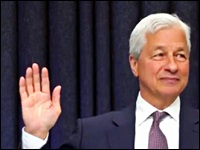
Jamie Dimon Being Sworn In at House Financial Services Committee Hearing, May 27, 2021

Jamie Dimon Being Sworn In at House Financial Services Committee Hearing, May 27, 2021

This Friday and Saturday, JPMorgan Chase’s Chairman and CEO, Jamie Dimon, is scheduled to sit for some very uncomfortable questioning in a deposition concerning what role he played in allowing his bank to serve as a vast cash conduit for Jeffrey Epstein, which enabled Epstein to perpetuate his sex trafficking of underage girls.

The Attorney General’s office of the U.S. Virgin Islands (USVI) has filed a federal lawsuit against JPMorgan Chase that makes devastating charges against the largest bank in the United States. It alleges that JPMorgan Chase sat on a mountain of evidence that Jeffrey Epstein was running a child sex trafficking ring as it continued to keep him as a client; accept his lucrative referrals of wealthy clients; and provided him with large sums of cash and wire transfers to pay off victims – one of whom was a “14-year old sex slave.”

The case is USVI v JPMorgan Chase Bank N.A. (22-cv-10904) in U.S. District Court for the Southern District of New York. Epstein was found dead in his jail cell at the Metropolitan Correctional Center in Manhattan on August 10, 2019. His death was ruled a suicide by the New York City Medical Examiner.

The lawsuit contains deeply disturbing new information about a former top JPMorgan Chase bank executive’s close personal relationship with Epstein. The lawsuit reveals that Jes Staley, the head of JPMorgan’s Private Bank at the time, “exchanged approximately 1,200 emails with Epstein from his JP Morgan email account.” Several of the emails contained photos of young women in seductive poses and others further “suggest that Staley may have been involved in Epstein’s sex-trafficking operation.” For example, the lawsuit states the following:

“In July 2010, Staley emailed Epstein saying ‘That was fun. Say hi to Snow White[,]’ to which Epstein responded ‘[W]hat character would you like next?’ and Staley said ‘Beauty and the Beast.’ ”

There were other giant red flags which the bank chose to ignore as it maintained Epstein’s accounts. The complaint reveals the following:

“Between 2003 and 2013, Epstein and/or his associates used Epstein’s accounts to make numerous payments to individual women and related companies. Among the recipients of these payments were numerous women with Eastern European surnames who were publicly and internally identified as Epstein recruiters and/or victims. For example, Epstein paid more than $600,0000 to Jane Doe 1, a woman who—according to news reports contained in JP Morgan’s due diligence reports—Epstein purchased [as a sex slave] at the age of 14. Like other women who received payments from Epstein, Jane Doe 1 listed Epstein’s apartments on 66th Street in New York City as her address, which should have been a red flag to JP Morgan.

“Epstein and/or his associates also made significant cash withdrawals and 95 foreign remittances with no known payee. For example, Hyperion Air, Inc.—the Epstein-controlled company that owned Epstein’s private jet—issued over $547,000 in checks payable to cash purportedly for ‘fuel expenses when traveling to foreign countries.’ Additionally, between January 2012 and June 2013, Hyperion converted more than $120,000 into foreign currency. Many of these cash withdrawals either exceeded the $10,000 reporting threshold or were seemingly structured to avoid triggering the reporting requirement. This is particularly significant since it is well known that Epstein paid his victims in cash.”

According to the lawsuit, none of these brazen red flag transactions were reported by the bank to the Financial Crimes Enforcement Network (FinCEN) as required by law, but were characterized internally as “reasonable, normal, and expected for the type of business or industry in which the client engages.”

Staley also visited Epstein while he was serving his jail time in Florida after pleading guilty in 2008 to soliciting and procuring a minor for sex. Epstein received an outrageously cozy work-release program in that matter. Staley also made numerous visits to Epstein’s private island in the Virgin Islands.

JPMorgan Chase serviced Epstein’s accounts from 1998 to 2013 – a full five years after his conviction in Florida for procuring sex with a minor and his having to register as a sex offender.

Jamie Dimon’s upcoming deposition in the Epstein matter has been making headlines for more than a month. But there is another tie between JPMorgan Chase and Epstein that has received scant media attention.

Jeffrey Epstein presided over a $6.7 billion offshore company as its Chairman from November 9, 2001 to at least March 19, 2007, a period during which he was later accused by the U.S. Department of Justice of committing sex trafficking crimes against minors. The company is Liquid Funding Ltd. and it had two offshore connections: it was incorporated in Bermuda on October 19, 2000 by the Appleby law firm, known for setting up offshore companies in tax havens like the Isle of Man, Guernsey, Cayman Islands, and Jersey. Liquid Funding’s investment manager was Bear Stearns Bank Plc in Dublin, Ireland – a non-U.S. regulated institution, which was later merged into JPMorgan Bank Dublin.

The information came to light as a result of a database created by The International Consortium of Investigative Journalists containing files leaked in 2017 from the Appleby law firm. The trove became known as the Paradise Papers.

A Securities and Exchange Commission filing by Bear Stearns, prior to its collapse in 2008, indicated that Bear Stearns owned 40 percent of Liquid Funding Ltd.’s equity but the owners of the other 60 percent remain a mystery. The ratings firm, Fitch, reported in 2006 that the company had $6.7 billion in outstanding liabilities. What those liabilities consisted of and who paid them off when Bear Stearns collapsed remains largely unknown.

A Moody’s report issued in 2004 revealed that JPMorgan Chase, Bank of America and Natexis Banque Populaire extended Liquid Funding a $250 million liquidity facility. Deloitte was listed as its auditor. JPMorgan Chase is also listed as its “Security Trustee.” The large corporate law firm, Sidley Austin, was its legal counsel.

We previously reached out to JPMorgan, Sidley Austin and Deloitte seeking information on how Epstein came to chair the company and requesting additional details. We did not receive a response from any of the three.

Both Fitch and Moody’s credit rating agencies gave the medium-term notes to be issued by Liquid Funding a AAA-rating as well as gave it a AAA-rating as a counterparty. And, notably, both ratings agencies gave its commercial paper a Tier 1 rating, meaning that it could end up in money market funds purchased by average Americans seeking a low-risk, liquid investment.

While the ratings agencies acknowledged that they understood the entity could issue up to $20 billion in various instruments, Fitch reported in 2006 that “Liquid Funding is capitalized with $37 million in drawn equity commitments and $63 million in undrawn equity commitments….”

As a result of those top ratings on Liquid Funding’s paper, it ended up in two of JPMorgan’s money market funds, which held a total of $100 million, as well as in numerous other money market funds, including Wachovia’s Evergreen money market funds, which announced in mid-September of 2008, during the peak of the financial crisis, that it was bailing out three of its money market funds in order to keep them from breaking the buck. Wells Fargo purchased Wachovia a few weeks later.

The amount of toxic debris that had parked itself in supposedly safe money market funds in 2008 led to unprecedented action by the U.S. Treasury, which had to step in with a guarantee plan after a run commenced when it was learned that the bankrupt Lehman Brothers had sold its instruments to money market funds.

Bear Stearns collapsed in March of 2008 and was purchased by JPMorgan Chase. The report from the Financial Crisis Inquiry Commission (FCIC) detailed that the Federal Reserve Bank of New York had created a Special Purpose Vehicle called Maiden Lane LLC that used proceeds from a $28.82 billion senior loan from the New York Fed and a $1.15 billion loan from JPMorgan Chase to purchase approximately $30 billion of Bear Stearns’ toxic assets on which JPMorgan Chase wanted the Fed to bear the brunt of any losses.

The FCIC report also revealed this about Bear Stearns’ accounting practices:

“At the end of each quarter, Bear would lower its leverage ratio by selling assets, only to buy them back at the beginning of the next quarter. Bear and other firms booked these transactions as sales—even though the assets didn’t stay off the balance sheet for long—in order to reduce the amount of the company’s assets and lower its leverage ratio. Bear’s former treasurer [Robert] Upton called the move ‘window dressing’ and said it ensured that creditors and rating agencies were happy. Bear’s public filings reflected this, to some degree: for example, its 2007 annual report said the balance sheet was approximately 12% lower than the average month-end balance over the previous twelve months.”

When the GAO report on the Fed’s bank bailouts during the financial crisis was released in 2011, it revealed that the Fed had secretly sluiced over $16 trillion in cumulative loans to both domestic and foreign banks, all linked together in a daisy chain of derivatives and off-balance-sheet toxic assets. It also showed that the Fed’s emergency bailout loans had begun in December of 2007, long before the public became aware of the banking crisis. The Fed’s emergency loans lasted until at least July 2010 according to the GAO.

In addition to the publicly known support to Bear Stearns from the New York Fed, the GAO audit revealed that the Federal Reserve had provided another $853 billion in secret loans to Bear Stearns; $851 billion from its Primary Dealer Credit Facility (PDCF) and $2 billion from its Term Securities Lending Facility (TSLF). A download of the PDCF spreadsheet from the Fed shows that Bear Stearns continued to receive bailouts from the Fed until June 23, 2008.

Was Liquid Funding Ltd., the entity chaired by Jeffrey Epstein, part of the Bear Stearns’ bailout by the Federal Reserve? An announcement by Moody’s rating agency on April 18, 2008 raises that suspicion. It states that “all outstanding rated liabilities” of Liquid Funding Ltd. have been “paid in full.” Moody’s explained this as follows:

“…the withdrawal of the three ratings was in response to Liquid Funding’s request for withdrawal, in connection with the voluntary wind-down of Liquid Funding and following the payment and satisfaction in full of all outstanding rated liabilities of Liquid Funding. According to the Outstanding Detail Report issued by JPMorgan as of April 7, 2008 in its capacity as trustee, none of the rated debt issued under the global medium-term note program or the commercial paper note program was outstanding as of that date. Additionally, the Program Outstanding Report issued as of April 8, 2008 by the Bank of New York Mellon in its capacity as trustee showed that all transactions for which Liquid Funding was serving as counterparty have matured or been terminated.”

The leaked documents from Appleby show that Liquid Funding was resurrected by JPMorgan Chase in 2011 – three years after it had purchased Bear Stearns.

According to the leaked documents, Liam MacNamara became Chairman of the Board of Liquid Funding on September 27, 2011 with an address of JPMorgan Bank Dublin Plc, 1 George’s Dock, Dublin, Ireland. According to the 2011 annual report of JPMorgan Bank Dublin, Liam MacNamara was its CEO at the time. MacNamara had apparently survived the ax when JPMorgan purchased Bear Stearns in 2008, when he had been joint chief executive of Bear Stearns Bank Plc, part of Bear’s operations in Ireland, and the entity that was named investment manager for Liquid Funding.

In March of 2019, the Irish Times reported that the JPMorgan Bank in Dublin “employs about 530 people” and had moved to new headquarters at 200 Capital Dock, with “the capacity to accommodate 1,100 workers.” The newspaper noted that Jamie Dimon was scheduled to officiate at the grand opening of the new headquarters. The bank is now called J.P. Morgan Bank (Ireland) Plc.

JPMorgan Bank (Ireland) has roots dating back to 1919 and merged Bear Stearns Bank Plc in Ireland into JPMorgan Bank (Ireland). JPMorgan Chase bragged on its website in 2019 that the bank “is the only EU passported bank in the non-bank chain of J.P. Morgan and provides the firm with direct access to the European Central Bank repo window.”

In June 2019, the Central Bank of Ireland fined a unit of  JPMorgan Bank (Ireland) $1.8 million for myriad violations, including “failure to have adequate control systems.”

Of course, when a bank has already received an unprecedented five criminal felony counts (to which it admitted guilt) from the U.S. Department of Justice, a $1.8 million fine is little more than a mild slap on the wrist.


LINK


WATCH: Sen. Booker questions Jack Smith on Trump investigations

                                  LOTS OF POSTS IGNORED BY BLOGGER..... OR REMOVED ON THEIR WHIM! ALL POSTS ARE AVAILABLE ON MIDDLEBORO REVI...