Showing posts with label SAUDI ARABIA/UAE. Show all posts

Thursday, June 16, 2022

RSN: Bess Levin | Report: Jared Kushner Was "Directly Involved" in Trump's Early Attempt to Overturn the Election


Reader Supported News
16 June 22

Live on the homepage now!
Reader Supported News
NEED A QUICK START ON DONATIONS THIS MORNING — A good start will really help make this be the kind of day that help us make our budget. Each one of these donations is important. It really matters. Thanks to all in advance.
Marc Ash • Founder, Reader Supported News

Sure, I'll make a donation!


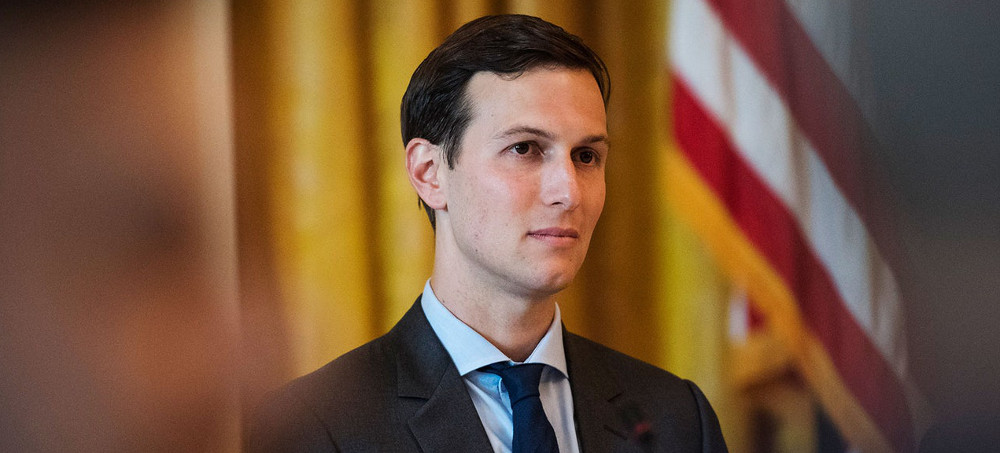
Senior White House Advisor Jared Kushner joins members of the White House Coronavirus Task Force at the daily briefing April 2, 2020 in the briefing room at the White House in Washington, DC. (photo: Win McNamee/Getty)
Bess Levin | Report: Jared Kushner Was "Directly Involved" in Trump's Early Attempt to Overturn the Election
Bess Levin, Vanity Fair
Levin writes: "Since moving to Florida on January 20, 2021, Jared Kushner and Ivanka Trump have spent a considerable amount of time attempting to scrub the "stink" of Donald Trump and January 6 out of their reputations."

Kind of blows a hole in the narrative Kushner (and Ivanka Trump) would have people believe re: them allegedly having nothing to do with Trump’s schemes.

Since moving to Florida on January 20, 2021, Jared Kushner and Ivanka Trump have spent a considerable amount of time attempting to scrub the “stink” of Donald Trump and January 6 out of their reputations. That exercise in image rehabilitation culminated last Wednesday with what Javanka scholars believe may be the most Javanka-y stunt of all time, wherein the couple attempted to insist, via anonymous sources, that despite working for the Trump administration until the bitter end, they had absolutely nothing to do with the sordid false election claims and knew, even before it was called for Joe Biden, that Trump had lost. That might have made the couple look okay-ish if not for the fact that, if true, it meant that they were fully aware of Trump’s wrongdoing, and chose not to speak out against him. But the even bigger problem with the whole “we had no part in this” narrative? That the former first son-in-law was apparently extremely involved in Trump’s early attempts to stay in power.

Rolling Stone’s Asawin Suebsaeng and Adam Rawnsley report that in the week following the 2020 election, Jared Kushner “took charge in overseeing the development of plans to keep Trump in office,” according to four people familiar with the matter. While he didn’t go on TV and make crazy allegations like Rudy Giuliani or Sidney Powell, Kushner apparently had the very same goal as the two disgraced lawyers, and “repeatedly” met with the then president and other top advisers to game out potential strategies for “multi-pronged legal battles and a scorched-earth messaging war against the victorious Biden campaign.” Kushner, Suebsaeng and Rawnsley report, told his father-in-law that there could still be a viable path to a second term via a number of states that had already been called for Biden. And despite the recent New York Times headline that he’d “washed” his hands of Trump by November 5, 2020, Kushner reportedly urged his wife’s father to ignore the people who were saying it was over.

“Jared was directly involved,” a former senior Trump aide told Rolling Stone, claiming Kushner was “positioning himself to be the Jim Baker of this fight,” referring to the Republican attorney who headed up George W. Bush’s 2000 legal team. (As Trump adviser Jason Miller told The Daily Beast in November 2020, the president’s son-in-law was “more hardcore in fighting back on this than anybody.” At some point, as Trump began to lean harder into the deranged lies spread by Giuliani and the like, Kushner reportedly told Trump that he would have no part in the effort. But while the Boy Prince of New Jersey would seemingly like people to believe he never had any part in the attempt to keep Trump in power, a source told Rolling Stone that’s not actually true at all. “Jared helped create what then morphed into the Rudy clown show,” one of them said.

And then, of course, there’s this uncomfortable fact:

“If the plan had worked, and if [Mike] Pence had done what the [former] president wanted him to do, Jared would be jumping up and down…or calling reporters to take credit for being the man behind it all [and] the guy who made it all happen,” says a former senior Trump administration official who was present for the tumultuous presidential transition. “Come on. Spare me.”

Kushner did not respond to Rolling Stone’s request for comment.

But are they preparing to indict the former guy? Millions of inquiring minds would like to know

From America’s mayor to that apparently drunk guy stumbling around the Oval Office (who the president of the United States was for some reason listening to)


READ MORE


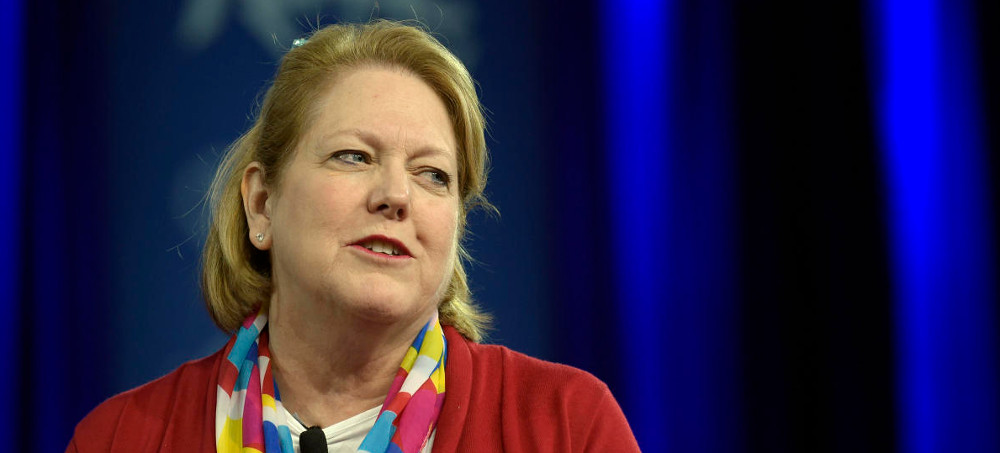
Ginni Thomas Corresponded With John Eastman, Sources in Jan 6 House Investigation SayVirginia "Ginni" Thomas, wife of Supreme Court Justice Clarence Thomas, moderates a panel discussion during the 2017 Conservative Political Action Conference in National Harbor, Md. (photo: Chip Somodevilla/Getty)


Ginni Thomas Corresponded With John Eastman, Sources in Jan 6 House Investigation Say
Jacqueline Alemany, Josh Dawsey and Emma Brown, The Washington Post
Excerpt: "The House committee investigating the Jan. 6, 2021, attack on the Capitol has obtained email correspondence between Virginia "Ginni" Thomas, the wife of Supreme Court Justice Clarence Thomas, and lawyer John Eastman, who played a key role in efforts to pressure Vice President Mike Pence to block the certification of Joe Biden's victory."

The House committee investigating the Jan. 6, 2021, attack on the Capitol has obtained email correspondence between Virginia “Ginni” Thomas, the wife of Supreme Court Justice Clarence Thomas, and lawyer John Eastman, who played a key role in efforts to pressure Vice President Mike Pence to block the certification of Joe Biden’s victory, according to three people involved in the committee’s investigation.

The emails show that Thomas’s efforts to overturn the election were more extensive than previously known, two of the people said. The three declined to provide details and spoke on the condition of anonymity to discuss sensitive matters.

The committee’s members and staffers are now discussing whether to spend time during their public hearings exploring Ginni Thomas’s role in the attempt to overturn the outcome of the 2020 election, the three people said. The Washington Post previously reported that the committee had not sought an interview with Thomas and was leaning against pursuing her cooperation with its investigation.

The two people said the emails were among documents obtained by the committee and reviewed recently. Last week, a federal judge ordered Eastman to turn more than 100 documents over to the committee. Eastman had tried to block the release of those and other documents by arguing that they were privileged communications and therefore should be protected.

Thomas also sent messages to President Donald Trump’s White House chief of staff, Mark Meadows, and to Arizona lawmakers, pressing them to help overturn the election, The Post has previously reported.

While Thomas has maintained that she and her husband operate in separate professional lanes, her activities as a conservative political activist have long distinguished her from other spouses of Supreme Court justices. Any new revelations about Thomas’s actions after the 2020 presidential election are likely to further intensify questions about whether Clarence Thomas should recuse himself from cases related to the election and attempts to subvert it.

In January, the Supreme Court rejected a request by Trump to block the release of his White House records to the House committee investigating Jan. 6. Clarence Thomas was the only justice to dissent, siding with Trump.

Ginni Thomas did not immediately respond to requests for comment, nor did Eastman or his lawyer. A spokeswoman for the Supreme Court did not respond to questions for Clarence Thomas.

A Jan. 6 committee spokesman declined to comment.

Eastman, who once served as clerk for Clarence Thomas at the Supreme Court, outlined scenarios for denying Biden the presidency in legal memos and in an Oval Office meeting on Jan. 4 with Trump and Pence, The Post and other outlets have previously reported. Eastman has said that Trump was his client at the time.

Earlier this year, U.S. District Judge David O. Carter ordered Eastman to release numerous documents to the committee, rejecting privilege claims Eastman had asserted. In April and May, Eastman turned over more than 1,000 documents to the committee.

In a 26-page ruling last week, Carter addressed another 599 documents that Eastman sought to shield. Carter ruled that more than 400 of those documents were protected by attorney-client or other privilege and should not be released.

But he ordered the remainder, including correspondence with state legislators and documents related to alleged election fraud and the plan to disrupt the joint session of Congress on Jan. 6, be turned over to the committee last week and early this week.

Carter described some of the documents in more detail than others.

He ordered Eastman to turn over documents regarding three December 2020 meetings of a group that Eastman described as “civic minded citizens of a conservative viewpoint,” including messages from a person Carter described as the group’s “high-profile leader” inviting Eastman to speak at a meeting on Dec. 8, 2020. The meeting agenda indicates that Eastman discussed “State legislative actions that can reverse the media-called election for Joe Biden.”

“The Select Committee has a substantial interest in these three meetings because the presentations furthered a critical objective of the January 6 plan: to have contested states certify alternate slates of electors for President Trump,” Carter wrote.

It is not clear what the group is or who its high-profile leader is.

Carter also ordered the release of part of a Dec. 22 email written by an attorney he did not identify. The attorney encouraged Trump’s legal team not to pursue litigation that might “tank the January 6 strategy” by making clear that Pence did not have the ability to intervene in the counting of electoral votes. “Lawyers are free not to bring cases; they are not free to evade judicial review to overturn a democratic election,” Carter wrote.

And the judge ordered the release of several communications that shared news stories or tweets.

In the weeks after the 2020 election, Ginni Thomas repeatedly pressed Meadows to overturn the outcome, according to text messages obtained by The Post and CBS News. After Jan. 6, she told Meadows in a text that she was “disgusted” with Pence, who had refused to help block the certification of Biden’s electoral college victory. She wrote, “We are living through what feels like the end of America.”

During that same post-election period, Thomas also pressed Republican lawmakers in Arizona to help keep Trump in office by setting aside Biden’s popular-vote win and to “choose” their own electors, The Post has reported, based on documents obtained via a public records request. Thomas sent the emails via FreeRoots, an online platform designed to facilitate sending pre-written messages to multiple elected officials.

In an email on Nov. 9, just days after media organizations called the race in Arizona and nationally for Biden, Thomas sent identical emails to 27 lawmakers in the Arizona House and Senate urging them to “stand strong in the face of political and media pressure.” The email claimed that the responsibility to choose electors — which belongs to voters under Arizona state law — was “yours and yours alone,” and claimed that the legislature had the “power to fight back against fraud” and “ensure that a clean slate of Electors is chosen.”

In a follow-up email to one of the recipients, state Rep. Shawnna Bolick, Thomas described the email as “part of our campaign to help states feel America’s eyes.”

Bolick (R), who provided Thomas with links she could use to report any fraud she had experienced in Arizona, previously told The Post that she received tens of thousands of emails after the election and that she responded to Thomas in the same way she responded to everyone else.

On Dec. 13, the day before presidential electors were scheduled to cast their votes and seal Biden’s victory, Thomas emailed 21 of those lawmakers plus two others. “Before you choose your state’s Electors … consider what will happen to the nation we all love if you don’t stand up and lead,” the email said. It linked to a video of a man urging swing-state lawmakers to “put things right” and “not give in to cowardice.”

The next day, Democratic electors in Arizona cast their votes for Biden. Republican electors met separately and signed a document declaring themselves to be the state’s “duly elected and qualified Electors.” More than a dozen Arizona lawmakers signed on to a letter to Congress for the state’s electoral votes to go to Trump or “be nullified completely until a full forensic audit can be conducted.”


READ MORE


France's Macron Says Moldova's Bid to Join EU French president Emmanuel Macron visits Moldova. (photo: AFP)

France's Macron Says Moldova's Bid to Join EU "Perfectly Legitimate"
Reuters
Excerpt: "French president Emmanuel Macron said on Wednesday that Moldova's bid to join the European Union was "perfectly legitimate", speaking at a joint news conference with Moldova President Maia Sandu."

French President Emmanuel Macron said on Wednesday that Moldova's bid to join the European Union was "perfectly legitimate", speaking at a joint news conference with Moldova President Maia Sandu.

Moldova, located between Ukraine and EU member Romania, is one of three former Soviet states, along with Georgia and Ukraine itself, that submitted applications to join the EU within days of Russia's Feb. 24 invasion of Ukraine.

It has pressed on with its application amid concerns that it could be drawn into the war, because of instability in its Transdniestria region, run by pro-Russian separatists and occupied by Russian peacekeeping troops on the Ukrainian border.

France, which chairs the European Union until the end of the month, will help reach a consensus among EU members on the issue of Moldova's application to join the bloc at a crucial Council meeting next week, Macron said.

He described the war in Ukraine as "a threat for the stability of the whole region", and said Moldova was "already a country anchored within the European family".

Macron said he wanted to reach a consensus on granting official candidate status to the three countries, adding that Moldova's application should not be separated from that of Ukraine.

Sandu said Moldova wanted to become an EU member "as soon as possible. But we are realists and we understand that we still have a lot to do."

The war in Ukraine complicated Moldova's EU integration, but reforms were bringing Moldova closer to EU standards, she said.
READ MORE


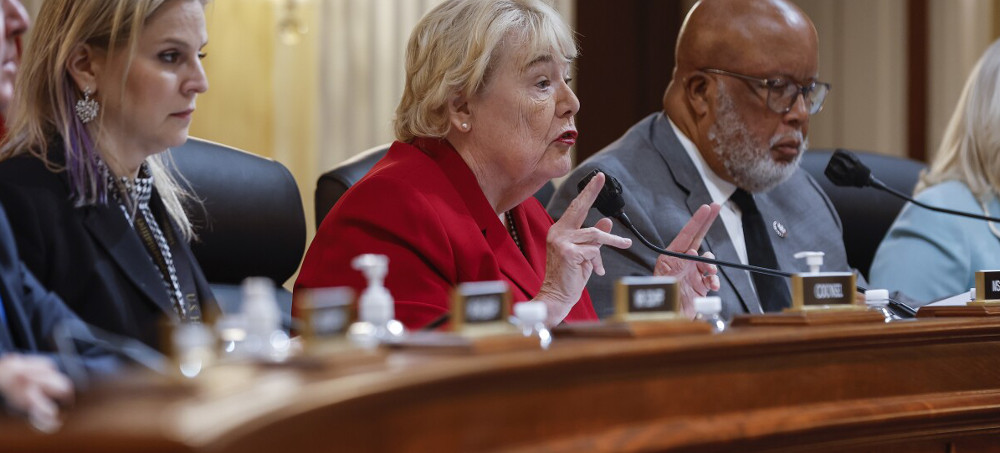
Trump's Raising of $250 Million for Fund That 'Did Not Exist' Suggests Possible FraudRep. Zoe Lofgren, D-Calif., delivers remarks on Monday during a hearing by the House committee investigating the Jan. 6 attack. (photo: Chip Somodevilla/Getty)

Trump's Raising of $250 Million for Fund That 'Did Not Exist' Suggests Possible Fraud
Hugo Lowell, Guardian UK
Lowell writes: "The House select committee investigating the January 6 Capitol attack appeared to make the case at its second hearing that Donald Trump and his campaign engaged in potential fundraising fraud, raising m for a Trump "election defense fund" that did not actually exist."

‘The big lie was also the big rip-off,’ says Democrat Zoe Lofgren after January 6 panel appears to make case for fundraising fraud

The House select committee investigating the January 6 Capitol attack appeared to make the case at its second hearing that Donald Trump and his campaign engaged in potential fundraising fraud, raising $250m for a Trump “election defense fund” that did not actually exist.

The hearing, led by Congresswoman Zoe Lofgren, also showed that Trump and the campaign raised millions for the fund and then funneled the money to, among other destinations, the Trump business properties as well as Trump’s own Save America political action committee.

In showing that Trump deceived donors into contributing money to the election defense fund – based on claims about a stolen election that his top advisers told him were nonsense – the panel suggested Trump engaged in potential fraud as well as other violations of federal law.

The select committee said through filings and other evidence, it found the Trump campaign raised $100m in the first week after the election and overall raised about $250m as it asked donors to help fundraise legal challenges to the results.

But the “Official Election Defense Fund”, as it was billed on fundraising emails that were repeatedly sent up until 30 minutes before the Capitol attack, did not formally exist, according to Trump campaign aides Hannah Allred and Gary Coby, who testified to the panel.

“The big lie was also a big ripoff,” Lofgren said of the deception at the hearing, later telling CNN: “He intentionally misled his donors, asked them to donate to a fund that didn’t exist and used the money raised for something other than what it said.”

The Trump campaign was able to fundraise through to January 6 since Trump continued frivolous election litigation past the so-called safe harbor deadline, which is generally accepted as the date by which state-level election challenges – like recounts – must be completed.

The select committee doubled down on establishing Trump’s criminal or corrupt intent in seeking to overturn the 2020 election results by showing he could not have reasonably believed he had defeated Biden when some of his most senior advisers told him otherwise.

Trump was told by every credible adviser, from former attorney general Bill Barr to former Trump campaign chair Bill Stepien to former Trump White House lawyer Eric Herschmann to former Fox News political editor Chris Stirewalt, that the election was not stolen.

The admissions by Trump’s top officials are significant as they could put federal prosecutors one step closer to being able to charge Trump with obstructing an official proceeding or defrauding the United States on the basis of election fraud claims he knew were false.

The select committee in short made the case that if Trump is ever charged, he could not use the defense that he acted in potential criminal ways because he earnestly believed there was election fraud because he was told otherwise – the doctrine of “wilful blindness”.

At the second hearing, the select committee also revealed a new piece of information: that Trump falsely declared victory on election night at the White House at the insistence of his attorney Rudy Giuliani, and against the advice of every other presidential adviser.

The former president had infamously claimed on election night that “frankly, we did win this election” even though no winner had yet been announced, as a number of the most closely contested states were still counting millions of mail-in ballots.

How Trump came to falsely declare victory on election night was not exactly clear, until the select committee on Tuesday played a video of the top Trump White House aide Jason Miller testifying that Giuliani recommended to Trump they just pretend that they had won.

“They’re stealing it from us,” Giuliani told the then president when he found him at the White House, according to Miller, who also testified that the former New York mayor seemed drunk. “Where do all the votes come from? We need to go say that we won.”

READ MORE


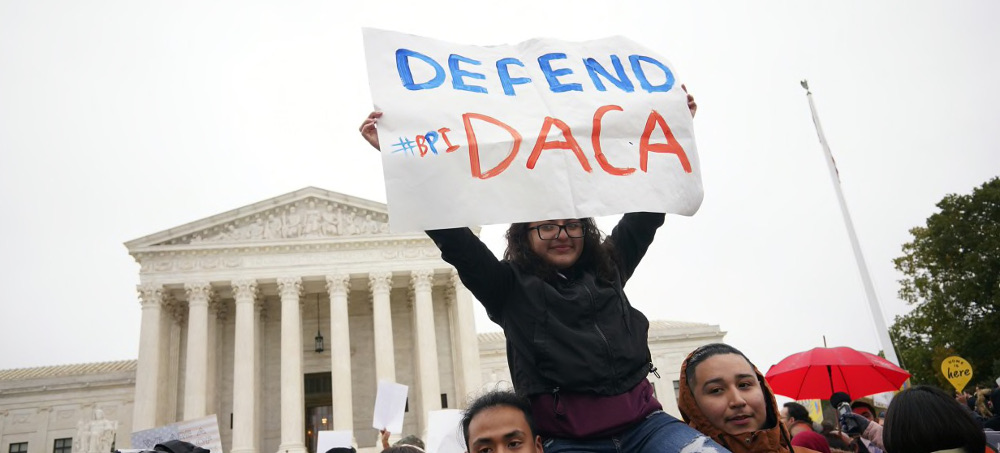
A Decade of DACA: A Middle-Class Launching Pad for Thousands Is at RiskImmigration rights activists take part in a rally in front of the Supreme Court, on Nov. 12, 2019. (photo: Mandel Ngan/Getty)

A Decade of DACA: A Middle-Class Launching Pad for Thousands Is at Risk
Suzanne Gamboa, Edwin Flores, Nicole Acevedo and Sandra Lilley, NBC News
Except: "As a young girl raised in the U.S. without legal status, Karla Mendoza Arana learned how to accept a limited future."

The 2012 Obama-era policy opened job and educational pathways to thousands of undocumented and mainly Latino young Americans. Ten years later, its future is tenuous.

As a young girl raised in the U.S. without legal status, Karla Mendoza Arana learned how to accept a limited future.

Mendoza Arana's dad was a chemical engineer in Peru and her mother was a pre-school teacher; both were pastors. But when they moved to the U.S., the couple, who were undocumented, worked at a warehouse, later switching to housekeeping.

For Mendoza Arana, her prospects changed when in 2012 President Barack Obama implemented the Deferred Action for Childhood Arrivals program, DACA, allowing hundreds of thousands of young undocumented immigrants who were largely raised in the U.S. to apply to work and study in the U.S. without fear of being deported.

“I just remember all of us were instantly sobbing. We knew, especially my sister and I, our lives would be changing,” Mendoza Arana, 32, originally from Lima, Peru, told NBC News.

There is mounting evidence that, in its decade of existence, DACA has done on a smaller scale what the GI Bill did for returning veterans — it elevated a group of people into the middle class, thus conferring advantages to parents, children, siblings and communities.

“The 10-year, long view of DACA is really the story of young people taking advantage of a policy to find on-ramps to education, job level programs and certificates, who were able to use that early entry to get their foot in the door in jobs and careers as stepping stones to really launch themselves,” said Roberto Gonzales, professor of sociology and education at the University of Pennsylvania who has been tracking the lives of more than 500 DACA recipients over the last decade after studying thousands of undocumented young Americans.

“It’s indisputably the most successful policy of immigrant integration since the 1980s — it is really the American Dream put into reality at a scale of hundreds of thousands,” Gonzales said.

Even so, DACA remains in jeopardy, with a Texas Republican-led challenge of the policy now in the 5th Circuit Court of Appeals and a court decision in that case blocking new DACA applicants from getting approved.

The program already is not available for many. To be eligible, undocumented young people had to have arrived in the country before June 15, 2007. This will be the first year that an overwhelming majority of the estimated 100,000 undocumented high school graduates are ineligible for DACA, according to FWD.us, a progressive immigration lobbying group.

For Mendoza Arana, a series of firsts followed her DACA approval. She got her first job at 23; previously, she had only been able to work in internships. For the first time, she had medical benefits through her job, and saw a dentist for the first time in over a decade.

And she has a driver’s license. “It’s been 10 years and to this day I look at it and I’m like, I can’t believe I am holding this in my hands,” Mendoza Arana said.

The DACA incentive

Some have argued that advocates and media take a rosy look at DACA focusing on the success stories. But along with Gonzales’ findings of improved lives among the recipients he’s tracked, a trio of economists found direct impact on high school retention.

“We find that DACA significantly increased high school attendance and high school graduation rates,” the economists stated in a 2020 study published in the American Economic Journal.

Before DACA, Gonzales detailed in his book “Lives in Limbo” that undocumented young people's lack of legal status precluded any real educational and career advancement.

“Prior to DACA, going to college was a big risk,” Gonzales said, “not worth it for those undocumented young people who could see no link between education and the types of jobs they could obtain.”

“With DACA, it’s allowed them to obtain employment that matches their credentials in the field of their choice, and that is huge," he said. “They’re living solidly middle-class lifestyles and have grown into their status, it’s really remarkable,” Gonzales said.

In a 2017 analysis of the DACA population, the Migration Policy Institute found that DACA recipients were almost as likely as U.S. adults in the 15-32 age group to be enrolled in college — 18 percent and 20 percent respectively.

Also, 40 percent of recipients were enrolled in secondary education, but not college, and 20 percent were still in secondary school.

For many families, it’s meant breaking the cycle of poverty and opening up new opportunities.

After the program was implemented, the health care field has seen an uptick in Latinos — and it became evident during Covid.

Gonzales gave the example of several DACA recipients he's interviewed over the years. With DACA, they started out as Certified Nursing Assistants, doing basic yet necessary hospital work — “you’re changing bed pans". They obtained their associate’s degrees while they worked, then got a bachelor’s and then became registered nurses; some went on to get their master’s degrees.

DACA recipients earning north of $75,000 a year are helping parents financially, putting their children in quality day care programs, moving to better neighborhoods and becoming more active in their communities, the research has shown.

The gains don't apply just to those who went to college. For those who were older and already in the workforce, DACA made it possible for them to seek professional licenses, leading to better jobs.

Alma Benito, 22, was working in the fields of the Coachella Valley alongside her parents when Obama implemented DACA. Up to that point, “there weren’t many opportunities. I couldn’t just apply to a job. I didn’t have a Social Security number,” Benito said.

After getting DACA in 2015, she found better work and attended California State University, Bakersfield. When the pandemic forced her to pause that and return home to help her family, she was able to borrow $1,000 to help cover the family’s costs.

She is a staff member at the TODEC Legal Center, a Latino legal advocacy group.

When Benito’s sister became eligible for DACA, the Trump administration stopped taking new applications. Unable to get a job good enough to pay for college, her sister still works in the fields with her parents.

For Abel Cruz Flores, migrating to Parkland, Oregon, as a 15-year-old from the remote town of La Parota in Mexico, was a culture shock. He attended River Valley High School and dropped out after two weeks because of the language barrier. He returned to working in the fields picking pears, cherries and blueberries.

A year later, with some nudging from his sister, he re-enrolled in high school. Last summer, he earned his doctorate from Georgetown University and is now a university professor.

As one of the early recipients of DACA, he sought out graduate programs and landed at the University of Arizona’s Hispanic linguistics program, where he received a stipend, health insurance, had his tuition paid for and was paid to teach.

“DACA is the fundamental key to open the door to achieve those academic merits for higher salary,” said Cruz Flores, an assistant professor in the Department of Modern Languages and Literatures at Santa Clara University in California.

'Not enough'

Massachusetts State Rep. Danillo Sena, a Democrat, recalls going to Washington, D.C., as a high school student to advocate for the DREAM Act, legislation aimed at providing a path to legal status for young immigrants.

He was undocumented, having moved to the U.S. from Timbaúba, Brazil at 14 with his family. Obama used executive authority to create DACA after Congress’ repeated failure to pass the DREAM Act, or versions of it.

Sena secured his DACA benefit soon after it was announced. He completed his bachelor’s degree studies in political science in 2019 at University of Massachusetts, Amherst. He worked for six years for Massachusetts state Sen. James Eldridge, a Democrat. Along the way, in 2018, sponsored by his spouse, he became a U.S. citizen and in June 2020, won a special election to the Massachusetts Legislature.

Now 35, he is seeking re-election.

DACA “certainly has helped me to be where I am today, for sure,” Sena said. “But just giving people DACA status is not enough. There needs to be a pathway with citizenship."

DACA was always meant to be temporary, with the goal of congressional legislation setting DACA recipients and other eligible undocumented Americans on a path to legal status.

“Ultimately, as great as this policy is, it’s by nature temporary and partial and not meant to be longstanding policy,” Gonzales said. “Many programs tied to DACA status, if it’s ultimately revoked, they go away.”

In the last 10 years, previous bipartisan plans for immigration legislation have been shelved, with Republicans eschewing attempts at immigrant integration and focusing on border control.

DACA recipients live with two realities — the regular renewal of DACA and the possibility that DACA is taken from them, which could even mean having to move to another country to start over.

“What does it mean to have hundreds of thousands in perpetual limbo submitting documents and paying fees to submit their status and continue to prove they're worthy Americans?” Gonzales said. “They’ve proven it in ways no one else has had to."



READ MORE


Government Watchdog: US Weapons Sales to Saudi Arabia, UAE Put Country at Risk of Complicity in War CrimesA delegation from Saudi Arabia examines models of military equipment at the Dubai Airshow 2021, in the UAE on November 14, 2021. (photo: Andrea DiCenzo/Getty)

Government Watchdog: US Weapons Sales to Saudi Arabia, UAE Put Country at Risk of Complicity in War Crimes
Akshaya Kumar, Human Rights Watch
Kumar writes: "A new internal report from the US Government Accountability Office (GAO) - the congressional watchdog - found serious gaps in US government oversight of how arms sold to Saudi Arabia and the United Arab Emirates (UAE) are being used. These findings show that Congress needs to get more involved in these weapons sales."


Oversight Needed to Protect Yemeni Civilians, Hold Saudi Arabia and UAE Accountable

A new internal report from the US Government Accountability Office (GAO) – the congressional watchdog – found serious gaps in US government oversight of how arms sold to Saudi Arabia and the United Arab Emirates (UAE) are being used. These findings show that Congress needs to get more involved in these weapons sales.

Human Rights Watch and others have warned for years that US-made weapons sold to Saudi Arabia and the UAE may be being used to commit war crimes in Yemen and that US officials could be implicated. We called for a suspension of these sales. Successive administrations argued they were tracking civilian casualties in Yemen and helping the coalition mitigate them through better targeting.

But the GAO report, obtained by Human Rights Watch, indicates that they’re likely not doing enough. Despite credible reports from the United Nations and civil society monitors detailing laws-of-war violations and likely war crimes, neither the State nor Defense Departments could, according to the report, “provide evidence” that they had “investigated any incidents of potential unauthorized use of equipment transferred to Saudi Arabia or UAE.”

That’s why congressional oversight remains essential. In fact, what we know from the GAO report comes largely because of Congress’ reporting requirements.

What more should Congress do?

First, press the GAO to publish the full report. US officials are reportedly trying to redact portions before it’s published, which could obscure important findings.

Second, urge the State Department to implement the report’s recommendations including the call for the Bureau of Political-Military Affairs to develop “specific guidance for investigating any indications that U.S.-origin defense articles have been used in Yemen by Saudi Arabia or UAE” in ways that violate international law.

Third, pass the Protection of Civilians in Military Operations Act, introduced in May. Among other things, the legislation would establish a hub within the Pentagon for supporting the US government on the issue of civilian harm.

The revelations in the GAO report come as President Joe Biden plans to travel to Saudi Arabia. On the campaign trail, Biden promised not to check US “values at the door to sell arms or buy oil.” In office, he has lobbied Congress to approve further arms sales to the kingdom.

Without being able to effectively monitor how US-made weapons are being used by the Saudis and their allies, or if US training and support is mitigating civilian harm, the US risks more than its values. It also risks complicity in the crimes themselves.


READ MORE


'Moment of Reckoning:' Federal Official Warns of Colorado River Water Supply CutsThe relatively arid desert Southwest is viewed at 33,000 feet on May 19 near Moab, Utah. The Colorado River, flowing from Colorado's Rocky Mountain through Utah, Arizona, Nevada and California is dependent on winter snowfall in the Rockies. (photo: George Rose/Getty)


'Moment of Reckoning:' Federal Official Warns of Colorado River Water Supply Cuts
Ben Adler, Yahoo! News
Adler writes: "The Colorado River's reservoirs have diminished to the point that significant cuts to the water supplied to the seven states that rely on it will be necessary next year, a federal official warned Tuesday."

The Colorado River’s reservoirs have diminished to the point that significant cuts to the water supplied to the seven states that rely on it will be necessary next year, a federal official warned Tuesday.

Bureau of Reclamation Commissioner Camille Calimlim Touton told the Senate Energy and Natural Resources Committee maintaining “critical levels” at the largest reservoirs in the United States — Lake Mead and Lake Powell — will require large reductions in water deliveries.

“A warmer, drier West is what we are seeing today,” she said at a hearing. “And the challenges we are seeing today are unlike anything we have seen in our history.”

Colorado, New Mexico, Utah, Wyoming, Arizona, California, and Nevada all receive water from the Colorado River and next year will see a decrease of between 2 million and 4 million acre-feet of water due to the ongoing drought that has gripped most of the Western U.S. (An acre-foot is the amount of water needed to cover one acre of land in one-foot-deep water.) Current allotments of water from the Colorado range from 300,000 acre-feet for Nevada to 4.4 million acre-feet for California.

“What has been a slow-motion train wreck for 20 years is accelerating, and the moment of reckoning is near,” John Entsminger, general manager of the Southern Nevada Water Authority, told the Senate hearing. “We are 150 feet from 25 million Americans losing access to the Colorado River, and the rate of decline is accelerating.”

The West has been suffering through an acute drought since 2020, part of a megadrought that began in 2000. The last 20 years have been the driest two decades in the last 1,200 years. This year is so far the driest on record in California. Scientists attribute these conditions to climate change, which causes more water evaporation due to warmer temperatures.

“As a climate scientist, I’ve watched how climate change is making drought conditions increasingly worse — particularly in the western and central U.S.,” wrote Imtiaz Rangwala, research scientist in climate at the Cooperative Institute for Research in Environmental Sciences at the University of Colorado Boulder, in May. “The last two years have been more than 2 degrees Fahrenheit (1.1 Celsius) warmer than normal in these regions. Large swaths of the Southwest have been even hotter, with temperatures more than 3 F (1.7 C) higher.”

Western states have already been undertaking emergency measures to deal with the water scarcity. Seven months ago, California, Arizona and Nevada signed an agreement to take less water from Lake Mead, and six weeks ago the Department of Interior announced it is withholding some water from Lake Powell. Otherwise, DOI feared, the reservoir could drop so low that Glen Canyon Dam would not be able to generate electricity.

Last year, for the first time ever, the federal government declared a shortage on the river, which led to reductions in water deliveries to Arizona and Nevada. Some farmers in Arizona have had to leave some fields unplanted as a result.

Local governments and water utilities have been imposing restrictions on water usage. On June 1, the Metropolitan Water District of Southern California instituted limits on outdoor watering; typically it will be restricted to one or two days per week. But the water shortage persists.

“Despite those efforts and a previous deal among the states to share in the shortages, the two reservoirs stand at or near record-low levels,” the Los Angeles Times reported. “Lake Mead near Las Vegas has dropped to 28% of its full capacity, while Lake Powell on the Utah-Arizona border is now just 27% full.”

Touton told the Senate committee that her agency is negotiating with the seven states that depend on the Colorado River to develop a plan for apportioning the water supply reductions in the next two months. In all, nearly 40 million people rely on water from the river.

Sen. Martin Heinrich, D-N.M., attributed the gathering crisis to a lack of coordinated action to mitigate climate change.

“It’s frankly a direct result of the lack of action on climate that we have seen for more than 20 years,” Heinrich said.


READ MORE


Contribute to RSN

Follow us on facebook and twitter!

Update My Monthly Donation

PO Box 2043 / Citrus Heights, CA 95611


Thursday, March 17, 2022

RSN: Jane Mayer | Sarah Bloom Raskin Withdraws Her Nomination to the Federal Reserve Board


Reader Supported News
17 March 22

Feed the Greedy Corporation, Starve the Truth-Teller

The vast majority of our readers are far more likely to hand their money to the very Corporations whose abuses they rely on us to monitor than they are to give us — any money at all — to monitor them. It's not that you do not come to RSN, it’s that most of you do not help out.

As a result the abusive corporate entities thrive while smaller honest organizations are left without means. Stop funding the problem and start funding the solution!

Now would be a good time.

Marc Ash
Founder, Reader Supported News

Sure, I'll make a donation!


If you would prefer to send a check:
Reader Supported News
PO Box 2043 / Citrus Heights, CA 95611

Follow us on facebook and twitter!

Update My Monthly Donation


Reader Supported News
16 March 22

Live on the homepage now!
Reader Supported News

YES WE EXPECT 1% OF OUR SUBSCRIBERS TO DONATE: Gosh darn right! Frankly it’s a bit of a miracle that we can provide service to a million visitors per month with only one percent of our subscribers responding to the donation requests. Without 1% contributing you can rest well assured we will not be able to continue. A reasonable contribution from time to time is all it takes.
Marc Ash • Founder, Reader Supported News

Sure, I'll make a donation!


Sarah Bloom Raskin withdraws her nomination to the Federal Reserve Board. (photo: Getty)
Jane Mayer | Sarah Bloom Raskin Withdraws Her Nomination to the Federal Reserve Board
Jane Mayer, The New Yorker
Mayer writes: "Biden's nominee had publicly encouraged measures to mitigate climate change, including a transition to cleaner energy, which triggered a backlash from America's powerful oil, gas, and coal industries."

Biden’s nominee had publicly encouraged measures to mitigate climate change, including a transition to cleaner energy, which triggered a backlash from America’s powerful oil, gas, and coal industries.

On Tuesday, in the face of what she described as “relentless attacks by special interests” who oppose her frank acknowledgment that climate change could pose a threat to economic stability, Sarah Bloom Raskin submitted a letter to President Joe Biden withdrawing as his nominee to become the vice-chair for supervision of the Federal Reserve Board. For weeks, Raskin noted, the Republicans on the Senate Banking Committee “held hostage” not only her nomination but those of Biden’s four other picks to run the Fed, including the reappointment of its chair, Jerome Powell.

In commentary last September, Bloom Raskin suggested that regulators should “ask themselves how their existing instruments can be used to incentivize a rapid, orderly, and just transition away from high-emission and biodiversity-destroying investments.” She was merely echoing the position taken by top central bankers and economists all over the world. But her expressed hope of encouraging a potential transition to cleaner energy triggered a backlash from America’s powerful oil, gas, and coal industries. Her withdrawal will likely enable the Senate’s confirmation of the rest of Biden’s slate of nominees to the Fed, at a time of roaring inflation and mounting perils abroad. But it dooms the most powerful central bank in the world to a state of willful blindness regarding the looming chaos that scientists predict climate change will unleash.

Bloom Raskin’s fate was sealed on Monday, when Joe Manchin, the Democratic senator from West Virginia, signalled that he would oppose her confirmation because she “failed to satisfactorily address my concerns about the critical importance of financing an all-of-the-above energy policy to meet our nation’s critical energy needs.” Manchin’s family fortune is largely derived from coal, and he has taken more money from fossil-fuel interests than any other senator during the current cycle. Every Republican member of the Senate Banking Committee has also taken money from fossil-fuel interests, cumulatively accepting more than eight million dollars during their political careers from the producers of the carbon emissions that are helping to cause climate change. Given Democrats’ single-vote advantage in the Senate, Manchin’s opposition has all but killed the Bloom Raskin nomination, relegating her to having to find a Republican vote, which seemed especially unlikely after Susan Collins, of Maine, also signalled her opposition on Monday.

Bloom Raskin, who is a law professor at Duke University, is not a new or untested figure on the national economic stage. She was unanimously confirmed by the Senate to top economic positions twice before, serving a term as a member of the Board of Governors of the Federal Reserve, from 2010 to 2014, and as Deputy Secretary of the Treasury during the Obama Administration. Her previous nomination to the Fed’s Board of Governors had wide support from the banking industry. But, in her letter to Biden, she noted that the difference this time was that “my frank public discussion of climate change and the economic costs associated with it” had become a point of contention with the Republicans on the Banking Committee: “It was—and is—my considered view that the perils of climate change must be added to the list of serious risks that the Federal Reserve considers as it works to ensure the stability and resiliency of our economy and financial system.” (The full text of Bloom Raskin’s letter is below.)

“This is not a novel or radical position,” Bloom Raskin says in her letter. “The Department of Defense has been systematically analyzing the energy security risks of climate change for years, developing mitigation strategies to confront them. Banks and insurance companies incorporate financial aspects of extreme weather events into their plans. Farmers, ranchers and businesses across the country already are struggling to adapt to extreme floods, hurricanes, rising sea levels and wildfires. Central banks around the world have already begun acting on these issues. Chairman Powell has recognized climate change as a significant risk that needs to be incorporated into the supervisory process. Any vice chair for supervision who ignored these realities—which are manifesting every day across this country—would be guilty of gross dereliction of duty.”

Bloom Raskin notes that her opponents, rather than forthrightly debating how the Fed should prepare for climate risks, engaged in baseless “diversionary attacks on my ethics and character.” The Senate Banking Committee’s ranking Republican, Pat Toomey, of Pennsylvania, led an effort to badger Bloom Raskin over what he claimed was her failure to sufficiently answer more than a hundred questions, many of which concerned her time serving as a director of a Colorado trust company. Toomey implied, with no persuasive evidence, that she improperly used her influence as a former governor of the Fed to help the trust get undue preferential treatment. (The allegations against Bloom Raskin, who has denied any improper behavior, dissolved under closer examination.) A conservative dark-money group that calls itself the American Accountability Foundation—which is co-founded by the former opposition-research director for the 2016 Presidential campaign of Senator Ted Cruz, a Republican of Texas—has since taken credit for the opposition campaign. The American Accountability Foundation is an offshoot of another dark-money group, the Conservative Partnership Institute, which Mark Meadows, Donald Trump’s former chief of staff, joined shortly after leaving the White House. Both are registered as charities under the tax code, and therefore cannot legally participate in political campaigns. Yet, in 2021, Trump’s leadership PAC, Save America, donated a million dollars to the latter group.

“This is a campaign that’s been manufactured against Sarah Bloom Raskin by the fossil-fuel industry for the sin she’s committed of telling the truth about the dangers of carbon emissions,” Sheldon Whitehouse, a Democratic senator from Rhode Island, told me. “And, as usual, the fossil-fuel industry is hiding behind a bunch of phony front groups to hide their hand.”


READ MORE


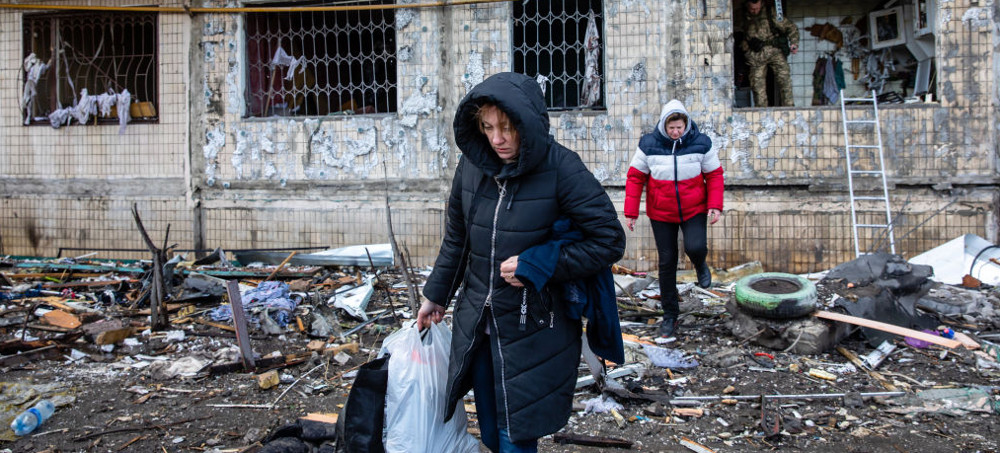
It's Time to Cancel Ukraine's Foreign DebtResidents leave the badly damaged residential building that was hit by a Russian shell. (photo: Mykhaylo PalinChak/Getty)

It's Time to Cancel Ukraine's Foreign Debt
Heidi Chow, Jacobin
Chow writes: "Ukraine owes billions of dollars in foreign debt, most of it to international finance institutions, banks, and hedge funds. If Western governments were serious about helping Ukrainians amid a devastating war, they would push for those debts to be canceled."

Ukraine owes billions of dollars in foreign debt, most of it to international finance institutions, banks, and hedge funds. If Western governments were serious about helping Ukrainians amid a devastating war, they would push for those debts to be canceled.

As bombing and shelling ripped through Ukraine’s towns and cities in the first week of the invasion, the Ukrainian government still made a scheduled interest payment to its private lenders on time. The lenders — mostly international finance institutions, banks, and hedge funds — are all queuing up to collect their debts, with no sign of respite.

The people of Ukraine are fighting for their survival while dealing with huge humanitarian needs, mass displacement, and the horrific siege conditions in Mariupol. And yet they are seeing urgently needed resources flow out of the country to foreign creditors.

Ukraine’s total external government debt amounts to $54 billion. The country is set to pay $7.3 billion in debt repayments this year alone. More than half is due to private lenders like banks and hedge funds, while most of the rest is owed to multilateral institutions such as the International Monetary Fund (IMF), the World Bank, and the European Investment Bank. The current fall in the value of Ukrainian hryvnia against the US dollar will only exacerbate the debt burden, as foreign debts are owed in dollars, heaping extra pressure on the government to find the funds to repay its loans at a time of foreign invasion and extreme economic disruption.

Since the invasion, Ukrainian dollar-denominated bonds, which were issued as part of its 2015 debt restructuring, have been trading at around 25 cents on the dollar. This reflects the high risk of default, but also means that if Ukraine continues to make its debt payments, Western banks and hedge funds could make profits of 300 percent.

The response of multilateral institutions has been to give even more loans to Ukraine. Since the war started, the IMF has given a £1.4 billion emergency loan, while the World Bank has provided a $723 million financial package that includes $589 million in loans. These new loans are being piled on top of Ukraine’s already unsustainable debts.

Ukraine should never have been required to take on these debts in the first place. Following the Russian annexation of Crimea and military conflict in Donbas in 2014, Ukraine faced economic and financial crisis and was forced to take on more foreign loans from international institutions. IMF loans came with strings attached, which pushed Ukraine to accept punishing conditions involving public spending cuts, privatization, and market liberalization. This prescription of failed policies is familiar to many lower-income countries across the Global South, where the IMF has imposed similar conditions on loans for decades, unleashing long-lasting damage on their economies.

Civil society groups are demanding a response to Ukraine’s debt crisis commensurate with the scale of devastation being unleashed, which includes debt cancellation to release finances for humanitarian aid and medical supplies as well as for future reconstruction. They warn about the role that IMF loans have played in restructuring their economy and slashing essential public services. This agenda is damaging at the best of times, let alone during military conflict and instability.

Calling for debt cancellation in response to invasion, disaster, or crisis should not be controversial — it should be an automatic global response. The global debt justice movement is calling for an automatic debt relief process to ensure that unrelenting debt repayments do not prevent governments from responding to humanitarian catastrophes and severe external shocks.

Multilateral institutions and governments should sign up to a global scheme to automatically suspend debt payments at times of invasion, pandemics, and natural and climate disasters. Following debt suspension, an independent assessment should be conducted to identify the level of debt restructuring and cancellation required by all creditors. Instead of fighting for debt suspension and cancellation on a disaster-by-disaster basis, an automatic debt relief mechanism would be the quickest way to provide immediate support.

Financial support to Ukraine should include both debt relief and grants, so that Ukraine is not left servicing its current debt while taking on even more loans with more damaging conditions. The UK government should use its influence to push the IMF and World Bank to cancel Ukraine’s debt to free up funds for immediate relief and for future reconstruction.

As the people of Ukraine fight for their survival as a country, cancelling debt is a crucial act of solidarity — and one that can and should be done immediately.


READ MORE


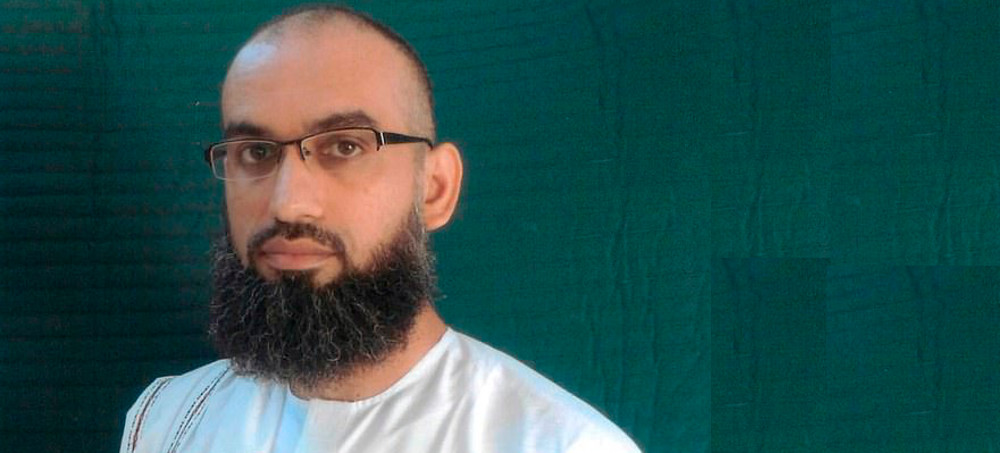
CIA Black Site Detainee Served as Training Prop to Teach Interrogators Torture TechniquesNewly declassified documents reveal Ammar al-Baluchi was repeatedly slammed against a wall while naked until all trainees received 'certification.' (photo: Getty)


CIA Black Site Detainee Served as Training Prop to Teach Interrogators Torture Techniques
Julian Borger, Guardian UK
Borger writes: "Newly declassified documents reveal Ammar al-Baluchi was repeatedly slammed against a wall while naked until all trainees received 'certification.'"

Newly declassified documents reveal Ammar al-Baluchi was repeatedly slammed against a wall while naked until all trainees received ‘certification’


A detainee at a secret CIA detention site in Afghanistan was used as a living prop to teach trainee interrogators, who lined up to take turns at knocking his head against a plywood wall, leaving him with brain damage, according to a US government report.

The details of the torture of Ammar al-Baluchi are in a 2008 report by the CIA’s inspector general, newly declassified as part of a court filing by his lawyers aimed at getting him an independent medical examination.

Baluchi, a 44-year-old Kuwaiti, is one of five defendants before a military tribunal on Guantánamo Bay charged with participation in the 9/11 plot, but the case has been in pre-trial hearings for 10 years, mired in a dispute over legal admissibility of testimony obtained after torture.

According to the inspector general’s report, the CIA was aware that the 2003 rendition of the detainee, Ammar al-Baluchi, from Pakistani custody to the “black site” north of Kabul was conducted “extra-legally,” because at the time he was in Pakistani jurisdiction and no longer represented a terrorist threat.

The report said that interrogators at the site, known both as Cobalt and the Salt Pit, went beyond the CIA’s guidelines in torturing Baluchi, using two techniques without approval: using a stick behind his knees in stress position that involved leaning back while kneeling, and dousing with ice-cold water.

The technique of “walling” was approved by the “enhanced interrogation technique” guidelines sent by CIA headquarters. It involved placing the detainee’s heels against a specially designed plywood wall “which had flexibility to it” and putting a rolled up towel around the detainee’s neck.

“The interrogators would then grab the ends of the towel in front of and below the detainees face and shove [Baluchi] backwards into the wall, never letting go of the towel,” the report said. One of the interrogators (identified only by a code) said the goal was to “bounce” the detainee off the wall. The report noted that Baluchi was “naked for the proceedings.”

There was no time limit for the “walling” sessions but “typically a session did not last for more than two hours at a time.” They went on for so long because Baluchi was being used as a teaching prop.

One former trainee told investigators “all the interrogation students lined up to ‘wall’ Ammar so that [the instructor] could certify them on their ability to use the technique.”

The report said that: “In the case of ‘walling’ in particular the [Office of the Inspector General] had difficulty determining whether the session was designed to elicit information from Ammar or to ensure that all interrogator trainees received their certification.”

The fact that interrogators lined up to “wall” Ammar suggested that “certification was key,” the report concluded.

A neuropsychologist carried out an MRI of Baluchi’s head in late 2018 and found “abnormalities indicating moderate to severe brain damage” in parts of his brain, affecting memory formation and retrieval as well as behavioral regulation. The specialist found that the “abnormalities observed were consistent with traumatic brain injury.”

The inspector general’s report also concluded that Baluchi’s treatment did not yield any useful intelligence. It noted that the interrogators at Cobalt “focused more on whether Ammar was ‘compliant’ than on the quality of the information he was providing.” It called the CIA’s logic in justifying the detention “fuzzy and circular.”

“Ammar fabricated the information he provided when undergoing EITs,” it said. “He later admitted to his interrogators/debriefers that he was terrified and lied to get agency officers to stop the measures … Ammar also explained that he was afraid to tell a lie and was afraid to tell the truth because he did not know how either would be received.”

The interrogators were convinced that Baluchi knew more than he was saying because he was a nephew of the self-proclaimed mastermind of the 9/11 attacks, Khaled Sheikh Mohammed. Baluchi spent more than three years in CIA custody, moved between a total of six “black sites” before being transferred in 2006 to Guantánamo Bay, where he is still awaiting trial.

Alka Pradhan, one of his lawyers said: “If the CIA had not hidden their own conclusions about the illegality of Ammar’s torture for this long, the US government would not have been able to bring charges against Ammar because we now know that the torture inflicted on Ammar led to lasting brain damage in the form of a traumatic brain injury and other debilitating illnesses that cannot be treated at Guantánamo Bay.”

READ MORE


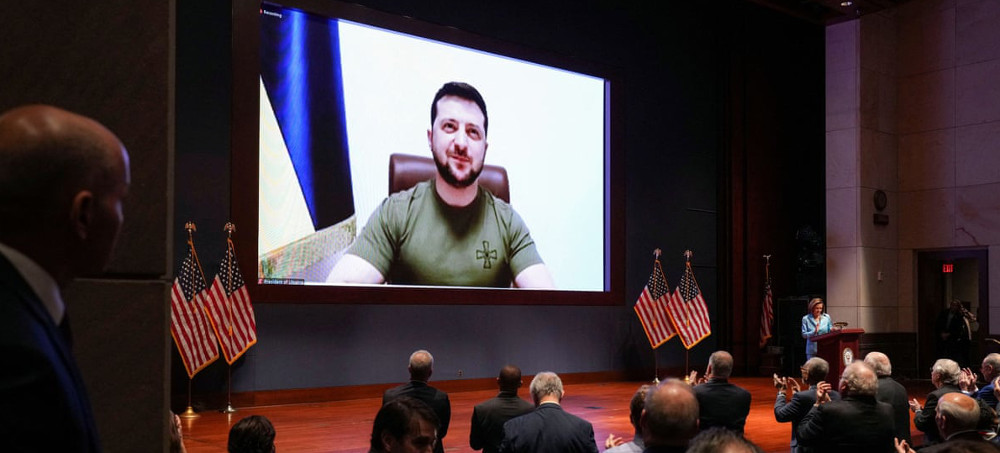
Zelenskyy's Speech Powerfully Shamed Biden and the US. That's as It Should Be.Ukrainian president Volodymyr Zelensky virtually addresses Congress on March 16. (photo: J. Scott Applewhite/Getty)

Zelenskyy's Speech Powerfully Shamed Biden and the US. That's as It Should Be.
Greg Sargent, The Washington Post
Sargent writes: "Ukrainian President Volodymyr Zelensky's wrenching speech to Congress on Wednesday artfully combined lavish praise for the U.S. response to the Russian invasion with emotional appeals for more assistance that were carefully aimed at firing up the collective U.S. conscience."

Ukrainian President Volodymyr Zelensky’s wrenching speech to Congress on Wednesday artfully combined lavish praise for the U.S. response to the Russian invasion with emotional appeals for more assistance that were carefully aimed at firing up the collective U.S. conscience.

Zelensky invoked many touchstones in the positive story the United States tells itself about its triumphs over adversity and progression toward realizing its founding ideals — Pearl Harbor, Martin Luther King Jr., Sept. 11 — to persuade Americans that the Ukrainian freedom struggle is our freedom struggle.

In perhaps the most powerful moment, Zelensky aired video of the horrors Russia is inflicting on the Ukrainian people, followed by the stark words: “Close the sky over Ukraine.” Addressing President Biden directly in halting English, Zelensky said: “Being the leader of the world means to be the leader of peace.”

In so doing, Zelensky reiterated his call for the United States and its allies to impose a no-fly zone over Ukraine, and again demanded new shipments of fighter jets, which the administration has been reluctant to deliver.

This is already being portrayed as an effort to shame Biden into plunging deeper into the conflict. But in a way, both men are right.

Zelensky is unquestionably right that the United States and its allies could do more. Yet Biden is also right to be proceeding with extreme caution, and media coverage that obscures the complexities of that calculus is not exactly enhancing the long term prospects for humanity.

“It was heartbreaking,” Sen. Chris Murphy (D-Conn.) told me of Zelensky’s speech. “I don’t know how any member of Congress walks out of there without thinking about what more the United States can do.”

Zelensky’s dramatic elevation of the stakes is “not hyperbole,” Murphy said. “This is the most significant challenge to the post-World War II order in our lifetimes, and we should treat it that way."

Yet Murphy noted a complication. On one hand, Zelensky should demand as much military aid as possible, Murphy said, because “he has an obligation” to press the United States and its allies to “make the maximalist commitment to save his country.”

On the other, Murphy pointed out, “it’s not in the world’s best interests for this conflict to spill over into a European-wide war," or to see “direct conflict between the United States and Russia for the first time in history.”

The Biden administration has argued that Zelensky’s requests — for a no-fly zone and Polish jet fighters — risk being seen as overt acts of war against Russia. U.S. intelligence warns of “Russian escalation against NATO” and a “high risk scenario.”

Despite Zelensky’s speech, Murphy says, a no-fly zone will likely continue to be a nonstarter for both parties. “A no-fly zone is the United States declaring war against Russia,” Murphy told me.

Murphy also argued that the administration, having managed the crisis exceptionally so far, should be given the benefit of the doubt on which weapons to supply. But he suggested Zelensky’s speech would encourage lawmakers to “outflank the president” in calls for military aid.

“I don’t think that’s a helpful dynamic to Ukraine or the world,” Murphy said. The administration is announcing $1 billion in new assistance to Ukraine, but calls for more will grow louder.

Here’s the larger context. At a time when the United States and its allies are attempting a fiendishly difficult balance — between aiding Ukraine and inflicting sanctions on Russia without provoking World War III — the pressure on Biden to overreach is intense from the media, from Republicans and from certain foreign policy voices.

Media questioning of the White House is largely posed from a hawkish direction. As a darkly comic video posted by the Intercept shows, much reporter questioning demands to know why Biden hasn’t agreed to Ukrainian demands for a no-fly zone and other weaponry.

In some cases, questions echo GOP talking points: One reporter asked whether Biden is “showing enough strength against Putin.” Similarly, a New York Times piece intoned that if Biden doesn’t honor Zelensky’s demands, it could open him up to GOP charges that he’s “soft on Russia” and treated that argument respectfully.

This sort of thing lets Republicans get away with calling for more “toughness” without accounting for the obvious world-historical downside risks of too much “toughness.” This effectively launders bad-faith posturing and confuses the debate with simplistic framing rather than illuminating its complexities and trade-offs.

Max Bergmann, a foreign policy analyst at the Center for American Progress, points out that this “irresponsible” bias toward hawkishness reflects how much memories of the Cold War have faded.

“The concept of a potential nuclear escalation is foreign to everybody,” Bergmann told me. This makes it easier, he said, for the media and analysts to “argue that the U.S. should militarily intervene."

Now, Bergmann said, “we have to be very nervous about how this could escalate.” Bergmann noted that twin assumptions animating much current discourse — Putin is “a madman,” yet we can somehow escalate without him using nuclear weapons — is “absurd.”

Biden may be uniquely equipped for this moment, as someone who “experienced the Cold War," Bergmann said. "That’s when he became a senator.”

A great deal is riding on that being right. To the degree that the administration and lawmakers avoid letting pressure color decision-making, it can only be all the better.


READ MORE


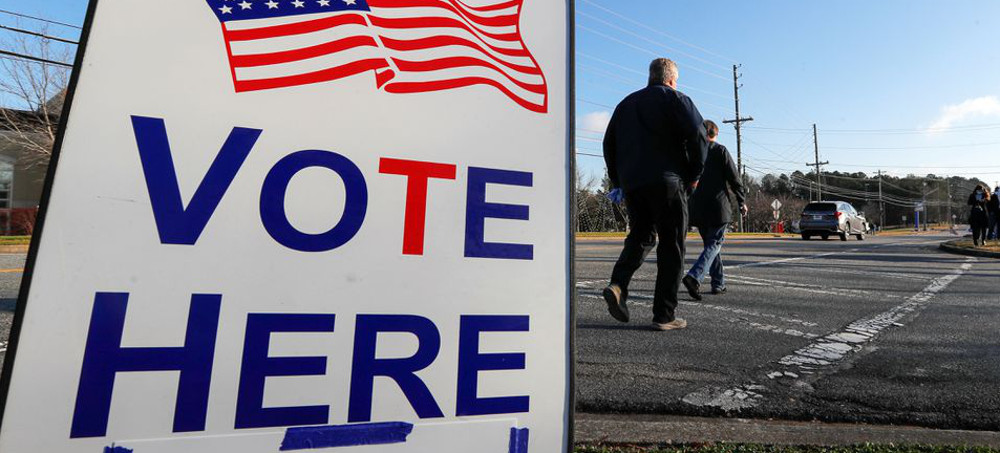
Georgia Lawmakers Follow Florida to Advance Republican-Backed Bill to Police ElectionsA sign is seen as voters line up for the U.S. Senate run-off election, at a polling location in Marietta, Georgia, U.S., January 5, 2021. (photo: Mike Segar/Reuters)

Georgia Lawmakers Follow Florida to Advance Republican-Backed Bill to Police Elections
Joseph Ax, Reuters
Ax writes: "Republican lawmakers in Georgia on Tuesday advanced a bill expanding law enforcement's power to investigate election fraud, adding to the push by U.S. conservatives for more restrictive voting laws after former President Donald Trump's false claims that the 2020 election was rigged."

Republican lawmakers in Georgia on Tuesday advanced a bill expanding law enforcement's power to investigate election fraud, adding to the push by U.S. conservatives for more restrictive voting laws after former President Donald Trump's false claims that the 2020 election was rigged.

Georgia's House of Representatives approved the legislation on a largely party-line vote of 98-73, sending it to the state Senate, less than a week after Florida's Republican-controlled legislature passed a measure to create a first-of-its-kind election police force in that state.

Voting rights groups and Democrats in both states say the legislation is intended to appease Trump and his supporters despite the fact that election fraud is exceedingly rare in the United States.

They also say the new laws will intimidate voters, particularly people of color, while providing a pretense for politicians to undermine confidence in election outcomes.

"It's just finding a new way to stop people from voting in the same way that has always been done in this country," said Stephanie Ali, policy director for the New Georgia Project Action Fund, a voting rights group.

A coalition of organizations, including Fair Fight Action, the voting group founded by Democratic gubernatorial candidate Stacey Abrams, announced a nearly $1.5 million campaign on Tuesday opposing the Georgia bill.

Georgia and Florida had already passed sweeping voting restrictions last year, part of a wave of such legislation among Republican-controlled states.

Georgia's new measure would grant the Georgia Bureau of Investigation (GBI) statutory authority, and subpoena power, to investigate election fraud. Under current law, claims of voting irregularities are initially investigated by the state elections board or the secretary of state's office.

Trump has attacked Georgia Secretary of State Brad Raffensperger and Governor Brian Kemp, both Republicans, for failing to overturn the state's 2020 election results, which Trump falsely says were tainted by fraud. Both incumbents face Republican challengers endorsed by Trump as they seek re-election this year.

Senate approval of Georgia's House-passed bill - both chambers are majority-Republican - would send it to Kemp for his signature or veto. A spokesperson for Kemp said he does not comment on pending legislation.

The chief sponsor of the Georgia bill, Representative James Burchett, insisted the measure was designed mainly to bolster the "chain of custody" for ballots and codify safeguards already in place, thus strengthening election integrity.

He added that the GBI "has been investigating elections for years," and that the bill merely allows the agency to open voter fraud inquiries on its own, without a request by the elections board or secretary of state.

OTHER STATES COULD FOLLOW

The new Florida bill creates an Office of Election Crimes and Security under the auspices of the Department of State, part of the executive branch of Republican Governor Ron DeSantis' administration.

In addition, the legislation calls for the governor to appoint sworn officers at the Florida Department of Law Enforcement as special agents dedicated to investigating election crimes.

The measure would allow the department to examine a range of potential illegal activities, a Department of State spokesman said, including threats to election officials, forged signatures on petitions, fraudulent registration forms and misuse of mail ballots.

DeSantis, a Trump ally widely seen as a leading presidential contender in 2024, has said the bill would improve public trust in elections.

"Allocating sufficient resources to deter fraud and ensure our election laws are enforced should not be controversial or politicized," said DeSantis' press secretary Christina Pushaw. She said the governor plans to sign the bill.

Leon County Supervisor of Elections Mark Earley, the incoming president of the state's association of elections supervisors, said the legislation gives credence to the false notion that voter fraud is a serious problem.

"The context is clear – there's a massive disinformation campaign across the nation, and this bill plays right into that," Earley said.

Dozens of courts and election officials around the country have concluded that Trump's fraud allegations have no factual basis. But the former president continues to assert that President Joe Biden's 2020 victory was illegitimate, and polls show a significant number of Republicans believe him.

Lawmakers in a handful of other states also have introduced bills to increase investigations of alleged election fraud, according to the Brennan Center for Justice at New York University School of Law, though prospects for their passage is uncertain.

In Arizona, a Republican lawmaker's proposal to create an election crimes investigatory agency failed to win committee support in time for this year's legislative session.

Some states, such as Texas, have increased prosecution resources for election cases in the absence of new legislation, said Wendy Weiser, who directs the Brennan Center's democracy program.


READ MORE


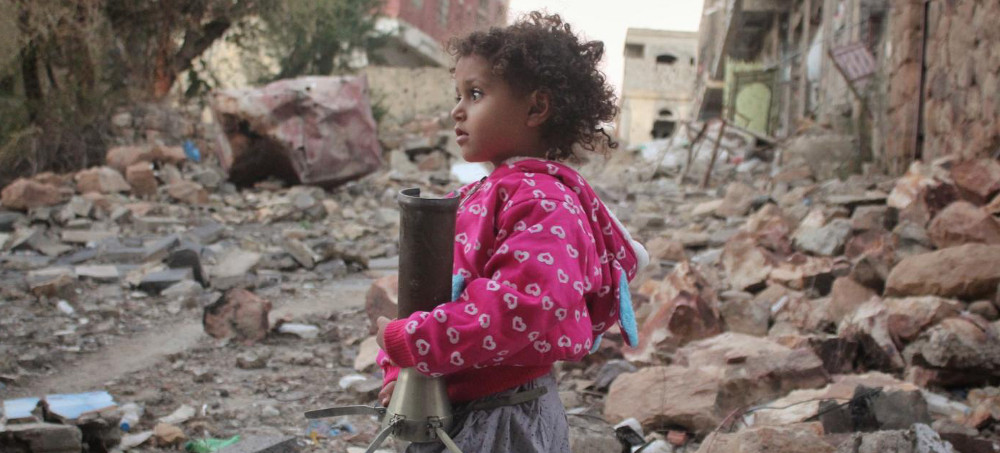
A Tale of Two Wars: Biden Decries Russian Atrocities in Ukraine While Backing Saudi/UAE War in YemenA young girl holds shrapnel in the Yemeni city of Taiz in March 2021. (photo: Khalid al-Banna)

A Tale of Two Wars: Biden Decries Russian Atrocities in Ukraine While Backing Saudi/UAE War in Yemen
Democracy Now!
Excerpt: "Sarah Leah Whitson, executive director of Democracy for the Arab World Now, says the muted criticism of Saudi abuses reveals a double standard when it comes to how Western countries deal with the absolute monarchy, which has been waging a brutal assault on neighboring Yemen for almost seven years with U.S. support."

As the U.S. and U.K. push for Saudi Arabia to increase oil production to offset a rise in global energy prices amid sanctions on Russia, the kingdom on Saturday announced it had executed 81 people — the country’s largest mass execution in decades. Sarah Leah Whitson, executive director of Democracy for the Arab World Now, says the muted criticism of Saudi abuses reveals a double standard when it comes to how Western countries deal with the absolute monarchy, which has been waging a brutal assault on neighboring Yemen for almost seven years with U.S. support. If the U.S. wants the world to oppose Russia’s brutal war in Ukraine, “then it’s got to stop supporting the war in Yemen,” says Whitson, who adds that disparate coverage of the wars in Ukraine and Yemen point to “inherent racism” in Western media.

AMY GOODMAN: This is Democracy Now! I’m Amy Goodman.

Today, British Prime Minister Boris Johnson is in Saudi Arabia and the United Arab Emirates to hold talks on energy security, even as critics raise concerns about the countries’ human rights records. This comes as U.S. officials are also reportedly talking to Saudi officials about President Biden visiting to Saudi Arabia to discuss global oil supply, while the U.S. refuses to directly condemn Saudi Arabia for executing 81 men on Saturday — its largest mass execution ever. Efforts to negotiate with the Saudis to increase oil and sanctions on Russian oil come as much of the world is horrified by the atrocities in the war in Ukraine. UNICEF reports the Ukraine war is creating a child refugee almost every second in Ukraine.

At the same time, we’re hearing very little about the world’s worst humanitarian crisis unfolding in Yemen, which is now seven years into the Saudi-led war and blockade, backed by arms sales and technical assistance from the United States and its allies, including the United Kingdom. The United Nations warns acute cases of hunger in Yemen have reached an unprecedented level, with over 160,000 people likely to experience famine in the next half-year. More than 17 million people in Yemen are in need of food assistance, with high levels of acute malnutrition among children under the age of 5.

This was the focus of Part 2 of my conversation with Sarah Leah Whitson. She’s the executive director of Democracy for the Arab World Now, or DAWN. We spoke to her Tuesday about DAWN’s civil lawsuit against the Saudi Arabian Crown Prince Mohammed bin Salman for the murder of Jamal Khashoggi, who was assassinated in the Saudi Consulate in Turkey in 2018 and was DAWN’s founder. I asked Sarah Leah Whitson: How is it possible that the U.S. is continuing to support the Saudi-led war and blockade of Yemen?

SARAH LEAH WHITSON: It’s mind-boggling. And it’s mind-boggling that Mohammed bin Salman has actually said that he will not increase oil production unless the U.S. increases its support for the war in Yemen. Basically, the Biden administration is bargaining to do more to save the children of Ukraine by massacring more children in Yemen. That is the formula. And that’s why it’s just — it’s so discombobulating to see Secretary Blinken and President Biden falling over themselves to decry Russian atrocities in Ukraine while they support very similar, if not worse — certainly, to date, worse — atrocities by Saudi Arabia and the UAE in Yemen.

We have to be very clear: Saudi and UAE are starving the people of Yemen with a seven-year air, land and sea blockade that has eviscerated the country’s ability to import food, medicine and fuel. Yemen is a country that imports over 90% of its food. Of course people are starving when Saudi and UAE impose a total blockade on the country. Of course people are starving when sanctions continue to be in place. They haven’t entirely been lifted. The U.S. just redesignated so-called Houthi financiers, that will further debilitate the ability of the country to import even legitimate products like fuel and food and medicine imports.

What the Biden administration has now done is what even the Trump administration refused to do, which is reengage as a party of the conflict, putting American troops on the line as part of the fighting effort, as part of the war, making them legitimate military targets in the UAE, where U.S. forces from the military base in the UAE have actively participated in firing Patriot missiles against the Houthis in Yemen, ostensibly to defend the UAE from incoming Houthi missiles. But really the best way for the UAE to protect itself is to stop supporting proxy forces, to stop arming and funding proxy forces, which it dramatically increased in doing in the beginning of this year, and to end its blockade of Yemen. Same goes for Saudi Arabia. This is a dead-end war.

Best news I heard this morning: Reportedly, the Saudis have invited Houthi representatives for talks to Riyadh. I don’t know if the Houthis will trust this offer. There have been prior offers like this. But the whole world knows that the Saudis and the Emiratis are not going to win this war. It’s been seven years. They thought it was going to take weeks. What a joke. They have decimated this country.

And if the United States expects the entire world, which has not gone along, to sanction Russia, to buy what it’s selling in terms of defending Ukraine, then it’s got to stop supporting the war in Yemen, because the world sees this. The world sees that when the United States talks about sovereignty and violence and not attempting to extract concessions by force, it’s got to follow, to talk the talk in Yemen, not just tell the world what to do in Ukraine, because the world is not buying it. This is why there is not more support for the war against Russia in Ukraine.

AMY GOODMAN: You know, maybe that’s where you’ve got it wrong, when you say the world sees. I think the world doesn’t see the way it sees what’s happening in Ukraine right now. I want to read a tweet from CodePink. “Why is there such a disparity between coverage of the war on Ukraine vs. the war on Yemen? Coverage of Yemen reveals the US and UK’s complicity in creating the humanitarian crisis. Coverage of Ukraine constructs the US, the UK, & their allies as the 'saviors of democracy.'” So, let’s talk about the difference. I mean, you have for example, CNN anchors — and this is not wrong. Perhaps it should be a model of coverage of war in so many different cities, in Ukraine, so you see the real effects of what war looks like, feels like, smells like, the destruction of hospitals, the bombing of schools, and people feel it viscerally. Could you imagine if you had those same hosts in Sana’a, in Aden, in other places in Yemen each day to feel this humanitarian catastrophe, the worst in the world? Can you talk about that, the actual lack of coverage of what’s happening on the ground in Yemen, so the world doesn’t respond, right? As Noam Chomsky says, the media manufactures consent for war, and lets people know what’s happening so they can respond.

SARAH LEAH WHITSON: There are three elements to this, Amy. The first is the lack of coverage is not an accident. It is by design. Saudi and the UAE have done everything they can to block international media, block international human rights investigators, including myself, from traveling to Yemen. When the war started, we — when I was at Human Rights Watch, we were on the ground in Yemen. We were able to travel to Yemen to document what was happening, to document the destruction, to interview victims. The Saudis made that increasingly difficult, including banning, forcibly banning, by threatening to withdraw funds from U.N. planes that were still traveling to Yemen and taking in humanitarian organizations. So, the Saudis, they understand the power of the media. They understand the power of the coverage that you described. And that’s why they have done everything they can to make it impossible. It is so difficult for international media to get anywhere near the fighting in Yemen. Aden remains accessible, but you have to take a boat from Djibouti to get there. It’s virtually impossible to fly into the country. So, the restrictions on getting in for international media are tremendous, versus, of course, Ukraine, where anybody can go in freely to document what’s happening.

The second is just the factor of time. The media jumps from one crisis to another. The Ukraine crisis is new. The Yemen crisis is old. It’s been seven years. And we have seen, time and again, how the media loses interest and has to move on to the next thing. So there’s an attention span issue.

And finally, there is the inherent racism that we see and that we’ve seen on such grotesque display by the Western media, talking about the white and blue-eyed, blond-haired Ukrainians who are somehow different. Their refugee status is different. Their suffering is different. They’re civilized people. They’re European people. And so there is an inherent bias in the Western media, in particular, who are the bulk of those present in Ukraine, to sympathize with, to feel compassion and suffering for Ukrainians under bombardment, but not the same suffering, not the same pain for Yemenis under bombardment, for Yemenis who are literally being starved to death. And I think this is a good moment for everyone in the media to check their biases, to really think about why that is and what they can do to fix it. I would hope that the international media uses this as an opportunity to redouble its efforts to travel to Yemen and see for itself. When they have shown up, as the BBC did last year in some unbelievable footage, unbelievable coverage, it did make a difference. And I really think and hope and I wish that the international media spends just a fraction of the effort they’re making now to cover Ukraine to get into Yemen, to show the world what’s happening. This is a good moment to draw out the comparisons, the strong, strong parallels between what’s happening in Yemen and what’s happening in Ukraine.

AMY GOODMAN: Finally, Sarah Leah Whitson, I wanted to ask you about Congress and what it’s doing about Yemen right now, because this isn’t just the Saudi-UAE-led attack on Yemen. It is supplied militarily and helped in its funding by the United States. Can you talk about what’s happening in Congress?

SARAH LEAH WHITSON: Sure. So, while, under the Trump administration, the U.S. Congress, in a remarkable show of bipartisan support, Republican and Democrat, voted three times to ban U.S. support for the war in Yemen and ban arms sales to Saudi Arabia for the war in Yemen, under the Biden administration they approved arms sales to Saudi Arabia for the war in Yemen, using the handy fig leaf of calling them defensive weapons. It’s quite disappointing, if not disgusting, that even members of Congress, like Chris Murphy, who have been so vocal in condemning the war in Yemen and so vocal in condemning arms sales to Yemen, and even vowing that he would not support arms sales to Yemen, voted in support of arms sales to Yemen that the Biden administration put forward.

I think, unfortunately, it reveals a great deal about the conflict of interest within the U.S. government that is so beholden to the defense industry and defense industry profits and defense industry employment, both before and after — they are part of the government — but as well as the notion that we must continue to cajole the Saudi Arabians for acquiescence to a new arms deal with Iran, or now for increasing oil production, by doing what they want and sacrificing Yemen and the Yemeni people if we have to. There are efforts to introduce a new war powers resolution, led by, among others, Representative Ro Khanna, that would resubmit the renewed, reengaged American fighting in the Yemen war to a congressional war powers resolution and war powers approval. But I’m not entirely confident that that will pass.

AMY GOODMAN: And can you explain exactly what is the U.S. role in the attack, the decimation of Yemen?

SARAH LEAH WHITSON: Sure, it’s multifold. Number one, of course, is the provision of American weapons. They are the bulk of the weapons purchased by Saudi Arabia and the UAE, and those are the weapons that are landing on the heads of Yemeni children, Yemeni women, Yemeni homes, Yemeni farms, Yemeni schools, Yemeni universities. This is how this country is being destroyed, with American weapons. In addition, there has been years of so-called intelligence support — I should say dumbness support — in supposedly helping the Saudis carry out their targeting and decimation and bombardment, which of course has been wildly indiscriminate, because the Saudis insist on flying their planes so high, to avoid being shot, that they really can’t target anything with any sort of precision. And now we have the direct engagement of U.S. forces, as I was mentioning, in the UAE to support Emirati forces to fire missiles back at incoming Houthi missiles. So the United States is directly a party to this conflict again, and its troops are at risk in the UAE as parties to the war. And it’s just remarkable to me that President Biden would endanger Americans this way.

AMY GOODMAN: That’s Sarah Leah Whitson, executive director of Democracy for the Arab World Now, or DAWN, which was founded by Jamal Khashoggi, who was murdered by Saudi agents in the Saudi Consulate in Istanbul in 2018.


READ MORE


The Census Undercounted People of Color. Here's What That Means for Environmental Justice.Even minor census undercounts could have substantial knock-on effects and deprive needy communities of investment and representation. (photo: Lev Radin)

The Census Undercounted People of Color. Here's What That Means for Environmental Justice.
Adam Mahoney, Grist
Mahoney writes: "It's hard to overstate the significance of the U.S. census in guiding how the country is governed."

Even minor census undercounts could have substantial knock-on effects and deprive needy communities of investment and representation.

It’s hard to overstate the significance of the U.S. census in guiding how the country is governed. A granular enumeration of the national population that’s undertaken once per decade, the census count is intended to apportion political representation and guide the fair distribution of trillions of dollars in government funding to cities, states, and tribes. The 2020 census results, which were announced last year, are also poised to play a key role in the Biden administration’s signature environmental justice program, which promises that at least 40 percent of the benefits of government spending on infrastructure, clean energy, and other climate-related programs will be directed to disadvantaged census tracts.

Given the high stakes involved, even minor deviations between the census count and the country’s actual demographics can have substantial knock-on effects. On Thursday, the U.S. Census Bureau released a statistical analysis that illuminated a persistent trend in the undertaking: the undercounting of people of color. Black Americans, Latinos, and Indigenous people living on reservations were undercounted by roughly 3, 5, and 6 percent, respectively. Those undercounts are consistent with 2010 results, though Latinos experienced a far greater undercount than in 2010, when it was just 1.5 percent. White Americans and Asian Americans, on the other hand, were overcounted in the most recent census.

Census undercounts happen for several reasons: language barriers, variable literacy rates, lack of internet access, and distrust of the federal government, which may have played an outsize role in 2020. The Census Bureau was able to pinpoint miscounts with a post-census survey asking a sample of people where they were living on the day of the census and matching their responses to information collected during the initial effort.

Given the persistence of extreme residential segregation in the U.S., low population tallies in communities of color can drive divestment and divert much-needed dollars for things like affordable housing, transportation, health care, and environmental remediation. Environmental justice projects like replacing lead pipes, cleaning up contaminated soil, updating failing sewage systems, and fortifying housing stocks against heat waves, storms, and floods could also suffer. Finally, undercounts can lead to communities of color having diluted political representation if districts are drawn based on incomplete data.

Fawn Sharp, president of the National Congress of American Indians, issued a statement last week saying the results “confirm our worst fears.”

“Despite the challenges of the 2020 Census, [American Indians and Alaska Natives] living on reservation lands deserve to be counted and to receive their fair share of federal resources,” she added.

Even beyond the undercounts, population trends underscored by the most recent census could have destabilizing effects on environmental policymaking. For example, nine out of the ten U.S. cities with the largest Black populations have experienced substantial drops in Black residents since 2000. Topping that list, Detroit and Chicago lost over 250,000 Black residents each during that time period. Across the country, Black residents are moving out of big cities because of worries around violence, access to safe and affordable housing, and the health and economic issues stemming from their disproportionate exposure to the most toxic and polluted urban areas.

In one census tract in Chicago’s Englewood community, which was 97 percent Black in 2010, the exodus is particularly apparent. Just a decade ago, the corner of 57th Street and Normal Boulevard was adorned by greenery and homes. Since then, however, 400 homes have been demolished to make way for the expansion of a freight yard. In that time, the area’s census tract lost 1,600 Black residents, though its total population only declined by 1,400 overall because of increases in white and Latino residents.

The railyard’s expansion exacerbated pollution in the community, which already suffered from proximity to hazardous waste and experienced more diesel pollution than roughly 95 percent of the country, according to Environmental Protection Agency data. Longtime Englewood resident Deborah Payne told Grist that she was forced to move out after the community around her disappeared to make way for the railway. In many ways, she added, the pollution helped drive the exodus around her.

“We were always affected by dust and pollution,” she said. “It was noisy and dusty, they didn’t do anything to keep up greenery, and it affected the community because a lot of people around there would go up on most freight trains and open them up to take things.”

While environmental issues might be driving some of the migration of Black people out of cities, the suburbs to which they’re moving don’t reliably offer refuge. In Chicago’s case, thousands of Black residents are choosing to move to neighboring areas facing their own acute environmental challenges: Joliet, Illinois, a warehouse and logistics hub where industry has left the city in dire need of new water sources, has grown by just 3,000 residents since 2010, but its Black population has grown by 2,200.

In other words, while census undercounts jeopardize the tool’s effectiveness, the count has nevertheless illuminated patterns and challenges that policymakers will want to take into account.

“How could anyone not be concerned?” Census Bureau Director Robert Santos said of the shortcomings when announcing the Bureau’s analysis last week. “These findings will put some of those concerns to rest and leave others for further exploration.”


READ MORE

Special Coverage: Ukraine, A Historic Resistance
https://www.rsn.org/001/ukraine-a-historic-resistance.html


Contribute to RSN

Follow us on facebook and twitter!

Update My Monthly Donation

                                                                    PO Box 2043 / Citrus Heights, CA 95611


Top News | 'He’s Not Going to Run Unopposed': Sanders Rejects Schumer for Majority Leader

                                                               LOTS OF POSTS IGNORED BY BLOGGER..... OR REMOVED ON THEIR WHIM! ALL POSTS ARE...