YOU'RE HERE! SUPPORT INDEPENDENT MEDIA SO THAT IT CONTINUES!

19 May 22
Live on the homepage now!
Reader Supported News
ORGANIZATION ABUSE! There is no way we should have to work this hard to pull in the few donations we need to meet the organization’s obligations. Honestly it’s abusive. There are many people who see this as entertainment. It’s not. We are actually trying to make a difference. If you are looking for free website to keep you amused, this is not it. If you believe that community empowerment through accurate information can make a difference this is a good place to be. Donate, it matters.
Marc Ash • Founder, Reader Supported News
Sure, I'll make a donation!

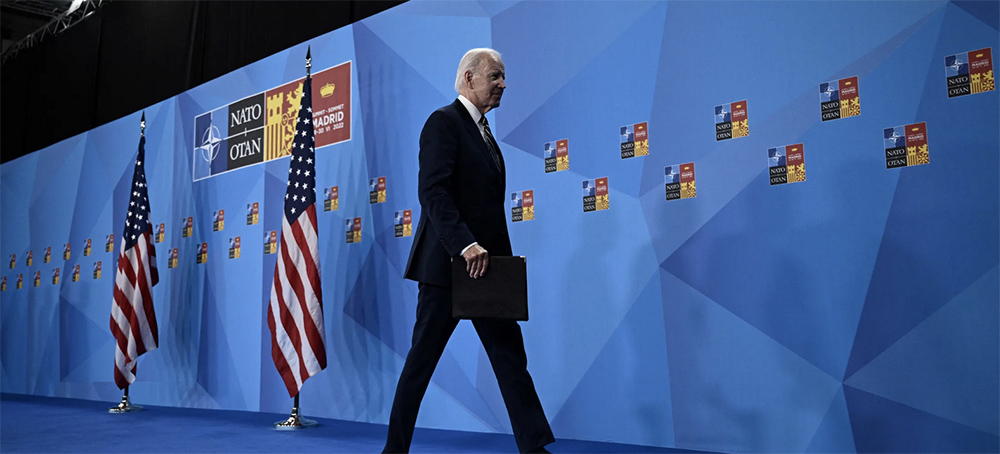
Robin Wright | A "New Era" of NATO Expansion Deepens the Divide Between Russia and the West
Robin Wright, The New Yorker
Wright writes: "The decision by Finland and Sweden to join the alliance has spurred debate about the move's long-term consequences."
The decision by Finland and Sweden to join the alliance has spurred debate about the move’s long-term consequences.
For seventy-seven years, Finland’s frontier with Russia has been peaceful. The border runs from the Baltic Sea through windswept farmlands and the Lapland wilderness to the frozen Arctic. It is, in places, just a farm fence designed to control wandering reindeer more than to thwart invading soldiers. Blue-and-white posts mark the Finnish side; red-and-green posts signify Russian soil. Both governments have encouraged cross-border tourism and economic ties to help “people to learn the basics of peaceful co-existence,” as the Finnish Ministry for Foreign Affairs says on its Web site. The Nordic nation resisted joining other Europeans in NATO; high-speed trains connect Helsinki to St. Petersburg. Since the Second World War, “Finlandization” has been synonymous with neutrality worldwide.
Then Vladimir Putin invaded Ukraine. In a whirlwind policy reversal, Finland announced, on Sunday, that it will seek membership in NATO. “This is a historic day,” President Sauli Niinistö said, at a press conference. “A new era begins.” On Tuesday, the Finnish Parliament voted 188–8 to join the alliance. If Finland is accepted, its eight-hundred-mile border will become NATO’s longest boundary with Russia, more than doubling the length of Europe’s front line. Sweden has followed suit. “We’re now facing a fundamentally changed security environment in Europe,” the Swedish Prime Minister, Magdalena Andersson, said, on Sunday. “The Kremlin has shown that they are prepared to use violence to achieve their political objectives and that they don’t hesitate to take enormous risks.”
The joint decision, three months into the war in Ukraine, reflects Europe’s fears about Putin’s long-term intentions—and the uncertain prospect of any real peaceful coexistence. For years, support within Finland for joining NATO had dipped to as low as twenty per cent. It jumped to fifty-three per cent in February, to sixty-two in March, and to a record high of seventy-six per cent this month, according to surveys conducted by Taloustutkimus for the Yle news agency. The leap is similar in Stockholm, where security doctrine has long avoided participating in military alliances. For the first time, the majority in Sweden, which has not been at war since the Napoleonic era, favor NATO membership.
NATO has embraced the two Northern European countries, which together form a strategic landmass. (Finland is about the size of Montana, and Sweden is slightly larger than California.) Rose Gottemoeller, a former deputy secretary-general of NATO and U.S. Under-Secretary of State for Arms Control and International Security, called it a “major strategic defeat for Russia, turning the Baltic Sea into a NATO lake.” The decision sends a powerful message that “aggression does not pay,” NATO’s secretary-general, Jens Stoltenberg, told reporters, over the weekend. “President Putin wants Ukraine defeated. NATO down. North America and Europe divided.” Instead, NATO is stronger than ever. And Europe and the United States are more united. Ukraine, he also boldly predicted, “can win this war.” On Sunday, NATO’s foreign ministers met with their Finnish and Swedish counterparts in Berlin. Afterward, U.S. Secretary of State Antony Blinken said there is “very strong consensus” for bringing Finland and Sweden into the alliance, despite a threat by Turkey to block them. The Biden Administration will host the leaders of Finland and Sweden and also their defense officials in Washington this week, while Blinken will meet with his Turkish counterpart at the U.N.
For the Nordic neighbors, the reversal may seem like a no-brainer. Putin “trolled us,” René Nyberg, a former Finnish Ambassador to Russia who later led a group promoting Finnish industry in Russia, told me. Putin’s duplicity—a “propaganda assault” invoking NATO as a pretext to seize Ukraine—“caused this enlargement,” he said. A detailed assessment by the Swedish foreign ministry concluded that Russia’s aggression reflected “a structural, long-term and significant deterioration of the security environment in Europe and globally.”
Yet the response by Finland and Sweden to what they view as an existential danger has also spawned one of the fiercest debates since the end of the Cold War about the world’s mightiest military alliance. One of NATO’s earliest critics was George F. Kennan, the architect of the U.S.’s “containment” strategy to isolate the Soviet Union. In an Op-Ed for the Times, in 1997, he warned that NATO expansion after the Soviets’ demise “would be the most fateful error of American policy in the entire post-cold-war era.” It could inflame nationalist, anti-Western, and militaristic tendencies in Russia, have an adverse effect on nascent Russian democracy, and hinder arms-control agreements. Today the debate is even more complicated.
For some, the way NATO agreed, in 1994, to welcome former Soviet allies “betrayed a catastrophic failure of imagination,” Daniel Treisman, a Russia expert at the University of California, Los Angeles, told me. The Czech Republic, Hungary, and Poland—three former Warsaw Pact members aligned with Moscow—joined in 1999. “The major international challenge of the nineteen-nineties was to integrate Russia securely into the Western world,” Treisman said. The West should have generated new financial, commercial, cultural, and political links—and new European security arrangements—to complement NATO. “If we had succeeded in that, the security of Eastern Europe would have taken care of itself,” he said. Instead, the West failed to understand how Moscow would perceive NATO’s guns edging eastward. Seven other nations, including three former Soviet republics and three more Warsaw Pact countries, became members in 2004. Discussion about adding Ukraine and Georgia, which began in 2008—long before either qualified for membership—also invited Putin “to call our bluff,” Treisman said. Four other countries joined between 2009 and 2020. Thirty nations, together, now have nearly four times more military personnel than Russia and also many more tanks, warplanes, and artillery. The Kremlin, however, has a larger arsenal of tactical nuclear weapons near Europe’s borders.
Even long-time supporters of U.S. and European security guarantees for Finland and Sweden are concerned about the consequences of the two northern nations joining the alliance. “Over all, Russia certainly loses here. But a weak and humiliated Russia is a dangerous Russia,” Anne-Marie Slaughter, a former director of policy planning at the State Department who is now the chief executive of the New America think tank, told me. She cited the history of a “weak and humiliated” Germany between the world wars that opened the way for Hitler’s rise to power and aggression across Europe. “Putin may well be able to stay in power for even longer on the strength of ‘the foreign enemy’ encroaching on Russia’s borders,” she said.
Slaughter added, “What is driving me crazy right now is the unspoken assumptions that are driving these choices, and that will once again block true pan-European security.” Taking tangible steps to support Ukraine, Finland, Sweden, and other European countries that legitimately feel threatened by Putin shouldn’t preclude attempts to further integrate Europe and Russia, which has been a major player on the Continent since 1648. Meanwhile, countries excluded from NATO “have less and less chance of ever being admitted to the charmed circle of ‘the West,’ and have less and less hope of being supported in their own struggles for decent democratic government,” Slaughter said.
Others, in a “realist” foreign-policy camp, believe that the United States should focus its clout, diplomacy, and resources on big-power rivalries and existential challenges. “The climate crisis is becoming an afterthought. China now takes a back seat to a vastly exaggerated Russian ‘threat,’ ” Andrew Bacevich, a West Point graduate and the president of the Quincy Institute, told me. Putin’s invasion has hijacked the U.S. national-security agenda, preëmpting a “much-needed debate about the wisdom of NATO expansion,” Bacevich said. “Passions take priority over strategy.”
The Swedish Peace and Arbitration Society has warned against escalating tensions with Russia in ways that could increase the threat of violent retaliation. “Joining NATO would be preparing for war,” Gabriella Irsten, the organization’s advocacy officer, told me. Indeed, Russia immediately vowed retaliation—“both of a military-technical and other nature”—to “neutralize” perceived threats from NATO expansion, the Russian foreign ministry said, on Friday. More ominously, Dmitry Polyanskiy, Russia’s deputy U.N. envoy, warned that, if Finland and Sweden “become part of the enemy, well, they bear all the risks.”
The curious irony is that, “for the longest time, Putin himself was at peace with the decision” to enlarge NATO, Gottemoeller, who is now at Stanford University, told me. In 2002, Putin signed the Rome Declaration, which created the NATO-Russia Council and its agenda of joint projects, such as containing nuclear proliferation and preventing drug smuggling from Afghanistan. Putin may exploit the perception of a European enemy because it helps him sustain power, Gottemoeller said. At the same time, she added, “it’s not a good long-term prognosis—Russia permanently at odds with its European neighbors, members of NATO and the E.U. or not.”
To ease the transition, Niinistö, the Finnish President, personally called Putin to explain the decision. “The surprise was that he took it so calmly,” Niinistö told CNN. “It seems that there are no immediate problems coming.” On Monday, Finland’s border with Russia was still quiet. “War in Ukraine has had very minor influences to the traffic,” Commander Kimmo Ahvonen, of the Finnish Border Guard, told me. “Border situation has been stable all the time, and coöperation with Russian authorities is working quite normally.”
The longer-term reality is a wider and deeper fissure dividing NATO and Russia. Europe is fractured, Alexander Stubb, the former Finnish Prime Minister, told CNN. A new Iron Curtain pits “an aggressive authoritarian, totalitarian revisionist and imperialist Russia” against dozens of European democracies working in tandem to isolate it. “That’s the future,” he said. Whatever the new sense of security is today in Finland and Sweden, every action generates a reaction—and further NATO expansion may well, too.
READ MORE
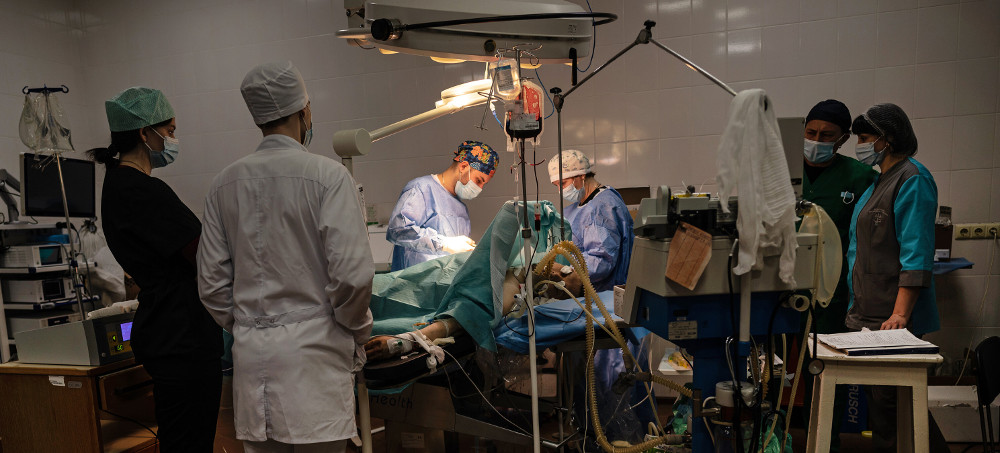 Doctors trying to save a soldier's arm in a surgery, after he was brought in earlier in the day in in Zaporizhzhia, Ukraine. (photo: New York Times)
In Ukraine, Gruesome Injuries and Not Enough Doctors
Michael Schwirtz, The New York Times
Schwirtz writes: "Operating with skeleton crews, doctors and nurses race to save limbs, and lives. It's a grim routine for medical personnel often working around the clock. And not all limbs can be saved."
Operating with skeleton crews, doctors and nurses race to save limbs, and lives. It’s a grim routine for medical personnel often working around the clock. And not all limbs can be saved.
Days after Russian forces invaded, Yaroslav Bohak, a young cardiovascular surgeon, was at home with his family in the relative safety of western Ukraine, when a colleague placed a desperate call from the east, pleading with him to come help.
Many doctors had fled the fighting, his friend said, and conditions at the hospital resembled a bygone era of warfare, with the surgeons who remained amputating limbs, instead of trying to repair them, to save grievously wounded soldiers.
“He called me and said he could no longer cut off the arms of young people,” Dr. Bohak said, as he stood in an operating room of a hospital in Kramatorsk. “When I came here, I had surgery on the first day.”
As Russian forces pummel eastern Ukraine with a mix of artillery, airstrikes and rocket attacks, frontline hospitals, many of them in poorer, rural areas, have become overwhelmed. They are severely short-staffed or have been abandoned completely, as doctors and nurses have fled the violence.
All day long, the walls of the hospital shake with the thunder of battles raging near Kramatorsk, an industrial city in the Donbas region, where Russian forces have been waging a bloody offensive. A steady stream of ambulances arrives at the sandbag-reinforced emergency room, ferrying soldiers and civilians, many with life-threatening wounds.
But the hospital is staffed by a skeleton crew. Only two of its 10 doctors remain, aided by six nurses working 24 hour shifts with only one day off for rest, said Tatyana Bakaeva, the senior nurse. (Hospital officials asked that its name not be published for security reasons.)
“Only the most stoic remain,” Ms. Bakaeva said. “People are scared, what can you do?”
It is a similar story throughout the Donbas: As the toll of wounded mounts, the need for more doctors and nurses becomes even more acute.
In Avdiivka, right on the front lines, the lone remaining surgeon and the hospital medical director described spending months in the emergency room, never leaving except for quick dashes to the grocery store amid shelling. In Sloviansk, a city just to the north of Kramatorsk where plumes of smoke from battle can be seen on the horizon, only about a third of the hospital staff remains.
The city of Bakhmut sits at a crossroads between Russian forces pushing from the east and the north. There, ambulances jam a small courtyard of the military hospital and the emergency room is almost always full.
“Nobody ever prepares for war, and this region is not so densely populated to be able to deal with this many wounded,” said Svitlana Druzenko, who coordinates emergency evacuations of wounded soldiers and civilians from the battle zones. “The wounds are the same for civilians and soldiers because rockets do not choose where to fall.”
Many of the wounded from the East are brought to Dnipro, a city of one million that has six big hospitals. But it is four hours’ drive from many frontline positions. And the hospitals there have also been depleted of nursing staff, said Dr. Pavlo Badiul, a surgeon at the Burn and Plastic Surgery Center in Dnipro.
The center was full to capacity with war wounded and staff were working continuously without a break, he said.
A member of the American Society of Plastic Surgeons, after training in California, Dr. Badiul put out an appeal through the society’s newsletter for equipment and medical supplies. “Although we get some targeted aid, much is still lost, diverted or taken to the wrong place,’’ he said.
Volunteers have pitched in to pick up some of the slack. Ms. Druzenko works for a volunteer emergency medical organization known by its Ukrainian initials PDMSh. Its ambulances and personnel are ubiquitous at hospitals and at so-called yellow zone transfer points, locations on the edge of the battlefield where wounded soldiers are picked up by ambulances and rushed to the nearest hospital.
It is dangerous work. Last week, a yellow zone base that Ms. Druzenko’s organization established north of Bakhmut was bombed by Russian forces.
“Not only drones, but aviation is working in that area,” Ms. Druzenko said.
Most of the surgeons operating out of the hospital in Kramatorsk, including Dr. Bohak, are volunteers. Since he arrived, the hospital has had almost no amputations.
Dr. Bohak showed off cellphone videos of his surgeries last week. Digging into singed and shredded flesh, he extracted severed arteries and painstakingly stitched them back together, restoring circulation to the damaged limbs, allowing them and the soldiers they are attached to be saved.
“The nearest serious clinic is in Dnipro, which is 280 kilometers from here,” he said. “It takes time to get there, and it may be too late to save the limb. That’s why my arrival was very important.”
Not all the limbs can be saved though. Eduard Antanovskyy, the deputy commander of the military unit at the hospital, said that recently a Russian soldier was brought in with a serious leg wound. While at the hospital, he said, the soldier was provided with security guards for protection.
“We had to take the leg because the tourniquet was on for too long,” he said. “Even if we wanted to, we couldn’t have saved his leg. We treated him humanely, not the way he deserved to be treated.”
Despite months of warnings from the White House and others that Russia was planning to invade, many in Ukraine, including much of the political establishment and even some in the military, refused to believe it. When Russian rockets began to hit Ukrainian cities on Feb. 24, it set off a scramble. Hospitals in particular, were unprepared to handle the sudden surge in patients suffering from the vicious and difficult wounds that war inflicts.
In the first week, Dr. Maksim Kozhemyaka, a civilian trauma surgeon, volunteered to assist at the military hospital in Zaporizhzhia, one of the main hubs treating soldiers in eastern and southern Ukraine. Almost immediately, he said, the hospital was inundated with 30 to 40 patients a day and did not have sufficient supplies to handle gunshot wounds or other grievous injuries.
“We didn’t believe that this could happen because we understood that in any case there would be huge losses on their side as well,” Dr. Kozhemyaka said in an interview in the hospital’s emergency room. “And of course, we thought that no rational leader of a country would do this.”
For the hospital workers persisting through the grim routine, the losses can feel personal, and are sometimes deeply so.
One recent morning, ambulances raced up to the small hospital in Sloviansk carrying soldiers wounded in an airstrike just a few miles up the road. One of them carried the battered body of Ihor Ihoryuk, 33, the only child of the hospital’s head nurse. Much of the hospital staff had known him since he was a boy.
The force of the explosion, outside a room in a seed factory where he and his comrades were sleeping, had ripped off his arm and his blood spilled onto the asphalt in front of the hospital as he was raced inside.
A few hours later, a nurse named Anna emerged from the hospital, her green eye liner running down her face. Ihor could not be saved, she said.
“He grew up in front of our eyes,” she said, fighting back the tears.
She was holding a box containing Ihor’s black army boots. “He won’t be needing them anymore,” she said.
She took them to a spot a short distance from the hospital entrance and set them next to a pair of black tennis shoes that were soaked with blood. They belonged to a soldier who was killed the day before.
READ MORE
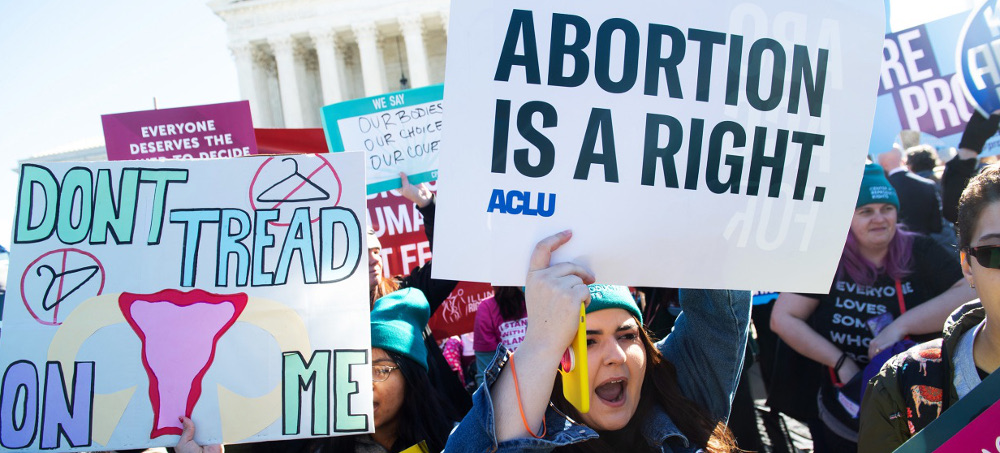 Activists supporting legal access to abortions protest during a demonstration outside the Supreme Court on March 4, 2020. (photo: Saul Loeb/Getty)
Roe v Wade: Who Will Be Prosecuted for Abortion if Fetuses Are Recognized as People?
Noa Yachot, Guardian UK
Yachot writes: "The expected reversal of Roe v Wade will lead to more women being charged over pregnancy outcomes."
READ MORE
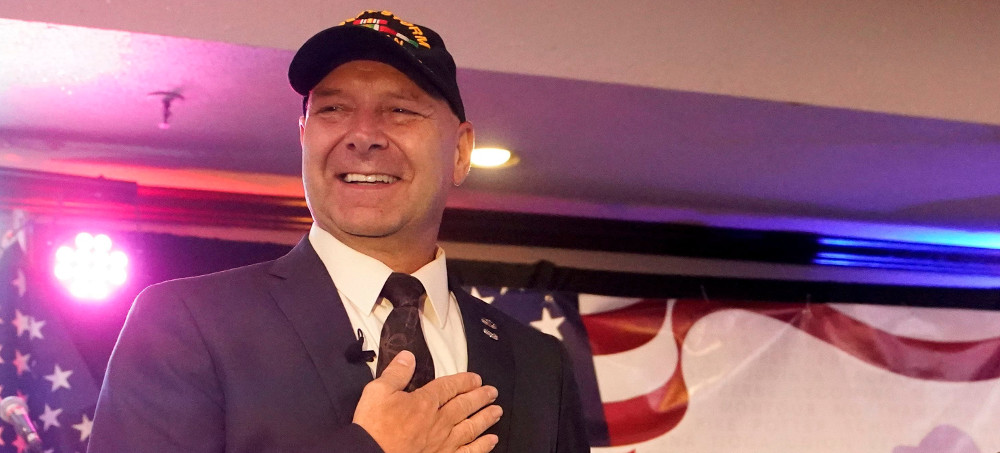 Pennsylvania state Sen. Doug Mastriano, the Republican nominee for governor, takes part in a primary night event Tuesday in Chambersburg. (photo: Carolyn Kaster/AP)
Doug Mastriano's GOP Primary Victory Could Give 2020 Denier Oversight of Important Swing State of Pennsylvania
Rosalind S. Helderman, Isaac Arnsdorf and Josh Dawsey, The Washington Post
Excerpt: "As a Pennsylvania state senator and gubernatorial candidate, Doug Mastriano railed against the rampant fraud that he believes was responsible for Donald Trump's 2020 defeat."
The Trump-backed GOP gubernatorial nominee has proposed moves that could create election ‘chaos,’ experts say
As a Pennsylvania state senator and gubernatorial candidate, Doug Mastriano railed against the rampant fraud that he believes was responsible for Donald Trump’s 2020 defeat.
He vowed to decertify voting machines in counties where he suspects the result was rigged.
And he asserted that the Republican-controlled legislature should have the right to take control of the all-important choice over which presidential electors to send to Washington.
As governor, Mastriano would have the opportunity not just to speak, but to act. The Trump-endorsed 58-year-old, who won the Republican nomination for governor on Tuesday, would gain significant influence over the administration of the battleground state’s elections should he prevail in November, worrying experts already fearful of a democratic breakdown around the 2024 presidential contest.
Those concerns are made especially acute in Pennsylvania by the fact that the governor has the unusual authority to directly appoint the secretary of state, who serves as chief elections officer and must sign off on results. If he or she refuses, chaos could follow.
“The biggest risk is a secretary of state just saying, ‘I’m not going to certify the election, despite what the court says and despite what the evidence shows, because I’m concerned about suspicions,’” said Clifford Levine, a Democratic election lawyer in Pennsylvania. “You would start to have a breakdown in the legal system and the whole process.”
Mastriano’s backers appear well aware of the stakes. A video posted to Telegram by election denial activist Ivan Raiklin from Mastriano’s victory party on Tuesday showed the candidate smiling as Raiklin congratulated him on his win and added, with a thumb’s up, “20 electoral votes as well,” a reference to the state’s clout in the electoral college.
“Oh yeahhhh,” Mastriano responded.
Mastriano did not respond to a voice mail or an email sent to a campaign account for media.
But Mastriano told Stephen K. Bannon, a former adviser to Trump who now hosts a podcast popular on the right, that he had already selected the person he would appoint as secretary of state if elected.
“As far as cleaning up the election, I mean, I’m in a good position as governor,” he said in the April 23 appearance on Bannon’s “War Room” podcast. “I have a voting-reform-minded individual who’s been traveling the nation and knows voting reform extremely well. That individual has agreed to be my secretary of state.”
He added that he planned to decertify voting machines in several Pennsylvania counties, a power given under state law to the secretary of state. “It’s going to be a top issue for me,” he said.
Buoyed by a late endorsement from Trump on Saturday, Mastriano, a retired Army colonel and state senator first elected in 2019, defeated eight other candidates for the Republican nomination, including former congressman Lou Barletta.
A person familiar with Trump’s thinking said he decided to endorse Mastriano because he believed Mastriano was going to win on Tuesday, and he wanted to claim a win in Pennsylvania on Tuesday no matter what. “He was hedging his bets,” this person said. Like others interviewed for this report, they spoke on the condition of anonymity to discuss private deliberations.
Other advisers argued that some of the candidates, such as Barletta, had been more loyal to him over the years, but Trump dismissed the arguments.
At times, Trump had grown annoyed with Mastriano, two former advisers said, because the state senator was unable to gain traction in helping Trump overturn the 2020 presidential election. But Mastriano kept in touch with Trump and was willing to talk about the electoral fraud issue when others wanted to move on, two of these people said.
Mastriano told Bannon on Saturday, shortly after Trump made his support public, that he saw the nod as “vindication.”
“President Trump’s loyal to those that stand for truth and are trying to fight for voting integrity in our state,” he said.
Mastriano was a key figure in Pennsylvania’s “Stop the Steal” movement, falsely arguing that President Biden’s more than 80,000-vote win in the state was the result of widespread fraud.
In the weeks after the November 2020 election, Mastriano organized a public hearing in Gettysburg featuring then-Trump lawyer Rudy Giuliani and helped commission an off-the-books audit of voting machines in a rural Pennsylvania county that was funded by Trump allies.
Though challenges to Biden’s win were rejected by state and federal courts, Mastriano proposed a resolution to declare the outcome of the state’s election in doubt and allow the Republican-controlled state legislature to appoint presidential electors. He told Bannon on Nov. 28, 2020, that the goal was “to reassert our authority to pick the electors for president.”
He claimed that the Pennsylvania General Assembly had “surrendered over to the popular vote” and insisted that the Constitution allowed the legislature to “to reassert our privileges as General Assembly and oversee the electors that they go to the right person.”
Mastriano then traveled to Washington for the rally on Trump’s behalf on Jan. 6, 2021. Videos show him among a crowd moving toward the Capitol as another man removes a bike rack blocking the sidewalk. He has said he respected police lines, left the area when it became clear the event was no longer peaceful and did not enter the Capitol building.
Since the 2020 election, Mastriano has proposed a series of measures in the Pennsylvania Senate that would dramatically reshape the state’s elections.
He proposed removing requirements that poll watchers live in the counties they are sent to observe and imposing new penalties on election workers who block access to poll watchers. He has said he is opposed to any mail-in balloting. And he’s proposed a bill that would remove the power to oversee elections from the secretary of state and hand it to a new election commission with members appointed by both the governor and the legislature, expanding the power of the General Assembly.
As the law now stands, Pennsylvania is one of just three states where the governor directly appoints the state’s top elections official.
One crucial function that the governor performs himself is signing the official certificate of the electoral college votes, and it is not clear what recourse there would be if a governor refuses to do so. “It would be chaos,” said Jennifer Morrell, a former election administrator and partner at the Elections Group consulting firm. “We would be in the same precarious situation we were in on January 6. “In Pennsylvania, operational decisions on running elections are made at the local level. The secretary of state can issue guidelines but has limited power to enforce them, which could be a check on the ability of an election denier to manipulate the system, Morrell said.
But she said an appointee who embraces election conspiracy theories could use the position to amplify claims that, even if untrue, can erode public confidence in the system.
At a gubernatorial debate in April, Mastriano said he would appoint a secretary of state who would require all voters in the state to renew their registration to be eligible to participate in future elections, a proposal that experts said probably would violate federal law.
“I saw better elections in Afghanistan than in Pennsylvania,” Mastriano said.
Pennsylvania Attorney General Josh Shapiro, the Democratic gubernatorial nominee, has signaled that Mastriano’s rhetoric on the election and presence in D.C. on Jan. 6, 2021, will be core to his argument that Mastriano is too extreme for the swing state.
“When Republicans in Harrisburg sought to undermine our elections, I took them to court to defend our democracy. My opponent enabled their attacks by standing idly by, and even attended the January 6th insurrection,” he tweeted Wednesday.
Though Trump can now add Mastriano to his prized tally of successful primary endorsements, the nod came so late, and after Mastriano was already leading in polls, that it wasn’t seen as decisive.
“Trump’s intervention was jumping out in front of the parade as it was crossing the finish line,” said Matt Brouillette, CEO of Commonwealth Partners, a pro-business group that responded to Trump’s endorsement of Mastriano by calling on other candidates to clear the field and rally behind Barletta. “If Doug loses in November, Trump will actually own more of it than not.”
Some Republicans have worried that Mastriano’s singular focus on 2020 could turn off voters who believe Biden’s win was legitimate or who are otherwise more interested in looking to the future.
David Urban, a longtime Trump adviser, said Mastriano would have a difficult time winning a general election in Pennsylvania. Urban said Mastriano would have to moderate his message and that he was not sure that was a likely possibility.
“In the general election, people have to moderate their message and move back to the middle. If he does that, he could be a viable candidate. If he doesn’t want to do that, he won’t be a viable candidate,” he said.
Dave Ball, chairman of the Washington County GOP, agreed that Mastriano will have to reach out beyond his base. During the primary, Mastriano made his stance on the 2020 election central to his pitch. “That’s been his whole campaign,” Ball said.
But he said Mastriano will need to build a broader coalition and agenda to win in November. “He’s got to appeal to independents and moderate Republicans and everything else,” Ball said. “Given what we’ve seen so far, that’s gonna be a trick. He’s gonna have to rebrand himself.”
Those who know Mastriano well say he’s unlikely to shrink from his pledges to overhaul elections. State Rep. Aaron Bernstine, an ally of Mastriano’s in Harrisburg, said voters could expect Mastriano to govern like he campaigned.
“The things he talks about are the things he would intend to do as governor,” Bernstine said. “I’ve always been of the basic view that when people tell you what they’re going to do, believe them.”
READ MORE
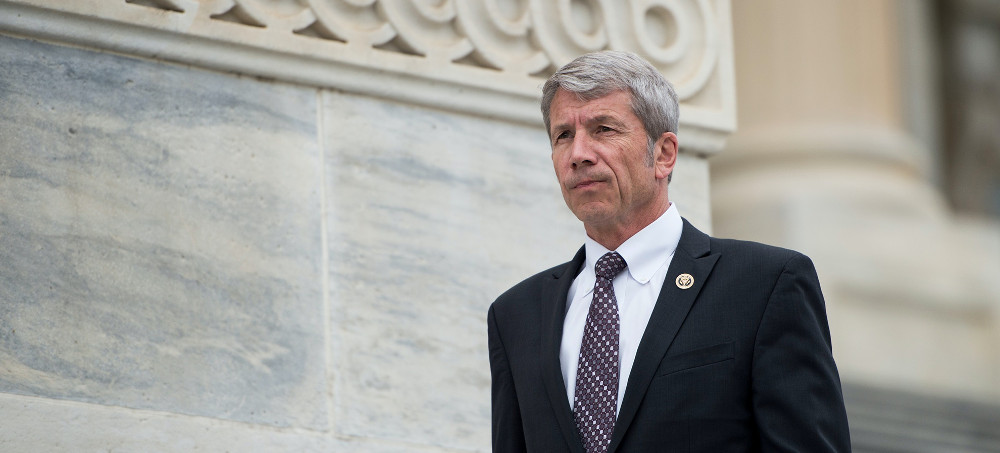 Rep. Kurt Schrader, D-Ore., walks down the House steps. (photo: Bill Clark/CQ Roll Call)
Rep. Kurt Schrader, the "Joe Manchin of the House," Nears Defeat in His Oregon Primary
Austin Ahlman, The Intercept
Ahlman writes: "Progressive challenger Jamie McLeod-Skinner is poised to oust the Oregon Democrat in a stunning upset."
Progressive challenger Jamie McLeod-Skinner is poised to oust the Oregon Democrat in a stunning upset.
As Oregonians awaited the final vote tally early Wednesday morning, former Blue Dog Coalition Chair Kurt Schrader appeared poised to lose to his primary opponent, Jamie McLeod-Skinner.
A Schrader loss would be stunning: The incumbent pulled in $2 million in outside super PAC support, half of it from the pharmaceutical industry he served in Congress, compared with McLeod-Skinner’s roughly $340,000 from the Working Families Party and Indivisible. Adding in his own spending, Schrader outspent his opponent 10 to 1 — and will likely still lose.
Schrader, whose opponent dubbed him the “Joe Manchin of the House,” joined last year with Rep. Josh Gottheimer, D-N.J., to push for decoupling the bipartisan infrastructure bill from the Build Back Better Act and cast the deciding vote in the Energy and Commerce Committee to kill prescription drug price reform. Nevertheless, he had the endorsement of both President Joe Biden and House Speaker Nancy Pelosi.
McLeod-Skinner — a lesbian, rancher, and board member of the Jefferson County Education Service District — capitalized on Schrader’s weakness with Oregon Democrats by running a progressive, issues-focused campaign and convincing Schrader’s many local skeptics to endorse against the incumbent.
McLeod-Skinner made Schrader’s corporate ties an issue in the campaign, linking his cozy relationship with the pharmaceutical industry to his consistent undermining of the Democratic agenda. While McLeod-Skinner does not accept corporate PAC money, Schrader took in over $1 million from these interests this cycle alone. Schrader also benefited from massive independent expenditures from PACs tied to Democratic Majority for Israel (which has consistently targeted progressives from marginalized backgrounds). By March, internal polling found that the race was a dead heat, and Schrader began running ads touting his alleged support for many of the key proposals that he has worked to undermine.
Local Democrats called for him to resign in January 2021, after he compared former President Donald Trump’s second impeachment to a “lynching,” and lambasted him again a few months later for voting against initial passage of the American Rescue Plan.
Schrader continued to draw ire at home for working to weaken the prescription drug reforms Biden had hoped to include in his domestic agenda. And when Gottheimer led nine House members to decouple infrastructure from Build Back Better, Schrader made the subtext of the move — that the group hoped to kill the Build Back Act entirely — into text by telling a dark-money group that other House Democrats shouldn’t “get [their] hopes up that we’re going to spend trillions more of our kids’ and grandkids’ money that we don’t really have.” Around the same time, he reportedly also called Pelosi “truly a terrible person.”
The contest did not garner the same amount of attention from national progressive groups as open-seat races in Pennsylvania and North Carolina. Some national progressive organizations, like Indivisible and the Working Families Party, have lent their support to McLeod-Skinner through local affiliates, as did Massachusetts Sen. Elizabeth Warren. But Justice Democrats stayed out of the race, and Vermont Sen. Bernie Sanders and New York Rep. Alexandria Ocasio-Cortez did not make endorsements.
McLeod-Skinner told The Intercept that this is not a coincidence. While she did not distance herself from other national progressives ideologically, supporting a Green New Deal and Medicare for All, she insisted that the language and tactics that progressives use to reach voters has to match the experience of people in different districts. “We’re facing similar challenges across the country, but our experience of them is locally based,” she said.
Oregon’s 5th Congressional District is not the type progressives normally win when trying to oust moderate incumbents. Progressive stars like Reps. Cori Bush and Ayanna Pressley relied on liberal urban cores in St. Louis and Boston to power their successful bids against longtime incumbents. Schrader’s district, by contrast, is a swing seat that stretches from the southern Portland suburbs to midsize working-class towns like Bend and large swaths of rural central Oregon.
McLeod-Skinner said that attention to messaging is especially important when reaching out to rural and working-class voters who may be sympathetic to progressive ideas but wary of national Democrats. “Sometimes we’re talking about the same ideas in different ways. … To message correctly, you really have to show up, build relationships, and show a commitment to understanding people’s perspective,” she explained.
That messaging strategy appears to have made a decisive difference. McLeod-Skinner notched a long list of local endorsements for a primary challenger. In an unprecedented move, four of the six local county parties that constitute the district overcame daunting procedural hurdles in order to endorse her. She has also managed to win support from a wide array of local and national unions, and the editorial boards of multiple local papers provided their stamps of approval as well.
Schrader, meanwhile, relied on what appeared to be a half-hearted rescue attempt from national Democrats to salvage his campaign. Biden provided a lukewarm endorsement a few weeks before the primary. “We don’t always agree, but when it has mattered most, Kurt has been there for me,” Biden said. And while Schrader was endorsed for reelection by members of House leadership, they abstained from campaigning on his behalf, as they have for embattled Rep. Henry Cuellar, D-Texas. While Cuellar — who is anti-abortion and actively under investigation by the FBI — carries more baggage for national Democrats, he has managed to maintain warm relationships with House leaders.
The national party’s attitude toward Schrader was put in sharp relief by the actions of House Majority PAC, one of the spending and fundraising arms of House leadership. The PAC spent nearly a million dollars in Oregon’s Democratic primaries, but that money did not go to Schrader, the only incumbent facing a serious primary. Instead, it flowed into the open-seat race for Oregon’s 6th Congressional District, which shares its western border with Oregon’s 5th.
In an unorthodox move, House Majority PAC backed first-time candidate Carrick Flynn, a lawyer and activist with ties to cryptocurrency billionaire Sam Bankman-Fried, who spent over $10 million on the race through Protect Our Future PAC. Flynn ended up losing handily to progressive state Rep. Andrea Salinas, another endorsee of Warren who will be the first Latina elected to Congress from the state of Oregon if she wins the general election in the fall, as is widely expected.
READ MORE
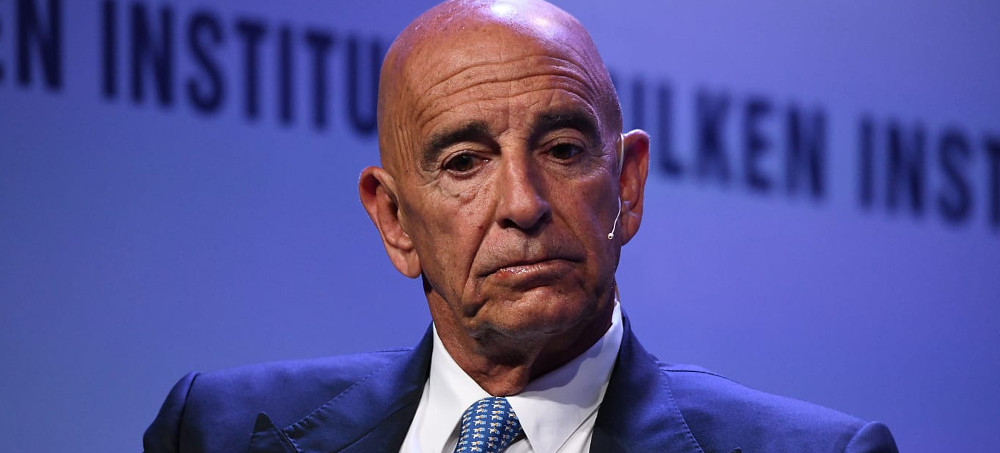 The feds are now looking into how Trump's billionaire friend Tom Barrack successfully stripped mentions of 9/11 in the 2016 GOP platform to please the Saudis. (photo: Michael Kovac/Getty)
Trump's Billionaire Pal Watered Down GOP Platform on 9/11 for Saudis
Jose Pagliery, The Daily Beast
Pagliery writes: "The Justice Department has updated its indictment of former President Donald Trump's billionaire buddy Thomas Barrack, documenting how he quietly tweaked the GOP platform at the 2016 Republican National Convention to avoid mentioning the Saudi royal family's connection to the 9/11 hijackers."
The feds are now looking into how Trump’s billionaire friend Tom Barrack successfully stripped mentions of 9/11 in the 2016 GOP platform to please the Saudis.
The Justice Department has updated its indictment of former President Donald Trump’s billionaire buddy Thomas Barrack, documenting how he quietly tweaked the GOP platform at the 2016 Republican National Convention to avoid mentioning the Saudi royal family’s connection to the 9/11 hijackers.
On Monday, the DOJ replaced its original 46-page charging document with an expanded 55-page superseding indictment that more closely details how the financier allegedly exploited his proximity to Trump to make secret deals with the United Arab Emirates.
Barrack, who was also the chairman of Trump’s 2017 inauguration committee who got caught misspending funds while ushering in a new era of political corruption, was arrested last year on charges of foreign lobbying and obstruction of justice.
In the latest version of the indictment, federal prosecutors documented the role Barrack played at the run-up to the 2016 Republican National Convention in Cleveland, Ohio. As a congressional investigation has since uncovered, Barrack had already allowed the Saudis and Emiratis to edit a major Trump campaign speech about energy, in which he made a pledge to "work with our Gulf allies.” Then, as Barrack’s relationship to the Emiratis got tighter, the meddling increased.
Seven weeks before the Republican convention, according to the revised indictment, someone only referred to as “Person-1” emailed Barrack about developing the GOP talking points at the convention. (The news site Middle East Eye, which initially broke news about the existence of these emails has surmised that this person was criminal political strategist Paul Manafort.)
“We need to talk about language for me to put in [the national political party] platform at national convention. Can be much more expansive than what we did in speech,” this person wrote to Barrack, adding a notable caveat that the “platform language” would be “based on what you hear from your friends.”
But just a week before the start of the GOP convention, the draft platform was deemed too problematic by “Person-1.”
Trump had previously promised to release the infamous 28 pages missing from a House and Senate joint intelligence report documenting the plane hijackers’ connections to the Saudi government and royal family—classified details that victims, activists, and journalists had long sought to make public. But on July 13 that year, this person wrote to Barrack that Republicans would have to back down from mentioning that.
This person wrote to Barrack that any mention “that was anti the Saudi Royal Family was removed from the platform.”
According to federal investigators, who have acquired suspects’ communications, Barrack then turned around and forwarded that email to UAE businessman Rashid Al-Malik. (The DOJ has also indicted Al-Malik, who is accused of passing along information to UAE government spies.)
In his note to his UAE contact, Barrack allegedly wrote that the email was “very confidential but you can share with HH. Please do not circulate any further since it is very sensitive.”
According to the feds, Al-Malik then forwarded that email to an unnamed Emirati official. But Barrack is also accused of passing that information along to a yet another unnamed Emirati official whom other journalists have identified at UAE ambassador Yousef Al Otaiba. Barrack allegedly told him the information was “really confidential but important.”
Otaiba still retains that post in Washington, D.C. The Emirati embassy did not respond to requests for comment on Tuesday.
The long-awaited missing 28 pages were eventually released—albeit with redactions—by President Barack Obama that very summer. The New York Times called it a “frustrating time capsule” whose importance grew over the years, but which ultimately showed that the tenuous connections between the 9/11 terrorists and Saudi leadership did not prove to be the vast conspiracy many suspected.
Brian McGlinchey, an independent journalist in San Antonio, Texas, who played a pivotal role in aggressively pushing for their release, told The Daily Beast that he welcomes the DOJ’s new focus on Barrack’s alleged role in having the GOP avoid the subject.
“It underscores the hypocrisy of the Trump camp, because at that time, there was an active presidential campaign going on,” he said. “You’ve got the candidate out front raising deep suspicions about Saudi involvement, at the same time you have these back channel maneuvers at the Republican convention to help the Saudis avoid embarrassment.”
When reached for comment, the Republican National Committee told The Daily Beast it was unaware of what transpired.
“The DOJ has not reached out to the RNC on this subject, nor do we have knowledge of this issue. Additionally, current RNC leadership was not involved with the 2016 platform,” said Emma Vaughn, the group’s spokeswoman.
The DOJ on Monday also hit Barrack with two additional criminal charges of making “material false statements” for allegedly lying to the FBI during a June 20, 2019 interview. Although some of the allegations were lumped together in the original set of charges, the revised indictment is now charging him separately for allegedly lying about only having one phone when he actually had a dedicated line for secretly communicating with the Emiratis.
Barrack’s legal team declined to comment for this story, citing the ongoing case, which is currently set for trial in the late summer.
READ MORE
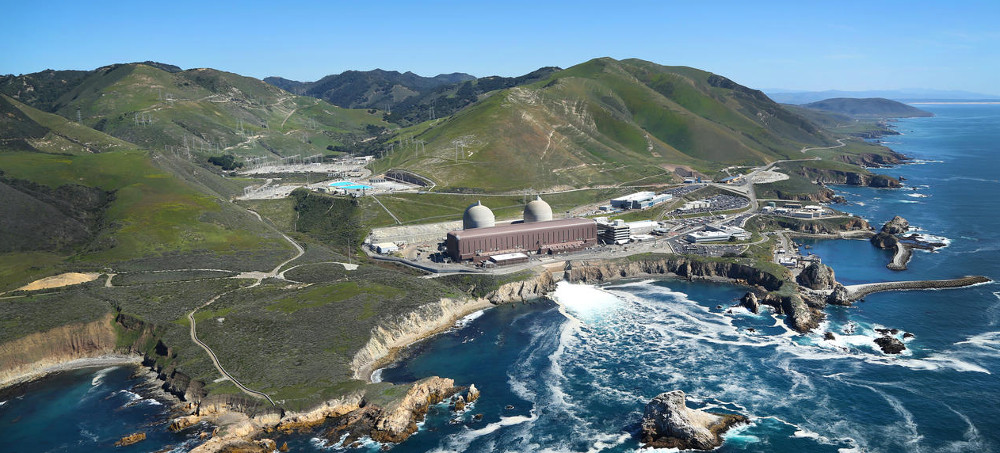 California's Diablo Canyon nuclear power plant. (photo: AP)
Opposition Grows to Reviving Diablo Canyon Nuclear Plant
Michael R. Blood, Associated Press
Blood writes: "Dozens of environmental and anti-nuclear organizations expressed opposition Tuesday to any attempt to extend the life of California's last operating nuclear power plant, challenging suggestions that its electricity is needed to meet potential future shortages in the nation's most populous state."
Dozens of environmental and anti-nuclear organizations are opposing any attempt to extend the operating life of California's last running nuclear power plant
Dozens of environmental and anti-nuclear organizations expressed opposition Tuesday to any attempt to extend the life of California’s last operating nuclear power plant, challenging suggestions that its electricity is needed to meet potential future shortages in the nation's most populous state.
Last month, Democratic Gov. Gavin Newsom raised the possibility that the Diablo Canyon Nuclear Power Plant — which sits on a coastal bluff halfway between San Francisco and Los Angeles — could keep running beyond a scheduled closing by 2025. His office said the governor is in favor of “keeping all options on the table to ensure we have a reliable (electricity) grid.”
In a letter to Newsom, groups that included San Luis Obispo Mothers for Peace, the Oregon Conservancy Foundation, the Snake River Alliance and the Ohio Nuclear Free Network said the plant is old, unsafe and too close to earthquake faults that pose a threat to the twin reactors.
“Your suggestion to extend the operational life of the Diablo Canyon nuclear facility is an outrage,” they wrote. “Diablo Canyon is dangerous, dirty and expensive. It must retire as planned.”
The Democratic governor has no direct authority over the operating license for the plant. He floated the idea that owner Pacific Gas … Electric could seek a share of $6 billion in federal funding the Biden administration established to rescue nuclear plants at risk of closing.
PG&E, which in 2016 decided to shutter the plant by 2025, did not directly address Newsom’s suggestion at the time or say whether the company would consider seeking federal dollars to remain open beyond the scheduled closing.
PG&E announced the closing plan in 2016 as part of a deal with environmentalists and union workers, citing a “recognition that California’s new energy policies will significantly reduce the need for Diablo Canyon’s electricity output.” But Newsom’s suggestion highlights that the thinking has shifted, as the state looks for reliable power sources amid a changing global climate as California gradually shifts to solar, wind and other renewables.
Recently, state officials warned that extended drought, extreme heat and wildfires — paired with supply chain and regulatory issues hampering the solar industry — will create challenges for energy reliability this summer and into coming years.
The environmental groups argued that continuing to operate the plant beyond its scheduled closing would generate hundreds of tons of highly radioactive waste, with no permanent storage site for it. And they said state, by its own account, is lining up enough wind, solar and other renewables to replace Diablo's electricity.
They also questioned whether any federal funds would be enough to unravel the complex deal to close Diablo Canyon, which is regulated by state and federal agencies.
Issues in play at Diablo Canyon range from a long-running debate over the ability of structures to withstand earthquakes — one fault runs 650 yards (594 meters) from the reactors — to the possibility PG&E might be ordered by state regulators to spend potentially billions of dollars to modify or replace the plant’s cooling system, which sucks up ocean water and has been blamed for killing fish and other marine life.
Newsom continues to support closure of the plant “in the long term” as the state moves to renewable energy.
There are 55 commercial nuclear power plants with 93 nuclear reactors in 28 U.S. states. Nuclear power provides about 20% of electricity in the U.S., or about half the nation’s carbon-free energy.
READ MORE
Special Coverage: Ukraine, A Historic Resistance
READ MORE
Contribute to RSN
Follow us on facebook and twitter!
Update My Monthly Donation
PO Box 2043 / Citrus Heights, CA 95611