Showing posts with label TRICKLE DOWN. Show all posts

Friday, September 27, 2024

Kamala Harris Is Breaking Through on the Economy


Forwarded this email? Subscribe here for more

Why subscribe? Note the kind words of one new paid subscriber, James: “I supported your work because of the insights it offers, the subjects it covers, and the quality of the discussions. I want to be able to participate in those."


Kamala Harris Is Breaking Through on the Economy

The vice president has narrowed the gap with Donald Trump on who voters think is better for the economy and their personal finances

VP Kamala Harris’ economic agenda is resonating. “I promise you, I will be pragmatic in my approach,” she said Wednesday in Pittsburgh. (Photo by Jeff Swensen via Getty Images)

Since World War II, Democratic presidents have overseen significantly stronger job creation and overall rates of growth than Republican presidents. In contrast, Republicans have been in office during each of the last five recessions, including Ronald Reagan, George H.W. Bush, George W. Bush (twice) and Donald Trump.

This is no mere coincidence, notes economist Jeffrey Frankel at Harvard University’s Kennedy School. “A remarkable 9 of the last 10 recessions have started when a Republican was president,” he wrote earlier this year. “The odds that this outcome would have occurred just by chance are even more remote: one out of 100.”

You might have heard former President Bill Clinton’s surprising discovery on job creation during the Democratic National Convention last month. “You’re going to have a hard time believing this, but so help me, I triple-checked it,” Clinton told the crowd. “Since the end of the Cold War in 1989, America has created about 51 million new jobs. I swear I checked this three times. Even I couldn’t believe it. What’s the score? Democrats 50, Republicans one.”

Yet despite facts like these, Republicans consistently score higher among voters as stewards of the economy than Democrats—as if their pro-business, anti-union, anti-regulation, low-tax agendas translate into better economic results for the country. That fiction has fueled such utterly failed policies as trickle-down economics and race-to-the-bottom state pursuits to implement low or no income taxes.

The assumption that Republicans are better for the economy has also aided Donald Trump, despite his six bankruptcies, plenty of failed businesses and reliance on inherited wealth. Despite his economic failures as president accelerated by his incompetent response to the pandemic—low growth rate, loss of jobs, the largest expansion of national debt fueled by his tax cuts to the wealthiest Americans—many Americans were still giving him high marks earlier this year. Meanwhile, Trump has been blaming high inflation and rising living costs—a global phenomenon—on President Joe Biden. An April poll found that six out of ten Americans believed Trump was better for the country on job creation and cost of living.

This historical myth has been a serious headwind facing the emergent campaign of Kamala Harris. In fact, in a March poll, Trump was riding a 15-point advantage over Biden on the issue of who can better manage the economy. An earlier poll, in January, gave Trump a stunning 22-point advantage.

But not anymore. A remarkable thing is happening. Republicans’ traditional advantage on handling the economy is shrinking significantly. VP Harris has shrunk that gap to an average of six points, according to five recent polls.

Despite the continuing noise by media pundits that Harris has failed to provide sufficient policy specifics—and complaints that she only emphasizes her personal biography coming from a struggling middle-class family—her focus on middle-class Americans, housing, affordable health care, child care and tax breaks for small businesses is having a real effect. Trump’s false claims that heavy tariffs and more tax cuts for businesses and deregulation will make lives better for ordinary Americans is also helping Harris make her case.

“His agenda would weaken the economy and hurt working people and the middle class,” she said Wednesday during an economic speech hosted by the Economic Club of Pittsburgh. “You see for Donald Trump, our economy works best if it works for those who own the big skyscrapers, not those who actually build them, not those who wire them, not those who mop the floors.”

She reiterated that the building of a strong middle class is “a defining goal of my presidency…just common sense…actually what works.” Then she took the moment to indirectly address Trump’s attempts to label her a communist or a Marxist—you know, all that foolish talk of “Comrade Harris.” It was refreshing—and I think worth reading in full:

The American economy is the most powerful force for innovation and wealth creation in human history. We just need to move past the failed policies that we have proven don’t work. And like generations before us, let us be inspired by what is possible. As President, I will be grounded in my fundamental values of fairness, dignity and opportunity.

And I promise you, I will be pragmatic in my approach. I will engage in what Franklin Roosevelt called bold, persistent experimentation, because I believe we shouldn’t be constrained by ideology and instead should seek practical solutions to problems. Realistic assessments of what is working and what is not. Applying metrics to our analysis. Applying facts to our analysis, and stay focused then, not only on the crises at hand, but on our big goals. On what’s best for America over the long term. And part of being pragmatic means taking good ideas from wherever they come.

To be sure, the newly assertive pragmatist also made a point of characterizing herself as a capitalist who believes in free and fair markets and “consistent and transparent rules of the road to create a stable business environment.” (No wonder more than 90 prominent business leaders have endorsed her this month, as well as over 400 economists and high-ranking officials emphasizing her plans to build a “strong, pro-growth economy for all Americans.”)

In addition to detailing her policy plans, Harris also highlighted a Financial Times and University of Chicago survey of nearly 40 top economists, in which 70 percent said Trump’s economic plans would be more likely to spur inflation and result in larger federal deficits. Only three percent said they believe Harris’ agenda would be more inflationary.

The narrowing of the gap on who voters think can better handle the economy—particularly meaningful because the economy typically ranks at or near the top of voters’ concerns—may not be over. That’s in part because Americans have begun to feel more positive about the economy, as inflation has cooled, interest rates have been cut, the cost of gas is down and other prices are stabilizing.

That’s not just my view. A new consumer survey from the University of Michigan has found that consumer sentiment about the economy, inflation and personal finances is up 40 percent from its low in June 2022. And these increasingly positive views are also influencing consumers’ expectations about the election.

Not only did a strong majority of respondents say they expected Harris to win the election over Trump (58 to 34 percent), Harris was seen as better for the economy (41 to 38 percent) and tied on the issue of who’s better for personal finances (at 37 percent).

Interestingly, the numbers are strongest for Harris among those who are 65 or older. That is, 48 to 39 percent think she is the better candidate for the economy and 45 to 38 percent say she is better for personal finances.

Not only may this be the election when Americans overwhelmingly assert that they choose democracy over fascism, but also that they believe it’s a Democrat who represents the winning agenda for a healthy economy. Maybe—finally—factual reality can reassert itself. Isn’t that a beautiful thought?


Monday, August 19, 2024

We thank you, Joe


Sunday, August 18, 2024

Fox Gets INSTANT KARMA Live ON AIR as Trump COLLAPSES


COULD FOX NEWS = FAKE NEWS LIARS GET ANY WORSE?

BIASED MEDIA? 


MAGA MORON JASON CHAFFETZ RECOMMENDED TAKING FINANCIAL 

ADVICE FROM tRump FINANCIAL FRAUDSTER & FREQUENT BANKRUPTCY 

EXPERT WHO WAS BAILED OUT BY THE RUSSIANS!

INTERESTING HISTORY:

JASON CHAFFETZ


MICHAEL MOORE offered a great poster titled "AMERICA IS A LIBERAL NATION" - America supports EVERYTHING that's being proposed. Everything that is being proposed was successful in MINNESOTA including stopping the HATE & BIGOTRY being offered... Walz summed it up well: MIND YOUR OWN BUSINESS!


MeidasTouch

2.9M subscribers


MeidasTouch host Ben Meiselas reports on Fox News struggling as Donald Trump gets more unhinged and VP Kamala Harris and Governor Walz continue to surge ahead. Visit https://meidastouch.com for more! Support the MeidasTouch Network:   / meidastouch   Add the MeidasTouch Podcast: https://podcasts.apple.com/us/podcast... Buy MeidasTouch Merch: https://store.meidastouch.com Follow MeidasTouch on Twitter:   / meidastouch   Follow MeidasTouch on Facebook:   / meidastouch   Follow MeidasTouch on Instagram:   / meidastouch   Follow MeidasTouch on TikTok:   / meidastouch  

Sunday, August 4, 2024

"R" VOTERS are lazy & conspicuously uninformed.....have you even looked up their voting histories? IT'S TIME TO THINK!


"R" VOTERS are lazy & conspicuously uninformed.....have you even looked up their voting histories?

MASS GOP & the ADOLESCENT LOGAN TRUPIANO are equally as uninformed... 

PROVE ME WRONG!

They BLABBER incessantly...mostly nonsense.... 

There was a time when WE as constituents could rely 
on elected official to INFORM....those days are gone 
with REPUBLICANS.... 

Republican tax cuts for the WEALTHY created the DEFICIT...and much else....

IT'S THE REPUBLICAN DEFICIT!

Defeating Trump Gives Us a Real Chance to Restore Sanity to the Tax Code


The IRS, funded with President Biden's legislation, 
is auditing WEALTHY TAX CHEATS...this is YOUR 
MONEY! (INFLATION REDUCTION ACT)

IRS tops $1 billion in past-due taxes collected from millionaires; compliance efforts continue involving high-wealth groups, corporations, partnerships


REPUBLICANS want to SLASH IRS funding to protect the WEALTHY....

WHOSE SIDE ARE REPUBLICANS ON?

HINT! IT'S NOT YOURS!     

Defeating Trump Gives Us a Real Chance to Restore Sanity to the Tax Code


Donald Trump

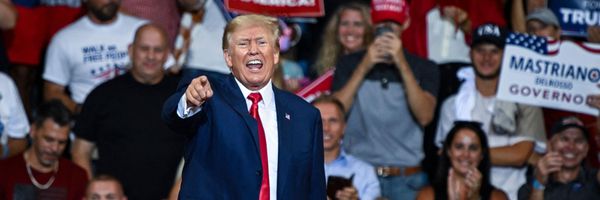
Former U.S. President Donald Trump speaks during a campaign rally in support of Republicans Doug Mastriano for governor of Pennsylvania and Mehmet Oz for U.S. Senate at Mohegan Sun Arena in Wilkes-Barre on September 3, 2022.

 (Photo: Ed Jones/AFP via Getty Images)


Defeating Trump Gives Us a Real Chance to Restore Sanity to the Tax Code

The Trump tax cuts set off a wave of corporate profiteering that never “trickled down” to the rest of us. Soon we’ll get a chance to fix that—but only if the Republicans are soundly defeated.

Next year, we’ll have to make one of the most important decisions about the future of our economy. Will we hand more power and wealth to big corporations and the rich — or invest in a healthy and resilient economy that works for all of us?

In 2017, Republican lawmakers passed tax loopholes and cuts that primarily benefited the wealthy and big corporations. President Trump signed these giveaways into law, spiking inequality and setting off a wave of corporate profiteering.

Next year, parts of that law will begin to expire, which gives us the opportunity to make changes.

For decades, both parties have created an economy where big corporations and the wealthy aren’t pitching in like the rest of us. We’ve been sold a bill of goods known as “trickle down” economics. Trickle down goes like this: Feed the rich the best cut of meat and maybe we’ll get a bit of gristle that falls on the floor — and we’ll thank them for it.

The rich and most profitable corporations aren’t just contributing less and less to our collective coffers. They’re using their power to enrich themselves further while more of us struggle. Senator Elizabeth Warren recently described this as a “doom loop” for our tax code: the wealthy and corporations get richer from tax giveaways and then use their wealth and power to boost their profits — and then lobby for more tax cuts.

For example, the 2017 Trump tax cuts dropped the top corporate tax rate to 21 percent from 35 percent (compared to 40 percent in 1987). Supporters argued this would lead to better wages and supercharge economic growth. Instead, economic growth continued at about the same pace as before the tax breaks. And while 90 percent of workers did not see a raise, billionaire wealth has doubled.

In the same period in which corporations have enjoyed lower taxes, they’ve also raked in record profits. As my colleagues at Groundwork Collaborative have highlighted, lowering corporate tax rates actually incentivized corporate profiteering in the wake of the pandemic, as companies that overcharged us got to keep more of their winnings.

Trickle down theory says these windfall profits and lower taxes should encourage companies to invest more in workers and innovation. But in an economy run by big corporations with enormous market share, that money ends up being funneled to shareholders instead of increasing worker wages, investing in new or more productive technologies, or holding critical inventories in case of a crisis.

If we want corporations to invest more in wages and productive investments, we should raise their taxes, since wages and research are mostly tax deductible.

In other words, corporate profiteering is not a foregone conclusion. Raising corporate taxes has the potential to boost investment, productivity, and economic growth — and get Americans some of their money back.

The Biden administration has taken critical steps to push back against failed trickle down economics and corporate profiteering. It capped the price of essential drugs like insulin, empowered regulators to go after corporations abusing their market power, and made historic investments in a green future. But more can be done by raising taxes on the largest, most profitable corporations.

Fundamentally, the coming tax debate is about who holds the reins in shaping our economy: megacorporations and their wealthy shareholders, or the everyday people who keep the economy humming. Next year is an opportunity for Congress to stand firm against the rich and powerful and build the economy that we want to see.


COMMON DREAMS


Thursday, June 29, 2023

June 28, 2023 HEATHER COX RICHARDSON


In Chicago today, President Joe Biden gave a historic speech at the Old Post Office Building downtown. In it, he was crystal clear that he has launched a new economic vision for the United States to stand against that of today’s Republicans. As he has said since he took office, he intends to build the economy “from the middle out and the bottom up instead of just the top down.”

His vision, he said, “is a fundamental break from the economic theory that has failed America’s middle class for decades now.”

That theory is “trickle-down economics,” the idea that cutting taxes for the wealthy and for corporations while shrinking public investment in infrastructure and public education will nurture the economy. Under that theory the most important metric was a company’s bottom line, Biden pointed out, so companies reduced costs by taking factories and supply chains overseas to find cheap labor, leaving “entire towns and communities…hollowed out.” It also meant cutting taxes, which led to dramatic cuts in public investments in infrastructure, research, social programs and so on, with the idea that concentrating money in a few hands would prompt private investment in the economy. That investment would, the theory went, provide more jobs and enable everyone to prosper.

This is the worldview that the Republicans have embraced since 1980 and that, Biden said, has “failed the middle class. It failed America. It blew up the deficit. It increased inequity. And it weakened…our infrastructure. It stripped the dignity, pride, and hope out of communities one after another…. People working as hard as ever couldn’t get ahead because it’s harder to buy a home, pay for a college education, start a business, retire with dignity. [For] the first time in a generation, the path of the middle class seemed out of reach,” Biden said.   

Biden came into office determined to reverse this policy by investing in the American people rather than in tax cuts. With the help of a Democratic Congress, the president backed legislation that invests in infrastructure, repairing our long-neglected roads and bridges, and in supply chains and manufacturing. Rather than scaring off private investment, as the trickle-down theory argued, that public investment has attracted more than $490 billion of private money into new industries. Manufacturing is booming. Together, infrastructure and manufacturing have created new jobs that pay well. 

Central to Biden’s vision is the idea that the prosperity of the United States rests on its working people, rather than its elites. In Chicago he emphasized his administration’s focus on training and education, as well as its emphasis on the trades and unions. He also emphasized economic competition, noting that business consolidation has stifled innovation, reduced wages, made supply chains vulnerable, and raised costs for consumers. 

To reduce the deficit that has exploded in the past decades and to pay for new programs, Biden reiterated the need for fair taxes on the wealthy and corporations after decades of cuts. “Big Oil made $200 billion last year and got a…$30 billion tax break,” he said, while billionaires pay an average of 8% in taxes, less than “a schoolteacher, a firefighter, or a cop.” He called for “making the tax code fair for everyone, making the wealthy and the super-wealthy and big corporations begin to pay their fair share, without raising taxes at all on the middle class.”

“We’re not going to continue down the trickle-down path as long as I’m president,” Biden said. “This is the moment we are finally going to make a break…. Here’s the simple truth about trickle-down economics: It didn’t represent the best of American capitalism, let alone America.  It represented a moment where we walked away… from… how this country was built…. Bidenomics is just another way of saying: Restore the American Dream because it worked before. It’s rooted in what’s always worked best in this country: investing in America, investing in Americans. Because when we invest in our people, we strengthen the middle class, we see the economy grow. That benefits all Americans. That’s the American Dream.”

Biden often points to the New Deal of the 1930s as his inspiration. In that era, under Democratic president Franklin Delano Roosevelt, Congress responded to the economic crash spurred by unregulated capitalism by passing a wide range of laws that regulated business and protected workers, provided a basic social safety net including Social Security, and promoted infrastructure. 

In his speech accepting the 1932 Democratic presidential nomination, FDR condemned the policies of his predecessors that turned the government over to businessmen, declaring that “the welfare and the soundness of a nation depend first upon what the great mass of the people wish and need; and second, whether or not they are getting it.” He pledged to give the American people a “new deal” to replace the one that had led them into the Depression, and to lead a “crusade to restore America to its own people.” 

But FDR was not the first president to see ordinary Americans as the heart of the nation and to call for a government that protected them, rather than an economic elite. FDR’s distant relative Theodore Roosevelt, a Republican, made a similar argument as president thirty years earlier. Responding to a world in which a few wealthy industrialists—nicknamed “robber barons”—monopolized politics and the economy, he called for a “square deal” for the American people. 

“[W]hen I say that I am for the square deal,” TR said in 1910, “I mean not merely that I stand for fair play under the present rules of the game, but that I stand for having those rules changed so as to work for a more substantial equality of opportunity and of reward for equally good service.” He called for conservation of natural resources, business regulation, higher wages, and “social” legislation to create a “new nationalism” that would rebuild the country. Overall, he wanted “a policy of a far more active governmental interference with social and economic conditions in this country than we have yet had, but I think we have got to face the fact that such an increase in governmental control is now necessary.”  

But TR didn’t invent the idea of government investment in and protection of ordinary Americans either. In his New Nationalism speech, TR pointed back to his revered predecessor, Republican president Abraham Lincoln, who believed that the government must serve the interests of ordinary people rather than those of elite southern enslavers. When South Carolina senator James Henry Hammond told the Senate in 1858 that society was made up of “mudsills” overseen by their betters, who directed their labor and, gathering the wealth they produced, used it to advance the country, Lincoln was outraged. 

Society moved forward not at the hands of a wealthy elite, he countered, but through the hard work of ordinary men who constantly innovated. A community based on the work and wisdom of farmers, he said in 1859, “will be alike independent of crowned-kings, money-kings, and land-kings.” In office, Lincoln turned the government from protecting enslavers to advancing the interests of workingmen, including government support for higher education. 

Biden has recently embraced the term “Bidenomics,” a term coined by his opponents who insist that their embrace of tax cuts is the only way to create a healthy economy. But Bidenomics is simply a new word for a time-honored American idea.

—

Notes:

https://www.whitehouse.gov/briefing-room/speeches-remarks/2023/06/28/remarks-by-president-biden-on-the-economy-chicago-il/

https://www.newyorker.com/news/our-columnists/joe-biden-tries-to-change-the-narrative-on-the-economy

https://www.whitehouse.gov/wp-content/uploads/2023/06/WH-Dunn-Donilon-Memo-on-Bidenomics-2023.06.26.pdf

https://www.whitehouse.gov/briefing-room/speeches-remarks/2023/06/28/remarks-by-president-biden-at-a-campaign-reception-chicago-il/

https://obamawhitehouse.archives.gov/blog/2011/12/06/archives-president-teddy-roosevelts-new-nationalism-speech

https://publicpolicy.pepperdine.edu/academics/research/faculty-research/new-deal/roosevelt-speeches/fr070232.htm

https://www.americanantiquarian.org/Manuscripts/cottonisking.html

https://www.abrahamlincolnonline.org/lincoln/speeches/fair.htm


Top News | 'He’s Not Going to Run Unopposed': Sanders Rejects Schumer for Majority Leader

                                                               LOTS OF POSTS IGNORED BY BLOGGER..... OR REMOVED ON THEIR WHIM! ALL POSTS ARE...