Showing posts with label RUSSIAN OCCUPATION. Show all posts

Friday, March 17, 2023

Andy Borowitz | DeSantis to Replace Disney World With "Dilbert" Theme Park


Reader Supported News
16 March 23

Live on the homepage now!
Reader Supported News

An All-Out Effort to Finish This Fundraiser — We cannot let this fundraiser drag on any longer. We must pull out all the stops to — end this now. The vast majority of you have not donated. If you are going to stay, chip-in. Very important now.
Marc Ash • Founder, Reader Supported News

Sure, I'll make a donation!


Florida's Republican governor Ron DeSantis at the Sunrise Theatre in Fort Pierce, Florida, October 24, 2022. (photo: Crystal Vander Weiter/Reuters)
Andy Borowitz | DeSantis to Replace Disney World With "Dilbert" Theme Park
Andy Borowitz, The New Yorker
Borowitz writes: "Ron DeSantis has unveiled an ambitious plan to raze Disney World and replace it with a 'Dilbert'-themed attraction." 


The article below is satire. Andy Borowitz is an American comedian and New York Times-bestselling author who satirizes the news for his column, 'The Borowitz Report.'"


ORLANDO (The Borowitz Report)—Ron DeSantis has unveiled an ambitious plan to raze Disney World and replace it with a “Dilbert”-themed attraction.

The new theme park, tentatively called Dilbert World, will attract “millions of Americans deprived of their favorite comic strip by the left-wing media Reich,” the Florida governor said.

Calling the new tourist destination “a woke-free zone,” DeSantis promised, “Parents who go to Dilbert World can rest assured that their children will not be exposed to the vile multicultural propaganda that it’s a small world, after all.”

DeSantis was vague about what kind of rides might be featured in Dilbert World, saying only that “they will probably involve cubicles.”

READ MORE
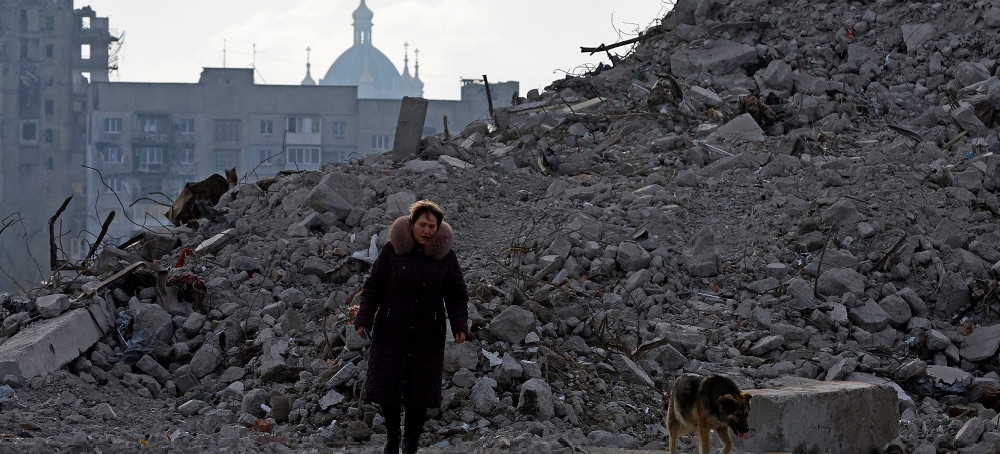

Ukraine War: Life in Mariupol Under Russian OccupationThe invading Russian forces damaged some 90% of residential buildings in Mariupol. (photo: Reuters)

Ukraine War: Life in Mariupol Under Russian Occupation
Vitaly Shevchenko, BBC
Shevchenko writes: "After 10 months of Russian occupation, fear and distrust are the two most frequent responses I encountered when looking for someone who could tell me how things really are in Mariupol, in Ukraine's south-east." 


Finding people willing to speak to me from Mariupol was never going to be easy.

After 10 months of Russian occupation, fear and distrust are the two most frequent responses I encountered when looking for someone who could tell me how things really are in Mariupol, in Ukraine's south-east.

"I think you are a Russian journalist. You won't like what I've got to say. People like you kill if you tell them the truth," said one social media user who claimed to be from the port city.

Russian forces put the people of Mariupol through a horrific months-long siege, before finally capturing it last May.

I eventually found three residents willing to speak to me at length: a local city councillor, a retired pensioner and an engineer. All spoke on condition of anonymity, fearing reprisals from the local authorities installed by Russia (who block access to occupied Ukraine by Western journalists).

They paint a picture of a massively expensive campaign conducted by Russia to win over the hearts and minds of the people of Mariupol, and rebuild a city damaged beyond recognition by Russia's own troops.

The purpose of this campaign is to assimilate Mariupol and make it Russia's own.

Their accounts corroborate each other, and are confirmed by social media posts about recent developments in Mariupol.

Before this war began about half a million people lived in the city.

According to UN estimates, 90% of residential buildings were damaged or destroyed, and 350,000 people were forced to leave after Russia attacked in February 2022.

It is difficult to estimate the exact number of people killed as a result of the relentless shelling of Mariupol, but Ukrainian authorities say more than 20,000 died there.

Russian-installed authorities in Mariupol say some 300,000 people are now living there.

The people who spoke to me from Mariupol said their city had been inundated with labourers from across Russia, as well as from Central Asia.

Oleg Morgun, the Russia-installed "mayor" of Mariupol, says some 70,000 of those currently in the city are construction workers and members of the Russian military.

Rebuilding

New buildings have appeared and many buildings damaged during the bombardment have gone.

For example, the Russian military has built a whole new district comprised of a dozen apartment blocks in the western part of Mariupol. It is called Nevsky, after the River Neva, on which President Vladimir Putin's home city of St Petersburg stands. According to Russian state media, St Petersburg is the main sponsor of the reconstruction of Mariupol.

"It says on the bus: St Petersburg and Mariupol are twinned cities. There are slogans everywhere telling us that we're part of Russia now," pensioner Maria (not her real name) told me.

"I liked things the way they used to be. Now we live in fear. We have no idea what to expect."

In the houses that escaped relatively unscathed after months of fierce fighting, the Russians are replacing windows, radiators and sometimes heating and sewage pipes.

Heating, running water and electricity supplies have largely been restored. Buses are running and full of passengers again, although the electric trolley bus and tram networks are still out of action.

Many schools, hospitals and shops have reopened as well, although numerous traders are selling their wares straight from the pavement.

Maria was particularly impressed with one school rebuilt under Russian rule: "It's so beautiful, covered in multi-coloured squares." According to her, the number of children in Mariupol now is greater than schools can currently accommodate, so they have classes in two shifts: one in the morning, and another in the afternoon.

Russia has imposed its own Russian-language curriculum in occupied areas - complicating efforts to get children back to school.

The fast-paced rebuilding of Mariupol has provoked envy in Donetsk, the regional capital occupied by pro-Russian forces since 2014, which has been neglected by comparison.

The Russia-installed head of the so-called Donetsk People's Republic, Denis Pushilin, has even had to deny rumours that the capital will be moved to Mariupol.

Assimilation

There are other important ways in which Russia is putting its stamp on Mariupol.

For example, local residents are under pressure to obtain Russian passports.

Ivan, the Mariupol city councillor I spoke to (not his real name), said locals often formed "huge queues" trying to get Russian passports.

They were required if you want to find formal employment, especially with government agencies or in the public sector, he explained.

Also, they made it possible to travel to Russia without additional stringent checks known as "filtration", he added.

"So they have deliberately created a situation where you get problems if you have Ukrainian papers, you have to deal with red tape, you have to wait. On the other hand, if you get a Russian passport, that's where your problems end: 'You're one of us now'. Things get simpler if you receive a Russian passport," Ivan said.

Mariupol is also becoming part of Russia's financial system. The Ukrainian currency, the hryvnya, has been phased out, and now the Russian rouble is the only currency accepted in shops.

Russia is channelling huge amounts of money into pension payments for residents of Mariupol, raising them in many cases compared with what they received from the Ukrainian authorities before the war. So residents of Mariupol are able to draw two pensions - one from Russia, another from Ukraine. Naturally, it is a situation many local pensioners are happy with.

Russian pensions are another reason why elderly residents are queuing up to get Russian passports - many pensioners believe the documents will be required in the future to continue receiving payments from Russia.

The media currently operating in Mariupol are also hard at work promoting a uniformly pro-Russian agenda.

Pro-Russian sentiment

Many current residents of Mariupol are there because they were unable to leave the city when the Russians attacked, due to illness or old age, or because they welcome Russia's presence.

"We've suffered enough under Ukraine. Now we can breathe again," one social media user told me, before breaking off all contact.

The fast-paced campaign of reconstruction and the resulting sense of restored normality, the generous pension payments and the intensive media campaign targeting the people of Mariupol, all stimulate the spread of pro-Russian sentiment in the city.

"I'm sick of all the propaganda in the papers. They started publishing it from day one, telling us how well things are going," said Yuri, the engineer (not his real name). "I feel out of place in my own city now. People are different, my city feels different now."

City councillor Ivan said: "It's become difficult for me to say pro-Ukrainian things to my voters. It's tough being pro-Ukrainian in a pro-Russian environment. Unfortunately, Ukraine is losing the hearts and minds of people in Mariupol."

Those who are still in Mariupol may be happy to see a degree of normality return to their city, but there are those who suspect Russia of pursuing ulterior motives.

Popular Ukrainian journalist Denys Kazansky argues that Russia uses the new houses it has been building in Mariupol to distract attention from all the destruction it caused in the city and elsewhere in his native Donetsk region.

"If they destroyed 10 hospitals and then rebuilt one - this isn't reconstruction. It's not something they can be thanked for," he said.

"You can be happy as much as you like about a school being rebuilt, but what do you do with the thousands of people Russia has killed?" he said.

"You can't rebuild them. You can't bring them back."


READ MORE

 

The US Military Releases Footage of Black Sea Drone Crash With Russian JetA Russian Su-27 fighter jet releases fuel as it approaches the rear of a U.S. Air Force MQ-9, in what the Pentagon says was 'an unsafe and unprofessional intercept' over the Black Sea. (photo: U.S. European Command video/NPR Screenshot)

The US Military Releases Footage of Black Sea Drone Crash With Russian Jet
Emily Olson and Bill Chappell, NPR
Excerpt: "The U.S. European Command has declassified footage showing the moments when two Russian fighter jets flew very close to a U.S. drone over the Black Sea, dumping fuel on it - and, the Pentagon says, eventually flying into the drone." 

The U.S. European Command has declassified footage showing the moments when two Russian fighter jets flew very close to a U.S. drone over the Black Sea, dumping fuel on it — and, the Pentagon says, eventually flying into the drone. The video footage appears to show the U.S. craft was damaged by a collision.

The release of the video comes two days after the Pentagon said a Russian Su-27 fighter clipped the propeller of an uncrewed MQ-9 Reaper drone that was operating in international airspace, forcing it down into the water. The Kremlin says its jets did not make contact with the drone.

The footage gives brief glimpses of the encounter, which U.S. officials say lasted for at least a half hour. The Pentagon says the video depicts events in the order they happened, although it was edited to condense the action.

In the 42-second video, a Russian Su-27 aircraft is seen approaching from the drone's rear quarter, releasing a plume of fuel as it pulls upward and over the drone, causing the footage to partially pixelate. The camera recovers as the fighter jet pulls away, showing the drone's rear-mounted propeller in normal working condition.

The footage then shows what the Pentagon says is an "even closer" pass from a Russian jet.

Approaching from what looks to be a lower angle, the Su-27 releases more fuel and its fuselage is seen coming extremely close to the drone before the video cuts out entirely. The Pentagon says the camera feed was lost for around 60 seconds.

When the feed returns, the camera, which is mounted beneath the MQ-9, pivots to show the drone's propeller has been partially mangled.

Shortly afterward, the aircraft crashed into the Black Sea off the southern coast of Ukraine — a country that the U.S. and dozens of other countries are supporting in its war against Russia. The U.S. has been monitoring movements by Russian troops and warships in the area.

The U.S. European Command described the encounter as "an unsafe and unprofessional intercept."

Speaking to reporters on Wednesday, U.S. Army Gen. Mark Milley said he wasn't sure whether the Russian jet had intentionally made contact with the U.S. drone.

"Was it intentional or not? Don't know yet. We know the intercept was intentional. We know the aggressive behavior was intentional. We also know it was very unprofessional," he said.

Russia's Defense Ministry insists that its fighter jets did not attack or come into contact with the drone, alleging that the U.S. craft lost stability and control as a result of "quick maneuvering," before losing altitude and crashing into the Black Sea.

As for whether the U.S. will seek to recover the downed drone, Milley said on Wednesday that the aircraft crashed in waters that are 4,000 or 5,000 feet deep, making any recovery operation difficult. But he also said the Pentagon is looking at options — which would include its allies, he said, because the U.S. doesn't have "any naval surface vessels in the Black Sea at this time."

Russia says it is looking for the drone.

Defense Secretary Lloyd Austin says the U.S. military "will continue to fly and to operate wherever international law allows." Austin, who spoke with his Russian counterpart, Sergei Shoigu, by phone after the incident, said it's also important to maintain communications, adding, "that will help to prevent miscalculations going forward."

READ MORE 


Poland Says It Will Be First NATO Country to Give Fighter Jets to UkraineA Polish Air Force MiG-29 aircraft fires flares during a performance at the Radom Air Show at an airport in Radom, August 24, 2013. (photo: Kacper Pempel/Reuters)

Poland Says It Will Be First NATO Country to Give Fighter Jets to Ukraine
Annabelle Chapman and Loveday Morris, The Washington Post
Excerpt: "Poland will deliver an initial batch of four Soviet-made MiG-29 fighter jets to Ukraine, Polish President Andrzej Duda said Thursday, ramping up pressure on other NATO allies to make similar commitments." 

Poland will deliver an initial batch of four Soviet-made MiG-29 fighter jets to Ukraine, Polish President Andrzej Duda said Thursday, ramping up pressure on other NATO allies to make similar commitments.

The planes are in “full working order” and will be delivered in “the next few days,” Duda said at a news conference in Warsaw alongside his Czech counterpart, Petr Pavel. The delivery would mark the first time any of Ukraine’s NATO allies have delivered jets.

“We are literally sending these MiGs to Ukraine at this moment,” he said.

Poland is in the process of upgrading its air force with South Korean-made FA-50 fighters and American-made F-35s, as it rapidly expands its military amid the war in neighboring Ukraine. It has about a dozen of the MiG-29s available that are “mostly” functional, Duda said, adding that the remainder will be “serviced and prepared” before also being donated.

Poland has played a leading role in getting taboo-breaking weaponry to Ukraine. As Germany stalled on sending tanks this year, Duda announced that Poland had decided to send them. Polish officials said it was part of a strategy to ramp up public pressure on Germany to approve the delivery of the German-made tanks.

Ukraine has been pushing hard in recent months for Western countries to donate fighter jets, with President Volodymyr Zelensky dubbing them “wings for freedom.” Poland and Slovakia, which has also said it is ready to send its Soviet-era jets to Ukraine, have called on other countries to do the same as part of an international coalition.

Ukraine already has its own MiG-29s, meaning that Ukrainian pilots will be able to fly them without additional training, Duda said.

In February, Britain announced that it would begin training Ukrainian pilots on fighter jets used by NATO. Both British Prime Minister Rishi Sunak and French President Emmanuel Macron have said they have not ruled out contributing fighter jets to Ukraine, but they suggested that nothing would be immediate.


READ MORE



Tents Slashed and Supplies Destroyed: 'Cop City' Activists Describe Police IntimidationActivists marched through the streets of Atlanta on 11 March to protest the construction of the 'Cop City' training facility. (photo: Steve Eberhardt/Shutterstock)

Tents Slashed and Supplies Destroyed: 'Cop City' Activists Describe Police Intimidation
Timothy Pratt, Guardian UK
Pratt writes: "Up to 40 Atlanta police department officers swarmed the sprawling, hillside property, slashing medical supply tents, breaking windows of a camper van parked on site and ripping netting surrounding a greenhouse." 


Police swarmed camp on Saturday, detained activists and confiscated property; one person arrested, for a traffic ticket


Apolice helicopter circled so close to a house in the leafy Atlanta neighborhood called Lakewood late on Saturday night that a resident said he could “damn near see the pilot”.

The resident, who asked for anonymity in order to speak with the Guardian, decided to go to a nearby friend’s house. Others were not so lucky. Several dozen other people, including members of a medical crew, were then rousted from campsites on the resident’s property during a post-dawn police raid that followed.

Up to 40 Atlanta police department officers swarmed the sprawling, hillside property, slashing medical supply tents, breaking windows of a camper van parked on site and ripping netting surrounding a greenhouse.

The Guardian has obtained a copy of the search warrant used for the raid and spoke to numerous people present during the police action. The document and the witness accounts offer telling insight into how law enforcement officials and the justice system in Georgia are prosecuting unprecedented state domestic terrorism charges against members of a broad social movement that opposes a $90m police and fire department training center, known as “Cop City”, planned for the nearby South River forest. The movement has also opposed a former film studio owner’s plans to convert 40 acres (16 hectares) of public park in the forest into private property, calling for the forest to be preserved.

The warrant states there was probable cause for believing that evidence of “conspiracy to commit domestic terrorism” could be found at the Lakewood location.

Objects officers sought included “cameras, radios … boxes of nails … lighters … tents, camping equipment, spray paint cans, [and] black clothing”, according to the warrant. The list also mentions “literature … related to defend the forest”. Although several dozen people were detained near the property for several hours, the only person arrested was Mark Lindsey, another year-round resident – for an unpaid traffic ticket. None of the half-dozen people present during the raid and interviewed by the Guardian had any items seized by police, or had heard of anyone else’s property being seized.

But the document’s language follows “what has become a playbook for how counter-terrorism agencies respond to protests”, said Will Potter, who has researched federal terrorism charges against environmental activists in his book Green Is the New Red: An Insider’s Account of a Social Movement Under Siege.

“In a few lines, it conflates the specter of violence with everyday items and basic organizing materials,” Potter said.

The raid was the latest escalation in the show of police force during a recent “week of action” by protesters highlighting the forest’s plight that ended on Sunday, after more than a hundred of the event’s attendees crossed from the public park on to Cop City land on the event’s second day, burning bulldozers and other construction equipment.

Twenty-three people were then arrested and charged with domestic terrorism under Georgia law despite the fact the arrest warrants showed no evidence linking arrestees to acts such as property destruction at the construction site. The same evidence is repeated on all 23 warrants and included defendants having “muddy clothing” – an observation that could apply to the hundreds who were at a music festival in the public park.

In the following days, several peaceful marches took place in Atlanta, as well as camping, a Jewish sabbath service, herbal and foraging workshops – and the scattering of Manuel Paez Terán’s ashes, who police shot and killed on 18 January while the activist, known as “Tortuguita”, camped in the public park in protest against Cop City.

The raided property’s 10 acres, with its towering oaks and pines, had been used in recent years for free food distribution and art and music events. A handful of people live there year-round, but the land had been used for the last week by medical personnel and people camping in tents. According to several people who helped set up the arrangement and spoke to the Guardian, the area was being used to provide a place to camp for families, people with limited mobility and anyone who didn’t feel safe staying at the forest.

The search warrant underpinning Saturday’s raid can be seen as the state “trying to build a conspiracy case, similar to Rico cases”, said Marlon Kautz, an organizer with the Atlanta Solidarity Fund, which provides bail and other resources to protesters who have been arrested.

“It gives them the legal framework to go after organizers, [who are] seen as leaders – even though they haven’t done anything criminal.”

The innocuous items police sought according to the warrant also bring to mind raids on other political movements, Kautz said. “You can look at how many of these are household items,” he said. “It’s like you find a can of gas sitting next to a lawnmower, and say you’ve found evidence of bombs.”

The protest movement is broad-based. It includes local preschool families, Black faith leaders from Atlanta, local and national environmental groups, scientists, Native land and water defenders, and young people from across the US. Nonetheless, Kautz said, “investigators are convinced there’s an organized campaign to do terrorism – but so far, they’re not finding any, because it doesn’t exist. So instead, they go after any organizational infrastructure they can find.”

A certain amount of infrastructure, as well as personal items – including medical supplies at the property that were used by a rotating team of healthcare professionals – were destroyed during the raid.

Ric Simmons, a law professor at the Moritz College of Law at Ohio State University, said there’s a legal notion of “reasonability” that law enforcement must use when it comes to handling property while carrying out a court-ordered search. “This destruction doesn’t seem at all reasonable,” he said.

The medical team at the property included Sea, who has a counseling degree and helped with any mental health needs during the week’s events. Others contributed items such as sunscreen and Covid tests and masks. Sea was in their tent on Saturday morning trying to get some rest after a late-night shift when the sounds of police shouting orders and marching feet drove them out of their tent.

About 20 police officers were pointing guns at three members of the medical team, Sea said. “There was a lot of yelling. It was disorienting.” Some of the police stayed at the property, while others led Sea and a group of about 20 several blocks away to wait. During that time, police asked the detainees for ID and took their photos. The police eventually let them go.

Sea returned just before dusk to find the medical team’s tents slashed and some of the supplies destroyed. A colleague who preferred to remain anonymous and was also at the site of the raid said they “felt fear … but I know that this is how many people feel every day, just living their lives. If Cop City gets built, this fear and destruction … will only become more commonplace.”

Will Potter has interviewed people who have participated in political movements during the last four decades and undergone similar raids. “It’s a heavy-handed show of force, a destruction of property … It’s police trying to make you violated, and afraid.”

Potter called attention to the warrant’s reference to “literature”.

“This stands out to me,” he said. “It brings up freedom of speech and association concerns. If I were raided, my bookshelf doesn’t look so good.”


READ MORE



Georgia Grand Jury Heard Third Trump Call Attempting to Influence 2020 Election ResultsGeorgia grand jury foreperson 'not positive' about Trump claims of 'total exoneration.' (photo: Alyssa Pointer)

Georgia Grand Jury Heard Third Trump Call Attempting to Influence 2020 Election Results
Josh Marcus, The Independent
Marcus writes: "A special grand jury in Georgia reportedly heard a recording of Donald Trump attempting to get then-state House Speaker David Ralston to convene a special session of the legislature to overturn Joe Biden's narrow 2020 election win in the state." 


Ex-president’s calls to state officials could lead to unprecedented criminal charges

Aspecial grand jury in Georgia reportedly heard a recording of Donald Trump attempting to get then-state House Speaker David Ralston to convene a special session of the legislature to overturn Joe Biden’s narrow 2020 election win in the state.

Ralston, who has since passed away, reportedly deflected the outgoing president’s request, allegedly telling Mr Trump, “I will do everything in my power that I think is appropriate,” according to jurors who spoke with the Atlanta Journal-Constitution, which first reported the news of the call.

A special session was never called, though Republicans in the state did organise a plan to serve as unauthorised fake electors and cast their votes in the Electoral College for Donald Trump, even though Mr Biden won the state’s vote.

The Independent has contacted Mr Trump for comment.

The jurors have previously focused on other calls Mr Trump made in 2020 to state officials, including an infamous recording of the president asking Georgia Secretary of State Brad Raffensperger to “find” him enough votes to win.

Since February 2021, Fulton County District Attorney Fani Willis has been investigating the former president’s attempts to influence the state’s 2020 presidential election results.

In January of this year, a grand jury convened by Ms Willis concluded its work, leaving the prosecutor in the unprecedented position of deciding whether Donald Trump will be the first former president in US history to be prosecuted for a criminal offence.

“You’re not going to be shocked. It’s not rocket science,” Emily Kohrs, foreperson of the jury, told the New York Times of its conclusions. “You won’t be too surprised.”

“We definitely started with the first phone call, the call to Secretary Raffensperger that was so publicized,” Ms Kohrs added.

In another recorded call, reported by The Washington Post, Mr Trump can be heard urging Frances Watson, Georgia’s chief election investigator, to uncover “dishonesty.”

“When the right answer comes out, you’ll be praised,” he says in the recording.


READ MORE 

Rural America Gets $315 Million for Cleaner, More Affordable EnergyOne-sixth of U.S. households are in rural communities. The Biden administration wants to help modernize their grids, invest in renewables, and improve the efficiency of their homes. (photo: Brookings Education)

Rural America Gets $315 Million for Cleaner, More Affordable Energy
Katie Myers, Grist
Myers writes: "One-sixth of U.S households are in rural communities, where people often pay a larger share of their income for electricity. Reliability can be spotty, and investment in decarbonization scant." 


One-sixth of U.S. households are in rural communities. The Biden administration wants to help modernize their grids, invest in renewables, and improve the efficiency of their homes.

One-sixth of U.S households are in rural communities, where people often pay a larger share of their income for electricity. Reliability can be spotty, and investment in decarbonization scant. Geographically scattered towns and aging infrastructure can make maintaining the grid expensive. Even simple steps to improve energy efficiency, like insulating an attic, can be out of reach for cash-poor residents, especially renters.

The Department of Energy hopes to address these longstanding challenges by dedicating $315 million toward a sweeping effort to help rural and tribal communities nationwide modernize their electrical grids, invest in renewables, and help residents increase the energy efficiency of their homes.

The initiative, announced last week, is part of the Energy Improvements in Remote and Rural Areas program. The funding is part of a broader effort to allocate more than $1 billion over the next five years to support energy projects in communities of less than 10,000 people. The goal is to promote climate resilience and address rural energy cost burden — defined as the percentage of a household’s income allocated toward energy bills each month — through “replicable energy projects that lower energy costs, improve energy access/resilience, and/or reduce environmental harm.”

“There isn’t one ideal project — we’re casting a wide net,” a senior Energy Department official told Grist. “[Rural] communities are not one-size-fits-all.”

Applications for the funds are due in June, and must include a “community benefits plan” outlining how the project will ensure worker safety, fair wages, and diversity in hiring.

Advocates for rural and tribal communities say the funding does more than facilitate the green energy transition — it facilitates safe, affordable housing. According to a 2018 study by the American Council for an Energy-Efficient Economy, rural households experience a higher energy cost burden than urban households. About a quarter of them occupy poorly insulated mobile homes. Electricity disconnects are high, and storms can knock out power for days. According to the study, even simple household improvements would save the average resident hundreds of dollars every year. Another study found that renewable energy costs consumers less than coal, with 99 percent of coal-fired generation plants costing more to run than wind and solar facilities.

Small utilities and advocates for energy equity say federal investment is sorely needed, particularly in cash-poor, rural areas. Some communities already have pioneered exactly the types of projects encouraged by the federal program announced last week, and hope to secure the funds to launch more.

The Ouachita Electric Cooperative in Arkansas is part of the country’s sprawling rural electric co-op system in which ratepayers are both members and owners of their utility and play a role in decision-making. Based in the small town of Camden, 100 miles south of Little Rock, Ouachita Electric recently embraced renewable energy to better serve its members, who often struggle to make ends meet.

“Our median income is $31,000 — blue-collar factory workers,” said co-op membership manager Leslie Holloway. Some members face an energy burden 30 percent above the national average, she said. Many lack the capital to invest in their homes, most of which are over 30 years old and in dire need of upgrades. Although loans for energy-efficiency upgrades are available to homeowners, they’re often out of reach for rural, working-class renters. To address that, Ouachita secured an $8 million federal grant to kickstart an energy savings program and build a solar array. It used the funding to help improve members’ homes with duct sealing, insulation, and other energy-saving upgrades. Ultimately, the program allowed the cooperative to reduce rates 3.4 percent and saved Ouachita Electric enough money to recoup almost all of its investment.

Rural utilities and power companies that are working toward a green transition say half the work lies in overcoming decades of economic disadvantage and disinvestment. Brett Isaac, the founder and executive chairman of public benefit renewable energy corporation Navajo Power, said public assistance in funding the energy transition is essential for communities that have long been left behind.

“The investment from the various different opportunities under the Biden administration, from infrastructure to the Inflation Reduction Act … these are all monumental, because they’re actually putting quantifiable investments into certain areas that have never really experienced them,” said Isaac, a 2022 Grist 50 honoree. “We don’t have the institutions that created our economies, like we’re not in control of those things.”

Since its beginning, uranium, coal, and other minerals have been mined on Navajo territory, but nevertheless left most of the people living there in poverty. That era may be passing. The Navajo Generating Station, formerly the largest coal-fired power plant in the country, powered down in 2019, leaving its massive service area in need of both new jobs and new energy resources. Almost 30 percent of the reservation’s homes still don’t have electricity. But Navajo Power is currently in phase one of a plan to build utility-scale solar projects on tribal land and install panels on residents’ homes.

In Kentucky, Chris Woolery, a residential energy coordinator with the Mountain Association, can’t wait to help rural power companies and electric cooperatives access the federal funding. Advocates throughout the state have been laying the groundwork for a renewable transition for many years. The Mountain Association, for example, provides loans for small solar projects and works with other groups to push for state policies friendlier to small-scale solar development. “What we are saying is, we know that we have the tools to address our problems. We pioneered them ourselves,” Woolery said.

A big barrier, he said, could be legislative — for instance, state lawmakers are trying to pass a bill banning utilities from accepting federal funds to shut down coal plants. Meanwhile, the outdated grid in central Kentucky left thousands without power for days after a windstorm last month. Woolery said energy efficiency and distributed renewables could increase grid resiliency during extreme weather — a necessity in remote communities where roads can be damaged and emergency services can be hours away. Ultimately, he said, providing energy equity and reliability is a matter of not just savings, but survival — a promise that no one should ever have to choose between their energy bill and their next meal.

“We’re working towards a vision in which access to energy is just a human right,” Woolery said.


READ MORE


Contribute to RSN

Follow us on facebook and twitter!

Update My Monthly Donation

PO Box 2043 / Citrus Heights, CA 95611


Sunday, February 26, 2023

On Assignment with Richard Engel: Ukraine’s Secret Resistance


One year after Russia‘s invasion of Ukraine, Richard Engel is on the ground, speaking with ordinary civilians who bravely joined an underground resistance to help liberate the city of Kherson from Russian occupation.


Friday, February 17, 2023

Andy Borowitz | Elon Musk to Seek Life on Mars and Keep It From Unionizing


Reader Supported News
16 February 23

Live on the homepage now!
Reader Supported News

IF 10% OF OUR READERS DONATED — What would it mean if 10% donated? It would mean that we could stop fundraising for the next six months. It would mean that we could expand our coverage of all the important issues that we cover. It would mean that we could pay great writers to come on board and join the project. That's what 10% would mean. It's a quandary; we are blessed but we know what the stakes are every time we launch a funding drive. With your help.
Marc Ash • Founder, Reader Supported News

Sure, I'll make a donation!


Elon Musk arrives at the justice center in Wilmington, Delaware, Tuesday, July 13, 2021. (photo: Matt Rourke/AP)
Andy Borowitz | Elon Musk to Seek Life on Mars and Keep It From Unionizing
Andy Borowitz, The New Yorker
Borowitz writes: "Elon Musk has announced plans to seek life on Mars and, if successful, to prevent it from unionizing." 

"The article below is satire. Andy Borowitz is an American comedian and New York Times-bestselling author who satirizes the news for his column, 'The Borowitz Report.'"


Elon Musk has announced plans to seek life on Mars and, if successful, to prevent it from unionizing.

The billionaire said that he would personally talk to the Martians and persuade them that joining a union would be a mistake that he’ll “make sure they’ll regret.”

“Right now, there appears to be water on Mars,” he said. “But if they join a union I’ll take away their water.”

Musk added that he would offer Martians an opportunity to work at Twitter, “but not if they want to work remotely.”


READ MORE 


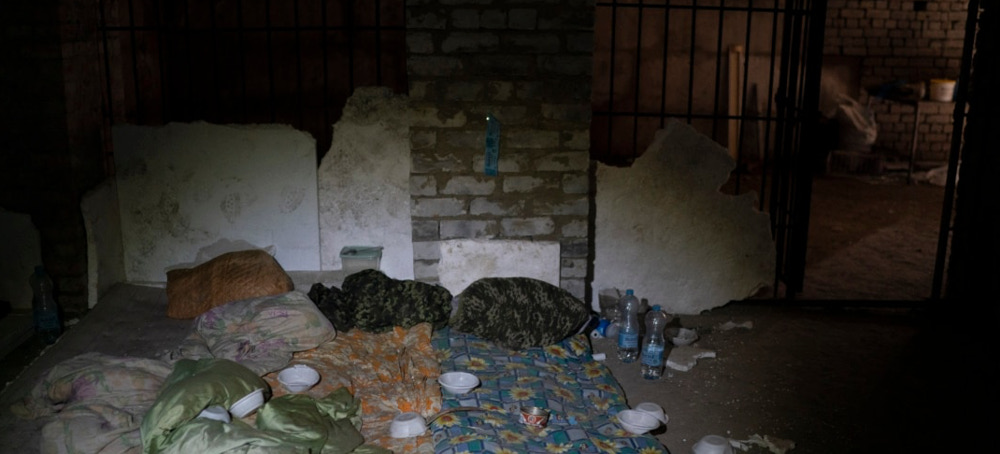
How Russian Invaders Unleashed Violence on Small-Town ResidentsDuvets and sleeping bag are seen in a basement which, according to Ukrainian authorities, was used as a torture cell during the Russian occupation, in the retaken village of Kozacha Lopan, Ukraine, Sept. 17, 2022. (photo: AP)

How Russian Invaders Unleashed Violence on Small-Town Residents
Anne Applebaum and Nataliya Gumenyuk, The Atlantic
Excerpt: "Marunyak had been expecting the war to break out, but he had no sense of what a Russian occupation of his village might mean." 


How Russian invaders unleashed violence on small-town residents


On the night of February 24, 2022, the sound of missiles jolted Viktor Marunyak awake. He saw flashes in the sky and billowing black smoke; then he got dressed and went to work. Marunyak is the mayor of Stara Zburjivka, a village just across the Dnipro River from Kherson, and he headed immediately to an emergency meeting with leaders of other nearby villages to discuss their options. They quickly realized that they were already too late to connect with the Ukrainian army. Their region was cut off. They were occupied.

Occupied. Marunyak had been expecting the war to break out, but he had no sense of what a Russian occupation of his village might mean. Like his colleagues, Marunyak is an elected official—genuinely elected, since 2006, under Ukrainian laws giving real power to local governments, not appointed following a falsified plebiscite, as a similar official might have been in the Soviet era or might be in modern Russia. That meant that when the occupation began, he felt an enormous responsibility to stay in Stara Zburjivka and help his constituents cope with a cascade of emergencies. “Already, within a few days, there were families lacking food,” he recalls. “There was no bread or flour, so I was trying to buy grain from the farmers … Many residents began contributing the food they could share, and so we created a fund, providing assistance on demand.”


READ MORE


Georgia Grand Jury in Trump Inquiry Sees Signs of Perjury by WitnessesEfforts by former president Donald J. Trump and his allies to overturn his 2020 loss in Georgia have been under investigation for the past two years. (photo: Maddie McGarvey/The New York Times)

Georgia Grand Jury in Trump Inquiry Sees Signs of Perjury by Witnesses
Danny Hakim and Richard Fausset, The New York Times
Excerpt: "A court on Thursday released portions of a report by a special grand jury investigating whether Donald J. Trump and his allies interfered in the presidential election in Georgia in an attempt to overturn the 2020 result." 

Acourt on Thursday released portions of a report by a special grand jury investigating whether Donald J. Trump and his allies interfered in the presidential election in Georgia in an attempt to overturn the 2020 result. The released portions — just five pages of text — do not delve into the grand jury’s conclusions or say whether they recommended indictments related to election interference.

But the jurors said they believed that “one or more” unnamed witness who testified in the inquiry may have committed perjury and should face indictment. They also found “that no widespread fraud took place in the Georgia 2020 presidential election that could result in overturning that election,” rejecting arguments made by Mr. Trump and his supporters.

Here are the details:

  • The publicly released portion of the report does not mention the names of anyone that the jurors think should or should not be indicted. Nor does it mention, beyond potential perjury, which Georgia laws the jurors believe may have been violated. Read the released portions of the report here.

  • Although Georgia law requires the release of a special grand jury’s final report, a judge decided to disclose only a small portion on Thursday. Here’s why.

  • The grand jury’s recommendations are now in the hands of Fulton County District Attorney Fani T. Willis, who has been a prosecutor for nearly two decades. Read more about her.

  • During a hearing last month, Ms. Willis that decisions on whether to seek indictments were “imminent,” although she has not specified what that means. Her office is known to have informed nearly 20 people that they could face charges. Read about them here.

  • A central element of the investigation is the call by Mr. Trump on Jan. 2, 2021, during which he told Brad Raffensperger, the Georgia secretary of state, that he needed to “find” 11,780 votes — the number he needed to overcome Joseph R. Biden Jr.’s lead in the state. Listen to highlights of that call.

READ MORE 


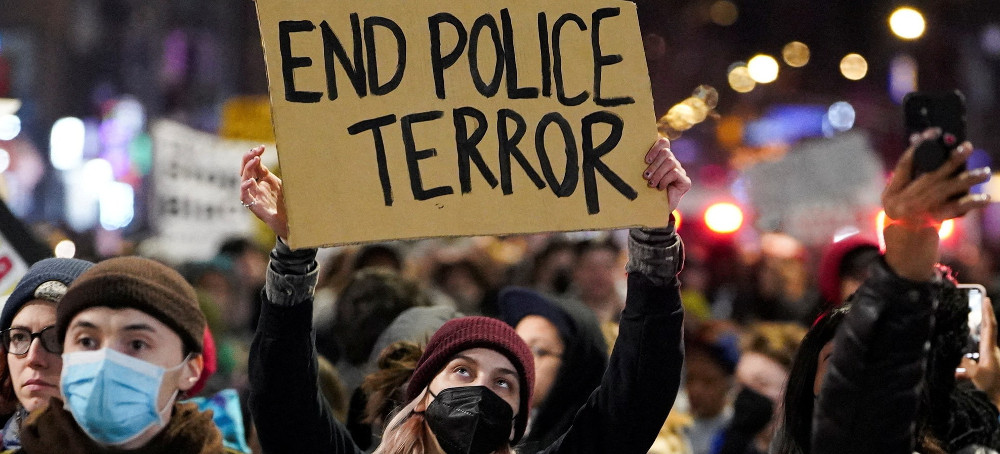
One in 20 US Homicides Are Committed by Police - and the Numbers Aren't FallingA person holds a sign during a protest following the 7 January 2023 police beating of Tyre Nichols, who died three days later. (photo: David Dee Delgado/Reuters)

One in 20 US Homicides Are Committed by Police - and the Numbers Aren't Falling
Lois Beckett, Guardian UK
Beckett writes: "In the US, an estimated one in 20 gun homicides are committed by police, as law enforcement killings have failed to decrease despite years of nationwide protests." 


Police killings of any sort account for nearly 5% of all homicides, with at least 1,192 people killed by law enforcement in 2022


In the US, an estimated one in 20 gun homicides are committed by police, as law enforcement killings have failed to decrease despite years of nationwide protests.

Law enforcement officers killed at least 1,192 people in 2022, the highest number recorded in a decade, according to Mapping Police Violence, a prominent non-profit database of police killings. More than 1,100 people were killed by the police in both 2020 and 2021. The vast majority of these deaths were police shootings.

There were more than 25,000 total homicides in the US in 2020 and 26,000 in 2021, according to data from the Centers for Disease Control and Prevention (CDC). National data for 2022 is not yet available.

Police shooting deaths represented 5% of all gun homicides in 2020 and 2021, and total police killings represented nearly 5% of all homicides, according to the best available public data.

Because only a small number of deadly incidents each year receive wide media attention, many Americans may not realize that “a meaningful fraction of homicides in the US are police killings”, said Justin Feldman, a researcher at the Center for Policing Equity.

The number of US homicide victims who die in mass shootings each year, for instance, is smaller than the number killed by police. While definitions of “mass shooting” vary, the estimated number of people killed in these incidents have ranged from a few dozen to 700 people a year in recent years.

“There is a lot of fear, with mass shootings and gun violence in general, that some stranger will show up wherever you are and kill you,” said Samuel Sinyangwe, the founder of Mapping Police Violence. “But police contribute a large part to those numbers.”

The circumstances for many murders are listed as unknown in the FBI’s incomplete national crime statistics database, but in 2020 nearly 4,000 people were listed as being killed by a friend or an acquaintance, and about 1,800 were known to be killed by a stranger.

Some police departments have much higher rates of police killings than others. In Vallejo, California, which is known for police violence, the police department was responsible for 30% of the city’s homicides in 2012. Police killed six people that year; a single officer killed three people in three different incidents, and was later promoted.

More than 32,000 Americans have been killed by police since 1980, but official public health statistics have undercounted the number of killings for decades, according to a 2021 study from University of Washington researchers published in the Lancet, a prominent medical journal. Over the past four decades, US police have killed Black people at a rate 3.5 times higher than white people, and have also killed Hispanic and Indigenous people at higher rates, the study estimated.

The rate of fatalities from police violence rose even when the nation’s overall homicide rate sharply declined, with the rate of deaths from police violence rising 38% from the 1980s to the 2010s, the study found.

The US has much higher rates of both police killings and overall homicides than other wealthy countries. In Europe, the combined number of police killings and state executions remains in the single digits each year in many countries, according to data from the University of Washington’s Institute for Health Metrics and Evaluation (IHME). The US’s annual rate of police killings and state executions, with more than 1,000 deaths a year, is more comparable to Brazil, Colombia, Venezuela, Cameroon, Libya and Sudan, according to IHME data.

At least one international study has found the rate of police killings “strongly correlates” with overall homicide rates across multiple countries, but also noted that data on police violence is likely to be less reliable in countries where police kill more frequently.

A 2018 paper published in the American Journal of Public Health found that “police were responsible for about 8% of all homicides with adult male victims between 2012 and 2018”, or about one in 12. Frank Edwards, a Rutgers University sociologist and the lead author of that study, said it was not surprising that the current percentage of police homicides would be somewhat lower than 8% when factoring in the killings of women and well as men, and as the national total number of homicides had also increased sharply since 2020.

Public databases from news outlets and non-profits still offer more complete and reliable data on police killings than the US government, more than seven years after the nation’s FBI director called it “embarrassing and ridiculous” that newspapers produced a more accurate national count of US police shootings than the Department of Justice. Mapping Police Violence, for instance, tracks police killings using a combination of state law enforcement data and incident data drawn from media reports and public records requests.

It’s not only national crime data that’s flawed when it comes to homicides by police. For decades, more than half of police killings have been mislabeled as generic homicides or suicides in the CDC’s official death statistics database, said Eve Wool and Mohsen Naghavi, two of the authors of the Lancet paper on police killings.

The undercounting of police killings in public health data is a result of coding failures by coroners, medical examiners and other public health officials, many of whom “work for or are embedded within police departments”, the researchers found.

Because of the lack of official statistics, Feldman and Edwards said, comparing the count of police killings in non-profit databases like Mapping Police Violence with the CDC’s total homicide numbers is the most accurate way to estimate the percentage of homicides committed by police.

READ MORE 


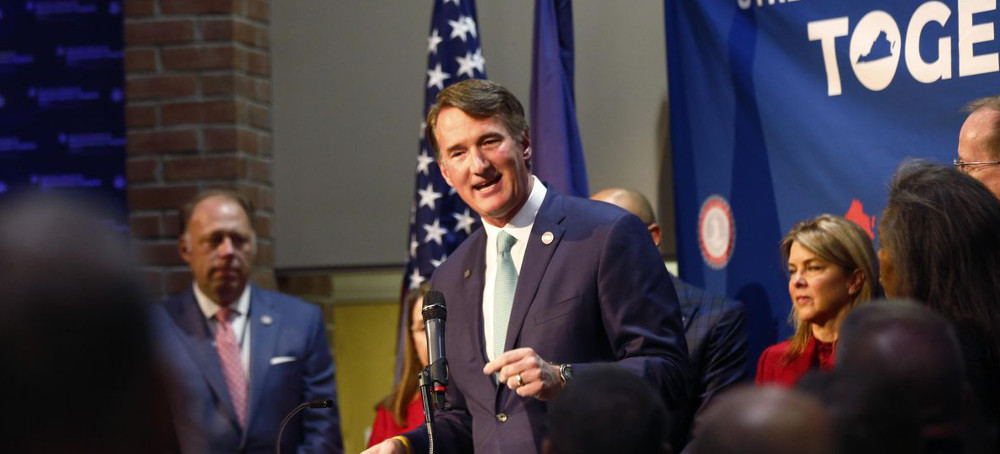
Virginia Governor Blocks Bill Banning Police From Seeking Menstrual HistoriesGlenn Youngkin on 14 December 2022, in Henrico, Virginia. (photo: Daniel Sangjib Min/AP)

Virginia Governor Blocks Bill Banning Police From Seeking Menstrual Histories
Richard Luscombe, Guardian UK
Luscombe writes: "The Republican governor of Virginia, Glenn Youngkin, appears to have thwarted an attempt to stop law enforcement obtaining menstrual histories of women in the state." 


Glenn Youngkin essentially kills bill passed in Democratic-led state senate to ban search warrants for menstrual data on tracking apps


The Republican governor of Virginia, Glenn Youngkin, appears to have thwarted an attempt to stop law enforcement obtaining menstrual histories of women in the state.

A bill passed in the Democratic-led state senate, and supported by half the chamber’s Republicans, would have banned search warrants for menstrual data stored in tracking apps on mobile phones or other electronic devices.

Advocates feared private health information could be used in prosecutions for abortion law violations, after a US supreme court ruling last summer overturned federal protections for the procedure.

But Youngkin, who has pushed for a 15-week abortion ban to mirror similar measures in several Republican-controlled states, essentially killed the bill through a procedural move in a subcommittee of the Republican-controlled House.

Citing unspecified future threats to the ability of law enforcement to investigate crime, Maggie Cleary, Youngkin’s deputy secretary of public safety, told the courts of justice subcommittee it was not the legislature’s responsibility to restrict the scope of search warrants.

“While the administration understands the importance of individuals’ privacy … this bill would be the very first of its kind that I’m aware of, in Virginia or anywhere, that would set a limit on what search warrants can do,” she said, according to the Washington Post.

“Currently any health information or any app information is available via search warrant. And we believe that should continue to be the case.”

The panel voted on party line to table the bill, meaning it is unlikely to resurface during the current legislative session.

Abortion rights advocates contend that with Youngkin’s efforts to push a 15-week abortion ban, with limited exceptions, failing to advance in either legislative chamber, the governor is looking for other avenues.

“The Youngkin administration’s opposition to this commonsense privacy protection measure shows his real intentions, to ban abortion and criminalise patients and medical providers,” said Tarina Keene, executive director of Repro Rising Virginia, in a statement provided to the Guardian.

Youngkin has insisted that any abortion restrictions would target doctors, not women who have the procedure.

The administration has also attempted to portray a united front among Republicans for abortion restrictions, arguing it is a consensus issue. But the defection of the nine senate Republicans over the menstrual data bill follows one of their number, Siobhan Dunnavant, speaking out last month against Youngkin’s 15-week proposal.

Dunnavant, an ob-gyn doctor, condemned the bill as “extreme”, according to the Virginia Mercury, and said she could not support it unless it contained an exception for severe fetal abnormalities to 24 weeks. Under current Virginia law, the procedure is legal for all women until the 27th week of pregnancy.

The wrangle over menstrual data tracking has parallels with a controversy in Florida, in which high school athletics officials last week backed away from a “humiliating” proposal requiring girls who wanted to play sports to answer questions about menstruation on medical forms.

Critics said the requirement aligned with a push by the Republican governor, Ron DeSantis, to curtail transgender rights, an allegation denied by high school officials.


READ MORE


Democrat Seeks Documents About $2 Billion Saudi Investment in Kushner FundWhite House senior adviser Jared Kushner stands among Saudi officials as President Trump talks with Crown Prince Mohammad bin Salman of the Kingdom of Saudi Arabia during a meeting in the Oval Office in March 2018. (photo: Jabin Botsford/The Washington Post)

Democrat Seeks Documents About $2 Billion Saudi Investment in Kushner Fund
Michael Kranish, The Washington Post
Kranish writes: "Rep. Jamie Raskin says he is 'deeply troubled' by a prior refusal from Kushner to turn over relevant information." 


Rep. Jamie Raskin says he is ‘deeply troubled’ by a prior refusal from Kushner to turn over relevant information

Asenior Democrat on Tuesday renewed a request to Jared Kushner for documents outlining how the former White House official received $2 billion from a Saudi investment fund, writing that Kushner had failed to respond to an earlier inquiry and raising new questions about whether he had “improperly traded” on his government work to benefit his financial interests.

The letter from Rep. Jamie B. Raskin (Md.), the ranking Democrat on the House Oversight and Accountability Committee, cited a Washington Post story published online Saturday and other reports that he said raised disturbing questions about Kushner’s relationship with Saudi Crown Prince Mohammed bin Salman.

Mohammed chairs a sovereign wealth fund that invested in Kushner’s private equity fund, known as Affinity Partners, soon after Kushner left a White House position that dealt regularly with Saudi affairs.

“I am deeply troubled by your continued refusal to produce documents regarding the Saudi government’s $2 billion investment in your fund in light of recent prominent reporting that Saudi Arabia made that investment in Affinity just months after you left a senior White House position where you were responsible for shaping Middle East policy,” Raskin wrote to Kushner.

Raskin’s letter also requested that Kushner identify all foreign investors in his company.

Kushner did not immediately respond to a request for comment.

Raskin’s letter followed up on a request in June from the committee, which at the time was controlled by Democrats, for the documents.

While Kushner’s company turned over nearly 2,000 pages in response, Raskin revealed in Tuesday’s letter that they mostly amounted to publicly available documents that do “not substantively relate to the Saudi government’s investment in the firm.” Raskin wrote that when the committee followed up in October, the company’s legal officer did not respond.

With Republicans now in control of the House, Raskin this week asked the committee’s chairman, Rep. James Comer (Ky.), to co-sign the letter. Comer, asked Sunday on ABC News’s “This Week” whether he would push for an investigation into Kushner just as he is probing actions by President Biden’s son Hunter Biden, had responded that “everything is on the table.”

But Comer said in a statement Tuesday to The Post that he would not co-sign Raskin’s letter, a decision that could make it harder for House Democrats to obtain the information from Kushner.

“Ranking Member Raskin and Committee Democrats have a long way to go to prove they are interested in true oversight after having spent the past two years giving the Biden Administration a free pass,” Comer said. “If Democrats want to join Committee Republicans in our ongoing efforts, including investigating Joe Biden’s involvement in his family’s suspicious business schemes with foreign adversaries, then we can discuss joining together on future requests. Until then, Committee Republicans will continue seeking answers for the American people about the current Administration’s activities.”

Raskin’s request is expected to be picked up by a concurrent investigation by the Senate Finance Committee and its chairman, Sen. Ron Wyden (Ore.). “The financial links between the Saudi royal family and the Trump family raise very serious issues, and when you factor in Jared Kushner’s financial interests, you are looking right at the cat’s cradle of financial entanglements,” Wyden told The Post last week.

Raskin said in an interview Tuesday that while he still hoped Comer would cooperate, “We will definitely work with our partners in the Senate to get all of the information we need in order to conduct a thorough and detailed investigation of all of the conflicts of interests that we need to learn about.”

Raskin said he was “not going to allow this to be some kind of lopsided partisan witch hunt. Let’s have a serious investigation into public policy and the profound ethical concerns that have been raised.”

As President Donald Trump’s senior adviser, Kushner worked closely with Mohammed, who became crown prince in part by leveraging his ties to the Trump administration, which provided arms sales and other benefits. Trump also provided crucial support by refusing to endorse a CIA finding that Mohammed had ordered the killing or capture of Jamal Khashoggi, a Post contributing columnist who had been critical of the crown prince’s policies. Trump has said that he “saved” Mohammed, and former secretary of state Mike Pompeo wrote in his recent memoir that he was told by Trump to visit with the crown prince and “tell him he owes us.”

The Saudi Public Investment Fund has also financed LIV Golf, which is holding tournaments on Trump’s golf courses. It is unclear how much Trump earns from that arrangement. A Trump spokesman did not immediately respond to a request for comment.

In his letter to Kushner, Raskin wrote, “Your efforts to protect the Crown Prince may have allowed him to maintain his position at the top of the Saudi government and, thus, his ability to deliver significant financial benefits to you and your father-in-law after the end of the Trump Administration.”

Raskin noted that when the committee contacted Kushner’s company in June, it responded that it had “nothing to hide” and was “committed to working with the Committee to provide appropriate details, documents, and information to help inform your investigation.”

While Affinity eventually provided some documents, Raskin wrote, it “failed to produce a single communication related to the reasons behind your firm’s receipt of $2 billion from the Saudi sovereign wealth fund.”

The congressman asked for the documents to be provided by March 1.


READ MORE 


Why Are BP, Shell, and Exxon Suddenly Backing Off Their Climate Promises?Bernard Looney, the CEO of BP, arrives in Downing Street, London, September 11, 2020. (photo: Aaron Chown/Getty)

Why Are BP, Shell, and Exxon Suddenly Backing Off Their Climate Promises?
Kate Yoder, Grist
Yoder writes: "It wasn't long ago that oil giants were trying to outdo one another with promises to cut carbon emissions and take on climate change." 


"If we see value, we’ll do it. If we don’t, we won’t."


It wasn’t long ago that oil giants were trying to outdo one another with promises to cut carbon emissions and take on climate change. In 2020, the price for a barrel of oil briefly plunged below zero, and the world’s largest oil and gas companies portrayed themselves as getting serious about renewables. BP promised to slash its emissions, Shell pledged to go “net zero,” and ExxonMobil trumpeted its efforts to transform algae into fuel.

But in recent weeks, these oil giants have begun tapping the breaks on these much-publicized initiatives. BP walked away from its target to reduce emissions by 35 percent by 2030 — once lauded as the most ambitious, tangible goal in the industry — promising a cut between 20 to 30 percent instead. Shell said it would not increase spending on renewable energy this year, contrary to expectations. Meanwhile, Exxon has pulled back funding from its decade-long algae effort.

These quiet announcements coincided with their recent blockbuster earnings reports, which were celebrated by executives and excoriated by politicians like President Joe Biden, who called them “outrageous.” Buoyed by oil prices soaring above $100 a barrel last year, the oil giants roughly doubled their profits from the year before, with BP raking in $28 billion and Shell $40 billion. Exxon, the oil major that has been the least enthusiastic about renewables, reported even better results — $56 billion, up 143 percent from the year before and a record for a Western oil company.

“We leaned in when others leaned out, bucking conventional wisdom,” said Darren Woods, Exxon’s CEO, in a call with investors, praising his company’s resistance to pulling back on fossil fuel production.

“You know, nothing like profits rolling in to make Big Oil show its true colors,” said Jamie Henn, the director of Fossil Free Media. “I think over the last few weeks, we’ve seen the industry take off the green mask that it has been wearing for the last few years and remind us of its true identity and its real business model, which is the continued extraction and production of fossil fuels at the expense of our climate and communities.”

So why are oil companies slowing down on renewables now, when they have plenty of cash to spend and the world is grappling with the alarming fires, floods, and droughts spurred by climate change? The ease of short-term profits when oil prices are high and the political cover provided by concern about “energy security” have played a large role. Heartened by last year’s flow of oil cash and dissuaded by the rising costs of installing wind and solar, executives are turning away from the longer-term payoffs promised by renewable investments. Climate advocates say that Big Oil’s recent moves should serve as a wake-up call for investors and regulators that oil companies plan to double down on fossil fuels for as long as it’s profitable.

“If they’re not going to invest more on the energy transition now, then when?” asked Krista Halttunen, an energy researcher at Imperial College London.

Some oil executives have been pretty upfront about the reasons they’re backing off. “We’re going to be driven by value,” Bernard Looney, BP’s CEO, said on an earnings call last week. “That’s what we’re going to be driven by. And if we see value, we’ll do it. If we don’t, we won’t.”

The war in Ukraine, and the ensuing fuel crunch as Europe and the United States sought to end imports of Russian oil and gas, has created more cover for BP and other companies to ramp up oil production in the name of energy security, said Trey Cowan, an oil and gas analyst at the Institute for Energy Economics and Financial Analysis. “They got the political will following what their will is at this point,” Cowan said. In a recent interview with the Wall Street Journal, Looney said that BP’s goal wasn’t just to deliver clean energy, but “affordable energy, secure energy.”

The rising costs of rare earth metals, used in wind turbines and solar panels, may also be slowing down oil companies’ spending on renewables. The cost of a stationary solar installation, for instance, rose 14 percent globally between the summers of 2021 and 2022, according to a BloombergNEF analysis.

After announcing the company’s earnings this month, Wael Sawan, Shell’s CEO, said that the company planned to increase natural gas production and would not be ramping up spending on renewables this year. In 2022, Shell’s capital spending on “low-carbon” initiatives (a broad definition that includes gas) had increased to $3.5 billion, almost a 50 percent increase over the prior year. But the potential clean-energy profits of tomorrow don’t make good business sense when oil and gas are making sky-high profits today, Sawan explained. “We cannot justify going for a low return,” he said during a conference call. “Absolutely, we want to continue to go for lower and lower and lower carbon, but it has to be profitable.”

There are also some unexpected reasons that oil giants might be backing off renewable investments now. Take Exxon’s recent retreat from experimenting with making low-carbon biofuels from algae, a venture that the company poured $350 million into over the last decade (in addition to spending about half that sum advertising the effort). Vijay Swarup, Exxon’s senior director of technology, told Bloomberg that algae still needed more work before deployment, so the company was prioritizing carbon capture and hydrogen instead.

Oddly enough, the Inflation Reduction Act, the landmark climate legislation that President Joe Biden signed into law last summer, might have something to do with it. It has shifted incentives for oil and gas companies, which are now looking to take advantage of new tax credits for projects that store and capture carbon dioxide, Cowan said.

Oil companies tend to like the idea of capturing carbon released from burning fossil fuels since it legitimizes their core business — selling fossil fuels. Not only can they continue to emit carbon, but they can also get tax credits for trapping and storing it. “It’s sort of a misaligned incentive of, ‘Hey, create carbon to go store it in the ground,’” Cowan said.

From an accounting perspective, it was also a good time for Exxon to end its research, he said. With its high profits, the company could write off the algae expenses as a loss without drawing a lot of attention to it.

Oil companies may be “emboldened” by their record earnings, but Cowan warns that many investors are wary of getting back into oil’s boom-and-bust cycle. In the long run, though, he bets that there will be an excess of oil on the market again, and that with less leverage over investors, oil companies will have to rein in the pollution they’re producing. “It all comes down to price at the end of the day,” Cowan said. “If prices are low, these oil and gas companies don’t look as desirable from an investment standpoint. That’s the bottom line.”


READ MORE


Contribute to RSN

Follow us on facebook and twitter!

Update My Monthly Donation

PO Box 2043 / Citrus Heights, CA 95611


I Spoke with Xavier Becerra About Why Trump's California Attacks Matter to Every American

                                                         LOTS OF POSTS IGNORED BY BLOGGER..... OR REMOVED ON THEIR WHIM! ALL POSTS ARE AVAIL...