Showing posts with label RHINO CAPITAL. Show all posts

Monday, April 26, 2021

Special town meeting added to civic calendar for May 19


Special town meeting added to civic calendar for May 19


Robert Barboza Correspondent 
Published Apr 26, 2021

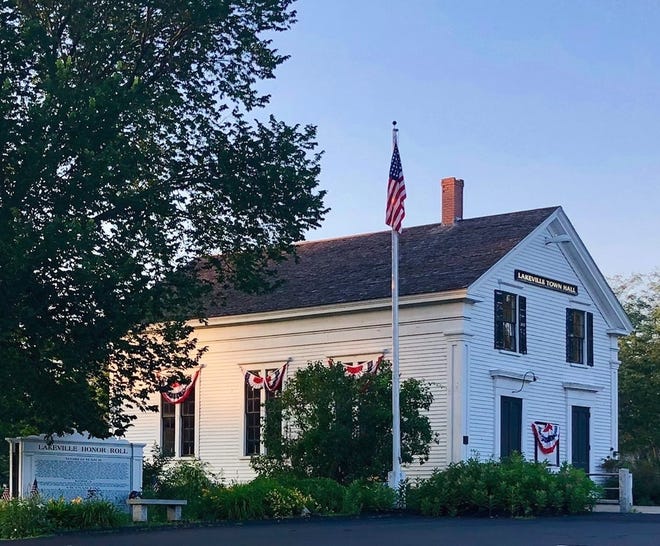
LAKEVILLE — With the Annual Town Meeting already scheduled for 7 p.m. Monday, May 19, selectmen recently voted to authorize an early assembly of voters at the high school for a 6:30 p.m. Special Town Meeting on the same night.

The payment of unpaid bills from the previous fiscal year, funding for some capital improvement projects, and transfers of funds to make adjustments to various municipal budgets are among the handful of items voted for the Special Town Meeting warrant.

Annual Town Meeting in Lakeville is scheduled for Monday, May 19.

The first article seeks approval to use $6,231 in available funds to pay outstanding bills from last year; the second asks voters to use $80,000 in available funds to supplement budget accounts for a variety of town departments.

The following article seeks appropriations from various sources to fund a small list of capital expenditures in the present fiscal year. The last proposes to take $45,000 from the Parks Retained Earnings account and use it to replace anticipated parks revenues lost this summer due to the continuing coronavirus pandemic restrictions.

In other business, selectmen formally voted to approve a Taunton Water Line connection for Lakeville Owner LLC, a company formed by Rhino Capital LLC to handle the redevelopment of the Lakeville Hospital site at 43 Main Street. The company is authorized to use up to 6,045 gallons of water per day from the city’s water line running by the site.  

The redevelopment plans for the 50-acre property being purchased by Rhino Capital LLC were recently approved by the Planning Board, calling for a 402,500 square foot building sited just over 400 feet from Main Street, and outfitted with 128 loading docks for tractor trailers.

Looking just across the street from that site, selectmen had no official comment for the Planning Board on its review of site plans for a Domino’s Pizza restaurant at 56 Main Street, in the Dollar Tree plaza.

The only informal comment was Chair Lia Fabian’s suggestion that the parking lot seemed a little “tight” to accommodate a drive-through lane behind the building, but it was noted that the site plans for the Dollar Tree store had included space for a small restaurant with a drive-through window to be located in the structure.

Selectmen also voted to sign an Affordable Housing Restriction amendment for the nearby Residences at Nemasket River, allowing owners to change the constructed housing units from rental apartments to for-sale units. The Planning Board has already endorsed the modification of plans for the affordable housing development along several roads off Main Street near the Lakeville MBTA station.

All the new development in the neighborhood has sparked resident concerns about traffic congestion in the near future along that section of Main Street between Vaughn Street and the Middleborough town line.

Selectmen were glad to hear State Senator Michael Rodrigues recently report that the nearly-finalized state budget plans contain $2.5 million for traffic lights and intersection improvements at the Bridge Street intersection.

Another $1 million in unspent funds from a 2018 transportation bond could also be used for Mass Highway improvements to Route 105 in the area if needed to mitigate the traffic increases from projected development in the near future, the legislator indicated.

With group gathering restrictions being eased in Massachusetts, the board saw fit to approve a request from the Sunken Island Bike Race organizers to use town roads on July 10 for the event. Selectmen said the 14-mile route would be partially obstructed between the hours of 8:30 and 10:30 p.m.; in return for the approval, the organizers will donate a portion of the race profits to a local charity designated by the board.


Tuesday, April 6, 2021

Planning Board approves Lakeville hospital redevelopment plan


Planning Board approves Lakeville hospital redevelopment plan


Robert Barboza  Correspondent 
Published Apr 5, 2021 


The Planning Board formally voted on April 1 to approve site plans and a special permit for the proposed redevelopment of the Lakeville Hospital campus as a warehouse and distribution center. Lakeville Residents for Responsible Growth say they will continue to oppose the plan.


LAKEVILLE — After months of public hearings during the town’s multi-departmental review process for large scale Development Opportunities District (DOD) projects, the Planning Board formally voted on April 1 to approve site plans and a special permit for the proposed redevelopment of the Lakeville Hospital campus as a warehouse and distribution center.

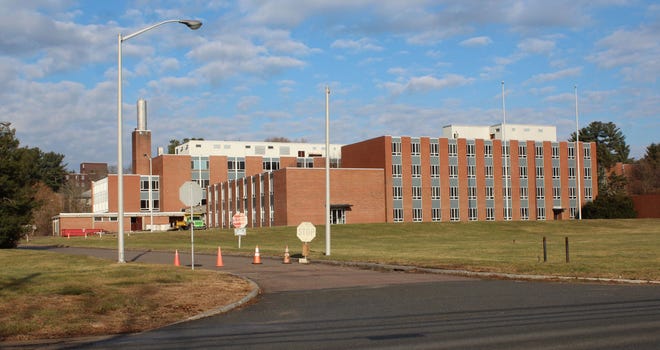
Commercial property developer Rhino Capital is proposing to tear down the seven abandoned buildings in the hospital complex and build a 402,500 square foot building to be leased to as yet unknown tenants. According to submitted plans, the building would be sited just over 400 feet from Main Street, and be outfitted with 128 loading docks for tractor trailer truck deliveries and shipments.

The 5-0 approval vote on the special permit application came despite continuing neighborhood opposition to the redevelopment proposal, and the efforts of the 300-plus members of the Lakeville Residents for Responsible Growth, which recently asked the board to deny Rhino Capital the special permit needed for the project to go forward.

The Planning Board also approved a handful of waivers from zoning regulations requested by the developer, allowing a 45-foot building height, impervious coverage of 58 percent of the building lot, and the erection of an eight-foot noise-dampening fence in the setback of a buffer zone along the border of an abutting residential neighborhood.

Another waiver will allow the facility to start operations with only 298 of 504 allowed employee and visitor parking spaces; the remaining 206 parking spaces will be built only if there is a clear demand.

The approvals came with pages of official “findings” from the town, declaring the Rhino Capital proposal met the planning, design and construction standards for large scale project plans in the DOD zone; furthered the health and safety of the public by ensuring hazardous materials on the site would be cleaned up; and would produce a reasonable impact on the community for the scale of the project.

Planning Board Chair Mark Knox said that Rhino Capital had been “diligent” about incorporating peer review consultant recommendations, official input, and public suggestions into the revised plans to help improve the project and reduce impacts to the community.

For example, the corporation “did extensive (site) grading, planting, and fencing changes” to reduce noise impacts on neighbors, Knox noted. An accompanying list of project conditions includes limited hours of operation, a requirement for low-noise back-up alarms on tenant-owned trucks and equipment, and bans tractor-trailers from using streets in surrounding residential neighborhoods.

Among the demonstrated benefits to the community is the removal of asbestos and other hazardous materials from the abandoned hospital complex; the demolition of the deteriorating eyesore structures; and the clean-up of a solid waste disposal site on the property, Knox concluded. At the end of that work, the town will get a first class development that will boost its commercial tax base, he added.

To make sure that the hazardous materials on site are cleaned up once and for all, 30 years after the state abandoned the property, the Planning Board boosted the suggested $1 million bond for the clean-up work to $3 million. Two million dollars will be posted as a surety bond; the other million dollars will be cash escrow held by the town until the work is completed.

The waste clean-up and demolition work will be limited to 7 a.m. to 5 p.m. Monday through Friday, and between 8 a.m. and 4 p.m. on Saturdays. Work will be banned on Sundays and holidays.

Those were among the highlights of the list of more than 50 separate conditions the board attached to the special permit, dealing with all aspects of the redevelopment plan – everything from a ban on refrigerator trucks idling on site to the drafting of a five-year maintenance plan for landscape plantings.

“We gave our best efforts to do what’s best for the town,” Knox said of his board’s drafting of the conditions for permitting, construction, and operations.

Planning Board member Barbara Mancovsky, who succeeded in her bids to get the clean-up bond increased, and tractor-trailers banned from using Rt. 79 or residential side streets, said the approval was “a very difficult decision” for her and other board members.

She said she was very troubled by the environmental issues that have resulted from 30 years of neglect, and felt the Rhino Capital project was the town’s best option to get the site cleaned up as quickly as possible. There has been a lack of other options for redevelopment presented in the 11 years since the Sysco Foods distribution center proposed for the site was voted down by residents, she noted.

Fellow member Michele MacEachern said the board tried to address all resident concerns about the project as well as it could; she suggested that it will bring many good employment opportunities for local residents, and should provide economic benefits to other businesses in town.

Member Jack Lynch said the board worked very hard on the long review and permitting process, and especially praised Knox’s contribution of long hours to spearhead both of those efforts.

Long-serving member Peter Conroy read a prepared statement indicating the board recognized the “valid concerns” of residents, but felt “something has to be done with this site” to prevent greater health and safety problems from developing there.

“If we would deny this permit, the structures will continue to deteriorate, and we would have no idea when something else will come along... and what that might be,” he said.  The warehouse operation “may not be the perfect fit” for the site, but it might be the most viable plan for re-use of the property the town has seen in decades, he suggested.

Several residents of surrounding neighborhoods took one last opportunity to express their opposition to the redevelopment project before the Planning Board took their April 1 votes.

Lakeville Residents for Responsible Growth spokesman John Jenkins told members of the Planning Board in the virtual meeting that the group will contest the approvals if they were granted. The proposed trucking and warehouse operation was less favorable than the mixed use development townspeople voted for when creating the DOD regulations, Jenkins suggested.

The resident group asked for a non-binding town-wide referendum vote on the plans, expressing its willingness to pay the costs of the special election for that referendum vote if necessary.

Abutter Dick Scott felt that residents should have a chance to preview the long list of conditions for the project, and offer town officials additional input. He expressed doubts that low-noise back-up alarms from the truck terminal would not be heard on his property, and asked how the town would enforce its noise restrictions.

Resident Daniel Ferreira said he expects traffic issues, including “absolute gridlock” on that part of Route 105 from the warehouse site to the Middleborough line. He felt a public referendum should have been held on the matter by town officials.

Middleborough Planning Board member Jack Healy again asked his Lakeville counterparts to be included in a traffic routing agreement between the developer, the future tenant, and the two towns, limiting tractor trailers to direct routes to and from I-495, and banning truck use of other roads to reach Route 44 and Route 28.

It was agreed that Middleborough officials would have a seat at the table when the town met with the future tenant to discuss traffic control matters.

Saturday, March 27, 2021

Despite opposition, hospital redevelopment plans on track


Despite opposition, hospital redevelopment plans on track


Robert Barboza Correspondent
Published Mar 23, 2021 


Lakeville Hosptal

LAKEVILLE — With plan approval votes on plans for the proposed redevelopment of the Lakeville Hospital campus as a warehouse or distribution center coming from the Board of Health and Conservation Commission this week, the project is now only one big approval vote away from completing the local permitting process.

Remaining for developer Rhino Capital LLC now is the Planning Board’s formal approval of a special permit for the project under Development Opportunities District zoning guidelines, along with the expected long list of required conditions for construction and operations.

The corporation is proposing to tear down all seven existing buildings in the hospital complex and build a 402,500 square foot one-story building to be leased to one or two tenants. According to submitted plans, the new building would be sited just over 400 feet from Main Street, and be outfitted with 128 loading docks for tractor trailer truck deliveries and shipments.

The Board of Health unanimously approved septic system plans for the redevelopment project at its March 17 meeting, Chairman Chris Spratt told the town’s 43D Review Committee the following night. There were “no major concerns” about the plans, he said, noting they were “pretty straightforward... not asking for anything special.”

The Health Board did suggest that one condition on the special permit be a bond that would cover town equipment and manpower expenses for noise monitoring “down the road, when we have to deal with noise complaint issues... if it becomes an ongoing complaint,” Spratt said.

Potential noise impacts from 24/7 trucking operations at the site have been a major concern of residents of neighborhoods surrounding the abandoned hospital property since the proposed use was first disclosed.

Noise was among the detrimental effects on the neighborhood cited in a recent letter to the Planning Board from the 300-plus members of the Lakeville Residents for Responsible Growth, which formally asked the board to deny Rhino Capital the special permit needed for the project to go forward.

Group spokesman John Jenkins told members of the Planning Board in a virtual meeting that the proposed plans did not meet the basic criteria of the Development Opportunities District (DOD) zoning the town adopted in 2012, which are predicated upon projects not having “a detrimental effect” on surrounding residential properties.

The proposed seven-day-a-week trucking and warehouse operation “clearly creates a negative effect on the neighborhood” in violation of that basic requirement of the DOD zoning bylaw, Jenkins argued.

The resident group asked for a non-binding town-wide referendum vote on the plans, expressing its willingness to pay the costs of the special election for that referendum vote if necessary. The recommendation was passed on to selectmen for consideration.

At the March 18 continuation of the public hearing on plans, Conservation Commission Chair Bob Bouchard recorded a similar unanimous vote on the final order of conditions to be attached to the approved plans for site work and protection of wetlands resources from his board.

After making a few minute last-minute adjustments to the multi-page order of conditions for the redevelopment plans, the commission voted 5-0 to approve the finalized order.

At that point, Planning Board Chair Mark Knox declared the 43D Review Committee’s public hearing portion of the meeting closed, and said discussions would continue as a Planning Board “work session” without public comment from that point on.

He noted that the board had recently received 65 letters “either in support or opposition” to the special permit request since their last meeting two weeks ago.

Tyler Murphy, representative of the Boston-based investment and management firm which is buying the site, was asked for the company’s response to issues raised at the last public hearing. He started with public concerns about increased truck and pedestrian traffic along Route 105, especially foot traffic from the apartment complex on Commercial Drive to the new MBTA station just over the Middleborough town line.

Murphy said the traffic study for the T station has generated considerable plans for road improvements, new traffic signals, crosswalks and other improvements to the Route 105 corridor, from the Route 28 intersection to the Route 79 intersection.

The I-495 interchange will be redesigned to create a four-way intersection with new traffic signals, and the pedestrian crossings between Commercial Drive and the new T station will be upgraded to “protected” crossings with lights, he indicated. The MBTA is planning regular shuttle bus runs from the Lakeville apartments to the train station, he also noted.

The project will also include re-adjustment of the traffic signals at the Route 105 and Route 79 intersection just south of the I-495 interchange. Already in the works are state plans to install a traffic signal and new road marking at the intersection of Bridge Street and Main Street; a House bill has earmarked $2.5 million for the new traffic signals and improvements there in this fiscal year.

Murphy’s review list of mutually agreed “findings” between developer and permitting agency began with an apt summary of the special permit application – the company believes the proposed commercial use “is not noxious, harmful, or hazardous, and is socially and economically desirable” to the community, and will remove a long-blighted property from public view.

The project will clearly improve “existing condition, which is both noxious and harmful,” Murphy told town officials. In exchange for a small increase in peak hour traffic, and truck traffic at other times, the town can have the site cleaned up and attractively developed, and bolster its commercial tax base, he suggested.

“The advantages of the proposed outweigh any detrimental effects” of the redevelopment plans, Murphy added. Other redevelopment proposals may not be as beneficial to the community, he offered.

Social media commentary and petition opposition to permit approval from the Lakeville Residents for Responsible Growth take a slightly contrary view of the project, suggesting noise, traffic, and safety concerns about the proposed 24-hour commercial operation outweigh the economic benefits of that redevelopment plan.

Now, neighboring Middleborough is trying to address potential traffic issues reaching over the town line, with the Middleborough Planning Board asking to be included in a traffic routing agreement between the developer and the two towns, limiting tractor trailers to direct routes to and from I-495, and banning truck use of Route 105 to reach Route 44, member Jack Healey told his Lakeville counterparts.

“There’s no way to force an applicant to enter into an agreement with another town,” Lakeville Town Counsel advised Knox. The permit could condition “primary routes” for tractor trailers, and require negotiations on voluntary traffic agreements with eventual tenants, she suggested.

Murphy told officials of both towns that the company was certainly willing to discuss truck routes with town representatives.

At the end of the March 18 session, the Planning Board continued the public hearing on the special permit application to its April 1 meeting.


Sunday, March 7, 2021

Lakeville resident group calls for no vote on development plans; hazardous materials detailed


Lakeville resident group calls for no vote on development plans; hazardous materials detailed


Robert Barboza
Published Mar 5, 2021 

LAKEVILLE — As town committees and boards inch closer towards anticipated approval votes on plans for the proposed redevelopment of the Lakeville Hospital campus as a warehouse or distribution center, resident opposition to the plans continues to grow.

At the March 4 continuation of the months-long public hearing on Rhino Capital LLC’s application for a special permit and other approvals for the development, a representative of the 300-plus members of the Lakeville Residents for Responsible Growth formally asked the Planning Board to deny the needed permit.

The corporation is proposing to tear down all seven existing buildings in the hospital complex and build a 402,500 square foot one-story building to be leased to one or two tenants. According to submitted plans, the new building would be 45 feet high, sited just over 400 feet from Main Street, and fringed with 128 loading docks for tractor trailer truck deliveries and shipments.

Lakeville Residents for Responsible Growth Thursday night requested the Planning Board to deny Rhino Capital LLC’s application for a special permit and other approvals for the development on a distribution center at the site of the former Lakeville Hospital.

Group spokesman John Jenkins told members of the Planning Board that the proposed plans did not meet the basic criteria of the Development Opportunities District (DOD) zoning the town adopted in 2012.

The proposed distribution center “will have a detrimental effect both on the abutting residential neighborhoods, but more importantly, on all residents of Lakeville who travel in the area,” he said in a prepared statement given at the virtual meeting.

The proposed business operation “clearly creates a negative effect on the neighborhood,” in violation of the basic requirement of DOD zoning, Jenkins added.

“Listen to the residents of Lakeville who want a responsible project that will truly benefit our citizens and our community,” the statement concluded.  Many of those residents with concerns about the project tuned into the virtual meeting, which had over 120 participants tuning in via Facebook.

Jenkins credited Rhino Capital and its representatives with making a fine presentation of its redevelopment proposals, but suggested the project is essentially “a trucking terminal” that would not be the best use of the property.

He suggested a non-binding town-wide referendum vote on the plans be undertaken, expressing the resident group’s willingness to pay the costs of the special election held for that referendum if necessary. Planning Board Chair Mark Knox said that recommendation would be forwarded to selectmen for consideration.

Tyler Murphy, representative of the Boston-based investment and management firm which is buying the site, has repeatedly promised to be “a good neighbor” that would cause as little disruption as possible to the area. Earlier in the March 4 public hearing, he concluded his firm’s presentation on the plans by citing a long list of reasons why the town should approve the project.

His company’s lead engineer had just urged approval of the special permit for the development, suggesting the proposed operations would not be “noxious, harmful or hazardous” but rather “socially and economically desirable and will meet an existing or potential need” in the community, as called for in DOD guidelines.

Murphy said this third proposal for redevelopment of the long vacant property in recent decades was the town’s best option for removing existing environmental threats to the community, cleaning up and re-purposing a key site that has been vacant for 30 years, and preventing less desirable development such as a large scale, dense residential development that would strain schools and town services.

Murphy detailed the environmental issues at the site, which he estimated would cost about $10 million to clean up. Holes in windows and roofs of existing buildings are stirring up “massive amounts of friable asbestos” fallen from ceilings and sending the hazardous materials outdoors, he reported.

The state Dept. of Environmental Protection (DEP) has ordered all the buildings closed up, and prohibited any entry without hazardous material protective gear, he said. It is impossible to board up the buildings because of the widespread collapse of structural elements, including roofs, doors and windows, he noted.

The seven-story dormitory building, the largest on site, is structurally unsound and no one is allowed to enter, he also reported. DEP inspectors would not even go into the buildings because of unsafe conditions, he added.

Elsewhere, tests on the one-acre landfill site on the northeast portion of the property have shown high levels of lead, arsenic, and asbestos in the trash, appliances, medical waste, and building and demolition materials dumped there between the 1950s and 1970s. The thousands of yards of waste includes “vials and other hospital materials” whose contents cannot be identified, and could eventually leach into the surrounding soil and groundwater, Murphy said.

“A site like this requires some really hard decisions to be made... It’s a complex site, with complex issues,” Murphy concluded.

His firm’s proposal is “a clear path forward to resolve the existing blight and clean up the property,” he suggested.  “We really hope to become a part of this fantastic town.”

Many potential future neighbors took the opportunity to continue to raise objections to the plans, mostly based on noise and traffic issues.

Rush Pond Road resident John Ayers cited “traffic risks” posed by tractor trailers coming of [sic] I-495 onto two-lane Main Street, which abruptly narrows to one lane after the Rt. 79 intersection. Another risk would be big trucks leaving the facility and entering Main Street without the aid of a traffic light, he said.

Ayers accused town officials reviewing the plans while “ignoring that risk” in both cases. Planning Board member Barbara Mancovsky noted that part of Main Street is a state road, and MassDOT will be making determinations if road improvements will be needed.

Developers are estimating about 120 truck trips per day at the site, along with about 220 car visits. The total estimate of 682 vehicle trips per day is far less than previous development proposals for the site, Murphy noted.

Already in the works is a traffic light at the intersection of Bridge Street; House Bill #5248 as approved will earmark $2.5 million for traffic signals and improvements at that intersection, it was noted.

Noise concerns have been addressed by adjustments to the site plans over the past six months. A six to eight foot earthen berm will be installed along abutting residential properties and topped with an acoustical barrier fence to cut down on noise impacts for neighbors.

The remedial efforts should produce “more than a 40 percent reduction in the noise” heard by Rush Pond Road residents, Rhino engineer Brittany Gesner told the reviewers from the Planning Board, Board of Health, and Conservation Commission participating in the meeting.

Other town residents and officials criticized current property owner Derek Maksy for not participating in discussions of redevelopment issues, not complying with DEP orders to secure the buildings and prevent asbestos dust from escaping, and not start the promised clean-up of the landfill site.

At the end of the evening, the public hearing was continued for an eighth time, with the next 43D Review Committee meeting being set for March 18.


Top News | 'He’s Not Going to Run Unopposed': Sanders Rejects Schumer for Majority Leader

                                                               LOTS OF POSTS IGNORED BY BLOGGER..... OR REMOVED ON THEIR WHIM! ALL POSTS ARE...