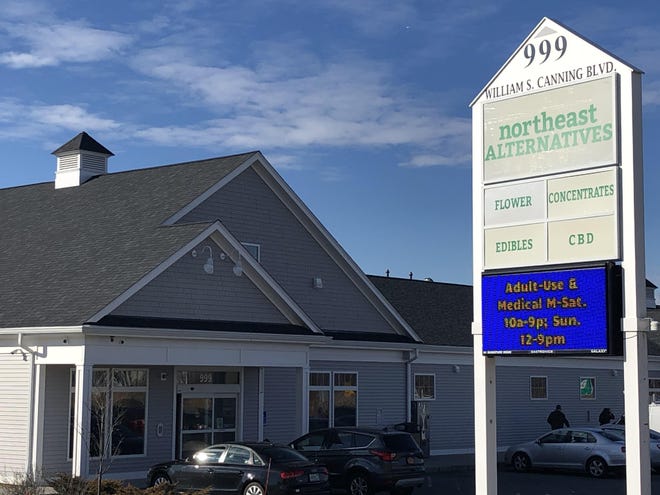
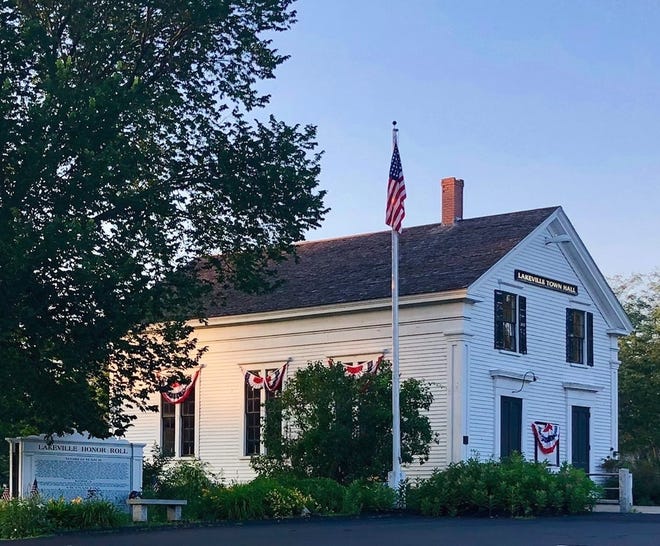
Lakeville marijuana application for Northeast Alternatives still on hold after court hearing
Charles Winokoor
Published Apr 28, 2021
BOSTON — The wait continues.
It’s been almost two years since Northeast Alternatives submitted an application to state marijuana regulators for a provisional license to open a cultivation facility in Lakeville.
State statute says the Massachusetts Cannabis Control Commission has 90 days either to approve or reject the application.
An attorney for the Fall River-based grower, manufacturer and seller of legal, recreational pot argued Monday on a Zoom meeting with a Suffolk Superior Court judge that his client deserves an answer.
More:How Jasiel Correia's case shows corruption opportunity in MA pot industry
Mark Knights said his client has spent $2 million to date paying $200,000 a month rent for a piece of property in a town that has previously given its approval for Northeast Alternatives to begin growing marijuana.
“They’ve already sunk millions of dollars into that location,” Knights told Judge Kenneth Salinger.
More:Northeast Alternatives seeks to open its second retail pot shop in Swansea
Northeast Alternatives filed a preliminary injunction and complaint against the state commission in September 2020.
Knights reiterated that Section 5 of Massachusetts General Law 94-G stipulates that the commission has 90 days to forward a copy of the application to a city or town with its decision either to approve or reject the application.
More:State stalls Northeast Alternatives pot license citing ties to Jasiel Correia investigation
He acknowledged that there is an ongoing “suitability investigation” regarding Northeast Alternatives but said the commission “never intimated that the application was incomplete.”
“It’s time for the commission to do what it’s supposed to do,” Knights said.
Northeast Alternatives and its chief executive Chris Harkins have not been named in a federal court case now underway in Boston charging former Fall River mayor Jasiel Correia with extortion and taking kickbacks from potential marijuana business interests who wanted to operate in the city.
Assistant Attorney General Julie Green, representing the Cannabis Control Commission, did, however, said that Harkins is expected to testify in the trial.
Green told the judge that the trial is not an impediment to the cannabis commission rendering a decision.
As for the prolonged delay in rendering an application decision, she said the commission has deemed the application to be “incomplete.”
Green said her office sent a letter to Northeast Alternatives last May and obtained some information pertaining to “the Correia matter” but in July of 2020 requested additional information regarding “background facts of the applicant and Harkins’ conduct.”
Judge Salinger closed the hearing by saying he would make a ruling “as soon as I possibly can.”
Special town meeting added to civic calendar for May 19
Robert Barboza Correspondent
Published Apr 26, 2021
LAKEVILLE — With the Annual Town Meeting already scheduled for 7 p.m. Monday, May 19, selectmen recently voted to authorize an early assembly of voters at the high school for a 6:30 p.m. Special Town Meeting on the same night.
The payment of unpaid bills from the previous fiscal year, funding for some capital improvement projects, and transfers of funds to make adjustments to various municipal budgets are among the handful of items voted for the Special Town Meeting warrant.
The first article seeks approval to use $6,231 in available funds to pay outstanding bills from last year; the second asks voters to use $80,000 in available funds to supplement budget accounts for a variety of town departments.
The following article seeks appropriations from various sources to fund a small list of capital expenditures in the present fiscal year. The last proposes to take $45,000 from the Parks Retained Earnings account and use it to replace anticipated parks revenues lost this summer due to the continuing coronavirus pandemic restrictions.
In other business, selectmen formally voted to approve a Taunton Water Line connection for Lakeville Owner LLC, a company formed by Rhino Capital LLC to handle the redevelopment of the Lakeville Hospital site at 43 Main Street. The company is authorized to use up to 6,045 gallons of water per day from the city’s water line running by the site.
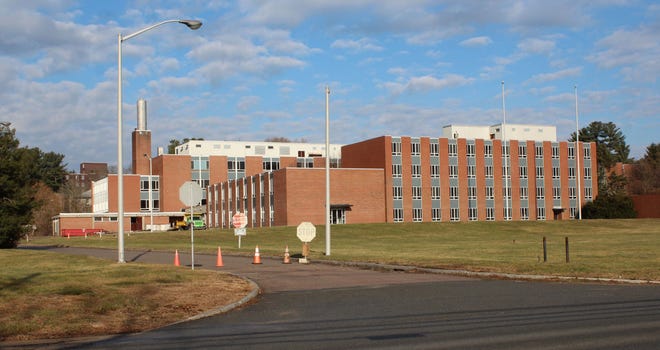
The redevelopment plans for the 50-acre property being purchased by Rhino Capital LLC were recently approved by the Planning Board, calling for a 402,500 square foot building sited just over 400 feet from Main Street, and outfitted with 128 loading docks for tractor trailers.
Looking just across the street from that site, selectmen had no official comment for the Planning Board on its review of site plans for a Domino’s Pizza restaurant at 56 Main Street, in the Dollar Tree plaza.
The only informal comment was Chair Lia Fabian’s suggestion that the parking lot seemed a little “tight” to accommodate a drive-through lane behind the building, but it was noted that the site plans for the Dollar Tree store had included space for a small restaurant with a drive-through window to be located in the structure.
Selectmen also voted to sign an Affordable Housing Restriction amendment for the nearby Residences at Nemasket River, allowing owners to change the constructed housing units from rental apartments to for-sale units. The Planning Board has already endorsed the modification of plans for the affordable housing development along several roads off Main Street near the Lakeville MBTA station.
All the new development in the neighborhood has sparked resident concerns about traffic congestion in the near future along that section of Main Street between Vaughn Street and the Middleborough town line.
Selectmen were glad to hear State Senator Michael Rodrigues recently report that the nearly-finalized state budget plans contain $2.5 million for traffic lights and intersection improvements at the Bridge Street intersection.
Another $1 million in unspent funds from a 2018 transportation bond could also be used for Mass Highway improvements to Route 105 in the area if needed to mitigate the traffic increases from projected development in the near future, the legislator indicated.
With group gathering restrictions being eased in Massachusetts, the board saw fit to approve a request from the Sunken Island Bike Race organizers to use town roads on July 10 for the event. Selectmen said the 14-mile route would be partially obstructed between the hours of 8:30 and 10:30 p.m.; in return for the approval, the organizers will donate a portion of the race profits to a local charity designated by the board.
Selectmen to consider options for federal stimulus money
Robert Barboza Correspondent
Published Apr 16, 2021
LAKEVILLE — Selectmen met virtually with their state legislators last week to get an update on the steady flow of federal pandemic relief and economic stimulus grant money being funneled to Massachusetts cities and towns.
In the first meeting after the annual town election, newly-elected Lorraine Carboni was welcomed to the board. During its annual reorganization session, the board named Lia Fabian as the new chair; member Richard LaCamera moved to vice chair for the next year.
The town received a$1.66 million allocation for pandemic related expenses under the CARES Act, the first federal relief bill passed last year. Much of that reimbursement money went to the school department, with the fire department adding two temporary firefighter/EMTs to help with the pandemic surge.
The regional school system also received some $254,000 in Elementary School Relief Act monies in the first round of CARES funding; and another $951,000 or so in the second round of ESRA allocations. If a third round of ESRA funding passes as proposed, the Freetown-Lakeville district could get $2.3 million in school assistance, State Senator Michael Rodrigues (D-Westport) told selectmen.
From the American Rescue Act passed in February, Lakeville was allocated $1.14 million in federal funds intended to create jobs, stimulate the economy, and provide some financial relief to cities and towns.
LaCamera was glad to hear that the money can also be used to replace “lost revenues” incurred by communities during the pandemic. He noted the town lost between $300,000 and $400,000 in local revenues during the economic downturn of the past year.
More economic stimulus money is coming down the road, too, in the new federal economic aid bill currently being debated in Congress, Rodrigues noted. Every town in his district is being encouraged to review its capital needs, and prepare detailed plans for big projects that would qualify for the federal funding, he said.
Capital needs projects such as new schools, fire stations, affordable housing, or other municipal buildings need to be quickly planned, designed, and readied for public bidding, so as to be “shovel-ready” to go when the new federal funds become available, Rodrigues suggested. The federal and state governments will want the aid money distributed quickly to help jump start the economy, he explained.
“Whoever’s ready to go will likely get the money... whoever’s ready to bid, or shovel ready,” he told the board. “Get it designed, planned, and ready to bid. Now is the time.”
When the legislator heard some details on the town’s plans to use a $100,000 earmark in the state bond bill to fund expansion of the municipal fiber optic network to more town buildings, he suggested that perhaps some federal aid money might be used to expand the network to all town buildings.
The state administration will support sound proposals ready for bidding that will boost business and industry, create jobs, and fulfill public needs, Rodrigues said. “Governor Baker always looks at the data – it’s a matter of how many jobs is this project going to create,” he said of recent state funding priorities.
Though the state budget remains unsettled, the Senate Ways & Means Committee chair indicated he expects a 3.5 percent increase in unrestricted state aid this year. A small increase in Ch. 70 education aid is also expected to pass both houses of the legislature, he predicted.
A separate transportation bill contains $2.5 million for traffic lights and intersection improvements at the Bridge Street intersection, he confirmed. He has also identified $1 million in unspent funds from a 2018 transportation bond that could be used for improvements “around the Lakeville Hospital property.”
The state “cannot spend any money on private property... It can only be used for improvements to public property, for infrastructure like water or sewer lines, or roadway improvements,” Rodrigues said of the unspent bond money.
Selectmen noted that the state is funding a study of the Route 18 and Route 105 intersection to initiate a redesign and improvement project; state money is funding the upcoming repaving of the southbound lane of Route 105.
On the legislative front, the state senator noted that the town’s home rule petition, authorizing the change of the Town Treasurer position from elected to appointed, has passed both houses.
State Representative Norman Orrall was also on hand for the virtual meeting, and he noted that the pending federal economic development bill will also contain funding for low income housing tax credits, an encouragement to developers of affordable housing. The passage of legislation encouraging the construction of high density multi-family rental housing developments within a half mile of MBTA stations may also have an impact on Lakeville, he suggested.
Orrall said that half-mile circle will be drawn from the current train station on the Lakeville side of the town line, not the future MBTA station on the Middleborough side of the line.
Rodrigues added that “right now, the Governor’s priority is to create new affordable housing,” especially rental units. Planning Board member Barbara Mancovsky, the board’s delegate to the Master Plan Implementation Committee (MPIC), suggested that the town needs more affordable home ownership opportunities, not just more affordable rental units.
MPIC Chair Rodney Dixon expressed hopes that the state administration would not promote more high-density apartments around the Lakeville station, feeling that move might not be supportive of the master plan’s goals for that part of town.
Despite opposition, hospital redevelopment plans on track
Robert Barboza Correspondent
Published Mar 23, 2021
LAKEVILLE — With plan approval votes on plans for the proposed redevelopment of the Lakeville Hospital campus as a warehouse or distribution center coming from the Board of Health and Conservation Commission this week, the project is now only one big approval vote away from completing the local permitting process.
Remaining for developer Rhino Capital LLC now is the Planning Board’s formal approval of a special permit for the project under Development Opportunities District zoning guidelines, along with the expected long list of required conditions for construction and operations.
The corporation is proposing to tear down all seven existing buildings in the hospital complex and build a 402,500 square foot one-story building to be leased to one or two tenants. According to submitted plans, the new building would be sited just over 400 feet from Main Street, and be outfitted with 128 loading docks for tractor trailer truck deliveries and shipments.
The Board of Health unanimously approved septic system plans for the redevelopment project at its March 17 meeting, Chairman Chris Spratt told the town’s 43D Review Committee the following night. There were “no major concerns” about the plans, he said, noting they were “pretty straightforward... not asking for anything special.”
The Health Board did suggest that one condition on the special permit be a bond that would cover town equipment and manpower expenses for noise monitoring “down the road, when we have to deal with noise complaint issues... if it becomes an ongoing complaint,” Spratt said.
Potential noise impacts from 24/7 trucking operations at the site have been a major concern of residents of neighborhoods surrounding the abandoned hospital property since the proposed use was first disclosed.
Noise was among the detrimental effects on the neighborhood cited in a recent letter to the Planning Board from the 300-plus members of the Lakeville Residents for Responsible Growth, which formally asked the board to deny Rhino Capital the special permit needed for the project to go forward.
Group spokesman John Jenkins told members of the Planning Board in a virtual meeting that the proposed plans did not meet the basic criteria of the Development Opportunities District (DOD) zoning the town adopted in 2012, which are predicated upon projects not having “a detrimental effect” on surrounding residential properties.
The proposed seven-day-a-week trucking and warehouse operation “clearly creates a negative effect on the neighborhood” in violation of that basic requirement of the DOD zoning bylaw, Jenkins argued.
The resident group asked for a non-binding town-wide referendum vote on the plans, expressing its willingness to pay the costs of the special election for that referendum vote if necessary. The recommendation was passed on to selectmen for consideration.
At the March 18 continuation of the public hearing on plans, Conservation Commission Chair Bob Bouchard recorded a similar unanimous vote on the final order of conditions to be attached to the approved plans for site work and protection of wetlands resources from his board.
After making a few minute last-minute adjustments to the multi-page order of conditions for the redevelopment plans, the commission voted 5-0 to approve the finalized order.
At that point, Planning Board Chair Mark Knox declared the 43D Review Committee’s public hearing portion of the meeting closed, and said discussions would continue as a Planning Board “work session” without public comment from that point on.
He noted that the board had recently received 65 letters “either in support or opposition” to the special permit request since their last meeting two weeks ago.
Tyler Murphy, representative of the Boston-based investment and management firm which is buying the site, was asked for the company’s response to issues raised at the last public hearing. He started with public concerns about increased truck and pedestrian traffic along Route 105, especially foot traffic from the apartment complex on Commercial Drive to the new MBTA station just over the Middleborough town line.
Murphy said the traffic study for the T station has generated considerable plans for road improvements, new traffic signals, crosswalks and other improvements to the Route 105 corridor, from the Route 28 intersection to the Route 79 intersection.
The I-495 interchange will be redesigned to create a four-way intersection with new traffic signals, and the pedestrian crossings between Commercial Drive and the new T station will be upgraded to “protected” crossings with lights, he indicated. The MBTA is planning regular shuttle bus runs from the Lakeville apartments to the train station, he also noted.
The project will also include re-adjustment of the traffic signals at the Route 105 and Route 79 intersection just south of the I-495 interchange. Already in the works are state plans to install a traffic signal and new road marking at the intersection of Bridge Street and Main Street; a House bill has earmarked $2.5 million for the new traffic signals and improvements there in this fiscal year.
Murphy’s review list of mutually agreed “findings” between developer and permitting agency began with an apt summary of the special permit application – the company believes the proposed commercial use “is not noxious, harmful, or hazardous, and is socially and economically desirable” to the community, and will remove a long-blighted property from public view.
The project will clearly improve “existing condition, which is both noxious and harmful,” Murphy told town officials. In exchange for a small increase in peak hour traffic, and truck traffic at other times, the town can have the site cleaned up and attractively developed, and bolster its commercial tax base, he suggested.
“The advantages of the proposed outweigh any detrimental effects” of the redevelopment plans, Murphy added. Other redevelopment proposals may not be as beneficial to the community, he offered.
Social media commentary and petition opposition to permit approval from the Lakeville Residents for Responsible Growth take a slightly contrary view of the project, suggesting noise, traffic, and safety concerns about the proposed 24-hour commercial operation outweigh the economic benefits of that redevelopment plan.
Now, neighboring Middleborough is trying to address potential traffic issues reaching over the town line, with the Middleborough Planning Board asking to be included in a traffic routing agreement between the developer and the two towns, limiting tractor trailers to direct routes to and from I-495, and banning truck use of Route 105 to reach Route 44, member Jack Healey told his Lakeville counterparts.
“There’s no way to force an applicant to enter into an agreement with another town,” Lakeville Town Counsel advised Knox. The permit could condition “primary routes” for tractor trailers, and require negotiations on voluntary traffic agreements with eventual tenants, she suggested.
Murphy told officials of both towns that the company was certainly willing to discuss truck routes with town representatives.
At the end of the March 18 session, the Planning Board continued the public hearing on the special permit application to its April 1 meeting.
Lakeville resident group calls for no vote on development plans; hazardous materials detailed
Robert Barboza
Published Mar 5, 2021
LAKEVILLE — As town committees and boards inch closer towards anticipated approval votes on plans for the proposed redevelopment of the Lakeville Hospital campus as a warehouse or distribution center, resident opposition to the plans continues to grow.
At the March 4 continuation of the months-long public hearing on Rhino Capital LLC’s application for a special permit and other approvals for the development, a representative of the 300-plus members of the Lakeville Residents for Responsible Growth formally asked the Planning Board to deny the needed permit.
The corporation is proposing to tear down all seven existing buildings in the hospital complex and build a 402,500 square foot one-story building to be leased to one or two tenants. According to submitted plans, the new building would be 45 feet high, sited just over 400 feet from Main Street, and fringed with 128 loading docks for tractor trailer truck deliveries and shipments.
Group spokesman John Jenkins told members of the Planning Board that the proposed plans did not meet the basic criteria of the Development Opportunities District (DOD) zoning the town adopted in 2012.
The proposed distribution center “will have a detrimental effect both on the abutting residential neighborhoods, but more importantly, on all residents of Lakeville who travel in the area,” he said in a prepared statement given at the virtual meeting.
The proposed business operation “clearly creates a negative effect on the neighborhood,” in violation of the basic requirement of DOD zoning, Jenkins added.
“Listen to the residents of Lakeville who want a responsible project that will truly benefit our citizens and our community,” the statement concluded. Many of those residents with concerns about the project tuned into the virtual meeting, which had over 120 participants tuning in via Facebook.
Jenkins credited Rhino Capital and its representatives with making a fine presentation of its redevelopment proposals, but suggested the project is essentially “a trucking terminal” that would not be the best use of the property.
He suggested a non-binding town-wide referendum vote on the plans be undertaken, expressing the resident group’s willingness to pay the costs of the special election held for that referendum if necessary. Planning Board Chair Mark Knox said that recommendation would be forwarded to selectmen for consideration.
Tyler Murphy, representative of the Boston-based investment and management firm which is buying the site, has repeatedly promised to be “a good neighbor” that would cause as little disruption as possible to the area. Earlier in the March 4 public hearing, he concluded his firm’s presentation on the plans by citing a long list of reasons why the town should approve the project.
His company’s lead engineer had just urged approval of the special permit for the development, suggesting the proposed operations would not be “noxious, harmful or hazardous” but rather “socially and economically desirable and will meet an existing or potential need” in the community, as called for in DOD guidelines.
Murphy said this third proposal for redevelopment of the long vacant property in recent decades was the town’s best option for removing existing environmental threats to the community, cleaning up and re-purposing a key site that has been vacant for 30 years, and preventing less desirable development such as a large scale, dense residential development that would strain schools and town services.
Murphy detailed the environmental issues at the site, which he estimated would cost about $10 million to clean up. Holes in windows and roofs of existing buildings are stirring up “massive amounts of friable asbestos” fallen from ceilings and sending the hazardous materials outdoors, he reported.
The state Dept. of Environmental Protection (DEP) has ordered all the buildings closed up, and prohibited any entry without hazardous material protective gear, he said. It is impossible to board up the buildings because of the widespread collapse of structural elements, including roofs, doors and windows, he noted.
The seven-story dormitory building, the largest on site, is structurally unsound and no one is allowed to enter, he also reported. DEP inspectors would not even go into the buildings because of unsafe conditions, he added.
Elsewhere, tests on the one-acre landfill site on the northeast portion of the property have shown high levels of lead, arsenic, and asbestos in the trash, appliances, medical waste, and building and demolition materials dumped there between the 1950s and 1970s. The thousands of yards of waste includes “vials and other hospital materials” whose contents cannot be identified, and could eventually leach into the surrounding soil and groundwater, Murphy said.
“A site like this requires some really hard decisions to be made... It’s a complex site, with complex issues,” Murphy concluded.
His firm’s proposal is “a clear path forward to resolve the existing blight and clean up the property,” he suggested. “We really hope to become a part of this fantastic town.”
Many potential future neighbors took the opportunity to continue to raise objections to the plans, mostly based on noise and traffic issues.
Rush Pond Road resident John Ayers cited “traffic risks” posed by tractor trailers coming of [sic] I-495 onto two-lane Main Street, which abruptly narrows to one lane after the Rt. 79 intersection. Another risk would be big trucks leaving the facility and entering Main Street without the aid of a traffic light, he said.
Ayers accused town officials reviewing the plans while “ignoring that risk” in both cases. Planning Board member Barbara Mancovsky noted that part of Main Street is a state road, and MassDOT will be making determinations if road improvements will be needed.
Developers are estimating about 120 truck trips per day at the site, along with about 220 car visits. The total estimate of 682 vehicle trips per day is far less than previous development proposals for the site, Murphy noted.
Already in the works is a traffic light at the intersection of Bridge Street; House Bill #5248 as approved will earmark $2.5 million for traffic signals and improvements at that intersection, it was noted.
Noise concerns have been addressed by adjustments to the site plans over the past six months. A six to eight foot earthen berm will be installed along abutting residential properties and topped with an acoustical barrier fence to cut down on noise impacts for neighbors.
The remedial efforts should produce “more than a 40 percent reduction in the noise” heard by Rush Pond Road residents, Rhino engineer Brittany Gesner told the reviewers from the Planning Board, Board of Health, and Conservation Commission participating in the meeting.
Other town residents and officials criticized current property owner Derek Maksy for not participating in discussions of redevelopment issues, not complying with DEP orders to secure the buildings and prevent asbestos dust from escaping, and not start the promised clean-up of the landfill site.
At the end of the evening, the public hearing was continued for an eighth time, with the next 43D Review Committee meeting being set for March 18.
MA: South Coast Rail Middleboro route through Taunton to be complete by end of 2023, MBTA says
When the track is complete, it will be made up of 27 miles of track, four new stations — including one in East Taunton at 1141 County St.
Feb. 18—TAUNTON — Construction on the South Coast Rail, which is now 30 years in the making, is well underway, according to the MBTA.
At a town hall meeting earlier this month, program manager Jennifer Tabakin said they are currently undertaking construction work worth approximately $600 million, and that it began late last year.
"It's a sizable investment in the area and a real vote of confidence for the Commonwealth to invest as much money out the area," Tabakin said.
Jean Fox, director of community engagement, said that the MBTA plans to finish Phase 1 of the project, which extends commuter rail service on the Middleboro/Lakeville Line to New Bedford, Fall River and Taunton, by the end of 2023. This part of the project is fully funded through the state's Capital Investment Plan.
When the track is complete, it will be made up of 27 miles of track, four new stations — including one in East Taunton at 1141 County St.
So far, Fox said, early work clearing the right-of-way near the tracks and replacing four railroad bridges is nearly complete. She warned residents to stay away from the right-of-way as it will be dangerous during construction and service. The MBTA is working to notify all residents whose homes are near the right-of-way.
Kim Dobosz, director of construction, said that right now in Taunton, encroachments and demolition to prepare the right-of-way are going ahead. The East Taunton Station site is also being cleared.
The East Taunton Station, Fox said, will be a center island platform instead of a side platform station — the only one in Phase 1. It will have elevators, ramps and bridges, an 800-foot platform with four canopies, a transition plaza for bus stops and drop-offs, 363 parking spaces and bike parking.
When Phase 1 is finished, officials said, it should take 70 minutes to get to Boston by train. Additionally, they said, the project should increase property values and increased development in the area as a result should lower the tax burden on residents.
Fox said that construction should pick up even more this spring.
"Coronavirus is temporary, but the need for service in this area is essential," she said.
Town boards get more details on hospital redevelopment
Robert Barboza, Correspondent
Published Jan 13, 2021
LAKEVILLE — The Planning Board held its third public hearing on site plans for the proposed redevelopment of the Lakeville Hospital campus for a light manufacturing, warehouse or distribution center on Jan. 7. The joint meeting with Conservation Commission, Board of Health and Open Space Committee members lasted long into the night.
The Planning Board spent nearly four hours in a virtual meeting with developers, abutters, and town officials digging into the architectural details of the building, landscaping and lighting plans, and noise mitigation measures. More than an hour was spent on the findings of a study on projected noise from proposed operations, and discussing potential ways to minimize tractor trailer truck noise, back-up alarms, and the sounds of rooftop mechanical equipment at the site.
More time was devoted to speculating on who the prospective tenant of the new building might be, and how to develop noise control measures without knowing what kind of company will occupy the building.
Residents of the neighborhoods surrounding the site were especially concerned about truck noise and traffic issues, and have been talking to developers about those concerns in between the continuing public hearings, resulting in some slight modifications of earlier plans.
Tyler Murphy, representative of Rhino Capital LLC, a Boston-based investment and management firm which is buying the site, promised to keep that dialog with abutters and other neighbors open throughout the permitting and construction process. The corporation hopes to be “a good neighbor” that will cause as little disruption as possible, he repeatedly told residents and town officials during the hearing.
He said the final details of a noise mitigation plan would be worked out once a tenant is secured, and specific operations planned. The Planning Board, Board of Health, and Conservation Commission will all have input into those operating plans and noise control measures.
The corporation is proposing to tear down all nine existing buildings in the hospital complex and build a 402,500 square foot building to be leased to one or two tenants. Murphy said, “Given the size, given the use type, there’s not an endless supply of tenants that can use that space.”
A United Parcel Service delivery hub was mentioned as an example of the likely type of tenant; another company representative suggested that two tenants might rent parts of the space for different business operations.
Construction noise and a potential timeline were other concerns addressed at the session. Murphy indicated that asbestos removal, demolition and site remediation would take an estimated six to eight months, while construction would take another 10 to 12 months.
Among the site remediation measures needed is the clean-up of the old solid waste disposal site on the north part of the parcel, with all metals, tires, and other debris to be completely removed before the area is reclaimed. Inside the buildings, safe asbestos removal and disposal will be the greatest expense and most time-consuming process, he said; the demolition work is only a few days on the calendar.
The new building will be 45 feet high, much lower than the seven story building in the center of the 50-acre parcel. It would be sited just over 400 feet from Main Street, and fringed with 128 loading docks for tractor trailer truck deliveries and shipments.
An architectural consultant showed renderings of different color concrete panels to be used for the exterior walls, with clusters of glass windows marking the projected office suites around the main entrance. Views from Main Street would mostly be obscured by a belt of screening trees along the roadway; the first parking lot in front of the building is about 200 feet from the road.
The developers have planned for 564 parking spaces, and 130 spaces for truck and trailer storage. Nearly an acre of land would be dedicated to six snow storage sites scattered over the campus.
Planning Board Chair Mark Knox said his board reviewed about 150 pages of documents submitted since the December public hearing, including the peer review comments submitted by town consultants on the noise study and landscape plans, and Rhino Capital’s changes in those plans to address town concerns.
Among those changes was a more diverse planting plan, re-creating a “naturalized” New England landscape around the building and parking areas, ranging from sunny wildflower meadows to stands of mixed hardwood and evergreen trees. Many of the new species added were suggested by the Open Space Commission, and commission chair Adam Young also won a concession to plant some endangered species of trees on the property.
Landscape architect Bill Madden reviewed the plans, mixing canopy trees like maples and oaks with evergreens in masses along 10 to 15 foot earthen berms raised along residential boundaries to cut down on the noise reaching abutting properties. He said the developers were also sensitive to the views of abutters, and would work with them and the topography to do the best screening effort possible.
The trees and shrubs will enhance neighbors’ views, but do little to cut down on noise pollution, the corporation’s noise study consultant said. The earthen berms and parked trailer will help stop most sound from traveling to neighboring properties, he indicated.
Whatever noise control measures are taken, “there will be noise at times” heard by residential neighbors, said Rob O’Neal, the town’s reviewing consultant on the noise study.
One of the biggest concerns for residents of the neighborhood are increased traffic, with an estimated 680 vehicle trips per day projected in the study. Most of the day and early evening, an estimated eight to 30 tractor trailers per hour would use the site; when backing up, those trucks generate a 96 decibel warning beep.
Out of concern for neighbors along nearby Rush Pond Road, Planning Board member Peter Conroy suggested that noisy refrigeration units on the building be prohibited, along with businesses using refrigerated trucks that have to run all night.
Rush Pond Road resident John Ayers said that noise pollution, “especially at night, when you’re trying to sleep” is his biggest concern. Years ago, he was able to hear normal conversations on adjoining hospital property without problem, he noted; a loud conversation would be above 65 decibels, the experts said.
On the other side of Main Street, Lori Lane resident Mary Murphy she will have to deal with a tractor trailer accelerating from the stop sign at Main Street, spewing diesel fumes and revving through the gears, every 15 minutes or so, including during the night. “It will be unbearable,” she predicted.
Lakeville seeks town planner and big projects consultant
By Robert Barboza
Posted Aug 21, 2020
Redevelopment of Lakeville Hospital, Country Club and Island Terrace nursing home all on tap
LAKEVILLE – With three large scale commercial development projects coming down the road, town officials are in agreement that Lakeville has an immediate need for a town planner and some experienced consultants to help with local oversight of those big projects.
At a joint meeting of the Board of Selectmen and the Planning Board on Aug. 13, members agreed to begin drafting a job description for a permanent part-time town planner to help with the pending development boom, and to otherwise support a very busy planning department.
Chairman of Selectmen Richard LaCamera said town officials began discussing options for hiring a part-time planner during spring budget meetings. The town could also consider hiring a consulting firm with municipal planning expertise to provide needed services, it was suggested.
If Lakeville goes with the specialized consulting firm option, it should seek a company with previous Chapter 43D “priority development site” experience, Town Administrator Maureen Candito recommended. The reference was to the town’s designation of the former Lakeville Hospital parcels as priority development sites several years ago.
Last month, the prospective purchasers of most of the Lakeville Hospital site off Main Street, provided the first details on their planned redevelopment of the property. Rhino Capital, a Boston-based corporation specializing in the development and management of industrial space, is proposing the demolition of all the existing buildings on the 50-plus acre site, and the construction of a new 402,500 square foot building to be used for light manufacturing or a warehouse and distribution center.
The Chapter 43D designation allows for a streamlined municipal permitting process that guarantees local permitting decisions within 180 days. The town has already set up a local Plan Approval Authority (PPA) to review the hospital redevelopment plans; its first meeting is set for Sept. 15.
The PPA includes representatives from the Board of Selectmen, Planning Board, Conservation Commission, Public Works Department, Building Commissioner, and Board of Health.
Preliminary plans were filed in January for the re-development of the 8.2 acre former Island Terrace Nursing Home site with two three-story buildings housing 66 upscale condominium units for residents 55 and over. Still pending are concrete plans for the redevelopment of the Lakeville Country Club.
Selectmen reported in April that Hillwood Industrial Real Estate, based in Dallas, Texas, has an agreement to buy the golf course and two adjoining parcels of land for $7.2 million, with tentative plans to build a distribution center on the property.
“We need a planner to help us with these big projects,” sooner rather than later, Planning Board Chair Mark Knox said at the Aug. 13 joint meeting with selectmen. A short time later, Building Commissioner Nate Darling also agreed that a town planner was needed to help with the Planning Department’s steadily increasing workload.
Knox said the Planning Board will be hiring a consulting engineering firm to help them review the hospital redevelopment plans once the PPA has finished its work, and may need another experienced consultant to help it through its first expedited Chapter 43D review process.
LaCamera noted that the cost of any special consultants hired to review the hospital redevelopment plans can be charged back to the developer. He suggested that a newly-hired town planner not be asked to focus too much of their time on that project alone.
While also in joint session, the two boards voted unanimously to appoint resident John Lynch to fill the vacant seat on the Planning Board until the next annual election. Lynch is a retired construction project manager for the hotel and casino industry, and said during his video interview that he has plenty of time to dedicate to the volunteer job.
“I’ve got the experience – 42 years of experience – in purchasing, in contracting, in project development, that I think would be appropriate for what the Planning Board does,” Lynch told board members.
He seemed to have a good grasp on what the Planning Board does, having watched the videos of recent meetings. “It seems to me that you folks are totally overloaded with work,” and could use several more members to help with the workload, he suggested.
“I’m here to provide whatever time you folks need, and I’ll bring my expertise to help the town,” Lynch said before the vote.
The other volunteer for the temporary appointment was resident Nora Klein, who was unable to participate in the meeting due to a work commitment. She was encouraged to run for the remainder of the unexpired term in the next election.
Lakeville Democratic Town Committee announces dates of Caucus and Convention
On Saturday, March 14 at 10 am, the Lakeville Democratic Town committee will hold a caucus at the Lakeville Public Library to elect Delegates and Alternates to the 2020 Massachusetts Democratic State Convention.
This year’s state convention will be held May 30 at the Tsongas Center in Lowell, where thousands of Democrats from across the state will come together to discuss Party business and celebrate our successes as we prepare for upcoming elections.
The caucus is open to all registered and pre-registered Democrats in Lakeville. Pre-registered Democrats who will be sixteen years of age by February 15, 2020 will be allowed to participate and run as a Delegate or Alternate. Lakeville can elect four (4) Delegates and four (4) Alternates to the Convention.
Youth, minorities, people with disabilities, and LBGTQ individuals who are not elected as a Delegate or Alternate may apply to be an Add-on Delegate at the caucus or at by going to: www.massdems.org.
Those interested in getting involved with Lakeville Democratic Town committee should contact committee Chairman, Craig Duffy craigduffy3333@gmail.com
Absentee voting will still be available for registered voters who qualify, only those who will be absent from their town on Election Day, or have a disability that prevents them from going to the polls, or have a religious belief preventing the same, are legally allowed to vote by absentee ballot.
Unlike absentee voting, early voting is for every registered voter. Registered voters do not need an excuse or reason to vote early. To be eligible to vote in the March 3, 2020 Presidential Primary you must register to vote or make any necessary changes to your voter registration by Wednesday, February 12, 2020. To check to see if you are registered to vote you may visit the Secretary of the Commonwealth’s website: www.sec.state.ma.us/ele. If you need to register to vote you may do so online by visiting: www.RegisterToVoteMA.com.
Early voting may be done in person or by mail. In the Town of Middleborough, early voting may be done in person at the Annex Building, 20 Centre Street, Middleborough, MA during the following dates and times: February 24 to February 28, Monday through Friday from 8:45 AM to 5:00 PM.
Also, registered voters have the option to request an early voting ballot through the mail. Simply fill out an application and mail it to Middleborough Town Clerk’s Office, 20 Centre Street, 1st Floor, Middleborough, MA 02346. You may find the application on the Secretary of the Commonwealth’s website: http://www.sec.state.ma.us/ele.
Once a voter has cast an early voting ballot the voter may no longer vote at the polls on Election Day.
In Lakeville, the former Island Terrace Nursing Home, off Long Point Road is a thing of the past with demolition having gotten started last week. Developer Jon Delli Priscoli's project team is putting the finishing touches on plans to construct two three-story buildings housing 66 upscale condominium units on the hilltop site that housed the well-known and well-respected nursing home for generations.
Island Terrace demolished, site plans being finalized
By Robert Barboza / Contributing Writer
Posted Feb 1, 2020
LAKEVILLE — The redevelopment of the former Island Terrace Nursing Home off Long Point Road officially got underway last week, with a pair of giant excavators spending two days last week tearing down the longtime local landmark overlooking Great Quitticas Pond.
Developer Jon Delli Priscoli’s project team is putting the finishing touches on plans to construct two three-story buildings housing 66 upscale condominium units on the hilltop site that housed the well-known and well-respected nursing home for generations.
The Planning Board is scheduled to begin its site plan review of the project on Feb. 13. The Zoning Board of Appeals has already approved the special permit needed for the high-density housing proposed.
Financial difficulties and bank foreclosure shut down the nursing home more than a year ago, leading to Delli Priscoli’s purchase of the property and his subsequent proposal to redevelop the site for upscale condominium housing units for residents 55 and older.
In November, the developer told selectmen that the redevelopment project would tie into the new septic system installed by the Tolles family just before the business closed. Concept plans shown to that board consist of two L-shaped buildings each containing 33 two-bedroom condo units and a number of common areas to be shared by future residents.
Delli Priscoli suggested then that the likely future residents of the condominium village would be active, working, or recently retired folks who will be eager to become part of their new community.
After reviewing the preliminary site plans, proposed building facades, and the suggested details of key architectural elements, selectmen voiced their overwhelming support for the redevelopment plan back in November.
Selectman John Powderly told Delli Priscoli, “It’s a good looking project” that will provided needed housing in Lakeville for over-55 homeowners looking to downsize and seeking the benefits of country living.
He was also looking forward to the town adding $250,000 dollars in new tax revenues from the redevelopment project, he said back in November.
At that meeting, selectmen made a pointed suggestion that some significant improvements to the private gravel road leading to the hilltop site will have to be made to insure the safety of residents and visitors. There are no guard rails marking the banks of adjoining cranberry bogs, and selectmen feared that new residents might end up in the bog ditches without safety improvements, they said.
The cities of Taunton and New Bedford, which use Great Quitticas as a public water supply under state license, have both had considerable input on the early concept plans, Delli Priscoli’s engineers advised town officials.
The pond is technically a state-owned reservoir licensed for use by the cities, and boating or swimming by future occupants of the condo village will not be allowed, his attorney has pointed out at past meetings. The development company has agreed to post signs to that effect along the shoreline, and individually advise residents of the restriction, the attorney said.
“They want to be sure this body of water, and this property, will not be abused,” Delli Priscoli said. Many of the cities’ initial requests were incorporated into the DEP-approved plan for the 66 units of housing, he noted.
Original plans floated late last year for the 8.2 acre site called for 84 condominium units. That number was lowered by the Zoning Board of Appeals permitting process, and cut again by the DEP review and approval process.
In addition to the Planning Board site plan approval process, the development company is always working on securing needed Board of Health approvals for the project.