BY MIKE STANTON Journal Staff Writer The Providence Journal 12/11/2002
On a warm summer night in 1981, under cover of darkness, a band of men slipped, commando-style, into the Publics Works garages near the Providence waterfront and spirited away a dozen city garbage trucks.
They drove the trucks across town to an empty used-car lot, where a small army was gathering. About a dozen other trucks were already parked in the back of the fenced lot, hidden in the darkness behind a blue school bus.
Inside the former showroom, about 55 men shuffled about nervously. A few minutes after 1 a.m., Buddy Cianci arrived. The mayor hurried inside. Someone closed the blinds. From the outside, the building appeared deserted in the half-light of a waning moon.
Cianci wore a short-sleeved blue shirt and no tie.
"We mean business, and we're not going to let anyone stop you from doing your job," he barked. "You will be protected physically. We're not going to stand for any abuse.
"One hundred policemen will be here shortly," Cianci said. "They will be carrying shotguns and they will be riding shotgun."
A few men laughed. There was a smattering of applause.
As if on cue, police cruisers suddenly filled the lot. Cianci urged the men outside, where they saw a squadron of Providence police officers forming in military ranks. Each officer carried a shotgun and wore a bandoleer of spare ammunition.
Cianci and city supervisors, one wearing National Guard fatigues, exhorted the men to mount their garbage trucks. The sound and smell of diesel engines filled the night. Each truck carried a Teamsters driver, two garbage pickers and a shotgun-toting policeman.
A supervisor shouted the command, "Go, go, go," and the first truck lurched from the parking lot. Others followed.
And so it went, as Buddy Cianci deployed his troops through the sleeping streets of Providence to collect the garbage.
'THIS IS WATERLOO... EITHER FOR HIM OR FOR ME'
BY THE SUMMER of 1981, the mayor's popularity was at an all-time low. He had been crushed in the 1980 race for governor, losing every city and town in Rhode Island, and every ward in Providence. The city was reeling from a budget crisis and a highly unpopular mid-year tax hike.
In the spring, several hundred angry taxpayers had chanted for Cianci's resignation as he pleaded with the City Council to approve the tax increase. Otherwise, he said, Providence might become another Cleveland -- a bankrupt city that had become the nation's poster child for urban despair when its polluted river burst into flames.
By July, the city's largest labor union was in open revolt. On a steamy Monday, members of Local 1033 of the Laborers' union walked off the job at the city's crumbling sewage plant to protest a cutback in overtime pay. The strike spread quickly to disgruntled workers in Parks and Public Works. The Roger Williams Park Zoo closed. After the trash workers went out, garbage started piling up on curbs in 95-degree heat.
Cianci faced down Local 1033 president Joseph Virgilio. He fired the striking garbage workers and hired a private company to collect the trash.
"This is Waterloo," Cianci said. "Either for him or for me, but it's Waterloo. Hopefully, for him."
The mayor, who had been sworn in for his second term protected by a bulletproof shield and rooftop snipers because of death threats, had round-the-clock police guards at his house.
Strikers outside City Hall showered him with curses and cries of "maggot" as police bodyguards escorted him through the gauntlet outside his private entrance.
Standing by Cianci were loyal lieutenants such as Joseph DiSanto, the Republican city chairman and head of Public Works; Edward F. "Buckles" Melise, the city highway superintendent; and Jake Kaplan, a flamboyant car dealer and businessman who had offered his lot as the staging area for the midnight ride of the garbage trucks.
DiSanto, Melise and Kaplan served on the mayor's campaign committee, which raised record amounts of money.
Danny and Jack Capuano, also Cianci supporters, owned United Sanitation of Cranston, which had done business in Providence for years. When the city's garbage men walked out, Cianci hired the Capuanos' company to fill the breach.
Then there was Buckles's pal Tommy Ricci, one of the commandos who had sneaked into the Public Works garage and taken the garbage trucks. Ricci was part of the crew who patrolled the city in cars and pickup trucks, watching for ambushes.
A gruff, heavyset, tattooed entrepreneur, Ricci was a man of many corporate identities. Several of his companies did contracting, painting and snowplowing for the city. One was called Busy Bee Construction Co.
This disparate group roamed Providence that turbulent summer, watching out for the mayor's interests, and their own.
BUCKLES, BOBO AND THE BLACKJACKS
BUCKLES MELISE grew up on Federal Hill, on Gesler Street, across the street from Tommy Ricci.
In 1967, Buckles became a $1.97-an-hour laborer for the city. Except for a brief hiatus in 1971, when he pleaded no contest to breaking & entering and possession of burglary tools, his bread and butter was the Providence Department of Public Works.
Buckles was short and rugged, with a full head of curly hair; Cianci referred to him as a "dese, dem and dose" guy. But Buckles was a valuable soldier in Buddy's army. He was well known on Federal Hill, where he served on the 13th Ward Democratic Committee.
In 1978, when Cianci ran for reelection, the 13th Ward committee supported the Republican mayor. After Cianci won, Buckles and other allies on the ward committee, including Anthony "Blackjack" DelSanto, were rewarded with promotions in Public Works.
Buckles was put in charge of vermin control. He was enthusiastic and bought rat poison in record quantities -- twice as much as the City of Cleveland, which was four times bigger than Providence.
His poison program wound up feeding the rats instead of killing them. Bristling at criticism that he was incompetent, Buckles said that he had studied up on how to control rats. He said he had even gone to the library and "breezed" through a book on the subject.
In 1980, Buckles stood by Cianci in a political battle for control of Public Works. The next year, he was promoted to highway superintendent, the number-two job in the department.
"The fellow is a hard worker and he goes to college nights. I like that," said Joe DiSanto, Cianci's Public Works chief. "He promised his personal loyalty to me."
Buckles's friend Tommy Ricci worked in construction, like his father, and struck out on his own when he was 17. While Joseph Doorley was mayor, Ricci started getting small jobs with the city, such as repairing school roofs. He learned the nuances -- how to bid on a job, and how to split a bigger job into two smaller jobs so that it wouldn't have to go out to bid. He learned that you could charge more when it was an "emergency contract."
Ricci also learned the value of attending political fundraisers and working for candidates. He bought sound equipment and put it in a used car for campaigns.
The city work poured in.
When Cianci challenged Doorley in 1974, Ricci publicly supported Doorley. But to cover his bets, he privately steered relatives, money and cars with sound equipment to the Cianci campaign. When Cianci won, Ricci jumped on the bandwagon. He and his friend, Caesar Brown, an electrician and chairman of the 7th Ward Republican Committee, threw fundraising parties for Cianci.
Ricci went to his pal Buckles, who was in charge of snowplowing. Buckles put him on the list of "standby crews" -- plowers who would be called in, and paid, when there was the threat of a storm. City officials were still sensitive to the disastrous Blizzard of '78.
Ricci's annual Christmas parties became larger and livelier. He moved them from his garage on Hartford Avenue to nice restaurants. He hired bands and a magician. One year, as the magician performed, one of Ricci's friends shouted: "Can you turn snow into money? Tommy can!"
Later that night, it started snowing. Party-goers rushed out to get their plows.
CIANCI WAS AMUSED by the characters in Public Works.
Buckles Melise and Blackjack DelSanto, wearing jeans and leather jackets, would saunter into the mayor's office on city business.
DelSanto, a big man who enjoyed clowning around, would joke with the mayor's secretaries. "Is the mayor bothering you? Should I break his legs?"
Cianci would laugh along.
Buckles was a fixture at meetings of the mayor's campaign tickets committee, parking his pink Cadillac outside City Hall.
Cianci sat at his desk while his department directors and city contractors reported on ticket sales. The room was heavy with large stomachs and gold jewelry. Cigarette smoke mingled with the scent of cologne.
Cianci's mother, Esther, sat at a card table, collecting the money that was turned in from ticket sales. Cash -- legal then -- was preferred.
Some city workers and vendors complained of the pressure to buy and sell fundraising tickets. Others saw it as the cost of doing business -- part of the political process. An internal fundraising memo pitched a birthday fundraiser for Cianci as a chance for "the people to pay homage."
Buckles was a good ticket salesman. He tapped into his Federal Hill network, and he had 180 guys working under him at Public Works, plus various private snowplowers and other vendors.
Politically, Cianci needed guys like Buckles. The mayor was losing his Republican base on the East Side. He counted more heavily on the Italian neighborhoods of Federal Hill, Silver Lake and the North End.
One day, Cianci aide Bruce Melucci began hearing rumors that Buckles was using city resources to pave private driveways. But whenever Melucci would ask Joseph DiSanto, the Public Works chief, or the mayor, "they'd brush me off and say it wasn't true, or that it was exaggerated."
Cianci did get angry when he learned that state police detectives were conducting surveillance of alleged no-show Public Works employees. Some of the workers had spotted the cops taking their pictures on Federal Hill, and alerted the mayor. Cianci called Col. Walter Stone, superintendent of the state police, and complained that he hadn't been clued in to the investigation.
Corruption at Public Works had long been a problem for Cianci. While he was running for governor, a grand jury indicted seven men in a no-show jobs scam at Public Works. Several had mob ties. Cianci had been called to testify before the grand jury about a meeting he had called with department heads to discuss the investigation.
One of the officials indicted, the city's night highway superintendent, was also charged with kidnapping and participating in the beating of a suspected mob informant with a wooden ax handle. He joined with Buckles and Blackjack in calling the charges a frame-up designed to discredit the mayor.
Afterward, Cianci was bitter toward the state police.
One day, as the mayor rode in a parade, his horse defecated on the street. Cianci looked at a nearby state trooper and said, "Tell Stone that when I'm governor, he'll be cleaning this up."
BUCKLES MELISE was a busy man.
As the Great Garbage Strike of 1981 wore on, he was on the front lines, rallying the troops, conferring with the mayor and joining in union negotiating sessions with Public Works chief Joe DiSanto.
He was also moonlighting, he would later testify, as a bagman.
With the city changing over to a private garbage contractor -- at a considerable savings to taxpayers, Cianci boasted -- it no longer had need of 28 used garbage trucks.
Jake Kaplan, the car dealer and Cianci supporter, helped broker a deal to sell the trucks to Ralph's Truck World in New Hampshire.
According to a subsequent federal court indictment, Kaplan and DiSanto extorted a $15,000 kickback from the buyers. Buckles would later testify that in August 1981, he picked up $10,000 in cash from Kaplan, who had received it from the buyer, and brought it to DiSanto, who gave him half.
Kaplan said that he received a legitimate broker's fee, not a bribe. DiSanto denied receiving any money. The two men were acquitted after a trial in 1985. Kaplan's lawyer argued that Buckles was acting on his own, to help his friends, the Capuanos, dispose of the city trucks they had inherited as part of their contract.
Meanwhile, while Cianci was holding the line against the union, his former top aide says that he was taking bribes from the Capuanos, according to court records.
Ronald Glantz, who was Cianci's top aide from 1975 until early 1981, alleged in court records earlier this year in Cianci's corruption case that the mayor received cash payoffs totaling $350,000 from the Capuanos, who received millions of dollars worth of business from Providence in the 1970s and 1980s. Cianci and the Capuanos, who have never been charged in connection with Glantz's allegations, deny them.
(Glantz, one of Cianci's closest aides, was later convicted with the Democratic city chairman of extorting kickbacks for the purchase of city garbage trucks, and of perjury for lying to a grand jury investigating some of his other personal business dealings.)
(Similar allegations against the Capuanos surfaced in the corruption investigation of former Gov. Edward D. DiPrete; according to court records, DiPrete's chief fundraiser alleged that the Capuanos bribed DiPrete when he was mayor of Cranston, in the early 1980s, and even took him on a junket to Atlantic City, in exchange for trash contracts there. The Capuanos acknowledged the Atlantic City junket, but denied it was a payoff, as the garbage contract had already been signed.)
Buckles Melise had other deals cooking at Public Works, one allegedly with his friend, Tommy Ricci. Court testimony would later allege that Buckles was a partner in Ricci's Busy Bee Construction Co., even though his name didn't appear on incorporation papers. Ricci says that was a misunderstanding, that Melise had merely recommended him for a construction job, but that he was never a partner.
From 1981 to 1984, the Busy Bee billed the city for $122,000 worth of snowplowing, including $59,000 that a 1984 indictment accused him of never doing. Ricci says that he did the work, noting that the charges were dismissed in 1990 for lack of speedy prosecution.
To boost his snowplowing fleet, Ricci was also accused of scheming with Public Works officials to receive city trucks and equipment that had been falsely declared "junk." According to an informant's affidavit, one dump truck went into the Public Works garage with a "City of Providence" seal on the door, and came out with another seal that said, "Busy Bee."
Those charges, too, were thrown out. Ricci, who would later pursue a quixotic quest to recover the equipment that authorities had confiscated, says that it truly was junk.
In the early 1980s, the FBI took note of the fact that the city's snowplowing costs had gone from $385,000 one winter to $1.2 million the next, despite a mild season.
They discovered that Buckles was taking kickbacks from contractors who were billing the city for work they never did; one contractor didn't even own any plows. Melise also threatened another contractor, who actually did plow, that he would lose his city business if he didn't come up with some cash. The contractor paid up.
THEN THERE WAS Bobo, and the two Blackjacks.
The investigation of no-show jobs intensified in Public Works. The grand jury indicted William "Blackjack" DelSanto. He was also known as "Billy Black," to distinguish him from his brother, Anthony "Blackjack" DelSanto, another Cianci Public Works loyalist who served with Buckles on the 13th Ward Democratic Committee.
"Billy Black" was on the payroll as a "sidewalk inspector" -- a job that left him plenty of time for his duties as a capo regime in the Patriarca crime family.
He could often be found talking with other wiseguys on the sidewalk outside Tony's Colonial Market on Atwells Avenue. Early in 1979, the Rhode Island State Police tailed "Billy Black" DelSanto and Raymond "Junior" Patriarca to the Boston headquarters of underboss Gennaro "Jerry" Angiulo.
"Billy Black" was close to another mobster, Frank "Bobo" Marrapese, whom Buddy Cianci had once prosecuted for conspiracy to steal a camper.
Bobo had come far in the decade since Cianci sent him to prison. He ran a sizable gambling and loan-sharking operation, and his rap sheet included arrests for threatening to kill someone, assault, possession of stolen goods, breaking and entering, larceny and possession of a machine gun. He could usually be found around the corner from Tony's Colonial Market, at the Acorn Social Club.
Bobo also owned a paving company, which is where Buckles came in.
In the summer and fall of 1982, Cianci presented the citizens of Providence with a $2.9-million street and sidewalk paving blitz -- just in time for the November election. His Democratic critics blasted the program as a transparent attempt to buy the election with taxpayers' money -- doing what the Department of Public Works should have been doing all along if it wasn't so corrupt and inept.
The upshot was that streets and sidewalks got redone. Cianci won reelection, by 1,074 votes. And Bobo made out like a bandit. During the program, Buckles steered 7,000 tons of city asphalt to Bobo's paving company, worth $150,000. Bobo's company used the asphalt to pave private driveways, including one at the home of a Mafia porn king.
Buckles would send an emissary to Coventry Sand and Gravel. The man would flash his belt buckle, the signal that Buckles Melise had sent him, and then cart off a truck-load of Providence asphalt. Later, Buckles would meet Bobo at the Acorn Social Club to close the deal and receive his commission. This was the same bar where Bobo had killed mobster Dickie Callei in 1975, shooting him five times in the back.
One night in August, at the height of the asphalt scheme, Bobo was driving down Westminster Street when a Volkswagen cut off his sedan. Bobo would later be accused of beating the offending driver, a 20-year-old East Providence man, to death with a baseball bat. After agreeing to plead no contest, Marrapese later changed his mind at a court hearing and withdrew his plea. He was acquitted at trial.
Besides asphalt, Buckles also gave Bobo city snowplowing work. When that became a source of public controversy, Buckles explained that his friendship with Bobo and "the Marrapese family" dated back to their childhood on Federal Hill.
"Mr. Marrapese always did his work and he did a good job," Buckles told a radio interviewer. "What bothers me in the story, reading it, is using the word 'organized crime.' I don't ever see anybody belonging to organized crime that worked for the City of Providence."
OPERATION GARBAGE TRUCK went off without a hitch.
As the trucks rumbled through the city, collecting trash, Cianci rode around in a car, getting updates from the front.
"We caught them with their pants down," gloated one Public Works supervisor.
Tommy Ricci and his crew also patrolled the streets that night. On Branch Avenue, a union man rammed his green pickup truck into a garbage truck. Ricci and his men pushed the pickup out of the way and called a rescue for the injured man.
But their fears that the union was going to commandeer tractor-trailer trucks and ram the garbage trucks never materialized.
Buddy's blitzkrieg caught the public's imagination. He was the steely eyed mayor standing up to the unions. His sagging popularity soared. A few days later, he went horseback riding in Roger Williams Park.
Sixteen days after it began, the bitter garbage strike ended. The union won some concessions, but Cianci came out on top. The city garbage collection remained with the Capuanos.
"It's a crossroads for this city," declared Cianci. "All that mob can do what they want, but now they know one thing: They don't run this city, and they never will."
Early in 1982, several months after the strike, a conservative anti-labor group flew Cianci to London for a conference about the growing influence of public-employee unions. They wanted to hear how the mayor had broken the garbage strike.
When Cianci returned to Providence, he told a councilman how he had regaled his audience with tales of sending Buckles Melise out to break some heads.
"He talked about how he had sent Buckles down to the line to beat the [expletive] out of guys," says Malcolm Farmer III, a former Republican councilman from the East Side. "He said how Buckles sledge-hammered one guy and stuck his thumb in another guy's eye."
Cianci roared with laughter as he told the story. Using Buckles, he said, was "great public policy."
US police departments spend tens of millions of dollars every year to manipulate the news, flooding the discourse with “copaganda.” These aggressive tactics give the public a distorted view of what public safety means, what threatens it, and how to solve it.
In May of this year, I testified at a hearing in San Francisco where city leaders questioned the police department’s funding and use of public relations professionals. That funding was heavier than you might expect.
According to police department documents provided to the County Board of Supervisors, budget items included a nine-person full-time team managed by a director of strategic communications who alone costs the city $289,423; an undisclosed number of cops paid part-time to do PR work on social media; a Community Engagement Unit tracking public opinion; officers who intervene with the families of victims of police violence and who are dispatched to the scenes of police violence to control initial media reaction; and a full-time videographer making PR videos about cops.
Why do police invest so much in manipulating our perceptions of what they do? I call this phenomenon “copaganda”: creating a gap between what police actually do and what people think they do.
Copaganda does three main things. First, it narrows our understanding of safety. Police get us to focus on crimes committed by the poorest, most vulnerable people in our society and not on bigger threats to our safety caused by people with wealth and power.
For example, wage theft by employers dwarfs all other property crime combined — from burglaries, to retail theft, to robberies — costing some $50 billion every year. Tax evasion steals about $1 trillion each year. There are hundreds of thousands of Clean Water Act violations each year, causing cancer, kidney failure, rotting teeth, and damage to the nervous system. Over 100,000 people in the United States die every year from air pollution, five times the number of all homicides.
But through the stories cops feed reporters, the public is encouraged to measure a city’s safety by whether it saw an annual increase or decrease of three homicides or fourteen robberies — rather than by how many people died from lack of access to health care, how many children suffered lead poisoning, how many families were rendered homeless by illegal eviction or foreclosure, or how many thousands of illegal assaults police committed.
The second function of copaganda is to manufacture crises or “crime surges.” For example, if you watch the news, you’ve probably been bombarded with stories about the rise of retail theft. Yet the actual data shows there has been no significant increase. Instead, corporate retailers, police, and PR firms fabricated talking points and fed them to the media. The same is true of what the FBI categorizes as “violent crime.” All told, major “index crimes” tracked by the FBI are at nearly forty-year lows.
The third and most pernicious function of copaganda is to manipulate our understanding of what solutions actually work to make us safer. A primary goal of copaganda is to convince the public to spend even more money on police and prisons. If safety is defined by street crime, and street crime is dangerously high, then funding the carceral state leaps out to many people as a natural solution.
The budgets of modern police departments are staggeringly high and ever increasing, with no parallel in history, producing incarceration rates unseen around the world. Police and their right-wing unions (which have their own PR budgets) want bigger budgets, more military-grade gear, more surveillance technology, and more overtime cash. Multibillion-dollar businesses have privatized nearly every element of these bureaucracies for profit, from the tasers and AI software sold to cops to the snacks sold at huge markups to supplement inadequate jail food. To obtain this level of spending, they need us to think that police and prisons make us safer.
The evidence shows otherwise. If police and prisons made us safe, we would have the safest society in world history — but the opposite is true. There is no link between more cops and decreased crime, even of the type that the police report. Instead, addressing the root causes of interpersonal harm like safe housing, health care, treatment, nutrition, pollution, and early-childhood education is the most effective way to enhance public safety. And addressing root causes of violence also prevents the other harms that flow from inequality, including millions of avoidable deaths.
The insistence that increased policing is the key to public safety is like climate science denial. Just like the oil companies, the police are running an expensive operation of mass communication to convince people of things that aren’t true. Thus, we are left with a great irony: even if what you most care about are the types of crimes reported by police, those crimes would be better reduced by making our society more equal than by spending on police and prisons.
Powerful actors in policing and media both manufacture crime waves and respond to them in ways that increase inequality and consolidate social control, even as they do little to actually stop crime. Copaganda not only diverts people from existential threats like imminent ecological collapse and rising fascism, but also boosts surveillance and repression that is used against social movements trying to solve those problems by creating more sustainable and equal social arrangements.
Hearings like the one I testified at in San Francisco are needed across the country. Local councilmembers should scrutinize the secretive world of police PR budgets, because the public deserves to know how police are spreading misinformation. It is possible to achieve real safety in our communities, but only if we end the copaganda standing in its way.
“If your strategy is shifting to one in which you are trying to break down the will of your opponent to fight, there is a logic, which is to say — we’re not going to let anyone get on with their lives,” one expert said.
The photo of a blood-splattered pink stroller tipped on its side, wheels in the air, has driven home a growing conviction in Ukraine: Nowhere and nobody is safe from Russian bombs.
Iryna Dmitrieva and her daughter, Liza, 4, were on their way to see a speech therapist when the Russian rockets slammed into Vinnytsia, a city in west-central Ukraine, some 450 miles from the recognized front lines in the east of the country. At least twenty-four people were killed, including Liza, who was in the stroller when the missiles hit.
Even as Moscow denies targeting civilians, entire Ukrainian towns and cities lie in ruins, and millions have fled their homes. Many escaped their ravaged regions and settled in cities like Vinnytsia, which is far from the epicenter of fighting in the east and was thus considered safe.
No longer.
From sleepy suburbs of the capital, Kyiv, to a shopping mall in central Kremenchuk and university campuses in the southern Mykolaiv, Russia has been striking deep inside Ukrainian-controlled territory, part of what officials have called Moscow’s “campaign of terror.”
Its goal is clear, Ukrainian President Volodymyr Zelenskyy said after the strike on Vinnytsia — “to put pressure on you and me, on our society, to intimidate people.”
Russian defense officials said the strike in Vinnytsia targeted a building where Ukraine’s army command was meeting foreign arms suppliers.
But Kyiv-based psychologist Oleh Khomiak agrees with Zelenskyy, and says he believes Moscow is intent on demoralizing the entire nation.
“They want to break the people of Ukraine,” he said.
Khomiak believes that Russia hopes widespread fear created by seemingly indiscriminate strikes and civilian casualties will make Ukrainians push Zelenskyy and his government to end the war in any way, whether it favors Ukraine or not.
Jack Watling, a military analyst at the U.K. think tank Royal United Services Institute, says that strikes deep inside Ukraine are Moscow’s way of ensuring that life never returns to normal.
“If you are striking potentially anywhere in the country, and almost anything, whether it be a school or a university or a block of flats, is targetable, then you create a pervasive tension and fear in the population,” he said.
“If your strategy is shifting to one in which you are trying to break down the will of your opponent to fight, there is a logic, which is to say — we’re not going to let anyone get on with their lives,” Watling said.
With war fatigue setting in, Zelenskyy and regional authorities have been pleading with the population not to ignore air raid sirens and seek shelter.
With more Western-supplied weapons flowing into Ukraine, Russia has been targeting ammunition depots and training bases deep within the country to try to destroy them before they reach the battlefield, Watling said. But bad intelligence and the low accuracy of the weapons that Moscow appears to be using have meant that civilian targets have also been hit.
While Moscow has stockpiles of more modern, accurate weapons, it is saving them for the eventuality of an escalation with the West, he added, which leaves it with weapons that are “accurate enough” for targets within Ukraine, often leading to civilian casualties.
Nearly five months into the invasion, Moscow appears to be gearing up to intensify its assault in eastern Ukraine to take full control of the industrial Donbas region — the key focus of the war for Russian President Vladimir Putin — after capturing one of its two provinces this month.
But the Russian leader has recently indicated his offensive against Ukraine is only just beginning, and his defense minister ordered his troops over the weekend to step up operations in the country.
Still, the Russian army has been fighting with one hand behind its back, using a “peacetime army” with no countrywide mobilization, a consultant for the Russian defense ministry, who spoke on the condition of anonymity because he was not authorized to speak to the media on sensitive issues, told NBC News.
That could mean the war is not likely to be over by the year’s end, he said, and could “easily last another year,” especially if Ukraine musters up a counteroffensive in some part of the country this fall.
“Russia cannot sign some kind of armistice or peace with its tail between its legs. It can only sign it from a position of force, and so far they don’t have that,” he added. “That is why I think the bloodbath will continue.”
Meanwhile, Vinnytsia has been burying the dead from last week’s strike.
Liza was surrounded by her family as she was buried Monday, wearing a flowery crown as she lay in an open casket filled with flowers and teddy bears. Her mother, who was badly injured in the attack, was not present at the funeral, Ukrainian media reported.
Oleh Kucherenko, a businessman from Vinnytsia, lost four friends in the strike. He attended the funeral of one of them Sunday.
For Kucherenko, 41, the strikes like the one on his hometown, an oasis of relative peace amid a brutal war, are meant to put pressure on Ukraine to end the war as soon as possible.
But the Russian forces won’t succeed, he added. “All of the world is against Russia today.”
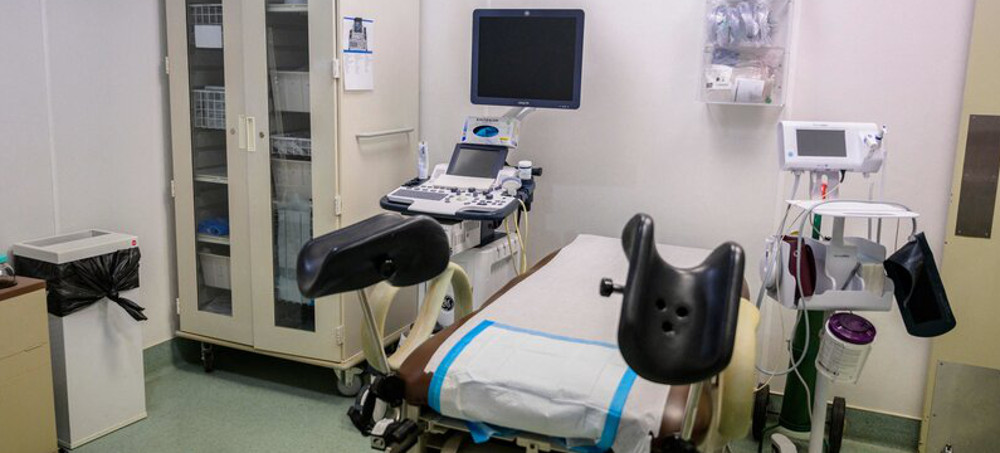
The view of an exam room inside the Hope Clinic For Women in Granite City, Illinois. People seeking abortions in restrictive states must now look beyond their borders, which is why a nonprofit organization wants to establish a floating clinic in federal waters. (photo: Angela Weiss/Getty)
The Supreme Court's reversal of Roe v. Wade has made it harder for many pregnant people to access abortion services — at least on land. One California-based doctor and activist has an idea: Why not offer them at sea?
Dr. Meg Autry, an OB-GYN and professor at the University of California at San Francisco, has been mulling over this question since long before Dobbs decision. She says she was inspired by the casino boats she would see in the Mississippi River while growing up in the south.
As many states tightened their restrictions on abortion — and dozens now move to ban it altogether — Autry assembled a legal team to look into whether it might be possible to offer that care by boat. After assessing their options, they're working towards the goal of providing abortion services in federal waters in the Gulf of Mexico (though not without anticipated legal challenges and safety concerns).
Autry created and runs the nonprofit PRROWESS, whose acronym stands for Protecting Reproductive Rights of Women Endangered by State Statutes. She says their planning was years in the making, since they anticipated the Supreme Court might issue such a ruling and wanted to be ready to go public as soon as that happened.
PRROWESS is now fundraising to buy and retrofit a boat that can serve as a floating health clinic. The group hopes the clinic will offer all sorts of reproductive health and wellness services, including contraception, testing and treatment for sexually transmitted diseases and surgical abortions up to 14 weeks.
But making that clinic a reality will take time, raise questions and involve risks. Autry says it's worth it — after all, as she tells Morning Edition's Rachel Martin, this is her life's work.
"It's just not OK for people to not have bodily autonomy," she says. "And the people in these states that are losing their rights are poor people and people of color and marginalized communities ... People are stepping up and have stepped up forever. But we have to be innovative and creative in order to allow these patients to get the care that they deserve."
How it would work — and what happens if it doesn't
The nonprofit needs to clear significant financial and logistical hurdles before it can color in the exact details of the proposed operation.
First and foremost, they need to raise enough money to acquire a vessel, with a preliminary goal of $20 million. That vessel will need to be retrofitted to meet clinic standards, which Autry says could take 6 to 12 months. In an ideal world, she says, the vessel would be operational in a year.
And it's still unclear what exactly that would look like, since the size of the team and number of procedures they'll be able to perform will depend on factors like the size of the vessel, union rules and fuel costs. But Autry estimates the crew could provide for about 20 patients a day, which comes out to roughly 1,800 people in six months.
The vessel would operate in the swath of federal waters in the Gulf of Mexico, where its activities wouldn't be restricted by state laws. The exact distance from the coastline depends on the state, but Autry says it would be between 3 and 12 miles offshore.
The nonprofit's website says once patients complete a pre-screening process, it will make arrangements to transport them to the vessel — and promises more information about how to make appointments soon.
It anticipates primarily serving patients who reside in Texas, Louisiana and other states along the Gulf Coast, many of which had trigger laws that immediately banned abortions.
In fact, according to PRROWESS, people in the southern parts of Mississippi, Alabama, Louisiana and Texas may be closer to the coast than to facilities in bordering states where abortion and reproductive health care are accessible.
"It is often very difficult and expensive for individuals who live close to the Gulf Coast to easily access care in a short time frame, due to distance to the nearest clinics and the need for connecting flights," its website reads. "Flying out of state often requires patients to secure child care and time off work for multiple days, and may not be an option at all for people who are undocumented."
The nonprofit's goal is to offer care at little to no cost to patients, depending on need. And according to an FAQ page on its website, "If at any point along this journey it appears that the floating medical clinic will not be successful, remaining funds will be distributed to other projects addressing access to abortion."
Organizers brace for potential legal challenges and security concerns
Autry and her nonprofit are also hesitant to provide too much detail about how people will be able to access the vessel, citing safety concerns. Without elaborating, she says she anticipates that her group will be a part of the many existing networks trying to coordinate abortion care for people who can't get it in their state.
People seeking or providing an abortion could face prosecution or, Autry fears, violence. She calls security her group's top concern.
And she says that while their team is secure in their understanding of the law, it's bracing for potential legal challenges "along the way, all the time." That's in part because of ever-changing laws and lawsuits unfolding in restrictive states.
Amanda Allen, senior counsel and director at the Lawyering Project — which represents PRROWESS — tells NPR over email that there's no doubt about the legality of providing abortions at sea, because states don't have jurisdiction over the care provided in federal or international waters. She compares it to the way that an abortion provider in New York would care for a patient traveling from a restrictive state.
Still, she says their team is exploring the same questions that they would look at in the case of a provider looking to open a clinic in a state where abortions are not banned.
Those include whether there are rules governing the facility where the care is provided, and what kind of licensure and staffing is required. They're also looking at the threats that could face abortion providers — floating or otherwise — who treat patients traveling from restrictive states.
"Given the climate of abortion access post-Dobbs, nothing is zero-risk," Allen writes. "Because of that we are concerned about the same types of extraterritorial questions that are already creating chaos and legal uncertainty onshore. While a state's criminal laws should not reach a provider at sea, a rogue prosecutor could choose to target PRROWESS, or a hostile state authority could open an investigation."
There's precedent for this kind of care, and enthusiasm for this plan
Autry and her team are much less concerned about the medical aspects of it all.
Less than 1% of patients require emergency care from an abortion-related complication, PRROWESS says, adding that it has planned for medical emergencies and will be prepared to transport patients to land by water shuttle or helicopter depending on the urgency.
The nonprofit says the military and relief organizations have used floating clinics for years, and that its research indicates patients are willing to seek this type of care.
Autry also points to a Dutch group called Women on Waves, which sails a ship to countries where abortion is illegal, docks about 12 miles off their coasts and provides patients with abortion pills and contraceptives.
Since its founding in 1999, it has completed campaigns — not without controversy — in countries including Ireland, Spain, Morocco, Guatemala and Mexico. (Its founder, Dr. Rebecca Gomperts, created another organization several years ago that ships abortion pills to Americans from abroad.)
"Medical care on the water and surgical terminations are incredibly safe and there's precedent for that," Autry says. "So we have no reason to believe that providing care on the water is more dangerous than providing care on the land, other than it's the water."
And while the project is still in planning stages, it sounds like many volunteers are already on board.
Autry says the response to their plan has been "almost overwhelming," with people offering donations as well as their own volunteer services. She praised the legal and medical communities for their services, and notes that she's had many volunteer offerings from maritime crew as well.
"The most heartwarming and overwhelming is all of the offers of help from people in the restricted states," she adds. "We know that the majority of the country doesn't believe in what's happening, the outpouring we've received really emphasizes that."
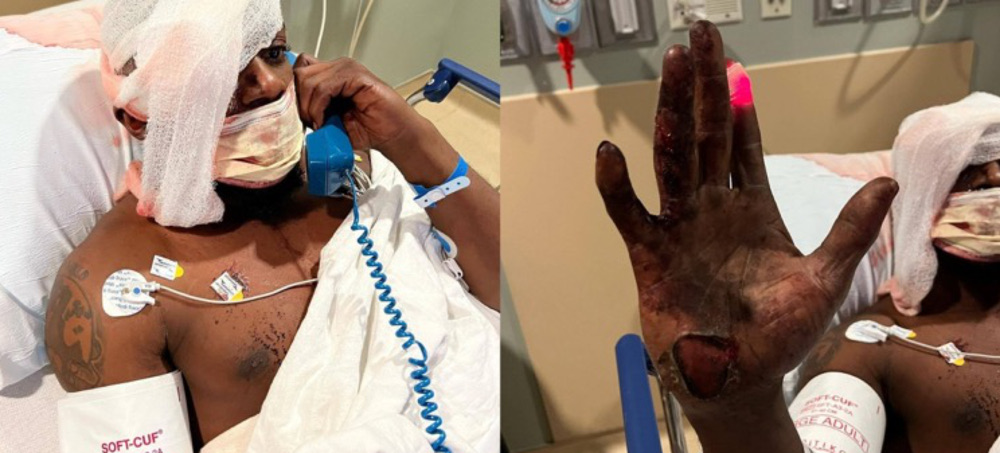
What started as a routine traffic stop from an officer with the Gainesville Police Department ended with 30-year-old Terrel Bradley losing an eye.
What started as a routine traffic stop in Florida—one that protesters are denouncing as racial profiling—ended with a Black man losing his eye in a K-9 attack.
An officer with the Gainesville Police Department (GPD), who hasn’t been named, pulled over 30-year-old Terrel Bradley for an unspecified “traffic violation” one night in early July, according to police. But after the officer asked him to submit to a search of his car, he took off running. When the officer and his K-9 unit caught up with Bradley, he incurred severe injuries.
Ultimately, police found a gun and weed in Bradley’s car, and he was arrested.
More than 100 Gainesville residents—many wearing eye patches—protested the mauling over the weekend, saying that Bradley was subjected to punishment that didn’t fit the crime he was suspected of.
“When Terrell’s traffic stop happened, yes, ultimately they did find a gun in car, but that’s beside the point,” community activist Danielle Chanzes, who helped organize the weekend’s protests, told VICE News. “Terrell didn’t feel safe, so he ran. I don’t think it's unreasonable for a Black man in America to run from police in a situation like that.
The Gainesville police green-lit an investigation on July 14, which is set to conclude in 7-10 days.
“We recognize some of our neighbors may feel disturbed by the images circulating on social media,” the department said in a statement Saturday. “Rest assured, GPD will be transparent during the review process, and we will provide our neighbors with an accurate accounting of this incident.”
Around 10:40 p.m. on July 10, the unidentified officer pulled Bradley over as he stopped near an apartment complex, according to police. The officer says he saw “contraband” when he walked over to the driver’s side window and saw Bradley reach toward the floor. Bradley was asked to exit the vehicle for a pat down, which he complied with, but he took off before the officer could complete his search.
Though the officer couldn’t catch Bradley initially, further inspection of the car he left behind turned up his ID card and a stolen loaded gun with ammunition under the driver’s seat. Police on the scene also found out that Bradley was a former felon. At that point, backup was called and a search began for the missing man. Police say they brought in a K-9 because Bradley had a prior felony.
An hour after he fled, Bradley was found hiding behind bushes, and the K-9 “apprehended” him, as police described.
“Officers observed injury to the driver and EMS was immediately requested and responded,” police said. “The driver was transported via ambulance to the hospital.”
Bradley suffered bites to his hands and body. At one point, the K-9 latched onto his eye and pulled it out of the socket.
Bradley was released from the hospital last Wednesday and was booked into Hillsborough County Jail. On Tuesday, a judge ruled he would be allowed to await trial from home. Bradley faces four charges, according to police, including two counts of firearm possession, possession of fewer than 20 grams of cannabis, and resisting an officer.
Chanzes, who’s been in touch with Bradley’s family since the day after the incident, said he’s in a lot of pain but is in good spirits, thanks to the support from his community. She also said that his family plans to take civil legal action in the near future. Bradley’s family told Chanzes that the police department was radio-silent about what happened to their loved one until the images were made public last week.
So far, protestors have demanded the release of the body camera footage. They’re also asking the department to update its policy to ensure officers don’t pursue suspects who don’t pose an immediate threat to others, the termination of both the K-9 handler and the officer who conducted the traffic stop, and finally, for the department to keep police dog who attacked Bradley from being deployed again, according to Chanzes.
More and more incidents of K-9 attacks have occurred in recent years, and in 2020, the Marshall Project reported that police K-9s caused more hospital visits than any other use of force by police. Experts are increasing calling for reform.
Victor Bradley, Terrell’s father and a former Gainesville police officer, said that he knows firsthand how dangerous K-9s can be.
“I’ve been in situations where I saw they haven’t used K-9 favorably,” Bradley said at a protest, according to local news station WCJB. “I think they’re just an extension, a gun on a leash. Unfortunately, some of the officers that they have training the dogs, they think the dog’s reward is being able to get a bite.”
The vote passed so smoothly and quickly that it seemed to catch senators, including ones in Democratic leadership, off guard. But they now face the task of keeping up the momentum and holding a vote of their own, even if doing so throws a wrench in their already packed legislative calendar.
It’s not yet clear what the fate of the legislation will be in the Senate.
Democrats initially did not indicate whether they even plan to take it up at this time. When asked about holding a vote during this week’s press briefing, Senate Majority Leader Chuck Schumer (D-NY) stopped short of agreeing to do so. “We’re going to look at everything that we can do to deal with these issues,” he told reporters on Tuesday. Senate Majority Whip Dick Durbin (D-IL), the second ranking Democrat, also declined to commit to a vote, noting that lawmakers were running out of time for their to-do list before the August recess begins next month.
Tuesday’s vote, however, could force them to reassess their priorities, given the opportunity to address an issue their party has been sounding alarms about in recent weeks since the Supreme Court abortion decision. If timing posed a problem, for instance, lawmakers have always had the ability to either shorten or cancel their recess in order to finish outstanding legislative business.
If they do consider the bill, the next question is if 10 Republican senators would vote in favor of it. The House vote indicated that support for the issue among some Republicans had shifted significantly in the last decade: While the vast majority of the Republican caucus (157 out of 204 GOP members who voted) were against the measure, the support it did get indicates it has decent odds of getting Senate passage.
To do that, and hit the 60-vote threshold needed to pass filibustered legislation, the bill would need at least 10 Republican votes. The Senate version of the legislation, however, only has one Republican cosponsor — Sen. Susan Collins (R-ME).
Senate Republicans’ stances aren’t yet known
In an Axios survey of 20 Senate Republicans, which included members perceived as “moderates or bipartisan dealmakers,” last week, none took a clear stance on the issue. Senate Minority Leader Mitch McConnell (R-KY), when asked about the legislation Tuesday, also demurred, noting that he’d “delay announcing anything on that issue until we see what the majority leader wants to put on the floor.”
There are a handful of moderate senators who are expected to be in play including Sens. Collins, Lisa Murkowski (R-AK), and Rob Portman (R-OH), while other Republicans have said they don’t think the Supreme Court will undo this precedent, and that legislation voting on the subject is unnecessary. Some have also gone further, emphasizing that they believe the right to decide the issue should be returned to the states.
Sen. Ted Cruz (R-TX), for example, has been vocal about how the Supreme Court’s 2015 decision in Obergefell v. Hodges was wrongly decided, and should be overturned. “I think that decision was clearly wrong when it was decided. It was the court overreaching,” he said in a July episode of his podcast.
Others like Sens. Marco Rubio (R-FL) and Lindsey Graham (R-SC) have cast doubt on the need for the upper chamber to hold this vote, emphasizing that the courts aren’t likely to go after this right. “It’s obviously settled law right now. This is a pure messaging bill by a party that has failed on substantive issues — be it inflation, crime or the [southern] border and now are looking for cultural issues in order to somehow do better in November,” Sen. Bill Cassidy (R-LA) told ABC News.
This legislation would codify the right to same-sex marriage
Passage of this legislation would be historic.
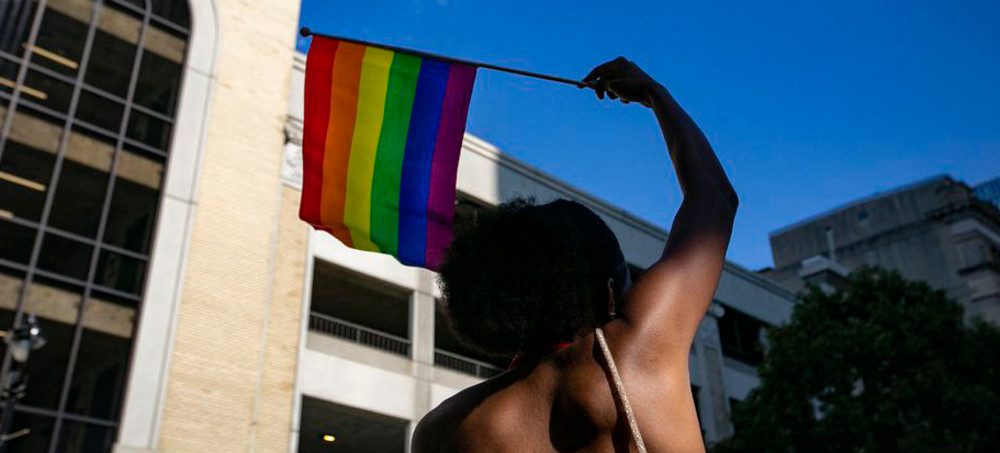
It would codify the right to same-sex marriage under federal law and it would prevent states from trying to nullify same-sex marriages and interracial marriages if they were valid in the places where they were performed. Ultimately, it’s both a preemptive move that House Democrats are taking if the Supreme Court were to overturn the precedent set by Obergefell v. Hodges, and a way for them to get Republicans on the record on the issue.
Lawmakers have stressed that Thomas’s opinion in Dobbs warranted federal action. “If Justice Thomas’s concurrence teaches anything it’s that we cannot let your guard down or the rights and freedoms that we have come to cherish will vanish into a cloud of radical ideology and dubious legal reasoning,” Rep. Jerry Nadler (D-NY) said in a statement.
As the midterm elections approach, Democrats are also trying to contrast themselves with Republicans on a number of popular social issues including abortion rights, same-sex marriage, and contraception. And they’ve been taking hits from their own base for not doing enough to protect those rights while they control Congress and the presidency. The Tuesday vote gave them an opportunity to use that power and highlight the differences with most of the GOP.
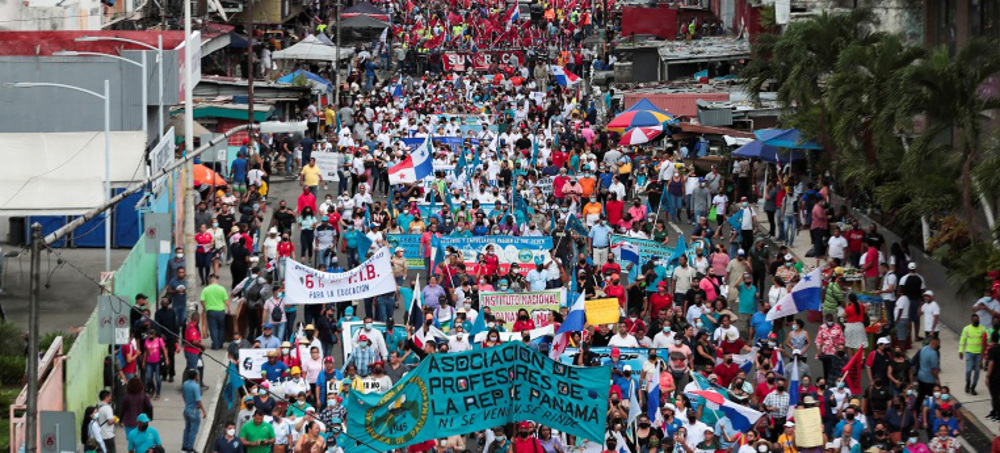
Demonstrators take part in a protest to demand the government steps in to curb inflation, lower fuel and food prices, in Panama City. (photo: Erick Marciscano/Reuters)
As the country continues to battle ongoing protests and a financial crisis, we take a look at the protesters’ demands and the government’s response.
Thousands of Panamanian protesters have taken to the streets in recent weeks to demand the government put a stop to rising inflation and corruption.
President Laurentino Cortizo recently announced measures to cut fuel costs and put a cap on the price of basic food items – but protesters said they were not enough and promised to continue demonstrating.
Here is what you should know about the protests, some of the longest to have taken place in Panama in decades.
Why is Panama having protests and what are the protesters’ demands?
The latest protests come as Panama battles an inflation rate of 4.2 percent in May; unemployment numbers of about 10 percent; and an increase in fuel costs of almost 50 percent since January.
Teachers were the first group to demonstrate at the start of July but they have since been joined by other groups, including construction workers, students and members of Indigenous groups.
Initially, the protesters called for the freezing and reduction of fuel prices, a price cap on food and an increase in the budget for education, but the demands have since widened to include a national negotiation to address political corruption and discuss larger political reforms.
“The current situation in Panama is unbelievable,” Janireth Dominguez, who studies medicine, told Al Jazeera.
“There are no medical supplies, there are salary cuts, and there is no work. There is no money to pay the doctors,” she said. “As a student, the future worries me a lot.”
In the central province of Veraguas, protesters blocked the Pan-American highway affecting the access of goods to the Panama Canal from other Central American countries. The highway is the route through which 80 percent of Panama’s fruits and vegetables are transported.
Economists warn the demonstrations have cost the country millions of dollars in losses and are leading to shortages of fuel and food. On Monday, most of the stalls at Panama’s main produce market closed early because of a lack of fruits and vegetables.
“Everything is stuck; few things arrive,” Roberto Villarreal, a seller, told Al Jazeera. “A little tomato, onions, peppers, or carrots and potatoes. And usually, we can only sell 30 percent or so of what arrives. The rest is already ruined for being blocked for days.”
What has the government done?
Responding to the protests, Cortizo, the president, announced a reduction in the price of fuel and plans to cap the price of 10 basic products.
He blamed the COVID-19 pandemic and the war in Ukraine for the cost increases.
“One of the problems now hitting Panamanians and the world is rising fuel prices and the consequences. For that reason, I set up talks to address high fuel costs directly impacting the cost of staple foods, with the objective of finding concrete and feasible solutions,” Cortizo said.
Cortizo’s administration agreed on Sunday to further reduce the price of gas from $3.95 to $3.25 per gallon, a stark contrast to June’s $5.20 per gallon. But the move was not enough to appease the demonstrators, who erected new roadblocks and pledged to continue protesting.
Analysts say part of the problem lies in an unequal economic recovery for Panama’s various social classes following the pandemic.
“The macro numbers are based on a few items – logistics, the national airline, mining, and the Panama Canal,” Guillermo Ruiz, a political analyst, told Al Jazeera.
“But that growth did not trickle down to the population while prices went up. So working-class Panamanians are wondering why, if the country is growing by 6.5 percent, they are unable to pay for medicine or gasoline,” he said.
A Guardian investigation finds pipes are only replaced at homeowners’ cost, and removal work risked causing increase of lead in water
Elena Bautista didn’t pay much attention to the work crews that rolled down her street last year. They planned to remove water pipes made of lead, a toxin that can permanently damage children’s brains.
But they skipped the tenement building where Bautista and her two kids lived.
They dug up pipes only at the homes of those who paid or took out loans for thousands of dollars, as well as under the public streets. Worse, the removal work risked causing a significant spike of toxic water for weeks, maybe months, in the homes of those unable to pay for it.
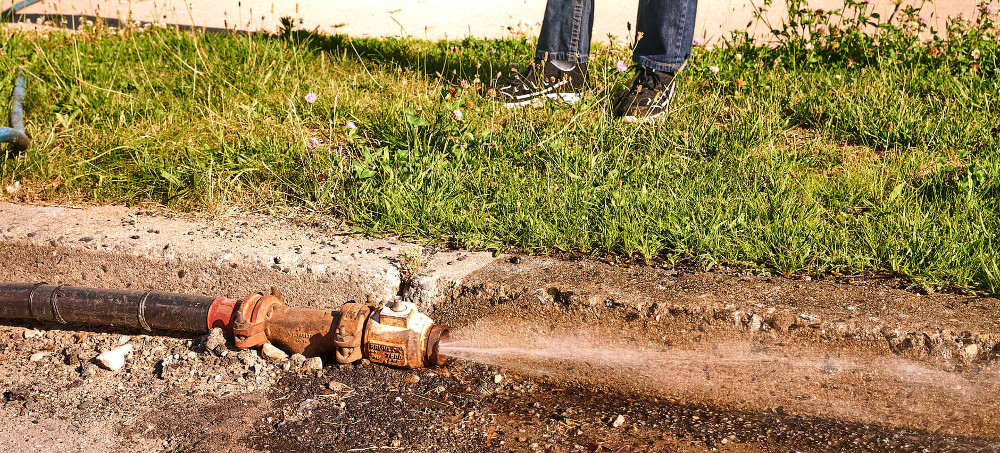
Bautista lives in Providence, Rhode Island, a city with a history of severe lead problems, yet this practice is happening all over the US. Pipes made of lead, a material not safe in any amount, supply tap water to millions of homes such as Bautista’s. To completely halt contamination, there is no other option but to rip the lead pipes out of the ground and change them for a different material.
But according to a Guardian investigation, some US cities are now essentially telling residents: pay up for the replacement or get more poison in your water.
America’s massive lead problem came into focus in 2015, when thousands of mostly Black residents in the city of Flint, Michigan, were found to have been poisoned by lead in their drinking water. Since then it has become clear that this problem is systemic and widespread, and that many other Americans lack access to a fundamental right: water that is reliably safe and clean.
Joe Biden has promised to rid the nation’s drinking water of lead contamination. Yet a massive 2021 infrastructure spending package approved by Congress contained only enough federal funding to replace a third of the country’s lead lines – leaving cities to figure the rest out for themselves.
Studies have found that Black and brown children are far more likely to have elevated levels of lead in their blood and to live in older homes with lead lines, yet it tends to be wealthier white residents who take advantage of local programs that offer property owners loans to replace lead pipes.
The issue of low-income residents being left out of lead line replacements – or even getting more lead because of partial fixes – has become a flashpoint that environmental groups, the EPA and local governments like Providence are now trying to address. But the actions are a drop in the bucket of a massive, nationwide problem.
“All families deserve lead-free drinking water, regardless of race, class, or any other factor,” said Laura Brion, director of Rhode Island’s Childhood Lead Action Project (Clap). It has drafted a civil rights complaint with four other public advocacy groups – a complaint now under investigation by the Environmental Protection Agency – charging that the Providence water department’s pay-for-replacement strategy “amounts to obvious race and class discrimination and needs to stop”.
“Not only is it not solving the problem, in some cases, it’s making it actively worse,” said Devra Levy, an organizer with Clap.
In Washington Park, a mostly Latino working-class area of Providence with fruit stalls and Dominican bodegas, Bautista, 23, said she was outraged that many renters like herself and low-income homeowners missed out.
Letters from the water department warned that last year’s construction might cause a temporary surge in residents’ lead levels – but Bautista says she didn’t receive it. “I wasn’t notified. I didn’t even know that there was lead piping.” She never took the actions that could have limited her kids’ exposure, such as using special filtration pitchers that were offered by the city.
Bautista had already been planning to move out of her apartment, but she made it a priority to find a new place without lead. “I just know lead is very dangerous, just like carbon monoxide,” she said.
Solving part of the problem only makes it worse
In the 19th century, pipes made of malleable and durable lead helped drive the explosive growth of American cities. Sentiments started to shift later in the century, as medical journals documented occasional epidemics of severe, waterborne lead poisoning, causing such symptoms as blue-lined gums, incapacitation and even death.
The US Centers for Disease Control and Prevention has said there are no safe levels of lead, which is now recognized as a neurotoxin that can cause lower IQ, developmental delays and behavioral problems in children, as well as kidney and cardiovascular problems in adults.
But there are still up to 12.8m houses and apartment buildings connected to the water system with lead lines in the US, according to the Natural Resources Defense Council.
These lead service lines, as they are known, fork off from the water main, which follows the course of the street, like branches from a tree trunk, and supply individual buildings. In doing so, these lines pass from public property on to private property. Cities that are undertaking lead replacement programs often ask homeowners to pay to replace the portions under their private property. If owners don’t pay, some cities essentially cut the lines in half, removing the city-owned portions of the lead lines but leaving the lines on private property intact.
One problem, for those in buildings with no replacements, is that they still have lead pipes. Another is that disrupting or cutting the old pipes can cause more lead to break loose and flow into the residents’ water.
In 2011, the EPA’s science advisory board said the tactic is “frequently associated with short-term elevated drinking water lead levels for some period of time after replacement, suggesting the potential for harm, rather than benefit during that time period”.
The American Water Works Association, an industry group for water utilities, recommends against doing partial replacements of lead pipes. “You’re getting rid of some lead, but in the process, you’re disturbing the system and may be stirring up more lead than if you had just left the whole thing alone,” said Paul Olson, senior manager of standards for the group, in a 2017 trade article.
Studies have found that partial lead service line replacements can unleash “erratic spikes” of lead into drinking water. One study by Nova Scotia’s Dalhousie University found partial replacements doubled the amount of lead in drinking water in the short term. Even after six months, twice as many homes as before the partials were done had readings above the EPA’s limit for lead in water.
All told, “the vast majority of the 11,000+ water utilities in the US engage in this practice” of partially replacing lead pipes, according to the Environmental Defense Fund. Recent examples confirmed by the Guardian stretch from Memphis, Tennessee, to Dayton, Ohio, and Rochester, New York.
‘They want to dump responsibility on the homeowner’
The letters announcing that pipes would be removed as part of a water system rehabilitation job went out in Bautista’s neighborhood of Washington Park in spring 2021.
The neighborhood, originally constructed for Italian, Irish and Portuguese migrant workers in the late 1800s, is now home to many Caribbean, African and Latin American communities. At nearby Roger Williams Park a bust of Juan Pablo Duarte, a founding father of the Dominican Republic, stands near both a US and a Dominican flag.
Ahead of the construction work, the city urged customers to pay to replace the portion of the lines located on their private property. It offered to cap the cost at $4,500 and to provide residents a zero-interest loan, which they could re-pay at $37.50 a month for the next 10 years. It warned that not doing so put them at risk of exposure to more lead.
Bautista, a renter with two young children, wished her landlords had taken out the loan to remove the lead service lines. But she did not feel she had much negotiating power with them. “I’m too poor to worry about it,” she said. “I just need housing before we end up in the street.”
Even for homeowners, $4,500 “is a lot of money”, said Linda Perri, president of the Washington Park Neighborhood Association, who worried that households with kids would be the least likely to be able to pay to get clean water. “I don’t think it’s fair. I think the city should take care of it on a ‘need’ basis. If you have three kids and you make $45,000, you shouldn’t have to pay.”
Indeed, only 13 of the 263 property owners in Washington Park who were identified as having lead service lines last year signed up to receive a loan, according to public records obtained by the Guardian. In the end, 250 homes were left with lead pipes still connecting their buildings to the water system.
The people who have taken loans in Providence have overwhelmingly tended to be from richer areas. Of the 1,249 residents who have taken advantage of the loans, 638 were from a single zip code in a mostly white area in the east side of Providence, records show – four times more than any other zip code. That area includes parts of Brown University, the Rhode Island School of Design, and some of the region’s most expensive housing.
It is a similar story nationally: a recent study of Washington DC’s early lead replacement programs found that when the water provider for the city asked residents to pay for replacement of the portions of pipes on their own property, 66% of homeowners in the wealthiest parts of the city took advantage of the program, compared with only 25% for areas with the lowest incomes.
Ironically, in many cases, it was city codes that mandated lead in the first place, said Erik Olson of the NRDC.
“This is particularly unfair since in most places the city or the water utility required or approved the installation of the lead lines in the first place,” said Olson. “Now they want to dump the responsibility for correcting it on the homeowner.”
A number of states, including Michigan, Illinois, and New Jersey, have banned partial replacements. Yet a ban does not necessarily mean an end to lead. In Chicago, for instance, working-class residents who make above the low-income line are asked to take out loans to foot the costs. The price tag for a pipe fix there: $15,000 to $26,000.
“If I wanted I could finance it,” said homeowner Marcelina Pedraza, referring to a loan. She has confirmed there’s lead in her water, but found she makes too much in her job as an electrician to qualify for the city’s programs to pay for lead pipe replacements. “But I think it should be done across the board regardless of income.”
‘A lot of people don’t have options’
Providence Water says it hopes to correct the situation going forward.
It said it has taken steps to protect all its customers from lead in the pipes leaching into their drinking water. These include adding a chemical to the water to prevent corrosion from the pipes. It said that, thanks to these steps, the agency’s water quality has improved and, as of December, it was in compliance with the EPA’s required maximum lead levels.
But it has exceeded them in 14 of the previous 15 years – and the EPA standards themselves are considered by many scientists to be too lax. Providence is one of the largest water districts in the nation to exceed the EPA’s limits for lead in recent years, according to the NRDC.
For those affected by last year’s construction work, Providence Water offered free water filtration pitchers and urged residents to flush their pipes with cold water for 15 minutes before using it for the first seven days after construction. (There is no real scientific consensus on how long the lead increases caused by construction work on existing lead lines might last. Some studies have suggested it could be as long as six months.)
Meanwhile the water department is testing a program that will try to level the playing field for future fixes, so low-income residents can get the work done without taking on loans.
This spring, Providence Water offered grants for free replacements to residents in another 40-block section of Washington Park. So far, based on water department records seen by the Guardian, fewer than half of the nearly 700 property owners in the area with suspected lead lines have given permission for the water department to replace the pipes on their property. The department is doing outreach to get more signups.
“The intent is to provide free private-side lead service line replacements to residents living within disadvantaged areas,” said public affairs representative Christopher Hunter. “We hope to accelerate the pace of replacements.” But that would depend on obtaining federal infrastructure funds or grants.
This dovetails with federal efforts. In March, the EPA clarified that cities will not be able to use the $15bn of new infrastructure funds to do partial pipe replacements. But activists worry that cities can still use other funding sources to do these partials, and can still run programs asking homeowners to take out loans.
“We’d like to see it be required that, when utilities replace mains or disturb the lead pipes, they pay to replace the entire lead pipe instead of only part,” said Tom Neltner of the Environmental Defense Fund, which has lobbied the EPA to make sure that low-income residents aren’t left out of the benefits from the work. “When you force somebody to choose between a higher risk of lead in their drinking water and paying several thousand dollars to replace their pipes, a lot of people don’t have options.”
A Rhode Island state bill requiring full replacements of everyone’s lead pipes passed overwhelmingly in the senate, but died in the house in late June.
Even in the neighborhood where the city is offering free replacements, residents aren’t always getting the message to sign up.
Monica Huertas, a homeowner in this section of the neighborhood, already has one child of her four with high levels of lead in his blood, and she worries about whether it will cause learning difficulties. The city suspects she has lead pipes.
Yet she missed the meeting for this year’s grant program, which she said was impossible for her to attend because it didn’t offer childcare. Now she said she isn’t sure if the deadline has passed, and she hasn’t been able to follow up on it.
“We’re just dealing with so many other things in our community,” said Huertas, a social worker, who runs a neighborhood environmental group. “It’s the water, it’s the soil, it’s the jobs, it’s the color of your skin … Our community’s overburdened and we’re all overworked and underpaid.”
For now, Huertas says she buys bottled water and is teaching her children never to drink from the faucets.
“Water is supposed to be a human right,” she said. “But I’m getting this disgusting, lead-infested water.”