
Showing posts with label PRESIDENT BARACK OBAMA. Show all posts

Saturday, July 18, 2020

RSN: FOCUS: Barack Obama | My Statement on the Passing of Rep. John Lewis


Reader Supported News
18 July 20

I wish I could afford more, but I'm 84 and on limited income. I hope that you'll be able to continue your excellent work!
Bryce / RSN Reader-Supporter


If you would prefer to send a check:
Reader Supported News
PO Box 2043
Citrus Hts, CA 95611


Reader Supported News
18 July 20
It's Live on the HomePage Now:
Reader Supported News

Sure, I'll make a donation!

FOCUS: Barack Obama | My Statement on the Passing of Rep. John Lewis
Former U.S. president Barack Obama walks alongside Rep. John Lewis on the Edmund Pettus Bridge in 2015 to mark the 50th anniversary of the Selma to Montgomery marches in Selma, Alabama. (photo: AFP)
Barack Obama, Medium
Obama writes: "America is a constant work in progress. What gives each new generation purpose is to take up the unfinished work of the last and carry it further - to speak out for what's right, to challenge an unjust status quo, and to imagine a better world."

John Lewis — one of the original Freedom Riders, chairman of the Student Nonviolent Coordinating Committee, the youngest speaker at the March on Washington, leader of the march from Selma to Montgomery, Member of Congress representing the people of Georgia for 33 years — not only assumed that responsibility, he made it his life’s work. He loved this country so much that he risked his life and his blood so that it might live up to its promise. And through the decades, he not only gave all of himself to the cause of freedom and justice, but inspired generations that followed to try to live up to his example.
Considering his enormous impact on the history of this country, what always struck those who met John was his gentleness and humility. Born into modest means in the heart of the Jim Crow South, he understood that he was just one of a long line of heroes in the struggle for racial justice. Early on, he embraced the principles of nonviolent resistance and civil disobedience as the means to bring about real change in this country, understanding that such tactics had the power not only to change laws, but to change hearts and minds as well.
In so many ways, John’s life was exceptional. But he never believed that what he did was more than any citizen of this country might do. He believed that in all of us, there exists the capacity for great courage, a longing to do what’s right, a willingness to love all people, and to extend to them their God-given rights to dignity and respect. And it’s because he saw the best in all of us that he will continue, even in his passing, to serve as a beacon in that long journey towards a more perfect union.
I first met John when I was in law school, and I told him then that he was one of my heroes. Years later, when I was elected a U.S. Senator, I told him that I stood on his shoulders. When I was elected President of the United States, I hugged him on the inauguration stand before I was sworn in and told him I was only there because of the sacrifices he made. And through all those years, he never stopped providing wisdom and encouragement to me and Michelle and our family. We will miss him dearly.
It’s fitting that the last time John and I shared a public forum was at a virtual town hall with a gathering of young activists who were helping to lead this summer’s demonstrations in the wake of George Floyd’s death. Afterwards, I spoke to him privately, and he could not have been prouder of their efforts — of a new generation standing up for freedom and equality, a new generation intent on voting and protecting the right to vote, a new generation running for political office. I told him that all those young people — of every race, from every background and gender and sexual orientation — they were his children. They had learned from his example, even if they didn’t know it. They had understood through him what American citizenship requires, even if they had heard of his courage only through history books.

Not many of us get to live to see our own legacy play out in such a meaningful, remarkable way. John Lewis did. And thanks to him, we now all have our marching orders — to keep believing in the possibility of remaking this country we love until it lives up to its full promise.
READ MORE

Update My Monthly Donation


Wednesday, June 3, 2020

RSN: Barack Obama | How to Make This Moment the Turning Point for Real Change


Reader Supported News
03 June 20

It's Live on the HomePage Now:
Reader Supported News


Barack Obama | How to Make This Moment the Turning Point for Real Change
Barack Obama. (photo: Getty Images)
Barack Obama, Medium
Obama writes: "As millions of people across the country take to the streets and raise their voices in response to the killing of George Floyd and the ongoing problem of unequal justice, many people have reached out asking how we can sustain momentum to bring about real change."

Ultimately, it’s going to be up to a new generation of activists to shape strategies that best fit the times. But I believe there are some basic lessons to draw from past efforts that are worth remembering.
First, the waves of protests across the country represent a genuine and legitimate frustration over a decades-long failure to reform police practices and the broader criminal justice system in the United States. The overwhelming majority of participants have been peaceful, courageous, responsible, and inspiring. They deserve our respect and support, not condemnation — something that police in cities like Camden and Flint have commendably understood.
On the other hand, the small minority of folks who’ve resorted to violence in various forms, whether out of genuine anger or mere opportunism, are putting innocent people at risk, compounding the destruction of neighborhoods that are often already short on services and investment and detracting from the larger cause. I saw an elderly black woman being interviewed today in tears because the only grocery store in her neighborhood had been trashed. If history is any guide, that store may take years to come back. So let’s not excuse violence, or rationalize it, or participate in it. If we want our criminal justice system, and American society at large, to operate on a higher ethical code, then we have to model that code ourselves.
Second, I’ve heard some suggest that the recurrent problem of racial bias in our criminal justice system proves that only protests and direct action can bring about change, and that voting and participation in electoral politics is a waste of time. I couldn’t disagree more. The point of protest is to raise public awareness, to put a spotlight on injustice, and to make the powers that be uncomfortable; in fact, throughout American history, it’s often only been in response to protests and civil disobedience that the political system has even paid attention to marginalized communities. But eventually, aspirations have to be translated into specific laws and institutional practices — and in a democracy, that only happens when we elect government officials who are responsive to our demands.
Moreover, it’s important for us to understand which levels of government have the biggest impact on our criminal justice system and police practices. When we think about politics, a lot of us focus only on the presidency and the federal government. And yes, we should be fighting to make sure that we have a president, a Congress, a U.S. Justice Department, and a federal judiciary that actually recognize the ongoing, corrosive role that racism plays in our society and want to do something about it. But the elected officials who matter most in reforming police departments and the criminal justice system work at the state and local levels.
It’s mayors and county executives that appoint most police chiefs and negotiate collective bargaining agreements with police unions. It’s district attorneys and state’s attorneys that decide whether or not to investigate and ultimately charge those involved in police misconduct. Those are all elected positions. In some places, police review boards with the power to monitor police conduct are elected as well. Unfortunately, voter turnout in these local races is usually pitifully low, especially among young people — which makes no sense given the direct impact these offices have on social justice issues, not to mention the fact that who wins and who loses those seats is often determined by just a few thousand, or even a few hundred, votes.
So the bottom line is this: if we want to bring about real change, then the choice isn’t between protest and politics. We have to do both. We have to mobilize to raise awareness, and we have to organize and cast our ballots to make sure that we elect candidates who will act on reform.
Finally, the more specific we can make demands for criminal justice and police reform, the harder it will be for elected officials to just offer lip service to the cause and then fall back into business as usual once protests have gone away. The content of that reform agenda will be different for various communities. A big city may need one set of reforms; a rural community may need another. Some agencies will require wholesale rehabilitation; others should make minor improvements. Every law enforcement agency should have clear policies, including an independent body that conducts investigations of alleged misconduct. Tailoring reforms for each community will require local activists and organizations to do their research and educate fellow citizens in their community on what strategies work best.
But as a starting point, here’s a report and toolkit developed by the Leadership Conference on Civil and Human Rights and based on the work of the Task Force on 21st Century Policing that I formed when I was in the White House. And if you’re interested in taking concrete action, we’ve also created a dedicated site at the Obama Foundation to aggregate and direct you to useful resources and organizations who’ve been fighting the good fight at the local and national levels for years.
I recognize that these past few months have been hard and dispiriting — that the fear, sorrow, uncertainty, and hardship of a pandemic have been compounded by tragic reminders that prejudice and inequality still shape so much of American life. But watching the heightened activism of young people in recent weeks, of every race and every station, makes me hopeful. If, going forward, we can channel our justifiable anger into peaceful, sustained, and effective action, then this moment can be a real turning point in our nation’s long journey to live up to our highest ideals.
Let’s get to work.


George Floyd's niece Angel Buechner speaks during a protest outside the residence of governor of Minnesota Tim Walz, over his death, an unarmed black man, who died after a police officer kneeled on his neck for several minutes on June 1, 2020 in Minneapolis. (photo: Chandan Khanna/AFP/Getty Images)


State of Minnesota Files Civil Rights Charge Against Minneapolis Police After George Floyd's Death
Nancy Dillon, New York Daily News
Dillon writes: "Minnesota has filed a civil rights complaint against the Minneapolis Police Department to investigate racism 'that is generations deep,' Governor Tim Walz announced Tuesday."
READ MORE


New York governor Andrew Cuomo is joined by Rosie Perez and Chris Rock at a press conference where the two performers helped to promote coronavirus testing, social distancing, and the use of a face mask on May 28, 2020 in New York City. (photo: Spencer Platt/Getty Images)


David Harvey | Capitalism Is Not the Solution to Urban America's Problems - Capitalism Itself Is the Problem
David Harvey, Jacobin
Excerpt: "The COVID-19 crisis has triggered a fresh round of soul-searching in establishment media outlets about the problems of urban America. Unless we address the root cause of those problems in the structure of our economic system, we'll never be able to solve them."

EXCERPT:
Ronald Reagan famously remarked that “government is not the solution to our problem, government is the problem.” Until we realize that “capital is not the solution to our problem, capital is the problem,” we will be lost. Capital builds Hudson Yards and not affordable housing for those who are trying to live on less than $40,000 a year. Until capital can do the latter, all attempts at reform, however well-meaning, are sure to be coopted into the cycles of endless capital accumulation for the benefit of the few. Capital will continue to function in this way irrespective of the social and ecological consequences, while leaving the mass of the population to scrimp and save — if that is even possible — just to get by.


A woman holds an anti-Zero Tolerance policy sign at a protest outside the White House in 2018. (photo: Sarah Silbiger/CQ Roll Call)


Homeland Security Grossly Understated Family Separations, Watchdog Says
Tanvi Misra, Roll Call
Misra writes: "Customs and Border Protection separated dozens more migrant children at ports of entry in 2018 than it publicly attested to at the height of the Trump administration's so-called zero tolerance policy, according to a new report published Tuesday by the Homeland Security Department's internal watchdog."
READ MORE


Police begin to clear demonstrators gathered June 1, 2020, near the White House in Washington as they protest the death of George Floyd. Floyd died May 25 after being restrained by Minneapolis police officers. (photo: Alex Brandon/AP)


Ahead of Trump Bible Photo Op, Police Forcibly Expelled Priest From St. John's Church Near White House
Jack Jenkins, Religion News Service
Jenkins writes: "Authorities also expelled at least one Episcopal priest and a seminarian from the church's patio."
READ MORE


A rally for Black Lives Matter. (photo: Noah Berger/AP)


White Supremacist Group Identity Evropa Posed as Antifa on Twitter and Called for Looting and Violence
David Gilbert, VICE
Gilbert writes: "A white supremacist group linked to deadly right-wing violence in Charlottesville in 2017 used a fake Twitter account to pose as 'Antifa' and incite violence during the current wave of protests against police brutality."
READ MORE


A farmer walked through a burned area of Amazon rainforest near Porto Velho, Brazil, last year. (photo: Carl De Souza/AFP/Getty Images)


Mass Extinctions Are Accelerating, Scientists Report
Rachel Nuwer, The New York Times
Nuwer writes: "We are in the midst of a mass extinction, many scientists have warned - this one driven not by a catastrophic natural event, but by humans."

On Monday, there was more bad news: We are racing faster and closer toward the point of collapse than scientists previously thought, according to research published in the Proceedings of the National Academy of Sciences. The extinction rate among terrestrial vertebrate species is significantly higher than prior estimates, and the critical window for preventing mass losses will close much sooner than formerly assumed — in 10 to 15 years.
“We’re eroding the capabilities of the planet to maintain human life and life in general,” said Gerardo Ceballos, an ecologist at the National Autonomous University of Mexico and lead author of the new study.







Monday, June 1, 2020

PRESIDENT BARACK OBAMA


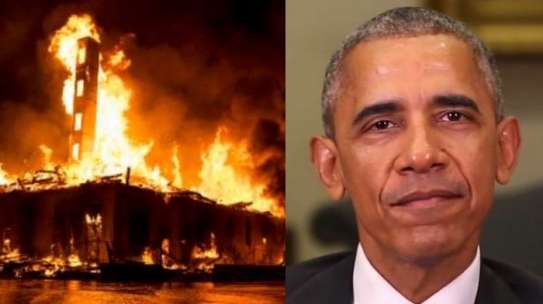
On Monday, former President Barack Obama wrote a more lengthy statement on the role of protest in catalyzing political change after the killing of George Floyd. Here it is in its entirety:
"As millions of people across the country take to the streets and raise their voices in response to the killing of George Floyd and the ongoing problem of unequal justice, many people have reached out asking how we can sustain momentum to bring about real change.
Ultimately, it’s going to be up to a new generation of activists to shape strategies that best fit the times. But I believe there are some basic lessons to draw from past efforts that are worth remembering.
First, the waves of protests across the country represent a genuine and legitimate frustration over a decades-long failure to reform police practices and the broader criminal justice system in the United States. The overwhelming majority of participants have been peaceful, courageous, responsible, and inspiring. They deserve our respect and support, not condemnation — something that police in cities like Camden and Flint have commendably understood.
On the other hand, the small minority of folks who’ve resorted to violence in various forms, whether out of genuine anger or mere opportunism, are putting innocent people at risk, compounding the destruction of neighborhoods that are often already short on services and investment and detracting from the larger cause.
I saw an elderly black woman being interviewed today in tears because the only grocery store in her neighborhood had been trashed. If history is any guide, that store may take years to come back.
So let’s not excuse violence, or rationalize it, or participate in it. If we want our criminal justice system, and American society at large, to operate on a higher ethical code, then we have to model that code ourselves.
Second, I’ve heard some suggest that the recurrent problem of racial bias in our criminal justice system proves that only protests and direct action can bring about change, and that voting and participation in electoral politics is a waste of time. I couldn’t disagree more.
The point of protest is to raise public awareness, to put a spotlight on injustice, and to make the powers that be uncomfortable; in fact, throughout American history, it’s often only been in response to protests and civil disobedience that the political system has even paid attention to marginalized communities. But eventually, aspirations have to be translated into specific laws and institutional practices — and in a democracy, that only happens when we elect government officials who are responsive to our demands.
Moreover, it’s important for us to understand which levels of government have the biggest impact on our criminal justice system and police practices. When we think about politics, a lot of us focus only on the presidency and the federal government. And yes, we should be fighting to make sure that we have a president, a Congress, a U.S. Justice Department, and a federal judiciary that actually recognize the ongoing, corrosive role that racism plays in our society and want to do something about it.
But the elected officials who matter most in reforming police departments and the criminal justice system work at the state and local levels.It’s mayors and county executives that appoint most police chiefs and negotiate collective bargaining agreements with police unions.
It’s district attorneys and state’s attorneys that decide whether or not to investigate and ultimately charge those involved in police misconduct. Those are all elected positions. In some places, police review boards with the power to monitor police conduct are elected as well. Unfortunately, voter turnout in these local races is usually pitifully low, especially among young people — which makes no sense given the direct impact these offices have on social justice issues, not to mention the fact that who wins and who loses those seats is often determined by just a few thousand, or even a few hundred, votes.
So the bottom line is this: if we want to bring about real change, then the choice isn’t between protest and politics. We have to do both. We have to mobilize to raise awareness, and we have to organize and cast our ballots to make sure that we elect candidates who will act on reform.
Finally, the more specific we can make demands for criminal justice and police reform, the harder it will be for elected officials to just offer lip service to the cause and then fall back into business as usual once protests have gone away. The content of that reform agenda will be different for various communities.
A big city may need one set of reforms; a rural community may need another. Some agencies will require wholesale rehabilitation; others should make minor improvements. Every law enforcement agency should have clear policies, including an independent body that conducts investigations of alleged misconduct. Tailoring reforms for each community will require local activists and organizations to do their research and educate fellow citizens in their community on what strategies work best.
But as a starting point, here’s a report and toolkit developed by the Leadership Conference on Civil and Human Rights and based on the work of the Task Force on 21st Century Policing that I formed when I was in the White House. And if you’re interested in taking concrete action, we’ve also created a dedicated site at the Obama Foundation to aggregate and direct you to useful resources and organizations who’ve been fighting the good fight at the local and national levels for years.
I recognize that these past few months have been hard and dispiriting — that the fear, sorrow, uncertainty, and hardship of a pandemic have been compounded by tragic reminders that prejudice and inequality still shape so much of American life.
But watching the heightened activism of young people in recent weeks, of every race and every station, makes me hopeful.
If, going forward, we can channel our justifiable anger into peaceful, sustained, and effective action, then this moment can be a real turning point in our nation’s long journey to live up to our highest ideals.
Let’s get to work."- President Barack Obama

Image


Your Signature Needed: Brutal hunter violently murders entire gray wolf pack

                                             LOTS OF POSTS IGNORED BY BLOGGER..... OR REMOVED ON THEIR WHIM! ALL POSTS ARE AVAILABLE ON MIDD...