WHEN YOU PURCHASE PLANTS FROM RETAILERS, THEY ARE TREATED WITH NEONICS THAT CONTAMINATE YOUR SOIL. IF YOU HAVE NO BEES, THAT'S WHY!

|
WHEN YOU PURCHASE PLANTS FROM RETAILERS, THEY ARE TREATED WITH NEONICS THAT CONTAMINATE YOUR SOIL. IF YOU HAVE NO BEES, THAT'S WHY!
|

|

24 May 22
If You Stay With RSN, Get Ready to Help
We are glad you are here. We cannot maintain service without funding. The May fundraiser is crashing and burning due to indifference.
Help, we need it now.
Marc Ash
Founder, Reader Supported News
If you would prefer to send a check:
Reader Supported News
PO Box 2043 / Citrus Heights, CA 95611
Follow us on facebook and twitter!

23 May 22
Live on the homepage now!
Reader Supported News
“If you correct our population for race, we’re not as much of an outlier as it’d otherwise appear.”
In an interview with Politico, the following words came out of Cassidy’s mouth: “About a third of our population is African American; African Americans have a higher incidence of maternal mortality. So, if you correct our population for race, we’re not as much of an outlier as it’d otherwise appear. Now, I say that not to minimize the issue but to focus the issue as to where it would be. For whatever reason, people of color have a higher incidence of maternal mortality.”
There’s a lot to unpack here. Let’s start with the idea that Cassidy—who wants to defund Planned Parenthood is all, Yes, on its face, our maternal mortality rates are abysmal, but if you only count white women, they’re not that bad! Then there’s the phrase “for whatever reason.” In fact, there is one very big reason in particular— perhaps you can take a guess? “It’s no mystery why maternal mortality rates are so high among Black women,” Michelle Williams, the dean of Harvard’s School of Public Health said in response. “They are high because of the devastating impacts of structural racism and individual bias.” As Politico notes, Black mothers are three times more likely to die from a pregnancy-related cause than white mothers in the U.S., which has the worst mortality rate among developed nations and where “17 mothers die for every 100,000 pregnancies in the country.” In Louisiana, Black mothers are four times as likely to die than white mothers.
Asked what how Roe v. Wade being overturned would affect maternal mortality rates, Cassidy dismissed the question. “If we’re using abortion to limit maternal deaths, that’s kind of an odd way to approach the problem,” he said. That, of course, is total bullshit. As NBC News reported earlier this month, “Research suggests the bans and restrictions would have manifold effects on maternal health. For one, if more pregnant people can’t get the abortions they seek, they’d shoulder the risk of the U.S.’s relatively high—and rising—rate of death from pregnancy-related causes, which is particularly elevated among people of color.” As Dr. Amy Addante, an ob-gyn in Illinois, bluntly put it: “There are going to be women that will die from pregnancy because of this decision, period.”
And in other war-on-women news, via HuffPost:
Donald Trump’s pick for a Michigan state Senate seat is promising to ban all birth control if she gets the chance. “I guess we have to ask ourselves, would that ever come to a vote in the Michigan state legislature? And if it should, I would have to side with it should not be legal,” Republican Jacky Eubanks said in a recent interview with the site Church Militant. “People believe that birth control—it’s better, like you said, oh, because then you won’t get pregnant and you won’t need to have an abortion,” she added. “But I think it gives people the false sense of security that they can have consequence-free sex, and that’s not true and that’s not correct. Sex ought to be between one man and one woman in the confines of marriage.”
While Eubanks’s comments are completely disturbing, she’s far from the only Republican who’s suggested they want to see contraceptives banned. In March, Senator Marsha Blackburn called Griswold v. Connecticut—the 1965 ruling that struck down a state ban on contraceptives—“constitutionally unsound,” while Idaho plans to hold a hearing to ban emergency contraception and potentially IUDs as well. Others have claimed that anyone worried about a ban on birth control (or gay marriage, or interracial marriage) is being hysterical—which, incidentally, is what many said about the prospect of Roe being overturned.
 Sitting behind a glass partition, Russian army sergeant Vadim Shishimarin, 21, talks with his translator, left, during a court hearing in Kyiv, Ukraine, May 18, 2022. The Russian soldier has gone on trial in Ukraine for the killing of an unarmed civilian. The case that opened in Kyiv marked the first time a member of the Russian military has been prosecuted for a war crime since Russia invaded Ukraine 11 weeks ago. (photo: Efrem Lukatsky/AP)
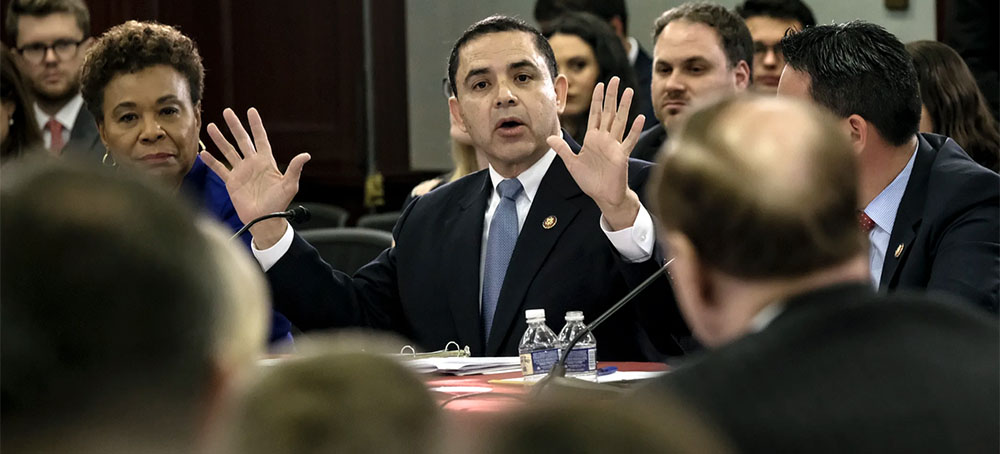 Rep. Henry Cuellar speaks during a congressional meeting on the US/Mexico border in 2018. (photo: Bonnie Jo Mount/WP/Getty Images)
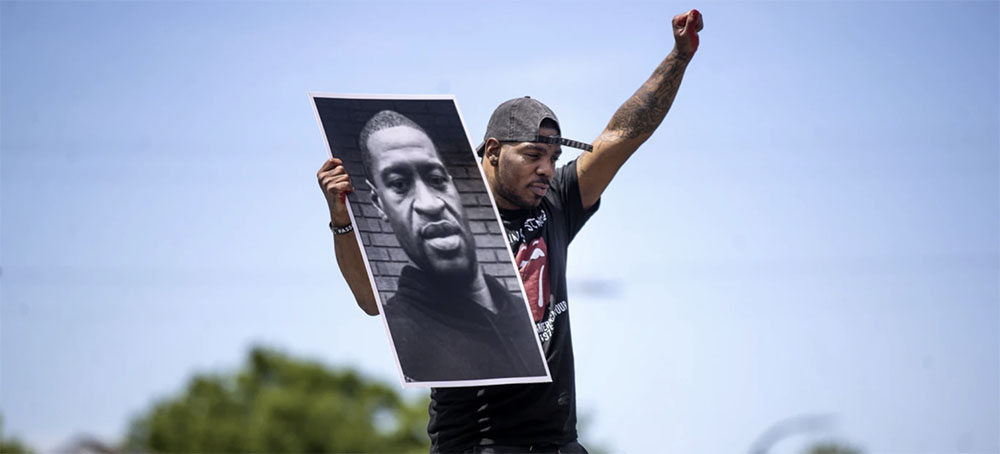 A protest against police violence after George Floyd's murder. (photo: Jerry Holt/Star Tribune/Getty Images)
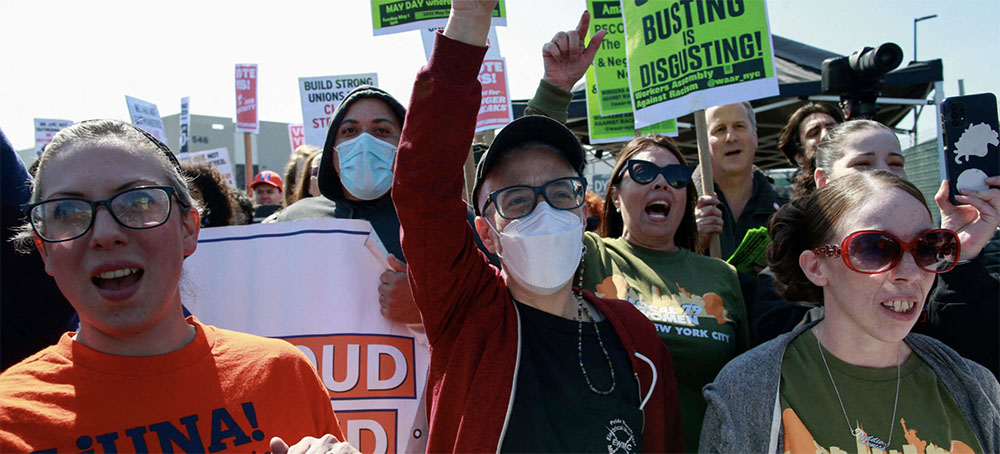 Amazon and union workers attend rally outside the company building on April 24, 2022, in the Staten Island borough of New York City. (photo: Kena Betancur/AFP/Getty Images)
 The Taipei 101 tower, once the world’s tallest building, dominates the city skyline. China’s growing influence in the region has emerged as a key theme of Biden’s visit. (photo: Carl Court/Getty Images)
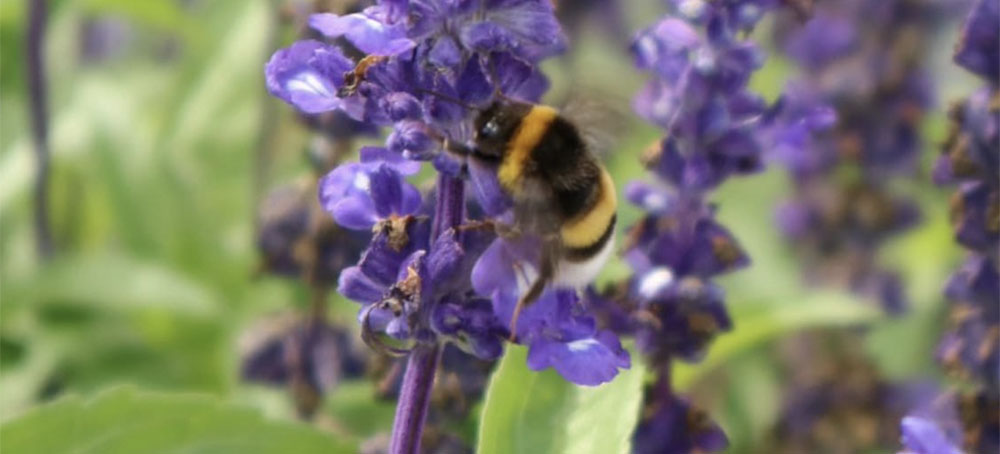 A super-generalist bumble bee (Bombus terrestris) visiting salvia flowers (Salvia farinacea) in an urban area. (photo: Cristina Ganuza)
Insect declines due to habitat lost to agriculture and urbanization have been well-studied, but another factor that has affected pollinator communities is global warming. A new study from the Julius-Maximilian University of Würzburg (JMU) looks at how, as climates become warmer and drier, the combination of shifting land uses with the warming climate can have a detrimental effect on insect diversity, and what can be done about it.
The researchers examined more than 3,200 identified species of pollinators from 179 locations across Bavaria. They found that warmer climates — whether they were in grassland, forests, arable or urban habitats — led to an overall loss of pollinator diversity, indicating that increased warming as a result of the climate crisis would lead to greater loss of diversity in pollinator communities.
Cristina Ganuza, a Ph.D. student at JMU’s Department of Animal Ecology and Tropical Biology at the Biocenter, who was the lead author of the study, said that “the combination of ongoing climate change and current land use will only allow certain pollinator species to survive in different habitat types,” a recent press release from JMU stated.
The study, “Interactive effects of climate and land use on pollinator diversity differ among taxa and scales,” was published in the journal Science Advances.
“The study underpins that in addition to the importance of floral resources and the negative effects of land use intensification, climatic conditions play an increasingly important role for the maintenance of pollinator diversity. For example, the combination of high temperatures and low precipitation negatively affected total pollinator diversity, while bee richness in urban areas was negatively affected by higher mean temperatures,” said professor Ingolf Steffan-Dewenter, co-author of the study and head of the Department of Animal Ecology and Tropical Biology at JMU, in the press release.
Homogenized communities of pollinators can lead to lower crop yields, as not all species pollinate all types of plants.
“Several studies have shown that higher pollinator diversity correlates with higher yields of many crops. Crop yield increases with the number of pollinators, but also with their diversity,” Ganuza told EcoWatch. “Different pollinators visit different flowering plants. Some insects are generalists and can feed on multiple flowering-plant species, while others are specialists of a few plant species. Therefore, the higher the number of flowering-plant species, the higher the number of pollinator species. At the same time, a high pollinator diversity is needed to maintain a high flowering-plant diversity. They are mutualists and need each other.”
Warmer temperatures can be beneficial for insects, including pollinators, but only up to a certain point.
“First, pollinators and other insects are adapted to the region where they live and are able to resist changes in temperature to a certain limit. Warm temperatures within the range of tolerance of the different species are positive, because ectothermic insects can be more active than with cooler temperatures. However, if high temperatures rise too high, this limits the activity of insects and can even disrupt physiological processes,” Ganuza said. “Second, it is not only the increase in temperature that matters, precipitation patterns matter too. We are experiencing droughts more often, and many insects need water or moisture during their life cycle. Third, pollinators depend on flowering plants because they feed on nectar and pollen. If some plant species disappear because the climate got too warm or too dry, the pollinators that depend on them will disappear too. All in all, climate change is forcing insects to move to cooler regions, to change their phenology (to advance or delay their life cycle) or to change their physiology, which is an evolutionary process that normally happens much slower than climate change.”
The study showed that individual pollinator species responded differently to climates that were warmer and drier, but overall, forested landscapes maintained pollinator communities that were more diverse.
“One key finding therefore is that forest in the landscape can cushion the effects of climate warming to a certain extent,” said Ganuza, according to the press release.
“Based on other studies, we know that forests experience less temperature fluctuations than open habitats, because of their shady and moist conditions,” Ganuza told EcoWatch.
Planting more greenery in cities would make urban landscapes cooler and more amenable to insects and other animals.
“The temperature in cities could be lowered by decreasing the impervious surface and increasing the green areas. This can be achieved with green roofs and walls, planting trees, preserving parks and other non-built areas. Also promoting the use of public transport or bicycles would help, since heavy traffic contributes to increasing the heat-island effect of cities,” Ganuza told EcoWatch.
Diverse landscapes that include a variety of flowering plants — which lead to a greater array of insects, including pollinators, and other wildlife — are becoming increasingly important in the battle against biodiversity decline on a warming planet.
“At least in our study region in Germany, the presence of forest in the landscape can buffer the effects of climate warming to some extent, while large urban areas can worsen them. In general, pollinators need natural areas with abundant and diverse flower resources, but natural areas are increasingly threatened globally by intensive agriculture, monoculture forestry, deforestation and urban expansion,” Ganuza said.
Special Coverage: Ukraine, A Historic Resistance
READ MORE
Follow us on facebook and twitter!
PO Box 2043 / Citrus Heights, CA 95611

Neonicotinoids were developed in the 1990s, when crop-destroying insects such as aphids, leafhoppers, beetles and caterpillars demonstrated increasing resistance to existing pesticides. This family of pesticides had the additional benefit of being less toxic to vertebrates, and were more easily absorbed by neurotransmitters in insect brains.
Neonicotinoids became the pesticide of choice, the most widely used and studied in the world, and they are found in approximately 300 insecticide products, according to Deirdre Cummings, legislative director for the public interest group MASSPIRG.
But concern about the affect neonicotinoids were having on non-targeted insects, pollinators in particular, led MASSPIRG, the Northeast Organic Farming Association, the Massachusetts Beekeepers Association and dozens of other agricultural, environmental, climate and pollinator advocacy groups — as well as Massachusetts legislators and other state government officials — to campaign for a ban on their use except by licensed pesticide applicators.
After six years of advocacy, the Massachusetts Pesticide Board subcommittee responsible for certifying all pesticides in the commonwealth granted those groups a partial victory on Monday. It has banned retail sale of pesticides containing neonicotinoids and required that non-commercial use be conducted only by a licensed pesticide applicator.
The board did not address agricultural use, which may be the largest use of the products and includes coating agricultural seeds for major crops such as corn and soy in neonicotinoids.
“The move by the (pesticide) board is a very good move and a good first step in the right direction,” Cummings said Tuesday.

Two hundred and forty of the world’s flowering plants and 90 key U.S. crops rely on pollinators. The Environmental Protection Agency has cited pesticides as one of the five top reasons for an observed decline in pollinators.
Neonicotinoids are systemic and travel throughout the plant, including to nectar and pollen, where they affect pollinators such as bees and butterflies. The pesticides are believed to be one of several factors in bee colony collapse, which resulted in the loss of an estimated 40% of hives in a single year nationwide.
“Pollinators are the poster child for the loss of biodiversity, habitat and the use of pesticides,” said Martin Dagoberto, policy director for the Northeast Organic Farming Association’s Massachusetts chapter, on Tuesday.
“Within Barnstable County, there’s always been that concern about people losing hives because of pesticides, because of what people put on their lawns, flowers and trees,” said Michael Smith, a beekeeper from South Yarmouth who is president of the Barnstable County Beekeepers Association, which has over 400 members.
County entomologist Larry Dapsis said Tuesday that he counsels homeowners to look at the label of the pesticide they are buying.
“If you see a product that says systemic annual treatment, those are neonicotinoids,” he said. “The homeowner is not a trained pesticide applicator, and you can misuse these products.”
Dagoberto also serves as a lobbyist in the state Legislature and said that legislation protecting pollinators, sponsored by state Rep. Carolyn Dykema (D-Holliston), gained widespread bipartisan support, with 153 legislators and state Attorney General Maura Healey signing onto the bill. But the legislation still failed to make it out of committee.
Dagoberto blamed lobbyists whom he said told legislators that the matter should be handled by state regulators on the pesticide subcommittee. Dagoberto wants the subcommittee membership opened up to include more members of the public, representatives of environmental organizations and pollinator advocates.
Dagoberto and Cummings said that after six years, it was state legislators who finally forced the pesticide subcommitee’s hand. The role of neonicotinoids in pollinator decline is controversial, and back in 2019 the state Department of Agricultural Resources said it needed more scientific studies before imposing a ban. Legislators, led by Dykema, funded a $100,000 study that included a comprehensive review of scientific studies, and required the pesticide board subcommittee to act on their findings.
After the scientific review revealed that 42 of 43 selected studies showed the negative impacts of neonicotinoids on bee populations, the subcommittee decided to execute the partial ban on consumer use. Massachusetts is one of only four states to restrict their use. Cummings sees the retail ban as a first step, with a focus on agricultural use to follow.
“I’m thrilled that the public and our broad coalition of voices have finally been heard. The adoption of these pollinator protection measures is an important step forward in protecting our precious natural ecosystems in Massachusetts, as well as our agricultural economy," Dykema wrote in an email Tuesday.
She also thanked Secretary of Energy and Environmental Affairs Kathleen Theoharides and the pesticide board subcommittee. "The measures adopted on Monday reflect a recognition of the harms these products pose and the broad support of the public for commonsense, science-based policies that protect our environment, our farmers, local agriculture and the consumer," Dykema said.
Because neonicotinoids are highly water soluble and have a long life span, Dagoberto and Cummings would like to see better accountability.
“One of the most important things for the (state) Department of Agriculture to do is to address the lack of information on how much of these chemicals (is) being used and where,” Cummings said.
LOTS OF POSTS IGNORED BY BLOGGER..... OR REMOVED ON THEIR WHIM! ALL POSTS ARE AVAILABLE ON MI...


