Showing posts with label NATIVE RIGHTS. Show all posts

Thursday, June 30, 2022

RSN: Keir Giles | Putin Needs a Drawn-Out War - the West's Timidity Gives Him One


Reader Supported News
30 June 22

Live on the homepage now!
Reader Supported News

FINAL DAY: DO NOT ABANDON RSN — This has been a very bad month for donations, one of the worst in years. It isn’t very likely we will make up the deficit on the final day. We can however with a good effort keep it close. We need that effort now.
Marc Ash • Founder, Reader Supported News

Sure, I'll make a donation!


President Zelenskiy and Ukraine want it finished by winter, but Russia still holds the balance of power. (photo: ABC News)
Keir Giles | Putin Needs a Drawn-Out War - the West's Timidity Gives Him One
Keir Giles, Guardian UK
Giles writes: "Russia's latest attack on civilian targets in Ukraine, causing at least 18 deaths in a shopping centre in Kremenchuk, far from the frontline, could be interpreted as a message to the G7 and Nato meetings under way in Germany."

President Zelenskiy and Ukraine want it finished by winter, but Russia still holds the balance of power

Russia’s latest attack on civilian targets in Ukraine, causing at least 18 deaths in a shopping centre in Kremenchuk, far from the frontline, could be interpreted as a message to the G7 and Nato meetings under way in Germany. The message is one of Russia’s indifference to condemnation of its crimes. Moscow will not back down. And that in turn may be based on confidence – whether sound or misguided – that over the long term the war is going Russia’s way.

Russia has been making gains. Its eastern Ukraine offensive slowly grinds forward by destroying everything in its path, and there is a growing realisation in the west that there will be no early end to the conflict. But the war is dragged out even further by Russia successfully deterring Ukraine’s western backers from providing it with the weapons systems it needs – including more ammunition, drones, jammers, radars, and means of intercepting Russia’s long-range missile strikes like the ones seen over recent days.

Military support to Ukraine from the US, the UK and their allies has incrementally expanded in scope, taking on more powerful offensive systems such as longer-range artillery. But the biggest constraint on providing Ukraine with war-winning equipment is still the fear of how Russia will respond. Critics of the current level of western support say this restraint is an example of the US and others self-deterring, out of fear of provoking escalation. But the reality is far simpler.

Russia’s continuing campaign of threats and bluster is having the intended effect: causing Moscow’s adversaries to hesitate. The pervasive notion that provoking Russia would lead to disastrous consequences is a key victory for Moscow. Successfully dissuading the west from providing Ukraine all the support it needs to turn the tide of the war confirms once again for Vladimir Putin that Russia’s military inferiority to the west can be overcome through leveraging western fear.

In fact, the west’s clearly stated fear of escalation proves to Russia that threats work, regardless of how implausible they may be or how often they have been shown to be empty. By now it’s a tediously repetitive cycle of promises of nuclear annihilation for whoever has most recently upset Russia’s propagandists – for example Russian state TV recently discussed attacking the Netherlands. Russia’s nuclear threats will continue for as long as they are effective in preventing Ukraine being provided with war-winning military support.

The G7 may have made the right noises about support for Ukraine continuing “for as long as it takes”, but Ukraine’s biggest challenge remains trying to persuade its international backers to match words with deeds.

In addition there is a striking mismatch of aims and priorities between the two sides. While Russia has clearly laid out what it wants from the war – the extinction of Ukraine as an independent nation and the restoration of Russian imperial power over its neighbours – Ukraine’s western backers are confused and divided over how they want the war to end, and what they want to happen to Russia as a result.

All of this buys Russia time. President Zelenskiy has told the G7 he wants the war to be over by winter. There’s a good reason for that deadline. Europe is still far from weaning itself off Russian energy, and a painful winter of even higher fuel prices will drive home for Europeans the true cost of supporting Ukraine in this conflict.

But it’s not just energy that Russia can exploit to induce third countries to argue for peace at Ukraine’s cost. Food blackmail of the rest of the world through Russia’s naval blockade is another tactic bringing success – Ukraine has claimed that it is under pressure to surrender from states in Africa and Asia who are alarmed at their grain supply being cut off.

Russia is also suffering the costs of its war, in the form of fallout from economic sanctions. But the degradation of Russia’s economy and industry will not take place fast enough to influence the short-term progress of the conflict.

In military terms too, Russia may be able to outlast Ukrainian resilience and western patience. Authoritative assessments say Russia is running out of trained military manpower. But as with so much else, this is a less definitive challenge for Russia than it would be for other powers. Traditional Russian indifference to the scale of casualties incurred in pursuit of war aims is manifesting in its willingness to throw half-trained or untrained reserves and levies into the fight, including those drafted by force from occupied territories (yet another war crime to add to Russia’s catalogue).

It is these larger forces of economic, military and political power that will determine the outcome of the war, not individual operations’ success or failure – such as the capture of Severodonetsk, which has transfixed western audiences for weeks. Russia seems confident in where that balance of power lies.

Ukraine’s own forces remain committed to the fight. But for that to continue, they must remain convinced that they have a reasonable chance of success in preventing Russian victory. Each refusal by western partners to provide the means to hold or regain Ukrainian territory makes that chance recede a little further.

For as long as Europe and the US are hesitant and reticent about providing Ukraine with the weapons it needs to bring the conflict to a conclusion – or at the very least to inflict sufficient damage on Russia’s forces that Putin‘s perception of winning is finally challenged – it is hard to see how any swift end to the war will go in Ukraine’s favour. In the meantime, the savage attacks on civilians and essential infrastructure in Ukraine will continue.


READ MORE

Cassidy Hutchinson Provided 'Nuggets' for Justice's Criminal Probe, Experts Say
Devlin Barrett, The Washington Post
Barrett writes: "Former White House aide Cassidy Hutchinson's testimony to the Jan. 6 committee offered damaging anecdotes about President Donald Trump - including some allegations that legal experts said could factor into the Justice Department's sprawling criminal investigation of the events before, during and after the Capitol riot."

ALSO SEE: Hutchinson's Bombshell Jan. 6 Testimony Sways
Legal Experts and Conservative Media


Ex-White House aide’s revelations could fuel investigation of whether Donald Trump was part of a conspiracy or incited violence.

Former White House aide Cassidy Hutchinson’s testimony to the Jan. 6 committee offered damaging anecdotes about President Donald Trump — including some allegations that legal experts said could factor into the Justice Department’s sprawling criminal investigation of the events before, during and after the Capitol riot.

David Laufman, a former senior Justice Department lawyer now in private practice, said Hutchinson’s testimony “contained credible nuggets of information that would support” prosecutors viewing Trump as an investigative target in a seditious conspiracy investigation. Other legal experts broadly agree that the hearing made it more likely that the former president could become a target of the Justice Department probe — although opinions vary on what charges could be considered. Former federal prosecutor Renato Mariotti said he thought Hutchinson’s information could support an investigation into whether Trump could be charged with incitement to violence.

For months, Attorney General Merrick Garland has refused to say whether Jan. 6 prosecutors are eyeing Trump’s conduct as he and close allies tried to overturn President Biden’s election victory. But in recent days, federal agents have served search warrants and subpoenas, and conducted interviews around the country that show the investigation is moving closer to Trump’s inner circle.

Hutchinson’s account, Laufman said, could take them a step further.

“This witness provided credible testimony under oath, attributing foreknowledge of the impending violence to the president,” said Laufman, who represents some of the U.S. Capitol Police officers injured in the Jan. 6 attack. “Whether at the end of the day the department can conclude it can prove beyond a reasonable doubt that Trump joined a conspiracy remains to be seen, because there may well be an extraordinarily high bar for prosecutors and department leadership to satisfy that standard.”

Unlike in a potential criminal case, the Jan. 6 congressional hearings do not include cross-examination of witnesses or the high legal standard that prosecutors face. In addition, the committee did not offer any witness corroboration for Hutchinson’s descriptions of conversations involving Trump or senior aides and advisers.

Trump, in a statement, denied her version of events.

Still, Hutchinson described incidents that paint a damning portrait of Trump in his final days as president, lashing out at those around him and privately agreeing with those who stormed the Capitol. They included two moments from Jan. 6 in which Trump appeared unfazed — or even cheered — by the prospect of violence.

Hutchinson said she was standing near Trump for a conversation shortly before he began speaking to a crowd on the Ellipse, in which he expressed frustration that the crowd wasn’t bigger. Told that some people on the National Mall didn’t want to go through magnetometers to get closer to the stage — a standard Secret Service security measure at events featuring the president — Trump erupted in anger, she said.

“I overheard the president say something to the effect of, ‘I don’t f-ing care that they have weapons. They’re not here to hurt me. Take the f-ing mags away,’ ” Hutchinson testified.

Later that day, the crowd stormed the Capitol as Vice President Mike Pence presided over a joint session of Congress to certify the Biden win. Hutchinson said she was back at the White House by then and witnessed a conversation between her boss, Mark Meadows, and White House counsel Pat Cipollone.

Cipollone tried to persuade Meadows, Trump’s chief of staff, to get the president to publicly call for an end to the rioting as parts of the mob chanted “Hang Mike Pence,” Hutchinson said.

Meadows, she testified, replied “something to the effect of, ‘You heard him, Pat. He thinks Mike deserves it. He doesn’t think they’re doing anything wrong.’ ”

The former aide also testified that Cipollone strenuously argued against efforts by Trump and Meadows to have Trump go with the crowd to the Capitol that day. She said the lawyer warned: “We’re going to get charged with every crime imaginable if we make that movement happen.”

Meadows’s lawyer, George Terwilliger, said that in his judgment Hutchinson’s testimony “would not withstand a basic cross examination and, if that is correct, it is unlikely to stand the test of time either.”

Hutchinson testified to the committee that Cipollone thought the president might be charged with obstruction if he went to Congress. “He was also worried that it would look like we were inciting a riot or encouraging a riot to happen up at the Capitol,” she said in a taped deposition played Tuesday as part of the nationally televised hearing.

Mariotti, now a lawyer in Chicago, said he doubted Hutchinson’s testimony advances any potential case against Trump for seditious conspiracy, the charge levied against some members of the Proud Boys and Oath Keepers extremist groups in connection with the riot. But her testimony could put federal prosecutors closer to reaching the high legal bar required for charging someone with incitement to violence, he said.

“This testimony made it plausible that the Justice Department might find sufficient evidence that Trump knew his crowd would immediately break the law, a legal standard known as ‘imminent lawless action.’ I think there’s enough there,” Mariotti said. “But I still think there’s work for the prosecutors to do to prove what active steps he took. Today’s testimony did not speak to whether or not he conspired with others to storm the Capitol, but it’s certainly very significant.”

After the hearing concluded, Hutchinson’s lawyers, Jody Hunt and William Jordan, issued a statement on her behalf, saying that while she “did not seek out the attention accompanying her testimony today, she believes that it was her duty and responsibility to provide the Committee with her truthful and candid observations of the events surrounding January 6. Ms. Hutchinson believes that Jan. 6 was a horrific day for the country, and it is vital to the future of our democracy that it not be repeated.”

Laufman, the former Justice lawyer, said the department probably would want to interview Hutchinson in light of her congressional testimony.

He also said texts sent to prospective committee witnesses and released during the hearing by Rep. Liz Cheney (R-Wyo.) point to possible witness tampering — though a lot depends on who sent and received those messages. The committee did not reveal that information.

“[A person] let me know you have your deposition tomorrow,” one of the messages read. “He wants me to let me you know that he’s thinking about you he wants you to know that you’re loyal and you’re going to do the right thing when you go in.”

An unidentified witness described receiving messages for the committee: “What they said to me is, as long as I continue to be a team player, they know that I’m on the team, I’m doing the right thing, I’m protecting who I need to protect, you know, I’ll continue to stay in good graces in Trump World. And they have reminded me a couple of times that Trump does read transcripts and just to keep that in mind as I proceeded through my depositions and interviews with the committee.”

“Depending on who the unnamed parties are … those types of communications are certainly classic witness tampering, efforts to intimidate future testimony by witnesses before Congress who are sworn to tell the truth,” Laufman said. “Those kinds of statements could have been taken out of a Mario Puzo screenplay of ‘The Godfather.’ ”

Rep. Jamie B. Raskin (D-Md.) said the panel won’t tolerate witness tampering. “We haven’t had a chance to fully investigate it or fully discuss it, but it’s something we’re looking at.”

Ultimately, Laufman said, the question of witness tampering may be a “sideshow” to the larger questions of criminal conduct raised by the publicly known evidence. “It’s a target-rich environment right now,” he said.



READ MORE


The Invasion of Privacy Just Went One Step Further in the US Without Anyone NoticingBy using publicly disclosed data, the DIA - and other agencies - can circumvent laws around warrants for requesting location data from phone companies. (photo: iStock)

The Invasion of Privacy Just Went One Step Further in the US Without Anyone Noticing
Jurica Dujmovic, MarketWatch
Dujmovic writes: "In January 2021, an unclassified memo revealed that the Defense Intelligence Agency (DIA), a military-intelligence unit of the U.S. government, buys huge amounts of commercially available smartphone data and uses it to spy on Americans and track their movement history."

How companies help one another to follow our every step — literally

In January 2021, an unclassified memo revealed that the Defense Intelligence Agency (DIA), a military-intelligence unit of the U.S. government, buys huge amounts of commercially available smartphone data and uses it to spy on Americans and track their movement history.

By using publicly disclosed data, the DIA — and other agencies — can circumvent laws around warrants for requesting location data from phone companies, which are supposed to safeguard personal information.

This practice had been going on for over two and a half years prior to the memo’s release, and is now often used by the Department of Homeland Security, the Internal Revenue Service and other agencies.

While the focus in the past was on the government and how access to this type of data can be used to jeopardize the privacy of American citizens and harm Constitution-granted privacy rights, little was publicly known about individuals and companies that supply such data to agencies and anyone able to fit the bill.

Enter Twitter, Zignal Labs and Anomaly Six. An amazing, eye-opening piece by The Intercept alleges how, when working in unison, these companies can track not only your Twitter TWTR, -1.12% posts and usernames, but also your past and present locations — reportedly up to a point of accuracy of several feet.

In the article, it’s shown how Anomaly Six presented its pitch to Zignal Labs, proposing the following workflow: Anomaly Six would supply its “unmatched” GPS tracking capabilities. Zignal Labs would then use its tech stack to analyze Twitter’s data firehose, which provides the company with a torrent of data, consisting of every tweet posted in real time. This type of analysis would help Zignal Labs and their clients discern not only who tweeted what, but also who accompanied them at the time of the tweet, their past and their present location. (Zignal Labs has acknowledged that Anomaly Six “demonstrated its capabilities” to it, but it never “delivered Anomaly Six” to its customers.)

Twitter’s role in the mix was to simply turn on the spigot. After all, a lot of money was on the table. (Twitter has said its terms of service prohibit “conducting or providing surveillance or gathering intelligence.”)

According to the article, to prove that its technology worked, Anomaly Six demonstrated how it can track anyone — from members of special forces in the Russian military to individual U.S. government agents — from their workplace all the way back to their home address. (Anomaly Six has said it “cares about American interests, natural [sic] security and understands the law.”)

It’s a chilling article, but one I strongly recommend you read. It did a great job of demonstrating just how much power these kinds of companies have. Their clients include governments and government agencies, as well as private entities, and really, anyone wealthy enough to foot the bill.

If you think the only problem here is the government bulldozing your constitutional privacy rights, you’re only half wrong — your privacy is already non-existent. It’s been this way since you first turned on your smartphone and logged into a social-media platform.

Lost privacy is just one piece of the puzzle. When private startups and data brokers have access to this level of data, you can be sure that not only is there no privacy, but there is also no free flow of information. For example, let’s look at what Zignal Labs does:

On its homepage, the company allows its clients to “leverage narratives” and “detect — and take control of — threatening narratives before they emerge.”

Espionage isn’t just tracking individuals or their communication. It’s also shaping that same information to fit your own purposes. Companies like Zignal Labs sift through petabytes of data on an average day, analyzing communications on prominent social networks, identifying trending topics and then using whatever tools they have at their disposal to help clients shift the narrative toward whatever interest fits their agenda.

Some of the data brokers and narrative influencers rely on bots. As much as they are hated, bots are a powerful tool of deception, as they create a false notion of popularity and “community stance” on topics that tend to sway the undecided and uninformed. To do their task, bots need to be numerous and act in a coordinated manner.

This could be one of the reasons behind Twitter’s reluctance to disclose the number of bots currently running on the platform, as that could not only drive down advertising funds, but also uncover just how many corporate, Twitter-allowed bots are on the platform, manipulating masses and sowing dissent and narratives implanted by its clients.

But what does all this mean? For an average netizen, it means that privacy — or what’s left of it — died a long time ago. Information — and news — is being bought and sold, and the concept of a well-informed citizenry is being trivialized.

The U.S. still has a Constitution and controls, and a functioning democracy. But look at modern-day China and how the Chinese Communist Party deals with citizens, their individuality and their mindset. We don’t want a Western flavor of the same regime — different arguments, the same outcome.

How to safeguard your privacy, anonymity and security

If you’re a privacy seeker, you can still have some of it, at the great cost of convenience. Simply read this piece about privacy, anonymity and security and use it as your starting point. Be aware that it’s becoming slightly outdated, but it still has the vital information you need to keep your whereabouts from prying eyes.

What about staying safe from misinformation permeating the web? While I haven’t written a technical guide on it, here’s some common-sense tips that I often employ in my work. You may find it handy:

Question everything. Give everyone a chance to explain their case, and remember: It’s not about who is speaking the words, but what is being said. Nowadays, reputation is not a guarantee of integrity or honesty, so don’t rely too much on it.

Instead, do your own research, keep a critical mindset and get to the real source of information whenever you can. Dissect studies, instead of relying on simplified regurgitations. Getting to and talking directly to authors is even better. You would be surprised just how many scientists and experts are happy to discuss — and explain — their findings.

Get educated on topics you seek to research. Knowledge is readily available for those who seek it. Make friends with professionals, academics and experts. In a sense be your own investigative journalist, and even then, remain skeptical. The truth is never black and white, and it’s often much more complex than we are led to believe.

Don’t let any company’s or NGO’s PR influence you. Open financial statements and reports instead and follow the money. This speaks more about a company’s vested interests than any marketing campaign ever will.

Finally, be ready to be wrong. Admit your mistakes. Learn from falling for your own preconceptions, and it will help you peel away yet another layer from your everyday reality.

You may be surprised by what you find. Good luck.



READ MORE


Pilots Are Airlifting Patients Out of Red States to Get AbortionsA plane like the kind used by Elevated Access pilots. (photo: Courtesy of Midwest Access Coalition)

Pilots Are Airlifting Patients Out of Red States to Get Abortions
Tessa Stuart, Rolling Stone
Stuart writes: "The patient's first two appointments were canceled. When Oklahoma's governor signed the nation's strictest abortion ban into law on May 26, her third was moved from a Planned Parenthood in Oklahoma City to the closest clinic with an appointment roughly a 10-hour round trip drive away, in Kansas."

It was once the stuff of dystopian fiction. In a post-Roe America, it’s reality

The patient’s first two appointments were canceled. When Oklahoma’s governor signed the nation’s strictest abortion ban into law on May 26, her third was moved from a Planned Parenthood in Oklahoma City to the closest clinic with an appointment roughly a 10-hour round trip drive away, in Kansas. (The local chapter, Planned Parenthood Great Plains, covers four states — Missouri, Kansas, Oklahoma and Arkansas — and books patients across all four.) “It was a goddamn mess,” says Alison Dreith, director of strategic partnerships at Midwest Access Coalition, a Chicago-based abortion fund.

A companion managed to book a rental car and get the patient to Kansas, where she expected to have a medication abortion. “When she got to Kansas,” Dreith says, “She was too far along for them to do a medication abortion. They rescheduled her because they didn’t have appointments that day for a surgical… which pissed me the fuck off because you had this person come all the way from Oklahoma, and now you’re turning them around?”

Midwest Access Coalition was ready to reimburse the patient for a second rental car so she could make the return trip to Kansas, but then her companion bailed. The patient, old enough in the state’s eyes to be forced to carry her unwanted pregnancy to term, was not old enough to rent a car. “She could not get a rental car, so she was freaking out,” Dreith recalls. That’s when Dreith turned to Mike, a volunteer with Midwest Access Coalition who’d been quietly preparing for a moment like this one for several months.

A soft-spoken Midwesterner, Mike (whom Rolling Stone has agreed to only identify by his first name to protect his identity) has been an amateur pilot for more than a decade. It’s an expensive pastime; pilots like himself, he says “sometimes do what we call the $100 hamburger, where we’ll fly from our home airport to a nearby airport that has a restaurant” just to have lunch. After Donald Trump’s election in 2016, Mike started thinking about how he could put his pilot’s license to better use. Last fall, around the time Texas’ abortion snitch law went into effect, he floated the idea of airlifting patients out of abortion deserts to his colleagues at MAC. “I’ve been in this work for about 15 years,” Dreith says, “and it’s one of the few really innovative solutions I’ve heard of.”

Small propeller planes offer several advantages to a patient seeking abortion care in post-Roe America: They can pick you up at any of the regional airports found in virtually every county in America, ferry you across state lines, and return you home within a few hours. In an era in which zealous state legislatures are contemplating laws that would criminalize helping patients travel to receive abortion care, flying private has another advantage: no flight manifests. “There’s no TSA security,” Mike says. “Nobody’s asking you who you are, why you’re there at the airport. It’s as private as you can get, about as safe as you can get without having to sit down on an airplane with a whole bunch of people.”

Last year, Mike reached out to Air Care Alliance, an umbrella organization for nonprofits run by volunteer pilots who lend their equipment and experiences to, for example, airlift supplies or assist evacuations during natural disasters. They connected Mike with another pilot who was interested in the same work. In April, they incorporated as Elevated Access, a coalition of volunteer pilots who are making themselves and their planes available to help transport patients in need of abortion or gender-affirming care to states where they can get those services.

Elevated Access’s website went live on a Friday. That Monday, a draft of the Supreme Court’s decision overturning Roe leaked. In the weeks since, more than 200 pilots have applied to volunteer with Elevated Access. The group is now vetting each one, a process that includes inspecting their flying credentials, their social media accounts, and conducting interviews with two references. “We also ask for some personal statements about their beliefs around abortion and gender-affirming care,” Mike says. Once a volunteer pilot makes it through the vetting process — 67 of them have so far — he or she may be contacted when a patient in need of transportation approaches a nearby abortion fund for help.

The chaos unleashed by the court’s decision last week is likely to increase demand for their services as patients in states where abortion is now banned are scrambling to find appointments in neighboring states and transport to those appointments over longer distances. Dreith is seeing it happen: two weeks ago, a client in Iowa was left in the lurch when the state supreme court abruptly struck down abortion protections: “The Lyft was enroute to pick her up when she called me and said Planned Parenthood just called and canceled her appointment.” Dreith was able to find a new appointment for her in Minnesota, but she doesn’t know if the client, who has since stopped communicating, will end up using it.

Flying private would make sense for that client, if she resurfaces, but it doesn’t make sense in every instance. If, for example, someone in metropolitan Austin needs to fly to an appointment in a city like Denver, it’s much quicker and less expensive to fly commercial. Elevated Access is likely to be most useful for patients located in rural areas — like, for instance, Cameron County, Texas, 680 miles from the closest clinic in New Mexico — or anti-abortion states surrounded by other anti-abortion states, like Louisiana, where the median distance to the nearest clinic is 539 miles. Or between two major cities with no direct flights, like Oklahoma City and Kansas City.

“This isn’t a nonprofit that’s set up to use every day,” Dreith says. “It is for those cases where I have done everything in my power to get them reasonable accommodations for their travel, whether it be a volunteer driver, a commercial airplane, a bus ticket, a train ticket, an Uber, Lyft, whatever — I’ve looked into all those resources and either the cost is too great, or the duration of time someone would have to travel is so egregious.”

The second trip to Kansas was shorter than the first: the flight time was roughly three hours total, instead of the ten it would have taken to drive. The fuel cost for the four-seat, single-engine propeller plane was somewhere between $500 and $600, as opposed to more than $1,000 Dreith calculated it would have been for a two-leg commercial flight and the overnight lodging necessary because of the airline’s flight schedule. (For now, the fuel cost for an Elevated Access flight is borne entirely by the pilot. The group, a 501c3, has applied for an exemption from the FAA that would allow their pilots to be reimbursed for fuel, but they are waiting on approval.)

None of this is ideal. For all the advantages of light aircraft travel, it still takes a huge amount of courage to board a small propeller plane with a virtual stranger and fly across state lines to receive routine medical care. But it is a practical solution to a problem — a problem that in any reasonable society wouldn’t exist at all. A problem that would have been unimaginable even just six years ago.

“Unfortunately, in practical support for abortion care, in this moment, we are all giving up a little bit of control,” Dreith says. “We’re all relying on each other. People are so desperate to get the care that they need and want and deserve that they’ll, you know, do a lot of things to access that care.”

Mike appreciates that. Even as he is working hard to scale Elevated Access up to meet demand in a post-Roe America, he hopes his organization becomes obsolete as quickly as possible. “Long term vision is: we don’t exist,” he says.


READ MORE


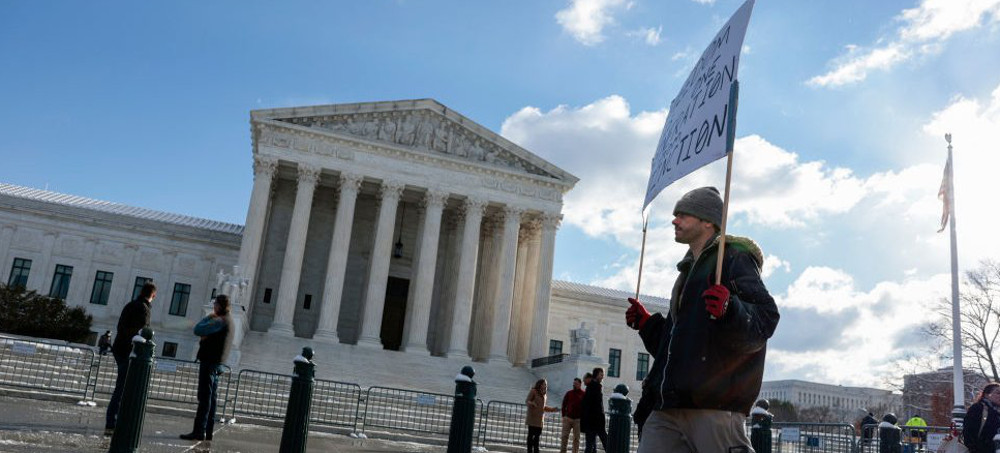
Supreme Court Expands State Power Over Native Land in OklahomaThe decision scales back a ruling from 2020 that said a large chunk of eastern Oklahoma remains a Native territory. (photo: Patrick Semansky/AP)

Supreme Court Expands State Power Over Native Land in Oklahoma
Al Jazeera
Excerpt: "The decision scales back a ruling from 2020 that said a large chunk of eastern Oklahoma remains a Native territory."

The state can prosecute non-Native Americans for crimes committed on tribal land when the victim is Native, the United States Supreme Court rules.

The US Supreme Court has ruled that Oklahoma can prosecute non-Native Americans for crimes committed on tribal land when the victim is Native American.

The five-to-four decision on Wednesday cut back on the high court’s ruling from 2020 that said a large chunk of eastern Oklahoma remains a Native territory.

The first decision left the state unable to prosecute Native Americans accused of crimes on tribal lands that include most of Tulsa, the state’s second-largest city with a population of about 413,000.

A state court later ruled that the Supreme Court decision also stripped the state of its ability to prosecute anyone for crimes committed on tribal land if either the victim or perpetrator is Native American.

That would have left the federal government with sole authority to prosecute such cases, and federal officials had acknowledged that they lack the resources to prosecute all the crimes that have fallen to them.

But the high court’s new ruling said the state also can step in when the victims are tribal members.

“The State’s interest in protecting crime victims includes both Indian and non-Indian victims,” conservative Justice Brett Kavanaugh wrote for the court.

Since the 2020 decision, about 43 percent of Oklahoma is now considered “Indian country”, and the issue of the state’s ability to prosecute those crimes “has suddenly assumed immense importance”, Kavanaugh wrote.

In a dissent joined by the court’s three liberal members, Justice Neil Gorsuch wrote that the decision “allows Oklahoma to intrude on a feature of tribal sovereignty recognized since the founding”.

The case highlighted the already strained relationship between Native tribes in Oklahoma and Republican Governor Kevin Stitt.

The case stemmed from a state court decision to throw out the conviction against Victor Castro-Huerta, who is not Native American. Castro-Huerta was charged by Oklahoma prosecutors with malnourishment of his disabled five-year-old stepdaughter, a member of the Eastern Band of Cherokee Indians.

Castro-Huerta has since pleaded guilty to a federal child neglect charge in exchange for a seven-year prison term, though he has not been formally sentenced yet.

The Supreme Court case involved the Muscogee reservation, but later rulings upheld the historic reservations of other Native American tribes in Oklahoma, including the Cherokee, Chickasaw, Choctaw, Quapaw and Seminole nations.

The Cherokee Nation is the country’s largest Native American tribe by population with about 400,000 citizens, about 261,000 of whom live in Oklahoma.

“The exercise of state jurisdiction here would not infringe on tribal self-government. In particular, a state prosecution of a crime committed by a non-Indian against an Indian would not deprive the tribe of any of its prosecutorial authority,” Kavanaugh wrote in the majority opinion.

“That is because, with exceptions not invoked here, Indian tribes lack criminal jurisdiction to prosecute crimes committed by non-Indians such as Castro-Huerta, even when non-Indians commit crimes against Indians in Indian country.”

Justice Neil Gorsuch, a conservative appointee of President Donald Trump who joined the court’s liberal minority in this case, delivered the dissent, accusing the majority of committing “astonishing errors” ignoring the rules established by Congress on tribal sovereignty.

“The real party in interest here isn’t Mr. Castro-Huerta but the Cherokee, a Tribe of 400,000 members with its own government,” Gorsuch wrote. “Yet the Cherokee have no voice as parties in these proceedings; they and other Tribes are relegated to the filing of amicus briefs.”


READ MORE


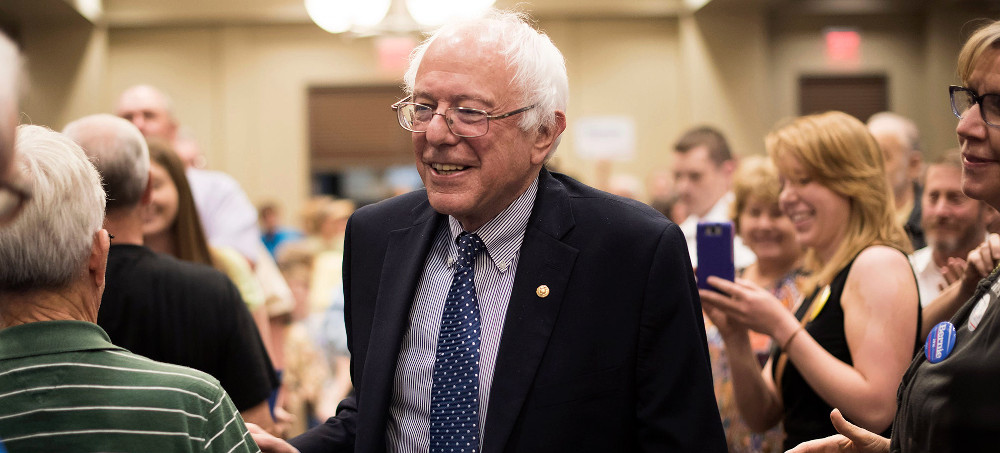
Sen. Bernie Sanders Calls on DOT to Start Fining Airlines for Disrupted FlightsSen. Bernie Sanders is calling for fines on airlines that are canceling and delaying flights. (photo: Getty)

Sen. Bernie Sanders Calls on DOT to Start Fining Airlines for Disrupted Flights
Denna Schwartz, NPR
Schwartz writes: "Frustrated with the state of air travel recently? You're not alone. Vermont Sen. Bernie Sanders called on Transportation Secretary Pete Buttigieg and the U.S. Department of Transportation to take action to reduce airline cancellations and delays, he said on Twitter Wednesday."

Frustrated with the state of air travel recently? You're not alone. Vermont Sen. Bernie Sanders called on Transportation Secretary Pete Buttigieg and the U.S. Department of Transportation to take action to reduce airline cancellations and delays, he said on Twitter Wednesday.

"All over this country, airline passengers are growing increasingly frustrated by the massive increase in flight delays, cancellations, and outrageously high prices they are forced to pay for tickets, checked bags and other fees," Sanders wrote in a letter to Buttigieg.

"Thousands of flight disruptions have left passengers and crew members stranded at crowded airports from one end of the country to the other forcing them to miss weddings, funerals, and business meetings and ruining family vacations that have been planned for months in advance."

With air travel demand surging, airlines have been struggling to keep up, due in part to a pilot shortage. When faced with problems such as inclement weather, many airlines have been forced to cancel flights entirely.

In his letter to Buttigieg, Sanders calls on the DOT to require airlines to refund passengers for flights delayed over an hour, impose fines on airlines for flights delayed over two hours, and impose fines on airlines for scheduling flights they are unable to properly staff.

"Taxpayers bailed out the airline industry during their time of need. Now, it is the responsibility of the airline industry and the Department of Transportation to ensure, to the maximum extent possible, that the flying public and crew members are able to get to their destinations on time and without delay," Sanders wrote.

Buttigieg himself has not been spared from travel woes — he told NPR in mid-June that he too had a flight canceled. In a June 16 meeting with airline executives, Buttigieg said he received assurances that airlines are taking extra steps to ensure smooth operations for the Fourth of July weekend, but was still concerned about disruptions.

READ MORE


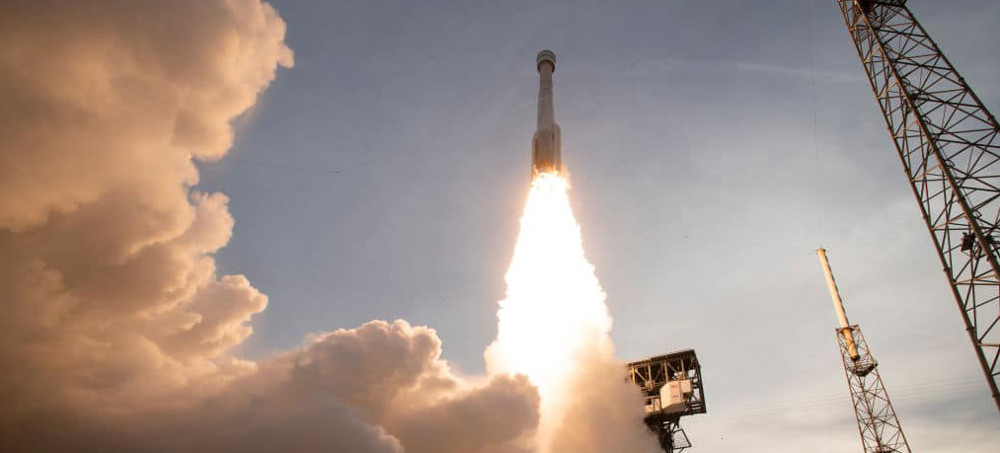
Space Tourism Has Potential to Cause Astronomical Climate Damage, Scientists FindA United Launch Alliance Atlas V rocket with Boeings CST-100 Starliner spacecraft launches from Space Launch Complex 41 on May 19, 2022, in Cape Canaveral, Florida. (photo: Joel Kowsky/NASA)

Space Tourism Has Potential to Cause Astronomical Climate Damage, Scientists Find
Cristen Hemingway Jaynes, EcoWatch
Jaynes writes: "Rockets used for space tourism could potentially have a much bigger effect on the global climate than the operation of traditional aircraft, researchers have found."

Rockets used for space tourism could potentially have a much bigger effect on the global climate than the operation of traditional aircraft, researchers have found.

Using a 3D atmospheric chemistry model, researchers from University College London (UCL), Massachusetts Institute of Technology and the University of Cambridge examined the stratospheric ozone and climate impact rocket launches and re-entry had in 2019, as well as the effects of predicted space tourism based on the contemporary billionaire space race, according to a UCL press release.

The findings of the research, “Impact of Rocket Launch and Space Debris Air Pollutant Emissions on Stratospheric Ozone and Global Climate,” were published in the journal Earth’s Future.

The research team found that when rockets introduce soot — which is made up of black carbon particles — straight into the upper atmosphere, their heat retention is 500 times greater than the total of all aircraft and surface soot sources, which leads to a much bigger effect on the climate, UCL said.

“Soot particles from rocket launches have a much larger climate effect than aircraft and other Earth-bound sources, so there doesn’t need to be as many rocket launches as international flights to have a similar impact,” said Associate Professor in Physical Geography at UCL Dr. Eloise Marais, who was co-author of the study, as reported by The Independent.

Currently, the total ozone loss from rockets is fairly minor, but projected space tourism growth shows the possibility that the upper stratospheric ozone layer could be further depleted in the spring in the Arctic, since spacecraft contaminants and the heating caused by rocket re-entry are especially damaging to the stratospheric ozone layer, the UCL press release said.

“Rocket launches are routinely compared to greenhouse gas and air pollutant emissions from the aircraft industry, which we demonstrate in our work is erroneous,” Marais said in the press release.

In order to calculate their findings, details on the chemicals from all 103 worldwide rocket launches in 2019 were gathered by the research team, as well as space junk and reusable rocket re-entry data. Expositions by Blue Origin, SpaceX and Virgin Galactic were also used, and the researchers created a future scenario of a robust space tourism industry.

The team found that after only three years of launches by space tourism rockets, the warming caused by the additional emissions was more than twice that of present-day rockets. This is because of the hybrid synthetic rubber fuels used by Virgin Galactic and kerosene used by SpaceX.

“These findings demonstrate an urgent need to develop environmental regulation to mitigate damage from this rapidly growing industry,” the researchers wrote.

The researchers also found that the effect on the stratospheric ozone layer of regular daily or weekly rocket launches associated with space tourism might jeopardize the recovery that resulted from the implementation of the Montreal Protocol — a 1987 ban on ozone-depleting substances, said the UCL press release.

“The only part of the atmosphere showing strong ozone recovery post-Montreal Protocol is the upper stratosphere, and that is exactly where the impact of rocket emissions will hit hardest. We weren’t expecting to see ozone changes of this magnitude,” said UCL Department of Geography Research Fellow Dr. Robert Ryan, who was co-author of the study, as the press release stated. “This study allows us to enter the new era of space tourism with our eyes wide open to the potential impacts. The conversation about regulating the environmental impact of the space launch industry needs to start now so we can minimise harm to the stratospheric ozone layer and climate.”


READ MORE


Contribute to RSN

Follow us on facebook and twitter!

Update My Monthly Donation

PO Box 2043 / Citrus Heights, CA 95611


Sunday, January 3, 2021

RSN: Deb Haaland on Climate, Native Rights and Biden: 'I'll Be Fierce for All of Us'


Reader Supported News
02 January 21

It's Live on the HomePage Now:
Reader Supported News


Deb Haaland on Climate, Native Rights and Biden: 'I'll Be Fierce for All of Us'
Rep. Deb Haaland, one of the first two Native American women elected to Congress, on the East Front of the Capitol on January 4, 2019. (photo: Tom Williams/CQ-Roll Call/Getty Images)
Nina Lakhani, Guardian UK
Lakhani writes: "Debra Haaland is making American history."

The 60-year-old congresswoman will be the first Native American cabinet secretary next month when she takes over at interior

ebra Haaland is making American history.

The 60-year-old congresswoman from New Mexico will next month become the first Native American cabinet secretary in US history, when she takes responsibility for the country’s land and natural resources as head of the Department of the Interior under Joe Biden.

Haaland is a member of the Laguna Pueblo, one of 574 sovereign tribal nations located across 35 states. According to the 2010 census, 5.2 million people or about 2% of the US population identifies as American Indian or Alaskan Native – descendants of those who survived US government policies to kill, remove or assimilate indigenous peoples.

Come January it will also be Haaland’s job to uphold the government’s legally binding obligations to the tribes – treaty obligations which have been systematically violated with devastating consequences for life expectancy, political participation and economic opportunities in Indian Country.

In an interview days before her nomination, Haaland told the Guardian that as secretary of the interior she would “move climate change priorities, tribal consultation and a green economic recovery forward”.

It’s a big job with high expectations after four years of racist rhetoric and destructive environmental rollbacks by the Trump administration, which showed contempt for the climate or environment by green-lighting planet-heating fossil fuel projects on public and tribal lands with little regard for culturally and ecologically important sites.

“I’ll be fierce for all of us, for our planet, and all of our protected land,” said Haaland in her acceptance speech. “This moment is profound when we consider the fact that a former secretary of the interior once proclaimed it his goal to, quote, ‘civilize or exterminate’ us. I’m a living testament to the failure of that horrific ideology.”

Indigenous communities in the US, and globally, are disproportionately vulnerable to the impact of the climate crisis such as rising sea levels and droughts, and environmental hazards resulting from polluting industries. As secretary of the interior, Haaland will play a key role in undoing Trump’s rollbacks and will also be a key lieutenant in Biden’s new climate team.

This is not the first time Haaland has made history. In 2018, she became one of the first two Native women in Congress, alongside Sharice Davids of Kansas. In January, a record-breaking six Native Americans – four Democrats and two Republicans – will be sworn in.

Representation and diversity matter, according to Haaland, because life experiences shape political decisions. “We don’t need people who all have the same perspective, we need people from various parts of the country, who’ve been raised in different ways, who bring that history and culture with them, and employ what we’ve learnt from their parents and grandparents, and bring all of that to bear in the decisions that we make,” she told the Guardian.

It’s been a rocky road for Haaland who like a disproportionate number of Native Americans has experienced homelessness and relied on food stamps. She is also the product of racist policies such as the forced removal of thousands of Native children from their families between 1860 and 1978. At the age of eight, Haaland’s grandmother was sent to a Catholic boarding school for five years a hundred miles from home.

“There are a lot of people in this country who suffered historical trauma from that era. I carry that history with me, I’m a product of the assimilation policy of the United States. I feel very strongly that having this perspective is super important for the issues we bring to Congress.”

Haaland was elected to the House of Representatives in 2018 after campaigning under the slogan: “Congress has never heard a voice like mine.” Since then, she has introduced legislation that would establish a truth commission on Native American boarding schools and spearheaded two laws to combat the epidemic of missing and murdered indigenous women – crimes increasingly linked to transient extractive industry workers living in so-called man camps near or on tribal lands.

“Indigenous women have been missing and murdered since Europeans came to this continent in the late 1400s. Violence against women is a priority of mine. It’s not going to be fixed with just two pieces of legislation, but now it’s time to dig deeper and keep working,” she said.

Haaland will be the most senior Native American in the US government since the Republican Charles Curtis, a member of the Kaw nation situated in what is now Kansas, who served as vice-president to Herbert Hoover between 1929 and 1933.

She will be part of a government facing unprecedented complex and interconnected challenges including an out-of-control pandemic, global economic recession, spiralling hunger and the climate emergency.

Haaland’s track record working across partisan lines may also prove vital for Biden’s success, at a time when the country – and lawmakers – are deeply divided.

She said: “I’ve gotten more Republicans to sign on to my bills than any other Democrat. It’s important for all of us – county commissioners, governors and mayors, not just Congress – to make sure we’re working together for the greater good. We want to pass laws that will help people across the country, and we need to make sure these messages are getting out … I’m going to continue to reach across the aisle, to protect our environment and make sure that vulnerable communities have a say in what our country is doing moving forward.”

The Department of the Interior’s 70,000 or so staff oversee one-fifth of all the land in the US and 1.7bn acres of coastlines, as well as managing national parks, wildlife refuges and natural resources such as gas, oil and water.

A shift in priorities at the interior department could have major implications for global heating as about one-quarter of all US carbon emissions come from fossil fuels extracted on public lands, according to the US Geological Survey.

Earlier this year, Haaland sponsored a bill that would set a national goal of protecting 30% of US lands and oceans by 2030 – a plan since adopted by the Biden administration as a priority for his environmental agenda.

“Environmental injustice and economic injustice have taken a hold of so many communities, and they’ve had enough. They want us to pay attention and help them to succeed … As far as Indian Country is concerned, I want to make sure tribal leaders – and all marginalized communities – have a seat at the table.”

In stark contrast to Trump, Haaland believes that Biden will consult Native Americans – as the government is legally obliged to do. “I am confident that this president will pay attention to Indian Country, that’s why I believe so many [Native Americans] came out to vote, and helped him win Arizona and Wisconsin.”

Restoring protections eroded by Trump for Bears Ears and Grand Staircase-Escalante – national monuments in southern Utah which are sacred to Native Americans, is a priority for Haaland.

November’s elections took place after a summer of unprecedented protests demanding racial justice sparked by the death of George Floyd, a black man in Minneapolis who was killed by a white police officer kneeling on his neck for almost nine minutes.

Progressive Democrats, including Haaland and the so-called Squad – made up of congresswomen Alexandria Ocasio-Cortez, Ilhan Omar, Ayanna Pressley and Rashida Tlaib - elevated demands by protesters for radical structural changes to eradicate racial inequalities in health, housing, immigration, education, jobs and the environment.

“So many Native Americans joined the Black Lives Matter protests because Indian Country recognised that we are allies in the fight for environmental justice, economic justice and racial justice … These communities on the frontline deserve to have the resources to be able to lift themselves up,” Haaland said.

READ MORE


A scientist works in the Moderna lab in Cambridge, Massachusetts, in February. (photo: David L. Ryan/Getty Images)


The New York Times Editorial Board | We Came All This Way to Let Vaccines Go Bad in the Freezer?
The New York Times Editorial Board
Excerpt: "It's been two weeks since U.S. officials launched what ought to be the largest vaccination campaign in the nation's history. So far, things are going poorly."

America did not sufficiently plan for how to get millions of people vaccinated.

How poorly? Untold numbers of vaccine doses will expire before they can be injected into American arms, while communities around the country are reporting more corpses than their mortuaries can handle.

Operation Warp Speed has failed to come anywhere close to its original goal of vaccinating 20 million people against the coronavirus by the end of 2020. Of the 14 million vaccine doses that have been produced and delivered to hospitals and health departments across the country, just an estimated three million people have been vaccinated. The rest of the lifesaving doses, presumably, remain stored in deep freezers — where several million of them could well expire before they can be put to use.

READ MORE


Vice President Mike Pence. (photo: Getty Images)


Judge Rejects Last-Minute Claim That Pence Can Ignore States' Presidential Electors
Matthew S. Schwartz and Barbara Campbell, NPR
Excerpt: "A federal judge has thrown out a lawsuit that challenges President-elect Joe Biden's victory, as Congress moves toward finalizing the results of the 2020 election."

The January certification of states' electoral votes, overseen by the vice president, is usually considered a formality. But a lawsuit filed last week by Rep. Louie Gohmert, R-Texas, sought to upend the process.

In some key battleground states, groups of Republicans have baselessly declared themselves to be "alternate electors," claiming to represent the true wishes of the voters. Gohmert and the other plaintiffs — including a group of self-proclaimed electors from Arizona — argued that when confronted with competing slates of electors, the Constitution gives Vice President Pence, as the Senate's presiding officer, the power to choose which electors to certify.

The legal challenge, which reflected the longstanding refusal of certain Republicans to acknowledge Biden's victory, was widely seen as a long shot. Now, Judge Jeremy Kernodle in Texas has ruled that the plaintiffs don't have standing to sue. He says they haven't met the requirement that they show they've been injured by the defendant, and that the relief they ask for would redress that injury.

In their suit, which named the vice president as the defendant, the Republican plaintiffs argued that a 19th century law spelling out how Congress should handle the count is unconstitutional, because it directs Pence to tally the electoral votes as they've been reported by the states.

These Republicans argued that the 12th Amendment gives Pence, not the states, sole discretion to determine which among competing slates of electors may be counted.

Gohmert "alleges at most an institutional injury to the House of Representatives," the judge wrote in dismising the case. The other plaintiffs — the wannabe Arizona electors — "allege an injury that is not fairly traceable to" Pence, he said.

In a court filing, Pence himself had told the judge that he was the wrong person to sue. The Republicans' beef wasn't with the vice president, he said, but with Congress.

"Plaintiffs object to the Senate and the House of Representatives asserting a role for themselves in determining which electoral votes may be counted — a role that these plaintiffs assert is constitutionally vested in the Vice President," Pence's attorneys wrote Thursday. "Indeed, as a matter of logic, it is those bodies against whom plaintiffs' requested relief must run."

House lawyers also asked for the suit to be dismissed, calling it a "radical departure from our constitutional procedures" and saying the proposed remedy would "authorize the Vice President to ignore the will of the Nation's voters."

Gohmert's crew pushed back Friday, criticizing the vice president for hiding behind procedural arguments, instead of dealing with the meat of the issue. Pence can conduct the Jan. 6 proceeding as he pleases, they argue, ignoring electors if he sees fit; he's not simply a "glorified envelope-opener in chief," they wrote.

Election law experts rejected this position. "The Gohmert reply is breathtaking & preposterous," Ned Foley, director of the election law program at the Ohio State University, said on Twitter. "The Constitution never intended this monarchical power to disenfranchise Electoral College votes based on personal whim."

Gohmert wrote that because of "convincing evidence of voter fraud," he and 140 Republicans in the House plan to object to the counting of electors that states certified for Biden. Sen. Josh Hawley, R-Mo., has also said he will object.

But the objections are virtually guaranteed to fail, since they require a majority in both chambers.

Every court to examine the issue has found there was no compelling evidence of fraud in the presidential election.

READ MORE


An Iraqi woman walks by a burned out car at the site where Blackwater guards opened fire on Iraqi civilians in 2007. (photo: Getty Images)


Lead FBI Investigator in Blackwater Case Likens Iraq Massacre to My Lai
Martin Pengelly, Guardian UK
Pengelly writes: "The mass shooting in Baghdad for which Donald Trump pardoned four American mercenaries was 'a massacre along the lines of My Lai in Vietnam,' the lead FBI investigator in the case said, pronouncing himself 'disgusted with the president's actions.'"

John M Patarini says in letter to New York Times he is ‘disgusted with the president’s actions’ after Trump pardons

Nicholas Slatten was convicted of first-degree murder and Paul Slough, Evan Liberty and Dustin Heard were convicted of voluntary and attempted manslaughter over the 2007 shooting, which happened in heavy traffic in Nisour Square.

Fourteen unarmed Iraqi civilians, among them a nine-year-old child, were killed when the mercenaries opened fire with weapons including machine guns and grenade launchers.

The four men worked for the private security firm Blackwater, owned by Erik Prince, brother of Trump’s education secretary, Betsy DeVos. They were included in a wave of pre-Christmas pardons announced by the White House.

In a letter to the New York Times published on Friday, John M Patarini said: “I was the FBI case agent who led the investigation of the Blackwater massacre in Baghdad.

“We originally went to Iraq thinking this shooting was some form of innocent civilians caught in the crossfire between Blackwater guards and insurgents. After only one week, we determined that this incident was not as presented by Blackwater personnel and their state department lackeys, but it was a massacre along the lines of My Lai in Vietnam.”

The My Lai massacre took place on 16 March 1968. As many as 504 children, women and older men were killed by a US infantry company, members of which also raped numerous women and girls. Only William Calley, a lieutenant, was convicted of any crime. Sentenced to life, he served three days in prison before Richard Nixon ordered his sentence reduced.

In 2009, Calley said he felt “remorse for the Vietnamese who were killed, for their families, for the American soldiers involved and their families. I am very sorry.”

Trump, who will leave office on 20 January, has issued pardons or acts of clemency in cases in which US troops were accused or convicted of war crimes. Presidential pardons do not mean or imply innocence.

Patarini wrote that he “only recently became aware of the concerted effort for the pardons” of the four mercenaries who perpetrated the Nisour Square massacre, “which I understand started with a political push by members of Congress.

“President Trump should have had staff members review the trial evidence that led to the convictions and read the judges’ opinions and sentencing statements. God forbid they might have actually picked up the phone and called the investigators who built the case. I’m so disgusted with the president’s actions!”

After Trump issued the pardons, a lawyer for one of the mercenaries said: “Paul Slough and his colleagues didn’t deserve to spend one minute in prison. I am overwhelmed with emotion at this fantastic news.”

In an interview with the Associated Press (AP), published on Saturday, Liberty said he had been reading in his cell when a prison supervisor delivered the news.

“He says: ‘Are you ready for this?’” I said: ‘Uh, I’m not sure. What is going on?’ He said: ‘Presidential pardon. Pack your stuff.’”

Of his actions in Nisour Square, Liberty said: “I feel like I acted correctly. I regret any innocent loss of life, but I’m just confident in how I acted and I can basically feel peace with that.”

He also said he “didn’t shoot at anybody that wasn’t shooting at me” and said he and his fellow mercenaries would “never take an innocent life. We responded to a threat accordingly.”

That was not the finding of Patarini’s FBI investigation or the court in which the men were convicted. Internationally, Trump’s pardons have met with widespread condemnation. This week, the United Nations working group on the use of mercenaries called them “an affront to justice and to the victims of the Nisour Square massacre and their families”.

Patarini wrote that he had “spent many hours with the innocent Iraqi victims who are permanently maimed and crippled because of the actions of these Blackwater guards, and the heartbroken family members of those killed.

“I am embarrassed for our country. I believe we will pay a heavy price in our relationships with other countries as a result of these pardons.”

Liberty told the AP he was grateful to his supporters and to Trump for what he called a “second chance at life”, and said he felt “like it’s my duty to go out and do something positive and live a good life because they gave me a second chance”.

After the pardons were announced, Adil al-Khazali, an Iraqi citizen whose father, Ali, was killed in Nisour Square, told the Guardian: “Justice doesn’t exist.

“I ask the American people to stand with us. I lost my father and many innocent women and children also died. I ask the US government to reconsider, because by this decision US courts are losing their reputation. Trump has no right to pardon killers of innocent people.”

READ MORE


A nuclear test in French Polynesia. (photo: UN)


UN Treaty Banning Nuclear Weapons Set to Enter Into Force in January
UN News
Excerpt: "The UN Secretary-General António Guterres in a statement commended all the countries whose ratification of the accord, approved by 122 nations at the General Assembly in 2017, who have helped bring the ban on weapons this far, singling out the work of civil society groups."

n what leading campaigners are describing as “a new chapter for nuclear disarmament”, the ratification of the Treaty on the Prohibition of Nuclear Weapons will now come into force on 22 January, after Honduras became the 50th Member State to ratify on Saturday.

The UN Secretary-General António Guterres in a statement commended all the countries whose ratification of the accord, approved by 122 nations at the General Assembly in 2017, who have helped bring the ban on weapons this far, singling out the work of civil society groups.

Chief among those, the International Campaign to Abolish Nuclear Weapons (ICAN), which was awarded the Nobel Peace Prize in 2017, declared through Executive Director Beatrice Fihn that the coming into force was “a new chapter for nuclear disarmament. Decades of activism have achieved what many said was impossible: nuclear weapons are banned.”

One survivor of the atomic bombing at Hiroshima, Setsuko Thurlow, told ICAN that she had committed her whole life to abolition: “I have nothing but gratitude for all who have worked for the success of our treaty”, she said.

Saturday’s milestone was reached a day after the island nations of Jamaica and Nauru submitted their ratifications meaning that in 90 days, the treaty will become active, banning nuclear weapons just over 75 after they were first used at the end of World War Two.

Tribute to survivors

“Entry into force is a tribute to the survivors of nuclear explosions and tests, many of whom advocated for this Treaty”, said the UN chief in his statement.

Mr. Guterres described the entry into force, as “the culmination of a worldwide movement to draw attention to the catastrophic humanitarian consequences of any use of nuclear weapons.

“It represents a meaningful commitment towards the total elimination of nuclear weapons, which remains the highest disarmament priority of the United Nations.”

Mr. Guterres said he was looking forward to doing his part in facilitating the treaty’s progress towards total elimination.

So far, the main nuclear powers of the United States, the United Kingdom, Russia, China and France, have not signed the accord.

The treaty declares that the countries ratifying it must “never under any circumstance develop, test, produce, manufacture or otherwise acquire, possess or stockpile nuclear weapons or other nuclear explosive devices.”

Adopted on 7 July 2017 at a UN conference in New York, the Treaty represented the first multilateral legally binding instrument for nuclear disarmament in two decades.

Vindication for a new generation

Speaking to journalists at UN Headquarters in early October after being announced winners of the Nobel Peace Prize, ICAN chief Ms. Fihn said that a “new generation” of campaigners had come of age, “people who grew up after the Cold War and don’t understand why we still have the (nuclear) weapons.”

In its statement released on Sunday, ICAN - an umbrella organization and campaign for dozens of groups across the world - said that the coming into force, was “just the beginning. Once the treaty is in force, all States’ parties will need to implement all of their positive obligations under the treaty and abide by its prohibitions.

“States that haven’t joined the treat will feel its power too – we can expect companies to stop producing nuclear weapons and financial institutions to stop investing in nuclear weapon-producing companies.”

READ MORE


Najee Harris leaps over Nick McCloud in Arlington, Texas, on 1 January. (photo: Carmen Mandato/Getty Images)


Megan Rapinoe Celebrates Najee Harris' Hurdle Over Notre Dame Defender
Martin Pengelly, Guardian UK
Pengelly writes: "The US women's soccer star Megan Rapinoe was among those celebrating Alabama's College Football Playoff victory over Notre Dame on Friday night, after running back Najee Harris appeared to answer her request to 'hurdle someone for me.'"

Harris leapt over defender in first quarter after Rapinoe asked him earlier this week to perform athletic manoeuvre


Harris leapt spectacularly over a defender during a 53-yard gain in the first quarter of a 31-14 victory for the Crimson Tide, prompting 2019 Ballon d’Or winner Rapinoe to say on Instagram: “You really did it!! It was for me right?!”

Earlier this week, Rapinoe responded to a public declaration of admiration from the 22-year-old by asking him to perform the athletic manoeuvre. Harris has also mimicked Rapinoe’s famous goal celebration, standing with arms outstretched, after scoring touchdowns.

Speaking to reporters before the Notre Dame game, he said he admired Rapinoe, 35 and an outspoken advocate on social justice issues, for “really all the stuff she stands up for”.

“She’s a feminist,” Harris said, “and how the females, how women in the world get treated unfairly and how they get paid different and different stuff than men.”

Rapinoe has been a leading voice in the world champion US women’s team’s attempt to achieve pay equality with a men’s team they have vastly outperformed. Among other causes she has also expressed support for protests against racism and police brutality and defended teams choosing to kneel for the US anthem, a stance which ranged her directly against Donald Trump.

“She stands up for all that,” Harris said. “I like how she does that. And obviously the social injustice that happens, she plays a part in all that.

“And for her to be a woman and saying all that stuff, and it could be scary for her, for being a woman in what they will say is a man’s world, and her just playing a part, standing up, not listening to all the naysayers out there and really just standing up for what she believes in, it’s motivating. And it’s inspirational.

“Me as a male, I guess you could say, like, maybe not too many males will say they look up to a woman nowadays. But I really look up to her, just for what she does outside of sports. And I guess I had to give her a shoutout and stuff.”

Harris also said he appreciated Rapinoe because “she’s from California, first of all, and she listens to Nipsey Hussle, one of my favourite rappers, too. She gave a shout-out to him.”

Harris and Alabama will next face Ohio State, victors over Clemson on Friday, in the national championship game.

READ MORE


Native American protesters at the Black Hills, now the site of Mount Rushmore. (photo: Micah Garen/Getty Images)


The Battle for the Black Hills
Nick Estes, High Country News
Estes writes: "From a distance, the green pines and the blue-gray haze that gently hug the valleys of the Black Hills merge into a deep black."

Nick Tilsen was arrested for protesting President Trump at Mount Rushmore. Now, his legal troubles are part of a legacy.

 The Lakota name “He Sapa” — meaning “black ridge” — describes this visual phenomenon. This is a place of origin for dozens of Native peoples and a revered landscape for more than 50 others. The land’s most recent, and perhaps longest-serving, stewards — the Oceti Sakowin, the Dakota, Nakota and Lakota people — hold the mountains central to their cosmos.

The Black Hills are also central to the political territory drawn by the 1851 and 1868 Fort Laramie treaties. And they continue to be a crucial part of the strategic position that sustained Native resistance to white encroachment. They have become an international symbol of the call to return stolen land to Indigenous people. That’s why President Donald Trump chose to hold his July 3 rally at Mount Rushmore, said Nick Tilsen, who is Oglala Lakota. The faces of U.S. Presidents George Washington, Thomas Jefferson, Theodore Roosevelt and Abraham Lincoln are carved into the side of the granite mountain that is the heart of the Lakota universe.

Tilsen is the president and CEO of NDN Collective, a Native-run nonprofit based in Rapid City, South Dakota, which launched a campaign on Indigenous Peoples’ Day in 2020 to return He Sapa to Native people. Many Lakota people, like Tilsen, view the national monument, which attracts 2 million visitors a year, as a desecration of a spiritual landscape. “What South Dakota and the National Park Service call ‘a shrine to democracy’ is actually an international symbol of white supremacy,” Tilsen said. He was among 20 arrested for protesting Trump’s visit. If convicted, he faces up to 16½ years in prison for four felonies and three misdemeanors.

According to Tilsen, the protesters had negotiated the blockade with the Pennington County Sheriff’s Office and the South Dakota Highway Patrol. The activists blocked the road, using three disabled vans to bar the way. “It was to hold space and connect our issue to the world,” Tilsen explained. Tilsen and others worked throughout the day to keep the protests organized, even speaking directly with park authorities to ensure that elderly activists and children were allowed to move away before any arrests were made. Soon, deputies announced that the assembly was unlawful, and the Air National Guard moved in, dressed in riot gear, pushing the protesters back and firing pepper balls at the retreating crowd.

“A lot of the protectors had coup sticks, eagle feathers, and (sage) smudge sticks — and everything that you could think of that was sacred to us,” Laura Ten Fingers, one of the young Lakotas who helped organize the protest, recalled. A group of Trump supporters stood behind the police line, she said, shouting at the crowd “to go back to where you come from.” “It was really heartbreaking to hear them to say, ‘Go back,’” she said. “He Sapa was our home, and we came from there.”

During the confrontation, Tilsen took a National Guard riot shield. He was arrested and charged with felony theft and robbery. When the shield was returned, the word “POLICE” had been spray-painted over and replaced by the slogan “LAND BACK.” That slogan put the Black Hills at the center of a movement whose unequivocal demands are rooted in a long, hard-fought history.

“I DON’T WANT TO BE the next Leonard Peltier,” Tilsen told me, referring to the legendary American Indian Movement activist, who has been imprisoned since 1977 for the murder of two FBI agents. (Peltier has always maintained his innocence.) Tilsen believes the police are trying “to coin me as a radical fringe activist.” He’s a father of four whose organization is currently running a nationwide emergency COVID-19 relief effort for Native communities. “I was a speaker at the Chamber of Commerce a year and a half ago. NDN Collective is on Main Street in Rapid City,” he said. Still, Tilsen would never deny his connection to Leonard Peltier or the American Indian Movement. It is, after all, deep in his family history.

His Jewish grandfather, Kenneth Tilsen, was a prominent civil rights attorney, who with his wife, Rachel (daughter of the celebrated socialist writer Meridel Le Sueur) defended draft resisters during the Vietnam War. Later, the couple helped form the Wounded Knee Defense/Offense Committee for the American Indian Movement (AIM) leadership trials. Tilsen’s Lakota mother, Joann Tall, worked with her uncle, Pedro Bissonette, and the Oglala Sioux Civil Rights Organization, a group led by Lakota elders who had asked AIM for armed protection against a repressive tribal government in Pine Ridge in 1973. Tilsen’s parents met during the siege, when federal officers fired more than 200,000 rounds of ammunition at Native protesters — killing two, including Bissonette — at the very site where the 7th Cavalry, George Armstrong Custer’s former regiment, massacred hundreds of Lakota Ghost Dancers in 1890. All that happened just down the road from Tilsen’s home.

Raised in Minneapolis, Minnesota, the birthplace of AIM, Tilsen spent his summers in Pine Ridge, where he was born, immersed in the movement. He returned to the reservation at 19 to live and work. “The Black Hills issue is part of my identity,” he said.

In Lakota Country — where the shadows of history linger, on the land and in one’s family tree — a new generation is continuing the fight. The loss of the Black Hills has come to represent all the injustices Lakota people have suffered. “It’s not just about physical land back,” Tilsen said. “It’s also about undoing what was done to us as a people.” Also down the road from Tilsen’s home, just outside of Porcupine on the Pine Ridge Indian Reservation, is KILI, “the voice of the Lakota Nation” — the radio station his parents helped jumpstart in the 1990s. A tribal radio station was among the original demands behind the 71-day armed takeover of Wounded Knee; activists hoped that publicly broadcasting council meetings would end tribal government corruption.

Land theft brought material deprivation. The Lakota and Dakota people inhabit several of the poorest counties in the United States. Tilsen’s home, Oglala Lakota County, is one of them. “As Indigenous people, we have the lowest economic conditions of anyone in America,” he said. Native American children in South Dakota have the lowest rates of economic mobility in the nation, according to a 2017 Annie E. Casey Foundation report.

“A more ripe and rank case of dishonorable dealings will never, in all probability, be found in our history.” That is how a 1980 U.S. Supreme Court opinion described the theft of the Black Hills from the “Sioux Nation of Indians.” The court awarded the tribe $102 million; today, with the accumulated interest, it comes to nearly $2 billion. But the Lakota position remains unwavering, as shown by the popular slogan, “The Black Hills are not for sale!” The relationship with He Sapa cannot be translated into money. The land itself, the tribes said, must be returned.

BEFORE JACKHAMMERS AND DYNAMITE chiseled the heads of presidents into the cliff faces, miners cut deep into the Black Hills, in search of a subterranean El Dorado.

Custer, a Civil War veteran turned Indian fighter, discovered gold in 1874 near the town that now bears his name. In a treaty signed at Fort Laramie just six years earlier, the United States had pledged that a reservation — a 35 million-acre “permanent home” encompassing the entirety of what is currently the half of South Dakota west of the Missouri River — would be “set apart for the absolute and undisturbed use and occupation” of the Sioux Nation. A bloody war erupted over Custer’s trespass into treaty territory, a sin for which he and 250 of his men paid with their lives. By the time the dust settled, the place was booming.

In 1877, under the administration of President Ulysses S. Grant, the former Union general, the 1868 treaty was abrogated. The Black Hills were seized, the people threatened with starvation. Prospectors hoping to strike paydirt moved in, and frontier towns like Deadwood — notorious for their trade in women, gambling and violence — sprang up, forming the bulwark of white settlement. For 125 years, miners attacked the earth, drawing 10 percent of the world’s gold supply from its ore-rich veins.

The rise of automobiles and the tourist industry created new fortunes for the interlopers. In the 1920s, South Dakota’s first state historian, Doane Robinson, proposed building a massive sculpture to attract visitors to the remote location. But finding an artist willing to undertake such a feat wasn’t easy. Robinson had been moved by the recently constructed memorial at Stone Mountain in Georgia, which honored the defenders of the Civil War’s inglorious “Lost Cause.” He contacted its flamboyant sculptor, Gutzon Borglum, who quickly accepted the offer.

Mount Rushmore came to South Dakota by way of a Southern, white supremacist ideology that blended easily with the West’s sense of Manifest Destiny. Borglum himself was a bridge: The child of a polygamist Mormon family of Danish settlers in Idaho, he made a name for himself as an artist in service of the Ku Klux Klan. On Thanksgiving Day 1915, the so-called “Invisible Empire” was reborn in a torchlight ceremony atop Stone Mountain. The site is still sacred to the Klan and Confederate sympathizers. The next year, the Daughters of the Confederacy drafted a plan to commemorate the occasion with a memorial. By 1923, Borglum was a trusted Klan insider who served on the Kloncilium, the highest decision-making body, second only to the Grand Wizard. He was a natural candidate for the Stone Mountain job.

The Klan hardened Borglum’s strident xenophobia and belief in European — meaning Nordic — racial superiority. But Stone Mountain was too geopolitically specific — too distinctly Southern — to capture his grand nationalist vision. He saw the Black Hills as ideal, “so near the center of our country or so suitable for (a) colossal sculpture.” His monument would “symbolize the principles of liberty and freedom on which the nation was founded,” he later wrote.

More fundamentally, it would assert white possession, not just over the Black Hills but over the entire continent. The ancient granite hills would bear both gold and glory for the United States with the busts of four of its presidents. In a letter to Robinson, Borglum warned that if his masterpiece wasn’t constructed properly, “we will only wound the mountain, offend the Gods, and deserve condemnation for posterity.” In 1936, an awestruck Franklin Delano Roosevelt echoed Borglum as he gazed up at the nearly completed shrine. Its size, its “permanent beauty” and “permanent importance” meant that “ten thousand years from now” Americans would meditate in reverence here. Almost a century later, Trump proclaimed, “Mount Rushmore will stand forever as an eternal tribute to our forefathers and to our freedom.” The crowd chanted, “USA! USA! USA!”

LAKOTA PEOPLE HAVE OCCUPIED the Black Hills for generations. In 1970, at the height of the Red Power movement, John (Fire) Lame Deer, a Lakota holy man, climbed the monument and sat on Teddy Roosevelt’s head, “giving him a headache, maybe.” Native students and activists had taken over Alcatraz Island in the San Francisco Bay a year earlier. Lame Deer was at a protest camp on top of the monument, with a banner that read “Red Power — Indian Land.”

Frustrated by getting no response from the federal government, Lizzy Fast Horse, a Lakota grandmother and one of the camp’s founders, and some accomplices decided to take back the Black Hills themselves. Fast Horse was among those calling for the United States to return 200,000 acres of Oglala Lakota land that had been confiscated during World War II for a gunnery and bombing range. She and two other Lakota women hid from park rangers and police, braving lightning storms as they made their way up the mountain. “We got braver and braver, and now we’re not afraid of anyone,” Fast Horse said at the time. Lee Brightman, the Lakota founder of United Native Americans, explained the camp’s goals: “We want payment for the Black Hills, for all the minerals mined, for the timber taken out. And we want our sacred mountains back.”

Those demands go far back, according to Charmaine White Face, the first Oglala woman spokesperson for the Sioux Nation Treaty Council. “It was illegal to talk about the (1868) treaty” when the treaty council formed in 1894, “just like the language was prohibited, just like our religion was prohibited by the American government.” But times have changed: White Face believes that her grandmother’s treaty knowledge, which survived government suppression, can be useful for the “land back” campaign.

This history is why Nick Tilsen loves the slogan. “You have elders saying ‘land back,’ ” he chuckles. “You want your land back? Hell yeah, I want my land back. I’ve been wanting my land back.” No one owns the phrase, he said; it “has lived in the spirit of the people for a long time.”

“Not only has this been a long generational battle, it is also part of this current moment,” said Krystal Two Bulls. The Northern Cheyenne and Oglala Lakota military veteran heads NDN Collective’s LandBack campaign, which was launched last Indigenous Peoples’ Day with the goal of returning public lands in the Black Hills to the Oceti Sakowin, starting with Mount Rushmore. “Public land is the first manageable bite,” she said, “then we’re coming for everything else.” This would usher an era of free and prior informed consent; tribes would form meaningful partnerships to promote land stewardship and equitable housing, and address more than a century of wrongdoings.

In the Black Hills, the idea has traction. In 1987, New Jersey Sen. Bill Bradley, a former New York Knicks basketball player, introduced legislation drafted by Lakota people to return 1.3 million acres, targeting Park Service land, not private land. The bill died in committee.

Two Bulls sees land return as a moral issue more than a legal one. It’s not about ownership, she said, but stewardship. “As a Northern Cheyenne woman, part of my original instructions is to be in relationship with the land as a steward.”

To Laura Ten Fingers, the idea of ownership doesn’t entirely mesh with Lakota relations with the land. “To me, ‘land back’ means that — it’s not that we own the land,” she said. “The land owns you. It’s a way of ensuring it’s protected and preserved by the people who originally took care of it, which is us.”

FROM HER HOME IN OGLALA on the Pine Ridge Reservation, Ten Fingers watched the George Floyd protests erupt in Minneapolis and spread across the nation. “The momentum of the Black Lives Matter movement also created (a space) for Indigenous sovereignty,” she said. Inspired, she and her friends put out the first call to protest Trump’s visit.

Trump’s visit to Mount Rushmore — like his rally the day after Juneteenth in Tulsa, Oklahoma, the site of an infamous race massacre in 1921 — was part of a series of raucous campaign rallies aimed at firing up his base and provoking his political opponents.

“Our nation is witnessing a merciless campaign to wipe out our history, defame our heroes, erase our values, and indoctrinate our children,” Trump warned the crowd at the base of Mount Rushmore, the day before Independence Day last year. He blamed “cancel culture” — which he called “the very definition of totalitarianism” — for the recent toppling of Confederate statues and monuments and other controversial historical figures. A week earlier, he signed an executive order that condemned the destruction as the actions of “rioters, arsonists, and left-wing extremists,” calling for the arrest of vandals who destroyed federal property and their imprisonment for up to 10 years.

“Do you know, it’s my dream to have my face on Mount Rushmore,” Trump told South Dakota Republican Gov. Kristi Noem when they first met in the Oval Office. “He was totally serious,” Noem, who invited Trump to Mount Rushmore, told the Sioux Falls Argus Leader in 2018.

Trump’s arrival only inflamed the long-standing tensions between tribes and the state of South Dakota. Lakota leaders saw his visit as retaliation for their opposition to the Keystone XL pipeline and to the state’s lack of response to the coronavirus pandemic. That May, Noem had threatened “legal action” against the tribal health checkpoints set up to curtail the spread of the virus, claiming they interfered with traffic. “We will not apologize for being an island of safety in a sea of uncertainty and death,” Harold Frazier, chairman of the Cheyenne River Sioux Tribe, wrote to Noem in reply. Her state has some of the nation’s highest rates of infection and death. South Dakota backed down.

The Cheyenne River, Rosebud and Oglala Sioux tribal chairmen all wrote letters protesting Trump’s visit, citing public health concerns and the continued indifference toward Lakota treaty rights. In separate statements, Frazier and Julian Running Bear, the president of the Oglala Sioux Tribe, demanded the return of the Black Hills. They also called for the removal of Mount Rushmore itself, which Frazier described as a “brand on our flesh (that) needs to be removed,” adding, “I am willing to do it free of charge to the United States, by myself if I must.”

But history moves on. In November, Trump lost his bid for re-election; the Rapid City Council voted to return 1,200 acres in the Black Hills to the Oceti Sakowin; and in Rapid City, Lakota activists set up Camp Mni Luzahan to house Native people living on the streets so that they don’t die of exposure during the harsh winter months.

But the pipeline protests have also sharpened disputes between tribes and the state. South Dakota lawmakers feared another massive protest like Standing Rock in 2016. So the Legislature criminalized pipeline-related protests ahead of the construction of the Keystone XL pipeline. Noem introduced a controversial “riot boosting” law, which would have created civil and criminal penalties for individuals who supported any “incitement to riot,” claiming it was necessary to address problems caused by “out-of-state rioters funded by out-of-state interests.”

This was the battle Tilsen found himself in. He testified against the law at the state Capitol and was a named plaintiff in the ACLU lawsuit that successfully challenged its constitutionality. “We helped water down the current riot boosting law, to make it as weak as possible,” Tilsen explained. He saw it as a win for free speech and treaty rights, as well as the right to legally protest Keystone XL. “It’s a reminder,” Tilsen said, “as Indigenous people, we’re fighting for justice not just for ourselves but also on behalf of millions of Americans.” In March 2020, Noem signed a revised version of the law.

IT WAS AT MOUNT RUSHMORE in the early 1870s that Black Elk, the Oglala holy man, had a vision of He Sapa: “From the mountains flashed all colors upwards to the heavens.” He was at the center of the world atop Tunkasila Sakpe, the Six Grandfathers. The mountain would be named for Black Elk’s vision that day. He saw a great hoop made up of many hoops of a people united. In the center grew a flowering tree, he recalled, “and I saw that it was holy.”

In August, a magistrate judge ruled that there was evidence for the trial to move forward. Tilsen hopes his case and the LandBack campaign will have a similar catalyzing effect, not only for the land-return movement but for the restored dignity of his people. “It was powerful,” Tilsen said, remembering that day. “There was between 100 and 200 of us. It must have felt like there were thousands of us, because you could feel that spiritual power from the hills. The ancestors were waiting for us to go up there.”

READ MORE


Contribute to RSN

Update My Monthly Donation


The Bushes Just Picked A Side In Texas. It Wasn’t Trump’s. Plus A Reporter Says Foreign Spies Watched Jared Kushne…

                                                                                   LOTS OF POSTS IGNORED BY BLOGGER..... OR REMOVED ON THEIR...