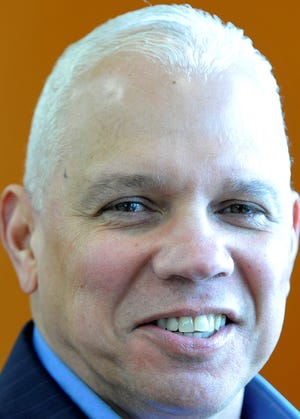
"I think we are all disappointed in Cedric," a message from current chairman Brian Weeden stated on the tribe's website. "We're disappointed that he abused the trust we placed in him as an elected official of our Tribal Nation. We're disappointed that he represents an unfortunate chapter in our history and that it has detracted from the great work we are doing socially, culturally, and politically to support our people. For our tribal leaders today, we will look forward and focus on healing our nation with the case behind us."
The jury found Cromwell guilty of accepting three bribes from DeQuattro in exchange for protecting the firm's contract for the casino project including $10,000 in November 2015, a Bowflex Revolution home gym in August 2016 and a weekend stay at an upscale Boston Seaport hotel in May 2017.
The jury also found him guilty on charges of extortion under color of an official and conspiracy to commit extortion.
DeQuattro was found guilty of bribing Cromwell with the home gym and the weekend hotel stay.
More:'This news is so welcome': Mashpee Wampanoag Tribe can retain reservation land
The jury acquitted both defendants of one count of conspiracy to commit federal programs bribery, according to the U.S. Attorney's office press release. DeQuattro was also found not guilty on one count of bribery concerning programs receiving federal funds and Cromwell was found not guilty on one count of extortion.
Cromwell faces four remaining charges of not reporting an income totaling nearly $176,193 to the IRS over three years, which will be addressed later, according to the press release.
During the trial, text messages between Cromwell and DeQuattro were placed into evidence, according to the press release.
"In May 2017, Cromwell texted DeQuattro: 'Hello Dave. I hope all is well. My Birthday is coming up this Friday May 19th and I wanted to spend Friday through Monday at a very nice hotel in Boston for my Birthday weekend. Is it possible that you can get me a nice hotel room at the Four Seasons or a suite at the Seaport Hotel? I am going to have a special guest with me. Please let me know and Thank You,'” the press release says.
"DeQuattro forwarded the text to his business partner, writing, 'U can’t think of this stuff…..what is next?'" according to the press release.
DeQuattro and his business partner paid over $1,800 for Cromwell to stay in an Executive Suite King – Harbor View at the Seaport Boston Hotel for three nights, according to the release.
Cromwell asked DeQuattro for exercise equipment in August 2016. DeQuattro and his partner purchased a used Bowflex on Craigslist for $1,700 and had it delivered to Cromwell's home, according to the release.
Cromwell's tenure as chairman of the Mashpee Wampanoag Tribal Council
Cromwell was elected chairman of the tribal council in 2009. He ran on a platform of restoring transparency and integrity to the Mashpee Wampanoag Tribe after former Chairman Glenn Marshall resigned in 2007 amid rumors of an embellished military career, a rape conviction and financial fraud.
In 2009, Marshall was sentenced to 3½ years in federal prison after pleading guilty to charges of embezzlement, illegal campaign contributions, false tax returns and fraudulently receiving Social Security benefits while holding a full-time job.
In court documents, Marshall admitted to funneling $4 million given to the tribe from Detroit-based casino investor Herb Strather into an account to pay for illegal campaign contributions and personal expenses.
Many thought Cromwell's election was a chance for the tribe to turn over a new leaf.
"We are starting over again in a sense. We've had a chance to see what can happen. Now it's time to really involve the rest of the tribe in what's going on and give them a voice," tribe member Jim Peters told the Cape Cod Times in 2009.
Despite Cromwell's goals of transparency and integrity, his time as chairman from 2009 until his removal in 2020 was plagued with financial and conduct concerns from tribal members, particularly concerning the plans for a casino.
After his election, Cromwell immediately began working on securing approval for the tribe's casino plans, which had been sidelined by Marshall's resignation and financial mishandlings.
That same year, however, tribe members pushed for more financial transparency from Cromwell, asserting that financial reports given to members at monthly meetings stopped when Cromwell took over as chairman.
By Nov. 2011, Gov. Deval Patrick signed a deal that would license three resort casinos and one slot parlor in Massachusetts.
In 2012, the tribe announced their plans to build a casino in Taunton, and by July of that year a tribal-state contract was signed that gave the tribe a Massachusetts seal of approval on their casino plans.
While awaiting federal approval and considering financing options, in January of 2013 nine tribal members filed a suit in U.S. District Court asking the Bureau of Indian Affairs to investigate the 2009 election that swept Cromwell into office.
They alleged that a tribal judge unlawfully allowed four shunned members to go back on voting the rolls and that improprieties during the election led to some voters failing to produce tribal identification.
After Cromwell was re-elected in Feb. 2013, Richard Oakley, challenged the results in tribal court, but they were upheld.
A federal judge dismissed the proposed investigation into the 2009 election in April 2014.
In Oct. 2014, tribal members Carelton Hendricks Jr. and Laura Etta Miranda expressed concerns at a tribal council meeting over the finances of the tribe, citing the $90 million debt racked up by the casino project.
The Wampanoag's long road to ancestral land
As the tribe vied for rights to a casino, they were also fighting for long-awaited rights to reservation land.
In 1976, the Mashpee Wampanoag filed a suit in U.S. District Court staking claim to ancestral land in Mashpee and parts of Sandwich, Falmouth and Barnstable Under the Indian Intercourse Act of 1790. But a federal jury ruled the tribe was not a tribe and thus had no legal claim to the land.
In 1990, the Mashpee Wampanoag submitted a recognition petition to the Bureau of Indian Affairs requesting federal acknowledgment of the tribe.
On Feb. 16, 2007, seventeen years after their original petition, the Mashpee Wampanoag were recognized federally as a tribe. That decision was key for the tribe, which now had a stronger basis for land claims.
In 2015, the U.S. Department of the Interior approved the tribe's land request to make land in Taunton and Mashpee the tribe's initial reservation, which cleared the way for next steps in the casino project.
More:Timeline: Road to reservation for Mashpee Wampanoag
In Aug. 2020, a federal judge reversed the 2015 ruling on the tribe's reservation land, but by Dec. 2021, the U.S. Department of the Interior overruled this decision, once again affirming the Mashpee Wampanoag's tribal rights to 321 acres in Mashpee and Taunton.
Mashpee nip ban starts Thursday despite liquor store owner objections
Jessica Hill Cape Cod Times
Published Jun 29, 2021
MASHPEE —On Thursday, customers will no longer be able to buy small bottles of Fireball, Dr. McGillicuddy’s or any other “nips” at Mashpee liquor stores.
The Board of Selectmen held a discussion Monday about the ban on the sale of nips — a single-serving bottle of liquor — which they had approved November 2020 in an effort to reduce litter. But the board gave liquor store owners six months to come up with an alternative solution before the ban goes into effect.
Liquor store owners told selectmen about what steps they had taken to combat the littering problem hoping to get the ban repealed. After the discussion, selectmen voted 3-2 to go ahead with the ban, which goes into effect on Thursday.
“We’re not out to hurt any business,” Chair Carol Sherman said in a phone interview Tuesday. “That is not the intention of this. We have to start somewhere, and the nips have become a problem. ... There’s other litter, yes, and we’ll address that. But right now we’re starting with the nips.”
Sherman said she had advised liquor store owners to reach out to state Sen. Julian Cyr, D-Truro, and Rep. David Vieira, R-Falmouth, for help, but she said they did not do so.
Vice-Chair David Weeden and Selectman Thomas O’Hara voted to delay the ban to Jan. 1, but Sherman, Selectman John Cotton and Clerk Andrew Gottlieb voted against it, keeping the ban in place.
“I don’t think we’re going after the right person,” O’Hara said in the meeting. “I think we should be going after the perpetrator who throws their trash on the side of the road.”
Weeden said people would probably buy liquor in larger bottles and throw those on the road, or they will travel to surrounding towns to purchase nips.
Mashpee followed in the footsteps of Falmouth, which banned nip sales starting in October 2021.
Dena Rymsha, co-owner of Liberty Liquors, told the board the different steps the liquor industry in Mashpee has taken since the board originally voted to ban the sale of nips, such as implementing town-wide clean-ups and educating customers to not litter.
“It is disappointing that after we clearly demonstrated how serious we are in addressing the issue, that the board of selectmen did not hold back,” Robert Mellion, executive director and general counsel of the Massachusetts Package Stores Association, said in a phone interview Tuesday.
Four bills are currently before the state Legislature that would allow for a deposit to be added to miniature alcohol bottles, Mellion said, adding hearings on those bills will be coming up soon. He wished selectmen had waited to see what the state Legislature would do before making a decision.
“Banning the product doesn’t incentivize people to remove it off the streets,” he said. “That’s a bad policy answer. The answer is to incentivize people to clean up cans. We could have gone that direction. … Bans just hurt businesses.”
Zohaib Shahid, owner of the Mashpee Mart on 44 Falmouth Road also wished the town waited to see what the state would do before banning nips, which account for 50% to 60% of his business.
He estimates he currently has about $20,000 worth of nips in his store, and he might have to throw some of them out when the ban goes into effect.
“It’s a waste,” he said Tuesday. “We’re going to lose money.”
Johnny Rymsha, manager of South Cape Wine & Spirits on 19 Commercial St., said the ban will strip a big portion of the store’s yearly income and sales. The store still has a fair amount of nips left in stock, and he is hoping to get it all sold or distributed as soon as possible, he said.
“Our hands are tied at this point,” Rymsha said Tuesday. “We should be able to survive, but it is definitely a large part of our business.”
Mashpee’s ban has others nervous, too.
Andrea Pendergast, co-owner of Cape Cod Package Store Fine Wine & Spirits in Centerville, said liquor stores all over Massachusetts are concerned that the ban could come to their town. They are trying to be proactive by pushing different initiatives such as cleanups in their own towns, Pendergast said. She and other liquor store owners did a litter cleanup in Barnstable recently to try to be a solution to the problem, she said.
“It definitely hurts business regardless,” Pendergast said Tuesday. “It basically drives businesses out of state.”
Mashpee Wampanoag Tribe elects Brian Weeden as new tribal council leader
Jessica Hill Cape Cod Times
Published May 18, 2021
MASHPEE — The Mashpee Wampanoag Tribe has a new chairman who aims to unite tribal members, promote economic development and preserve the tribe’s culture.
In its May 16 election, members of the Mashpee Wampanoag Tribe elected 28-year-old Brian Weeden as chairman of the Mashpee Wampanoag Tribal Council.
“I feel ready to get to work,” Weeden said. “There’s a lot of things that need to be done for the tribe and the community.”
Weeden won by 20 votes, garnering a total of 241 votes to 221 for Nelson Andrews Jr.. Aaron Tobey Jr. received 167 votes, and Robert “Kyle” Bassett had 20. Carlton Hendricks Jr. was elected vice-chairman, Marie Stone elected treasurer and Cassie Jackson elected secretary.
“I hope the tribe’s future is bright with the newly elected leadership,” Bassett said. “I know everybody that got elected, and I hope that they’re up for the challenge.”
Weeden is the youngest person to serve as Tribal Council chairman, the head of the tribe’s executive and legislative government branch.
Weeden graduated from Mashpee High School in 2011 and attended Cape Cod Community College. He works for the Mashpee Department of Public Works as a custodian at the K.C. Coombs School.
For years, Weeden has been involved in both tribal and town organizations, such as the Mashpee Conservation Commission and the Mashpee Historical Commission. He was most recently elected to the Mashpee School Committee. He is also on Mashpee’s Town Seal Design Committee, and is representing the Mashpee Wampanoag Tribe on the state seal commission.
In 2009, Weeden founded the Youth Council, and created the Mashpee Youth Commission in 2019 to give young people a voice and experience in tribal and local politics.
Weeden said his main priority is to restore unity in the tribal community by talking with members and listening to them, he said. He said he plans to organize more unity conferences and ceremonial gatherings. Hendricks, the vice-chairman, also wants to have an open, transparent government where members are aware of what is going on, he said.
Weeden said another goal is to preserve and emphasize the tribe’s culture through more language classes and cultural programming, such as summer camps and Quahog Day for children. He said the tribe used to have a toddler hour at the tribal museum, where day care providers would come in with their children, and a member of the Mashpee Wampanoag Tribe would host a cultural activity.
Weeden and Hendricks say they also want to find ways to improve the tribe’s financial status through the implementation of a finance committee as well as find new streams of revenue.
The tribe has been in a dire financial situation for years, and with the plans to build a Taunton casino halted, there is a serious need for economic development.
Weeden’s past two predecessors, Cedric Cromwell and Glenn Marshall, were both indicted on felony charges while in office. Cromwell is currently facing bribery and extortion charges, and Marshall pleaded guilty to several charges in 2009, including embezzling nearly $400,000 from the tribe.
Weeden said he hopes to turn the tide and restore the tribe’s integrity.
“The Cromwell administration left the tribe devastated,” said Hendricks, who has a couple of plans to bring economic development to the tribe, although he declined to provide specifics until he shares them with tribal members and the Tribal Council. He hopes to see two viable economic plans bringing in revenue to the tribe within two years.
One of Weeden’s ideas is to create a deer farm in Mashpee. The tribe could replenish the woods and restock the Cape’s game, he said, as there are a lot of tribal members who still hunt. The tribe could sell venison to local distributors, tan the deer hide and make traditional clothing. Another idea is to do canoe tours along Mashpee’s rivers and waterways, Weeden said.
Now also president of the Mashpee Wampanoag Tribe’s Gaming Authority, Weeden plans to get input from members of the tribe and the Tribal Council about what route the tribe plans to take with its casino projects.
Weeden said he plans to put policies and procedures in place so the tribe “can never be in this situation again.”
“I think people that do wrong by the tribe should not be allowed to receive services” or be a part of the tribal government, he said.
As someone who attended White House gatherings as a tribal youth delegate, Weeden said he plans to continue making sure the tribe is represented on a national level and build relationships with potential economic partners, he said.
And at a local level, Weeden said he will also negotiate with the Town of Mashpee and review their intergovernmental agreement, and make sure the town is consulting with the tribe on matters such as development projects.
Tribal members continue to get harassed for practicing their aboriginal rights to fish and hunt, Weeden said. Members have been arrested for trespassing while trying to access waterways. The Mashpee Pond, for instance, is locked, and Weeden plans on working with the Town of Mashpee to improve treatment and access to waterways.
He also wants to work on the tribe’s land-in-trust status and continue land and restitution negotiations with the commonwealth. The tribe’s constitution also needs to be reformed, he said. Certain clauses about Tribal Council requirements and tribal enrollment should be amended to give more power to tribal members, he said.
“The constitution took away the voice of the people and gave a lot of power and authority to the chairman and the council,” Weeden said.
“This administration is going to lead the way for future generations and get everything back in order around here, culturally, spiritually, physically, mentally,” Weeden said. “And do what’s right by our people.
Indictment: Cedric Cromwell failed to report alleged bribes as income
Jessica Hill Cape Cod Times
Published Mar 24, 2021
BOSTON — Cedric Cromwell, former tribal council chairman of the Mashpee Wampanoag Tribe, has been charged with filing false tax returns on top of pending bribery and extortion charges.
A federal grand jury in Boston returned a superseding indictment Monday with the new charges, acting U.S. Attorney Nathaniel R. Mendell announced in a statement Tuesday night,along with the Federal Bureau of Investigation and Internal Revenue Service criminal investigation divisions in Boston.
Cromwell, an Attleboro resident, was charged with four counts of filing a false tax return, bringing the total number of charges he faces to12. He is scheduled to be arraigned on the new charges on April 1 before Magistrate Judge Marianne B. Bowler in federal court in Boston.
The superseding indictment alleges that between 2014 and 2017 Cromwell failed to report a total of $177,392 on his tax returns. That includes $39,000 of personal income in 2014; $57,374 in 2015; $26,884 in 2016; and $54,134 in 2017.
Cromwell's attorney, Tim Flaherty, said Wednesday that the "recent indictment relates to tax irregularities that have no overlap and no connection to the early allegations."
“Chairman Cromwell looks forward to presenting a vigorous defense to the extortion and bribery claims and continues to state his innocence," Flaherty said.
Cromwell was charged with bribery and extortion in November along with David DeQuattro, 54, the owner of a Rhode Island architecture firm, in connection with the tribe’s plans to build a resort and casino in Taunton.
Cromwell, 55, and DeQuattro were each indicted on two counts of accepting or paying bribes as an agent of an Indian tribal government and one count of conspiring to commit bribery, according to Mendell's statement. Cromwell was also indicted on four counts of extortion under color of official right and one count of conspiring to commit extortion.
When Cromwell filed his personal income tax returns for tax years 2014 through 2017, he failed to report bribes that he allegedly received from DeQuattro’s company, Robinson Green Beretta Corp., which was contracted to serve as the tribe’s “owner’s representative” for the casino project, according to the superseding indictment.
The indictment alleged that DeQuattro provided Cromwell with a stream of payments and benefits valued at about $57,549.37. In exchange, DeQuattro’s company was paid approximately $4,966,287.16 under the contract between July 2014 and February 2018.
Cromwell did report receiving $180,377 in salary from the tribe in 2017 in his federal personal income tax returns, which he filed jointly with his wife, the indictment states.
Cromwell is accused of failing to report payments for consulting services he performed for a company that developed and supplied forest carbon offsets.
While being questioned in a civil lawsuit in 2018, Cromwell said he was a consultant/owner for three limited liability companies, and more specifically a “consultant on carbon sequestration and an Indian Country liaison to Tribal Carbon Forestry Markets,” according to the indictment.
Cromwell was paid the consulting income through an intermediary identified as “P-Co.”, which was formed by a lawyer who was one of Cromwell’s business associates, the statement says. That associate was the only authorized signatory on a bank account identified as the “P-Co. Shell Company Account,” according to the indictment.
Cromwell also failed to report income made by his company, One Nation Development, which was paid through the P-Co. account and the bank account of a Florida limited partnership that originated with an investment holding company in Las Vegas, the indictment said.
On multiple occasions between December 2014 and January 2016, the Las Vegas investment holding company wired money to the Florida limited partnership, which wired money to the P-Co. Shell Company Account. P-Co. then wired money to the One Nation Development account controlled by Cromwell, the indictment alleges.
The only authorized signatory on the investment holding company’s bank account was the CEO of a Las Vegas-based architecture firm hired to be the architect for the tribe’s casino project, the indictment says.
If found guilty, Cromwell could face up to three years in prison, one year of supervised release and a fine of $100,000,according to the statement. Cromwell and DeQuattro could have to forfeit any property constituting or derived from proceeds traceable to the offenses.
Cromwell was first elected to the tribal council in 2009 and was reelected in 2013 and 2017.
When Cromwell was initially charged with extortion and bribery, the council voted to remove him from his post as chairman. But some tribe members had already been pressuring the tribal council for the previous few years to remove Cromwell.
Petitions bearing the signatures of 100 registered tribal voters were certified April 2019 calling for Cromwell’s resignation or removal, along with the removal of Treasurer Gordon Harris.
For several months before the indictment was returned, a grand jury subpoenaed the tribe multiple times for records from 2013 to 2020. Those records include Cromwell’s personnel records, the tribe’s financial records and expenditures, election records and internal communications between the tribe's Gaming Authority and its partners, including the Robinson Green Beretta Corp. and Genting Malaysia, the tribe’s financial backer that invested $440 million into the casino project.
In October 2020, another petition signed by 35 tribe members requested Cromwell's removal.
"Cromwell’s conduct is a breach of public tribal trust and an abuse of authority," the petition stated. "Cromwell has been dishonest and exercises a lack of integrity by his unwillingness to be transparent about the $500 million dollars that was borrowed from the investors. He is and has been a target of a federal investigation and has not been transparent about it either."
Cromwell would not be the first tribal council chairman to be convicted of filing false tax returns if he is found guilty. The council's prior chairman, Glenn Marshall, was sentenced to 3½ years in federal prison after pleading guilty to embezzling nearly $400,000 from the tribe to pay his own bills, making illegal campaign contributions, filing false tax returns and fraudulently receiving Social Security benefits while holding a full-time job.
“The new charges are extremely serious, and we are watching the proceedings closely,” Tribal Council Vice Chair Jessie “Little Doe” Baird said in a statement. “Of course, we will continue to work with the U.S. attorney’s office.”
MASHPEE — Four Mashpee tribal members are vying to become the Mashpee Wampanoag Tribal Council's next chairperson.
Nelson Andrews Jr., Kyle Bassett, Aaron Tobey Jr. and Brian Weeden are campaigning for the position.
The chairperson presides over tribal council meetings and acts as the tribe’s official spokesperson. They also serve as the coordinator over all tribal government activities.
The tribe’s last two chairmen have either been convicted of federal crimes or are currently facing federal charges. Some of the candidates have cited the need to restore the integrity of the tribe’s governing process and improve accountability.
The election is currently set to take place through mail-in balloting, with Election Day scheduled for March 26. However, three tribal members, including Tobey, have sued the tribal council and the tribe's election committee to allow in-person voting and reschedule the election to a later date.
Education: University of Massachusetts Boston, Motorcycle/Marine Mechanics Institute, National Incident Management Assistance Team Academy, Emergency Management Institute, National Emergency Management Advanced Academy
Political experience: Democratic Party
Other community service: MWT Community Emergency Response Team Instructor, Red Cross CPR/AED/First Aid Instructor, co-chair of United South and Eastern Tribes Homeland Security & Emergency Services Committee, member of the Barnstable County Regional Emergency Planning Committee, member of the Barnstable County Incident Management Team, member of the National Council of State Legislatures - Nuclear Energy Tribal Working Group Member & Tribal Radioactive Transportation Committee, member of the National Congress of American Indians Homeland Security Working Group.
Other groups/committees within the tribe: vice president of MWT Community Development Corporation, chair of MWT Tribal Emergency Response Team
Why are you running? What motivates you?
I am running for the position of chairman because our tribal community has been facing unprecedented challenges and we are in need of a change for the future, because we must get our tribe back on a productive track that we rightfully deserve.
I have always been motivated since the days of my youth in Mashpee to lead our people toward the greater good. The restoration of the Elders’ rightful status within the tribe is a major motivating factor along with the continued focus on our ancestral language. In addition, consistent housing opportunities for each and every tribal community member drives me as a critical need at this juncture. I am also strongly motivated to ensure that we obtain permanent land-into-trust status for the future of our tribe’s sustainability and sovereignty. The economic sustainability of our tribe through alternative avenues beyond gaming is a critical motivating factor. We must remain cognizant of the debts incurred through the economic course that we pursue.
What is the most pressing issue the tribe faces and how would you address it?
The most pressing issue that our tribe currently faces involves restoring our image and the integrity of the tribal governing process. These are among the priorities that will improve our tribe’s quality of life. That means improving our relationship with the Town of Mashpee as well as establishing a relationship as a sovereign nation with the Commonwealth and the federal government. As a sovereign nation, the recognition of our sovereignty by these entities is a vital component that my administration will focus on. I have already established many relationships with these stakeholders as well as many tribal leaders and organizations across Indian Country over the years. Through my previous experience, established relationships and record of success with federal, state and local government, I will continue with the enhancement of these partnerships. Real consultation with our tribe as a truly sovereign entity is not present, and we must address this urgency through these necessary relationship-building priorities that will ultimately restore our image and the integrity of this key process.
How do you differ from the other candidates?
The reason that I am running for office is because my department has been meeting the needs of our people during the pandemic. I am aware of the needs of our people first-hand and I am the only candidate that has to deal with these issues each day, while also managing the administration of the tribe. I have the realization that I will need help, but I also have the realization that I can do the job, because I am qualified and I care deeply through a strong compassion for our people. My actions speak louder than words.
What else would you like voters to know about you or your policy positions?
Well our voters know that we are in need of critical help, so you can bet that my policy positions are well thought out and will remain continuously focused on those initiatives that our tribe needs to ensure that we are progressing and moving forward.
Other groups/committees within the tribe that you are involved in: none
Why are you running? What motivates you?
The reason I am running and asking for your vote is that we as a tribe are facing very difficult times with very complex issues both internally and externally. Internally as a tribe, we are facing alcoholism and drug addiction that is destroying families and individual tribal members, we have tribal health care issues concerning COVID-19, diabetes and high blood pressure and we have a growing need for tribal housing. Externally, we have to deal with the growing tribal debt concerning Genting Malaysia and the future with the resort/casino. We have to continue to grow and look for other economic opportunities.
What is the most pressing issue the tribe faces and how would you address it?
Our tribe is facing not one but many challenges. To prioritize them numerically would be disrespectful and diminishing to all the other challenges facing our tribe, but one of my greatest concerns that I believe can keep us from moving forward is our resort/casino efforts.
As a people, we will always keep our history, our identity and our traditions. Our efforts into gaming have been our biggest financial commitment and that has to be addressed because it can either be one of our biggest achievements or our biggest and total failures. I believe we must first reorganize our financial understanding with Genting. The coronavirus has affected economies and businesses all over the world, so to help ensure long-term growth and success we have to adjust our strategies and finances to reflect these economic truths.
How do you differ from the other candidates?
I have over 20 years of experience in the corrections and law enforcement area. I faced many challenges as a law enforcement officer, but I swore an oath to protect and serve. In the prison system, I have met various crime syndicates, career criminals and street gangs. For three years, I was responsible for investigating illegal activities in the prison and outside the prison. Over my 20 year career,I have established working relationships with local and state agencies that I will use to affect the (problem of) drugs that is impacting our tribe and community. I will work with treatment centers and drug councilors through the court system and outside the court systems to bring the proper help that is needed.
What else would you like voters to know about you or your policy positions?
As we strive to be good stewards in teaching and maintaining our heritage, we must also be good stewards with our finances or we will not be allowed to maintain anything. We must restore good character and rebuild the trust once placed in us. Character and trust are the cornerstones to maintaining good relationships. Our behavior and our policies must reflect these principles.
Aaron Tobey, Jr.
Age: 64
Residence: Bourne
Occupation: Retired
Education: Bachelor of Science in Criminal Justice Administration, University of New Haven
Political experience: Tribal councilor, Tribal vice chairman, Postal Union Cape Cod Local president, Postal Union Cape Cod Local vice president
Other community service: Current member of the BourneFinance Committee; former town Bylaw Committee member; former member of the Board of Registration of Nursing Home Administrators
Other groups/committees within the tribe that you are involved in: Chairman of the Elders Committee, co-liaison for the Mashpee Wampanoag Police
Why are you running? What motivates you?
My vision is for the Mashpee Wampanoag Tribe to be a healthier community, to be able to exercise our aboriginal fishing and hunting rights without interference and to have a prosperous economy.
I have been actively involved with our tribe for over 30 years, and while I feel that it is a privilege to serve my fellow tribal members, I share with them their frustration with the lack of transparency between the tribal government and tribal members. I have been vocal for years in demanding more accountability from the former chairman based upon concerns that have proven to be very troubling. As your chairman, I want to ensure that members no longer feel shut out from the government that is supposed to serve them.
I want to restore the trust by making a resolution that prohibits tribal council from exercising a sovereign immunity waiver against complaints made by tribal members. I also want them to know that they can come to their government center and come right up to their office that they provide for the chairman, and know that I will do my best to answer their questions or promise to find answers wherever I need to get them. No more secrets.
What is the most pressing issue the tribe faces and how would you address it?
The most pressing issue is respect. Our tribe has suffered some significant attacks upon our standing as a people, and as a sovereign nation. Much of this has come about recently in the wake of some significant messes left behind by the previous chairman. We have our work cut out for us in managing the legislative and legal issues before us, and this has to start by holding accountable tribal leadership. We can only move forward after we have cleaned our own house, so that respect for our work, our traditions and our goals are realized. Only then can we rebuild and reset our progress on pursuing economic development opportunities, build a profitable casino and restore our homeland for our tribal people. We, the Mashpee Wampanoag nation, will be respected more when we resolve these challenges.
How do you differ from the other candidates?
I have more experience in negotiating tribal legislative contracts than any of the candidates. I have established business relationships with individuals who are familiar with our current situation. The role of chairman is one in which there is no time available for on-the-job-training. You really have to be able to hit the ground running on day one, and my many years of leadership experience have prepared me to do exactly that.
I have an established track record of service inside and outside of this tribe. I have served on tribal council for seven years, three years as a councilor and four years as the vice chairman. I am in my second year as chair of the Elders Council, and I have been the tribal liaison to the Mashpee Tribal Police for two years. For over a decade I have helped tribal members in transition between the courts, incarceration and reintegration back into tribal and non-tribal life. I serve on the Bourne Finance Committee and had served on the town's Bylaws Committee.
What else would you like voters to know about you or your policy positions?
Elders are to be respected. As chairman of the Elders Committee, I am concerned about the defunding of the former Elders Department. As chairman, I want to see that department reinstituted. I believe in the future generation as well. Our children are going to carry our legacy forward, and as chairman, I plan to create a new internship program for high school and college students that will expose them to professional and trade work opportunities within the tribe.
Brian Moskwetah Weeden
Age: 28
Residence: Mashpee
Occupation: Mashpee Department of Public Works
Education: Mashpee High School (2011), Cape Cod Community College
Political experience: Mashpee Wampanoag Tribal Council, Native Vote Coordinator for Massachusetts, White House Tribal Youth Delegate 2016, United National Indian Tribal Youth (UNITY) Executive Committee- Northeast area representative, UNITY male co-president and trustee, UNITY Earth Ambassador, National Congress of American Indians (NCAI) Youth Commission co-vice president, NCAI/ National Indian Gaming Association (NIGA) Youth Leadership Award 2016, Cape and Islands Youth Development Council
Other community service: Mashpee Conservation Commission, Mashpee Historical Commission, former male advisor for National UNITY Council Executive Committee, Youth Council advisor, town election volunteer, tribal election monitor, vice president of the Wampanoag Language Reclamation Project Board of Directors, chaperone for youth trips, cultural-educational programs.
Other groups/committees within the tribe that you are involved in: Current tribal council liaison to the Youth Council, Youth Advisory Committee, Natural Resources Commission, Tribal Operations, Pow Wow Committee, chairman of the Planning and Land Use Committee and tribal representative to Mashpee’s Town Seal Design Committee.
Why are you running? What motivates you?
Being raised here in Mashpee, I have witnessed our community’s trials and tribulations first-hand. Since a young age, I have always had a strong passion for serving our community. I have a love for our community, and it drives me to want to be a catalyst for positive change. I want what is best for our people and I am willing to put in the work to ensure our nation thrives.
As chairman, I hope to change the narrative of our tribe and continue to voice the people’s concerns. If elected, I plan to work toward cultural and financial longevity of the Mashpee Wampanoag Tribe as a whole. Our people need resources that are easily accessible to achieve the stability we all desire. I’m running for chairman of the Mashpee Wampanoag Tribe because I believe it is time for my generation to step up for our community. We are the seventh generation that our ancestors have prepared for this point in our history.
My motivation derives from the responsibility I feel to honor and practice the ways of our ancestors. I care strongly for our youth, elders, community, traditions and homelands. Each and every day, I work with the tribe's best interest at heart, just as our ancestors have done before us. The unification of our community, as well as the protection and preservation of our culture and homelands, has never been more essential. I have had the opportunity to see other native communities advance in several areas including language, culture, health care and economic development as well as education. It has inspired and motivated me to fight for what’s best for our people.
What is the most pressing issue the tribe faces and how would you address it?
Our tribe is in the perfect position for growth. Currently, we need to work on preserving our community, land and culture, as well as developing self-sufficiency. We can address this by putting the most traditional candidates forward to help us with these efforts. These candidates in collaboration with the traditional leadership, such as Chief’s Council, Clan Mothers and community input, are crucial to shaping the tribe’s future. It is important to get back to our old ways and protect our history, culture and traditions for future generations.
If elected chairman, I plan to approach the issues of preservation through community-led initiatives including increased cultural programming, implementing community-driven general body meetings and assisting in making resources accessible to all tribal members. We need to reinstate and revamp various committees and commissions to ensure we are receiving proper community input within tribal operations and governance. The Constitution Committee for Reform, Finance Commission, TAP (Tribal Action Plan) Committee, Education Committee and Youth Advisory Committees are just a couple of examples.
Apart from these endeavors, we, the tribe, should continue land and restitution negotiations with the Commonwealth. Even if granted restitution from the state, the tribe would still need to remain self-sufficient. With culturally based economic development, we can preserve our culture while creating self-sufficiency and jobs for our members. For example, with the idea of a deer farm, we can replenish the deer population on our homelands while educating tribal members and making revenue from the production of deer meat to local distributors. We can use the farm to educate our people on traditional tracking and hunting as well as brain tanning leather, and processing meat. This is only one business venture I have in mind, but it touches on a lot of the pressing issues our tribe faces today.
How do you differ from the other candidates? What sets you apart?
While some might consider my age a disadvantage, I see it as a perfect opportunity for our generation to help lead with new perspectives and initiatives. One thing that sets me apart is my tribal representation both culturally and politically, not only on a local but national level starting from a young age. I have been serving on various voluntary boards and actively attending tribal council meetings since the age of 16. Being culturally involved in our community, I also participate in powwows, ceremonies and other cultural events, while also passing on the language and traditions to our youth.
What else would you like voters to know about you or your policy positions?
As a leader, I take the initiative to enact change in the community. In 2009, I founded the Youth Council and in 2019 created the Mashpee Youth Commission with the purpose of giving youth a voice and experience in tribal and local politics. I have also initiated the adoption of Indigenous Peoples’ Day in the town and the tribe while also starting the process of changing the town of Mashpee’s seal. I continuously step up when needed, ranging from presiding over council meetings, serving as a liaison and even serving as a delegate for our tribe at NCAI.
Also on the ballot....
Members will also be asked to elect the tribal council's next vice chairperson. Edwina “Winnie” Johnson-Graham and Carlton Hendricks Jr., both current tribal council members, are seeking the post.
Five candidates are looking to be the tribe’s next treasurer, including Marie Stone, Winona Pocknett, Karen Edwards Siegel, Angela Marcellino and Charles “Bobby” Foster.
Ann Marie Askew and Cassie Jackson are both vying for the role of tribal council secretary, and Kimberly Frye is challenging incumbent David Weeden for a seat on the tribal council.