Showing posts with label LAB LEAK. Show all posts

Saturday, March 4, 2023

FOCUS: Dhruv Khullar | Lab Leaks and COVID-19 Politics


Reader Supported News
04 March 23

Live on the homepage now!
Reader Supported News
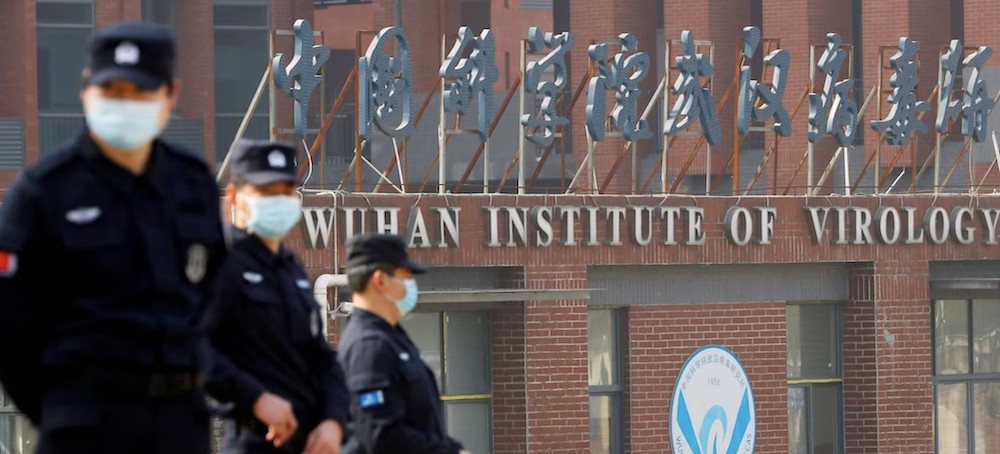
 

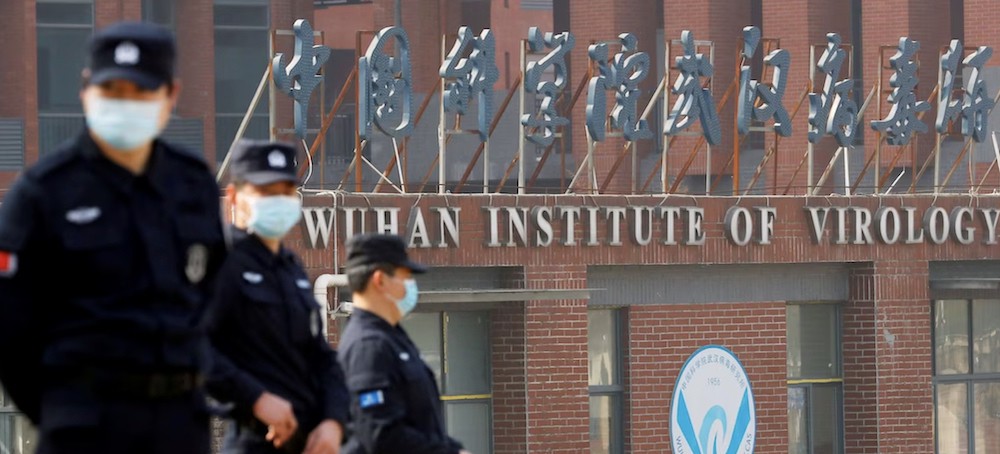
Lab Leaks and COVID-19 PoliticsWuhan, China, where the novel coronavirus emerged, is home to research institutions that study coronaviruses, including the Wuhan Institute of Virology. (photo: Thomas Peter/Reuters)

FOCUS: Dhruv Khullar | Lab Leaks and COVID-19 Politics
Dhruv Khullar, The New Yorker
Khullar writes: "Last weekend, the Wall Street Journal reported that the U.S. Department of Energy - one of several government agencies that have looked into how sars-CoV-2, the virus that causes covid-19, first emerged - has come to believe that the pathogen probably escaped from a laboratory in Wuhan, China."


The latest report on the origin of the virus behind the pandemic is still inconclusive, but there are lessons to be learned from it.


Last weekend, the Wall Street Journal reported that the U.S. Department of Energy—one of several government agencies that have looked into how SARS-CoV-2, the virus that causes COVID-19, first emerged—has come to believe that the pathogen probably escaped from a laboratory in Wuhan, China. The department, which was previously undecided on the matter, reportedly changed its position in light of fresh intelligence, but it issued its determination with “low confidence.” In doing so, it joins the Federal Bureau of Investigation in favoring to some degree the lab-leak theory over the view that the virus has a zoonotic origin, leaping from animals to humans, perhaps in a Wuhan wet market. According to the Journal, the new information, which is in a classified report, but was reviewed by other members of the intelligence community, did not lead others to update their conclusions: four intelligence agencies, as well as the National Intelligence Council, still believe, also with “low confidence,” that natural transmission was responsible, and two remain undecided. (None think that China intentionally created the virus as a bioweapon.) Reviewing the totality of available evidence on the origins of a virus that by some estimates has killed twenty million people worldwide, the American intelligence community has reached a judgment that falls somewhere between not sure and who knows.

That uncertainty hasn’t stopped conservative politicians and commentators from declaring victory. “Lab leak theory appears vindicated,” Fox News reported. “So the government caught up to what Real America knew all along,” the Republican congressman Jim Jordan tweeted. “The same people who shamed us, canceled us, & wanted to put us in jail . . . are starting to say what we said all along,” Representative Marjorie Taylor Greene posted, shortly after. Reading these takes, you might be forgiven for overlooking the fact that much of the intelligence community still favors the natural-origin story, and that essentially no agency is confident in its assessment. “The bottom line remains the same,” an official told the Washington Post. “Basically no one really knows.” Leaders of the intelligence community are set to brief Congress next week. (The Energy Department declined to discuss details of the report with the Journal, and the F.B.I. did not comment.)

The COVID-origin debate contains many of the elements that have dogged public discourse throughout the pandemic: confirmation bias, political polarization, geopolitical tensions, and the hazards of moderating online speech. In February, 2020, the Republican senator Tom Cotton became one of the first high-profile politicians to suggest that the novel coronavirus could have spilled not out of a wet market but from a research laboratory. He did so without evidence, but cited a paper by Chinese scientists that found that many of the first coronavirus cases couldn’t be linked to the market in question. Cotton’s comments arrived in a charged political milieu, as President Donald Trump took to calling the virus the “kung flu” and the “China virus,” and an international group of scientists published an open letter in The Lancet, condemning “conspiracy theories suggesting that COVID-19 does not have a natural origin.” Some social-media platforms, including Twitter and Facebook, flagged or removed posts that suggested that the virus was man-made or engineered, driving conservatives to claim censorship. (Facebook stopped taking down those posts in May, 2021; Twitter announced it would stop enforcing its virus-misinformation policy last November.) In March, 2021, a report by the World Health Organization released the findings of its review, which deemed the lab-leak hypothesis “extremely unlikely.” But China had appointed many of the scientists who worked on that report and stonewalled a thorough and transparent investigation. Beijing has since dismissed discussion of the virus having escaped from a lab as “a lie created by forces against China.” (The government did not respond to the Journal’s requests for comment.)

Over time, however, the lab-leak hypothesis has gained wider acceptance, for reasons both evidentiary and political. A natural viral spillover from bats to humans would probably have required an intermediate host, but no such animal has been identified. (The animals in Wuhan wet markets were reportedly killed after the pandemic began.) Wuhan is home to an extensive network of research laboratories, many of which were constructed in the early two-thousands, following China’s experience with SARS, which is also caused by a coronavirus. Three researchers at the Wuhan Institute of Virology had reportedly fallen ill and sought hospital care in November, 2019, weeks before the first COVID cases were identified in connection with the market. (The cause of their illnesses has not been disclosed.) A year after The Lancet letter, another group of scientists published one in Science, arguing that “we must take hypotheses about both natural and laboratory spillovers seriously until we have sufficient data.” By July, 2021, Americans were nearly twice as likely to think that the pandemic was caused by a lab leak than by human contact with animals.

Lab leaks are uncommon, but not so uncommon. Between 1963 and 1978, the United Kingdom recorded only four “natural” cases of smallpox, brought in by travellers from places where the virus still circulated; during that same period, the virus escaped from British labs three times, causing at least eighty cases and three deaths. In the late nineteen-seventies, after decades of quiescence, the H1N1 influenza strain, which is thought to have caused the 1918 pandemic, resurfaced, probably owing to a lab accident. Since the SARS virus emerged, in 2002, it has escaped at least six times from virology labs, including four times from a single lab in Beijing. In 2018, the U.S. State Department raised concerns about China’s biosafety procedures, and early in the pandemic the Democratic senators Chris Murphy and Ed Markey asked the Trump Administration whether it had responded to warnings about the Wuhan Institute of Virology, including “the serious shortage of appropriately trained technicians needed to safely manage research on potentially deadly zoonotic coronaviruses.”

Virtually every previous pandemic in history arose naturally, and it is still a good bet to assume that COVID did, too. And yet we have never lived in a world with so many laboratories conducting so much research on so many dangerous pathogens. The most prudent path would be to assume that both the lab-leak and the natural-transmission hypotheses are true: the fact that either origin story is plausible means that both are possible, and we should prepare accordingly. Much of our focus, however, has remained on adjudicating the virus’s origins without advancing concrete actions to keep people safe. Globally, there is no comprehensive inventory, let alone rigorous oversight, of laboratories that handle highly contagious and deadly pathogens; in the U.S., the lab-safety system is “a total crazy patchwork quilt of rules,” a scientist told the Times’ David Wallace-Wells. It’s not always clear who’s responsible for insuring that a lab adheres to safety protocols, or even what those protocols should be. Meanwhile, live-animal markets are known to be conducive to infectious outbreaks—the 1997 avian flu and the 2002 SARS virus were both linked to such markets. But practices that could make them safer—improving hygiene and sanitation standards, introducing crowd-control measures, training more food inspectors, and strengthening disease-surveillance systems—are yet to be widely adopted. If sleuthing the origins of COVID-19 is a detective story, it is not likely to be one with a satisfying ending. But we don’t have to solve the mystery of this pandemic to prepare for the next.


READ MORE


Contribute to RSN

Follow us on facebook and twitter!

Update My Monthly Donation

PO Box 2043 / Citrus Heights, CA 95611


Friday, March 3, 2023

FOCUS: Lab Leak Most Likely Origin of Covid-19 Pandemic, Energy Department Now Says


Reader Supported News
26 February 23

Live on the homepage now!
Reader Supported News

WE HAVE NO ROOM TO BACK UP ON FUNDING. NONE. — This organization has been stretched to the breaking point. We fight because we must. As everyone is well aware, funding is non-optional, it is mandatory. We understand it’s a very competitive fundraising environment out there right now. We cannot just sit back and allow the organization to be starved out of existence. However painful we have to meet that basic budgetary requirement. Have to.
Marc Ash • Founder, Reader Supported News

Sure, I'll make a donation!


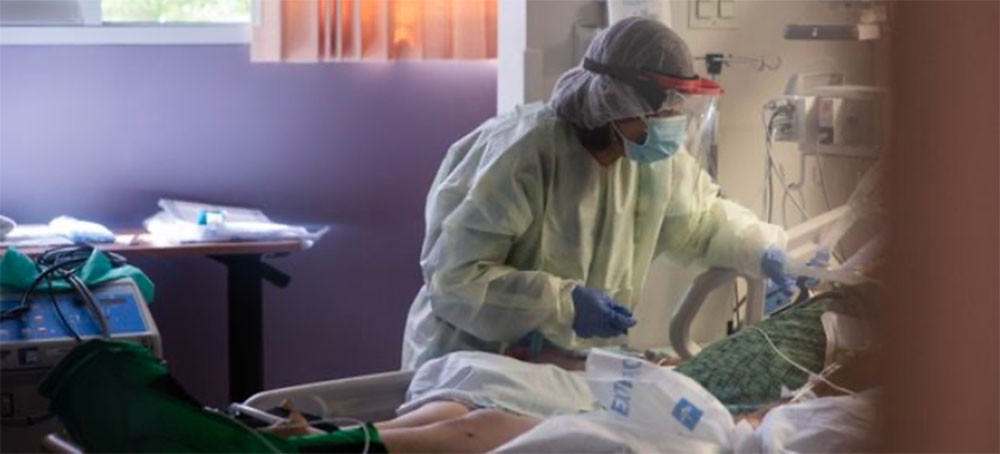
A nurse cared for a patient at a California intensive-care unit in May 2020 as Covid-19 continued to spread across the U.S. (photo: Allison Zaucha/WSJ)
FOCUS: Lab Leak Most Likely Origin of Covid-19 Pandemic, Energy Department Now Says
Michael R. Gordon and Warren P. Strobel, The Wall Street Journal
"The U.S. Energy Department has concluded that the Covid pandemic most likely arose from a laboratory leak, according to a classified intelligence report recently provided to the White House and key members of Congress." 

The U.S. Energy Department has concluded that the Covid pandemic most likely arose from a laboratory leak, according to a classified intelligence report recently provided to the White House and key members of Congress.

The shift by the Energy Department, which previously was undecided on how the virus emerged, is noted in an update to a 2021 document by Director of National Intelligence Avril Haines’s office.

The new report highlights how different parts of the intelligence community have arrived at disparate judgments about the pandemic’s origin. The Energy Department now joins the Federal Bureau of Investigation in saying the virus likely spread via a mishap at a Chinese laboratory. Four other agencies, along with a national intelligence panel, still judge that it was likely the result of a natural transmission, and two are undecided.

The Energy Department’s conclusion is the result of new intelligence and is significant because the agency has considerable scientific expertise and oversees a network of U.S. national laboratories, some of which conduct advanced biological research.

The Energy Department made its judgment with “low confidence,” according to people who have read the classified report.

The FBI previously came to the conclusion that the pandemic was likely the result of a lab leak in 2021 with “moderate confidence” and still holds to this view.

The FBI employs a cadre of microbiologists, immunologists and other scientists and is supported by the National Bioforensic Analysis Center, which was established at Fort Detrick, Md., in 2004 to analyze anthrax and other possible biological threats.

U.S. officials declined to give details on the fresh intelligence and analysis that led the Energy Department to change its position. They added that while the Energy Department and the FBI each say an unintended lab leak is most likely, they arrived at those conclusions for different reasons.

The updated document underscores how intelligence officials are still putting together the pieces on how Covid-19 emerged. More than one million Americans have died in the pandemic that began more than three years ago.

The National Intelligence Council, which conducts long-term strategic analysis, and four agencies, which officials declined to identify, still assess with “low confidence” that the virus came about through natural transmission from an infected animal, according to the updated report.

The Central Intelligence Agency and another agency that officials wouldn’t name remain undecided between the lab-leak and natural-transmission theories, the people who have read the classified report said.

Despite the agencies’ differing analyses, the update reaffirmed an existing consensus between them that Covid-19 wasn’t the result of a Chinese biological-weapons program, the people who have read the classified report said.

A senior U.S. intelligence official confirmed that the intelligence community had conducted the update, whose existence hasn’t previously been reported. This official added that it was done in light of new intelligence, further study of academic literature and consultation with experts outside government.

The update, which is less than five pages, wasn’t requested by Congress. But lawmakers, particularly House and Senate Republicans, are pursuing their own investigations into the origins of the pandemic and are pressing the Biden administration and the intelligence community for more information.

Officials didn’t say if an unclassified version of the update would be issued.

U.S. national-security adviser Jake Sullivan, asked about the Journal’s reporting Sunday, said President Biden had repeatedly directed every part of the intelligence community to invest in trying to discern as much as possible about the origins of the pandemic. “President Biden specifically requested that the national labs, which are part of the Department of Energy, be brought into this assessment because he wants to put every tool at use to be able to figure out what happened here,” Mr. Sullivan said during an appearance on CNN.

There are a “variety of views in the intelligence community,” Mr. Sullivan added. “A number of them have said they just don’t have enough information.”

The Covid-19 virus first circulated in Wuhan, China, no later than November 2019, according to the U.S. 2021 intelligence report. The pandemic’s origin has been the subject of vigorous, sometimes partisan debate among academics, intelligence experts and lawmakers.

David Relman, a Stanford University microbiologist who has argued for a dispassionate investigation into the pandemic’s beginnings, welcomed word of the updated findings.

“Kudos to those who are willing to set aside their preconceptions and objectively re-examine what we know and don’t know about Covid origins,” said Dr. Relman, who has served on several federal scientific-advisory boards. “My plea is that we not accept an incomplete answer or give up because of political expediency.”

An Energy Department spokesman declined to discuss details of its assessment but wrote in a statement that the agency “continues to support the thorough, careful, and objective work of our intelligence professionals in investigating the origins of COVID-19, as the President directed.”

The FBI declined to comment.

China, which has placed limits on investigations by the World Health Organization, has disputed that the virus could have leaked from one of its labs and has suggested it emerged outside China.

The Chinese government didn’t respond to requests for comment about whether there has been any change in its views on the origins of Covid-19.

Some scientists argue that the virus probably emerged naturally and leapt from an animal to a human, the same pathway for outbreaks of previously unknown pathogens.

Intelligence analysts who have supported that view give weight to “the precedent of past novel infectious disease outbreaks having zoonotic origins,” the flourishing trade in a diverse set of animals that are susceptible to such infections, and their conclusion that Chinese officials didn’t have foreknowledge of the virus, the 2021 report said.

Yet no confirmed animal source for Covid-19 has been identified. The lack of an animal source, and the fact that Wuhan is the center of China’s extensive coronavirus research, has led some scientists and U.S. officials to argue that a lab leak is the best explanation for the pandemic’s beginning.

U.S. State Department cables written in 2018 and internal Chinese documents show that there were persistent concerns about China’s biosafety procedures, which have been cited by proponents of the lab-leak hypothesis.

Wuhan is home to an array of laboratories, many of which were built or expanded as a result of China’s traumatic experience with the initial severe acute respiratory syndrome, or SARS, epidemic beginning in 2002. They include campuses of the Wuhan Institute of Virology, the Chinese Center for Disease Control and Prevention, and the Wuhan Institute of Biological Products, which produces vaccines.

An outbreak at a seafood market in Wuhan had initially been thought to be the source of the virus, but some scientists and Chinese public-health officials now see it as an example of community spread rather than the place where the first human infection occurred, the 2021 intelligence community report said.

In May 2021, President Biden told the intelligence community to step up its efforts to investigate the origins of Covid-19 and directed that the review draw on work by the U.S.’s national laboratories and other agencies. Congress, he said, would be kept informed of that effort.

The October 2021 report said that there was a consensus that Covid-19 wasn’t the result of a Chinese biological-weapons program. But it didn’t settle the debate over whether it resulted from a lab leak or came from an animal, saying that more information was needed from the Chinese authorities.

The U.S. intelligence community is made up of 18 agencies, including offices at the Energy, State and Treasury departments. Eight of them participated in the Covid-origins review, along with the National Intelligence Council.

Before that report, the Energy Department’s Lawrence Livermore National Laboratory prepared a study in May 2020 concluding that a lab-leak hypothesis was plausible and deserved further investigation.

The debate over whether Covid-19 might have escaped from a laboratory has been fueled by U.S. intelligence that three researchers from the Wuhan Institute of Virology became sick enough in November 2019 that they sought hospital care.

House Intelligence Committee report concluded last year that this disclosure didn’t strengthen either the lab-leak or the natural-origin theory as the researchers might have become sick with a seasonal flu. But some former U.S. officials say the sick researchers were involved in coronavirus research.

Lawmakers have sought to find out more about why the FBI assesses a lab leak was likely. In an Aug. 1 letter to FBI Director Christopher Wray, Sen. Roger Marshall, a Kansas Republican, requested that the FBI share the records of its investigation and asked if the bureau had briefed Mr. Biden on its findings.

In a Nov. 18 letter, FBI Assistant Director Jill Tyson said the agency couldn’t share those details because of Justice Department policy on preserving “the integrity of ongoing investigations.” She referred the senator to Ms. Haines’s office for information on what briefings were arranged for the president.


READ MORE


Contribute to RSN

Follow us on facebook and twitter!

Update My Monthly Donation

PO Box 2043 / Citrus Heights, CA 95611

Help! My RSN Newsletters Stopped | (Unsubscribe)


Tuesday, February 28, 2023

FOCUS: Daniel Engber | The Lab Leak Will Haunt Us Forever


Reader Supported News
28 February 23

Live on the homepage now!
Reader Supported News

Give Us a “Fighting Chance” — We are holding our own right now along side of high-powered political fundraising machines using very sophisticated methods … and we are holding our heads above water. If you come here, if you believe what we do makes a difference, help out with what you can afford. In peace and solidarity.
Marc Ash • Founder, Reader Supported News

Sure, I'll make a donation!


Wuhan, China, where the novel coronavirus emerged, is home to research institutions that study coronaviruses, including the Wuhan Institute of Virology. (photo: Thomas Peter/Reuters)
FOCUS: Daniel Engber | The Lab Leak Will Haunt Us Forever
Daniel Engber, The Atlantic
Engber writes: "The lab-leak theory lives! Or better put: It never dies." 


Each new revelation is a reminder of how little is actually known.

The lab-leak theory lives! Or better put: It never dies. In response to new but unspecified intelligence, the U.S. Department of Energy has changed its assessment of COVID-19’s origins: The agency, which was previously undecided on the matter, now rates a laboratory mishap ahead of a natural spillover event as the suspected starting point. That conclusion, first reported over the weekend by The Wall Street Journal, matches up with findings from the FBI, and also a Senate minority report out last fall that called the pandemic, “more likely than not, the result of a research-related incident.”

Then again, the new assessment does not match up with findings from elsewhere in the federal government. In mid-2021, when President Joe Biden asked the U.S. intelligence community for a 90-day review of the pandemic’s origins, the response came back divided: Four agencies, plus the National Intelligence Council, guessed that COVID started (as nearly all pandemics do) with a natural exposure to an infected animal; three agencies couldn’t decide on an answer; and one blamed a laboratory accident. DOE’s revision, revealed this week, means that a single undecided vote has flipped into the lab-leak camp. If you’re keeping count—and, really, what else can one do?—the matter still appears to be decided in favor of a zoonotic origin, by an updated score of 5–2. The lab-leak theory remains the outlier position.

Are we done? No, we aren’t done. None of these assessments carries much conviction: Only one, from the FBI, was made with “moderate” confidence; the rest are rated “low,” as in, Hmm, we’re not so sure. This lack of confidence—as compared with the overbearing certainty of the scientists and journalists who rejected the possibility of a lab leak in 2020—will now be fodder for what could be months of congressional hearings, as House Republicans pursue evidence of a possible “cover-up.” But for all the Sturm und Drang that’s sure to come, the fundamental state of knowledge on COVID’s origins remains more or less unchanged from where it was a year ago. The story of a market origin matches up with recent history and an array of well-established facts. But the lab-leak theory also fits in certain ways, and—at least for now—it cannot be ruled out. Putting all of this another way: ¯\_(ツ)_/¯.

READ MORE


Contribute to RSN

Follow us on facebook and twitter!

Update My Monthly Donation

PO Box 2043 / Citrus Heights, CA 95611


POLITICO NIGHTLY: Debt relief on the docket


View in browser
 
POLITICO Nightly logo

BY KATHERINE LONG

Students relax on the front steps of Low Memorial Library on the Columbia University campus in New York.

Students relax on the front steps of Low Memorial Library on the Columbia University campus in New York. | Ted Shaffrey/AP Photo

SEEKING FORGIVENESS — The Supreme Court is set to hear arguments Tuesday about the legality of President Joe Biden’s $400 billion student debt relief program.

After its unveiling in August, the program that would provide up to $10,000 in loan forgiveness for most borrowers and $20,000 for Pell Grant recipients quickly generated a lawsuit from six Republican-led states , led by Nebraska and Missouri.

While the administration justified the program’s implementation by pointing to the economic hardships brought on by the Covid-19 pandemic, Republican officials and conservative groups claimed it was an abuse of executive power.

Nightly’s Katherine Long spoke with Michael Stratford , an education reporter for POLITICO Pro, on what this decision means for tens of millions of borrowers and the legal precedent it will set for federal student loan forgiveness.

Can you give us a sense of the scale of this case? How many borrowers are affected? How much money is at stake?

Most cases at the Supreme Court are necessarily high stakes, but we can put a pretty eye-catching dollar figure on this one: Roughly $400 billion of student debt relief is hanging in the balance for more than 40 million Americans. More than 25 million applications flooded into the Education Department last fall. Some 16 million were approved before the Biden administration was forced to shut down the program in response to court orders.

What legal questions are at issue here?

There are a few. The first is whether the six Republican-led states and two Texas student loan borrowers challenging the debt relief program are allowed to sue at all. How will they actually be harmed by debt relief?

Missouri has been the focus of a lot of attention in that regard. The state claims it’ll be injured because it may get less money from the Missouri Higher Education Loan Authority , a state-created entity, which will have fewer loans to collect if Biden cancels them.

If no party has standing, the case is over and Biden wins. (And many experts think that’s the administration’s best bet for survival.) Otherwise, the justices will turn to the merits of the case, which hinges on the interpretation of a 2003 law known as the HEROES Act.

The law says that the secretary of education is allowed to “waive or modify” the normal rules related to federal student loans to prevent borrowers from being “placed in a worse position financially” because of a national emergency.

Covid-19 is such an emergency, the administration contends. And it says that canceling debt for most borrowers will help avoid a surge of delinquencies and defaults when payments resume for the first time since the pandemic began.

Do we have any indication of where the court stands on any of the questions or issues at stake in this case?

That’s always a tough guessing-game to play. But what we know is that the conservative majority on this court has been hostile to Biden’s other pandemic-related emergency actions. It rejected Biden’s workplace Covid vaccine rule and his extension of the eviction moratorium .

And, more broadly, the Republican appointees have been deeply skeptical of the administrative powers of federal agencies. They struck down an EPA climate policy last year with a blueprint for reining in other agency actions.

One difference — and who knows if it will matter here — is that in all of those cases, the court was balancing a government action against strong business interests: landlords, employers, and other companies. Here we’re talking about the government doling out benefits to student loan borrowers. To be sure, conservatives and many taxpayers might be ideologically opposed to the Biden administration doing that. But there’s no major industry or business interest lining up outside the court to fight it.

What happens if the court rules against debt relief?

Politically, the Biden administration will blame, as it already has, Republican opponents of its plan for suing to block student debt relief to millions.

Practically-speaking, the administration is going to have to make a range of decisions about how, if at all, it’s going to collect loan payments from millions of borrowers to whom it promised relief.

Right now, the Biden administration is preparing to resume collecting monthly payments from most federal student loan borrowers in September (for the first time since March 2020). But that could change.

What does the outcome of this case mean for Biden’s presidency? If the court halts the program, what are his other options for tackling student debt?

The stakes are high not just for borrowers but for Biden as well. Many Democrats, including Biden himself, have suggested that mass student debt relief helped Democrats turn out voters last fall.

And now that progressives convinced Biden to act on mass debt cancellation, it seems impossible to un-ring that bell.

Expect Biden in the coming months to face pressure from within his own party to come up with a fallback plan to deliver on student debt relief. Progressives are eyeing using a separate legal authority in the Higher Education Act — known as compromise and settle — which is not tied to the pandemic national emergency.

Welcome to POLITICO Nightly. Reach out with news, tips and ideas at nightly@politico.com . Or contact tonight’s author at klong@politico.com or on Twitter at @katherinealong .


JOIN POLITICO ON 3/1 TO DISCUSS AMERICAN PRIVACY LAWS: Americans have fewer privacy rights than Europeans, and companies continue to face a minefield of competing state and foreign legislation. There is strong bipartisan support for a federal privacy bill, but it has yet to materialize. Join POLITICO on 3/1 to discuss what it will take to get a federal privacy law on the books, potential designs for how this type of legislation could protect consumers and innovators, and more. REGISTER HERE .


WHAT'D I MISS?

— Rep. Elissa Slotkin announces Senate run: Slotkin (D-Mich.) will run for the Senate seat being vacated by retiring Sen. Debbie Stabenow (D-Mich.). Slotkin is one of the first candidates to enter the race since Stabenow announced in January that she would not seek a fifth term, teeing up a high-stakes contest that could ultimately determine the balance of power in the Senate.

— Yellen makes surprise trip to Ukraine: Treasury Secretary Janet Yellen made an unannounced trip to Kyiv today to emphasize the Biden administration’s continued support for Ukraine as the country prepares for Russia’s highly-anticipated spring offensive. “I bring to Kyiv a clear message from Biden and the American people: We will stand with Ukraine for as long as it takes,” Yellen said during a meeting with Ukrainian President Volodymyr Zelenskyy.

— Kerry to stay on as Biden’s top climate diplomat: John Kerry will remain in his role as Biden’s special climate envoy at least through this year’s United Nations climate talks set for December in Dubai, ending speculation that the United States’ top climate change diplomat may soon depart. Kerry’s relationship with his Chinese counterpart, Xie Zhenhua, has been a rare bright spot between the United States and China.

NIGHTLY ROAD TO 2024

DONOR DASH — Potential and declared 2024 Republican presidential hopefuls including former UN Ambassador Nikki Haley, former Vice President Mike Pence and Virginia Gov. Glenn Youngkin are making quiet trips to New York City to meet with donors and attempt to raise money , according to The New York Times ’ Maggie Haberman and Nicholas Fandos.

The Times reports that Youngkin will be meeting with grocery store magnate John Catsimatidis, a billionaire who owns chains of grocery stores and who is influential within the right-wing Committee to Unleash Prosperity, which has previously backed former President Donald Trump. Catsimatidis, a Trump backer himself, said that this cycle he will likely sit down with any candidate who asks to see him.

Youngkin’s trip suggests that he’s at least dipping his toe in the 2024 contest, getting a sense of the potential appetite among big donors for his candidacy. A former executive at the private equity firm the Carlyle Group, where he spent 25 years before resigning to run for Virginia governor in 2021, Youngkin still has strong ties with much of the GOP’s donor class, a potential advantage should he decide to jump into the race.

SPLIT SCREEN — There’s not one, but two major cattle calls of 2024 Republican hopefuls this week, report POLITICO’s Natalie Allison and Alex Isenstadt .

In Washington, D.C., Trump is headlining CPAC’s annual meeting. In Palm Beach, Florida Governor Ron DeSantis will be a main draw at the Club for Growth’s private retreat for large donors.

The events are set to take place at the exact same time — Thursday through Saturday. There’s also little overlap between the speakers and attendees, another sign that the conservative ecosystem is engaged in a battle for the future of the party, with Trump as a main divide.

Notably, Trump was not invited to the Club for Growth’s retreat, as the conservative organization looks to move beyond the former president. Other potential 2024 Republican hopefuls, including Haley, Sen. Tim Scott (R-S.C.) and New Hampshire Governor Chris Sununu will try to take advantage of the notable absence of Trump to speak with donors themselves.


DOWNLOAD THE POLITICO MOBILE APP: Stay up to speed with the newly updated POLITICO mobile app, featuring timely political news, insights and analysis from the best journalists in the business. The sleek and navigable design offers a convenient way to access POLITICO's scoops and groundbreaking reporting. Don’t miss out on the app you can rely on for the news you need, reimagined. DOWNLOAD FOR iOS – DOWNLOAD FOR ANDROID .


AROUND THE WORLD

Presidential candidate Bola Tinubu of the All Progressives Congress, accompanied by his wife, Oluremi Tinubu, speaks to the media after casting his vote in the presidential elections in Lagos, Nigeria.

Presidential candidate Bola Tinubu of the All Progressives Congress, accompanied by his wife, Oluremi Tinubu, speaks to the media after casting his vote in the presidential elections in Lagos, Nigeria. | Ben Curtis/AP Photo

NIGERIA’S ELECTION — Early results from Saturday’s presidential race in Nigeria suggest that the ruling party’s Bola Tinubu, who served as governor of the country’s most populous state, has captured the lead in an election marred by technical delays and security concerns.

Two days after the election in Africa’s largest democracy, only a handful of Nigeria’s 36 states have been called, according to the country’s primary election commission, and the timeline for announcing a winner remains unclear.

The results that have already come in signal a firm lead for Tinubu, the ruling All Progressives Congress’s candidate. Tinubu has won at least five states and leads the popular tally.

The 93 million Nigerians who registered to vote — a record — were hit with long delays, electronic glitches and intimidation tactics on Saturday. Local news outlets reported assaults from armed irregulars and instances of ballot-box snatching. With sporadic violence breaking out across the country, tensions remain especially high in parts of Lagos State, where Tinubu served as former governor.

Politicians from all three parties represented on the presidential ballot voiced concerns over the slow pace at which results were being uploaded to the official Independent National Electoral Commission , which said ongoing delays are a result of “technical hitches.”

International observers also criticized the country’s handling of the election. Representatives from the European Union warned in a statement that “INEC lacked efficient planning and transparency during critical stages of the electoral process, while on election day trust in INEC was seen to further reduce due to delayed polling processes.”

Atiku Abubakar, from the Peoples Democratic Party, has the second-most votes as of this afternoon, according to the country’s electoral commission. Peter Obi, who joined the Nigerian Labour Party and is popular among young Nigerians , clinched a surprise victory in Lagos State, but continues to trail both his opponents.

To win the presidential election, a candidate must obtain a simple majority and earn at least a quarter of the total votes cast in at least 24 states. If no candidate meets the threshold, a runoff is triggered within 21 days.

NIGHTLY NUMBER

$13 billion

The amount of money that financial services giant Intercontinental Exchange agreed to pay for mortgage data company Black Knight, an acquisition that the Federal Trade Commission is now preparing to challenge as the Biden administration takes a harder stance on antitrust issues, according to three people with direct knowledge of the matter. The FTC believes the deal would give Intercontinental Exchange, which also owns the NYSE, too much power in the multi-trillion dollar U.S. mortgage market and is expected to file a case sometime in March.

RADAR SWEEP

LAB LEAK? — In a recently updated U.S. intelligence report, the Department of Energy assessed that the Covid-19 pandemic may have originated from a laboratory leak in China . Other federal agencies involved with virus research said the pandemic could have been caused by natural transmission between animals and humans. But the disagreements from the scientific community stand in stark contrast to conclusions being drawn as a result of the DOE’s quote that the lab leak is the “most likely” explanation for the pandemic. For instance, an intelligence report is intended not to simply determine fact from fiction, but to provide an assessment of likelihood and the strength of information. And counterintuitively, the conclusion can be drawn from very little or poor-quality evidence. Read Joseph Cox ’s report on what we still don’t know about the origins of the Covid-19 pandemic for VICE.

PARTING IMAGE

On this day in 1991: Kuwaitis wave flags to celebrate allied troops moving into the Kuwait capital following the hasty retreat of Iraqi forces, effectively ending the Gulf War.

On this day in 1991: Kuwaitis wave flags to celebrate allied troops moving into the Kuwait capital following the hasty retreat of Iraqi forces, effectively ending the Gulf War. | Laurent Rebours/AP Photo

Did someone forward this email to you?  Sign up here .


Follow us on Twitter

Charlie Mahtesian @PoliticoCharlie

Calder McHugh @calder_mchugh

Katherine Long @katherinealong

Ari Hawkins @_AriHawkins


FOLLOW US

Follow us on FacebookFollow us on TwitterFollow us on InstagramListen on Apple Podcast


POLITICO, LLC 1000 Wilson Blvd. Arlington, VA, 22209, USA


Save 50% on TNR | How Did Trump Do on His Labor Day Report Card?

                                                                                                 LOTS OF POSTS IGNORED BY BLOGGER..... OR RE...