After 12 years, Israel finally inaugurated a new prime minister. While being hailed by many as the opportunity for a fresh start, Naftali Bennett is at best a continuer of Netanyahu’s policies and at worst an ideologue whose positions are to the right of Netanyahu’s.
If you think the contents of this news letter are critical for the dignified living and survival of humanity and other species on earth, please forward it to your friends and spread the word. It's time for humanity to come together as one family! You can subscribe to our news letter here http://www.countercurrents.org/news-letter/.
After 12 years, Israel finally inaugurated a new prime minister. While being
hailed by many as the opportunity for a fresh start, Naftali Bennett is at best a continuer of Netanyahu’s policies and at worst an ideologue whose positions are to the right of Netanyahu’s.
On ‘Conflict’, ‘Peace’ and ‘Genocide’: Time for New Language on Palestine and Israel
It will not be easy to deconstruct the seemingly endless edifice of lies, half-truths and intentional misrepresentations of Zionist Israeli colonialism in Palestine. Yet, there can be no alternative to this feat because, without proper, accurate and courageous understanding and depiction of Israeli settler colonialism and Palestinian resistance to it, Israel will continue to oppress Palestinians while presenting itself as the victim.
Why Democracies in G7 & NATO Should Reject U.S. Leadership
Written by Medea Benjamin and Nicolas J. S. Davies
Instead of a world in which other countries emulate or fall victim to America’s failed experiment in extreme neoliberalism, the key to a peaceful, sustainable and prosperous future for all the world’s people, including Americans, lies in working together, learning from each other and adopting policies that serve the public good and improve the lives of all, especially those most in need. There’s a name for that. It’s called democracy.
Surely, the friendly ambience has helped Biden to inject a certain Cold War overtone to the G7 proceedings…But without doubt, the G7 has brought to the fore that there is sharp disagreement among the United States and its allies about how to respond to China’s rising power. Europe — especially, the
two major European powers Germany and France — does not see eye to eye as to whether to regard China as a partner, competitor, adversary or outright security threat.
Stop Antagonizing China: Suggests Australia’s Top Exporting State
Australia’s biggest exporting state on Tuesday urged Canberra to stop antagonizing China, the country’s top trade partner, in remarks that came amid escalating criticism of Beijing led by the U.S., Australia’s main ally. “This isn’t about kowtowing to other countries and giving in,” Western Australian Premier Mark McGowan said at Australia’s biggest oil and gas industry conference, being held in Perth. “There needs to be a national reset in that relationship.”
Australian officials and paper mad types are running out of ideas as to how to be cruel towards refugees. We need to give them some credit: for years they have tried to do what most autocratic and murderous regimes do in a heartbeat: ignore international law, treat it with disdain and use those feeble excuses in the service of sovereignty.
A broad, historic revolt in Myanmar against a ruthless military
legions of civilians in Myanmar, also known as Burma, are forging courageous resistance against a bloody military dictatorship — together. This in a country of enormous ethnic diversity, many languages and religions, and entrenched sexism. Such defiance reflects a desperate yearning for genuine democracy.
People the world over are opposing fossil fuel extraction in an incalculable number of ways. It is now clear that burning fossil fuels threatens millions of Life forms and could be laying the foundation for the extermination of Humanity. But what about “alternative” energy? As progressives stand shoulder-to-shoulder with those rejecting fossil fuels and nuclear power, should we despise, ignore, or commend those who challenge the menace to their homes and their communities from solar, wind and hydro-power (dams)?
Amidst India’s unfolding Covid disaster, the southern Indian state of Kerala has been lauded for its effective response to the Covid-19 pandemic, particularly in controlling mortality. What are the factors that help explain Kerala’s record? This two-part analysis attempts to unravel the secrets of Kerala’s impressive performance against Covid, based on extensive interviews with key officials involved. This is the first of a series of special reports to be published by Covid Response Watch to understand the social, administrative, historical and political factors behind the way different parts of India have tackled (or not) the Covid-19 pandemic.
Comrade Harbhajan Singh Sohi.Comrade Harbhajan Sohi or HBS was one of the greatest comrades to have ever dipped his feet in the history of the Indian Communist Movement.
GASS denounces the steps by the new Administrator of Lakshadeep
Lakshadweep is one of eight Union Territories, which is under the newly appointed controversial Administrator. The Ganatantrik Adhikar Suraksha Sangathan, Odisha (GASS) is vehemently denouncing the repressive measures taken by the Administrator.
Stop Unjust Evictions of 10 thousand households in Khori Gaon, Faridabad
NAPM Condemns the unjustifiable order of the Supreme Court to Evict around One Lakh Residents of Khori Gaon, Haryana, without Rehabilitation in
the Middle of the Pandemic. Right to Housing of Working-Class people Living in Precarious Conditions is inalienable: ‘Environmental Protection’ cannot be an excuse to deprive vulnerable people of shelter
Justice to Sanitation Workers Must Move Beyond Verbal Appreciation
Since historical times, sanitation workers have suffered the most injustice in India. Perhaps oppressor sections thought that the most effective, even though highly unjust , means to ensure the ready availability of this essential service at a very low cost was to socially subjugate certain groups to such an extent that they assimilated acceptance of being limited or trapped in a narrow identity of carrying out sanitation work in difficult and degraded conditions.
The Independent Panel for Pandemic Preparedness and Response was never likely to hand down a rosy report with gobbets of praise. Organised by the World Health Organization Director-General Tedros Adhanom Ghebreyesus last May, the panel’s gloomy assessment was grim: the COVID-19 pandemic could have been avoided.
If you think the contents of this news letter are critical for the dignified living and survival of humanity and other species on earth, please forward it to your friends and spread the word. It's time for humanity to come together as one family! You can subscribe to our news letter here http://www.countercurrents.org/news-letter/.
In Solidarity
Binu Mathew
Editor
Countercurrents.org
How It All Went Wrong: The Global Response to COVID-19
Panel for Pandemic Preparedness and Response was never likely to hand down a rosy report with gobbets of praise. Organised by the World Health Organization Director-General Tedros Adhanom Ghebreyesus last May, the panel’s gloomy assessment was grim: the COVID-19 pandemic could have been avoided.
In the current COVID 19 pandemic, what is the potential for escape into our Indian environment of this SARS CoV 2 virus due to the unsafe handling of an estimated 230 million specimens/ samples (as of 10th May, 2021) collected for testing, as well as the inadequate biosecurity in our labs? Is it reasonable to ask whether the current second wave and a rising mortality, could in part be due to the perilous consequence of a dangerous disintegration in rigorous biosafety protocols? This article addresses these matters.
Mass protests against the proliferation of CRPF camps have been happening all over Bastar during the last two years, without attracting much media coverage. It is only because of the death of three protestors in police firing on 17 May 2021 that the Silger protest came to light.
Palestine’s Moment: Despite Massive Losses, Palestinians Have Altered the Course of History
The ‘Palestinian Revolt of 2021’ will go down in history as one of the most influential events that irreversibly shaped collective thinking in and around Palestine. Only two other events can be compared with what has just transpired in Palestine: the revolt of 1936 and the First Intifada of 1987.
There could hardly have been a better celebration of six months of the Delhi farmers protest at Tikri border in Delhi completed today, with the flag of liberation shimmering at a crescendo, on the call for a bandh of Samyukti Kisan Morcha.An impact of an inferno or intensity of coal burning in a furnace was displayed at Tikri border by the farmers in the May 26th protest by Bharatiya Kisan Union(Ugrahan).It was remarkable the manner it galvanised all the forces to crystallise such an event. The volume of revolutionary resistance was sung at it’s highest pitch, with the morale of a victorious army.
Hey Modi, if you really care for Buddha then listen to the farmers and start respecting science
This year’s birth anniversary of Lord Buddha coincides with six months of the ongoing farmers’ agitation in India. On May 26, when the Indian farmers observed black day to make the deaf government hear their demands, the prime minister of the country was lecturing the people on the philosophy of Buddhism.
After Six Months of Non-Violent Struggle, Farmers in India Should Move Towards Agro-Ecology and Broader Unity
Despite the much flaunted farm development claims of the government, in reality the costs, debts, tensions and crisis of most farmers have been rising, aggravated by the fact that the support systems provided by the government to lessen the difficulties of the expensive technology can at best reach only a limited number of farmers ( particularly those outside the main green revolution belt may be left out
From the recent policy changes in the name of reforms that are proposed to be implemented in the islands unilaterally we also know that no consideration or due respect has been given to the time tested ways of land use, land ownership, ocean resource utilisation and or livelihood practices adopted by the community. To add insult to injury , the culture and traditions of the ethnic group there has been overlooked by intervention into the food ethos, the reproductive freedom and self reliance of the people
When the Indian media shows reluctance to sketch their stories, they are left with the only option of bringing themselves into the mainstream to scream as loud as they can to tell the world that they are not cannibals,
not foreigners; but Indian. It is time the country stands with them on their call for help. This is the story of the sufferings of the coral paradise of India – the invisible land in India’s vicinity – Lakshadweep.
Aazib Manzoor has come out with around three hundred page debut novel titled “The Sentiment in my Stone”. One special expression from the front cover page of this novel is the presence of armed security men, lot of stones, bricks and pebbles scattered on the road and the lone youngster with raised hand depicting throwing the stones. This picture is making a statement that skirmishes between security men and the youngsters have just come to an end. The stone and the pellet firing has been a regular ammunition physically and the psychological harrying is, of course, through sentiment.
The current global health crisis is but one such challenge, the ultimate severity of whose cost, both to lives and livelihoods, is yet unknown.’ It has caused massive downslide, estimated to be more than US$ 12 trillion already since the start of the global health pandemic. The daily loss during the lockdown period to the Indian economy last year was reported to be reported to be ₹ 32,000 crores (US$ 455 million approximately). Furthermore it was calculated that India would require a sum of ₹ 70 lakh crores (US$ 1 trillion approximately) to revive its economy.
Kerala Model of Development Deserves as Much Attention For Its Limitations as For Its Real Achievements
that environmental aspects have not received the desirable attention in the official development effort. While Kerala has many respected environmentalists and activists who are known for their valuable contributions, it does not appear that such thinking has been well-assimilated in official thinking and the actual working of successive governments.
Cyclone Yaas is Another Reminder of The Urgent Need for Coming Together to Face Difficult Times
Just now the nation’s thoughts are with those who have suffered in the cyclones. Imagine the people who have suffered much due to pandemic and loss of livelihood and are now affected badly in new storms. The first priority of course must be to help them as much as possible immediately. But in due course we must also give adequate attention to the wider improvements that will enhance our
ability to face the new challenges and difficulties in more effective ways.
What Is The Best Way Of Disposing Off A Dead Body?
As Covid consumes human life in a very conspicuous way we are confronted with additional problem of disposing off human corpses. Cremation grounds are lit with continuous pyres, graveyards are running out of land and now Ganga has become a mass grave potentially polluting its water.
Legendary freedom fighter H.S. Doreswamy is no more
Legendary freedom fighter and Civil Rights activist Harohalli Srinivasaiah Doreswamy popularly known as HS Doreswamy breathed his last yesterday. The 103 year-old Gandhian, who kept the ‘conscience of Karnataka till his very last breath, and was the tallest public intellectual, who
appeased none and spared none‘ would be remembered for his enthusiasm for public causes till he remained alive
Take the time, please, and read the enclosed lyrics of the Animals ‘s 1960s hit song ‘ Sky Pilot’. It tells more than this writer could ever hope to express. It was written during the height of the Vietnam War, which wasn’t our war at all. It was a civil war between the Vietnamese people, which became one of our ( so called ) phony American wars. You should know some of the others : Korea, Iraq 1 , Afghanistan ,Iraq 2 to name a few of the ‘ adventures’ our imperialist government has undertaken. As the song relates, it is always the safe and secure smiling war lords from Washington and the Pentagon that ‘ bless ‘ the boys before they go to destroy and be destroyed.
What Lies Beneath: President Biden’s Deceptive Acknowledgment of
President Biden’s April 24 statement acknowledging the Armenian Genocide (1915–1923+) carried out by Turkey was welcome but flawed. Indeed, “Turkey” appears nowhere in the document. Moreover, the State Department swiftly undermined Biden’s virtuous-sounding words.
PUCL Offers Condolence Message for Prof. Dinesh Mohan
PUCL feels a deep sense of loss over the sad demise of Prof. Dinesh Mohan on 21st May. Prof. Dinesh Mohan’s passing away marks the loss of a multifaceted personality: an outstanding academician, a visionary thinker, pioneer in the field of traffic studies and sustainable infrastructure development and a staunch champion of human rights.
Andhra CM asks PM Modi to halt Covid-19 vaccine
supply to pvt hospitals; it is “socially unacceptable”
Taking a critical view of the Centre’s present Covid-19 vaccination policy, Andhra Pradesh Chief Minister Y S Jagan Mohan Reddy on May 22 Saturday requested Prime Minister Narendra Modi to halt supply of vaccines to private hospitals. In a two-page letter to Modi, Reddy requested that the entire available stock of Covid-19 vaccine to be made available only to the union and state governments to take up vaccination of all eligible as per the respective policies. The CM asked not to allow them to procure vaccines directly from the vaccine manufacturers.
Bail to Raju exposes incredible ‘credibility’ of AP … and ‘timidity’
Raju did indulge in dirty and divisive politics, but being rich and powerful, in the high profile case, he managed to get bail that is denied to many others, due to “timidity”…
For the first time in many years, we see the Palestinian people united, from Jerusalem Al Quds, to Gaza, to the West Bank and, even more critically, to the Palestinian communities, towns and villages inside historic Palestine – today’s Israel. This unity matters the most, is far more consequential than some agreement between Palestinian factions. It eclipses Fatah and Hamas and all the rest, because without a united people there can be no meaningful resistance, no vision for liberation, no struggle for justice to be won.
If you think the contents of this news letter are critical for the dignified living and survival of humanity and other species on earth, please forward it to your friends and spread the word. It's time for humanity to come together as one family! You can subscribe to our news letter here http://www.countercurrents.org/news-letter/.
For the first time in many years, we see the Palestinian people united, from Jerusalem Al Quds, to Gaza, to the West Bank and, even more critically, to the Palestinian communities, towns and villages inside historic Palestine – today’s Israel. This unity matters the most, is far more consequential than some agreement between Palestinian factions. It eclipses Fatah and Hamas and all the rest, because without a united people there can be no meaningful resistance, no vision for liberation, no struggle for justice to be won.
There seems no end to the Zionist carnage in Gaza. On May 16, 2021, the US blocked for the third time within a week a statement at the United Nations Security Council (UNSC) condemning
Israeli violence against Palestinians and urging a ceasefire in Gaza. The blocked statement by the US was introduced by Norway, Tunisia, and China after an emergency Security Council meeting on Sunday
The area has been a hot spot from last several decades. It is time that all the global powers follow the resolutions of United Nations and restore to Palestinians their rightful land and rights. We can’t ignore the rise of Israel as a country also. Keeping in mind the current realities; a solution for demarcation between Palestine and Israel by United Nations needs to be done and
adhered to. The gross violation of human rights of Palestinians is a matter of worry for all those looking forward to a peaceful world order. For this America-imperialists should be made to overcome their ambitions of controlling the lust for oil-power and favour justice for all the people of Middle East.
Gaza – US and the West Supports Israel’s Crimes Against Humanity – Understanding the Never-Ending Conflict
Israel’s PM Netanyahu is a war criminal and should be held accountable for war crimes throughout his PM-ship of Israel, according to the 1945 / 1946 Nuremberg trials criteria. His crimes against humanity, against a defenseless Palestine are comparable to the Holocaust.
Progressive Alliance Wins in Chile: Pinochet-Era Constitution to be Rewritten
Resounding victories for leftist and independent candidates saw rightwing politicians crash to dismal electoral defeats alongside those with links to Chile’s transition to democracy. Communist party members in Santiago celebrated victories in the constitutional assembly elections.
The NPR-NRC process puts the entire population to hardship and expense to obtain certificates, appear before government officials, etc., and undergo the mental tension of uncertainty until their names are confirmed as included in NRC. There is also the combined ill-effect of lakhs of people’s multiple visits to distant towns on their personal finances (travel-stay-food-etc. and income loss due absence from occupation/job), the downstream effect on families, especially children, the loss of productivity
and effect on the economy, and the opportunity to touts and middlemen to “produce” documents acceptable to corruptible officials.
Pandemic setting gender footprint in the health delivery system: a case of Jharkhand
Jharkhand, predominantly a tribal state has been hit severely by Corona virus like other states of India. The state witnesses second phase of COVID – 19 with all possibilities of new variant strain of virus that is far more infectious and swiftly spreading. This has put additional pressure on the health care system of the state. Given, the situation and rapidity of the spread of new variant it has increased the deprivation of medical care even for critical patients.
Contagion and our Constitution – Pandemic and Preamble
The Preamble indicates the basic structure of the Indian constitution which cannot be changed in any case or situation. Unfortunately, Coronavirus has not only attacked the respiratory system of its victims but also pounced on the heart of our constitution- that is its Preamble.
In recent years, the Hindutva politics has caused long term damage to India and Indians. The so called 56-inch macho PM, the propaganda master manufactures and survives all political crisis including the current mismanagement of the Coronavirus pandemic in India. In spite of deaths and destitutions, the social, cultural, economic and religious base of Hindutva is intact. There are only few scratches in the electoral fortune of the BJP in Kerala and Tamil Nadu. It is time to move away from the analysis based on the
personalities of the leaders like Modi and Amit Shah. It is time to blame both the faulty products like Modi and Shah and expose their bigoted manufacturing firm called the RSS
African Financial Independence is a Threat to the Status Quo and not a Pipedream
This article seeks to draw attention to one aspect of African sovereignty that does not get adequate coverage. Admittedly, many are aware of illicit financial outflows that cripple development or the fact that Africa has been a net creditor to the global financial system even though the countries within are debt ridden. This article will draw the lines between the lack of financial independence and structural parasitic relationships that entities maintain with the African continent. My intention is to remind people that gaining financial sovereignty is another crucial aspect to the
self-determination sought by many. Discussions on struggles of self-determination and anti-imperialism are increasing, and I hope to contribute to that discussion, bringing in the perspective of an indigene living in the hyper-capitalist periphery.
This article seeks to draw attention to one aspect of African sovereignty that does not get adequate coverage. Admittedly, many are aware of illicit financial outflows that cripple development or the fact that Africa has been a net creditor to the global financial system even though the countries within are debt ridden. This article will draw the lines between the lack of financial independence and structural parasitic relationships that entities maintain with the African continent. My intention is to remind people that gaining financial sovereignty is another crucial aspect to the self-determination sought by many. Discussions on struggles of self-determination and anti-imperialism are increasing, and I hope to contribute to that discussion, bringing in the perspective of an indigene living in the hyper-capitalist periphery.
The Plan for Financial Sovereignty
African leaders had come to recognize the various factors that hinder the development of the continent and seriously jeopardize the future of its peoples. The Abuja Treaty was put in place to increase economic self-reliance, promote self-sustained development and to raise the standard of living of African peoples. The treaty signifies years of hard work in the socioeconomic, political, and diplomatic arenas. Africans are on many levels committed to seeking a solution for the myriad problems that have stifled many African countries since they obtained independence in all its vague forms. In the Abuja Treaty, the establishment of the African Economic Community also serves in the process of economic integration and according to a report in Africa Today, four stages are involved and they are the free trade area, a customs union, a common market, and finally an economic union.
Within the African Economic Community, the establishment of the three financial institutions are key aspects of the African Union’s Agenda 2063 program. They are considered the spearheads in the economic integration of Africa as expressed in the 1991 Abuja Treaty which was centered on promoting the financial independence of Africa. Prior to the 1991 Abuja Treaty, a major source of pressure for fundamental change are centered on international debt, domestic crisis, and the impact of global change. Donor countries and agencies such as the World Bank and the International Monetary Fund provide ‘solutions’ to which in essence are designed to recover loans given to African countries. Consequently, the measures taken have the effect of exerting terrible economic pressure on the African masses. The measures such as the infamous Structural Adjustment Programs (SAP) usually translate to political backlash against concerned governments, especially in the short run. It should be noted that not all analysts agree that economic or any other form of integration is the proper solution to the African economic problem. One can simply observe the operations of international financial institutions which as a matter of practice, never encourage any form of integration in Africa, they (IMF, Bank of International Settlement etc.) only promote internal measures like austerity programs, and privatization schemes.
The Challenges to Financial Independence
Another stifling factor to the financial independence of Africa is capital flight, which is generally considered as unrecorded and rapid outflow of assets and money from a country, or economic region because of intended, or unintended economic consequences. The international mainstream media leads many to believe that the African continent is entirely dependent of foreign ‘aid’ and functional private investment. The general image depicted is that of advanced economies providing money to poor and developing African countries. To the contrary, research and data proves that the Africa is a ‘net-creditor’ to the rest of the world. According to a 2018 Political Economy Research Institute (PERI) report, with a sample of 30 African countries over a 46 year period (1970-2015), the group of countries lost a combined total of $1.8 trillion to capital flight including interest earnings. Additionally, the report goes on to indicate that the stock of debt owed by the countries as of 2015 amounted to $496.9 billion. The evidence proves that countries on the African continent lose more value through capital flight than is received in foreign aid, or investment.
The founding president of Global Financial Integrity (GFI) Raymond Baker, is quoted as saying, “The traditional thinking has been that the West is pouring money into Africa through foreign aid and other private-sector flows, without receiving much in return. Actually, that logic is upside down – Africa has been a net creditor to the rest of the world for decades.”
The GFI and the African Development Bank released a report in 2013, estimating that the most common strategy for transferring capital from developing countries to advanced economies was trade mis-invoicing. The GFI further reports that sustained conditions of capital flight undermines revenue sources and stifles the ability of affected countries to build a domestic tax base.
In similar fanfare that was afforded to the 2016 Panama Papers Leaks, the FinCEN Files which details over 200,000 suspicious financial transactions, were leaked, and globally publicized on the 20th of September 2020. The investigation was carried out by the International Consortium of Investigative Journalists (ICIJ) and the files were leaked from the Financial Crimes Enforcement Network (FinCEN). It is claimed within original reports that global banks are entirely complicit in or willfully ignorant of the outright stripping of economic value from majority of the world’s population, in favor of multinational elite/criminal interests. The FinCEN files show proof that global banks such as JPMorgan Chase, Deutsche Bank, HSBC, Standard Chartered Bank and Bank of New York Mellon continued moving cash for illicit networks, even after they had been fined by U.S authorities for failing to stem illicit fund transfers, according to key findings by the ICIJ. Furthermore, the ICIJ also reports that in about half of the FinCEN Files, banks did not have information on one or more entities behind transactions and, after years of concern, banks carried on providing services to criminal interests, allegedly leading to cases of actual harm.
As concerns the geopolitical projections in West Africa, it can be expected that detractors to African economic integration will support an internationally pliable leader for the typical two-year term of a Nigerian administration and this will run from 2024~2032, which falls squarely within the AU’s timeframe of establishing the African Central Bank. This play means that such a leader will be lean toward economic policies that potentially prop up the rival regional currency – the Eco, and while this will be dressed up as a win for the African Union, it must be noted that the Eco is essentially a rebranded CFA Franc.
In a bid to ground these observations, memory must recall that the downfall of Libya was initiated not long after the Gaddafi administration expressed plans to implement a Pan-African Currency based on gold-backed Libyan Dinars. Through the makings of a color revolution, a country that had free medical care and education for its citizens was eventually reduced a failed state that has allowed for the criminal sale of African people and the further destabilization of the Sahel region. The status quo makes it unlikely that Libya will be stable enough to host the headquarters of the African Investment Bank by 2025. Additionally, a country like Nigeria with issues of bad governance and weak policies is not impervious to such imperialist designs, and widespread unrest can disrupt development plans indefinitely.
The African Continental Free Trade Area (AfCFTA) agreement also exposes systemic challenges that hinder effective implementation of measures that are meant to foster economic and by extension financial autonomy on the global stage. Firstly, the World Trade Organization (WTO) is an illustration of misalignment seeing that it removes policy freedom from states and weakens the capacity to pursue regional and contextual industrial policies. Furthermore, the high export of agricultural products like cocoa from Ghana and Senegal or coffee from Kenya which are still promoted through pre-existing colonial relationships means such products are susceptible to degrading production factors. In late 2020, the East African Heraldreported on the fact that Kenya’s coffee is losing top global appeal due to high chemical contamination, also overall production had dropped because local farmers couldn’t keep up with the high interest loans or compete with cartels.
The deeper issues are usually traced to colonial economic interactions and the introduction of capitalism in developing countries. There were concerted efforts to build and maintain economic relations, in which the colonies were made into permanent producers of raw materials to satisfy requirements of metropolitan countries. The established links between the producers and the colonial metropoles meant that colonies became dependent on other countries to purchase and dictate prices of products. Colonies as a result, were left without infrastructure to process the raw materials and only purchased ready-made goods from the associated colonial power. The result was that colonies produced what they did not consume and consumed what they did not produce.
Furthermore, writers like Pradip Ghosh have argued that the Bretton Woods Agreement, signed after World War II, had the direct effect of making African economies less competitive on the so-called international market. Established trace structures allowed developed countries to increase tariffs on processed African products and African exports to the European Economic Community among others, were subject to quotas and stringent price rules. Policies like the 1947 General Agreement on Tariffs and Trade (GATT) served to sustain the domination of developed countries over young economies, particularly in Africa. African economies could not take advantage of tariffs from developed countries because of their small economies, and industrialization was discouraged because African nations could not raise tariffs to protect internal industries, retaliation from larger economies would have devastating effects. The GATT and the International Monetary Fund had the indirect effect of discouraging African economies from diversification, creating a situation where Africa continues exporting primary commodities but keeps borrowing to fund an already sabotaged cycle of development; a lose-lose scenario.
The popular Marxist analyst Samir Amin aptly described outcomes of colonial interaction between Africa and European colonizers that are still apparent, he defined the West Africa as the Africa of the colonial trade economy due to the easily accessible coastal regions and the ‘rich’ hinterlands, in terms of resources (labor, palm oil, agro-produce etc.), the Congo River Basin as the Africa of the concession-owning companies based on the immense mineral resources that have basically powered the development of modern society if one is to go by the work of Walter Rodney; How Europe Underdeveloped Africa. Finally, Samir Amin refers to the southern regions of the continent as Africa of the labor reserves. In the southern regions, he states that the region saw widespread colonial imperialism applied based on ‘enclosure acts’ set towards entire peoples.
It is also important to note in what amounts to intellectual compromise, Samir Amin states that current academic programs in the social sciences for many African universities prescribed by the World Bank and related authorities basically stifle the capacity to develop critical thought. Combined with the inability to comprehend the systems that govern the global economic systems, graduates of these universities end up as ‘executives’ that implement policies decided in other parts of the world. Here, he relates African problems to capitalism and describes it as “a regime in which successive states of disequilibrium are products of social and political confrontations situated beyond the market”, further stating that capitalism is synonymous with permanent instability.
Lessons & Next Steps
As stated above, the causes of Africa’s debt crisis are multifaceted. Austerity measures now have the effect of attempting to squeeze water from stone, the socio-political conditions in African debtor nations are quickly becoming intolerable and the political leadership is not demonstrating any conviction. The foundations for the current state of disarray in Africa were laid primarily during colonialism and the status-quo is sustained through neocolonial operations with corrupt African elite leaders as accomplices. Development aid and other forms of Euro-American ‘support’ has been consistently counterproductive. The efforts from the west, when combined with cronyism, and corrupt pluto-gerontocratic leadership, causes untold hardship for the people of Africa. Neocolonialism has survived and continues to exist because the west had set up a dependent political and economic structure which were not demolished by many African leaders but were inherited even though leaders like Thomas Sankara, Amilcar Cabral, and Samora Machel, among others gave their lives in the pursuit of African liberation. Research and material realities have shown that within African countries, many leaders promote foreign interests over domestic ones, while supporters are basically reeducated into upholding systems of neocolonialism, all to the detriment and underdevelopment of Africa and Africans[1].
Leaders, research organizations and academia are understanding that developing countries have sustained the prosperity of developed countries and will always be exploited by imperialist nations. Milquetoast calls for structural changes to predatory economic systems have lost all steam and have no value. The façade of ‘decency’ only serves those that benefit from a status quo that sees Africa perpetually exploited. The west if interested in any real measures for ‘aid’ should seek to dis-link its extractive industries that carry on the rapacious exploitation of African resources to support extremely consumerist societies. African leadership on the other hand must come to reflect on the role of government in any society and move to reeducate themselves away from foreign dependence and towards African sovereignty and socio-cultural confidence. The African struggle toward true autonomy is multi-faceted and concrete steps to collective financial sovereignty is a necessary phase of that journey.
[1] Alemazung, J.A. Post-Colonial Colonialism: An Analysis of International Factors and Actors Marring African Socio-Economic and Political Development (2010)., The Journal of Pan-African Studies, vol.3, no.10.
Otobong Inieke is an Independent researcher based in Nigeria. He writes articles on geopolitics and international affairs seeking to explore the intricate connections between regions of the world especially in relation to Africa. Otobong also publishes writings about the impact of technology on digital privacy. A trained Information Technology professional, and more information on his work can be found at https://devinieke.com.ng
History is repeating in Kerala. The new Pinarayi Vijayan ministry has all the new faces except for the chief minister. While the CM has a right to introduce the persons of his choice. It is shocking to see that an efficient Minister like K K Shailaja, who won from the highest margin in Kerala, over 60,000 votes, did not find a place in the Ministry
The death of the distinguished poet, writer, and teacher, Sankha Ghosh removes a huge, near-silent presence from the literary, intellectual, and moral landscape of Bengal. Sankha babu leaves behind a legacy of truth-telling to the very faces of wayward powers-that-be, which at least some of his students and admirers are likely to look up to with pride and joy for years to come
Javed Miandad was not a gentleman on the cricket field but took combative spirit and mental resilience to depths few cricketers ever traversed
Javed Miandad exuded none of the gentlemanly spirit so much part of the game on the cricket field or gave the game it’s due respect in terms of grace or sportsmanship .He stood amongst cricket’s most controversial and outspoken characters. However few batsmen or
cricketers took combative spirit or defiance to such a magnitude, to ressurect a team from the grave.
Following public protest against the new Police Act which put curbs on free speech, the left ruled Kerala government has decided to put on hold the implementation of the act. It is not clear whether the government is going to repeal the act. In a statement, Chief Minister Pinarayi Vijayan said “the Government of Kerala will not go ahead with implementing the amendment. A detailed discussion will be held in the Assembly regarding this, and the future course of action will be decided upon after duly considering the opinions coming up from all quarters.”
If you think the contents of this news letter are critical for the dignified living and survival of humanity and other species on earth, please forward it to your friends and spread the word. It's time for humanity to come together as one family! You can subscribe to our news letter here
http://www.countercurrents.org/news-letter/.
In Solidarity
Binu Mathew
Editor
Countercurrents.org
Kerala Government Puts On Hold The Controversial Police Act
Following public protest against the new Police Act which put curbs on free speech, the left ruled Kerala government has decided to put on hold the implementation of the act. It is not clear whether the government is going to repeal the act. In a statement, Chief Minister Pinarayi Vijayan said “the Government of Kerala will not go ahead with implementing the amendment. A detailed discussion will be held in the Assembly regarding this, and the future course of action will be decided upon after duly considering the opinions coming up from all quarters.”
What If They Called an Election and Nothing Changed in the War State?
Given the evidence that business-as-usual will continue in the Biden years, perhaps it’s time to take that advice from Cornel West, absorb the truth about Biden’s future national security squad, and act accordingly. There’s no top-down salvation on the agenda — not from Joe or his crew of consummate insiders. Pressure and change will flow from the grassroots or it won’t come at all.
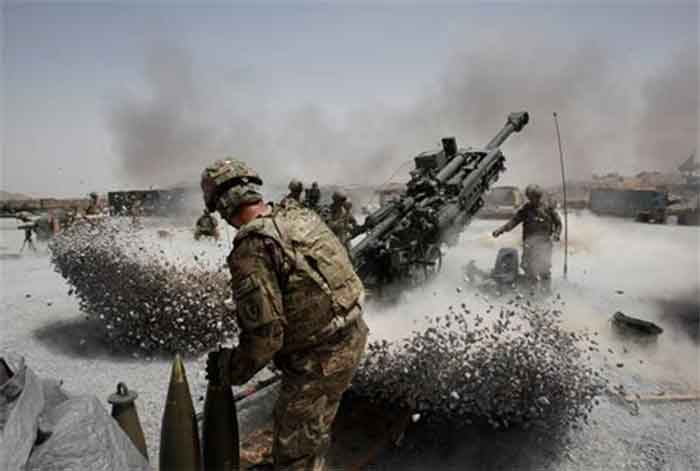
Baz Ratner/Reuters US troops in Afghanistan, June 2011
In this mystifying moment, the post-electoral sentiments of most Americans can be summed up either as “Ding dong! The witch is dead!” or “We got robbed!” Both are problematic, not because the two candidates were intellectually indistinguishable or ethically equivalent, but because each jingle is laden with a dubious assumption: that President Donald Trump’s demise would provide either decisive deliverance or prove an utter disaster.
While there were indeed areas where his ability to cause disastrous harm lent truth to such a belief — race relations, climate change, and the courts come to mind — in others, it was distinctly (to use a dangerous phrase) overkill. Nowhere was that more true than with America’s expeditionary version of militarism, its forever wars of this century, and the venal system that continues to feed it.
For nearly two years, We the People were coached to believe that the 2020 election would mean everything, that November 3rd would be democracy’s ultimate judgment day. What if, however, when it comes to issues of war, peace, and empire, “Decision 2020” proves barely meaningful? After all, in the election campaign just past, Donald Trump’s sweeping war-peace rhetoric and Joe Biden’s hedging aside, neither nuclear-code aspirant bothered to broach the most uncomfortable questions about America’s uniquely intrusive global role. Neither dared dissent from normative notions about America’s posture and policy “over there,” nor challenge the essence of the war-state, a sacred cow if ever there was one.
That blessed bovine has enshrined permanent policies that seem beyond challenge: Uncle Sam’s right and duty to forward deploy troops just about anywhere on the planet; garrison the globe; carry out aerial assassinations; and unilaterally implement starvation sanctions. Likewise the systemic structures that implement and incentivize such rogue-state behavior are never questioned, especially the existence of a sprawling military-industrial complex that has infiltrated every aspect of public life, while stealing money that might have improved America’s infrastructure or wellbeing. It has engorged itself at the taxpayer’s expense, while peddling American blood money — and blood — on absurd foreign adventures and autocratic allies, even as it corrupted nearly every prominent public paymaster and policymaker.
This election season, neither Democrats nor Republicans challenged the cultural components justifying the great game, which is evidence of one thing: empires come home, folks, even if the troops never seem to.
The Company He Keeps
As the election neared, it became impolite to play the canary in American militarism’s coal mine or risk raising Biden’s record — or probable prospects — on minor matters like war and peace. After all, his opponent was a monster, so noting the holes in Biden’s block of Swiss cheese presumably amounted to useful idiocy — if not sinister collusion — when it came to Trump’s reelection. Doing so was a surefire way to jettison professional opportunities and find yourself permanently uninvited to the coolest Beltway cocktail parties or interviews on cable TV.
George Orwell warned of the dangers of such “intellectual cowardice” more than 70 years ago in a proposed preface to his classic novel Animal Farm. “At any given moment,” he wrote, “there is an orthodoxy… that all right-thinking people will accept without question. It is not exactly forbidden to say this, that or the other, but it is ‘not done’ to say it… Anyone who challenges the prevailing orthodoxy finds himself silenced with surprising effectiveness.”
And that’s precisely what progressive paragon Cornel West warned against seven months ago after his man, Senator Bernie Sanders — briefly, the Democratic frontrunner — suddenly proved a dead candidate walking. “Vote for Biden, but don’t lie about who he really is,” the stalwart scholar suggested. It seems just enough Americans did the former (phew!), but mainstream media makers and consumers mostly forgot about the salient second part of his sentiment.
With the electoral outcome now apparent — if not yet accepted in Trump World — perhaps such politeness (and the policing that goes with it) will fade away, ushering in a renaissance of fourth estate oppositional truth-telling. In that way — in my dreams at least — persistently energized progressives might send President Joe Biden down dovish alternative avenues, perhaps even landing some appointments in an executive branch that now drives foreign policy (though, if I’m honest, I’m hardly hopeful on either count).
One look at Uncle Joe’s inbound nieces and nephews brings to mind Aesop’s fabled moral: “You are judged by the company you keep.”
Think-Tank Imperialists
One thing is already far too clear: Biden’s shadow national security team will be a distinctly status-quo squad. To know where future policymakers might head, it always helps to know where they came from. And when it comes to Biden’s foreign policy crew, including a striking number of women and a fair number of Obama administration and Clinton 2016 campaign retreads — they were mostly in Trump-era holding patterns in the connected worlds of strategic consulting and hawkish think tanking.
In fact, the national security bio of the archetypal Biden bro (or sis) would go something like this: she (he) sprang from an Ivy League school, became a congressional staffer, got appointed to a mid-tier role on Barack Obama’s national security council, consulted for WestExec Advisors (an Obama alumni-founded outfit linking tech firms and the Department of Defense), was a fellow at the Center for New American Security (CNAS), had some defense contractor ties, and married someone who’s also in the game.
It helps as well to follow the money. In other words, how did the Biden bunch make it and who pays the outfits that have been paying them in the Trump years? None of this is a secret: their two most common think-tank homes — CNAS and the Center for Strategic and International Studies (CSIS) — are the second- and sixth-highest recipients, respectively, of U.S. government and defense-contractor funding. The top donors to CNAS are Northrop Grumman, Boeing, and the Department of Defense. Most CSIS largesse comes from Northrop Grumman, Lockheed Martin, Boeing, and Raytheon.
How the inevitable conflicts of interest play out is hardly better concealed. To take just one example, in 2016, Michèle Flournoy, CNAS co-founder, ex-Pentagon official, and “odds-on favorite” to become Biden’s secretary of defense, exchanged emails with the United Arab Emirates (UAE) ambassador in Washington. She pitched a project whereby CNAS analysts would, well, analyze whether Washington should maintain drone-sales restrictions in a non-binding multilateral “missile technology control“ agreement. The UAE’s autocratic government then paid CNAS $250,000 to draft a report that (you won’t be surprised to learn) argued for amending the agreement to allow that country to purchase American-manufactured drones.
Which is just what Flournoy and company’s supposed nemeses in the Trump administration then did this very July past. Again, no surprise. American drones seem to have a way of ending up in the hands of Gulf theocracies — states with abhorrent human rights records that use such planes to surveil and brutally bomb Yemeni civilians.
If it’s too much to claim that a future defense secretary Flournoy would be the UAE’s (wo)man in Washington, you at least have to wonder. Worse still, with those think-tank, security-consulting, and defense-industry ties of hers, she’s anything but alone among Biden’s top prospects. Just consider a few other abridged resumes:
Tony Blinken, frontrunner for national security adviser: CSIS; WestExec (which he co-founded with Flournoy); and CNN analyst.
Jake Sullivan, a shoo-in for a “senior post in a potential administration”: the Carnegie Endowment for International Peace (“peace,” in this case, being fundedby 10 military agencies and defense contractors) and Macro Advisory Partners, a strategic consultancy run by former British spy chiefs.
Avril Haines, a top contenderfor CIA director or director of national intelligence: CNAS-the Brookings Institution; WestExec; and Palantir Technologies, a controversial, CIA-seeded, NSA-linked data-mining firm.
An extra note about Hicks: she’s the head of Biden’s Department of Defense transition team and also a senior vice president at CSIS. There, she hosts that think tank’s “Defense 2020” podcast. In case anyone’s still wondering where CSIS’s bread is buttered, here’s how Hicks opens each episode:
“This podcast is made possible by contributions from BAE Systems, Lockheed Martin, Northrop Grumman, and the Thales Group.”
In other words, given what we already know about Joe Biden’s previous gut-driven policies that pass for “middle of the road” in this anything but middling country of ours, the experiences and affiliations of his “A-Team” don’t bode well for systemic-change seekers. Remember, this is a president-elect who assured rich donors that “nothing would fundamentally change” if he were elected. Should he indeed stock his national security team with such a conflicts-of-interest-ridden crowd, consider America’s sacred cows of foreign policy all but saved.
Biden’s outfit is headed for office, it seems, to right the Titanic, not rock the boat.
Off The Table: A Paradigm Shift
In this context, join me in thinking about what won’t be on the next presidential menu when it comes to the militarization of American foreign policy.
Don’t expect major changes when it comes to:
One-sided support for Israel that enables permanent Palestinian oppression and foments undying ire across the Greater Middle East. Tony Blinken put itthis way: as president, Joe Biden “would not tie military assistance to Israel to things like annexation [of all or large portions of the occupied West Bank] or other decisions by the Israeli government with which we might disagree.”
Unapologetic support for various Gulf State autocracies and theocracies that, as they cynically colludewith Israel, will only continue to heighten tensions with Iran and facilitateyet more grim war crimes in Yemen. Beyond Michèle Flournoy’s professional connections with the UAE, Gulf kingdoms generously fund the very think tanks that so many Biden prospects have populated. Saudi Arabia, for example, offers annual donations to Brookings and the Rand Corporation; the UAE, $1 million for a new CSIS office building; and Qatar, $14.8 million to Brookings.
America’s historically unprecedented and provocative expeditionary military posture globally, including at least 800 bases in 80 countries, seems likely to be altered only in marginal ways. As Jake Sullivan put it in a June CSIS interview: “I’m not arguing for getting out of every base in the Middle East. There is a military posture dimension to this as a reduced footprint.”
Above all, it’s obvious that the Biden bunch has no desire to slow down, no less halt, the “revolving door” that connects national security work in the government and jobs or security consulting positions in the defense industry. The same goes for the think tanks that the arms producers amply fund to justify the whole circus.
In such a context, count on this: the militarization of American society and the “thank-you-for-your-service” fetishization of American soldiers will continue to thrive, exhibit A being the way Biden now closes almost any speech with “May God protect our troops.”
All of this makes for a rather discouraging portrait of an old man’s coming administration. Still, consider it a version of truth in advertising. Joe and company are likely to continue to be who they’ve always been and who they continue to say they are. After all, transformational presidencies and unexpected pivots are historically rare phenomena. Expecting the moon from a man mostly offering MoonPies almost guarantees disappointment.
Obama Encore or Worse?
Don’t misunderstand me: a Biden presidency will certainly leave some maneuvering room at the margins of national security strategy. Think nuclear treaties with the Russians (which the Trump administration had been systematically tearing up) and the possible thawing of at least some of the tensions with Tehran.
Nor should even the most cynical among us underestimate the significance of having a president who actually accepts the reality of climate change and the need to switch to alternative energy sources as quickly as possible. Noam Chomsky’s bold assertion that the human species couldn’t endure a second Trump term, thanks to the environmental catastrophe, nuclear brinksmanship, and pandemic negligence he represents, was anything but hyperbole. Yet recall that he was also crystal clear about the need “for an organized public” to demand change and “impose pressures” on the new administration the moment the new president is inaugurated.
Yet, in the coming Biden years, there is also a danger that empowered Democrats in an imperial presidency (when it comes to foreign policy) will actually escalate a two-front New Cold War with China and Russia. And there’s always the worry that the ascension of a more genteel emperor could co-opt — or at least quiet — a growing movement of anti-Trumpers, including the vets of this country’s forever wars who are increasingly dressing in antiwar clothing.
What seems certain is that, as ever, salvation won’t spring from the top. Don’t count on Status-quo Joe to slaughter Washington’s sacred cows of foreign policy or on his national security team to topple the golden calves of American empire. In fact, the defense industry seems bullish on Biden. As Raytheon CEO Gregory Hayes recently put it, “Obviously, there is a concern that defense spending will go way down if there is a Biden administration, but frankly I think that’s ridiculous.” Or consider retired Marine Corps major general turned defense consultant Arnold Punaro who recently said of Biden’s coming tenure, “I think the industry will have, when it comes to national security, a very positive view.”
Given the evidence that business-as-usual will continue in the Biden years, perhaps it’s time to take that advice from Cornel West, absorb the truth about Biden’s future national security squad, and act accordingly. There’s no top-down salvation on the agenda — not from Joe or his crew of consummate insiders. Pressure and change will flow from the grassroots or it won’t come at all.
Enter the empire’s Trojan Horse, Sleepy Joe Biden. Good ole dependable Joe always gave the illusion of being for us working stiffs. Wasn’t he even christened ‘ Lunchbox Joe’? Yet, we on the real Left in Amerikan politics knew what Biden has always been about. As the Senator from both DuPont and the corporate tax haven
of Delaware, Biden was more a traditional Republican than a Democrat
We were all taught in grade school of the story of the ‘ Trojan Horse’ . In it’s war with Troy the Greeks built a gift of a giant horse. They informed the Trojans that , after 10 years of war, they had had enough. Once inside of Troy, the Greek horse, filled with armed men, attacked the unknowing Trojans.
As with most of our modern day presidential elections, the empire chooses candidates from the Two Party/One Party system. These two, regardless of how different they may appear, both are sure to serve their Military Industrial Empire handlers. Obviously, after the ‘ Horses’s…. ‘ won the White House, his megalomania and total indifference to suffering led him right off the reservation. This was NOT exactly what the empire wanted. Yes, they used Trump to make sure they, the true Swamp, got the corporate and personal tax relief they wanted. Factor in Trump’s use of executive power to allow them to run ram shod over age old regulations, and our environment has rapidly gone down the drain. These assurances they orchestrated, but even THEY, the true owners of our country, saw the handwriting on the wall. Trump was TOO terrible! He had to go.
Enter the empire’s Trojan Horse, Sleepy Joe Biden. Good ole dependable Joe always gave the illusion of being for us working stiffs. Wasn’t he even christened ‘ Lunchbox Joe’? Yet, we on the real Left in Amerikan politics knew what Biden has always been about. As the Senator from both DuPont and the corporate tax haven of Delaware, Biden was more a traditional Republican than a Democrat. Check out his record folks, on so many issues. The empire loved him for decades. He supported the illegal and immoral war on Iraq, always voting to give more and more of our tax dollars to the Bush/Cheney Cabal. He was the chief Democrat to push for the 2005 Bankruptcy bill that made it extremely difficult for consumers to file for bankruptcy, and not lose it all. At the time, Senators like Bernie Sanders, Barack Obama, Diane Feinstein and Chuck Schumer all voted against that bill. He was the 2nd biggest recipient in Congress of donations from MBNA , the Delaware based credit card company ( later purchased by Bank of America). Spanning his Senate career Biden was high up in the list for campaign donations from the Securities and Investment industries, all part of ‘ Wall Street’ . Now he is ‘ President Elect’, so what can we really expect?
Having said all of the above, this writer had NO choice but to vote for Sleepy Joe and all the Democrats on the ballot on November 3rd. Why? Well, the other choice, another example of this ‘ Lesser of Two Evils’ system we live under, has moved so far to the right that they are actually OFF THE RADAR COMPLETELY! Neo Fascism is now upon us folks. Trump, being the poster boy for this mindset, had to be stopped, along with the sick and demented corporate scum he speaks for. No matter how bad the ‘ Trojan Horse ‘ will become, the empire, or the authentic ‘ Deep State’ , knows they have to hand out some band-aids for Biden and co. to use. It will be up to us, the ( hopefully) awakened public, to get out there and demand progressive changes… and quick! My mantra had recently been for the adoption of a viable Universal Basic Income of anywhere from $ 1200 to $ 2000 per month per citizen, with children ( up to 2 per family ) receiving half. Without the UBI our economy can never be truly stimulated enough. With it, small businesses will not only survive, but prosper and grow. Imagine the results of such a plan. Yes, there are a slew of ideas needed, like true ‘ Medicare AND Dental Care for All ‘, a Green New Deal, taxing the Mega Millionaires, closing corporate tax loopholes, cutting drastically our obscene military spending and 1000+ bases worldwide, Public Banking ( especially community owned and run mortgage banks), Community control of our police, free public education and student loan debt relief, and community owned and run rental property ( for residents and small businesses )… to name just a few.
A former talk show host ( sadly, a right winger) had the best ending for his show: ” Your influence counts… Use it!’
Philip A Farruggio is a contributing editor for The Greanville Post. He is also frequently posted on Global Research, Nation of Change, Countercurrents.org, and Off Guardian sites. He is the son and grandson of Brooklyn NYC longshoremen and a graduate of Brooklyn College, class of 1974. Since the 2000 election debacle Philip has written over 400 columns on the Military Industrial Empire and other facets of life in an upside down America. He is also host of the ‘ It’s the Empire… Stupid ‘ radio show, co produced by Chuck Gregory. Philip can be reached at paf1222@bellsouth.net
The emergence of AIMIM in Seemanchal with five winning seats has shocked those who believe in secular politics and reject identity/religious based politics. But the existing realities and the continuous ignorance of Seemanchal by MGB and JD (U) paved the way for the substantial rise of AIMIM. Due to the death of old leaders the region has been facing leadership crisis who could provide leadership and gain the confidence of the people. The next generation MGB and JD (U) local leaderships could not fill the gap created by those old leaders even with winning the elections.
Jharkhand: The Curse of Development and Displacement
The formation of Jharkhand on the behest of development and change in the life of local people were
actually political gimmick to encash the euphoric regional sentiments for power. The ruling national parties used to retreat in policy matters that threatens their political stability in changing political atmosphere due to the rise of regional parties conditioned to regional movements. Jharkhand is one of the best example of this flimsy politics where national parties retain its political bases through championing stands be it preservation of regional identity or development agenda altogether rhetorically used to seduce masses and to make orphan region’s emerging powers.
Development Vs Dispossession: Dhinkia Rejects IOCL Pipeline
Right now, Dhinkia is erupting in protest against the Indian Oil Corporation Liminted’s (IOCL) Paradip- Hyderabad Pipeline Project. The 1212 km pipeline intends to cover 329kms in Odisha, 723kms in Andhra Pradesh and 160kms in
Telangana. At a project cost of Rs 3338, it envisages pumping stations at Paradip & Berhampur (in Odisha); Vizag, Rajahmundry & Vijayawada (in Andhra Pradesh); delivery facilities at Berhampur (in Odisha), Vizag, Achutapuram, & Vijayawada (in Andhra Pradesh) and Hyderabad (in Telangana) for transporting 4.5 MMTPA of petrol, diesel, and aviation fuel. The initial pipeline length of 91.4 km from Paradip will be laid in existing Right of Way of Paradip-Raipur-Ranchi Pipeline in the districts of Jagatsinghpur, Cuttack, Khurda and Puri.
Just as it takes grit and perseverance to break the mighty mountains, standing up to the oppressor demands conviction, solidarity and sustained agitations. Dhinkia, a small village in the costal district Jagatsinghpur of the Odisha state is a living testimony to this. Famous for its sweetest paan (betel vines), the village (also a Gram Panchayat) for decades has seen the bitterest days of state repression in the name of development. Be it with the domestic conglomerates like Tata, and Jindal, or the international players like South Korea’s POSCO and American AES Company, the various joint industrial ventures by the state and central government have left no stone unturned, in forcefully acquiring common lands, jeopardizing ecology and violating livelihood and human rights of the tribals and villagers in this natural resource rich region.
Paradip- Hyderabad Pipeline Project
Right now, Dhinkia is erupting in protest against the Indian Oil Corporation Liminted’s (IOCL) Paradip- Hyderabad Pipeline Project. The 1212 km pipeline intends to cover 329kms in Odisha, 723kms in Andhra Pradesh and 160kms in Telangana. At a project cost of Rs 3338, it envisages pumping stations at Paradip & Berhampur (in Odisha); Vizag, Rajahmundry & Vijayawada (in Andhra Pradesh); delivery facilities at Berhampur (in Odisha), Vizag, Achutapuram, & Vijayawada (in Andhra Pradesh) and Hyderabad (in Telangana) for transporting 4.5 MMTPA of petrol, diesel, and aviation fuel. The initial pipeline length of 91.4 km from Paradip will be laid in existing Right of Way of Paradip-Raipur-Ranchi Pipeline in the districts of Jagatsinghpur, Cuttack, Khurda and Puri.
The proposed pipeline route
IOCL has initiated the project by digging up around 11 acres of land in the Dhinkia Gram Panchayat. However, this isn’t any private land, but the common grazing land of the village (gochar land), where thousands of cattle are reared for sustaining a population of over 4000 people. This is posing serious livelihood challenges to not only Dhinkia but all the 11 villages in the Panchayat. The people who swear by the paan, meen and dhaan ( betal, fish and grains) for their life, alleges that the new pipeline construction is polluting their air and drying up water sources. Though IOCL provides water tankers, they say it is inadequate to meet the daily needs.
Ecological Damages
The PHPL also possess grave dangers in terms of ecological damages as it passes through the forest divisions like Rajnagar, Cuttack, Puri, City Forest, Khurda, Nayagarh, Ghumsur North, Ghumsur South and Berhampur. Already Paradip is one of the most polluted regions in the state owing to the port and refineries. Vast swathe of forests, farmland and water bodies are already exploited and polluted, thanks to a plethora of industrial projects. Now in case of any slightest possibility of pipeline leakage or accidental fire, the region may have to bear the brunt of unprecedented environmental and livelihood consequences.
Pipelines laid across the grazing land
People’s Demands
In the following letter (placed in public domain) to the District Collector Jagatsingpur , people of Dhinkia Panchayat have put forwarded their demands:
“We the people of Dhinkia Gram Panchayat have been facing unprecedented repression in the last 20 years for demanding rights from the Govt. and companies like POSCO, Indian Oil and others. We have been deprived from all facilities and are somehow managing to eke out a living. In this situation Indian Oil is trying to construct its pipeline on Dhinkia’s community grazing land without following any rules and without our consent. This is a condemnable and undemocratic act. The District Administration and Indian Oil must meet our following demands else we the people of Dhinkia will protest against the project –
We consider the act of constructing pipelines on our community land without our permission while our cows are grazing there to be a grave offense. We demand an inquiry into the matter and action to be taken against the guilty. The grazing land must be restored to its original state immediately.
Twenty years ago Indian Oil snatched our farming lands for its refinery and made false promises of providing us with employment. We are yet to get any employment in the refinery and having lost our farm land we lead a very difficult life. Moreover outsiders are being given jobs but not people from our Panchayat. Indian Oil must fulfill its promise.
Indian Oil had declared it would ‘adopt’ Dhinkia Panchayat but till date we have not seen a single development activity initiated by Indian Oil. The company has made no contribution in the development of health, education, agriculture, livelihood, transports, etc. We demand the following provisions from Indian Oil i)Drinking water facilities in the village ii)Construction and maintenance of village roads iii. Lighting of village roads iv) Repair and maintenance of Primary Health Centre, appointment of Doctors and supporting staff
For hundreds of years we have protected and lived off the forestland. Apart from our betel vineyards, we grow cashew, coconut, moringa, mango, jackfruit, areca nut, pineapple, etc and raise our cattle and poultry in this forestland. This forestland should not be handed over to anyone else and rather the ownership of this land should be give to the landless villagers.
During the democratic movement to stop the land grab for the POSCO project many of the villagers were framed under several false cases. We continue to live with fear and insecurity that these cases will be used to victimize us. We demand that all these cases should be immediately withdrawn.
Due to the close proximity of the Indian Oil refinery we demand for a consultation meeting with the district administration, Indian Oil authorities, and the people of the Panchayat to address the several issues arising from its presence.
It is our heartfelt request to take up this matter with urgency so that the people of the Panchayat can be relieved from this two decade old mental, physical, emotional and economic trauma.”
Rights Violations
The fact that IOCL has not taken any prior permission officially from the Panchayat is in violation of the Odisha Gram Panchayat Act. The village also alleges that IOCL has also violated the Odisha Rehabilitation and Resettlement Act of 2006, as there are already 143 families dispossessed and remaining without any compensation since the anti POSCO days. While corresponding to this writer, Debendra Swain, Samiti member of Dhinkia Panchayat has alleged of police highhandedness and public threatening against the protest. Considering the history of filing false cases and atrocities on the indigenous villagers during the anti POSCO and anti JSW movements, this isn’t a new norm.
Continuing the Protests
People of Dhinkia protesting agsinst the pipeline
According to Prasant Paikray, spokeperson POSCO PRATIRODH SAGRAM SAMITI (PPSS) & Co-ordinator Orissa State Co-ordination Committee for Campaign against Displacement & SEZ, the district administration on the 17th of November 2020, has convened a meeting for talks with the villagers, where they’ve asked for the latter’s cooperation and offered to implement the development activities in a gradual manner. However, in a meeting of the Panchayat on 20th November, the villagers have decided to adopt a two strand strategy of not cooperating with IOCL unless their demands are met, and to continue their fight legally.
Thus, for the people of Dhinkia, this agitation isn’t just a matter of their livelihoods, but also about asserting their basic right to live with dignity and freedom enshrined in the law. Or in reminding the state what Amartya Sen says in “Development as Freedom”: that “Development consists of the removal of various types of unfreedoms that leave people with little choice and little opportunity of exercising their reasoned agency.”
Lekshmi Sujatha– Primarily a concerned citizen, who loves to read, write and acquire knowledge in the field of law, politics and human rights. As a student of governance- who has finished a PG Diploma in Facilitating Governance Reforms from TISS & Barefoot Academy of Governance, Chennai- and an aspiring law student, I’m keen on responding to issues concerning gender, minorities and DBA, and their rights violation. I also contribute articles and opinion pieces, and have experience as a freelance/ online content writer. Email: leks333@gmail.com
Several leading Hindi newspapers have brazenly mouthed the Hindutva narrative of anti-woman and anti-Muslim “Love-Jihad” conspiracy theory and justified the proposal of the BJP ruled state to come out with a strong law against it.