
10 January 23
Live on the homepage now!
Reader Supported News
FAIR WARNING TO EVERYONE ON DONATIONS: The amount of money we need to raise may not be much, but we have to raise it. There is no alternative. We hate fundraising, you hate fundraising but this has to happen. At this point we can raise everything we need in one day. That is not an exaggeration … it’s a real opportunity. We’re going to start to push hard now.
Marc Ash • Founder, Reader Supported News
Sure, I'll make a donation!
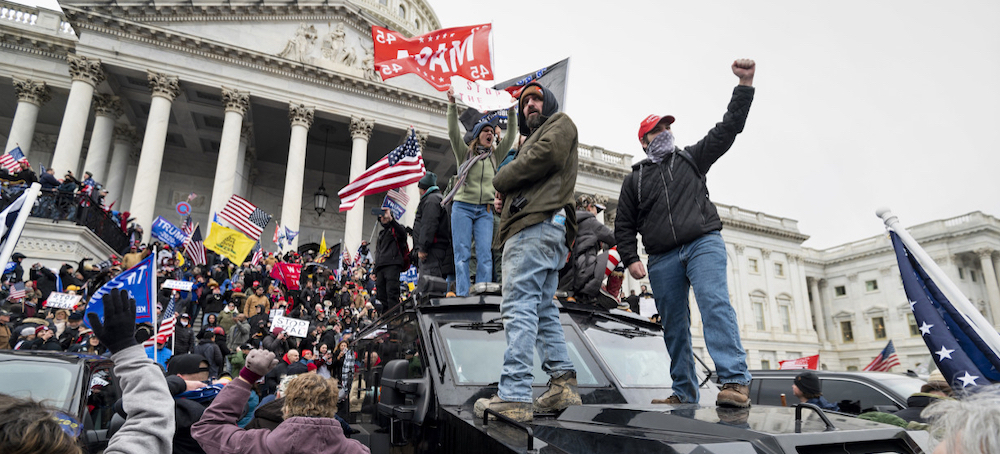
Jill Lepore | What the January 6th Report Is Missing
Jill Lepore, The New Yorker
Lepore writes: "The Government Publishing Office's eight-hundred-and-forty-five-page report of the Select Committee to Investigate the January 6th Attack on the United States Capitol is divided into eight chapters, makes eleven recommendations, attaches four appendices, and includes four thousand two hundred and eight-five endnotes."
READ MORE
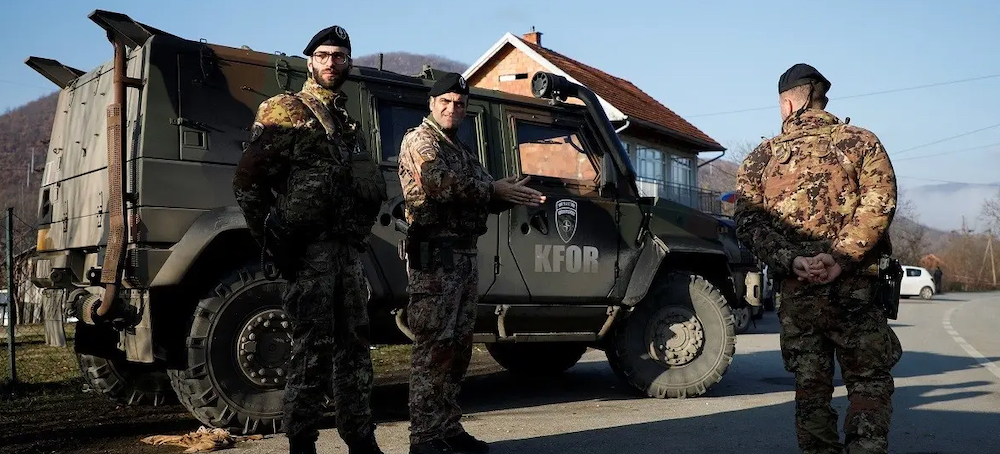 Members of the Italian Armed Forces, part of the NATO peacekeeping mission in Kosovo, stand near a roadblock in Rudare, near the northern part of the ethnically-divided town of Mitrovica, Kosovo, December 29, 2022. (photo: Reuters)
Hamza Karcic | NATO Should Renew Its Commitment to Kosovo
Hamza Karcic, Al Jazeera
Karcic writes: "On December 10, ethnic Serbs started setting up roadblocks in northern Kosovo, near the Serbian border, to protest against the arrest of an ethnic Serb former police officer."
Serbia’s refusal to accept Kosovo’s sovereignty is increasing the possibility of renewed conflict in the region.
On December 10, ethnic Serbs started setting up roadblocks in northern Kosovo, near the Serbian border, to protest against the arrest of an ethnic Serb former police officer. The situation soon escalated into a dangerous standoff between Kosovo and Serbia, with Pristina calling on NATO-led international peacekeeping forces in Kosovo (KFOR) to intervene, and Belgrade announcing its army was on “the highest level of combat readiness” due to tensions at the border.
After holding talks with Serbia’s President Alexandar Vucic, and receiving guarantees from Kosovo’s Western partners that they would not face arrest over the incident, the protesters eventually started dismantling the roadblocks on December 29.
With the end of roadblocks and the reopening of border crossings, the crisis appeared to come to an end. But the escalation in December was not the first incident that almost pushed Serbia and Kosovo into open conflict and it is highly unlikely to be the last.
The fragile relationship between the two neighbouring countries has been on the verge of collapse since last summer, when Kosovo’s government started taking steps to exercise sovereignty over the country’s entire territory.
At the end of July, the government of Albin Kurti demanded all citizens of Kosovo – including ethnic Serbs who refuse to recognise Pristina’s authority and still consider themselves a part of Serbia – start carrying IDs and using licence plates issued by Kosovo. In response, ethnic Serbs in the north barricaded roads and threatened violence, leading KFOR forces to start patrolling the streets in the region. A few days later, following mediation by the European Union and the United States, Pristina and Belgrade reached a deal on ID documents but left the issue of licence plates to be resolved at a later date. In November, after months of protests, occasional clashes, and even mass resignations by ethnic Serb state employees, the licence plate issue was finally resolved with the signing of a deal that required Serbia to stop issuing licence plates with markings indicating Kosovo cities and Kosovo to cease its demands for reregistration of vehicles carrying Serbian plates.
The latest standoff at the borders came just a few weeks after this landmark deal, demonstrating that the tensions between Kosovo and Serbia are chronic, and will not be truly resolved until mutual recognition is achieved.
Indeed, recent escalations between Serbia and Kosovo have followed a clear pattern. Kosovo attempts to exercise sovereignty over its whole territory; Belgrade responds by stoking unrest using the ethnic Serbs in the north as its proxies. The EU steps in, brokers a deal and stops the unrest from escalating into a cross-border conflict. Then the cycle is repeated.
All this shows that the recurring tensions between Serbia and Kosovo, and between Kosovo and its ethnic Serb citizens in the north of the country, actually have little to do with practicalities of governance such as licence plates, and everything to do with one core issue: Kosovo’s independence.
Almost a quarter of a century ago, NATO responded to the brutal violence perpetrated by Serbia in Kosovo by undertaking a humanitarian intervention, defeating Serbian strongman Slobodan Milosevic’s troops and forcing them to withdraw from Kosovo. Since then, Kosovo has been working hard to build itself up as a state and in 2008 officially declared its independence from Serbia. In the years since, more than 100 countries recognised it as an independent nation and it joined several international institutions, such as the World Bank and the IMF. In 2010, the International Court of Justice ruled Kosovo’s declaration of independence legal.
Serbia never accepted this new state of affairs and tried to undermine Kosovo’s sovereignty at every opportunity since 2008.
In 2013, Kosovo’s then-Prime Minister Hashim Thaci and Serbia’s then-President Ivica Dacic signed an agreement hammered in Brussels to try and normalise relations between the two nations. In the hopes of preventing ethnic grievances from hindering peace in the region, the agreement detailed conditions for large-scale devolution of northern Kosovo and its majority ethnic Serb population.
Nearly a decade has passed since the signing of this “historic” deal, but as the events since last summer demonstrate, normalisation is still proving elusive. Furthermore, there are fears that this agreement itself may pave the way for the next standoff between Serbia and Kosovo.
The 2013 agreement provided for the merger of the four Serb municipalities in the north – North Mitrovica, Zvecan, Zubin Potok and Leposavic – into an “Association of Serbian Municipalities” that would have extensive powers over economic development, education, healthcare and town planning in Serb-majority areas of Kosovo.
Now that IDs, licence plates, and barricades are out of the way, Belgrade is focusing on ensuring the swift formation of this association. Pristina, however, is sceptical of the purpose and supposed utility of such a move. In November 2015, the government of Kosovo froze its plans to establish the association, drawing accusations from Dacic that it is “threatening regional stability”. A few months later, the Constitutional Court of Kosovo declared parts of the 2013 deal, including the point on the municipality association “unconstitutional”.
While Belgrade, with support from the EU and US, has long been agitating for the reinstatement of the project, the current Kurti government seems determined not to allow the establishment of an Association of Serb Municipalities. In an interview with Al Jazeera Balkans in late August 2022, Kurti drew attention to similar ethnicity-based municipality communities that embarked on a separatist project in Bosnia and Herzegovina in 1992, expressing concern that an Association of Serb Municipalities could function as Kosovo’s own Republika Srpska – an “autonomous” political entity loyal to Belgrade that is powerful enough to hinder the functioning of the state.
The events of the past few months, coupled with the ongoing back and forth over the possible formation of a Serbian municipality community indicate we will likely witness many more cycles of escalation between Kosovo and Serbia in the new year.
But is there a feasible path to normalisation?
There is a Franco-German plan under way that proposes to facilitate Serbia’s quick accession to the EU in exchange for recognition of Kosovo’s independence. Kurti is reportedly in favour of the plan. Serbia’s Vucic, however, already declared that such an exchange is unacceptable for his country.
With the EU’s primary plan to resolve Kosovo-Serbia tensions unlikely to deliver swift results, Pristina appears to be looking at Washington for any possible remedies to its Serbia problem. But the US, focussed on Russia’s war in Ukraine and its repercussions, also appears unable to draw an easy path for normalisation. Furthermore, as Kurti recently warned NATO countries, there is a risk that Russia may flame tensions between its regional ally Serbia and Western-oriented Kosovo, either to move attention away from his failures in Ukraine, or to distract NATO counties with yet another European conflict.
Of course, all diplomatic efforts to achieve normalisation between Serbia and Kosovo should continue, but there is little hope that Serbia will accept Kosovo’s independence and start respecting its sovereignty anytime soon. Given the expectation of continuing strife between the two neighbouring states, three policy steps should be taken to enhance Kosovo’s security.
First, NATO’s presence in Kosovo should be beefed up. With 3,800 soldiers, KFOR is already a formidable force and a pillar of Kosovo’s stability. But by increasing troop numbers, NATO can send a strong message to Serbia, Russia and the world regarding its commitment to the region and to Kosovo’s viability as an independent state.
Second, the US should boost its support – in terms of both equipment and training – for Kosovo’s police force. While KFOR is useful now, in the long term, only a strong national police force can ensure the stability of the country and the security of all its citizens.
Third, Kosovo should be put on a fast track to NATO admission. Kosovo is a reliable pro-Western partner in Southeast Europe and NATO already invested significantly in the country’s security. Only NATO membership can ensure that it does not end up in a power vacuum and enter into active conflict with Serbia.
More than two decades after the NATO intervention and almost 15 years after Kosovo’s declaration of independence, Belgrade is still refusing to recognise the facts on the ground and accept Kosovo’s sovereignty. If Pristina’s Western allies are serious about keeping peace in the region, they should renew their commitment to Kosovo before it is too late.
READ MORE
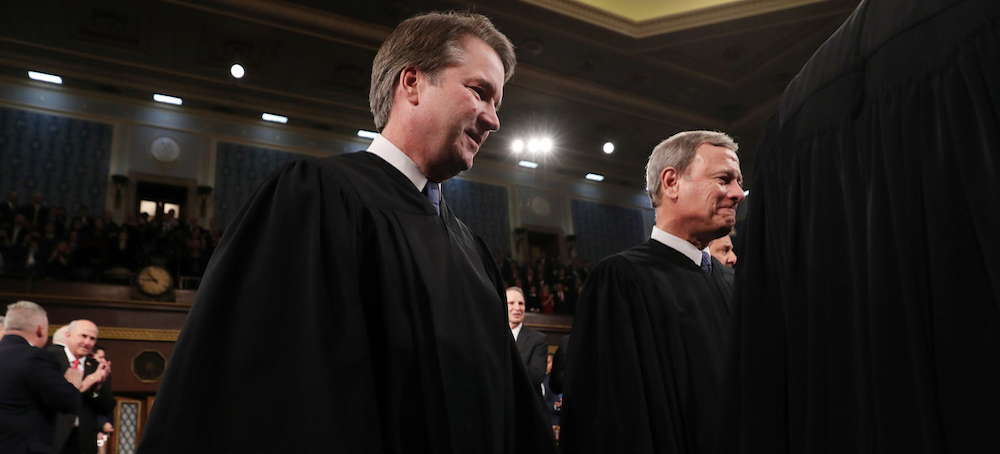 Justice Brett Kavanaugh and Chief Justice John Roberts. (photo: Getty Images)
Fears US Supreme Court Could Radically Reshape Clean Water Rules
Oliver Milman, Guardian UK
Milman writes: "A 15-year legal tussle over a tiny plot of land near a lake in northern Idaho could culminate in the US supreme court drastically reshaping clean water laws across the country, with a decision by the conservative-dominated court now looming."
Conservative-majority court could soon decide on scope of Clean Water Act, dramatically affecting laws and wetlands countrywide
A15-year legal tussle over a tiny plot of land near a lake in northern Idaho could culminate in the US supreme court drastically reshaping clean water laws across the country, with a decision by the conservative-dominated court now looming.
The case is the latest and perhaps most significant of the repeated challenges to the scope of the Clean Water Act, which has been the subject of 50 years of fraught argument over the federal government’s ability to prevent pollution seeping into America’s waterways.
The supreme court takes up barely 1% of the cases presented to it but in October decided to ponder the crusade by a married couple, Michael and Chantell Sackett, to challenge what they view as an egregious government attack on their property rights.
In 2004, the Sacketts purchased a roughly half-acre patch of land beside Priest Lake, a crystalline body of water popular with boaters nestled in the scenic wilderness of the Idaho panhandle. The couple set about constructing a three-bedroom home on the plot, but as they filled the site with gravel they were told by the Environmental Protection Agency (EPA) they were erasing a federally-protected wetland and required a permit.
Since 2007, three presidential administrations ago, the plot has remained unoccupied as the Sacketts, or rather the libertarian Pacific Legal Foundation that has taken up the battle on their behalf, fought the EPA’s finding through the courts.
Pat Parenteau, environmental law expert at the Vermont Law School, told the Guardian he was anxious about the supreme court’s involvement. “The court seem[s] eager to upset the norm, they are power mad right now. They (the conservatives) are in the solid majority and feel they can do whatever they want to do, even if that impacts water quality for the whole country.
“It’s one tiny wetland in northern Idaho, for crying out loud. What makes the court think it’s in a position to draw a bright line in a decision that impacts the length and breadth of the US, with all of its climate and topographical differences?” said Parenteau.
The Sacketts are no strangers to the highest court in the land. In 2012, the supreme court agreed with the couple’s argument that they could challenge the tens of thousands of dollars in fines levied by the EPA. Three years later, in an unrelated case, Michael Sackett was sentenced to a year in prison following a sting operation in which he agreed to pay for sex with a 12-year-old girl.
EPA’s “bureaucrats used a made-up definition of ‘navigable waters’ to deny us the right to use our own property – a right that’s protected in the constitution,” the Sacketts said in a joint statement.
“We’ve spent 15 years of our lives fighting the illegal land grab under the Clean Water Act. Our property is still vacant and our rights are still violated. We hope that the supreme court will hear our case and settle the navigable waters question once and for all,” they added.
“It’s high time to finish the job we started – to end our personal nightmare and ensure that no other Americans suffer the same predatory government abuse.”
The Pacific Legal Foundation, which has been backed by corporate interests including entities linked to the Koch brothers, has said the case highlights “abuse by overzealous federal regulators”. But the bigger prize is the potential rollback of the EPA’s use of the Clean Water Act, the 1972 legislation that has endured a tumultuous history in terms of its interpretation.
The law states the federal government is to regulate “navigable” waters, which is broadly understood to include large bays, rivers and lakes such as Lake Priest. It also stipulates federal protection for wetlands “adjacent” to major bodies of water, which the EPA insists includes the wetlands situated just a few hundred feet from Lake Priest.
But arguments have raged over whether more “ephemeral” streams are included, or the extent of protection for water flowing into larger bodies of water, given the interconnectedness of water pollution. The Sacketts claim that a road and housing development across the wetlands has severed its “adjacent” status to the lake.
Barack Obama’s administration broadened the definition of these protections to include a vast swathe of American waters, before Donald Trump subsequently gutted these regulations. In December, the EPA released a new rule that sits somewhat between Obama and Trump, in what Michael Regan, administrator of the agency, said should be a “durable definition” of what constitutes ‘waters of the United States.’
The supreme court, meanwhile, previously had a split 2006 ruling in which justices could not agree on the vague definitions of the act. If the current court sides with the more narrow interpretations of protections, as was advocated by the late justice Antonin Scalia, the Sacketts may finally be able to build their house.
This would have sweeping impacts but would unlikely be the final chapter in the saga of America’s clean water rules. “The Sacketts may well get a win, but it all depends on the level of that victory, whether it’s a landmark sweeping decision or a more narrow question of jurisdiction,” said Parenteau.
“If the Pacific Legal Foundation gets its way then half of the wetlands in the US lose protection and that does serious damage. This court is going to try to write an opinion overruling all the expertise and with all the variance in water in different parts of the country – good luck to them on that.
“But whatever the opinion says, it’s going to be challenged until Congress adds more clarity because we can’t come to an agreement nationally on this. It’s endless, it just goes on and on.”
READ MORE
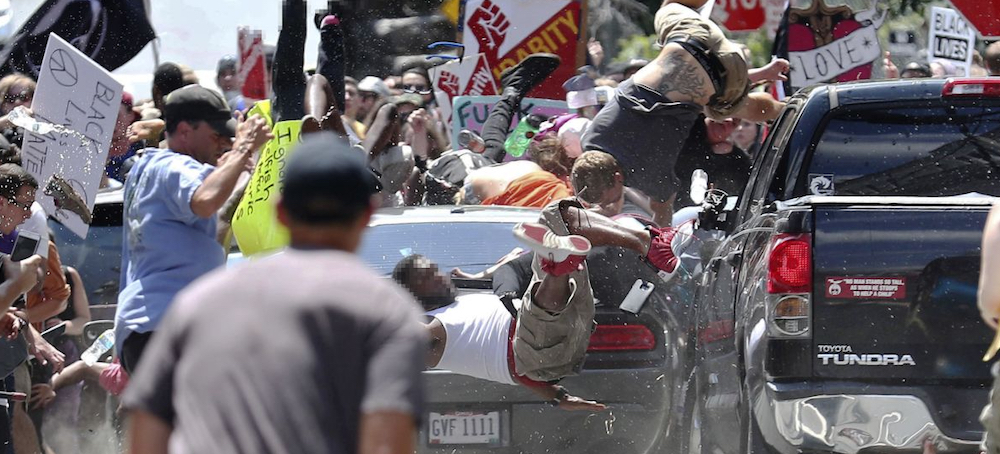 People fly into the air as a vehicle drives into a group of protesters demonstrating against a white nationalist rally Saturday in Charlottesville, Virginia. (photo: Ryan M. Kelly/The Daily Progress/AP)
Judge Slashes Damages Awarded in Deadly Charlotteville Rally
Denise Lavoie, Associated Press
Lavoie writes: "A federal judge has slashed millions of dollars from the damages a jury ordered white nationalist leaders and organizations to pay for their role in the violence that erupted during the deadly 'Unite the Right' rally in Charlottesville in 2017."
Afederal judge has slashed millions of dollars from the damages a jury ordered white nationalist leaders and organizations to pay for their role in the violence that erupted during the deadly “Unite the Right” rally in Charlottesville in 2017.
U.S. District Judge Norman Moon ordered the $24 million in punitive damages reduced to $350,000, the cap imposed under a Virginia law. Moon upheld the $2 million in compensatory damages awarded by the jury in November 2021.
The reduction in damages was expected because of the 1988 state law, which says that juries should not be told about the cap, but if a jury awards more than $350,000 in punitive damages, the judge must reduce the award.
Moon's ruling also affirmed the jury's central finding that the defendants — including some of the most well-known white nationalists in the country — were liable under a state conspiracy law for planning and participating in the rally.
The lawsuit was filed by nine people who alleged they were physically injured, emotionally scarred — or both — by the violence that erupted in August 2017, when hundreds of white supremacists traveled to Charlottesville, ostensibly to protest city plans to remove a statue of Confederate Gen. Robert E. Lee.
During a march on the University of Virginia campus on Aug. 11, white nationalists chanted “Jews will not replace us,” surrounded counter-protesters and threw tiki torches at them. The following day, James Alex Fields Jr., an avowed Hitler admirer, intentionally drove his car into a crowd of counter-protesters, killing 32-year-old Heather Heyer and injuring many others.
Clashes between the white nationalists and anti-racism protesters prompted authorities to declare the gathering on Aug. 12 an “unlawful assembly” and to order crowds to disperse. It was after that announcement that Fields rammed his car into a group of counter-protesters.
The violence shocked the nation, and a political firestorm erupted after then-President Donald Trump failed to strongly denounce the white nationalists, saying there were “very fine people on both sides.”
Fields is serving life in prison for murder and hate crimes.
The other defendants in the civil case included Jason Kessler, the rally’s main organizer; Richard Spencer, who coined the term “alt-right” to describe a loosely connected band of white nationalists, neo-Nazis and others; and Christopher Cantwell, a white supremacist who became known as the “crying Nazi” for posting a video when a warrant was issued for his arrest on assault charges for using pepper spray against counterdemonstrators.
Attorneys for the plaintiffs argued that Virginia's punitive-damages cap does not apply in a case involving a conspiracy to commit racial violence. They also argued that even if the cap does apply, it applies only on a “per-plaintiff basis,” meaning that each of the eight plaintiffs who sought punitive damages should receive $350,000. Moon rejected both arguments, writing in his ruling that the plain language of the law makes it clear that the cap applies in all types of lawsuits and to each case as a whole, not to individual plaintiffs.
Attorneys Roberta Kaplan and Karen Dunn said they are “carefully considering" an appeal to the 4th U.S. Circuit Court of Appeals on the punitive damages cap.
In his ruling last week, Moon also upheld the jury's finding that six of the defendants were liable for “racial, religious, or ethnic harassment or violence.” The judge also affirmed the jury's finding that Fields was liable for assault and battery and intentional infliction of emotional distress.
“Judge Moon’s lengthy opinion reviewing the mountain of evidence we introduced at trial and affirming the jury verdicts on the culpability of each and every defendant confirms what really happened -- motivated by the tenets of white supremacy, defendants engaged in a wide-ranging conspiracy to commit violence in Charlottesville in August 2017," Kaplan and Dunn said in a statement.
Jonathan Turley, a professor at George Washington University Law School who has been a vocal critic of state caps on damages, said such limitations can blunt the impact of a jury's verdict.
“It's relatively rare to have punitive damages — they are reserved for the most egregious cases where they jury feels that the conduct warrants something beyond mere compensatory damages,” Turley said. “The whole point of punitive damages is that the jury does not believe that compensatory damages would deter future conduct. Compensatory damages make the victims whole; punitive damages are designed to deter future conduct.”
Jurors in the civil trial were unable to reach unanimous verdicts on two claims based on a 150-year-old federal law passed after the Civil War to shield freed slaves from violence and protect their civil rights. The Ku Klux Klan Act contains a rarely used provision that allows private citizens to sue other citizens for civil rights violations.
Under those claims, the plaintiffs asked the jury to find that the defendants engaged in a conspiracy to commit racially motivated violence and that they knew about the conspiracy but failed to stop it from being carried out. Jurors deadlocked on those claims.
READ MORE
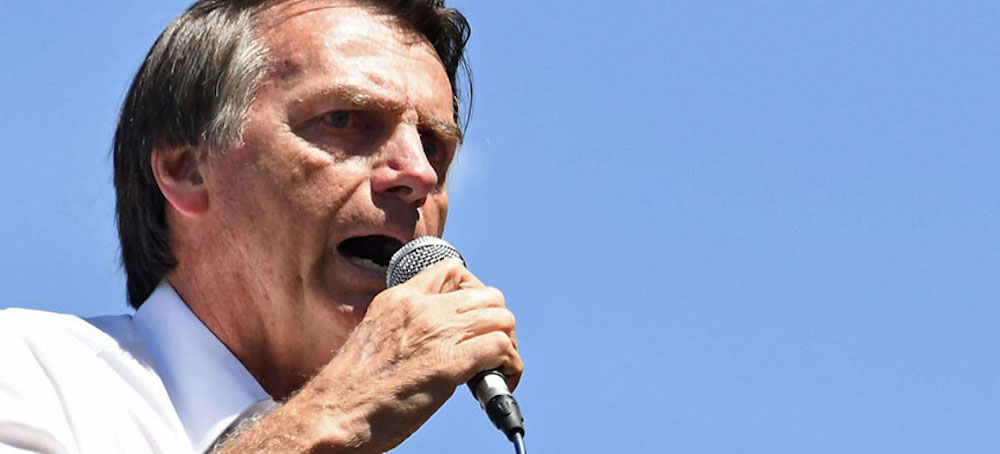 Jair Bolsonaro. (photo: Evaristo Sa/Getty Images)
Brazil's Riot Puts Spotlight on Close Ties Between Bolsonaro and Trump
Michael Kranish and Isaac Stanley-Becker, The Washington Post
Excerpt: "In August 2021, Brazilian President Jair Bolsonaro's son traveled to Sioux Falls, S.D., to meet with some of the most prominent purveyors of former president Donald Trump's false claims of mass election fraud."
In August 2021, Brazilian President Jair Bolsonaro’s son traveled to Sioux Falls, S.D., to meet with some of the most prominent purveyors of former president Donald Trump’s false claims of mass election fraud.
Eduardo Bolsonaro had a dire warning for the group, which included Stephen K. Bannon, Trump’s former top adviser: Brazil’s electronic voting system was “ridiculous” and vulnerable to mass fraud, he said according to a recording of the event.
The gathering was part of the prologue to events that unfolded in Brazil on Sunday, when Bolsonaro’s supporters stormed government buildings — smashing windows and assaulting police — in a striking echo of the pro-Trump riot at the U.S. Capitol on Jan. 6, 2021. Like Trump, Bolsonaro had spent months predicting mass fraud and then refused to concede defeat after losing his October election.
While no evidence has emerged that Bolsonaro or his son had a direct role in the rioting in Brazil’s capital, it is clear that the family fomented anger against democratic institutions — part of a playbook that reflected their deep ties to Trump and those who fueled his own push to cast doubt on American election results.
As Trump endorsed Jair Bolsonaro for reelection, prominent U.S. election deniers made inroads with Bolsonaro’s movement and family, according to interviews and public documents. Eduardo Bolsonaro discussed election fraud with Bannon and lunched with former Trump adviser Jason Miller, while Donald Trump Jr. spoke remotely to a gathering in Brazil last year to push claims that outside forces were seeking to undermine Bolsonaro’s campaign.
In more recent months, Bannon has used his “War Room” podcast to stoke claims of fraud in Bolsonaro’s loss and insist that proof of systematic cheating was at hand. When rioters breached Brazilian government buildings on Sunday, Bannon took to the social media site Gettr to call the pro-Bolsonaro crowds “Brazilian freedom fighters.”
Bolsonaro’s new life as a Florida man: Fast food runs and selfies
The parallels between Trump and Bolsonaro show how an anti-democratic ideology embraced by Trump has been exported abroad and enlisted by foreign leaders and their allies. In addition to Brazil, Trump supporters have forged ties with far-right leaders in Hungary and other parts of Europe. While both Bolsonaro and Trump were ultimately cast out of office, with democratic institutions ratifying the will of voters, the recent turmoil has illuminated how deeply the Trump network has been enmeshed in Bolsonaro’s political world.
Bolsonaro did not publicly call for an insurrection, but he implied that it could come, saying that if he lost his reelection, Brazil could “have worse problems” than when Trump supporters stormed the Capitol — a claim that some Brazilian observers said may have precipitated the riot this past weekend in Brasília.
Trump, who did not respond to a request for comment, has not played an active role in advising Bolsonaro since his election loss — even though the Brazilian leader has since relocated to Florida, Trump’s state of residence, The Washington Post reported. While there were discussions of Bolsonaro attending Trump’s New Year’s Eve party at his Mar-a-Lago Club, the Brazilian leader did not go, according to Trump advisers who spoke on the condition of anonymity to discuss private conversations.
Trump has expressed repeated admiration for Bolsonaro, and the two have spoken in recent months — but two advisers said Trump had not spoken to him this year.
The Bolsonaros could not be reached for comment; Jair Bolsonaro tweeted that he deplored “depredations and invasions of public buildings” and supported only peaceful demonstrations.
The key to Trump’s tight connection with Bolsonaro is Bannon, the former Goldman Sachs banker who became a leading nationalist and helped engineer Trump’s 2016 upset victory.
Bannon defended his involvement in Brazilian politics, saying in an interview that he had concerns about the legitimacy of Brazil’s election and declaring his closeness to the son of Brazil’s former president.
“People know that Eduardo and I are pretty close,” the far-right pundit told The Post.
An inside connection
In 2018, as Bolsonaro made a run for Brazil’s presidency, his son Eduardo — a federal lawmaker — approached Bannon looking for advice, the former Trump adviser said. Bannon had left the White House the previous summer after serving as Trump’s chief strategist.
Bannon and the younger Bolsonaro first met in New York in the summer of 2018 and discussed social media strategy, among other campaign topics. Bannon recalled praising Bolsonaro’s use of Facebook to give voters an intimate view of his life.
“I said, ‘Your campaign is like Salvini’s,” Bannon recounted telling the candidate’s son, referring to Matteo Salvini, the far-right Italian populist who led his nationalist Northern League to a strong finish in his country’s 2018 elections.
Bannon at the time was seeking to unite populist movements in Europe in opposition to the continent’s trading bloc. But he also cautioned the younger Bolsonaro about security, warning him that his father should expand his protection detail and avoid throngs of people at airports and other public places. The front-runner candidate was stabbed at a campaign event in September of that year.
When Jair Bolsonaro was elected in 2018, he credited the win in part to his closeness to the U.S. president, who lavished praise on the man he said was being called “the Donald Trump of South America.” Bolsonaro traveled to the United States in the spring of 2019 and held a dinner at the Brazilian Embassy in Washington at which Bannon was seated next to him. The next day, Bolsonaro met Trump at the White House, where they held what amounted to a political love fest. In their joint news conference, Bolsonaro and Trump spoke so similarly that their favorite phrases sometimes overlapped, with both men professing unity against what they called “fake news.”
As the coronavirus ravaged Brazil, and Bolsonaro railed against vaccine mandates and masking, his reelection prospects dimmed. Trump, also hurt by his conflicting message on covid-19, lost his reelection and claimed the election was stolen — a message that Bolsonaro and his son focused on, prodded in part by Trump’s advisers.
To that end, Eduardo Bolsonaro traveled to South Dakota in August 2021 to attend a “cybersecurity” forum organized by Mike Lindell, the MyPillow executive who has alleged Trump’s election was stolen by electronic voting machines. Bannon also attended.
In his speech, Eduardo Bolsonaro said that his father had exposed how hackers could get into Brazil’s electronic voting machines — echoing similar claims from Trump about his election. He showed the symposium a video of a rally of thousands of Brazilians protesting what a speaker called “rigged elections.”
The following month, former Trump adviser Miller participated in a conference held by the Brazil arm of the U.S.-based Conservative Political Action Committee. Miller did not respond to a request for comment. At the same conference, Donald Trump Jr., appearing by video, said that if people didn’t think China was trying to undermine Brazil’s election, “you haven’t been watching,” according to a report in the New York Times. Trump Jr. declined to comment.
On Jan. 4, 2021, two days before Trump supporters stormed the Capitol, several Bolsonaro family members, including Eduardo, visited the White House, according to visitor logs released by the House committee investigating the Jan. 6 attack. The purpose of the visit, and who met with them, is not known.
Election fraud claims were seized upon by both Bolsonaro’s supporters and Trump’s allies after the first round of voting in October left Bolsonaro behind Luiz Inácio Lula da Silva. Bannon claimed the result was “mathematically impossible” because Bolsonaro’s party had simultaneously strengthened its hand in the federal legislature. He said the incumbent’s finish behind Lula in that first round was a “very stark warning to MAGA and to all the Republicans of the games that are being played in these elections.”
Bannon has joined Lula critics in seizing on a report from the Brazilian armed forces that found no problems in the October contest but warned of potential vulnerabilities when voting machines are hooked up to the internet. He suggested that Bolsonaro should have acted on the report while he was still in power.
“I believe in taking a stand and making your case — the military’s audit report cuts to the heart of what the outstanding issues are with the election,” he told The Post. “That should have been a priority before Lula was inaugurated.”
Matthew Tyrmand, who frequently appears on Bannon’s far-right podcast to discuss global news, has faulted Bolsonaro more directly for leaving the country rather than staying to contest the results. A director at Project Veritas, the right-wing group known for its sting operations, Tyrmand in an interview with The Post on Monday invoked Bolsonaro’s prediction from 2021 that he had three options — being killed, arrested or reelected.
“I don’t remember him saying going to Disney was the fourth option,” Tyrmand said. “He was the executive. He needed to work with the military along constitutional lines, and he did not.”
In the wake of Bolsonaro’s defeat, Bannon has continued to suggest on his podcast that Brazil’s election was fraudulent, a claim that Lindell also made in an interview with The Post.
A channel operated by Bannon’s show on the Telegram messaging app shared news articles calling the vote “corrupt” and attacking election observers.
After the election, Eduardo Bolsonaro strategized about his father’s political futures during a visit with Trump at Mar-a-Lago, met with Miller and spoke on the phone with Bannon, The Post reported. At the time, tens of thousands of Bolsonaro supporters, holding English-language signs that said “#BrazilWasStolen” held protests in more than 20 cities, asking military leaders to overturn the election results.
The military refused, and Lula was inaugurated Jan. 1. Bolsonaro did not attend, skipping the customary transfer of power that exemplified the country’s democratic process. Instead, he had flown to Florida, where he has reportedly been staying at an Orlando property owned by the Brazilian MMA fighter José Aldo. A manager for Aldo did not respond to a request for comment.
In a farewell address, Bolsonaro said the election had been unfair but called on supporters to “respect the norms and the constitution.”
A week later, Bolsonaro’s supporters stormed government buildings in the nation’s capital. Hundreds were arrested, and Bolsonaro remained in Florida.
READ MORE
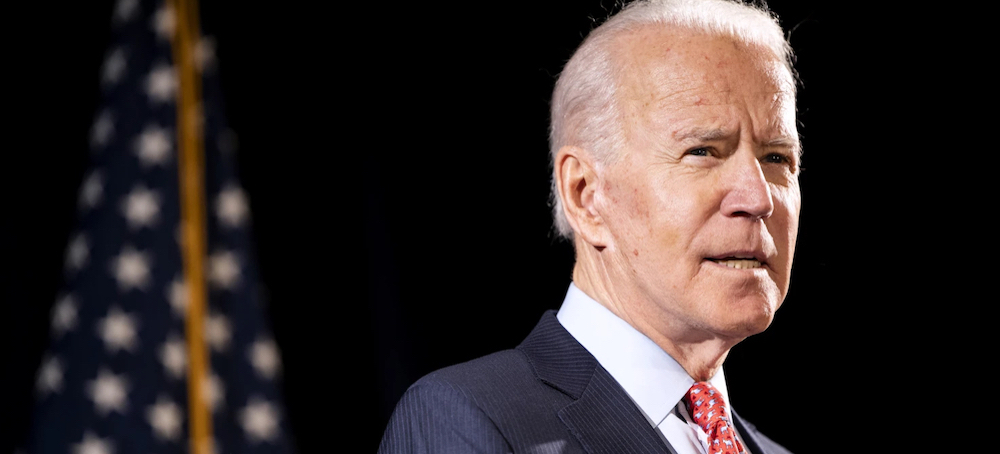 President Joe Biden. (photo: Ryan Collerd/Getty Images)
New Biden Student Loan Plan Unveiled Amid Agency Funding Crisis
Cory Turner, NPR
Turner writes: "The Biden administration is unveiling an ambitious new student loan repayment program today that will be more generous, flexible and forgiving than previous plans - but it's unclear how or when the administration will be able to fully implement it."
The Biden administration is unveiling an ambitious new student loan repayment program today that will be more generous, flexible and forgiving than previous plans — but it's unclear how or when the administration will be able to fully implement it.
The U.S. Department of Education says proposed updates to its income-driven repayment plan would, among other things, cut loan payments in half for undergraduate borrowers, but its rollout could be complicated by the fact that the Office of Federal Student Aid (FSA) — the agency that oversees the government's student loan portfolio — is in an unexpected funding crisis, created by a political fight between Congressional Republicans and Democrats, and the White House.
Behind closed doors, officials at FSA and the U.S. Department of Education are surprised and angry, sources tell NPR, because they must now safeguard priorities like today's announcement while also scrambling to find hundreds of millions of dollars to cut from other current and future programs.
In December, Congress approved a massive, $1.7 trillion government funding bill known as an "omnibus," but the bill did not deliver nearly enough money for FSA to do everything it has been asked to do in 2023 — by Congress, the Biden administration and even the courts.
A "big f***ing deal" is how one federal official describes the surprise decision, last month, to abandon a much-needed funding increase for the Office of Federal Student Aid.
Another person familiar with FSA's inner workings worries that the result, not just for the agency but for people with federal student loan debts, could be "catastrophic."
"There is a lot of work at FSA that can benefit students and borrowers that it simply cannot do now," says a third government official.
That work includes not only recent initiatives but also potentially basic, everyday loan oversight functions — like making sure loan servicing companies don't keep borrowers waiting hours on the phone to talk with a customer representative.
This is the story of the politics behind the funding crisis, and why any resulting cuts would hurt millions of borrowers. It is based on the accounts of ten people, including eight officials across government who are familiar with FSA's inner workings but who are not authorized to speak publicly.
2023: Big promises for student loan borrowers
FSA is a relatively small federal agency with a Herculean job: managing the U.S. government's entire federal student loan portfolio. It's a $1.6 trillion program that touches the lives of more than 44 million borrowers. In 2022, FSA ran on a $2 billion budget.
For 2023, the White House knew FSA would need more money, both to keep up with routine loan management and to fulfill long-laid plans, some mandated by Congress, to improve the whole system. In its initial 2023 budget proposal, the Biden administration pitched increasing FSA's budget by a third, to the tune of $2.65 billion. Why propose such a big bump?
For starters, the agency is in the middle of a massive, Congressionally-required overhaul of the Free Application for Federal Student Aid, or FAFSA. Approved three years ago, the bipartisan goal is to make the famously complicated forms college students and their families must fill out easier to complete.
In addition, 2023 is expected to include a host of expensive new reforms meant to directly help borrowers, including improvements to a loan forgiveness program for people who work in public service, a move to lift seven million borrowers out of default, today's unveiling of a new income-driven repayment plan (IDR), and a review of millions of borrower records to help those who were unfairly hurt by past IDR failures make up lost ground toward loan forgiveness.
On top of all that, FSA is responsible for handling the enormous — and enormously expensive — task of helping millions of federal student loan borrowers start paying back their loans later this year after the long pandemic pause. The agency will need to pay for communicating timelines and expectations to borrowers, fielding questions and processing mountains of new paperwork.
This long list of expected expenses doesn't include Biden's headline plan for debt relief, announced in August but now tied up at the Supreme Court. That plan ran into Republican opposition, but some of the largest reforms on FSA's agenda this year have enjoyed bipartisan support in the past.
So why not give the agency the money it needs?
How December funding talks fell apart
During bipartisan wrangling among Congressional negotiators and the White House last month over funding the federal government, multiple sources tell NPR that Republicans initially offered a roughly 20% budget increase for FSA, lower than the initial White House proposal but still a meaningful bump.
"There was a proposal put forward to the White House to say, 'Listen, we'll give you an extra couple hundred million dollars here, in order to focus on improvements... for the student loan program,'" says one source familiar with the negotiations. "But that came with a tradeoff."
That tradeoff, required by Republicans, was that the money could not be spent to implement President Biden's debt relief plan, should the Supreme Court let it go forward.
According to sources involved in the negotiations, both sides agreed to not include any conditional language, known as riders, that had not been part of past budgets.
But, according to a source familiar with Republicans' thinking, Republicans were frustrated by Biden's efforts to try to unilaterally erase student debt. They were not inherently opposed to increased funding for things like better customer service, but they were not supportive of spending on debt relief.
A Democratic source close to the negotiations argues that in demanding conditions on FSA funding, Republicans broke their agreement not to add riders to the budget bill, giving Democrats, concerned a concession would open the negotiations to a flood of other riders, no choice but to reject the proposal.
Which is exactly what happened. Democrats and the White House held firm on the no new riders agreement, Republicans refused to agree to additional money for FSA without a debt relief exception, and the agency's prospects for new funding evaporated. FSA ultimately received not a single dollar more than it had gotten the year before, and must now figure out what, of its many obligations, it can and cannot afford to fulfill.
In its write-up of the result, Senate Republicans crowed that the omnibus "provides no new funding for the implementation of the Biden Administration's student loan forgiveness plan." It did not mention the impact on other FSA work.
The White House also got a modest win: A funding bill with no restrictions against paying for debt relief.
But borrowers and FSA, the agency in place to help them, will lose mightily.
Programs that may be cut or trimmed
Sources tell NPR it's too early to know exactly how this flat funding will impact a whole host of programs, though it's clear FSA will need to make hundreds of millions of dollars in difficult cuts. Agency staff are now looking at their options, including reviewing reforms already underway.
For example, in April last year, after NPR, as well as borrower advocates and a subsequent GAO report, revealed widespread mismanagement of previous income-driven repayment plans, the department pledged a sweeping "account adjustment" that would fully erase the debts of tens of thousands of borrowers and bring millions closer to forgiveness.
But the bulk of that account adjustment isn't scheduled to happen until July of this year, and multiple sources tell NPR that without new funding, it could be delayed for an undetermined length of time.
2023 was also due to bring further improvements to the Public Service Loan Forgiveness program — changes that could also be delayed or abandoned.
In fact, the list of borrower-focused efforts that could be postponed or cut is long.
In early 2022, the Education Department committed to restore 7 million federal student loan borrowers who had been in default to good standing. This so-called Fresh Start program would require considerable money and staff in 2023. It's unclear now where either could come from.
Also affecting the department's priorities are legal obligations the Education Department must fulfill. As part of its settlement in a class-action case, it will be on the hook to reconsider the cases of tens of thousands of borrowers who say they were defrauded by their mostly for-profit colleges and deserve to have their debts erased.
Several sources suggest one of the biggest initiatives that could be on the chopping block is an effort, already long overdue, to sign new, long-term contracts with the servicing companies that manage all federal student loan accounts.
These federal student loan servicers have been working on short-term, stop-gap contracts while FSA develops a much-needed new system that's meant to improve and streamline many of the problems that make the current servicing system hard for borrowers to navigate.
This planned new arrangement with servicers, known as the Unified Servicing and Data Solution or USDS, was set to begin this year. It would include important new safeguards around cybersecurity that would cut down on scammers and lay the groundwork for what some student loan insiders consider their holy grail: a single portal where all borrowers could make payments, get help, and make changes to their accounts.
But now, sources tell NPR, the best-case scenario for USDS is that it will be stripped of many of its most important — and expensive — provisions. Worst-case: It will be delayed indefinitely.
And then there's the new income-driven repayment plan being unveiled today.
A new effort to help vulnerable borrowers
On a call with reporters Monday night, senior administration officials trumpeted this new IDR program, saying it would be even more generous to low-income borrowers and, unlike previous IDR plans, would prevent accruing interest from exploding.
According to details of the plan provided by the Department of Education, no borrower who earns less than $30,600 a year would have to make a monthly loan payment.
What's more, undergraduate degree borrowers in this new plan would be required to pay only 5% of their discretionary income — "half the rate charged on the most generous existing IDR plans," according to the Department announcement.
"We cannot return to the same broken system we had before the pandemic, when a million borrowers defaulted on their loans a year and snowballing interest left millions owing more than they initially borrowed," said Education Secretary Miguel Cardona in a statement.
The announcement was noticeably vague, though, on how the Department would pay to implement the new initiative and on its timeline, saying only that it aims to "start implementing some provisions later this year."
Multiple sources tell NPR that this new repayment plan could be costly to set up and, under FSA's flat-funded budget, the agency could not roll it out without delaying or scaling back other things on its long list of obligations.
Worse customer service may be ahead
Multiple sources, both inside the Education Department and within the servicing industry, say FSA could be forced not only to cut programs but to quietly lower the customer service standards it requires loan servicers to meet — because it cannot now afford them.
For example, how long a servicer takes to process a student loan-related application. Or how long a borrower has to wait on the phone to reach a call service representative. Over the past year, many borrowers have taken to social media to complain that those wait times are already too long.
"An easy way for [FSA] to reduce their costs is to [tell servicers], 'Cut your call center hours.' Well, that cuts costs," says Scott Buchanan, executive director of the Student Loan Servicing Alliance, the trade association that represents federal student loan servicers.
But Buchanan says, that kind of austerity isn't ideal for anyone, "in an environment where we're trying to talk about improving the experience for borrowers."
"I always say, on student loan servicing, you get what you pay for," Buchanan says. "And if you want improvements, we've got to invest in them."
But FSA's flat funding will make it difficult to pay servicers for the increased demand that inevitably accompanies new programs — not to mention the help borrowers will need later this year if they are required to begin repaying their loans after the pandemic pause, as the Department has pledged.
One source points to the hollowing out of the IRS as a cautionary tale of the impact this kind of underfunding can have, and who feels it.
The prospect of millions of borrowers calling servicers later this year at the same time servicers are potentially being told to scale back worries many borrower advocates.
Mike Pierce, executive director of the Student Borrower Protection Center and an outspoken supporter of Biden's debt relief plan, says, as long as there are federal student loan borrowers, there must be investment in a system to support them.
"If they are confused about what their options are, it costs money to pay a person to walk them through what their rights are," Pierce says. "If they just need paperwork processed, it costs money to send them that paperwork, to process that paperwork, to update their student loan account, to send them an accurate bill at every step. Someone needs to touch the borrower's account, and that costs money."
For now, officials at the Education Department and FSA are scrambling to figure out how to save both money and their most ambitious plans, but sources warn: The choice to underfund FSA will cost borrowers dearly.
READ MORE
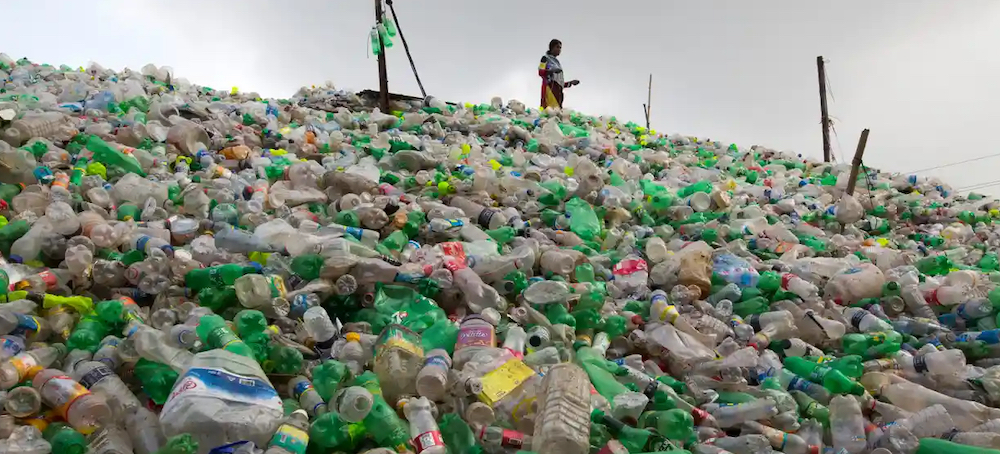 A worker sorts through polyethylene terephthalate bottles in a recycling factory. (photo: Zakir Chowdhury/Barcroft)
England Will Ban Single-Use Plastic Plates and Cutlery for Environmental Reasons
Rachel Treisman, NPR
Treisman writes: "The British government is poised to ban certain single-use plastic products, a long-awaited step towards reducing pollution that environmentalists hope will be just one of many."
The British government is poised to ban certain single-use plastic products, a long-awaited step towards reducing pollution that environmentalists hope will be just one of many.
The ban will cover plastic plates, trays, bowls, cutlery, balloon sticks and certain kinds of polystyrene cups and food containers, the Department for Environment, Food and Rural Affairs (Defra) told The Mail on Sunday.
A department spokesperson confirmed to NPR that the full announcement is coming on Saturday.
"A plastic fork can take 200 years to decompose — that is two centuries in landfill or polluting our oceans," Environment Secretary Therese Coffey told The Mail. "This new ban will have a huge impact to stop the pollution of billions of pieces of plastic and help to protect the natural environment for future generations."
It aims to cut down on plastic pollution
England banned single-use plastic straws, stirrers and plastic-stemmed cotton buds in 2020.
This new ban applies specifically to plastic packaging of food and drinks from restaurants and cafes, not in supermarkets and stores. The government plans to address those in a separate scheme that would have manufacturers cover disposal costs starting in 2024.
And it doesn't come as a complete surprise. Environmentalists have long campaigned for this kind of ban in England — Scotland's took effect last summer and Wales approved one in December — and the British government had been soliciting public input on potential plastic bans for some time. Officials indicated last month that restrictions were on the horizon.
(Meanwhile, in the U.S.: Several states and localities have banned certain plastic products, namely bags, and California set the country's strictest rules for plastic reduction in legislation passed last summer. The federal government is planning to phase out single-use plastics at national parks by 2032).
Environmental advocates are applauding England's ban as an important step towards tackling the pervasive problem of plastic pollution, even if it's not enough on its own.
Each person in England uses an average of 18 single-use plastic plates and 37 items of plastic cutlery every year — yet only 10% of that waste is recycled into new things, according to Defra statistics reported by the BBC. Overall, the department says, England uses 1.1 billion single-use plates and 4.3 billion single-use pieces of cutlery annually.
That's both dangerous for the environment and "completely unnecessary," says Steve Hyndside, the policy manager at British nonprofit City to Sea.
He stressed in a Monday interview with radio station LBC that all of the items covered by this ban already have potential replacements on the market, whether that's cardboard boxes, wooden utensils or even one's fingers.
"What we're talking about here is, I think, a really positive vision," Hyndside said. "So as much as we all like the convenience of single-use plastic, and I think there's no point pretending that's not there ... we just can't carry on going as we are."
There is public support for the ban ...
England's 25 Year Environment Plan — established in 2018 — calls for eliminating avoidable plastic waste by 2042.
Defra said in Nov. 2021 that while it had already proposed and enacted measures to work towards that goal, those measures did not sufficiently address the issue of single-use plastic items. It sought public input on potential bans in a consultation period that ran through February 2022, which appears to have informed its decision.
"I am determined to drive forward action to tackle this issue head on," Coffey told The Mail. "We know there is more to do, and we have again listened to the public's calls."
Greenpeace UK says the "vast majority" of the more than 51,000 people who self-reported their views on the consultation support a ban on all of the items up for consideration (like cutlery and plates), with support at 96% or above "across the board."
Separately, environmental groups submitted a petition to ban those items, with more than 117,000 signatures, to the prime minister's office when the comment period closed in February.
After reports of the new ban surfaced, environmental groups applauded it as an important move but one of many the government needs to take to make a meaningful difference.
"We need to wean ourselves off single-use items," tweeted environmental organization Keep Britain Tidy. "[Defra's] plans to ban single-use plastic plates and cutlery in England are a step in the right direction."
... and calls for further action
Many would like to see more, and more systemic, changes.
As part of their "Cut the Cutlery" campaign, Greenpeace, City to Sea and 38 Degrees called on the government to work faster to meet the European Union single-use plastic restrictions, which it agreed to before Brexit. They also want it to set its own legally binding targets for 2025, specifically to reduce single-use plastics by 50% and for 25% of plastic to be reusable.
Advocates are also calling for a "deposit return scheme," which would incentivize recycling by charging customers a deposit on beverage containers and refunding it when they return the empty container to a collection point. U.K. officials have said that such a program won't take effect in England, Wales and Northern Ireland until at least late 2024, six years after it was first announced.
Megan Randles, a political campaigner for Greenpeace UK, said in a tweet that "the removal of billions of commonly littered items is never a bad thing" but called the new ban an overdue move and "still a drop in the ocean compared to the action that's needed to stem the plastic tide."
"We need system change at the source - reduction and reuse/refill targets, meaningful extended producer responsibility (so the polluters actually pay) and a deposit return scheme like so many European countries have already," she said.
Hyndside, of City to Sea, described the partial plastics ban as "minimum standards" and called on the government to go further by publishing a full strategy for tackling plastic pollution as a whole.
"We have to move away from all single-use kind of throwaway items," he said, "and try to encourage a more circular economy."
READ MORE
Contribute to RSN
Follow us on facebook and twitter!
Update My Monthly Donation
PO Box 2043 / Citrus Heights, CA 95611