
18 March 22
Live on the homepage now!
Reader Supported News
NO WE CAN’T SLASH THE BUDGET ANY FURTHER — “Can’t you make do with less.” Another astonishing reader comment. WE ARE MAKING DO WITH LESS! and it hasn’t been working. That’s the point. We have been slashing the budget wherever possible for 2 years now. Enough. Now we fight back.
Marc Ash • Founder, Reader Supported News
Sure, I'll make a donation!

Garrison Keillor | Sitting Scared in Church, Thinking About Evil
Garrison Keillor, Garrison Keillor's Website
Keillor writes: "I wish the country were united behind our founding principles, but I don't know that we are."
In church Sunday we stood and sang, asking God to bring to this world of strife His sovereign word of peace that war may haunt the world no more and desolation cease, and what in God’s name we meant by this, I can’t tell you, it’s like waving your hand at the incoming lightning and saying, “Rain, rain, go away,” a children’s rhyme, but in church we acknowledge we are children, we’re not Unitarians, just ordinary Episcopalians. America has been so fascinated with our own circus, we didn’t fully appreciate true evil and now here’s Putin taking his place with Lenin and Stalin, this small grim man who shells hospitals and apartment buildings, driving three million refugees out of Ukraine. The only decent thing about him is that he doesn’t appear in public with his daughters or his girlfriend, he spares them the shame.
Our former president must regret the photograph in which he and Putin lean toward each other, holding hands, and affection shines in the Russian’s eyes, a moment of bonding. Trump is uncomfortable around dogs and children, odd for a politician, and I can’t recall him with his arm around his youngest boy or his grandkids, or petting a dog or holding a cat; he once claimed to enjoy grabbing women but you never see him with his arm around his wife, but he shows real warmth toward Vlad and it’s not to his political benefit, holding hands with a man capable of bombing a maternity hospital.
I worry about my country. I wish my fellow Democrats were not so abysmally naïve about the world as so many of us are. I wish the country were united behind our founding principles, but I don’t know that we are. I have a feeling that if Putin launched missiles that wiped out the blue states, Fox America would be happy to cut a deal with him.
We prayed in church for all nations to be guided in ways of peace and for the right use of natural resources and for all whose lives are linked with ours, including refugees, something I’ve never been, just a mortgagee for a house that was my refuge, but I never left it in a rush not knowing where I’d wind up. I did know Julius and Fannie Schindler, parents of my friend Milton, who fled a Yiddish-speaking shtetl to escape Hitler for the safety of north Minneapolis where their boy soprano sang the prayers at Mikro Kodesh synagogue and made old ladies weep. The Schindlers raised him to be American and he loved baseball and the blues and I knew him as Soupy Schindler, singing and playing euphoric harmonica in a band called the Sorry Muthas. Had the shtetl not been torn to pieces, he might’ve become a good tailor, but instead he was a glorious blues singer and when he sang, “Stealin’, stealin’ — pretty mama don’t you tell on me, I’m stealin’ back to my same old used to be,” it stayed with me.
Hitler and Putin believe they can crush the human spirit, America believes spirit can find the freedom to triumph, and Soupy was the proof of it, and so were other refugees who’ve come here.
But our nation is divided as it was not in 1940. I wish Joe Biden will show mercy to individuals who got caught up in the January 6 riot and without attacking officers simply got carried away and wound up in the wrong place. They went at the behest of their president to stop the electoral count and they failed at that and I think most should be forgiven. Our nation is on the verge of a precipice. Mr. Trump should be pardoned as well. The man acted on pure impulse for four years, never a plan, and his intent can never be proved beyond a doubt. He did what made him feel good. Let him go. We need to save our country.
I got a letter from an ex-Marine who did two hitches in Vietnam and feels he was badly affected by Agent Orange. He supports Trump, believes the 2020 election was stolen, thinks a ruling class runs the country, that we haven’t had consensual government for many years, if ever. This is heartbreaking, a Marine who feels he was a pawn of a regime like Russia’s. We have work to do. Let’s pardon the man and get back to the future. For the sake of the children, let’s be wise.
READ MORE
 A demonstrator, holding a Ukrainian flag, participates in a demonstration called by 70 associations in support of Ukraine on the square of Paris' town hall on Thursday. It has been three weeks since Russia began its assault on Ukraine. (photo: Julien De Rosa/Getty)
Ukraine Appears to Have Stalled Russia's Advance. Here's What That Could Mean
Wynne Davis, NPR
Davis writes: "When the invasion of Ukraine began three weeks ago, many thought it would end quickly because of Russia's military strength. But as the war drags on and Ukraine digs in, two questions are increasingly being asked: Can Ukraine win this war, and what will it take?"
ALSO SEE: American Man Killed in Ukraine, Was 'Gunned Down'
While in Line for Bread, Sister Confirms
When the invasion of Ukraine began three weeks ago, many thought it would end quickly because of Russia's military strength. But as the war drags on and Ukraine digs in, two questions are increasingly being asked: Can Ukraine win this war, and what will it take?
While Russia has occupied the southern city of Kherson, Ukraine's military and civilians have prevented the Russian army from taking control of other major cities. Russia has also suffered significant casualties, with conservative estimates putting it at more than 7,000 troop deaths, according to The New York Times.
The reason for Russia's lack of battlefield success started before the invasion began and can be attributed to systemic issues, including corruption and poor training, and bad assumptions, said Steven Horrell, a senior fellow at the Center for European Policy Analysis (CEPA).
Horrell, also a former U.S. naval intelligence officer, thinks Russian President Vladimir Putin saw the attack on Ukraine unfolding in a vastly different way.
"I think Putin truly believed the things that he said about the Ukrainian people welcoming them," Horrell told NPR. "They just failed to understand that the Ukrainian armed forces of 2022 are far different from the Ukrainian armed forces of 2014 when they annexed Crimea and began their adventures in eastern Ukraine."
Those previous incursions by Russia provided Ukrainians with training by fire and allowed them to identify and adjust to shortfalls quickly, Horrell said, adding that Russia was also struggling with logistical problems this time around.
With all these factors in mind, Horrell said Russia could "certainly fail," either in terms of strategic objectives, defeat on the battlefield, or both.
Russia wants to control Ukraine and have it be a non-Western leaning state, but Horrell said the Ukrainian people had shown that the invasion alone would not eliminate their Western ideals. And, he said, they would not accept a president who was chosen by Russia.
"That is almost zero chance of occurring now," Horrell said. "And for Ukraine ... you would define victory as the complete expulsion of the Russian invaders, not just this recent invasion, but to get the borders back to 2014 before Crimea was illegally annexed."
Retired Lt. Gen. Ben Hodges serves as the Pershing Chair in Strategic Studies at CEPA and said that based on his experience and the reports of Russian ammunition and manpower shortages, the war may culminate in the next week.
"The time challenge for Russia is not just military," Hodges wrote in his analysis on Tuesday. "The effects of sanctions are growing — Russia may soon default on $150 billion of foreign currency debt — and Russian domestic resentment is also growing."
Hodges said the U.S. and other Western powers needed to move with "urgency" to offer more support against Russia.
Secretary of State Antony Blinken announced an additional $800 million worth of security assistance for Ukraine on Tuesday – bringing the total amount of aid in the past week alone to $1 billion.
Blinken said the additional funding would be used for things like "anti-aircraft, anti-tank, and anti-armor systems as well as small arms and munitions used by Ukrainian security forces on the ground right now in the fight to defend their country."
But what the U.S. and NATO remain opposed to is instituting a no-fly zone over Ukraine. That is something that former U.S. Ambassador to Ukraine Marie Yovanovitch believes should remain an option.
"I think that has to be on the table. But I also think there are other ways of doing a no-fly zone," Yovanovitch told NPR. "I think we have lots of smart people at the Pentagon that can figure out ways to do this in a way that is less risky."
Ultimately though, Yovanovitch said she believed Ukraine would win the war.
"Russia may prevail militarily, but there will be a resistance, and it will be an ugly one for any Russians that are attempting to impose their will on Ukraine," Yovanovitch said.
"I think that there's going to be not only a guerrilla war, but there's going to be civil resistance where, you know, people get poisoned when they go to the restaurant, sharpshooters are on roofs picking off Russian soldiers. It's going to be long and ugly, but this is a people that fights back."
But an incomplete victory for Ukraine is another potential outcome of this war. Horrell said this is a scenario that would end in a "frozen conflict" if Russia still held Crimea and the Russian-led separatist areas of eastern Ukraine.
"In one sense, that's a success for Russia in that it gets an anchor dragging Ukraine down, both in terms of economic advancement and full realization of their national potential," he said. "But also, that's the sort of thing that keeps a country out of the E.U. and out of NATO."
"At this point, though, with the success we've seen in three weeks [of Ukraine defending itself], is that even acceptable terms for Ukraine? I think it may not be."
READ MORE
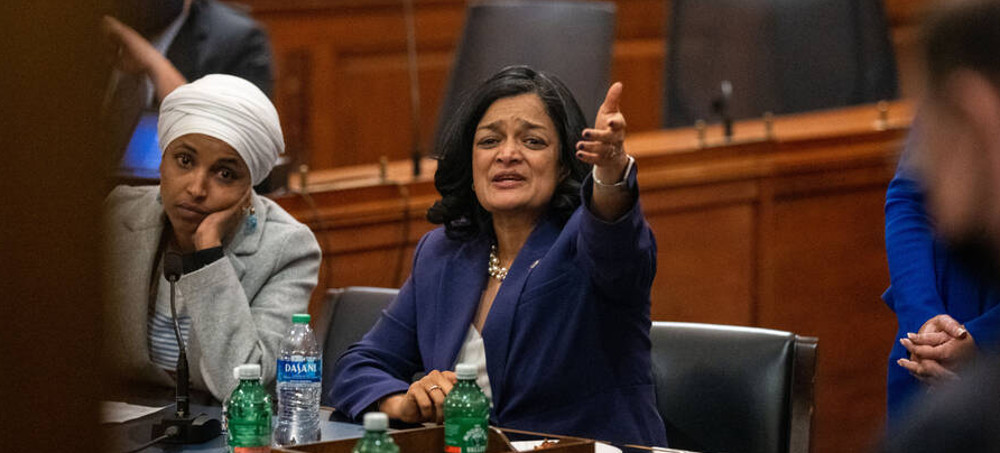 The Congressional Progressive Caucus on Thursday unveiled a slate of more than 50 executive actions it is urging President Joe Biden to pursue. (photo: Kent Nishimura/Getty)
With Biden's Agenda Stalled, Progressives Have a Plan for Executive Actions to Benefit Working People
Jake Johnson, In These Times
Johnson writes: "With the pivotal midterm elections looming, the Congressional Progressive Caucus on Thursday unveiled a slate of more than 50 executive actions it is urging President Joe Biden to pursue as much of his domestic policy agenda remains stalled in Congress - thanks in large part to right-wing members of his own party."
“Taken together, these actions will have an immediate and meaningful impact on people’s lives,” said Rep. Pramila Jayapal, chair of the Congressional Progressive Caucus.
With the pivotal midterm elections looming, the Congressional Progressive Caucus on Thursday unveiled a slate of more than 50 executive actions it is urging President Joe Biden to pursue as much of his domestic policy agenda remains stalled in Congress — thanks in large part to right-wing members of his own party.
The CPC’s new list of executive order recommendations is broad in scope, aiming to address a variety of pressing issues including sky-high drug prices, the worsening climate emergency, the coronavirus pandemic, mounting student loan debt, and a rigged tax system — priorities that Biden vowed to tackle on the campaign trail in 2020.
While Rep. Pramila Jayapal (D‑Wash.), the CPC chair, has said she would prefer ambitious legislation such as the Build Back Better package to more limited executive orders, that bill is dead in the Senate due to opposition from Republicans and corporate-backed Democrats such as Sens. Joe Manchin (D‑W.Va.) and Kyrsten Sinema (D‑Ariz.), leaving the president with few other options to advance his popular agenda.
Failure to act boldly, Jayapal and other progressives have warned, could spell disaster for Democrats in the fast-approaching midterms.
“Congress continues to push for a robust reconciliation package that can pass both chambers, and the Progressive Caucus remains fully committed to delivering as much of the president’s agenda as we can through legislation,” Jayapal said in a statement Thursday. “But we know working people can’t wait for relief from rising costs — and that Democrats must use all the tools available to provide it, quickly.”
Included among the 98-member CPC’s list of 55 proposed executive orders are steps Biden can take unilaterally to:
- Protect seniors’ ability to manage their own care in traditional Medicare by quickly transitioning away from the ACO REACH pilot program;
- Dramatically lower costs of essential drugs like insulin, naloxone, hepatitis C drugs, HIV/AIDS drugs, Xtandi, EpiPens, and inhalers;
- Expand public manufacturing capacity for Covid-19 vaccine and therapeutic production;
- Put money back in the pockets of millions of Americans who are stuck in the student debt trap… by using existing administrative authority under section 432(a) of the Higher Education Act of 1965 to cancel federal student loan debt;
- Give millions of workers more take-home pay by strengthening outdated overtime protections;
- Stop the expansion of private prisons to detain immigrants;
- Declare a National Climate Emergency and invoke authorities under the Defense Production Act and Trade Expansion Act, mobilizing domestic industry to manufacture affordable renewable energy technologies with good-paying union jobs;
- Declare a ban on new fossil fuel leases on federal lands and waters and in environmental justice communities;
- Raise billions by closing the carried interest loophole that lets Wall Street executives managing other peoples’ money disguise part of their salary as investment returns to cut their taxes; and
- Reverse Trump administration regulations that further expanded the offshore tax loopholes created by the Republican Tax Cuts and Jobs Act.
“Taken together,” Jayapal said Thursday, “these actions will have an immediate and meaningful impact on people’s lives: lowering costs and raising wages for working people to provide urgently needed economic relief, advancing racial and gender equity by investing in communities that have historically been neglected, and delivering on our promises.”
“We look forward to working with the Biden administration to realize these ambitious, but highly achievable, goals,” she added.
Despite grassroots pressure that has continued to grow since he took office last January, Biden has thus far rebuffed calls to broadly cancel student loan debt despite evidence that failure to do so could harm Democrats’ chances in the midterms, particularly by suppressing turnout among young voters.
A recent survey found that one in five Democratic voters overall “won’t support Biden in 2024 without action on student loans.”
In a statement endorsing the CPC’s recommendations, Lauren Maunus of the youth-led Sunrise Movement said that “young people mobilized and risked their lives through a pandemic to deliver Biden the presidency on his promises to stop the climate crisis, cancel student loan debt, and ensure real change for our communities.”
“But two years into his term, and two years further into the climate crisis, we have yet to see the type of bold action we were promised,” Maunus continued. “As we face a historic crossroad in the fight to protect democracy and defeat white supremacy, it’s beyond time for Biden to use the full powers of the presidency to deliver for the people who elected him and address the interlocking crises of our times.”
“If he doesn’t,” Maunus added, “Biden risks not only alienating his own base, but failing to stop the worst of the climate crisis while he had the chance.”
Mary Small, national advocacy director of the progressive advocacy group Indivisible, similarly argued that the power to advance key Democratic priorities “is in President Biden’s hands.”
“Even as we continue to push for Congress to end its political theater and finally deliver on his legislative agenda, our network is calling for simultaneous and complementary executive action,” said Small. “We’ve already been engaged in pushing for the administration to provide relief for those with student loan debt and to address the climate crisis. We echo the Congressional Progressive Caucus’ call: President Biden can and must use the full authority of his office to deliver change wherever possible, as soon as possible.”
READ MORE
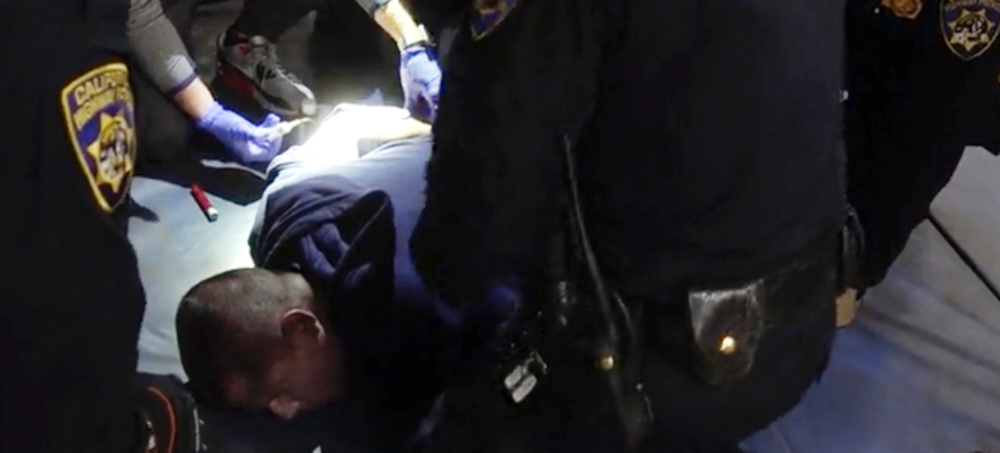 Edward Bronstein's family has filed a federal lawsuit against the officers, alleging excessive force and a violation of civil rights. (photo: AP)
Before George Floyd, a Black Man Screamed 'I Can't Breathe' Then Died
Al Jazeera
Excerpt: "Edward Bronstein struggled, screamed repeatedly, then fell silent as California officers held him down."
Edward Bronstein struggled, screamed repeatedly, then fell silent as California officers held him down.
Two months before George Floyd uttered the words that would dominate Black Lives Matter demonstrations, another Black man in California died after screaming “I can’t breathe” while multiple officers restrained him as they tried to take a blood sample, according to records and a video.
Edward Bronstein, 38, was taken into custody by California Highway Patrol (CHP) officers on March 31, 2020, following a traffic stop. Floyd was killed by police in Minneapolis on May 25 of that year as he, too, repeatedly told officers “I can’t breathe” as an officer knelt on his neck and two others held him down.
A nearly 18-minute video, taken by a CHP sergeant at the Altadena station, was released Tuesday after a judge’s order to make it public. Bronstein’s family has filed a federal lawsuit against the officers, alleging excessive force and a violation of civil rights. The family is also calling for the officers to be criminally charged by the Los Angeles County district attorney.
The LA County coroner’s office ruled Bronstein’s cause of death as “acute methamphetamine intoxication during restraint by law enforcement”. A copy of the autopsy report was not immediately available.
“When the nation was in an uproar over the George Floyd tragedy, we had no idea this had also happened to Mr Bronstein,” said Luis Carrillo, a lawyer for Bronstein’s family.
Floyd’s death on May 25, 2020 in Minnesota unleashed nationwide protests and created a moment of reckoning in the US over the nation’s deeply rooted history of racism and discrimination towards Black Americans. Derek Chauvin, the white police officer who pressed his knee to Floyd’s neck for more than nine minutes, was sentenced to 22.5 years in prison last year. The three other officers who were present were found guilty last month of violating Floyd’s civil rights.
Many of the protests were organised by local chapters of the Black Lives Matter movement, which was founded in 2013 after the acquittal of George Zimmerman, a neighbourhood watch leader who shot dead Trayvon Martin, an unarmed Black teenager.
Floyd’s death has led to demands to reform policing and hold police officers accountable for crimes.
In September 2021, California Governor Gavin Newsom signed a law barring police from using certain face-down holds that have led to multiple unintended deaths. The law was passed after Bronstein’s death and was aimed at expanding the state’s ban on chokeholds in the wake of Floyd’s murder.
Family members say Bronstein was terrified of needles and believe that is why he was reluctant to comply with the CHP initially as they tried to take a blood sample. In the video, an officer tells Bronstein they have a court order – an assertion that Carrillo doubts was true.
An officer tells Bronstein to take a seat for the sample: “This is your last opportunity. Otherwise you’re going face down on the mat and we’re gonna keep on going.”
Several officers force the handcuffed man to the mat as he shouts “I’ll do it willingly! I’ll do it willingly, I promise!”, the video shows. At least five officers continue to hold him down – the lawsuit alleges they put their knees on his back – as he screams “I’ll do it! I’ll do it! I promise!”
One officer replies: “It’s too late.”
Bronstein begins screaming “I can’t breathe!” and “I can’t!” before the blood is taken, shouting it about eight times and pleading for help as the officers continue to restrain him on the ground.
“Stop yelling!” an officer yells back.
Bronstein’s screams get softer and he soon falls silent. Even though he is not responsive, a medical professional continues to draw blood as the officers hold him down.
They note he may not have a pulse and does not appear to be breathing. The officers and the medical professional slap Bronstein’s face, saying “Edward, wake up”.
More than 11 minutes after Bronstein’s last screams, they begin CPR.
The lawsuit names nine officers and one sergeant.
READ MORE
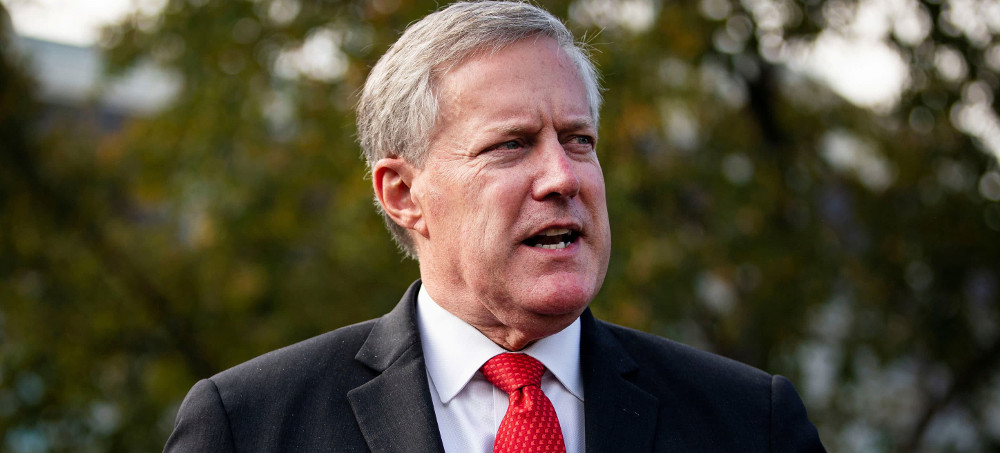 North Carolina authorities have opened an investigation into possible voter fraud by Mark Meadows. (photo: Alexander Drago/Reuters)
Trump's Ex-Chief of Staff Mark Meadows Investigated for Voter Registration Fraud
Guardian UK
Excerpt: "Mark Meadows, who served as former President Donald Trump's final chief of staff and has echoed his false claims of widespread voter fraud in the 2020 election, is being investigated in North Carolina over his voter registration, state authorities said."
North Carolina authorities are investigating claims Mark Meadows did not reside, visit or own the address he is registered at
Mark Meadows, who served as former President Donald Trump’s final chief of staff and has echoed his false claims of widespread voter fraud in the 2020 election, is being investigated in North Carolina over his voter registration, state authorities said.
North Carolina’s state bureau of investigation was assigned to lead the inquiry after a district attorney referred the matter to the state department of justice special prosecutions section, a department spokeswoman, Nazneen Ahmed, said in an email.
The investigation is in response to claims that Meadows, who represented North Carolina in Congress from 2013 until joining the Trump administration in 2020, registered to vote in September 2020 at an address he did not reside at, own or visit, the News … Observer newspaper reported, adding that the state board of elections was conducting a joint investigation.
“We have asked the SBI to investigate and at the conclusion of the investigation, we’ll review their findings,” Ahmed said.
The elections board could not be immediately reached for comment.
In North Carolina, voters must live in the county where they are registering and have resided there for at least 30 days before the election date, according to the state elections board website.
The New Yorker magazine first reported the voter registration allegations earlier this month. The outlet, quoting the director of the Macon county board of elections, said Meadows was registered at an address in the county and voted absentee in the 2020 general election.
Meadows is currently registered to vote at the same North Carolina address, according to the state elections board’s online database.
Reuters sought comment from Meadows, but was unable to immediately reach him.
Meadows is also the subject of contempt charges by a congressional committee investigating the January 6 insurrection at the US Capitol, in which Trump and crowds of extremist supporters of the outgoing president sought to stop the certification of now-president Joe Biden’s comprehensive election victory.
READ MORE
 Crown Prince Mohammed bin Salman attends the annual speech of the Saudi king in Riyadh in 2019. (photo: AFP)
Saudi Arabia Executes 81 People in Show of Force by an Emboldened Mohammed Bin Salman
Abdullah Alaoudh and John Hursh, NBC News
Excerpt: "On Saturday, the Saudi government killed 81 people in a single mass execution despite recent assurances from Crown Prince Mohammed bin Salman that Saudi Arabia was making important legal reforms."
The deaths provide a glimpse at what Saudi justice looks like after the West didn't hold MBS to account for the killing of dissident Jamal Khashoggi.
On Saturday, the Saudi government killed 81 people in a single mass execution despite recent assurances from Crown Prince Mohammed bin Salman that Saudi Arabia was making important legal reforms. The deaths provide a glimpse at what Saudi justice looks like now that MBS has been emboldened by Western governments that have failed to hold him accountable for the killing of Saudi dissident and journalist Jamal Khashoggi, as well as numerous other crimes and abuses.
The Interior Ministry announced that the government had executed 81 men who were “convicted of terrorism,” among other capital offenses, claiming that some of these men were operatives of Al Qaeda and the Islamic State terrorist group. Of course, the regime provided scant evidence to substantiate these claims and carried out these killings while world leaders were preoccupied with Ukraine. The killings were likely announced publicly to demonstrate the government’s power and reinforce a climate of fear among the Saudi people.
While the execution was the country’s largest to date, it follows mass executions of 37 people in 2019 and 47 people in 2016. Despite the incendiary rhetoric that the government used to justify these executions, many charges didn’t merit the death penalty under Saudi law and often didn’t even merit arrest. Some of the charges were for acts as uncontroversial as attending peaceful demonstrations.
Saudi officials completed the mass execution privately, and, according to people close to the victims, the government refused to deliver the bodies to the families. That the government wouldn’t allow aggrieved families to bury their loved ones speaks volumes about the absolute power and fear with which MBS intends to rule the country when he becomes king. MBS’s path to the throne is all but assured since he has eliminated actual and potential rivals within his own family, and his rule could begin very soon, because his 86-year-old father has suffered illnesses.
Since he became crown prince, MBS has consolidated power by attacking any source of influence that could check his authority. Beyond Khashoggi’s death, this has included the detainment, torture and coerced transfer of wealth of nearly 400 powerful Saudi business leaders, former government officials and members of the royal family.
There have also been unjust arrests, detainments and the forced disappearances of moderate Saudi clerics who dared to call for even modest legal reform. One of us, Abdullah, faces continued harassment from Saudi officials, even in the U.S. Abdullah’s father has been imprisoned since 2017 in solitary confinement and faces possible execution for calling for peace on Twitter. Nineteen other family members have been banned from leaving Saudi Arabia.
The damage from the executions this week won’t be limited to those in Saudi Arabia, however. Instead, they could further destabilize the region and inflame tensions with Iran, as 41 of the men who were executed are believed to have been members of Saudi Arabia’s minority Shia community. While it is an oversimplification to equate Shia Muslims with Iran, the country did suspend key diplomatic talks with Saudi Arabia the day after the executions. Long the subjects of state persecution, Shias live predominantly in Saudi Arabia’s oil-rich but underdeveloped Eastern Province and remain second-class citizens within the country despite MBS’s promised reforms.
The Saudi government reportedly tried the Shia men in its Specialized Criminal Court pursuant to the country’s counterterrorism law, like the rest of those who were executed. The United Nations and human rights advocates have widely criticized this law as being politicized and lacking in fundamental due process rights.
It didn’t have to be this way. When the Office of the U.S. Director of National Intelligence issued its report on Khashoggi’s murder, concluding that MBS likely ordered the operation, U.S. officials and responsible world leaders had all the evidence they needed to hold him to account. Instead, they did nothing.
U.S. officials should have sanctioned MBS like they did the 17 killers and operatives whom he is assessed to have ordered to murder Khashoggi and dispose of his body. They should have included him in their ban on 76 other Saudis connected to the killing and prevented from traveling to the U.S. At the very least, the U.S. government should now stop selling the Saudi government billions in U.S. weapons and military equipment that allow MBS to continue his reckless and unwinnable military intervention in Yemen, where the U.N. and human rights investigators have concluded that some Saudi actions likely amount to war crimes.
Now, faced with another appalling human rights violation by Saudi Arabia, the State Department declined to comment on whether it even raised the matter with the Saudi government, while Secretary of State Antony Blinken is planning a possible trip to Riyadh to implore the kingdom to produce more oil rather than stick to its deal with Russia to limit oil production. So much for President Joe Biden’s promise to make the Saudi government “the pariah that they are.”
As terrifying and reckless as MBS has been as the crown prince, he could be even worse as the king. Western leaders who decided to embolden and not sanction him have themselves to blame.
READ MORE
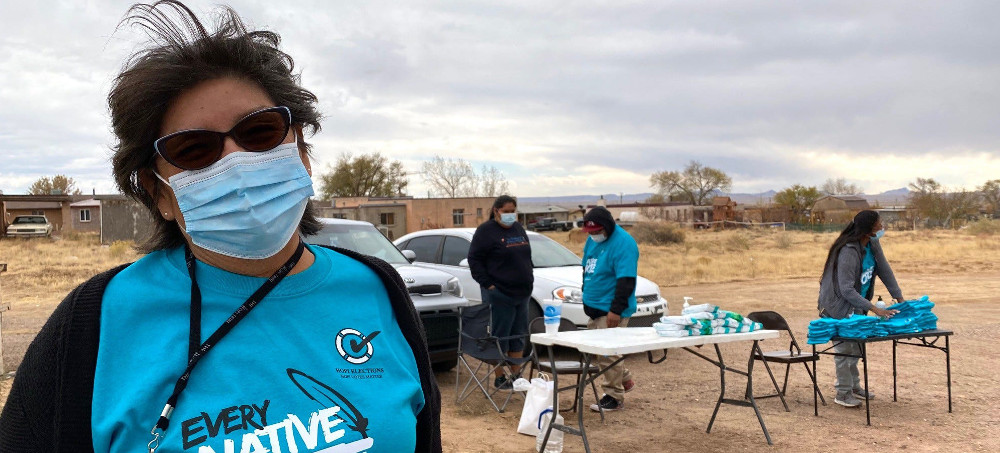 Hopi Tribal Registrar Karen Shupla poses outside the Navajo County polling station in the Sipaulovi Village on the Hopi Nation. (photo: unknown)
Redistricting Could Make It Harder for Tribes to Protect the Environment
Joseph Lee, Grist
Lee writes: "In February, the Navajo Nation sued San Juan County, New Mexico over its new redistricting plan. San Juan County, which stretches across a large swath of the Navajo reservation, has enough Indigenous voters to be a majority in two voting districts."
Indigenous leaders worry redistricting will lead to more disenfranchisement and environmental issues.
In February, the Navajo Nation sued San Juan County, New Mexico over its new redistricting plan. San Juan County, which stretches across a large swath of the Navajo reservation, has enough Indigenous voters to be a majority in two voting districts. The Navajo Nation’s lawsuit, however, argues that the county’s redistricting plan packs those voters into a single voting district, diluting the power of Indigenous people at the polls and violating the Voting Rights Act.
For Leonard Gorman, executive director of the Navajo Nation Human Rights Commission (NNHRC), the stakes couldn’t be higher. Indigenous voters often have different priorities at the polls than their non-Indigenous counterparts, and less voting power means they are less likely to be represented by lawmakers on issues they care about. In particular, Gorman says, redistricting could impact Navajo people’s ability to deal with resource allocations, water quality and access, and land use – environmental issues important to Indigenous people in the area. “Redistricting affects every aspect of our lives,” he said.
Across the US, states are redrawing the borders of congressional and legislative districts based on population counts and changes recorded in the 2020 Census. The new boundaries will apply to federal, state, and local elections for the next ten years and New Mexico is one of several states where Indigenous voters have serious concerns that redistricting plans will limit their ability to protect their interests. Now, tribal leaders and experts say that this once-a-decade redistricting process may become a lost opportunity, resulting in another decade of disenfranchisement and lack of legislative advocacy, impacting everything from land and resource exploitation to protections for water.
“Rather than working on understanding the issues that are important to Native voters, some elected officials would rather suppress the Native vote,” said Keaton Sunchild, political director for Western Native Voice. “We fear that these groups are just getting started.”
Based on the 2020 Census, the state of Montana will gain a congressional seat, giving it two for the first time in decades. Montana’s plan divides the state into an eastern and western district, raising alarms for several Indigenous nations and groups in the state. Two reservations are in the western district, while the other five are in the eastern district. Sunchild, a member of the Chippewa Cree Tribe, says that the newly redistricted map dilutes the voices of Indigenous voters. “It really doesn’t put a lot of emphasis on the Native vote in either district. It makes it easy for candidates to ignore Native voters and Native priorities,” he said.
Sunchild says that when he canvasses Indigenous voters in the state, their main concerns are natural resource production, protecting reservation lands, and hunting and fishing rights. The new map, he says, makes it harder for voters to get those concerns heard at the legislative level.
But Maylinn Smith, chair of the state districting commission, says that every effort was made to group reservations together. Smith, who was appointed by the state supreme court last year, was a tribal law professor at the University of Montana and has also worked within several tribes’ legal systems. “I’m incredibly sensitive to tribal sovereignty issues since I have spent my entire life doing Indian law. I recognize those interests,” she said. However, based on the state’s geography, Smith added there was no way to group more reservations together.
Patrick Yawakie, political director of Indigenous Vote, an advocacy organization that promotes voting in Indian Country, is enrolled in the Zuni Pueblo Tribe and is Turtle Mountain Anishinaabe and White Bear Nakota … Cree. He says that Indigenous representation is especially important at this moment, following what he describes as one of the worst legislative sessions in Montana history for Indigenous issues. As an example of state law that threatens tribal environmental interests, Yawakie points to a bill that sets criminal penalties for people protesting pipelines and other infrastructure projects.
“We viewed this as a direct attack on our communities and our first amendment rights to voice our concerns against projects that hurt the environment,” Yawakie said about the bill, which he sees as a response to Indigenous activism against the DAPL, KXL, and Line 3 pipelines.
In 2020, the Native American Rights Fund (NARF) released a 176-page report that outlined the many challenges facing Native voters and candidates. The report described obstacles at every level of the electoral process, including redistricting, voter registration, casting ballots, and running for office. The report found that Indigenous voters have filed 94 lawsuits based on the 14th and 15th Amendments, and the Voting Rights Act, winning, or successfully settling, in 86. NARF has been working closely with tribal leaders in states, including New Mexico and Montana, and has released toolkits to help Indigenous communities advocate for themselves throughout the process.
The entire redistricting process relies on data that has already put Native voters at a disadvantage. A report from the US Census Bureau revealed that the 2020 Census undercounted Native Americans, both on and off reservation, as did the 2010 Census – a trend that could be corrected by working directly with tribes. Black and Hispanic people were also undercounted while white and Asian people were overcounted. In a statement, Fawn Sharp, President of the National Congress of American Indians, said that “These results confirm our worst fears” and called on federal agencies to work with tribes to ensure the undercount doesn’t lead to underfunding.
In Minnesota, Representative Jamie Becker-Finn, a Leech Lake Ojibwe descendant, says decades of work by tribal advocates have finally paid off in the state’s new redistricting maps. In February, the state redistricting panel, made up of five judges, announced the new map, which placed all seven Ojibwe reservations in the same congressional district for the first time. The map also grouped tribes within the same state legislative districts. Several Indigenous candidates have already announced their candidacy in the new districts.
“This change respects the sovereignty of the American Indian tribes and the request of tribal leaders and Minnesotans across the state to afford those tribes an opportunity to join their voices,” the panel wrote.
Although the new maps have drawn cautious optimism from a range of political parties, groups, and communities across the state, Common Cause Minnesota, a nonpartisan voter advocacy group that worked to increase representation for minority and disenfranchised communities, has expressed disappointment that the new maps did not emphasize communities of color as much as they hoped for.
Becker-Finn, who grew up on the Leech Lake reservation and represents a suburban district in the Twin Cities metropolitan area, says that the new map is a huge opportunity for Indigenous voters. Before, she says, they had little opportunity to advocate for environmental causes that impacted their communities.
The Line 3 pipeline project is one of the issues Becker-Finn thinks could be affected by the new districts. “We simply did not have the political power to stop it at the time. If our legislature better reflected the voices of Native folks, then maybe it would not have gone the way that it went,” she said.
Becker-Finn is hopeful about the opportunities created by the new districts, but acknowledges that progress will take both time and work. “This is an opportunity. It’s on us to do the work to make it as meaningful as it can be,” she said.
However, while tribes in Minnesota work to take advantage of redistricting, the Navajo Nation’s situation with regards to San Juan County is far more common. Tribes in Nevada, Oregon, and other states have expressed serious concern about redistricting, while other nations fight redistricting practices in court. In February, the Spirit Lake Tribe, the Turtle Mountain Band of Chippewa Indians, and individual voters sued the state of North Dakota over its redistricting map. The new plan, the lawsuit says, splinters Indigenous voters across multiple districts.
“It’s just another way of hindering our ability to vote,” said Douglas Yankton, Chairman of the Spirit Lake Tribe. “We are citizens of the state. We should have a voice.”
However, the Mandan, Hidatsa and Arikara Nation on the Fort Berthold reservation has expressed support for the North Dakota map, which places Fort Berthold in its own district instead of dividing it.
Leonard Gorman, executive director of the Navajo Nation Human Rights Commission, stresses that giving Indigenous voters the ability to advocate for their environmental concerns will benefit everyone, not just Indigenous communities.
“This is the time in which Indigenous peoples must have the floor,” he said.
READ MORE
Special Coverage: Ukraine, A Historic Resistance
https://www.rsn.org/001/ukraine-a-historic-resistance.html
Contribute to RSN
Follow us on facebook and twitter!
Update My Monthly Donation
PO Box 2043 / Citrus Heights, CA 95611


