|


|
|
|
MIDDLEBOROUGH — Town Manager James McGrail and the Middleborough Health Department would like to provide safety tips after a horse recently died from being infected with Eastern Equine Encephalitis (EEE).August 29, 2024 Client News, City/Town News
MIDDLEBOROUGH — Town Manager James McGrail and the Middleborough Health Department would like to provide safety tips after a horse recently died from being infected with Eastern Equine Encephalitis (EEE).
Town officials were notified today that the unvaccinated horse died on Aug. 24 after falling ill with EEE.
There are currently no human cases of EEE or West Nile Virus in Middleborough. Town officials will be monitoring the situation closely and recommend that community members adhere to the below safety tips.
According to the Centers for Disease Control and Prevention, EEE is a rare but serious infection. EEE causes very few human cases each year, but can be fatal. The risk of infection is highest among individuals under the age of 15 and over the age of 50.
Information about EEE and reports of current and historical EEE virus activity in Massachusetts can be found on the MDPH website here.
###
BOSTON (WBSM) — The towns of Carver and Middleboro are now considered to have a high risk of Eastern Equine Encephalitis after the Massachusetts Department of Public Health raised the risk level of both communities today.
In addition, the towns of Bridgewater, Lakeville and Rochester had their risk levels raised to moderate.
The new designations come after EEE was detected in additional mosquito levels collected in Abington, Middleboro, Wareham and Whitman.
Previously, 12 Massachusetts were already designated as moderate risk for EEE: Amesbury, Groveland, Halifax, Haverhill, Kingston, Merrimac, Newburyport, Plymouth, Plympton, Salisbury, Wareham and West Newbury.
The first EEE-positive mosquitoes in Massachusetts in 2024 were announced on July 3 from Carver.
READ MORE: Carver Has Massachusetts' First EEE Sample of 2024
EEE-infected mosquitoes were also found in Halifax and Kingston in Plymouth County, Barnstable in Barnstable County, and Amesbury and Haverhill in Essex County.
“Summer is a time for people to be outside and enjoy themselves. We want people to have fun and keep themselves safe by being informed about where EEE is being found in mosquitoes,” said Public Health Commissioner Robbie Goldstein, MD, PhD.
“Everyone should take the recommended steps to prevent mosquito bites. We recommend that people in high-risk areas use mosquito repellents any time they are outside and consider rescheduling outdoor activities that occur during the evening or early morning,” Dr. Goldstein said.
READ MORE: West Nile Virus Found in New Bedford Mosquito Sample
There have been no human cases in Massachusetts since 2020, when one person died from the virus and four other people contracted it. That was after six people died as a result of EEE in 2019, out of a total of 12 human cases that year.
“The mosquitoes that are most likely to spread EEE are most active between the hours of dusk and dawn,” said State Epidemiologist Dr. Catherine M. Brown. “They are also more active during hot and humid weather. We all want to enjoy this last month of summer but also want people to take steps to be safe from mosquitoes.”
In addition to EEE, mosquitoes can also carry West Nile Virus, which has recently been found in mosquito samples taken in New Bedford, Dartmouth and Fairhaven, among other Massachusetts communities.

MIDDLEBORO — Middleboro and five other Plymouth County municipalities are at a “moderate” risk of Eastern equine encephalitis, also known as EEE, after a mosquito in Carver was found carrying the disease on Sunday, June 30.
Wareham, Carver, Kingston, Plymouth and Plympton are also at “moderate” risk of EEE, according to the Massachusetts Department of Public Health. Data collected by the Department shows every other municipality in the state either has a “low” or “remote” risk of the disease.
Eastern equine encephalitis is a rare and potentially fatal mosquito-borne illness that can affect people of any age, according to the Department of Public Health. There were 12 human cases of EEE in Massachusetts in 2019 with six deaths; in 2020, there were five human cases and one death.
“The last EEE outbreak cycle in Massachusetts occurred in 2019-2020 and since then, there have been no human cases of EEE reported in the state,” said Massachusetts Public Health Commissioner Robbie Goldstein.
According to State Epidemiologist Catherine Brown, early detection of EEE can lead to a riskier summer.
“EEE activity in Massachusetts tends to occur in outbreak cycles,” said Brown. “When EEE is found in mosquitoes like this at the start of the season, the risk may increase throughout the rest of the summer. We rely on our mosquito surveillance program to monitor for the presence of virus to let people know when and where the risk is occurring.”
This year’s discovery of EEE on June 30 is the earliest it has been detected since at least 2014, according to data collected by the Massachusetts Department of Public Health from 2014 to 2020.
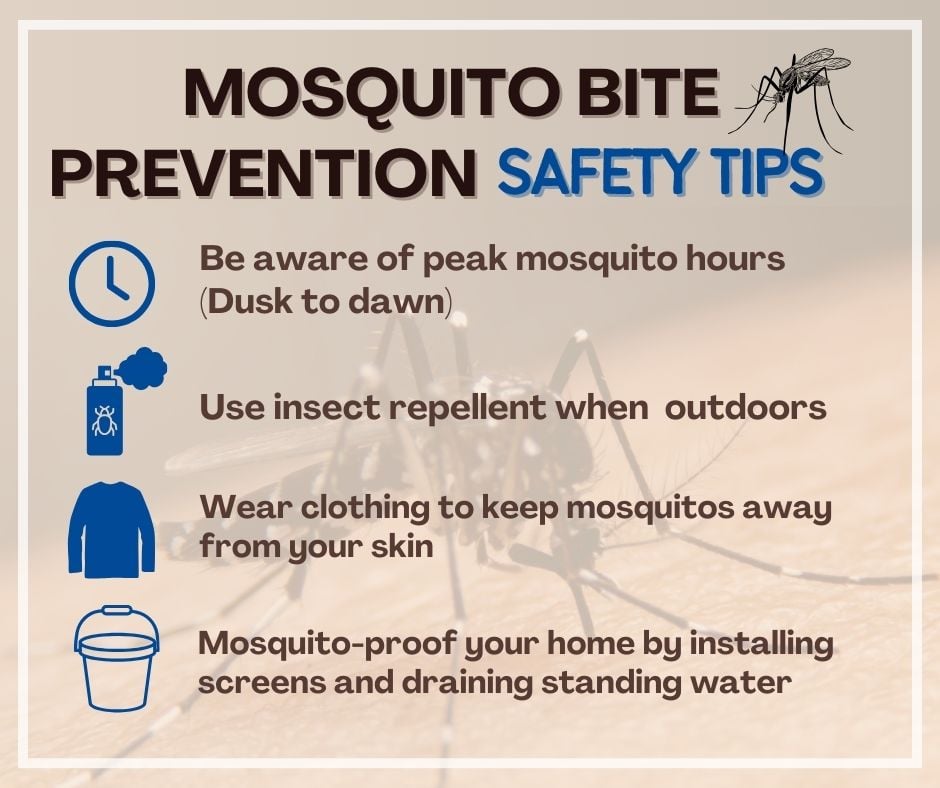
When spending time outdoors this summer, the Department of Public Health recommends wearing insect repellent, long sleeves, pants and socks. The hours of dusk until dawn are “peak mosquito hours” according to the state and standing water left outdoors can be a literal breeding ground for mosquitos.
RAYNHAM — West Nile virus has been found in mosquito samples in Raynham and Middleboro — including mosquitoes that bite humans — changing the towns’ risk level from low to moderate, according to the Massachusetts Department of Public Health.
Mosquitoes from Aug. 8 and Aug. 14 collections from the towns were tested by the state’s Department of Public Health (DPH), and multiple samples were found to be positive for West Nile virus (WNV).
The DPH says that moderate risk level means infection with WNV is a possibility, or has already occurred.
Raynham Health Director Paula Rossi-Clapp explained that, according to communications she’s received from Bristol County Mosquito Control, the reason the town was changed to moderate risk is that Middleboro had positive samples identified at the same time.
One of the mosquito samples is the kind that bites humans. Because mosquitoes do not stay within town borders, several communities with swampland have changed to moderate risk.
Currently, other area communities, including Taunton, Dighton, and Berkley, are at low risk for WNV, meaning no mosquito samples have tested positive, according to the state's most recent data, which dates to Thursday Aug. 17, as of Friday afternoon.
Rossi-Clapp said Bristol County Mosquito Control wants more testing and data, to see if more than one human-biting mosquito tests positive over the next week.
Residents have had enoughLoud parties on Lake Sabbatia island, 'cowboying' jet skiers — What's Taunton doing?
In the meantime, there won’t be any restrictions placed on public outings.
Aerial spraying has been occurring regularly at the Senior Center and recreational athletic fields on King Phillips Road in Raynham.
What $700K buys in RaynhamSpacious colonial in Raynham on 1.6 acres of land sells for over $700K
WNV is part of group of viruses known as arboviruses, which are most commonly transmitted to humans by the bite of an infected mosquito. The mosquitoes that carry this virus are common throughout the state and are found in urban as well as more rural areas.
While WNV can infect people of all ages, people over the age of 50 are at higher risk for severe infection.
According to the state’s Department of Public Health, 80% of people infected with WNV show no systems, do not feel sick and will be fine. Less than 20% infected will develop symptoms, like fever, vomiting, nausea, and body aches.
The CDC stated 1 out of 150, or less than 1%. of the infected will experience severe illness and symptoms, like encephalitis, meningitis, paralysis, vision loss or could even go into a coma or even death.
The state’s Department of Public Health also said that even though cases have been identified all over the state, it’s difficult to record the number of people exposed due to the lack of symptoms for the majority. From 2011–2020, 148 cases were reported with severe illness. Seven of these people died.
Raynham's and Middleboro’s health departments recommend taking the following measures to avoid mosquito bites that might cause WNV or Eastern equine encephalitis, also known, as EEE — which tends to be rarer but has a much higher incidence of severe illness than WNV:
LOTS OF POSTS IGNORED BY BLOGGER..... OR REMOVED ON THEIR WHIM! ALL POSTS ARE ...


