Thursday, July 18, 2024

CFPB Aims to Protect Workers From Paycheck Advance Fees

FWIW...

I MET WITH A PROFESSIONAL SEVERAL TIMES IN AN OFFICE IN A NEIGHBORHOOD THAT WAS CONSPICUOUSLY POOR. NO SUPERMARKETS, JUST JUNK FOOD FRANCHISES. 

NOT KNOWING WHAT TRAFFIC WOULD BE LIKE, I ARRIVED EARLY & WANDERED AROUND THE NEIGHBORHOOD. PREDICTABLY, THERE WAS A PAY DAY LOAN COMPANY...

THERE WERE SEVERAL SHOPS I EXPLORED...I HAD REPLENISHED UNDERWEAR & SOCKS, DELIVERED FOR FREE TO MY HOME....THE LOCAL PRICES WERE OUTRAGEOUS IN COMPARISON. IF YOU LACK A COMPUTER & A CREDIT CARD, AS WELL AS SECURE DELIVERY, YOUR OPTIONS ARE LIMITED. ALL OTHER COMMONLY AVAILABLE ITEMS WERE SIMILARLY OUTRAGEOUS IN PRICE. 

THERE WAS NO LOCAL LIBRARY WITHIN PROXIMITY TO ACCESS THE INTERNET.

WORKING LONG HOURS AT A LOW WAGE JOB, LACKING AFFORDABLE TRANSPORTATION LIMITS OPTIONS.

AS A NATION, WE CAN'T ALLOW
THOSE WHO CAN LEAST AFFORD IT TO BE VICTIMIZED JUST BECAUSE THEY'RE POOR.


CFPB Aims to Protect Workers From Paycheck Advance Fees

"The CFPB's actions will help workers know what they are getting with these products and prevent race-to-the-bottom business practices," said the director of the bureau.

With inflation rising in recent years, driven by corporate greed according to numerous analyses, the number of people in the U.S. who have relied on paycheck advance products has skyrocketed—but a rule introduced Thursday by the Consumer Financial Protection Bureau is aimed at ensuring that lenders who provide these products are transparent with financially struggling workers about the fees they can incur.

The CFPB proposed a rule clarifying that paycheck advances, sometimes marketed as "earned wage" products, are consumer loans and are therefore subject to the Truth in Lending Act.

The federal law requires lenders to disclose all fees, interest, and total costs consumers will incur before they use the product.

According to a study released by the CFPB as it announced the new proposed rule, the number of paycheck advance transactions processed by employer-partnered firms ballooned by 90% from 2021-22. More than 7 million workers used paycheck advances to access $22 million over that time period in order to pay for their housing, utilities, and other essentials.

The study notes that "the mismatch between when a family receives income and when a family must make payments for expenses" is a major driver of demand for consumer credit and other products like paycheck advances.

"To reduce their costs, employers have a strong incentive to delay the payment of compensation to workers, which drives demand for short-term credit," reads the analysis.

As such, said Rohit Chopra, director of the CFPB, paycheck advances "are often marketed to and designed for employers, rather than employees."

"The CFPB's interpretive rule will level the playing field and promote competition among short-term small-dollar lenders."

"The CFPB's actions will help workers know what they are getting with these products and prevent race-to-the-bottom business practices," he said.

Th bureau's report focuses on employer-sponsored paycheck advances, which have been increasingly used over and over by the same workers. Employees took out an average of 27 paycheck advance loans per year, according to the CFPB, with the average transaction totaling $106.

"The share of workers in our sample using the product at least once a month increased from 41% in 2021 to nearly 50% in 2022," wrote the CFPB.

The bureau noted that while employers sometimes make paycheck advances fee-free for their employees, workers usually pay fees themselves, including expedited service fees and "tips" that the online services request when completing the transaction.

In the sample the CFPB reviewed, employers paid for less than 5% of the fees incurred by workers

"Across our sample of surveyed companies, in 2021 and 2022, roughly 90% of workers paid at least one earned wage product-related fee," said the bureau. "Among the companies in our sample that collect fees, the average cost per transaction ranged from $0.61 to $4.70. When workers paid a fee, the average size was approximately $3.18. Workers paid an average of $68.88 per year in fees."

Some services provide subscriptions for workers who used paycheck advances regularly; those who utilize them can pay as much as $14.99 per month in subscription fees, according to the CFPB.

"In recent years, workers have seen big increases in wages, but junk fees and high rates on financial products not only chip away at these gains—they take advantage of workers," acting Labor Secretary Julie Su said in a statement.

Adam Rust, director of financial services for the Consumer Federation of America, said the proposed rule shows that "an advance on wages is still a loan that has to be repaid, and no amount of hair-splitting can change it."

"Workers have always relied on wages to repay advances from lenders," said Rust. "Policymakers should be skeptical whenever lenders insist on regulatory exemptions from rules that apply to their competitors. The CFPB's interpretive rule will level the playing field and promote competition among short-term small-dollar lenders."

The CFPB is among several federal agencies that right-wing operatives, many of whom worked in the Trump administration, have pledged to abolish under the policy agenda Project 2025.

Under the Biden administration, in addition to taking aim at paycheck advances, the CFPB has proposed a rule to cap credit card late fees at $8, a move that would save Americans $10 billion per year; prevented discrimination by small business lenders; and fined Wells Fargo $3.7 billion for illegal activity.


Consumer Financial Protection Bureau

Consumer Financial Protection Bureau Director Rohit Chopra testifies in Washington, D.C. on June 12, 2024.

 (Photo: Bill Clark/CQ-Roll Call, Inc. via Getty Images)

Report Shows How Lawmakers in GOP-Dominated South Harm Workers CORPORATE MEDIA WON'T REPORT THIS!


Report Shows How Lawmakers in GOP-Dominated South Harm Workers

"It will be important for Southerners from all backgrounds," one expert wrote, "to stand together and build the coalitions needed to demand policymakers create a new economic development model."

"For at least the last 40 years, pay and job quality for workers across the South has been inferior compared to other regions—thanks to the racist and anti-worker Southern economic development model."

That's according to a Thursday report by Chandra Childers, a senior policy and economic analyst at the Economic Policy Institute (EPI). The new publication is part of her "Rooted in Racism and Economic Exploitation" series.

Previous documents in the series have discussed how "Southern politicians claim that 'business-friendly' policies lead to an abundance of jobs and economic prosperity" but in reality, their failed model is designed "to extract the labor of Black and brown Southerners as cheaply as possible" and has resulted in "economic underperformance."

"Because of the political opposition to unions, when workers try to organize, employers know that they can illegally intimidate them, refuse to recognize the union, or negotiate a contract in bad faith."

Thursday's report dives into various elements of the Southern economic development model, which "is characterized by low wages, limited regulations on businesses, a regressive tax system, subsidies that funnel tax dollars to the wealthy and corporations, a weak safety net, and staunchly anti-union policies and practices."

Childers uses a U.S. Census Bureau definition of the South, which includes: Alabama, Arkansas, Delaware, Florida, Georgia, Kentucky, Louisiana, Maryland, Mississippi, North Carolina, Oklahoma, South Carolina, Tennessee, Texas, Virginia, West Virginia, and the District of Columbia.

The EPI report highlights that "Southern states have lower median wages than other regions," "low-wage workers make up a larger share of the workforce across the South," and "every state that lacks a state minimum wage" is in the region.

The publication also points out the decline of coverage from employer-provided health insurance and pensions in the South, as well as how workers there "have less access to paid leave than their peers in other regions" and "Southern state lawmakers have also disempowered local communities."

"Across the South, most states have passed so-called right-to-work laws, with the exceptions of Delaware, Maryland, and the District of Columbia," Childers detailed. "Right-to-work laws do not, in any way, guarantee workers will have access to a job if they want one. They simply make it harder for unions to be financially sustainable."

"In addition to right-to-work laws and the overall opposition from political leaders across the region, workers seeking to organize a union typically face intense opposition from employers," she continued. "Further, because of the political opposition to unions, when workers try to organize, employers know that they can illegally intimidate them, refuse to recognize the union, or negotiate a contract in bad faith—with little to no fear of being held accountable by political leaders."

While "there are city and county officials who support higher minimum wages and access to pensions and paid leave for workers" in the South, she explained, their ability to take action is limited by preemption, which "is when state policymakers either block a local ordinance or dismantle an existing ordinance" intended to help the working class.

Childers' report doesn't explicitly point fingers at particular political parties, but the region has been largely dominated by Republican officials during the past four decades covered by the analysis.

While the Republican presidential campaign of former President Donald Trump is clearly making a play for working-class voters by selecting Sen. JD Vance (R-Ohio) as the vice presidential candidate and inviting International Brotherhood of Teamsters general president Sean O'Brien to speak at this week's convention—provoking criticism from progressive politicians and labor leaders—Southern GOP leaders continue to display disdain toward efforts to organize workers.

As Volkswagen employees in Tennessee began voting on whether to join the United Auto Workers in April, six Southern GOP governors put out a joint statement saying they were "highly concerned about the unionization campaign driven by misinformation and scare tactics that the UAW has brought into our states."

EPI said at the time that the governors' anti-union statement "clearly shows how scared they are that workers organizing with UAW to improve jobs and wages will upend the highly unequal, failed anti-worker economic development model of Southern states."

The Chattanooga vote was a success, but the following month organizers faced a tough loss at a pair of Mercedes-Benz plants in Alabama, where the UAW is now seeking a new election. Meanwhile, regional GOP policymakers have ramped up attacks on unions, advancing legislation that makes organizing harder.

"To begin to work toward changing the Southern economic development model," Childers argued, "it will be important for Southerners from all backgrounds—across race, ethnicity, gender, immigrant statuses, and income levels—to stand together and build the coalitions needed to demand policymakers create a new economic development model."

The expert urged people across the South to fight for a model that includes a living wage, guaranteed health insurance, pensions, and paid leave.

"Finally, and perhaps most important, workers must be able to come together in a union to demand fair wages and benefits, a safe working environment, and the ability to have a say about their workplace—even when politicians are intransigent," she stressed. "This is a model that would serve the interests of all Southerners."


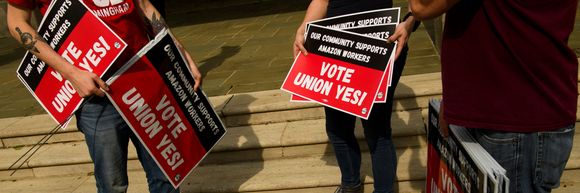
People hold "Vote Union Yes!" signs

People hold "Vote Union Yes!" signs during a protest in solidarity with Black Lives Matter and the unionization of Amazon fulfillment center workers at Kelly Ingram Park on March 27, 2021 in Birmingham, Alabama.

 (Photo: Patrick T. Fallon/AFP via Getty Images)

Oil Giant Ran 1977 Article Linking Climate Change to 'Widespread Starvation'


Oil Giant Ran 1977 Article Linking Climate Change to 'Widespread Starvation'

"Pestilence, starvation, drought. To know one's product may bring that about, and bury the evidence, is unspeakable,” an expert said.

A Marathon Oil Company magazine from 1977 predicted that rising temperatures caused by industrial activity could one day lead to "widespread starvation and other social and economic calamities," The Guardian reported on Thursday.

The revelation comes as Big Oil faces a number of lawsuits for covering up its knowledge about climate change, propagating disinformation, and blocking a green transition.

Marathon Petroleum, the largest oil refinery company in the U.S. and a major spin-off of Marathon Oil Company, is among the defendants in one of the most prominent of those cases, City and County of Honolulu v. Sunoco et al. The city of Honolulu alleges that Big Oil engaged in a coordinated effort to "conceal and deny their own knowledge" of the impact of burning fossil fuels.

The company magazine, Marathon World, featured the 1977 article, titled "World Weather Watch." Summarizing the work of federal climate scientists, the unnamed author suggested that "industrial expansion during the last century may be affecting the weather through carbon dioxide pollution."

Observers of the fossil fuel industry on Wednesday indicated that the 1977 article fit with a larger pattern of Big Oil's early knowledge of climate change.

"I'm not surprised that Marathon would have documents that shed light on its awareness," Bryant Sewell, a research analyst at the corporate watchdog Majority Action, told The Guardian. "Whether it's Marathon, Exxon, or electric utilities, we have seen a longstanding strategy from these companies of climate denial, disinformation, and delay."

Timmons Roberts, a climate disinformation expert based at Brown University, reacted strongly to the article when The Guardian shared a copy with him.

"Pestilence, starvation, drought," he said. "To know one's product may bring that about, and bury the evidence, is unspeakable.”

The 1977 article was uncovered by Guardian contributor Geoff Dembicki, an investigative journalist and author of the 2022 book The Petroleum Papers: Inside the Far-Right Conspiracy to Cover Up Climate Change. Dembicki told Common Dreams that he found the article in an archive and it's not available online.

The Marathon article quotes J. Murray Mitchell, a leading climatologist at the National Oceanic and Atmospheric Administration who warned in the 1970s that carbon dioxide levels could threaten the polar ice caps and have devastating consequences for humankind, as well as other climate experts. However, it also puts forth other possible causes for changes in climate and weather patterns which have since been debunked, according to Dembicki.

Marathon Petroleum, which is in the process of merging with rival ConocoPhillips, hasn't received as much scrutiny for its historical role in climate denialism as Exxon and Shell, two companies that, as Dembicki put it, "privately studied catastrophic climate risks starting in the 1970s and then led public relations and advertising campaigns to undermine the science."

Yet the company, which owns 13 oil refineries and more than 6,000 gas stations in the U.S. and had a net income of nearly $10 billion in 2023, has received scrutiny for more recent events. It was the subject of a 2019-2020 Congressional investigation into a covert industry effort to push the Trump administration to roll back vehicle efficiency standards, following a New York Times exposé. A group of senators, including Sheldon Whitehouse (D-R.I.), called Marathon "one of the most anti-climate companies" in an open letter at the time.

Whitehouse is among the lawmakers pushing the Department of Justice to investigate Big Oil disinformation, which could potentially lead to a federal lawsuit akin to the one previously brought against Big Tobacco. Dozens of cities and states, including Honolulu, have already filed such suits.

The lawsuits face bitter opposition from Big Oil. Industry interests have mounted an unusually public campaign to get the U.S. Supreme Court to dismiss the Honolulu case, which could be the first climate lawsuit against Big Oil to reach a jury trial.

The majority of Americans support legal accountability for Big Oil for its role in creating the climate crisis, a Data for Progress poll from May showed. Roughly half of Americans even support criminal charges, which have not yet been pursued anywhere in the world, though a case file has been opened in France.


Marathon gas station sign

A sign advertises a Marathon-branded gas station in May 2024 in Park Ridge, Illinois. 

(Photo: Scott Olson/Getty Images)

             COMMON DREAMS

RNC Day Three Re-Cap


The Lincoln Project

1.12M subscribers


We've been watching it so you don't have to... Our RNC day 3 recap. The Lincoln Project is a leading pro-democracy organization in the United States — dedicated to the preservation, protection, and defense of democracy. Our fight against Trumpism is only beginning. We must combat these forces everywhere and at all times — our democracy depends on it. Don’t forget to like, share, and follow The Lincoln Project on social media below! DONATE TO THE LINCOLN PROJECT https://action.lincolnproject.us/donate JOIN OUR MAILING LIST https://action.lincolnproject.us/join FOLLOW LINCOLN PROJECT TWITTER: https://bit.ly/3zwZFva INSTAGRAM: https://bit.ly/31yyrHR FACEBOOK: https://bit.ly/3zCBHhT REDDIT: https://bit.ly/39PLnxi TIKTOK: https://bit.ly/3xHYRCY PODCAST: https://apple.co/3G7zr4L We can’t do our work without your support. Thank you.

Amnesty Condemns Israel's 'Mass Incommunicado Detention and Torture' of Palestinians


Amnesty Condemns Israel's 'Mass Incommunicado Detention and Torture' of Palestinians

The head of the human rights group said Israel's Unlawful Combatants Law is enabling "rampant torture" of Palestinian detainees and "institutionalizes enforced disappearance."

Israel is using its dubious Unlawful Combatants Law to arbitrarily detain Palestinians from the Gaza Strip—including women and children—indefinitely without charge and trial, according to an Amnesty International report published Thursday.

All 27 former detainees interviewed by the rights group described being tortured by Israeli forces.

Amnesty documented the cases of 21 men, five women, and one 14-year-old boy taken from Gaza and held in indefinite incommunicado detention in facilities including the notorious Sde Teiman camp in Israel's Negev Desert for periods of up to four-and-a-half months, without access to lawyers or contact with their families.

"All those interviewed by Amnesty International said that during their incommunicado detention, which in some cases amounted to enforced disappearance, Israeli military, intelligence, and police forces subjected them to torture and other cruel, inhuman, or degrading treatment," the report states.

"Israeli authorities are using the Unlawful Combatants Law to arbitrarily round up Palestinian civilians from Gaza and toss them into a virtual black hole."

Israel's Unlawful Combatants Law allows the Israel Defense Forces (IDF) to detain anyone from Gaza that they suspect of being engaged in the fight against Israel or posing a threat to its national security indefinitely without charge, trial, or evidence. Last December, the law was amended to allow the IDF to hold suspects for up to 96 hours without a detention order, up to 75 days without being brought before a judge, and up to three months without seeing a lawyer.

"While international humanitarian law allows for the detention of individuals on imperative security grounds in situations of occupation, there must be safeguards to prevent indefinite or arbitrary detention and torture and other ill-treatment," Amnesty International secretary general AgnèsCallamard said in a statement. "This law blatantly fails to provide these safeguards. It enables rampant torture and, in some circumstances, institutionalizes enforced disappearance."

"Our documentation illustrates how the Israeli authorities are using the Unlawful Combatants Law to arbitrarily round up Palestinian civilians from Gaza and toss them into a virtual black hole for prolonged periods without producing any evidence that they pose a security threat and without minimum due process," Callamard added. "Israeli authorities must immediately repeal this law and release those arbitrarily detained under it."

According to the report, "those detained included doctors taken into custody at hospitals for refusing to abandon their patients; mothers separated from their infants while trying to cross the so-called 'safe corridor' from northern Gaza to the south; human rights defenders, [United Nations] workers, journalists, and other civilians."

Former detainees at Sde Teiman said they were blindfolded and handcuffed for their entire imprisonment, forced to remain in painful stress positions for hours on end, and prevented from speaking to other prisoners or even raising their heads.

Said Maarouf, a 57-year-old pediatrician kidnapped by Israeli troops during an attack on al-Ahli Baptist Hospital in Gaza City in December 2023, was detained for 45 days at Sde Teiman. He described being constantly blindfolded and handcuffed, beaten, starved, and forced to sit on his knees for long periods.

A 14-year-old boy taken from his home in Jabalia in January was held for 24 days at Sde Teiman. He told Amnesty that he was jailed with more than 100 adults in a single barrack and was kicked, punched in the head, and repeatedly burned with cigarettes. Amnesty observed bruises and burns on the child's body when it examined him in February. Like other detainees interviewed by the rights group, the boy said he was always blindfolded and handcuffed and was not permitted to see a lawyer or his relatives.

Earlier this year, Israeli medics working at Sde Teiman said amputations of hands and feet due to injuries from constant handcuffing were "a routine event."

The five women interviewed by Amnesty were initially jailed at a military detention center in an illegal Israeli settler colony in the occupied West Bank, then at Dimon women's prison in northern Israel. All five said they were beaten during transport.

One woman taken on December 6 said she was separated from her two children—ages 4 and 9 months—and initially held alongside hundreds of male prisoners. She was beaten, forced to remove her veil and photographed without it, and subjected to the mock execution of her husband.

"On the third day of detention, they put us in a ditch and started throwing sand," she said. "A soldier fired two shots in the air and said they executed my husband and I broke down and begged him to kill me too, to relieve me from the nightmare."

Another woman said guards threatened: "We will do to you what Hamas did to us. We will kidnap and rape you."

These and other accounts are consistent with the testimonies of Israeli whistleblowers and former prisoners at Sde Teiman and other Israeli detention facilities.

Former detainees and human rights defenders have described Sde Teiman as "Israel's Guantánamo" and "more horrific than Abu Ghraib"—the notorious U.S. military prison in Iraq where prisoners were tortured and dozens died. Palestinians held at Sde Teiman and at other detention sites described being electrocuted, mauled and even raped by dogs, constantly beaten, starved, and subjected to other torture and abuse. Other former Sde Teiman detainees said they witnessed a prisoner raped to death, possible executions, and other atrocities.

IDF officials told the Israeli newspaper Haaretz last month that the IDF is investigating the in-custody deaths of dozens of detainees, including 36 who died or were killed at Sde Teiman since October, when Israel began its retaliatory war following the attack by Hamas-led militants that left more than 1,100 Israelis and foreign nationals dead—some of whom were killed by Israeli troops.

Over 240 other people, mostly Israelis, were kidnapped and taken to Gaza. A Human Rights Watch report published Wednesday details war crimes and crimes against humanity including murder and rape perpetrated by members of five Palestinian armed groups that took part in the October 7 attacks.

Since October, Israel's siege, bombardment, and invasion of Gaza has left at least 139,000 Palestinians dead, maimed, or missing, around 90% of Gaza's 2.3 million people forcibly displaced, and starvation—sometimes deadly—running rampant.

Israel is on trial for genocide at the International Court of Justice in The Hague. International Criminal Court Prosecutor Karim Khan has also applied for warrants to arrest Israeli Prime Minister Benjamin Netanyahu, Defense Minister Yoav Gallant, and three Hamas leaders for war crimes and crimes against humanity, including "extermination."


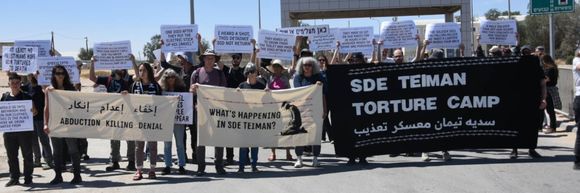
Israelis protest the Sde Teiman torture prison

Israeli activists protest outside the notorious Sde Teiman prison in the Negev Desert on April 20, 2024. 

(Photo: Ofer Neiman/X)


Trump & RNC Lose Nevada Case, File New Case in Michigan to Limit Voter Registration REPUBLICANS DON'T WANT YOU TO VOTE!

Not everyone can be in town on election day. Some are disabled, can't travel to POLLS. MAIL IN BALLOTS increased voter participation in Massachusetts - you can drop the BALLOT at your local town/city clerk.  

You can vote in your PAJAMAS! You can look up candidates you might not be familiar with....it increased VOTER PARTICIPATION in Massachusetts! It just makes sense!
REPUBLICANS don't want people VOTING!  


Democracy Docket

123K subscribers


Yesterday, a federal court rejected a lawsuit from the Trump campaign and the Republican National Committee to throw out certain mail-in ballots. And on the first day of the Republican National Convention, the Trump campaign and the RNC filed a lawsuit in Michigan to shut down voter registration sites in Veteran Affairs and Small Business Administration offices. Marc Elias and Paige Moskowitz discuss these lawsuits and the GOP’s continued attempts to suppress voters in court. -Subscribe to our newsletters: https://www.democracydocket.com/youtu... -Become a Democracy Docket member: https://www.democracydocket.com/member -Support our work: https://www.democracydocket.com/support/ -Shop Democracy Docket merch: https://store.democracydocket.com Follow Democracy Docket! -⁠X/Twitter⁠:   / democracydocket   -⁠Facebook⁠:   / democracydocket   -⁠Instagram⁠:   / democracydocket   -⁠TikTok⁠:   / democracydocket   -Threads: https://www.threads.net/@democracydocket Resources: -Federal Court Rejects RNC and Trump Campaign’s Challenge to Nevada Ballot Receipt Deadline: https://www.democracydocket.com/news-... -Trump Campaign, RNC Sue Whitmer Over Michigan Voter Registration Sites: https://www.democracydocket.com/news-...


Top News | 'He’s Not Going to Run Unopposed': Sanders Rejects Schumer for Majority Leader

                                                               LOTS OF POSTS IGNORED BY BLOGGER..... OR REMOVED ON THEIR WHIM! ALL POSTS ARE...