17 March 22
Live on the homepage now!
Reader Supported News

With the most powerful family in West Virginia, “there’s not an exchange of Christmas cards,” said the senator’s cousin, once the Mylan plant’s union president.
While Manchin worked in Washington to secure funding for pet projects, his daughter was narrowly avoiding cross-examination. Also on Friday, a Kansas judge granted preliminary approval to a settlement in which the drug manufacturer Viatris, formerly known as Mylan, agreed to pay $264 million for antitrust violations pertaining to the marketing and sales of epinephrine, the lifesaving medication it uses to make EpiPens. With a final hearing set for July, the deal puts Heather Bresch, Manchin’s daughter and Mylan’s former CEO, on track to dodge legal repercussion from a yearslong saga involving allegations of racketeering, price fixing, and the anti-competitive sale of EpiPens — whose price jumped by nearly $550 under Mylan’s watch.
Bresch led an embittered defense against allegations that she was directly responsible for inflating the cost of epinephrine, testifying before Congress in 2016 to defend her role in the price hikes. Legal documents reviewed by The Intercept showed that Bresch played a direct part in the decision to force consumers to purchase dual packs of EpiPens, a practice that necessarily inflated the product’s price.
In 2021, U.S. District Judge Daniel Crabtree greenlighted a trial for antitrust claims while rejecting a motion by the defense to remove Bresch from the defense roster. “Like the old idiom that if it looks like a duck, quacks like a duck and swims like a duck, [it’s] probably a duck; so too if one is named as a defendant, deposed as a defendant, and alleged to be liable as a defendant, well, she’s a defendant,” said Paul Geller, attorney for the plaintiffs, in a statement. “We look forward to seeing Ms. Bresch in Kansas.” But the settlement, pending final approval, means that Bresch will never have her day in court.
Manchin and Bresch did not respond to The Intercept’s requests for comment.
Not long after Bresch left Mylan, the company’s plant in Morgantown, West Virginia, closed down. At what was then the largest generic pharmaceutical plant in the country, 1,400 employees represented by United Steelworkers lost their jobs — just months after Bresch, who had overseen the plant, walked away with a $30 million payout.
But the assault on Mylan workers began in earnest in 2009, when founder Mike Puskar stepped down as chair of the board to make way for a new team of executives: CEO Robert Coury, Executive Vice President Rajiv Malik, and Chief Operating Officer Bresch, a rising star at Mylan. When she entered into her COO position two years prior, the company put out a press release to announce the new role for Bresch, daughter of then-Gov. Manchin, claiming that she had obtained an executive master’s degree from West Virginia University. But when the Pittsburgh Post-Gazette called the school to verify it, the registrar told the paper that Bresch had never received the degree. The university began offering different stories to explain the discrepancy: a record-keeping error, a failure to pay the required graduation fee, and a breakdown of credit transfers, always maintaining that she had in fact earned her MBA.
As the school’s story crumbled, it launched an internal investigation into the origins of Bresch’s degree. Manchin, who had oversight of the university as governor, said that he would abide by whatever decision the board made.
When the investigatory panel concluded that administrators had fabricated her MBA, West Virginia University President Michael Garrison and other senior officials ultimately resigned. Her MBA was rescinded, but Bresch kept her Mylan job. (She does hold a B.A. from the university.) She was appointed president in 2009, joined the board of directors in 2011, and assumed control as CEO in 2012. Bresch’s father, meanwhile, was elected to the U.S. Senate in 2010 and named her brother, Joe Manchin IV, to run his coal empire.
While Bresch climbed the ranks as a pharmaceutical executive and her father rose between branches of government, another member of the Manchin clan was organizing on the Mylan factory floor. Manchin’s first cousin, Joseph Gouzd, started at Mylan in 1999, working a union job operating a pill coater and eventually becoming union president in 2018.
This put him directly at odds with Bresch. As Vanity Fair documented in July, the climate for Mylan’s factory workers changed soon after the C-suite shake-up.
“The hallmarks of community-oriented management, such as the Christmas bonuses and Thanksgiving turkeys, would soon vanish,” wrote Katherine Eban. “According to one employee, when union members—who had been engaged in collective bargaining—raised the Christmas bonuses with Bresch at a company-wide meeting in the Morgantown plant’s cafeteria in December 2011, she replied, ‘What do you prefer, a Christmas bonus or a job?’ By 2015, [Bresch’s] annual compensation had risen more than 600%, to nearly $19 million.”
“We ran a facility in Morgantown that was the cash cow to everything Puskar spun off,” Gouzd told The Intercept. “And then when the cash cow was slaughtered, everything disappeared.”
In 2020, the Pfizer-owned Upjohn merged with Mylan under the new name Viatras Inc., and Mylan’s Morgantown jobs were shipped overseas to India. Workers were provided two weeks of severance and health care coverage for each year worked, while Bresch left with her $30 million payout. Just before the Christmas holiday that year, Mylan announced it would shut down the plant.
“I was in that plant for decades, and they gave me no inkling of what was going on with the closure,” Gouzd said. “It’s safe to say there’s not an exchange of Christmas cards with the Manchins, if you know what I mean. Joe Manchin is my first cousin; Heather Bresch is my second cousin. And I’ll tell you, they say you can’t choose your family, and I didn’t choose them either.”
As the company doled out tens of millions of dollars in bonuses to Bresch and other senior executives, workers fought to keep the plant open. In the spring of 2021, they unsuccessfully urged the Biden administration to support the facility using federal emergency authorities under the Defense Production Act.
“My son was dying of leukemia when the plant was closing. He died in June. I would leave that hospital after 12-hour days and stop by the union local to give them a little hope, to show my face, because they were scared, and they were tired,” Danielle Walker, a West Virginia state delegate who fought to keep the Mylan plant open, told The Intercept. “Meanwhile, Joe Manchin couldn’t be bothered to make a call, to jet down, to do anything.” In the end, he offered the workers only a short meeting.
Just days before the plant closed, Manchin sent a letter to the Cybersecurity and Infrastructure Security Agency urging an expedited review to keep its doors open. CISA confirmed the plant as critical infrastructure, granting the government negotiating authority to maintain its use, but as many in Morgantown report, the designation was too little, too late.
“That’s like buying tires for a car you sold a week ago,” Johanna Puskar, daughter of Mylan founder Mike Puskar, told The Intercept.
The closure sent a shockwave through Morgantown, cradled in the southernmost swath of the Rust Belt. A study commissioned by the Democracy Collaborative found that the closure will result in a domino effect across Monongalia County, costing West Virginia 4,642 jobs and a negative economic impact of over $2.5 billion. At the same time, local utility providers have jacked up rates to make up for the lost revenue generated by the plant, with double-digit increases for water, sewage, and stormwater affecting a broad swath of Morgantown residents. With few job prospects and a clock running out on severance benefits, many former employees have nowhere left to turn.
“You know what’s happening to those workers?” Walker said. “They are losing all hope. Just this week, a former Mylan employee committed suicide,” she said late in December, when a longtime Mylan worker killed himself. While claimants in the suit against Mylan stand to receive millions in settlement funds, the workers who spent their lives in the Mylan plant are still looking for answers.
“How could you be a representative of one of the poorest states, working for the people of West Virginia, have a daughter who is an executive of this company, and all of a sudden she resigns, and 30 days later, abruptly there is a plant closure notification?” said Gouzd. “Tell me, how the hell does that work?”
More than four decades earlier, on Memorial Day weekend of 1976, Joe Manchin’s speedboat was whipping through the Tygart Valley River just south of Fairmont, West Virginia. At the helm was Joe’s brother Roch “Rock” Manchin, towing his first cousin Joseph Gouzd in his wake as he clung to an inner tube. The carefree holiday weekend took a dark turn as Rock accelerated and spun the boat around, careening his cargo into a moored boat. In the crash that ensued, Gouzd pinched his femoral nerve, leaving his right leg disabled for life.
Rock’s brother Joe wasn’t on board at the time, but the boat was insured in his name, and Gouzd threatened to take him to court for damages. Then 28 years old, Joe treated his cousin to a ride on his prop plane, where the rising politician attempted to smooth things over, Gouzd told The Intercept.
“He had a little Cessna; he took me for a plane ride with my dad with the hopes of me not bringing any action against him,” Gouzd said. The air show proved ineffective, and Gouzd decided to bring charges against the future senator for damages. Two other people who knew Gouzd and the Manchins confirmed Gouzd’s account. Joe and Roch Manchin did not respond to The Intercept’s request for comment.
In 2020, more than 40 years after Gouzd’s accident, Joe Manchin was living out of his house boat Almost Heaven in Washington, D.C, and Gouzd was once again facing off with his cousin. He was present as the leader of the union when Manchin met with Mylan workers, telling them: “It sounds like they’ve reached a corporate decision. There is very little I can do.” Bresch walked away with her payout, and Manchin has denied making this comment, though he has not offered an alternate account.
After Manchin failed to save the Morgantown plant, he instead found favor with Biden in securing a role for his wife, Gayle Manchin, who now oversees billions in federal aid to Appalachian states as chair of the Appalachian Regional Commission. In her old job as head of the National Association of State Boards of Education, she lobbied states to require schools to purchase Mylan-manufactured EpiPens, which under Bresch had climbed to a price of $600 per pack.
With Bresch now effectively cleared in the price-inflation settlement and the plant now shuttered, West Virginia University is in talks to inherit the former Mylan facility — just in time for Joe Manchin’s newly secured funding to power its research centers. Gouzd told The Intercept that other companies had expressed interest in buying the plant to keep its assembly lines moving but that a lifeline-extending sale failed to materialize.
“He doesn’t want to be accountable to his constituents,” Gouzd said of his cousin. “He wants to talk a lot of bullshit and false promises.”
 Conservatives and U.S. media are regurgitating a fake conspiracy theory that's being used to justify Putin's assault on Ukraine. (photo: Drew Angerer/Getty)
ALSO SEE: Computer Programmers Are Taking Aim at Russia's Propaganda Wall
Conservatives and U.S. media are regurgitating a fake conspiracy theory that’s being used to justify Putin’s assault on Ukraine.
False claims that Russia has been targeting sinister U.S.-backed “biolabs” in Ukraine were popularized among conspiratorial American audiences by QAnon believers shortly after Russia launched its invasion in late February. Mainstream Republican voices have since dragged the old Russian propaganda at its roots across the forefront of the U.S. political stage.
The Kremlin has for years accused the U.S. of operating a shady network of biolabs in foreign countries conducting dangerous experiments, including some in Ukraine that have allegedly targeted unsuspecting locals. Though the U.S. does support medical and biodefense labs across the former Soviet Union, there is no evidence to support claims that the labs are used to develop bioweapons programs. China has peddled similar propaganda; it tag-teamed with Russia last year to rehash an old accusation that COVID-19 may have been manufactured in U.S.-supported labs—a narrative that has been nurtured by pro-Kremlin sources since the onset of the pandemic in 2020.
Kremlin media operations and officials resurfaced these lies as Russia was amassing its troops at Ukraine’s northern border, and again in early March (once the invasion was already underway) after its other justifications failed to stick. Government officials in the U.S. have explicitly denied the accusations.
As noted by fact checkers, these propaganda lines were regurgitated by U.S.-audience junk news blogs in late February shortly after Russia invaded Ukraine. In early March, a single QAnon supporter launched the false claims on their way to online virality after sharing an image of maps contrasting lab locations with Russian airstrike locations.
And now, the premise of this Kremlin accusation is being asserted and defended by some of the country’s most popular Trump-aligned media personalities, including America’s most-watched cable host Tucker Carlson, former presidential adult son Donald Trump Jr., and beanie-clad “disaffected liberal” YouTube creator Tim Pool. Former Rep. Tulsi Gabbard (MAGA’s favorite Democrat) got in on the take too, though she has walked back her claims somewhat after drawing criticism.
Reporting for Foreign Policy, journalist Justin Ling explained that these accusations are built off of two far-reaching assumptions: that COVID-19 was manufactured as a bioweapon and that the U.S. would only fund research labs in order to secretly produce such weapons. As thoughtless and evidence-free as those base claims may be, many online communities that traffic in conspiratorial content accepted those assumptions years ago. Whether they choose to blame billionaire George Soros, the “deep state,” or the “New World Order,” assertions that the coronavirus was made as a bioweapon to justify controlling the world’s population are abundantly common in anti-vaccine and other conspiratorial communities online.
Those claims about COVID-19’s origins and the virus’ supposed sinister utility to the world’s elite have fueled years of anti-mask, anti-mandate, and anti-vaccine activism in the U.S., including at protests and in the harassment of public health officials. COVID conspiracy theories’ ability to unify swaths of the anti-establishment GOP has established itself as a bridge uniting the furthest excesses of conservative politics with the most mainstream of its culture war causes.
It’s not evident that Russia initially formulated this specific grain of wartime propaganda for conspiratorial American audiences. Its lies about biolabs in Ukraine were likely circulated anew among domestic Russian audiences this year to build fear and support for its hostility toward Ukraine.
Regardless, those lies were turned into grist for the mills of the conspiracy-brained internet and partisan U.S. media programs that gleefully regurgitate such fare. That’s a win for the Kremlin’s war propaganda machine.
Eto Buziashvili, a research associate at the Atlantic Council’s Digital Forensic Research Lab (where we both work), has worked on a team tracking biolab rumors from Russian and Chinese sources for more than two years. She told me that while Russia first used narratives and disinformation related to biolabs to threaten or distract from its own actions, “now the narratives are one of main justifications of the invasion.” She added that Russian military officials have since presented forged documents as additional “proof” of those supposed justifications.
Though some experts and news headlines have already declared Russian propaganda efforts surrounding its invasion of Ukraine a flop, those declarations were perhaps premature.
Junk claims about biolabs have undeniably resonated with conspiratorial American audiences in ways that other Kremlin wartime propaganda has, thus far, failed. As Russian officials rehash the accusations again, folding U.S. audience interpretations of its longstanding narratives further into pro-invasion propaganda efforts, it is clear Moscow has identified the narrative as a potential winner.
Intentionally or not, conspiratorial influencers and audiences have contributed to a Russian disinformation campaign meant to justify its slaughter of Ukrainian civilians. The seeming inability or unwillingness of right-wing media groups to self-police against its excesses and worst tendencies have given the Kremlin a gift it is sure to leverage as it intensifies its campaign to justify those horrors.
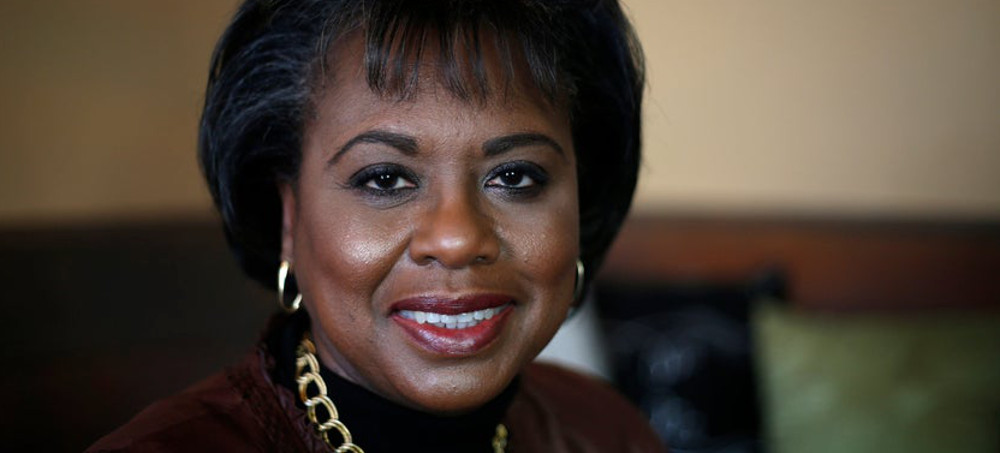 Anita Hill in Park City, Utah, in 2013. (photo: Jim Urquhart/Reuters)
Dahlia Lithwick: I’m mindful of the fact that we are about to have—assuming that Judge Ketanji Brown Jackson is confirmed—a court in which we have for the first time in history three women who will persistently be writing dissents. And they will be, I also imagine, in the voice of what we now get from Elena Kagan, absolute fury in Brnovich on voting rights; Sonia Sotomayor, absolute fury on police misconduct, absolute fury on racial discrimination; and now Judge Jackson, who I actually think probably is going to be a more temperate writer, at least initially, but again, writing from a place of sadness, loss, anger, frustration.
So I wanted to hear your thoughts on what it means that we are going to have this, in some sense, truly historic court with real, at least close to, gender parity, and a depressing fear I have is that the women are going to be relegated to the land of feelings, dissent, upset, and fury. And I just wonder, as somebody who thinks about race and gender the way you do, what it signals that we are going to have three justices largely dissenting, all of whom are women.
Anita Hill: I think it’s important. I think dissents are important because they can become future majority positions. But I hear exactly what you’re saying. But part of what is coming through in your commentary about women is this presumption that when men write their opinions, that it’s all about logic, it’s not about their feelings, it’s just rational thinking that’s leading them there. There is nothing in any of these opinions that I have read by Sotomayor or Kagan or Ruth Bader Ginsburg to me that says, oh, these are all about that touchy-feely women kind of thing. They are clear, brilliant thinkers. And I think Justice Jackson will be the same. They’re not going to all think alike, which is also wonderful, but they are going to be saddled with this label of being emotional when in fact all of them are being emotional. The men are too. They’re just pretending that somehow there is no emotion behind what they’re saying.
So I think that’s just a prejudice that we have, and we need to understand that their actions are based on their feelings, just like any judge’s actions are. And there’s nothing wrong with that. What would be better is if they were transparent and told the truth about it. And I think women are more willing and able to tell the truth about where they’re coming from. And I think that people respect that. They’re not trying to hide from those feelings and convince people that, oh, it’s all about my brain, because they can admit that these decisions will change lives. And we ought to have a court full of judges and justices who understand that.
Lithwick: So first of all, Anita, thank you. I’ve never enjoyed being checked and corrected more than that. It’s really, really an important corrective that when women write from a place of anger, it’s seen as emotional. When Justice Alito writes from a place of anger or Justice Gorsuch, we see that as reasoned and principled.
I don’t think it’s so bad. I think you’re reflecting what will be the assessment of those opinions. And it’s seen as something that’s a negative when in fact it is important. It’s important. And maybe if we were more honest about it, the public would have more confidence in the court because that’s what they care about.
Hill: Right. And I think that’s why, in a deep way, when Ruth Bader Ginsburg became “the Notorious RBG,” in a sense it was when she allowed herself principally in dissent to really reflect, “I am deeply dismayed. This is ridiculous.” You know? “Skim milk marriage”—that suddenly didn’t sound dispassionate and logical, and as though she had come from the planet Vulcan. She really inhabited her own experiences and her own feelings. And I think you’re right that there’s some virtue to that transparency and that the public really falls in love with that. I mean, when the public hears Justice Sotomayor wringing her hands because things are going askew and we’re moving backwards in her view, it doesn’t just resonate because it’s “emotion,” it resonates because we see that these are real people really dredging from their own experience. And that’s the transparency you’re describing.
Justice Sotomayor is a perfect example of dealing with dissonance, if you will. She is a former prosecutor, but she is also very clear that she wants the criminal justice system to be responsible. She’s not “let’s prosecute at all costs.” She wants fairness in the criminal justice system. As a prosecutor, she realizes that the system is only as good as it is fair and balanced. And so I think it’s important for us to really value the fact that she is dealing, not only from her perspective as a former prosecutor, but she is addressing these issues as a person who is a member of the bar and who is seeking justice across the board.
Lithwick: Let’s turn to what you’re expecting from Ketanji Brown Jackson’s upcoming confirmation hearings, and I want to hear what you’re seeing in the ether and what you’re thinking about. But I think I want to frame my question this way. Judge Jackson, when President Biden tapped her, talked about standing on the shoulders of Constance Baker Motley. I know you have spoken about Constance Baker Motley yourself recently, and that you think about that legacy. And one of the things I wish you would give us a moment on is this notion that she had to recuse because people claimed she was biased, because there’s a built-in bias to being a Black woman. That means that you cannot sit and judge fairly. And I think we’ve seen it in other contexts. We’ve seen litigants try to get gay judges to recuse in LGBTQ rights cases. Give me your thoughts on this question of judicial “objectivity” and the conversation around race and gender, and the presumption that no matter what you achieve in the world, you’re always biased because of who you are.
Hill: Well, the presumption is that because of your skin color, because of your biology, your anatomy, there is a built-in bias. And the worst part of that presumption is that if you are a white male, then you don’t have any of those biases, that whiteness and male genitalia really is just a reflection of your lack of bias. And of course, that presumption is a built-in prejudice. And we need to understand that the standard that we are applying to objectivity doesn’t exist in reality; that there are not people who come in with no perceptions, no bias, no differences in their thinking. The question is, have you actually assessed your own bias and do you understand that in fact you bring a perspective, and understand how that perspective can be valuable in some instances and in some other instances it can actually be harmful to the judicial process? But if we allow white male judges to just presume their own objectivity, then we are not getting the best judges. Because the best judges will be constantly questioning their objectivity and testing it.
Unfortunately, women of color, women generally, and I would say even Black male judges or men of color, have had their objectivity questioned throughout their lives. And so to recognize that objectivity is not owned only by white males, that the standards that we assume are not real standards. And what we should be looking for is for people to understand what their biases are, what their prejudices are, and be able to put them aside in ways that allow them to think very clearly about what the law is as well as what the outcomes will be, and what the impact will be. All of those things are very difficult. All of that juggling is difficult, but it’s important and it’s something that we should be welcoming. And that’s why we want judges that have that ability. That’s why I was talking about Sonia Sotomayor, because, yes, she brings in her background as a prosecutor, but she’s not stuck in that perspective. She’s able to understand other perspectives, a perspective of the accused as well as the prosecutors in cases.
Lithwick: Are you seeing anything leading up to these confirmations that makes you feel sanguine that maybe we are going to have the conversation you just laid out—that we are going to have a sane, coherent conversation about Judge Jackson’s accomplishments and her merits and her judicial writing and her achievements? Or do you think we are hurtling toward yet another confirmation hearing that gets stuck in the loop of the “wise Latina woman” conversation we had around Sonia Sotomayor?
Hill: Yes. Well, that all depends on the “we.” Who is the “we?” Is the “we” the Senate Judiciary Committee? I mean, perhaps we will have some of this conversation in front of the public during the testimony that will be brought not only by Judge Jackson, but also the others who are going to be called to comment on her ability and fitness for the role. But I think right now, because we have all of these different platforms, we have ways that conversation can take place and go as directly to the public as the hearings themselves. And it is for us, whether it’s in media or commentary or reporting, to make sure that conversation is happening. I don’t know, with politics being as they are, that we can have it completely in the hearing room, but there’s nothing to stop us from having it outside.
Lithwick: And does that lead you to think about the confirmation process and both the failings in the process you were involved in, and then the future failings? I remember your op-ed saying “here’s how to fix it before Christine Blasey Ford testifies,” and none of your fixes were taken seriously. But the process writ large feels to me very much like television and spectacle and sound bites and puffery and pretty toxic performance art.
And I know you and I both feel this is not the way you give Article III lifetime tenure to the nine justices who will decide the law of the land for decades. But do you have a sense of things we—and I am now using “we” to mean all of us—could do to take some of the oxygen out of a process that just feels like a wood chipper on both sides? There’s a part of me that just wants to wrap Judge Jackson in bubble wrap and maybe give her a bourbon and wish her the best. I wonder if you have thoughts about what could be done. Or is it just a reflection of the culture, the moment, the polarization, this is how we roll now?
Hill: Yeah. I think one of the words you didn’t use when you talked about the theater was that it’s political theater and it’s politics that aren’t elevated enough to see the court as something that in this country needs to be protected from the politics. We’re not there at this moment. And I think the evidence of that came very quickly even before Justice Jackson was named. There was evidence that this was going to be political theater. All of the accusations about preferential treatment and reverse discrimination just showed that they were going to start throwing political bombs to derail this nomination process. So we’re already coming into this with that in the background.
I think if we could, if I had a correction, it would be to keep in mind two things: one, the sanctity and integrity of the court; and two, the need for the public to understand the importance of this body to their lives. The third piece of advice would be to save the politics for elections. I don’t have any doubt that they’re going to ignore those three things, just as they ignored my advice on how to handle Christine Blasey Ford’s testimony, but if we can start to get our senators’, the committee members’ minds on why this nomination is important to the people of this country, and why the court is important to the people of this country, and how it can become a moment where we rise above politics, if we can get there, I think that we will have a hearing that will be fulfilling. And I think there will be absolutely no basis, if I have to predict, no basis for denying Judge Jackson a position on the Supreme Court.
Lithwick: A lot of folks who listen to this podcast are feeling a little dispirited. That was probably the understatement of my lifetime, but they’re feeling as though we’re not moving in the direction you’re describing, and we’re not even moving in the direction of fulfilling that 1964 promise. Tell me what it means to you, in the arc of your lifetime, to see the first Black woman elevated to the U.S. Supreme Court, and maybe tell the young women particularly who listen to this show and are just trying to figure out how this all is going to work out what this really, truly singular moment in your life history and the history of the country means to you.
Hill: Well, in that sense, I would like to not only speak to them, but I’d also like to speak to the senators who are going to be vetting her. This is a crucial moment. We have been telling our young people that if they do all the right things, if they do the things that Judge Jackson has done, they go to school, get good grades, be on Law Review, clerk with a Supreme Court justice, spend time doing public defense work, all of those things we say are the things that you do to prepare you to have whatever you want in life, then we have to acknowledge that in this process, that’s what we should be looking for. And that’s what our young people want and need to see: that we have actually been telling them the truth when we say you can be whatever you want to be if you do the right things to get there.
If we take a detour and reject Judge Jackson, then I think we will have reason for our young people to be discouraged. And they should be discouraged. But I also like to tell young women in particular that this one decision does not determine the direction that the country will take. That to me is a lesson of 1991, because after 1991 and what happened with me after 2018, what happened with Christine Blasey Ford, the country could have said, “OK, these issues no longer matter. We’re going to continue to allow people to be left out of the conversation. We’re going to continue to allow abuse.” But we didn’t. We saw this as a moment to disrupt a whole lot of myths and lies and to try to get to the truth of our experiences. And whatever happens with the Jackson confirmation hearing, I have every confidence that we will continue to look for ways to get to equality.
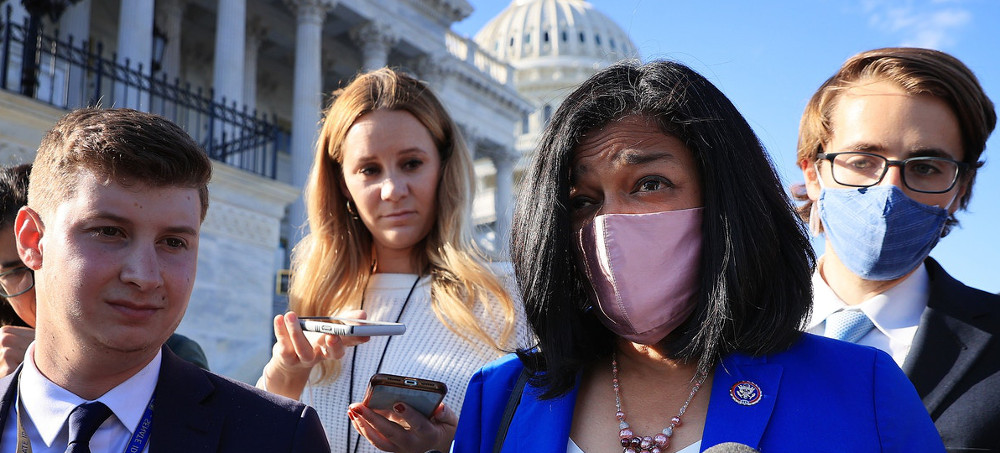 The Congressional Progressive Caucus (CPC) is renewing its push for President Biden to make use of his executive order pen. (photo: Getty)
Outlining their agenda on Thursday morning, the group of nearly 100 progressive lawmakers urged the president to act on a variety of areas that would help lower- and middle-income Americans, including decreasing health care premiums, increasing wages and worker protections, expanding rights for immigrants and getting rid of tuition reimbursements for millions suffering to pay back debt from federal student loans.
They’re also calling for more investments in the so-called care economy, which has seen a rise in demand among essential workers during COVID-19, and to create more balance in the country's existing tax and economic structures. They would also like to see more substantial commitments to improve the criminal justice system.
CPC members are also demanding that Biden help address climate change by easing the nation’s reliance on fossil fuels, one of the most pressing issues currently plaguing the administration as gas prices continue to soar during Russia’s invasion of Ukraine.
“Over the past year, Democrats in Congress and the White House have worked to not only recover from the pandemic and Trump years, but to deliver greater equity and economic security for people across the country,” Rep. Pramila Jayapal (D-Wash.), the chairwoman of the CPC, said in a statement. “Tremendous progress has been made, but that work is far from done."
“Taken together, these actions will have an immediate and meaningful impact on people’s lives,” she wrote, calling the proposed measures “ambitious, but highly achievable."
Dozens of progressive activist groups, including some who have pushed the administration to go bigger since the president took office like the Progressive Change Campaign Committee and the Working Families Party, joined the caucus’s pressure campaign for Biden to do more before November.
 Experts worry that cutting pandemic relief programs will reverse historic drops in child poverty. (photo: Patrick Semansky/AP)
Rate decreased from 14.2% in 2018 to less than 5.6% in 2021 thanks to child tax credit and funding for food, among other expansions
While the pandemic put pressure on the wellbeing of millions of children, new measures greatly improved child welfare. The child poverty rate decreased from 14.2% in 2018 to less than 5.6% in 2021, and the rate of severe poverty was cut nearly in half, according to projections.
“ Child poverty in the United States is not inevitable. It is a choice,” said Lisa Chamberlain, a professor of pediatrics at the Stanford School of Medicine and co-author of a perspective published on Monday in the journal Jama Pediatrics. “It’s not a question of how to do this – it’s a question of political will.”
The child tax credit, the primary driver of these changes, reduced child poverty by an estimated 40%. Starting in July, it provided monthly checks to families. The vast majority of these funds paid for basic necessities, including food, clothing, shelter, utilities and education.
Other safety-net expansions in the pandemic included three stimulus checks, a moratorium on evictions, increased unemployment benefits and more funding for food, through the Supplemental Nutrition Assistance Program (Snap), and housing.
“The expansion of all of those really caused a historic decline in child poverty,” Chamberlain said.
Without this support, nearly a third of children would be living in poverty, according to research.
The benefits “have made a huge difference – not just preventing what could have been the worst-case scenario in terms of poverty rises, but actually resulting in dramatically lower poverty rates than we’ve seen in decades”, said Megan Curran, policy director at Columbia University’s Center on Poverty and Social Policy.
The child poverty rate in 2020 was the lowest since the US Census Bureau started measuring in the 1960s, and 2021 may have been even lower, she said. “So that’s huge.”
But the child tax credit expired in January, plunging an estimated 3.7 million children into poverty – a 41% increase from December, according to the center’s analysis.
“There was essentially a cliff between December 2021 and January 2022,” Curran said. “Without the payments, families have definitely been hurting in the last two months.”
Families are again struggling to buy food, pay rent and keep the lights on, particularly as food and energy costs have risen. “It’s a double hit that they’re experiencing, which is the loss of the payments and increased prices for those essentials as well,” Curran said.
The Build Back Better bill would have extended the credit, but it stalled in the US Senate after opposition from the Democratic senator Joe Manchin, who cited the child tax credit as one of his reasons for quashing the bill.
There is an enormous economic benefit to reducing child poverty, research shows. Poverty can lead to hunger, poor health, poorer education and worse job prospects.
“Not having enough food, not having stable places to live – all of that disrupts their ability to really engage with school,” Chamberlain said. “The ability to engage in the classroom, to engage in their educational process, is what ultimately takes them to their final potential of being able to have a good job and contribute.”
Child poverty costs the US between $800bn and $1.1tn each year because of lost adult productivity and the increased costs of health and criminal justice spending, according to the National Academy of Sciences. Poverty reduction programs have strong moral and economic rationales, researchers say.
“Child poverty is actually costing us, as a country, an incredible amount every year,” Curran said. “Cutting child poverty dramatically not just helps kids on a personal level and a family level, but it also makes sense economically speaking.”
Some opponents have argued that the credit might discourage families from working, but research shows there was no discernible effect on employment.
In fact, the researchers said, the money could be used for childcare, which allows parents to work more – particularly during the pandemic, when many informal caregivers, like grandparents, were lost to death and disability.
“The number of incapacitations from Covid for that has been really, really difficult – and we have seen enormous numbers of women leave the workforce,” Chamberlain said.
With the expiration of the child tax credit, such progress is now threatened.
“I would not say it wipes out the gains,” Chamberlain said. “It eliminates our ability to keep getting those gains.”
For the months the families received the credit, they had more food, stable housing, less stress – and greater developmental benefits for children.
“If they can continue to extend this, we can continue to see that happen.”
The immediate success of the program is a proof of concept, especially because it’s unusual for a single policy to show such clear and stark gains, Curran said.
“We’ve shown now that all of this – high poverty, rising poverty – is completely reversible,” she said. “We know now what works, and we’ve seen it working.”
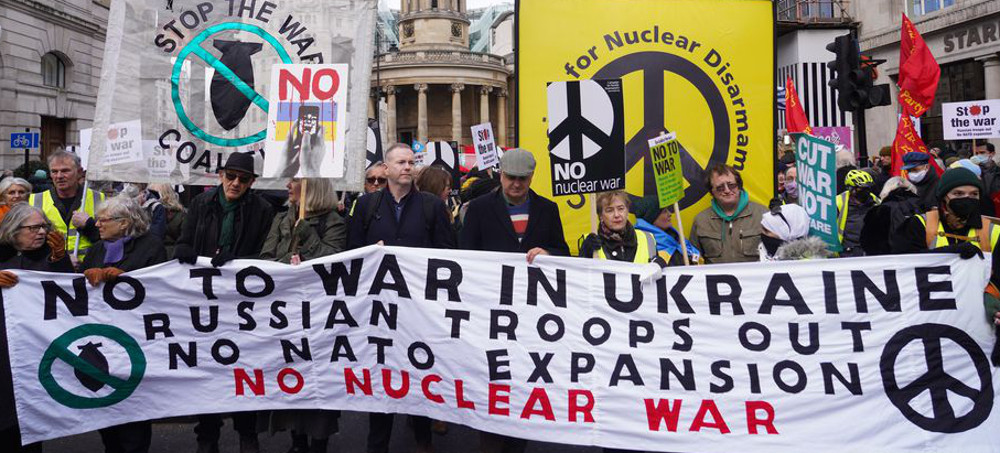 Thousands turned out in London, England, on February 6 to march for peace in Ukraine. (photo: Kristian Buus/Getty)
At the worst possible time.
President Joe Biden has sought to reassure Americans that a nuclear exchange is unlikely. He’s probably right. But the cost of such a war — we’re talking about a potential extinction-level event here, though the chances of outright extinction have declined somewhat as nuclear arsenals have shrunk — makes preventing it incredibly important, and means that even a seemingly small risk of nuclear war could be much, much too high. A recent simulation by Princeton’s Program on Science and Global Security suggests a total of 34.1 million immediate deaths in the first hours of a US-Russia exchange.
Alan Robock, an environmental scientist who studies what a nuclear war could do to the climate, told my colleague Alex Ward in 2018 that the most devastating effects of a nuclear war would actually come from the smoke, dust, and particulates produced by the explosions, leading to a nuclear autumn or winter. In the worst-case scenario, Robock said, “almost everybody on the planet would die.” Even using very conservative estimates, nuclear war winds up looking like a major cause of death worth investing considerable resources to prevent.
So what are people — and in particular philanthropists outside of government — investing in to prevent nuclear war? Not that much, given the scale of the potential catastrophe — and in the midst of one of the most alarming nuclear crises in years, the total is shrinking. “It’s a drop in the bucket compared to the other high-profile issues like climate change,” Emma Belcher, president of the Ploughshares Fund, one of the few dedicated funders on nuclear issues, told me.
It wasn’t always this way. Foundations and other donors have played a central role in efforts to contain nuclear weapons since the dawn of the atomic age, supporting conferences of US and Soviet scientists starting in the 1950s, the nuclear freeze movement of the 1980s, and the dismantling of nukes in post-Soviet states in the 1990s. They helped make nuclear issues a major public topic of debate — in 1982, some 750,000 people demonstrated in Central Park for nuclear disarmament, part of a foundation-supported anti-nuclear war movement.
Despite that past success, funding nuclear war prevention has always been hard, and it remains so today. It’s hard to know whether specific efforts are succeeding, and thus hard for funders to know if their spending is effective. But given the scale of the problem, and its relative neglectedness, there’s a solid argument that philanthropists should get serious again about reducing the risk of a nuclear war.
What nuclear funding actually funds
Before we dig too deep into the particulars of how nuclear issues are funded, let’s address an obvious question: How, exactly, can philanthropic funding reduce the risk of nuclear war?
Sometimes, there’s a role for philanthropies and their grantees in providing actual, physical services. Joan Rohlfing, president and chief operating officer of the Nuclear Threat Initiative (NTI), told me that NTI helped set up the International Atomic Energy Agency’s (IAEA) Low Enriched Uranium Bank in Kazakhstan. That’s a facility where non-nuclear powers can acquire uranium for nuclear power plants without being tempted to build their own enrichment facilities, which could be used to help produce weapons. A third of the facility’s funding came from NTI, which is in turn funded largely by foundations and individuals.
It’s a worthwhile program, but it is better suited to preventing nuclear terrorism or proliferation to non-nuclear states than it is to managing conflict between nuclear powers, like the US and Russia, that already have plenty of fissile material for bombs.
In heated political battles, like that over the Iran nuclear deal in 2015 or the ratification of the New START nuclear reduction treaty between the US and Russia in 2010, philanthropies can provide support by supporting advocacy targeting the public, Congress, and other stakeholders. Rose Gottemoeller, who was the Obama administration’s chief negotiator on the New START treaty, credits in her memoir foundation-funded advocacy groups with helping its ratification, writing that they “did important work to generate the campaign that began to inundate Senate offices with cards and letters.”
Going further back, philanthropic support played a big role in supporting the nuclear disarmament and nuclear freeze movements during the Cold War. The famous Pugwash Conferences, which gathered American, Soviet/Russian, and scientists of other nationalities to discuss nuclear risks and press for disarmament, were named after the town of Pugwash, Nova Scotia, the hometown of their funder Cyrus Eaton.
Funders can also support “Track II” talks between former officials in different countries on nuclear issues. These officials often cycle back into their respective governments, and Track II talks allow them to build rapport and relationships with each other. They can also (as in the past cases of Iran and North Korea) open a channel to talk indirectly to regimes the US is not yet directly negotiating with.
NTI helps convene a group known as the Euro-Atlantic Security Leadership Group, which Rohlfing described to me as a “Track 1.5” process because it includes both current and ex-government officials. Experts from the US, Russia, Canada, and various European countries can discuss and develop proposals to reduce nuclear risk. In the wake of the Ukraine war, the group, which includes Putin’s former foreign minister Igor Ivanov, issued a statement urging a ceasefire to prevent nuclear escalation.
But the most basic function of funding is to develop expertise in think tanks, academia, and blends of the two (e.g., Harvard’s Project on Managing the Atom) that can inform current policymakers and educate future policymakers. Robert Gallucci, the chief negotiator for the short-lived 1994 deal in which North Korea agreed not to develop nuclear weapons, and a key funder of nuclear groups as president of the MacArthur Foundation from 2009 to 2014, explained that one of his goals as a grantmaker was to train generations of scholars and practitioners who might influence or even write the Nuclear Posture Review (NPR), a congressionally mandated document released every few years that updates US nuclear policy.
At MacArthur, Gallucci recalls, “we picked schools like King’s College London, the JFK School, Princeton. … We were intent on growing the analysts and funding those kinds of programs so people would continue to talk about this, and we just wouldn’t get the old school writing the [Nuclear Posture Review].”
You can see some of the fruits of those efforts in the people tasked with overseeing nuclear policy, especially in Democratic administrations. Gottemoeller, one of Obama’s top nuclear staffers, came to the administration from the Carnegie Moscow Center, which relies on philanthropic support. Bonnie Jenkins, Biden’s undersecretary of state for arms control and international security, worked for years at the Harvard Project on Managing the Atom. Philanthropic support gave them space to learn and develop their views before (and after) government service.
Where is the money?
Funding for all of the above exists — but it’s relatively modest.
The Peace and Security Funders Group, an organization of foundations and other philanthropic funders, estimates that in 2020 about $47.7 million in grants were made globally on nuclear issues, excluding those made by the US federal government (which gave about $80.2 million between the Energy Department, the National Institutes of Health, and other agencies). $47.7 million might be an overestimate of the private contribution; it includes, for instance, funding going to the Nuclear Threat Initiative to work on biological risks like Covid-19, not just nuclear war.
When it comes to averting a threat with the potential to kill billions, $47.7 million a year just isn’t very much. And the pool is shrinking. Experts in the field told me there’s been a long decline in support since the end of the Cold War. Then, last year, the MacArthur Foundation (famous for its “genius grants”) announced that it was going to transition away from nuclear issues.
That decision hit the nuclear community like a punch in the gut. In 2018, before the change, 45 percent of all funding for nuclear issues came from MacArthur. That means funding could drop by nearly half with MacArthur’s ultimate exit in 2023. And this isn’t the first such shock the nuclear community has faced: The Hewlett Foundation poured $24.7 million into its Nuclear Security Initiative from 2007 to 2015 before exiting the field.
The MacArthur announcement also came shortly after the nuclear research group N Square released a major report built out of interviews with 72 nuclear threat reduction practitioners in Washington, DC. Its conclusions were bracing. Interviewees described a field dominated by figures (mostly white men) toward the end of their working lives, where progress early in a practitioner’s career was difficult; where different organizations don’t work effectively with each other; where compensation lagged relative to other fields; and where an “intensely critical and sometimes biting culture” could feel toxic and push good people away.
“The fact that MacArthur decided to pull out of the field and that the N Square report came out around the same time was kind of a come-to-Jesus moment for the nukes field,” Alexandra Toma, executive director of Peace and Security Funders Group, told me.
MacArthur made its decision after it commissioned and released an 80-page evaluation of its programs from the consulting firm ORS Impact (which declined to comment for this article). MacArthur’s “Nuclear Challenges” strategy focused on reducing, or at least slowing, production of “weapons useable material” like highly enriched uranium and plutonium. The ORS Impact report recited a variety of positive outcomes from MacArthur’s investments, including advancing policy developments in the US government and keeping dialogue channels open.
Ultimately, though, the report concluded that MacArthur’s goals — including “progress toward the long-term outcome of a negotiated” agreement to cease production and eliminate stockpiles of fissile materials, and a “strengthened nuclear regime by 2025” — were not in reach. “A line of sight” toward those outcomes, the report concluded, “is not discernible.” Shortly after the report, MacArthur announced it would make $30 million in “capstone” grants to nuclear organizations before exiting the field entirely in 2023.
“In 2015, we began our Nuclear Challenges Big Bet with the goal to end production and eliminate the stockpiles of weapons-useable material,” the foundation’s Maria Speiser said in an email. “In this case, data from multiple sources, including grantees and experts, indicated that the Foundation’s investments and the opportunities afforded by the external landscape did not offer a line-of-sight to our ultimate Big Bet goal.”
Nuclear funding post-MacArthur
While MacArthur has, as Inside Philanthropy’s Liz Longley notes, been funding nuclear programs since 1984, it reconceptualized a number of its programs in 2014 around the idea of “big bets,” which would be pursued through quick, big bursts of funding. The first two big bets announced in then-president Julia Stasch’s 2014 annual letter were “Climate Solutions” and “Safety and Justice Challenge” — the latter related to criminal justice in the US. The Nuclear Challenges bet was announced in 2016. In pivoting to this strategy, the foundation announced it was exiting a number of topics completely, including juvenile justice, housing, and population/reproductive health.
In the context of that strategy, it makes some sense that it would conclude one of those bets didn’t pay off and should be ended. Then again, the idea that the needle on nuclear safety could have been moved dramatically in the mere five years from the Nuclear Challenges bet announcement to its cancellation strikes me as absurd.
Reading the ORS Impact report on MacArthur, I found it … bizarre. It repeatedly seemed to blame the MacArthur strategy for not overcoming structural forces that one foundation could never overcome. “There has been degradation of treaties, agreements, and norms that are aligned with and uphold the nuclear regime,” the report notes — but at the same time, it notes that degradation is almost exclusively the result of the Trump administration’s decision to walk away from important nuclear agreements, like the Intermediate-Range Nuclear Forces Treaty (INF) and the Iran deal. MacArthur’s nuclear strategy may not have been perfect, but blaming the foundation for failing to avert the election of Donald Trump seems more than a little unfair.
Merely looking at the present nuclear policy regime and concluding it’s unsatisfactory, notes Gallucci, the former MacArthur president, is not sufficient analysis. You have to ask, as well, “what would happen if we hadn’t made the investment,” he says.
MacArthur is based in Chicago, Gallucci notes, and has been trying to lower the murder rate there for years. Murder is still high in Chicago — the number of homicides in 2021 hit the highest level in at least a quarter-century — but that doesn’t mean it’s wrong for MacArthur to try to address the problem. Perhaps the murder rate would’ve been even worse without MacArthur’s investments. “The big foundations, I think, should be expected to take on big problems where you don’t see easy wins, when you don’t see opportunities to take credit for impact,” Gallucci concludes. Nuclear issues are a paradigmatic case. You don’t get credit for the nuclear war that doesn’t happen.
And interventions against nuclear war are inherently harder to evaluate than interventions against relatively common phenomena, like homicides in Chicago. The city saw 836 homicides in 2021, meaning it has a quantitative target, the murder rate, that policymakers and philanthropists can try to reduce. Too much focus on these stats can have unintended consequences, but at least there’s some guidepost for success.
But absent any philanthropic intervention, the likely number of nuclear strikes in a given year is zero. With intervention, the likely number is zero. There just isn’t a quantitative indicator that can tell funders and grantees how well they’re doing, so inherently more subjective qualitative methods are necessary.
One option, Belcher of the Ploughshares Fund notes, is “process tracing”: “You can do interviews with government officials to determine what influences their thinking and where they got those ideas from.” This is imperfect (self-reports aren’t always reliable), but it does suggest that philanthropic investments can be productive.
The Nuclear Threat Initiative’s Rohlfing gives the example of the Cooperative Threat Reduction Program, formerly known as “Nunn-Lugar” after its Senate sponsors, which provided funding to dismantle nuclear weapons in former Soviet states like Ukraine and Kazakhstan. The program “emerged from Carnegie Corporation funding of Harvard to do a study on looking at how to denuclearize the former nuclear states after the Soviet Union dissolved,” she recalled. It has been, she concludes, “perhaps the single most important investment in the reduction of thousands of nuclear weapons over the following several decades.”
One hopeful sign: New groups are funding nuclear
So what comes next? One positive sign is the increased interest among donors affiliated with effective altruism in viewing nuclear war as an existential risk that could severely damage or even end human civilization. The Open Philanthropy Project and Good Ventures, which are largely funded by donors Cari Tuna and Dustin Moskovitz, have recently offered some funding for research into food production after a large-scale nuclear exchange, and into what a nuclear exchange would do to the climate.
Longview Philanthropy, an effective altruist-inspired grantmaking group in the UK, has also gotten engaged in nuclear issues. Carl Robichaud, a longtime nuclear grantmaker at the Carnegie Corporation, is currently an adviser to Longview and told me he’s joining full-time later this year. “I’m hopeful because what I see at Longview is a team that really understands the long-term importance of this issue as a potential catastrophic risk that affects everyone alive today, and the generations to come,” Robichaud told me.
It will be as hard for Open Philanthropy and Longview to evaluate the effectiveness of their interventions as it has been for any nuclear funder since the weapons’ invention. And some suspicion is of course warranted when nuclear groups tell you they need more funding. They’re not neutral parties.
But the Ukraine conflict should underline the fact that the threat of nuclear war did not end with the Cold War. It remains very real, and escalates as US-Russian relations get worse. Some more funding to prevent a world war may not be the worst thing in the world.
 A Consolidated Edison power plant in New York City. (photo: Ingus Kruklitis/Getty)
The cost of natural gas went up 24 percent in February compared to the year before and electricity went up by nine percent, The Guardian reported. This means that customers are seeing some of their highest electricity bills in years, The Wall Street Journal reported.
“[Prices are] some of the highest energy prices and electricity prices we’ve seen in recent memory, if not ever, depending on the geography,” Bank of America analyst Julien Dumoulin-Smith told NBC News last month. “That is hitting consumers right now.”
A large part of the price surge has to do with natural gas, as natural gas power plants supply about 40 percent of U.S. power. Gas is in a crunch for a variety of reasons, The Guardian explained. Prices initially fell during 2020 because of lower demand due to the coronavirus pandemic. However, prices began to climb again in 2021 as demand increased, but supply was limited due to climate-fueled extreme weather events in oil-and-gas producing regions. These included a deep freeze in Texas in February of last year and Hurricane Ida, which put the pause button on oil production in the Gulf of Mexico.
During the winter, demand naturally increased while the global supply was limited, according to The Wall Street Journal. The situation was made worse by Russia’s invasion of Ukraine, which worsened the global gas shortage. This means that prices won’t necessarily fall when the weather warms.
“But now with sustained disruption of the world energy markets, we should expect to see higher prices till the end of the year,” Public Utility Law Project executive director Richard Berkley told The Guardian.
The situation is especially dire in the northeast, which gets a lot of its electricity from gas. There, electricity costs rose by 16 percent in January compared to the year before. Also in January, the New York metropolitan area experienced “the biggest increase in electricity prices” in more than 50 years, chief regional economist for the Bureau of Labor Statistics Martin Kohli told NBC News. In New York City, Consolidated Edison said that customers who used around 300 kilowatt hours a month had their January bills rise by about 23 percent, according to The Wall Street Journal.
One customer feeling the crunch is 44-year-old Hector Ruiz of Clifton Springs, New York. He said his gas and electric bill for February was just under $1,000. It had never before topped $500.
“My utility bill literally doubled overnight,” Ruiz told The Wall Street Journal. “Has it been a punch to the gut? Yes.”
All told, nearly 1.3 million households in New York state are at least two months behind on utility bills, according to The Guardian. This is also an environmental justice issue, because low income people and communities of color are more likely to live in older, inefficient buildings that cost more to heat. In New York City, 32 percent of Black households and 33 percent of Latino households have an energy burden – the percentage of income spent on heating – greater than six percent.
The northeast isn’t the only region affected. In California, wholesale power prices have also increased, The Wall Street Journal reported. For homes serviced by San Diego Gas … Electric, average bills increased by 11.4 percent at the beginning of the year.
Berkley said the ultimate solution to this problem is to move away from volatile fossil fuels altogether.
“We need to build more wind, solar, hydro and tidal power, which are quite honestly expensive to create but are much cheaper in the future,” Berkley told The Guardian.
Follow us on facebook and twitter!
PO Box 2043 / Citrus Heights, CA 95611