Historian Nancy MacLean: We're seeing a right-wing plan built on "decades of disinformation"
MacLean published "Democracy in Chains" four years ago — and says it's "gut-wrenching" to see it come to life
By CHAUNCEY DEVEGA
Senior Writer
PUBLISHED NOVEMBER 9, 2021
On Friday, the House finally passed Joe Biden's infrastructure plan.
While the president's larger Build Back Better agenda remains in
doubt, this is a landmark achievement, representing the largest
investment in America's infrastructure since the Great Society
programs of the 1960s. Since the bill has already passed the
Senate, Biden will sign it into law later this month.
A vast majority of Americans — including a large percentage of Republicans — support the specific policies contained in the
infrastructure plan. (And for that matter, many or most of the
social policies included in the Build Back Better package as well.)
Logically, the infrastructure plan should now become part of the Democratic brand, and simultaneously an anchor around the
Republican Party's feet for decades to come.
That outcome would be almost guaranteed in a healthy democracy
that was not locked in an existential struggle against fascism.
I scarcely need to clarify that these are not normal times and
this is not a healthy democracy.
RELATED: The Republicans have dug up Jim Crow's
corpse — and now they've married it
The Democrats' success with the infrastructure plan came on
the heels of their defeat in last week's Virginia gubernatorial election, where Terry McAuliffe crumbled under an attack by
Republican Glenn Youngkin and a right-wing machine that
deftly deployed its moral panic bogeyman of "critical race
theory."
In Virginia and elsewhere, Republican voters and Trump
supporters appear energized and mobilized by the Big Lie,
racism and white supremacy, pandemic-related public health issues and other aspects of the "culture war." In comparison, too many Democratic voters seem unenthusiastic and listless, exhausted by the escalating assaults on democracy and uninspired by the party's leadership.
Pollsters and other political experts are now predicting that Democratic losses in Virginia and elsewhere are a signal that Republicans will likely regain control of both the Senate and House in the 2022 midterms. Such an outcome could well be a precursor to Donald Trump's attempted comeback in the 2024 presidential election.
Ultimately, what good are Joe Biden and the Democratic Party's legislative successes if the Republican-fascist movement stands on the verge of taking control of Congress and then the White House?
Want a daily wrap-up of all the news and commentary Salon has to offer? Subscribe to our morning newsletter, Crash Course.
Democrats will be left claiming the historic success of an infrastructure bill that would likely be gutted by a Republican majority, except for whatever provisions the fascist regime wishes to claim as its own.
To this point, Democrats have been unable to mount an effective defense against the Republican fascists and their forces because they refuse to grapple with the enormity of the challenge. In that way, the party and too many of its liberal and progressive supporters remain trapped in short-term crisis mod, focusing on the immediate problem rather than the long-term threat and big picture.
By comparison, Republicans and "movement" conservatives have been thinking strategically, and in many respects have prepared for their impending victory for decades. Understood this way, American's democracy crisis is neither surprising nor new. The roots of our current disaster go back at least to the 1960s, with the backlash to the civil rights movement and other struggles to expand and improve the country's social democracy.
To discuss these issues and more, I recently spoke with Nancy MacLean, who is the William H. Chafe Professor of History and Public Policy at Duke University. She is the author of several important books, including "Behind the Mask of Chivalry: The Making of the Second Ku Klux Klan" and "Freedom is Not Enough: The Opening of the American Workplace."
Her most recent book, "Democracy in Chains: The Deep History of the Radical Right's Stealth Plan for America," a National Book Award nominee, was published four years ago but now appears prophetic. In this conversation, MacLean explains her view that the events of Jan. 6 and the larger ongoing coup against democracy are just one aspect of a long-term plan by right-wing libertarians and other well-funded and powerful ideologues to undermine or overthrow American democracy.
MacLean also discusses how and why these right-wing billionaire funders continue to support the treasonous and seditious behavior of Republican congresspeople who support the Big Lie and voted against democracy on Jan. 6. She warns that the goals of these right-wing libertarians are more extreme than many people imagine, and may include restricting the vote to (white) property owners to vote and fully defunding the country's already threadbare social safety net.
Toward the end of this conversation, MacLean discusses the Republican Party and white right's attempt to use "critical race theory" to mobilize angry white parents at the local level, and how that connects to Jim Crow-era battles over school desegregation and racial democracy.
How are you feeling? For some time, you have warned the American people about the anti-democracy campaign being waged by the libertarian right-wing. That's all coming together right now.
It's dispiriting. I believe that more people are understanding what's going on in this country with the democracy crisis, but I do not think it is happening on a scale and in a timely enough way to stop what's unfolding before us. It's just gut-wrenching, to be frank. People who should know better are not behaving as they should. The Biden administration is running into exactly the same roadblocks the Obama administration did.
So the Republican Party won't compromise? What did they think was going to happen when the Republican Party was taken over by libertarian donors and a base that's been fed red meat by Fox News for 25 years?
America's political class continues to behave as though it is shocked and stunned by the Republican attempts to nullify democracy, as seen on Jan. 6 and in the ongoing coup attempt. Are they in denial? Is this willful ignorance? Are they so invested in a broken political system that they refuse to admit the obvious and respond appropriately? How do you make sense of this lack of urgency?
First, I do not believe that they are a monolith. It is important to emphasize that fact because there are people who do know better. This includes Pramila Jayapal of the Progressive Caucus, Alexandria Ocasio-Cortez, Bernie Sanders, Sherrod Brown, Sheldon Whitehouse and others. There have been some bold and outspoken and truth-delivering voices who we should applaud. But it is a real challenge to persuade their colleagues to speak to these truths about the country's democracy crises.
I'm not denying that it's a complicated operation. If the Democrats need 60 senators to get anything substantive done and you're dealing with the likes of Joe Manchin and Kyrsten Sinema, it's a challenge and it's frustrating. But I do believe that the leading Democrats could do more with the bully pulpit to help the American people understand the origins of the democracy crisis — and what is at stake for their day-to-day lives if this right-wing libertarian and larger anti-democracy cause is allowed to advance, as it has been doing for years.
What and who are the elements in this anti-democracy movement?
There is an elite element and the voters they count on to advance the goals. The elite elements are parts of the corporate libertarian Koch network. The large number of donors and institutions they fund include the Cato Institute, the Heritage Foundation, the Federalist Society, Americans for Prosperity, the State Policy Network and many others.
This network also includes supposed scholars, faculty, and students at over 300 institutions at present. The corporate-libertarian cause knows that the world they want to create is unpopular. Therefore, they have to get the votes to advance their agenda by relying on the religious right.
The religious right has now been boiled down to a base consisting of white nationalist Christian evangelicals in various forms, who are anti-science for example. In my opinion, it was fairly easy to persuade them to reject climate science and to embrace the Big Lie about the 2020 election and all the other lies and untruths being pandered by the right-wing movement and its media.
We are now also seeing the religious right overlapping in significant ways with white supremacists and the larger white power movement. In this country we are in real trouble in that regard because of how these white nationalist identities are being used to promote vigilante actions.
What did you see on Jan. 6?
To my eyes, it was a fulfillment of these decades of disinformation and agitation of the worst impulses held by some Americans. For example, these very self-interested right-wing forces who oppose taking action to stop the global climate crisis are willing to leverage racism, homophobia, sexism and other antisocial behavior and values to achieve that goal.
There is plenty of evidence showing that the Koch donor network has funded and continues to back the politicians who spurred on the events of Jan. 6 and the Big Lie, and refused to certify Biden's election.
The mainstream news media are complicit in so much of this because of their "both sides" script. The mainstream news media needs to recognize that there is an imminent threat of autocracy in the United States.
Where do these talking points, lies, disinformation and propaganda come from, meaning the things that Trump insurrectionists and others in the right-wing echo chamber believe? Who is developing and weaponizing these ideas?
There are perverse and ridiculous theories or interpretations of the Constitution coming from the Federalist Society and other groups that are part of the donor-funded radical right-wing libertarian legal movement. That includes prominent right-wing attorney John Eastman, who came up with this claim that state legislatures have the capacity to overthrow a national election. People like Eastman are making the kinds of arguments and claims that fueled the rabid and crazy behavior we saw at the Capitol on Jan. 6. That's what the insurrectionists have been imbibing — and it has been their steady diet for years.
At its core, we can understand what we saw on Jan. 6 as also being a rejection of the core principle that all Americans are equally entitled to citizenship and voting, and to having a say in our government.
For the right-wing anti-democracy movement, the phrase "real Americans" is a potent rallying cry. They love to use that language about "real Americans." But what do they really mean? Who are the real Americans, to them?
For the elites at least, "real Americans" are the white, property-holding, right-wing voters who agree with their right-wing extremist libertarian ideology. We saw that language of "real Americans" from Sarah Palin and others directed against Barack Obama. Presumably, Obama was not a real American and, by comparison, Palin was. We used to talk about dog-whistle racism, but it is not even coded anymore.
Certainly, anyone who benefits from the earned income tax credit is not a "real American." According to these right-wing thinkers such people shouldn't have the right to vote. In total, what is being advocated for is really a type of economic eugenics. They really would rather have people die than get health care provided by government — and some of these right-wing elite thinkers are absolutely explicit about that. They argue that if you do not have the money to support yourself in a commercial, unregulated capitalist society, then too bad for you.
Your suffering, and even your death, will be a lesson to others that they need to save and work harder and then they will be able to become one of the "real Americans." That reality is very hard for many people to understand. That is why so many people are in denial about it.
It has been a standing assumption by many, including myself, that the Koch network and other members of the right-wing elite extremist class wanted to operate in the shadows as a way of growing their power and influence over American society. But with Jan. 6 and the ongoing coup, it seems that those forces are now working in a much more public way. How are they balancing this? And what about the role of right-wing paramilitaries and other agitators and their relationship to the right-wing elites?
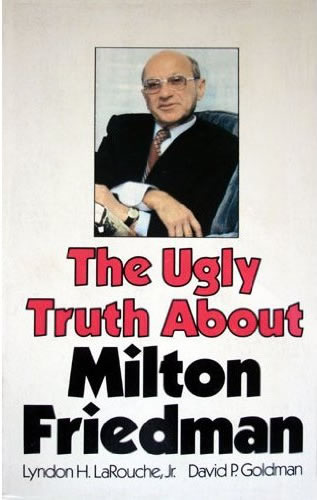
To me, that is what I find scariest about this moment. The corporate element is beginning to rely on the street thugs. This is not a new thing for the arch pro-corporate libertarian right. This happened with the Southern schools crisis after Brown v. Board of Education [the Supreme Court decision that ended school segregation], with libertarians such as Milton Friedman and others of that era. They were perfectly happy, if not eager, to harness the white supremacist response to Brown v. Board of Education in order to advance their goal of school privatization.
Koch political donors have funded the Jan. 6 politicians, and shown no sign of backing down. They have also funded the organizations that are promoting this "critical race theory" hysteria, which is directed at inciting panic among white parents as a strategy to mobilize them for the 2022 midterm elections. The ultimate goal is to undermine public education. Koch-funded organizations are also encouraging the current attacks on school boards, both over masks and vaccines and the alleged teaching of critical race theory.
You are a historian who has written extensively about democracy, Jim and Jane Crow, the civil rights and Black freedom movements, and racist organizations such as the Ku Klux Klan. How do you make sense of these school board meetings where white parents show up en masse to oppose "critical race theory," and sometimes threaten violence and mayhem? How are you connecting the past to the present?
These are people who have been whipped up into a frenzy by a steady diet of disinformation orchestrated by individuals and organization who are working strategically to make them feel like they are under attack. Part of this is making them feel like they are embattled, and their children are being turned against them. This all triggers some of the most potent emotional buttons that one can push. This is what the right-wing is doing, and it's all based on a willful lie.
Critical race theory is not taught in K-12 public schools. It's an elective at some law schools, but what they're doing — if you look at the actual text of the laws in places like Texas, what they're claiming falls under the rubric of "critical race theory" includes anything that mentions anti-racism, equity, diversity and inclusion. Basically, they're saying you cannot in any way address past or present racism in the schools and continue to teach and hold your job and not be subject to criminal prosecution.
The images I see of these protests very much remind me of what we saw by whites in the South and elsewhere against school desegregation in the 1950s and 1960s. But at present, I would put more of the emphasis on the strategic right-wing actors behind this activity, who are funding the operations that mobilize people to these school board meetings, fill them with disinformation and ultimately seek to turn them into vigilantes.
Charles and David Koch (aka the Koch Brothers) and the January 6, 2021 Riot on the US Capitol (Photo illustration by Salon/Getty Images)