Showing posts with label IRVO OTIENO KILLING. Show all posts

Wednesday, April 5, 2023

Bess Levin | Donald Trump Is Now Facing—Wait for It—136 Years in Prison


Reader Supported News
05 April 23

Live on the homepage now!
Reader Supported News

WHO SHOULD SUPPORT RSN?: In general any one who believes in what we do on a daily basis should seriously consider supporting the project. More specifically, if you are a regular or frequent visitor you should seriously consider supporting the project on a regular basis. If you are an occasional visitor then you should consider supporting the project on an occasional basis. With that Reader Supported News lives long and prospers. For your consideration.
Marc Ash • Founder, Reader Supported News

Sure, I'll make a donation!


Tuesday, 04 April 2023: Donald J. Trump entering the Manhattan, NY criminal courthouse to face arraignment on business fraud charges. (photo: Press pool image)
Bess Levin | Donald Trump Is Now Facing—Wait for It—136 Years in Prison
Bess Levin, Vanity Fair
Levin writes: "Reuters and others report that should Trump be found guilty of all 34 class E felonies, he could be sentenced to up to 136 years in prison."   

ALSO SEE: Trump Charged With Hush-Money Scheme to
Boost 2016 Election Chances

As you’ve no doubt heard by now, Donald Trump was charged on Tuesday with an astonishing 34 felony counts of falsifying business records in the first degree. As The New York Times’ Maggie Haberman reported, not only did the ex-president look “very unhappy as he walked into the courtroom,” but he appeared “as angry” as he did after the Access Hollywood tape went public in October 2016. Why might Trump not have cartwheeled into the courtroom with a huge grin on his face, snapping his fingers, and blowing air kisses to the cameras? For one thing, Tuesday marked what was, effectively, the first time he had ever been truly held accountable for anything in his life. For another? He’s facing more than 100 years in prison.

Reuters and others report that should Trump be found guilty of all 34 class E felonies, he could be sentenced to up to 136 years in prison—which, as one former president might tell you, is an incredibly yuge number of years. While a conviction is not a sure thing, and a sympathetic judge could go for the lower end of the sentencing guidelines, Trump, who is 76 years old, would obviously die in prison if he were to get the maximum time behind bars. Which that same former president we referenced earlier would definitely dub “SAD!”

If you’re wondering: Only four states in America allow conjugal visits with one’s spouse, and New York is one of them.

As Manhattan district attorney Alvin Bragg said on Tuesday, the government’s case against Trump is not “just about one payment.” In addition to the $130,000 paid to Stormy Daniels in 2016, the DA’s office cited multiple instances of Trump engaging in “catch and kill“ schemes to bury damaging stories about him that were subsequently concealed through false business entries. Those included $150,000 to Playboy model Karen McDougal, who claimed to have had an affair with Trump, and $30,000 to a New York doorman who’d claimed to have knowledge of a child Trump had out of wedlock.

Trump has pleaded not guilty to all 34 charges.


READ MORE
   

Autopsies Show 30 People Died From Gunfire in Peru Protests
Franklin Briceño, AP
Briceño writes: "In autopsy after autopsy, Peruvian anti-government protesters share the same cause of death: 'firearm projectile.'"   


In autopsy after autopsy, Peruvian anti-government protesters share the same cause of death: “firearm projectile.”

Crhistian Armando Mamani, a 22-year-old musician, was protesting in a southern city when a bullet entered the left side of his torso and pierced both of his lungs.

The same January day, Roger Rolando Cayo, a 25-year-old protester, died when a shot ripped through his eye and destroyed his brain.

Human rights groups — including the United Nations — have called on the Peruvian government to investigate claims of excessive force used by police and soldiers during recent protests that have left 49 civilians dead, and the autopsies provide some evidence of the alleged use of lethal ammunition.

Thirty of the 32 forensic reports obtained by The Associated Press list gunfire as the cause of death. Some of the reports detail bullet calibers similar to those used by security forces in Peru, which experts believe indicates that police and soldiers violated their own operations manuals prohibiting shooting directly toward protesters unless there’s a serious risk to their life.

The findings come as Peru struggles to recover from the political crisis that hit the country late last year. In December, then-President Pedro Castillo, who was facing several corruption investigations, attempted to dissolve Congress but was instead impeached, arrested and replaced by the vice president. Demonstrations stretched out to February, mostly in southern Peru where the former leader has had more support, triggering the worst political violence the country has seen in more than two decades.

In the southern city of Juliaca, protesters clashed with police outside the airport on Jan. 9 in what would be the deadliest demonstration. Autopsies confirmed that 18 people died from gunfire that day. Among the dead were a 16-year-old student whose left lung was perforated by a 7.62 mm bullet that lodged in his abdomen and a 17-year-old university student who died from a 9 mm bullet wound.

The AP obtained a copy of a document from the federal prosecutor's office that listed the weapons used by police in Juliaca in December, including 7.62 mm AKM assault rifles and 9 mm Beretta and Sauer handguns.

In Peru, civilians are only permitted to own guns with low calibers. High-caliber guns — including the 7.62 and 5.56 mm types mentioned in the forensic reports — are exclusively for the use of security forces.

Carmen Rosa Cardoza, a Peruvian forensic anthropologist, told the AP that the autopsies show a pattern of a “disproportionate use of force.”

“In the injuries by the firearm projectiles, there’s a pattern linked to human rights violations,” she said, noting that most of the fatal wounds are on the head, neck, thorax and abdomen. The shooters, she said, “are targeting those regions.”

Protesters are still staging roadblocks in some parts of the country and calling for the resignation of the new president, Dina Boluarte, whom they blame for the deaths of dozens of demonstrators in areas inhabited largely by Indigenous people.

The attorney general’s office has launched an investigation — including Boluarte — that hasn’t led to any arrests.

“These numbers turn Peru into a champion of repression, when compared to other democracies in Latin America” said Jo-Marie Burt, a Peru expert at the Washington Office on Latin America, a human rights group. “Only openly authoritarian nations like Venezuela and Nicaragua” have had more deaths during recent protests, she said.

Peruvian government officials have not responded AP's request on whether they gave police orders to shoot at protesters after massive demonstrations broke out in the south, where Castillo’s removal angered people frustrated with the nation’s Congress, which has contributed to the political instability by having had six presidents in the past six years and has become one of the nation’s least trusted institutions.

Boluarte has blamed “radicals” linked to illegal mining and the drug trade for the chaotic protests, which have included the occupation of airports and attacks against police bases. But the autopsies, videos and witness testimonies paint a different picture of the violence, in which the nation’s security forces also appear to have had a significant role.

On Dec. 15, demonstrators gathered outside the Ayacucho airport, where security camera videos show soldiers firing Galil rifles horizontally instead of pointing the weapons upward, away from protesters. Forensic reports show 10 protesters died from gunfire in Ayacucho that day, although none of the corpses contained bullets.

Three days later, an AP reporter walked through the area where the shots were fired and found several cases for the 5.56 mm ammunition used with Galil rifles on the floor.

In Andahuaylas, another southern city, 18-year-old protester Wilfredo Lizarme was killed by a bullet to his back on Dec. 11, according to forensic reports. His sister, Carla, found a shell casing close to his body with the legend “PNP 7,62x39,” the initials of Peru’s national police and the same caliber as the bullets used by police in other parts of the country.

The AP has repeatedly sought a response from Peru’s government about the allegations of police violence against protesters but has yet to receive one.

In a January news conference, Boluarte evaded questions about whether she ordered the police to use firearms to break up protests and said that police officers had conducted themselves in an “immaculate” manner.

Police say officers have been trying to defend themselves from violent protesters who have attacked them with improvised weapons, including slingshots and fireworks launched from metal tubes. According to Peru’s National Police, 43 police stations were attacked over the past three months and more than 850 officers sustained injuries during the protests, while one officer was burned alive inside his patrol car in Juliaca.

However, human rights group contend that police haven't followed all regulations.

Mar Pérez, a researcher for the Peruvian National Coordinator for Human Rights group, said that the manual for use of force stipulates that officers can only use firearms and shoot to kill when their lives are at risk.

The fact that there are violent people in a protest doesn’t justify the use of firearms or authorize police to dissolve the entire protest, said Paulo Abrao, a former executive secretary of the Inter-American Commission on Human Rights.

The Interamerican Commission on Human Rights requested in January that Peru’s government launch an inquiry into the use of weapons by police during the protests. Then, in the last week of February, the U.N. High Commissioner for Human Rights sent a document to Peru’s government that expressed the organization’s concern with the deaths of protesters and gave the government 60 days to provide more information on what it is doing to investigate the killings and implement policies that prevent the excessive use of force in protests.

The National Coordinator for Human Rights says that since 2003, it has documented 160 deaths during protests in Peru. Pérez said that “not a single police officer” has been convicted in these killings.


READ MORE
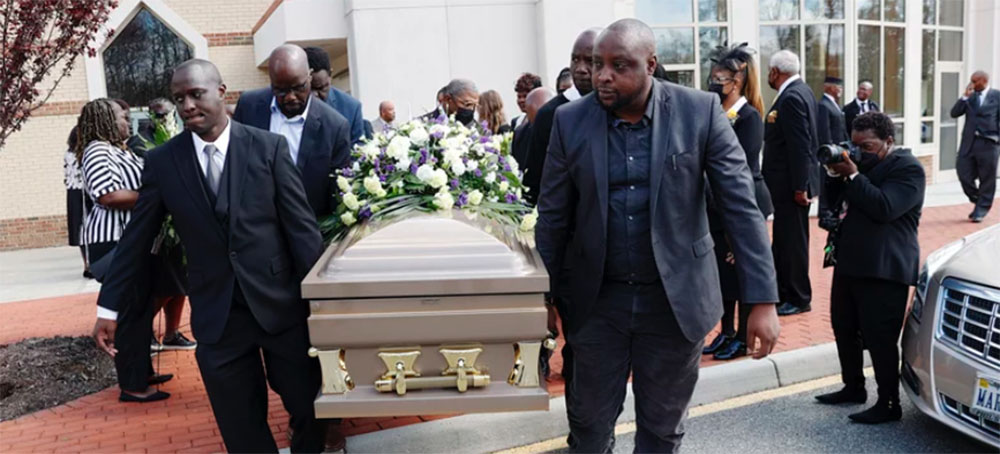


An Autopsy Finds Irvo Otieno, Held Down by Deputies and Hospital Workers, AsphyxiatedThe casket of Irvo Otieno is carried out of First Baptist Church of South Richmond on March 29 after the celebration of life for Irvo Otieno in North Chesterfield, Va. The 28-year-old Black man died after he was pinned to the floor by seven sheriff's deputies and several others while he was being admitted to a mental hospital. (photo: Eva Russo/Richmond Times-Dispatch/AP)

An Autopsy Finds Irvo Otieno, Held Down by Deputies and Hospital Workers, Asphyxiated
AP
Excerpt: "Irvo Otieno, a 28-year-old Black man whose death last month at a Virginia mental hospital has sparked outrage and led to second-degree murder charges against 10 defendants, died of 'positional and mechanical asphyxia with restraints,' a medical examiner's office said Monday."  


Irvo Otieno, a 28-year-old Black man whose death last month at a Virginia mental hospital has sparked outrage and led to second-degree murder charges against 10 defendants, died of "positional and mechanical asphyxia with restraints," a medical examiner's office said Monday.

Arkuie Williams, the administrative deputy in the state Office of the Chief Medical Examiner, confirmed the cause of death findings to The Associated Press after attorneys for Otieno's family first shared them in a statement. The manner of death was homicide, Williams wrote in an email.

Otieno, who struggled with mental illness, died March 6 after he was pinned to the floor while being admitted to Central State Hospital in Dinwiddie County.

Video released earlier this month showed sheriff's deputies and hospital employees restraining a handcuffed and shackled Otieno for about 20 minutes after he was forcibly led into a hospital room. For much of that time, Otieno was prone on the floor, pinned by a group so large it blocked the camera's view of him at times.

Personnel who realized he appeared limp and lifeless eventually began resuscitation efforts, the video showed.

"The official cause and manner of death is not surprising to us as it corroborates what the world witnessed in the video," family attorneys Ben Crump and Mark Krudys said in a statement. "In a chilling parallel to George Floyd's killing, Irvo was held down and excessively restrained to death, when he should have been provided medical help and compassion. It is tragic that yet another life has been lost to this malicious and deadly restraint technique."

Seven deputies and three hospital workers have been charged with second-degree murder in Otieno's death.

The local prosecutor who brought the charges has previously said in court that Otieno was smothered to death.

No additional information from the autopsy beyond the cause and manner of death can be released by the medical examiner's office, Williams said.

Otieno was laid to rest last week. Civil rights leader the Rev. Al Sharpton and other speakers at his funeral said his death shows the need for mental health and policing reforms.

Otieno's family and their attorneys have said Otieno was experiencing mental distress at the time of his initial encounter with law enforcement, days before he was taken to the state hospital. He was first taken into police custody in Henrico County March 3, when he was transported to a local hospital for mental health treatment under an emergency custody order.

Police have said that while at the local hospital, he "became physically assaultive toward officers," at which point they arrested him and took him to a local jail, something Otieno's family says should never have happened given that he was in need of treatment. On the afternoon of March 6, he was transferred to the state hospital, which has a unit that provides care for people admitted from jails or by court order.

Some of the attorneys for the defendants charged in his death have said their clients were only trying to restrain Otieno. Otieno's family and their attorneys have said he posed no danger to them and was simply trying to breathe during the encounter at the hospital shown on video.

All defendants have been granted bond and court records show pre-trial hearings in April or May.

AP sought comment on the medical examiner's findings from defense attorneys for each of the defendants. Attorneys Emily Munn, Emilee Hasbrouck and G. Russell Stone, declined to comment.

Attorney Ed Riley, who represents one of the deputies, said he couldn't comment on the merits of the findings without having seen the full autopsy report. He said he worried that public statements from the attorneys for Otieno's family as well as other public disclosures in the case, including the video, could hinder the defendants' right to a fair trial.

Other attorneys did not respond to phone and email messages seeking comment.


READ MORE


California Salmon Stocks Are Crashing. A Fishing Ban Looks Certain.Juvenile fall-run Chinook salmon at the Coleman National Fish Hatchery in Anderson, Calif. (photo: NYT)

California Salmon Stocks Are Crashing. A Fishing Ban Looks Certain.
Catrin Einhorn, New York Times
Einhorn writes: "Scientists say alarming declines at the southern end of the fishes’ range may be a sign of what’s to come as waters warm farther north." 

This week, officials are expected to shut down all commercial and recreational salmon fishing off California for 2023. Much will be canceled off neighboring Oregon, too.

The reason: An alarming decline of fish stocks linked to the one-two punch of heavily engineered waterways and the supercharged heat and drought that come with climate change. There are new threats in the ocean, too, that are less understood but may be tied to global warming, according to researchers.

Scientists and fishers had been braced for bad numbers. Conditions were terrible a couple of years earlier, when the salmon were young and tiny in low, overheated creeks and rivers in California. But as the fish counts came in and the models spit out figures, the numbers were even more dismal than expected.


READ MORE

 

Liberals Win Control of Wisconsin Supreme Court Ahead of Abortion CaseWisconsin Supreme Court candidate Janet Protasiewicz votes at Franklin City Hall on April 4. (photo: Evelyn Hockstein/Reuters)

Liberals Win Control of Wisconsin Supreme Court Ahead of Abortion Case
Patrick Marley, Washington Post
Marley writes: "Liberals claimed control of Wisconsin’s high court in an election Tuesday, giving them a one-vote majority on a body that in the coming years will likely consider the state’s abortion ban, its gerrymandered legislative districts and its voting rules for the 2024 presidential election." 

Liberals claimed control of Wisconsin’s high court in an election Tuesday, giving them a one-vote majority on a body that in the coming years will likely consider the state’s abortion ban, its gerrymandered legislative districts and its voting rules for the 2024 presidential election.

Milwaukee County Judge Janet Protasiewicz’s victory over former state Supreme Court justice Daniel Kelly will end 15 years of conservative control of the Wisconsin Supreme Court. She could face ethical questions when the court takes up politically charged cases because she campaigned heavily on abortion rights and repeatedly called the state’s election maps “rigged.”

Protasiewicz beat Kelly by 11 points, 55.5 percent to 45.5 percent, according to the Associated Press. About 1.8 million people voted, nearly 40 percent of the state’s eligible voters, which was high given that court elections rarely see turnout of more than 30 percent.

The candidates, political parties and independent groups spent more than $40 million on the race, making it the most expensive judicial contest in U.S. history. It more than quadrupled the amount spent in Wisconsin’s 2020 state Supreme Court race.

Judicial candidates in Wisconsin do not run with party labels, but the race was steeped in partisanship. The state Democratic Party gave nearly $9 million to Protasiewicz, while arms of the Republican Party gave more than $500,000 to Kelly and GOP megadonor Richard Uihlein spent nearly $6 million to help him, according to campaign finance records.

At Protasiewicz’s victory party in downtown Milwaukee, the three liberals who sit on the court marched into the hotel ballroom arm in arm to Lizzo’s “About Damn Time.” They later joined Protasiewicz onstage, and the four of them — the court’s incoming majority — held their hands aloft as the crowd chanted “Janet!”

“Today’s results show that Wisconsinites believe in democracy and the democratic process,” Protasiewicz said. “Today I’m proud to stand by the promise I made to every Wisconsinite that I will always deliver justice and bring common sense to our Supreme Court.”

On Tuesday night, Kelly accused Protasiewicz of spreading “rancid slanders” and said he did not have a “worthy opponent to which I can concede.” He said he respected the voters’ decision but feared for the future of the court.

“I wish Wisconsin the best of luck because I think it’s going to need it,” he said, speaking from a rural, lakeside hotel 70 miles north of Madison.

Protasiewicz will start her 10-year term in August. She will replace Justice Patience Roggensack, a conservative who decided not to seek a third term after 20 years on the court. The next race for a seat on the court is in 2025, when liberal Justice Ann Walsh Bradley’s term ends.

As Wisconsin voters cast their ballots, former president Donald Trump appeared in a Manhattan courtroom and pleaded not guilty to 34 felony counts related to payments intended to silence an adult-film actress during his 2016 presidential campaign. Trump endorsed Kelly in 2020 but stayed out of this year’s race.

Protasiewicz and her allies had a fundraising edge and structured their campaign spending to run about three times as many ads as conservatives in the final weeks of the campaign, according to the media-tracking firm AdImpact. That’s because Democrats took advantage of a campaign finance law written by Republican lawmakers in 2015 that let them funnel huge sums to Protasiewicz, who qualified for the cheapest ad rates because she was a candidate for office. Conservatives ran most of their ads through independent groups that pay far more for ads.

Conservatives won a majority on the court in 2008 and over the next decade and a half issued rulings that upheld limits on unions, approved a voter ID law, ended a campaign finance investigation of Republicans, outlawed absentee-ballot drop boxes and adopted election maps that assured Republicans have commanding majorities in the state legislature.

Kelly joined the court in 2016, when the Republican governor at the time, Scott Walker, appointed him to fill a vacancy. He lost the seat by 10 points in 2020 but hoped to rejoin it this year.

Protasiewicz, 60, was raised in Milwaukee’s working-class south side, graduated from the University of Wisconsin at Milwaukee and got her law degree from Marquette University in Milwaukee. She served as a prosecutor for more than 25 years before becoming a judge nearly 10 years ago. On the campaign trail, she often noted that the only client she ever had as a lawyer was the state.

Protasiewicz had the advantage in the race from the start. She got in early, raised $14 million over the next year and a half, and got Democrats to coalesce around her even though another liberal was also running. She came in first in the February primary with 47 percent. Kelly was second with 24 percent, edging out conservative Waukesha County Circuit Court Judge Jennifer Dorow by two points. (The other liberal in the race, Dane County Circuit Court Judge Everett Mitchell, received about 8 percent.)

Some conservatives feared all along that Kelly would have a tough time this year, citing his loss in 2020 and a string of writings that expressed opposition to abortion and called affirmative action and slavery morally the same.

Protasiewicz made abortion rights the centerpiece of her campaign. Democrats have found the issue resonates with voters since the U.S. Supreme Court in June overturned Roe v. Wade, the 1973 ruling that guaranteed access to abortion across the nation.

When the ruling came down, abortion providers in Wisconsin stopped offering the procedure because of an 1849 law that bans abortion unless one is required to save the life of the mother. A trial judge is slated to hear a challenge to the law next month, and the case is expected to eventually reach the state Supreme Court.

“I can tell you with certainty that if I’m elected on April 4th, I’m sure that we will be looking — I am sure we will be looking — at that 1849 law,” Protasiewicz said at a campaign stop in March in eastern Wisconsin.

She added: “I believe in a woman’s right to choose.”

Over the next two years, the state high court could be called on to decide a host of voting rules for the 2024 presidential election. And the justices could be dragged into challenges over the results of that election, as they were in 2020. Last time, conservative Justice Brian Hagedorn joined the court’s liberals to issue a string of 4-3 rulings that rejected challenges from Trump and his allies over Joe Biden’s win in the state.

Liberal groups are now preparing to file a lawsuit challenging the legislative and congressional districts that conservatives on the Wisconsin Supreme Court approved last year. Those maps so heavily favor Republicans that they have been able to gain nearly two-thirds of the seats in the state legislature even though Wisconsin is nearly evenly split between Democratic and Republican voters.

Even if the court acts quickly, it may not be able to draw new maps in time for the 2024 election. New maps would need to be set by next spring, just six months after Protasiewicz is sworn in. Ordinarily, redistricting challenges take years.

Protasiewicz will face tough questions when the court addresses the abortion and redistricting challenges. Critics have argued she cannot ethically participate in those cases after so clearly spelling out her views.

During the campaign, Republicans filed a complaint against her with the state’s judicial ethics commission. The commission moves slowly and has not said whether it believes she has broken any rules. Republicans have made clear they’re ready to file more complaints.

The commission’s powers are limited, however, and only the state Supreme Court can impose discipline on a justice for violating the judicial ethics code. The conservatives on the court would need to get at least one vote from the liberals to discipline Protasiewicz.

Protasiewicz has said she would not participate in cases brought by the state Democratic Party since it donated so much money directly to her campaign. But she has said she is inclined to remain on the abortion case and would likely participate in a redistricting case if someone other than the state Democratic Party brought it.

Protasiewicz was able to speak so freely about her views on abortion and redistricting during the campaign because of a 2002 U.S. Supreme Court decision. Acting on a lawsuit brought by the Republican Party of Minnesota, the conservative majority in a 5-4 ruling determined judicial candidates have a First Amendment right to express their views on political issues so long as they don’t promise to rule in a particular way.

But having now spelled out her views, Protasiewicz could face challenges over whether she can be impartial, said Charles Geyh, an Indiana University law professor who has written extensively on judicial ethics.

“If she is then called upon to resolve the redistricting matter, where she is on record saying it’s rigged, I have a hard time saying that she shouldn’t disqualify herself from that,” he said.

In Wisconsin, justices decide on their own whether they can participate in cases. That’s in part because conservatives on the court in 2009 ruled the justices could not force one of their colleagues off a case.

Eric H. Holder Jr., who served as attorney general under President Barack Obama, spent Saturday campaigning for Protasiewicz as the head of the National Democratic Redistricting Committee. In an interview, he contended Protasiewicz could remain fair on a redistricting challenge despite her comments in recent months.

“She has said the maps are not necessarily good, but she hasn’t said she would vote in a particular way with regard to a case that was brought before her,” he said. “And you have to look at what the case is, what’s the basis for the complaint that might be filed, and I’m confident that she can do so in an impartial way.”


READ MORE
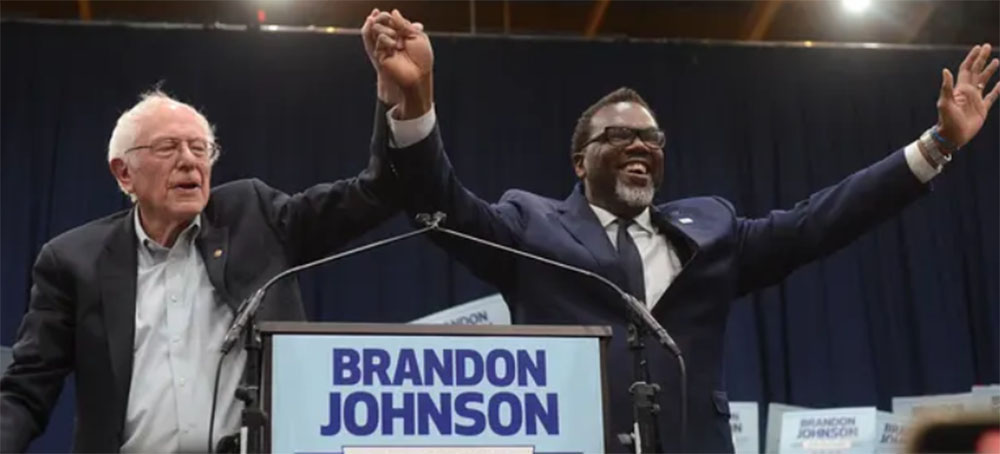
   

Progressive Candidate Brandon Johnson Elected Chicago’s New MayorBrandon Johnson won the election for Chicago mayor Tuesday evening, pulling ahead of his centrist opponent Paul Vallas. (photo: Anadolu Agency)

Progressive Candidate Brandon Johnson Elected Chicago’s New Mayor
Leigh Giangreco, Guardian UK
Giangreco writes: "Progressive candidate and Cook county board commissioner Brandon Johnson won the election for Chicago mayor on Tuesday evening after pulling ahead of his opponent Paul Vallas in the evening." 


Election had pit Johnson, who previously supported defund the police, against the centrist Paul Vallas, who was endorsed by the police union


Progressive candidate and Cook county board commissioner Brandon Johnson won the election for Chicago mayor on Tuesday evening after pulling ahead of his opponent Paul Vallas in the evening.

At 10pm, with 91% of the votes in, Johnson led at 51.4% to Vallas’ 48.6%. That amounted to almost 16,000 votes.

The election had pit two Democrats from the furthest ends of their party’s spectrum against each other. Public safety has been the number one issue and Democrats across the country were watching to see if Johnson, a progressive who has previously supported the defund the police movement, could defeat Vallas, who nabbed the endorsement of Chicago’s police union and once described himself as a Republican.

At Vallas’ campaign party in downtown Chicago on Tuesday evening, the once buoyant party had deflated as the results rolled in. Around 8pm a bagpipe band loudly rehearsing in a hotel banquet hall was interrupted by Alderman Brian Hopkins, who said the mood in the room was so grim that the group should pack it up and go home.

Johnson and Vallas had gone head-to-head after a crowded mayoral primary in February. In that race, incumbent mayor Lori Lightfoot won voters in Chicago’s majority Black wards on the south and west side communities while Congressman Jesús “Chuy” García won Latino voters on the west side. Those votes were up for grabs on Tuesday.

Despite high rates of early voting, election day turnout was reportedly “sleepy”. Even so, young voters seemed to have outpaced previous election records, possibly spurring the boost for Johnson.

Earlier in the day, voters lined up in the sprawling 19th ward where about 65% of the 19th’s residents are white and 25% Black, making it one of the more racially diverse areas of a very segregated city. Race and personal identity played a role for some voters at the ballot box.

“I just felt like Vallas was prejudiced,” said Paulette Traylor, who cast her vote in the Beverly neighborhood in the ward. “I really don’t think he cares for Black people. I think he’s more of a Republican and I’m not a Republican.”

As a Black woman and one of nine children, Traylor said she also identified with Johnson’s upbringing. The son of a Black pastor, Johnson often cited his position as a middle child of 10 children as the key to his negotiating skills.

In his hometown neighborhood of Austin on the west side, voters touted Johnson’s messaging on mental health and education. Emily Lucas, an Austin resident, pointed to Vallas’ tenure as Chicago Public Schools CEO as a turnoff, and appreciated that Johnson was a local.

“It would be nice to have a mayor who lived down the street,” said Emily Lucas, an Austin resident. “What an advantage. He’s a hometown guy.”


READ MORE



Bid by Environmental Groups to Pause ConocoPhillips’ Alaska Willow Project FailsA herd of caribou graze by the Trans-Alaska Pipeline at the North Slope on Prudhoe Bay, Alaska. (photo: Joel W. Rogers/Corbis Documentary)

Bid by Environmental Groups to Pause ConocoPhillips’ Alaska Willow Project Fails
Cristen Hemingway Jaynes, EcoWatch
Jaynes writes: "A federal judge on Monday denied a motion by environmental groups challenging oil giant ConocoPhillips’ $7 billion Willow project in Alaska’s Western Arctic." 


Afederal judge on Monday denied a motion by environmental groups challenging oil giant ConocoPhillips’ $7 billion Willow project in Alaska’s Western Arctic. The ruling allows the construction of roads and a gravel mine planned for the last three weeks of the construction season to move forward.

The lawsuit initially filed by the groups asserted that the U.S. Department of the Interior’s approval on March 13 of the Willow project was unlawful because it did not consider reasonable alternatives to limit the harm the project would do to environmentally sensitive areas, and it failed to sufficiently consider future greenhouse gas emissions that would result from the fossil fuel extractions of the project.

“It’s heartbreaking that ConocoPhillips has been allowed to break ground on Willow before the court has fully assessed whether the project is lawful,” said Kristen Monsell, a senior attorney at the Center for Biological Diversity, in a press release. “But this case isn’t over, and we’ll keep fighting to protect struggling Arctic wildlife and our climate from this disastrous project. We’re hopeful we’ll get the Willow project’s approval thrown out once again.”

The lawsuit was filed by the Center for Biological Diversity and the Natural Resources Defense Council, as well as by Earthjustice on behalf of Friends of the Earth, Defenders of Wildlife and Greenpeace.

The mining and construction plans are scheduled for the winter habitat of high numbers of caribou, and will disrupt them.

The planned fossil fuel extraction by ConocoPhillips in the Willow project area amounts to 600 million barrels of oil, in addition to as many as three billion barrels of oil planned for the region.

“Allowing ConocoPhillips to bulldoze forward with construction of the largest oil and gas project on public lands before the lawsuits are settled is needlessly destructive,” said Natalie Mebane, climate campaign director at Greenpeace USA, in the press release. “As the largest historical emitter of greenhouse gas emissions, the U.S. cannot afford Willow or any new oil and gas projects if we’re going to avoid the worst impacts of the climate crisis. New projects will take years if not decades to complete. They do nothing to meet current energy needs. It will only deepen our dependence on expensive fossil fuels while destroying our climate, harming our health, and polluting communities.”

U.S. District Judge Sharon Gleason in Anchorage said the groups pursuing an injunction would not be irreparably harmed by the construction and that an injunction was inappropriate, reported Reuters.

“Although the White House and Department of Interior were not persuaded to stop Willow despite the advocacy of more than 5 million individuals, we are now using the power of the law to restore some balance. While this particular round of the legal challenge did not produce the outcome we had hoped for, our court battle continues,” said Erik Grafe, deputy managing attorney in Earthjustice’s Alaska Regional Office, in the press release. “We will do everything within our power to protect the climate, wildlife, and people from this dangerous carbon bomb. Climate scientists have warned that we have less than seven years to get it right on climate change, and we cannot afford to lock in three decades of oil drilling that will only serve to open the door to more fossil-fuel extraction.”

Nicole Whittington-Evans, Defenders of Wildlife’s Alaska Program director, said the environmental groups would keep fighting.

“Today’s decision is a disappointment, but we remain undeterred,” Whittington-Evans said in the press release. “We remain committed to protecting the western Arctic and look forward to the court’s full consideration of the Willow project, including its impacts to polar bears threatened with extinction and massive carbon emissions that will worsen the climate crisis for decades to come.”


READ MORE


Contribute to RSN

Follow us on facebook and twitter!

Update My Monthly Donation

PO Box 2043 / Citrus Heights, CA 95611


Friday, March 17, 2023

Robert Reich | Is "Woke Capitalism" the New Republican Racist Dog Whistle?


Reader Supported News
17 March 23

Live on the homepage now!
Reader Supported News

WE HAVE TO HAVE YOUR ATTENTION TO DONATIONS — RSN cannot be run without a budget. Can’t do it no matter how hard we try. We love our readers but we have to pay the bills. Hit the donation link. It doesn’t take long and it doesn’t hurt much. We do thank you.
Marc Ash • Founder, Reader Supported News

Sure, I'll make a donation!


Economist and former labor secretary Robert Reich. (photo: AP)
Robert Reich | Is "Woke Capitalism" the New Republican Racist Dog Whistle?
Robert Reich, Robert Reich's Substack
Reich writes: "Rather than understand Silicon Valley Bank's failure as the result of financial deregulation that allowed bank executives to take excessive risks, Republican politicians are blaming the bank's failure on 'woke' capitalism."

They’re even blaming Silicon Valley Bank’s failure on it


Rather than understand Silicon Valley Bank’s failure as the result of financial deregulation that allowed bank executives to take excessive risks, Republican politicians are blaming the bank’s failure on “woke” capitalism.

Seriously.

House Oversight Committee Chairman James Comer (R-Ky.) calls Silicon Valley Bank “one of the most woke banks.”

Florida Gov. Ron DeSantis charges that Silicon Valley Bank’s focus on diversity, equity, and inclusion “diverted from them focusing on their core mission.”

Fox News host Tucker Carlson says diversity and inclusion standards are why “big banks are now increasingly incompetent.”

What seems to have incensed these Republicans is Silicon Valley Bank’s announcement last summer that it would be providing mortgages to lower-income homebuyers and using hiring practices that promote diversity. Of course, there’s zero evidence that these initiatives contributed to the bank’s collapse.

DeSantis, by the way, seems to be focusing his entire upcoming presidential campaign on his opposition to wokeness. “We are not going to surrender to woke,” he said. “Florida is the state where woke goes to die.” In late February, under pressure from trustees appointed by DeSantis, the New College of Florida voted to abolish the office that oversees the school’s diversity, equity, and inclusion efforts.

Hence, today’s Office Hours question: Is “woke” capitalism becoming Republicans’ new racist dog whistle?


READ MORE


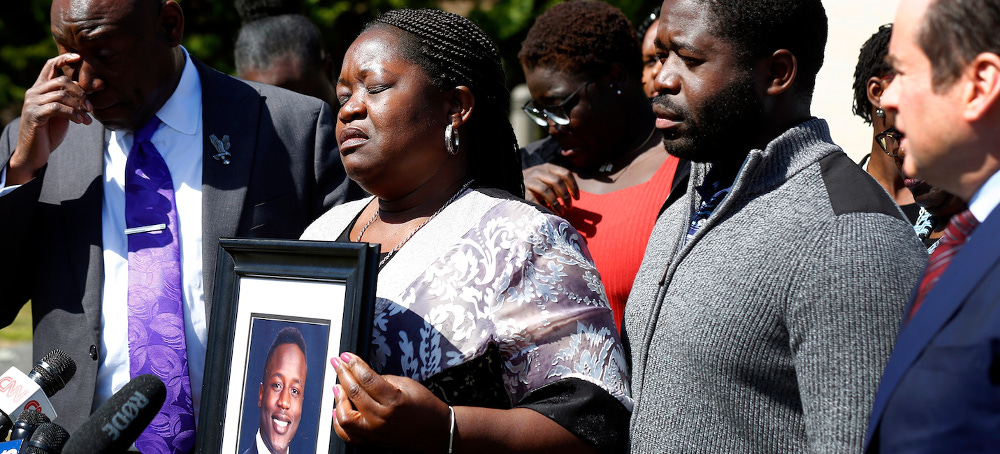
Video Shows Deputies Smother Virginia Man for 11 Minutes Before Death, Family SaysOuko, mother of Irvo Otieno, holds a portrait of her son. (photo: Daniel Sangjib/AP)

Video Shows Deputies Smother Virginia Man for 11 Minutes Before Death, Family Says
Laura Vozzella and Salvador Rizzo, The Washington Post
Excerpt: "Relatives of Irvo N. Otieno on Thursday watched video of his 'traumatic' death at Central State Hospital as a local prosecutor brought second-degree murder charges against three of the facility's employees - on top of the seven sheriff's deputies already charged in his death." 


Family members of Irvo Otieno were shown video of the encounter, as prosecutors charged 3 hospital workers with murder. Seven deputies already had been charged.


Relatives of Irvo N. Otieno on Thursday watched video of his “traumatic” death at Central State Hospital as a local prosecutor brought second-degree murder charges against three of the facility’s employees — on top of the seven sheriff’s deputies already charged in his death.

“My son was treated like a dog, worse than a dog,” Otieno’s mother, Caroline Ouko, tearfully told reporters outside the Dinwiddie County Courthouse. “I saw it with my own eyes in the video. He was treated inhumanely, and it was traumatic, and it was systemic.”

Otieno’s brother, Leon Ochieng, said the video undermined claims made by attorneys for some of the deputies that Otieno was acting aggressively and had to be subdued.

Two lawyers for Otieno’s family, who watched the video with them, said the three hospital workers dressed in blue uniforms could be seen joining the deputies in brown — putting their weight on him as he lay prone on the hospital floor for 11 minutes, handcuffed, his feet shackled. They called on the Justice Department to investigate.

“What I saw was a lifeless human being without any representation, no [regard] for his human life,” Ochieng said, his voice breaking. “At what point do we consider mental illness a crime?”

Ouko said her 28-year-old younger son, whom she described as an aspiring hip-hop artist, was suffering from a mental health problem when police took him into custody at her Henrico County home on March 3.

He died of asphyxiation at the hospital three days later, after the seven deputies applied their body weight to him, Dinwiddie County Commonwealth’s Attorney Ann Cabell Baskervill said earlier this week.

Baskervill released a statement Thursday announcing charges against the three hospital workers but did not detail their alleged roles in the death on March 6.

“He’s face down, handcuffed, with leg irons, and you say, ‘My God, why?’” said attorney Ben Crump, who has provided legal services to the families of George Floyd, Breonna Taylor and other unarmed Black people who were killed by law enforcement officers. “It is so unnecessary, it is so unjustified. And you keep searching in your heart for which one of them would have the humanity to say that, ‘Eleven minutes is far too long to have him down, with the weight of our bodies and knees on his neck.’”

The hospital workers charged are: Darian M. Blackwell, 23, of Petersburg; Wavie L. Jones, 34, of Chesterfield; and Sadarius D. Williams, 27, of North Dinwiddie. They were transported to the Meherrin River Regional Jail in Brunswick County and were being held without bond. Attorneys for them were not listed in records online.

Baskervill’s statement said “additional charges and arrests are pending.” It also said she was “not able” to publicly release the video to “maintain the integrity of the criminal justice process at this point.”

Caleb Kershner, an attorney for one of the sheriff’s deputies, Randy Boyer, said his client was “100 percent” innocent.

“We’re all very, very shocked and surprised,” Kershner said, calling the second-degree murder charge an “extreme measure.”

“It appears as if we have a death in custody — very unfortunate circumstance,” Kershner said. “And that’s a pretty serious charge to levy against law enforcement officers who were moving someone from a prison cell to Central State, when someone dies in custody.”

Kershner said he had received only limited information about the case, but had met with his client on Thursday. The defense attorney said Otieno had received what he assumed was a sedative shot around the time of his death.

Holding a framed photo of her smiling son dressed in a suit and tie, Ouko left it to the family’s two attorneys to detail what they saw in two videos Baskervill allowed them to watch.

One showed Otieno in his Henrico County jail cell, the other at the hospital. Crump and Mark Krudys, another attorney for Otieno’s family, alleged that Otieno was mistreated at the jail and the hospital. The videos were taken by surveillance cameras at both locations, not body-camera footage, Krudys said.

Krudys said the family chose not to watch most of the jail video, which was in some ways more graphic than the images from the hospital, where the scrum of deputies and workers obscured Otieno.

He said the jail video showed Otieno naked, surrounded by feces and handcuffed, when five deputies “force rushed” him against a metal bed and hard wall.

“I’m sorry to say this in front of the family, but the public needs to know: He’s carried out by the arms and legs, almost upside down, like an animal,” Krudys said, adding that the deputies then transported him to Central State. Mentally ill patients in the Richmond area are treated at that hospital.

The videos had no sound, so it was not clear what was said, but one of the deputies appeared to be laughing at one point, Krudys said.

Personnel from the Henrico County Sheriff’s Office went to the hospital just before 4 p.m. on March 6 to admit Otieno as a patient, the prosecutor has said. About 3½ hours later, the state police were called to investigate his death, Baskervill said.

Investigators from the state police “were told he had become combative during the admission process,” Baskervill said in a statement Tuesday. “Otieno, who was physically restrained, died during the intake process,” she said.

The prosecutor identified the deputies, all who live in Virginia, as Jermaine Lavar Branch, 45, of Henrico; Boyer, 57, of Henrico; Dwayne Alan Bramble, 37, of Sandston; Bradley Thomas Disse, 43, of Henrico; Tabitha Renee Levere, 50, of Henrico; Brandon Edwards Rodgers, 48, of Henrico; and Kaiyell Dajour Sanders, 30, of North Chesterfield.

The Henrico County police department, which is separate from the sheriff’s office, said that on March 3 Otieno was identified and approached as a “potential suspect” in a possible burglary.

The family’s lawyers indicated that the burglary allegation was an outgrowth of his mental health issue, which his mother said periodically afflicted him since he was student at Freeman High School. She declined to say if he had been diagnosed with a specific mental illness.

The lawyers suggested that Otieno’s mental state led him to take or gather solar lights from a neighbor’s home, leading the neighbor to make a complaint to police. At least 10 police officers responded to his mother’s home, although the lawyers said it was not clear if they were responding to the neighbor’s complaint or to a request for mental health help from Otieno’s mother.

“There was a huge show of force,” Krudys said. “And he went peacefully.”

Officers took him to a Henrico County hospital for evaluation, but later moved him to the county jail, where he was charged with assault on a law enforcement officer, disorderly conduct in a hospital and vandalism, the Henrico police said.


READ MORE


Disinformation: Russia Looks to US Far Right to Weaken Ukraine SupportPedestrians pass by a billboard with an image of Russia's President Vladimir Putin and lettering "Strong president - Strong Russia!" in Simferopol, Crimea. (photo: AFP)

Disinformation: Russia Looks to US Far Right to Weaken Ukraine Support
Peter Stone, Guardian UK
Stone writes: "Russia's ruthless war against Ukraine has faced major setbacks since it began a year ago, the Kremlin has deployed new disinformation themes and tactics to weaken US support for Kyiv with help from conservative media stars and some Republicans in Congress, according to new studies and experts."


The Kremlin is deploying new tactics by drawing on favorite themes and conspiracy theories of rightwing Republicans


As Russia’s ruthless war against Ukraine has faced major setbacks since it began a year ago, the Kremlin has deployed new disinformation themes and tactics to weaken US support for Kyiv with help from conservative media stars and some Republicans in Congress, according to new studies and experts.

Moscow’s disinformation messages have included widely debunked conspiracy theories about US bioweapon labs in Ukraine, and pet themes on the American right that portray the Russian president, Vladimir Putin, as an ally in backing traditional values, religion and family in the fight against “woke” ideas.

Further, new studies from thinktanks that track disinformation have noted that alternative social media platforms such as Parler, Rumble, Gab and Odysee have increasingly been used to spread Russian falsehoods since Facebook and Twitter have imposed more curbs on Moscow’s propaganda.

Other pro-Russian messages focused on the economic costs of the war for the US have been echoed by Republicans in the powerful far-right House Freedom Caucus such as Marjorie Taylor Greene, Scott Perry and Paul Gosar, who to varying degrees have questioned giving Ukraine more military aid and demanded tougher oversight.

Since Russia launched its invasion last February, the Fox News host Tucker Carlson and Trump ally – turned influential far-right podcaster – Steve Bannon have promoted some of the most baseless claims that help bolster the Kremlin’s aggression.

For instance, Bannon’s War Room podcast in February 2022 featured an interview with Erik Prince, the wealthy US founder of Blackwater, where they both enthused that Putin’s policies were “anti-woke” and praised Putin’s homophobia and transphobia.

Last month too on the anniversary of Moscow’s invasion, Carlson revved up his attacks on US support for Ukraine claiming falsely that Biden’s goal had become “overthrowing Putin and putting American tanks in Red Square because, sure, we could manage Russia once we overthrow the dictator”.

Analysts who track Russia’s disinformation see synergies between the Kremlin and parts of the US right that have helped spread some of the biggest falsehoods since the start of the invasion.

“Russia doesn’t pull even its most outlandish narratives out of thin air – it builds on existing resentments and political fissures,” Jessica Brandt, a policy director at the Brookings Institution who tracks disinformation and foreign interference, told the Guardian.

She added: “So you often have a sort of harmony – both Kremlin messengers and key media figures, each for their own reasons, have an interest in dinging the administration for its handling of the Ukraine crisis, in amplifying distrust of authoritative media, in playing on skepticism about the origins of Covid and frustration with government mitigation measures.”

“That was the case with the biolabs conspiracy theory, for example, which posits that the Pentagon has been supporting the development of biological weapons in Ukraine. The Charlie Kirk Show and Steve Bannon’s War Room podcast, among others, devoted multiple segments to the claim. It’s not so much that we’re witnessing any sort of coordination, but rather an alignment of interests.”

Brandt also noted that Russia had an “interest in promoting authentic American voices expressing views that align with the Kremlin’s foreign policy goals. And that’s why you often see them retweet Americans that make these arguments.”

Likewise, two reports issued separately last month by the Alliance for Securing Democracy and the Atlantic Council, reveal how Russian state media have shifted some messaging themes and adopted new tactics with an eye to undercutting US backing for Ukraine.

The Alliance report documented a shift in messaging in the US and Europe from directly defending Russia’s invasion to stressing the energy and economic impacts that it was having, themes that seem to be resonating with some Republican politicians.

In the first six months of the war, Alliance data revealed that Russia-linked accounts on Twitter mentioned “Nazi” in more than 5,800tweets.

But in the following six months from August 2022 through January 2023, “the number of ‘Nazi’ tweets dropped to 3,373 – a 42% decline”. Likewise, mentions of Nato by Russian-linked accounts on Twitter dropped by roughly 30% in the second six-month period.

By contrast, in the most recent six-month period the report said that “tweets mentioning both ‘energy’ and ‘Ukraine’ increased by 267%, while tweets mentioning ‘cost of living’ increased 66%” compared to the first six months of the war.

In another twist, Bret Schafer, who leads the Alliance’s information manipulation team, told the Guardian: “In response to restrictions and crackdowns by major tech platforms, accounts and channels affiliated with Russian state media outlet RT, which has been banned entirely on YouTube, have fanned out across alternative social media and video sharing platforms like Rumble and Odysee that have less restrictive content moderation policies and that allow RT to operate without labels or restrictions.

“Those platforms also tend to cater to audiences who are not necessarily pro-Russian, but are certainly more apt, based on the other videos found on those platforms, to oppose continued support for Ukraine.”

Despite Moscow’s disinformation offensive and the $100bn plus in military and financial assistance that has flowed to Ukraine in one year, the ex-Republican House member Charlie Dent of Pennsylvania said that “most GOP members still support Ukraine in its fight against Russian aggression”.

But Dent stressed that “the hardest edge of the Bannon-Carlson wing of the Maga movement in Congress is more sympathetic to Russian arguments and has an isolationist view of American foreign policy. There are some members who are less willing to push back against autocrats. There are others too who find common cause with Russia’s professed socially conservative orientation.”

Those voices are especially loud in the Freedom Caucus which is wielding growing influence with the House speaker, Kevin McCarthy, who has said he will not support a “blank check” for Ukraine and this week declined the invitation of the Ukrainian president, Volodymyr Zelenskiy, to visit Kyiv.

Freedom Caucus member Greene from Georgia at the recent CPAC conference said flatly: “We’ve done enough.”

Democrats are especially worried about the embrace of pro-Kremlin disinformation by the American right.

The Democratic senator Chris Murphy blasted US conservatives for echoing Kremlin propaganda and traced its roots back to ex-president Donald Trump, who at the start of Russia’s invasion lauded Putin as “savvy” and a “genius”. Murphy said Trump’s “admiration for Putin” has “turned into a collective rightwing obsession”.

Murphy noted that among the obsessed on the right are Donald Trump Jr, whom he follows on social media, and who is “relentlessly making fun of Zelenskiy online”.

Meanwhile, Putin’s own words and propaganda have lately shifted as he has tried to influence opinion in the US and the west, and blunt Russian dissent.

“Millions of people in the west understand they are being led to a real spiritual catastrophe,” Putin railed last month in a wildly hyperbolic speech that homed in on “the destruction of families”, and related themes.

Russia experts warn that Putin’s rhetoric and Kremlin messaging on these themes is far removed from the reality in Russia.

“One of the glaring mistakes of far-right propagandists is to view Vladimir Putin as some kind of defender of Christendom, of family values and as a protector of the white race,” said Ariel Cohen, a senior fellow with the Atlantic Council’s Eurasia Center. “They repeat the Kremlin talking points and get excited about the Russian ‘gay propaganda’ law. Nothing could be further from reality.

“Today Russia is the leader in Europe of high divorce rates, HIV infections, and low church attendance and practice.”

Senator Murphy expects Putin to count “on the [American] right wing to advance Russian propaganda and exploit our internal divisions.”


READ MORE


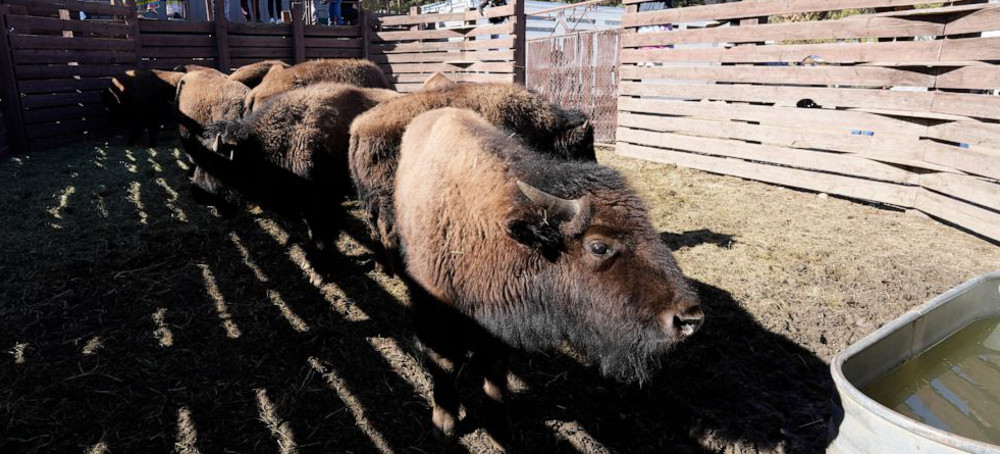
US Tribes Get Bison as They Seek to Restore Bond With AnimalDozens of bison from a mountain park outside Denver have been transferred to several tribes from across the Great Plains. (photo: AP)

US Tribes Get Bison as They Seek to Restore Bond With Animal
Matthew Brown and Thomas Peipert, Associated Press
Excerpt: "Dozens of bison from a mountain park outside Denver were transferred Wednesday to several tribes from across the Great Plains, in the latest example of Native Americans reclaiming stewardship over animals their ancestors lived alongside for millennia."

Dozens of bison from a mountain park outside Denver were transferred Wednesday to several tribes from across the Great Plains, in the latest example of Native Americans reclaiming stewardship over animals their ancestors lived alongside for millennia.

Following ceremonial drumming and singing and an acknowledgement of the tribes that once occupied the surrounding landscape, the bison were loaded onto trucks for relocation to tribal lands.

About a half-dozen of the animals from Colorado will form the nucleus of a new herd for the Yuchi people south of Tulsa, Oklahoma, said Richard Grounds with the Yuchi Language Project.

The herd will be expanded over time, to reestablish a spiritual and physical bond broken two centuries ago when bison were nearly wiped out and the Yuchi were forced from their homeland, Grounds said.

He compared the burly animals' return to reviving the Yuchi's language — and said both language and bison were inseparable from the land. Bison were “the original caretakers” of that land, he said.

“We've lost that connection to the buffalo, that physical connection, as part of the colonial assault,” Grounds said. “So we're saying, we Yuchi people are still here and the buffalo are still here and it's important to reconnect and restore those relationships with the land, with the animals and the plants.”

The transfers also included 17 bison to the Northern Arapaho Tribe and 12 to the Eastern Shoshone Tribe — both of Wyoming — and one animal to the Tall Bull Memorial Council, which has members from various tribes, city officials said.

Wednesday’s transfer came two weeks after U.S. Interior Secretary Deb Haaland issued a bison conservation order meant to further expand the number of large herds on Native American lands. Haaland also announced $25 million to build new herds, transfer more bison from federal to tribal lands and forge new bison management agreements with tribes, officials said.

American bison, also known as buffalo, have bounced back from near-extinction in the 1880s but remain absent from most of the grasslands they once occupied.

Across the U.S., 82 tribes now have more than 20,000 bison, and the number of herds on tribal lands have grown in recent years. The animals have been transferred to reservations from other tribes, from federal, state and local governments and from private ranches.

Tens of millions of bison once roamed North America until they were killed off almost entirely by white settlers, commercial hunters and U.S. troops. Their demise devastated Native American tribes across the continent that relied on bison and their parts for food, clothing and shelter.

The animals transferred to the tribes Wednesday descend from the last remnants of the great herds. They were under care of the Denver Zoo and kept in a city park before being moved to foothills west of Denver in 1914.

Surplus animals from the city's herd were for many years auctioned off, but in recent years city officials began transferring them to tribes instead, said Scott Gilmore, deputy executive director of Denver Parks and Recreation.

Gilmore said the land acknowledgement statement read out loud during Wednesday's ceremony underscored the historical importance of the area to the Cheyenne, Arapaho, Ute and dozens of other tribes that once lived in the area. But he added those were just “words on a piece of paper.”

“What we're doing is putting action to those words for Indigenous people. Buffalo are part of the land, they are part of their family," Gilmore said. "They are taking their family members back to their ancestral home.”

To date, 85 bison from Denver have been transferred to tribes and tribal organizations. City officials said the shipments will continue through 2030.


READ MORE 


Banking Executives Sold Millions in Stock Before Crash: WSJExecutives at First Republic Bank sold stock before its share price crashed. (photo: Reuters)

Banking Executives Sold Millions in Stock Before Crash: WSJ
Julia Shapero, The Hill
Shapero writes: "Executives at First Republic Bank sold company's stock worth millions of dollars in the months before this week's crash, according to The Wall Street Journal." 

Executives at First Republic Bank sold company’s stock worth millions of dollars in the months before this week’s crash, according to The Wall Street Journal.

The banking executives sold $11.8 million worth of stock in the company over the last two months, with First Republic Executive Chairman James Herbert II selling $4.5 million worth of his shares since the start of 2023, per the Journal.

Combined, First Republic’s chief credit officer, president of private wealth management and chief executive sold $7 million worth of company stock.

First Republic’s insider sales appear to have gone largely unnoticed, as it is now the only S…P 500 company that reports such sales to the Federal Deposit Insurance Corporation (FDIC) instead of the Securities and Exchange Commission (SEC).

Signature Bank, which collapsed on Sunday, was also exempted from filing with the SEC.

First Republic Bank’s stock plummeted more than 50 percent this week, as panic ensued over the widely-reported failures of other regional banks, including Signature Bank and Silicon Valley Bank.

Amid concerns of a potential run on First Republic, some of the largest U.S. banks — including Bank of America, Citigroup, JPMorgan Chase, Wells Fargo, Goldman Sachs and Morgan Stanley — agreed to help stabilize the bank’s balance sheets on Thursday with $30 billion in deposits.

READ MORE 

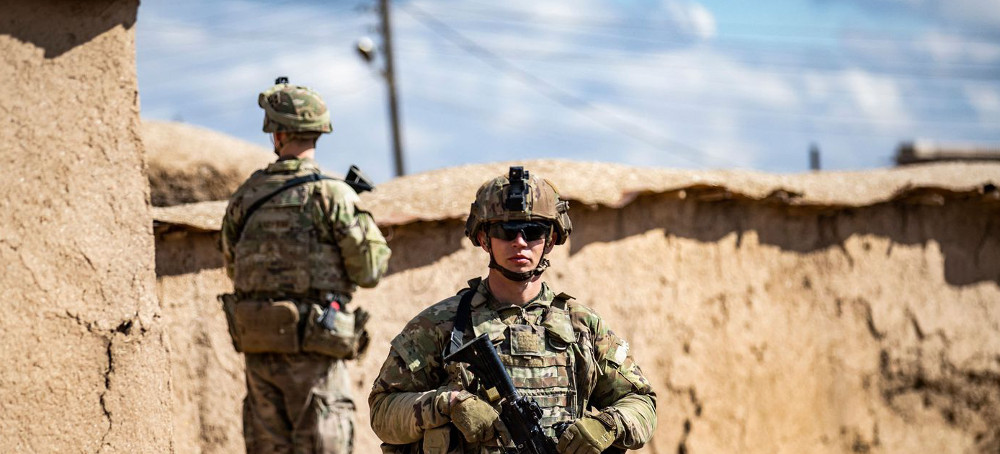
Congress Moves to Repeal the Iraq War Authorization, 20 Years LaterU.S. soldiers patrol the town of al-Qahtaniyah in Syria's northeastern Hasakeh province near the Turkish border on March 14, 2022. (photo: AFP)

Congress Moves to Repeal the Iraq War Authorization, 20 Years Later
Jonathan Guyer, Vox
Guyer writes: "The Senate is moving forward with a vote to repeal the outdated legal authorizations for the US's wars in Iraq. It's mostly symbolic, but it has some real-world implications." 


It’s a significant symbolic move, but US troops are still there, and other parts of the forever war continue.


The Senate is moving forward with a vote to repeal the outdated legal authorizations for the US’s wars in Iraq. It’s mostly symbolic, but it has some real-world implications.

On Thursday, the Senate held a procedural vote to repeal the 2002 and 1991 authorizations for the use of military force in Iraq. It passed 68-27, teeing up a floor vote next week. The Biden administration supports the repeal, but the measure has a tougher path in the House.

It is significant that lawmakers would remove a piece of the scaffolding of America’s forever wars in the Middle East and would prohibit a future president’s abuse of the legislation. It also shows that Congress is willing to exercise its constitutional powers when it comes to war. The bipartisan effort is commendable.

But it’s not enough.

The repeal of the 2002 authorization for the use of military force won’t address two major ongoing dynamics that ensure that, even as President Joe Biden has ended the forever war in Afghanistan and has curtailed drone strikes, the war on terrorism continues.

First, the post-September 11 authorization that Congress approved in 2001 as the basis for US global counter-terrorism operations remains on the books and endures as the legal framework for ongoing US military efforts. It has been used in at least 22 countries. It’s the justification for the current presence of US service members in Syria and Somalia, thanks to the White House’s expansive interpretation of Al-Qaeda’s associated forces that now includes ISIS and militant groups that didn’t yet exist when the authorization was passed. But it’s been more difficult to muster consensus about sunsetting this 2001 authorization, as it’s been used more broadly, including by the Biden administration.

Second, it’s not likely to affect the 2,500 US troops in Iraq. The official combat mission there has been over for more than a decade, and they’re training and assisting Iraqi troops under security cooperation agreements and possibly under the 2001 authorization. But the contours of US security assistance are amorphous and can lead to a creeping mission. Experts say there isn’t great clarity on the full range of US operations in Iraq right now.

The Biden administration said Thursday that the repeal of the 1991 and 2002 AUMFs “would have no impact on current US military operations.”

Still, even if the repeal is insufficient, it matters, and it will set guardrails for future US presidents. Lawmakers are finally addressing these longstanding authorizations that have the potential for misuse by the executive branch. As Katherine Ebright of the Brennan Center for Justice put it, “Congress has the responsibility, has the power, to weigh in on matters of war and peace, and it does not do that often enough.”

The war on terrorism continues thanks to a broad legal framework

America’s initial 1991 war in Iraq is so old that I’ve found memorabilia from the time — like Desert Storm trading cards — stacked in antique stores. But the 1991 authorization for the intervention is still in effect.

Same with Congress’s 2002 authorization to use military force in Iraq, the text of which begins with a lengthy preamble about Saddam Hussein. It empowers the president to use military force against Iraq largely in the context of decades-old United Nations resolutions regarding Hussein’s purported weapons of mass destruction, which the Bush administration lied about to justify the invasion and were never found. It’s difficult to say that’s relevant today given that the US military intervention there ousted Hussein so long ago.

But in January 2021, then-President Donald Trump, with some controversy, used the authorization as the basis for the assassination of the leader of Iran’s Islamic Revolutionary Guard Corps, Qassem Soleimani, who at the time was in Iraq.

Trump authorized the strike on Soleimani without consulting Congress — and it shows why a repeal is significant. “It’s removing a potentially dangerous tool that may be misused by a future administration, particularly to fight Iran in the Middle East,” said Brian Finucane of the International Crisis Group. “So it’s preventing potential future mischief by an administration interested in doing an end-run around Congress.”

Sens. Tim Kaine (D-VA) and Todd Young (R-IN) introduced the repeal in the Senate. The measure is being championed by progressives and conservatives, as well as veterans groups, faith-based groups, peace groups, government oversight groups, and transparency groups, according to Heather Brandon-Smith of the Friends Committee on National Legislation. “There’s a huge coalition of organizations who support this repeal,” she told me.

One reason that it has taken so long for Congress to repeal the Iraq war authorization is that legislative efforts have been coupled with the 2001 authorization that the US is still using in many countries. Last week when the Senate Foreign Relations Committee was considering the bill, Sen. Rand Paul (R-KY) added an amendment to repeal the 2001 authorization, but it was voted down by 20 other senators. Other amendments may be added, but Kaine expects they won’t stall the repeal.

Because the executive branch does not rely on the Iraq authorizations to conduct ongoing operations, it won’t make an operational difference, according to Finucane, who previously worked in the State Department’s Office of the Legal Adviser. “This is really the lowest of low-hanging fruit,” he told me, “The much more significant reforms will come with respect to the 2001 AUMF, where there’s currently no real movement from either the executive branch or Congress to reform that long-outdated war authorization for the war on terror.”

Nevertheless, the repeal vote might spur a bigger discussion of the fact that there are US troops in Iraq, Syria, and Somalia — ongoing operations that don’t get mentioned by President Biden but stand in glaring contrast to his commitment to ending endless wars.

Maybe by reminding Congress and the American public that these authorizations can come off the books, there can be a renewed focus on the more difficult task of repealing, sunsetting, or reforming the 2001 authorization for the use of military force.

READ MORE 

The Dubious Economic Calculus Behind the Willow ProjectThe ConocoPhillips venture is supposed to secure energy independence and Alaskan prosperity. It probably won't achieve either. (photo: IncomeI)

The Dubious Economic Calculus Behind the Willow Project
Zoya Teirstein and Jake Bittle, Grist
Excerpt: "President Joe Biden's decision to approve the massive Willow oil project earlier this week infuriated climate advocates and environmentalists while drawing praise from Alaska politicians and oil industry figures." 


The ConocoPhillips venture is supposed to secure energy independence and Alaskan prosperity. It probably won’t achieve either.


President Joe Biden’s decision to approve the massive Willow oil project earlier this week infuriated climate advocates and environmentalists while drawing praise from Alaska politicians and oil industry figures. As the Biden administration weighed the benefits and drawbacks of the project over the past year, the latter camp argued that the project would help replace Russian oil supplies as well as deliver an economic boon for Alaskans.

The Willow project’s champions have stressed the need for the U.S. to achieve energy independence in light of Russia’s invasion of Ukraine. Senator Lisa Murkowski, an Alaska Republican, said last month that Willow could help “reduce our energy imports from some of the worst regimes in the world.” Mary Peltola, a Democratic representative and Alaska Native who was elected to Congress last year, said just last week that the project could “make us all safer in a world that has grown more unpredictable after Russia invaded Ukraine.”

There’s no doubt that the Willow project, led by ConocoPhillips, represents the largest new Alaskan oil project in decades. At full capacity, it could increase total oil production in the state by more than a third. But experts told Grist that the energy and economic benefits of the project are smaller and less certain than its boosters have suggested. Not only will the Willow project provide an insufficient substitute for Russian oil, but it will also deliver an ambiguous mix of costs and benefits to Alaska state coffers, which have long relied on fossil fuel revenue that is increasingly hard to come by — even with new drilling in the Arctic.

It’s not clear how much the Willow project would help replace Russian oil supplies. First there’s the matter of timing: The project will not deliver its first barrels until 2028 or 2029, and it will take even longer for all three well pads that the Biden administration approved to start producing at full capacity. It’s possible the global oil supply picture will look very different by then: Western countries may have access to new sources of oil, like recent offshore projects in places like Guyana, and where crude prices will be is anyone’s guess.

Second, the particular kind of oil that Willow will produce isn’t a perfect substitute for the oil that the U.S. once bought from Russia. The chemistry of petroleum beneath Alaska’s North Slope is different from both light shale oil and the heavier oil that tends to come from places like Russia and Venezuela, so it will need to be blended with other oil in order to enter domestic refineries, which are mostly designed to refine specific types of crude. That’s why the United States kept importing oil even after the fracking boom began, and it’s why much of Willow’s oil wouldn’t replace imports from other countries.

“Alaska remains an important energy state, but it will not make or break the nation’s energy independence in the coming decades,” Phil Wight, an assistant professor of history and northern studies at the University Alaska Fairbanks, told Grist.

Indeed, the federal Bureau of Land Management’s own analysis found that Willow’s effect on the global energy market and American energy independence will be muted. According to the Bureau’s final environmental impact statement, only around half of the oil produced from the project will replace foreign imports from tankers and pipelines, with around 30 percent replacing other oil extracted in the United States.

Furthermore, the project’s position on the North Slope of Alaska will constrain potential demand for the new crude from refineries on the U.S. Gulf Coast, since it would need to travel through the Panama Canal to get there. The top domestic markets for the oil will be California, Oregon, and Washington, three states that are all making aggressive attempts to promote electric vehicles and transition away from fossil fuels. Given that some estimates suggest electric vehicles could make up the majority of U.S. passenger car sales by 2030, it’s difficult to gauge how much West Coast demand there will be for Willow’s oil over the coming decades.

Even if ConocoPhillips does find buyers on the West Coast and overseas, Willow’s overall impact on oil prices will likely be small. According to the Bureau’s model, Willow will lower global oil prices by about 20 cents a barrel for as long as it operated at peak capacity. As of late Wednesday, the Brent oil benchmark was trading at around $75 a barrel.

“It’s hard to say that this will make a dent in either prices or supply,” said Chanda Meek, a professor of political science at the University of Alaska Fairbanks.

The project’s economic impact within Alaska isn’t clear-cut, either, despite what the state’s politicians say.

Alaska is the third most oil-reliant state in the nation, behind Wyoming and North Dakota. According to the state’s own estimate, nearly 85 percent of the state budget comes from oil revenues. Taxes on oil have funded the construction of new buildings and hospitals, and oil prices affect how much funding public schools get. Alaskans, who don’t pay an income or sales tax, also get a check every year from a pot of money called the Permanent Fund Dividend, which is funded by oil royalties. (Each check topped more than $3,000 last year, the highest amount residents have ever received.)

But this picture is changing. In 1988, Alaska’s trans-Alaska pipeline, or TAPS, was pumping a tremendous amount of petroleum from Prudhoe Bay on the North Slope to Valdez on the state’s southern coast — approximately 2 million barrels a day. Now, however, depleted reserves within Alaska and the competing fracking boom in the Southwest’s Permian Basin have made the state’s oil less relevant — Alaska is currently pumping less than a quarter of the oil it was moving in the 1980s. Alaskan oil production hit a 40-year low in 2020.

That’s why the Alaska congressional delegation lobbied the Biden administration long and hard to approve the Willow project.

“Willow is finally reapproved, and we can almost literally feel Alaska’s future brightening because of it,” Murkowski said after the Biden administration announced its decision. “We are now on the cusp of creating thousands of new jobs, generating billions of dollars in new revenues, improving quality of life on the North Slope and across our state, and adding vital energy to TAPS to fuel the nation and the world.”

Experts in Alaskan economic policy say those assertions don’t hold up under scrutiny, and the Willow project is unlikely to bring back the kind of economic security oil provided the state a few decades ago.

Some estimates say Alaska could see $6 billion in revenue from the Willow project, but that payout is years away. In the short term, the state may actually see a decrease in revenue. Because the project is on federal land, the state can only collect production taxes on the project and can’t collect royalties on the oil produced there. More importantly, ConocoPhillips can use a carve-out in the state’s tax law to write off its expenses for this project against the taxes the company pays on its other oil developments in the state. One analysis, conducted by the governor’s office in 2018, forecast that the state wouldn’t see a positive economic impact from the Willow project until 2026 and that the development would result in up to $1.6 billion in negative revenue through 2025 — a 6 percent decrease to the state’s overall revenue. An analysis from this year, conducted by Alaska’s Department of Revenue, says the project wouldn’t become “cash flow positive” for the state until 2035.

While the state would see negative revenue from the project’s first years of operation, municipalities will admittedly see more immediate positive benefits. Production taxes from the project are earmarked as grant programs for local communities, especially in the North Slope borough. The Department of Revenue’s recent analysis shows the North Slope will get $1.3 billion through 2053, and the cash will start flowing in the coming months. Communities impacted by the project will get an additional $3.7 billion over the next three decades.

Of course, the communities closest to drilling face a complex and sobering set of tradeoffs. The Alaska Native Village of Nuiqsut is going to be virtually surrounded by oil fields as a result of the approval of Willow, which threatens the subsistence hunting and fishing that has long sustained the town’s households. Nuiqsut’s mayor has been vocally opposed to the Willow project, and local tribal leaders passed a resolution opposing it in 2019.

Zooming out, Wight said, the project signals to Alaskans, oil companies, and the rest of the world that the United States believes there will still be a market for Conoco’s oil three decades from now. At that time, however, the world’s governments should be completing a transition to clean energy. Indeed, President Biden recently signed a law that puts the nation on track to slash emissions 50 percent by 2030. How can that be the same world that needs 600 million new barrels of oil from Willow?

“We have the policy to build a renewable energy future,” Wight told Grist. “It’s much less clear how a managed decline of fossil fuels is going to happen.”

READ MORE


Contribute to RSN

Follow us on facebook and twitter!

Update My Monthly Donation

                                                                    PO Box 2043 / Citrus Heights, CA 95611


MAGA's Jimmy Patronis Wants To Legalize Machine Guns.

                             LOTS OF POSTS IGNORED BY BLOGGER..... OR REMOVED ON THEIR WHIM! ALL POSTS ARE AVAILABLE ON MIDDLEBORO REVIEW AN...