Showing posts with label MOUNTAIN TOP REMOVAL. Show all posts

Thursday, March 21, 2024

COAL RIVER MOUNTAIN WATCH: Comment by 5PM today March 21


Please comment today by 5PM. WV Dept. of Environmental Protection is holding a public hearing (informal conference) regarding mountaintop removal March 21 at 5:00 PM, online, by phone, or in person at Clear Fork Elementary School, Artie, WV. You can also send comments by email to Laura.B.Claypool@WV.gov by 5 PM March 21. This is for those who OPPOSE renewal of Alpha Metallurgical Resources subsidiary Republic Energy's Middle Ridge mountaintop removal permit number S301712 on Coal River Mountain.

The conference is scheduled for Thursday, March 21, 2024, at 5:00 p.m. located at Clear Fork Elementary, 4851 Clear Fork Rd Artie, WV 25008. The conference may also be accessed virtually at https://meet.google.com/oba- ynsm-ecp or by phone at 1-262-427-6454 PIN: 118728018. You can also email comments to Laura.B.Claypool@wv.gov prior to the hearing.

The purpose of the informal conference is to allow comments from those people having an interest which is or may be adversely affected by the Republic Energy, LLC Article 3 Permit Renewal Application Permit No. S301712, located 2.1 miles Southwest of Clear Creek in the Clear Fork District of Raleigh County.

There are plenty of good reasons to deny renewal of this permit, but WVDEP will renew it anyway. They always do, regardless of which law or scientific study you cite, and regardless of how professional or how passionate you are. But you will have stated your objection. You can keep it simple and tell the WVDEP that the blasting dust they refuse to regulate is deadly for neighboring communities. Tell them that deforestation and burning coal contribute to the climate crisis, whether they believe in science or not. You don't have to be a local resident to testify. If you live on Planet Earth, this permit adversely affects your interests. Photos are at https://www.crmw.net/updates/ public-hearing-march-21-5-pm- regarding-renewal-of- mountaintop-removal-permit.php .  

And if you're able to chip in to support our work, please do so at https://secure.givelively.org/ donate/coal-river-mountain- watch. Every bit helps!

Thank you.

Sincerely,


Vernon Haltom

Executive Director

Coal River Mountain Watch 


Public Hearing March 21, 5 PM, Regarding Renewal Of Mountaintop Removal Permit


Mar 20, 2024

West Virginia Department of Environmental Protection is holding a public hearing (informal conference) regarding mountaintop removal March 21 at 5:00 PM, online, by phone, or in person at Clear Fork Elementary School, Artie, WV. You can also send comments by email to Laura.B.Claypool@WV.gov by 5 PM March 21. This is for those who OPPOSE renewal of Alpha Metallurgical Resources subsidiary Republic Energy's Middle Ridge mountaintop removal permit number S301712 on Coal River Mountain. 
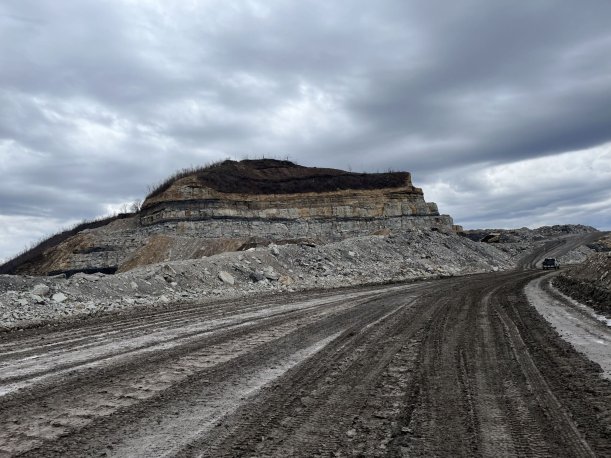
Photo by WVDEP. Details below:

March 21, 2024, 5:00 PM: The West Virginia Department of Environmental Protection, Division of Mining and Reclamation will conduct an informal conference related to Republic Energy, LLC's Article 3 Permit Renewal Application for Permit No. S301712.

The informal conference is scheduled for Thursday, March 21, 2024, at 5:00 p.m. located at Clear Fork Elementary, 4851 Clear Fork Rd Artie, WV 25008. The conference may also be accessed virtually at https://meet.google.com/oba-ynsm-ecp or by phone at 1-262-427-6454 PIN: 118728018. You can also email comments to Laura.B.Claypool@wv.gov prior to the hearing.

The purpose of the informal conference is to allow comments from those people having an interest which is or may be adversely affected by the Republic Energy, LLC Article 3 Permit Renewal Application Permit No. S301712, located 2.1 miles Southwest of Clear Creek in the Clear Fork District of Raleigh County.

There are plenty of good reasons to deny renewal of this permit, but WVDEP will renew it anyway. They always do, regardless of which law or scientific study you cite, and regardless of how professional or how passionate you are. But you will have stated your objection. You can keep it simple and tell the WVDEP that the blasting dust they refuse to regulate is deadly for neighboring communities. Tell them that deforestation and burning coal contribute to the climate crisis, whether they believe in science or not. You don't have to be a local resident to testify. If you live on Planet Earth, this permit adversely affects your interests.

Thanks.

 
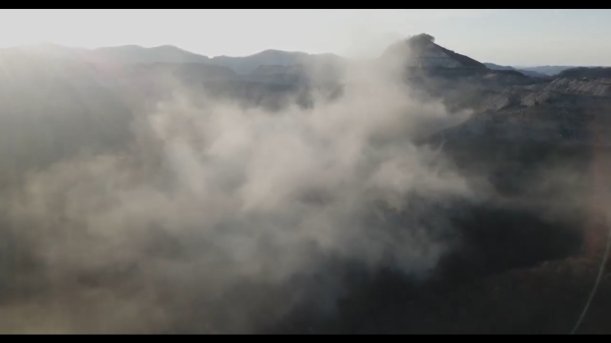
Blasting dust cloud from the explosive equivalent of 305 tomahawk missiles on the Middle Ridge mountaintop removal site, 11-13-2020, drone flight by Junior Walk/Coal River Mountain Watch.

 Ridge mountaintop removal site over Clear Creek, WV. Flyover 3-14-2024 courtesy www.Southwings.org.   

 Ridge mountaintop removal site over Clear Fork Elementary School, Artie, WV. Flyover 3-14-2024 courtesy www.Southwings.org. 


ADDITIONAL INFORMATION HERE: 

https://www.crmw.net/updates/public-hearing-march-21-5-pm-regarding-renewal-of-mountaintop-removal-permit.php


MY COMMENTS: 

Part of my family escaped from the DIRTY COAL MINES of West Virginia and 
it's tragic that the environmental destruction continues. We also have friends 
who watched family DIE from BLACK LUNG and environmental contamination.

Not only are you destroying WEST VIRGINIA, but contributing to the CLIMATE 
CRISIS and misleading those employed by DIRTY COAL into believing that 
there's a future. 

The global consumption of DIRTY COAL is declining. 

That WEST VIRGINIA continues to promote DIRTY COAL without preparing 
for a CLEAN ENEGY FUTURE defines your failures. 

It's time to improve WEST VIRGINIA. 

Statistics indicate WEST VIRGINIA is, if not the poorest state, ranking at the 
bottom among them due to your failures to abandon DIRTY COAL.

 
It's time to embrace a CLEAN ENERGY FUTURE! 
It's time for WEST VIRGINIA to progress and join the rest of the nation that is 
prospering from CLEAN ENERGY, JOB CREATION, and improved economic 
development. 

WE know that you won't, but it's your choice to deny the future! 

Saturday, March 19, 2022

RSN: FOCUS: Jeff Goodell | Manchin's Coal Corruption Is So Much Worse Than You Knew


Reader Supported News
18 March 22

Live on the homepage now!
Reader Supported News

THE ABSURD DIFFICULTY GENERATING EVEN A FEW DONATIONS — It defies comprehension that it could be so difficult, nearly impossible to generate what few donations Reader Supported News needs to continue serving a community that otherwise seems to appreciate our efforts. How important can it be to avoid contributing?
Marc Ash • Founder, Reader Supported News

Sure, I'll make a donation!


Senate Energy Chairman Joe Manchin. (photo: Al Drago/Bloomberg)
FOCUS: Jeff Goodell | Manchin's Coal Corruption Is So Much Worse Than You Knew
Jeff Goodell, Rolling Stone
Goodell writes: "The senator from West Virginia is bought and paid for by Big Coal. With his help the dying industry is pulling one final heist - and the entire planet may pay the price."

The senator from West Virginia is bought and paid for by Big Coal. With his help the dying industry is pulling one final heist — and the entire planet may pay the price

One of the hardest things to grasp about the climate crisis is the connectedness of all things. One recent drizzly afternoon, I drove from Charleston, West Virginia, to the John Amos coal-fired power plant on the banks of the Kanawha River, near the town of Nitro. In the rain, the plant looked like one of the dark satanic mills that poet William Blake wrote about, with three enormous cooling towers that steamed like giant witches’ cauldrons. Across the river from the plant, mobile homes cluttered the bank of the Kanawha, streaked black with pollution that rained down on them 24/7.

I had visited the plant 20 years ago, on my first reporting trip to West Virginia. Back then, the plant seemed like an indomitable monument to the power of Big Coal. The facility, owned by Ohio-based utility giant American Electric Power, is capable of generating 3,000 megawatts of electricity, enough to power 2 million homes. It is also one of the biggest carbon polluters on the planet, emitting 13 million tons of CO2 each year, which is equal to the annual emissions of about 3 million cars.

When I look at John Amos today, I see fire and rising seas, disease and hunger. I see a rusting industrial contraption that takes CO2 captured by trees 300 million years ago and rereleases it into the sky, bringing the heat of the past to our future. Coal plants are one of the primary reasons why shopping malls were burning in Colorado this winter and reservoirs in the West are dry. They are why Antarctica is cracking up, threatening the future of virtually every low-lying city in the world, from Boston to Bangkok. They are why infectious-disease patterns are changing in Nepal and crops are failing in Kenya and roads are washing out in Appalachia.

At this point in human evolution, burning coal for power is one of the stupidest things humans do. Coal plants are engines of destruction, not progress. Thanks to the rapid evolution of clean energy, there are many better, cheaper, cleaner ways to power our lives. The only reason anyone still burns coal today is because of the enormous political power and inertia that the industry has acquired since the 19th century. In America, that power and inertia is embodied in the cruel and cartoonish character of West Virginia Sen. Joe Manchin, who, paradoxically, may have more control over the trajectory of the climate crisis than any other person on the planet right now. Kidus Girma, a 26-year-old Sunrise Movement activist who helped organize protests against Manchin this past fall, calls him “the final villain.”

Manchin’s influence comes from the fact that in an evenly divided Senate, he is the swing vote that can make or break legislation. He presents himself as a pragmatic man from a hardscrabble state who is always trying to do the right thing. He values good manners and civility, and sometimes seems to be channeling the folksy charm of another famous West Virginian, test pilot Chuck Yeager, who was immortalized in The Right Stuff.

The truth is, Manchin is best understood as a grifter from the ancestral home of King Coal. He is a man with coal dust in his veins who has used his political skills to enrich himself, not the people of his state. He drives an Italian-made Maserati, lives on a houseboat on the Potomac River when he is in D.C., pals around with corporate CEOs, and has a net worth of as much as $12 million. More to the point, his wealth has been accumulated through controversial coal-related businesses in his home state, including using his political muscle to keep open the dirtiest coal plant in West Virginia, which paid him nearly $5 million over the past decade in fees for coal handling, as well as costing West Virginia electricity consumers tens of millions of dollars in higher electricity rates (more about the details of this in a moment). Virginia Canter, who was ethics counsel to Presidents Obama and Clinton, unabashedly calls Manchin’s business operations “a grift.” To Canter, Manchin’s corruption is even more offensive than Donald Trump’s. “With Trump, the corruption was discretionary — you could choose to pay thousands of dollars to host an event at Mar-a-Lago or not,” Canter tells me. In contrast, Manchin is effectively taking money right out of the pockets of West Virginians when they pay their electric bills. They have no say in it. “It’s one of the most egregious conflicts of interest I’ve ever seen.”

Manchin’s grift is emblematic of generations of political leadership in West Virginia. I’m always struck by the difference between coal country and the rest of the state. Unmined places like New River Gorge (now a national park) hint at the spectacular beauty of West Virginia before the coal barons arrived; up in Morgantown, you see a thriving city that is not entirely built with money from mining and burning black rocks. But much of the state is a landscape of corporate exploitation, a place that has been pillaged by outsiders who have sucked out its gas and mined its coal and built mansions in Newport, Rhode Island, and the Hamptons, but left little behind beyond black lung and broken labor unions. The people I have met in coal country in my many visits over the years are tougher than the blade of a bulldozer, smart, self-reliant, deeply connected to the natural world. But the poverty and quiet distress is heartbreaking. If fossil fuels brought prosperity to a place, West Virginians would be dancing on gold-paved streets. Instead, West Virginia is the second-poorest state by median income, and near the bottom of virtually every social indicator of well-being, from obesity to opioid addiction to education. The few well-paying coal jobs that are left are disappearing fast. In 1950, there were 120,000 coal workers in the state; today there are only around 13,000 workers, less than two percent of the state’s workforce.

Despite the relentless hardship, Manchin figured out a way to do pretty well for himself. “Joe Manchin will absolutely throw humanity under the coal train without blinking an eye,” says Maria Gunnoe, director of the Mother Jones Community Foundation and a longtime West Virginia activist. “My friends and I have a joke about his kind: They’d mine their momma’s grave for a buck.”

So it was no surprise to Gunnoe that during an appearance on Fox News a week before Christmas, Manchin knifed President Biden’s first-term agenda by announcing that he could not support the $1.8 trillion Build Back Better Act: “I have tried everything I know to do” to support this, he told Fox host Bret Baier. Never mind that the bill includes billions of dollars in programs that would help West Virginians struggling with poverty and hardship, or that without the tax breaks and other clean-energy measures in the bill, Biden’s goal of cutting U.S. greenhouse-gas emissions in half from 2005 levels would be all but impossible to achieve. And without U.S. leadership on climate, the chances that the nations of the world will reduce emissions fast enough to hold warming at 1.5 C, which is the threshold for dangerous climate change, is virtually zero. “If Build Back Better goes down,” says John Podesta, a Democratic powerbroker and former special adviser to President Obama who has been deeply involved in international climate negotiations, “then we are completely fucked.”

All this could change overnight. “I think that the climate thing is one that we probably can come to agreement much easier than anything else,” Manchin said a few weeks after his appearance on Fox. Perhaps Manchin’s takedown of BBB was a negotiating ploy, and deals will be cut and a pared-down version of the bill will be passed. Or perhaps, as a recent report in The Washington Post suggested, he’s decided to walk away from negotiations with the White House. However it plays out, the idea that the fate of the Earth’s climate has wound up in the hands of a Maserati-driving senator from coal country is a plot twist that belongs in a Hollywood disaster movie, not here in the real world where millions of people suffer as a consequence.

“Humanity should have phased out coal yesterday,” climate scientist Peter Kalmus tells me. “Burning fossil fuels is what’s driving the crazy heat waves, flooding, and ecosystem deaths we’re now experiencing, and which are rapidly intensifying. And coal is the worst of the worst in terms of carbon-emissions intensity.”

But coal was not phased out yesterday. Globally, 40 percent of electricity comes from burning coal, creating 30 percent of global carbon emissions. The biggest coal burner is China, which consumes more coal than the rest of the world combined. Here in the U.S., coal is gradually being displaced by cheap natural gas, wind, and solar. But there are still 179 active coal plants in the U.S., generating 20 percent of U.S. electricity. Virtually the entire states of West Virginia and Wyoming are powered by coal.

In the long run, coal is roadkill to technological progress. The problem is that it isn’t dying fast enough. “No scenario for stabilizing warming below truly dangerous levels allows for substantial additional extraction and burning of coal,” says Penn State climate scientist Michael Mann, author of The New Climate War. “Even the conservative International Energy Agency has said that there can be no new fossil-fuel infrastructure (especially coal) if we are to keep warming under 1.5 C/3 F, a level beyond which we commit to some of the worst impacts of climate change.”

There are lots of reasons why coal has proved to be so hard to get rid of. Part of it has to do with the sheer scale of coal-industry infrastructure — the mines, the railroads, the power plants. Part of it has to do with the cultural bias that real men burn rocks for power. Part of it has to do with dark money and political influence. And part of it has to do with us, the energy consumers who don’t know where our power comes from and don’t really care.

But now the endgame of coal has begun in earnest. You could feel that at the COP26 climate summit in Glasgow last fall. “Sometimes, the coal industry isn’t just the elephant in the room,” commented Wolfgang Blau, co-founder of the Oxford Climate Journalism Network, “but the actual room itself.” Overnight, 23 countries made commitments for the first time to phase out coal power. In addition, 25 countries and public-finance institutions pledged to end overseas public funding for fossil fuels by the end of 2022, and major international banks said they would stop financing new coal power by the end of 2021. Still, the agreement nearly fell apart in a last-minute dispute when a pledge to “phase out” coal was diluted to “phase down.” More than 40 countries signed the pledge, but the U.S., perhaps fearful of offending Manchin, was not one of them.

Even with the endgame underway, the power of coal is reasserting itself in the U.S. Something like a fossil-fuel confederacy is taking shape, devoted to maintaining our addiction to fossil fuels. Politicians in West Virginia and Texas and Wyoming are aligning with lobbying groups like the Koch-backed American Legislative Exchange Council (ALEC) to keep coal alive, no matter the cost to their economy, their constituents, or the climate. Just as red-state politicians are trying to rig democracy by commandeering local election boards and oversight committees, coal boosters are taking over public-service committees that regulate utilities to help slow transition to clean energy. Republican state legislatures are cutting taxes on fossil-fuel extraction, stoking false fears about blackouts, and pushing studies that exaggerate the positive economic impact of fossil fuels. As climate journalist Brian Kahn tweeted, “Republican state legislatures are trying to create a world where it’s illegal to do anything but say nice things about fossil fuels and give the industry all your money.” In West Virginia, Attorney General Patrick Morrisey is leading a fight to the Supreme Court to undercut the EPA’s authority to regulate carbon emissions. ALEC is pushing treasurers and state financiers in 15 states to fight back against “woke capitalism” — banks and financial institutions that focus on clean energy and refuse to do business with fossil-fuel companies.

There is no future for coal in America. It is a new Lost Cause. But that won’t stop Manchin and the fossil-fuel confederacy from spreading the big lie that life as we know it today depends on burning black rocks for power.

Manchin grew up in Farmington, West Virginia, a small town about two and a half hours northeast of Charleston, West Virginia. Manchin’s grandfather first worked in the mines, eventually owning a grocery store. His father expanded the business to a furniture store. The family was always deeply entwined in West Virginia politics: His father and his grandfather both served as Farmington’s mayor. His uncle was a member of the West Virginia House of Delegates, serving stints as West Virginia’s secretary of state and state treasurer in the years between. Like his uncle, Manchin worked his way up through state politics. In 2005, he was elected to a five-year term as governor, then won a special election for U.S. Senate in 2010, and was reelected in 2012 and 2018. Today, he effectively lords over the West Virginia Democratic Party like a mob boss, demanding fealty. “He controls everything,” says Paula Jean Swearengin, a coal-country activist and daughter of a coal miner who ran against Manchin in the 2018 West Virginia Democratic primary.

How much of West Virginia’s troubles is Manchin responsible for? “West Virginia has always been a classic natural-resources-dependent economy,” says John Kilwein, chair of the political-science department at West Virginia University. “When coal was down, we were down. When coal was up, we were up. It was boom, bust, boom, bust. I don’t know that you can lay that on Manchin’s doorstep.” But what you can lay on Manchin’s doorstep, Kilwein says, is the failure to plan for a post-coal economy. Tragically, despair and addiction have often filled the gap: Over the past decade or so, West Virginia became the capital of the opioid crisis. To cite just one example: Between 2006 and 2014, 81 million opioid pills were shipped to pharmacies in one small West Virginia city. Between April 2020 and April 2021, overdose deaths in the U.S. topped 100,000 for the first time, with some of the largest increases in West Virginia, where more than 1,600 people died. “Joe Manchin is deeply responsible for this,” says Swearengin. She points to Manchin’s ties with the pharmaceutical industry, including the fact that Mylan Inc. — which manufactured opiates, as well as other drugs — where Manchin’s daughter was CEO from 2012 to 2020, was one of the largest campaign contributors to Manchin, donating around $211,000 through PACs and employees since 2009. “Joe Manchin doesn’t need to be in Congress,” Swearengin says. “He needs to be in jail.”

Manchin’s personal wealth is directly linked to a small coal-fired power plant about 10 miles outside Farmington, in a place called Grant Town. The Grant Town Power Plant, which went online in 1993, sits in a holler littered with rusty double-wides and muddy ATVs. The plant itself doesn’t look like much more than a flimsy steel warehouse with a smokestack. As far as power plants go, it’s an old clunker in a world of Teslas. It generates 80 megawatts of electricity, about enough to power 40,000 homes. It’s operated by a privately held company called American Bituminous Power Partners (AmBit), which sells the electricity under contract to Mon Power, a West Virginia utility that’s a subsidiary of Ohio-based FirstEnergy, one of the largest electric companies in the United States.

Perversely, the Grant Town plant is a byproduct of clean-energy legislation. The Public Utilities Regulatory Policy Act (PURPA), passed in 1978 in response to the energy crisis of 1973, was meant to break the monopoly of utilities over electric-power generation and encourage independent power producers to build smaller, more innovative power plants fueled by hydroelectric power, solar, and natural gas. In 1992, PURPA was reformed to include waste coal — basically piles of dirt and coal waste excavated from nearby mines — as an “alternative” fuel. The Grant Town plant, which burns waste coal, or “gob” as it’s called, took advantage of that rule change. Although burning gob can help clean up abandoned mine sites, it also transfers pollutants from the land into the air, which is why, on a pollutants-per-kilowatt-hours basis, Grant Town is the dirtiest coal plant in West Virginia.

Manchin doesn’t own the power plant or the gob. Instead, his firm, Enersystems, simply brokers the transaction between the owners of the gob (usually abandoned mine sites) and AmBit.

Enersystems is a mysterious company. Manchin co-founded it in 1988, then put it into a so-called blind trust when he was elected governor. It is now operated by his son, Joe Manchin IV, and has virtually no online presence and is largely unknown outside a small circle of people in West Virginia. Its registered address is in the Manchin Professional Building plaza in Fairmont, where it is located two suites down from the Manchin Law Group, a firm founded by Joe’s cousin Timothy Manchin. (Enersystems didn’t respond to multiple requests for comment.)

Manchin has a long history of using his political muscle to boost the company, and the coal industry in general. In 1994, he was state chair of ALEC and a national director of the Koch-backed pro-fossil-fuel group that has been one of the central forces spreading climate disinformation. As governor, Manchin recast the state’s Department of Environmental Protection from enforcement toward what he called “compliance assistance,” which accelerated the growth of mountaintop-removal mining and loosened safety regulations in underground mines. Just in case Manchin’s pro-coal views weren’t clear enough, during a 2010 Senate campaign ad, he literally aimed a rifle at President Obama’s cap-and-trade legislation and shot a bullet through it.

As governor, Manchin had control over appointments to the all-powerful West Virginia Public Service Commission (PSC), which in turn gave him influence over the committee’s decisions to set utility rates and approve contracts. According to reporting first published by The Intercept, in 2006, Manchin, according to an unnamed source, instructed his then-chief of staff, Larry Puccio, to meet with Mon Power lobbyists so that they would petition the PSC to increase the Grant Town plant’s rate from $27.25 to $34.25 per megawatt hour, pocketing an additional $4.5 million per year from customers. Not surprisingly, the PSC agreed. It even agreed to extend the contract from 2028 until 2036. According to one study by a consumer-rights group, Mon Power customers have seen their rates increase by 30 percent since 2008.

That deal is still in effect today. Nevertheless, even after the rate hikes, PSC records show that the Grant Town plant has lost $117 million over the past five years. But somehow, Enersystems has figured out a way to suck cash out of the money loser. Since 2010, the fees from transactions on this one coal plant have earned Manchin $5 million, including nearly $500,000 in 2020 alone.

It’s difficult to overstate how fucked up this is. If the PSC were working in the best interests of West Virginians, it would have demanded that the money-losing Grant Town plant be shut down years ago. Instead, West Virginians have been paying millions of dollars each year in higher electricity costs in order to keep running a dirty, inefficient power plant that is sickening and killing people with dirty air, but paying the Manchin family handsomely.

And who knows how deep this cesspool of corruption really goes. Exhibit A: FirstEnergy, the parent company of Mon Power, was recently enmeshed in an epic scandal in which it paid $60 million in bribes in a complex scheme to pass a state bailout of nuclear plants in Ohio. The criminal enterprise was led by then-Ohio House Speaker Larry Householder, who was removed from office last year and now faces federal racketeering charges. FirstEnergy agreed to pay $230 million to resolve charges against the company. U.S. Attorney David M. DeVillers described the operation as “likely the largest bribery, money-laundering scheme ever perpetrated against the people of the state of Ohio.”

When Manchin is pressed about the fact that he makes a half-million dollars a year from a company that brokers waste coal, he lashes out. “I have been in a blind trust for 20 years. I have no idea what they’re doing,” he snapped at a reporter who grilled him about it last September. “You got a problem?” (Despite numerous emails and phone calls, Manchin’s office refused to make the senator available and declined to comment for this story.)

In fact, Manchin’s blind trust covers only a fraction of his earnings from Enersystems. “He must take us for idiots,” says Canter. According to Canter, Manchin’s business dealing may not break the letter of the law, but it is still highly unethical. The fact that most of his profits from Enersystems is reportable income, disclosed on his financial statement, means “there is nothing blind about this,” Canter says. Manchin has even signed a sworn statement saying he is aware of his Enersystems earnings, which is pretty strong evidence that he is not blind to them. Canter calls Manchin’s whole scheme “the definition of a conflict of interest.”

Once you understand how the Manchin family business works, you understand why the senator drives a Maserati (“Hollywood could not cast a better vehicle for this guy to be driving,” says Kidus Girma). And you can also understand why he knifed the Build Back Better bill, which has a variety of provisions that would accelerate the demise of coal. Central among them was the Clean Electricity Performance Program, which was basically the most important piece of climate legislation to come before Congress in more than a decade. The provision offered a carrot-and-stick approach to cutting carbon pollution, providing federal payments to utilities that increase their share of clean energy by four percent each year, while imposing federal fees on those that do not.

For Manchin, the entire Build Back Better debate has been a moment of extraordinary political leverage. “Manchin could say, ‘Give me roads, bridges, broadband, and I will give you my vote.’ And Biden would do it,” Faiz Shakir, a political adviser to Sen. Bernie Sanders, told me. “Manchin could lower prescription-drug costs for West Virginians. He could expand health and dental insurance.” Kilwein contrasts Manchin with legendary West Virginia senator Robert Byrd, who was famous for bringing home the pork. “If Byrd were in this catbird seat,” says Kilwein, “he’d be bringing a lot back to the state, a lot more than Manchin’s going to bring. West Virginia would be paved in gold to get Build Back Better through.”

With the clean-electricity standard, Manchin kept everyone on edge until a few weeks before the Glasgow climate summit, in which Biden and his team hoped to prove to the world that the U.S. was serious about climate action. If Manchin had signaled support for the clean-electricity standard, it would have given the U.S. tremendous momentum. Instead, Manchin announced in a closed-door meeting with Energy Secretary Jennifer Granholm and White House aides just two weeks before the conference began that he couldn’t support the clean-electricity standard. His explanation: Why should the government pay utilities to do what they are doing anyway?

And with that, any meaningful chance for the U.S. to assert itself in climate negotiations in Glasgow died. Many staffers and climate hawks who had been working on the bill felt betrayed by Manchin’s negotiating tactics. “It was a sad moment,” says Leah Stokes, an expert on energy policy who advised Senate Democrats. “We had all worked extremely hard on this. It would not have gone as far as it had with the White House and the Senate leadership if Manchin had not indicated he was open to it. It was not just a bunch of hippies out on a ledge smoking too much. A lot of the utilities were behind the bill, and Manchin had been engaged in good-faith negotiations with us for months. Or at least we thought they were good-faith negotiations. But in the end, he was not as interested in listening to the utilities as he was in listening to the fossil-fuel industry.”

Manchin’s public rationale that power companies are already transitioning away from fossil fuels as rapidly as possible is blatantly false: Ninety percent of the electricity generated in West Virginia still comes from coal. Perhaps his decision was shaped by the good ol’ boys he hangs out with. He’s had a long romance with climate-denying coal barons and the CEOs of companies like American Electric Power and ExxonMobil (in a much-publicized Zoom meeting secretly recorded by climate activists posing as recruiters looking to hire lobbyists, a senior Exxon-Mobil lobbyist claimed that he talked to Manchin’s office every week, calling the senator “a kingmaker”), all of whom have billions of dollars invested in fossil-fuel infrastructure that is rapidly losing value. Manchin is currently by far the biggest recipient in Congress of cash from the oil-and-gas industry, pulling in more than $570,000 this year, nearly four times as much as the next highest senator. Manchin, who is up for reelection in 2024, also profited from right-wing donors who appreciated him mucking up Biden’s agenda. During the first nine months of 2021, he raked in $3.3 million in campaign donations — 14 times more than his haul through the same period the previous year. Not surprisingly, being the roadblock to climate action is a lucrative position.

Forget clean-energy jobs, or the devastation West Virginians will suffer from floods due to increasingly intense storms. One recent study found that more than half the state’s critical infrastructure — including fire, police, and power stations — is at risk. In McDowell County, in the heart of West Virginia’s southern coal fields, 60 percent of homes are vulnerable to structural damage from flooding. Who cares? For Manchin, the decision to oppose the clean-electricity standard probably wasn’t a tough decision at all. After all, coal made Joe Manchin. Why would he want to kill it?

Big coal plants like John Amos in West Virginia are dinosaurs from another age. The good news is, there will never be another conventional coal plant like it built in America again. Forget the climate: In sheer economic terms, the price of renewables is far cheaper than coal, even in places like West Virginia. The bad news: Big old coal plants are surrounded by a phalanx of politicians, regulators, and engineers who believe civilized life depends on keeping these old coal burners running.

Now, due to ever-escalating maintenance and capital costs, they are bankrupting West Virginians. One fall day last year, I talked with Sandra Blankenship, a former critical-care nurse who runs a bed-and-breakfast in McDowell County, the county with the highest poverty of West Virginia. “My electric bill from AEP is $1,000 this month,” she told me. “It’s going to put me out of business.” Her 26-year-old daughter Kierstein Lester and her husband live a few miles away in a 1920s home with four young kids. They both work part time at an ATV shop, making $10 an hour. Their electric bill runs $500 a month. “Sometimes we pay more for electricity than food,” Lester says. “Everybody does,” adds Blankenship. The mother and daughter both supported Trump in 2016 and 2020. But now, due to skyrocketing electric bills, Blankenship says, “I’m gonna campaign as hard as I can to make sure Joe Manchin is not reelected.”

Plants like John Amos are also ground zero for the climate crisis. In a world that took climate action seriously, they would be shut down tomorrow. If the U.S. has any hope of meeting Biden’s goal of a zero-carbon grid by 2035, there are two basic options for how to deal with a big old coal burner like John Amos.

The first is to keep the plant running by adding on an expensive new device that captures the CO2 from the exhaust stack, compresses it, and buries it underground. Carbon capture and storage (CCS) is technically doable and is already used at about 20 different industrial facilities around the world, from steel making to natural-gas processing. Coal-country politicians love to tout the promise of CCS as a magical technology to keep coal alive. “Innovation, not elimination,” Manchin often says.

But that’s just a cute slogan. CCS for coal plants is wildly expensive — the technology to capture and bury the CO2 can cost almost as much as the plant itself. Despite the fact that the power industry has been touting CCS for more than 20 years, there is precisely one coal-fired power plant in the world right now that actually captures and buries CO2. And it injects the compressed CO2 into old oil fields to push more oil out of the ground, making any climate benefit dubious. As Saul Griffith, an Australian American inventor and engineer, and MacArthur “genius” grant winner, recently put it: “Carbon capture and storage is a fraught fantasy of the fossil-fuel industry trying to extend the period of its relevance. We should be enormously skeptical, and as a populace demand far more transparency around any government plans to engage in such boondoggles.”

In many ways, CCS is just another grift, a way for power companies to harvest billions of dollars in federal funding and perpetuate the big lie that coal has a future in a world that takes the climate crisis seriously. But indulging in this fantasy may be the cost of accelerating the transition to clean energy. In an effort to win Manchin’s support, the Build Back Better bill includes a provision that would give utilities billions in dollars in tax breaks for each ton of carbon that is captured and stored. And the billions may not be entirely wasted. John Thompson, a CCS expert at the environmental organization Clean Air Task Force, makes the case that just because CCS is expensive, it doesn’t mean it’s not worth investing in. For one thing, it could reduce carbon pollution from recently built coal plants that are unlikely to be retired any time soon. “What are you going to do with all those coal plants in China?” asks Thompson. “If we can pioneer the technology here, the Chinese are very good at commercializing it.”

The second option is to accelerate the retirement of big old coal plants like John Amos. “They are going to get shut down sooner or later,” says Justin Guay, director for global climate strategy at the Sunrise Project. “We just need to figure out a way to grease the skids to make it happen faster.” One recent study found that local wind and solar could replace 80 percent of the U.S. coal fleet, giving immediate savings to customers, as well as saving lives by cutting air pollution and saving the climate by dramatically reducing carbon pollution. In Guay’s view, what we need is essentially a cash-for-clunkers program, where financial deals are structured to pay coal-plant owners to take their plants offline ASAP.

“For five percent of what we paid for Covid, we could have bought out every coal plant in the world,” Guay argues. “Money is not the issue.”

But coal plants do not just generate power. They also generate jobs and community purpose and identity. And that can’t be replaced with a simple cash buyout, Guay says. “What would a just transition look like for West Virginia? How do you replace the good pay and union jobs that will be lost as we shut down the coal industry?” Guay argues that for all the talk about the Green New Deal, there has been no real thinking about how to actually manage the transition away from coal. Build Back Better targets $300 million to rebuild coal communities, but much more is needed.

“What’s necessary now to bring about change in places like West Virginia is that we have that frank conversation about the endgame on a national level,” says Guay. “We still have this abstract conversation about decarbonization and emissions, and it’s explicitly, purposefully devoid of words like coal or oil or gas, because our national leaders want markets to do the dirty work, and they really don’t want to get their hands dirty with some of the legacy politics in places like West Virginia. We need to start by saying that these coal plants have to come offline now. And once you start doing that, you can start talking about the hard stuff.”

The other big hurdle to shutting down coal plants is the explicitly fossil-fuel-friendly character of regulators. In West Virginia, they don’t even try to hide the pro-fossil-fuel bias: One of the three members of the Public Service Commission is Bill Raney, the former head of the West Virginia Coal Association, and well-known as one of the most powerful pro-coal lobbyists in the U.S. “The job of the PSC is to make sure that customers are getting the lowest power rates they can from electric-power utilities,” says James Van Nostrand, director of the Center for Energy and Sustainable Development at the West Virginia University College of Law. “But in West Virginia, the PSC basically sees it as their job to protect the coal industry at any cost.”

One you-gotta-be-fucking-kidding-me example: In 2021, as the result of expert testimony from the Sierra Club, the West Virginia PSC considered whether the three big West Virginia coal plants, including John Amos, should be shut down as planned in 2028 or keep them running until 2040. The Sierra Club basically argued that it was long since time to shut down the plants — they are expensive, inefficient, and highly polluting. It was because of West Virginia’s dependence on outdated coal plants that power prices in West Virginia had risen five times faster than the national average over the past decade, according to Van Nostrand. The Sierra Club cited economic models that projected that keeping the plants running could cost West Virginia rate payers as much as $1.8 billion in additional costs.

So what did the PSC do? They not only greenlighted $400 million in investments to keep the old coal plants running until 2040, but, according to Van Nostrand, they also basically directed the utility to spend whatever it takes to keep them running, even if clean energy is cheaper. “I’ve worked on utility regulation for over 40 years,” says Van Nostrand. “West Virginia is the worst. They don’t care about rate payers. They only care about keeping coal alive.”

Few people understand the high cost of coal better than Keena Mullins. She is a 36-year-old solar entrepreneur with four kids, who works in an unadorned office about a few miles from the John Amos plant. She grew up in Dickenson County, Virginia, on the Kentucky state line. Her great-grandfather was killed in a coal-mining accident. Her grandfather, also a miner, died of black lung disease. Her father, who worked in coal mines when he was young, later became hooked on opiates, and was murdered during a dispute over a handful of Percocets when Mullins was just 24 years old. As a teen, she rode dirt bikes and ATVs in old strip mines. Coal was everywhere around her — and it still is. She breathes the pollution from the John Amos plant every time she steps outside her office.

For Mullins, growing up in coal country just made her tougher, smarter, and more determined to fight for a better life. After high school, she won a scholarship to Berea College in Kentucky. She was interested in biology and, specifically, in climate science. But she dropped out of Berea in her senior year after her brother was hospitalized while intervening in a domestic-violence incident. Mullins ended up back in Virginia, pregnant with her first child, and working as a waitress at Applebee’s. Sometime circa 2015, she heard a report on NPR about the beginning of the solar industry in Appalachia. It seemed obvious to her that coal was going to die and solar was the future. She moved to West Virginia and worked for Solar Holler, a pioneering solar company, where she learned the basics of the business. In 2019, she co-founded her own solar company, Revolt Energy, betting her career that after decades of dominance by King Coal, the energy transition in West Virginia had begun. In 2020, Revolt, which focuses on residential, industrial, and commercial-scale solar, did $1.3 million worth of work. Mullins thought she had caught the wave.

But thanks largely to Manchin and his decision to gut the Build Back Better Act, she is now worried she will have to lay off employees. “I’m not even sure the company will survive,” Mullins tells me, sitting in her spare office, with a few pictures of her kids.

Part of the trouble for solar in rough and mountainous West Virginia is the lack of flat land. But a larger part of the trouble is that the coal industry runs the state, and the fundamental belief of everyone in the coal business, according to Van Nostrand, “is that the power business in West Virginia is a zero-sum game. If you build renewable power, it takes away from coal. If you pass energy-efficiency rules, it takes away from coal. So we don’t have any renewable power, and we don’t have any energy-efficiency rules.” West Virginia has the dubious distinction of being one of the first states to pass a renewable-energy standard — and then roll it back a few years later.

On the day we spoke, Mullins had just come back from a meeting in Kentucky to pitch Revolt Energy to a solar developer backed by global investors who is exploring investments in West Virginia. Mullins explains that she is worried that clean-energy development, when it inevitably comes to West Virginia, will be driven by outsiders rather than homegrown companies. Instead of training workers in West Virginia, these big solar developers often bring in contractors from out of state (or, sometimes, out of the country) to build their projects. “We’ve been working for so long to change the way Appalachia gets its power and to build solar for us, by us, right here in our communities,” Mullins tells me. “And it’s really disappointing to know that out-of-state interests and global developers will be able to come in and be able to generate maximum economic gain from solar developments. We’ve been through the rise and decline of coal, the rise and decline of gas. Now we’re going to get screwed again, on solar.”

To Mullins, this is one of the invisible legacies of King Coal: It built a patriarchal economy and political culture, where rich outsiders come to Appalachia, extract what they want, suck out all the profits, and leave the people of West Virginia with nothing. It has created a culture of dependency and resentment, one that is exactly the opposite of the culture of entrepreneurship that drives Silicon Valley and other centers of 21st-century innovation. Since 2016, West Virginia has attracted less venture capital than any other state. And it’s a big reason why West Virginia has about as many people as Philadelphia, but only 25 percent of the GDP of Philadelphia.

“Joe Manchin is always talking about jobs, jobs, jobs,” Mullins says. “I’ve invited him here to see what we are doing many times. But he won’t come. Why is that? He’s always hanging out with CEOs, but has no time for people like me.”

Beckley, a small city in the heart of West Virginia’s southern coal fields, is an old company town, where for decades men (and they were almost all men) worked to haul hundreds of millions of tons of coal out of the ground. The coal miners helped build America, but it was brutal work — if a coal-gas explosion didn’t kill them, black lung would. The work put dinner on the table and pride in their hearts, but not much else. In Beckley today, there is a lot of chamber-of-commerce hype about the promise of tourism — the toll booths on Interstate 64 leading into the city are plastered with images of men fly-fishing in pristine mountain creeks — but the hard truth is people are leaving West Virginia faster than any other state in the nation. For many West Virginians, the state’s like a drunk relative they just can’t handle being around anymore.

But hope emerges in unexpected places. At the Dish diner, five miles down the road in Daniels, I had lunch with Joe Bevil, who manages land for the Beaver Coal Co. He’s in charge of a huge tract, some 50,000 acres in West Virginia. I had called Bevil because I read in the local paper that Beaver Coal had just leased land to a solar company, and I wondered if this was the beginning of a change.

Bevil is a rough-hewn guy who worked most of his life as a mining engineer for West Virginia coal companies. Now, as general manager for Beaver Coal, he has one simple job: maximizing income from all of the property the company owns. “We have a mixture of timber, gas, and coal development, real estate, and soon, we hope, solar,” Bevil explains. The company recently agreed to lease 225 acres to a solar developer.

Right now, the company’s income from solar doesn’t compare with the income from coal. Most of the coal that is mined on the company’s land is metallurgical coal, used to make steel, which was selling for $200 a ton in recent years, a very good price that Bevil was clearly happy about. The mines on Beaver Coal’s land produce about 1 million tons a year, and they get a six percent cut. That means some $10 million a year in revenue from coal.

In contrast, the lease for the 225-acre solar plant will comprise only about two percent of Beaver Coal’s annual revenue. “It’s no comparison,” Bevil says.

But then he says something else: “The coal is going to be gone some day,” he tells me. “We know that. And we have to start planning for that.”

Bevil is no tree-hugger. He grew up in a hardcore Democratic family outside Pittsburgh, but then drifted to the right in recent years. He voted for Trump twice. He’s not convinced the climate crisis is real (at one point, he suggests to me that microwaves from cellphones might be heating up the planet). But he says that if the climate crisis is real, he thinks it’s China’s job to solve it, since they are the biggest polluters on the planet.

Bevil looks around him and he knows what is happening. He knows that coal will soon be a fuel of the past, and that West Virginia politicians have misled the people of the state for years about this. Bevil knows that despite blips in the market, coal is never coming back to its former glory, and he knows that dependency on coal is hurting the state. He tells me about a Fortune 500 company that had considered locating in Beckley, then pulled out because West Virginia’s coal-fired power didn’t fit with their corporate sustainability goals. “If building a solar farm on our land helps accelerate the transition, that is a good thing, as far as I am concerned,” he tells me.

What made me feel hopeful talking to Bevil is his pragmatism. He has spent a lifetime in the mines, doing a job that helped keep America’s lights on, but he has no sentimental attachment to it. He’d be happy to cover all 50,000 acres of Beaver Coal’s land with solar if the economics were right. And in Bevil, you can see how a rural coalition that could reinvent the West Virginia economy might emerge — if only there were some enlightened political leadership.

“The tragedy of West Virginia is that no politician has stepped up and said, ‘Listen, this is the future,’ ” says political adviser Shakir. “ ‘You guys are proud, hardworking people, but this isn’t going to last forever. And I’ve got to find something that’s going to give you that same mission and purpose that you long for.’ That’s what Joe Manchin should be doing, instead of talking about the virtues of coal.”

Both Goldman Sachs and the United Mine Workers of America — two voices from opposite ends of the economic universe — apparently agree. After Manchin told Fox he couldn’t vote for the Build Back Better bill, Goldman Sachs cut next year’s growth forecast; UMWA President Cecil Roberts put out a statement urging Manchin “to revisit his opposition to [Build Back Better].” Roberts specifically pointed to provisions in the bill that extend an expiring fee mandated of coal companies to compensate miners suffering from black lung disease, encourage businesses to build manufacturing facilities for miners who have lost their jobs, and penalize companies that deny workers the right to unionize.

But Manchin’s record is one that has always valued corporate profits over human lives. “If you think about what we’ve been through this year with fires, floods, droughts, hurricanes, and then take that to a global scale, and then accelerate that and increase the human pain that will be caused if we can’t get on track [with carbon-pollution reductions] — it’s just so enormous,” says John Podesta. “But Trump got 69 percent of the vote in West Virginia, right? So demolishing the politics for Democrats and killing [Build Back Better] legislation probably doesn’t hurt Manchin back home. In my interactions with him over the years, I would like to think that he’s somebody who does care about people, and that maybe that would overcome some of this resistance. Rather than being nostalgic for the past, he has a chance to provide a pathway for good jobs and a cleaner and better future. But there’s a lot of skepticism about whether he’ll ever see that.”

Whatever Manchin’s political future may be, one thing is for sure: For West Virginians, the pain is only going to get worse. As other states benefit from the jobs and economic progress that come from the inevitable transition to clean energy, West Virginia risks being left even further behind. “West Virginia politicians can only deny reality for so long,” says Rep. Sean Casten of Illinois, who helped manage the energy transition in coal-heavy regions of southern Illinois. “One way or another, the coal plants will shut down and the industry will shut down and the economy will be decimated. That is exactly the wrong way to solve this problem. The right way to deal with it is to have the courage to tell West Virginians what the future really looks like and begin to prepare for it. But that is not what any of them are doing.”

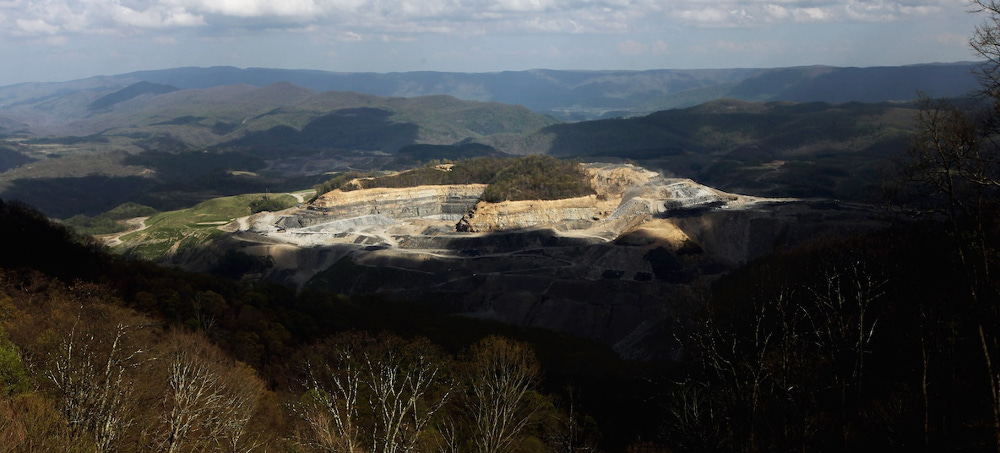
After talking with Bevil, I drove through the broken streets of Beckley, past the abandoned beauty shops with vines growing over them, past billboards for divorce lawyers and ammo shops, past the markers commemorating dead coal miners near the courthouse, and onto the interstate toward Charleston. On the way, I detoured on a back road to Danville, a small town in Boone County, to visit the skeleton of the Hobet 21 mine, where I had first witnessed the explosions and destruction of mountaintop-removal mining 20 years earlier. At the time, Hobet 21 was one of the largest mines in West Virginia, covering 12,000 acres. It was run by Arch Coal, one of the biggest mining companies in the U.S. Since then, Arch Coal has gone bankrupt, reemerging as Arch Resources and shedding workers and benefits along the way. The mine closed down in 2015, leaving behind a blown-up mountain, streams polluted with toxic heavy metals, and workers without any preparation for life beyond coal. It’s the story of West Virginia in a nutshell.

I found the road to the mine, but it was closed with a chain-link fence. I drove around to some back roads, and was able to bushwhack up onto a ridge and get a view of the pit. Rock and coal in the ancient mountains were exposed like layers in a wedding cake. Some scrubby locust trees grew in the “reclaimed” areas, where Arch’s mining engineers had piled up dirt to make it look vaguely like a hill. A small lake at the bottom of the pit glowed toxic blue. Twenty years ago, I had stood near this spot and listened to one of those engineers tell me that blowing up mountains was a good thing because it provided more flat land for commercial development. He suggested there would be a shopping mall up here one day, maybe a factory. Hundreds of people would be employed here, he told me. It was a lie then, and it is a lie now. There are 6 million acres of abandoned mine sites in the U.S. Solar panels have popped up on a few, and not far from where I stood, a 35-acre lavender farm employs a handful of former coal miners. Hopeful as those projects may be, they are just lipstick on the coal-country cadaver that Manchin pretends is still alive. Like the disemboweled mountain itself, Manchin is a scar from a time when blasting the Earth to mine coal to burn for energy that cooked the climate was a profitable thing to do. As I stood there on the ridgetop, it occurred to me that if future historians want to tell the story of how humans turned our home into a hell zone of fire, drought, and rising seas, this would be as good of a place as any to begin.

READ MORE

Special Coverage: Ukraine, A Historic Resistance
https://www.rsn.org/001/ukraine-a-historic-resistance.html


Contribute to RSN

Follow us on facebook and twitter!

Update My Monthly Donation

PO Box 2043 / Citrus Heights, CA 95611


Sunday, March 6, 2022

RSN: Could Putin Go Nuclear?


Reader Supported News
05 March 22

Live on the homepage now!
Reader Supported News

ONE GOOD DONATION CAN BE A GOOD START — One larger donation alone can amount to a good start to a fundraising drive. We don’t always get that but when we do it really helps. One.
Marc Ash • Founder, Reader Supported News

Sure, I'll make a donation!


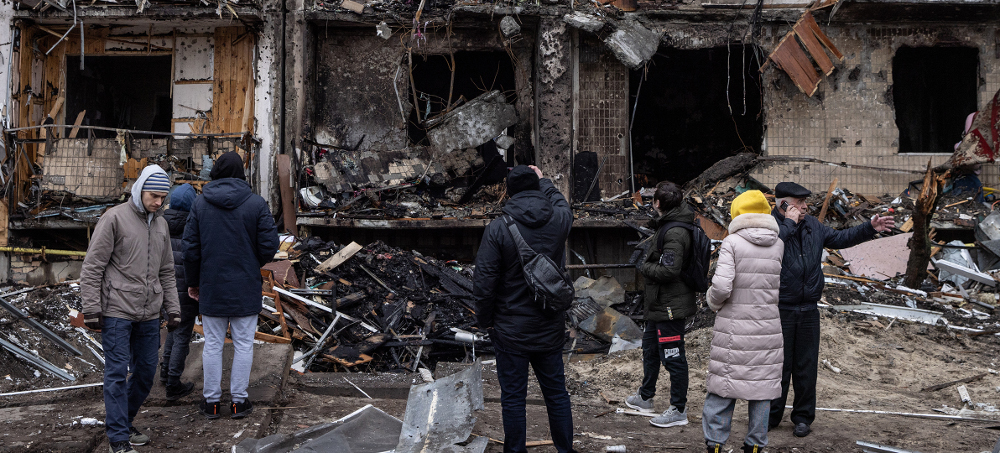
People look at the exterior of a damaged residential block hit by an early morning missile strike on February 25, 2022, in Kyiv, Ukraine. (photo: Chris McGrath/Getty)
Could Putin Go Nuclear?
Jeff Wise, New York Magazine
Wise writes: "Alex McKeever, a part-time furniture mover in Ridgewood, Queens, woke up Wednesday and started scrolling on his phone."

Alex McKeever, a part-time furniture mover in Ridgewood, Queens, woke up Wednesday and started scrolling on his phone. Like many of us, he’s been obsessed with the invasion of Ukraine and has been spending ten hours a day trying to piece together what was happening from news coverage and social media. That morning, McKeever, who is 30, saw that someone had tweeted a video of destroyed vehicles in a suburb of Kharkiv called Bucha. It appeared to be the aftermath of a significant battle. The blackened wreckage of numerous Russian military vehicles lay scattered and smoldering along the road. Where exactly, McKeever wondered, had it taken place?

He wasn’t idly musing. For the last six years, McKeever has been active in open-source intelligence, or OSINT, which involves gathering and analyzing online information in much the same way that government intelligence professionals analyze classified data: identifying when and where events took place, who was involved, what kinds of weapons were used, and so on.

The movement began in 2011, when internet hobbyists began studying social-media posts to identify war crimes and human-rights violations in Syria. It grew steadily in the years that followed, then accelerated when Russian forces started massing near Ukraine late last year. OSINT findings proved vital in validating the Biden administration’s claims throughout February that an attack was imminent, and they informed subsequent coverage by traditional print and broadcast outlets. That exposure, in turn, drew a wave of new volunteers, many of them eager to help the Ukrainian cause. “I’ve had 50, 60 people a day getting in touch, offering their skill sets,” says Ross Burley, executive director of the Centre for Information Resilience, a U.K. nonprofit focused on countering misinformation. “We’ve had teachers, engineers, doctors. It’s staggering how everyone is coming together for this.”

McKeever, who works part-time as an OSINT researcher for a Syrian human-rights group, took a closer look at the Bucha video. Finding no distinctive landmarks that would help him pinpoint the location, he searched for “Bucha” on Twitter and found an image that showed the same scene from a different angle. Two buildings with distinctive roofs stood side by side behind a fence.

Poking around the area on Google Maps, he found only one road wide enough to match the image: a major artery that ran from the suburb into Kharkiv. Using Google’s Street View mode, he explored along the road until he found a pair of buildings under construction that might fit the bill. The image was from 2019. He switched to Google Earth and found an image of the completed buildings from 2020 that looked “pretty compelling” but whose resolution was too low to provide definitive proof. Returning to Street View, McKeever compared the details of the fence and the trees across the street. They matched. He took a screenshot and tweeted it alongside the original image with the exact coordinates: 50.543838 degrees north, 30.226820 degrees east. “The whole process took 20 or 30 minutes,” McKeever says.

Geolocation is just one of the methods that OSINT researchers are using to clarify what is happening in Ukraine. Others include identifying Russian projectiles from the fragments they leave behind, locating military convoys in satellite imagery, and tallying equipment losses. And clever researchers are forever adding to the tool kit. One enterprising college student uses automated air-traffic data to keep tabs on Russian oligarchs’ jets.

On its own, a single tweet like McKeever’s doesn’t mean much for the outcome of a war. But taken together, OSINT contributions can provide a panoramic perspective. The sheer volume of thousands of eyes poring over a vast stream of information allows the community to digest information on a scale that not even a superpower spy agency can manage. Marco Rubio, the ranking member of the Senate Intelligence Committee, underlined the value of OSINT in a recent tweet: “Much respect to the international online #OSINT community, many of whom may not realize how much of their geolocation & vetting of videos & satellite imagery is integrated into the broader work of the intelligence community.”

Lukas Andriukaitis, who used to serve in the Lithuanian special forces and is now the associate director of the Atlantic Council’s Digital Forensic Research Lab, says that information produced by OSINT often makes its way to NATO intelligence officials. “Open source is a huge part of the work they’re doing,” he says. “There’s no need to rely on a huge network of spies because guess what? It’s out there for free.”

With the war in Ukraine, OSINT researchers have been helped by the huge amount of data generated every day by the local population. “This is the first war which is almost live-broadcast,” says Andriukaitis. “We’re getting so much information from social media.” Then there’s all the data being shared by Russians inadvertently. Invading troops made little effort to conceal their encampments from satellites, leaving trunks and tanks lined up in plain sight. Short on military radios, they have reportedly had to communicate via unencrypted transmissions, some of which have been intercepted and recorded by ham-radio hobbyists and then published on Twitter.

With no real rules governing the movement, some of the activity approaches or crosses ethical lines. Pro-Ukraine hackers managed to steal a database with the names of 120,000 Russian soldiers and publish it on the web. And after the 2014 Russian shootdown of Malaysia Airlines Flight 17 over Ukraine, the Dutch journalism collective Bellingcat used stolen data to track down the culprits.

Still, the work being done by OSINT practitioners is growing in scope and influence, and not just in the realm of war. Traditional news organizations are building out their own open-source departments — the New York Times calls its division “Visual Investigations,” while the Washington Post prefers “Visual Forensics” — and using them to examine topics from police shootings to the January 6 riot at the Capitol. “Originally, open-source was quite a sort of geeky thing to do,” says Ben Strick, director of investigations at the Centre for Information Resilience. “Now, we’re almost like the people’s army.”

interested in getting involved, McKeever says, should start by learning the basics. Of the many guides available online, he recommends Strick’s YouTube channel. From there, it’s a matter of jumping in and taking a whack at an image or video. If you’re able to reach an interesting conclusion, you can post it to an online discussion or as a reply to a Twitter thread. “A lot of the people in this community are open to people who reply to them with work that’s accurate and clear,” McKeever says.

For advice and guidance on projects to work on, there are OSINT-focused discussion groups both on Reddit and at the Project Owl server on Discord. Volunteers can also pitch in at nonprofit organizations like the Digital Forensic Research Lab, Bellingcat, and the Centre for Information Resilience. The latter has set up a centralized resource called the Russia-Ukraine Monitor Map that collates hundreds of OSINT reports about military movements, bombings, civilian casualties, and destroyed equipment.

“People want to contribute towards a bigger picture and do good,” says Strick, “and there are people doing good already that have never done this before.” He cites the case of a new volunteer who so expertly analyzed photos of shrapnel that Strick assumed he had a background in the field. “I said, ‘You must be some sort of explosives expert.’ And he said, ‘No, I’ve got Google Images. I can just cross-reference the pictures.’”


READ MORE


Volodymyr Zelenskyy Has Reportedly Survived 3 Assassination Attempts in the Last WeekUkrainian president Volodymyr Zelenskyy. (photo: Getty)

Volodymyr Zelenskyy Has Reportedly Survived 3 Assassination Attempts in the Last Week
Ryan Grenoble, Huffington Post
Grenoble writes: "Since Russia's unprovoked war on its western neighbor began last week, Zelenskyy has been conducting business from a handful of bunkers throughout the nation's capital, having declined an offer from the U.S. to evacuate him."

The Kremlin has dispatched two separate groups of mercenaries to Kyiv in an attempt to kill the Ukrainian President.

Ukrainian President Volodymyr Zelenskyy has survived at least three targeted assassination attempts in the last week, according to The Times of London.

Since Russia’s unprovoked war on its western neighbor began last week, Zelenskyy has been conducting business from a handful of bunkers throughout the nation’s capital, having declined an offer from the U.S. to evacuate him.

That’s left him vulnerable to attempts on his life by teams of Kremlin-backed assassins.

Ukrainian National Security and Defense Council Secretary Oleksiy Danilov told a Ukrainian television network that anti-war elements in Russia’s Federal Security Service (FSB) have been essential in helping foil some of the plots.

In a defiant speech last week, Zelenskyy acknowledged that he is “target No. 1” in an effort to “damage Ukraine politically by destroying the head of state.”

“But we are not afraid, we are not afraid of anything,” he said. “We are not afraid to defend our country. We are not afraid of Russia.”

U.S. officials warned last month that Russian forces have compiled a hit list of Ukrainian citizens to be killed or sent to detention camps.

The Kremlin has reportedly dispatched two separate groups of mercenaries to Kyiv in an attempt to fulfill that directive. One is being orchestrated by the Wagner Group, a private military contractor run by Vladimir Putin ally Yevgeny Prigozhin, aka “Putin’s Chef.” The other is a group of elite Chechen fighters controlled by Chechen Republic leader Ramzan Akhmadovich Kadyrov.

Danilov said on Tuesday that an assassination attempt by the Chechens over the weekend failed, and the group responsible for the attempt had been “destroyed.”

Among those killed by Ukrainian forces was Chechen-Russian Gen. Magomed Tushayev, who has been accused of torturing and killing LGBTQ+ people in Chechnya.

“As we’ve seen in the past, we expect Russia will try to force cooperation through intimidation and repression,” a U.S. official speaking on condition of anonymity told Foreign Policy.

“These acts, which in past Russian operations have included targeted killings, kidnappings/forced disappearances, detentions, and the use of torture, would likely target those who oppose Russian actions, including Russian and Belarusian dissidents in exile in Ukraine, journalists and anti-corruption activists, and vulnerable populations such as religious and ethnic minorities and LGBTQI+ persons.”


READ MORE


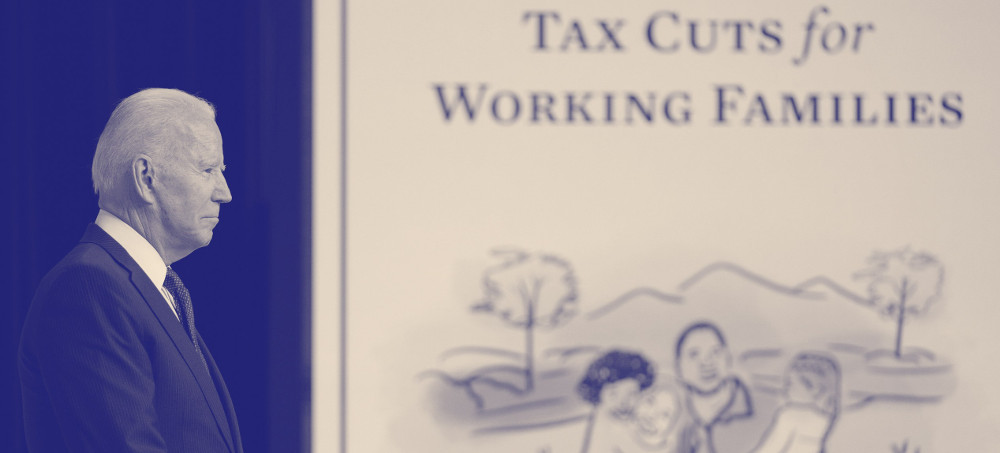
The Devastating Effects of Losing the Child Tax Credit"I think policymakers right now know that they have a lever at their hands that, if pulled, would move millions of children out of poverty," Sophie Collyer says. (photo: Alamy)

Isaac Chotiner | The Devastating Effects of Losing the Child Tax Credit
Isaac Chotiner, The New Yorker
Chotiner writes: "In February, the Center on Poverty and Social Policy, at Columbia University, released a staggering new report on child poverty in the United States. The study found that the child-poverty rate had increased dramatically in the space of just a month, with seventeen per cent of children living in poverty in January, 2022."

The research director of Columbia University’s Center on Poverty and Social Policy discusses a staggering new report on child poverty in the United States.

In February, the Center on Poverty and Social Policy, at Columbia University, released a staggering new report on child poverty in the United States. The study found that the child-poverty rate had increased dramatically in the space of just a month, with seventeen per cent of children living in poverty in January, 2022, compared with around twelve per cent at the end of 2021. The reason for the sharp rise was the expiration of the expanded child tax credit, which President Biden signed into law last spring, and which Congress has not agreed to renew. In the absence of the monthly cash payments guaranteed by the expanded credit, about 3.7 million more American children are living in poverty.

The child tax credit has existed in several different forms since it first became law, in 1997, and Biden’s expansion of it was the biggest in its history: the payments became bigger, and were distributed through monthly checks instead of a single annual lump sum. Perhaps most crucially, Biden made the benefit available to families with little to no income, who were previously ineligible for the credit. I discussed the Columbia report with one of its three authors, Sophie Collyer, the research director at the center. During our conversation, which has been edited for length and clarity, we discussed what made the child tax credit so effective, the impact of its disappearance on Black and Latino children, and what the pandemic has taught us about how to improve the social safety net.

What did your study find at the most basic level?

We found that 3.7 million more children are in poverty as a result of rolling back the child tax credit between December and January. We’ve been measuring poverty over all and among children since the beginning of the pandemic, but using a monthly framework. Traditionally, poverty’s measured in an annual framework, where you take people’s incomes across the year and evaluate it against a poverty threshold that’s calculated for that year. What we’ve seen though, with the pandemic, is much volatility in terms of income that families are receiving from month to month, because different government policies have been in effect for part of the year and not in effect for other parts of the year. Some examples would be things like stimulus checks and unemployment benefits.

So it’s been a really useful tool for evaluating the impact of the expanded child tax credit in real time. Over the summer, with the initial payments, we saw an immediate reduction in the rate of child poverty, particularly because it was being paid out monthly for the first time and reaching about one in three children who were previously ineligible for the credit. So over the summer you’re seeing both the initial payments being paid monthly for the first time but also a much greater share of the child population being eligible for the credit. But it was only in effect in terms of monthly payments through the end of 2021. And the expansion of the child tax credit was only in effect for the calendar year 2021. With the change in the year from December to January, January was the first month where families would not receive these monthly payments of either three hundred dollars or two hundred and fifty dollars per child, depending on age. So the exact reverse of what we saw over the summer happened, and we saw a spike in child poverty as a direct result.

Intuitively, it seems very likely that the end of the credit is responsible for the spike we saw from December to January. But are there ways to control for the increase so that we know it was due to the child-tax-credit expiration?

That’s a great question. Within December, for example, you could see the number of children moved out of poverty by the credit in that month. In December, we saw about 3.7 million children being moved out of poverty as a direct result of the credit. Then when we move to January, we’re seeing 3.7 million more children in poverty. I think the difference between those two months lends more evidence to the fact that this is a direct result of the absence of the credit.

When you’re studying this, obviously you’re not talking to 3.7 million people, but you’re studying individuals. Are you having people tell you directly that the credit is why they have less money, or something else?

This framework is developed using data from something called the Current Population Survey, which is run by the Census Bureau. The Census Bureau every year releases an annual poverty rate based on data collected in the March version of this C.P.S. survey. But there’s actually a survey done every month. And there’s a methodology that allows us to use the most recent data from the C.P.S. to estimate or project what the monthly poverty rate is within a month, and also account for these variations in income from different policies.

What did you find about poverty rates for Black and Latino children specifically in this December-to-January change?

A big piece of the expanded child tax credit last year was that the earnings requirement associated with the credit was removed for 2021, and it was made fully refundable. The amount that you received was independent of your earnings. This was the first time this has ever happened. Before the expansion, many Black and Latino children were left behind when it came to receiving the full benefits of this credit—one out of two Black children and one out of two Latino children were ineligible for the full credit because of family income levels.

Then, with the expansion, you saw that gap being filled in. Now, with the absence of the credit, we saw a 5.5-percentage-point increase in the poverty rate of Black children and 7.1 percentage points for Latino children, translating to about nearly seven hundred thousand Black children falling into poverty and 1.3 million Latino children falling into poverty as a direct result of the credit being removed. It gets tricky when you are talking between these relative increases and percentage-point increases, but over all Black and Latino children saw the largest percentage-point increase in their poverty rates.

You said that you’ve been studying child poverty since the beginning of the pandemic. I just wanted to take a step back. What did child poverty look like for the first year-plus of the pandemic, before this expanded child tax credit went into effect?

Child poverty in 2020 was actually lower than you might have expected. And that actually had to do with the stimulus payments and the unemployment-insurance benefits that many families received. Counter to what many people probably think, 2020 actually had one of the lowest poverty rates on record as a direct result of the policies in place in that year. That said, child poverty has been higher in the United States than nearly any other wealthy nation for decades, or at least for the past decade. We had a child-poverty rate of about thirteen per cent before the pandemic, which again was extremely high, and it was much higher in various areas, and by ethnicity there were also dramatic variations. Before the pandemic, people were pushing for this expansion to the child tax credit, knowing that it would address the problem that we had, and had for a long time, which is strikingly high rates of child poverty.

So it was introduced and included as part of the American Rescue Plan, in part because of the knowledge that it would help address child poverty at the same time as levelling income in response to the pandemic. But it wasn’t necessarily thought of as a specifically pandemic-related policy. In 2019, the National Academy of Sciences released a report on policy packages that would reduce rates of child poverty, and the expansion of the child tax credit was found to have the greatest potential impact on the child-poverty rate.

So it seems like what you’re saying is that before the pandemic, we had these terrible child-poverty rates compared with other rich countries, and then things actually got better than people expected during the pandemic. But it appears, from the latest report, that child poverty has now risen above what it was prior to the pandemic. Is that accurate?

Before the pandemic, it was about fourteen per cent. Now it’s higher than it was before the pandemic. All of the government support, in terms of what families were receiving to stabilize their incomes, is basically gone at this point, with maybe the exception of some continued expansions to food stamps. That’s the only piece of pandemic-related income support that is still being made. But also the seventeen per cent is based on a monthly framework, and it’s not necessarily apples to apples because it jumps around from month to month, and you tend to see dips around March and April.

Why is it that the child tax credit is so effective, do you think?

Well, it’s giving families money directly. When you’re thinking about poverty, you’re evaluating a family’s income relative to a line, and this is a direct way of increasing family income. That’s why it’s so effective. It’s also been extremely effective because it fills in so many of those gaps that existed beforehand. Children in poverty and low-income children benefitted disproportionately from this expansion because they were ineligible for the full value of the credit beforehand, so they were seeing greater gains than middle-income families as a direct result of the expansion. But basically all children were receiving this credit. More than ninety per cent of children in the country were eligible for either the full thirty-six-hundred-dollar credit or the three-thousand-dollar credit in 2021.

Does the incredibly steep rise from December to January change any of your prior assumptions about the social safety net?

I think it wasn’t that surprising, and that’s an unfortunate thing. We knew that providing this money to families had a direct impact, and so the inverse of that is the same, where it has a direct impact below the poverty line or further below the poverty line. I wouldn’t say it was something unexpected, but what I think about is the volatility that families are facing. We’re both seeing an increase in the poverty rate, and that it’s connected to families having had a stable flow of income for six months in 2021, and then that just disappearing. We’re seeing the impact of it in terms of the poverty rate, but it’s also creating more instability for families and children across the country.

There has been a lot of well-done qualitative work on what families have been using the money for. What is a theme across all data sets and many different sources of information is that many families have been using this to purchase food. Just as we’re seeing this increase in poverty, one might expect—we don’t know yet—an increase in the rate of food insufficiency and hunger among households with kids and among children, which is deeply troubling.

But another very interesting aspect of the program is that it’s cash-based. So many social policies and social programs in the United States consist of in-kind transfers—housing subsidies, food stamps—and they’re infrequently cash. But with this you saw families receiving a cash payment, and cash is fungible. In one month, you might need it to fill in a food budget, but for the next month, it might be used to fix a car. Another month, it might help with child care. That flexibility is also something that comes out of the data, with families using it to meet needs that vary from month to month. I think that’s a really important takeaway in terms of the importance of cash in families’ lives and the importance of the monthly aspect of this. As I said, it used to be this tax refund that would come at tax time in a lump-sum payment for those who were eligible for the full credit. Bills often come once a month. They don’t just pile up and come at tax time, when you might be able to use a refund to pay them back. The monthly aspect of this also contributes to that stabilizing effect.

I don’t want to put a rosy spin on any of this, but it seems like, from what you’re saying, the one positive that might come out of this, even if it is not renewed, is that there are some new ideas about smart ways to do social policy.

Yeah. I think policymakers right now know that they have a lever at their hands that, if pulled, would move millions of children out of poverty. I think that’s just an important thing for everyone to know: that there’s a choice at hand that people can make, and it will have dramatic impacts on the poverty rate. I think that the pandemic also over all has revealed how effective policy can be at stabilizing family income. We did not see a sharp rise in the poverty rate in 2020, and I don’t think anybody in March of 2020 thought that would be the case. Every family experienced a lot of financial strain, but it also revealed that policies can be effective at least at keeping people out of poverty.


READ MORE


Trump's Border Wall Breached by Smugglers Over 3,000 Times, Records RevealA Border Patrol agent walks by the border wall near Sunland Park, N.M. (photo: Salwan Georges/The Washington Post)


Trump's Border Wall Breached by Smugglers Over 3,000 Times, Records Reveal
Jessica Glenza, Guardian UK
Glenza writes: "Smugglers have breached the Trump administration's border wall along the US-Mexico frontier more than 3,000 times, government maintenance records obtained by the Washington Post reveal."

The barrier Trump touted as ‘impenetrable’ can be breached with common power tools, the Washington Post reports

Smugglers have breached the Trump administration’s border wall along the US-Mexico frontier more than 3,000 times, government maintenance records obtained by the Washington Post reveal.

Nearly 500 miles of barrier was constructed by the Trump administration beginning in 2019, mostly in rural New Mexico and Arizona. Former president Trump touted the “big, beautiful wall” as the “Rolls-Royce” of barriers, but smugglers have breached the wall at least 3,272 times, mostly with common power tools found at hardware stores.

“No structure is impenetrable, so we will continue to work to focus resources on modern, effective border management measures to improve safety and security,” Luis Miranda, a spokesperson for Customs and Border Protection (CBP) told the Post.

He added that border security “requires a variety of resources and efforts, infrastructure, technology, and personnel”, much of which was not funded when Trump’s wall was constructed.

Before its construction, former president Donald Trump promised Mexico would pay for construction of the border wall and that it would be “virtually impenetrable”.

Ultimately, 458 miles of new border fencing was paid for by taxpayers at a cost of $11bn and there was evidence as early as 2019 that smugglers were sawing through the boundary with $100 power tools.

Part of the border wall is constructed using posts cemented in concrete at the base which support a long lintel at the top. Smugglers are easily able to saw through the posts and swing them open, then continue using the same breach until the damage is detected by the border patrol. Other sections have been damaged by monsoons.

Smuggling organizations have sawn large enough holes to pass an SUV through. In one instance, an SUV loaded with 23 migrants passed through a section of border wall near San Diego and soon after collided with a semi-truck, killing 13 people.

By 2021, the government had spent another $2.6m in taxpayer funds to repair the “wall”, and cited the lack of infrastructure infrastructure and personnel as an impediment to keeping it intact.


READ MORE


Despite Amazon's Propaganda, Local Alabamans Overwhelmingly Support the Bessemer Union DriveLocals pose for a photo at a rally in support of a union for Amazon workers in Bessemer, Alabama, February 26. (photo: Elijah Nouvelage/Getty)

Despite Amazon's Propaganda, Local Alabamans Overwhelmingly Support the Bessemer Union Drive
Luke Savage, Jacobin
Savage writes: "New polling finds that a near supermajority of black residents in Jefferson Country, Alabama, back the worker-led effort to unionize the massive facility in Bessemer."

New polling finds that a near supermajority of black residents in Jefferson Country, Alabama, back the worker-led effort to unionize the massive facility in Bessemer.

In the wake of 2020’s protests following the brutal police murder of George Floyd, Amazon was quick to join the chorus of corporate behemoths proclaiming their solidarity with black Americans. As labor activists and others didn’t fail to point out, the gesture carried an obvious and pungent whiff of hypocrisy. The company, for one thing, has a documented history of selling its facial recognition technology to police departments — something it’s openly alluded to in its marketing materials. Both before and since its various 2020 statements, it has also worked hard to suppress unionization efforts within its workforce: a workforce that is more than 26 percent black.

Perhaps nothing has made the chasm between Amazon’s professed racial-justice commitment and its actual behavior more obvious than recent developments in Bessemer, Alabama — where workers will vote once again this month on whether to form a union. Located in the state’s Jefferson County, Bessemer is home to about twenty-seven thousand people, nearly three-quarters of whom are black and more than a quarter of whom live below the poverty line.

During its campaign to dissuade the same workers from unionizing last year, the company mandated anti-union meetings for warehouse employees, pressured the United States Postal Service to install a special box so workers would feel surveilled, and even changed the timing of local traffic lights to disadvantage labor organizers (these tactics proved so Orwellian that the vote was ultimately thrown out by a judge and a second election was scheduled). In an especially cynical move, Amazon has even used the Black Lives Matter logo on its anti-union literature in the past.

Regardless of what the company does this time to try and suppress worker organizing, a new survey commissioned by the Institute for Policy Studies finds overwhelming support among the people of Jefferson County for unionization. Of those polled, a full 62 percent favor the union drive — including 49 percent of white residents and a 78 percent supermajority of black residents. As Matthew Cunningham-Cook and Marc D. Bayard point out in a recent essay for the American Prospect, the heavily black worker–led effort to join the Retail, Wholesale and Department Store Union (RWDSU) represents a critical step in the broader struggle for racial justice in the South and beyond:

The campaign by the Black workers in Bessemer will have ripple effects across the South and the country — yet it presents a quandary for a labor movement that still lacks a cohesive and comprehensive strategy to organize Black workers, particularly in the South. The Amazon battle takes place in a context of more than 150 years of post–Civil War aggressive labor control that combines white supremacy with anti-Black violence, limiting the growth and the potential of unions across the region. As union density decreases further, there is a major untapped well of Southern workers. If organized, they would simultaneously bring the movement new members and prevent further dilution of labor standards in the North.

If Bessemer’s heavily black Amazon workforce ultimately forms a union, it will thus represent a significant victory for both racial equality and working-class power — and a monumental rebuttal to those who cynically pretend you can have one without the other.


READ MORE


'Imminent Danger' Continues as Russian Forces Near Second Active Nuclear Site, US Ambassador SaysA damaged administrative building at the Zaporizhzhia nuclear power plant on March 4. (photo: Reuters)

'Imminent Danger' Continues as Russian Forces Near Second Active Nuclear Site, US Ambassador Says
Michael Birnbaumm, The Washington Post
Birnbaumm writes: "For a small tribe of veteran atomic experts who helped secure the Soviet Union's nuclear energy and missiles as it started to fall apart in the late 1980s, the grainy images of the fighting around the Zaporizhzhia nuclear power plant in Ukraine, Europe's largest, were like something out of a frightening alternative reality."

‘Imminent Danger’ Continues As Russian Forces Near Second Active Nuclear Site, US Ambassador Says

For a small tribe of veteran atomic experts who helped secure the Soviet Union’s nuclear energy and missiles as it started to fall apart in the late 1980s, the grainy images of the fighting around the Zaporizhzhia nuclear power plant in Ukraine, Europe’s largest, were like something out of a frightening alternative reality.

That smoke. Those tracers. That fire. They, more than most others, knew the precise mechanics of how an accident could quickly turn into disaster. Although the damage appears to have been contained — and Europe spared a nuclear disaster on the level of Fukushima — nuclear experts said they were still fearful as Russia’s military battles its way across Ukraine. The country has four active nuclear power plants and one failed one, Chernobyl, whose radiation still requires constant upkeep.

“This morning I thought about the Cuban missile crisis,” said Frank von Hippel, a theoretical physicist at Princeton University, who tracked loose nuclear weapons on behalf of the Clinton White House and helped lead efforts to calm the nuclear arms race with the Soviet Union.

“This is the first time we’ve had a war among nuclear reactors,” von Hippel said. “That was not a scenario we considered.”

Nuclear fears already shot up last week in the opening phases of the invasion, as Russian troops took control of the Chernobyl nuclear site as they swept south toward Kyiv from Belarus. And as they battled along a key stretch of the Dnieper River on Thursday near the industrial city of Zaporizhzhia, they swung into position around the vast nuclear power plant and eventually captured it. Ukrainian officials warned that the South Ukraine Nuclear Power Plant in Mykolaiv province could be next, with fighting underway about 19 miles from the site.

The risks to the plants amid the fighting are multiple and compounding, since a swift fix to any mounting problem depends on the quick and energetic work of the highly trained personnel who work inside each facility, experts said. Nuclear engineers who are forced to work multiple shifts at gunpoint — or who may be worrying about family and friends who are dead or at risk — are going to be less effective than if they were to face the same technical challenges under peacetime conditions.

“This morning there were a lot of people who were really freaked out,” said Mycle Schneider, a Paris-based consultant and a member of the International Panel on Fissile Materials, who said he traded emails early Friday with other experts around the world who were deeply concerned by what they had seen of the incident at the Zaporizhzhia plant.

“When you see fire on a nuclear power site that’s always bad,” Schneider said. “To see the images of fighting on a power plant site is horrible. For everyone that knows what that means or could mean, it’s very bad news.”

The head of the International Atomic Energy Agency, Rafael Grossi, warned in a statement Friday, “It is high time to stop an armed conflict from putting nuclear facilities at severe risk, potentially endangering the safety of people and the environment in Ukraine and beyond.” He declared his willingness to travel personally to Chernobyl to arrange for the plant’s safety.

The battle for control of the power facilities had Ukrainian leaders speculating that Russian forces might be using them as a form of nuclear blackmail, to intimidate Ukrainians and the world at the same time Russian President Vladimir Putin ordered his country’s nuclear forces to be put on alert. Ukrainian President Volodymyr Zelensky called it “nuclear terrorism” and asked the United Nations Security Council to declare a no-fly zone over his country in response — a step that NATO rejected on the grounds that it would risk drawing Western forces directly into combat with Russian warplanes. But experts interviewed by The Washington Post suggested that the plants may have limited appeal as strategic targets.

To start, taking a nuclear power plant offline wouldn’t shut off the lights in Ukraine. The country’s grid operators could probably increase power production elsewhere, especially because overall power consumption is lower than normal because of the wartime conditions.

Turning off the power plants would be difficult, and probably not appetizing for the Russian forces that captured them, said Alex Riabchyn, a former Ukrainian deputy energy minister. “If you disconnect, okay, you shut everything down. There are a huge amount of processes there. It will be a technological catastrophe for everybody,” he said.

At Zaporizhzhia, at least part of motivation for taking the plant could have been control of territory as Russian forces push northward, Riabchyn said: “It’s controlling the riverbank, it’s controlling the territory. It’s very strategic.”

That also may have been why Russia took Chernobyl, since it is located at a key site that Russian forces needed to pass through as they rushed toward Kyiv from Belarus.

Other experts on Russia’s nuclear forces said they suspected that the power plants were incidental in the broader assault on the country.

“I would guess that Russia would rather those stations wouldn’t be there, but it cannot avoid them,” Pavel Podvig, the Geneva-based director of the Russian Nuclear Forces Project, wrote in an email. “On the other hand, Russia probably had a choice of not going there at all — there is no particular military value in taking control over these facilities. And that choice was not made. I would say it’s rather irresponsible.”

Russia’s ambassador to the United Nations, Vasily Nebenzya, told the Security Council on Friday that the discussion about the Zaporizhzhia plant was “a false information attack, as if Russia had fired against the power plant.” The “plant and the surrounding areas have been placed under the protection of the Russian military,” he added.

“I don’t think we have ever seen anything of this sort that could be called comparable,” he said. “The largest risk is an accident, is a misguided missile, is somebody who points the tank cannon in the wrong direction. It is somebody shooting a helicopter or a plane from the sky and it falls on some vulnerable, crucial parts of the facility.

“A nuclear reactor is designed for peacetime and is very much regulated in detail,” he said. “We have a situation where there’s no rules anymore, none.” He said the complexity of the plants meant there were many things that could go wrong. Several experts noted the potential unreliability of the backup diesel-fired generators that help cool the reactors and spent fuel when electricity from the grid is cut. A similar failure helped contribute to the Fukushima nuclear meltdown in 2011.

But Schneider said any fighting near the power plants was a tremendous risk.

“Every single issue you look at is cumulative with other issues,” Schneider said. One nuclear expert said there needs to be a negotiated agreement under which workers can have shift changes and undertake maintenance unimpeded if there is an extended conflict.

“These plants are now in a situation that few people ever seriously contemplated when they were originally built, and that is the potential they’d be in the middle of a war zone,” said Edwin Lyman, director of the nuclear safety project at the Union of Concerned Scientists. “No nuclear plant has been designed to protect against a full-scale military attack.” Asked if Russia could sabotage or weaponize the nuclear facilities as part of its offensive, Lyman said he certainly hopes that scenario never comes to pass.

“I don’t think there’s much strategic value in this context for Russia to contaminate the very land it is trying to control,” he said.

Brady Dennis contributed to this report.


READ MORE


Solar Projects Transform Abandoned Coal Mines in VirginiaA mountaintop removal mining site operated by A&G Coal Corporation in the Appalachian Mountains in Wise County, Virginia, in 2012. (photo: Mario Tama/Getty)

Solar Projects Transform Abandoned Coal Mines in Virginia
Climate Nexus
Excerpt: "Six abandoned coal mines in southwest Virginia are being transformed into solar energy installations as part of an effort by the Nature Conservancy, The Washington Post reports."

Six abandoned coal mines in southwest Virginia are being transformed into solar energy installations as part of an effort by the Nature Conservancy, The Washington Post reports.

TNC hopes the project can be a model for similar sites nationwide. The conservation group views the Appalachian Mountains as one of the most critical regions on the planet for conservation and has purchased more than a quarter million acres of forest in the region.

Partnering with Dominion Energy and Sun Tribe, TNC hopes to capitalize on the large areas flattened by mining operations near existing transmission lines and bring clean energy jobs to the overwhelmingly rural and Republican area that has lost more than 27,000 people since 2010.

“We’re very proud to be an energy-producing community,” Lou Wallace, whose family has relied on coal for generations and who now chairs the Russell County Board of Supervisors, told the Post. “This is helping us to reimagine how we produce energy. So we’re still able to say we’re keeping the lights on somewhere.”

As reported by The Washington Post:

In 2019, the Nature Conservancy acquired 253,000 acres of forest in the central Appalachian Mountains that it calls the Cumberland Forest Project. It’s one small part of the group’s efforts in the mountain range, which reaches from Alabama to Canada.

“We’ve identified the Appalachians as one of the most important places on Earth for us to do conservation,” says Brad Kreps, the Nature Conservancy’s Clinch Valley program director, who is leading the solar projects. “We put the Appalachians in a very rare company along with the Amazon, the wild lands of Kenya and the forests of Borneo.”


READ MORE

Special Coverage: Ukraine, A Historic Resistance
https://www.rsn.org/001/ukraine-a-historic-resistance.html


Contribute to RSN

Follow us on facebook and twitter!

Update My Monthly Donation

PO Box 2043 / Citrus Heights, CA 95611


WATCH: Sen. Booker questions Jack Smith on Trump investigations

                                  LOTS OF POSTS IGNORED BY BLOGGER..... OR REMOVED ON THEIR WHIM! ALL POSTS ARE AVAILABLE ON MIDDLEBORO REVI...