Showing posts with label LAND IN TRUST. Show all posts

Tuesday, March 2, 2021

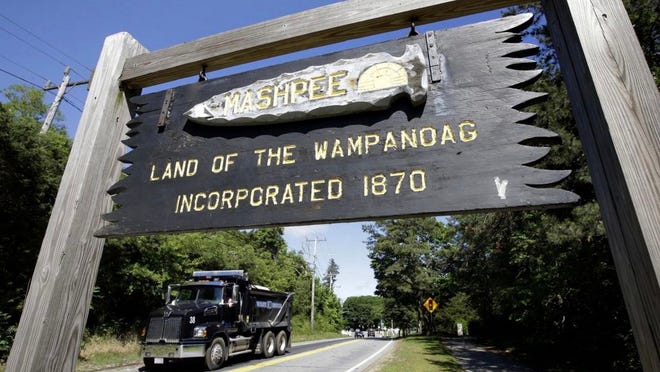
Mashpee Wampanoag tribal members sue over mail-in voting plan


Mashpee Wampanoag tribal members sue over mail-in voting plan


Jessica Hill  Cape Cod Times
Mar 2, 2021 

MASHPEE — With the Mashpee Wampanoag Tribe’s general election only a few weeks away, a few members have raised concerns about the decision to hold the election exclusively through mail-in voting. 

Tribal members Aaron Tobey Jr., Crystal Asiwe and Steve Helme are suing members of the Mashpee Wampanoag Tribal Council and the Mashpee Wampanoag Tribe Election Committee at the tribal court, arguing that holding the March 26 election through mail-in voting is against the tribe’s constitution. 

“What my client is arguing, is that the constitution really prescribes the election process for the tribe,” attorney Jonathan Polloni, representing the plaintiffs, said in a phone interview, “and what’s happened is that the tribal council has really buried that process. That is significant and deserves a lot of caution.”  

A preliminary injunction hearing will be held in the Mashpee Wampanoag Tribal District Court at 10 a.m. Tuesday regarding the lawsuit.

The election will determine who the next tribal chairman or chairwoman will be, as well as other positions in tribal government. 

On Jan. 25, the tribal council passed an emergency tribal ordinance to address voting in the 2021 Regular Election during the COVID-19 pandemic. The ordinance allowed for the election to be held through mail-in voting and/or voting by ballot drop box.

In conjunction with passing that ordinance, the council also requested an advisory opinion from the Mashpee Wampanoag Supreme Court to determine whether voting by mail conflicts with the tribe’s constitution. The court has not yet made a ruling on that question.

That request was made in order to “bolster the tribal membership’s confidence in the integrity and legality of the modified voting method for the 2021 Regular Election,” according to the defendants’ brief filed Feb. 19 in opposition to the plaintiffs’ motion.

The plaintiffs argue that while the Mashpee Wampanoag Tribe Constitution provides for the adoption of ordinances, as well as emergency ordinances, the constitution requires voting by “secret ballots cast at polls” in all tribal elections and prohibits absentee voting, according to the plaintiffs’ complaint obtained by the Cape Cod Times. 

“By permitting mail-in ballot voting, the Defendants have caused election irregularities that violate the Constitution and will affect the outcome of the election when it is held,” the complaint states.

The plaintiffs ask that the tribal court annul the election and require a new election be held in conformance with the constitution. 

“The timing to experiment with mail-in voting is not now,” Tobey, a plaintiff, said in an interview, noting that information on past elections has been subpoenaed by a federal grand jury. 

Helme, another one of the plaintiffs, said he does not understand why the tribe cannot follow the Centers for Disease Control and Prevention’s rules to allow both voting in person and mail-in voting for those who would like the option. He also thinks all tribal members should have a say in how the election will work. 

The defendants, on the other hand, argue that the tribal council and election committee did follow the constitution, which does not require in-person voting. They argue that all-mail voting still ensures that ballots are cast at “polls,” as the constitution requires. They defined “polls” as the location where the committee designated mail-in ballots to be sent as well as the secure ballot drop boxes. 

The mail-in election does not violate the rule against absentee voting, as all-mail voting is different from absentee voting, the defendants state in their opposition. That opposition brief was submitted by Alexandra Deal, the attorney for the tribal council members, and R. Reid LeBeau II, attorney for the election committee members. The attorneys did not respond to requests for comment Monday, nor did tribal council Vice Chairperson Jesse "Little Doe" Baird.

The defendants argued that voting in person could risk serious, and even deadly, health consequences.

“In the extraordinary time of a worldwide pandemic, the priorities and needs of the Tribe have changed,” their opposition states, “and the Tribal Council has determined that in-person voting on election day during a 3-hour window at a single polling location is no longer a tenable option for the 2021 Regular Election.” 

The defendants also argued that the defendants, as members of the tribal council and election committee being sued in their official capacities, are immune from being sued as they are "entitled to sovereign immunity from unconsented (lawsuits) as officers of the tribe."

John “Jim” Peters Jr., a member of the Mashpee Wampanoag Tribe and executive director of the Massachusetts Commission on Indian Affairs, was also on the tribe’s constitution committee. One of the justifications for not allowing mail-in ballots, he said, was that tribal members live all over the country, and not everybody knows what is happening in Mashpee and might make uninformed decisions. But the constitution was never written to prevent the tribal council from having flexibility to meet the needs of the tribe, he said. 

“I understand both sides of it,” he said. “Given the pandemic, it’s kind of difficult to require people to come to the tribal grounds and so forth.”


Grand jury subpoenas more documents from Mashpee tribe

Jessica Hill
Aug 29, 2020 

The Associated Press file photo

MASHPEE — The Mashpee Wampanoag Tribal Council voted in an emergency meeting Friday night not to remove Chairman Cedric Cromwell. The vote came after the tribe received another subpoena related to a federal grand jury investigation.

On the meeting agenda, listed under executive session, was a discussion of “grand jury subpoena” with tribal attorney Benjamin Wish. Also on the agenda was an item labeled “committees, commissions, appointments, resignations and removals.”

The council voted 5-3, with one abstention, not to remove Cromwell from the position he has held since 2009, a source with knowledge of the vote told the Times.

As part of a grand jury investigation, the U.S. Attorney’s Office in Boston subpoenaed the tribe demanding records related to its elections and finances.

The Aug. 10 subpoena was signed by Assistant U.S. Attorney Christine Wichers on behalf of U.S. Attorney Andrew Lelling. In lieu of a tribal representative appearing physically in court before the grand jury Aug. 25, it requested all records be sent electronically to Wichers.

The subpoena requested all documents and records for the 2013 and 2017 tribal council chairperson elections. It requested a list of registered voters eligible to vote during those elections and a list of people who actually voted, along with the final certified election results.

It also called for documentation identifying the number of tribal members for each year between 2011 and 2020 along with any other annual census data.

The tribe also was to send any complaints it had received related to the elections, the candidate or any candidate’s campaign, and submit policies or rules related to campaign contributions and campaign expenditures.

Finally, the subpoena requested copies of all contracts between the tribe and the Robinson Green Beretta Corp. from January 2011 to the present. It also requested the minutes from January 2014 to the end of 2016 of all meetings of the committee that selected the corporation to work with the casino and from the committee that was authorized to terminate Robinson Green Beretta Corp.

The Robinson Green Beretta Corp. served as the owner’s project manager for the design and construction of the Mashpee Wampanoag Tribe Community and Government Center on Great Neck Road South, which was completed in 2012. It also took on the role of owner’s representative in 2014 for the tribe’s First Light Resort & Casino, according to the company website, working with the tribe and the Genting Group, the tribe’s financial backer.

The $1 billion casino project in Taunton is at a standstill amid a yearslong legal battle over tribal sovereignty. Without the projected millions of dollars in revenue, the tribe has struggled with its finances.

This latest subpoena comes about two months after a federal grand jury issued a subpoena requesting all personnel records for Cromwell, Treasurer Gordon Harris and former Treasurer Robert T. Hendricks, as well as Mark Harding, founder of construction company WampWorx, and Louis Catarina Jr., who helped manage development for the First Light Resort & Casino project.

The June 5 subpoena requested many of the tribe’s financial records, including copies of checks, expense reports and payments to other organizations. It also sought documents concerning any internal or external investigation or audit looking into any suspected theft, embezzlement or other wrongdoing by a tribe official, employee or contractor.

Last year, a federal grand jury subpoenaed Harris and Hendricks, but the reason is still unclear.

Federal grand jury investigations are traditionally secret, with about two dozen citizens serving as jury members to examine documents to determine if sufficient evidence exists that a crime occurred.

Cromwell and Harris also had faced allegations last year from some tribe members who accused them of wrongful conduct in connection with $500 million owed to the Genting Group.

In June 2019 a robocall circulated within the tribal community alleging that $250 million handled by the Mashpee Wampanoag Tribal Gaming Authority was unaccounted for.

In January 2019, the tribal council had taken a vote of no-confidence and stripped Cromwell of his financial responsibilities in connection with the tribe and the Mashpee Wampanoag Tribal Gaming Authority. Cromwell is president of that five-member board that oversees the tribe’s gaming operation.

The tribal council, however, voted in February 2019 to restore all of Cromwell’s financial responsibilities.

Last fall, some tribe members sought to recall Cromwell and Harris for malfeasance, but the tribe’s Election Committee canceled the recall election three days before it was to take place.

Cromwell did not respond to a request for comment Saturday. The U.S. Attorney’s Office for the District of Massachusetts also did not respond to a request for comment about the investigation.

Wish, the tribe’s attorney, said the tribe would comply with the grand jury’s requests for information.



MIDDLEBORO REMEMBERS


Saturday, February 20, 2021

'A triumph' Interior Department withdraws appeal in Mashpee tribe's land-in-trust case


MIDDLEBORO REMEMBERS


'A triumph' Interior Department withdraws appeal in Mashpee tribe's land-in-trust case


Jessica Hill Cape Cod Times
Published Feb 19, 2021 

In a big victory for the Mashpee Wampanoag Tribe, the U.S. Department of the Interior on Friday withdrew its appeal in U.S. District Court in the tribe's land-in-trust case.

“Today is sakôhsuwôk, a triumph,” said Jessie “Little Doe” Baird, the tribe's vice chairwoman, in a statement late Friday afternoon. The decision was a win "for the citizens of the Mashpee Wampanoag Tribe and our Ancestors who have fought and died to ensure our Land and sovereign rights are respected," she said.

The Department of Interior filed a motion Feb. 18 for the voluntary dismissal of its appeal, wrote Rachel Heron, attorney for the U.S. Department of Justice Environmental and Natural Resources Division. 

The case was part of a long battle for tribal sovereignty, which stemmed from a $1 billion casino the tribe wanted to build in Taunton.

U.S. Rep. William Keating, D-Mass., also hailed the decision Friday.

"The claim that the Tribe of the First Light, the Tribe of the First Thanksgiving was not an original Native American Tribe has always been disingenuous," he said in a statement. "And the Trump Administration’s sudden attempt to remove their land from trust last March — in the midst of a pandemic — was heartless. We’re reassured that the Biden Administration’s action today clearly reflects the best interest of justice ..."

The tribe had asked the interior secretary to put about 151 acres of land in Taunton into trust so it could build a casino, as well as another 170 acres in Mashpee. While the assistant interior secretary approved it in 2015, neighbors of the proposed casino and others filed a lawsuit in opposition. They argued the government did not have the authority to take the land into trust in the first place.

In 2018, the Department of the Interior reversed itself, arguing the tribe was not under federal jurisdiction when the Indian Reorganization Act of 1934 was established. The tribe appealed, but a federal judge in Boston ruled in favor of the reversal. 

Then in June 2020, U.S. District Judge Paul Friedman found that the 2018 decision was “arbitrary, capricious, an abuse of discretion and contrary to law.” He sent the case back to the Department of the Interior for “thorough reconsideration and reevaluation of the evidence.” 

“We look forward to being able to close the book on this painful chapter in our history,” Baird said in the statement. “The decision not to pursue the appeal allows us (to) continue fulfilling our commitment to being good stewards and protecting our Land and the future of our young ones and providing for our citizens.” 


Sunday, August 2, 2020

Interior Department appeals June ruling over Wampanoag land


Interior Department appeals June ruling over Wampanoag land


By Beth Treffeison
Posted Aug 1, 2020

WASHINGTON — The Department of the Interior is appealing a federal judge’s ruling that the department incorrectly found that the tribe did not qualify for land-in-trust status.
“This action by the Secretary of the Interior shows contempt for the June 5th ruling in the District Court of D.C.,” Mashpee Wampanoag Tribal Council Chairman Cedric Cromwell wrote in a statement.
The appeal was filed Friday in the U.S. District Court for the District on Columbia.
“Without providing the Tribe with any warning, and without providing justification or reasoning, the Secretary’s action, unfortunately, is consistent with this Administration’s constant failure to acknowledge or address the history of injustice against our Tribe and all Native Americans, and its utter lack of interest in protecting tribal lands,” Cromwell wrote.
The appeal is even more “brazen” given the disproportionate impact COVID-19 has had on the community and the toll it has taken on the tribe’s resources, Cromwell said.
In early June, the Mashpee Wampanoag Tribe celebrated a victory in its yearslong battle for sovereignty when a federal judge ruled the Interior Department incorrectly applied its own guidelines in finding the tribe did not qualify for land-in-trust status.
U.S. District Judge Paul Friedman, at the time, said that the department’s 2018 decision that the tribe was not under federal jurisdiction in 1934 was “arbitrary, capricious, an abuse of discretion and contrary to law.” He sent the case back to the department for “thorough reconsideration and reevaluation of the evidence.”
The judge also said the department could take no further action on disestablishing the tribe’s reservation until it correctly applied its guidelines on reconsideration.
The Interior Department issued a statement in early June saying it was reviewing the decision and its options to proceed.
The department had taken 321 acres in Mashpee and Taunton into trust for the tribe in 2015.
The federal government has long acted as trustee for tribes for the purpose of self-government.
The tribe had planned to use the Taunton land for economic development, mainly a $1 billion resort and casino, and the Mashpee land primarily for housing.
The casino proposal led to a long legal battle with Taunton residents who opposed the project. Then, the Interior Department under the Trump administration reversed itself in 2018, finding the tribe did not qualify for land-in-trust status.
A federal judge in Boston ruled in favor of the reversal, and the tribe lost on appeal. The tribe also sued the Secretary of the Interior in a Washington, D.C., court.
In late March, the Interior Department informed the tribe it would remove its land from trust status. The tribe asked the federal court in Washington to issue an emergency order that would postpone that action. Friedman heard arguments on that request and on the lawsuit May 20, before ruling on it June.
“The Secretary is out of step with Indian Country and with scores of both Democratic and Republican members of Congress who have called for the protection of our reservation,” Cromwell said in the statement.
Despite every effort to disestablish the reservation, the tribe remains grateful for the support they have received from local, state and national leaders, Cromwell wrote.
“We will never stop the fight to preserve and protect our proud culture and traditions,” he said.


Saturday, July 25, 2020

Spending bill includes protections for Mashpee tribe


Middleboro Remembers: Regulators want briefing on Mashpee ...


DID YOU EVER NOTICE THAT REP. BILL KEATING NEVER SEEMS TO FIGURE OUT WHERE HIS DISTRICT IS AND NEVER VISITS? 

DID YOU EVER NOTICE THAT IF YOU HAVE A PROBLEM, REP. BILL KEATING'S OFFICE NEVER CALLS YOU BACK?

DID YOU EVER NOTICE THAT IF YOU SEND AN EMAIL SEEKING A RESPONSE, YOU NEVER HEAR FROM REP. BILL KEATING? 


DURING THE LAST FEW ELECTIONS, REP. BILL KEATING WAS THE ANNOINTED DEMOCRATIC NOMINEE FOR NO GOOD REASON...IT CERTAINLY HAD NOTHING TO DO WITH HIS PERFORMANCE?  

YET HERE HE IS..... 

ALONG WITH CONGRESSMAN JOE KENNEDY EVEN THOUGH IS THIS EVEN WITHIN HIS DISTRICT OR SIMPLY BECAUSE HE RUNNING FOR SENATOR EVEN THOUGH KENNEDY HASN'T REPRESENTED ANY OTHER DISTRICT IN THE COMMONWEALTH WHEN SIGNIFICANT ISSUES EXIST? 

WHAT'S WITH THE CURRENT FEDERAL GRAND JURY? WHO'S ASKING? 

GENUFLECTING FOR VOTES!

Why Do Catholics Do That? – Page 3 – St. Matthias Catholic Parish


AND NO ONE ASKS ABOUT GENTING AND IF THESE MATTERS WERE EVER ADDRESSED: 


Genting was the Gambling Investor supporting the Mashpee Wampanoag lifestyle.

Genting Connected to Islamic Extremists? [THIS ARTICLE APPEARED FOR A SINGLE DAY, THE SITE WAS HACKED & WHEN IT WAS RESTORED, THIS ARTICLE HAD BEEN REMOVED. NOT TO WORRY, HACKERS! COPIES HAVE BEEN PRESERVED ON OTHER COMPUTERS.]

The money rush is on. A shady, but well-heeled Asian casino gambling giant swoops into town, buys an outdated office facility and valuable underlying real estate from the Miami Herald and launches a multi-million dollar campaign to approve non-Indian casino gambling in Florida and put a license on the former Miami Herald tract.

Kuala Lumpur-based Genting has multinational operations in tourism, resorts, gambling, plantations, power generation, and oil and gas. Genting’s market capitalization value, or net worth, reached $46 billion at the end of last year — making it one of Malaysia’s largest companies.

The Miami Herald suspends their normally skeptical eye, conducts no due-diligence on their new Chinese friends from Malaysia and their newspaper becomes a public relations machine for a client they don’t even really know.

Every glad-handing semi-corrupt politician in Miami-Dade and the City of Miami with their hand out will be jumping on the Genting gravy train. Genting is a target for every con-man lobbyist/political consultant/PR man which Miami-Dade County abounds with.

Recently a group of “Community Leaders” were flown to South East Asia including visits to Genting casinos in Malaysia and Singapore. Genting refuses to disclose the names of “Community Leaders” – including elected officials – who were flown to South East Asia in a private luxury jet and wined and dined at 5-Star resorts reserved for high-rollers in the Asian gaming world.

World Resorts Genting, also known as Genting Highlands, opened in 1965 and is the company’s flagship resort in Malaysia. The resort features Malaysia’s only land-based casino, six hotels, three theme parks, a convention center, and numerous restaurants and nightclubs, among other attractions.

Resorts World Sentosa, which opened last year in Singapore, features one of the world’s most expensive casinos, six hotels, a Universal Studios theme park and a Marine Life Park, among other features. The Florida Delegation visited both, reportedly racking up more than $790,000 worth of hotel, restaurant, spa and entertainment costs in both 5-Star resorts.

Genting has retained a team of slick lobbyists including Jonathan Kilman, with the law firm of Foley & Lardner. Kilman’s partner, Chris Kise, is under investigation for erasing email records generated during Governor Rick Scott’s Inauguration. The missing emails are thought to contain correspondence exposing the business dealings of Kise and Scott’s political adviser Enu Mainigi. Scott has ordered the FDLE review. Kise insists the emails were erased accidently. Foley and Lardner’s influence in the Governor’s office is not likely to be strong in 2012.


Before it’s over, expect that Genting, their lobbyists, and other retainers, will lavish the Republican Party of Florida and other selected party redistricting vehicles with millions of dollars. They’ll even buy Governor Rick Scott a golden toilet seat for the Governors mansion is he wants!

Genting, the Asian casino giant, does not hold a casino gaming license in any U.S. jurisdiction that has serious regulation. New York State requires relatively little scrutiny in the contract Genting has with the State of New York to operate slot machines at Aqueduct Racetrack.

Genting made millions of dollars as the money-men behind two controversial Indian Casino gaming developments in the Eastern United States. In both cases, Genting operations were directed by G. Michael Brown, a former New Jersey Attorney General who was later charged with embezzlement and cocaine use in the Seneca Tribal Court.

Brown was charged with putting various mistresses on the casino payroll and using casino funds to pay for luxury condominiums, imported sports cars and expensive jewelry for them. Brown famously drove a 4-door sedan owned by the Seneca Tribe through the picture window of a Niagara Falls resident while driving drunk.

Genting was the financier of the Seneca Niagara Casino Hotel in Niagara Falls, New York. Genting charged the tribe an exorbitant 28 percent interest rate, potentially in violation of the Indian Gaming Regulations under the Bureau of Indian Affairs. Genting also stayed in the deal for almost 15 years when they were legally limited to five. Seneca Tribal Council members have testified that armed Chinese thugs showed up to collect Genting’s money when tribal lawyers pointed out that Genting was violating the law.
All of this became known to the U.S. Senate Select Committee on Indian Affairs, which held hearings and launched an investigation into corruption in the Indian gaming industry in the United States. But what the Senate Committee found out about Genting was even more disturbing: an apparent pattern of multi-million dollar payments to Islamic extremist organizations in Malaysia who most definitely are not friends of the United States of America.

U.S. Senate Special Committee records regarding Genting and their financing of multiple Islamic-based organizations in Malaysia are classified. Some U.S. Senator needs to launch an investigation to determine whether Genting has relationships that would make their holding a casino license in Miami (a money machine) inappropriate. U.S. Senate staff investigators should get a firm understanding of Genting’s questionable relationships in Malaysia and China.

Genting executives told Senate investigators at the time that the millions of dollars funneled to various Islamic extremist organizations known to finance jihad were made under direst and viewed as a cost of doing business for a Chinese businessman in heavily Islam-run Malaysia. Investigators had reason to be skeptical when photos of K.T. Lim and North Korean dictator Kim Jong-il surfaced. The Senate investigators also obtained photos of Lim socializing with at least two Islamic figures wanted by the United States for terrorist activities.
Senate investigators were also interested in K.T. Lim’s relationship with Stanley Ho, the Asian casino magnate who has been identified as a member of the Chinese Triad, the Chinese crime organization, by the U.S. Justice Department and by the Royal Canadian Mounted Police. Ho has been denied a casino license in every jurisdiction except in Macau and North Korea. Genting has refused to address their business dealings with Ho and his company Shun Tak Holdings Ltd.

While the Miami Herald is telling us that Genting boss K.T. Lim is a brilliant businessman, he could be one of the largest funders of Islamic terrorist activity in Asia. Instead of giving press conferences to the Miami Herald, perhaps K.T. should be interrogated under subpoena by U.S. Senate lawyers.

The Miami-Dade politicians who suck up Genting’s food, drink and accommodations and support Genting’s development will jump off of them like rats when they learn where a substantial portion of Genting’s profits in Florida may be going. Just because Genting has a lot of money doesn’t mean that they are suitable to operate casinos in the United States based on their associations and business practices.

Neither Governor Rick Scott, nor Senate President Mike Haridopolos will agree to casino gaming without a local county referendum. Perhaps Miami’s Cuban voters should decide whether they want to approve a casino for a foreign company who could be financing Al-Qaeda and the Taliban.

Nothing short of full disclosure of all the finances and holdings of Genting should be required under Florida casino regulation. If they deny ties to radical Islam only full disclosure will verify this claim, a protection the public requires.

New Jersey Casino Control law is considered the toughest in the country and is the model for casino regulation in the rest of the country. Nevada’s regulations are similar, but the process in that small state is “more political.” Florida’s casino regulation must not and cannot be lax. We need to know far, far more about Genting and their friends before they get a casino license in Florida.


Spending bill includes protections for Mashpee tribe


By Jessica Hill
Posted Jul 24, 2020

Amendment passed by House would bar federal interference over reservation.
WASHINGTON — The House passed a spending bill Friday that includes an amendment to protect the Mashpee Wampanoag Tribe and its reservation land.
The amendment approved as part of the measure, a package of four fiscal 2021 appropriations bills, will protect the tribe from “endless litigation” and will fully recognize its tribal lands without interference from the federal government, according to a statement from U.S. Rep. Joseph P. Kennedy III, D-Mass.
The Senate will consider its own version of the appropriations bill and then work with the House to resolve any differences.
The Interior Department announced in March that it would revoke the Mashpee Wampanoag Tribe’s land-in-trust status, saying the department had no authority in the first place to put the land into trust in 2015. The tribe fought that, and in June a federal judge ordered that the department take a second look at the case and apply certain criteria that could help the tribe qualify for trust status.
“In recent months, the Trump administration has used the COVID-19 pandemic as cover to try to steal the Tribe’s land and define their people out of existence,” Kennedy said in the statement. “This amendment will put an immediate stop to those dangerous efforts.”
Kennedy and U.S. Rep. William Keating, whose congressional district includes the Cape and Islands, introduced the amendment with Reps. Deb Haaland and Lori Trahan. It will prohibit the Interior Department from using money to rescind the original September 2015 Record of Decision that took the tribe’s land into trust, revoke the proclamation recognizing the reservation lands of the Mashpee Wampanoag Tribe or to annul the determination that the lands are eligible for gaming pursuant to the Indian Gaming Regulatory Act.

[Rep. Deb Haaland represents New Mexico's 1st Congressional District.]
“I want to thank Congressman Kennedy and Congressman Bill Keating along with the Mass. delegation for their unwavering support for the Mashpee Wampanoag Tribe,” Tribal Council Chairman Cedric Cromwell said. 
Cromwell said the lawmakers understand the tribe’s historical footprint, as it helped establish the country and helped the Pilgrims through their first harsh winters 400 years ago.
“We’re looking for justice around our tribe to ensure our homelands are stabilized so we can continue to prosper and move forward,” Cromwell said. “This amendment is one step closer to helping us keep the integrity and ensure that we have our homelands in Massachusetts. It’s pretty important.”
Kennedy and Keating had introduced the Mashpee Wampanoag Tribe Reservation Reaffirmation Act, which passed the House in 2019 and could help the tribe if the Interior Department decides to appeal Judge Paul Friedman’s June decision. That legislation, however, has been stalled in the Senate. Last month, Haaland and Kennedy introduced the Tribal Reservation Pandemic Protection Act to protect reservation lands, but that bill was referred to the House Committee on Natural Resources.
“The fact that the Tribe of the First Thanksgiving is fighting for federal, tribal recognition should astound everyone,” Keating said in a statement Friday. “This amendment will limit the Trump Administration’s constant efforts to undermine the Tribe’s rights. We all know that for the President, this is about his casino lobbyist friends, but for us and the Tribe, this is about people, their rights, their health, their education, and their livelihoods.”
“This measure ensures that no more nefarious activity from the administration around taking our tribe’s land away could happen,” Cromwell said. “This has to go to the Senate; the House passed this and that’s important.”


Sunday, May 24, 2020

Tribe argues land case in U.S. District Court


Image result for REEL WAMPS


Tribe argues land case in U.S. District Court

By Jessica Hill

Posted May20, 2020


A U.S. District judge said Wednesday he could rule in a week to 10 days on the Mashpee Wampanoag Tribe’s latest attempt to salvage a $1 billion casino deal with the city of Taunton.
Judge Paul Friedman heard the Mashpee Wampanoag Tribe v. Zinke case via teleconference, in which the plaintiff and defendant gave arguments centering on whether the tribe’s land should be removed from trust status, based on whether the tribe was under federal jurisdiction prior to the establishment of the Indian Reorganization Act of 1934.
The tribe, the Department of the Interior and the Littlefields, along with other Taunton neighbors, have been the key players in this yearslong battle over whether the government had the authority to take the land into trust in the first place.
The plaintiff argued that Interior Secretary David Bernhardt’s order in March to remove the tribe’s land from trust was arbitrary and capricious because he had rejected evidence that other tribes have used to obtain trust land in the past. The defense said the Interior Department’s 2018 decision was thoroughly evaluated and consistent with prior decisions.
The tribe had plans to build a $1 billion casino in Taunton that would bring economic aid to the tribe and the city of Taunton through an intergovernmental agreement. Neighbors of the proposed casino were opposed, however, and filed a lawsuit, arguing that the Interior Department had no authority to take the tribe’s land into trust.
In 2015, the Interior Department took 321 acres in Mashpee and Taunton into trust for the tribe, but under a new administration reversed itself in 2018. The tribe had appealed a district court judge’s ruling in favor of the reversal and lost, and in a separate action it challenged the Interior Department’s reversal.
In late March, the Interior Department informed the tribe it would remove its land from trust status. The tribe asked for the federal court to issue an emergency order that would postpone Bernhardt’s decision. The tribe and the Department of the Interior agreed to a 45-day pause period.
Wednesday’s hearing could determine the future of the tribe’s lands as well as its financial future. Depending on what the judge decides, the Interior Department might have to take a second look at the tribe’s qualification for land-in-trust status. A ruling in favor of the defendant might mean the tribe would lose some of its land or the tax relief that comes with it.
The plaintiff argued that several pieces of evidence show the tribe was clearly under federal authority before 1934, while the defense argued that those pieces of evidence are not explicit or show only state jurisdiction.
The tribe’s lawyer, Tami Lyn Azorsky of Dentons LLP, offered examples such as old census reports to show the tribe was under federal jurisdiction. One element of her argument concerned a federal school in Pennsylvania attended by children of the Mashpee Wampanoag Tribe.
From 1879 to 1918, the United States Carlisle Indian Industrial School operated a boarding school that hosted Native American children from around the country, with the goal of assimilating Native Americans into mainstream American culture.
Azorsky said the school took responsibility for every asset of the children’s lives, including medical decisions, without parents’ consent. Because the school was run by the federal government, and members of the Mashpee Wampanoag Tribe attended, this demonstrates the exercise of federal authority, Azorsky argued.
The defendant argued that this evidence was not affirmative of federal jurisdiction. It showed, at most, that the tribe was “under Congress’s linear authority” and was not sufficient, said Sara Costello, federal attorney for the defense.
Azorsky also brought up reports in which the federal government considered taking an action regarding the Mashpee Wampanoag Tribe and then ultimately decided against it. Because no action was taken, the Interior Department dismissed those reports as evidence.
Azorsky emphasized that action does not determine jurisdiction. She said acknowledgment of responsibility is the standard.
“Isn’t a decision not to do something just as much an action as a decision to do something?” Judge Friedman asked the defense.
“The decision to do nothing does not show that the tribe is under federal jurisdiction,” Costello said.
The plaintiff argued the Bernhardt’s order to remove the tribe’s land from trust was arbitrary and capricious because he had rejected evidence that other tribes have used to obtain trust land in the past. The defense said the Interior Department’s 2018 decision was thoroughly evaluated and consistent with prior decisions.
“The Interior Department thoroughly discussed each piece of evidence and thoroughly explained why it chose to do what it did,” Costello said. “The Interior applied the correct standard for determining the federal jurisdiction, set forth in the M-Opinion.”
The “M-Opinion” is a legal opinion the Department of the Interior had been using to determine whether a tribe was under federal jurisdiction at the time of the Indian Reorganization Act. In March, Deputy Solicitor for Indian Affairs Daniel H. Jorjani withdrew the opinion, concluding in a March 5 document that the interpretation of the first definition of “Indian” is not consistent with the “ordinary meaning, statutory context, legislative history, or contemporary administrative understanding” of the phrase ’recognized Indian tribe now under federal jurisdiction.”
Jorjani had issued another memorandum that provided a four-step procedure for determining tribal eligibility that would be “more consistent with how Congress and the Department would have understood them” in 1934.
Judge Friedman criticized that change, calling the March 5 document a “joke” and “incomprehensible.”
If the current matter is remanded, Costello said, the tribe’s case will be a pending application, and so the new guidance would apply, Costello said.
“Basically you’re saying, ‘Heads I win, tails you lose,’” Friedman said. “If I remanded to Interior, you want to apply a new guidance to them which makes it harder for them to succeed.”
The new guidelines would not make it harder for the tribe to succeed in keeping its land in trust, Costello argued.
Costello emphasized that if the tribe’s land is taken out of trust, it will still have access to different funding because of its status as a federally recognized tribe. It is still entitled to COVID-19 aid under the CARES Act, as well as other funds regarding social services and transportation.
“That’s not dependent on having land under trust,” Costello said.
If Friedman he were to rule in favor of the Department of the Interior, and the tribe’s land were taken out of trust, the land would return to the previous deed holder, Azorsky said.
The Taunton land would be lost because of the mortgages, she said, and because the tribe has an intergovernmental agreement with the city of Taunton, the city also would be hurt.
“Interior is the federal trustee for the tribe, and Interior has an obligation to protect the tribe,” Azorsky said. “It doesn’t make sense that there is a rush to take this land out of trust. There still has to be an orderly process, and the tribe’s federal trustee rushing to judgment to disestablish this reservation when no procedure has been figured out yet, it doesn’t make sense.”
While the teleconference dropped for listeners near the end of the plaintiff’s rebuttal, the public was able to listen in for most of the hearing.


MAGA's Jimmy Patronis Wants To Legalize Machine Guns.

                             LOTS OF POSTS IGNORED BY BLOGGER..... OR REMOVED ON THEIR WHIM! ALL POSTS ARE AVAILABLE ON MIDDLEBORO REVIEW AN...