Showing posts with label RAIL ROADS. Show all posts

Wednesday, February 22, 2023

FOCUS: The Case for Nationalizing the Railroads


Reader Supported News
21 February 23

Live on the homepage now!
Reader Supported News

“THE BEST, MOST IN-DEPTH PROGRESSIVE NEWS” — “I just increased my commitment to support Reader Supported News from $10 per month to $20 per month. RSN is where I get the best, most in-depth progressive news. It’s important to support independent news sources such as represented by RSN."
Jim, RSN Reader-Supporter

Sure, I'll make a donation!


Local rail workers, union members and the Boston chapter of the Democratic Socialists of America rally in support of a strike on Dec. 2, 2022, during President Joe Biden’s visit to Boston. (photo: Suzanne Kreiter/Getty)
FOCUS: The Case for Nationalizing the Railroads
Kari Lydersen, In These Times
Lydersen writes: "Railroad workers packed themselves into hotel conference rooms near Chicago's O'Hare International Airport in June 2022 to talk fervently about a momentous event potentially on the horizon: the first industry-wide rail strike in three decades."


Workers say now is the time to do the impossible.


Railroad workers packed themselves into hotel conference rooms near Chicago’s O’Hare International Airport in June 2022 to talk fervently about a momentous event potentially on the horizon: the first industry-wide rail strike in three decades.

“All 12 railroad unions have proclaimed themselves united,” said Ron Kaminkow, Railroad Workers United (RWU) general secretary, during a conference session about chokepoints in the supply chain. “There could actually be a national railroad strike for the first time in almost 30 years.”

Contract negotiations between those 12 unions and the country’s major freight railroad companies had ground to a halt by the conference, which was organized by RWU and the pro-union group Labor Notes.

In July, 99.5% of the membership of the union representing railroad engineers — the Brotherhood of Locomotive Engineers and Trainmen — voted to authorize a strike if legal hurdles were cleared.

The possibility presented a challenge for the Biden administration. President Joe Biden had become known as the most labor-friendly president in recent history, while a walkout threatened to paralyze the economy with a potential cost of $2 billion per day. The administration eventually negotiated a deal with union leaders and company leaders, announced Sept. 15, 2022, requiring a significant pay raise for workers without meaningfully addressing their primary concerns: short-staffing and a lack of paid sick days.

Many elected officials and pundits lauded the deal, but it still needed to be ratified by each union’s rank and file.

Three unions representing railroad workers voted down the proposed contract, while others voted for it. Then, in November, the country’s largest rail union — the SMART Transportation Division, which represents conductors and brakemen — rejected the deal, and a national rail strike was firmly on the table. Even unions that approved of the deal pledged to honor any picket lines.

On December 1, 2022, at Biden’s urging, Congress intervened, passing a law to force the unions to agree to the deal. Many railroad workers were furious — and felt betrayed.

“It was very frustrating, from the ‘most pro-labor president America’s ever had,’” says Matt Weaver, legislative director for the Brotherhood of Maintenance of Way Employees, the nation’s third-largest railroad union. “When [railroads] have record profits and profit margins, and yet this deal is imposed, we’ve seen that our labor is expendable.”

The ordeal has also led many railroad workers and industry watchers to consider a vastly increased role for government in freight railroads: nationalization.

On Oct. 5, 2022, RWU adopted a resolution calling for public ownership of railroad infrastructure, which is operated for the public benefit. The grassroots organization brings together members from all 12 rail unions but has no official power to negotiate with employers or the government. Its members were prominently featured in national media around the possible strike, and the group says its resolution reflects a growing demand for change among railroad workers. The resolution outlines how the rail industry has downsized one-third of its workforce, “outraged shippers” by “jacking up prices,” “failed to solicit nor accept new but ‘less profitable’ freight,” opposed safety measures and took a “hostile stance” toward unions, among other failings.

Meanwhile, the United Electrical, Radio and Machine Workers of America (UE) recently also issued a strident call for public ownership of railroads to protect the economy, workers, frontline communities and the environment.

“We demand that Congress immediately begin a process of bringing our nation’s railroads under public ownership,” reads the statement from the UE general executive board. The union, which represents electrical workers and other sectors, argues that the major railroad companies — like electric utilities — are “natural monopolies,” and have an “endless thirst for profit.”

The union argues that nationalization is necessary both to protect workers and to fight climate change and railroad-related pollution that disproportionately impacts communities of color and low-income communities. The statement notes that in 2021, UE launched a Green Locomotive Project to promote zero-emissions electric locomotives in rail yards and cleaner diesel locomotives on the tracks. “Although the legislation our allies introduced in Congress would have provided generous financial incentives for the railroads to adopt this green technology, they opposed us every step of the way,” the statement read.

Public Equity

The threatened railroad strike underscores how much the U.S. economy depends on freight railroads. It also exposes the fragility of a system owned and run in large part by four massively profitable carrier companies that act as de facto monopolies.

BNSF and Union Pacific run the vast majority of freight west of the Mississippi River, while Norfolk Southern and CSX run most of the freight to the east.

In 2021, BNSF and Union Pacific reported record profits of $6.5 billion and $6 billion, respectively, while Norfolk Southern reported a record $4.45 billion, and CSX notched $3.8 billion. The profit is doled out to highly paid executives and shareholders with too little invested back into operations and infrastructure, as many workers and some industry experts see it. The imbalance has helped make the case for more decision-making power for railroad workers and a greater oversight role for the public. Railroad workers who support nationalization would like to see workers in direct leadership positions, and think removing the profit motive would translate to better working conditions.

“The idea of nationalizing the rails — that strikes fear into the [tenth of 1%] of billionaires who own most of the wealth in this country,” says Marilee Taylor, a recently retired BNSF locomotive engineer from Chicago. “It has to be under the control of those who actually know the railroads, which is not the suits. It’s not the CEOs. It’s those who work it.”

In April 2022, hearings were held before the federal Surface Transportation Board — the body charged with overseeing America’s rail system. Officials from major industries (including agriculture and chemicals) lamented the increasing unreliability and unaffordability of freight rail. They blamed the large carriers’ increasing reliance on “Precision Scheduled Railroading,” wherein employees and routes are slashed to the bare minimum to maximize profits. They also testified that the national supply chain crisis was caused not just by the pandemic, but by railroad understaffing, price gouging and the failure to invest in infrastructure. Union leaders and workers said the railroad companies are neglecting safety and maintenance in pursuit of more profit, with longer trains and fewer people.

Matt Hollis, a second-generation railroad worker and national vice president of the Transportation Communications Union, testified he’s seen the “complete and utter degradation of our nation’s Class I railroads over the past six to seven years.” He went on: “I’ve watched as private equity firms have acquired controlling stakes in railroads only to use their power to deploy business models that extract as much wealth as possible, to the detriment of the railroads’ workers, their customers and ultimately the public interest.”

Rank-and-file railroad workers tell In These Times they have similar experiences.

Nick Wurst, a Massachusetts-based conductor for one of the major freight railroads, says he sees firsthand how “railroads have, through corporate decision-making, put themselves in a situation where they are in perpetual crisis because they operate on the narrowest possible margins in terms of staffing and maintenance. There’s nothing there in order to try to deal with any kind of hiccups, whether that hiccup comes in the form of six feet of snow or a global pandemic. The movement of people, goods, raw materials is too important — too many people rely on it — for decision-making to be limited to profitability.

“The goal should not be making profit,” Wurst adds. “The goal should be getting everything where it needs to go as efficiently as possible.”

Hugh Sawyer, an engineer for Norfolk Southern in Georgia, was previously opposed to the idea of nationalization. “I’m a capitalist; I live in America,” he laughs. But after seeing the railroad companies shut down their less-profitable lines, slash their workforces and run workers into the ground with little resistance from union leadership, as many workers see it, he thinks change is necessary. Now, Sawyer wants regulation and “nationalization and rationalization,” with all railroad employees represented by one union, working for the federal government.

At an “investor day” in December 2022, Norfolk Southern CEO Alan Shaw acknowledged many of the problems and promised the company would no longer prioritize “operating ratios” — achieved by slashing costs to boost profits — as Wall Street investors have desired. Among other things, Shaw said, the company would keep higher staffing levels and stop furloughing workers during periodic downturns.

“When the time came to rebuild our ranks as freight transportation demand returned, we were unable to rehire quickly enough to operate fluidly,” Shaw told investors. “In the long term, these disruptions have eroded the confidence customers need to have if they are going to structurally rely on rail instead of highways.”

In These Times reached out to all four major carriers to comment on many of the claims in this article, including concerns about the use of Precision Scheduled Railroading and its effects on rail workers, and complaints about a lack of infrastructure and operations investment while profits soar. The companies deferred to the Association of American Railroads, an industry group, which said in a statement that “each year, the privately-owned freight rail industry reinvests about $20 billion in maintenance and capital improvements that enhance safety and provide the most efficient rail network in the world— with little to no expense to the taxpayer.”

The statement continues: “At a time when public infrastructure has faced chronic underfunding and delayed necessary maintenance, rolling back the policies that allow those investments — or worse, full-blown nationalization — would have vast, negative impacts to the U.S. supply chain, rail customers and communities served by rail.”

Tracking the Infrastructure

After the Biden administration effectively forced through what many workers felt was an inadequate contract, it may seem questionable to put more power in the hands of the federal government. But, advocates say, under a publicly owned system, profit-seeking owners would no longer be able to hold the economy hostage by enforcing a model premised on short-staffing and maximum profitability. Instead, the public could have a say without the threat of a corporate veto. Looking back at history, the idea that the public could control a multi-billion-dollar private enterprise with immense political power may not be as far-fetched as it seems.

The freight rail industry stands as one of the nation’s most profitable sectors. To the delight of hedge fund investors, the average profit margins of the top five U.S. railroads have roughly doubled in the past 15 years, according to Bloomberg. On a basic level, public ownership could mean investing revenue back into infrastructure and operations, rather than paying out shareholders. It could also mean the ability to centralize planning and operations to serve shippers, producers and passengers, rather than only the most profitable sectors and places. A nationalized industry could also prioritize long-term investments in safety and sustainability while protecting the rights and well-being of more than 100,000 of the nation’s most essential workers.

This would be a welcome change for many rail employees who feel abandoned, especially after enduring a grueling pandemic. As Matt Weaver, from the Brotherhood of Maintenance of Way Employees, says: “We’ve gone from essential to expendable.”

The government already owns and maintains most highways and waterways in the country, so public ownership of railroad tracks and freight yards isn’t a conceptual stretch. The national passenger railroad, Amtrak, is already quasi-publicly owned, though it operates as a for-profit entity rather than a public authority. It has more than 500 stations, and, on an average day, riders made more than 33,000 trips, according to its 2021 annual report. That year, Amtrak brought in $2.1 billion in revenue but saw $5.2 billion in expenses, with the inefficiencies caused in part by its subservience to the freight railroads that actually own most of the tracks Amtrak runs on. The 2021 bipartisan infrastructure law promises to invest $66 billion in Amtrak to upgrade stations and expand service. Nationalization proponents say that government ownership of railroad tracks, or the freight industry as a whole, would allow better coordination of passenger and freight train schedules, and would fuel the expansion of passenger lines.

Ownership of the different components of the rail sector is often described along “vertical” or “horizontal” lines. “Vertical separation” means that one entity — perhaps the government — owns the tracks, and different railroad companies compete and pay to ship freight on them.

“Horizontal separation” means a single entity owns the tracks and runs trains on them. Nationalization could more easily happen in a vertical separation model, in which the government owned the tracks and infrastructure, while nationalization in a horizontal separation model would be more complicated, with the government presumably both owning the tracks and shipping freight. If the U.S. government did own rail infrastructure, either private freight railroad companies could either pay to use it or the government could offer concessions and contracts for privately run services. This form of nationalization would not require taking over or dissolving the railroad companies, since they would still be running the trains — just on publicly owned tracks subject to government planning and regulation.

While easier to execute, the vertical separation model raises the question of how much control the government would have over labor conditions for workers. Workers wouldn’t become public employees — they’d still have corporate bosses — though government contracts could stipulate working conditions.

Meanwhile, industry experts say better labor conditions are crucial to the railroad industry’s sustainability and functionality, and some workers argue that nationalization may be the only way to achieve it. At the Surface Transportation Board hearings in April 2022, speakers noted turnover in the railroad industry is exceptionally high — despite lucrative salaries — and shipper after shipper testified that trains seem unable to provide reliable service due to a lack of employees. The major railroad companies currently employ 45,000 fewer people than six years ago, a 29% drop, according to Martin Oberman, chair of the Surface Transportation Board. Not only have railroad companies slashed the workforce, but workers often leave the profession because of the grueling demands on their time and health. If they refuse a summons to work, even if sick, they sometimes accrue negative points that lead to termination.

“It’s this form of power, of controlling the body, an almost pre-modern bondedness [to the company] in the way we used to talk about indentured servants in the 19th century,” explains Robert Bruno, professor of labor and employment relations at the University of Illinois, Urbana-Champaign. “This is what capitalism is in its worst practitioners. If the government were doing this to you, you’d say it was fascist.”

Bruno says public ownership is “not a guarantee” workers would be treated well and cites the working conditions that led to the largest wildcat strike in history, the 1970 postal workers strike during the Nixon administration. Another example of the fallibility of public enterprises is the publicly owned Tennessee Valley Authority — a power plant operator with a record of harming the environment and communities, including the devastating 2008 Kingston, Tenn., coal ash spill and botched cleanup blamed for killing and sickening workers.

Railroad workers say these examples drive home why workers and regular Americans need a voice in successful nationalization.

“When we’re talking about nationalization, people might think we’re talking about taking control of an industry out of the hands of this wealthy corporate class and giving it to the same government that makes all kinds of decisions based on profitability,” says Nick Wurst, the Class I freight railroad conductor. “What I’m fighting for is democratic public ownership.”

A Climate for Change

Climate change is another emergency that nationalization could potentially help address. Some experts have called for nationalization of the fossil fuel industry as a way to stem climate change. Public ownership of railroads could further that goal while also mitigating air pollution from railyards that disproportionately affects low-income people and people of color. Since railroads emit much less pollution per ton of freight carried than trucks, increasing rail’s share of transportation would be inherently more environmentally friendly. According to data cited by the industry’s own Association of American Railroads, shifting freight from truck to rail reduces greenhouse gas emissions by about 75%.

The major carriers, however, are moving in the opposite direction, eschewing lower-profit loads and forcing shippers to rely more on trucks, critics say, and the government isn’t doing enough to intervene.

“We subsidize trucking heavily through highway construction and maintenance,” says Kevin Brubaker, deputy director of the Environmental Law & Policy Center. “Railroads are really stuck competing against trucks with one hand tied behind their backs.”

Meanwhile, investing profits back into infrastructure (rather than doling it out to shareholders) could speed the electrification of railroads and railyards, slashing diesel emissions further.

“I’m not a ‘Mr. Environmentalist,’ ” says Hugh Sawyer, the Norfolk Southern engineer. “But I know we’ve got to do something about [climate change], and railroads are much more environmentally friendly than trucks, much more efficient.”

Robber Barons and Regulators

Between 1850 and 1871, the U.S. government gifted about 175 million acres of land to railroads to “settle the West” and fuel the Industrial Revolution. Among the many casualties of the industry’s rapacious development were Native Americans, Chinese immigrants, and ranchers, along with fragile prairie ecosystems. Wealthy railroad investors and owners, meanwhile, populated the ranks of the now notorious 19th-century “robber barons.”

The railroads’ treatment of farmers in particular fomented a period of “farm unrest,” as Reed College economist James I. Stewart chronicled for the Economic History Association. Farmers formed organizations to demand politicians address the high and unfair prices railroads were charging to ship goods.

Railroads soon became the first federally regulated industry, which included the establishment of the Interstate Commerce Commission in 1887. By the early 1900s, railroad companies struggled to remain profitable and some went bankrupt, in part because of restrictions imposed by federal regulators, says Anthony M. Pagano, director of the Center for Supply Chain Management and Logistics at the University of Illinois at Chicago.

By World War I, the rail system for freight and passengers was not up to the challenge of transporting munitions-related goods and troops. So in 1917, President Woodrow Wilson temporarily nationalized the railroads by creating the U.S. Railroad Administration, essentially renting the system from its owners with the promise to give it back within 21 months after the war.

In 1918, upward of 99% of more than 300,000 railroad workers voted to keep the industry nationalized. Glenn E. Plumb, a prominent lawyer for the rail workers, drafted the Plumb Plan to do so. Under the plan, the government would sell bonds to purchase and transform the rail system into a publicly owned corporation, and decisions would be made by a stakeholder board to include workers and the general public. The Plumb Plan League, an organization that included railroad unions and civic leaders, advocated for nationalization and also inspired coal miners, whose powerful union voted in 1919 to nationalize the coal industry.

But business leaders were stridently opposed to the Plumb Plan, which failed in Congress in 1919. Control of the railroads was ceded back to industry through an act of Congress in 1920.

Wilson also nationalized the telecommunications and telegraph industries in 1918, but the effort was unsuccessful in part because the sector was run by an anti-labor, pro-segregation postmaster general, according to “A History of Nationalization in the United States” by Thomas Hanna, Democracy Collaborative research director. During World War II, a slew of industries — including ironworks, cotton mills, factories, oil companies and chemical producers — were briefly nationalized, according to Hanna, and President Franklin Roosevelt nationalized more than 3,000 coal mines in the midst of labor disputes that threatened to stall the crucial coal industry. Railroads were also nationalized for 19 days in 1944 to avoid a strike, during which the Roosevelt administration worked to improve conditions and efficiency.

The federal government played an important role in regulating railroad prices and operations in the following decades, but Congress passed (and President Jimmy Carter signed) the Staggers Rail Act in 1980, which gutted government oversight. The Surface Transportation Board was founded in 1996. Railroad mergers, line abandonment and other practices must gain its approval before moving forward, but the board typically grants companies’ wishes. The “surf board,” as some in the industry call it, “has yet to find a merger that they didn’t like,” Pagano says.

Payback Time?

Railroad workers tell In These Times that, since public land was awarded to the railroads in the first place, it shouldn’t be inconceivable for the public to take it back. “The American public should finally get a return on their investment,” Hugh Sawyer says. “The railroads were given quite a bit. We should get something in return.”

The government does have the power of eminent domain to seize property in the public interest, and that power is often invoked for the benefit of private companies — in building pipelines, for example. But even if successful, eminent domain would typically only apply to the land under the rails. By taking that land, the government would also be taking the tracks and other infrastructure, and the Constitution is clear that private property can’t be seized without compensation. If railroad companies were denied the right to keep profiting off their infrastructure, the rail assets would likely be deemed “stranded,” and the companies could demand compensation.

And the national rail system is so vast that the payment would almost certainly be astronomical.

This situation has played out in the electric utility sector, for example, when municipalities have tried to take public ownership of local electric systems. Such an endeavor failed in Boulder, Colo., when the utility Xcel Energy argued the town would owe it $200 million for its “stranded assets.” Advocates tried for a decade to take over their electrical infrastructure, but a 2020 legal settlement reestablished Xcel’s franchise.

The temporary seizure of private assets during emergency situations does have some precedent, including the nationalization periods during the world wars. Even then, it faces legal hurdles. President Harry Truman, for example, essentially took federal control of private infrastructure and operations when he briefly nationalized the steel industry in 1952 to avoid a steelworkers strike during the Korean War. The Wage Stabilization Board had already ordered a wage increase for steelworkers, but the steel companies refused to comply unless they were allowed to significantly raise prices, a demand Truman denied. The day before 600,000 steelworkers were set to strike, Truman invoked emergency powers to seize the industry and keep the mills running. The union supported the move, but the companies were outraged.

The case went to the U.S. Supreme Court, where the justices — including liberals appointed by Truman and Roosevelt — decided 6 – 3 in the 1952 Youngstown Sheet & Tube Co. v. Sawyer case that Truman’s takeover was illegal. The current conservative Supreme Court could rule similarly if nationalization of the rail industry were to face legal challenges.

There’s another way nationalization could move forward: the government could buy enough company stock to acquire a controlling interest.

During the 2007 – 2009 recession, the Obama administration dumped $80 billion into the auto industry to take a controlling interest in General Motors and Chrysler while ordering bankruptcy proceedings to restructure the companies. It also bailed out (and temporarily took control of) insurance giant American International Group (AIG) to the tune of $170 billion, which was also described as “nationalization,” though the administration garnered criticism for doing too little to rein in the industry. Outrage ensued when AIG then paid out hundreds of millions of dollars in management bonuses.

Whether it’s paying for stranded assets or buying up shares, any form of railroad nationalization would likely cost billions. But advocates note the federal government is able to find vast sums in emergencies, such as the pandemic or aid to Ukraine, not to mention a nearly $1 trillion military budget. Buying up railroad infrastructure may be the type of radical change that seems impossible — until it isn’t.

Global Examples

Nationalization is the norm for railroads in much of Europe, Asia and Latin America, though some countries have pushed for privatization.

The Canadian National Railway (CN) was publicly owned for almost 80 years before its privatization in 1995. Starting in the late 1990s, CN claimed substantial business in the United States by buying up smaller U.S. railroads. Its privatization was followed by its “Americanization,” including cost-cutting and harsher treatment of workers, as labor magazine Canadian Dimension describes.

In 1993, Britain’s national rail system was privatized with a vertical separation model. Safety appeared to suffer as multiple operators competed to ship on tracks owned by a separate company. Between 1997 and 2002, five horrific accidents left more than 50 people dead, with media coverage implying that privatization played a role. The company that owned the tracks went bankrupt and its infrastructure was renationalized, with most operations now run by private companies through government contracts. The U.K. continues to grapple with problems caused by the privatization effort, and a 2022 Survation poll found 68% of the public favors public ownership.

Germany began its railway privatization process in the early 1990s, cutting staff and routes for efficiency. But full privatization plans were scuttled by massive worker and public opposition and the effects of the 2007-2008 economic crisis. A government owned corporation still controls the system.

China, Russia, Ukraine and India similarly run their railroads through state-owned corporations, which are meant to be funded by their own revenue but not driven by the profit motive of a private company. China, however, is among multiple countries that have sought private investment in nationally run rail systems in recent years.

In Mexico in 1908, President Porfirio Díaz began nationalizing railroads owned by foreign investors. Perhaps ironically, the railroads played a key role in the Mexican Revolution that overthrew him, as campesinos and workers moved cheaply and easily around the country by rail, fueling popular struggle. The famous photograph of “Adelita,” a woman soldadera leaning from a train, became one of the revolution’s iconic symbols. Following the revolution, private and foreign investors regained ownership. Leftist President Lázaro Cárdenas renationalized the railroads in 1937, but in later decades they suffered disinvestment and mismanagement. In the 1990s, the railroads were again privatized and passenger service gutted.

Today, leftist Mexican President Andrés Manuel López Obrador is building a new, nationalized freight and passenger railroad across southern Mexico to spur economic development, but the multi-billion-dollar, nearly 1,000-mile Tren Maya has been criticized for building across fragile ecosystems, sacred Indigenous lands and ancient ruins.

Regulating and Reckoning

Another approach to nationalization might come through incremental railroad regulation. It could start by reviving (and augmenting) the regulatory powers held by the public in the early days of rail.

The 1876 Supreme Court case Munn v. Illinois upholds the government’s right to regulate private industry. The case involved allegations that a Chicago grain elevator company wasn’t fairly paying farmers for their harvests, and the Supreme Court affirmed the Illinois Constitution’s stipulation that the government could regulate railroads, warehouses and other entities for the common good, enshrining the concept of public utilities.

The 1854 Vermont Supreme Court case Thorpe v. Rutland & Burlington Railroad, regarding a sheep killed by a locomotive, determined the government could order private companies to do things for the public good that affect profit. Namely, the government could force railroads to install cattle guards at their crossings.

Railroad workers and experts alike say the four major carriers are failing to uphold one of the regulatory mandates that does still bind them: the “common carrier obligation” to provide “transportation or service on reasonable request.” Shippers argue that the major rail companies are effectively denying service to customers through their limited options for shipping, line abandonment and the railroads’ use of “embargoes” on certain shipments caused in part by worker shortages. Unlike electric utility and power companies (which go through lengthy regulatory proceedings to close power plants or develop transmission lines), railroads have few checks on such decisions.

“The fact that Biden was willing to break with the unions” shows that — as the Supreme Court found in Munn—the railroads are among industries “so critical we shouldn’t just leave them to the market,” says UCLA law professor William Boyd, who has written extensively on the challenges of regulating utilities and railroads. “The basic common carrier model should apply, to make sure you can’t discriminate against certain types of customers. It becomes a platform for everybody to compete with each other.”

Boyd says the current situation evokes “the same story we’ve heard since the beginning: ‘We [railroad companies] are standing here at the gateway of commerce and we should be able to charge any price we can.’”

Georgia College and State University adjunct professor Peter Moore formerly represented a dozen companies that owned 1,500 railroad cars carrying chemicals and other specialty products for freight railroads. He notes those companies, and the industry at large, have suffered as the major carriers restructure the pricing system to their own advantage, including eliminating a per diem paid to the owners of specialty cars.

“I use the term ‘oligarchy’ because there’s just a few [railroad companies] and they’re very powerful,” says Moore, who explored the concept of nationalizing railroads in a 2021 piece for the trade publication Supply Chain 24/7. “With a very limited number of competitors, a natural consequence is labor gets squeezed, customers get squeezed, governments get squeezed. There’s a natural tendency, when you have fewer and fewer companies — they get aggressive in the ways they handle the market.”

Moore doubts railroad nationalization is likely any time soon, but he thinks increased government regulation is crucial, including forcing the major railroads to allow more access to their tracks for competing railroad companies.

Some railroad workers are likewise skeptical that nationalization could work. “More stringent regulation is where we begin in my mind,” Matt Weaver says. “Public ownership is such a big thing and hard for the public to fathom.”

Ron Kaminkow is among the workers who prefer wholesale change — and now. “If the only choices are the status quo versus some form of regulation and restriction to rein the Class I carriers in, then I suppose I would support the latter,” Kaminkow says. “However, just like regulating the health insurance industry — providing Obamacare or what have you — these are not real solutions.

“We need a national healthcare system. I think the same thing holds true for the railroads.”

While there’s been little talk of outright nationalization among politicians, there is clearly recognition of just how desperately change is needed. At the Surface Transportation Board hearings in April 2022, Secretary of Transportation Pete Buttigieg said the board will require improvement plans from the railroad companies that include an examination of the impact on workers and the need for a larger workforce.

“When we overburden rail workers, it only furthers turnover, worsens service and presents serious safety issues,” Buttigieg said.

The major rail unions are currently organizing ahead of the next round of contract negotiations, which are set to start in under two years. Some, like the SMART Transportation Division, are calling on Biden to issue an executive order guaranteeing sick leave in the industry.

Kaminkow and others have vowed to keep building up the power and unity they’ve amassed this past year, and they hope nationalization will become central to the discussion. Railroad Workers United is planning to expand its campaign around nationalization, though the labor organization still only counts a small percentage of the total railroad workforce among its members.

“The discontent and the anger of the rank and file of all the crafts in freight service” are stronger than they’ve been in recent years, Kaminkow says. “Railroad workers finally see the game for what it is, and that their wages, benefits, working conditions and numbers of employment are going to continue to suffer as long as the railroads are held privately. There is no alternative but to consider nationalization and public ownership.”


READ MORE


Contribute to RSN

Follow us on facebook and twitter!

Update My Monthly Donation

PO Box 2043 / Citrus Heights, CA 95611


Saturday, December 3, 2022

Railroad Bosses Gave Millions to Congress to Defeat Their Workers


Reader Supported News
03 December 22

Live on the homepage now!
Reader Supported News


Railroad Bosses Gave Millions to Congress to Defeat Their Workers
Matthew Cunningham-Cook and Rebecca Burns, Jacobin
Excerpt: "The booming railroad industry has delivered multimillion dollar payouts to CEOs and shareholders in recent years."


The booming railroad industry has delivered multimillion dollar payouts to CEOs and shareholders in recent years. The industry has also shoveled millions of dollars into campaign contributions — no wonder Congress knocked down pro–rail worker legislation.


The US Senate voted Thursday to deny 125,000 rail workers a handful of paid sick days that would have cost the equivalent of just four days of recent profits made by senators’ railroad industry donors, according to financial records reviewed by the Lever.

The cost of paid sick days for this year — roughly $321 million — would be less than half the amount that a single railroad tycoon, Warren Buffett, funneled to his family foundations last week.

Buffett’s railroad firm BNSF scored a huge win when forty-three senators blocked paid sick leave for exhausted railroad workers, and passed legislation preventing workers from striking. The Senate vote followed the Biden White House effectively pouring cold water on efforts to tie paid sick leave to the bill shutting down the rail strike, declaring in a press briefing that the president “does not support any bill or amendment that will delay a bill that’s getting to his desk by Saturday.”

Rail workers were asking for the same amount of paid sick days that Biden in 2020 promised he would grant to all workers in America if he was elected president. Biden has not committed to signing an executive order requiring railroads and other government contractors to provide paid sick days.

$7 Billion of Profit in Ninety Days

While opposing a plan that would have required them to spend $321 million to give workers seven paid sick days, the main railroad companies raked in more than $7 billion in profits and paid out over $1.8 billion in dividends, in a year where they and their lobbying groups have spent more than $13 million lobbying Congress — after railroad CEOs pocketed more than $200 million in compensation.

The railroad industry delivered more than $3.3 million in campaign contributions to Congress in the 2021–2022 cycle, according to data collected by OpenSecrets.

The railroad workers — constrained by an outdated labor law, the Railway Labor Act, which severely limits their right to strike — have been outgunned this time by powerful corporate titans bearing little difference from the railroads’ robber baron founders.

In August, a federal report prepared by the Biden administration stated that the railroads contend that their enormous profits do not reflect “any contributions by labor.” The railroads, meanwhile, have waged a full-court press to have Congress implement an agreement negotiated by the Biden administration that only includes one day of paid sick leave, after refusing to agree to any paid sick days in three years of talks with unions.

Buffett’s BNSF, a wholly-owned subsidiary of his nearly $700 billion conglomerate Berkshire Hathaway, raked in $1.4 billion in the last quarter. For the nine months ending on September 30, the company’s profits exploded to $4.5 billion — a $172 million increase from the prior year’s haul. Buffett himself is worth an estimated $110 billion, according to Bloomberg. The press regularly fawns over the so-called “Oracle of Omaha” for his supposed frugality, even though he travels in a $6.7 million private jet.

Another major rail operation, the Atlanta-based Norfolk Southern, reported $958 million in profits in the quarter ending September 30. On October 25, the company announced it was spending $290 million on shareholder dividends, boasting, “The company has paid a dividend on its common stock for 161 consecutive quarters since its formation in 1982.” Norfolk Southern’s dividend payouts have increased 15 percent year-over-year. Norfolk Southern’s CEO, James Squires, made more than $14 million in 2021 — 140 times the median salary of a Norfolk Southern worker.

Union Pacific, based in Omaha, Nebraska, brought in $1.9 billion in profits in the quarter, up $200 million from the same period a year ago. The carrier announced $882 million in dividends in July. Union Pacific CEO Lance Fritz took home $14.5 million in income in 2021, which was 162 times the median Union Pacific worker’s pay. Union Pacific increased its dividend payouts by 10 percent this year.

Jacksonville, Florida-headquartered CSX generated $1.1 billion in profits in the quarter ending on September 30, up $143 million from the same period the year before. On December 15, the company will pay out $213 million in dividends. CSX CEO James Foote brought home nearly $17 million in 2021. CSX increased its dividend 7.5 percent this year.

Canadian Pacific brought in $664 million in profits in the quarter — double the haul from the same period last year. On October 26, the Calgary, Alberta carrier announced that it was handing out $177 million in dividends to its shareholders. Canada Pacific CEO Keith Creel got a 58 percent wage increase in 2021, bringing his total compensation package to nearly $19 million.

Finally, Montreal-based Canadian National brought in more than $1 billion in profits in the quarter, a 44 percent increase over the same period last year. On October 25, the railroad announced a $373 million dividend to shareholders. Former CEO Jean-Jacques Ruest brought in a comparatively modest $9.2 million in 2021. Railroad workers will return to the bargaining table again in 2025. Railway union sources told the Intercept Thursday that their next step would be to push for sick leave in an anticipated Biden executive order mandating a week of paid sick days for federal contract workers.

READ MORE 

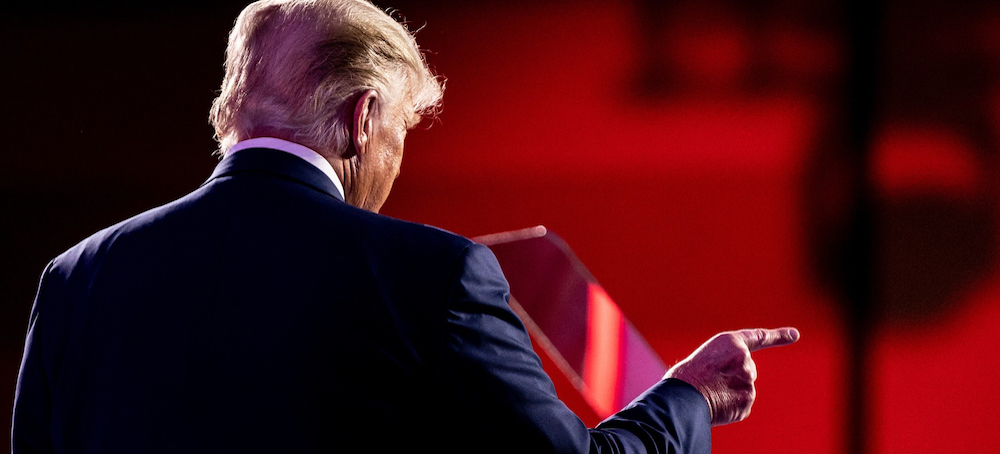
In Closing Remarks, Prosecutors Say Evidence Shows Trump 'Explicitly' Knew About Tax FraudDonald Trump. (photo: Erin Schaff/NYT/Redux)

In Closing Remarks, Prosecutors Say Evidence Shows Trump 'Explicitly' Knew About Tax Fraud
Michael R. Sisak, Associated Press
Sisak writes: "In the end, it wasn't a last-minute smoking gun but a prosecutor insisting that evidence shows Donald Trump was aware of a scheme that his Trump Organization's executives hatched to avoid paying personal income taxes on millions of dollars worth of company-paid perks." 

In the end, it wasn’t a last-minute smoking gun but a prosecutor insisting that evidence shows Donald Trump was aware of a scheme that his Trump Organization’s executives hatched to avoid paying personal income taxes on millions of dollars worth of company-paid perks.

After telling jurors on Thursday that Trump “knew exactly what was going on” with the scheme, Assistant Manhattan District Attorney Joshua Steinglass followed up by citing trial evidence and testimony that he said made clear “Mr. Trump is explicitly sanctioning tax fraud.”

Steinglass, speaking on the last day before deliberations at the Trump Organization’s criminal tax fraud, showed jurors a lease Trump signed for one executive’s Manhattan apartment and a memo the former president initialed authorizing a pay cut for another executive who got perks.

He also cited Weisselberg’s claim, during his three days of testimony, that he told Trump he would pay him back after Trump agreed to cover his grandchildren’s hefty private school tuition cost. Weisselberg then adjusted his payroll records to cut his pre-tax salary by the cost of the tuition.

“I mention this all to show that this whole narrative that Mr. Trump was blissfully ignorant is just not real,” Steinglass said.

Trump himself is not on trial, as Steinglass reminded jurors, but Judge Juan Manuel Merchan gave him the green light to talk about Trump’s possible awareness of the scheme after the company’s lawyers, in their summations, claimed that Trump knew nothing about it.

Trump has denied knowing that Weisselberg and other executives were dodging taxes, writing on his Truth Social platform this week: “There was no gain for ‘Trump,’ and we had no knowledge of it.”

After Steinglass finished Friday, Trump Organization lawyer Michael van der Veen asked Merchan to declare a mistrial, arguing that the prosecutor had irreparably harmed the defense by effectively portraying Trump as a co-conspirator in the tax fraud scheme.

“I don’t believe it’s necessary to declare a mistrial. That’s not really even a thought,” Merchan said, agreeing to instead caution jurors about Steinglass’ remarks.

But Steinglass’ sudden focus on Trump’s knowledge of the scheme, right as the Trump company’s trial was ambling to a conclusion, begged the question: Why wasn’t he charged, too?

The Manhattan district attorney’s office declined comment, citing the ongoing trial. District Attorney Alvin Bragg, who inherited the case when he took office in January, has said that an investigation of Trump is “active and ongoing,” and that no decision has been made on whether to charge him.

The Trump Organization, the entity through which Trump manages his golf courses, hotels and other ventures, is charged with helping some top executives avoid paying income taxes on non-monetary compensation. The company’s case is the only trial to arise from the Manhattan district attorney’s office’s three-year investigation of Trump and his business practices.

Prosecutors argue that the company is liable because Weisselberg and an underling he worked with on the scheme, controller Jeffrey McConney, were “high managerial” agents entrusted to act on behalf of the company and its various entities. If convicted, the company could be fined more than $1 million.

The defense has alleged that Weisselberg came up with the tax dodge scheme on his own, without Trump or the Trump family knowing, and that the company didn’t benefit from his actions.

“We are here today for one reason and one reason only: the greed of Allen Weisselberg,” Trump Organization lawyer Susan Necheles said Thursday.

Weisselberg testified that Trump didn’t know, but that the Trump Organization did derive some benefit because it didn’t have to pay him as much in actual salary. Van der Veen peppered his summation Thursday with the defense’s mantra: “Weisselberg did it for Weisselberg.”

“Their entire theory of the case is a fraud,” Steinglass said Friday morning before the jury entered the courtroom, as company lawyers were seeking to temper his rhetoric.

One company-paid Manhattan apartment even went to Weisselberg’s son, Barry, ostensibly so he could respond quickly to emergencies at the Central Park ice rink the company managed.

“This is all part of the Trump executive compensation package: free cars for you, free cars for your wife, free apartments for you, free apartments for your kids,” Steinglass said. Barry Weisselberg, he quipped, “wasn’t living on a Zamboni in Wollman Rink. He was living in an apartment on Central Park South.”

At the outset of the trial, Merchan cautioned the defense and prosecution to avoid talking about Trump so as to not give jurors the impression that longtime real estate honcho was, or should have been, sitting at the defense table.

But the judge noted Friday that the tenor of the trial changed after defense lawyers and prosecutors frequently mentioned Trump during arguments and testimony, even though he did not testify and did not attend the trial.

Steinglass, wrapping his summation, told jurors that Trump was “the elephant that’s not in the room.”


READ MORE


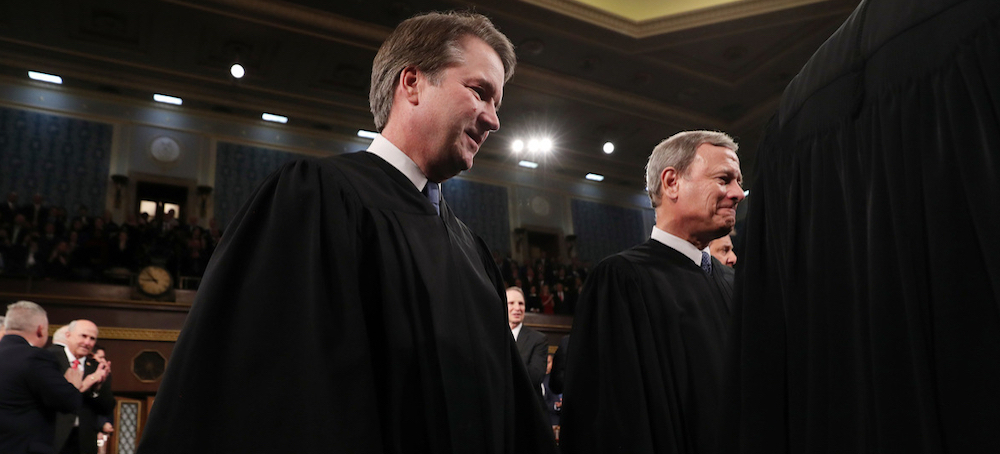
The Big Stakes in the Supreme Court's New LGBTQ Rights CaseJustice Brett Kavanaugh and Chief Justice John Roberts. (photo: Getty Images)

The Big Stakes in the Supreme Court's New LGBTQ Rights Case
Ian Millhiser, Vox
Millhiser writes: "303 Creative v. Elenis, a case about a website designer who refuses to design wedding websites for same-sex couples, could potentially become one of the most consequential anti-discrimination cases in the Supreme Court's recent history."


What is art? The Christian right wants that question to be decided by the Supreme Court in 303 Creative v. Elenis.

303 Creative v. Elenis, a case about a website designer who refuses to design wedding websites for same-sex couples, could potentially become one of the most consequential anti-discrimination cases in the Supreme Court’s recent history. It asks whether the First Amendment’s free speech protections give at least some anti-LGBTQ conservatives a constitutional right to violate civil rights laws.

The case is also a complete mess. Indeed, it’s hard to pin down what, exactly, the two parties to this case actually disagree on.

Lawyers from the Alliance Defending Freedom (ADF), a Christian-identified, anti-LGBTQ organization, represent Lorie Smith, a web designer who wants to sell custom wedding websites to opposite-sex couples — but not to same-sex couples. They argue that Smith should be exempt from a Colorado law prohibiting discrimination on the basis of sexual orientation.

ADF’s lawyers make an uncharacteristically strong argument. “It is bedrock law that the First Amendment protects an artist’s right to choose what to say and when to remain silent,” ADF writes in its brief. It follows that no law can force a web designer, someone who is literally in the business of publishing words that can be read by the general public, to create a website that they find fundamentally objectionable.

This is a very strong First Amendment argument. Indeed, it is such a strong argument that the defendants in this case — the seven members of Colorado’s Civil Rights Commission and that state’s Democratic attorney general — agree with ADF. Colorado law, they write in their brief, permits web designers “to decide what design services to offer and whether to communicate its vision of marriage through biblical quotes on its wedding websites.” It allows them to refuse to design websites that celebrate same-sex marriage, or to refuse to make a website that conveys any other message that they find objectionable.

The main thing that Colorado’s law requires, according to the state, is that once a web designer agrees to sell a particular web design to the public, it must provide the same service to people of all sexual orientations. If Lorie Smith would sell a website denouncing same-sex marriage to a straight customer, then she must sell that same website to a gay customer, if such a customer should request one.

Yet, while it is hard to pin down what, exactly, is the real controversy between Smith and the state of Colorado, the stakes in 303 Creative are still quite high.

303 Creative is a sequel to another high-profile Supreme Court case brought by ADF lawyers, Masterpiece Cakeshop v. Colorado Civil Rights Commission (2018), which claimed that the First Amendment permitted a Colorado baker to refuse to bake a wedding cake for a same-sex couple because the baker’s cakes were a form of “artistic expression.”

But if certain businesses are exempt from civil rights laws because they make products that require a spark of creativity, then it is far from clear which businesses should still be required to follow the law — after all, lots of jobs require at least some artistry. As Justice Elena Kagan noted during oral arguments in Masterpiece Cakeshop, if cake bakers qualify as “artists” who can defy civil rights laws, then what about jewelers? Or hairstylists? Or makeup artists?

What about a conservative Christian restaurateur who claims that their food is an expression of their most sincere religious values, and therefore must not be served to gay customers? And does it matter if this restaurateur is a classically trained chef who completed years of artistic instruction, or someone who sells simple hamburgers?

The Masterpiece Cakeshop decision didn’t really engage with these questions — although ADF prevailed in that case, it did so on narrow grounds that have few implications for future cases.

Now, 303 Creative is a poor vehicle for the Supreme Court to resolve these disputes. The case was brought prematurely, and for that reason, the most important issues in the case should be dismissed.

But the Court’s GOP-appointed majority is very eager to decide cases brought by religious conservatives, so there is no guarantee that they will dismiss the case. It is entirely possible that they will, instead, use the 303 Creative case to rule that at least some self-identified “artists” are immune from civil rights laws.

This case should be dismissed

The First Amendment’s free speech clause forbids nearly all forms of government censorship. It also prohibits the government from forcing someone to convey a message — whether through spoken or published words — that they do not wish to convey.

This is why, for example, recently enacted Texas and Florida laws that effectively order social media websites to publish content against their will are unconstitutional. Web publishers, like any other publisher, have a nearly absolute right to refuse to publish anything they do not wish to appear on their website.

The same rule applies to Lorie Smith. If Colorado actually attempted to force her to design a website that she finds objectionable, then that would violate the First Amendment. Colorado cannot make Smith produce a website that expresses approval of same-sex marriage, regardless of whether she is an amateur web designer or a professional who offers her services to paying customers. As the Supreme Court said in Rumsfeld v. Forum for Academic and Institutional Rights (2006), “freedom of speech prohibits the government from telling people what they must say.”

At the same time, the Court has repeatedly emphasized that anti-discrimination laws do not, “as a general matter, violate the First or Fourteenth Amendments.” Indeed, the Masterpiece Cakeshop decision insisted that protections against discrimination should remain strong. Though the Court said in Masterpiece Cakeshop that “philosophical objections” to same-sex marriage may sometimes carry some legal weight, it also declared that “it is a general rule that such objections do not allow business owners and other actors in the economy and in society to deny protected persons equal access to goods and services under a neutral and generally applicable public accommodations law.”

Colorado’s law threads this needle, because it guarantees “equal access to goods and services” without requiring Smith to actually produce a website she finds objectionable.

The main thrust of Colorado’s brief is that the state has no actual desire to make Smith say anything. Nor does the text of Colorado’s anti-discrimination law require her to design a website she does not wish to make. Instead, that law provides that a business cannot deny someone “the full and equal enjoyment of the goods, services, facilities, privileges, advantages, or accommodations” that the business sells to the public, because of a customer’s sexual orientation.

As Colorado explains in its brief, this law “does not turn on what a business chooses to sell. It simply requires that, once a business offers a product or service to the public, the business sells it to all without regard to a customer’s protected characteristic.” That is, Smith has an absolute right to say that she is not in the business of making websites that celebrate same-sex marriage. What she cannot do is sell a particular website to straight customers and then refuse to sell it to queer customers.

Think of it this way: Suppose an author writes a book called Lesbians Are Immoral. The First Amendment protects nearly all forms of speech, including hate speech, so this book is protected by the Constitution and the government may not pass a law seeking to alter its content or banning its sale.

Now suppose that Brenda, who is a lesbian, goes to a Colorado bookstore and attempts to purchase a copy of Lesbians Are Immoral. If the bookstore refuses to sell the book to Brenda because of her sexual orientation, that would violate Colorado’s civil rights law, and the bookstore would not be protected by the First Amendment. The First Amendment forbids the government from changing the content of a book, but once that book exists, the government may prohibit anyone who would sell it from discriminating.

The same rule applies to any other form of expression — whether it is a website, a painting, or a cake with a pro-LGBTQ message written on it in icing. The government cannot force Smith to design any website she finds objectionable. But it can require her to sell the same web design to all customers, regardless of their sexual orientation.

Which brings us to the reason the 303 Creative case should be dismissed: Lorie Smith has never actually refused to design a wedding website for a customer who wishes to buy one from her. As Colorado says in its brief, Smith’s company “has yet to build any custom wedding website, serve a customer, refuse work for a same-sex wedding, or have the [state’s civil rights law] enforced against it in any way.”

Federal courts are not in the business of deciding hypothetical cases. As a unanimous Supreme Court held in Texas v. United States (1998), “a claim is not ripe for adjudication if it rests upon ‘contingent future events that may not occur as anticipated, or indeed may not occur at all.’“ If, at some point in the future, a customer asks Smith to design a particular website, she refuses, and then Colorado attempts to sanction her for that refusal, then she may very well have a valid First Amendment claim.

But it is impossible for the Supreme Court to determine whether this hypothetical chain of events might play out in the future.

ADF wants to relitigate Masterpiece Cakeshop — and a bunch of other cases, too

The reason the Court historically has stayed away from hypothetical cases is fairly simple. As the Court said in Texas, “the operation of the statute is better grasped when viewed in light of a particular application.”

Colorado’s civil rights law, for example, turns on a very fine distinction between refusing to sell a particular product (which is permitted) and refusing to sell a product to a particular customer (which often is not allowed). It is difficult to know whether a particular litigant intends to violate this law until they’ve actually refused to make a particular sale.

ADF’s brief, however, doesn’t just ask the Court to adjudicate a hypothetical future dispute between Smith and the state of Colorado; it spends a surprising amount of time discussing superficially similar cases involving wedding vendors who refuse to serve same-sex couples:

Government officials are using their power to coerce those who hold views those officials disfavor. The consequences are often severe. Barronelle Stutzman was forced to retire and hand over her company after Washington prohibited her from creating floral art for weddings. Elane Photography and Sweet Cakes went out of business entirely. Emilee Carpenter is facing six-figure fines and jail. Chelsey Nelson and Bob Updegrove are in litigation. And Jack Phillips has been in court for 10 years—despite prevailing in this Court.

Even assuming that ADF is not mischaracterizing the facts of any of these lawsuits, none of these cases are before the Court in 303 Creative. All of them involve different facts than Lorie Smith’s case, and many of them took place in different states, where the relevant anti-discrimination law may not draw the same distinction — between refusing to sell a product and refusing to serve a particular customer — that Colorado’s law draws. It’s hard to think of a valid legal reason ADF would include this paragraph in their brief, except that they hope it might goad the conservative majority on the Court into handing down a sweeping decision to end what ADF describes as a widespread problem.

We should hope that the Supreme Court will resist the temptation to do so. The question of how the First Amendment should apply to creative workers and business owners is not easy, and it typically turns on the nuanced facts of each particular case.

Because Smith is in the business of writing words and publishing them online, for example, she actually has a very strong case that her business is protected by the First Amendment — and that Colorado may not, if such a case should arise in the future, compel her to produce a particular website against her will.

But the same cannot be said about a florist or a cake baker. Sure, a florist may have a First Amendment right not to arrange a bunch of roses to spell out the words “GAY MARRIAGE IS AWESOME!” But the First Amendment does not permit a florist to refuse to sell a particular flower arrangement to a straight couple and not sell that identical arrangement to a gay couple. And it would be a constitutional earthquake if the Supreme Court held that the First Amendment does protect such a florist, because it would mean that anyone whose work requires some degree of artisanship could potentially seek an exemption from civil rights laws.

Again, there may well be valid cases where the First Amendment overcomes a civil rights law. But these cases are nuanced and fact-specific, and they often turn on the very particular wording of state civil rights statutes. We can only hope that this Supreme Court resists the temptation to hand down a sweeping decision in 303 Creative, and instead tells Smith — and people similar to Smith — to wait until she has a real case.


READ MORE

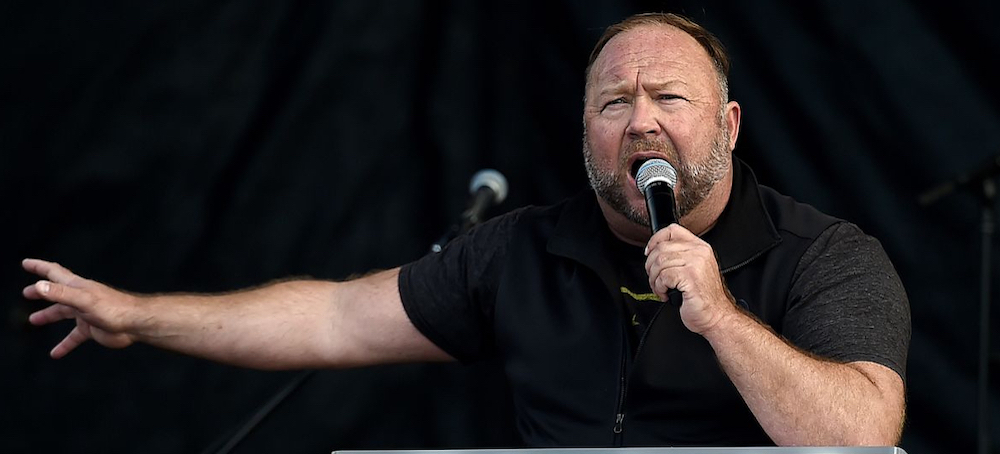
Alex Jones Files for Bankruptcy After Billion-Dollar Sandy Hook Court RulingAlex Jones. (photo: CNN)

Alex Jones Files for Bankruptcy After Billion-Dollar Sandy Hook Court Ruling
Guardian UK
Excerpt: "Rightwing conspiracy theorist Alex Jones filed for personal chapter 11 bankruptcy protection in Texas on Friday, according to a court filing, as he faces nearly $1.5bn in court judgments over conspiracy theories he spread about the 2012 Sandy Hook school massacre."


Infowars host and conspiracy theorist ordered to pay $473m in damages on top of nearly $1bn verdict handed down in October


Rightwing conspiracy theorist Alex Jones filed for personal chapter 11 bankruptcy protection in Texas on Friday, according to a court filing, as he faces nearly $1.5bn in court judgments over conspiracy theories he spread about the 2012 Sandy Hook school massacre.

Jones was ordered by a Connecticut court last month to pay $473m in punitive damages on top of a nearly $1bn verdict handed down in October for his defamatory lies that the shooting was faked.

A court filing showed Jones filed for chapter 11 protection from creditors with the US bankruptcy court in Houston. The filing said Jones has between $1m and $10m of assets and between $1bn and $10bn of liabilities. It also refers to Free Speech Systems, a Jones affiliate and Infowars’ parent, as having filed for bankruptcy in July.

In October, a Connecticut jury in a case brought by relatives of more than a dozen Sandy Hook victims ordered Jones and Free Speech Systems to pay nearly $1bn in damages.

In a separate case in Texas, a jury in August decided Jones must pay the parents of a six-year-old boy killed in the Sandy Hook massacre $45.2m in punitive damages, on top of $4.1m in compensatory damages.

Jones claimed for years that the 2012 killing of 20 students and six staff members at Sandy Hook elementary school in Newtown, Connecticut, was staged with actors as part of a government plot to seize Americans’ guns. He has since acknowledged the shooting occurred.

An attorney representing Jones in the bankruptcy case did not immediately return a message seeking comment.

The bankruptcy filing temporarily halted all proceedings in the Connecticut case and forced a judge to cancel a hearing scheduled on Friday morning on the Sandy Hook families’ request to attach the assets of Jones and his company to secure money for the nearly $1.4bn in damages awarded there.

Chris Mattei, an attorney for the Sandy Hook families in the Connecticut case, criticized the bankruptcy filing on Friday.

“Like every other cowardly move Alex Jones has made, this bankruptcy will not work,” Mattei said in a statement.

“The bankruptcy system does not protect anyone who engages in intentional and egregious attacks on others, as Mr Jones did. The American judicial system will hold Alex Jones accountable, and we will never stop working to enforce the jury’s verdict.”

In the Texas and Connecticut cases, some relatives of the 20 children and six adults killed in the school shooting testified that they were threatened and harassed for years by people who believed the lies told on Jones’s show. One parent testified that conspiracy theorists urinated on his seven-year-old son’s grave and threatened to dig up the coffin.

Erica Lafferty, the daughter of the slain Sandy Hook principal Dawn Hochsprung, testified that people mailed rape threats to her house.

Jones has laughed at the awards on his Infowars show, saying he has less than $2m to his name and won’t be able to pay such high amounts.

The comments contradicted the testimony of a forensic economist at the Texas trial, who said Jones and his company Free Speech Systems have a combined net worth as high as $270m. Free Speech Systems is also seeking bankruptcy protection.

READ MORE  

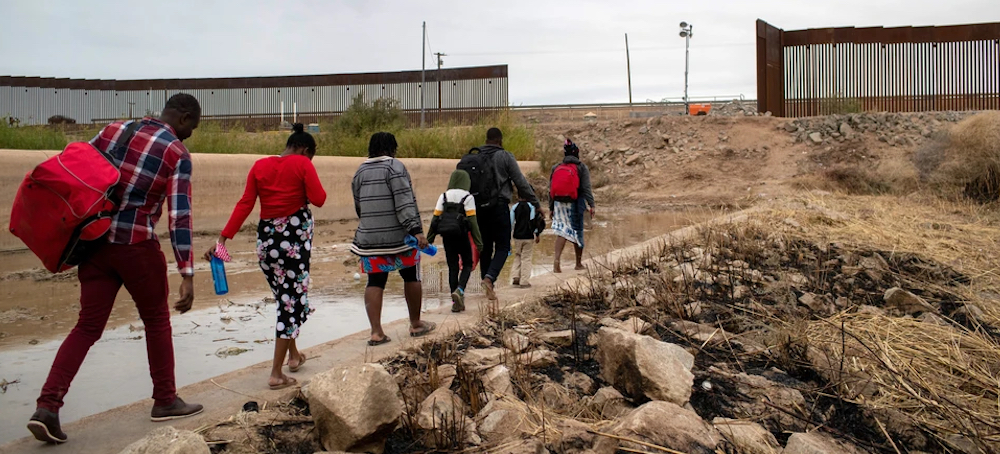
ICE Doxxed Thousands of Migrants Fleeing PersecutionHaitian families walk through a gap in U.S.-Mexico border wall into Yuma, Arizona. (photo: John Moore/Getty Images)

ICE Doxxed Thousands of Migrants Fleeing Persecution
Paul Blest, VICE
Blest writes: "The names of more than 6,000 people in Immigration and Customs Enforcement (ICE) detention seeking protection from persecution were published on the agency's website Monday, according to the Los Angeles Times." 


The agency says it was an accident that happened during a routine website update.

The names of more than 6,000 people in Immigration and Customs Enforcement (ICE) detention seeking protection from persecution were published on the agency’s website Monday, according to the Los Angeles Times.

An Excel spreadsheet containing the names and noncitizen identification numbers of 6,252 people who are seeking asylum was published around 9:45 a.m. EDT Monday. Though the agency said it usually publishes such information in aggregate and keeps the asylum seekers anonymous, this time, it was published with the inclusion of a tab that contained personal identifiable information.

The spreadsheet containing the information remained online for more than five hours before the nonprofit Human Rights First alerted ICE to it at 1:53 p.m. EDT. Eleven minutes later, the agency deleted the spreadsheet from its website, the agency said.

“Though unintentional, this release of information is a breach of policy and the agency is investigating the incident and taking all corrective actions necessary,” an ICE spokesperson said in a statement.

The migrants are seeking asylum by claiming the need for safety from governments, individuals, and organizations (such as gangs) that are threatening them. Those whose information appeared on the website include migrants from Russia and Iran, according to the Los Angeles Times.

ICE said that it’s notifying the asylum seekers or the lawyers representing them of the breach, monitoring the internet for re-posting of the document, and placing alerts on the cases of migrants so they aren’t deported while it’s determined whether the disclosure impacted their cases.

The agency also launched an internal investigation into the incident, saying it would identify IP addresses that downloaded the spreadsheet while it was online and send “clawback” letters requesting that people who downloaded the document destroy it.

When asked by VICE News how many IP addresses ICE had identified, or if the clawback letter was legally enforceable, an ICE spokesperson declined to comment further.

Immigration lawyers and human rights experts told the Los Angeles Times that the disclosure could have life or death consequences for the people whose information was divulged. National Immigrant Justice Center managing attorney Diana Rashid told the Times that a client of the organization who is originally from Mexico was on the list.

“We are deeply concerned about our client’s safety after ICE publicly shared this very sensitive information about her and thousands of others like her,” Rashid told the Times. “She is seeking protection from removal because she fears persecution if returned to her country of origin. Revealing this information makes her more vulnerable to the persecution and abuses she fears if deported.”

Though those on the list are currently in ICE detention centers, the disclosure also happened the same week that ICE’s parent agency issued a terrorism advisory bulletin warning of a “persistent and lethal threat” to migrants, LGBTQ+ people, and Jews.

“Potential changes in border security enforcement policy, an increase in noncitizens attempting to enter the U.S., or other immigration-related developments may heighten these calls for violence,” DHS said in the bulletin.


READ MORE


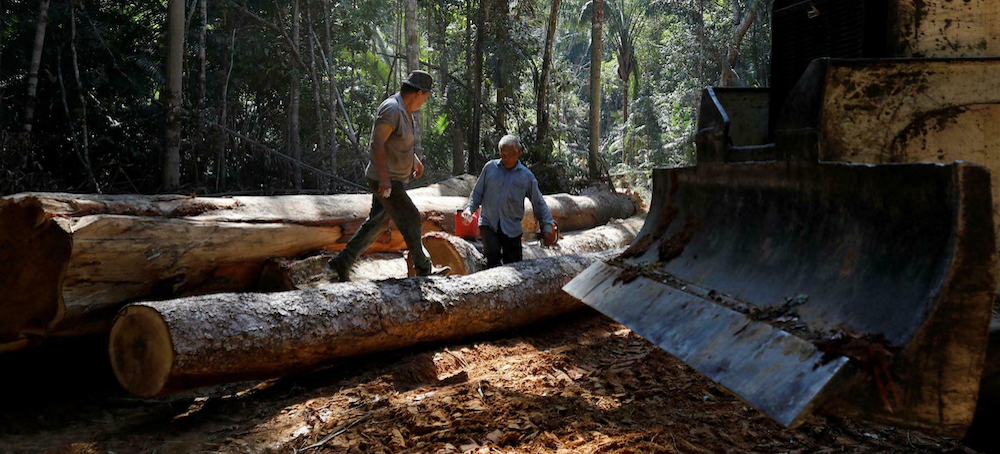
Brazil: Amazon Deforestation Drops, but Devastation Still RampantDeforestation near Humaita, in Amazonas state, Brazil. (photo: Bruno Kelly/Reuters)

Brazil: Amazon Deforestation Drops, but Devastation Still Rampant
Al Jazeera
Excerpt: "Deforestation in the Brazilian Amazon has fallen in the 12 months through July, new government data showed, as incoming President Luiz Inacio Lula da Silva seeks to restore protection for the vital rainforest." 


Environmentalist says outgoing President Jair Bolsonaro handing his successor, Lula da Silva, ‘an Amazon in flames’.

Deforestation in the Brazilian Amazon has fallen in the 12 months through July, new government data showed, as incoming President Luiz Inacio Lula da Silva seeks to restore protection for the vital rainforest.

National space agency (INPE) data released on Wednesday showed 11,568sq km (4,466sq miles) of forest cover was destroyed in the Brazilian Amazon from August 2021 to July 2022 – an area larger than Qatar.

That was an 11 percent drop from the same period a year earlier, when deforestation hit a 15-year high under far-right Brazilian President Jair Bolsonaro.

“It’s better to have a lower number than a higher number, but it’s still a very high number – the second highest in 13 years,” said Marcio Astrini, head of the Climate Observatory, an environmental advocacy group.

Wednesday’s data closed out four years of what environmentalists call disastrous management of the Amazon under Bolsonaro, who was accused of weakening environmental and Indigenous protection agencies in favour of agri-business and mining interests.

Under the former army captain, average annual deforestation rose by 59.5 percent from the previous four years, and by 75.5 percent from the previous decade, according to INPE figures.

“The Bolsonaro government was a forest-destroying machine … The only good news is that it’s about to end,” Astrini said in a statement. “The devastation remains out of control. Jair Bolsonaro will hand his successor a filthy legacy of surging deforestation and an Amazon in flames.”

Lula, a left-wing leader who won tightly fought elections last month, has promised to work towards zero deforestation when he takes office on January 1.

“Brazil is ready to resume its leading role in the fight against the climate crisis,” he said shortly after being declared the winner of the October 30 presidential run-off.

Lula, who previously served as Brazil’s president from 2003 to 2010, also attended the COP27 climate summit in Egypt earlier this month, where he told hundreds in attendance that “Brazil is back in the world”.

Brazilian Senator-elect Flavio Dino, who is acting as public security chief in Lula’s transition team, told the Reuters news agency on Wednesday that the incoming administration would create a new federal police unit focused on environmental crimes.

Dino said the proposed unit would take a broad view of crimes in the Amazon, where deforestation, illegal mining, drug trafficking, money laundering and gang violence are often interlinked.

“There is now a specific complexity of environmental crimes, in which there is, a kind of combo of crimes in the Amazon. We no longer have isolated environmental crimes,” he told the news agency.

“You have this sophistication and there is a transnationality, because it involves other countries in the Amazon. So the idea is a specialised unit for greater efficiency and greater articulation with neighbouring countries.”

Under Bolsonaro, Indigenous leaders had raised alarm about the threats their communities face in the Brazilian Amazon, especially in areas with little government oversight that farmers, miners and poachers are seeking to control and exploit.

The Indigenous Missionary Council recorded 305 cases of “invasions, illegal exploitation of resources and damage to property” on Indigenous territories last year that affected 226 Indigenous lands in 22 Brazilian states.

That was up from 109 such incidents in 2018, the year before Bolsonaro took office – a 180 percent increase.

Carbon Brief, a UK-based climate website, said in a report in September that a Lula election victory could see deforestation drop by 89 percent in the Brazilian Amazon over the next decade and would prevent the destruction of 75,960sq km (29,328sq miles) of rainforest by 2030.

Still, Lula could face tough political opposition in areas where Amazon deforestation is happening, and he also must deal with the difficulty of policing such vast, often remote areas.


READ MORE  

'Zombie' Viruses Are Thawing in Melting Permafrost Because of Climate ChangeA traveler in the Russian high Arctic. (photo: Russia Discovery)

'Zombie' Viruses Are Thawing in Melting Permafrost Because of Climate Change
Michael Birnbaum and Ellen Francis, The Washington Post
Excerpt: "The thawing of the permafrost due to climate change may expose a vast store of ancient viruses, according to a team of European researchers, who say they have found 13 previously unknown pathogens that had been trapped in the previously frozen ground of Russia's vast Siberian region." 


Ancient viruses are locked in Russia’s permafrost. We may soon get a peek.

The thawing of the permafrost due to climate change may expose a vast store of ancient viruses, according to a team of European researchers, who say they have found 13 previously unknown pathogens that had been trapped in the previously frozen ground of Russia’s vast Siberian region.

The scientists found one virus that they estimated had been stranded under a lake more than 48,500 years ago, they said, highlighting a potential new danger from a warming planet: what they called “zombie” viruses.

The same team of French, Russian and German researchers previously isolated ancient viruses from the permafrost and published their findings in 2015. This concentration of fresh viruses suggests that such pathogens are probably more common in the tundra than previously believed, they suggest in a preprint study they published last month on the BioRxiv website, a portal where many scientists circulate their research before it is accepted in a scientific journal.

“Every time we look, we will find a virus,” said Jean-Michel Claverie, a co-author of the study and an emeritus professor of virology at Aix-Marseille Université in France, in a phone interview. “It’s a done deal. We know that every time we’re going to look for viruses, infectious viruses in permafrost, we are going to find some.”

Although the ones they studied were infectious only to amoebas, the researchers said that there was a risk that other viruses trapped in the permafrost for millennia could spread to humans and other animals.

Virologists who were not involved in the research said the specter of future pandemics being unleashed from the Siberian steppe ranks low on the list of current public health threats. Most new — or ancient — viruses are not dangerous, and the ones that survive the deep freeze for thousands of years tend not to be in the category of coronaviruses and other highly infectious viruses that lead to pandemics, they said.

The European team’s findings have not yet been peer-reviewed. But independent virologists said that their findings seemed plausible, and relied on the same techniques that have produced other, vetted results.

The risks from viruses pent up in the Arctic are worth monitoring, several scientists said. Smallpox, for example, has a genetic structure that can hold up under long-term freezing, and if people stumble upon the defrosted corpses of smallpox victims, there is a chance they could be infected anew. Other categories of virus — such as the coronaviruses that cause covid-19 — are more fragile and less likely to survive the deep freeze.

“In nature we have a big natural freezer, which is the Siberian permafrost,” said Paulo Verardi, a virologist who is the head of the Department of Pathobiology and Veterinary Science at the University of Connecticut. “And that can be a little bit concerning,” especially if pathogens are frozen inside animals or people, he said.

But, he said, “if you do the risk assessment, this is very low,” he added. “We have many more things to worry about right now.”

For the most recent research, the European team took samples from several sites in Siberia over a series of years starting in 2015. The viruses they found — of an unusually large type that infects amoebas — were last active thousands, and in some cases, tens of thousands of years ago. Some of the samples were in soil or rivers, although one of the amoeba-targeting viruses was found in the frozen intestinal remains of a Siberian wolf from at least 27,000 years ago, the team said.

The researchers used amoebas as “virus bait,” they said, because they thought it would be a good way to search for viruses without propagating ones that could spread to animals or humans. But they said that didn’t mean these viruses didn’t exist in the frozen tundra.

Siberia is warming at one of the fastest rates on Earth, about four times the global average. For many recent summers it has been plagued by wildfires and temperatures reaching 100 degrees Fahrenheit. And its permafrost — soil that is so thoroughly cold that it remains frozen even through the summer — is rapidly thawing. That means that organisms that have been locked away for thousands of years are now being exposed, as longer periods of defrosting at the soil surface enables objects that had been trapped below to rise upward.

Researchers say the chance of humans stumbling upon the carcasses of humans or animals is increasing, especially in Russia, whose far-north reaches are more densely settled than Arctic regions in other countries. The team gathered some of their samples in Yakutsk, a regional capital and one of Russia’s fastest-growing cities due to a mining boom.

The warming permafrost has been blamed for outbreaks of infectious disease before. A 2016 outbreak of anthrax hit a remote Siberian village and was linked to a 75-year-old reindeer carcass that had emerged from the frozen ground. But anthrax, which is not a virus, isn’t unique to Siberia and is unlikely to cause widespread pandemics.

Many virologists say they are more worried by viruses that are currently circulating among humans than the risk of unusual ones from the permafrost.

New microbes emerge or reemerge all the time, Anthony S. Fauci, the director of the National Institute of Allergy and Infectious Diseases, told The Washington Post in 2015, when the permafrost researchers’ first findings came out.

“This is a fact of our planet and our existence,” he said. “The finding of new viruses in permafrost is not much different from all of this. Its relevance will be dependent on a sequence of unlikely events: The permafrost virus must be able to infect humans, it must then [cause disease], and it must be able to spread efficiently from human to human. This can happen, but it is very unlikely.”

More problematic, many virologists say, are modern-day viruses that infect people and lead to diseases that are sometimes hard to control, such as Ebola, cholera, Dengue and even the ordinary flu. Viruses that cause disease in humans are unlikely to survive the repeated defrosting and freezing cycle that happens at the surface level of the permafrost. And the spread in mosquitoes and ticks that has been linked to global warming is more likely to infect humans with pathogens, some experts say.

An extinct virus “seems like a low risk compared to the large numbers of viruses that are circulating among vertebrates around the world, and that have proven to be real threats in the past, and where similar events could happen in the future, as we still lack a framework for recognizing those ahead of time,” said Colin Parrish, a virologist at Cornell University who is also the president of the American Society for Virology.


READ MORE


Contribute to RSN

Follow us on facebook and twitter!

Update My Monthly Donation

PO Box 2043 / Citrus Heights, CA 95611


Trump's Friday Meltdown: Begging Iran, Ditching Ukraine, and Blaming Everybody But Himself – 7/31/26

                                               LOTS OF POSTS IGNORED BY BLOGGER..... OR REMOVED ON THEIR WHIM! ALL POSTS ARE AVAILABLE ON MI...