Dear Friend,
Recently, Social Activist Harsh Mander was named in the 2020 Delhi riots chargesheet. Delhi police believe that he conspired to provoke violence with his speech delivered to students at Jamia Milia Islamia last December.
Kindly support honest journalism to survive. https://countercurrents.org/subscription/
If you think the contents of this news letter are critical for the dignified living and survival of humanity and other species on earth, please forward it to your friends and spread the word. It's time for humanity to come together as one family! You can subscribe to our news letter here http://www.countercurrents.org/news-letter/.
In Solidarity
Binu Mathew
Editor
Countercurrents.org
Dear Leaders, You Can’t Silence India, Can You?
by John Dayal
I find this mention of Harsh Mander in the police document not just ridiculous and absurd. It is part of a criminal design to
silence Harsh Mander himself — he is the most powerful voice currently in civil society in India – and to silence all the civil society, every dissent group, every individual, journalist, writer, speaker and artist who has the courage to question what the Government is doing on various counts. It’s not just the CAA, NRC, and what has happened in Assam, but also the atrocities that have been unleashed on all sorts of people, in Kashmir, in the north east and in the tribal belt.
Freedom Can’t Be A Special Privilege
by Mucheli Rishvanth Reddy
Recently, Social Activist Harsh Mander was named in the 2020 Delhi riots chargesheet. Delhi police believe that he conspired to provoke violence with his speech delivered to students at Jamia Milia Islamia last December.
Indo-China Skirmish: Media Fires at China but Opposition isn’t spared either
by Abhay Kumar
For the last few days the criticism of the Indian mainstream media — particularly the Hindi media — has been oscillating between China and the opposition parties. While earlier the media narrative trained guns at China for killing 20 Indian soldiers, the later narrative — synchronizing with Prime Minister Narendra Modi’s refusal of the Chinese incursion into the Indian side — zeroed in on the opposition parties that have been seeking clarification from the Modi Government over the Galwan valley skirmish.
All lives must matter
by Nayeema Ahmad Mahjoor
In reality, the poor, the helpless and the subjugated population across the globe are suffering from “nothingness” that makes them restless and concerned about their uncertain future. Growing protests and rallies are the manifestations of their utter
frustration. Masses take refuge in each other’s sufferings and share it by uniting against the oppressors and subjugators. They organise and unite for the struggle of their rights and come on road either in the form of me-too or Arab spring or black lives matters or Muslim lives matters. Only motive is to end the subjugation, fascism and racism and discrimination from east to west.
Democracy and Sports
by Sally Dugman
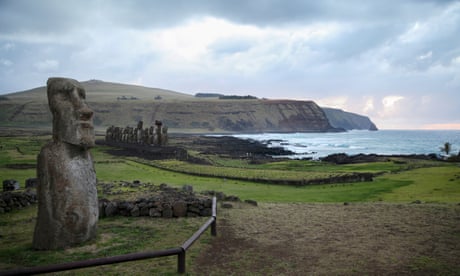
I saw a documentary about one sporting event that fascinated me. It was about preventing conflicts and murder among four tribes on Rapa Nui (named Easter Island by Europeans). It also promoted democratic principles while there was not a lot of food for the tribes.
I’ll be frank. I use to enjoy playing in certain kinds of sports games, but I don’t like watching sports on tv or in videos. Indeed, I don’t like personally attending sporting events to watch them. Doing so bores me too much, although I do have friends who do like to do so. So I am glad that they get pleasure in the activity.
That being shared, I will admit that I saw a documentary about one sporting event that fascinated me. It was about preventing conflicts and murder among four tribes on Rapa Nui (named Easter Island by Europeans). It also promoted democratic principles while there was not a lot of food for the tribes.
The game that took place once a year went like this:
Each tribe would train its one best athlete for the game that took place once a year. Tribal members would also weave him a mat and roll it up in a coil so that he could carry it on his shoulder.
The order of the four athletes successfully fulfilling their tasks would rank order the amount of food that each tribe got. In other words, your tribe would get the least if your athlete came in last. The tribe with the best one ensured that your tribe got the most food and its athlete would be the ruler of the island for a year when the game happened again. The second place competitor got the second most food for his group and the one in third place got the third most. … Not a shabby plan for an island with food shortages and, meanwhile, nobody starved or fought over food. Instead, they focused on preparing for the next game, grew food and lived in peaceful harmony with each other, including in disputes with others in which that year’s ruler acted as judge and jury or assigned others to do so, I imagine.
The game went thusly:
All four warriors were barefooted and carrying their mats. They met on top of a hill
At the signal for the event’s beginning, they would run down the hill and jump off of a very high cliff. Then they would swim out as quickly as possible to a particular small island, find an intact bird egg from a specific type of bird, keep it safe in the mat since it can’t be delivered broken, climb up the steep, high, rocky cliff with no footwear and while only wearing a cloth over private parts (since who has time to make clothes when growing food and training your tribe’s athlete are main focuses). Then each contender would run up to the place where the race started. Winner does not take all!
At the signal for the event’s beginning, they would run down the hill and jump off of a very high cliff. Then they would swim out as quickly as possible to a particular small island, find an intact bird egg from a specific type of bird, keep it safe in the mat since it can’t be delivered broken, climb up the steep, high, rocky cliff with no footwear and while only wearing a cloth over private parts (since who has time to make clothes when growing food and training your tribe’s athlete are main focuses). Then each contender would run up to the place where the race started. Winner does not take all!
Imagine if groups of people in each state were divided up into four groups and had a similar contest of some type for its prize athlete. I can guarantee that the outcome would be more fair and just than our current economics system, which primarily benefit many of our politicians (of which not all are corrupt and some are wonderful) and the wealthy. It would be more equitable instead, it would seem
Easter Island
Island in Chile
Description
Easter Island, a Chilean territory, is a remote volcanic island in Polynesia. Its native name is Rapa Nui. It’s famed for archaeological sites, including nearly 900 monumental statues called moai, created by inhabitants during the 13th–16th centuries. The moai are carved human figures with oversize heads, often… More
Population: 7,750 (2017)
Language: Spanish, Rapa Nui
Island in Chile
Description
Easter Island, a Chilean territory, is a remote volcanic island in Polynesia. Its native name is Rapa Nui. It’s famed for archaeological sites, including nearly 900 monumental statues called moai, created by inhabitants during the 13th–16th centuries. The moai are carved human figures with oversize heads, often… More
Population: 7,750 (2017)
Language: Spanish, Rapa Nui
Sally Dugman writes from MA, USA.
Capturing ‘Walking over Water’ on canvas
by Caesar Das
My rendezvous with ‘Walking over Water’ created a fresh gush of energy outpouring inside. Here
Joshy unfolds a tale about something which has no story in the conventional sense. He weaves the tapestry in the frame of a fictional game of visual discourse
A Journey from Self-reliant to Reliance
by Ganatantrik Adhikar Surakha Sangathan
One slogan that echoed more in the sky of Indian freedom movement was self-reliance India or Swadeshi Bharat. Many groups and individuals were interpreting this nationalist slogan on many ways. But what the common people had the feeling that this was call for Self-reliance, in real terms, the change of mode of production from feudalism to a democratic redistribution of resources. People of India during that time were not accepting the Zamindari, kingship and corporate houses besides the Britishers. What happened then?

One slogan that echoed more in the sky of Indian freedom movement was self-reliance India or Swadeshi Bharat. Many groups and individuals were interpreting this nationalist slogan on many ways. But what the common people had the feeling that this was call for Self-reliance, in real terms, the change of mode of production from feudalism to a democratic redistribution of resources. People of India during that time were not accepting the Zamindari, kingship and corporate houses besides the Britishers. What happened then?
1. In post-colonial India the Industrial Policy Resolution of 1948 and 1956 mainly followed P.C.Mahalobis model of lndianisation and gave public sector a strategic role to build basic infrastructure of the economy. As part of state’s monopoly over core sector 277 Public Sector Undertakings such as HPCL, BPCL, ONGC etc. were formed. The consumer sector was left for the private companies to establish.
2. The famous “Bombay Plan” led by GD Birla (Birla Group of Industries), JD Tata (Tata Iron and Steel Company) had approved it. The Bharatiya Jana Sangha and the Swatantra Party had agreed with both mixed economy and Bombay plan. Shyama Prasad Mukhopadhyay the founder of Bharatiya Jana Sangha was the Union Minister of Industry and Supply in Nehru’s cabinet. Later he resigned but for a different reason.
3. Simultaneously, the private sector was rising up in Indian economy with help government loans, subsidies, tax relaxations etc. In 90s onwards due to active supports of the Indian government of all across the political parties, private industries started booming and public sector died down. In first phase 31 selected PSUs (IOC, BPCL, HPCL, GAIL & VSNL etc) including profit making PSU were sold off or disinvested mostly favouring Tata, Sterlite-Vedanta Co. and Reliance. Reliance, more particularly, got patronage of both Indira Gandhi and Manmohan Singh during their tenure. And almost all big private corporates who had acquired PSUs tied up with foreign capital – inevitable strategy of indianisation of atmanirbhara jojana. .
4. Within just these more than four years of launch of Reliance Jio, since September 2016, it the largest mobile network operator in India and the third largest mobile network operator in the world. A monopoly capital emerge when the State came in support of it. The Prime Minister can also be a model for the advertisement like Narendra Modi did in case of Reliance Jio. (Ad if Hindustan Times on 5th September, 2016). Reliance Jio got favouritism from the government of India like;
a) one month after JIO was launched TRAI had announced a steep cut in interconnection charge, resulting in a fall of these charges by less than 50% for Jio to pay to connect the calls of its subscriber.
b) Reliance was just fined of Rs 500 for using Prime Minister in his promotional Advertisement. But such closeness with the BJP attracted many mobile users towards the Reliance.
c) TRAI arbitrarily imposed a penalty of more than Rs 3,000 crore on other network like Airtel, Vodafone etc. on the other operators for not providing enough interconnecting points to JIO
d) Government has not allotted spectrum for 4G services to BSNL in order to prevent it from competing against Reliance Jio
e) Knowingly made BSNL loss for which could not pay salary to its 1.65 lakh employees. Such non-payment of wages helped to spread rumour that BSNL would merge with Reilance’s Jio. This helped the Jio to get new customers.
f) Reliance Jio and State Bank of India (SBI) Yono did partnership deal where Reliance had more share (70%) than SBI (30%). By this agreement, Reliance Co. can access SBI customers’ data. (Indian Express and Live Mint, August 03, 2018)
5. During this COVID 19 when national growth rate is sliding towards negative and many corporates have kept their hands up the Reliance is showing all time high of share price rise particularly after;
i) American social media giant Facebook and other seven US based companies like Silver Lake, Vista Equity, General Atlantic, TPG Capital etc. purchased share from Reliance Jio in between April 22 – June 18, 2020. Facebook alone has invested Rs 43,574 crore in Jio after purchasing its 9.9% share.
ii) Abu Dhabi Investment Authority (ADIA) of United Arab Emirates invested Rs 9,093 crore. Like this, Reliance has already sold its share to three Saudi Arabian Companies.
iii) Reliance Jio’s 24.7% share has gone to foreign hands through 11 corporates of USA and Saudi Arab including most unfaithful company like FACEBOOK. Telecommunication has always been a key and sensitive department like atomic and defence from the national security point of view. Now crores of customers’ personal information including government offices can be accessed by US based company Facebook, WhatsApp and others corporates.
iv) Reliance Jio had tied up to SBI Yono for its Payment Bank. Then millions of SBI account holders. Several individual, business houses, trusts, cooperatives and government offices have accounts in SBI. ‘This, in turn, would imply that the entire database of India’s biggest bank in the public sector would now be potentially available to Facebook and WhatsApp through their association with Reliance.’ (NEWSCLICK, 18th June)
v) In COVID period, the warned that for any FDI take over with border countries like Bangaladesh, Pakistan and China approval of the government of India is essential. But it left US and other countries.
In less than seven weeks, since lockdown started, Reliance Industries has seen investors invest a total of Rs 1.1 lakh crore for 24.7% equity stake in Jio Platforms. Through this government of India has broadened its ‘Atmanirbhar plan’ by selling fate of crores of Indian customers to foreign companies.
6. This is continuation of similar process of bungling the public sector and of giving free hand of monopolisation of few corporates. Already India’s richest man Mukesh Ambani has become doubly richer within the first five years (2014 to 2019) under the Modi government – from about $23 billion to $55 billion. India’s highest mobile users and highest sbi account users have become ‘virtual citizen’ of US based Companies like Facebook.
This is India’s journey from self-reliance to Reliance. Quite interesting. Quite horrible also.
——
Prepared by Ganatantrik Adhikar Surakha Sangathan, Odisha
Write to: gassbhubaneswara@gmail.com
——
Prepared by Ganatantrik Adhikar Surakha Sangathan, Odisha
Write to: gassbhubaneswara@gmail.com
The Multifarious Hajini and his Discourses
by Waseem Majazi
To
unpack the personality of Professor Mohi-ud-Din Hajini, the multifarious man, is intractable for a mediocre like me. What to call the man who was larger-than- life and was made of sterner stuff? He was many in one. A genuine Philosopher, a genius Islamic scholar, a real revivalist, an honest translator, an appealing educationist, a great teacher, a staunch Kashmiri and a dramatist who wrote the first three act play in Kashmiri on Shakespearean pattern ‘Grees-Sund Ghara‘ (The Peasants House), the play of social protest that exposes faithfully the social norms and exploiting agents in Kashmir
Celebrating World Music Day: 21st June: Facing Illness with Music – The Story of Claudio Abbado
by Surasri Chaudhuri
A historic concert in 2004, featuring the Lucerne Festival Orchestra, where musicians are playing their hearts out for the conductor they adore,
the frail but astonishingly impassioned and energetic septuagenarian Italian Maestro, Claudio Abbado. Diagnosed with stomach cancer in 2000, he has recovered after an aggressive surgery and following treatment, and has worked as hard as he could to revive the orchestra.
Christian Women And Children Dragged And Harassed In West Bengal
by Shibu Thomas
Christian women and children were dragged through a village by a raging mob of over 40 religious fanatics on the 19th of June 2020. This act of religious racism took place in Charabari, a village in the district of North 24 Paraganas in West Bengal

Christian women and children were dragged through a village by a raging mob of over 40 religious fanatics on the 19th of June 2020. This act of religious racism took place in Charabari, a village in the district of North 24 Paraganas in West Bengal, India. Pr.T. A.Paul, the President of Berachah Faith Mission told Persecution Relief that the mob had gone to Pr. BiswambarMunda’s home to attack him, but when they found no male members present at home, they vehemently pulled the women and children out of the house and dragged them to the local club. “The women and children of the family had to endure insults and threats at the club” he said.
Speaking to Persecution Relief from an undisclosed location, Pastor Biswambar said a few of the fanatics went back to his home while the mob were trying to make his wife-Anima, forsake Christianity. “They desecrated a cross that was on my wall by smearing it with mud and then loudly threatened to blow up my home with a bomb. They shouted ‘we would have killed him, had we found him today’” he said some of the neighbours heard them say.
“Normally, every Friday I wake up to fast and pray, but that morning I felt a voice urge me to leave the house. So, picking up my bag, I told my wife that I was going out and would return later. It was only later that I realized it was God who told me to leave, when my wife called me up and told me what had happened” said the Pastor.
Pastor Biswambar and Anima belong to the Munda tribe and have two children, a son (14) and a daughter (9). He presently lives with his extended family, all of whom are Christians. He has been serving with the Berachah Faith Mission for the past one year, Pr. T.A.Paul told Persecution Relief.
“The local people have been hurling threats, abusive words, mockery etc on this family whenever they would venture out. A couple of weeks back, a mob of religious fanatics conspired to beat up Biswambar and took him to the ‘Charabari AdibashiJubo Songho’ club to threaten him, but this time the level of persecution was at a different intensity altogether’ added Pr.T.A.Paul.
Pr. Biswambar told Persecution Relief that there are around 30 Christians in this village. He regularly gathers them to pray at his sister-Savitri Munda’s home. The Church has been meeting together for the past one year. “They have threatened us to leave the village by Tuesday the 23rd of June 2020” he said. Pr. UjjwalDeb, a local Christian leader, alerted Persecution Relief about this incident.
The Berachah Faith Mission that Pr. Biswambar serves with is a church planting mission that serves in six districts of West Bengal. “We have been facing persecution in almost all the places wherever we have been conducting prayer fellowships, especially over the past 3 months” said Pr. T.A.Paul.
In the 1st Quarter of 2020, we recorded 187 cases. Between 1st Quarter of 2016 to 1st Quarter of 2020, there has been a rise of 128.04 % of Hate Crimes against Christians all across the country. In 2019 alone, Persecution Relief has recorded the maximum number of 527 cases compared to 447 cases in 2018, 440 in 2017 and 330 in 2016. From January 2016 to March 2020, Persecution Relief has recorded 1961 cases of Hate crimes against Christians in India.
The US Commission on International Religious Freedom (USCIRF) has downgraded India to the lowest ranking, ‘Countries of Particular Concern’(CPC) In its 2020 report. ranked India’s persecution severity at “Tier 2” along with Iraq and Afghanistan. Over the past seven years, India has risen from No. 31 to No. 10 on Open Doors’ World Watch List, ranking just behind Iran in persecution severity.
Shibu Thomas is the Founder of Persecution Relief Email: founder@persecutionrelief.org
Parenting: The ultimate jigsaw puzzle
by Nadeem Khan
Child psychologists generally believe that parenting style adopted is primarily responsible for the behavior of children. It also affects the performance
of the child in everything worth mentioning throughout his life.
How We Sold Soviet Union And Czechoslovakia For Plastic Shopping Bags
by Andre Vltchek
I want to say that none of it is new, that the West already destabilized so many countries and territories, brainwashed tens of millions of young people. I know, because in the past, I was one of them. If I weren’t, it would be impossible to understand what is now happening in Hong Kong.

For months, this has been a story that I want to share with young readers in Hong Kong. Now it seems to be the really appropriate time when the ideological battle between the West and China is raging, and as a result of it, Hong Kong and the entire world is suffering.
I want to say that none of it is new, that the West already destabilized so many countries and territories, brainwashed tens of millions of young people.
I know, because in the past, I was one of them. If I weren’t, it would be impossible to understand what is now happening in Hong Kong.
*
I was born in Leningrad, a beautiful city in the Soviet Union. Now it is called St. Petersburg, and the country is Russia. Mom is half Russian, half Chinese, artist, and architect. My childhood was split between Leningrad and Pilsen, an industrial city known for its beer, at the Western extreme of what used to be Czechoslovakia. Dad was a nuclear scientist.
Two cities were different. Both represented something essential in the Communist planning, a system that you were taught, by the Western propagandists, to hate.
Leningrad is one of the most stunning cities in the world, with some of the greatest museums, opera and ballet theatres, public spaces. In the past, it used to be the Russian capital.
Pilsen is tiny, with only 180.000 inhabitants. But when I was a kid, it counted with several excellent libraries, art cinemas, an opera house, avant-garde theatres, art galleries, research zoo, with things that could not be, as I realized later (when it was too late), found even in the U.S. cities of one million.
Both cities, a big and a small, had excellent public transportation, vast parks, and forests coming to its outskirts, as well as elegant cafes. Pilsen had countless free tennis facilities, football stadiums, even badminton courts.
Life was good, meaningful. It was rich. Not rich in terms of money, but rich culturally, intellectually, and health-wise. To be young was fun, with knowledge free and easily accessible, with the culture at every corner, and sports for everyone. The pace was slow: plenty of time to think, learn, analyze.
But, it was also the height of the Cold War.
We were young, rebellious, and easy to manipulate. We were never satisfied with what we were given. We took for granted everything. At night, we were glued to our radio receivers, listening to the BBC, Voice of America, Radio Free Europe, and other broadcasting services aiming at discrediting socialism and all countries which were fighting against Western imperialism.
Czech socialist industrial conglomerates were building, in solidarity, entire factories, from steel to sugar mills, in Asian, Middle East, and Africa. But we saw no glory in this because Western propaganda outlets were simply ridiculing such undertakings.
Our cinemas were showing masterpieces of Italian, French, Soviet, Japanese cinema. But we were told to demand junk from the U.S.
Music offering was great, from live to recorded. Almost all music was, actually, available although with some delay, in local stores or even on stage. What was not sold in our stores was nihilist rubbish. But that was precisely what we were told to desire. And we did desire it, and copied it with religious reverence, on our tape recorders. If something was not available, the Western media outlets were shouting that it is a gross violation of free speech.
They knew, and they still know now, how to manipulate young brains.
At some point, we were converted into young pessimists, criticizing everything in our countries, without comparing, without even a tiny bit of objectivity.
Does it sound familiar?
We were told, and we repeated: everything in the Soviet Union or Czechoslovakia was bad. Everything in the West was great. Yes, it was like some fundamentalist religion or mass-madness. Hardly anyone was immune. Actually, we were infected, we were sick, turned into idiots.
We were using public, socialist facilities, from libraries to theatres, subsidized cafes, to glorify West and smear our own nations. This is how we were indoctrinated, by Western radio and television stations, and by publications smuggled into the countries.
In those days, plastic shopping bags from the West became the status symbols! You know, those bags that you get in some cheap supermarkets or department stores.
When I think about it at a distance of several decades, I can hardly believe it: young educated boys and girls, proudly walking down the streets, exhibiting cheap plastic shopping bags, for which they paid a serious amount of money. Because they came from the West. Because they were symbolizing consumerism! Because we were told that consumerism is good.
*
We were told that we should desire freedom. Western-style freedom.
We were instructed to “fight for freedom.”
In many ways, we were much freer than the West. I realized it when I first arrived in New York and saw how badly educated were local kids of my age, how shallow was their knowledge of the world. How little culture there was, in regular mid-sized North American cities.
We wanted, we demanded designer jeans. We were longing for Western music labels in the center of our LPs. It was not about the essence or the message. It was form over substance.
Our food was tastier, ecologically produced. But we wanted colorful Western packaging. We demanded chemicals.
We were constantly angry, agitated, confrontational. We were antagonizing our families.
We were young, but we felt old.
I published my first book of poetry, then left, slammed the door behind me, went to New York.
And soon after, I realized that I was fooled!
*
This is a very simplified version of my story. Space is limited.
But I am glad I can share it with my Hong Kong readers, and of course, with my young readers all over China.
Two wonderful countries which used to be my home were betrayed, literally sold for nothing, for pairs of designer jeans, and plastic shopping bags.
West celebrated! Months after the collapse of the socialist system, both countries were literally robbed of everything by Western companies. People lost their homes and jobs, and internationalism was deterred. Proud socialist companies got privatized and, in many cases, liquidated. Theatres and art cinemas were converted into cheap second-hand clothes markets.
In Russia, life expectancy dropped to African sub-Saharan levels.
Czechoslovakia was broken into two parts.
Now, decades later, both Russia and Czechia are wealthy again. Russia has many elements of a socialist system with central planning.
But I miss my two countries, as they used to be, and all surveys show that the majority of people there miss them too. I also feel guilty, day and night, for allowing myself to be indoctrinated, to be used, and in a way to betray.
After seeing the world, I understand that what happened to both the Soviet Union and Czechoslovakia, also happened to many other parts of the world. And right now, the West is aiming at China, by using Hong Kong.
Whenever in China, whenever in Hong Kong, I keep repeating: please do not follow our terrible example. Defend your nation! Do not sell it, metaphorically, for some filthy plastic shopping bags. Do not do something that you would regret for the rest of your lives!
Andre Vltchek is a philosopher, novelist, filmmaker and investigative journalist. He has covered wars and conflicts in dozens of countries. Six of his latest books are “New Capital of Indonesia”, “China Belt and Road Initiative”, “China and Ecological Civilization” with John B. Cobb, Jr., “Revolutionary Optimism, Western Nihilism”, a revolutionary novel “Aurora” and a bestselling work of political non-fiction: “Exposing Lies Of The Empire”. View his other books here. Watch Rwanda Gambit, his groundbreaking documentary about Rwanda and DRCongo and his film/dialogue with Noam Chomsky “On Western Terrorism”. Vltchek presently resides in East Asia and Latin America, and continues to work around the world. He can be reached through his website, his Twitter and his Patreon.
The Supreme Court shirked its constitutional and moral responsibility during the Pandemic
Co-Written by Atul and Sandeep Pandey
The apex court displayed historic apathy and indifference in the initial days of the lockdown when the people needed it the most. The Court refused to step in despite, the failure
of the government to assuage the difficulties faced by people. In the words of Senior advocate Dushyant Dave who is also the President of the Supreme Court Bar Association, it was presented with an excellent opportunity to win back the trust of people by holding the government accountable, however, it refused. For a considerable time, it declined to entertain petitions highlighting the plight of labourers by holding that it cannot pass orders based on media reports. When told about the miseries of people walking hundreds of miles under the scorching sun, it said, “How can we stop people from walking” and when reminded about the indigence of the migrant labourers, the Chief Justice remarked, “If they are being provided meals, why do they need money for meals”.
Race still matters in the land of Lincoln
by Habib Siddiqui
Some 56 years since the passage of the Civil Rights Acts of 1964 race
still matters in the land of Lincoln! As it was true back in the 1960s, during the civil rights movement of leaders like Malcolm X, Muhammad Ali and Martin Luther King Jr. – when the nation bore witness as police aimed high-powered hoses and roaring dogs on black men, women and even children who wanted just one thing — to be treated the same as white Americans, black Americans continue to be treated badly.
President Trump has taken credit for popularizing Juneteenth in an interview with the Wall Street Journal (WSJ) on Thursday (June 19, 2020), stating that no one had ever heard of the June 19 holiday before he scheduled a political rally in Tulsa, Oklahoma, on that day, claiming, “I did something good: I made Juneteenth very famous.”
President Trump is right. Although Juneteenth is the oldest known celebration commemorating the ending of slavery in the United States very few Americans outside the state of Texas and the Afro-American community have ever heard of this holiday. Trump later rescheduled his trip to June 20, as he put, “out of respect for this holiday.”
In Wednesday’s WSJ interview, Trump said a black Secret Service agent told him the meaning of Juneteenth when the president initially faced criticism following his announcement of the rally.
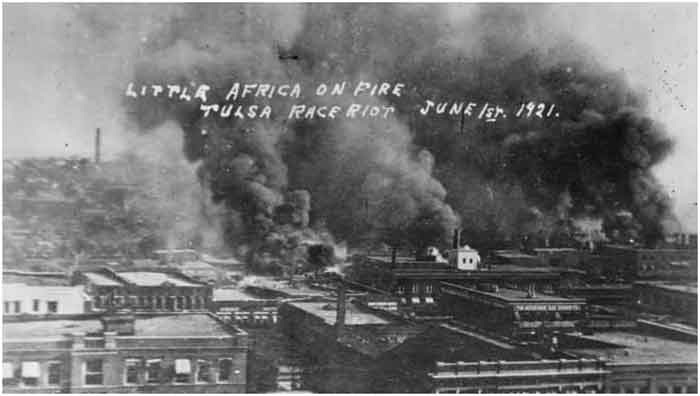
Also fueling criticism of the rally is that Tulsa was the site of a massacre in 1921 in which mobs of white residents attacked black residents and businesses in a section of the city referred to as “Black Wall Street.”
Some history lesson may help us to understand those events better.
On September 22, 1862, U.S. President Abraham Lincoln issued a preliminary warning that he would order the emancipation of all slaves in any state that did not end its rebellion against the Union by January 1, 1863. None of the Confederate states opposing him did so, and Lincoln’s order was signed and took effect on January 1, 1863.
The Emancipation Proclamation outraged white Southerners and their supporters, who saw it as the beginning of a race war. It angered some Northern Democrats, energized abolitionists, and undermined those Europeans that wanted to intervene to help the Confederacy. The Proclamation lifted the spirits of African-Americans, both free and slave. It led many slaves to escape from their slave masters and get to Union lines to obtain their freedom, and to join the Union Army against the Confederate army.
Two and a half years after President Lincoln’s Emancipation Proclamation, the Union soldiers, led by Major General Gordon Granger, landed at Galveston, Texas with news that the war had ended and that the enslaved were now free. The date was on June 19th, 1865.
What took this long for the Proclamation to be conveyed down south? It is often said that a messenger who was dispatched to convey the message of emancipation was murdered on his way to Texas. Another story is that the news was deliberately withheld by the slave masters to maintain the labor force on the plantations. And still another is that federal troops actually waited for the slave owners to reap the benefits of one last cotton harvest before going to Texas to enforce the Emancipation Proclamation.
It can safely be said that the Emancipation Proclamation had little impact on the Texans due to the minimal number of Union troops to enforce the new Executive Order. The southern states were still under non-Union generals. However, with the surrender of General Robert Lee in April of 1865 with his 28,000 troops to Union General Ulysses S. Grant, effectively ending the American Civil War, and the arrival of General Granger’s regiment, the forces were finally strong enough to influence and overcome the resistance.
One of General Granger’s first orders of business was to read to the people of Texas, General Order Number 3 which began most significantly with:
“The people of Texas are informed that in accordance with a Proclamation from the Executive of the United States, all slaves are free. This involves an absolute equality of rights and rights of property between former masters and slaves, and the connection heretofore existing between them becomes that between employer and hired laborer.”
As expected, the reactions to this profound news ranged from pure shock to immediate jubilation. Many emancipated slaves left those plantations to smell freedom in their lives. North was a logical destination and for many it represented true freedom, while the desire to reach family members in neighboring states drove some into Louisiana, Arkansas and Oklahoma. Settling into these new areas as free men and women brought on new realities and the challenges of establishing a heretofore non-existent status for black people in America.
Less known to the white Americans and others, June 19 came to be celebrated as ‘Juneteenth’ amongst the Afro-American community. The Juneteenth celebration was a time for reassuring each other, for praying and for gathering remaining family members. Juneteenth continued to be highly revered in Texas decades later, with many former slaves and descendants making an annual pilgrimage back to Galveston on this date.
On January 1, 1980, Juneteenth became an official state holiday in Texas through the efforts of Al Edwards, an African American state legislator. The successful passage of this bill marked Juneteenth as the first emancipation celebration granted official state recognition.
The poem “We Rose,” by Kristina Kay (shared below), has been called one of the “official poems” of the Juneteenth.
We Rose
From Africa’s heart, we rose
Already a people, our faces ebon, our bodies lean,
We rose
Skills of art, life, beauty and family
Crushed by forces we knew nothing of, we rose
Crushed by forces we knew nothing of, we rose
Survive we must, we did,
We rose
We rose
We rose to be you, we rose to be me,
Above everything expected, we rose
Above everything expected, we rose
To become the knowledge we never knew,
We rose
We rose
Dream, we did
Act we must.
Act we must.
Texas was the last Confederate state to get the news. This year, the day is particularly meaningful, as America protests racial injustice while coronavirus devastates America’s Black community.
–=–
Some 56 years since the passage of the Civil Rights Acts of 1964 race still matters in the land of Lincoln! As it was true back in the 1960s, during the civil rights movement of leaders like Malcolm X, Muhammad Ali and Martin Luther King Jr. – when the nation bore witness as police aimed high-powered hoses and roaring dogs on black men, women and even children who wanted just one thing — to be treated the same as white Americans, black Americans continue to be treated badly. They suffer. They make up the majority of the incarcerated people. They are more prone to be killed when confronted by the police. Mutual suspicion remains high, which sometimes results into unnecessary violence, often in the hands of a trigger-happy cop. The Ku Klux Klan is still active and so are many white supremacists that feel energized with President Trump in the White House.
Obviously, race tensions were much worse a century ago. In those days, numerous lynching and other acts of racially motivated violence was rather quite common. There were also militant efforts by African Americans to prevent such attacks on their communities.
The years following World War 1 much of the USA saw a spike in racial tensions, including the resurgence of the KKK.
By 1921, fueled by oil money, Tulsa, Oklahoma was a growing, prosperous city with a population of more than 100,000 people. But crime rates were high, and vigilante justice of all kinds wasn’t uncommon. The city was also a highly segregated city: Most of the city’s 10,000 black residents lived in a neighborhood called Greenwood, which included a thriving business district sometimes referred to as the Black Wall Street.
On May 30, 1921, a young black teenager named Dick Rowland entered an elevator at the Drexel Building, an office building on South Main Street. At some point after that, the young white elevator operator, Sarah Page, screamed; Rowland fled the scene. The police were called, and the next morning they arrested Rowland. A front-page story in the Tulsa Tribune that afternoon reported that police had arrested Rowland for sexually assaulting Page.
As evening fell, an angry white mob was gathering outside the courthouse, demanding the sheriff hand over Rowland. Sheriff Willard McCullough refused, and his men barricaded the top floor to protect the black teenager.
Around 9 p.m., a group of about 25 armed black men—including many World War I veterans—went to the courthouse to offer help guarding Rowland. After the sheriff turned them away, some of the white mob tried unsuccessfully to break into the National Guard armory nearby.
With rumors still flying of a possible lynching, a group of around 75 armed black men returned to the courthouse shortly after 10 pm, where they were met by some 1,500 white men, some of whom also carried weapons.
After shots were fired and chaos broke out, the outnumbered group of black men retreated to Greenwood. Over the next several hours, groups of white Tulsans—some of whom were deputized and given weapons by city officials—committed numerous acts of violence against black people, including shooting an unarmed man in a movie theater.
In the meantime, rumor of a large-scale insurrection among black Tulsans was underway, including reinforcements from nearby towns and cities with large African-American populations, fueled the growing hysteria.
As dawn broke on June 1, thousands of white citizens poured into the Greenwood District, looting and burning homes and businesses over an area of 35 city blocks. Firefighters who arrived to help put out fires later testified that rioters had threatened them with guns and forced them to leave.
According to a later Red Cross estimate, some 1,256 houses were burned; 215 others were looted but not torched. Two newspapers, a school, a library, a hospital, churches, hotels, stores and many other black-owned businesses were among the buildings destroyed or damaged by fire.
By the time the National Guard arrived and Governor J. B. A. Robertson had declared martial law shortly before noon, the riot had effectively ended. Though guardsmen helped put out fires, they also imprisoned many black Tulsans, and by June 2 some 6,000 people were under armed guard at the local fairgrounds.
In the hours after the Tulsa Race Massacre, all charges against Dick Rowland were dropped. The police concluded that Rowland had most likely stumbled into Page, or stepped on her foot. Kept safely under guard in the jail during the riot, he left Tulsa the next morning and reportedly never returned.
The “official” tally of deaths in the massacre was 36 people killed, including 10 white people. Even by that estimate—which historians now consider much too low—the Tulsa Race Massacre stood as one of the deadliest riots in U.S. history, behind only the New York Draft Riots of 1863, which killed at least 119 people.
For decades, there were no public ceremonies, memorials for the dead or any efforts to commemorate the events of May 31-June 1, 1921. Instead, there was a deliberate effort to cover them up. The Tulsa Tribune removed the front-page story of May 31 that sparked the chaos from its bound volumes, and scholars later discovered that police and state militia archives about the riot were missing as well. As a result, until recently the Tulsa Race Massacre was rarely mentioned in history books, taught in schools or even talked about.
In 1996, seventy-five years after the massacre, a bipartisan group in the state legislature authorized formation of the Oklahoma Commission to Study the Tulsa Race Riot of 1921. In 2001, the Commission concluded that between 100 and 300 people were killed and more than 8,000 people made homeless over those 18 hours in 1921.
A bill in the Oklahoma State Senate requiring that all Oklahoma high schools teach the Tulsa Race Riot failed to pass in 2012, with its opponents claiming schools were already teaching their students about the riot.
In November 2018, the 1921 Race Riot Commission was officially – and I must add correctly – renamed the 1921 Race Massacre Commission. In 2020, the massacre became part of the Oklahoma school curriculum.
On May 29, 2020, the eve of the 99th anniversary of the event and at the onset of the George Floyd protests, Human Rights Watch released a report titled “The Case for Reparations in Tulsa, Oklahoma: A Human Rights Argument”, demanding reparations for survivors and descendants of the violence as the economic impact of the massacre is still visible in the high poverty rates and lower life expectancies in North Tulsa.
Will the descendants of all those Africans brought forcibly as slaves ever get reparations for the monumental injustice and inhuman sufferings that they had endured? I doubt it.
Building monuments are easy and convenient as diversionary tactics but it is more difficult to repair the robbed and dehumanized hearts!
Sources
James S. Hirsch, Riot and Remembrance: The Tulsa Race War and Its Legacy (New York: Houghton Mifflin, 2002).
Scott Ellsworth, “Tulsa Race Riot,” The Encyclopedia of Oklahoma History and Culture.
1921 Tulsa Race Riot, Tulsa Historical Society & Museum.
Nour Habib, “Teachers talk about how black history is being taught in Oklahoma schools today,” Tulsa World (February 24, 2015).
Sam Howe Verhovek, “75 Years Later, Tulsa Confronts Its Race Riot,” New York Times (May 31, 1996).
Scott Ellsworth, “Tulsa Race Riot,” The Encyclopedia of Oklahoma History and Culture.
1921 Tulsa Race Riot, Tulsa Historical Society & Museum.
Nour Habib, “Teachers talk about how black history is being taught in Oklahoma schools today,” Tulsa World (February 24, 2015).
Sam Howe Verhovek, “75 Years Later, Tulsa Confronts Its Race Riot,” New York Times (May 31, 1996).
Habib Siddiqui is a political commentator
Father’s Day 2020
by Dr Mike Ghouse
Father’s Day is a great tradition to celebrate and honor the father. However, it is also a stressful day for many people. I feel the joy and the pain of both groups, here are some thoughts about each group.
Effective role of communication in combating the Coronavirus
by Shafeeque Ahmad Azmi
Instead of giving this war a religious or political colour, there was an urgent need for
the media and the government to facilitate access to information and medical care to the poor, workers, and the affected population, and to inculcate a scientific temper in the people. Further, the whole efforts needs to be channelized in making the system transparent for public- the information is supposed to be made available by the government in the treatment of patients, the facilities available to patients and suspected patients, existing services in the hospitals, presence of specialist doctors, ventilators and so on.
Visually disabled and lockdown
by Sheshu Babu
Almost all sections of people have suffered due to lockdown. Only a few elite upper classes and rich have not suffered much. The migrant workers, street vendors and petty business persons had to endure lot of hardship. Similarly, disabled have also bore the brunt of suffering due to lockdown. The disabled constitute a small percentage of the
whole population and visually disabled are even less but their welfare has not almost sidelined by both centre and state rulers.
Kashmiri Boy Chasing Dreams in Bollywood Film Industry
by Ubaid Bhat
Wajahat Rafiq is a Mumbai Based Filmmaker, born in Kashmir groomed his career in Bollywood industry as an actor and flim maker.. In an interview with Ubaid Bhat, Wajahat highlighted his journey of being a filmmaker though he started his carrier as an actor .
Ambedkar: A Socialist ?
by Mohamed Rashid KC
There are heated discussions and debates on perspectives of DR B. R Ambedkar on Indian caste system and constitutional positive discrimination to protect minorities from age old perverted societal caste practices. Perhaps, discussions on his view on economic policies to protect the interest of minorities and ensure equality are
apparently rare.


