LOTS OF POSTS IGNORED BY BLOGGER.....
OR REMOVED ON THEIR WHIM!
ALL POSTS ARE AVAILABLE ON
MIDDLEBORO REVIEW AND SO ON
BLOGGER DOESN'T LIKE TRUTH OR FACTS!
BLOGGER DOESN'T LIKE FUND RAISERS AND DELETES
POSTS THAT INCLUDE FUNDRAISING THAT 'VIOLATES THEIR
UNDEFINED COMMUNITY STANDARDS SO ALL 'FUND RAISING'
IS DELETED - CONTRIBUTE AS YOU ARE INCLINED TO SUPPORT
IMPORTANT ISSUES! THESE ARE NOT SOLICITATIONS
(Original photo: Reuters)
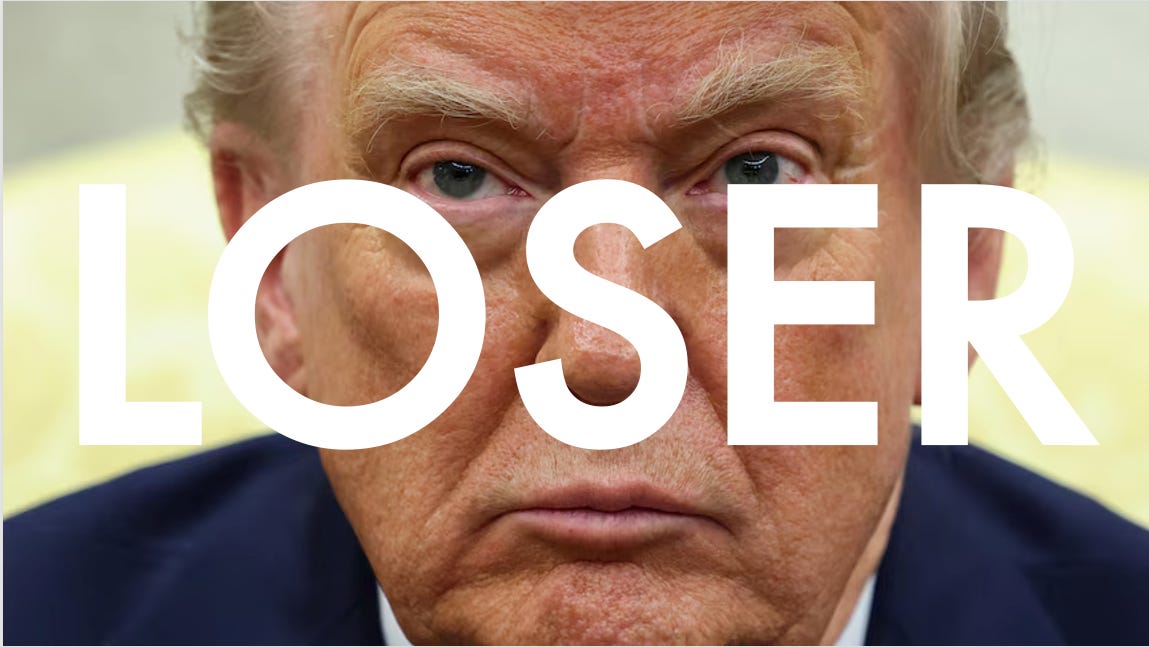
At its core, war is a test of wills. Raw asymmetry in material wealth and technological firepower is meaningless if it is divorced from strategic clarity and political endurance. In the early months of 2026, President Donald Trump launched Operation Epic Fury (more like Operation Epic Blunder)—a joint U.S.-Israeli surprise bombardment of Iran—under the presumptuous delusion that international statecraft is dictated by pure bullying. He assumed that a relentless campaign of bombing would trigger an immediate capitulation from Tehran. Instead, the Iranian regime demonstrated a massive tolerance for absorbing severe blows - far more than the political leadership in Washington ever anticipated. Driven by an abject lack of a coherent grand strategy, the Trump administration rapidly impaled itself on the sharp horns of a classic military dilemma. It could not achieve a definitive victory without executing a massive, politically toxic, and logistically ruinous ground invasion of the Iranian coastline to control the Strait of Hormuz. Conversely, it could not withdraw US forces without suffering an unacceptable, historic loss of face on the global stage.
The fecklessness of this strategy is perfectly mirrored in the intellectual gymnastics of Washington’s chief war hawks, epitomized by Senator Lindsey Graham. Barely 100 days ago, Graham was practically orgasmic over the potential for an all-out war with Iran, wildly and incoherently boosting the conflict on every right-wing news talk show. Yet today, as the catastrophic reality of Trump’s strategic failure becomes undeniable, Graham has seamlessly pivoted from bloodthirsty warmonger to obsequious sycophant. He is now publicly touting Trump’s disastrous retreat as a historic triumph, declaring that the conflict will go down as “one of the most successful military operations in American history” if it yields regional peace. This shameless reversal exposes the utter hollow intellectual bankruptcy of the GOP establishment. Having cheered America into a burning house, they are now celebrating the smoke inhalation as a sign of progress and locking the door behind them.
The resulting Islamabad Memorandum of Understanding (MOU), signed with hollow fanfare following the G7 summit at the palace of Versailles, is the direct byproduct of this strategic exhaustion. (The Germans once signed a letter of capitulation at Versailles at the end of WWI. Trump got played here by Macron. LOL.) Negotiated out of sheer desperation by Vice President JD Vance and a frantic American delegation in Pakistan, the agreement represents a total failure of Trump’s primary, self-declared objective: the complete elimination of Iran’s nuclear program. Rather than dictating terms of unconditional surrender, Washington has accepted a fragile 60-day placeholder framework that is structurally, legally, and strategically far worse than the 2015 Joint Comprehensive Plan of Action (JCPOA) that Trump spent a decade deriding and later unilaterally abandoned.
To understand the depth of this capitulation, one must contrast the mechanics of Vance’s Islamabad MOU with the strict, sequential architecture of the JCPOA. The 2015 accord operated on a bedrock principle of verified performance: Iran received no substantial sanctions relief until the International Atomic Energy Agency (IAEA) physically verified that thousands of centrifuges had been dismantled and Tehran’s enriched material had been shipped entirely off Iranian soil. The 2026 Trump deal completely upends this logic through preemptive economic surrender. To merely secure a temporary ceasefire and cajole Tehran into a 60-day negotiating window, Secretary of State Marco Rubio and the U.S. Treasury immediately issued sweeping waivers on Iranian crude oil exports and international banking channels. By releasing this vital economic leverage upfront, the administration has allowed Tehran to immediately refill its depleted coffers before long-term nuclear concessions have even been drafted. Worse still, the physical containment of fissile material has been severely degraded. Under the MOU, the administration conceded to a compromise where Iran’s highly enriched uranium stockpile will be down-blended on Iranian soil. Leaving this material within Iran’s sovereign borders—even under IAEA camera monitoring—is an egregious blunder that permanently shortens the regime’s potential nuclear breakout time should the current, highly unstable framework collapse next month.
The strategic wreckage extends far beyond the nuclear file. The most alarming revelation of Operation Epic Fury is what it exposed regarding the limits of American conventional power projection. For over half a century, global maritime security has rested on the implicit guarantee that the United States Navy possesses both the capability and the unyielding political will to keep international choke points open. Trump’s war shattered this paradigm. When Iran retaliated by seeding the Strait of Hormuz with undersea mines and deploying high-density swarms of low-cost anti-ship ballistic missiles and kamikaze drones, the U.S. military command balked. The conflict exposed a terrifying reality to the world: the U.S. Navy lacked the operational appetite or the political courage to risk multi-billion-dollar super carriers and Aegis destroyers against asymmetric saturation attacks in confined waters. Rather than aggressively clearing the lanes, the administration resorted to a reactive, counter-productive naval blockade that only finalized the closure of the waterway. This retreat delivered a profound, irreversible lesson to America’s adversaries: Iran learned that it does not require a fully functional nuclear weapon to achieve theater-wide strategic effects. By utilizing cheap, readily available conventional weapons to threaten global shipping and choke off 20% of the world’s petroleum supply, a regional power successfully brought the global economy—and the American presidency—to its knees.
The invoice for this strategic misadventure has now come due, and the numbers are staggering. This brief, inconclusive conflict has left the United States government at least $50 billion poorer in direct, unbudgeted military expenditures—capital burned on fuel, emergency deployments, and the rapid depletion of high-end munitions. Simultaneously, the disruption of global supply chains and the energy spikes caused by the closure of the Strait of Hormuz have left American consumers more than $100 billion less well-off due to systemic inflationary shocks. This domestic economic pain is playing out with devastating political consequences across American swing states, where skyrocketing gas prices at the pump and rising retail costs have completely erased any narrative of economic stability.
Yet, the economic damage pales in comparison to the structural degradation of America’s global standing. The United States emerges from this conflict profoundly more isolated on the world stage. By dragging the international community to the brink of a global depression for a war of choice, the administration deeply alienated its closest Western allies. European partners, who were entirely sidelined during the frantic, back-channel negotiations mediated by Pakistan, watched in horror as Washington jeopardized their economic stability. Traditional alliances have been severely degraded, replaced by deep skepticism regarding America’s reliability and intellectual competence as a global security guarantor.
Furthermore, the conflict has fundamentally weakened the American military in ways that will take years to remediate. The intensive, weeks-long effort to defend naval assets and regional bases from Iranian missile and drone salvos completely exhausted theater stockpiles of critical interceptor missiles, such as the SM-3, SM-6, and Patriot systems. These sophisticated, slow-to-manufacture munitions cannot be easily or quickly replaced, leaving American forces dangerously exposed and less prepared for a potential high-intensity conflict in East Asia or Eastern Europe.
The broader geopolitical ledger paints an equally grim picture of a nation in structural retreat:
The Proliferation of the “Iran Model”: Middle-tier revisionist states across the globe have just witnessed a blueprint for defying a superpower. The success of Iran’s asymmetric defiance will likely accelerate the proliferation of anti-access/area-denial (A2/AD) technologies among smaller regimes worldwide.
The Normalization of Regional Extortion: By agreeing to a clause in the MOU where the United States and its regional partners must develop a massive, $300 billion plan for the reconstruction and economic development of Iran, Washington has effectively established a precedent where international aggression and maritime blockade are rewarded with massive financial windfalls.
The Fracturing of Regional Deterrence: By entering into an agreement that openly puts the long-term presence of U.S. forces in the region up for negotiation, the administration has signaled to regional allies like America’s Gulf partners that Washington is looking for an exit strategy, leaving a security vacuum that will inevitably be filled by Beijing and Moscow.
Trump’s war with Iran was a vivid, tragic demonstration of what happens when tactical vanity replaces rigorous statecraft. In his desperate attempt to prove he could bully an adversary where his predecessors sought diplomacy, he exposed the critical vulnerabilities of American military projection, depleted our finest strategic stockpiles, damaged our economy, and ultimately settled for an unstable, dangerous interim deal that leaves Iran richer, closer to a breakout capacity, and strategically vindicated. It stands as one of the most self-inflicted strategic defeats in the history of American foreign policy.


No comments:
Post a Comment
Note: Only a member of this blog may post a comment.