Showing posts with label REX TILLERSON. Show all posts
Showing posts with label REX TILLERSON. Show all posts
Friday, September 20, 2024

Sunday, January 14, 2024
MERCER: A NAME TO WATCH!
ONE YEAR AGO MERCER
A NAME TO WATCH!
ROBERT MERCER STASHES HIS $$$ OVERSEAS, A TAX DEADBEAT, NOT SUPPORTING LOCAL, STATE OR FEDERAL GOVERNMENTS ACCORDING TO THE PENTAGON PAPERS.
[HE'S GOT PLENTY OF COMPANY: REX TILLERSON, SHELDON ADELSON, THE DIRTY ENERGY KOCH BROTHERS AND OTHERS.]
ROBERT MERCER IS THE ALT-RIGHT BREITBART WITH THEIR BOGUS INFORMATION, DICTATING HIRINGS TO TRUMP INCLUDING KELLYANNE AIRHEAD, STEVE BANNON AND JOHN BOLTON, THE WAR MONGER.
ROBERT MERCER RAN ATTACK ADS AGAINST ELIZABETH WARREN.
PLEASE SEEK OUT THE TRUTH FOR YOUR VOTE!
"R" voters are conspicuously uninformed!
Never figured out that MERCER funded the attack ads!
After SENATOR ELIZABETH WARREN defeated the DIRTY ENERGY KOCH SOCK PUPPET SCOTT BROWN, I encountered local Republicans in mourning.
I would ask 'did you know that he voted against A. B. C?'
Invariably, the answer was NO!
I would ask 'did you know that he voter for X, Y, Z?'
Invariably, the answer was NO!
The DIRTY ENERGY KOCH SOCK PUPPET SCOTT BROWN went on to carpet bag in NEW HAMPSHIRE and was defeated by another WOMAN!
That's a FIRST IN HISTORY that's ignored!
Even now, some MAGA MIDGET will comment on the content of those attack ads because "R" voters are incapable of comprehension.
Thursday, April 7, 2022
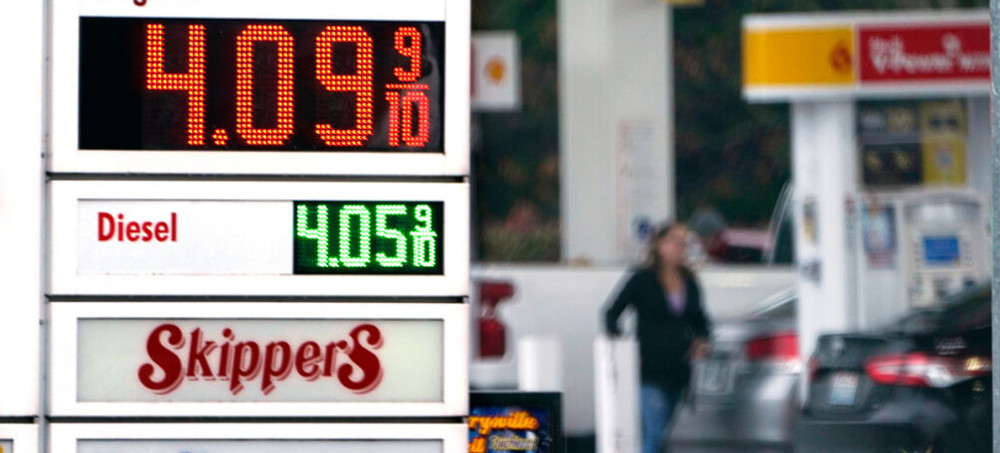
rsn: FOCUS | Making a Killing: Big Oil Reaps Record Profits Using Ukraine War as Pretext to Hike Gas Prices

07 April 22
Live on the homepage now!
Reader Supported News
Transcript
This is a rush transcript. Copy may not be in its final form.
AMY GOODMAN: On Capitol Hill, House lawmakers grilled executives from some of the largest oil and gas companies Wednesday, accusing them of price gouging consumers even as they rake in record profits. Democrats on the House Energy and Commerce Committee accused fossil fuel executives of exploiting the pandemic and the war in Ukraine to pad their bottom lines. This is Committee Chair California [sic] Democrat Diana DeGette — Colorado Democrat Diana DeGette.
REP. DIANA DeGETTE: If the price of gas is driven by the global market, why is the price of oil coming down, but the price at the pump is still near record highs? If it’s an issue of supply and demand, wouldn’t that be reflected in the global price of oil, as well? Something just doesn’t add up.
AMY GOODMAN: That’s Colorado Democrat DeGette. Meanwhile, Republicans used Wednesday’s hearing on high gas prices to support the Big Oil companies. This is Republican Ohio Congressmember Bill Johnson.
REP. BILL JOHNSON: For heaven’s sakes, they’re blaming you for high gas prices, for inflation, for bad weather and all the world’s problems that their failed policies are actually causing. Your industry has a lot to be proud of.
AMY GOODMAN: Executives from ExxonMobil, Chevron, BPAmerica, Shell USA and other companies testified virtually during the hearing, even though they were invited to appear in person. ExxonMobil CEO Darren Woods claimed the solution to higher prices at the pump is to increase oil and gas production.
DARREN WOODS: Today Russia provides roughly 10% of the oil needed to meet global demand and about 30% of Europe’s natural gas demand. A loss of this volume will be much more significant than the impact of the oil — Arab oil embargo and would represent the largest supply disruption in the history of our industry. Unfortunately, there’s no quick fix. But in the near term, the answer is straightforward: If we want to reduce prices, we need to increase supply.
AMY GOODMAN: This comes as a new report by Friends of the Earth, Public Citizen and BailoutWatch looked at the financial records of ExxonMobil, Chevron, ConocoPhillips and others and found they’ve increased stock buybacks and dividends since Russia invaded Ukraine, enriching investors instead of reducing oil and gas prices for consumers. BailoutWatch data analyst Christopher Kuveke said, quote, “The actions of these oil executives make it clear that no matter how much they groan about the Biden Administration’s environmental policies and blame Putin for high prices, their focus remains entirely on lining their own pockets,” he said.
For more, we’re joined by two guests: Bill McKibben, author, educator, environmentalist, founder of Third Act, which organizes people over 60 for progressive change, also co-founded 350.org, and, in Ukraine, we’re joined by Svitlana Romanko, the Ukrainian climate activist and longtime environmental lawyer, who wrote a Los Angeles [Times] op-ed with McKibben last month headlined “The Ukraine war is a decision point — banks should stop funding the fossil fuel industry forever.”
We welcome you both back to Democracy Now! Bill McKibben, let’s begin with you and the Big Oil hearing. What was your takeaway?
BILL McKIBBEN: Look, it’s almost sickening to sit and watch Exxon executives talk like that. You don’t need much imagination or much memory to recall that Darren Woods’ predecessor, Rex Tillerson, was such a friend of Vladimir Putin’s that Putin literally pinned a medal on him, the Order of Friendship, at Putin’s dacha outside Moscow, because Exxon was perfectly willing, knowing just what kind of regime Putin was running, to invest hundreds of billions of dollars in trying to get at Arctic oil, that they could only get at because they had already melted the Arctic. That’s the kind of — and it, of course, goes on and on and on. The Koch brothers, our biggest oil and gas barons, who are still doing business in Russia right now, I mean, they got their start — the family fortune was founded building refineries for Stalin. So their protestations ring completely hollow, especially because they know what the alternative is. The alternative is the rapid deployment of renewable energy, just as the IPCC report called for earlier this week.
AMY GOODMAN: I mean, I think most people, if asked, “Why are the gas prices going through the roof?” Bill, they would say, “Oh, it’s because of the war in Ukraine.” But the fact that the oil companies are using this crisis to record unprecedented profits, they’re in fact lifting these prices not because of the war in Ukraine; they’re just using it as a cover.
BILL McKIBBEN: Does that surprise you, Amy, given what you know about the role of the oil industry in our history? I mean, these are predatory companies that have used every excuse — and this is one of the grossest — to try and increase their profit margins. And right now the fact that they’re padding their profits on the back — I mean, this is the definition of a windfall profit. It’s not like they did something new this year that should get them, you know, higher profit. The only new thing that happened was that Vladimir Putin, who they’ve been encouraging and building up for decades, launched a brutal war in Ukraine, and now they’re the ones that are making literally a killing, while people like Svitlana, you know, sit there and absorb the bombs as they come in one after another.
AMY GOODMAN: And, very quickly, how about Whitehouse’s proposal — not the White House, but Senator Whitehouse’s proposal — to institute the — to try to get passed the Windfall Tax Act, that would make these CEOs pay a price?
BILL McKIBBEN: Yes, I was reading Jamie Henn’s analysis just today, and it looks like that would send back about $250 to every American to help them deal with that. And just as importantly, it would take some of that excess money out of the hands of the fossil fuel industry, because what do they use it for? They use it to buy Congress. Remember, Joe Manchin, who’s single-handedly held up any work on climate change throughout the Biden administration, is the biggest recipient of those fossil fuel dollars, which are dirty, top to bottom.
AMY GOODMAN: I want to bring Svitlana Romanko into this conversation, joining us from western Ukraine, longtime climate activist and environmental lawyer. Svitlana, when you hear — I doubt you had a chance, being in Ukraine, to watch the hearing in the U.S. Congress yesterday, but the U.S. CEOs admitting they are making record profits right now. Your response as they use the war in Ukraine partially as an excuse?
SVITLANA ROMANKO: Oh, yes. But I believe, I am truly sure, that we are approaching the stage and approaching the era when social license for these fossil fuel companies and industries will be quickly dismantled. And I believe that we are at the very tipping point for that, because record profits that they’ve made over the past years are not accepted with the civil society and even some governments anymore, so they will need to stop. At the very same moment I am talking with you here, the European Parliament deputies, the major deputies — major number of those deputies have just voted for a full embargo on Russian oil and gas immediately, demanding that from the EU country states. So the progress is ongoing. And I believe, along with the dismantling and ending Putin’s horrific war against Ukraine, we will dismantle the system that enables this fossil fuel industry to overprofit on human lives and infrastructure destruction.
Special Coverage: Ukraine, A Historic Resistance
READ MORE
Follow us on facebook and twitter!
PO Box 2043 / Citrus Heights, CA 95611
Wednesday, March 9, 2022
RSN: FOCUS: Russian Invasion Shows Risks of Addiction to Fossil Fuels; Will Biden Fund Shift to Renewables?

09 March 22
Live on the homepage now!
Reader Supported News
Transcript
This is a rush transcript. Copy may not be in its final form.
AMY GOODMAN: This is Democracy Now!, Democracynow.org, the War and Peace Report. I’m Amy Goodman in New York, joined by Democracy Now! co-host Juan González in New Brunswick, New Jersey. Hi, Juan.
JUAN GONZÁLEZ: Hi, Amy. Welcome to all of our listeners and viewers across the country and around the world.
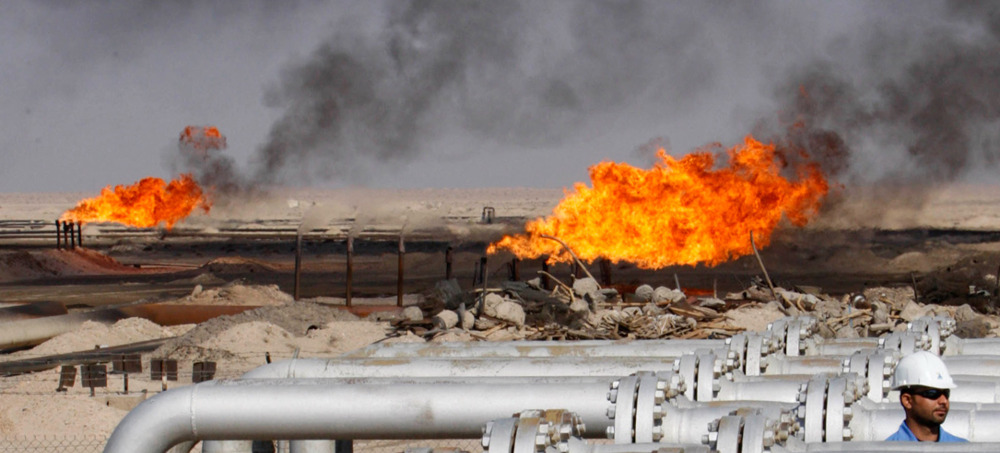
AMY GOODMAN: As Russia’s invasion of Ukraine enters its 14th day, we begin today’s show looking at the war’s impact on global energy markets. On Tuesday, President Biden announced a ban on imports of Russian oil, gas and coal. Britain followed up by saying it would phase out imports of Russian oil by the end of the war. The European Union has announced plans to reduce its dependence on Russian oil and gas by two-thirds this year. President Biden announced the U.S. ban during an address from the White House.
PRESIDENT JOE BIDEN: Today I am announcing the United States is targeting the main artery of Russia’s economy. We are banning all imports of Russian oil and gas and energy. That means Russian oil will no longer be acceptable at U.S. ports and the American people will deal another powerful blow to Putin’s war machine. This is a move that has strong bipartisan support in Congress and I believe in the country. Americans have rallied to support the Ukrainian people and made it clear we will not be part of subsidizing Putin’s war.
AMY GOODMAN: Britain said it would end Russian oil imports by the end of the year. Global oil and gas prices have soared over the past two weeks since Russia invaded Ukraine and experts warn prices could keep rising. Earlier this week, Russia threatened to cut off natural gas shipments to Europe in response to Western sanctions. Russia provides the E.U. countries with about 40% of their natural gas and about a quarter of its oil. Meanwhile, oil giants BP, Shell, and Exxon have announced plans to halt operations in Russia. The CEOs of Big Oil have long held close to the Russian government. Former Exxon CEO Rex Tillerson, who served as Secretary of State under Donald Trump, received Russia’s Order of Friendship Medal by Vladimir Putin in 2013. On Tuesday, analysts at Goldman Sachs said, “Given Russia’s key role in global energy supply, the global economy could soon be faced with one of the largest energy supply shocks ever.”
In recent days, the Biden administration has begun exploring other ways to increase global oil supply. Over the weekend, Biden administration officials traveled to Venezuela to discuss the possible lifting of sanctions on the nation’s oil industry. The White House has also floated the idea of Biden visiting Saudi Arabia in an effort to mend relations and to urge the kingdom to pump more oil. While the Biden administration is pushing more oil drilling, many climate activists say now is the time to invest in a green energy revolution. Democratic Senator Ed Markey of Massachusetts said, “This moment is a clarion call for the urgent need to transition to domestic clean energy so that we are never again complicit in fossil-fueled conflict.” We go now to Antonia Juhasz, investigative journalist focused on energy and climate. Antonia is the author of three books, including The Tyranny of Oil. She teaches at Tulane University in New Orleans, where she is joining us from. Antonia, welcome back to Democracy Now! Let’s begin with President Biden’s unilateral announcement of the energy ban—oil, gas and coal—from Russia, the significance of this.
ANTONIA JUHASZ: It is extremely significant, Amy, and thank you so much for having me, and thank you, Juan. There are many parts of that speech that were very important. I would say the most important is actually when Biden said, “The U.S. must transition to clean energy; that’ll mean tyrants like Putin won’t be able to use fossil fuels as weapons against other nations.” He didn’t limit it to Putin and he essentially stated that the United States was going to now see the wielding of fossil fuels as a weapon of war. That’s a profound statement and should have profound impacts on the way that we look at the way many nations and many companies use fossil fuels and the impacts on people, the economy, war, peace, the climate, et cetera.
By stating that the United States would end any oil, liquefied natural gas or coal imports, the United States was being the first nation to take that full step against Putin and to essentially say that peace in Ukraine is dependent on a shifting off of fossil fuels, ending Russia’s ability to wield fossil fuels as a weapon of war, and the world and the nation’s necessity to transition off of fossil fuels. That is the message that has been being loudly repeated out of the political leadership in the Ukraine, citizens of Ukraine, people around the world, the Secretary General of the United Nations, António Guterres. This message has kept being repeated, that a key tool towards peace is the unwinding of the global reliance on fossil fuels.
JUAN GONZÁLEZ: Antonia, at the same time, the Biden administration is looking to reorient its supplies and obviously world supplies, in discussions with Venezuela, possibilities. There seems to be an impetus to reach a deal with Iran and also the attempts to get Saudi Arabia and some of the Gulf states to increase their oil supplies. Both leaders of the Emirates and of Saudi Arabia declined to have phone calls with Biden, apparently, according to press reports. So is it really a shifting more toward renewable energy or is it an issue of having to reorient the supply routes in terms of oil?
ANTONIA JUHASZ: There’s the short and the long term. First of all, I think it is really important to say that the price spike that we have seen immediately in the aftermath of the Russian invasion of Ukraine is not about a shortage of supply of any natural resource at this point of oil or natural gas. It is energy traders trading on the expectation of a reduction in supply and pushing the price of oil up. The price of oil going up has immediately impacted the price of gasoline. If we regulated energy traders’ behavior, we could address that problem right now. But the reality is right now, the expectation is that there will be a reduction in supply of Russian oil on the global market, of Russian natural gas because Putin has already been using the supply of natural gas as a tool against Europe. So controlling the flow, the decision whether to let natural gas flow to Europe, which also has very significant impacts.
So in the short term, the Biden administration did orchestrate, which is a fairly profound shift in global energy politics—the International Energy Agency acted to coordinate its members led by the United States to increase oil supplies by 60 million barrels. That was essentially as a direct rebuff against OPEC’s unwillingness to do so. That is because Saudi Arabia is aligned with Russia and trying to protect Russian interests and is not going to put more oil into the market, in order to support Russia. It is not surprising to me that the Saudis are not taking Biden’s call. I don’t think that’s going to happen. In the short term, there is a desire to demonstrate that there will be more oil and that should hopefully reduce the stress that’s being put on the market by energy traders and again the expectation of a reduction in supply.
But I think we need to hold the administration and the rest of global leaders to their pledges, which is that they are saying, “This is a short-term solution. The long-term or even immediate-term solution is the transition to fossil fuels.” And they need to be held to those statements. Every member of the Biden administration who has spoken has reiterated that statement and they need to be held to that statement because what, if anything, this war has shown us is how insecure we are based on this dependence. The United States is the leading guzzler by far of gasoline. The power that the price of gasoline has over political elections, people’s pocketbooks, everything in between, is an incredible weakness.
The dependence of Europe on—and I call it methane gas, not natural gas, because natural gas is about 93% methane—Europe’s dependence on methane gas has put it into this position where it is having an almost impossible time divorcing itself from Putin’s power. Being unable to do that means that there isn’t a stand to be able to take against wielding the war against Ukraine. So that incredible weakness that is created by that dependence on methane gas and the idea that methane gas should be considered a quote-unquote “bridge fuel” from fossil fuels to renewable energy, I think has been put into stark—has been exposed to be not a bridge fuel at all, but rather a continued weakness not only on compounding the climate crisis, but in continuing to support autocrats in some of the most brutal regimes in the world.
I think we need to look at the actions of the oil companies, BP, Shell, even Exxon who have been unwinding and divesting their partnerships with Russia and doing so with public statements in which they say that they are doing this for humanitarian reasons, they do not want to put their money behind Putin and support his war. That sentiment, the same as Biden’s sentiment in his speech, needs to be applied and thought of to all of their partnerships with all of the other countries that are wielding control over fossil fuels as weapons. Saudi Arabia is a key example and its brutal war on Yemen. All of the same oil companies that partner with Russia and Putin partner with the Saudis, are in deep partnerships with the Saudis. And expanding this analysis to say, “How can we unplug this power, this influence?”
In the short term in the United States, we need to be really clear. We import zero liquified natural gas from Russia. We only get about 3% of our oil from Russia, which we don’t need, and we do import some coal. But we are not reliant on any of those resources, and we can immediately lead the globe in demonstrating that our goal isn’t, quote-unquote, “energy independence.” We don’t need to be independent of other nations. But what we do need to do is make our energy sources localized and democratized, so that we are using less energy by placing renewable energy sources as close to us as possible, making them democratically controlled, cooperatively controlled and operated, so that we are not simply replacing one form of extractives, massive extractives to supply renewable energy with what we are giving away for fossil fuels, but to say that the more that we can localize our energy sources, the less dependent we are on any mass extraction or mass control of that extraction of the resource. We can do that rapidly, and we can do that right away, and we can help other nations do that as well.
JUAN GONZÁLEZ: Antonia, I wanted to follow up on this issue of Europe’s position, though. Obviously, Europe did not follow directly with Biden’s decision yesterday. What about the issue of this Nord Stream 1 gas pipeline, and also that this crisis erupts just as Nord Stream 2 was getting ready to go into operation?
ANTONIA JUHASZ: This is a war that is the first significant, well, since Russia’s invasion of Crimea, the first superpower war over fossil fuels, about fossil fuels, in the climate era and that has dramatically changed the discussion of all of these issues. So this isn’t a war for oil in the way that the Iraq war was literally to capture oil fields and turn them over to oil companies. This is a war that is fueled by the financial support of fossil fuels, that is supporting Putin and giving him control over so much of world decision-making. But also the immediate impetus for the war was a dispute over a natural gas pipeline, Nord Stream 2. Nord Stream 1 is the pipeline that carries a significant amount of methane gas to Europe and it goes from Russia through Ukraine under the Black Sea to Germany. Putin has been withholding natural gas from that pipeline to Europe as he is trying to get Nord Stream 2 into action. Nord Stream 2 specifically does not go through the Ukraine, bypasses the Ukraine so that Putin wasn’t exposed to this weakness of Ukraine’s somewhat control of that pipeline, bypasses Ukraine, follows a similar path to get to Germany. It’s built, it’s ready to go, but Europe and the United States have been trying to stop Russia’s pending action against Ukraine by not letting the gas flow through Nord Stream 2. That recent decision to not let the gas go through Nord Stream 2 was the most immediate predecessor to Putin’s decision to invade Ukraine. So in many ways, this is a war that’s about a pipeline, the flow of natural gas, and about Putin’s ability to wield fossil fuels as a weapon.
AMY GOODMAN: On Monday, White House Press Secretary Jen Psaki had this response when asked by Fox if the U.S. would do more to produce oil at home.
JEN PSAKI: Let me give you the facts here, and I know that can be inconvenient but I think they are important in this moment. To the contrary, we have been clear that in the short term, supply must keep up with the demand, here and around the world while we make the shift to a secure clean energy future. We are one of the largest producers with a strong domestic oil and gas industry. We have actually produced more oil—it is at record numbers—and we will continue to produce more oil. There are 9,000 approved drilling permits that are not being used.
AMY GOODMAN: Wow. Here is Jen Psaki saying we are going to up the production of oil at a time with a huge push for renewables, and she is admitting this. So there is an interesting challenge here. You have the Ukraine bill that is racing through Congress, around $10 billion to help Ukraine. Then there is the issue of whether there is a way of crafting Build Back Better to be framed in terms of Ukraine, which would make it more palatable to Republicans. Can you talk about this, and which side is going to win? Not Republican or Democrat, but those who are deeply concerned about renewables versus a huge gush of more oil production in the United States?
ANTONIA JUHASZ: Yeah. Jen Psaki said about three days earlier that the core of the Biden administration’s agenda is to transition to clean energy and off of fossil fuels as rapidly as possible. And I think actually both are true. What I think she is doing right now is there is a huge push that was first led by the American Petroleum Institute, the largest oil company lobbying group in the United States, putting pressure—and this was now just a week and a half ago; this has all happened so quickly—on the Biden administration not to implement any sanctions on Russian oil, not because they were worried necessarily about Putin, but because of all the U.S. oil companies and Western oil companies that have such large stakes in Russia and they did not want those to be impacted.
At the same time, the American Petroleum Institute and their supporters in Congress have been pushing that the response to the war needs to be that we produce more oil and that we can’t pass Build Back Better, we can’t pass legislation that would put more restrictions, more regulations on the oil industry because obviously the solution to the war is that the United States needs to be producing so much more oil and gas. What the response of the Biden administration has been is, “Don’t worry, we are producing tons of oil and natural gas.”
The first year of an administration, just to be clear, is usually the results of the policies of the previous administration. So the Trump administration didn’t produce as much in its first year because it was still under the sway of the Obama administration’s policies. Trump then significantly, dramatically increased production over the course of his subsequent years in office, reaching a high point just before the COVID crash. This first year of the Biden administration is really the tail ends of Trump administration policies that have kept that production at record highs. Jen Psaki is saying, “Look, we’re producing all this oil and gas, so the solution, therefore, is clearly not to reduce regulation. Our regulations are not stopping you from producing.”
I believe that the administration is trying to get Build Back Better passed. If we want to rapidly transition to renewable, localized, democratized, renewable energy in the United States, that’s the bill. That’s the bill that’s in Congress right now to do it. Of course, as I’m sure your listeners know, it has been stopped by one senator, really, and that is Joe Manchin of West Virginia who is the most heavily funded fossil fuel member of Congress by a long shot right now. Obviously, coal is his primary personal financial interest, but he is the most heavily supported of the fossil fuel industry of any member of Congress right now, and he is single-handedly stopping this bill from moving forward. It is very, very hard for the administration to act on its pledges to transition to renewable energy without that legislation.
That said, there are executive orders that the administration can do and can put into place, and it proved that it could do that yesterday. When Biden gave his speech, he simultaneously released I think two executive orders that not only—that go further than the ban on the imports, but also ban U.S. companies and banks or any financiers from financing or investing in Russian energy. The one question that brings to my mind is there are still corporate holdouts. Chevron, for example, has not divested its holdings in the Caspian Pipeline. Exxon hasn’t divested its holdings in the Caspian Pipeline. They are in partnership with Russian oil, with Russia on that pipeline because it carries their oil from Kazakhstan. They really want to keep producing in Kazakhstan. Talk about a world leader that is a brutal controller of his country; that’s Kazakhstan. They don’t want to lose those holdings, and they don’t want to lose that pipeline. So there is a lot of moving parts happening here and the bottom line is to keep putting pressure on the administration, on the companies to uphold their pledges that the bottom line is to achieve first peace in Ukraine and stop Putin and then to make the transition from fossil fuels.
AMY GOODMAN: Antonia Juhasz, thank you for being with us. There is so much to talk about. Investigative journalist focused on energy and climate. Author of several books, including The Tyranny of Oil. She is speaking to us from New Orleans where she teaches at Tulane University.
Coming up, we go to London to speak with Tariq Ali about Russia’s invasion, NATO expansion in Eastern Europe and the Ukrainian president’s historic address to the House of Commons yesterday. Stay with us.
Follow us on facebook and twitter!
PO Box 2043 / Citrus Heights, CA 95611
Subscribe to:
Posts (Atom)
Your Signature Needed: Brutal hunter violently murders entire gray wolf pack
LOTS OF POSTS IGNORED BY BLOGGER..... OR REMOVED ON THEIR WHIM! ALL POSTS ARE AVAILABLE ON MIDD...

-
04 April 23 Live on the homepage now! Reader Supported News Dahlia Lithwick | Let Donald Trump Cry It Out Dahlia Lithwick, Slate Lithwic...
-
LOTS OF POSTS IGNORED BY BLOGGER..... ALL POSTS ARE AVAILABLE ON MIDDLEBORO REVIEW AND SO ON Right now, we are standing on the edge of a he...
-
LOTS OF POSTS IGNORED BY BLOGGER..... ALL POSTS ARE AVAILABLE ON MIDDLEBORO REVIEW AND SO ON We love making ice cream, but our mission has ...


