Showing posts with label NAVAJO. Show all posts

Sunday, February 26, 2023

FOCUS: Manvir Singh | It's Time to Rethink the Idea of the "Indigenous"


Reader Supported News
25 February 23

Live on the homepage now!
Reader Supported News

IF THE NEED FOR FUNDING WERE NOT SERIOUS WE WOULD NOT SAY SO — Funding is in fact critically lacking and the situation is now quite serious.
Marc Ash • Founder, Reader Supported News

Sure, I'll make a donation!


The term was shaped by social-evolutionist thinking; white settlers used it to designate the
FOCUS: Manvir Singh | It's Time to Rethink the Idea of the "Indigenous"
Manvir Singh, The New Yorker
Singh writes: "Many groups who identify as Indigenous don't claim to be first peoples; many who did come first don't claim to be Indigenous. Can the concept escape its colonial past?"   


Many groups who identify as Indigenous don’t claim to be first peoples; many who did come first don’t claim to be Indigenous. Can the concept escape its colonial past?


Identity evolves. Social categories shrink or expand, become stiffer or more elastic, more specific or more abstract. What it means to be white or Black, Indian or American, able-bodied or not shifts as we tussle over language, as new groups take on those labels and others strip them away.

On August 3, 1989, the Indigenous identity evolved. Moringe ole Parkipuny, a Maasai activist and a former member of the Tanzanian Parliament, spoke before the U.N. Working Group on Indigenous Populations, in Geneva—the first African ever to do so. “Our cultures and way of life are viewed as outmoded, inimical to national pride, and a hindrance to progress,” he said. As a result, pastoralists like the Maasai, along with hunter-gatherers, “suffer from common problems which characterize the plight of indigenous peoples throughout the world. The most fundamental rights to maintain our specific cultural identity and the land that constitutes the foundation of our existence as a people are not respected by the state and fellow citizens who belong to the mainstream population.”

Parkipuny’s speech was the culmination of an astonishing ascent. Born in a remote village near Tanzania’s Rift Valley, he attended school after British authorities demanded that each family “contribute” a son to be educated. His grandfather urged him to flunk out, but he refused. “I already had a sense of how Maasai were being treated,” he told the anthropologist Dorothy Hodgson in 2005. “I decided I must go on.” He eventually earned an M.A. in development studies from the University of Dar es Salaam.

In his master’s thesis, Parkipuny condemned the Masai Range Project, a twenty-million-dollar scheme funded by the U.S. Agency for International Development to boost livestock productivity. Naturally, then, U.S.A.I.D. was resistant when the Tanzanian government hired him to join the project. In the end, he was sent to the United States to learn about “proper ranches.” He travelled around until, one day, a Navajo man invited him to visit the Navajo Nation, the reservation in the Southwest.

“I stayed with them for two weeks, and then with the Hopi for two weeks,” he told Hodgson. “It was my first introduction to the indigenous world. I was struck by the similarities of our problems.” The disrepair of the roads reminded him of the poor condition of cattle trails in Maasailand.

Parkipuny had always thrived on confrontations with authority. Once, as a high schooler, he was nearly expelled when he burned grass (the Maasai method of bush clearing) instead of cutting it, as instructed. He later recalled that, when the headmaster threatened to hit him, he replied, “If you beat me with a stick I will get mine, because my traditions do not allow this. I ask you to give me another punishment.” This outspokenness propelled his activism. Following his American sojourn, he started to publicize the Maasai’s plight in international circles, linking it with other struggles. He met members of tribal nations in New Mexico and Canada to sharpen his understanding of Indigenous issues, and allied with the International Work Group for Indigenous Affairs, headquartered in Copenhagen.

By the time Parkipuny showed up in Geneva, the concept of “indigenous” had already undergone major transformations. The word—from the Latin indigena, meaning “native” or “sprung from the land”—has been used in English since at least 1588, when a diplomat referred to Samoyed peoples in Siberia as “Indigenæ, or people bred upon that very soyle.” Like “native,” “indigenous” was used not just for people but for flora and fauna as well, suffusing the term with an air of wildness and detaching it from history and civilization. The racial flavor intensified during the colonial period until, again like “native,” “indigenous” served as a partition, distinguishing white settlers—and, in many cases, their slaves—from the non-Europeans who occupied lands before them.

Then came the nineteen-sixties and seventies. Liberation movements flourished. In New Zealand, the Polynesian Panthers worked with the group Ngā Tamatoa to rally for Maori rights. In the United States, the Red Power movement spawned groups like the American Indian Movement and the International Indian Treaty Council. Inspired by decolonization, activists from these groups coalesced, turning indigeneity into a global identity. What linked its members was firstness. Peoples like the Maori and the Sioux are not just marginalized minorities, activists stressed; they are aboriginal nations whose land and sovereignty have been usurped. With time, however, the identity was stretched further. When Parkipuny showed up in Geneva, activists were consciously remodelling indigeneity to encompass marginalized peoples worldwide, including, with Parkipuny’s help, in Africa.

Today, nearly half a billion people qualify as Indigenous. If they were a single country, it would be the world’s third most populous, behind China and India. Exactly who counts as Indigenous, however, is far from clear. A video for the U.N. Permanent Forum on Indigenous Issues begins, “They were always here—the original inhabitants.” Yet many peoples who are now considered Indigenous don’t claim to be aboriginal—the Maasai among them. According to Maasai oral histories, their ancestors arrived in Tanzania several hundred years ago from a homeland they call Kerio, likely situated near South Sudan.

Conversely, being first doesn’t seem to make you Indigenous. A handful of Gaelic monks and then the Vikings were the first people to arrive in Iceland (they settled there earlier than the Maori arrived in New Zealand), yet their descendants, the Icelanders, are rarely touted as Indigenous. Farther east, modern-day Scandinavians can trace most of their ancestry to migrations occurring in 4000 and in 2500 B.C., but it’s the Sami reindeer herders, whose Siberian ancestors arrived in Scandinavia closer to 1500 B.C., who get an annual entry in the “Indigenous World” yearbook.

In place of firstness, a U.N. fact sheet lists self-identification as the key criterion. This doesn’t quite work, either. It is true that some surprising candidates have gained recognition through activist self-designation, such as the Mincéirs of Ireland. (The Mincéirs, sometimes mistakenly called “Irish gypsies,” may have separated from the settled Irish population only several hundred years ago.) Other such groups have been denied recognition. In 1999, when Basters, mixed-race descendants of Khoi pastoralists and Afrikaners, read a statement at a U.N. forum about Indigenous affairs, hundreds of delegates walked out in protest. At the same time, many people are called Indigenous without their knowledge or consent.

If it is neither necessary nor sufficient for the Indigenous to be indigenous, what fills the conceptual space? A natural candidate, worryingly, is primitiveness. As several recent books show, centuries of colonialism have entangled indigeneity with outdated images of simple, timeless peoples unsullied by history. In “Beyond Settler Time,” Mark Rifkin observes that popular representations freeze Indigenous peoples in “a simulacrum of pastness.” In “Prophets and Ghosts: The Story of Salvage Anthropology,” Samuel J. Redman describes how efforts to document dying Indigenous cultures often centered on a search for “an idyllic, heavily romanticized, and apparently already bygone era of uncorrupted primitive societies.”

The conflation of indigeneity with primitiveness can be stifling. Indigenous intellectuals—including the Lenape scholar Joanne Barker and the Maori scholar Evan Poata-Smith—write about the pressure to adopt identities that are “primordial,” “naturalistic,” and “unchanging.” Fail to do so, they say, and you risk looking inauthentic. Rather than being harmless, Barker notes in “Native Acts” (2011), such standards make it “impossible for Native peoples to narrate the historical and social complexities of cultural exchange, change, and transformation—to claim cultures and identities that are conflicted, messy, uneven, modern, technological, mixed.”

Indigeneity is powerful. It can give a platform to the oppressed. It can turn local David-vs.-Goliath struggles into international campaigns. Yet there’s also something troubling about categorizing a wildly diverse array of peoples around the world within a single identity—particularly one born of an ideology of social evolutionism, crafted in white-settler states, and burdened with colonialist baggage. Can the status of “Indigenous” really be globalized without harming the people it is supposed to protect?

Peoples in Australia, New Zealand, and North America have long sent petitions to British royalty. Two Indigenous leaders—the Haudenosaunee chief Deskaheh and the Maori prophet T. W. Rātana—even appealed to the League of Nations for recognition, in 1923 and 1924, respectively. But before the Second World War Indigenous people appealed to international audiences only as representatives of local groups. To understand the origins of a global Indigenous identity, we need to turn to the activist networks that formed in the nineteen-sixties and seventies. And this means turning to George Manuel.

Born in 1921 in the Shuswap territory of British Columbia, Manuel started to think seriously about a global Indigenous identity in 1971. He was then the president of the National Indian Brotherhood, a young organization representing Canada’s two hundred and fifty thousand officially recognized “status Indians.” When the Canadian government arranged for a delegation to go to the South Pacific to learn about the Maoris’ place in New Zealand, Manuel was invited along as the representative of Canada’s Indigenous peoples.

The start of the trip was frustrating. Like a tourist visiting North Korea, Manuel was whisked from one exhibition to another, presented with a Shangri-La fantasy of the Maori experience. Yet he was determined to escape the spectacle and, when given a chance, he invited Maori politicians and a troupe of Maori entertainers to his hotel room for an honest chat.

By this point, Manuel was fluent in the politics of Canada’s First Nations. As he told the Yukon newspaper the Whitehorse Daily later that year, “We want to maintain our special status, our special rights, and we want to go deeper and find evidence to prove we have special rights as the original inhabitants.” What struck him about his unofficial tour was that the Maori were engaged in the same struggle. They, too, were an Indigenous people fighting a white Commonwealth nation for land, representation, and cultural survival: “What we are doing here in Canada is a part of a world wide movement for cultural autonomy and aboriginal rights of native people.”

From New Zealand, Manuel travelled to northern Australia, where he encountered even fiercer assimilation campaigns. When invited to talk to an assembly of Aboriginal students, he condemned Australian paternalism and told the students to “be proud you are dark. We have every reason to be as proud as the white man. And maybe more.” He pointed to their shared persecution: “Just as much as the Maoris and Aborigines, the Indian people in Canada are dark people in a White Commonwealth.”

The trip stirred up dreams of a conference that would set the stage for “some more lasting institution.” In October, 1975, the vision materialized. Delegates from nineteen countries—almost all in the Americas or Oceania; none from Africa or Asia—met on the Tseshaht reservation, on Vancouver Island, where they founded the World Council of Indigenous Peoples. Manuel was elected the first president. In the lead-up to the conference, attendees decided not to call themselves “Aboriginal people” and went instead with “Indigenous people,” defined partly as people “who are descendants of the earliest populations living in the area and who do not, as a group, control the national government of the countries within which they live.”

The expansion of indigeneity is visible in the history of the World Council, and then in the U.N. Working Group on Indigenous Populations, which was founded in 1982, and—in part because it benefitted from more regular meetings, the resources of the U.N., and the promise of drafting international law—effectively supplanted the council. Across two decades, the working group metamorphosed from an overwhelmingly American assemblage into an international one. At its first meeting, all but one of the ten Indigenous groups represented were from the Americas; in 1984, Asians started showing up, and in 1989 Parkipuny opened the floor for Africans.

The process had its hiccups. The Cuban diplomat who served as a Special Rapporteur for the group in the nineteen-nineties, Miguel Alfonso Martínez, insisted that Asians and Africans could not qualify as Indigenous. Delegates felt otherwise; they sought a truly transnational identity. But, after years of debate, they decided that no objective definition was possible. Even the World Council’s stipulation that an Indigenous people didn’t control the national government wasn’t quite on target. On the one hand, the Icelanders, who haven’t been considered Indigenous, were for a period under the absolute rule of a Danish king. On the other hand, the U.N. deems the Samoans to be Indigenous, and yet they are the dominant social, cultural, and political group of Samoa.

The U.N., in its 2021 report on the “State of the World’s Indigenous Peoples,” determined that eighty-six per cent of them live in Asia, Africa, and the Pacific. Who’s entitled to the status remains a subject of contention. Hmong people living in Minnesota send delegates to the U.N. Permanent Forum on Indigenous Issues, in New York; Dalits in India, the Roma in Eastern Europe, and Christians in Saudi Arabia remain, for the most part, outside the circle of indigeneity. Identifying which criteria are at play is tricky, but anthropologists and social theorists like Adam Kuper and André Béteille argue that our concept of indigeneity is bound up with outdated ideas about so-called primitive peoples. The tropes persist; we have merely replaced one set of terms for another. Even if you are not aboriginal, you can count as Indigenous if you come across as simple, egalitarian, culturally encapsulated, spiritually attuned to nature, and somehow isolated from history and civilization.

When Parkipuny appeared in Geneva, the Maasai were well established as emblems of “primitive” Africa. With spears, shields, and stretched earlobes, they adorned postcards, documentaries, travelogues, and coffee-table books. You’d see a stoic, ochre-coated man wearing an ostrich-feather headdress like a lion’s mane, or a woman with a shaved head staring at the camera, her neck lost amid beaded necklaces. Almost always, the Maasai were pictured draped in bold red fabric, a shocking burst of fire in landscapes of brown and green. (Photographers relieve them of their sunglasses and watches.)

For decades, the Tanzanian government exploited this imagery. As tourism and big-game hunting flourished, photographs of the Maasai decorated brochures and guidebooks: human scenery garnishing Africa’s untamed wilderness. At the same time, government officials sought to justify the expropriation of Maasai land for more lucrative projects, like wildlife tourism. Pastoralism and conservation were incompatible, the party line suggested; maintaining one image of wildness (the pristine, wildebeest-filled grassland) justified an attack on the other (the Stone Age cattle herder).

Parkipuny reclaimed the imagery of primitivism using the language of indigeneity. Soon after returning from Geneva, he co-founded the first Maasai N.G.O., calling it Korongoro Integrated People Oriented to Conservation, or KIPOC, which means “we will recover” in the Maasai language. In a document for donors, the organization explained that the “indigenous minority nationalities” in Tanzania had “maintained the fabric of their culture.” Rather than being respected, however, they were “looked down at, as backward and evolutionary relics,” and denied access to services like education. The Maasai crusade was thus “part of the global struggle of indigenous peoples to restore respect to their rights, cultural identity and to the land of their birth.”

The rhetoric was effective. Two Dutch organizations promptly sent money for facilities, salaries, and operating expenses. In 1994, Parkipuny helped establish an umbrella organization, PINGOs (Pastoralists and Indigenous Peoples N.G.O.s) Forum, that advocated for Tanzania’s pastoralists and hunter-gatherers as Indigenous Africans. Yet, even as international groups rallied behind him, Parkipuny found growing resistance, sometimes violent, from his fellow-Tanzanians. The reason was not just his role as an advocate of Maasai interests. In the book “Becoming Maasai, Becoming Indigenous” (2011), Hodgson showed that another Maasai organization, Inyuat e Maa, aroused far less resistance. The domestic opposition that Parkipuny encountered partly reflected his style, which many Maasai found combative. But it also likely stemmed from his insistence on indigeneity, which was seen as promoting “tribalism”—something Tanzania wanted to avoid. Aware of events in neighboring countries like Kenya, the government feared that ethnic mobilization could invite insurgent violence and economic instability.

Organizing on the basis of indigeneity hindered interethnic coalition-building, too. Other ethnic groups saw indigeneity as something the Maasai exploited to funnel money and attention toward themselves. At a PINGOs meeting in 2000, there were impassioned complaints that PINGOs, supposedly acting for all of Tanzania’s pastoralists and hunter-gatherers, was really a Maasai oligarchy. As a Maasai activist and lawyer admitted to Hodgson half a decade later, “One problem with ‘indigenous’ is that everyone who hears it thinks ‘Maasai.’ So it worked at the national level to limit rather than expand our possible alliances and collaborations.” By the time he spoke to Hodgson, he and many other Maasai activists had largely dropped the rhetoric of indigeneity: “Now we focus on building alliances with the nation, not with international actors.”

A politics built around indigeneity, many organizers fear, can reify ethnic boundaries. It encourages people to justify why their ethnic group, and not another, deserves particular resources and accommodations. It weakens domestic ties, which are otherwise critical for oppressed minorities. But it also contributes to one of the stranger consequences arising from a rhetoric of indigeneity: its co-option by far-right nationalists. As peoples like the Maasai have lost confidence in the rhetoric, ethnic nationalists worldwide have come to embrace it. Writing for a Hindu Right propaganda Web site in 2020, a columnist observed, “In the game of woke, we Hindus actually hold all possible cards. We are people of color. We come from an indigenous culture that is different from the organized religions. . . . How could we not be winning every argument?”

In 1987, two years before Parkipuny’s historic speech at the U.N. Working Group on Indigenous Populations, five delegates from India landed in Geneva for the group’s annual meeting. They represented the newly established Indian Council of Indigenous and Tribal Peoples, and were led by figures such as Professor Ram Dayal Munda, a linguist with a Ph.D. from the University of Chicago. Their goal was to establish the indigeneity of India’s “tribal” communities, also known as Adivasis.

The delegates’ arguments followed a decades-long discussion about Adivasi identity. At the time of India’s independence, in 1947, people disagreed on how to think about the communities inhabiting the country’s hills and forests. The Indian sociologist G. S. Ghurye declared them to be “backward Hindus.” Mahatma Gandhi considered them a peasant caste to be integrated into the nation. Yet the English-born anthropologist Verrier Elwin, starting in the nineteen-thirties and forties, favored an account that was both idealized and soaked in primitivist imagery. He imagined Adivasis to be the inverse of modernity: free, primordial, attuned to the rhythms of nature. The image appealed to Jawaharlal Nehru, India’s first Prime Minister, and the conception has stuck. To this day, the Indian government defines “Scheduled Tribes”—an official designation that, for many Indians, is largely equivalent to the Sanskrit-derived term Adivasi—based on five criteria: “(i) indications of primitive traits, (ii) distinctive culture, (iii) geographical isolation, (iv) shyness of contact with the community at large, and (v) backwardness.”

Given these associations, it is not surprising that the international community, including the U.N. and the International Labor Organization, has embraced the Adivasis as Indigenous. In some instances, indigeneity has paid off. In 2014, with the help of Amnesty International and Survival International, the Dongria Kondh community, in eastern India, temporarily blocked the U.K.-based company Vedanta Resources from mining the Niyamgiri hills for bauxite.

Yet there is also what the anthropologist Alpa Shah calls a “dark side of indigeneity.” Between 1999 and 2008, she spent some thirty months living with Adivasis, mostly of the Munda ethnic group, in the Indian state of Jharkhand. Her book “In the Shadows of the State” (2010) offers a sobering picture of how activism organized around indigeneity can trap the communities it is supposed to liberate.

Many of the problems start with image management. To secure their status as Indigenous, Adivasis have needed to look tribal and non-modern. Urban activists necessarily endorse images of them as children of the forest. The resulting policies can be a boost for activists, intent on building domestic and international platforms. But they can also lead to what Shah calls “eco-incarceration,” reinforcing Adivasis’ marginalization. Consider their elephant issue. In one year, in a village of about five hundred and fifty people, Shah saw elephants destroy five houses. They devoured crops. They kicked a woman, leaving her with serious back injuries. Nearby villages were similarly terrorized, with nine people trampled to death.

The Mundas were not happy. They told Shah they wanted to chop down trees to stop the elephant incursion, but government policy, ostensibly aimed at helping them preserve their traditions, prohibited them from doing so. When she asked how they could survive without the jungle, many Mundas told her that she had it backward. They remembered a past when they cleared the trees rather than living surrounded by them. “After all, not so long ago there were no elephants here because there was no forest,” one villager told her.

Eco-incarceration goes beyond exposing Mundas to elephant attacks. Soon after arriving in India, Shah found Indigenous-rights activists pushing for anti-migration laws that would prevent Adivasis from taking factory jobs in neighboring states. The activists justified the restrictions with paternalistic language, claiming (no doubt with some truth) that factories were economically and sexually exploitative. But the proposed solution ignored the many reasons Adivasis have for leaving, like escaping repressive home environments. In the past several decades, thousands of Adivasis have joined militant insurgent groups, in large part, Shah argues in her new book, “Nightmarch,” because guerrillas treat them as equals, rather than as savages. Devoted to the image of happy Adivasis living at one with nature, urban activists end up denying them dignity and basic freedoms.

This isn’t to say that people who enact tribal caricatures necessarily chafe at doing so. In “Adivasi Art and Activism,” Alice Tilche, who worked with Adivasis at a “tribal museum” in Gujarat, reports that many took pride in primitivist performances. Others treated the dress-up as a kind of job, necessary for securing the benefits set aside for Scheduled Tribes. One Adivasi saw it as a professional obligation that he didn’t mind complying with: “Like policemen wear their uniforms—that’s what we wear.”

Still, there’s something troubling when advocates and patrons urge their putative beneficiaries to perform Victorian daydreams. As an anthropologist who works in remote parts of South America and Southeast Asia, I have seen how the primitivist ideologies connected to indigeneity can breed resentment. On a recent field trip to Colombia’s eastern rain forests, I asked a Huottüja teacher what he thought about the word “indigenous” (indígena). He said that he knew it only as “a word of discrimination”—something that implied his people were “savage, like wild animals.”

On July 4, 2009, Maasai pastoralists in the Loliondo area of Tanzania awoke to police officers and security forces demanding that they leave their villages. Hundreds of people and thousands of cattle were evicted. Over the next two days, the police harassed and jailed Maasai who grazed cattle in the area. When Maasai leaders refused to send their people away, the police burned as many as a hundred and fifty homesteads. In total, some ten thousand pastoralists were affected by the evictions.

The reason for the expulsions was wildlife tourism. Since the early nineteen-nineties, the Tanzanian government has leased hunting rights to the Otterlo Business Corporation (sometimes spelled Ortello), a U.A.E.-based company set up for Gulf élites who want to frolic in the Tanzanian wilderness. The Maasai kept their land rights but usually stayed away during the few months when sheikhs and millionaires arrived. In 2009, however, one of the harshest droughts in recent memory forced pastoralists to scout out grass and water in Loliondo just as the Dubai royals were supposed to arrive.

“The Maasai is good for a tourist’s photograph, useful to carry your bags to the camp, or even to guide you to see the animals,” Parkipuny told the Guardian at the time. “But in the end the animals are far more valuable than people.”

The evictions, combined with government plans to seize fifteen hundred square kilometres of Maasai land for the Emiratis, sparked a new wave of activism. Twenty thousand Maasai—more than a quarter of the population of Loliondo—turned out to protest. Three thousand women gathered and met with traditional and elected leaders. The Maasai of Loliondo contacted leaders and N.G.O.s from five districts with significant Maasai populations, mobilizing close to two hundred thousand citizens who threatened to abandon the ruling political party. In July and August, 2013, a delegation of eighty-nine Maasai travelled to Tanzania’s capital, Dodoma, where they demanded that the government reverse its decision. More than ninety students from the University of Dar es Salaam joined them.

In “Selling the Serengeti” (2016), the geographer Benjamin Gardner observed that this activism differed from the indigeneity-centered organizing that preceded it. Instead, “this movement was largely based on the idea that the Tanzanian state was unfairly persecuting Tanzanian citizens, specifically Tanzanian villagers who happened to be Maasai.”

Did the new approach work? In September, 2013, the Tanzanian Prime Minister said that the government would halt its plan to seize the land. Yet four years later there was a new wave of evictions, in which some hundred and eighty-five homesteads were torched and around sixty-eight hundred people left homeless. Finally, in 2022, a commissioner said that the government would continue the plan of setting aside land for wildlife—resulting, Maasai leaders say, in the dislocation of seventy thousand people.

Parkipuny died in July, 2013, amid the evictions. A Facebook page honoring him is bedecked with comments in Swahili like “Tutakukumbuka daima Baba” (“We will always remember you, Father”). With the newest wave of displacement, his daughter Yassi Moringe recalled, “everyone, especially the elder people, said, ‘Oh, they are taking us out of Maasailand because Parkipuny is not there.’ Everybody was saying, ‘I wish Parkipuny was here.’ ”

In a way, the evictions have brought him back. Indigeneity has reëntered Maasai activism. In April, 2022, thousands of Maasai signed a letter calling on “human rights organizations, media and other citizens who value Indigenous human rights” to oppose the Tanzanian government’s evictions and other actions against the Maasai. The word “Indigenous” appears nine times in the short letter, with two references to the U.N. Declaration on the Rights of Indigenous Peoples. “We Maasai Indigenous community are appealing for international support so that our land and our rights are respected,” the letter urged.

Indigeneity is a project of hope. It was crafted by enterprising activists over years of strategizing, absorbing ideas from Red Power, Third Worldism, African and Asian anti-colonialism, and the environmental movement. With it, people sought a politics of the oppressed, aiming to protect land and sovereignty, to turn “backward” natives into respected stewards. When indigeneity promised to deliver on these goals, by attracting the support of international organizations, the natural temptation was to stretch the concept until it covered as many disempowered peoples as possible, even at the cost of coherence.

And incoherence, of course, was an invitation to all those discredited stereotypes. Although the temptation is to fault the brokers of indigeneity—the N.G.O.s, politicians, academics, and urban activists who have promoted its ever-widening application—the resurrection of primitiveness is just as much a testament to the stickiness of a trope. The idea of the primordial savage is appealing. A symbol of everything modernity is not, it serves as a foil for decrying civilization’s corruption or for celebrating its achievements. But we cannot escape the colonial inheritance when we insist on summoning its ghosts.


READ MORE


Contribute to RSN

Follow us on facebook and twitter!

Update My Monthly Donation

PO Box 2043 / Citrus Heights, CA 95611


Friday, August 5, 2022

RSN: Andy Borowitz | Kansas Republicans Face Dark Future in State Where Women Have Rights


Reader Supported News
04 August 22

Live on the homepage now!
Reader Supported News


Kansas voters sent a message to Republicans this week. (photo: Brett Hacker/Getty)
Andy Borowitz | Kansas Republicans Face Dark Future in State Where Women Have Rights
Andy Borowitz, The New Yorker
Borowitz writes: "Republicans in Kansas woke up to the dark prospect of life in a state where women have human rights, G.O.P. activists report."
READ MORE


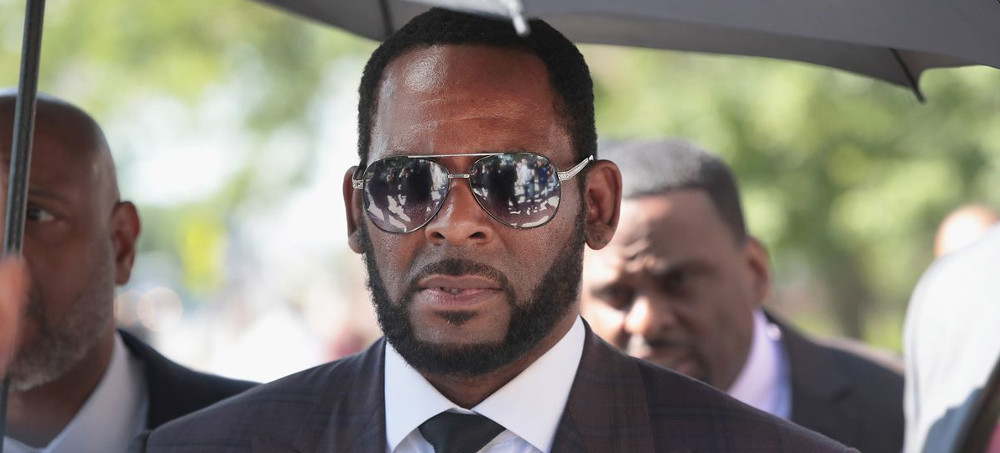
US Prison Officials Resist Making Inmates Pay Court-Ordered Victim FeesR. Kelly leaves the Leighton Criminal Courts Building following a hearing in Chicago in June 2019. (photo: Scott Olson/Getty)

US Prison Officials Resist Making Inmates Pay Court-Ordered Victim Fees
Devlin Barrett, The Washington Post
Barrett writes: "The Federal Bureau of Prisons has been pushing back against efforts to make inmates pay much more of their court-ordered restitution to crime victims, in part because the money they would use helps fund salary and benefits for hundreds of agency staff positions, documents and interviews show."

R. Kelly has roughly $28,000 in a prison account while a judge ordered him to pay $140,000 as part of his sentence

The Federal Bureau of Prisons has been pushing back against efforts to make inmates pay much more of their court-ordered restitution to crime victims, in part because the money they would use helps fund salary and benefits for hundreds of agency staff positions, documents and interviews show.

Federal prisoner spending generates more than $80 million a year for the agency — mostly from profits on items like commissary purchases and phone calls, according to the Bureau of Prisons response to a public records request. Those documents also show that the agency earns interest from some accounts.

In Justice Department discussions last month, senior prison officials argued that the agency should not dramatically increase the amount of prisoner money turned over to victims, according to people familiar with the internal deliberations, who spoke on the condition of anonymity to describe the conversations. Any sharp uptick, the people described officials saying, would cut into a vital income stream at a time when the agency is already understaffed.

Jack Donson, a retired Bureau of Prisons case manager coordinator who now consults on the federal prison system, said the issue highlights a “dysfunctional” culture at the prison bureau, with officials focused on preserving the flow of money through commissary accounts — known within the agency as the Trust Fund.

“At meetings, staffers often referred to the Trust Fund as a ‘slush fund,’ so I have always been suspicious of it,” Donson said.

Over the last year, The Washington Post revealed that some high-profile inmates, including Boston marathon bomber Dzhokhar Tsarnaev and former USA Gymnastics doctor Larry Nassar, had sizable prison account balances yet paid very little of what they owed to their victims. Deputy Attorney General Lisa O. Monaco issued a directive to study the issue and make changes to the program.

How, or if, the Justice Department decides to set new rules could affect another high-profile inmate: R…B singer R. Kelly, who was sentenced in June to 30 years in prison for sex trafficking. Kelly has about $28,000 in his prison account, according to multiple people familiar with the case, and owes $140,000 in court-ordered fines, including a $40,000 penalty for a fund for human-trafficking victims, according to court records. Prosecutors have yet to ask a judge to make the Bureau of Prisons turn over that money.

Kelly’s lawyer, Jennifer Bonjean, said it was unethical for anyone at the Bureau of Prisons to share Kelly’s data and noted there was already an investigation into how other details of Kelly’s life behind bars had been leaked.

“My client has an appeal pending, and until the Second Circuit affirms his conviction, nobody should be touching any of his money,” Bonjean said. She said she did not know Kelly’s account balance, but “neither the BOP nor any entity should have anything to say about whatever money he has in his commissary account.”

The controversy over inmate funds centers on two separate but related pools of money. The first are deposit accounts, in which the nation’s nearly 140,000 federal inmates can keep an unlimited amount of money. These accounts are not subject to many of the regulations and scrutiny of regular bank accounts, because the agency does not consider itself a bank. The total amount of money in the deposit accounts ballooned from $86 million to more than $140 million in 2021, in large part because prisoners received coronavirus stimulus payments, people familiar with the matter said.

The second pool of money is the commissary accounts, or Trust Fund — a means for inmates to buy things, like phone or email access, sodas and candy, with money from their deposit funds.

The Bureau of Prisons, according to documents provided in response to a public records request, makes interest off the Trust Fund, though the amount can vary wildly; last year the agency made $29,526, but two years earlier the fund generated more than $1.3 million in interest.

The Trust Fund also operates as a kind of business, using the significant markups it charges inmates on purchases to pay for agency staff. Last year, the Trust Fund paid $82 million to fund 652 positions at the Bureau of Prisons — $49.5 million in salaries and $32.5 million in benefits, according to agency records.

In a written statement, the agency drew a sharp line between the two pools of money, insisting the inmate deposit fund does not profit off inmates’ money, while not acknowledging that the Trust Fund money generates tens of millions of dollars a year that is used for salaries and benefits.

The agency said that “all inmate deposits are held in trust by the Bureau of Prisons in non-interest bearing U.S. Treasury accounts and remain there unless the funds are withdrawn by the inmate or the inmate is released. Since the funds are held in trust, the BOP does not invest or derive any kind of income from the funds in these accounts.”

Separately, through the public records request, the agency acknowledged that the commissary money — the Trust Fund — does earn interest for the Bureau of Prisons.

For years, the Bureau of Prisons has argued that whatever balance inmates may have in their accounts, they should only be required to pay $25 every three months — just over $8 a month — to any court-ordered victim restitution.

In early July, as Monaco’s office considered how much to increase what inmates have to pay toward court judgments, senior Bureau of Prisons officials asserted that no more than 25 percent of an inmate’s prison account should be taken, people familiar with the conversations said. The officials noted that reducing the amount of money in the accounts could also reduce the amount in the Trust Fund, thus cutting into the agency’s revenue, these people said.

Under the 25 percent limit, Kelly, for example, would have to turn over about $7,000 from his prison account, while he would keep about $21,000.

The agency’s proposal was met with resistance from other parts of the Justice Department, according to people familiar with the debate, which is ongoing. Officials are now considering an option in which the maximum amount taken from a prisoner to pay court orders would range from 25 to 75 percent, depending on the overall account balance.

Prosecutors and other law enforcement officials have been pushing to fix what they see as a glaring, unjust contradiction in the current system: The Bureau of Prisons zealously guards the money of convicted criminals who have been ordered by other parts of the government to make payments to their victims.

Prisoners are allowed to spend only about $400 a month through the commissary system, yet some keep many thousands in their accounts. More than 20 inmates had prison account balances of more than $100,000 each, The Post reported last year. It can be difficult for convicts to get a traditional bank account.

Critics of the Bureau of Prisons system say the agency’s accounts often shield money that should go to court-ordered restitution or child support. Under the current rules, prosecutors have to ask a federal judge to order the agency to turn over significant amounts.

Jason Wojdylo, a retired U.S. Marshals official, tried in vain for years to persuade the Bureau of Prisons to change its practices, which he said fail crime victims. Wojdylo filed the public records request that showed how much money, and how many positions, the bureau pays for with revenue generated by inmate money.

“It is a gross conflict for BOP to put its own interests before those of victims and children,” Wojdylo said in an interview.

Lawmakers have also begun pressing the Justice Department to change the system.

“BOP has a responsibility to make sure inmates are making good on their judgments owed ... victim restitution, child support and the like,” Sen. Charles E. Grassley (R-Iowa) said this week after being told of The Post’s findings. “These important judgments should not go ignored while BOP is taking a cut from inmates buying snacks at the commissary.”

In the Tsarnaev and Nassar cases, prosecutors eventually filed court papers seeking a judge’s order to force the agency to turn over funds to cover larger payments. Before they did so, Nassar had spent more than $10,000 from his prison account on other purchases, according to a court filing, while paying victims about $100 a year. He had been ordered to pay tens of thousands in restitution.

By the time prosecutors asked a judge to seize Tsarnaev’s prison funds in January, he had received $21,000 in deposits, including $1,400 in pandemic relief funds from the federal government. He had spent all but about $4,000 of the money on purchases from the Trust Fund.

In another past case, a Tennessee bank robber wrote to a federal judge saying Bureau of Prisons officials were preventing him from paying what he owed his victims. He asked the judge to intercede and force the agency to give them his money.

Federal inmate accounts are not subject to the same criminal and regulatory scrutiny as bank accounts of non-incarcerated people. Although the Bureau of Prisons operates accounts for inmates and issues checks and money transfers from those accounts on their behalf, the agency does not consider itself a financial institution. Nor does it run bank transactions through a Treasury Department screening program meant to flag outstanding debts, officials said.

The agency has said that it cannot make inmates comply with state court orders for payments such as child support or alimony but that it incentivizes them to do so through regular payment plans.


READ MORE


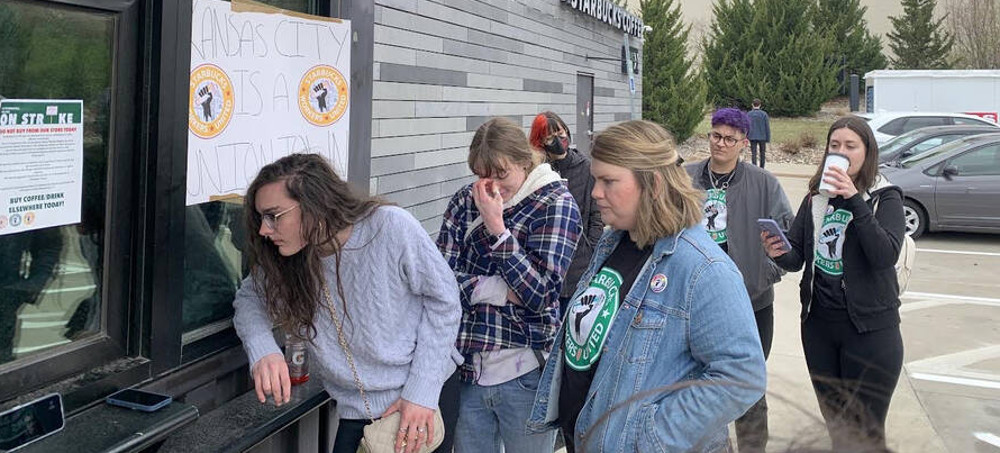
Starbucks Holds Life-Saving Benefits Over Trans Workers' HeadsMaddie Doran (far left) and fellow Starbucks employees meet outside the Overland Park store to have their union ballots counted. (photo: Jacob Martin)

Starbucks Holds Life-Saving Benefits Over Trans Workers' Heads
Zane McNeill, In These Times
McNeill writes: "Maddie Doran worked at the Starbucks on 75th Street and Interstate 35 for 10 months, 'not only to pay the bills,' she says, but because the company's health insurance covers gender-affirming surgery."

Managers are wielding a new weapon against unions: gender-affirming healthcare


Maddie Doran worked at the Starbucks on 75th Street and Interstate 35 for 10 months, “not only to pay the bills,” she says, but because the company’s health insurance covers gender-affirming surgery. Many health plans exclude gender-affirming care, despite the fact that the medically necessary procedures can be lifesaving — Harvard research shows gender-affirming care can significantly reduce suicidal ideation, for example.

And without Starbucks’ health plan, Doran’s facial feminization surgery would cost her $42,000.

But after Doran joined a union campaign at the store this winter, the benefit “was waved over my head” as an anti-union scare tactic, she says, with one store manager privately telling her, “You’re here for the gender-affirming surgeries and I’m worried about you [losing that benefit and] becoming the minority [in contract negotiations], because ultimately the union decides.”

An emailed statement from Starbucks to In These Times said that the company would “bargain in good faith” but could make no “guarantees about any benefits,” asserting that “even if we were to offer a certain benefit at the bargaining table, a union could decide to exchange it for something else.”

Losing a benefit because of your union is extremely unlikely. As Katie Barrows, president of the Nonprofit Professional Employees Union, explains: “Employees form unions to improve their workplaces. Additionally, when employees organize, they are the union, which means they negotiate and vote to approve their union contract — union members are not going to vote for a contract that leaves them worse off. … I’ve only seen union contracts drastically improve workers’ pay, benefits and working conditions.”

Before Doran could get the surgery, however, she lost the health coverage anyway. She and two other outspoken union supporters, Michael Vestigo and Alydia Claypool, were fired in the same week. The store accused Doran of stealing money; she denies the charge and believes the three were targeted as retaliation.

As a union organizing wave has pulled in more than 300 Starbucks stores so far, workers have alleged egregious union-busting tactics by the company, including intimidation, retaliatory firings and scheduling reductions. Interim CEO Howard Schultz announced in April that a new benefits expansion will exclude union stores.

In at least one other store, as reported in Bloomberg and Them, managers specifically threatened that unionizing could jeopardize health benefits for trans employees. These alleged threats prompted Workers United to file unfair labor practice charges against Starbucks with the National Labor Relations Board (NLRB), on behalf of employees at Doran’s store and an Oklahoma City location.

Doran says her firing represents how gender-affirming healthcare can be used as a cudgel against unionization efforts. Retaliatory store closures or firings can especially hurt trans employees who rely on hard-to-find benefits.

Doran and her coworkers publicly announced their union campaign in January and held a walk out and strike in March to protest unfair working conditions. At one point, Doran says, managers tried to throw employees off the grounds of a local hotel where they’d been called for a mandatory anti-union meeting. When a group of workers gathered outside after the meeting, Doran says, a Starbucks manager told them, “You all need to go,” and then complained to the hotel front desk, who said the police had been called.

Doran, Vestigo and Claypool all made pro-union statements in the media, and all were terminated in April. The NLRB filed a complaint against Starbucks in May, alleging the firings were retaliatory, and Claypool has since been reinstated.

The union ballots came back a week after the three were fired. The vote was 6 – 1 in favor of a union, adding Overland Park to the more than 200 Starbucks locations that have unionized so far this year.

Transgender people are unemployed at a rate three times higher than the national average, according to a 2015 National Center for Transgender Equality study, and face a greater risk of underemployment and poverty than other workers. They are subject to higher rates of hiring bias, on-the job discrimination and firings, greater wage inequity and unequal access to healthcare.

While Starbucks’ 2018 rollout of transgender health benefits was celebrated by LGBTQ advocates and media platforms, some workers at individual stores have reported trans-discriminatory practices. In 2018, Maddie Wade, a transgender employee, sued Starbucks for discrimination, alleging her manager repeatedly misgendered her. In a 2020 survey by hospitality union Unite Here of workers at airport Starbucks stores, which are run by a subcontractor, at least four employees reported discrimination such as “offensive and transphobic comments from managers.” A 2020 BuzzFeed story details three workers at different Starbucks stores being outed, hitting snags accessing gender-affirming benefits and being deadnamed.

“Starbucks will posture that they care about queer people,” says Doran, “and they will posture that they care about any minority group, but the second you try to have a democratic workplace or speak up for yourself or don’t let them bully you — suddenly you’re public enemy number one, and they completely shut you out.”

A friend of Doran’s created a GoFundMe campaign to raise the $42,000 for the surgery. As of yet, she had raised $2,200.


READ MORE


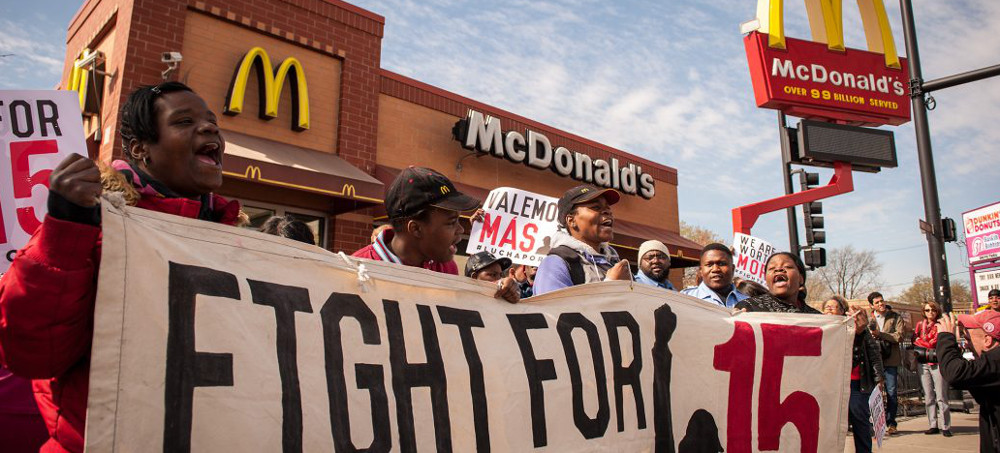
Government Sues Former McDonald's Employees to Comply With Subpoenas About Surveilling WorkersFormer members of McDonald's "Global Intelligence Team" must testify about "social media, security, intelligence-gathering, and/or other modalities to surveil employees who have been engaged in the Fight For $15 Campaign." (photo: Spencer Platt/Getty)

Government Sues Former McDonald's Employees to Comply With Subpoenas About Surveilling Workers
Lorenzo Franceschi-Bicchierai, VICE
Franceschi-Bicchierai writes: "The U.S. government agency responsible for enforcing labor laws sued two former McDonald's employees in an effort to compel them to respond to a subpoena related to a case of alleged surveillance against the company's workers involved with the labor activist campaign Fight for $15."

Former members of McDonald's "Global Intelligence Team" must testify about “social media, security, intelligence-gathering, and/or other modalities to surveil employees who have been engaged in the Fight For $15 Campaign.”


The U.S. government agency responsible for enforcing labor laws sued two former McDonald’s employees in an effort to compel them to respond to a subpoena related to a case of alleged surveillance against the company’s workers involved with the labor activist campaign Fight for $15.

On Friday, the National Labor Relations Board (NLRB) filed an application to compel two McDonald’s employees who used to work on the company’s team responsible for security and intelligence gathering to provide evidence to the agency. This team was known as Global Intelligence Team. The two ex-employees received subpoenas in March of this year requesting that they testify in an investigation into whether McDonald’s had used “social media, security, intelligence-gathering, and/or other modalities to surveil employees who have been engaged in the Fight For $15 Campaign,” a court document read.

The lawsuit and the NLRB investigation stems from a Motherboard investigation published in February of 2021. The investigation, based on leaked internal documents and sources with knowledge of the surveillance operation, revealed that McDonald’s had for years labeled Fight for $15 activists a security threat, and spied on them to figure out which workers were involved in the movement, and who they were working with to organize protests, strikes, and attempt to form unions.

"The idea was to figure out their strategy, counter it, and find out where the key players are, and who they know," a former McDonald's corporate employee told Motherboard last year.

The two former employees sued are Carsten Frank and Kristen Stewart-Gibbs, who both used to be part of McDonald’s Global Intelligence Team. Frank’s subpoena was issued March 24, while Stewart-Gibbs’s subpoena was issued on March 10, 2022. Neither of them appeared in front of the NLRB’s regional department in Chicago, and their “failure and refusal to cooperate with the subpoena issued to her by providing sworn testimony has impeded and continues to impede the Region in its investigation of the matters before it, and has prevented the Region from carrying out its duties and functions,” according to the court document.

Frank and Stewart-Gibbs did not respond to a request for comment sent via LinkedIn.

On Monday, McDonald’s filed a motion asking two members of the NLRB to recuse themselves from the investigation, arguing that they were previously affiliated with the Service Employees International Union (SEIU) and the National Fast Food Workers Union (“NFFWU”).

In the motion, the company argues that the “NFFWU erroneously alleges that the McDonald’s Entities engaged in unlawful surveillance of the activities of the ‘Service Employees International Union, [the] National Fast Food Workers Union, [the] Fight for 15, [and] affiliate organization[s] of the foregoing organizations.’”

The company also criticized the unfair labor practice charge filed against McDonald’s following Motherboard’s investigation.

“The charge was based in its entirety on an unsubstantiated, anonymously sourced vice.com article and erroneously alleged that McDonald’s Corp.’s Global Intelligence Department engaged in unlawful surveillance of workers and union organizers participating in the Fight for $15 campaign, using tactics including extensive monitoring of social media activity,” the motion read. “The Global Intelligence Department’s activities consist solely of the lawful monitoring of publicly available, open source information.”

The company’s motion reveals that the NLRB has requested McDonald’s to release information related to the case, and filed a subpoena.

McDonald’s did not respond to a request for comment.

In an emailed statement, Otha Smith, a Milwaukee McDonald’s worker and leader in the Fight for $15 movement said: “What is McDonald’s trying to hide? Instead of heeding our demand for $15/hr and a voice on the job, first McDonald’s apparently launched an operation to spy on us and now they’re fighting in court to keep it secret. While McDonald’s spends millions on corporate lawyers, we’ll be in the streets demanding a living wage of at least $15/hr and fighting to fix the broken labor laws that have allowed the company to surveil us for nearly a decade without facing consequences.”

A spokesperson for the NLRB declined to comment.

The NLRB requested the court to issue an order to Frank and Stewart-Gibbs to appear by Zoom within 14 days.


READ MORE


Kansas Referendum Boosts Democrats' Midterm Focus on AbortionA resounding victory for abortion rights in Kansas is bolstering Democrats' confidence that the issue will help them win close midterm races in several key states. (photo: Nathan Posner/Getty)

Kansas Referendum Boosts Democrats' Midterm Focus on Abortion
Josh Kraushaar, Axios
Kraushaar writes: "A resounding victory for abortion rights in Kansas is bolstering Democrats' confidence that the issue will help them win close midterm races in several key states."

Aresounding victory for abortion rights in Kansas is bolstering Democrats' confidence that the issue will help them win close midterm races in several key states.

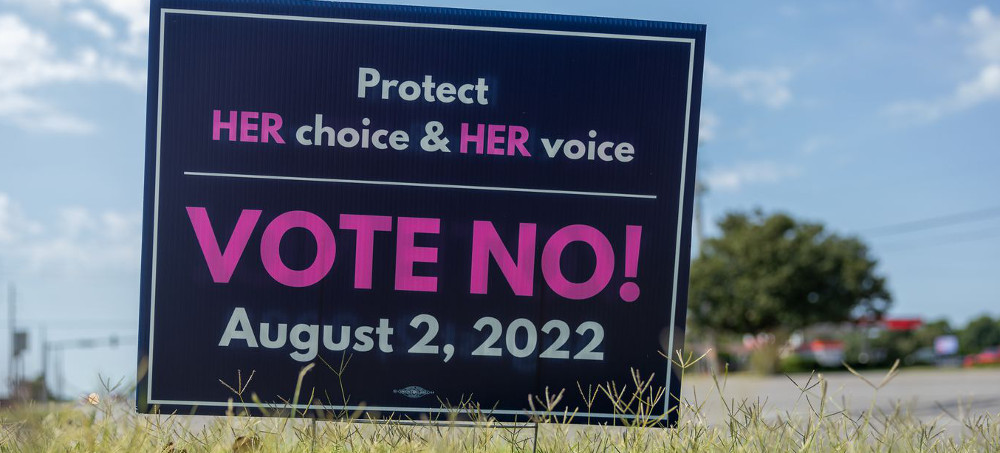
The big picture: Tuesday night’s results — an 18-point loss for a proposal to strip abortion rights out of the state's constitution — yielded new evidence that abortion can push swing voters toward Democrats and mobilize the liberal base.

What they're saying: In Pennsylvania, Lt. Gov. John Fetterman, the Democratic nominee for Senate, used the Kansas vote as an new avenue to attack his GOP rival Mehmet Oz, who opposes abortion rights.

  • “Here in Pennsylvania, Republicans want to do the same thing radical GOP politicians attempted to do in Kansas," Fetterman said. “I will protect abortion rights. Dr. Oz will take them away. It’s that simple.”

  • President Biden, who issued an executive order Wednesday to protect people's ability to travel out of their home states to access abortion, said Kansas' voters had sent a "powerful signal" for November.

The big picture: Democrats are confident that Republicans who take the most hardline positions on abortion — like banning the procedure even in cases of rape, incest or when the life of the mother is in danger — will face a political backlash.

Zoom out: The Kansas referendum proved to be a huge motivator for the state's Democratic voters, who turned out at high levels and stood in lines for an otherwise sleepy August primary.

  • In Johnson County — suburban Kansas City — more than 242,000 votes were cast Tuesday. That's close to the historically high voter turnout in the 2018 midterms. If that can be replicated in other suburbs around the U.S., it could make a difference in crucial contests up and down the ballot.

Turning back the clock?  This is not solely about Abortion Rights.

It has been noted that the FREE BIRTH CONTROL and readily available access in Europe is the reason they experience low abortion rates.

From the link on the article above:
After the U.S. Supreme Court overturns women’s constitutional right to abortion this summer, one Arizona Republican candidate for U.S. Senate thinks judges should also take aim at the right to buy and use contraception.

Blake Masters, a Tucson-based venture capitalist, boasts on his website that he will only vote to confirm federal judges “who understand that Roe and Griswold and Casey were wrongly decided, and that there is no constitutional right to abortion.” Roe v. Wade and Planned Parenthood v. Casey, decided in 1973 and 1992, respectively, both upheld a constitutional right to abortion access.

But the ruling in Griswold v. Connecticut in 1965 protected a married couple’s right to buy and use contraceptives without government restrictions. The case centered on a Connecticut law that banned the use of contraceptives, which the court determined violated a married couple’s constitutional right to privacy, establishing the basis for the right to privacy with respect to intimate practices.

If you deny women contraceptives, it perpetuates the Republican War Against Women.
There is a generation that has grown up without understanding that the history of CONTRACEPTIVES was a hard fought court battle, as was Roe, that Republicans seek to overturn.  How primitive is it to deny CONTRACEPTIVES?

This is part of the history of how primitive BIRTH CONTROL LAWS were:

Birth control rights activism
Bill Baird's advocacy for reproductive rights began in 1963 after witnessing the death of an unmarried mother of nine children who died of a self-inflicted coat hanger abortion.[4] As the clinical director of EMKO, a birth control manufacturer, he had been coordinating research at Harlem Hospital when she stumbled into the corridor, covered with blood from the waist down.[4]

In 1963, he began giving away EMKO birth control foam samples including at malls where his activities often met with religious opposition.[9] He was threatened with arrest for distributing free birth control foam in Hempstead, New York.[10] Baird founded the Parents Aid Society and later distributed contraceptives in a converted delivery truck that he called the "Plan Van."[11] In 1966 Baird established the first birth control club on a college campus at Hofstra University.[12]

He was sent to jail for teaching birth control and distributing abortion literature in New York, New Jersey, and Wisconsin.[13] Baird's punishment galvanized feminists like Anne Koedt to speak out in his defense.[14] On May 13, 1965, he challenged New York's anti-birth control statute, law 1142.[15] He was arrested in Hempstead, NY and jailed for teaching birth control out of his mobile "Plan Van." Baird's challenges led to the legalization of birth control in New York. Planned Parenthood President Alan Guttmacher criticized Baird and stated that Baird was "overenthusiastic and every couple seeking birth control information should seek a physician."[16]

In 1966, Baird challenged New Jersey's restrictive birth control statute after the commissioner of welfare threatened to jail unwed mothers under the law of fornication.[17] When Baird arrived in Freehold, New Jersey in his "Plan Van" to challenge the law, he was arrested and jailed for publicly displaying contraceptive devices.[18]

Baird challenged restrictive birth control laws in the state of Wisconsin in 1969 and was again arrested and jailed for showing "birth control and indecent articles" to a Northland College audience in Ashland.[19]
https://en.wikipedia.org/wiki/Bill_Baird(activist)


READ MORE


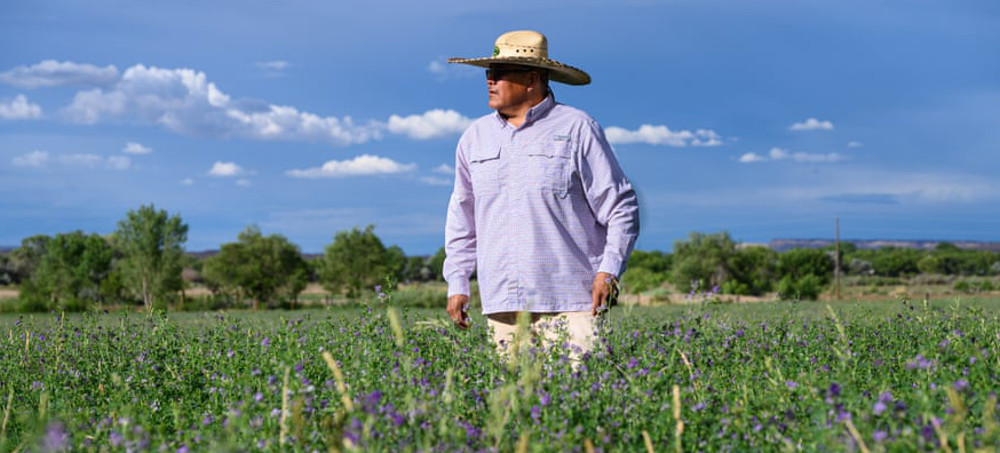
'We Feel Disrespected': Navajo Farmers Wait for Justice Years After EPA DisasterShawn Mike, in his corn field along the Fruitland ditch. 'Everyone puts their heart and soul into what they grow.' (photo: Michael Bananav/Searchlight New Mexico)

'We Feel Disrespected': Navajo Farmers Wait for Justice Years After EPA Disaster
Michael Benanav, Guardian UK
Benanav writes: "On 7 August 2015, crews from the Navajo Nation irrigation office in Shiprock rushed to close the main gates of two irrigation canals that carry water from the San Juan River toward the fields of hundreds of Navajo farmers."

Seven years after the EPA accidentally released 3m gallons of acid mine water, poisoning waterways that carry water to fields, farmers are still waiting for compensation

On 7 August 2015, crews from the Navajo Nation irrigation office in Shiprock rushed to close the main gates of two irrigation canals that carry water from the San Juan River toward the fields of hundreds of Navajo farmers.

It was peak growing season in the arid north-western corner of New Mexico. About 12,000 acres of crops had been planted. And a disaster was threatening all of them.

Two days earlier, 115 miles upstream in Colorado, the Environmental Protection Agency (EPA) accidentally released about 3m gallons of acid mine water from the Gold King mine, during the initial stages of a cleanup operation. Spilling from Cement Creek into the Animas River and then the San Juan, the waterways – poisoned with nearly 540 tons of arsenic, lead, cadmium and other toxic metals – turned a sickly yellow.

“It was coming like a big flow of mustard,” recalled Shawn Mike, one of 222 Diné farmers and ranchers suing the EPA for their losses. The plume ultimately flowed more than 340 miles, coursing through tribal lands and three states to Lake Powell in southern Utah.

Seven years later, despite public promises to promote environmental justice for Indigenous communities and its admission of responsibility for the disaster, the EPA still refuses to compensate the farmers.

Though the agency has settled lawsuits with state and tribal governments for approximately $331m, the Department of Justice, which represents the EPA in court, asserts that individual Navajos – who together are asking for $49m – have no right to sue.

The impact of the spill hit the irrigators like a one-two punch. First, their crops died from a lack of water when the canals were closed. Then, once the farmers were growing again, they found their produce impossible to sell.

Mike pulls water from the Fruitland ditch, west of Farmington, on land first cultivated by his grandfather. When his fields dried up, he lost more than 10,000 corn plants, 1,000 squash plants and several acres of alfalfa.

“Corn is local farmers’ bread-and-butter,” he said. “It’s used in a variety of ways, for eating and traditional uses, so it has a high value. It was a catastrophe.” As the reality of their losses, both financial and cultural, began to sink in, “you could see tears in people’s eyes”.

Among those weeping was Bertha Etsitty, a 71-year-old farmer who with her husband, Allen, works about 20 acres near Shiprock. Their fields are fed by the Hogback ditch, and their views are framed by the silhouettes of distant peaks – Ute Mountain in Colorado, the Carrizos in Arizona, and Shiprock itself.

“Our corn was about 4ft tall when they closed the gates,” she said. “I knew we were going to lose it all. We even hauled water in and used cups to pour it for the plants. We saved a little of it, but …” she trailed off, leaving the tragic conclusion unspoken.

Thanks to the closing of the irrigation ditches, “no contamination reached the fields”, said Steve Austin, senior hydrologist with the Navajo Nation EPA. Within about three weeks the level of contaminants in the San Juan had diminished and the water was declared safe to use. Although the Fruitland canal reopened before the end of August, “many farmers didn’t trust it and wouldn’t use it”, Austin said. Irrigators on the Hogback canal voted to keep that ditch closed until the following spring.

When the 2016 harvest came in, farmers had trouble unloading it.

“People were afraid that the water was still contaminated,” said Allen Etsitty, “the way grease stays in the bottom of a pan”.

“We would try to sell our corn at flea markets and fairs, like in Gallup or Window Rock or Kayenta,” Bertha Etsitty elaborated. “But we had to haul most of it, and our melons, back home. A lot of people know I sell corn pollen [about two tablespoons of which go for $50], and I lost all of those customers. Our bills piled up. We fell behind on our truck payments, tractor payments, and one of our tractors, ‘Old Red,’ is now broken because we couldn’t afford to keep it maintained.”

Mike, who farms 10 miles upriver from the Etsittys, had a similar experience. “The water is ruined – to’ łitso – people said in Navajo.” His neighbor, Ernest Benally, who grows alfalfa on 12 acres, says that, even now, some people are still “skeptical of things grown around here. I sell to commercial beef growers, and they wouldn’t buy from me for a couple of years.”

Lawmakers are well aware of the losses that have been suffered. Among them, US congresswoman Teresa Leger Fernández says she has written to the DoJ urging it to settle the case and compensate the farmers. “They should do the right thing,” she said in a phone interview. “I want them to get restitution as quickly as possible, and the fastest way for that to happen is for it to come from the EPA.

“Justice delayed is justice denied,” she said, “and some of the plaintiffs have died since this lawsuit began. They’ll never see justice.”

Hózhó disrupted

Along with a well-earned mistrust of government information, many Navajos evaluated the lasting impact of the mine spill with criteria that went beyond measurable contaminant levels.

“The San Juan is a deity that Navajos revere,” said Karletta Chief, professor of environmental science and director of the Indigenous Resilience Center at the University of Arizona.

Navajo herself, she led research teams that assessed the environmental impact of the spill, communicated their findings to farmers, and tried to understand how the community perceived the risks posed to their health and way of life.

“Their connection to the world, their sense of balance in the world, is related to the river. So when the spill happened, that balance, that hózhówas disrupted. Everything related to the river was also out of balance – it’s a complete system, all interconnected. Because the river was imbalanced, even the corn pollen was disrupted,” she said.

And that could have a negative impact on traditional ceremonies, even if samples showed no significant uptake in arsenic or lead in corn. “You can tell people that the water meets standards for drinking, for irrigating, but for people who are more spiritually connected, when is it OK to use it again?”

‘Drastic’ discharges

The basic facts in the case are not in dispute: the Gold King mine, in the mountains north of Silverton, Colorado, operated on and off between about 1887 and 1922. During that time, it produced more than 700,000 tons of gold and silver.

Fast-forward to the 1990s, when the sealing of the nearby Sunnyside mine redirected groundwater into Gold King. Though a cave-in blocked Gold King’s entrance, by the early 2000s, toxic water was leaking out in alarming amounts. It was “a drastic new high-quantity discharge … of extremely poor quality water, making this site one of the worst draining mines in the State of Colorado,” the state Division of Reclamation, Mining and Safety reported. It had to be cleaned up.

In 2015, after a few preliminary efforts, the EPA’s on-scene coordinator, Steve Way, approved a plan to drain the mine, created in consultation with an experienced independent contractor. Similar to an approach that had been successful at a neighboring mine, Gold King would be drilled into from above in order to figure out just how much water it contained, then pumped out in a safe and controlled manner. Only then would workers begin digging into the debris that was plugging the mine entrance, which dammed the water inside. Had this plan been followed, “the blowout would not have occurred,” the US Bureau of Reclamation concluded.

Instead, Way went on vacation. His temporary replacement, Hays Griswold, had no familiarity with Gold King before arriving at the site. Nevertheless, he quickly surveyed the scene and abandoned the work plan, concluding that what needed to be done “was very simple”, according to a sworn deposition. His decisions, which he said were based on a plan that he drew up in his head, directly led to the blowout.

The matter now before the US district court in New Mexico is not whether the EPA was responsible – it admits as much – but whether the Navajo farmers have a right to sue under the Federal Tort Claims Act. The latter allows individuals to sue federal agencies but also grants agencies broad immunities, particularly in situations “when an employee’s acts involve the exercise of judgment or choice”. The government asserts in court filings that Griswold exercised “just the type of discretionary, policy-based conduct” that is immune from tort claims. It is seeking to have the suit dismissed.

Kate Ferlic, the lead attorney for the plaintiffs, argues that immunity does not apply in this case, pointing out that the government isn’t shielded from lawsuits when employees violate policies that they are bound to follow. “Griswold was reckless and ended up poisoning a river system,” she said. “If immunity is granted under these circumstances, plans designed to protect public safety become meaningless.”

It would cost less for the EPA to compensate the farmers than to keep battling them in court, she said. “The government has spent more money on this case, in time and experts, than it would have taken to pay out all of the claims.”

It’s ‘just wrong’

Calvin Yazzie, a 71-year-old Navy veteran and former mine worker who lost alfalfa crops valued in the hundreds of thousands of dollars after the spill, said, “If you made a mistake and fessed up to it, you don’t need to try to swindle people and then smirk when you get away with it. It seems like that’s what the government is doing. To me, that’s just wrong.”

In principle, the EPA appears to agree. The agency says it has aligned with the Biden administration’s emphasis on advancing environmental justice for communities, “including people of color and others who have been historically underserved, marginalized, and adversely affected by poverty and inequality”. In an April 2021 memo outlining its environmental justice goals, one bullet point stands out: “Assist and seek to obtain restitution for victims of environmental crimes.”

When asked whether the government’s posture in the lawsuit contradicted the memo, the EPA replied by email that it is “committed to delivering environmental justice for underserved communities and overburdened communities, including Tribal nations”.

As the seventh anniversary of the spill approaches, the farmers are only seeing more delays. On 24 June, the trial date that had been set for early November was vacated and postponed for an indefinite period of time. It has not yet been rescheduled.

“We’re just waiting for some good news,” said a frustrated Ernest Benally, “but it’s going on and on and on”.

Standing beside him, Mike agreed. “We feel neglected, not heard, disrespected. We wish they would remember that we have a beating heart, also, and a lot of what it beats on is our farms, no matter how small.”


READ MORE


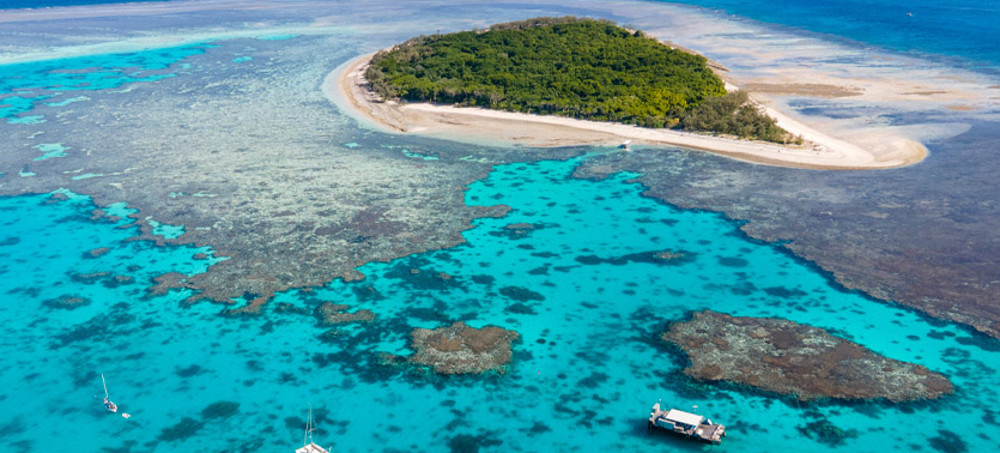
Coral Levels in Some Parts of the Great Barrier Reef Are at the Highest in 36 YearsThe amount of coral in some areas of the Great Barrier Reef is at its highest in 36 years. (photo: iStock)

Coral Levels in Some Parts of the Great Barrier Reef Are at the Highest in 36 Years
Ayana Archie, NPR
Archie writes: "The amount of coral in some areas of the Great Barrier Reef is at its highest in 36 years, according to a new report from the Australian Institute of Marine Science."

The amount of coral in some areas of the Great Barrier Reef is at its highest in 36 years, according to a new report from the Australian Institute of Marine Science.

From August 2021 to May 2022, the central and northern regions of the Great Barrier Reef had hard coral cover levels of 33% and 36%, respectively. Coral cover decreased by 4% in the southern region, due to an outbreak of crown-of-thorns starfish.

The Australian agency found that 87 coral reefs generally had low levels of acute stress from things such as cyclones and increases in the crown-of-thorns starfish population. (Crown-of-thorn starfish are the second largest in the world, reaching up to three feet, and prey on coral. They have spikes with venom that is toxic to humans and marine wildlife.)

The area surveyed represents two-thirds of the Great Barrier Reef.

Almost half of the reefs studied had between 10% and 30% hard coral cover, while about a third of the reefs had hard coral cover levels between 30% and 50%, the report said.

While higher water temperatures led to a coral bleaching event in some areas in March, the temperatures did not climb high enough to kill the coral, the agency said.

Coral in the Great Barrier Reef is resilient, and has been able to recover from past disturbances, the Institute said. But the stressors impacting it have not gone away for long.

The agency's outlook shows more frequent and long-lasting heatwaves, cyclones and crown-of-thorns starfish.

"Therefore, while the observed recovery offers good news for the overall state of the [Great Barrier Reef], there is increasing concern for its ability to maintain this state," the report said.


READ MORE

Special Coverage: Ukraine, A Historic Resistance
READ MORE


Contribute to RSN

Follow us on facebook and twitter!

Update My Monthly Donation

PO Box 2043 / Citrus Heights, CA 95611


This Weekend in Politics, Bulletin 441.

                                                                               LOTS OF POSTS IGNORED BY BLOGGER..... OR REMOVED ON THEIR WHI...