05 January 23
Live on the homepage now!
Reader Supported News

Late-night hosts discuss Kevin McCarthy’s historic failure to be elected speaker of the House and George Santos’s lies
McCarthy, a longtime Trump acolyte from California, has long wanted the job of speaker and seemed like a shoo-in in November. “But Kevin McCarthy has one major weakness: his weakness,” Colbert explained. Facing backlash from even farther-right members of his own party, McCarthy lost three votes, with even less support at the end.
“Remember, there’s more important things in life than winning or losing,” said Colbert. “There’s making fun of Kevin McCarthy for losing.”
The House adjourned with no speaker – the first time in 100 years that a nominee for speaker did not win on the first vote. The “historic depants-ing” will continue on Wednesday, as McCarthy plans to continue voting to wear down his detractors until he wins the speaker’s gavel. “You know, Kevin, you can just buy a gavel. I did, and I find you guilty,” Colbert laughed.
Colbert also mocked the New York congressman George Santos, who during his campaign “lied about, and I’m rounding down here, everything”.
Among the things Santos lied about: where he went to high school, where he went to college, working for Goldman Sachs, owning 13 properties (he lives at his sister’s in Huntington), and that his grandparents survived the Holocaust. He also claimed his mother died in the September 11 attacks, then said she died a few years later, then admitted she died in late 2016. “That is a horrible thing to lie about,” said Colbert. “His poor mother must be spinning in all of her graves.”
Seth Meyers
McCarthy’s inability to secure the vote for speaker of the House was a “monumental failure that has not happened in 100 years”, said Seth Meyers on Late Night.
The host relished the backlash against McCarthy from even more pro-Trump members of his own party. “If there’s one political lesson we’ve learned the past six years, it’s that there is always someone who is more pro-Trump,” he said. “Whatever line of decency you draw in your head, someone else is going to walk right through that motherfucker. Even Trump himself knows there are people out there more pro-Trump than him.
“McCarthy did everything he could to cozy up to Trump and the Maga circus in the House and he’s still facing a revolt from the looniest members of the GOP,” he added, remembering the congressman’s visit to Mar-a-Lago for a photo-op with Trump days after the January 6 attack.
“Did McCarthy think one visit to Mar-a-Lago was going to magically solve everything?” he wondered. “That place is the opposite of Disney World. It’s where dreams go to die.
“If you ever find yourself at Mar-a-Lago and you’re not wearing a blue windbreaker with FBI on the back, that’s how you know you made some wrong turns in life.”
Jimmy Kimmel
And in Los Angeles, Jimmy Kimmel also mocked Santos, who “basically catfished an entire congressional district”.
Santos should have resigned after his numerous fictions were exposed, Kimmel argued, but he did not. Santos attended the first day of the new Congress, where “no one, not one of the many scoundrels wriggling around the House, wanted to sit with him”.
“Imagine being so toxic Matt Gaetz doesn’t even want to sit next to you,” Kimmel laughed.
He also mocked the GOP’s embarrassing first day of Congress, in which they took control of the House, “this time without breaking and entering”.
McCarthy made “multiple offers to these lunatics” in an effort to become speaker, even agreeing to cut the Office of Congressional Ethics, “which is basically like replacing seatbelts with fettuccine”, said Meyers.
READ MORE 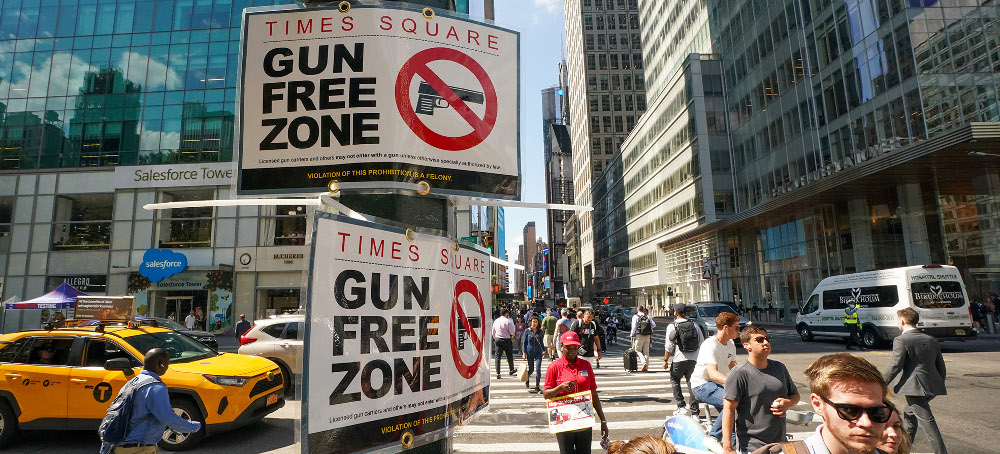 Possible these signs will not be legal for long. (photo: Robert Miller)
Without oral argument or full briefing, the case could take a hatchet to New York’s new concealed carry law—and countless more nationwide.
We won’t have to wait long for an answer. Right now, gun advocates are asking SCOTUS to block most of New York’s Concealed Carry Improvement Act—which the state legislature passed in the wake of Bruen—on the court’s infamous shadow docket. The New York law repealed the state’s now-invalid limits on concealed carry, replacing them with more rigorous screenings for permit applicants plus a list of “sensitive places” where guns remained banned. A conservative judge promptly halted the statute, gutting the screening for permits while legalizing concealed carry in hospitals, parks, zoos, movie theaters, protests, and more. But a federal appeals court reinstated the law, leading its opponents to beg the Supreme Court for emergency relief. And so, in the coming days, we will discover how aggressively the conservative majority wants to dismantle all remnants of the nation’s gun safety regime.
This mess was foreseeable from the moment Bruen came down in June. The majority opinion by Justice Clarence Thomas imposed a maximalist vision of the Second Amendment: Every restriction on the right to “armed self-defense,” he wrote, is unconstitutional unless it has “historical analogues” from 1791, when the amendment was ratified. These analogues must demonstrate a “consensus view” that the gun restriction was lawful. But how many analogues make up a “consensus”? Two? Three? Ten? And how closely must a modern gun law align with its historical analogue? Today’s firearm codes address problems that were inconceivable in 1791. Are states forbidden from banning guns on subways because subways didn’t exist 232 years ago?
Federal judges have grappled with these questions for six months, and the results are predictably chaotic. Since Bruen, courts have, for instance, ruled that individuals have a right to buy while under a restraining order for domestic violence, and to scratch out the serial number on a firearm, rendering it untraceable to law enforcement. After all, domestic violence wasn’t a crime in 1791 (when women were not full legal persons) and serial numbers were not yet widely used.
Judge Glenn Suddaby, a George W. Bush appointee, entered the fray this fall, when gun advocates asked him to block the Concealed Carry Improvement Act, or CCIA. From the start, Suddaby did not conceal his bias against the law. After the plaintiffs failed to explain why they had standing to challenge it—a crucial constitutional requirement—he invited them to do so. They declined to take up his invitation. So the judge dismissed the case. But he also penned an advisory opinion explaining why he would strike down the CCIA if the plaintiffs established standing. (Such advisory opinions are strictly forbidden.)
The plaintiffs finally took the hint and concocted dubious reasons why they had standing to challenge the CCIA. One said the new law made it too difficult to apply for a concealed carry permit (though he had never tried). Others already had permits and claimed they wanted to take their guns into the “sensitive places” protected by the law. Suddaby swiftly granted standing and issued a restraining order freezing most of the CCIA. The 2nd U.S. Circuit Court of Appeals stayed his decision, putting the law back in place. Suddaby doubled down, issuing an injunction against most of the act. Once again, the 2nd Circuit stayed his decision. So, in December, the plaintiffs asked the Supreme Court to overrule the appeals court and enjoin the law. Now that New York has responded, a decision could come at any time.
To intervene at this early stage, SCOTUS cannot simply hold that the 2nd Circuit was mistaken: It must conclude that the appeals court “clearly and demonstrably erred” in applying “accepted standards.” If five justices reach this conclusion, then no gun restriction is safe.
Consider Suddaby’s ruling: The judge struck down New York’s ban on concealed carry in public parks, zoos, airports, buses, houses of worship, bars, conference centers, banquet halls, protests, and many medical facilities, including addiction treatment centers. He also invalidated a provision of the law that stopped permit-holders from taking their weapons onto private property, like businesses or homes, unless the property owner expressly consented to their presence. Finally, Suddaby struck down a requirement that permit-holders show “good moral character” (which means they have no “demonstrated propensity to misuse firearms”), as well as a requirement that they disclose whether they have children in the home (despite the persistent and devastating problem of unintentional child shootings).
Suddaby’s reasoning ranges from curious to laughable. He admitted that he did his own research rather than rely exclusively on the parties’ briefing, and it shows. Speculating about the history of allowing guns into zoos, Suddaby wrote that he could “imagine some of the more trepid zoogoers of the time demanding to be armed in the presence of the more dangerous creatures.” (Result: The Second Amendment protects the right to carry guns in zoos.) He made up, out of whole cloth, the possibility that state agents might require permit applicants to submit a urine sample (which appears nowhere in the New York law) just so he could strike it down.
Suddaby’s efforts to find historical “consensus” were even wackier. At first, he demanded three or more historical analogues, because two “can also appear as a mere trend.” Later, the judge shifted his method, giving “more weight” to old laws in states that made up a “larger percentage of the nation’s population at the time, according to the nearest decennial census.” So laws governing Maine and Rhode Island cannot establish a consensus, but laws governing Virginia and Pennsylvania can. (Maybe!)
This is not constitutional law and barely pretends to be. And yet it is difficult not to feel a milligram of sympathy for Suddaby. The Supreme Court set him up to fail: In Bruen, Clarence Thomas cherry-picked historical facts with almost boastful recklessness, making up Calvinball rules like “laws in federal territories don’t count” to throw out evidence that contradicted his preferred outcome. That’s one reason why Judge Carlton Reeves recently floated appointing a historian in a Second Amendment case, since courts “lack both the methodological and substantive knowledge” necessary to extrapolate from the ambiguous, incomplete record.
At the very least, the Supreme Court could allow lower courts to wrestle with Bruen for a time before wading in once again. The court typically lets new issues “percolate” in the courts before resolving them, under the theory that “the airing of competing views” can aid its “own decisionmaking process.” New York gun advocates want to stymie that process by persuading SCOTUS to kill the CCIA right now, short-circuiting both “percolation” in the lower courts as well as states’ experimentation with new gun laws after Bruen. Rewarding them would only sow more confusion about the appropriate standard for Second Amendment challenges, indicating that the law changed even more radically than Bruen admitted. It would also break a promise that Justice Brett Kavanaugh made in a concurring opinion joined by Chief Justice John Roberts, which insisted that thorough “licensing requirements” remain lawful, as do limits on guns in “sensitive places.” (Perhaps the only gun-free zone that Kavanaugh and Roberts accept is their own courthouse.)
The Supreme Court will, at some point, need to clean up the mess it made in Bruen. Right now, however, the worst thing it can possibly do is act over the shadow docket to turbocharge the Second Amendment without oral argument, full briefing, or even a decision from the appeals court. Stricter limits on concealed carry, like those passed by New York, are proven to save lives. Striking down those limits will lead to more violence, injury, and death. The Supreme Court has no business inflicting that bloodshed because a handful of disgruntled gun owners are too terrified of New York City to go anywhere without packing heat.
READ MORE 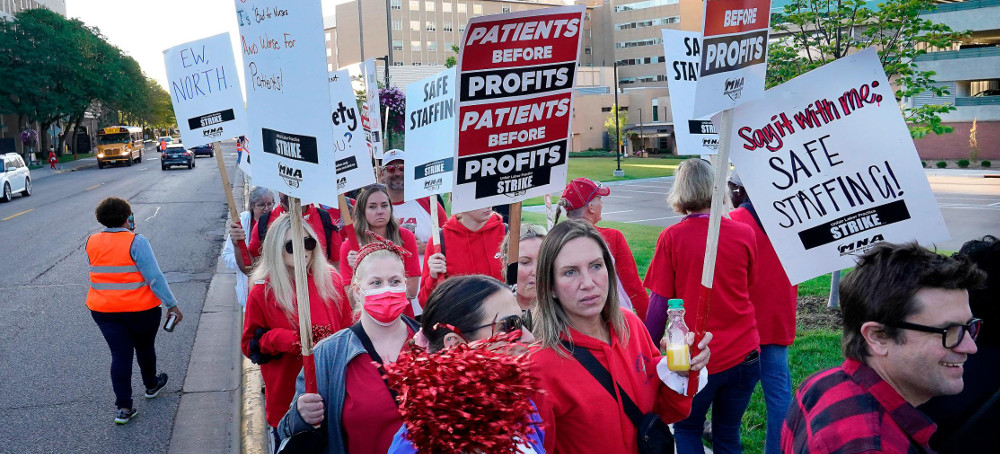 The Federal Trade Commission on Thursday rolled out a proposal to prohibit employers from implementing noncompete clauses that limit workers' ability to change jobs. (photo: David Joles/Star Tribune)
Noncompetes, which are used in a broad range of industries, make it difficult for employees to work for a competitor or start their own business for a period of time after they leave employment.
The FTC said that the rule could boost wages by nearly $300 billion per year by giving workers more power to find a new job or using the threat of leaving to demand a raise. The agency said that noncompetes also hinder innovation by blocking workers from launching their own startups.
“The freedom to change jobs is core to economic liberty and to a competitive, thriving economy,” FTC Chair Lina Khan said in a statement. “Noncompetes block workers from freely switching jobs, depriving them of higher wages and better working conditions, and depriving businesses of a talent pool that they need to build and expand.”
The left-leaning Economic Policy Institute estimates that between 36 million and 60 million private-sector workers are subject to noncompetes.
President Biden issued an executive order in July 2021 directing agencies to take aim at barriers to competition, including banning or limiting noncompetes.
The rule, if finalized, wouldn’t just ban noncompetes going forward — it would also require employers to rescind existing noncompetes and inform workers of the change. It covers independent contractors and interns in addition to full-time employees.
Sarah Miller, executive director of the American Economic Liberties Project, an anti-monopoly group with close ties to Khan, cheered the proposed rule, arguing that noncompetes harm job mobility and satisfaction.
“For too long, coercive noncompete agreements have unfairly denied millions of working people the freedom to change jobs, negotiate for better pay, and start new businesses,” Miller said in a statement.
The FTC voted 3-1 to introduce the rule, which is certain to draw opposition, and legal action, from business groups.
The U.S. Chamber of Commerce, which represents many of the nation’s largest companies, had argued the FTC “lacks legal authority to promulgate a rule that would ban noncompete clauses” in a 2021 letter to the agency.
“Should the FTC attempt to respond to the petition and initiate a rule making, it will face strong legal challenges that waste precious enforcement resources,” the Chamber wrote.
READ MORE 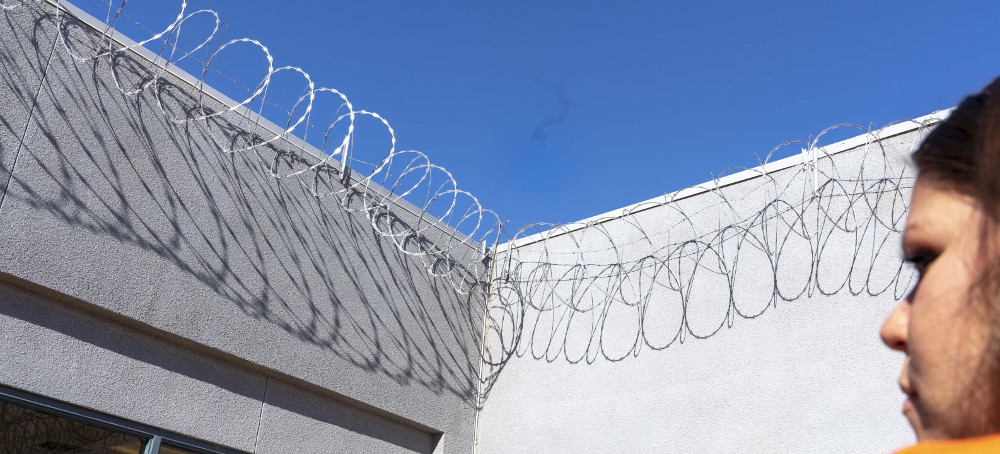 At least three pregnant women incarcerated at the Perryville prison in Buckeye, Arizona, say the prison induced their labor early against their will. (photo: Nick Oza/The Republic)
While research shows labor can safely be induced early at around 39 weeks, experts say that denying pregnant people agency in their birthing can result in enduring physical and emotional trauma, to the detriment of the pregnant person and the baby. Speaking to Arizona Republic, all three of the women said they believed they had been induced to reduce liability for the prison—not for their own safety. Pearson said a prison obstetrician told her “they induce everyone because they don’t want anyone going into labor here.”
She continued, “I’m quite used to the prison making all these decisions for us, because we are still state property.”
Romero told the outlet that a medical provider for the prison told her that inducing early labor among incarcerated people is their set policy “so that we don’t go into labor in prison.” The policy allegedly emerged after incidents in which incarcerated pregnant people at the Perryville prison gave birth in their cells—one woman gave birth in her toilet in 2019.
Corene Kendrick, attorney and deputy director at the ACLU national prison project, told Jezebel that the policy reflects a systemic problem of prisons lacking the resources to care for pregnant people. For the last decade, the ACLU has led a class action lawsuit against the prison system for mistreatment of incarcerated people in the prison health care system. “It appears that the response to what we uncovered about the woman giving birth in her cell toilet a few years ago was that they would just schedule everyone for induction,” Kendrick said.
The Arizona Department of Corrections and Centurion, the prison health care contractor working with the state prison system until October 2022, didn’t comment for Arizona Republic’s reporting or immediately respond to requests for comment from Jezebel. NaphCare, which is the Arizona Department of Corrections’ current health provider as of last October, denied to Arizona Republic that it has any policy requiring labor to be induced, but confirmed that since October, one incarcerated patient was induced “per hospital specialist’s orders as a maternal-fetal safety precaution.” NaphCare told the outlet that there are currently six pregnant people in the state prison system.
Pearson said that having her labor induced against her will took a significant physical toll on her. “It makes your body do something it’s not ready for, and the baby isn’t ready for,” she told the newspaper. “It’s a lot more active labor, which means a lot more contractions, and harder contractions.” After the birth, she “was in so much more pain than my other ones, and it took a lot longer for my body to heal.” Heffner told Arizona Republic she “felt like I was viewed as a liability and walking around a prison yard nine months pregnant didn’t comfort this state institution.”
“I’ve noticed, as a doula, when people feel that they have a choice in the matter, there’s way less trauma,” one doula, Kierra Otis, told Arizona Republic. Doulas provide physical and emotional support to pregnant people. “But if that agency is taken away, and the person who’s giving birth is having this trauma, it’s going to impact their ability to parent, and it’s going to have an impact on the child as well.”
Pearson, Heffner, and Romero told the newspaper that while they weren’t shackled and were granted allotted time with their newborn babies, as required by the state’s Dignity for Incarcerated Women Act passed in 2021, the medical care they did receive was lacking. The women said the “special prenatal diet” they were provided by the Perry prison was merely an extra daily helping of milk and a peanut butter sandwich.
Two of the women say they’re receiving medical bills for the prenatal services they were provided in prison, despite how the state prison system is responsible for these costs. In 2019, several people incarcerated in the Arizona prison system reported being pursued by debt collectors for health-related costs incurred in prison—despite how incarcerated people aren’t supposed to pay for their health care.
Currently, the federal Bureau of Prisons (BOP) has no policy on inducing labor for pregnant incarcerated people. Last month, the House of Representatives passed the Pregnant Women in Custody Act, or HR 6878, which grants incarcerated pregnant people rights to basic medical care and protects them from solitary confinement in the third trimester. But the bill doesn’t address forced induced labor. Kendrick says the lack of written policies around inducing labor for incarcerated people on the state and federal level means it’s ultimately unclear how prevalent this practice may be. “We just shouldn’t be incarcerating pregnant women in the first place,” she said. “Because there are so many problems within within a carceral setting.”
Mistreatment of pregnant people is rampant—and sometimes fatal—in the prison system across the country, where they face higher maternal mortality rates. Against all medical guidance, several states still allow the shackling of pregnant incarcerated people. And even before Roe v. Wade was overturned, abortion has alway been nearly impossible for incarcerated people to access, as most prisons force them to pay out-of-pocket and don’t inform them of their right to abortion.
Last November, among hundreds of formerly incarcerated women in New York suing the state for sexual abuse they faced behind bars, one woman said she had been impregnated by rape, placed in solitary confinement as punishment, and transferred to a different prison while experiencing severe complications from an ectopic pregnancy. She was left infertile by the experience.
READ MORE 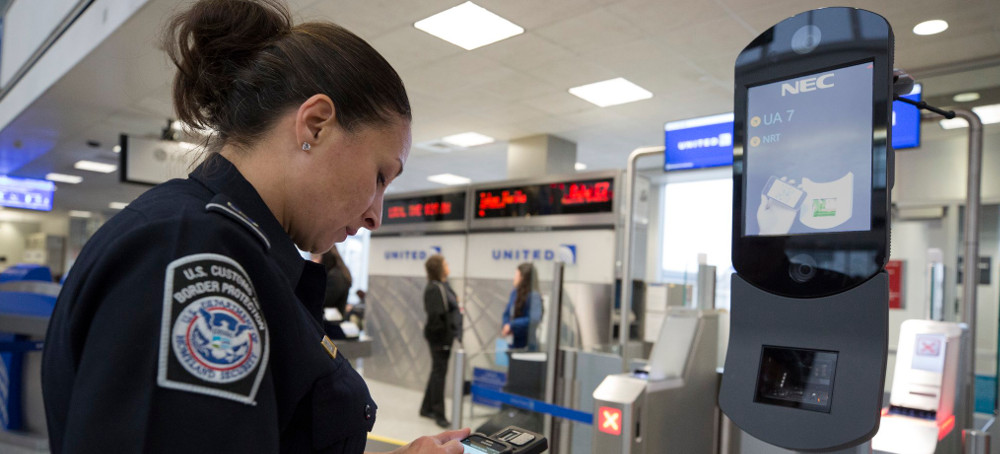 Police in Louisiana reportedly relied on an incorrect facial recognition match to secure warrants to arrest a Black man for thefts he did not commit. (photo: CBP Twitter)
Lawyer says police didn't check man's height, weight—or the mole on his face.
Randal Reid, 28, was in jail for almost a week after the false match led to his arrest, according to a report published Monday on NOLA.com, the website of the Times-Picayune/New Orleans Advocate newspaper. Reid told the newspaper that he had never even been to Louisiana:
Local police pulled over Reid on Nov. 25 as he drove on Interstate 20 in DeKalb County, Georgia, headed to a late Thanksgiving celebration with his mother, he said.
"They told me I had a warrant out of Jefferson Parish. I said, 'What is Jefferson Parish?,'" Reid said. "I have never been to Louisiana a day in my life. Then they told me it was for theft. So not only have I not been to Louisiana, I also don't steal."
Reid was booked into the DeKalb County jail as a fugitive but was let go on Dec. 1, a jail official said.
Reid's lawyer, Tommy Calogero, said that Jefferson Parish Sheriff's Office detectives "tacitly" admitted the error and rescinded the warrant, the report said. "I think they realized they went out on a limb making an arrest based on a face," Calogero said.
“Police could have checked his height and weight”
Describing his time in jail, Reid said he was "not eating, not sleeping. I'm thinking about these charges. Not doing anything because I don't know what's really going on the whole time. They didn't even try to make the right ID."
The case reportedly began with a June 2022 theft of more than $10,000 worth of Chanel and Louis Vuitton purses in Metairie, Louisiana. Calogero said it wouldn't have been hard to determine that Reid wasn't the culprit, who was reportedly "caught on camera in June entering numbers from a stolen credit card at the register" in the store.
A mole on Reid's face was one of the differences that ultimately forced police to release him, Calogero said. Calogero also "estimated a 40-pound difference between Reid and the purse thief he saw in surveillance footage," the Times-Picayune/New Orleans Advocate report said. The culprit, unlike Reid, had "flabby arms."
"Police could have checked his height and weight or made an effort to speak to him or asked to walk through his house to look for evidence. He would have complied," Calogero told the newspaper.
It's not clear exactly what facial recognition was used in this case. In previous cases, Jefferson Parish Sheriff Joe Lopinto's office requested facial recognition analyses through the Louisiana State Analytic and Fusion Exchange in Baton Rouge, which uses Clearview AI and MorphoTrak systems, the report said.
Clearview software compares faces to pictures on social media and many other sources. "Our platform, powered by facial recognition technology, includes the largest known database of 30+ billion facial images sourced from public-only web sources, including news media, mugshot websites, public social media, and other open sources," the company's website says.
Sheriff’s office denied newspaper’s request for warrant
The Times-Picayune/New Orleans Advocate report indicates that the wrong facial recognition match led to two warrants for Reid's arrest. The first was obtained by the Jefferson Parish Sheriff's Office, and the second was for a separate crime being investigated by Baton Rouge police.
"A Baton Rouge Police Department detective then adopted JPSO's identification of Reid to secure an arrest warrant alleging he was among three men involved in another luxury purse theft the same week at a shop on Jefferson Highway, court records show," the Times-Picayune/New Orleans Advocate report said.
The report said Lopinto's office did not respond to requests for information and "denied a formal request for the July 18 arrest warrant for Reid and copies of policies or purchases related to facial recognition, citing an ongoing investigation." The separate warrant obtained by Baton Rouge police "does not say how Lopinto's office identified Reid," the report said.
We contacted the Sheriff's office today and will update this article if we get any new information.
Privacy concerns and evidence of bias in facial recognition systems have fueled a movement to ban government use of the technology. "Facial recognition software is particularly bad at recognizing African-Americans and other ethnic minorities, women, and young people, often misidentifying or failing to identify them, disparately impacting certain groups," the Electronic Frontier Foundation says.
READ MORE 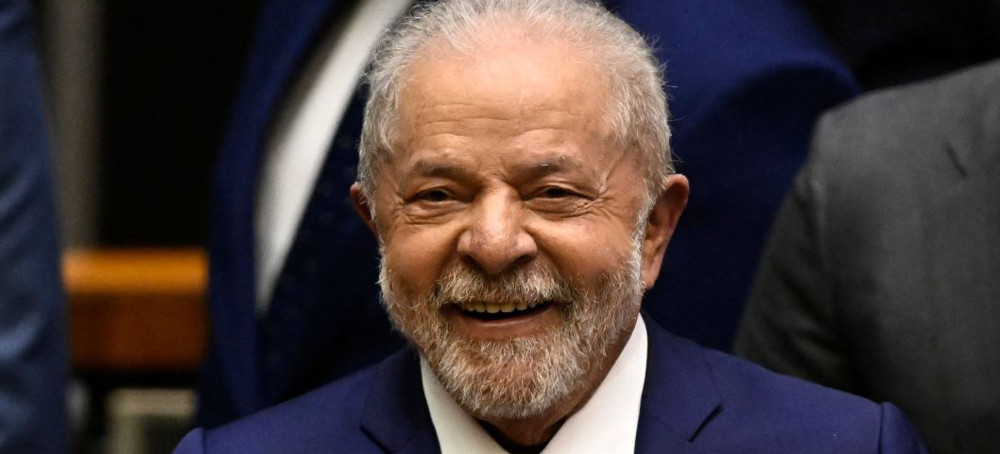 Brazil's new president Luiz Inácio Lula da Silva after being sworn in during his inauguration ceremony at the National Congress in Brasilia, on January 1, 2023. (photo: Mauro Pimentel/Getty)
Leftist leader Lula da Silva was inaugurated on Sunday as Brazil’s president. It’s a huge win for the global left — I only wish the late Michael Brooks, who tirelessly agitated for Lula’s release from prison, would have lived to see his return to power.
Lula’s inauguration is good news for Brazilian democracy. Former president Jair Bolsonaro was closely associated with Brazil’s murderous right-wing paramilitaries, and he has nothing but praise for the dictatorship that once ran the country. It was an open question whether he would abide by the result of the election.
Lula taking office is also good news for the planet, given the importance of the Amazon rainforest to combating global climate change. Bolsonaro oversaw the destruction of vast swaths of the Amazon and would surely have doubled down on that policy if he’d been reelected (or managed to hold on to the presidency by force).
But what I found myself thinking when I saw the footage of Lula’s inauguration on Sunday was something far more personal. As Lula was languishing in prison, my late friend and collaborator Michael Brooks did more than perhaps anyone else on the American left to bring attention to Lula’s case.
He would have been overjoyed right now.
What Lula Accomplished
Lula’s life story is inspiring. Born into extreme poverty, he was illiterate until the age of ten. He grew up to be a metalworker and then a leader of Brazil’s labor movement, which played a crucial role in the struggle against the right-wing dictatorship that ruled the country until 1985. He helped found the Brazil’s Workers’ Party (PT) in 1980 and, after years of organizing, led the PT to power as its presidential candidate in 2003. He served until 2011.
In a letter from prison to the conference of the UK Labour Party in 2019, Lula reflected on what his presidency had meant. “Never before,” he wrote,
had a factory worker reached the highest office in Brazil. For that reason, I needed to prove that the working class is capable of governing, and that governing for all, but with special care for the neediest, will always be the surest path to building a more developed and just country.
To be clear, Lula didn’t govern as a fire-breathing radical. He didn’t go around nationalizing industries or smashing the traditional institutions of the Brazilian state. While the PT had been founded as a socialist party, Lula toned down his rhetoric to reach the presidential palace. He governed as a moderate social democrat, delivering modest reforms within existing institutional frameworks.
Nevertheless, those reforms had a tremendous impact given Brazil’s extreme levels of poverty and economic inequality. Over his tenure, he slashed hunger, provided new educational opportunities for working-class Brazilians, and lifted tens of millions of people out of poverty.
A Soft Coup
When Lula was term limited out of running for a third consecutive term, he was succeeded by his Workers’ Party comrade Dilma Rousseff, who governed the country until she was impeached in 2016 on grounds so transparently spurious that the proceedings can only be described as a soft coup. Independent auditors later cleared her of charges of breaking Brazil’s budgetary laws, but the damage was done — and anyway, no one was under any illusions about why she was being removed from office.
One right-wing congressman was particularly blunt about his motivations. Bolsonaro, then serving in the Chamber of Deputies, infamously dedicated his vote to the memory of Colonel Carlos Alberto Brilhante Ustra, “the terror of Dilma Rousseff.” Colonel Ustra was the head of the secret service that oversaw the detention and torture of a vast number of leftists — including Rousseff herself — during the military dictatorship.
As moderate as the PT’s record had been in office, their reforms were enough to infuriate Brazil’s oligarchy. When I interviewed Brazil-based journalist Glenn Greenwald about all of this years ago, he told me that a common complaint among Brazilian right-wingers was that “the airports look like bus stations now” — in other words, now that more poor kids could go to college and join the middle class, the country’s racial and economic hierarchies were under threat.
Even after Rousseff’s impeachment, the Workers’ Party might easily have regained power. Lula was eligible to run again, and it looked like he might win easily. But he was arrested, allegedly for corruption, and convicted in a process that later leaks revealed to be corrupt and politically motivated. Officially, he was accused of accepting upgrades on a modest seaside apartment he could have bought many times over if he’d been so inclined. As with Rousseff’s impeachment, the nominal charge was largely beside the point.
Michael and Lula
I met Michael Brooks in 2018. I’d been listening to his show TMBS (The Michael Brooks Show) for perhaps a month or two by the time we met — which meant that I already knew much of the story sketched out above.
I’ll admit that when I first started listening, I didn’t understand why he was spending so much time on Lula’s case. I can remember putting in my headphones and firing up a TMBS episode one night while I was walking my dog and thinking, “Oh, come on. We’re going to do the Lula story again?”
I certainly agreed that Lula had been done an injustice. But the world is full of injustices — why was Michael putting so much emphasis on this one in particular?
Little by little, though, and long before I started collaborating with Michael and doing my own weekly segment on his show, his passion for Lula’s story rubbed off on me. The first article I wrote for Jacobin was about Lula. Michael and I ended up cowriting another Lula article, and another on the history of US efforts to topple or undermine democratically elected left governments in Latin America.
Whenever I would visit New York, I would stay at Michael’s apartment. On the next-to-last of these visits, in January 2020, he was getting ready to fly to Brazil to interview a recently released Lula. I can still remember how excited he was about that.
The following month, after he had conducted the interview, a framed photo of Michael with Lula was on display in his apartment. Michael had his arm around the former president’s shoulder, and a smiling Lula was holding a TMBS T-shirt.
What Michael Saw
Michael died from a blood clot that summer. Calling his death “unexpected” doesn’t begin to cover it.
He was thirty-six, a few weeks shy of his next birthday.
His media career was still in its early stages, and I have no doubt that he had a fraction of the audience he would have built if he’d lived even another five years. But in that summer of 2020, remembrances and tributes poured in from a wide variety of sources — and none would have meant more to him that this one:
Michael was an avowed Marxist. The long-term horizons of his politics were more radical than the incremental reforms Lula was able to enact in his first two terms in office. But he was excited about Lula not just because of the tremendous effects even those measures had on the material conditions of working-class Brazilians — or the profound danger posed to Brazil and to the world by the Bolsonaro presidency or the inspiring nature of Lula’s story — although those all shaped how he felt.
Michael was profoundly interested in how socialists could better communicate and connect with ordinary people, and he saw that Lula was one of the most effective political communicators on the global left. He’d often reference how Lula could talk convincingly and movingly about material politics — about making sure everyone had enough money for beer and coffee and enough free time to play soccer and spend time with their kids.
He would have loved the speech during the most recent presidential campaign where Lula rhapsodized about how everyone should be able to grill barbecue for their families on the weekend and wash it down with cold beer. And it’s both wonderful and painful to imagine him watching Lula’s inauguration last Sunday.
Outgoing Brazilian presidents are supposed to pass the presidential sash to their successor. In this case, that didn’t happen. Looking to skirt various criminal investigations, Bolsonaro fled to Florida. Instead, Lula accepted the sash from “the Brazilian people” in the person of a thirty-three-year-old sanitation worker.
Anyone who listened to Michael Brooks’s show heard him say “Lula Livre” (“Free Lula”) many, many times. I wish he’d lived to see Lula Presidente.
READ MORE 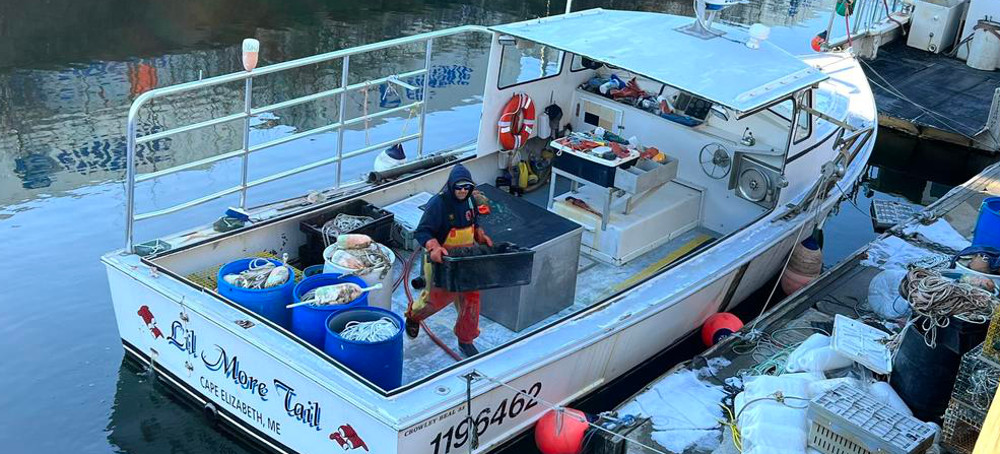 The lobster fishing industry in Maine caught more than 100 million pounds of the crustaceans in 2021 valued at more than $725 million. (photo: Kevin Miller)
The 250 to 300 pounds of lobster he had hauled up from the cold Maine waters could land on a plate just up the street – or in a restaurant on the other side of the globe. And on this chilly December day, Brown was feeling more hopeful about the prospects for Maine's iconic lobster industry.
"I think our industry, for the first time in a long time, can see a ray of sunshine and feel optimistic that the hard work we have been doing is being recognized," Brown said.
Just a day earlier, the lobster industry had received welcome news in the fishery's years-long battle with environmental groups over protections for the endangered North Atlantic right whale.
The state's congressional delegation – which has locked arms with Maine's billion-dollar lobster industry – had pulled off a procedural end-run by inserting a 6-year delay on new federal fishing regulations into a $1.7 trillion spending bill.
For Maine's 5,000 licensed commercial lobstermen, it meant a reprieve from rules that they warned could destroy their industry – and decimate coastal communities – by forcing them off the water in some areas for months at a time and eliminating the vertical lines of rope connecting a string of traps on the bottom to a buoy on the surface. Those lines can become wrapped around whales' fins or lodged in their mouths. But "ropeless" fishing gear, which relies on technology to allow fishermen to call a trap up to the surface, is still in development and is not available on a wide scale commercially.
"If you take away three months, four months, five months of the ability to go out and harvest lobster, you are not only going to impact harvesters," Brown said. "You are going to impact many, many other businesses as well."
Conservation groups fighting to save the North Atlantic right whale, meanwhile, predicted the delay could put the endangered whale on an irreversible slide toward extinction.
"Is there a chance that we can save the right whale in 2028? Yeah, sure," said Brett Hartl of the Center for Biological Diversity. "It maybe was a 50-50 proposition before. Now it's like 95 percent to 5 percent against."
Right whales are in danger
Slow-moving and measuring up to 50 feet long, North Atlantic right whales were hunted nearly to extinction more than a century ago. There are just 340 left in the world and biologists say their biggest threats are collisions with ships and entanglement in fishing rope. The migratory whales' territory stretches the entire Atlantic coastline, from their calving grounds along the Florida and Georgia coast to their foraging grounds off of New England and the Canada.
Groups such as the Center for Biological Diversity and the Conservation Law Foundation have used the Endangered Species Act and the Marine Mammals Protection Act to force federal regulators to impose stricter regulations on the fishing industry.
But there has never been a right whale mortality tied to the Maine lobster fishery and no injuries traced back to the industry since 2004.
Environmentalists contend that's because it's often impossible to trace rope wrapped around a whale to a specific fishery. But Maine's political leaders said it is evidence that those involved in the state's lobster fishery are good stewards.
"In the 25 years that I've been privileged to represent Maine in the United States Senate, I have never seen a worse case of regulatory overreach to address a problem and blame an industry that is not at all responsible for a problem," said Maine Sen. Susan Collins, a Republican.
The lobster industry was the second-largest fishery in the United States in 2019 in terms of economic value, according to the most recent federal data. Maine lobstermen hauled in more than 100 million pounds of the crustaceans in 2021 valued at more than $725 million.
Politicians support the lobster industry
Maine's Democratic, Republican and independent political leaders have united behind an industry that contributes more than $1.5 billion to the state's economy when factoring in jobs within the fishing industry, restaurant or food sales and lobster-related tourism. In addition to delaying any new regulations, the budget bill passed by Congress contains millions of dollars to research how often right whales are entering prime lobstering grounds in the Gulf of Maine and to speed up development of ropeless lobster gear.
"It merely pauses that economic death sentence until we have time to know how to navigate the solution and what the real definition of the problem is," said Sen. Angus King, an independent.
But Erica Fuller, senior attorney with the Boston-based Conservation Law Foundation, said after the delay was announced that members of Congress who voted for it had "the blood of a magnificent endangered species on their hands.
"The science is clear: Humans are killing right whales faster than they can reproduce, and entanglement in lobster gear is a leading cause," Fuller said.
While the National Oceanic and Atmospheric Administration lists entanglement in fishing gear as a primary cause of mortality and injury among right whales, there has never been a death traced back to the Maine lobster industry and only one documented injury from lobster gear since 2004.
But conservationists and scientists point out that injuries and deaths often can't be traced to any particular fishery.
According to NOAA statistics, of the 34 North Atlantic right whales known to have died between 2017 and 2022, nine were attributed to entanglements in fishing gear, 11 to collisions with ships and 14 were of unknown origin.
Back on the Portland waterfront, lobsterman Curt Brown contends that his industry has done more to protect whales by switching to break-away rope, sinking rope and more traps per line. Brown, who is also a marine biologist for a lobster retailer, added that he's never seen a right whale during his 30 years of lobstering.
"We are the largest fixed-gear fishery on the East Coast," Brown said. "If we were entangling right whales, we would know. Someone would be seeing it and it would be documented. And we're just not seeing it."
Follow us on facebook and twitter!
PO Box 2043 / Citrus Heights, CA 95611