Showing posts with label WILLIAM BURNS. Show all posts

Saturday, May 14, 2022

RSN: FOCUS: Ken Klippenstein | Inside the Secret Meeting Between the CIA Director and Saudi Crown Prince


Reader Supported News
14 May 22

Live on the homepage now!
Reader Supported News

WITHOUT RSN! — What folks are not understanding about donating to RSN vs a candidate is that we won’t have a complete picture of any of the candidates WITHOUT RSN! Please donate ... every $ counts.
Martha, RSN Reader-Supporter

Sure, I'll make a donation!


Mohammed bin Salman. (photo: Sky)
FOCUS: Ken Klippenstein | Inside the Secret Meeting Between the CIA Director and Saudi Crown Prince
Ken Klippenstein, The Intercept
Klippenstein writes: "In an unusual foray into diplomacy, William Burns pressed Mohammed bin Salman on oil production, prominent detainees, and the kingdom's relationship with China."

In an unusual foray into diplomacy, William Burns pressed Mohammed bin Salman on oil production, prominent detainees, and the kingdom’s relationship with China.

Last month, as part of a regional tour, CIA Director William Burns quietly met with Saudi Crown Prince Mohammed bin Salman in Jeddah, a port city in western Saudi Arabia. The unusual meeting, first reported by the Wall Street Journal, is the first known encounter between the United States’ top spy and Saudi Arabia’s de facto ruler — and, according to three sources familiar with the matter, the latest attempt by high-ranking U.S. officials to appeal to Saudi Arabia on oil amid rising U.S. gas prices. Also on the table, two of the sources told The Intercept, were Saudi weapons purchases from China.

President Joe Biden has so far refused to meet with MBS, as he is known, owing to the crown prince’s role in ordering the murder of journalist Jamal Khashoggi. But in February, Biden made an effort to begin repairing the relationship with the kingdom, asking King Salman to increase the country’s oil production in return for U.S. military support for its “defense” against Yemen’s Houthis. According to a Saudi readout of the call, Biden was denied. Though Burns again asked for an oil production increase last month, Saudi Arabia announced last week that it would be sticking to its production plan, once more denying the U.S.’s request.

A spokesperson for the CIA declined to comment on Burns’s travels. The Intercept’s sources — a U.S. intelligence official, two sources with ties to the U.S. intelligence community, a source close to members of the Saudi royal family, and a think tank official — interviewed for this story spoke on the condition of anonymity to discuss sensitive matters.

The meeting was also an opportunity to broach a subject of intense concern to Washington: Riyadh’s growing relationship with China. In addition to Burns’s ask on oil, the CIA director also requested that Saudi Arabia not pursue a purchase of arms from China, according to the two sources close to U.S. intelligence.

Saudi Arabia’s very public overtures to Beijing — most notably, exploring the possibility of selling its oil in the Chinese currency, yuan — have caused consternation in Washington. This week, in Senate testimony, Director of National Intelligence Avril Haines warned of efforts by China and Russia to “to try to make inroads with partners of ours across the world,” mentioning Saudi Arabia and the United Arab Emirates as examples.

What is not publicly known, however, is that the Saudi government is planning to import ballistic missiles later this month from China under a secret program code-named “Crocodile,” the source close to U.S. intelligence said. (The other source with ties to U.S. intelligence confirmed that the discussion pertained to arms sales with China.)

Burns also requested the release of numerous high-profile Saudi royals whom MBS has detained, including MBS’s cousin, former Crown Prince Mohammed bin Nayef, the sources said. MBN, as he is known, was heir to the throne before his ouster by Crown Prince Mohammed in 2017. Because MBN is a close partner to U.S. intelligence, the Biden administration has reportedly pressured for his release amid allegations of torture.

Relying on a CIA director to conduct high-level diplomatic engagement of this sort is extremely unusual, although it does offer at least one big advantage: discretion. Burns’s presence also served as a means of attempting to mend the fraught relationship between MBS and other top Biden administration officials, the source close to U.S. intelligence said. Last year, when Biden’s national security adviser Jake Sullivan brought up the Khashoggi murder, MBS shouted at him, remarking that the U.S. could forget about its request to increase oil production, as the Wall Street Journal recently reported.

Burns’s meeting with MBS was one of several with leaders in the region, including in Qatar, the UAE, and Oman, the source also said. (A prominent think tank official close to the Biden administration confirmed that Burns had been traveling throughout the Middle East.) Burns’s meeting with Abu Dhabi Crown Prince Mohammed bin Zayed echoed the theme of his meeting with MBS, urging him to stop warming up to China, specifically referring to the construction of a Chinese military base in the UAE. Last year, the Biden administration reportedly warned the UAE that China had been building a military facility at an Emirati port and that its construction could imperil their relations. In the case of Saudi Arabia, U.S. intelligence has assessed that the country has been working with China to manufacture its own ballistic missiles domestically — raising concerns about touching off a regional arms race.

“What’s different about this is the Saudis are now looking to import completed missiles,” the source close to U.S. intelligence said.

Burns has come under criticism for conducting diplomacy for the administration, which is supposed to be handled by diplomats at the State Department. Last year, as Kabul fell to the Taliban, Burns was reportedly in the Middle East, meeting with top Israeli and Palestinian government officials. Shortly thereafter, Burns secretly met in Kabul with Taliban leader Abdul Ghani Baradar. Just last week, Burns met with Brazilian President Jair Bolsonaro, urging him not to interfere with his country’s elections.

“Burns has been doing a lot of the diplomatic heavy lifting, which is terrible,” a U.S. intelligence official close to the administration told The Intercept, decrying what he called the “further castration of the Department of State.” This has rankled diplomats at Foggy Bottom, who had hoped that Biden would make good on his campaign pledge to empower diplomacy after years of neglect by the Trump administration.

Concerns about Burns’s role in diplomacy and sidelining the State Department have even come from figures like Michael Rubin, a former Pentagon official and now a senior fellow at the American Enterprise Institute. “Intelligence professionals can coerce and threaten unencumbered by the restraints of diplomacy,” Rubin wrote in a recent article for the Washington Examiner. “They are not there to debate and formulate foreign policy.” The Biden administration is currently without an ambassador to Saudi Arabia, having only last month announced its intent to nominate diplomat Michael Ratney for the position.


READ MORE

Special Coverage: Ukraine, A Historic Resistance
READ MORE


Contribute to RSN

Follow us on facebook and twitter!

Update My Monthly Donation

PO Box 2043 / Citrus Heights, CA 95611


Wednesday, February 24, 2021

POLITICO NIGHTLY: What you need to know about variants


POLITICO Nightly logo

BY MICHAEL GRUNWALD

Presented by

With help from Renuka Rayasam and Tyler Weyant

Nightly video player explaining Covid-19 variants

WATCH — Health care reporter Sarah Owermohle breaks down the basics of the three main coronavirus variants : where they were originally discovered, how they differ and how they fare against vaccines.

DEMOCRATS IN ARRAY — President Joe Biden’s nominee for budget director is in trouble. The $15 minimum wage in his Covid relief bill is in deep trouble. And Democratic-but-not-very-Democratic Sen. Joe Manchin of West Virginia has emerged as the most powerful force in a just-barely-Democratic Congress. On cue, Washington reporters are exploring the familiar terrain of Democrats in Disarray, with headlines like “Centrist Democrats Flex Muscles, Create Headaches for Biden,” and “Democrats Face Intraparty Fight on Minimum Wage.”

By historic standards, though, Democrats are in array.

The last time the party ran Washington, when President Barack Obama took office with huge congressional majorities in 2009, the internal dissent was much more strident and widespread. And it was very damaging to Democrats. So perhaps the party learned from its recent past.

Yes, Neera Tanden’s nomination might be doomed by Manchin’s distaste for her feisty Twitter feed. So far, Biden’s other nominees have sailed through with full Democratic support, although Bernie Sanders voted against Agriculture Secretary Tom Vilsack. The pace of confirmations may have been slowed by impeachment, but three Obama nominees had withdrawn by this date in 2009 — and three Democrats had joined Sanders in opposing Timothy Geithner as secretary of the Treasury.

The concerns that a few centrists have raised about Biden’s $1.9 trillion stimulus bill look even milder compared to the cacophony of Democratic squawking about Obama’s $800 billion stimulus bill. Yes, the opposition of Manchin and Sen. Kyrsten Sinema of Arizona probably kills the $15 minimum wage in a 50-50 Senate. They and a few other moderates have also pushed to make sure Biden’s $1,400 checks don’t go to the wealthy. But otherwise, Democrats have been pretty unified in their support.

By contrast, Democrats of all ideological stripes bashed the Obama stimulus as too big or too small, too focused or not focused enough on immediate relief, with too much or not enough tax cuts, infrastructure or housing. Former House Appropriations Chair David Obey denounced the bill’s education reforms as an “absolutely horrendous mistake.” Sen. Chuck Schumer, now the majority leader, mocked its pork. After liberal Rep. Peter DeFazio trashed the stimulus as a quasi-Republican bill, Obama called him out in a caucus meeting: “Don’t think we’re not keeping score, brother.”

Now that’s disarray.

“There were a lot more Democrats complaining then than there are now,” said James Manley, a former aide to then-Senate Majority Leader Harry Reid.

As Democrats discovered, disunity has consequences. A half-dozen moderate Democratic senators insisted on limiting Obama’s stimulus to $800 billion, a move that helped slow the subsequent economic recovery. Obama also had to make all kinds of concessions to keep Democrats on board; House Majority Whip James Clyburn, after publicly warning he didn’t want a second New Deal because the first was racist, quieted down after the White House included billions of dollars for a flawed broadband program.

The political consequences were even worse. With Republicans unified against the Obama stimulus, Democratic quibbling led to blistering news coverage suggesting bipartisan agreement that the bill was a mess. The result was plummeting approval ratings not only for the stimulus, which became wildly unpopular, but for the first African American president, whose honeymoon was over by the spring. And many of the Democratic quibblers lost their jobs in the Republican landslide of 2010.

Maybe Democrats have learned that slagging Democratic legislation under Democratic presidents is bad for the Democratic brand. It’s also possible that while Democrats felt free to wander off the reservation with big majorities, they see that today’s razor-thin margins increase the stakes of opposition. As Manley puts it, they’re now firing live bullets, and none of Biden’s critics to his left or right seem to want to drag down his presidency.

In the Trump era, Republicans embraced the idea that their political fortunes would rise and fall with the president, and they almost never criticized him. They now look much more like the party in disarray, as they fight about whether they still need to bend the knee to Trump.

Still, history suggests that Democrats are less inclined to play follow-the-leader and more resistant to message discipline. They are unlikely to stay in array for long.

“Look, we don’t always smile and agree with each other,” Clyburn told me during the Obama stimulus fight. “We’re Democrats.”

Welcome to POLITICO Nightly. Reach out with news and tips at mgrunwald@politico.com and rrayasam@politico.com, or on Twitter at @mikegrunwald and @renurayasam.

A message from the National Hispanic Council on Aging (NHCOA):

Our current rebate system is broken. Ensuring discounts are passed on to patients will lower out-of-pocket costs, improve adherence, and address health disparities. The National Hispanic Council on Aging is urging the Biden Administration to support patients and move forward with rebate reform. Learn more.

 
FIRST IN NIGHTLY

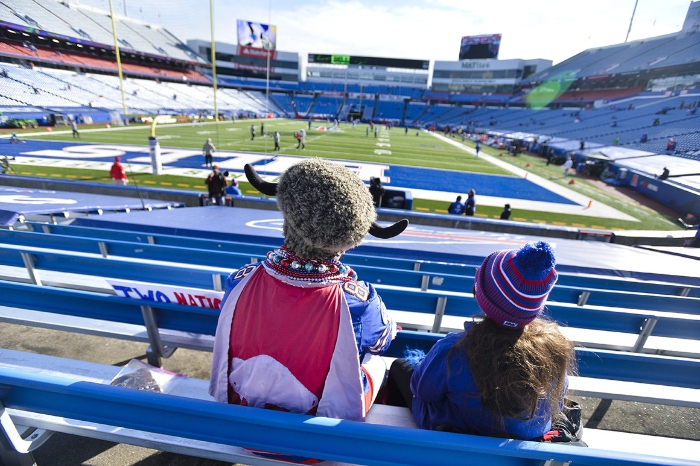
Buffalo Bills fans watch their team warm up before an NFL wild-card playoff football game against the Indianapolis Colts on Jan. 9, 2021, in Orchard Park, N.Y.

Buffalo Bills fans watch their team warm up before an NFL wild-card playoff football game against the Indianapolis Colts on Jan. 9, 2021, in Orchard Park, N.Y. | Adrian Kraus/AP Photo

FROM BILLS MAFIA TO BROADWAY — As Covid-19 raged across Buffalo and western New York last fall, Bills fans and team officials pressed for a way to bring live crowds back. They appealed their case directly to the state’s most powerful member of the “Bills Mafia,” Gov. Andrew Cuomo. “It’s something we’re looking at,” the governor hinted in late September. “I am 100 percent eager to get fans back to the games.”

The governor’s public eagerness to return fans to Bills Stadium had a second motivation: He also wanted to plot a way to reopen other long-shuttered landmarks of the state’s cultural economy, including Broadway’s iconic theaters. In an open-air stadium, masking and social distancing could keep fans safe. But that wouldn’t be enough for indoor venues like concert halls and museums. The state needed another tool.

Days after the Bills were crowned AFC East champions, state officials floated a ground-breaking plan: New York would allow 6,700 fans to attend the team’s Jan. 9 playoff game if they could first test negative for Covid-19 in addition to complying with other safety measures. The effort, touted as the only one of its kind in the NFL, allowed the state to test a hypothesis: Could Covid-19 testing, combined with other precautions, hold the key to the state’s pandemic recovery?

Three days before the game, fans lucky enough to score a ticket began lining up their cars, from sunrise to well past sunset, to get swabbed for Covid-19 at one of 30 drive-through testing stations set up outside Bills Stadium — a process which took minutes, with results reported 24 hours later.

On game day, masked fans had to show proof of their negative result, along with their mobile ticket, to enter the stadium through designated gates in assigned 10-minute increments to prevent crowding at the turnstiles. Thermal imaging cameras, meanwhile, scanned crowds at checkpoints to help identify fans who might have a fever. Once inside, fans, who were limited to either two- or four-seat pods, were further restricted to certain zones of the stadium and offered limited, cashless concession stand options through 10 p.m. in accordance with the state’s dining curfew. The strategy worked. About 1.5 percent of the fans tested positive before the game and were denied entry. In the weeks that followed, no outbreaks were tied to the games.

Read the rest of Shannon Young’s story from POLITICO’s Recovery Lab, on how New York hopes to extend the playoff protocol to allow the resumption of weddings, concerts and eventually, Broadway shows, amusement parks and summer camps.


NEW - “THE RECAST” NEWSLETTER: Power dynamics are changing. “Influence” is changing. More people are demanding a seat at the table, insisting that all politics is personal and not all policy is equitable. “The Recast” is our new twice-weekly newsletter that breaks down how race and identity are recasting politics, policy and power in America. And POLITICO is recasting how we report on this crucial intersection, bringing you fresh insights, scoops, dispatches from across the country and new voices that challenge “business as usual.” Don’t miss out on this important new newsletter, SUBSCRIBE NOW. Thank you to our sponsor, Intel.


NIGHTLY INTERVIEW

MISSISSIPPI THAWING — Texas is not the only state still recovering from last week’s fatal winter storms. States and cities across the South are working to restore power and water to residents. The National Guard arrived today in Jackson, Miss., to help the city with a severe water shortage caused by freezing equipment at water treatment facilities. Jackson’s Democratic Mayor Chokwe Antar Lumumba has set up water distribution centers across the city.

Lumumba became the city’s youngest mayor in 2017, three years after his father died while serving in the same role. Nightly’s Renuka Rayasam reached out to Lumumba, who is up for reelection this year, to talk about Jackson’s water crisis and what it means to be a Democratic mayor in a Republican state. This conversation has been edited.

What’s the situation this week in Jackson?

As the weather has warmed up, the system is recovering. But just as we’ve seen in many cities across the South, that doesn’t happen immediately. We’re gonna have to battle a few things as time persists. Our water treatment facilities experienced a number of mechanical challenges that led to a reduction in the pressure. As you increase pressure, then the consequence of that will be main breaks and pipes bursting across the city.

There are large numbers of individuals and households without water still presently today. Those individuals who are further away from the treatment facility have it the worst.

Texas has received a lot of attention. Biden is traveling to Houston on Friday. Do you wish that more eyes were on Mississippi and Jackson?

We’ve declared a state of emergency. From a governmental standpoint, the bar is really high, and it’s highly unlikely that they will step in. I won’t speak critically of the federal government and what FEMA may do, but to say that it is our prayer. We are calling out for their support.

I would hope that they recognize that this has been a challenge across the South, that they recognize that their Southern cities need help.

Cities are not capable of making the hundreds of millions to billions of dollars of investment on these systems. We live in legacy cities with aged pipes that are over 100 years old and equipment that’s at the end of its useful life span that requires a lot of investment.

How helpful has Mississippi’s Republican state government been regarding Jackson’s water problems? In addition to the winter freeze, the city is facing a challenge because a company that was in charge of collecting water payments wasn’t actually sending out bills to customers. Now residents are facing huge statements for one huge lump sum.

State law doesn’t allow us to forgive a water bill. We passed legislation to provide relief to the residents who couldn’t pay their bills. It unanimously passed and then the governor vetoed it.

Jackson provides more tax revenue than any city in the state of Mississippi by far. We are the gravy train of the state of Mississippi. But the support we receive historically doesn’t necessarily embody that.

These are the blue dot in the red sea type of issues that we deal with.

Do you think your challenges in dealing with the state are the result of Jackson being a majority Black city in an especially racially divided state?

It’s true for the South that racism is an impediment. It’s true for the North. It’s true for the East and West Coast. Sometimes we give a pass to our nation. Our nation is fragmented on racial lines. Sometimes we look at it in terms of we turned off course and got lost in the wrong direction. Like we turned left and became racist.

The reality is, we have to be honest that if we profess to love this nation — you know, my mother loved me so much that she dared to correct me — and we should love this nation enough and our people enough to correct it.


Advertisement Image 

 
WHAT'D I MISS?

— Former aide says Cuomo sexually harassed her: A former aide to Cuomo alleged that the governor kissed her without her consent and asked her to play strip poker.

— DeJoy to Congress: ‘Get used to me’: Louis DeJoy, the embattled postmaster general, said he is not going anywhere as he faces criticism of his leadership of the U.S. Postal Service.

— Biden’s CIA pick vows China focus: CIA Director nominee William Burns said, if he is confirmed by the Senate, that competing with China and countering a “formidable authoritarian adversary” in Beijing would be the central focus of his tenure.

— FDA confirms J&J vax safe, effective: Johnson & Johnson’s single-dose Covid-19 vaccine appears safe and effective, particularly against severe disease, though questions remain about how well it works in older people, the FDA said.

— Manchin backs Haaland: Manchin, the West Virginia Democrat and Senate Energy chair, said he supported the nomination of Rep. Deb Haaland (D-N.M.) to lead the Interior Department, a crucial boost for the New Mexico lawmaker seeking to be the first Native American to serve as a Cabinet secretary.

ASK THE AUDIENCE

Nightly asks you: What moment marked the beginning of the pandemic for you? It could be a news event, or a personal recollection. Send your answer through our form , and we will use select responses in our Friday edition.

AGENCY DETECTIVE

THE LOWDOWN ON BIDEN’S BUDGET OFFICE — Budget and appropriations reporter Caitlin Emma unpacks the Office of Management and Budget, as Neera Tanden’s nomination to lead the agency hangs by a thread.

What does OMB actually do? OMB probably isn’t the first agency that comes to mind when you consider Biden’s Cabinet. But it’s undoubtedly one of the most instrumental . OMB functions as the nerve center of any administration’s agenda, charged with enacting the president’s fiscal and regulatory vision across the executive branch. The agency will have its hands in every part of Biden’s plans — pulling together his first budget proposal, reviewing and approving all federal regulations before they can take effect, meting out appropriated cash, interacting with Congress on legislation and overseeing financial management issues, federal procurement and information technology.

When was OMB created? In 1921, when it was called the “Bureau of the Budget” and housed within the Treasury Department. It then moved over to the Executive Office of the President in 1939, and it was renamed OMB in 1970. The Congressional Research Service notes that the agency’s mission statement has sometimes changed substantially from one administration to the next. For example, the Obama administration stressed that OMB is the “implementation and enforcement arm of presidential policy,” while the White House under former President George W. Bush cast OMB as more of a behind-the-scenes administrative agency.

What was OMB like under Trump? The budget office often pushed legal and regulatory boundaries in service of Trump’s agenda, finding itself embroiled in the middle of the Ukraine aid scandal that prompted Trump’s first impeachment. The Trump administration also shifted power away from career civil servants, and sought to strip those staffers of worker protections to make them more easily fireable.

Who will be running the show in the Biden era? Bipartisan appetite is growing to elevate an alternative nominee to Tanden. Some Democrats and Republicans are rallying behind Shalanda Young, the former clerk and staff director for the House Appropriations Committee, who has been nominated to OMB’s No. 2 spot. Young has extensive knowledge of federal spending after 14 years on the committee and boasts a long record of working alongside Republicans in high-stakes spending negotiations. She also, notably, isn’t on Twitter. Another leading fallback option, Ann O’Leary, who recently served as California Gov. Gavin Newsom’s chief of staff, has privately touted her own possible support in the Senate even as she encourages the confirmation of Tanden to the post.

More on Tanden: Sexism. Double standards. White male privilege. Those are some of the charges activists and Democrats are lobbing as Tanden’s nomination slips away over divisive tweets. In the latest POLITICO Dispatch, White House reporter Laura Barrón-López reports on how Tanden’s nomination as the first Asian American to lead the OMB fell apart.

Play audio

Listen to the latest POLITICO Dispatch podcast

THE GLOBAL FIGHT

GHANA FIRST UP IN COVAX — Ghana received the world’s first shipment of coronavirus jabs delivered through the mechanism meant to ensure equitable access to vaccines.

The 600,000 Oxford/AstraZeneca doses mark the start of the arrival of vaccines through COVAX, which seeks to deliver two billion doses around the world this year. Jointly run by the World Health Organization, Gavi and the Coalition for Epidemic Preparedness Innovations, COVAX’s first delivery comes almost three months after the first jab was administered in the U.K.

On Feb. 22, WHO chief Tedros Adhanom Ghebreyesus accused some rich nations of securing vaccines at the expense of COVAX, causing a reduction of vaccines allocated to the mechanism.


TUNE IN TO GLOBAL TRANSLATIONS: Our Global Translations podcast, presented by Citi, examines the long-term costs of the short-term thinking that drives many political and business decisions. The world has long been beset by big problems that defy political boundaries, and these issues have exploded over the past year amid a global pandemic. This podcast helps to identify and understand the impediments to smart policymaking. Subscribe and start listening today.


NIGHTLY NUMBER

25 million

The number of masks the federal government will soon begin sending to community health centers, food pantries and soup kitchens , the Biden administration said today, with the goal of reaching as many as 15 million people with low incomes beginning in March and continuing through May.

PARTING WORDS

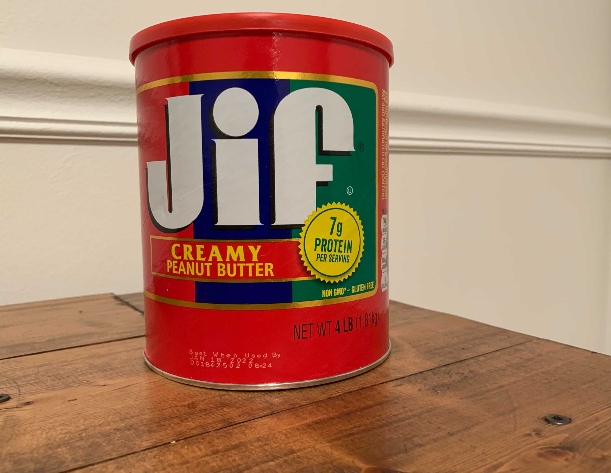
A 4 lb. container of peanut butter

Tyler Weyant's 4 lb. container of peanut butter | Tyler Weyant | POLITICO

STOCKPILING — Nightly’s Tyler Weyant emails:

About this time last year, I stepped into a private spot in POLITICO’s newsroom and placed a less-than-cheerful call to my parents: “I don’t mean to alarm you, but you need to go buy some non-perishable foods and cleaning supplies. And you need to do it soon.”

In our Rosslyn office, I sat across from the health care team, who for weeks had been buzzing about a virus that seemed every day to be getting more serious. So not long after I made that call, I started building my own stockpile, too.

My Amazon Fresh order from 365 days ago, looked at today, appears to have come from a mind unprepared for what was about to hit us. Yes, a few cases of bottled water, good idea! Big packs of granola bars, and some Welch’s gummy fruit snacks? OK, sure. I’ll have in-between meals covered.

But then there is the $1.89 bag of Wasabi Dry Roasted Edamame, an item I had never consumed and still have not. One year on, I strain to think why I purchased this treat, other than that I assumed my life may need some excitement in the period to come, and this new food may provide it for me.

The crown jewel of my stockpiling, though? A 4 lb. container of peanut butter.

Have I opened it during the pandemic? No. Was it bigger than I thought it would be? You bet. How long do I have until it goes bad? At least it’s a little while until January 2022.

And I wasn’t the only one who panic-bought some oddities: Tech reporter Leah Nylen secured 25 lbs. of dried beans. (Most remain uneaten.)

I was lucky enough to be able to stockpile, in a year when so many weren’t able to. So as we begin observing the opening days of the second year of this pandemic, I guess I have two goals for the next 365 days: Find ways to help those who’ve been food insecure over the last year, and maybe finally learn how that edamame tastes.

A message from the National Hispanic Council on Aging (NHCOA):

The National Hispanic Council on Aging is urging the Biden Administration to move forward with rebate reform. Communities of color are disproportionately impacted by chronic disease but lowering out of pocket costs can increase medication adherence and reduce health care disparities in our system. This is done by ensuring rebate dollars are passed on to patients so they can afford essential medication. We need rebate reform today! Learn more.


Did someone forward this email to you? Sign up here.


Follow us on Twitter

Renuka Rayasam @renurayasam

Chris Suellentrop @suellentrop

Tyler Weyant @tweyant

Myah Ward @myahward


FOLLOW US


 POLITICO, LLC 1000 Wilson Blvd. Arlington, VA, 22209, USA


This Weekend in Politics, Bulletin 441.

                                                                               LOTS OF POSTS IGNORED BY BLOGGER..... OR REMOVED ON THEIR WHI...