Showing posts with label THIRD ACT. Show all posts

Tuesday, July 9, 2024

Elders Arrested Protesting Citibank Funding of Planet's Destruction


Elders Arrested Protesting Citibank Funding of Planet's Destruction

"We are on the cusp of a ruined planet, and the big banks like Citi are funding it, to the tune of trillions," said one organizer.

As Earth sizzles during what's likely to be its hottest summer on record amid a worsening planetary emergency, dozens of elder climate campaigners including 350.org co-founder Bill McKibben were arrested Monday in New York while protesting Wall Street giant Citigroup's continued fossil fuel financing.

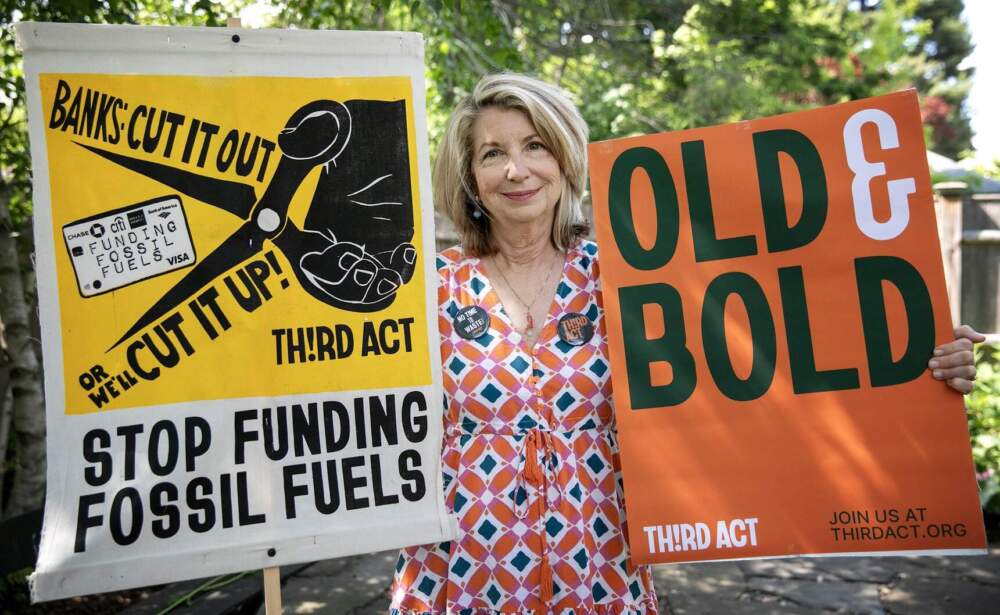
Members of the group Third Act—who are mostly aged 60 and older—led a "funeral procession" near Citigroup's Manhattan headquarters in remembrance of the senior citizens who have died during recent dangerous heatwaves and to call out the bank "for being the number one funder of fossil fuel expansion in the world," according to Summer of Heat, which is organizing a series of ongoing climate protests.

Summer of Heat said McKibben was one of 46 demonstrators arrested Monday, and that "with today's protest, there have now been 305 total arrests in this summer's historic campaign of relentless, disruptive protests to stop Wall Street funding the oil, coal, and gas projects that are making our planet unlivable."

According to Summer of Heat:

Older Americans are worried about growing climate extremes and how Wall Street is using their savings to harm the planet and their grandchildren's future. Third Act supporters are retired teachers, healthcare professionals, lawyers, union members, parents, grandparents, great aunts, uncles, and now activists. They are taking action—together with youth and families—to make a difference! They are calling on banks like Citi to invest in a peaceful and livable world for all.

"It might feel very hot to us, but it was 122 degrees (Fahrenheit) in New Delhi two weeks ago. Lots and lots and lots of people died," McKibben told protest participants before his arrest. "Things like this now happen every day around the world, and they happen worst [and] first in the places that have done the least to cause this crisis."

"This is the deepest question of justice the world has ever come across," McKibben added. "And the bank that we're outside has done more than almost any institution on Earth to make it worse. Given full warning by scientists of all kinds for the last 30 years, they have decided instead to try to make profit off the end of the world."

Margaret Bullit-Jonas, an Episcopalian priest and author who took part in Monday's protest, said that "Citibank is destroying the world that God loved into being and entrusted to our care."

"At this decisive moment in history, we teeter on the brink of climate chaos," she added. "Now is the time for Citibank to choose life and to stop financing fossil fuels."

Third Act members were joined by activists from various climate, environmental, and social justice groups. Summer of Heat organizer Liv Senghor said that the campaign "is an intergenerational and intersectional movement."

"We know that there is no climate justice without social justice," Senghor said. "And we know that if we do not stop financial institutions like Citibank right now, we will all feel the deadly consequences today, tomorrow, and for generations to come."

HipHop Caucus president and CEO Rev. Lennox Yearwood Jr. asserted that "to limit ongoing damage, and ensure a bright future for the next generations, we need bold action now to curb emissions, transition to clean energy, and to help households and communities mitigate current and future risks."

Gus Speth, a former U.S. Council on Environmental Quality chair, warned that "we are on the cusp of a ruined planet, and the big banks like Citi are funding it, to the tune of trillions."

"It's time for the Citigroup board of directors to wake up to their responsibility," he added. "Citi talks about environmental sustainability but practices environmental destruction."

Citigroup contends that it is "supporting the transition to a low-carbon economy through our net zero commitments and our $1 trillion sustainable finance goal," and that its "approach reflects the need to transition while also continuing to meet global energy needs."

However, since the 2015 signing of the Paris agreement, Citi has provided $204.46 billion in financing for new fossil fuel projects, according to Stop the Money Pipeline, a Summer of Heat co-organizer.

"From the Bronx to the Gulf South, Black, Latine, Asian, Indigenous, and low-income communities living on the frontlines of the climate crisis—and the ones least responsible for it—face the highest asthma rates and staggering cancer rates while an unprecedented number of people are dying from heat waves," Summer of Heat said.

"Instead of staying home and hiding from the heat, organizers are calling on all New Yorkers and climate defenders from across the globe to take to the streets and demand that Wall Street stop destroying our future," the group added.
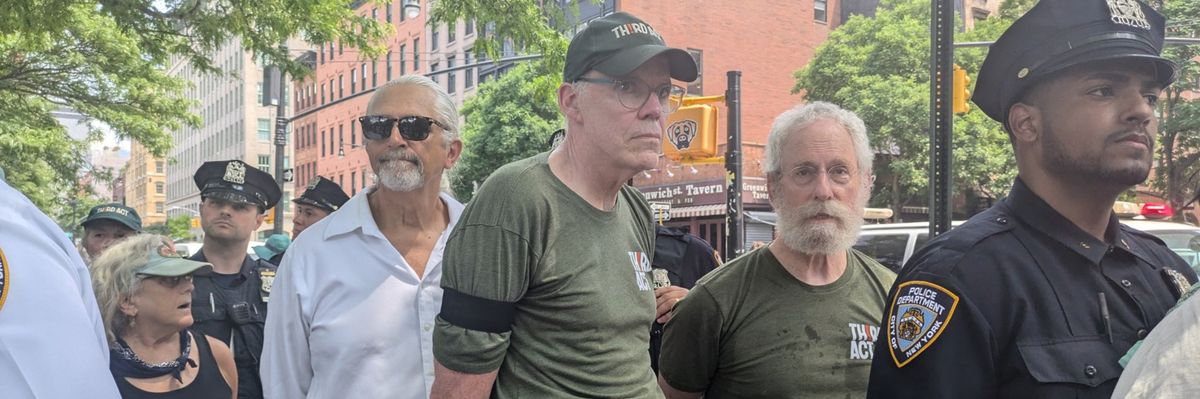

Bill McKibben and climate activists are arrested in NYC

Climate campaigners including 350.org co-founder Bill McKibben (in baseball cap) are arrested by New York Police Department officers during a protest against Citigroup's fossil fuel finance on July 8, 2024 in Manhattan.

 (Photo: Planet Over Profit/X)

COMMON DREAMS


Thursday, June 6, 2024

Climate champion Bill McKibben recruits people over 60 to join him for an activist 'Third Act'


Climate champion Bill McKibben recruits people over 60 to join him for an activist 'Third Act'


Bill McKibbon, in his office at Middlebury College. The climate change activist has founded Third Act, an effort to recruit Americans over 60 to save the climate and democracy. (Anthony Brooks/WBUR)

This story is part of WBUR's "The Third Act" series, highlighting people who worked full careers and re-invented themselves later in life, often in surprising and inspirational ways.


As the bells of the carillon chimed from the campus chapel at Vermont's Middlebury College on a recent afternoon, Bill McKibben sat in his small, book-filled office and talked about a project he hopes will save the planet. And maybe democracy.

He calls it Third Act, a three-year-old effort by the renowned climate activist to build a new political movement of retirees committed to the environment and other progressive causes. By day, McKibben, 63, teaches college classes on writing, as well as climate and social movements. When he's not in a classroom, he's urging Americans in their sixth decade and beyond to jump into the fray — to advocate for measures to address climate change, at the same time giving their lives new meaning.

While young people provide much of the leadership in the climate movement, he said, older Americans have an important role to play.

"I began to hear a few too many people my age saying, 'Oh, it's up to the next generation to solve these problems,' " McKibben said. But in his view, that's both ignoble and impractical.

"Ignoble," he said, because young people didn't cause the climate crisis. "Impractical," because for all their energy and idealism, young people lack what McKibben calls "structural power" to make the big changes needed to save the planet. So, McKibben started asking, "who does have that structural power?" The answer: people who've been around a while, like him.

"If you've reached the age when you begin to have hair coming out your ears, you probably have structural power coming out your ears too," he joked.

McKibben argues that older American men and women have a number of advantages that puts them in a strong position to advocate for change: first, they have the strength of numbers —70 million people in the United States are over age 60, and 10,000 per day are turning 65. They punch above their weight politically, he said, because they vote in high numbers, and they have about 70% of the country's financial assets.

"If you want to push around Washington or Wall Street or Beacon Hill, then having some people with hairlines like mine is a useful asset," he said, lifting his cap.

McKibben has written some 20 books, including "The End of Nature," which in 1989 sounded the alarm about climate change and is considered the first book about the crisis for a general audience. With seven Middlebury students, he founded 350.org, an international global grassroots climate campaign, which has organized demonstrations around the world. One took place in 2011, when thousands of people surrounded the White House to oppose the Keystone XL pipeline. That project would have carried oil from the tar sands of Canada down to the Gulf Coast.

"This turned into the biggest civil disobedience action about anything in this country in a very long time," McKibben said.

Police arrested hundreds of people, including McKibben, who insisted that tapping the Canadian tar sands would have meant "game over" in the fight to slow climate change. Many of those arrested were well beyond their 60s; as McKibben likes to say, they were the "fossils against fossil fuels."

"We didn't ask people as they were getting arrested, 'How old are you?' That would have been rude," he said. "But we did say, 'Who was president when you were born?' And the two biggest cohorts were from the FDR and the Truman administrations."

McKibben said one of the last people arrested at the protest was an elderly man with a sign around his neck that read, "World War II vet. Handle with care."

The Keystone XL Pipeline project grabbed the attention of three U.S. presidents: Barack Obama tried to end it; Donald Trump tried to revive it; then Joe Biden signed an executive order that stopped it, until the pipeline company ultimately abandoned the project. McKibben said the experience planted a seed that blossomed into his own Third Act: a nationwide effort to recruit and organize people over 60 to work on climate and racial justice, as well as efforts to support democracy by getting people to vote.

Today, some 100,000 Third Act volunteers are working across the country, including Meg Clough of Belmont, who worked for an investment management firm for more than 20 years, but never had time to think about retirement.

"I thought about it like I thought about death," Clough said. "Like it's actually never going to happen to me."

When she did retire at 62, she didn't know what to do next and felt lost. She joined a pickleball league, but that didn't fill the void. Then she heard about Third Act. (She actually went to high school with McKibben in Lexington and recalls him as a "smart, nerdy kid who started the debate team.") Now she works with Third Act Massachusetts, frequently traveling to swing states, like Pennsylvania and Arizona, registering people to vote. And sometimes she joins protests, as she did in Boston in 2023, when Third Act members rallied in the financial district to demand that banks divest from fossil fuel companies.

After a career in investment banking, Meg Clough now volunteers with Third Act Massachusetts. (Robin Lubbock/WBUR)

Clough said her new focus has given her a way to cope with fears about the coming election.

"I have never, ever seen so many anxious people about an election," she said. "The only way to get rid of your anxiety is to get into action. And that is what I love about Third Act." After a decades-long career in the corporate world, she said, "I have this sense of freedom — and this rebel in me that can say, 'here's how you can get involved.' "

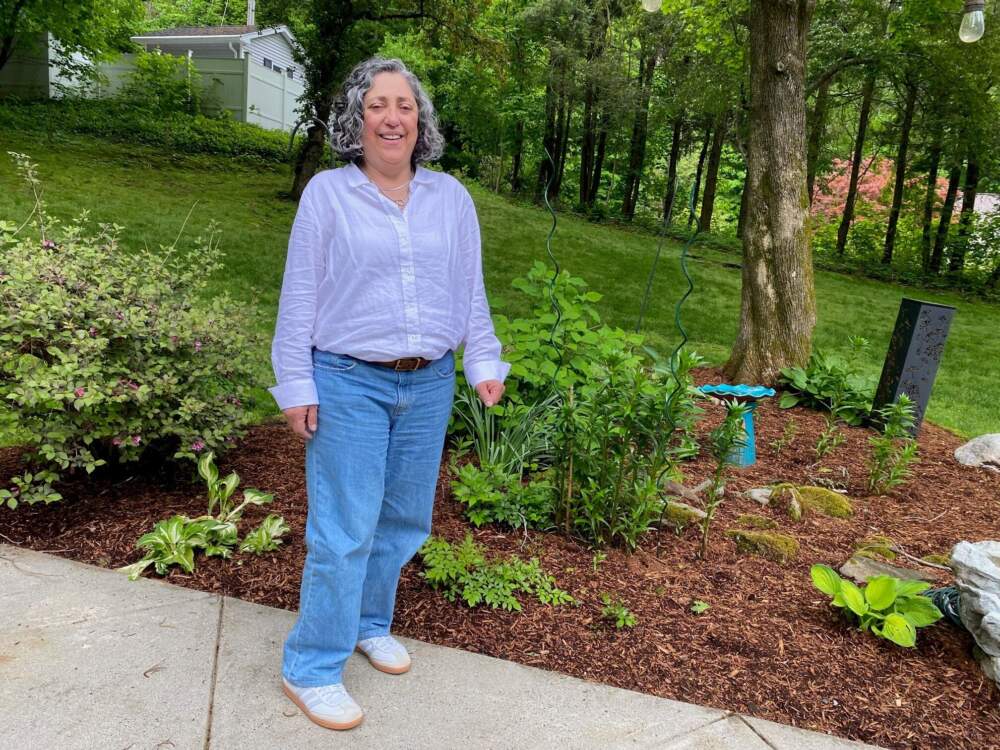
Consuelo Sanchez, another Third Act volunteer, is also finding new purpose later in life. She lives in Wilbraham, in western Massachusetts, having grown up in Columbia before moving to America in 1981. She spent 40 years as a pediatric dentist, until an injury forced her to retire before she was ready.

"I loved every day of being a dentist," Sanchez said. What she misses most is working with children.

Like Clough, Sanchez had never really thought about what to do when she retired, so when the day suddenly arrived, she struggled. "I couldn't find my place," she said.

Now 67, Sanchez loves to garden and care for her granddaughter. She also feels she has plenty of energy to "give back." For her, connecting with Third Act meant a chance to work with fellow immigrants — particularly younger people.

"Young immigrants are a passion of mine," she said. "Many of them come from parents who had no papers. They couldn't vote. So, their kids grow up with the fear." Sanchez explained that they, too, often feel they have to live in the shadows.

Now, she spends time at community colleges and neighborhood centers in Springfield, helping young Latinos register to vote.

Consuelo Sanchez, outside her home in Wilbraham, MA. "Young immigrants are a passion of mine." (Anthony Brooks/WBUR)

Back at Middlebury College, McKibben has big ambitions. He said lots of baby boomers have the time — and the passion — to take on this work. Many, he said, are fighting for policies and rights they thought were settled business for much of their lives but are now under assault. He ticks off a list of recent Supreme Court decisions that have rolled back voting rightsgun control, environmental protections and abortion rights.

"We fought for and won a lot of these things, and we've lived our lives under their protections," he said. "We're appalled to see them disappearing."

McKibben is fighting to restore those progressive causes, and hoping to reach millions more older Americans, who might be searching for their own third acts.

This segment aired on June 5, 2024.

Related:

Headshot of Anthony Brooks

Anthony Brooks Senior Political Reporter
Anthony Brooks is WBUR's senior political reporter.

More…


WBUR


Saturday, January 14, 2023

FOCUS: Bill McKibben | Godalmighty, Exxon Knew Absolutely Everything


Reader Supported News
14 January 23

Live on the homepage now!
Reader Supported News

YESTERDAY 30,000 PEOPLE VISITED RSN, “6 CONTRIBUTED — “6” donations from 30K readers? How is that even possible? We don’t need enormous sums of money to run RSN, we need maybe 20 donations per day. That’s what is lacking, that’s all. No Funding is a fatal disease.
Marc Ash • Founder, Reader Supported News

Sure, I'll make a donation!


Bill McKibben. (photo: Wolfgang Schmidt)
FOCUS: Bill McKibben | Godalmighty, Exxon Knew Absolutely Everything
Bill McKibben, Substack
McKibben writes: "An important new study that came out a few minutes ago makes painfully clear precisely how much (and precisely how precisely) Exxon understood climate change, back in the days when it could have made a huge difference if they'd simply been honest." 


Especially exactly how much they were going to heat the earth


An important new study that came out a few minutes ago makes painfully clear precisely how much (and precisely how precisely) Exxon understood climate change, back in the days when it could have made a huge difference if they’d simply been honest.

It’s not, of course, as if we didn’t know a lot of this story already, and in some depth. In 2015, the Pulitzer Prize-winning website Inside Climate News published a landmark series of reports drawing on archives and whistleblowers to demonstrate that Exxon had set its scientists to work studying what we then called the greenhouse effect back in the 1970s, and that those scientists had reached the same conclusion as researchers working at NASA and elsewhere: the carbon dioxide coming from the fossil fuel industry was about to heat the earth in dramatic fashion. That was huge news—and it explains the picture above, when I staged a one-man sit-in at an Exxon station near me till the police took me away in handcuffs. I was desperate that this story not go away—and it didn’t. It helped fuel the massive fossil fuel divestment campaign, as well as a score of lawsuits aimed at making Exxon pay up.

But this new study—from Harvard’s Naomi Oreskes and Geoffrey Supran, and Stefan Rahmstorf of the Potsdam Institute for Climate Impact Research—actually looks at the specific results that Exxon’s scientists predicted back in those years, and sees how well they panned out. Remarkably well: their temperature projections had an average “skill score” of roughly 75%, which is higher than many government researchers.

“These findings corroborate and and add quantitative precision to assertions by scholars, journalists, lawyers, politicians and others that ExxonMobil accurately foresaw the threat of human-caused global warming, both prior to and parallel to orchestrating lobbying and propaganda campaigns to delay climate action action,” the authors write.

As lead author Geoffery Supran (who has just taken up a new post at the University of Miami) put it,

“This is the nail-in-the-coffin of Exxon Mobil’s claims that it has been fasely accused of climate malfeasance. Our analysis shows that ExxonMobil’s own data contradicted its public statements, which included exaggerating uncertainties, critizing climate models, mythologizing global cooling, and feigning ignorance about when—or if—human-caused global would be measurable.”

What Supran is referring to is the decades-long effort, organized by Exxon and others, to minimize and obfuscate the reality of climate change; its high point may have come when then CEO Lee Raymond went to the World Petroleum Congress in Beijing, just weeks before the Kyoto climate talks, and insisted that the world was cooling, and that even if it wasn’t it would make no difference if people delayed action for a few decades. We now know in greater detail just how precisely Exxon’s scientists had been saying the opposite.

It makes me think, once more, of what may be the greatest climate counterfactual of all. What if, on the night in 1988 that NASA’s Jim Hansen had told Congress about global warming, Exxon’s CEO had gone on the nightly news (which was still a thing then) and said: “That’s what our scientists have been telling us too. It’s a real problem.” That seems the minimum any religious or ethical system would require, and it would have had enormous impact—no one was going to accuse Exxon of climate alarmism. We could have gotten down to work as a society.

They chose another course instead, and in certain ways it worked for them: in some of the years that followed, Exxon set the record for highest annual corporate profit. But that’s not what history is going to remember about them.

In other news from the world of climate and energy:

+You know who wants you to get an EV? Your dog.

Professor Daniel Mills, professor of Veterinary Behaviour Medicine at the University of Lincoln, said: 'Our results clearly show that dogs seem to be more relaxed in electric vehicles, particularly when looking at behavioural traits such as restlessness.' Additionally, an interesting and somewhat unintended revelation from the study came from the dogs that we identified as having potential symptoms associated with travel sickness.

'During their journeys in the electric vehicles, biometric recordings of these dogs revealed their heart rates slowed markedly more than when they were in diesel cars. This was of particular interest to us given an increase in heart rate is commonly associated with motion sickness. It's an intriguing result.'

+Dr. Rose Abramoff, a climate scientist at the federal government’s Oak Ridge National Laboratory, took part in a small and nonviolent climate demonstration at last month’s AGU meeting. So the federal government fired her.

I used to be a well-behaved scientist. I stood quietly on melting permafrost in Utqiagvik, Alaska, and measured how much greenhouse gas was released into the atmosphere. I filled spreadsheets and ran simulations about how warming temperatures would increase the carbon emissions from soil.

To do my job, I dissociated the data I was working with from the terrifying future it represented. But in the field, smelling the dense rot of New England hemlock trees that were being eaten by a pest that now survives the warming winters, I felt loss and dread. Only my peers read my articles, which didn’t seem to have any tangible effects. Though I saw firsthand the oncoming catastrophe of climate change, I felt powerless to help.

+Pakistan continues to need international support to recover from devastating flooding this autumn. Among other things, 23,000 schools and clinics were destroyed. As the country’s prime minister wrote in the Guardian this week:

Aid will reassure millions of imperilled people – who have already lost everything – that they have not been forgotten; that the international community will help them to rebuild their lives.

It will also remind us that we are all – increasingly – at the mercy of forces of nature that do not respect borders and can only be tamed by joining hands. It is, therefore, my sincere hope that our gathering in Geneva comes to symbolise our common humanity and generosity of spirit – a source of hope for all people and countries who may face natural adversity in the future.

+A beautiful account from Patricia Tull of the work underway at the Faith working group of Third Act. Meanwhile Third Act Lawyers is meeting soon, and so are Third Act Educators

+Sea ice around the Antarctic is at an all-time record lowTu

+The late Richard Trumka once led the coal miner’s union. Now his son, Richard Trumka Jr., is on the Consumer Product Safety Commission and is suggesting they may outlaw new gas stoves because—as I wrote last week—the danger they pose to children in households where they burn is becoming ever clearer. The reaction to his proposal is clear: conservatives are determined to make gas stoves the next focus of the culture wars, with Texas congressman Ronny Jackson (chief medicial advisor to President Trump) expressing his allegiance to the blue flame science be damaned, and promising that his range will only be taken from his “COLD, DEAD FINGERS.” Meanwhile, the propane industry is scared enough of heat pumps and induction cooktops that they’re hiring actors to spread their message. Great coverage in the NYTimes

“When I think of winter, I think of being inside. I think of cooking with the family, of being by a roaring fire — and with propane, that is all possible,” Matt Blashaw said on a segment of the CBS affiliate WCIA, calling in from his bright kitchen. “That’s why we call it an energy source for everyone.”

Less well known is the fact that Mr. Blashaw is paid by a fossil fuel industry group that has been running a furtive campaign against government efforts to move heating away from oil and gas toward electricity made from wind, solar and other cleaner sources.

+Finally, for those of you who enjoyed The Other Cheek, our serialized nonviolent epic, I wrote a short account of the pleasures of publishing it.

READ MORE


Contribute to RSN

Follow us on facebook and twitter!

Update My Monthly Donation

                                                                    PO Box 2043 / Citrus Heights, CA 95611


Save 50% on TNR | How Did Trump Do on His Labor Day Report Card?

                                                                                                 LOTS OF POSTS IGNORED BY BLOGGER..... OR RE...