Friday, March 6, 2026
■ Today's Top News
Trump's threats against Cuba are "just a plain attempt to open up Cuban markets to his billionaire buddies," warned the Washington Democrat.
By Julia Conley
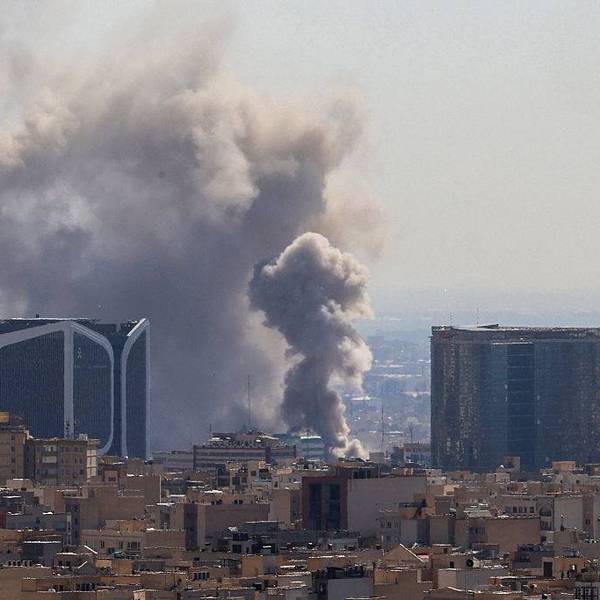
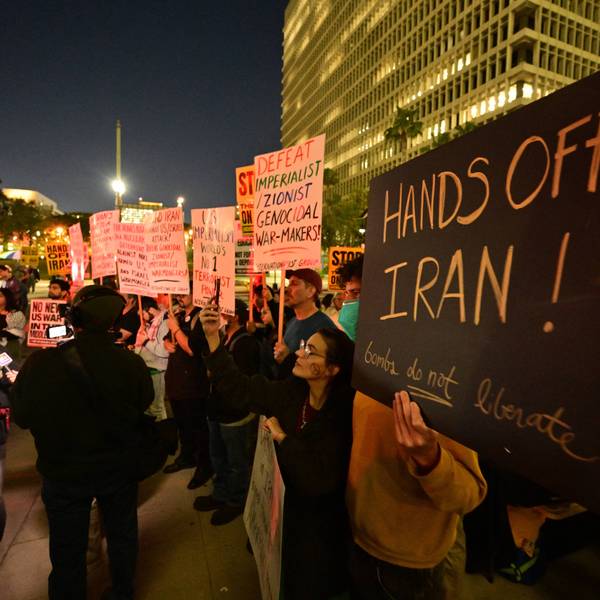
As the Trump administration celebrates its broadly unpopular war on Iran—one in which an estimated 1,332 people have been killed in the country, including nearly 200 children at a girls’ school—US Rep. Pramila Jayapal noted that President Donald Trump is still imposing a blockade on Cuba and denounced his stated plan to take over the island.
“The US maximum pressure campaign on Cuba is a cruel and failing policy that has caused incredible harm to the Cuban people,” said Jayapal (D-Wash.).
Trump’s oil blockade on Cuba in recent weeks and his threats to push out its communist government are “just a plain attempt to open up Cuban markets to his billionaire buddies,” said Jayapal.
Trump announced last week that US companies would be permitted to sell small amounts of oil to Cuba if they circumvent the government and that Venezuelan fuel could be sold to private businesses in the communist country.
That decision came after weeks of a worsening fuel crisis on the island, triggered by Trump’s push to take control of Venezuelan oil and his threat to hit any country that provided oil to Cuba with tariffs. In January, he issued an executive order accusing the country of supporting terrorism and posing a security threat to the US.
The blockade has left cities struggling to provide sanitation services and pushed Cuba’s healthcare system to the brink of collapse, according to the country’s health minister. Officials blamed the US this week for a blackout that plunged millions of people into darkness for 16 hours.
On Friday, as Trump’s Iran war sent US oil prices soaring and the attack on girls’ school was found by numerous investigations to have “likely” been carried out by the US, the president attempted to change the subject to his plans for Cuba, telling CNN, “Cuba is gonna fall too.”
He told the outlet that Secretary of State Marco Rubio, who has long advocated for regime change in Cuba, would turn his attention to pushing out the country’s government after the war in Iran—which the president and his officials have estimated could take anywhere from four weeks to six months.
“Your next one is going to be, we want to do that special Cuba,” Trump told CNN. “[Rubio]'s waiting. But he says, ‘Let’s get this one finished first.’ We could do them all at the same time, but bad things happen. If you watch countries over the years, you do them all too fast, bad things happen. We’re not going to let anything bad happen to this country.”
The president made similar comments to Politico on Thursday, saying the US is “talking to Cuba” and that his decision to cut off the island’s crucial Venezuelan oil supply is pressuring the government.
“Well, it’s because of my intervention, intervention that is happening,” Trump said. “Obviously, otherwise they wouldn’t have this problem.”
Sen. Lindsey Graham (R-SC) also warned this week that “Cuba’s next.”
Jayapal said Friday that Trump’s takeover of Venezuela, after which administration officials admitted the White House was after the country’s oil supply and claimed the administration has the right to take over any country if doing so serves US interests, “is a clear example that Trump doesn’t care about democracy or civil society.”
Trump’s threats against Cuba, she said, are “just a plain attempt to open up Cuban markets to his billionaire buddies.”
The findings mean global temperatures are on track to surpass 1.5°C above preindustrial levels before 2030.
By Olivia Rosane
Nearly a week into President Donald Trump’s illegal war on Iran that is likely to increase climate-warming emissions, new research has found that the pace of human-caused global heating has accelerated over the past 10 years.
The study, published in Geophysical Research Letters on Friday, concluded that global heating had nearly doubled from a rate of less than 0.2°C a decade from 1970-2015 to 0.35°C between 2015-25. This would put global temperatures on track to surpass 1.5°C above preindustrial levels before 2030.
“Warming proceeding faster is not unexpected by climate models, but it is a cause of concern and shows how insufficient the efforts to slow and eventually stop global warming under the Paris Climate Accord have so far been,” study authors Stefan Rahmstorf and G. Foster wrote.
Scientists had long suspected that global warming was speeding up, given that the past three years were the three hottest on record. Yet previous studies had not been able to find statistically significant evidence of acceleration. The new study removed the natural variability from solar variations, volcanic eruptions, and El Niño from the data, which revealed a statistically significant speedup.
“How quickly the Earth continues to warm ultimately depends on how rapidly we reduce global CO2 emissions from fossil fuels to zero.”
It follows a study from 2025 that found a smaller increase of 0.27°C per decade from 2015-24.
“Either way, this represents a significant increase in the rate of warming,” Zeke Hausfather, a climate scientist at Berkeley Earth and a co-author on the earlier study, told The Guardian. “[This] should be worrying as the world hurtles toward crossing 1.5°C later this decade.”
Whatever the rate of increase, the solution, from a scientific perspective, is clear.
“How quickly the Earth continues to warm ultimately depends on how rapidly we reduce global CO2 emissions from fossil fuels to zero,” Rahmstorf, a Potsdam Institute for Climate Impact Research scientist, told The Guardian.
Yet the findings come at a time when emissions look set only to increase, as the US launches an oil-fueled war on Iran that risks drawing other major military powers into a greater conflict.
“The outbreak of any war is bad news for the climate, just as the election of politicians hostile to climate action is,” Mark Hertsgaard, Covering Climate Now executive director and co-founder, and Giles Trendle, former managing director of Al Jazeera English, wrote in a newsletter on Thursday. “The climate implications of this new war are not the center of attention at the moment, but they are essential context for understanding what’s at stake. At a time when civilization is hurtling toward irreversible climate breakdown, to overlook the climate consequences of three of the deadliest militaries on Earth going to war would be journalistic malpractice.”
War itself increases greenhouse gas emissions. Studies have found that Russia’s invasion of Ukraine emitted as much in its first two years as the annual emissions of the Netherlands, while Israel’s genocide in Gaza emitted as much in its first four months as each of the 135 lowest-emitting nations in a year.
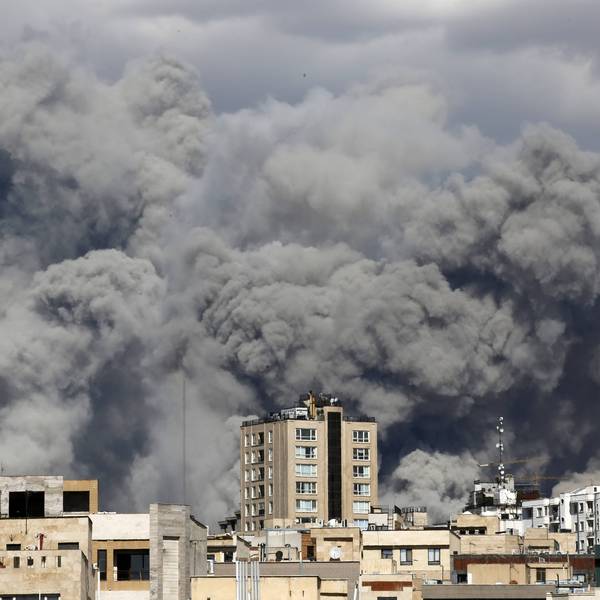
The Conflict and Environment Observatory observed 120 incidents of environmental harm during the first three days of the Iran conflict, and noted that attacks on oil and gas infrastructure had global implications:
There are also consequences for the global environment through changes in greenhouse gas emissions. Attacks on oil and gas sites will release methane, carbon dioxide, and other greenhouse gasses, but the curtailment of production—as has occurred with Qatari LNG [liquefied natural gas], oil production in Iraqi Kurdistan, and Israeli offshore gas—does not necessarily reduce emissions. Instead energy price signals can lead to short term substitution, as well as more complex downstream energy supply changes over longer timeframes.
Fossil fuels are also required to power the machinery that makes war possible.
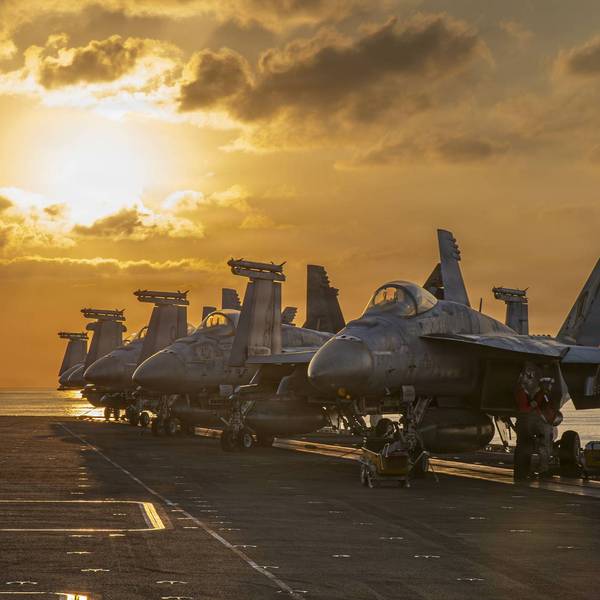
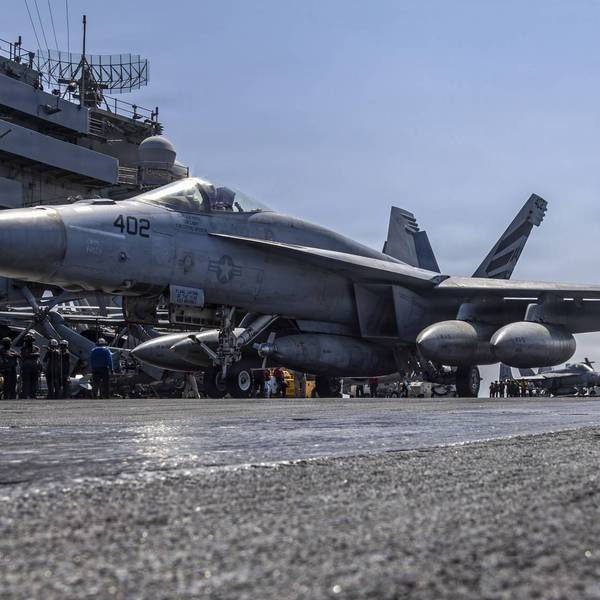
“What’s beyond dispute is that this war could not be fought without oil,” Hertsgaard and Trendle wrote. “The aircraft carriers, jet planes, and the myriad support systems they require gobble immense quantities of fossil fuels. Which helps explain why the US Department of Defense is the largest institutional emitter of greenhouse gases globally.”
There is also the speculation that control of fossil fuels is one motivation for the war itself, given that Iran has the world’s third-largest reserve of oil. While Trump has not included oil in his incoherent word salad of war aims, as he did when he kidnapped Venezuelan President Nicolás Maduro in January, climate advocate Bill McKibben pointed out that members of US oil industry have said that they would rather develop Iran’s oil than Venezuela’s, as its industry is more “structurally sound.”
“Europe, Asia, and other regions whose energy costs skyrocket because of this reckless escalation by the Trump administration are reminded, yet again, that fossil fuels are volatile, insecure, and expensive.”
“The military attacks on Iran are not about peace and democracy, but rather about sowing fear, bloodshed, and despair as the US attempts to further destabilize the region and secure access to profitable natural resources that it wants to control,” the Climate Justice Alliance said in a statement. “This is not surprising given recent foreign policy actions taken by the Trump administration in Venezuela and Cuba, and our ongoing history of engaging in coups, occupations, and endless wars to control resource-rich countries, especially for oil and gas.”
Yet, at the same time, the war is already offering an object lesson in the dangers of relying on fossil fuels—for everyone except fossil fuel CEOs. The war could disrupt markets such that profits soar for Big Oil and liquefied natural gas companies while ordinary people suddenly find themselves struggling to pay gas or heating bills.
“Iran is in the middle of one of the world’s most important energy corridors,” Lorne Stockman, Oil Change International research director, told Common Dreams. “Roughly 20% of global petroleum flows through the Strait of Hormuz, so when military escalation disrupts that route, global energy markets are immediately impacted.”
Stockman continued: “That instability means higher energy bills for people around the world while communities in the region suffer the devastation of war. Europe, Asia, and other regions whose energy costs skyrocket because of this reckless escalation by the Trump administration are reminded, yet again, that fossil fuels are volatile, insecure, and expensive. The only question is whether governments will heed that signal and make a fair fossil fuel phase out a priority.”
Chair of the Fossil Fuel Non-Proliferation Treaty Tzeporah Berman made a similar point on social media: “Drones hitting Saudi oil fields, Qatar halting LNG production, Iran putting a squeeze on the Strait of Hormuz, and US attack on Iran’s Kharg Island oil terminals—all of it should be a wake-up call that fossil fuel phaseout is a national and energy security priority.”
Yet Berman noted that the energy landscape is different today than it has been during previous periods of war.
“Unlike previous oil wars renewable energy is now available at scale,” Berman continued. “It’s distributed, diversified, and resilient. Most importantly, solar panels don’t blow up and once they are in place you don’t need ships to constantly feed them to make energy. The sun is looking like a pretty stable energy source right about now.”
"Medicare for All, or endless foreign wars?" asked Democratic US Senate candidate Graham Platner. "Anyone in the House or Senate giving the wrong answer should lose their seat."
By Jake Johnson
The daily price tag of US President Donald Trump’s illegal war on Iran would be enough to cover the daily costs of federal nutrition assistance for more than 40 million Americans, as well as daily Medicaid costs for the roughly 16 million people expected to lose health coverage due to the Republican budget package that Trump signed into law last year.
That’s according to an analysis published Thursday by the National Priorities Project (NPP), which noted that—on an annual basis—the estimated $1 billion-per-day cost of the US war on Iran is “higher than the appropriated budget of any federal agency except the Pentagon itself.”
“That money could cover the things we need here at home,” wrote NPP’s Alliyah Lusuegro and Lindsay Koshgarian. “The tradeoff is clear: the Trump administration—backed by several members of Congress—is cutting healthcare and food assistance for millions of families while spending $1 billion a day on this emerging war.”
“The question isn’t whether the money exists—it’s what we choose to spend it on,” they wrote.
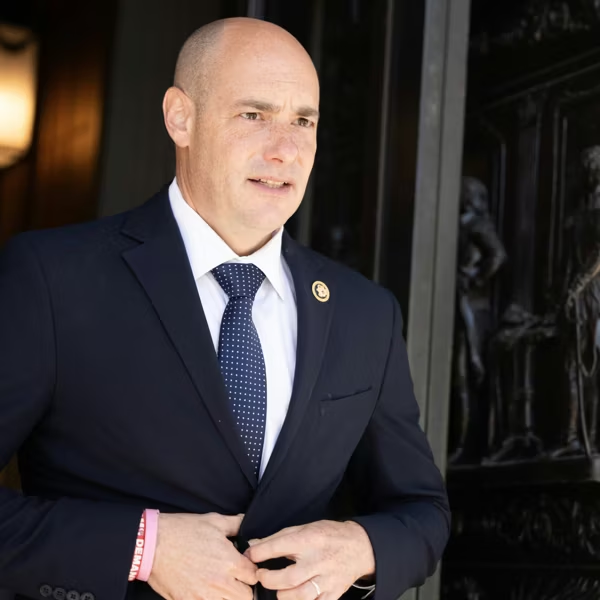
In a social media post on Friday, Democratic US Senate candidate Graham Platner—a veteran of the Iraq and Afghanistan wars—posed what he characterized as a “simple question” to members of Congress: “Medicare for All, or endless foreign wars?”
“Anyone in the House or Senate giving the wrong answer,” Platner added, “should lose their seat.”
“The cost of the war in Iraq ended up being almost $3 trillion. This could be astronomical, easily.”
The Pentagon’s early estimate of the Iran war’s cost was first reported by Atlantic journalist Nancy Youssef, who cited an unnamed congressional official.
In a separate analysis released earlier this week, the Center for Strategic and International Studies put the cost of the first 100 hours of the Iran war at $3.7 billion, or $891.4 million per day. The Pentagon is reportedly planning to ask Congress to approve at least $50 billion in supplemental funding for the war, a historically unpopular assault that lawmakers did not authorize.
“Without support from the American people, Donald Trump led the country into a reckless war with Iran that has taken the lives of six service members and injured several others,” said Kendall Witmer, rapid response director for the Democratic National Committee. “Now, the White House is scrambling to come up with a plan as the cost of Trump’s war skyrockets. Working families are already struggling with soaring prices and a hollowed-out job market—they can’t afford Trump’s war of choice.”
On Thursday, Rep. Brendan Boyle (D-Pa.) asked the nonpartisan Congressional Budget Office to conduct a thorough analysis of the financial costs of the Iran war, including scenarios in which the assault drags on for more than five weeks and the US launches a ground invasion.
“Taxpayers deserve a nonpartisan estimate of the financial and economic impact of President Trump’s reckless war in Iran that has already led to the tragic deaths of American servicemembers,” said Boyle. “American families don’t want billions of dollars wasted on an unnecessary war—they want lower costs and affordable healthcare.”
Koshgarian of NPP told CNN that the costs of war are “highly unpredictable, and so we won’t know the cost of it until it’s over.”
“The cost of the war in Iraq ended up being almost $3 trillion,” Koshgarian said. “This could be astronomical, easily.”
"Republicans in Congress and President Trump are focused on spending $1 billion a day on a needless war with Iran that is already jacking up prices for Americans," noted one expert.
By Jessica Corbett
President Donald Trump made clear in a new interview with Politico that he either doesn’t understand or won’t accept the US public’s response to his and Israel’s war on Iran, which they’re waging while Americans face rising unemployment and gasoline prices on top of high costs for other essentials, from groceries to housing.
According to Politico White House bureau chief Dasha Burns:
Speaking in a phone call Thursday, Trump was entirely on offense. He brushed off worries about the impact of the Iran war on gas prices and US ammunition reserves, and he insisted that the military onslaught was popular with voters. Many recent public polls show the opposite is true, although a survey released Thursday by Fox News found voters have mixed opinions on Iran...
“People are loving what’s happening,” Trump said. “We’re taking out a threat to the United States of America, major threat... and doing it like nobody’s ever seen before.”
A roundup of recent polling collected and published Friday by Strength in Numbers data journalist G. Elliott Morris shows roughly half of Americans disapprove of the war on Iran, while only 38% approve.
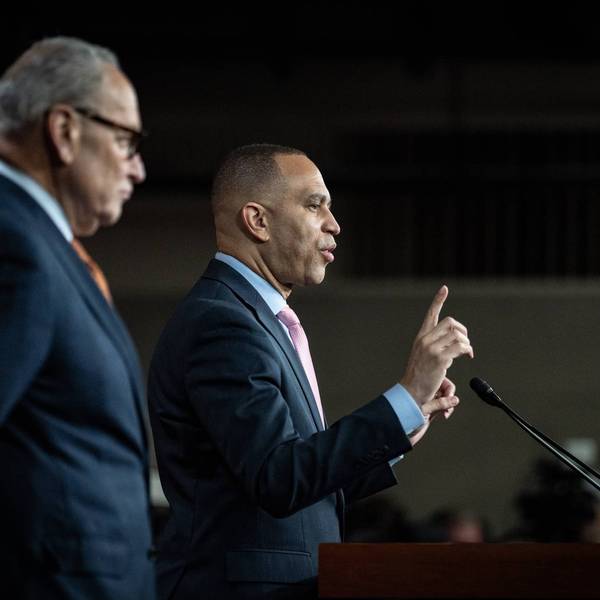
Despite the polling, the GOP-controlled Congress has refused to rein in Trump’s assault on Iran. Democratic US Sen. John Fetterman (Pa.) and four Democrats in the House of Representatives—Congressmen Henry Cuellar (Texas), Jared Golden (Maine), Greg Landsman (Ohio), and Juan Vargas (Calif.)—voted with nearly all Republicans this week to block a pair of war powers resolutions.
In the interview with Politico, Trump described the Iranian military as “decimated,” and said that “we’ll work with the people and the regime to make sure that somebody gets there that can nicely build Iran but without nuclear weapons.”
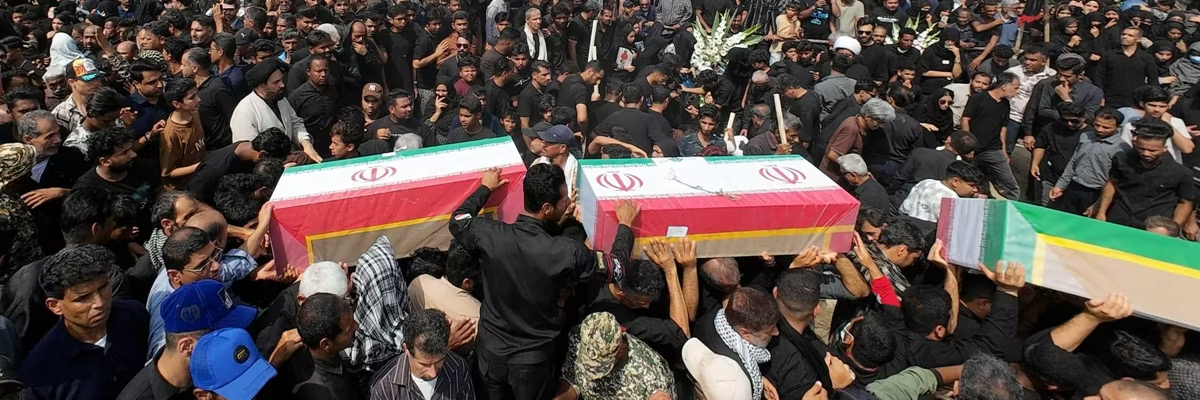
As of Thursday, the Iranian government put the death toll at 1,230 people, including around 175 killed in a reported “double-tap” strike on a girls’ elementary school. Israel has denied responsibility and top US officials have only said they’re looking into it. A New York Times analysis concluded that the United States was “most likely to have carried out the strike,” which killed mostly children. According to Reuters, US investigators also believe that American forces were behind the bombing.
Separately, the Times reported that two boys’ schools—one elementary and one middle—southwest of Tehran “appeared to have been damaged on Thursday during the bombing campaign being conducted by the United States and Israel,” though unlike with the earlier attack in Minab, “there were no immediate reports of deaths or injuries.”
In addition to discussing Iran, Trump told Politico that “Cuba’s going to fall, too,” but “they want to make a deal.” He also addressed Venezuela, whose president was recently abducted by US forces and replaced with a deputy who agreed to let Trump control the nationalized oil industry; his frustration with Ukrainian President Volodymyr Zelenskyy, who continues to combat a Russian invasion; and his recent spat with the artificial intelligence company Anthropic, which the president “fired” because of its refusal to let the Pentagon end the AI firm’s policies against autonomous killer robots and mass surveillance of Americans.
With Trump focused on various conflicts abroad, Americans are contending with some of the consequences, including the impact on petroleum. Business Insider reported Friday that “the national average price for a gallon of regular gasoline climbed to $3.32 on Friday, according to AAA—that’s an 11.4% increase from last week’s price and the highest level since August 2024.”
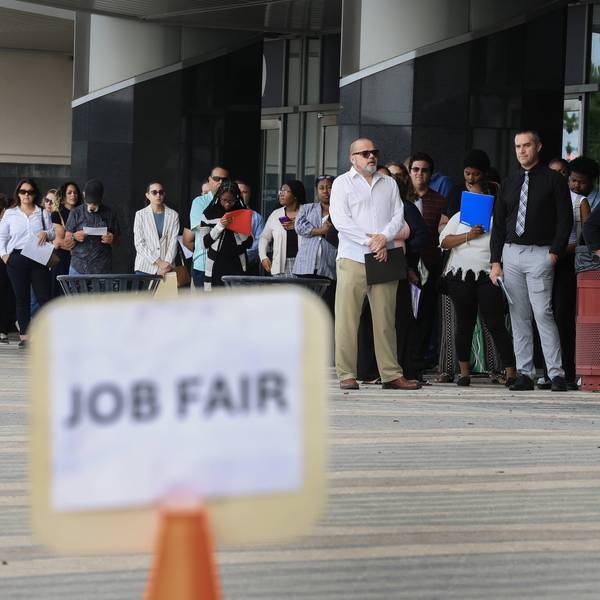
Meanwhile, the US Bureau of Labor Statistics revealed Friday that the US economy lost 92,000 jobs last month.
“Trump’s reckless economic agenda has forced the labor market into the negative, threatening the livelihoods of American workers,” responded Alex Jacquez, a former Obama administration official who’s now chief of policy and advocacy at Groundwork Collaborative. “As the president piles on blanket tariffs and oil prices soar, today’s report confirms he’s sent the economy straight into a stagflation spiral.”
The new jobs data came after the Wall Street Journal reported Wednesday that a record number of US workers are raiding their retirement savings. The top reasons for the surge in 401(k) withdrawals were avoiding eviction or paying off medical expenses.
Americans are facing an even more dire healthcare situation this year, due to Medicaid cuts in Trump and congressional Republicans’ so-called One Big Beautiful Bill Act—which also gave the rich more tax breaks—as well as their refusal to extend expired Affordable Care Act subsidies that helped tens of millions of people pay for health insurance.
“We should all be concerned about the slowing economy we’ve seen in the second Trump administration,” Angela Hanks, a former Department of Labor official who’s now chief of policy programs at the Century Foundation, said Friday. “The economy lost thousands of jobs this month including in healthcare and social services, the main sectors previously propping up the labor market.”
“Healthcare, childcare, and manufacturing—sectors Americans rely on—all lost jobs last month with no plan from the Trump administration on how to fix it,” Hanks added. “Meanwhile, Republicans in Congress and President Trump are focused on spending $1 billion a day on a needless war with Iran that is already jacking up prices for Americans.”
"Both practically and politically, a vote to fund the war is a vote for the war—a war Americans cannot afford and do not want."
By Jake Johnson
Democratic members of Congress are facing renewed pressure to oppose any Trump administration funding requests to help bankroll its illegal, open-ended war on Iran after congressional Republicans—along with a handful of pro-war Democrats—voted this week to defeat efforts to end the assault, which is costing US taxpayers roughly $1 billion per day.
In a statement after House Republicans and four Democrats voted down an Iran war powers resolution late Thursday, the ACLU implored Congress “to use its funding authority to block all supplemental funding requests for war funding from the Department of Defense while President Trump is engaging in this unconstitutional war.”
“Without Congress authorizing additional funds, the military will simply run out of money to spend on the war,” the group added.
The Trump administration is reportedly crafting a $50 billion supplemental funding request aimed at financing its war, which has killed more than 1,000 Iranians and counting. Politico reported Thursday that Republicans are “debating whether to attach wildfire aid and $15 billion in tariff relief for farmers” to the supplemental funding measure in an effort to attract Democratic support.
The National Priorities Project (NPP) has noted that $50 billion would be enough to extend enhanced Affordable Care Act subsidies for a year, restore federal nutrition assistance to millions who are set to lose it due to the Trump-GOP budget law, and expand Medicaid to nearly 2 million people.
“The question isn’t whether the money exists—it’s what we choose to spend it on,” NPP’s Alliyah Lusuegro and Lindsay Koshgarian wrote Thursday. “There’s never been a better time to call your members of Congress. We need to oppose this war before it’s too late.”
“Any member of Congress who rubber stamps another dime for this war of choice should expect to hear from our members.”
Some Senate Democrats—including Sen. Jack Reed (D-RI), the ranking member on the Senate Armed Services Committee—have not ruled out voting for a possible supplemental funding bill for the Pentagon, even as the annual US military budget cleared $1 trillion.
“We have to look at what they need,” Reed said earlier this week. “Some of it might be to fill in critical issues and other theaters of war they’ve taken things from.”
Sen. Elissa Slotkin (D-Mich.) told HuffPost that she “would like to understand the goals of the war before I decide how I feel about the funding of the war.”
Dylan Williams, vice president for government affairs at the Center for International Policy, wrote Thursday that “both practically and politically, a vote to fund the war is a vote for the war—a war Americans cannot afford and do not want.”
The progressive advocacy group MoveOn said its members “consider a vote for the supplemental a vote in favor of Donald Trump’s war.”
“Any member of Congress who rubber stamps another dime for this war of choice should expect to hear from our members,” the group added.
To break the 60-vote filibuster in the Senate, Republicans would need at least seven Democrats to cross the aisle.
Sen. Chris Murphy (D-Conn.) expressed emphatic opposition to the floated supplemental funding bill in a social media post on Thursday.
“I’m a hell no on funding for Trump’s illegal, disastrous Iran War,” Murphy wrote.
“Month after month, the data shows Donald Trump’s economy is failing American families.”
By Brad Reed
President Donald Trump’s self-proclaimed “greatest” economy in history took another major blow on Friday as the US Bureau of Labor Statistics revealed that the American economy lost 92,000 jobs in February.
Heather Long, chief economist at Navy Federal Credit Union, described the report as “dismal,” while noting that the US economy as a whole has actually lost jobs since Trump announced his “liberation day” global tariffs in April 2025.
“Total job gains since from May 2025 to February 2026 are now -19,000,” she wrote. “Companies are not hiring in the face of all of these headwinds and uncertainty. And even healthcare is starting to slow down.”
University of Michigan economist Justin Wolfers argued that “the economic story just changed dramatically” because of the jobs report, which also showed downward revisions to the estimated jobs created in December and January.
“Recession questions are back on the menu,” he said.
Mike Konczal, senior director of policy and research at the Economic Security Project, zeroed in on the surprise loss of healthcare jobs in February as particularly concerning given that healthcare has been the lone industry to consistently add jobs in recent months.
“This is the first month in years where healthcare jobs went negative, really changing the dynamic,” he said. “Cuts to Medicaid, cuts to ACA... suddenly the thing that was 187% of private jobs since liberation day, holding it together, may be giving out?”
Rep. Brendan Boyle (D-Pa.), ranking member of the House Budget Committee, said that the terrible jobs report was a direct reflection of Trump’s economic mismanagement.
“Month after month, the data shows Donald Trump’s economy is failing American families,” Boyle said. “The job market is weakening, costs remain high, and Trump’s illegal tariff taxes continue to hurt businesses and workers. Trump and his allies in Congress know their agenda isn’t working. Instead of helping working families, they are pushing more tariff taxes and more tax breaks for billionaires. It is clear Republicans in Washington simply do not care about working families.”
Alex Jacquez, chief of policy and advocacy at Groundwork Collaborative, declared that “the deterioration in the labor market is visible from space,” and pinned the blame on “Trump’s reckless economic agenda.”
“As the president piles on blanket tariffs and oil prices soar,” Jacquez said, “today’s report confirms he’s sent the economy straight into a stagflation spiral.”
University of Pennsylvania economist Heather Boushey said weakness in the US economy had been evident for several months, although Friday’s jobs report showed the largest job losses of any month during Trump’s second term.
“Today’s data should not come as a shock as there have been signs of weakening in the US labor market for quite some time,” she said. “The Trump administration’s focus on undermining the US economy rather than investing in America may be coming home to roost.”
Daniel Hornung, policy fellow at the Stanford Institute for Economic Policy Research, said that the bad jobs report will make things even harder for the US Federal Reserve when it comes to making interest rate cut decisions.
“This morning’s report... comes at a difficult moment, with inflation still above target and an oil price shock threatening to raise inflation further,” Hornung said. “The report complicates the Fed’s efforts to keep both unemployment and inflation low, and it makes it difficult for the [Trump] administration to argue heading into the midterms that their policies are leading to the kind of growth or improvement in living standards that they’ve long promised.”















No comments:
Post a Comment
Note: Only a member of this blog may post a comment.