Sunday, September 22, 2024

INFORMED COMMENT: Afghan Women have been robbed of Health Care, Education and now their Voices. But they won’t remain Silent


Afghanistan

Afghan Women have been robbed of Health Care, Education and now their Voices. But they won’t remain Silent

By Susan Hutchinson, Australian National University | –

(The Conversation) – Last month, the Taliban passed a new “vice and virtue” law, making it illegal for women to speak in public. Under the law, women can also be punished if they are heard singing or reading aloud from within their homes.

It was approved by the Taliban’s supreme leader, Mullah Hibatullah Akhundzada, and will be enforced by the Ministry for Promoting Virtue and Preventing Vice.

Ahead of an international conference on the future of Afghanistan in Doha, Qatar, earlier this year, the United Nations’ mission head for Afghanistan, Roza Otunbayeva, said it would “take time” for the Taliban to accept women. The Taliban specifically mandated no women attend the conference, which the UN agreed to.

But as gender experts have been saying for years, Taliban leaders have not – and will not – change. Three years after they regained control of Afghanistan, the Taliban’s efforts to publicly erase women from Afghan society have reached a new low.

Gender apartheid

The Taliban’s burgeoning body of laws and practices restricting the rights of women and girls is a clear case of gender apartheid. Gender apartheid is defined as a regime of systematic gender-based oppression and domination.

Because there is no conventional legal framework in place in Afghanistan, the country is ruled by an increasingly tightly woven patchwork of decrees, policies and systematised practices, some written, others verbal.

Since returning to power in 2021, the Taliban has enacted more than 100 edicts, orders and directives restricting the rights of women and girls. These apply in a range of jurisdictions – nationally, provincially and in specific districts.

The most significant of these edicts prevent women and girls from attending school beyond grade six, working in many organisations, and travelling a certain distance to seek health care.

Restricting girls’ education

The ban on education for Afghan girls has had a dire effect on their wellbeing. Modelling from UN Women shows this has correlated with a 25% increase in child marriage and 45% increase in early childbirth. The loss of hope for young women has been profound.

Civil society groups in Afghanistan and around the world have clapped back at the Taliban’s ban on girl’s education with the hashtag “Let Afghan Girls Learn”.

Myriad small organisations are also running underground schools to continue girls’ education. Sometimes these schools operate under the guise of embroidery classes, or something else the Taliban finds acceptable.

But the ongoing lack of funding to women-led organisations has been a serious barrier to these kinds of programs, despite the fact they are primarily Afghan-led.

A range of internationally certified online programs have also been established, providing important educational and employment opportunities for smaller numbers of Afghan women and girls.

But these online options remain limited, and not just by funding. Data shows only 6% of Afghan women have internet access, and the Taliban is making it increasingly difficult for Afghans to access SIM cards for mobile phones.

Hurting women and children’s health

Women’s health has also suffered due to the brain drain of highly-skilled workers fleeing the country and the sharp reduction in international technical and financial assistance to Afghanistan’s public health system.

Human Rights Watch reports “women and girls have been disproportionately affected by the healthcare crisis” in the country, particularly because of the Taliban’s abuses of women’s rights.

For example, restrictions on women’s movement has meant that maternal and infant mortality rates have skyrocketed in recent years as women are prevented from reaching health facilities.

Data published in the British Medical Journal shows that eight in ten women in urban areas have reported symptoms of depression and/or anxiety living under the Taliban.

Fighting against the silence

Over the past year, the Taliban have also increasingly targeted women’s human rights defenders. Activists have been “disappeared”, arbitrarily detained, and egregiously abused in prison.

The Guardian recently published evidence of a woman being raped in prison.

In my own work, I’ve documented a pattern of Talibs using sexual torture against imprisoned women’s human rights defenders in a bid to shame them out of their activism and isolate them from familial and community support.

Yet, Afghan women continue to push back against the draconian authorities ruling the country.

In response to the latest “vice and virtue” law, for example, women all over the country have taken to social media posting videos of themselves singing and reciting poetry to show they cannot be silenced.

Some recite the Quran. Many wear traditional Afghan dress, while others wear the Taliban’s required burka. But they sing to prove they exist. To show they are Afghan, and that they are not impure, regardless of what the Talibs say.

Activists are also continuing to push for the international recognition of gender apartheid as a crime against humanity, and the International Criminal Court continues its investigations into alleged crimes against humanity perpetrated by the Taliban.

But Afghan women cannot be left alone in their struggle. The international community must follow through on its commitments to protect Afghan women’s rights defenders. It must also maintain long-term support, including through funding pathways, for women-led organisations helping women in Afghanistan.

Susan Hutchinson, PhD Candidate, International Relations, Australian National University

This article is republished from The Conversation under a Creative Commons license. Read the original article.

——

Bonus Video added by Informed Comment:

‘Becoming a doctor is my dream’: Afghan women continue studies in Scotland | AFP

About the Author

The Conversation is an independent, not-for-profit media outlet that works with academic experts in their fields to publish short, clear essays on hot topics.

INFORMED COMMENT

INFORMED COMMENT: The American Dream isn’t Dead; but it’s on Life Support


Featured

The American Dream isn’t Dead; but it’s on Life Support

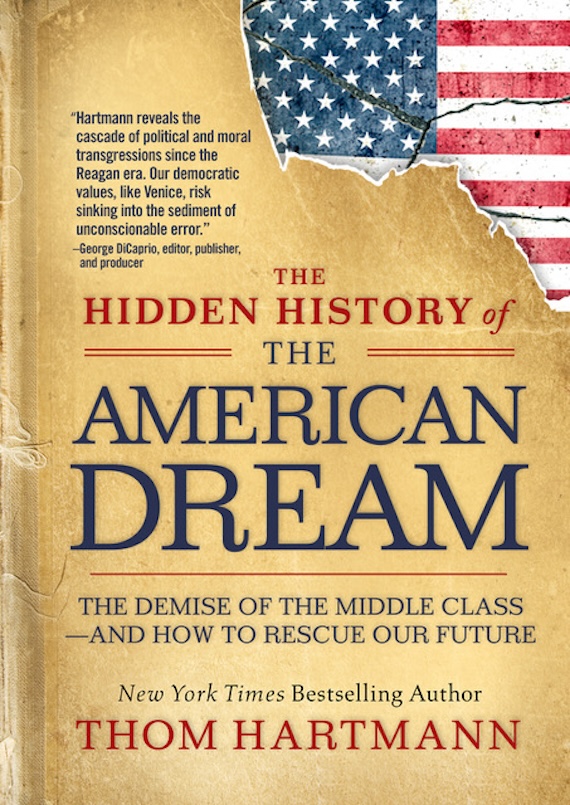
Portland, Or. (Special to Informed Comment; Feature) – In the run-up to the 2024 Presidential election, the concept of the American Dream has become more central than ever to our national discourse. Many Americans simply ask, “What happened to it?” In my new book, The Hidden History of the American Dream: The Demise of the Middle Class and How to Rescue Our Future, I address the systematic erosion of the middle class that has taken place over the past four decades — a decline brought about by deliberate economic policies designed to enrich the wealthy at the expense of working people.

For much of our history, the American Dream was defined by a strong, thriving middle class. The ability to buy a home, raise a family, and retire comfortably was once within reach for the average American. From the time of Alexander Hamilton, who advocated for tariffs and protectionist policies to nurture American manufacturing, to the post-World War II boom, we saw how government action could create conditions for middle-class prosperity.

As I explore in my book, the middle class peaked during the post-war period, when policies like high unionization rates, affordable education, and government investment in infrastructure supported widespread economic mobility. By 1980, two-thirds of Americans were classified as middle class. But that all started to unravel with Ronald Reagan’s election.

Reagan’s presidency marked the beginning of a seismic shift in American economic policy, driven by neoliberal principles that favored deregulation, tax cuts for the rich, and the weakening of labor unions. His administration’s assault on unions, beginning with the firing of air traffic controllers in 1981, sent a clear message to corporate America: workers’ bargaining power would no longer be protected. This was followed by free trade agreements and policies encouraging the outsourcing of millions of good-paying, unionized manufacturing jobs. The consequences have been devastating. Over the last 40 years, we’ve seen the hollowing out of the middle class and an unprecedented concentration of wealth at the top.

This economic shift didn’t just come from Republicans — Democrats like Bill Clinton embraced many of these neoliberal policies as well, mainly through trade agreements like NAFTA. These agreements promised prosperity but led to the decimation of our industrial base and the rise of low-wage service jobs. Today, the wealthiest 1% of Americans hold a disproportionate amount of wealth, while working-class families struggle to make ends meet.


Thom Hartmann, The Hidden History of the American Dream: The Demise of the Middle Class—and How to Rescue Our Future. Click here to buy.

The election of Donald Trump in 2016 brought many of these issues to the forefront. Trump’s populist rhetoric tapped into the deep dissatisfaction many working-class Americans felt after decades of being ignored by both parties. He criticized free trade, imposed tariffs, and promised to return jobs to America. While I acknowledge that Trump’s critique of neoliberalism resonated with many voters, his execution was deeply flawed. His tariffs on Chinese goods were haphazard, and they backfired without a comprehensive plan to rebuild American manufacturing. Instead of restoring the middle class, his policies further enriched corporate interests while forcing the federal government to bail out farmers and other industries hurt by the tariffs.

As I argue in The Hidden History of the American Dream, the real solution lies in returning to the progressive values that once defined the Democratic Party. We need to look back to Franklin D. Roosevelt’s policies and the New Deal, which created the most prosperous middle class in world history. By investing in infrastructure, implementing progressive taxation, and protecting workers’ rights, FDR’s administration built an economy that worked for everyone, not just the wealthy elite.

Today, we find ourselves at a crossroads. We must commit to a comprehensive industrial policy revitalizing American manufacturing to rebuild the American Dream. I advocate for reintroducing tariffs and other protectionist measures, not as punitive measures against foreign nations but as a way to incentivize domestic production. Unlike Trump’s tariffs, which were politically motivated and poorly executed, we need a strategic, long-term approach that ensures economic stability while rebuilding our industrial base.

In addition to tariffs, we need a return to Keynesian economics, where the government actively ensures economic fairness. President Biden has quietly implemented policies, such as the Inflation Reduction Act and efforts to break up monopolies. These are steps in the right direction, but more needs to be done to reverse the damage wrought by neoliberalism over the past four decades.

Healthcare, education, and housing must be treated as public goods, not commodities to be exploited by profit-driven corporations. Our housing market, for example, has been overrun by speculators who treat homes as financial assets rather than places where people live. We need policies that make housing affordable and accessible to all Americans, not just the wealthy few. Similarly, the privatization of education and healthcare has left millions of Americans in debt and without access to essential services. Progressive taxation, along with increased public investment in these areas, can help create a more equitable society where everyone has the opportunity to succeed.

The American Dream isn’t dead—but it’s on life support. To revive it, we must reject neoliberalism’s failed policies and embrace a new economic vision rooted in fairness, opportunity, and shared prosperity. This election season allows us to set the country on a new path, one where the middle class can thrive once again. It’s time to take action and reclaim the American Dream for future generations.

Learn more about the Hidden History Series.

About the Author

Thomas Hartmann is a New York Times bestselling author of over thirty books and the #1 progressive talk radio show host in America for over a decade. His show airs on SiriusXM, radio stations nationwide, and Free Speech TV. His Hidden History series addresses critical topics like guns, healthcare, the Supreme Court, democracy, voting rights, among others. His latest book in the series, The Hidden History of the American Dream: The Demise of the Middle Class―and How to Rescue Our Future explores the erosion of the middle class and offers solutions to restore economic opportunity. Visit Thom’s Website - HartmannReport.com


INFORMED COMMENT

PUBLIC CITIZEN: a supernova that burns everything to ash


What types of businesses come to mind when you think about corporate money in politics?

Big Oil?

Big Pharma?

Wall Street?

Big Tech?

All true.

But a newcomer is putting those veterans to shame when it comes to the obscene amounts of money Corporate America spends corrupting our elections.

  • As detailed in a recent Public Citizen report, the cryptocurrency sector alone is responsible for essentially half (48%) of ALL the disclosed corporate money lavished on political candidates so far this year.
  • In other words, the crypto kingpins are spending virtually as much to distort our democracy as all other Big Businesses combined!
  • Crypto is currency that exists only as digital (i.e. computer) files. It is not backed up by any government and so far it is largely unregulated. Bitcoin may be the most well known example.
  • With the crypto “industry” spending so much so fast, those old-timers — Big Oil, Big Pharma, Wall Street, Big Tech, and more — will surely ramp up their spending beyond even the insane levels we’ve already seen from them.
  • And we can only imagine the untold amounts they are spending in the shadows using dark money conduits.
  • So the absolute dumpster fire of corporate money in politics could very well become a veritable supernova that burns everything to ash.

All of this, of course, was set off by the Supreme Court’s infamously anti-democratic Citizens United ruling back in 2010.

Public Citizen called for a constitutional amendment to overturn Citizens United within moments of the decision being handed down. We’ve also consistently fought for disclosure of the secret spending that was unleashed by the ruling. And we’ve been a leader in the fight against corporate money in politics ever since.

Add your name today in support of a constitutional amendment to overturn Citizens United and get corporate money out of politics.

Because winning a constitutional amendment can take years or even decades, we have to keep demanding it — over and over and over — until we get it.

So please add your name today even if you’ve taken action before in support of a constitutional amendment to overturn Citizens United.

Click to add your name now.

Thanks for taking action.

For democracy,

- Robert Weissman & Lisa Gilbert, Co-Presidents of Public Citizen


Donate | Public Citizen | 1600 20th Street NW | Washington DC 20009 

COMMON DREAMS: Top News: Fears of 'Imminent Catastrophe' Amid Israel-Lebanon Escalation


Sunday, September 22, 2024

■ Today's Top News 


Fears of 'Imminent Catastrophe' Mount as Hezbollah Hits Back Amid Israeli Airstrikes

"It cannot be overstated enough: There is NO military solution that will make either side safer," said one U.N. official.

By Brett Wilkins


Critics Say IDF Shutdown of Al Jazeera's West Bank Bureau Is 'Aimed at Erasing the Truth'

"Why would Israel shut Al Jazeera's bureau in Ramallah?" asked one human rights defender. "Because it has been the center of Al Jazeera's reporting on Israeli repression—the apartheid—in the occupied West Bank."

By Brett Wilkins


Green Groups Applaud 1 Million Public Comments Urging Biden to Protect Old-Growth Forests

"The Forest Service should listen to the public and finalize policies that truly safeguard our oldest forests," a coalition of environmental organizations advised.

By Brett Wilkins


UN Officials Urgently Call for Lebanon Cease-Fire as Middle East on 'Brink of Catastrophe'

However, there was no hint of de-escalation as Israeli warplanes bombed Beirut, killing dozens of people including senior Hezbollah commanders and women and children.

By Brett Wilkins


FTC Sues Big Pharma Middlemen for Inflating Insulin Prices

"Caremark, ESI, and Optum—as medication gatekeepers—have extracted millions of dollars off the backs of patients who need lifesaving medications," said one agency leader.

By Jessica Corbett


After Georgia Shooting, Students Walk Out Demanding 'Future Free From Gun Violence'

Organizer March for Our Lives said the statewide walkouts "speak to the urgency and frustration young people feel after yet another shooting has been met with only 'thoughts and prayers.'"

By Brett Wilkins


JOIN THE MOVEMENT


As a people-powered nonprofit news outlet, we cover the issues the corporate media never will.

Your contribution supports this bold media model—free, independent, and dedicated to reporting the facts every day. Stand with us in the fight for economic equality, social justice, human rights, and a more sustainable future.

■ Opinion


What Was Teamsters’ Leadership Thinking?

Being Trump’s buddy is not going to save you from the end of the NLRB and a return to pre-New Deal hostility to all forms of union power.

By Hamilton Nolan


To Avoid Utter Ruin, We Must Turn Off the Fossil Fuel Volcano

As a new study once more makes clear, raising the temperature is by far the biggest thing humans have ever done; our effort to limit that rise must be just as large.

By Bill Mckibben


Will Canada's NDP Learn Anything From the Rise of Left-Populism in the US?

Now that we’re witnessing a revival of leftish populism from Harris and particularly Walz, we can plainly see what has long been obvious but unsaid: that a New Deal-inspired agenda offers more for working people.

By Linda Mcquaig


Both Parties Should Rally Behind Expanding the Child Tax Credit

Expanding the credit is a proven solution for lifting millions of children above the poverty line and helping to ensure that all children have the resources they need to thrive.

By Kris Cox


Rudy Giuliani Appears To Have Completely Gone Insane


The Ring of Fire

1.1M subscribers


How The Downballot reports on and analyzes polls

                                                                                                            LOTS OF POSTS IGNORED BY BLOGGER...