CHECK OUT NEMASKET NEWS ON LINE
Virtual candidates forum for state senate race to be held
Event Date:
A virtual forum to meet the candidates in a local race for state senate will be held at the end of August.
The forum for candidates running for the 3rd Bristol & Plymouth District state senate seat will be Thursday, Aug. 29 at 8:30 a.m. via Zoom.
Candidates Jim Dupont (independent), Joseph Pacheco (Democrat), Barry Sanders (Democrat) and Kelly Dooner (Republican) will participate.
Marc Pacheco currently holds the seat but announced earlier this year he would not run for re-election, after serving as state senator for more than three decades.
The forum is presented by the Cranberry Country Chamber of Commerce, Cape Cod Canal Region Chamber of Commerce and Taunton Area Chamber of Commerce.
Register at cranberrycountry.org/events.
Event Date:
Everything you need to know about state primaries in Middleboro, Lakeville
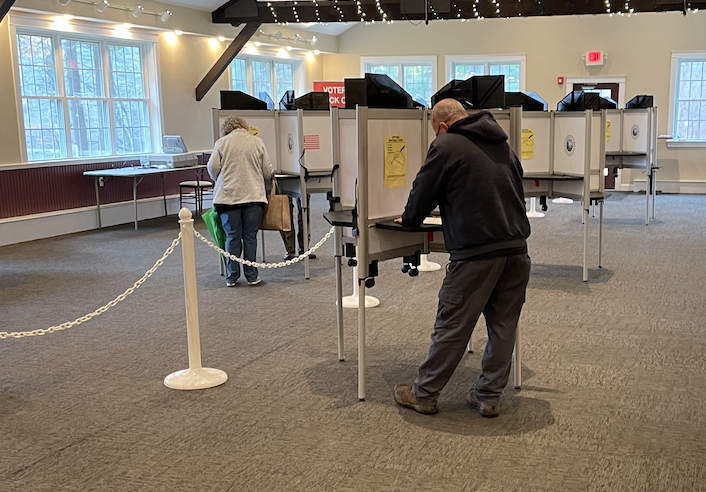
Middleboro voters will see two contested races in the upcoming primary election on Tuesday, Sept. 3.
Two candidates will compete in the Democratic primary for the 3rd Bristol and Plymouth Senate Seat. The seat is currently held by long-time Senator Marc Pacheco, who decided in February not to run for re-election.
Meanwhile, Representative Susan Williams Gifford will face a challenger in the Republican primary for the 2nd Plymouth seat in the House of Representatives.
Senate. Sen. Marc Pacheco served four years in the House of Representatives and 32 in the Senate, which has earned him the title of the Massachusetts Senate’s longest continuously serving member.
He said he reevaluates every year whether he wants to run again, and felt that with this being a national election year, it was the right time to make a change.
As the long-time senator takes his exit, a hotly contested race to replace him has begun.
Joe Pacheco, of no relation to Marc Pacheco, and Barry Sanders are both seeking the Democratic nomination for the race. Kelly Dooner is running on the Republican line, and Jim DuPont is running as an Independent.
Joe Pacheco has experience in multiple levels of government. He served as a Raynham Select Board member for 17 years, spent five years working in the state legislature, including one working for Senator Marc Pacheco and five years working in the state executive branch.
As a result of his legislative experience, he said, “on day one, I can be filing legislation and advocating for the interests of the district.”
Sanders, who describes himself as “a dad, social worker and Taunton City councilor,” said he got in the race to stand for transparency and accountability in state government and to put his constituents over politics.
He points to his 35 years of experience as a social worker as a key part of what will make him an effective senator.
While Senator Marc Pacheco and Joe Pacheco are not related, the former has endorsed the latter as his replacement.
House of Representatives. Representative Susan Williams Gifford, the incumbent in the 2nd Plymouth District, will face a Republican challenger, John Gaskey, in the race to retain her seat. No Democratic or Independent candidates have entered the race.
Gifford was elected to the House in 2002.
“People want a representative who will spend tax dollars wisely and make sure government lives within its means just like you or I have to,” said Gifford.
“Over the years, I have made one promise to the people of the second Plymouth district: I will represent you to the best of my ability.”
Gaskey is a 23-year veteran of the Coast Guard who has worked since his retirement in the medical field.
“I’ve been very upset with a lot of the legislation that has come out in the last cycle,” said Gaskey, explaining his decision to run. Specifically, he opposes the state’s latest gun control bill and the funding of shelter for “illegal” immigrants ahead of veterans and the Commonwealth’s citizens.
A virtual forum to meet the candidates in the Senate race will be held on Thursday, Aug. 29 with Joe Pacheco, Sanders, Dooner and DuPont all participating.
It will take place over zoom at 8:30 a.m. Visit cranberrycountry.org/events to register.
First Bristol and Plymouth district Senator Michael Rodrigues (D), who represents Lakeville, Freetown, Rochester, Somerset, Swansea, Westport and Fall River is running unopposed in the 2024 state primary. Rodrigues has held a senate seat since 2010 and serves as the Chair of the Senate Committee on Ways and Means.
Incumbent Norman Orrall (R) is running opposed to retain his seat as the 12th Bristol district representative, which includes Middleboro and Lakeville. Orrall has occupied the seat since 2018. A lifelong resident of Lakeville, Orrall previously served as Lakeville’s town moderator and member of the Finance Committee before being elected into the House of Representatives.
Early voter registration deadline for both Middleboro and Lakeville voters is Saturday, Aug. 24.
Lakeville early voting will take place at the Lakeville Public Library, 4 Precinct St, Lakeville. Dates and times are as follows:
Saturday, Aug. 24 9 a.m. to 3 p.m.
Sunday, Aug. 25 No Early Voting
Monday, Aug. 26 8 a.m. to 4:30 p.m.
Tuesday, Aug. 27 8 a.m. to 4:30 p.m.
Wednesday, Aug. 28 8 a.m. to 4:30 p.m.
Thursday, Aug. 29 8 a.m. to 4:30 p.m.
Friday, Aug. 30 8 a.m. to 12 p.m. (last day)
Middleboro early voting will take place at the Middleboro Town Hall, 10 Nickerson Ave. Dates and times are as follows:
Saturday, August 24 9:00 AM - 3:00 PM
Monday, August 26 8:00 AM - 6:00 PM
Tuesday, August 27 8:00 AM - 5:00 PM
Wednesday, August 28 8:00 AM - 5:00 PM
Thursday, August 29 8:00 AM - 5:00 PM
Friday, August 30 8:00 AM - 12:00 PM
Election day voting locations for Middleboro and Lakeville are as follows. Polls will be open from 8 a.m. to 7 p.m.
Middleboro. Precinct 1 Oak Point Club House, 202 Oak Point Drive. Precincts 2, 4, 6 Middleboro High School, 71 East Grove Street. Precinct 3 South Middleboro Fire Station, 566 Wareham Street. Precinct 5, 5A Council on Aging, 558 Plymouth Street. Precinct 7, 7A John T. Nichols, Jr. Middle School, 112 Tiger Drive.
Lakeville: Precincts 1, 2 and 3 at Ted Williams Camp, Loon Pond Lodge, 28 Precinct Street, Lakeville, MA 02347
NEMASKET NEWS
Middleboro lobbies for new skate park







MIDDLEBORO — As evidenced by the vegetation-filled cracks in its surface, the portions of collapsed fencing and its rusted ramps, Middleboro’s skate park is due for an upgrade – and the town is well aware.
Middleboro has applied for the Commonwealth of Massachusetts Parkland Acquisition and Renovation for Communities grant to renovate the skate park located next to the recently refurbished Peirce Playground.
The grant, which the town applied for in July, would fund a two-year project to design and construct a new skate park at its existing location, according to Grant Writer Stephanie Hall.
Since 2020, a group of residents whose parents were involved in the development of the existing skatepark, has been pushing to renovate the skatepark, Hall said.
The skatepark was built on old tennis courts over 20 years ago with components borrowed from another town facility and hasn’t been renovated since, said Hall.
The proposal for the new facility features a fully-integrated design with concrete components that would mirror what other towns in the region have constructed in recent years.
This design would make the park accessible not only to skateboarders but also skaters or bikers, Hall said.
Thirteen-year-old Sam America, who has come to the skatepark since she was four years old, would like to have a not-so-bumpy surface to cruise around with her scooter on.
Her other wishes for the project are safer jumps and the installation of a no-smoking sign, she said.
Safety is a top priority for Sam’s father, Donald McLellan, who described the conditions of the current facility as “very dangerous.”
The number of kids “flying through” the park on electric bikes makes it even more unsafe, he said. “I’ve almost seen multiple accidents and many kids get hurt.”
McLellan recommended the new park have one-way lanes to avoid collisions.
Kason Curry, who frequents the skate park, remembered when he almost went home with a chipped tooth after the wheel of his scooter got stuck in a crack and he ended up face down on the ground.
Fixing the cracks, new ramps and a bigger facility were his recommendations for the upgrade.
The grant would provide $495,000 in funding towards the project, but the renovation would cost an estimated $750,000 in total, according to Hall.
The hope is to cover the remaining $255,000 through additional grants as the project is not within this year’s budget, said Town Manager Jay McGrail.
The town will likely find out whether it has been approved for the grant by the fall, said Hall, who noted “it’s a very competitive process.”
If the town’s application is denied, “we’ll try and get creative with funding options,” said McGrail.
“We’re really excited about the project and the town is invested in trying to see it through,” he said.
His goal is to make the recreational complex that includes the skate park and updated playground “a destination for all ages and residents of the town,” he said.
McLellan is also an advocate for a facility accessible to all ages. “If they had a skate park with a little kids section and a big kids section, I think that would be great.”
Tax financing agreement on $33 million project may go to voters
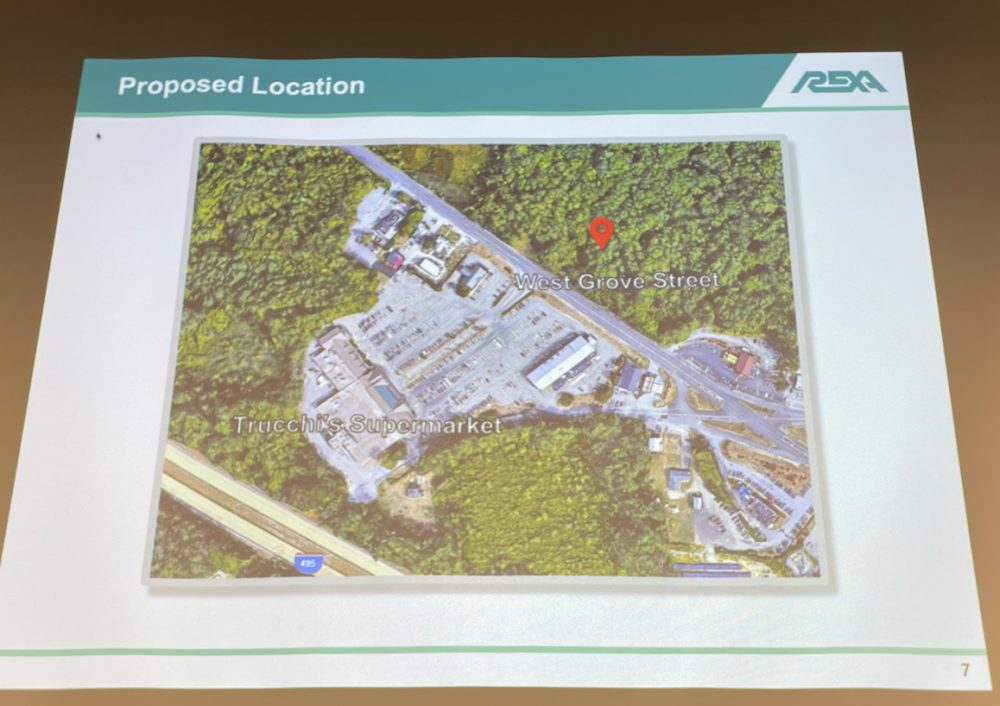
MIDDLEBORO — Voters at the Special Fall Town Meeting on Oct. 7 will likely be asked to approve a tax agreement with a manufacturing company looking to relocate to Middleboro and construct a $33 million facility on West Grove Street.
Representatives from Rexa, a manufacturer of electrohydraulic actuators now based in West Bridgewater, appeared before the select board Monday, Aug. 5 to discuss their plans for the site. The company has clients throughout the country and internationally, Director of Finance Kenneth Garron said. Electrohydraulic actuators are a type of hydraulic system that includes their own pumps.
Company officials also discussed their request for a TIF, which stands for Tax Increment Financing, that would provide a discount on future taxes for a period from five to 20 years.
The details of the agreement have not yet been finalized, but Town Manager James McGrail said after the meeting that the town is “ninety percent there’’ in making a determination on how much tax in incentives to offer. The amount can range from 1 to 100 percent, according to state regulations.
The company hopes to build an estimated 110,000 square foot building for corporate headquarters and manufacturing operations. The project cost is estimated at $33 million, including $7 million for land purchase, $20 million for hard and soft construction costs and $6 million for personal property costs.
Due to increased customer demand, the company needed to increase its real estate footprint, according to material presented by Rexa officials.
“This is a big project for us,’’ Garron said. “We’re looking at how to make the opportunity viable for us.’’
The company plans to create 25 new, permanent full-time jobs at the new location, in addition to the 100 full-time positions that will be retained. The company plans to give priority to qualified Middleboro residents for new jobs, Garron said.
Select Board Member Thomas White said he supported the preference to town residents and would make sure the company adhered to that commitment.
Rexa officials estimated that the company and its employees would spend about $1 million in town on various providers, including restaurants and catering, retail establishments, hotels, recreation and corporate and industrial services.
Garron said the company has a track record of supporting community non-profit organizations.
In response to a resident’s question, Garron said the truck traffic generated by the business would be “minimal,’’ which he estimated at about five to ten trucks a day, because the facility is used for manufacturing and is not a distribution site.
Select Board Member Brian Giovanoni described the project as “smart growth,’’ noting that, unlike with residential developments, a manufacturing facility would not add students to the town’s school system, which can be costly for taxpayers.
Select Board Chair Mark Germain said he planned to support the project.
Planning board ‘unenthusiastically’ proposes zoning to comply with MBTA mandate
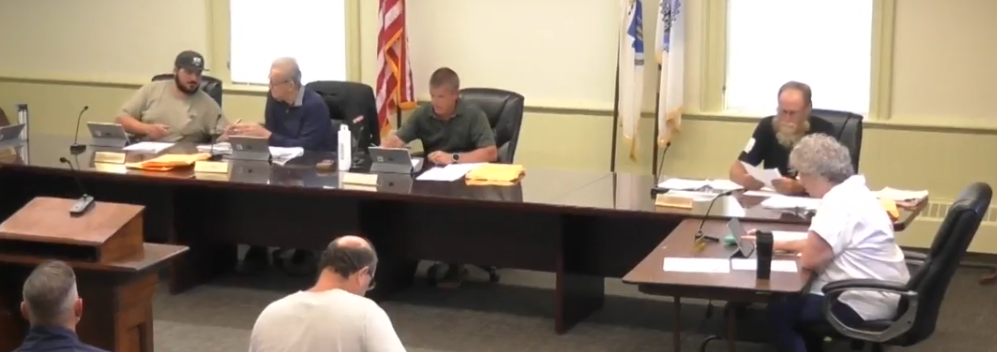
MIDDLEBORO – Planning board chair Allin Frawley supported a new zoning overlay that would comply with Massachusetts Bay Transit Authority multi-family housing guidelines “as unenthusiastically” as he possibly could in a Tuesday, Aug. 6 meeting of the Middleboro Planning Board.
Frawley, along with other members of the Planning Board and Director of Planning and Community Development Leeann Bradley, voiced their strong opposition to the MBTA housing guidelines while also presenting a plan to comply with the mandate.
The state has mandated that towns designated as “MBTA communities,” like Middleboro, should have at least one zoning district that allows multi-family housing as a right, which gives the town little say about potential requirements.
The mandate requires housing developments consisting of at least 15 units per acre to be allowed within a half mile of the MBTA station at 161 South Main St.
According to Bradley, the town is “creating an overlay to comply with the mandate that will be zoned for 1,471 units of multi-family [and] family-friendly [housing].”
The overlay will include parcels that have existing multi-family complexes along Route 28 as well as the town’s already existing 40R housing districts.
Chapter 40R districts are special zoning areas that allow for the construction of high-density housing while giving town officials more say in how it’s done.
Bradley explained that this type of zoning overlay is what other MBTA Communities are calling “paper compliance.”
“It’s already developed land, it’s already multi-family” she said.
Bradley added that the town “wouldn’t be changing our zoning if we weren’t mandated to do so.”
Bradley said she has “the fear” that if the town complies with this state mandate, other mandates could be coming down the pipeline.
“As a premise, I don’t like having to change our zoning because the state is telling us to,” said Bradley. “But if we don’t [comply] we lose funding to three major types of grants … and 13 other discretionary grants.”
One example of a discretionary grant, said Bradley, is the state’s Municipal Vulnerability Preparedness Program grant. This year, the town received $170,000 from that grant to help with the design of downtown Middleboro’s School Street parking lot, she said.
“We’ll be losing a lot of money if we don’t comply with the mandate,” she said. “It’s not my favorite thing.”
“I’m absolutely opposed to the mandate,” said Frawley.
Bradley also said she worries that MBTA multi-family housing guidelines – which are based on a percentage of a town’s population – may change over time as Middleboro’s population naturally increases.
“It seems like in maybe 20 years, 30 years, the whole town [could] be zoned as by-right multi-family,” she said.
“This is all based on a train station nobody asked us about,” added Frawley.
According to Bradley, the town is already “doing a great job with housing” with affordable housing levels “far above” most towns.
This new proposed zoning overlay will be put in front of voters at Middleboro’s next Town Meeting.
If the zoning overlay does not pass through Town Meeting, then Middleboro will be non-compliant with the state mandate, explained Bradley.
“We have to bring it back to Town Meeting … until it passes,” she said. “We’re not responsible for how individuals vote at Town Meeting.”
The Planning Board will hold a public hearing on Tuesday, Sept. 17, said Bradley. “I’d like to do some more outreach to try and spark some interest with the public.”