
Sunday, November 8, 2020

CC News Letter 07 Nov - A Troubling Discovery in the Arctic


Dear Friend,


The satellite call referenced a sleeping giant that has enough carbon firepower to adversely impact the world’s climate system. The expedition discovered methane (CH4) that had been securely frozen in shallow subsea permafrost waters forever, and ever, and ever, now “stirring.” Colloquially, “The Monster of the North awakened.”

Kindly support honest journalism to survive. https://countercurrents.org/subscription/

If you think the contents of this news letter are critical for the dignified living and survival of humanity and other species on earth, please forward it to your friends and spread the word. It's time for humanity to come together as one family! You can subscribe to our news letter here http://www.countercurrents.org/news-letter/.

In Solidarity

Binu Mathew
Editor
Countercurrents.org


A Troubling Discovery in the Arctic
by Robert Hunziker


The satellite call referenced
a sleeping giant that has enough carbon firepower to adversely impact the world’s climate system. The expedition discovered methane (CH4) that had been securely frozen in shallow subsea permafrost waters forever, and ever, and ever, now “stirring.” Colloquially, “The Monster of the North awakened.”

A notable satellite-telephonic call to colleagues in late October from Swedish scientist Örjan Gustafsson of Stockholm University briefly described a haunting discovery. On board the research ship R/V Akademik Keldysh, a 6,240-ton Russian scientific research vessel equipped with 17 on-board laboratories and a library, far off the coast of Russia, Dr. Gustafsson reported: “This East Siberian slope methane hydrate system has been perturbed and the process will be ongoing.” (Source: Sleeping Giant Arctic Methane Deposits Starting to Release, Scientists Find, The Guardian, Oct. 27, 2020)

That satellite call referenced a sleeping giant that has enough carbon firepower to adversely impact the world’s climate system. The expedition discovered methane (CH4) that had been securely frozen in shallow subsea permafrost waters forever, and ever, and ever, now “stirring.” Colloquially, “The Monster of the North awakened.” (Although, in fairness to accuracy, the ESAS has been perturbed and leaking/seeping into the atmosphere for some time… but, now it’s much worse than ever before, and terrifyingly, it’s more noticeable to passersby, like expeditions of discerning scientists).

After all, there are scientists who believe the East Siberian Arctic Shelf and neighboring Russian coastline continental shelf seas contain enough methane in frozen hydrates to change human history forever, unfortunately, not for the betterment of civilization.

The East Siberian Arctic Shelf, as well as other Arctic seas off Russia’s northern coastline, has been the subject of clashing opinions within the scientific community.

Over the years, mainstream science has “talked down the risks” of a massive methane breakout in Arctic waters which could start a vicious cycle of runaway global warming that would be devastating on several fronts for civilized societies, and uncivilized too.

Three years ago, the U.S. Geological Survey labeled Arctic hydrates as one of the world’s four most serious causation events of abrupt climate change. Yet, according to USGS geophysicist Carolyn Ruppel, who oversees the USGS Gas Hydrates Project: “After so many years spent determining where gas hydrates are breaking down and measuring methane flux at the sea-air interface, we suggest that conclusive evidence for release of hydrate-related methane to the atmosphere is lacking.” (Gas Hydrate Breakdown Unlikely to Cause Massive Greenhouse Gas Release, US Geological Survey, Feb. 9, 2017)

According to USGS calculations, sediments in the Arctic contain a huge quantity of frozen methane and other gases – known as hydrates. Along those lines, it’s important to note that methane (CH4) has a warming effect 80 times stronger than carbon dioxide over its initial 20 years. Meaning CH4 has a sharper, quicker impact on global warming than does CO2.

That USGS position (“no conclusive evidence”) about the risk of methane release is now three years old. Thus, this new discovery prompts a logical question: Does the current expedition provide conclusive evidence of a change? Meaning, what’s the likelihood of an abrupt shift in the planet’s climate system as a result of the new discovery?

Assuming a major CH4 release, or big burp, is it possible it could lead to planet-wide upheaval?  Accordingly, the expedition team reported: “At this moment, there is unlikely to be any major impact on global warming, but the point is that this process has now been triggered.” (Gustafsson)

Therein lies the problem: “It has been triggered.”

Along those lines, a Latin proverb suffices: “Forewarned is forearmed.”  Clearly, the results of the Akademik Keldysh expedition qualify as “forewarned,” no doubt about that.

All of which prompts a significant question: How will countries throughout the world respond to this newly discovered risk to climate systems with its potential to damage agriculture and coastal cities beyond recognition?

In that regard, and based upon the nations of the world failing to adhere to voluntary commitments to the Paris 2015 climate accord to reduce carbon emissions, which in fact increase (Oops) year-over- year, the answer is: “It’s not encouraging, not at all.” Indeed, it is questionable that any nation/state anywhere will actually “forearm” as a result of this new report signaling: “The East Siberian slope methane hydrate system has been perturbed.”

Furthermore, what does “forearmed” even look like? Realistically, how does a country prepare for an all-out assault on agriculture and coastlines by an out of whack runaway climate system? Good luck with that.

Meanwhile, according to the initial report from the 60-member team onboard the Akademik Keldysh expedition, the findings are only “preliminary.” The true scale of the discovery will be confirmed when full complements of data are analyzed and published peer-reviewed in a scientific journal.

Significantly, and tellingly, the discovery includes six monitoring points over a slope area of 150km (93 mi.) by 10km (6 mi.) with “clouds of bubbles released from sediment.” It should be noted that “clouds of bubbles” obviously implies one helluva lot of methane erupting from the seafloor. In point of fact, some measurements registered “methane concentrations 400 times higher than should be seen if the sea and the atmosphere were in equilibrium.” (Gustafsson)

By way of comparison to planetary distances, “400xs higher than equilibrium” is a trip to Pluto.

Robert Hunziker, MA, economic history DePaul University, awarded membership in Pi Gamma Mu International Academic Honor Society in Social Sciences is a freelance writer and environmental journalist who has over 200 articles published, including several translated into foreign languages, appearing in over 50 journals, magazines, and sites worldwide. He has been interviewed on numerous FM radio programs, as well as television.


SIGN UP FOR COUNTERCURRENTS DAILY NEWSLETTER


Fur Trades and Pandemics: Coronavirus and Denmark’s Great Mink Massacre
by Dr Binoy Kampmark


“The worst case scenario is a new pandemic, starting all over again out of Denmark,” came the words of a grave Kåre Mølbak, director of the Danish health authorities, the State Serum Institute.  According to the Institute, COVID-19 infections were registered on 216 mink farms on November 6.  Not only had such infections been registered; new variants, five different clusters in all, were also found.  Mink variants were also detected in 214 people among 5,102 samples, of
whom 200 live in the North Jutland Region.

“The worst case scenario is a new pandemic, starting all over again out of Denmark,” came the words of a grave Kåre Mølbak, director of the Danish health authorities, the State Serum Institute.  According to the Institute, COVID-19 infections were registered on 216 mink farms on November 6.  Not only had such infections been registered; new variants, five different clusters in all, were also found.  Mink variants were also detected in 214 people among 5,102 samples, of whom 200 live in the North Jutland Region.

A noticeable tremor of fear passed through the public health community.  It was already known that mink are susceptible to SARS-CoV-2.  On April 23 and 25, outbreaks linked with mink farms were reported at farms in the Netherlands holding 12,000 and 7,500 animals respectively.  The mink had been infected by a farm worker with COVID-19 and, like humans, proved to be either asymptomatic, or evidently ill with symptoms such as intestinal pneumonia.  In time 12 of the 130 Dutch mink farms were struck.  What interested researchers was the level of virulence in the transmission of the virus through the population.  “Although SARS-CoV-2 is undergoing plenty of mutations as it spreads through mink,” writes Martin Enserik for Science, “its virulence shows no signs of increasing.”

The Danish discoveries, however, fuelled another concern: the possibility that the virus from cluster 5, as identified by the Institute, was more resistant to antibodies from humans infected with SARS-CoV-2 when compared to other non-mutated SARS-CoV-2 viruses.  Potential vaccines, in other words, could be threatened with obsolescence.  “This hits all the scary buttons,” claimed evolutionary biologist Carl Bergstrom.

In her November 6 briefing, Tyra Grove Krause, head of the department of infectious disease epidemiology and prevention at the SSI, did not wish to strike the doomsday register.  But she was none the less abundantly cautious.  “We definitely need to do more studies on this specific variant and its possible effect on future vaccines, but it takes a long time to do these kinds of studies.”  But she was in no mood to wait to “get all the evidence” given the possible risks.  “You need to act in time to stop transmission.”

The World Health Organization is attempting to provide some reassurance, and while this is welcome, that body’s public image has been often unjustly frayed by its initial approach to the novel coronavirus.  In a statement to National Geographic, the WHO admitted concern “when a virus has gone from humans to animals, and back to humans.  Each time this happens, it can change more.”  But Soumya Swaminathan, the WHO’s chief scientist, refrained from drawing any conclusions from the current crop of revelations from Denmark.  “We need to wait and see what the implications are but I don’t think we should come to any conclusions about whether this particular mutation is going to impact vaccine efficiency.”

Francois Balloux, director of University College London’s Genetics Institute, is also making his own infectious disease wager, thrilled by this “fantastically interesting” scenario.  “I don’t believe that a strain which gets adapted to mink poses a higher risk to humans.”  This comes with qualification, of course.  “We can never rule out anything, but in principle it shouldn’t. It should definitely not increase transmission.  I don’t see any good reason why it should make the virus more severe.”

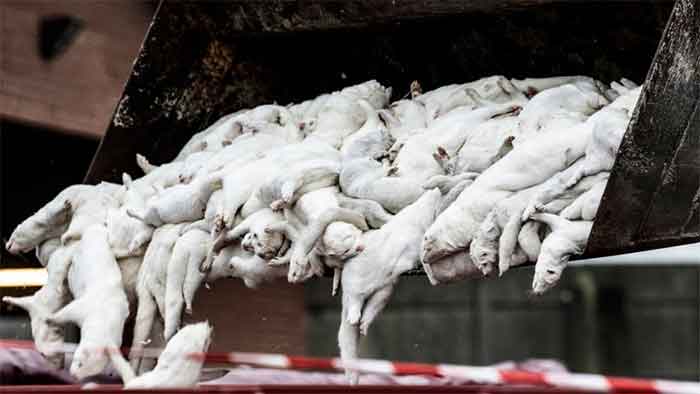
In Denmark, no scientific chances are being taken on either the issue of virulence or the matter of vaccine effectiveness. The entire mink herd of 17 million is being culled.  The Danish Prime Minister, Mette Frederiksen, attempted to see the problems of her country and its mink industry in humanitarian terms.  “We have a great responsibility toward our population,” she explained on Wednesday, “but with the mutation that has now been found we have an even greater responsibility for the rest of the world as well.”  Residents in seven areas in North Jutland have also been told “to stay in their area to prevent the spread of infection …. We are asking you in North Jutland to do something completely extraordinary.  The eyes of the world are upon us.”

Despite the immediate and effective destruction of an industry, Mogens Jensen, Minister for Food and Fisheries, stated that this would be “the right thing to do in a situation where the vaccine, which is currently the light at the end of a very dark tunnel, is in danger.”  Magnus Heunicke, the Minister for Health, also reiterated the point that “mink farming during the ongoing COVID-19 epidemic entails a possible risk to the public health – and for possibilities to combat COVID-19 with vaccines.”

The inevitably callous and brutal measure means that both the animals concerned and an industry, are being confined to history.  Animal welfare advocates see mixed promise in the measure: cruelty in the culling, but hope in the eradication of a trade.  “The right decision,” according to Animal Protection Denmark, “would be to end mink farming entirely and help farmers into [another] occupation that does not jeopardize public health and animal welfare.”

Joanna Swabe, the senior director of public affairs for Humane Society International/Europe, did express some pleasure at what was otherwise a grim end to Denmark’s mink population.  As one of the largest fur producers in the global market, the “total shutdown of all Danish mink fur farms amid spiralling COVID-19 infections is a significant development.”  She even went so far as to congratulate the Danish prime minister for the “decision to take such an essential and science-led step to protect Danish citizens from the deadly coronavirus.”

Fur lobbyists and traders, while accepting of the health risks, have had reservations at the absolute nature of the Danish response.  Magnus Ljung, CEO of Saga Furs, noted how control of COVID-19 infections in mink populations was achieved in the Netherlands and Spain without a need to resort to mass culling.  Mick Madsen of the Brussels-based industry group Fur Europe accepted that “public safety must come first” but urged Danish authorities to “release their research for scrutiny amongst international scientists.”

In the United States, mass culling is yet to take off.  The US Centers for Disease Control and Prevention remains cool to any drastic measures, despite cases of contracted coronavirus at mink farms in Utah, Wisconsin and Michigan.  Transmission to humans had yet to be documented, though spokesperson Jasmine Reed noted “ongoing” investigations.

Some scrutiny from international sources regarding Denmark’s decision has been forthcoming, though it is more in the order of modest scepticism.  Marion Koopmans of the Erasmus Medical Centre in Rotterdam, recalling the research into mink outbreaks in Dutch mink populations, considered the claim on a resistant mutation a bold one.  “That is a very big statement.  A single mutation, I would not expect to have that dramatic an effect.”  Emma Hodcroft, a molecular epidemiologist based at the Institute of Social and Preventive Medicine in Bern, Switzerland, was also doubtful.  “It’s almost never the case that it’s such a simple story of one mutation and all your vaccines stop working.”

After the great Danish mink massacre, it may well transpire that Prime Minister Frederiksen’s decision might have been less “science-led” as was presupposed.  This does not dishearten Hodcroft, who warmly embraces the Danish approach to “take a step too far rather than a step too little”.  Pity about the mink, then.

Dr. Binoy Kampmark was a Commonwealth Scholar at Selwyn College, Cambridge.  He lectures at RMIT University, Melbourne.  Email: bkampmark@gmail.com

SIGN UP FOR COUNTERCURRENTS DAILY NEWSLETTER


The task of ‘Sleepy Joe’ is to put liberal America right back to sleep
by Jonathan Cook


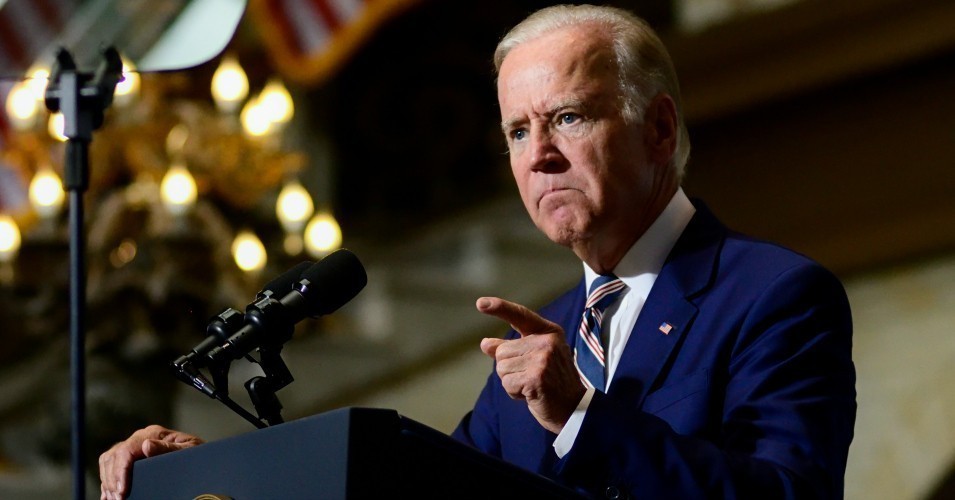
If Biden becomes president, his victory will be a temporary win for torpor, for complacency. But a new Trump will emerge soon enough to potentise – and misdirect – the fury steadily building beneath the surface. If we let it, the pendulum will swing back and forth, between ineffectual lethargy and ineffectual rage, until it is too late. Unless we actively fight back, the stagnation will suffocate us all.

At birth, all of us begin a journey that offers opportunities either to grow – not just physically, but mentally, emotionally and spiritually – or to stagnate. The journey we undertake lasts a lifetime, but there are dozens of moments each day when we have a choice to make tiny incremental gains in experience, wisdom and compassion or to calcify through inertia, complacency and selfishness.

No one can be engaged and receptive all the time. But it is important to recognise these small opportunities for growth when they present themselves, even if at any particular moment we may decide to avoid grasping them.

When we shut ourselves into the car on the commute to work, do we use it as a moment to be alone with our thoughts or to silence them with the radio or music? When we sit with friends, do we choose to be fully present with them or scroll through the news feed on our phones? When we return from a difficult day at work, do we talk the issues through with family or reach for a glass of wine, or maybe bingewatch something on TV?

Everyone needs downtime, but if every opportunity for reflection becomes downtime then we are stagnating, not growing. We are moving away from life, from being human.

Dried-out husk

This week liberal Americans reached for that glass of wine and voted Joe Biden. Others did so much more reluctantly, spurred on by the fear of giving his opponent another four years.

Biden isn’t over the finishing line quite yet, and there are likely to be recounts, court challenges and possibly violence over the result, but he seems all but certain to be crowned the next US president. Not that that should provoke any kind of celebration. The rest of the world’s population, future generations, the planet itself – none of us had a vote – were always going to be the losers whichever candidate won.

The incumbent, Donald Trump, miscalculated, it seems, if he thought dismissing his opponent as “Sleepy Joe” would be enough to damage Biden’s electoral fortunes. True, Trump was referring to the fact that Biden is a dried-out husk of the machine politician he once was. But after four years of Trump and in the midst of a pandemic, the idea of sleeping through the next presidential term probably sounded pretty appealing to liberals. Most of them have spent their whole political lives asleep.

Four years ago, however, they were forcibly roused from their languor to protest against Donald Trump. They grew enraged by the symptom of their corrupt political system rather than by the corrupt system itself. For them, “Sleepy Joe” was just what the doctor ordered.

But it won’t be Biden doing the sleeping. It will be the liberals who cheerlead him. Biden – or perhaps Kamala Harris – will be busy making sure his corporate donors get exactly what they paid for, whatever the cost to the rest of us.


Anger and blame

In this analogy, Trump is not the opposite of Biden, of course. He represents stagnation too, if of a different kind.

Trump channels Americans’ frustration and anger at a political and economic system they rightly see as failing them. He articulates who should be falsely blamed for their woes: be it immigrants, minorities, socialists, or the New World Order. He offers justified, if misdirected, rage in contrast to Biden’s dangerous complacency.

But however awful Trump may be, at least some of those voting for him are grappling, if mostly unconsciously, with the tension between stagnation and growth – and not of the economic kind. Unlike most liberals, who dismiss this simplistically as “populism”, some of Trump’s supporters do at least seem to recognise that the tension exists. They simply haven’t been offered a constructive alternative to anger and blame.

Ritually disappointed

Unlike the liberals and the Trumpists, many in the US have come to understand that their political system offers nothing but stultifying stagnation for ordinary Americans by design, even if it comes in two, smartly attired flavours.

They see that the Trump camp rages ineffectually against the corporate elite, deluded into believing that a member of that very same elite will serve as their saviour. And they see that the Biden camp represents an ineffectual rainbow coalition of competing social identities, deluded into believing that those divisions will make them stronger, not weaker, in the fight for economic justice. Both of these camps appear resigned to being serially – maybe ritually – disappointed.

Failure does not inspire these camps to seek change, it makes them cling all the more desperately to their failed strategies, to attach themselves even more frantically and fervently to their perceived tribe.

That is why this US election – at a moment when the need for real, systemic change is more urgent, more evident than ever before – produced not just one but two of the worst presidential candidates of all time. We are looking at exactly what happens when a whole society not only stops growing but begins to putrefy.

Enervating divisions

Not everyone in the US is so addicted to these patterns of self-delusion and self-harm.

Large swaths of the population don’t bother to vote out of hard-borne experience. The system is so rigged against them that they don’t think it matters much which corporate party is in power. The outcome will be the same for them either way.

Others vote third party, or consciously abstain in protest at big money’s vice-like grip on the two-party system. Others, appalled at the prospect of Trump – and before him the two Bushes, and before that Ronald Reagan – were forced once again to vote for the Democratic ticket with a heavy heart. They know all too well who Biden is (a creature of his corporate donors) and what he stands for (whatever his corporate donors want). But he is slightly less monstrous than his rival, and in the US system those are the meaningful electoral options.

And among Trump’s supporters too, there are many desperate for wholesale change. They voted for Trump because at least he paid lip service to change.

These groups – most likely a clear electoral majority – could redirect the US towards political, social, even spiritual growth, if they could find a way to come together. They suffer from their own enervating divisions.

How should they best use their numerical strength? Should they struggle to win the presidency, and if so should it be a third-party candidate or should they work within the existing party structures? What lesson should they draw from the Democratic leadership’s sabotaging – twice over – of Bernie Sanders, a candidate offering meaningful change? Is it time to adopt an entirely different strategy, rejecting traditional politics? And if so, can it be made to work when all the major institutions – from the politicians and courts, to the police, intelligence services and media – are firmly in the hands of the corporate enemy?

Terrible reckoning

There is no real way to sleep through life, or politics, and not wake up one day – usually when it is too late – realising catastrophic mistakes were made.

As individuals, we may face that terrible reckoning on our death-beds. Empires rarely go so quietly. They fall when it is time for their citizens to learn a painful lesson about hubris. Their technological innovations come back to haunt them, as ancient Rome’s lead water-pipes supposedly once did. Or they over-extend with ambitious wars that drain the coffers of gold, as warrior-kings have discovered to their cost through the ages. Or, when the guardians of empire least expect it, “barbarians” – the victims of their crimes – storm the city gates.

The globe-spanning US empire faces the rapid emergence of all these threats on a planetary scale. Its endless wars against phantom enemies have left the US burdened with astounding debt. Its technologies, from nuclear weapons to AI, mean there can be no possible escape from a major miscalculation. And the US empire’s insatiable greed and determination to colonise every last inch of the planet, if only with our waste products, is gradually killing the life-systems we depend on.

If Biden becomes president, his victory will be a temporary win for torpor, for complacency. But a new Trump will emerge soon enough to potentise – and misdirect – the fury steadily building beneath the surface. If we let it, the pendulum will swing back and forth, between ineffectual lethargy and ineffectual rage, until it is too late. Unless we actively fight back, the stagnation will suffocate us all.

This essay first appeared on Jonathan Cook’s blog: https://www.jonathan-cook.net/blog/

Jonathan Cook won the Martha Gellhorn Special Prize for Journalism. His books include “Israel and the Clash of Civilisations: Iraq, Iran and the Plan to Remake the Middle East” (Pluto Press) and “Disappearing Palestine: Israel’s Experiments in Human Despair” (Zed Books). His website is www.jonathan-cook.net.

SIGN UP FOR COUNTERCURRENTS DAILY NEWSLETTER


US Elections 2020 was essentially a Referendum on Trumpism & he lost
by Feroze Mithiborwala


This was essentially a Referendum on Trumpism & he lost, but yet with record voting figures, both for Trump and the anti-Trump vote.

The reality is that the Obama-Biden regime started more wars that even Bush Jr. Obama initiated wars in Libya, Syria & Yemen & carried on with the Occupation of Iraq & Afghanistan. Obama has dropped more bombs & undertaken more drone attacks than Bush Jr.

He also targeted both Venezuela & Bolivia with sanctions & carried on with the Corporate stranglehold over Haiti.

Obama though broke new ground on both Cuba & Iran, both of which Trump reversed. Here we could witness Biden going back to the Obama era, as will he on both healthcare & climate change.

On Palestine, Trump has created a disaster by recognising & gifting (which is not his to gift) Jerusalem to Netanyahu, which was again followed by gifting all of the West Bank, as well as the Syrian Golan Heights. The fact is that as always, the Judeo-Zionist lobby fund both the sides and here Sheldon Adelson emerged as his largest funder. That along with the Jared Kushner-Netanyahu-Salman triad, have created an alliance of the Judeo-Christian-Islamic extreme rightwing, supposedly termed as the Abrahaham accord. A travesty of justice, of every moral value!

Do note that Joe Biden himself is a self-declared and an avowed Christian Zionist & a proud one at that. Kamala Harris too is beholden to the Zionist lobby, so no leeway there either.

Here as is well known, both the Democratic & the Republican establishment are aligned to the US Deep State in their foreign interventionist policies. This was in fact challenged by Trump, who was openly attacking his own FBI, CIA to the Pentagon.

It was Pompeo, the US Sec. of State, who represented the War lobby, the US Deep State man in the Trump junta.

Trump really did improve the US economy and bring back manufacturing & jobs. If not for Covid19, Trump was a sure winner in 2020.

Trump miserably fell short on the Racial question and the fact that he never categorically condemned White Supremacism led to his downfall. Trump was highly insensitive during the entire Black Lives Matter movement and that was the time for a President to reach out and heal, but he decided to play the tough-guy-law-&-order-card, instead of addressing the systemic violence & discrimination that African Americans have to face on a daily basis.

Though do note that it was the Latino vote that led to his victory in Florida (Cuban & Venezuelan immigrants), whilst the same Latino vote led to his defeat in Arizona (Mexican, Central & South American).

The African American vote share actually grew for Trump, as the Democrats are known to have paid lip service to the African American community, taking their vote for granted.

Undoubtedly Trumpism strengthened the White Christian majoritarian tendencies & polarised US society vertically.

The real backbone of the extraordinary hardwork done by grassroot Democratic activists came from African-American women & young activists who went door to door to ensure the high voting percentages.

The Kamala Harris factor, her African-Indian heritage also helped to enthuse & mobilise the black & brown voters.

Biden also managed to break into the white working class vote this time, especially in the states of Michigan, Wisconsin & Pennsylvania, all of which flipped Blue this time around.

Most remarkably, unlike Modi, for the last 4 years, the overwhelming sections of the US media carried on with their anti-Trump reportage and they were relentless. Trump addresses press conferences, deals with difficult questions, gets insulted as well – unlike Modi. Can’t imagine this in the India of our times.

This was essentially a Referendum on Trumpism & he lost, but yet with record voting figures, both for Trump and the anti-Trump vote.

Feroze Mithiborwala is a social activist


SIGN UP FOR COUNTERCURRENTS DAILY NEWSLETTER


Bolivarian Socialism and the anti-blockade law in Venezuela
by Yanis Iqbal


The law opens the door for privatisation in strategic economic sectors and grants the government the option to act with confidentiality and secrecy while the United States blockade and sanctions are in effect.


Ideology Behind Character Assassination
by Bhabani Shankar Nayak


The radical politics and progressive ideology need to conceptualise ‘character’ as commitment for fellow human beings, nature and animals. Such a conceptualisation and its praxis can fight and defeat the character assassination as a reactionary and ruling class strategy to uphold individual dignity and collective spirit of human essence.


Razak Kottakkal: A Walk Through The Memory Lane
by Joshy Joseph


Razak Kottakkal is identified with artistic photographs. Almost everyone ~ living or otherwise ~ connected with Malayalam literature insisted on accompanying their works with photographs taken by Razak. Writers grew old but they continued to use pictures taken in their youth. Their age was frozen by Razak forever.


RSN: Andy Borowitz | Trump Defends Lawsuits: "No One Knows More About Fraud Than Me"


Reader Supported News
08 November 20


Why News - Supported by the Readers Is So Vital

Imagine a world where the information you receive would not have to be acceptable to third party investors trying to sell you something.

You have already built that world.

It's called, Reader Supported News.

Being asked to donate is a pain, but nothing like the pain and suffering caused by disinformation.

We urge you to consider becoming a Reader Supporter.

Thank you all in advance,

Marc Ash
Founder, Reader Supported News

Sure, I'll make a donation!


Update My Monthly Donation


If you would prefer to send a check:
Reader Supported News
PO Box 2043
Citrus Hts, CA 95611


Reader Supported News
07 November 20

It's Live on the HomePage Now:
Reader Supported News


RIGHT NOW RSN IS BEING TREATED AS NONESSENTIAL - Tens of thousands of readers come here every day. But when it comes to sustaining the organization RSN is treated as nonessential. The money goes directly into political campaigns ignoring the need for uncompromised, independent reporting. Like every other organization RSN must have a budget. Correct this problem. / Marc Ash, Founder Reader Supported News

Sure, I'll make a donation!


Andy Borowitz | Trump Defends Lawsuits: "No One Knows More About Fraud Than Me"
Donald Trump. (photo: Scott Olson/Getty Images)
Andy Borowitz, The New Yorker
Borowitz writes: "Donald J. Trump offered a full-throated defense of his election-related lawsuits on Thursday, arguing, 'No one knows more about fraud than me.'"
READ MORE


President-elect Joe Biden. (photo: Jim Watson/Getty Images)


Biden Wins, but Now the Hard Part Begins
Ryan Grim and Akela Lacy, The Intercept
Excerpt: "With Pennsylvania, Wisconsin, and Michigan now squarely in Joe Biden's corner, the former vice president has secured the 270 Electoral College votes he needs to win the presidential election."
READ MORE


Vice-president-elect Kamala Harris. (photo: Mason Trinca/Getty)


Kamala Harris Becomes First Black Woman, South Asian Elected VP
Kathleen Ronayne, Associated Press
Ronayne writes: "Kamala Harris made history Saturday as the first Black woman elected as vice president of the United States, shattering barriers that have kept men - almost all of them white - entrenched at the highest levels of American politics for more than two centuries."
READ MORE


Alexandria Ocasio-Cortez. (photo: Getty Images)


What Democrats Should Learn From the Spate of Socialist Wins on Election Day
Mindy Isser, In These Times
Isser writes: "While many had hoped that Elec­tion Day would result in a sweep­ing rebuke of Trump and Trump­ism, nei­ther a pan­dem­ic nor an eco­nom­ic reces­sion were enough to deliv­er an over­whelm­ing rejec­tion."


It’s not enough to be anti-Trump. Socialists are showing you can win elections by standing for something.

And although it’s look­ing like­ly that Biden will eke out a vic­to­ry, the 2020 elec­tion was in many ways a bust for the Demo­c­ra­t­ic Par­ty, which lost seats in the House and most like­ly did not win a major­i­ty in the Senate.

But demo­c­ra­t­ic social­ism, pop­u­lar­ized by near-pres­i­den­tial nom­i­nee Bernie Sanders (I‑Vt.), had a much bet­ter night. The Demo­c­ra­t­ic Social­ists of Amer­i­ca (DSA), an orga­ni­za­tion that boasts near­ly 80,000 mem­bers nation­wide, endorsed 29 can­di­dates and 11 bal­lot ini­tia­tives, win­ning 20 and 8 respec­tive­ly. There are now demo­c­ra­t­ic social­ist cau­cus­es in 15 state­hous­es, includ­ing Mon­tana. (Dis­clo­sure: I am a nation­al­ly elect­ed leader of the orga­ni­za­tion; I sit on the Demo­c­ra­t­ic Social­ist Labor Commission.)

DSA’s vic­to­ries, both in the pri­maries and the gen­er­al elec­tion, have rolled in as pun­dits and poll­sters decry social­ism as polar­iz­ing and raise fears that social­ist can­di­dates will end up back­fir­ing and get­ting Repub­li­cans elect­ed. Sanders’ sup­posed lack of elec­tabil­i­ty was one of the most com­mon­ly used argu­ments against him in the pri­ma­ry. His pri­ma­ry oppo­nents and promi­nent writ­ers like Jonathan Chait claimed that the vast major­i­ty of Amer­i­cans wouldn’t vote for a social­ist, and that there was no way he could defeat Trump.

While there’s no real way to know for cer­tain if that’s true, it is clear that cen­trist Democ­rats aren’t nec­es­sar­i­ly shoo-ins them­selves. Demo­c­rat Jon Ossoff, who lost a con­gres­sion­al spe­cial elec­tion in 2017, looks like he will also lose this cycle’s Sen­ate race in Geor­gia. Demo­c­rat Sara Gideon, who raised $70 mil­lion to run against Repub­li­can Sen­a­tor Susan Collins in Maine, has con­ced­ed, and it looks like Demo­c­rat Cal Cun­ning­ham will also lose his run for Sen­ate in North Car­oli­na. Amy McGrath, who ran as a pro-Trump Demo­c­rat, raised near­ly $90 mil­lion and still lost to Repub­li­can Sen­a­tor Mitch McConnell. The list goes on and on. Even Joe Biden, who seems set to be our next pres­i­dent, often spoke more about beat­ing Trump than any poli­cies he would enact once in office.

Plen­ty of pro­gres­sive can­di­dates also lost, but most can­di­dates nation­al­ly endorsed by DSA sailed through. And while it’s true that many of them had tough pri­ma­ry bat­tles and less dif­fi­cult elec­tions on Tues­day, they still won as DSA mem­bers. All four mem­bers of “The Squad” — a pro­gres­sive bloc in Con­gress that includes Demo­c­ra­t­ic Reps. Rashi­da Tlaib (Mich.), Ilhan Omar (Minn.), Alexan­dria Oca­sio-Cortez (N.Y.) and Ayan­na Press­ley (Mass.) — were reelect­ed to the House. (Tlaib and Oca­sio-Cortez are DSA mem­bers and endorsed by the orga­ni­za­tion.) Pro­gres­sives also added two more DSA-endorsed mem­bers to their squad: Demo­c­ra­t­ic Rep.-elect Jamaal Bow­man in New York, and Demo­c­ra­t­ic Rep.-elect Cori Bush, the first ever Black Con­gress­woman in Missouri.

Although the cur­rent iter­a­tion of DSA has been around since the ear­ly 1980s, the orga­ni­za­tion only became polit­i­cal­ly rel­e­vant dur­ing Sanders’ first pres­i­den­tial cam­paign in 2015, and explod­ed when Trump was elect­ed. Five years is a very short peri­od of time to have helped elect City Coun­cil mem­bers, state sen­a­tors and rep­re­sen­ta­tives, and mem­bers of Con­gress all across the coun­try. Accord­ing to a 2018 Reuters sur­vey, 70% of Amer­i­cans sup­port a nation­al health care plan — due to Sanders’ pop­u­lar­iza­tion of the uni­ver­sal health­care pro­gram and to the orga­niz­ing and can­vass­ing DSA chap­ters, along with oth­er orga­ni­za­tions like Nation­al Nurs­es Unit­ed, have done around the legislation.

DSA-backed can­di­dates suc­ceed for a few main rea­sons: They cam­paign on actu­al poli­cies, have a vision of how to gov­ern, and don’t just depend on the fact that they’re not Repub­li­cans. These poli­cies include Medicare for All, a Green New Deal and a Jobs Guar­an­tee — pro­grams that would improve the qual­i­ty of life for work­ing peo­ple all over this coun­try. And because poli­cies they sup­port are so pop­u­lar and inspir­ing, DSA-backed can­di­dates attract ded­i­cat­ed can­vassers and orga­niz­ers, will­ing to spend nights and week­ends knock­ing doors and mak­ing calls to get them elected.

Now, thanks to DSA mem­bers across the coun­try, there is a social­ist in Austin City Coun­cil and in both the Rhode Island and Mon­tana State Hous­es. In Penn­syl­va­nia, there are three social­ists who are almost cer­tain­ly head­ed to the leg­is­la­ture in Har­ris­burg. Social­ists in Boul­der, Col­orado worked along­side the ACLU to win a bal­lot mea­sure that guar­an­tees no evic­tion with­out rep­re­sen­ta­tion, and DSA mem­bers part­nered with the labor unions AFSCME and SEIU to pass Preschool for All in Mult­nom­ah Coun­ty, Ore­gon. And in both Flori­da and Port­land, Maine, bal­lot ini­tia­tives for a $15 min­i­mum wage passed.

While it’s clear that most DSA vic­to­ries have been in big cities or more lib­er­al states thus far, it’s impor­tant that we don’t dis­count the incred­i­ble orga­niz­ing hap­pen­ing in the South and in rur­al areas. (Mar­qui­ta Brad­shaw ran a DSA-backed cam­paign for Sen­ate in Ten­nessee but lost; Kim Roney, endorsed by her DSA chap­ter, won a seat on the Asheville City Council.)

And while the Demo­c­ra­t­ic par­ty is loath to give DSA any encour­age­ment, DSA mem­ber Tlaib may have helped to secure Biden’s vic­to­ry in Michi­gan by help­ing to mas­sive­ly increase vot­er turnout from 2016. DSA’s ide­ol­o­gy, focused on a soci­ety that works for all of us instead of the wealthy few, is far more inspir­ing to young and work­ing peo­ple than some­one who is run­ning for office just because they’re not Trump. It might take the Demo­c­ra­t­ic Par­ty time to real­ize that (or per­haps it nev­er will), but to the aver­age per­son, polit­i­cal con­di­tions are chang­ing fast — and DSA is play­ing a crit­i­cal role in that transformation.

READ MORE


Immigrant children in a detention center. (photo: Ross D. Franklin)


The Origins of an Early School-to-Deportation Pipeline
Ivon Padilla-Rodríguez, NACLA
Padilla-Rodríguez writes: "In May 17, 1972, Border Patrol agents in Guadalupe, California detained an undocumented Mexican worker and expeditiously scheduled him for 'departure' from the United States."


Appeals to childhood innocence helped enshrine undocumented kids’ access to education. But this fraught politics of childhood has also inadvertently reinforced criminalization.

 His deportation order for May 19 came just one day before a public meeting on the issue of discrimination in the Guadalupe Union School District. It was a case of state-sponsored retaliation. He had been fired from his job of more than two years at a local dairy farm and apprehended by federal immigration authorities for protesting insidious practices in the administration of a program for migrant students and demanding that his two children be provided a safe, non-discriminatory schooling environment.

The implementation in 1965 of the Migrant Education Program (MEP), a federal education policy aimed at ensuring access to quality schooling for the children of migrant workers, had created a little-known data collection technology that stored intelligence that could be used to quickly locate migrant students’ families. Despite its originally good intentions, the MEP ended up producing novel forms of precarity for the growing numbers of undocumented children and parents that ended up in U.S. public schools in the 1970s.

This late-20th century data collection helped to transform schools into early school-to-deportation pipelines. Debates around migrant children revealed that the politics of childhood can be wielded for vastly different ends—ranging from humanitarian to punitive—in a single moment in time, a phenomenon that continues to have reverberations today. Divergent conceptions about migrant minors exposed the extreme malleability of childhood innocence and, ultimately, its racial exclusivity.

Even though the majority of Latin American immigrants to the United States during the 1970s were adult males, children increasingly migrated or were brought north in search of family unity, educational opportunities, work, and safety after 1965. The termination of the guestworker Bracero Program and the passage of the 1965 Hart-Celler Act severely limited the availability of lawful avenues for migration, causing millions of Mexican adults and children to enter the United States without authorization. In fact, it was during the ‘70s and ‘80s that immigration authorities started to immediately incarcerate unaccompanied minors in immigrant detention centers and jails.

At the time, the educational enrollments of undocumented children, which was estimated to be at least 40,000 in California and anywhere between 20,000 to 120,000 in Texas, inspired deeply contradictory responses from U.S. citizens, local child welfare advocates, and liberal policymakers.

In 1966, for example, a private U.S. citizen wrote to the California Department of Education to denounce the MEP because he alleged it represented a “multi-million dollar fraudulent scheme” imposed on U.S. taxpayers for the benefit of “Mexican aliens.” He attached significant culpability for this “fraud” to undocumented Mexican youth, whom he claimed belonged to a criminal organization called the “M.A.F.I.A.,” which stood for “Mexican-American Fraud in America.” This kind of xenophobia was rooted in the longstanding racialization of the invading “wetback,” which extended to minors and didn’t even spare infants.

When directed at children, this anti-immigrant vitriol denied minors the privilege of childhood innocence and instead portrayed them as menacing and inherently criminal. They were treated not as defenseless kids but as young people more akin to adults. Depicted in this way, migrant youth become seen as capable of committing fraud to gain entry to the nation and as serious threats to its society and social safety net.

Unlike the immigration opponents behind such fraud claims, the grassroots advocates and teachers who conceived of the MEP viewed migrant youth with and without U.S. citizenship in entirely different terms. Migrant education advocates sentimentalized childhood as inherently innocent. They believed adults had a moral responsibility to shelter defenseless kids from the adult worlds of work and punishment by ensuring migrant children could safely remain in schools—an early version of sorts of the #SchoolsNotPrisons movement.

Good Intentions Take a Nefarious Turn

The well-intentioned teachers and child welfare advocates who rejected the criminalization of migrant youth wrapped their advocacy in a race-neutral politics of childhood and successfully lobbied Congress to include the MEP in Lyndon B. Johnson’s War on Poverty. They cited migrants’ status as “the most educationally deprived group of children in our nation” and the need to restore their sense of an “active childhood.”

What grassroots education advocates did not anticipate, however, was that the MEP’s introduction of a unique computerized data collection technology in primary and secondary education would be refashioned for nefarious purposes. This federal data bank, known as the Migrant Student Record Transfer System (MSRTS), stored personal data about migrant youth and their parents, including birthplaces, home addresses, migration patterns, and medical and academic histories, on a central computer with no clear or enforceable procedures to protect migrants’ privacy.

MSRTS data collection was weaponized to surveil migrant children and their undocumented parents, whom education authorities saw in racial stereotypes that marked them as violent. A 1973 U.S. Commission on Civil Rights report revealed that some California schools, for example, refused migrant children forks at lunch and explained this policy by asking, “How can you expect children to use forks if they use tortillas at home? And they’d just use them to stab one another.” These fears helped justify school administrators’ advice for counselors to “share [their] complaints with police and welfare agencies.” In fact, internal policy memos of the California Department of Education’s legal office allowed for the transfer of MSRTS files, specifically, to law enforcement.

Deploying the Politics of Childhood Innocence

When noncitizen parents and their children challenged the injurious practices of the MEP, they found themselves threatened with detention and deportation, like the father in Guadalupe. Depositions for educational litigation also revealed administrators’ commitment to calling the Border Patrol when school files revealed a child’s undocumented legal status.

In the ‘70s and ‘80s, undocumented children in California and Texas challenged their unconstitutional school expulsions and schools’ transformation into deportation pipelines in state and federal courts. This legal advocacy culminated in the 1975 Maria v. Riles case, which invalidated California’s mandatory reporting laws, and the 1982 Supreme Court decision in Plyler v. Doe, which struck down the Texas law that expelled undocumented youth from schools.

The lawyers in Plyler developed arguments rooted in the politics of childhood to build a sympathetic defense against undocumented pupils’ educational deprivation and public schools’ transformation into sites of immigration enforcement. According to attorney correspondence, the trial strategy relied on the portrayal of “a warm picture of innocent human beings.” The plaintiffs’ young ages and the prevailing conception of childhood as fundamentally innocent, their lawyers hoped, would convince the Supreme Court that the undocumented children were “without fault” for their family’s irregular immigration status and their supposed abuse of U.S. social institutions.

This line of reasoning worked. Justice William J. Brennan’s Equal Protection analysis relied on the notion that undocumented youth were “innocent children” who could not “affect their parents’ conduct nor their own status.” Even though this presumption of childhood innocence has had the effect of preserving noncitizen children’s right to an education into the present day, it also helped to cement the idea that undocumented parents’ conduct was criminal. The “warm” portrayal of “innocent” school children succeeded in institutionalizing children’s role as rights-bearers at the expense of their adult parents.

The weaponization of childhood innocence to indict migrant parents’ brave and difficult decision-making has had far-reaching consequences. The 2018 “zero-tolerance policy” that separated children from their families by prosecuting parents for illegal entry was rooted in the notion that parents’ conduct was undeniably criminal.

To this day, migrant children’s access to the politics of childhood innocence is far from guaranteed. Plyler’s endorsement of undocumented young people’s innocence did not eradicate school-to-deportation pipelines, nor did it shield asylum-seeking children from immediate criminalization in immigrant detention, which reached unprecedented levels of apprehensions and violence in recent years.

The history of the school-to-deportation pipeline lays bare the double-edged sword that is the politics of childhood innocence. But understanding this history does more than expose xenophobes’ attitudes about border-crossing minors. It also suggests that contemporary immigration policies that rely on injuries to child or family welfare are not aberrations, but part of a much longer history of child migration. Rhetoric about childhood innocence requires close scrutiny, because its consequences can be just as insidious as that of the explicit criminalization of migrant childhood, and yet far more likely to fly under the radar.

READ MORE


The aftermath of an airstrike in Yemen. (photo: Khaled Abdullah/Reuters)


Donald Trump in the Middle East: A Story of Big Winners and Bigger Losers
Oscar Rickett, Middle East Eye
Rickett writes: "On Sunday 21 May 2017, four months after he was inaugurated as US president, Donald Trump entered a darkened room at the Global Centre for Combatting Extremist Ideology in Riyadh, Saudi Arabia."

The outgoing president's erratic behaviour and penchant for dictators leaves the region in a worse state than when he first came to power

 There, Trump, with his wife Melania looking on, stood alongside his host King Salman and Egyptian President Abdel Fattah el-Sisi, placed his hands on a glowing orb mounted atop a pedestal, then looked out at the assembled media.

The photo of this moment, tweeted by the Saudi embassy in the United States, captured the global imagination. Here was the new leader of what was still the world’s most powerful country, in a chamber full of computers, surrounded by darkness and accompanied by two strongmen of the Middle East, appearing to draw some kind of ungodly power from a mysterious spheroid.

Opening this centre for “combatting extremist ideology”, the new president heralded a “clear declaration that Muslim-majority countries must take the lead in combating radicalisation, and I want to express our gratitude to King Salman for this strong demonstration of leadership”.

There were two Trump fixations lurking behind this statement: a belief that, as he put it in March 2016, “Islam hates us”; and a conviction that it was high time that America’s allies did the work they had previously outsourced to the US.

Domestically, the Islamophobic nature of his administration had been confirmed in Trump’s first week of office, with the signing of Executive Order 13769, commonly known as the “Muslim ban”, which suspended entry to the US from a slew of Muslim-majority countries. Before becoming president, Trump said in November 2015 that he would “certainly implement” a database to track Muslims in the US, and had expressed agreement with a supporter at a 2015 rally in New Hampshire who told him, “We have a problem in this country; it’s called Muslims.”

In Riyadh, it turned out the glowing orb was just a translucent globe – nothing more than a prop. But this was Trump’s first foreign trip - and everything was laden with symbolism.

Beginning in Saudi Arabia, he later went on to Israel, where he descended the plane to a red carpet and Israeli Prime Minister Benjamin Netanyahu, who clasped him by the arm and repeated the line: “Welcome my good friend.” Trump later visited the Western Wall, becoming the first sitting US president to do so. He told a press conference that it was time Iran stopped their “deadly funding” of “terrorists and militias”.

These moments turned out to be significant. They are worth consideration now that Trump will be replaced as president by Joe Biden, his Democrat opponent.

Trump and the ties that bind

At the time of writing, this transition looks unlikely to be smooth. Congress is set to be controlled by the Democrats, while the Senate will likely be held by the Republicans. The next US administration may not find itself with much room for manoeuvre. Trump - and Trumpism - has not been given the shellacking many liberals hoped for. Both the man and the ideology are here to stay, with the deep divisions the US faces domestically impacting on its flailing performance abroad.

The foreign policy positions taken by the White House during the last four years may not easily be undone. It is also worth noting that Biden, the embodiment of a Democratic establishment that saw the systemic change offered by Bernie Sanders as just as dangerous as Trump, may have no real desire to undo them.

Those positions have been most steadfast when it comes to Saudi Arabia and Israel. During Trump’s time in office, these two allies - already lavishly assisted by Washington - have received more diplomatic and political support from the US than any other states. This backing has existed alongside the personal championing of Netanyahu and Mohammed bin Salman, the self-proclaimed modernising crown prince of Saudi Arabia, who has been directly linked to a number of human rights abuses, including the killing of journalist Jamal Khashoggi.

That championing is reciprocated, and if there is anything that has defined a seemingly erratic American foreign policy under this president, then it is Trump’s mercantile fondness for strongmen he can do business with; leaders and nations whose ravenous self-interest makes cutting a deal possible.

More significantly, the president has been akin to a puppet or useful idiot for a series of foreign policy advisers, whose views were previously deemed extreme even by Washington’s standards, a leader often led by whoever is talking loudly in his ear. Trump would tire of these advisers after a while (or they would tire of him). Then they would leave the White House to write a book about what an idiot their boss was, usually laundering their reputation in the process.

Hostility towards Iran, aggressive championing of Israel, a selective interest in democracy, and a fondness for absolute rulers you could do business with have always been features of US foreign policy. But as with so many things during the Trump presidency, those features were distorted into their most severe form, with the usual victims – Palestinians, leftists, democracy advocates, Muslims – in a far worse position at the end of his term than they were four years ago.

Trump's road to the White House

For decades before he became president, Trump was a famous man who liked the sound of his own voice. This was compounded by the nature of his celebrity, which meant he was often asked about whether he was going to run for president, as well as his views on this or that policy.

It is probably fair to say that before he became US president in 2017, this son of a New York real estate millionaire, who spent as much time in front of the camera as he could, had never given much thought to the question of peace in the Middle East.

But it’s also true that here was a man with a set of very distinct feelings and prejudices, who viewed life as a struggle for dominance and who valued the art of the deal above all else.

When it came to the world at large, a common theme Trump returned to during his decades as a real estate celebrity and reality TV star was that countries which enjoyed some form of US military protection were not paying their way, that they were leeches and that American political leaders were being taken for suckers.

It’s a theme that continued into his campaign to become president and which has been present particularly in his stance towards Nato, whose fellow members he believes are subsidised by the US.

In September 1987, Trump took out full-page adverts - branded “an open letter from Donald J Trump” - in several major American newspapers. “Make Japan, Saudi Arabia, and others pay for the protection we extend as allies,” said the advert, which cost Trump $94,801. In TV interviews, he added Kuwait to the list. Trump urged the US to “tax these wealthy nations”, relieving itself of the “cost of defending those who can easily afford to pay us for the defence of their freedom”.

Trump is known to be over-sensitive. The open letter concluded: “Let’s not let our great country be laughed at anymore.”

Saudi Arabia: Money matters

By the time Donald J Trump hit the presidential campaign trail in 2015, his stance on Saudi Arabia appeared to have changed. While countries like Germany and other members of the North Atlantic alliance were still deemed freeloaders, the Gulf kingdom was a well from which to drink deeply. “Saudi Arabia - and I get along great with all of them,” he said at one of his rallies in 2015. “They buy apartments from me. They spend $40 million, $50 million. Am I supposed to dislike them? I like them very much.”

In essence, this approach to Saudi Arabia changed little once Trump became president. On that first foreign trip as US leader, he and his family delighted at being ferried around in gold golf carts, and attending a $75m party thrown in his honour, complete with a throne for him to sit on. For a man whose main residence in Manhattan is a palace of brass and chintz, situated in a tower bearing his own name, Trump was at home in the Gulf.

With his son-in-law and adviser Jared Kushner hitting it off with Mohammed bin Salman, who was made crown prince in June 2017 and became the kingdom’s de facto leader, Trump doubled down on an alliance that had been slowly weakening since the turn of the 21st century.

Barack Obama, Trump’s predecessor, had told the Saudis to stop amplifying “external threats” and signed the nuclear deal with Iran. Trump pulled out of the deal in May 2018.

Influenced by a string of virulently anti-Iranian advisers from Michael Flynn to Jim Mattis (who reportedly referred to the “idiot raghead mullahs” ruling the Islamic Republic) to Mike Pompeo to John Bolton, who had made regime change in Iran his life’s work, Trump amplified the threat from Tehran, imposing crippling sanctions, sending troops to the Persian Gulf and, in January 2020, ordering the killing of top Iranian general Qassem Soleimani.

The assassination of Saudi journalist Jamal Khashoggi in October 2018, which the CIA eventually linked back to bin Salman, provoked bi-partisan outrage in Washington. Trump was called on to take action against the errant crown prince: none was taken. “I saved his ass,” the president said of MBS in January 2020, according to Bob Woodward. “I was able to get Congress to leave him alone. I was able to get them to stop.”

While Trump, and particularly Kushner, clearly liked MBS personally, the real reason for their support was money, and the president’s mercantile view of the world. The Saudi crown prince promised investment and he promised more money for American weapons.

In March 2018, five months before Khashoggi’s murder, bin Salman sat next to Trump in the Oval Office while the president held up a chart that read, “12.5 billion in finalised sales to Saudi Arabia,” illustrated by pictures of US arms bought by the kingdom.

At a press conference in Japan in June 2019, eight months after the assassination of the Saudi journalist, Trump referred to bin Salman as “a great friend of mine”, a man who had “done things in the last five years in terms of opening up Saudi Arabia… especially for women”. What was happening in the Gulf kingdom was, Trump said, “like a revolution in a very positive way”. Asked more than once about Khashoggi, Trump dodged the question.

A couple of months earlier, in April 2019, Trump had vetoed a bipartisan resolution to end American military involvement in Saudi Arabia’s war in Yemen.

Israel: Moving ever further to the right

The president’s support for Israel’s right-wing, led by Netanyahu, has, if anything, been more extreme than that for Saudi Arabia. On the campaign trail in March 2016, Trump told CNN that he was “very pro-Israel”, boasting about the donations he had made to the country and the awards he had received there.

His business interests in Israel prior to becoming president seemed to amount to not much more than a planned Trump Tower and a brand of vodka that was somewhat popular with the ultra-Orthodox community at Passover but deemed undrinkable by almost everyone else.

As for the Palestinians, Trump said that he would “love to be neutral”, but that it was hard because they were inflicting too much terror. “They have to stop with the terror because what they’re doing with the missiles and with the stabbings and with all of the other things they do, it’s horrible and it’s got to end,” he said in March 2016, repeating a view that is hardly uncommon among many Americans, namely that Palestinians are defined by their “terrorism”.

It’s worth noting that at this early stage, there were plenty of American commentators who deemed even this kind of rhetoric not sufficiently pro-Israel, with one CNN pundit noting Trump’s “unusually objective language on Israel” and pointing out that at that time, the Republican candidate had “initially dodged a question on the possibility of moving the US embassy from Tel Aviv to Jerusalem”.

The wind was only blowing in one direction though. Sheldon Adelson, a strident Zionist whose longstanding dream was to see the embassy move to Jerusalem, eventually put tens of millions of dollars into Trump’s 2016 campaign (he put even more into the 2020 one). It was clear that the Republican nominee would most likely take a strongly pro-Israeli position should he become president.

Always a man comforted by the presence of familiar faces, Trump’s Middle East policy was defined by his son-in-law Jared Kushner and by two former Trump Organisation employees: the bankruptcy lawyer David Friedman and the real estate lawyer Jason Greenblatt.

Friedman, who became the US ambassador to Israel, was a supporter and donor to illegal settlements on occupied Palestinian land. The son of a conservative rabbi, he had helped raise about $2m in tax-deductible donations each year from supporters of the settlement movement – including the Kushner family - through an organisation called American Friends of Beit El Institutions.

Greenblatt, who had worked for Trump since 1997, was catapulted into the role of special representative for international negotiations, becoming one of the chief architects of Trump’s Middle East peace plan - the so-called “deal of the century” – which was rejected unanimously by the Palestinians. An advocate for illegal West Bank settlements, in November 2016 Greenblatt declared that they were “not an obstacle to peace”, and that he preferred them to be referred to as “neighbourhoods”.

With Kushner also a family friend of Netanyahu’s, the odds were stacked heavily against the Palestinians: a 2017 Trump administration document stated that “Israel is not the cause of the region’s problems” and that “jihadist terrorist organisations” were the only thing standing in the way of peace.

In October 2019, Trump broadened his regular attacks on Somalia-born congresswoman Ilhan Omar, an “America-hating socialist”, into a general broadside at the Somali community in Minnesota, telling a rally that he would “give local communities a greater say in refugee policy and put in place enhanced vetting and responsible immigration controls”. In March 2019, a gunman who cited Trump as “a symbol of renewed white identity and common purpose” killed 51 people at mosques in Christchurch, New Zealand.

The 2017 national security document was followed by a slew of moves in support of Netanyahu and Israel’s nationalist right-wing. In February of that year, the US dropped its longstanding commitment to a two-state solution after Trump met with Netanyahu. In December 2017, Washington announced that it would move its embassy in Israel to Jerusalem.

When the move came in May 2018, Adelson, who had offered to fund it, wept tears of joy: on that same day, more than 60 Palestinians were killed by Israeli forces in a single day (some later died from their injuries) as they protested their right to return to ancestral homes.

This was four months after the Trump White House announced that it was cutting half its planned funding to UNRWA, the UN agency for Palestinian refugees. Before the year was out, the rest of the funding had been cut as well, as the US declared the agency an “irredeemably flawed operation”.

The Middle East at its worst

When it was released in January 2020, Trump’s Middle East peace plan was even worse than his many detractors had feared.

It accepted Israeli calls to annex the Jordan Valley and Israeli settlements in the occupied West Bank. It called for Jerusalem to become Israel’s undivided capital. It said that a Palestinian state could only happen when the Palestinian leadership wholly accepted Israel's new borders, disarmed completely, removed Hamas from power in Gaza and agreed to Israeli security oversight across all of its territories until a point in the future deemed ripe for withdrawal. There was much more, none of it good for the Palestinians, who unanimously rejected the deal.

This plan for peace was then followed by normalisation agreements between Israel and the UAE, then between Israel and BahrainSudan, crippled by US sanctions for years, has had its revolution rewarded by having a gun stuck to its head: sign a normalisation deal with Israel or else stay on the US terrorist list. It chose the former, to much crowing from Trump and Kushner.

Other Arab nations may well follow: Kushner was quick to celebrate how he and his father-in-law broke down the decades-long solidarity between those nations when it came to Palestine. Once, there was no peace with Israel without some justice for Palestine.

That accord has been bludgeoned to the ground by a new regional order headed by Netanyahu and the Gulf kingdoms of Saudi Arabia and the UAE, from where Crown Prince Mohammed bin Zayed wields considerable influence over both Trump and Mohammed bin Salman.

In Egypt, President Abdel Fattah el-Sisi, another strongman, has been dubbed a “killer” by Trump.

This is a word used by the president both literally and as a mark of business acumen: tough dealmakers are, in the president’s language, “killers”. Sisi fits the bill for both and has also been referred to by Trump as his “favourite dictator”.

More recently, the US president suggested that Egypt could “blow up” the Ethiopian-built Nile Renaissance dam that is causing enormous tensions between the two large African US allies. While Obama ended up tacitly removing support for Egypt's Hosni Mubarak, Trump has actively championed Sisi, whose appalling record on human rights has gone virtually unacknowledged.

Elsewhere in the Middle East and North Africa, it was interesting for those of us who covered the real estate mogul’s campaign first for the Republican nomination, then for president, to take note of what he did once he was in office.

Back in 2016, the foreign policy community was fixated with Trump’s perceived isolationism. At rally after rally, he claimed to have opposed the Iraq war - in fact, he only did so explicitly a year after the invasion – and talked of bringing US troops home.

While it has to be acknowledged that Trump has certainly gone some way to making good on these promises by withdrawing thousands of troops from Afghanistan, Iraq and Syria, thousands more remain out in the field.

Civilian deaths have skyrocketed. The US drone strikes which escalated under Obama further escalated under Trump. In March 2019, the Republican president revoked a policy, introduced by his predecessor, requiring that intelligence officials publish the number of civilians killed in drone strikes outside of war zones.

During the past four years, Washington has ceded geopolitical control in parts of Syria to Russia. Iran’s influence in Iraq has grown at its expense. But Trump’s position has been far from isolationist, however erratic it has been.

US troops remain in north-eastern Syria, where there is a longstanding military engagement with the Islamic State (IS) group, whose leader Abu Bakr al-Baghdadi was killed by the US in October 2019, a big win for Trump. Washington is unlikely to give up its base at al-Tanf in the Homs governorate any time soon, however useless it may be.

US sanctions against Syria appear to be hurting its population much more than its ruler, Bashar al-Assad, and his cronies. The removal of US military support from its Kurdish allies, long anticipated in the Autonomous Administration of North and East Syria, also known as Rojava, has nevertheless been a huge betrayal, even if American involvement was always seen by most citizens there as self-interested and likely to expire.

In April 2017, Trump responded to a chemical weapons attack by the Syrian government with an air strike, which he ordered just after he sat down to dinner with Chinese President Xi Jinping at his mansion in Mar-a-Lago, Florida. The US president reportedly ordered the attack after his daughter Ivanka showed him pictures of Syrian children affected by the chemical raid, a scene Steve Bannon described as “disgusting”.

Trump was responding emotionally, perhaps, but it was also a show of strength before a meeting with Xi: China has since taken the place of the Soviet Union in a new Cold War cooked up by the White House.

Donald Trump’s time as president ends with many of America’s worst tendencies as global hegemon severely exacerbated and a few of its better ones more or less abandoned. Trump went at the question of Israel and Palestine with the scattershot enthusiasm of the showy dealmaker he is, eventually resulting in the darkest of Palestinian nightmares.

Uninterested in working but interested in being flattered and pampered, scornful of sincerely held beliefs but in thrall to power and money, Trump showed the world what America is at its worst: a place of desperate injustice, ruled by a wealthy few.

In bringing the US close to war with Iran, humiliating the Palestinians, having no coherent plan in Syria or Iraq and in championing murderous autocrats in the Gulf and North Africa, this US president and his administration has left the region in dreadful straits.


READ MORE


'Many of the successful measures focused on improving equitable access to parks.' (photo: Emily Lord/Forest Society)


Environmental Ballot Measures Get Widespread Approval by American Voters
Yale Environment 360
Excerpt: "American voters approved ballot measures worth nearly $3.7 billion this election in support of parks, climate resilience, and land conservation, according to an analysis by the nonprofit Trust for Public Land."

Many of the successful measures focused on improving equitable access to parks, as well as countering the disproportionate impact of climate change on low-income communities and communities of color.

“During the current pandemic we have seen that our parks and public lands are more important than ever for people to safely get outside for their physical and mental health,” Will Abberger, director of conservation finance at the Trust for Public Land, said in a statement.

Altogether, 49 conservation-focused measures were on the ballot across 19 states this year, E&E News reported. Those approved include a “climate sales tax” in Denver, Colorado, estimated to generate $800 million over 20 years for climate projects targeted at low-income and minority communities; a $735 million school bond in Oakland, California to fund green schoolyards; the lifting of a cap on how much money the Michigan Natural Resources Trust Fund can receive from royalties from oil, gas, and mining to create and protect public lands; and statewide measures in Montana to legalize and tax recreational marijuana, the proceeds of which will go toward land conservation.

“The ballot measures approved by voters will provide more equitable access to parks, protect air and water quality, help address climate change, and protect critical wildlife habitat in communities across the country,” said Abberger.

READ MORE


Contribute to RSN

Update My Monthly Donation


How The Downballot reports on and analyzes polls

                                                                                                            LOTS OF POSTS IGNORED BY BLOGGER...