"The economic case for fossil fuels has not just weakened, it has collapsed," said the head of 350.org, the group behind the publication. |
|
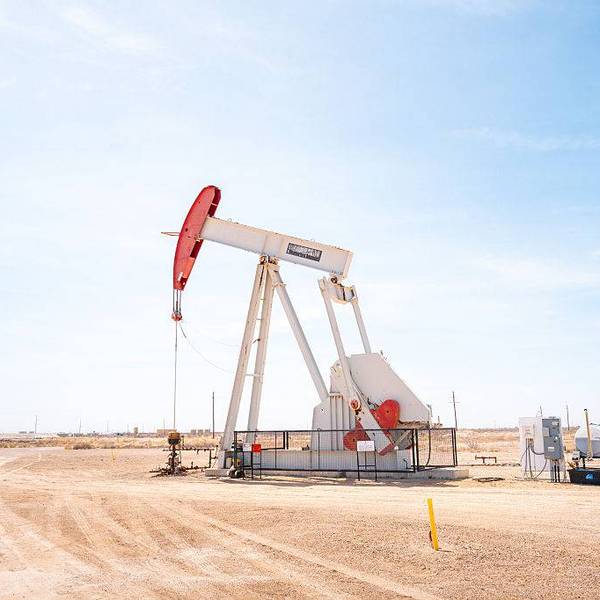
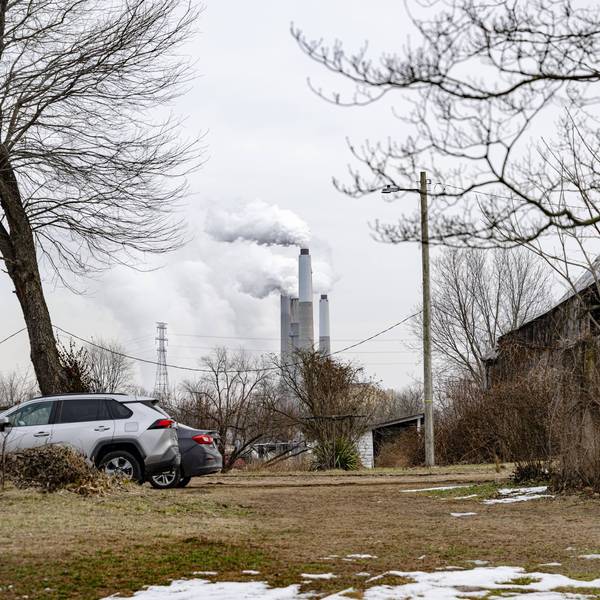
Oil price spikes caused by the US and Israel’s war in Iran are straining the pocketbooks of ordinary citizens the world over. But a new study shows that even in normal times, dependence on fossil fuels poses a tremendous financial cost while a small group of companies reaps the rewards.
The report published by the environmental group 350.org on Tuesday found that people around the world are subsidizing the fossil fuel industry to the tune of $12 trillion per year, a cost of about $1,400 for every person on Earth.
The number goes beyond direct government subsidies, with the report explaining that “ordinary people are paying for fossil fuels three times over.”
In addition to the $636 billion in government handouts the International Monetary Fund (IMF) found were paid to fossil fuel companies in 2024, the public also has to bear the burden when conflict or other emergencies cause prices to spike.
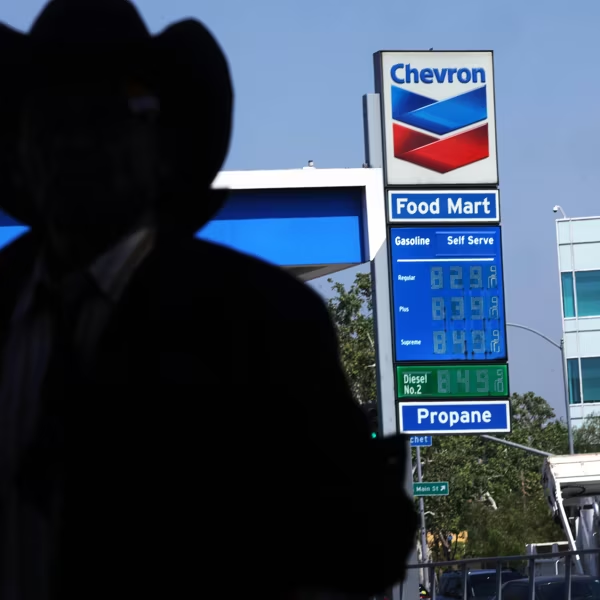
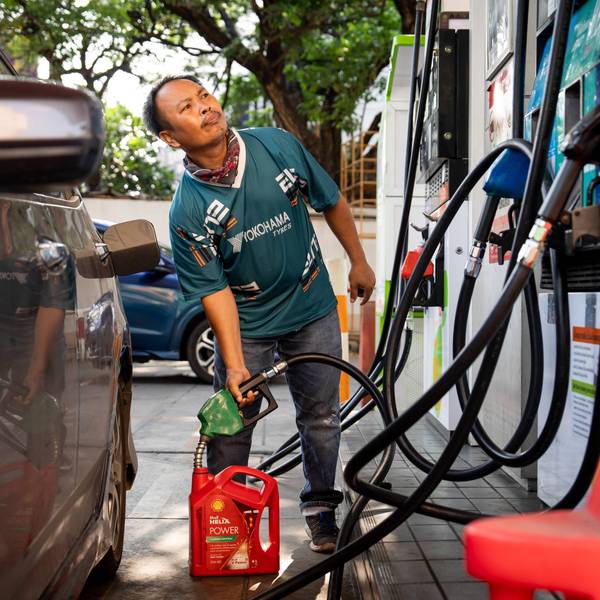
The report estimates that during the first 50 days of the Iran war, consumers and businesses have paid an additional $158.6–$166.9 billion due to higher fuel costs. This comes not only at the gas pump, but through heightened costs for food, transport fees, and other basic necessities.
“This crisis is a stark reminder of just how risky it is to rely on fossil fuels, with around 80% of global energy still coming from them and driving the instability we see today,” said Jan Rosenow, professor of energy and climate policy at Oxford University. “Price volatility is not a flaw in the fossil fuel system; it is a built-in feature.”
An investigation published earlier this month by The Guardian found that while consumers are getting hit, the war has been a bonanza for Big Oil. The top 100 companies have raked in an extra $30 million per hour since it began and made $23 billion in windfall profits during the war’s first month.
But the true mammoth cost to consumers comes from mitigating the climate damage caused by unrestrained fossil fuel use, from droughts to floods to heatwaves that have grown increasingly frequent and severe as global temperatures have climbed.
Using peer-reviewed data relied on by the US Environmental Protection Agency (EPA), 350.org estimated that the global population is footing the bill for about $9.3 trillion in climate-related damages and air-pollution-related deaths each year, social costs that the industry causes but pays almost nothing to solve.
The effects hit the poor hardest: Low-income households spend almost twice as large a share of their budgets on energy as higher-income households.
Meanwhile, renewable energy infrastructure, which has high upfront costs but pays for itself over time, is less abundant in developing parts of the world, and countries like Pakistan, Bangladesh, and South Sudan have had to ration power during energy crises.
The poorer Global South is also on the frontlines of some of the worst and most immediate effects of the climate crisis.
In addition to one of the deadliest ongoing conflicts in the world, South Sudan has suffered both severe floods and droughts that have ravaged crop outputs, raising the risk of famine, and schools have had to close for weeks as extreme heat caused children to faint from heat stroke.
Eastern Africa has dealt with the displacement of more than 20 million people from record-breaking floods and droughts.
In Sri Lanka, chronic flooding and pest outbreaks exacerbated by rising temperatures are expected to cost the country 3.5% of its gross domestic product by 2050.
Bill McKibben, the co-founder of 350.org, said that in the coming years, climate upheaval can only be expected to get worse.
“A building El Niño means 2026 and 2027 will set new global temperature records, and that will offer yet more chaos, and yet more reminders that it is the poorest people on Earth who must bear most of the cost of this ongoing tragedy,” he said.
The research conducted by 350.org was built on a model used by the IMF, which found that fossil fuels were costing taxpayers about $7.4 trillion. However, that research rested on a carbon price of $85 per tonne of CO2 emitted into the atmosphere.
350.org found that this figure, which “represents the cheapest possible price to keep warming below 2°C,” vastly understates the damage caused by warming, which peer-reviewed research suggests is between $185-233 per tonne.
While proponents of continued fossil fuel use often oppose green energy expansion on the grounds of cost, the report notes that just that $4.1 trillion undercount would be enough to finance more than 5,900 gigawatts of new solar capacity—enough to power every home in Africa, South Asia, and Latin America combined.
“The economic case for fossil fuels has not just weakened, it has collapsed,” said Anne Jellema, 350.org’s chief executive.
In addition to calling for an immediate end to both the war in Iran and Israel’s war against Lebanon, 350.org called on governments around the world to tax the industry’s wartime windfall profits and put the money toward lowering the energy bills of ordinary families.
The group also called to replace fossil fuel subsidies with household support and subsidies for cheaper renewables, which it says will be resistant to the shocks that oil and gas regularly face.
“Renewables are not controlled by a few fossil fuel-exporting countries,” said Hala Kilani, the head of energy diplomacy for the international climate policy network REN21. “It is abundant, distributed, and affordable. It can stabilize costs and be deployed locally, empowering communities rather than concentrating power. It is a peace, development, and justice solution. It’s high time we transition to reliable, affordable renewable energy.”
"If approved, this merger would give one family control over CBS, CNN, and TikTok—and the Ellisons have already promised President Trump that they would make sweeping changes to CNN."
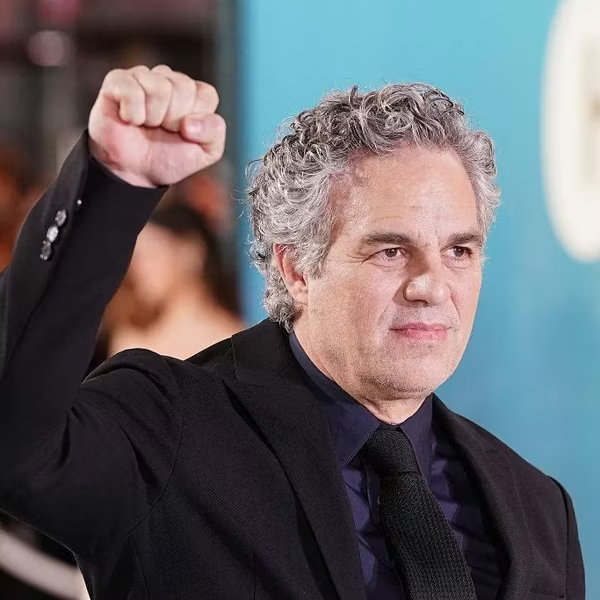
A coalition of progressive organizations is organizing a protest against what they describe as a “corruption gala” being held by Paramount Skydance CEO David Ellison in honor of President Donald Trump. According to a report published last week by Breaker Media, Ellison is planning to hold on “intimate gathering” this Thursday with the purpose of “honoring the Trump White House and CBS White House correspondents.” Ellison, who took over CBS in 2025 as part of the merger between Paramount and Skydance, is seeking approval for a $110 billion megamerger with Warner Bros. Discovery that would also give him control over CNN and has drawn opposition from antitrust advocates and Hollywood bigwigs. In response to this event, seven progressive organizations—MoveOn, Common Cause, Committee for the First Amendment, Public Citizen, Free Press, Our Revolution, and Democracy Defenders Action—are planning demonstrations on April 23 outside the headquarters of the US Institute of Peace. The groups said in a statement announcing the protest that Ellison’s decision to honor Trump at an exclusive dinner is a “blatant conflict of interest” given that he is relying on the president’s administration to sign off on the Warner Bros. Discovery deal. In addition to protesting Ellison’s dinner for Trump, the groups expressed opposition to further consolidation of the US media. “The [Paramount-Warner Bros.] deal would further consolidate an already concentrated media landscape, narrowing the diversity of TV news and reducing the number of major US film studios to just four,” they said. “If approved, this merger would give one family control over CBS, CNN, and TikTok—and the Ellisons have already promised President Trump that they would make sweeping changes to CNN.” Actor Mark Ruffalo announced in a Sunday social media post that he would be joining the demonstration against Ellison’s Trump-honoring dinner, and he encouraged his followers to join him. The Ellison dinner honoring Trump comes as many longtime journalists have been demanding the White House Correspondents’ Association significantly change or even cancel its annual dinner that is set to feature Trump as a speaker on Saturday. |
|
“The European Union can no longer remain on the sidelines,” said three foreign ministers who called for a suspension of the deal. |
|
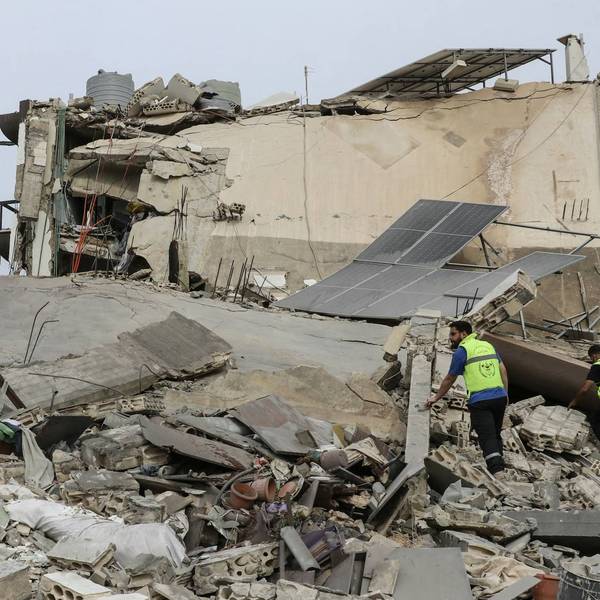
Calls have steadily intensified in recent weeks for the European Union to suspend a trade agreement with Israel as the country’s right-wing government has ignored growing condemnation over its anti-Palestinian policies and its assaults on Gaza, the West Bank, and Lebanon—but on Tuesday, German and Italian officials blocked an effort to pause the trade deal, with Germany’s foreign minister saying the move would be “inappropriate.”
The foreign minister, Johann Wadephul, suggested that world governments have not yet appealed enough to Israel in an attempt to stop it from attacking civilian infrastructure in Lebanon and Gaza; backing settlers who wage violence on Palestinians as Prime Minister Benjamin Netanyahu’s government seeks to illegally annex the territory; and passing a death penalty law that makes death by hanging the default punishment for Palestinians convicted of killing Israelis.
“We have to talk with Israel about the critical issues,” Wadephul said at a meeting of EU foreign ministers in Luxembourg, which was called by his counterparts from Ireland, Slovenia, and Spain. “That has to be done in a critical, constructive dialogue with Israel.”
Italian Foreign Minister Antonio Tajani added that “no decision will be taken today” and said that “other possible initiatives will be discussed at the next ministerial meeting on May 11.”
Critics, however, blasted the decision.
Erika Guevara-Rosas, a senior director for Amnesty International, called the move by Italy and Germany “a moral failure” that “illustrates brazen contempt for civilian lives” in Gaza, the Occupied Palestinian Territory (OPT), and in Lebanon.
Failure to act in the face of Israel’s repeated and ongoing atrocities, said Guevara-Rosas, “will be remembered as another shameful chapter in one of the most disgraceful moments in the EU’s history.”
The Irish, Spanish, and Slovenian officials wrote to EU foreign affairs chief Kaja Kallas last week, saying that Israel has breached Article 2 of the EU-Israel Association Agreement, which stipulates that “relations between the parties, as well as all the provisions of the agreement itself, shall be based on respect for human rights and democratic principles.”
A European Commission review last year found “indications” that Israel is breaching its human rights obligations under the 1995 agreement.
The death penalty law, said the foreign ministers, is a “grave violation of fundamental human rights,” while settlers and Israel Defense Forces soldiers act “with absolute impunity” in the West Bank.
“The European Union can no longer remain on the sidelines,” they said.
Ahead of Tuesday’s meeting in Luxembourg, Spanish Foreign Minister Jose Manuel Albares called on every European country “to uphold what the International Court of Justice and the UN say on human rights and the defense of international law” and that failing to do so regarding Israel “would be a defeat for the European Union.”
Irish Foreign Minister Helen McEntee called on the EU to “move in unison” to pressure Israel to meet its human rights obligations. Suspending the trade agreement requires unanimous support from the bloc’s 27 member countries.
McEntee said that she was urging “all of our colleagues today to support our call for the suspension of the overall agreement but, at the very least, if we can’t reach that full agreement, that we would have suspension of the overall trade elements of it.”
But Germany and Italy’s refusal to back the suspension of the agreement, said Irish author Andrew Madden, suggested “a preference for the ongoing slaughter of innocent people” over angering Israel.
Evidence released by California's attorney general shows "blatant price-fixing" by the retail giant, said one consumer advocate. |
|
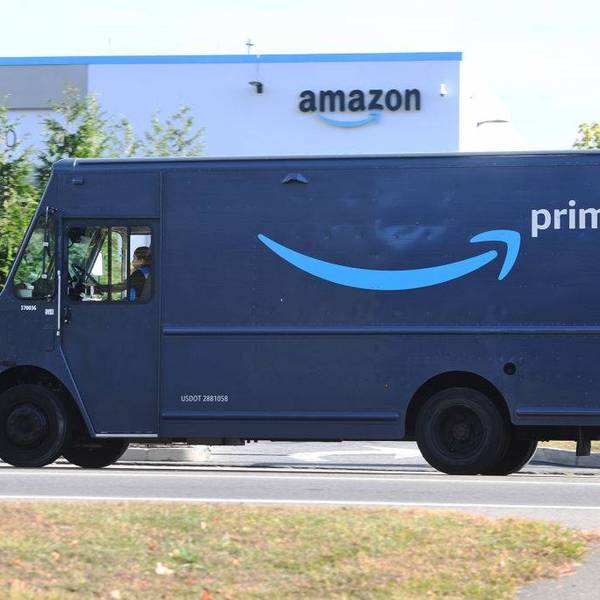
California’s top law enforcement official on Monday released a legal filing packed with evidence that Amazon is leveraging its dominance of the online retail market to artificially drive up prices for a range of goods, fueling a nationwide affordability crisis while padding its profits.
The filing was first submitted to the San Francisco Superior Court in February as part of California Attorney General Rob Bonta’s broader legal effort to halt what he described as Amazon’s “illegal price-fixing scheme.” At the time, the filing was heavily redacted, obscuring specific examples of Amazon conspiring with vendors and competing retailers to drive up prices for apparel, pet treats, fertilizer, and other items. California’s case against Amazon is set to go to trial next year.
“The evidence we’ve uncovered is clear as day: Amazon is working to make your life more unaffordable,” Bonta said in a statement. “The company is price-fixing, colluding with vendors and other retailers to raise costs for Americans beyond what the market requires—beyond what is fair.”
“Amid a crisis of affordability,” Bonta added, “Amazon is illegally working to rake in profits by making sure consumers have nowhere else to turn to for lower prices. We’ll see them in court.”
The filing identifies three specific tactics Amazon uses to fix prices—“breaking the price match,” “increasing the competitor retail price,” and “removing the product”—and offers concrete examples, backed by email evidence, of the company deploying each method.
In one instance from 2021, Amazon alerted Levi’s that Walmart.com had some of the clothing company’s pants listed at a price of $25.47-$26.99—which Amazon indicated was too low for its liking. At Amazon’s request, Levi’s connected with Walmart, which agreed to price one of the identified products at $29.99. Amazon then matched that higher price for Levi’s Easy Khaki Classic fit on its platform, locking in the cost increase for online shoppers.
“This should make your blood boil. Amazon is using its market power to coerce major retailers to hike prices,” said Lee Hepner, senior counsel at the American Economic Liberties Project. “It is pouring kerosene on an affordability crisis. Forcing price hikes to preserve market share is illegal monopoly maintenance, clear as day.”
Bonta’s filing also details a case in which Amazon, the vendor GlobalOne, and the pet supplies company Chewy agreed to fix prices on more than 10 pet treat products.
As Bonta’s office summarized:
The plan was written in an email between Amazon and its vendor, GlobalOne. For its part, Amazon would raise GlobalOne’s Canine Naturals pet treat prices to get Chewy to follow, then GlobalOne would “reach out to Chewy” to let them know that Amazon was increasing the pricing and “would ask that [Chewy] follow.” In other words, if Chewy agreed, Amazon would increase its retail pricing for the Canine Naturals pet treats and Chewy would match the price increase. The plan materialized. Amazon told GlobalOne that the pricematch override was in place, and to “let Chewy know to update [pricing] immediately.” That same day, GlobalOne confirmed the “ones that went up on Amazon immediately went up on Chewy [happy face emoji] … Overall this looks like it’s working!” The result of Amazon, Chewy and GlobalOne’s price fixing agreement was to increase the retail prices of over ten Canine Naturals pet treat products on Amazon and Chewy.
“The examples above are not outliers and are not exhaustive,” Bonta’s office stressed in a statement. “They are illustrative of countless interactions—spanning years and product lines—in which Amazon, vendors, and Amazon’s competitors agree to increase and fix the prices of products on other retail websites. As Amazon told one vendor explicitly: ‘I am very determined to help you hunt the disrupters in the market.’”
Stacy Mitchell, co-director of the Institute for Local Self-Reliance, said Bonta’s filing shows “blatant price-fixing” by Amazon that is “almost certainly the tip of a much bigger price-fixing operation.”
In a piece published at Washington Monthly on the same day that Bonta’s largely unredacted filing was released, Mitchell highlighted a Biden-era federal complaint accusing Amazon of using “sophisticated AI-driven pricing systems that draw on torrents of real-time data” to raise prices. (That case, backed by 17 states, is set to go to trial next March.)
“Here’s how it allegedly worked: Amazon’s anti-discounting algorithm immediately matched competitors’ price changes to the penny, but never undercut them,” Mitchell wrote. “When a rival offered a discount, Amazon’s algorithm matched it; when rivals raised prices, Amazon’s algorithm followed. This denied competing retailers a crucial tactic for luring customers from Amazon. If other retailers could never offer lower prices, Amazon’s roughly 200 million paying subscribers had little reason to shop elsewhere.”
“These allegations point to a novel form of monopoly power: The ability of a dominant platform to use algorithms to lift prices across an entire market,” Mitchell added.
“American monetary and bank safety policy will now depend on a demented ventriloquist in the White House," said one consumer watchdog.
Kevin Warsh, the financier picked by President Donald Trump to be the next chair of the US Federal Reserve, found himself tripped up by a seemingly simple question from Sen. Elizabeth Warren. During a confirmation hearing before the Senate Banking Committee, Warren (D-Mass.) said she wanted Warsh to demonstrate he had the prerequisite independence to serve as chairman of America’s central bank. “Independence takes courage,” Warren informed Warsh. “Let’s check out your independence and your courage.” She then asked Warsh if Trump lost the 2020 election to former President Joe Biden—a question numerous appointees of Trump have failed to answer correctly during their confirmation hearings. “We try to keep politics, if I’m confirmed, out of the Federal Reserve...” Warsh began. At this point, Warren interjected. “I’m just asking you a factual question,” she said. “I need to know, I need to measure your independence and your courage.” “Senator, I believe that [the US Senate] certified that election many years ago,” said Warsh. “That’s not the question I’m asking,” Warren shot back. “I’m asking, ‘Did Donald Trump lose in 2020?’” Warsh refused to directly answer the question, insisting that asking about the outcome of the election was outside the realm of monetary policy. University of Michigan economist Justin Wolfers took note of Warsh’s response to Warren, and wrote in a social media post that it “raises real questions about whether Warsh is independent of the president and if he has the courage to tell hard truths.” Later in the hearing, Warren pressed Warsh on whether there was anything he would disagree with Trump about any aspect of his economic agenda, the financier responded with a joke about the president’s comment that Warsh was straight out of “central casting.” “Quite adorable,” the senator said sarcastically. “But you know, we need a Fed chair who is independent.” Warren wasn’t the only senator to probe Warsh’s ability to maintain his independence should he be confirmed as chairman of the Federal Reserve. Sen. Raphael Warnock (D-Ga.) asked Warsh, who is a visiting scholar at the Stanford Graduate School of Business, to give a letter grade to the US economy. Trump and top administration officials including Treasure Secretary Scott Bessent have insisted is strong and serving working families well even as the war in Iran has sent gas prices soaring and Trump’s tariff policy has cost households more than $2,500 on average. Warsh joked that modern universities practically require all students to get “A” grades, but Warnock nonetheless pressed him to give his own evaluation of the economy under Trump’s stewardship. “Well, if I gave a student anything other than an ‘A,’ the dean would summon me to his office because I would have hurt his self-image,” Warsh replied. Warnock was not satisfied with Warsh’s answer. “Well, the Americans that I talk to, particularly in the state of Georgia,” said Warnock, “who haven’t had the benefit of attending some of these elite institutions... they’re sitting around their kitchen tables trying to figure out how to put their kids through school.” Warnock then added that “regardless of how the markets are doing, consumer confidence is at a record low.” Bartlett Naylor, economist for Public Citizen, said on Tuesday that Warsh’s confirmation hearing showed how fundamentally unfit he is to be chair of the Federal Reserve. “Trump named Kevin Warsh because he won the sycophancy contest, threatening the independence of the nation’s most important economic institution,” Naylor said. “At his nomination hearing, he failed to acknowledge that Trump lost the 2020 election, affirming that loyalty, not facts, will govern his policy choices.” Naylor warned that, if Warsh is confirmed, then “American monetary and bank safety policy will now depend on a demented ventriloquist in the White House.” | |















No comments:
Post a Comment
Note: Only a member of this blog may post a comment.