Tuesday, March 31, 2026
■ Today's Top News
“If my 5% wealth tax on billionaires was enacted, you’d owe $135 million more in taxes, and a family of four making $150,000 or less would receive a $12,000 payment. Oh, and you’d still be worth more than $2.5 billion."
By Stephen Prager
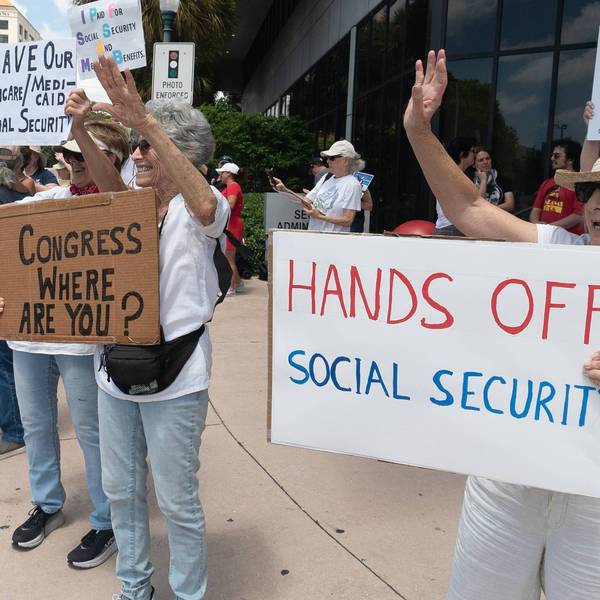
“This is not just a policy shift—it’s a wholesale abandonment of government commitments to the American public," said one advocate.
By Julia Conley
The so-called “Make America Healthy Again” movement encapsulated a key campaign promise ahead of President Donald Trump’s second term in office, with Trump telling one Pennsylvania crowd in 2024, “We’re going to get toxic chemicals out of our environment, and we’re going to get them out of our food supply.”
But the Trump administration has gradually announced a slew of public health-related policies and proposals since the president took office—pushing to loosen emissions rules for the cancer-causing gas ethylene oxide; suggesting the polio vaccine should be optional; and mandating the production of carcinogenic glyphosate—and a peer-reviewed study has now cataloged the “grave threat to America’s health” that Trump’s policies present.
“During the first administration of President Donald Trump, nearly 100 environmental and occupational protections, including air-quality safeguards, were rescinded,” reads the study, published in The New England Journal of Medicine (NEJM) on March 25. “Although many of those rescissions were delayed by litigation or reversed by President Joe Biden, they inflicted considerable harm on Americans’ health. The second Trump administration’s actions have been even more aggressive, portending greater harm.”
Weeks after the US Senate confirmed Health and Human Services Secretary Robert F. Kennedy in February 2025—a confirmation that he secured after making the baseless claim that Americans would prefer the for-profit insurance system over universal healthcare and refusing to reject debunked claims about vaccines—the administration appeared to make clear its true views on public health when it announced 31 climate regulation rollbacks.
“Those initiatives and other administration actions are set to reverse progress on pollution, make workplaces more dangerous, and (in Environmental Protection Agency Administrator Lee Zeldin’s words) drive ‘a dagger straight into the heart of the climate change religion,’” reads the study.
The proposals swiftly introduced by the administration included:
- Loosening standards for particulate matter 2.5 pollution, which killed approximately 460,000 people in the US from 1999 to 2020;
- Ending subsidies for clean energy production under the One Big Beautiful Bill Act;
- Weakening tailpipe emissions standards, putting Americans at greater risk for cardiopulmonary mortality and climate crisis risks; and
- Delaying implementation of stronger silica rules for coal miners—putting them at risk for black lung disease—while also demanding that coal plants continue production.
Ken Cook, co-founder of the Environmental Working Group (EWG), said the study described “a deliberate dismantling of safeguards that protect the air, water, and health of nearly every person in this country—all in the service of polluters.”
“This is not just a policy shift—it’s a wholesale abandonment of government commitments to the American public and the MAHA movement that helped propel Trump into office,” said Cook, who did not contribute to the study.
Philip Landrigan, a pediatrician and public health physician who directs the Global Observatory on Planetary Health at Boston College and is the lead author of the paper, told EWG that the “impacts of these rollbacks will fall most heavily on the most vulnerable among us—including infants—resulting in brain injury, neurodevelopmental disorders, increased preterm births, and elevated lifelong risk of chronic disease.”
Children and other vulnerable populations, including those in low-income communities situated close to petrochemical industrial areas, are likely to have increased mercury, benzene, and arsenic exposures—raising their risk of developing cancers and other diseases—due to the Trump administration’s rollbacks, according to the study.
“Several proposed policies would weaken water-quality standards, reducing drinking-water safety for millions of people,” reads the paper. “For example, the EPA seeks to weaken regulations governing effluent discharges from coal-fired power plants. The resulting increase in waterborne lead, mercury, and arsenic will increase the incidence of bladder cancers and adversely affect children’s cognitive function.”
The study’s authors emphasized that “statistics and documentation are not enough” to protect the public from the White House’s harmfiul policies.
“Unless health professionals speak up, and unless we put a human face on the tragic consequences of these environmental rollbacks, the connection between these seemingly abstract policy changes and the real health harms they cause may remain invisible,” reads the study. “We health professionals must call urgent attention to this silent but deadly assault on Americans’ health, work with broad coalitions to halt it, and ultimately rebuild the agencies, protections, and shared sense of trust and responsibility that have given us clean air and water and enabled us and our children to live longer, healthier lives.”
Cook noted that the NEJM itself has been a target of the administration, with Kennedy calling highly respected, science-based journals “corrupt” and the Department of Justice questioning the publication’s editorial integrity.
“No amount of political pressure or intimidation should silence independent science or the experts working to protect public health,” Cook said. “The NEJM and the study’s authors rightly ignore those threats and lay bare the real-world consequences of the Trump administration’s actions—and the American people deserve to hear it.”
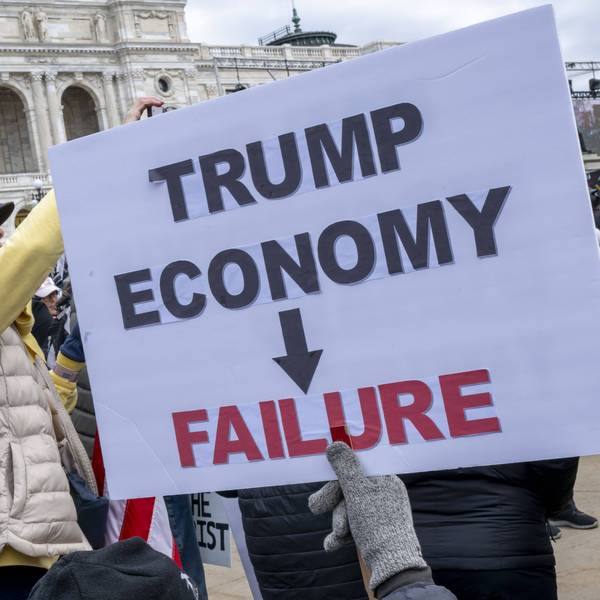
"Hiring was ice cold in February," said one economist.
By Brad Reed
New data from the US Bureau of Labor Statistics released on Tuesday continued to show weakness in the American jobs market.
The latest Job Openings and Labor Turnover Survey (JOLTS) shows that the number of new hires in February decreased to 4.8 million, which was roughly 400,000 fewer hires than were recorded in February 2025.
The report also shows that the US hiring rate in February fell to just 3.1%, which is the lowest rate since April 2020, when the economy was shut down due to the global Covid-19 pandemic.
The good news in the report is that the number of quits and layoffs remained relatively steady, meaning that people who already have jobs are retaining them at a healthy clip.
But Heather Long, chief economist at Navy Federal Credit Union, noted that these bad hiring numbers came before President Donald Trump launched an illegal war with Iran, which has since destabilized global energy markets and raised prices for oil, gasoline, and diesel fuel.
“This is a hiring recession,” Long wrote in a social media post. “And Americans are feeling it. There were notable hiring pullbacks in February in hospitality and construction. Bottom line: The job market was already frozen before the war in Iran began. It’s worrying that a ‘no hire, no fire’ situation could turn into a ‘no hire, start to fire’ job market quickly if there isn’t a resolution soon.”
Long’s analysis was echoed by Laura Ullrich, director of economic research at hiring site Indeed, who wrote in a research note flagged by Axios that hiring in the US “was stuck in neutral going into this [Iran] conflict,” and “getting it into gear just got harder” thanks to the war.
Guy Berger, director of economic research at the Burning Glass Institute, noted that hiring rates in the US hit 3.1% or lower the last two times the country was in a severe recession.
“3.1% is not only comparable to the Covid low point—it’s also comparable to late 2009 and early 2010, when the unemployment rate was around 10%,” Berger explained. “Hiring was ice cold in February.”
Scott Lincicome, a senior fellow at the libertarian Cato Institute who has been a harsh critic of Trump’s tariffs, found that the February JOLTS report wiped out an unexpected January increase in manufacturing job openings that the president’s allies attributed to his trade policies.
“Alas, the perils of cherry-picking,” Lincicome commented.
The new data on hiring in the US job market comes weeks after a BLS report estimated that the economy lost 92,000 jobs in February. On the whole, the American economy has posted a net loss of jobs since Trump announced his “liberation day” global tariffs in April 2025.
“This isn’t about advancing the interests of retirement savers, it is about opening a new profit center for crypto and Wall Street," said one critic.
By Jake Johnson
"This administration cannot recklessly play God with our shared American heritage at Secretary Hegseth's arbitrary say-so," said one conservationist.
By Jessica Corbett
Of the roughly 450 hospitals identified in a new analysis as at risk of closure or service cuts, around 200 are located in congressional districts represented by Republicans.
By Jake Johnson






No comments:
Post a Comment
Note: Only a member of this blog may post a comment.