Monday, December 29, 2025
■ Today's Top News
PLEASE PAY ATTENTION TO ENERGY! Support groups that are promoting ENERGY SAVINGS and support your state's effort to address ENERGY and protect the environment!
WE USED THE ENERGY STAR RATINGS TO BUY THE MOST EFFICIENT APPLIANCES WHEN REPLACING FAILED APPLIANCES - TRUMP ELIMINATED THAT!
WE BOUGHT 2 LED BULBS to replace ALWAYS ON LIGHTS - bill dropped $5 the next month - that from a $2 purchase!
We bought several cases of LED BULBS to replace CFLs for $1 each - then Trump slapped on a tariff!
It's MONEY IN YOUR POCKET!
"The gridlock and partisanship we see in Washington, DC can be dispiriting. But history shows that states can build momentum that eventually leads to change at the federal level."
By Brad Reed
Even as President Donald Trump and his administration have been ripping up environmental and consumer protection regulations, a number of state laws are set to take effect next year that could at least mitigate some of the damage.
A Monday statement from Environment America and the Public Interest Network highlighted a number of new laws aimed at curbing corporate polluters and enhancing consumer welfare.
First, the groups highlighted “Right to Repair” laws set to take effect in Washington, Nevada, Oregon, and Colorado, which give people the right to repair their own appliances and electronics without burdensome costs or barriers.
The groups lavished particular praise on Colorado’s “Right to Repair” laws that they said provide “the broadest repair protections in the country,” with new regulations that will give businesses in the state “access to what they and independent repair providers need to fix their electronics themselves.”
Illinois, meanwhile, will fully phase out the sale of fluorescent lightbulbs, which will be replaced by energy-efficient LED bulbs. The groups estimate that eliminating the fluorescent bulbs will collectively save Illinois households more than $1.5 billion on their utility bills by 2050, while also reducing energy waste and mercury pollution.
Illinois also drew praise for enacting a ban on polystyrene foam foodware that will take effect on January 1.
The groups also highlighted the work being done in Oregon to protect consumers with legislation mandating price transparency to eliminate surprise junk fees on purchases; prohibiting ambulance companies from socking out-of-network patients with massive fees for rides to nearby hospitals; and placing new restrictions on the ability of medical debt to negatively impact a person’s credit score.
California also got a mention in the groups’ release for closing a loophole that allowed supermarkets to continue using plastic bags and for creating a new privacy tool for consumers allowing them to request that online data brokers delete all of the personal information they have gathered on them over the years.
Emily Rusch, vice president and senior director of state offices for the Public Interest Network, contrasted the action being taken in the states to protect consumers and the environment with a lack of action being done at the federal level.
“The gridlock and partisanship we see in Washington, DC can be dispiriting,” said Rusch. “But history shows that states can build momentum that eventually leads to change at the federal level. As we build on this progress in 2026, we look forward to working with anyone—Republican, Democrat, or independent—with whom we can find common ground.”
“Burgum’s actions on offshore wind appear to be motivated by the personal financial interests of those in the administration, not our collective national interests."
By Julia Conley
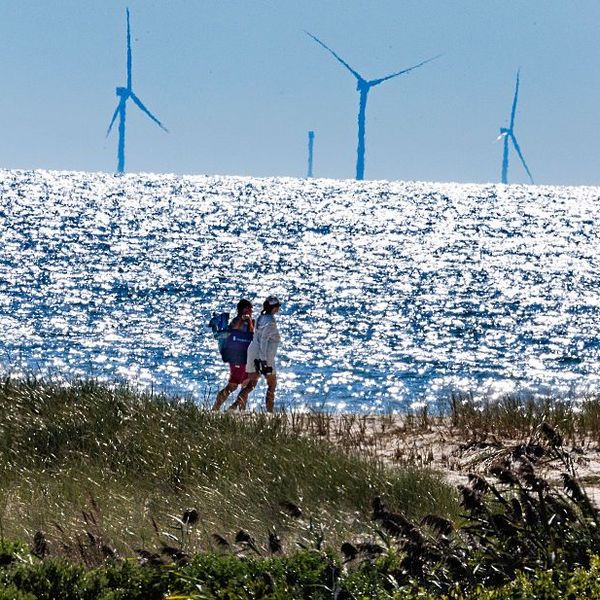
A week after the US Department of the Interior said it was immediately halting five offshore wind projects in the interest of “national security,” a watchdog group told congressional committees Monday that the move is “not legally defensible” and raises “significant” questions about conflicts of interest concerning a top DOI official’s investments in fossil gas.
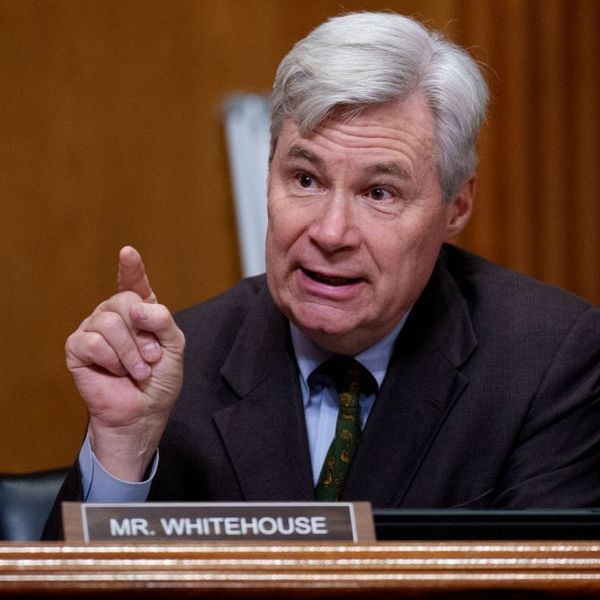
Timothy Whitehouse, executive director of Public Employees for Environmental Responsibility (PEER), wrote to the top members of the Senate Energy and Natural Resources Committee and the House Committee on Natural Resources regarding the pause on projects off the coasts of Virginia, New York, Rhode Island, Connecticut, and Massachusetts—projects that account for billions of dollars in investment, employ thousands of people, and generate sustainable energy for roughly 2.5 million homes and businesses.
The announcement made by Interior Secretary Doug Burgum last week pertained to “five vague, perfunctory, cookie-cutter orders” halting the projects, wrote Whitehouse, but PEER is concerned that the orders were issued to evade the Congressional Review Act (CRA), under which the action to halt the projects likely constitutes a “major rule.”
Whitehouse explained:
Under the CRA, a rule that meets any one of three criteria (an annual effect on the economy of $100,000,000 or more; a major increase in costs or prices for consumers, individual industries, federal, state, or local government agencies, or geographic regions; or in pertinent part significant adverse effects on competition, employment, investment, productivity, or innovation) is a major rule. Interior’s pause likely meets all three.
As a major rule under the CRA, the pause cannot take effect until at least 60 days after BOEM provides Congress the requisite notification and report under the CRA, which, according to GAO’s database, has not yet occurred. Congress must use its oversight authority to unveil the truth and, as appropriate, and to enforce the rule of law.
He said in a statement that “Burgum’s move is designed to bypass all congressional and public input.”
The CRA states that a rule is “the whole or a part of an agency statement of general or particular applicability and future effect designed to implement, interpret, or prescribe law or policy or describing the organization, procedure, or practice requirements of an agency.”
Press statements by the DOI and by Burgum last week were “statements of general applicability and imminent future effect, designed to implement policy,” wrote Whitehouse, who also said the interior secretary embarked on “a coordinated rollout with Fox News entities.”
On December 22, Fox anchor Maria Bartiromo asked Burgum at 8:00 am Eastern, “What next action did you want to tell us about this morning?” Five minutes later, FoxNews.com published its first story on Burgum’s orders, citing a press release that had not yet been made public and including a quote from the secretary about the “emerging national security risk” posed by the offshore wind projects.
“If last week’s actions are allowed to stand, future presidents will have unchecked authority under the guise of national security to target federal leases related to entire disfavored energy industries for political purposes.”
Burgum’s announcement to Fox came at least one to two hours before Bureau of Ocean Energy Management (BOEM) acting Director Matthew Giacona provided the orders to the lessees running the five wind projects.
Further, wrote Whitehouse, “Burgum’s voluminous public comments in the hours and days since the pause further show the true purpose of Interior’s singular action.”
HORSE MANURE!
“The national security pretext quickly gives way to broad and spurious talking points about the ‘Green New Scam,’ how ‘wind doesn’t blow 24-7’ (evincing Burgum’s seeming unfamiliarity with energy storage technologies), and unyielding promotion of liquified natural gas projects,” wrote Whitehouse.
Aside from the alleged illegality of Burgum’s order, PEER pointed to Giacona’s potential conflicts of interest with BOEM operations and specifically with halting wind projects. Giacona is a “diligent filer” of financial disclosure forms required by the Ethics in Government Act, noted Whitehouse—but those forms point to potential benefits he may reap from shutting down offshore wind infrastructure.
Giacona reported his purchase of interests in the United States Natural Gas Fund (UNG) on September 16. The fund tracks daily price movements of “natural” gas delivered at the Henry Hub in Louisiana and is subject to regulation by the Commodity Futures Trading Commission.
“Accordingly, a government employee who has an interest in UNG also has a potential conflict of interest with the underlying holdings of UNG (currently primarily natural gas futures contracts at the Henry Hub),” wrote Whitehouse.
PEER does not know whether Giacona continues to hold a financial interest in UNG or whether the offshore wind pause will have a “direct and predictable effect on a financial interest in UNG,” but Whitehouse noted that Burgum and DIO have entwined the pause with the promotion of liquefied natural gas.
“It is disconcerting that Mr. Giacona temporarily had even a de minimis financial interest in natural gas futures while also leading the agency that manages the development of natural gas resources on the outer continental shelf,” wrote Whitehouse, adding that Giacona also sold interests in the United States Oil Fund on September 3, while overseeing BOEM.
Based on Giacona’s investments, said Whitehouse, “Burgum’s actions on offshore wind appear to be motivated by the personal financial interests of those in the administration, not our collective national interests. This is another misguided step in transforming the federal government into a franchise of the fossil fuel industry.”
“On public lands across the United States, the Department of the Interior has tens of thousands of additional active leases related to oil, gas, wind, solar, and geothermal production and mining for energy-related minerals,” he added. “If last week’s actions are allowed to stand, future presidents will have unchecked authority under the guise of national security to target federal leases related to entire disfavored energy industries for political purposes.”
Administration officials have yet to provide any details about the supposed strike, which would mark a massive escalation in the president's lawless military campaign.
By Brett Wilkins
President Donald Trump claimed during a recent discussion about his high-seas boat bombing blitz that US forces took out “a big facility” as part of the Venezuela-centered campaign—but no one seems to know what he’s talking about.
Trump said Friday during an apparently impromptu phone call to billionaire supporter John Catsimatidis—who owns and hosts programming on WABC radio in New York—that South American narcotraffickers “have a big plant or a big facility where the ships come from,” and that “two nights ago, we knocked that out.”
“We hit them very hard,” the president added.
On Monday, Trump was asked during a meeting with fugitive Israeli Prime Minister Benjamin Netanyahu to clarify Friday’s claim.
“There was a major explosion in the dock area where they load the boats up with drugs,” the president said, “so we hit all the boats and now we hit the area. It’s the implementation area. That’s where they implement, and that is no longer around.”
Neither Trump nor anyone in his administration offered any evidence to support the claim. There have also been no public statements from any Venezuelan government official regarding any US attack.
Trump did say during a Christmas Eve call to troops taking part in escalating hostilities against Venezuela—whose socialist leader, President Nicolás Maduro, has long been in Trump’s regime-change crosshairs—that, after more than two dozen boat strikes, “now we’re going after the land.”
Threats by Trump to bomb targets inside Venezuela—or even invade the oil-rich South American nation in order to oust Maduro—are nothing new. The president has deployed an armada of warships and thousands of US troops to the region and has also authorized covert Central Intelligence Agency action against Maduro. Earlier this month, Trump vowed that the US would attack Venezuela “on land,” and “very soon, too.”
However, Trump’s remarks on Friday left observers scratching their heads and scouring news reports in a fruitless effort to make sense of the president’s claim.
One US official interviewed by the Intercept on condition of anonymity said the US targeted a “facility”—but declined to disclose its location, or whether it was attacked by US forces.
“That announcement was misleading,” the official said of Trump’s claim last week.
There is some speculation that a Christmas Eve explosion and fire at a warehouse on the grounds of a Primazol chemical plant in Zulia state may have been caused by a US strike. However, the site—which reportedly makes products including chicken feed—is not located directly on any coast, and Primazol issued a statement “categorically” rejecting claims that the facility was bombed.
If Trump did order any bombing of targets in Venezuela, it would be a major escalation and clear act of war by a man who, while billing himself as “the most anti-war president in history,” has now, with last week’s attack on Nigeria, bombed more countries than any president in history.
"I don't think there’s been a better and more right time for a third party to emerge in this country that speaks to the interest of everyday working people," said Maurice Mitchell, national director of the Working Families Party.
By Brad Reed
The Working Families Party is gearing up to have a banner year in the 2026 midterms at a time when political trends show the Republican Party led by President Donald Trump heading for a major loss.
The party, which is now active in 18 states, is preparing to “ramp up its involvement in primary elections, supporting candidates that emphasize working-class politics and seek to disrupt the political status quo,” according to a Monday report in the Guardian.
The Working Families Party (WFP) had a number of victories in 2025, highlighted by its election of democratic socialist Zohran Mamdani as mayor of New York City.
Maurice Mitchell, national director of the WFP, told the Guardian that he thinks now is the right time for a populist progressive insurgency given that both Democrats’ and Republicans’ brands are underwater with US voters.
“Less and less people are identifying as being a Democrat or Republican,” he said. “I don’t think there’s been a better and more right time for a third party to emerge in this country that speaks to the interest of everyday working people. I believe that our time has come.”
Although the WFP has traditionally worked within the confines of Democratic Party primary politics, the party this year elected some candidates in the New Jersey General Assembly that lacked backing from state Democratic Party bigwigs.
“This is really the first time that there’s been Working Families candidates that ran outside of the Democratic Party structure, and so we’re building what that future looks like and what it means,” Katie Brennan, a New Jersey assemblywoman-elect endorsed by the WFP who won without official Democratic Party backing, told the Guardian. “They’ve grown and have been making progress year in and year out, and this next year will be big for us. Now we’re in the statehouse, and what does that mean? I think it’ll continue to bring attention to the Working Families party.”
One issue that the WFP hopes will propel its candidates to victory in 2026 is the nationwide backlash to artificial intelligence data centers.
In an announcement made earlier this month, the WFP said it is recruiting candidates to run against building AI data centers, which have been blamed for spiking utility bills and draining water resources, in their local communities.
“Billionaires are getting richer from data centers, while working people see their electricity and water bills go through the roof,” said Ravi Mangla, national press secretary for the WFP. “Fortunately, regular people are joining with their neighbors to push back against these big tech takeovers. We’re inviting local leaders who are fighting back to consider running for the seats where decisions about data centers are being made.”
Another reason the party may sense an opportunity is that the Trump-led GOP appears headed for brutal elections in 2026.
Polling expert G. Elliot Morris published an analysis on Monday showing that Trump’s current net approval rating of -16 percentage points will likely translate into a “landslide electoral defeat” for Republicans next year.
Morris added that Trump’s approval on the issue of inflation was “downright catastrophic,” and noted that the president has been bleeding support even in states that voted for him by decisive margins last year.
“Trump’s approval rating is not just underwater because of Democratic resistance,” he observed. “Lots of independents and Republicans disapprove of how he’s running the country, too. In fact, the decline from Trump’s vote margin in 2024 is steeper in redder parts of the country.”
In a recent focus group, one voter who supported the president in 2024 said Trump's recent claims that the economy is strong were "delusional."
By Julia Conley
New polling from The Guardian on Monday bolstered recent analyses that have shown low consumer confidence and job creation numbers and higher household costs and unemployment: Americans are struggling under President Donald Trump’s economic policies, and they increasingly believe the White House—for all Trump’s claims that the economy is strong—is to blame.
The poll, conducted by Harris for the news outlet between December 11 and 13, found that respondents were twice as likely to say their financial security is getting worse as they were to report an improvement.
Nearly half of those surveyed said their financial situation is worsening, and 57% said they perceived that the US is in a recession—although that would be defined by two quarters of negative growth in the US economy, which the country has not experienced at this point.
Despite that, the poll—along with recent focus groups including members of Trump’s 2024 base, held by Syracuse University and reported on Monday by NBC News—illustrated how Trump’s focus on imposing tariffs on countries around the world and his promotion of policies that have raised household bills for millions of people have left Americans feeling pessimistic about their own financial health and that of the country.
Democratic voters were far more likely than Republicans to tell Harris that their financial security is getting worse, with 52% of the latter saying so compared with 27% of the former.
But 54% of independent voters agreed that they are struggling more financially, despite Trump’s recent claim that he would give the economy a grade of “A-plus-plus-plus-plus-plus.”
“We have seen a shift among these voters collectively, cracks in their faith, more questioning, oscillating, or outright change of heart about Trump.”
Respondents from across the political spectrum were more likely than ever before to blame the White House for their financial struggles, Harris said.
More than three-quarters of Democrats blamed Trump’s policies and “government management of the economy,” along with 72% of independents and more than half of Republicans—55%.
Analyses this year have shown Trump’s tariffs, which he claimed soon after taking office would “liberate” Americans from the national debt, are raising costs for small businesses and making it harder for them to stay afloat, and are passing on higher prices to consumers—resulting in ballooning grocery bills for millions of Americans.
Trump made lowering grocery prices a central promise of his campaign last year, along with repeatedly pledging that he was “going to get your energy prices down by 50%.”
But the president’s embrace of artificial intelligence and the expansion of data centers—something he and congressional Republicans have aggressively pushed states to allow despite public disapproval—is unlikely to result in lower utility prices for households. Those costs have risen by 13% since Trump took office, with the president’s cancellation of renewable energy projects to blame as well as energy-sucking data centers.
The focus groups held by Syracuse recently found that voters who supported the president last year have rapidly grown discouraged by his economic policies, including his tariffs, which one participant called “a tax on the American people.”
“That’s who pays for it, so I don’t support it,” David S. of New Jersey told NBC. “The people who are buying those imports are paying the tax.”
With less than a year until voters are set to decide if Republicans should keep their majorities in the US House and Senate, fewer than half of the people surveyed in four focus groups said they believed Trump has made it a priority to fight inflation and reduce their costs. Robert L. of Virginia told Syracuse researchers that the president’s recent comments painting a sunny picture of the economy were “delusional.”
Another Virginia voter, Justin K., said the president has been focused on “prosecuting his political enemies” and “pardoning people” and has not “tried at all” to tackle the rising cost of living.
A number of those surveyed said they had decided to back Democratic candidates Abigail Spanberger and Mikie Sherrill in this year’s gubernatorial elections in Virginia and New Jersey just a year after supporting Trump.
“Many of these voters gave President Trump a long runway well into the summer because they believed that he understands how business works better than they do and that his own fortune would eventually translate to enriching the country and their own finances,” Margaret Talev, director of Syracuse University’s Institute for Democracy, Journalism, and Citizenship, told NBC on Monday.
“But as the year wore on, we have seen a shift among these voters collectively, cracks in their faith, more questioning, oscillating, or outright change of heart about Trump,” Talev said. “What we almost never see is a wish for a do-over vote or a rush toward Democrats for the answer.”
At least 717 US companies filed for bankruptcy through November 2025—the highest figure recorded since the aftermath of the Great Recession.
By Jake Johnson
Businesses in the United States have filed for bankruptcy this year at a level not seen since 2010 as President Donald Trump’s tariff regime has jacked up costs for companies in manufacturing and other major sectors.
Citing data from S&P Global Market Intelligence, the Washington Post reported over the weekend that at least 717 US companies filed for bankruptcy through November 2025, the highest figure recorded since the aftermath of the Great Recession and a 14% increase compared to the same period last year.
“Companies cited inflation and interest rates among the factors contributing to their financial challenges, as well as Trump administration trade policies that have disrupted supply chains and pushed up costs,” the Post noted. “But in a shift from previous years, the rise in filings is most apparent among industrials—companies tied to manufacturing, construction, and transportation. The sector has been hit hard by President Donald Trump’s ever-fluid tariff policies—which he’s long insisted would revive American manufacturing.”
Recent data shows that the US has lost 49,000 manufacturing jobs since Trump’s return to office.
The bankruptcy figures add to the growing pile of evidence showing that Trump’s tariffs and broader policy agenda have harmed the US economy—weakening job growth, driving the unemployment rate up to the highest level since the Covid-19 pandemic, and worsening the nation’s cost-of-living crisis.
Democrats immediately seized on the new reporting as evidence of Trump’s failed stewardship of the US economy, messaging that’s likely to be central as the 2026 midterms approach.
Ken Martin, chair of the Democratic National Committee, said Monday that “when Donald Trump signed his Big Ugly Bill into law, he cemented the Republican Party as the party of billionaires and special interests—not working families, farmers, or small business owners.”
“While millions of working families are already being squeezed to afford groceries, utilities, and rent, Trump chose to strip them of their healthcare and food assistance just so he could give his ultrawealthy friends and donors an extra buck,” said Martin. “Make no mistake: Trump’s ‘signature achievement’ will be the nail in the coffin for the Republican majority when voters head to the polls next November.”











No comments:
Post a Comment
Note: Only a member of this blog may post a comment.