Showing posts with label RANKED CHOICE VOTING. Show all posts

Wednesday, August 17, 2022

POLITICO NIGHTLY: The impeachment revenge tour’s unexpected fallout


View in browser
 
POLITICO Nightly logo

BY CALDER MCHUGH

A photo of Lisa Murkowski walking in Congress.

Sen. Lisa Murkowski walks to the Senate chamber for a vote. | Anna Moneymaker/Getty Images

SAVED BY THE BALLOT — For House Republicans who voted to impeach Donald Trump, the 2022 primaries have been a bloodbath. Four of the 10 lost their primaries. Another four decided against running again. Just two made it to the November ballot.

The two primary season survivors, Reps. David Valadao of California and Dan Newhouse of Washington, have something in common — both ran in states that use a top-two primary system rather than traditional partisan primaries. Alaska Republican Sen. Lisa Murkowski, who voted to convict Trump but advanced to the general election Tuesday night, was also the beneficiary of an alternative primary format. Her survival in Tuesday’s election was almost certainly due to a top-four ranked choice voting initiative that passed in 2020. (We’re still waiting for results from Alaska’s special election to fill late Republican Rep. Don Young’s seat; the election will likely come down to Republican Sarah Palin and Democrat Mary Peltola.)

At a time of rising political polarization and growing frustration with the two-party system , Trump’s impeachment revenge tour has put these alternative voting systems in the national spotlight.

It’s clear that voters are fed up and ready for serious change. This July, a New York Times/Siena College poll found that 58 percent of voters believe our democracy needs “major reforms” or “a complete overhaul.” New ways of voting for our elected representatives promise a more accurate representation of the will of the people — or at the very least a fighting chance for politicians who don’t gravitate toward extremes.

“Candidates who do well in ranked choice elections tend to be those who connect with the widest group of voters possible,” said Deb Otis, the director of research at FairVote, an advocacy organization focused on electoral reform. “Our current elections often appeal to only one niche base of voters.”

Otis’ organization has taken up the cause of ranked choice voting, a system gaining traction around the country that will get a big test in Alaska’s Senate race in November, where Murkowski and her Trump-backed GOP challenger, Kelly Tshibaka, and two other candidates will face off.

The system is fairly simple: You rank your preferred candidates in order. After all of the ballots are cast, the candidate with the lowest first-place vote total is eliminated, and the remaining candidates divvy up their second-place votes. This continues until one candidate reaches a majority of votes.

According to Jeanne Massey, an RCV advocate based in Minneapolis (where the city has held RCV elections since 2009), the system can quickly usher in a new era of politics.

“It immediately changed three things [in Minneapolis]: who decided to run, how campaigns were run and who could be elected.”

As Massey tells it, candidates are forced to run more positive, honest campaigns, because they want second- and third-place votes in open elections with more participants. The system can also deliver surprising results. In Maine — which passed an RCV ballot initiative in 2016 — Democrat Jared Golden defeated Republican incumbent Bruce Poliquin in the largely rural 2nd Congressional District by the slimmest of margins in 2018. He did so thanks to ranked choice voting — while Golden was trailing by about 2,000 votes on election night, the second-choice votes of independents broke toward Golden, giving him a final victory of over 3,000 votes.

Murkowski is hoping that Alaskans can similarly coalesce around her as a moderate alternative to Tshibaka. She’s looked to attract a cocktail of moderate Republicans, Democrats and independents in order to win in a red state.

“It’s easier for moderate and centrist candidates to do better under these alternative primary methods because it makes the candidates accountable to all voters, instead of just primary voters from one party,” said Otis.

This November, as Alaskans use ranked choice voting to determine their next senator, another state may be added to the RCV roster. A ballot measure in Nevada will ask voters in the key swing state whether they want to establish a top-five RCV format similar to Alaska’s. A recent poll found voters in favor by a 15-percentage-point margin.

Welcome to POLITICO Nightly. Reach out with news, tips and ideas at nightly@politico.com. Or contact tonight’s author at cmchugh@politico.com or on Twitter at @calder_mchugh.


STEP INSIDE THE WEST WING: What's really happening in West Wing offices? Find out who's up, who's down, and who really has the president’s ear in our West Wing Playbook newsletter, the insider's guide to the Biden White House and Cabinet. For buzzy nuggets and details that you won't find anywhere else, subscribe today.


WHAT'D I MISS?

— Ousted Florida prosecutor sues DeSantis over suspension: Hillsborough County State Attorney Andrew Warren today filed a federal lawsuit arguing Gov. Ron DeSantis abused his power when suspending him from office over, among other things, a pledge to not prosecute women who violate Florida’s new 15-week abortion ban. DeSantis detractors immediately condemned Warren’s Aug. 4 suspension as political overreach and targeting a political foe. The governor characterized Warren’s suspension as removing a progressive prosecutor who refused to enforce laws.

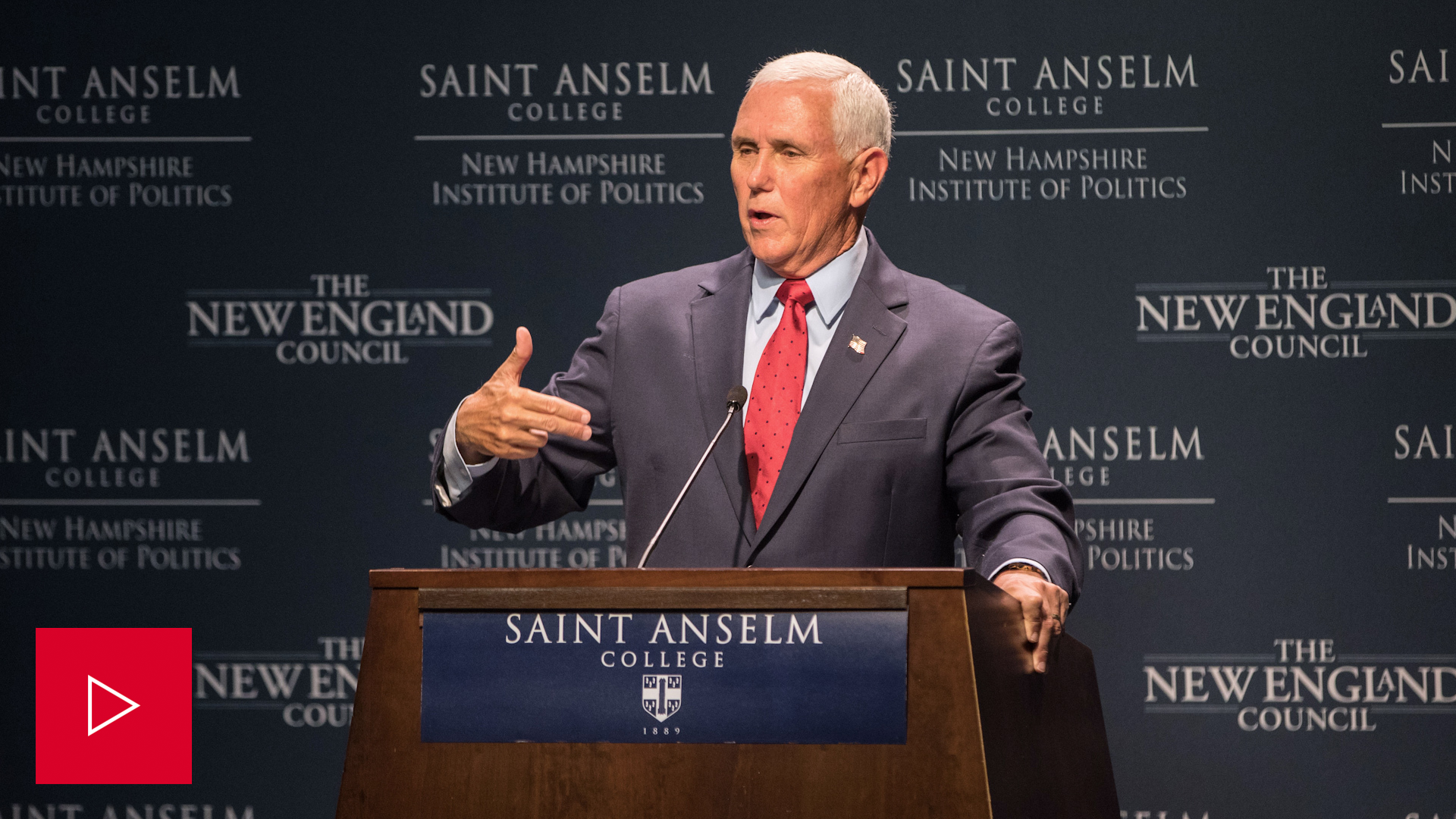
A video of Mike Pence speaking at a lectern.

— Pence ‘would consider’ testifying to Jan. 6 committee: Former Vice President Mike Pence hasn’t ruled out testifying before the Jan. 6 select committee investigating efforts by his former boss and his allies to overturn the results of the 2020 election. “If there was an invitation to participate, I would consider it,” Pence told a packed room at an event this morning. The Jan. 6 panel has weighed whether to formally seek Pence’s testimony for months.

— CDC director orders agency overhaul, admitting flawed Covid-19 response: The CDC is launching an overhaul of its structure and operations in an attempt to modernize the agency and rehabilitate its reputation following intense criticism of its handling of the coronavirus pandemic and, more recently, the growing monkeypox outbreak. CDC Director Rochelle Walensky today shared a series of changes with CDC leadership and staff designed to “transform” the organization and its work culture by improving how the agency shares information, develops public health guidance and communicates with the American public.

— Groups to sue Florida Medicaid program over ban on gender-affirming care: A coalition of transgender-rights organizations is preparing to sue Florida to stop the state’s Medicaid regulator from banning coverage of treatments such as puberty blockers, hormone therapies or surgical procedures for gender dysphoria. Simone Criss, director of the Southern Legal Counsel’s Transgender Rights Initiative, said today the coalition is expecting to file the case in federal court and will seek a preliminary injunction to halt the ban, which takes effect on Sunday, from going forward.

— Planned Parenthood to spend a record $50 million in midterms: The money will be used to elect abortion access advocates and surpasses the $45 million the group committed to in 2020. Planned Parenthood has identified Georgia, Nevada, Minnesota, Pennsylvania, Arizona, North Carolina, New Hampshire, Michigan and Wisconsin as 2022 targets.

AROUND THE WORLD

CRIMEA CO-SIGN — Attacking Crimea is fair game for Ukraine — and it has America’s support to hit the Russians there, writes Alex Ward.

Kyiv was behind the three explosions this past week on the Russian-annexed peninsula, per a CNN-obtained Ukrainian government document, including a large blast at Saki airbase that destroyed several of Moscow’s warplanes.

No Ukrainian official has yet publicly admitted to Kyiv’s involvement in the Crimea campaign. But Defense Minister Oleksii Rezikov told Voice of America today that Ukraine hasn’t ruled out striking the occupied territory with U.S.-provided weapons.

And a senior U.S. administration official told POLITICO the U.S. supports strikes on Crimea if Kyiv deems them necessary. “We don’t select targets, of course, and everything we’ve provided is for self-defense purposes. Any target they choose to pursue on sovereign Ukrainian soil is by definition self defense,” this person said.


INTRODUCING POWER SWITCH: The energy landscape is profoundly transforming. Power Switch is a daily newsletter that unlocks the most important stories driving the energy sector and the political forces shaping critical decisions about your energy future, from production to storage, distribution to consumption. Don’t miss out on Power Switch, your guide to the politics of energy transformation in America and around the world. SUBSCRIBE TODAY.


NIGHTLY NUMBER

$650 million

The amount in damages awarded today to two Ohio counties that won a landmark lawsuit against national pharmacy chains CVS, Walgreens and Walmart , claiming the way they distributed opioids to customers caused severe harm to communities and created a public nuisance. The judge said the money will be used to abate a continuing opioid crisis in Lake and Trumbull counties, outside Cleveland.

PARTING WORDS

A photo of a NASA ship docked.

NASA's Space Launch System rocket with the Orion spacecraft in Cape Canaveral, Florida. | Joel Kowsky/NASA via Getty Images

GIANT LEAP — NASA is preparing to launch its first moon mission to pave the way for returning astronauts to the lunar surface — this time to stay.

Now all they have to do is find someone to run it, writes Bryan Bender.

Just three years from now, NASA plans to begin regularly rotating astronauts to the lunar surface to establish a base for scientific research and extract water and other resources to live and make fuel — all in preparation for sending humans to Mars. The series of increasingly complex missions is known as the Artemis program.

But there’s little sign of a solid plan. Dan Dumbacher, executive director of the American Institute of Aeronautics and Astronautics and the former head of NASA’s Human Exploration and Operations Mission, warned Congress this spring that NASA’s “piecemeal, uncoordinated approach is doomed to failure.”

And he’s not alone. A number of agency insiders, veterans and oversight authorities are sounding the alarm ahead of the maiden launch of the Space Launch System, the biggest rocket ever built, and the Orion capsule that are set to blast off in late August.

Congress this month passed a NASA policy bill, the first in five years, that requires the agency to swiftly set up a dedicated Artemis program office to manage a host of increasingly complex programs. Still, “three years is not a lot of time,” said Patricia Sanders, chair of NASA’s Aerospace Safety Advisory Panel. And though NASA has set an aggressive course in its return to the moon, it remains to be seen whether all of the pieces can fit together.

Did someone forward this email to you?  Sign up here.


Follow us on Twitter

Charlie Mahtesian @PoliticoCharlie

Calder McHugh @calder_mchugh

Myah Ward @myahward

Naomi Andu @naomiandu


FOLLOW US

Follow us on FacebookFollow us on TwitterFollow us on InstagramListen on Apple Podcast


POLITICO, LLC 1000 Wilson Blvd. Arlington, VA, 22209, USA


Wednesday, June 23, 2021

POLITICO NIGHTLY: How NYC messed up its mayoral election


POLITICO Nightly logo

BY RYAN HEATH

Presented by

Amazon

With help from Renuka Rayasam

RANKED CHOICE VOTING: IT’S AUSTRALIAN FOR ELECTIONS  Ranked choice voting isn’t complicated — but you’d never know it from New York City’s mayoral race.

When Nightly contacted each of the top candidates, not one of them had a plan for telling their voters how to rank the rest of the candidates on their ballots. Sure, Andrew Yang has been saying for months that he would rank Kathryn Garcia second, and he urged his supporters to do so at a weekend rally — but he failed to even update his website with the instruction. A list of ranked-choice recommendations is not posted on any candidate’s site, or printed on their mailers. Rep. Alexandria Ocasio-Cortez gave a more detailed RCV guide for downballot races than any of the mayoral candidates did for their own race.

That’s Election 101 stuff in Australia, my home country and the global capital of ranked choice voting , where the system is used in all elections from college campuses to federal elections. In New York, where I live now, voting may be about to end at 9 p.m. ET, but the crapshoot among five leading candidates is only just starting.

Ever since New Yorkers voted by a 74-26 margin to introduce ranked choice voting in 2019 — joining the state of Maine and cities including San Francisco and Minneapolis — the system has been under attack, including from Eric Adams, the leading candidate in today’s mayoral race . In a decision that may fuel suspicions, the city’s notorious election board won’t commit to timely publication of ongoing vote totals.

But the real problem has been the failure of the candidates to adapt their campaign strategies to the new system. In a ranked choice system, self-interest dictates that a candidate should make deals with rivals and communicate those deals with voters. But admitting you need voters who think you’re only second-best is the antithesis of New York toughness.

The lowest-ranked candidates could have formed a coalition to take on the big shots, while the more left-wing candidates such as Maya Wiley, Scott Stringer and Dianne Morales could have worked together to blunt the moderates at the top of opinion polls.

Instead it was moderate Kathryn Garcia who did most to explore preference deals, and even that was half-hearted. She failed to return the favor when Yang recommended her as his second choice.

Australia’s experience with ranked choice voting shows that deals among candidates can affect the results. Australian candidates have won ranked choice elections with as little as 0.2 percent of first choice votes . Senator Ricky Muir won a Senate seat in 2013 after starting with 0.5 percent of the vote: He vacuumed up another half million or so votes from voters who ranked him second or lower, closing a 400,000 vote gap. (Muir is an exception, though. The main outcome the system has led to in the Australian Senate, where eight parties are represented, is diversity without gridlock.)

More common are “Anyone But X” campaigns. In San Francisco, mayoral candidates Jane Kim and Mark Leno formed a tactical alliance against Mayor London Breed, getting within 2,500 votes of unseating her in 2018.

In New York, Adams — a former Republican — is a vulnerable frontrunner sitting at the top of opinion polls with just 24 percent support. An “Anyone by Adams” campaign could have worked, but his rivals missed that tactical opportunity, leaving it up to individual anti-Adams voters to coordinate to defeat him.

Polls alone should have told the leading candidates the usual tactics wouldn’t cut it. Five candidates have regularly polled in double digits — Adams, Andrew Yang, Kathryn Garcia, Maya Wiley and Scott Stringer — but none is polling above 25 percent. That means each of them needs to double or triple their vote totals to win by collecting second, third, fourth and fifth preference votes as their lower-ranked rivals are eliminated and their votes are redistributed.

In the absence of coordinated rivals, Adams used his frontrunner status to slam ranked choice voting as a form of voter suppression: “Everyone knows that every layer you put in place in the process, you lose Black and brown voters and participation,” he told POLITICO. He railed Monday against Yang and Garcia for finally daring to campaign together.

By Adams’ logic, the same people who voted for ranked choice voting are going to be disenfranchised by it. But voters say they’re happy with the system, and Adams is in pole position. In 96 percent of American ranked choice elections since 2004, the candidate with the most first-preference votes ended up winning.

It’s not even New York’s first time at this rodeo: A version of ranked choice voting was in place from 1936 to 1947, allowing the first women and black candidates to be elected to the City Council. The local Democratic machine disliked the reduced control that ranked choice voting forced on them, and worked for years to abolish the system.

As the leading candidate, Adams cannot coast to victory under ranked choice. Instead, he must listen to and appeal to voters well beyond his base. If he fails in that task, one of the lower ranked candidates will sweep up second preference votes and overtake him when the final results are tabulated sometime in the week of July 12.

If Adams ends up winning, he may work to kill New York’s new voting system. His rivals would have only themselves to blame.

Welcome to POLITICO Nightly. Reach out with news, tips and ideas for us at rheath@politico.com, or on Twitter at @politicoryan.

A message from Amazon:

“This is the first time in my life that I have dental insurance, visual insurance, [and] life insurance.” Comprehensive benefits give employees like Leonardo a sense of security. Amazon is committed to creating good jobs with a starting wage of at least $15 an hour and benefits for employees.

 
WHAT'D I MISS?

— Senate Republicans block election reform bill: Senate Republicans blocked Democrats’ sweeping elections and ethics reform bill today , likely renewing calls from progressives to nix the legislative filibuster. In a 50-50 vote, the Senate failed to move forward on the legislation, a top priority for Senate Majority Leader Chuck Schumer and Pelosi. With the bill guaranteed to fail, the path forward is murky at best on an issue that Democrats say they need to resolve before the 2022 midterms.

— Biden likely to miss July 4 vaccine target: The Biden administration is likely to miss its goal of providing at least one Covid-19 vaccine dose to 70 percent of adults by July 4, White House and federal health officials confirmed today. The setback comes after a weekslong drop in the nation’s vaccination rate and persistent difficulties in convincing younger Americans in particular to seek out the shot. Public health officials also are grappling with a spike in the more easily transmissible Delta variant of the coronavirus that now accounts for 20 percent of all cases and is expected to become the dominant strain in the U.S.

Nightly video player of White House press secretary Jen Psaki

— Top adviser to Dem megadonor privately blasts party’s prioritization of voting rights bill: The top political adviser to one of the Democratic Party’s biggest donors privately urged fellow Democrats last week to abandon the push around federal voting rights legislation in favor of legislative items with better chances of passage. Dmitri Mehlhorn, a key confidant to Democratic funder Reid Hoffman, the billionaire co-founder of LinkedIn, made the case to advisers to other Democratic megadonors that the attention being placed by activists and lawmakers on the For the People Act was setting the party up for failure, according to people involved in the discussions and emails obtained by POLITICO.

— House Democrats urge Biden to extend eviction ban: A group of 44 House Democrats pressed Biden today to extend the CDC’s nationwide ban on evictions before it expires at the end of the month. The lawmakers — led by Reps. Ayanna Pressley (D-Mass.), Jimmy Gomez (D-Calif.) and Cori Bush (D-Mo.) — said in a letter to Biden and CDC Director Rochelle Walensky that without further action “millions of renters will once again face the threat of eviction” next week.


DON'T MISS THE MILKEN INSTITUTE FUTURE OF HEALTH SUMMIT: POLITICO will feature a special edition of our Future Pulse newsletter at the 2021 Milken Institute Future of Health Summit. The newsletter takes readers inside one of the most influential gatherings of global health industry leaders and innovators who are turning lessons learned from the past year into a healthier, more resilient and more equitable future. Covid-19 threatened our health and well-being, while simultaneously leading to extraordinary coordination to improve pandemic preparedness, disease prevention, diversity in clinical trials, mental health resources, food access and more. SUBSCRIBE TODAY to receive exclusive coverage from June 22-24.


TALKING TO THE EXPERTS

A view from the 64th floor as New York Gov. Andrew Cuomo speaks during a press conference at One World Trade Center on June 15, 2021 in New York City.

A view from the 64th floor as New York Gov. Andrew Cuomo speaks during a press conference at One World Trade Center on June 15, 2021 in New York City. | Getty Images

THE CITY THAT NEVER COMMUTES — About one-fifth of New York City workers are going back to their offices, according to data from Kastle Systems , which has been monitoring building access activity across the country. But even as city Covid restrictions lift and major New York firms order workers back, many people remain hesitant to resume their daily commutes to Midtown. With office workers a key to New York City’s pandemic recovery, Nightly’s Renuka Rayasam asked a group of experts: What, if anything, should be done to get them to return to Manhattan? These answers have been edited.

“Younger office workers don’t really want free tacos (although do keep those free tacos coming), they want respect and attention. We often say that the office is for surveillance. That’s of course true but also, for many Manhattan workers whose work takes place on computers, the office is a place where they are mostly ignored and also where they need to further isolate themselves, wrapping themselves up in office blankets and noise-canceling headphones to do work. They can stay home for that! Respecting workers’ in-office time with scheduled group attendance, meetings clustered in the course of a single day instead of over a week, public calendars across the hierarchy, at-will office hours with management and bosses and more transparency about larger group projects will bring people to work — at least a couple days a week. Less management chaos and secrecy makes the office more worth attending. Also, obviously, ban cars in Manhattan and make the buses and subways free to all.” — Choire Sicha , incoming editor-at-large, New York magazine

“For starters, people could lean on Albany to fix the MTA. Those of us who don’t have cars have enjoyed not having unreliable overly long subway commutes for distances of less than 10 miles during the pandemic and were pretty happy to get two hours of our day back. New York City can’t have a world-class economy without a world-class, accessible public transportation system. It’s vital infrastructure.” — Elizabeth Spiers, founder of political consulting firm The Insurrection and former New York Observer editor in chief

“People are going to return to the office. Just not as many. If 20 to 25 percent of people work remote, that’s a big hit to the economies of NY’s central business districts. But it’s not the office building, it’s not the elevators that are holding people; it’s the commute. The big factor here is people’s fear of trains in transit, and their general dislike of long commutes. We have a once in a lifetime opportunity to remake these 9 to 5 mainly work neighborhoods into much better complete communities where people live as well as work. Time to start is now.” — Richard Florida, professor at University of Toronto's School of Cities and Rotman School of Management, and distinguished fellow at NYU's Schack School of Real Estate

“Nothing! Midtown Manhattan is one of the most expensive office markets in the world, so if there’s a structural fall in demand for office space those buildings will eventually fill up one way or another as companies who want in-person work suddenly find they don’t need to resort to Hoboken or White Plains to make it affordable. It’s every other city’s central business district that should worry.” — Matthew Yglesias, writer and editor, Slow Boring


Advertisement Image 


“Workers will come back to Midtown Manhattan with or without any intervention by policymakers. If policymakers do decide to take active steps to help workers return then they will just benefit Midtown landlords leading to higher rents and building values. Physical proximity still has a lot to offer and almost no working location is more desirable than Midtown Manhattan.

“Even if the pandemic led to a large realignment in how we work, the result would not be persistently empty buildings in Manhattan but lower rents and property values — with rents falling until they reach the point that they are sufficiently low to attract companies back from the suburbs they were previously fleeing to. If New York City takes steps to make it more attractive for employees to return to Midtown Manhattan that would mean that landlords would not need to lower rents as much to attract them back.” — Jason Furman, Harvard professor of practice of economic policy; chair of former President Barack Obama’s Council of Economic Advisers

“The idea of luring people back to a particular place, particularly one so saturated, it’s just not clear to me that it needs to be at the top of anyone’s priorities.” — Betsey Stevenson, a labor economist at the University of Michigan and former member of President Barack Obama’s Council of Economic Advisers

“The main thing I’m skeptical of is that WFH will stay indefinitely. A year ago I would’ve said, it’s definitely temporary, having talked to a bunch of American white-collar workers about it in a variety of professions. Right now I’m uncertain, due to long-term changes in behavior among workers, many of whom prefer WFH, but companies are trying to get the workers back to the office. Singapore was almost entirely back until it had another outbreak, and Frankfurt is mostly back. New York and San Francisco are taking longer because people there have a once-bitten-twice-shy attitude, the same way they keep masking even outdoors, even if vaccinated, but they’re slowly getting back.” — Alon Levy, NYU Marron Institute fellow

“To bring employees back to the office in a more balanced way, policies should address several key areas. First, power of place. Employers must focus their return plans on the formal and informal activities that benefit from co-location. Sometimes those benefits will be external to the individual employee, with the gains from a mentor or team leader’s presence accruing to others.

“Second, health and well-being. Examples of policies in this area include staggered start and end times and workdays, mitigating perceived risks from congestion in public transportation and supportive of child and elder care responsibilities. Technology-enhanced building investments, such as pooled waste testing, will also have a role.

“Third, competitive places. New York City works because the tremendous value of locating here exceeds the very high costs. Private firms should engage actively with government to ensure the balance remains favorable, so we remain competitive in attracting innovative businesses and a talented workforce. The pressure on state and local public finance, and the prospect of higher taxes on our most mobile economic agents, threatens to undermine that competitiveness.” — Sam Chandan, Larry & Klara Silverstein chair and academic dean of the NYU SPS Schack Institute; founder and non-executive chair of Chandan Economics

AROUND THE WORLD

ALLIES VS. RANSOMWARE — The United States and European governments will coordinate in fighting against ransomware attacks , which have surged in number in recent years, the U.S.’ top security official said today.

“We have now a new ransomware working group to address the scourge of ransomware that has hurt the U.S. so much, and so many other countries. We understand that the vulnerabilities of one, that we all share those vulnerabilities,” Secretary of Homeland Security Alejandro Mayorkas said after meeting with European ministers for justice and home affairs in Lisbon, Portugal.

“This is something we share, that increase of ransomware attacks during the pandemic, and that is an area where for sure we can do more together,” said Ylva Johansson, the EU’s home affairs commissioner.

NIGHTLY NUMBER

About 20 percent

The percentage of the 20 million Covid-19 vaccine doses the Biden administration pledged to donate directly to other countries by the end of June that has been distributed, according to two U.S. officials with direct knowledge of the matter. The slow pace means the White House may not meet its original late-June target for those doses, the sources said. The shipments so far include 1 million doses sent to South Korea on June 4.


“THE WOMEN REOPENING AMERICA” – A THURSDAY CONVERSATION: With more than 100 million people vaccinated against Covid-19, a strengthening economy and relaxed Covid restrictions on businesses and public gatherings, America is on a path to fully reopening. What policies and systemic changes can help women recover from the disproportionate impact of the pandemic? Join Thursday for a “Women Rule” conversation with leading women who are playing a pivotal role in determining what normal will look like for business, politics, schools and the workplace. REGISTER HERE.


PARTING WORDS

As much of liberal America anxiously awaits a series of Supreme Court rulings that could unwind the progressive legal achievements of recent decades, the conservative embrace of John Marshall Harlan, the progressive 19th-century justice best known as the sole member of the Supreme Court to stand up for Black rights and economic protections, is a reason for reconsideration. It’s a reminder that the Trump Court wasn’t really constructed by Trump, who expected (wrongly, it turned out) “his” justices to do his bidding after the election. Neil Gorsuch, Brett Kavanaugh and Amy Coney Barrett aren’t the judicial equivalents of Jeannine Pirro and Michael Cohen.

— PETER CANELLOS, IN "WHY THE ‘TRUMP COURT’ WON’T BE LIKE TRUMP," COMING WEDNESDAY IN POLITICO MAGAZINE

A message from Amazon:

“Going from nine dollars an hour to now earning 15 an hour at Amazon, I can help my family... and save money for college… if I hadn’t taken this job, I don’t know where I would be right now. It was life-changing for me.”

Amazon has seen the impact that $15 and benefits can make . Learn more about how it helps employees and their communities at aboutamazon.com/15.


Did someone forward this email to you? Sign up here.


Follow us on Twitter

Renuka Rayasam @renurayasam

Chris Suellentrop @suellentrop

Tyler Weyant @tweyant

Myah Ward @myahward


FOLLOW US


 POLITICO, LLC 1000 Wilson Blvd. Arlington, VA, 22209, USA


Thursday, March 4, 2021

POLITICO Massachusetts Playbook: TEACHERS become VACCINE VIPs — BARROS running for BOSTON MAYOR — Hampden County’s ‘CHAOTIC’ phone meeting


Massachusetts Playbook logo

BY STEPHANIE MURRAY

Presented by Brilliant

GOOD MORNING, MASSACHUSETTS.

BIDEN MAKES TEACHERS THE NEW VACCINE VIPS — At the beginning of the pandemic, Massachusetts set pretty much every coronavirus policy ahead of former President Donald Trump. In some cases, the Trump administration never got on board at all.

Things are different now. The push to get kids back in school has created a new dynamic. The state is scrambling to get teachers at least one dose of the vaccine by the end of the month under a new Biden policy. It's part of a larger federal plan to reopen schools, which might even include a “school reopening czar " when all is said and done.

The new rule means 400,000 educators here will be eligible for the vaccine starting March 11. That's welcome news for teachers worried about the state's push to reopen schools. But Gov. Charlie Baker is warning it might throw another wrench in the rocky vaccine distribution. And if teachers have trouble booking their vaccines, it could open the governor up to even more criticism over his handling of the vaccine rollout.

Baker had been pressured by officials closer to home — like House Speaker Ron Mariano and Senate President Karen Spilka — to move teachers up in the vaccine line. The governor pushed back, and instead prioritized people over the age of 65, or who have certain health conditions, because they have a higher risk of getting seriously ill or dying from the virus.

But at the same time, he set a plan in motion to get the state's youngest students back in the classroom five days a week — without vaccinating teachers first. Baker's top education officials will ask a state board on Friday to give them the authority to decide when to take remote and hybrid schooling options off the table, something individual districts have control over right now. Baker insisted in-person learning is doable with social distancing, masks and cleaning.

Biden thinks otherwise, because he said teachers all over the country should be vaccinated ASAP. That caught Baker by surprise.

“The first time we heard about it was the tweet," Baker said yesterday, in reference to Biden's announcement the day before.

Before the governor could even announce Massachusetts will follow the president's orders, the CVS website beat him to it. And the last-minute change could mean a longer wait for those over 65 who have been eligible for weeks and still can't find appointments, Baker said.

Have a tip, story, suggestion, birthday, anniversary, new job, or any other nugget for the Playbook? Get in touch: smurray@politico.com.

TODAY — Senate President Karen Spilka is a guest on "Bloomberg Baystate Business." House Speaker Ron Mariano and Boston City Councilor Ed Flynn are guests on WBUR. Rep. Ayanna Pressley speaks at a Boston Globe talk titled “What's Next In Washington?” John Barros launches his campaign for mayor of Boston at Restaurante Cesaria.


A message from Brilliant:

Start learning with Brilliant and develop the problem-solving skills needed for a STEM career. Learn More


DON'T MISS "THE RECAST": Power dynamics are changing. "Influence" is changing. More people are demanding a seat at the table, insisting that all politics is personal and not all policy is equitable. "The Recast" is our new, twice-weekly newsletter that breaks down how race and identity are recasting politics, policy, and power in America. And POLITICO is recasting how we report on this crucial intersection, bringing you fresh insights, scoops and dispatches from across the country, and new voices that challenge "business as usual." Don't miss out on this important new newsletter, SUBSCRIBE NOW. Thank you to our sponsor, Intel.


THE LATEST NUMBERS

– “After 6 weeks of new COVID cases dropping, Massachusetts leveled out last week; State reports 1,553 new cases, 66 deaths Wednesday,” by Tanner Stening, MassLive.com: “COVID-19 data released by the Massachusetts Department of Public Health shows the state’s steady week-over-week decline in new cases leveled out last week following six straight weeks of decline. The state reported 10,389 new COVID cases on the week of Feb. 14. Last week’s new case count was 10,374, with additional cases still being reported.”

RECOVERY LAB

– “When it comes to Covid, 'hot spot' isn't just a metaphor,” by Victoria Colliver and Nolan D. McCaskill, POLITICO: “If you overlaid a map of the country’s coronavirus hot spots with its actual hot spots — that is, neighborhoods with the highest levels of extreme heat — the maps would be virtually the same. These hot spots, better known as ‘heat islands,’ are hotter than other neighborhoods because they often have large expanses of concrete, less greenery, higher density housing, lower average incomes and poorer health status than more affluent neighborhoods.”

DATELINE BEACON HILL

– “State eyeing hybrid telework model for half of workforce,” by Shira Schoenberg, CommonWealth Magazine: “Close to half of the state’s executive branch employees could continue some form of telework even once the pandemic ends, Secretary of Administration and Finance Michael Heffernan said Tuesday. Speaking to the House and Senate Ways and Means Committees at a hearing on Baker’s $45.6 billion fiscal 2022 budget proposal, Heffernan laid out the broad contours of a proposed state employee remote work plan.”

– “State Police colonel tasked with reform is accused of breaking rules to promote his allies,” by Matt Rocheleau and Laura Crimaldi, Boston Globe: “While a parade of controversies has continued during Mason’s tenure, many have been linked to misconduct under previous colonels. But now a lawsuit filed by three veteran supervisors alleges recent improprieties around the agency’s promotional exam and promotions process, laying blame with Mason.”

– “Local nonprofits join Uber, Lyft in new coalition for 'app-based workers,'” by Lucia Maffei, Boston Business Journal: “A new local coalition launches today in Massachusetts, backed by several large national companies including Uber and Lyft, as well as local industry groups and nonprofits, saying it plans to advocate for ‘flexibility’ as well as ‘increased benefits’ for gig economy workers.”

– “State weighs tax exemption for PPP loans,” by Christian M. Wade, The Salem News: “Senate President Karen Spilka on Wednesday voiced support for exempting federally backed pandemic business loans from state taxes. In remarks to North Shore business leaders during a live-streamed event, Spilka said she ‘agrees’ that federal Paycheck Protection Program grants received last year by tens of thousands of Massachusetts businesses shouldn't be taxed.”

– “February Tax Haul Shatters State’s Expectations, With Collections Rising Nearly 25%” by Colin A. Young, State House News Service: “Tax collections exceeded the Baker administration's expectations by $372 million in February and surpassed the total of collections in February 2020, a development that positions the state to end this budget year having collected more tax revenue than it did last year.”

VAX-ACHUSETTS

– “After offering unused vaccines to civilians at State Police facility, Baker says state ‘shouldn’t’ do it again,” by Matt Stout, Boston Globe: “Governor Charlie Baker said his administration should not again resort to inviting civilians to be vaccinated with unused doses at state sites reserved for first responders, suggesting Wednesday that the decision to offer hundreds of shots at the State Police headquarters was not the ‘right way.’”

FROM THE HUB

– “Boston Equity Chief Karilyn Crockett Resigns,” by Saraya Wintersmith, GBH News: “Karilyn Crockett, Boston's equity chief and a potential mayoral candidate, is resigning her post. Crockett, 47, submitted her letter of resignation to Mayor Marty Walsh on Monday. ‘It has been my pleasure and honor to serve as chief of equity for the city of Boston these last several months,’ the Dorchester native wrote, noting her sooner-than-expected departure as Walsh prepares for an expected U.S. Senate confirmation to become secretary of labor.”

– “Reflections on Black History Month: Here’s what local leaders said was different this year,” by Arianna MacNeill, Boston.com: “While Black community leaders say there seemed to be more conversations and events this year than during past Black History Months, the conversations need to turn into meaningful change, they say. In conversations with Boston.com, local leaders and activists shared their thoughts about Black History Month this year versus years prior — and on the future of racial justice work.”

THE RACE FOR CITY HALL

– “It’s official: John Barros is running for mayor of Boston,” by Mark Gartsbeyn, Boston.com: “John Barros will launch his campaign to become Boston’s next mayor Thursday morning, becoming the fifth candidate in what’s shaping up to be a crowded race. The announcement comes after weeks of speculation that the city’s longtime economic development chief would run for the office, which was further fueled by his resignation last week from that post.”

– “Why Michelle Wu Wants To Bring A Green New Deal To Boston,” by Eoin Higgins, The Appeal: “Boston City Councilor Michelle Wu decided to run for mayor after seeing how the crises of inequality and injustice that some of the city’s residents experienced well before COVID-19 hit have only worsened.”

– “Boston mayoral candidates stock up on political consultants,” by Sean Philip Cotter, Boston Herald: “All politics may be local — but that’s not always the case for the strategists guiding campaigns in the Boston mayoral race. As the four candidates in the race continue to staff up, they’re in many cases shelling out thousands of dollars to hire consultants, some whose experience is largely outside the city.”

PLANES, TRAINS AND AUTOMOBILES

– “Man claiming to be Satan, dressed all in black and fully masked, kicked out of MBTA station for frightening passenger,” by Jackson Cote, MassLive.com: “One MBTA passenger had a hellish encounter on the train this week. A fully masked man dressed all in black was kicked out of an Orange Line train station in Boston late Monday for frightening a 20-year-old woman by claiming he was Satan while staring her down, according to a statement from MBTA Transit Police.”

ELECTION ROUNDUP

– “Calls for ranked-choice voting in Massachusetts renew after 19th Suffolk primary,” by Lisa Kashinsky, Boston Herald: “Calls for ranked-choice voting are rising from the ashes of last year’s failed ballot measure after the victor in Tuesday’s 19th Suffolk District Democratic primary won with little more than a third of the vote. Jeffrey Turco of Winthrop, a self-proclaimed ‘Reagan Democrat,’ won 36.2% of ballots cast while ideologically more progressive candidates split the rest of the vote.”

– “Bernie backing means little in middle-of-the-road Winthrop,” by Michael Jonas, CommonWealth Magazine: “It turns out Bernie Sanders has little sway with voters in Winthrop and Revere when it comes to choosing their next representative. The same goes for former US housing secretary Julian Castro. And, for that matter, an impressive cast of local liberal politicos from surrounding areas.”

– “Jeff Turco says he’s a ‘moderate Democrat.’ Reproductive rights groups say he’s a ‘threat.’” by Nik DeCosta-Klipa, Boston.com: “One of former Massachusetts House Speaker Bob DeLeo’s last acts in office was to override Gov. Charlie Baker’s veto of a bill expanding abortion rights. Now, reproductive rights groups say the Winthrop Democrat who won the special election primary Tuesday night for DeLeo’s old House seat is a ‘threat’ to that same bill-turned-law, as well as abortion rights more generally.”

DAY IN COURT

– “Speedy Trial Set In Challenge To Boston Exam School Admissions,” by Ken Cooper, GBH News: “A federal judge on Wednesday set an expedited schedule for a trial on a discrimination lawsuit filed by Asian and white parents challenging temporary changes to how Boston admits students to its three exam schools.”


A message from Brilliant:

Advertisement Image 

 
MEANWHILE ONLINE

– “The Zoom public meeting: Revealing, civically engaging, and sometimes appalling,” by Stephanie Ebbert, Boston Globe: “Behold the Zoom public hearing — a very pandemic-era distraction that is at once revealing, civically engaging, and appalling. Politics has always been part performance art. But since public meetings have shifted online due to COVID, many official deliberations have been relocated from council chambers to bedroom chambers.”

DATELINE D.C.

– “Policing, guns, voting rights: Historic Democratic goals hit Senate skids,” by Marianne LeVine, Sarah Ferris, and Maya King, POLITICO: “House Democrats late Wednesday approved a momentous overhaul of American policing, responding to decades of frustration over racial injustice in law enforcement. But their plan is headed for a roadblock: the U.S. Senate.”

ABOVE THE FOLD

— Herald“DYING FOR WORK,”  Globe“A MONUMENTAL MOMENT,” “Pressed, Baker moves teachers up for vaccine.”

FROM THE 413

– “With Alex Morse taking Provincetown job, Holyoke City Council president Todd McGee will serve as acting mayor,” by Dennis Hohenberger, MassLive.com: “City Council President Todd McGee will accept the role of acting mayor when Mayor Alex. B. Morse leaves the post for his new job as town manager in Provincetown. Meanwhile, the council voted Tuesday to send a home rule petition to prevent a special mayoral election to its Charter and Rules Committee for review.”

– “Springfield official, organizations describe deep need for rent and utility assistance during COVID pandemic,” by Peter Goonan, Springfield Republican: “City officials and organizations that help the homeless and poor said this week there remains a dire need for financial assistance and guidance as families cope with rent arrears and the threat of evictions.”

– “Hampden County retirement board hosts ‘chaotic’ phone meeting over audit findings; heckler asks, ‘$400 ... to stay at your own house?’” by Stephanie Barry, Springfield Republican: “The Hampden County Regional Retirement Board came under heavy fire from municipal leaders and members during its first public meeting since the release of a brutal state audit questioning a range of apparent financial missteps.”

– “Alleging ‘racially hostile environment’, white former Smith College employee Jodi Shaw files discrimination complaint; school calls claims ‘baseless,’” by Jim Russell, Springfield Republican: “In what she describes as a first step toward filing a lawsuit, a white former Smith College employee has filed a complaint with the Massachusetts Commission Against Discrimination over claims of a racially hostile climate that the school has described as ‘baseless.’”

THE LOCAL ANGLE

– “Lawrence legislators and mayor push for in-person school, say remote learning has ‘severe impact’ on student well-being,” by Felicia Gans, Boston Globe: “Keeping students in long-term remote learning in Lawrence, rather than bringing them back for in-person classes, will ‘exacerbate the achievement gap’ between the city’s students and those in wealthier communities, members of Lawrence’s state legislative delegation and Mayor Kendrys Vasquez wrote in a letter to the city’s teachers’ union.”

– “In initial vote, Worcester councilors narrowly back removal of school officers,” by Steven H. Foskett Jr., Telegram & Gazette: “A recommendation to remove school resource officers from city schools by the end of the year narrowly jumped its first hurdle at the City Council Tuesday night. By a 6-5 vote five hours into a marathon session, the council approved City Manager Edward M. Augustus Jr.'s recommendation that the officers be removed by the end of the year, and that the city develop a new, comprehensive safety plan that does not involve uniformed police officers permanently assigned to the city's five major high schools.”

– “Second vaccine dose may be late — but is coming — after state cuts off supply to Taunton,” by Susannah Sudborough, The Taunton Daily Gazette: “According to a Facebook post from the city, those who got their vaccines through the city's vaccination clinics last month will still get their second dose from the city. However, the post said, the city did not receive the second doses of the vaccine that were scheduled to be shipped to them this week, so they will not be holding a clinic.”

– “Locals react to teacher vaccine eligibility,” by Allison Corneau and Madeline Hughes, Eagle-Tribune: “Local teachers unions across the Merrimack Valley are celebrating access to the coronavirus vaccine after federal and state officials said educators and other school employees can receive their first COVID-19 shot within the month.”

– “Next in line for School Committee, Dominik Lay’s residency in question,” by Amy Sokolow, The Lowell Sun: “When Lowell School Committee member Robert Hoey resigned last week following his use of an anti-Semitic slur on TV, city officials scrambled to fill his seat as quickly as possible, but that task is proving more difficult than expected.”

– “Reel attraction: Massachusetts is a hot Hollywood alternative,” by Dana Barbuto, The Patriot Ledger: “It's lights, camera, action again in Massachusetts as the state enjoys a long Hollywood closeup this winter. Leonardo DiCaprio, Jennifer Lawrence and Timothée Chalamet have finished filming the star-studded satire ‘Don’t Look Up,’ but there are more A-listers in the crosshairs.”

TRANSITIONS – Gretchen Van Ness was hired as the first executive director of LGBTQ Senior Housing, Inc.

HAPPY BIRTHDAY – to Jonathan Kraft, Rene FieldingDeborah Ziskind, Henry Barrett and the Daily Hampshire Gazette’s Bera Dunau.

DEPARTMENT OF CORRECTIONS — State Rep. Jon Santiago reported raising $240,490 for his campaign for mayor of Boston in the month of February. After merchant fees are deducted, his reported fundraising total is $233,719, which is the figure Playbook typically reports for mayoral candidates. The Santiago campaign told Playbook it collected $274,000 in February, but because some of the money was deposited after the month ended, it will show up in his March fundraising report.

NEW EPISODE: COVID 101 – On this week’s Horse Race podcast, hosts Jennifer Smith and Stephanie Murray discuss the results of the Democratic primary in the 19th Suffolk district, and talk about a coronavirus outbreak at UMass Amherst with Massachusetts Daily Collegian reporters Cassie McGrath and Will Katcher. At the end of the show, the hosts settle the debate on how to pronounce #mapoli. Subscribe and listen on iTunes and Sound Cloud.

Want to make an impact? POLITICO Massachusetts has a variety of solutions available for partners looking to reach and activate the most influential people in the Bay State. Have a petition you want signed? A cause you’re promoting? Seeking to increase brand awareness among this key audience? Share your message with our influential readers to foster engagement and drive action. Contact Jesse Shapiro to find out how: jshapiro@politico.com.


A message from Brilliant:

Start learning with Brilliant and develop the quantitative skills needed for a STEM career. Brilliant's interactive problem-solving and guided lessons will lead you to mastery. Learn More


FIND OUT THE LATEST WHISPERS FROM THE WEST WING : What's happening inside the West Wing, and what are the real conversations taking place behind-the-scenes in the halls of power? Who really has the ear of the president? What's going to happen across the executive branch next, and why? Transition Playbook chronicles the people, policies and emerging power centers of the Biden administration. Don't miss out. Subscribe today.


Follow us on Twitter

Stephanie Murray @StephMurr_Jour


Subscribe to the POLITICO Playbook family

Playbook  |  Playbook PM  |  California Playbook  |  Florida Playbook  |  Illinois Playbook  |  Massachusetts Playbook  |  New Jersey Playbook  |  New York Playbook  |  Brussels Playbook  |  London Playbook

View all our politics and policy newsletters

FOLLOW US


POLITICO, LLC 1000 Wilson Blvd. Arlington, VA, 22209, USA


Trump rips his own party in wild Memorial Day screed

  BLOGGER DIDN'T LIKE THIS POST -DON'T MISSS IT!     LOTS OF POSTS IGNORED BY BLOGGER..... OR REMOVED ON THEIR WHIM! ALL POSTS ARE A...