Sen. Jeff Merkley called the project “nothing more than a massive giveaway to defense contractors paid for entirely by working Americans.” |
|
The Congressional Budget Office on Tuesday released a report estimating that President Donald Trump’s proposed “Golden Dome” missile defense system would cost $1.2 trillion to create, deploy, and operate over the first 20 years of its existence.
The CBO report projects that acquisition costs for the proposed national missile defense (NMD) system would account for the vast majority of the $1.2 trillion total, including “costs for the system’s major components—namely, the interceptor layers and a space-based missile warning and tracking system.”
In fact, the report says that the NMD system’s space-based interceptor layer will be so expensive that it “accounts for about 70% of acquisition costs and 60% of total costs.”
The CBO also questioned whether this massive investment would successfully protect the US from a foreign missile attack.
“Although the notional NMD system... would be far more capable than defenses the United States fields today,” the report states, “it would not be an impenetrable shield or be able to fully counter a large attack of the sort that Russia or China might be able to launch.”
“The strategic consequences of deploying an NMD system with the capacity considered here are unclear,” the report continues, “because they hinge on an adversary’s perception of the defense’s capability and how that adversary chose to respond.”
The CBO’s estimate on the missile system’s cost was nearly seven times the projection Trump made last year, when he said it would cost just $175 billion.
And because the US Department of Defense still hasn’t delivered key details about the proposed system, the CBO wrote, it is currently “impossible to estimate the long-term cost” of the initiative.
Sen. Jeff Merkley (D-Ore.), a longtime critic of the “Golden Dome” proposal, said the CBO report shows the Trump-backed project is “nothing more than a massive giveaway to defense contractors paid for entirely by working Americans.”
“Just like the president’s symbolic renaming of the Department of Defense or deploying National Guard troops to our cities,” added Merkley, who is the ranking member of the Senate Budget Committee, “this move to fund the ‘Golden Dome’ will be far more effective at squandering money than protecting American lives.”
The Oregon Democrat vowed to “continue to work with my colleagues in the Senate to prevent another dime from flowing to this racket.”
Sen. Ed Markey (D-Mass.), also a longtime critic of the president’s proposed missile system, wrote in a social media post that “Trump’s Golden Dome is a $1.2 trillion golden sieve that won’t stop a nuclear attack, but will balloon the deficit and boost the bottom lines of billionaires.”
Tommy Vietor, former National Security Council staffer under President Barack Obama and current co-host of Pod Save America, was even blunter in his criticism of the “Golden Dome” plan.
“$1.2 TRILLION for this dumb fucking Golden Dome missile defense system,” he wrote in a social media post. “The initial estimate was $175 billion! Madness. No one wants this.”
Daniel Larison, contributing editor at Antiwar.com and former senior editor at The American Conservative magazine, wrote that the CBO report exposed Trump’s dome as a “trillion-dollar boondoggle.”
Trump has said that he was inspired to develop such a missile system after being impressed by Israel’s “Iron Dome,” despite the fact that Israel has a vastly smaller landmass to defend compared to the US and has historically faced far more danger from missile and rocket attacks.
CLICK ON LINK TO VIEW NUMMEROUS CHARTS!
Adam Johnson said his analysis of thousands of articles and TV segments showed that "US media coverage of the war on Gaza was one-sided, racist, dehumanizing, and often veered into outright incitement." |
|
A new book is using an exhaustive data analysis to demonstrate that mainstream US media outlets “systematically favor Israel” in their coverage of the Gaza genocide.
For his book, How to Sell a Genocide: The Media’s Complicity in the Destruction of Gaza, which became available last month from Pluto Books, journalist Adam Johnson said he “examined over 12,000 articles from The New York Times, The Washington Post, CNN.com, Politico, Axios, USA Today, and The Associated Press, along with 5,000 TV segments that aired on CNN and MSNBC,” which has since rebranded as MS NOW
He said that by analyzing the content of these news outlets, he seeks to “demonstrate, beyond a reasonable doubt, that US media coverage of the war on Gaza was one-sided, racist, dehumanizing, and often veered into outright incitement,” frequently using “double standards” that treat Israeli life and safety as inherently more important than those of Palestinians.
Johnson focused especially on center-left outlets that were considered influential within the administration of then-President Joe Biden, who continued to provide almost totally unrestricted aid to Israel despite fierce opposition by many Democratic voters in the lead-up to the 2024 election.
An article written by Johnson published Tuesday in The Intercept previews seven statistical findings proving this anti-Palestinian bias, particularly during the first year of the conflict when Israel’s leaders were working hardest to establish a “narrative” in the American press that could justify the total destruction of Gaza and the mass displacement of its people.
He found that the media used the phrase “right to defend itself” almost exclusively to refer to Israel, which used it to justify numerous civilian massacres. Guests, anchors, and reporters on CNN and MSNBC referred to the right of Israelis to defend themselves 755 times during the first 90 days of the conflict, while the same right was invoked for Palestinians only eight times over that period.
Johnson found that print media outlets invoked Israel’s right of self-defense 100 times more frequently than for Palestinians.
Although Palestinians lack a sovereign state due to Israel’s illegal occupation, meaning their right to self-defense under Article 51 of the United Nations Charter is disputed, they are still afforded the right to self-determination and the right to resist occupation under international law.
Media outlets examined by Johnson also used the phrase “human shields” to describe instances where civilians were killed in close proximity to Palestinian militants. Though Johnson noted that this justification is “rejected by human rights groups,” he found that CNN and MSNBC described Palestinians killed by Israel that way nearly 800 times, while print outlets did hundreds more.
But media outlets almost never described Israel’s use of Palestinians as human shields, even though there have been multiple cases of Israeli troops documented forcing Palestinian detainees to carry out life-threatening tasks on the battlefield in order to protect themselves from injury.
The killing of Israeli civilians was frequently described in much more “emotive” terms than it was for Palestinian civilians, even as the latter were killed in far greater numbers.
Words like “massacre,” “slaughter,” “savage,” and “barbaric” were used hundreds of times by print and TV outlets to refer to the killing of roughly 1,200 Israelis by Hamas militants on October 7, 2023. But Israeli forces’ subsequent killings of approximately 24,000 Palestinians during the first 100 days of the conflict hardly ever elicited these words.
This is despite numerous documented attacks on schools, hospitals, aid facilities, and other civilian sites, as well as a near-total blockade of food, water, and medicine entering Gaza, which resulted in mass starvation and illness.
All the while, the horrific statistics coming out of Gaza were downplayed by the persistent use of the phrase “Hamas-run” by news networks to cast a shadow of doubt over the Gaza Health Ministry, which was the main official source for death toll figures in Gaza.
The US State Department, the World Health Organization, and Human Rights Watch had long relied on the ministry figures and investigations into their reporting on past conflicts found them to be accurate. But CNN nevertheless adopted it as an official policy to refer to the health ministry as “Hamas-run,” a term which implied its figures were likely being inflated for propaganda purposes, even though independent estimates suggest it actually vastly undercounted the dead.
Facing pressure to cut off support for Israel, Biden and several officials in his administration used similar language to suggest the death tolls could be exaggerated, including National Security Council spokesperson John Kirby, who called the ministry “just a front for Hamas.”
In January 2026, after spending more than two years using the “Hamas-run” pejorative to cast doubt upon the idea that civilians were killed en masse in Gaza, the Israel Defense Forces (IDF) finally acknowledged the accuracy of the Gaza Health Ministry’s death count, which by that point had surpassed 71,000.
Johnson further contextualized this anti-Palestinian bias by comparing coverage of the Gaza conflict to the coverage of Russia’s invasion of Ukraine.
He found that CNN and MSNBC discussed child casualties more often in Ukraine, where about 262 children were killed during the first 100 days of the war, than in Gaza, where more than 10,000 children were killed during the same time frame. The killings of journalists was mentioned with roughly the same frequency, even though the number killed in Gaza was 77 compared with just eight in Ukraine.
The words “war crime” and “genocide” were also rarely invoked in the early days of the Gaza war, but were used liberally to describe Russia’s attacks on Ukraine, despite the fact that vastly more civilians were killed and displaced in Gaza during the respective periods.
Johnson found that this biased coverage extended to the home front, especially as the war in Gaza fomented ethnic hatred. Incidents of both antisemitism and Islamophobia increased in the months after October 7. But headlines from the first six months of the conflict referred exclusively to antisemitism about 31 times as often as they referred exclusively to Islamophobia.
This emphasis on antisemitism only grew as protests on college campuses became more forceful throughout the conflict’s first year. Though the protests often exclusively focused on Israel, they were commonly framed as attacks on Jewish students.
Coverage and discourse surrounding these protests and campus administrators’ responses to them often drowned out coverage of the conflict itself.
One example of this that Johnson described as particularly “poignant” was The New York Times’ wall-to-wall coverage of Harvard University President Claudine Gay, who resigned following pressure from Congress to crack down on pro-Palestine protests and a plagiarism scandal.
While hundreds of articles and TV spots were dedicated to covering the Gay story, Johnson found that the media almost totally ignored the IDF’s killing of the 5-year-old Palestinian girl Hind Rajab, who was left to die in a car by soldiers after her entire family was killed around the same time. In fact, there were 95 headlines about Gay in print media between December 5, 2023, and January 5, 2024, while just six focused on the killings of thousands of Palestinian children.
In an interview promoting the book’s release, Johnson said that the role of media institutions was not ancillary to the Gaza genocide, but rather they played a central role in prolonging it and maintaining support from the Biden administration.
“You need them as a kind of validator... to justify things like [the United Nations Relief and Works Agency for Palestine Refugees in the Near East] is Hamas, aid workers are Hamas, Al-Shifa [Hospital] is actually a secret command and control center, mass rapes were Hamas policy,” he said. “These fundamental axioms of genocide were essential to the genocide, and they cannot exist without The New York Times.”
"Seems like Third Way jumped into this race and leaned into identity politics in a way that just polarized the electorate further" in El-Sayed’s favor, said one commentator, "given he’s solely focused on healthcare." |
|
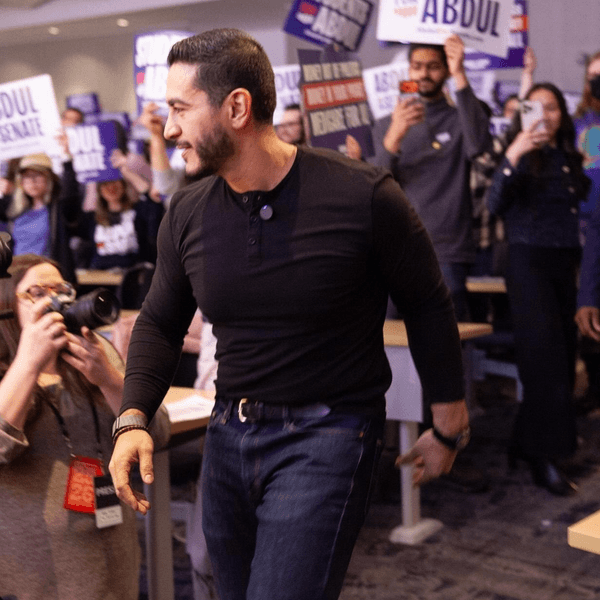
In the Democratic US Senate primary race in Michigan, a big swing—particularly among voters aged 18-44—toward former public health official and Medicare for All advocate Dr. Abdul El-Sayed was found Tuesday in the latest poll by a research firm that six months ago had seen the progressive candidate in distant third place.
Twenty-eight percent of primary voters said they were supporting El-Sayed in a poll released by Mitchell Research and Communications, while 18% said they were backing US Rep. Haley Stevens (D-Mich.), who has the support of Democratic leaders and the powerful pro-Israel lobby group American Israel Public Affairs Committee (AIPAC).
Seventeen percent of voters said they were supporting state Sen. Mallory McMorrow (D-8).
The poll showed an inversion of the result found by Mitchell in November, when El-Sayed was trailing his two opponents by eight points and Stevens and McMorrow were separated by just three points.
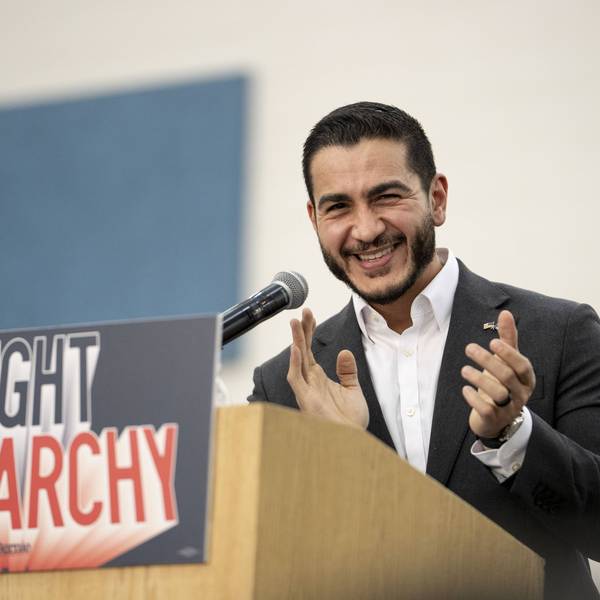
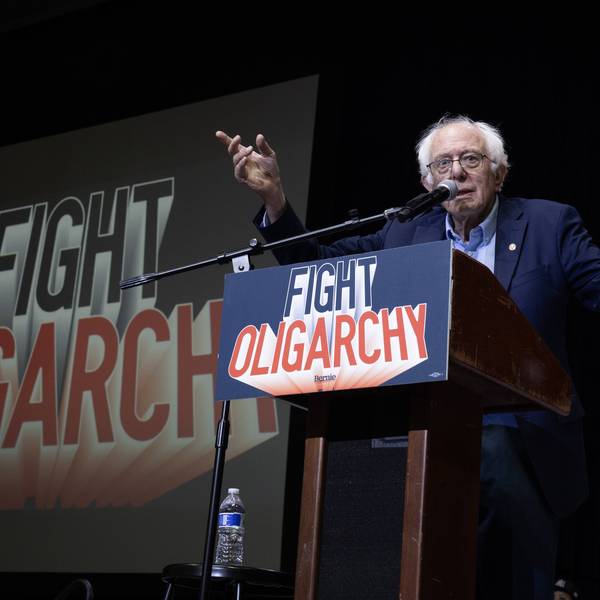
Mitchell polled 405 likely primary voters between May 1-7, around the time that El-Sayed appeared with US Sen. Bernie Sanders (I-Vt.) at a rally as part of the senator’s Fighting Oligarchy Tour. He drew loud applause for condemning AIPAC for its persistent conflation of antisemitism with criticism of Israel, and spoke about his strong support for expanding the Medicare system to everyone in the US.
The poll also came after a weekslong controversy that was promoted by centrist think tank Third Way, with the support of both Stevens and McMorrow, targeting El-Sayed for campaigning with Hasan Piker, a Twitch streamer and commentator who’s been outspoken in his condemnation of Israel.
With the controversy largely in the rearview mirror despite some lawmakers’ continued fixation on Piker, the new poll suggests the criticism of El-Sayed didn’t land in Michigan—particularly among voters in younger demographics arguably more likely to have heard of Piker, who gained notoriety by sharing political commentary while playing video games online.
Among voters under the age of 45, El-Sayed had 80% of the support in the poll released Tuesday.
The other two candidates in the race barely registered among voters in the demographic, with 4% supporting Stevens and 3% backing McMorrow. The primary race has been called a “millennial showdown” by local media, with the three candidates ranging in age from 39-42.
The poll comes after numerous surveys have found that Israel—the issue that Third Way attempted to center in the election—has plummeting support among voters, following its yearslong assault on Gaza. Last October, nearly half of Democratic voters in swing districts, including in Michigan, said in a poll that they would vote against a candidate funded by AIPAC.
Meanwhile, Medicare for All—the proposal that’s a key focus of El-Sayed’s platform—was supported by 78% of Democratic voters, along with 71% of Independents and 49% of Republicans in a survey by Data for Progress late last year.
Rotimi Adeoye, a contributing opinion writer at The New York Times, said the poll suggested that Third Way had “jumped into this race and leaned into identity politics in a way that just polarized the electorate further in El-Sayed’s favor, given he’s solely focused on healthcare.”
“If you are spending any time as a candidate not talking about housing, healthcare, the economy, groceries, and dedicating a second or a millisecond talking about Hasan Piker or the identity politics topic of the day on Twitter, you’re losing,” said Adeoye.
Jon Favreau, co-host of Pod Save America and a former speechwriter under the Obama administration, summed up the poll results succinctly.
The survey, he said, showed a “Third Way bump” for El-Sayed.
YEARS AGO WARREN BUFFETT CALLED CRYPTO "RAT POISON SQUARED!"
"In just one year in office, the president and his family have raked in at least $1.4 billion in gains from crypto deals alone, and yet this bill stunningly includes zero provisions to prevent that." |
|
US Sen. Elizabeth Warren warned Monday that bipartisan cryptocurrency legislation set to come before a key committee later this week would do nothing to rein in brazen profiteering by President Donald Trump and his family.
“This bill puts investors, our national security, and our entire financial system at risk—and it will turbocharge Donald Trump’s crypto corruption,” Warren (D-Mass.), the top Democrat on the Senate Banking Committee, said following the release of legislative text for the Digital Asset Market Clarity Act. “In just one year in office, the president and his family have raked in at least $1.4 billion in gains from crypto deals alone, and yet this bill stunningly includes zero provisions to prevent that.”
“The American people are watching,” Warren added. “No member of the committee should support a bill that fails to stop the massive conflict of interests posed by Donald Trump and his family’s crypto ventures.”
The Trump family’s foray into digital assets and creation of what one outlet called a “global crypto cash machine” is largely responsible for the explosion of the president’s net worth since the start of his second White House term. “In one form or another, crypto accounted for $3.02 billion of the president’s profits from August 2025 to January 2026,” MS NOW reported earlier this month.
Warren and other Senate Democrats are pushing for the inclusion of ethics language that would limit government officials’ ability to profit off digital assets, but a closed-door meeting on Tuesday ended without an agreement. Senators on the Banking Committee are set to meet Thursday to mark up the crypto measure, which supporters have billed as “comprehensive market structure legislation that establishes a clear regulatory framework for digital assets.”
“This bill is the product of more than ten months of bipartisan negotiations and extensive engagement with regulators, law enforcement, academics, and industry,” the Senate Banking Committee’s Republican majority said in a statement Tuesday.
Last week, the consumer advocacy group Public Citizen demanded in a letter to members of the banking panel that the bill “include prohibitions on federally elected officials, including the president, from engaging in any cryptocurrency venture.” The group called on lawmakers to insert a ban on “any form of crypto issuance, ownership, sponsorship, promotion, endorsement, and/or profiteering by a federally elected official” and a divestiture requirement for officials with existing crypto holdings.
Public Citizen also urged lawmakers to “penalize crypto quid pro quo” by requiring fines or prison time for “any federally elected official, including the president, who, directly or indirectly, corruptly demands, seeks, receives, accepts, or agrees to receive or accept anything of value personally, including crypto-related transactions.”
“President Trump’s expansive ventures into crypto already violate several existing laws,” Public Citizen said. “Approving a bill that fails to confront these violations would explicitly declare that lawmakers countenance such infractions.”
"Trump is more focused on finishing his billion-dollar ballroom than lowering prices for American families," said one critic. |
|
Federal data released Tuesday showed US inflation rising to the highest level it’s been since May 2023, as President Donald Trump’s Iran War has led to increases in the costs of both energy and food.
The latest Consumer Price Index (CPI) released by the US Bureau of Labor Statistics finds that prices in April posted a year-over-year increase of 3.8%, above economists’ expectations of a 3.7% increase, driven by energy prices that surged nearly 18% from April 2025.
The price of groceries also notched significant increases during the month, the report notes.
“Five of the six major grocery store food group indexes increased in April,” says the report. “The index for meats, poultry, fish, and eggs increased 1.3% over the month as the index for beef rose 2.7%. The fruits and vegetables index increased 1.8% in April and the nonalcoholic beverages index rose 1.1%. The index for dairy and related products increased 0.8% over the month and the index for cereals and bakery products rose 0.1% in April.”
Economists said the new CPI report showed significant trouble ahead for American consumers, who last month registered record-low sentiment in the University of Michigan’s Surveys of Consumers, driven in large part by anxiety over price increases caused by the Iran war.
Joseph Brusuelas, chief economist at RSM, told The Wall Street Journal that “the American economy has entered a new chapter where inflation appears to have stepped up,” and predicted that “median American families are going to find it very challenging to adjust going into the second half of the year.”
Heather Long, chief economist at Navy Federal Credit Union, observed that the cost of living in April rose above average monthly wage gains, meaning US consumers are no longer just treading water but falling behind.
“Inflation is now eating up all wage gains for the first time in about three years,” she wrote. “This is painful for Americans and a true financial squeeze.”
University of Michigan economist Justin Wolfers highlighted just how much the latest CPI report exposes the false promises President Donald Trump made during the 2024 presidential campaign.
“Trump campaigned on bringing down the cost of living ‘starting on day one,’” he wrote, “and then: started a trade war; deported much of the farm workforce, bombed Iran, allowed healthcare subsidies to expire, cut food assistance, ran an interest-rate boosting deficit, and attacked Fed independence.”
Rep. Brendan Boyle (D-Pa.) similarly ripped Trump’s economic mismanagement in the wake of the CPI report.
“From his tariff taxes to his disastrous war in Iran, President Trump is making life even harder for American families,” said Boyle. “Today’s inflation data confirms what everyone can see: costs are out of control, and President Trump is responsible.”
The latest CPI data comes as a poll from CNN released Tuesday shows a record-high 70% of Americans disapprove of Trump’s handling of the economy, with 75% of US voters saying the president’s unprovoked war of choice with Iran has had a negative effect on their financial situations.
Trump’s approval on the economy was a strength throughout his first term, even as polls showed him to be otherwise unpopular. As noted by CNN senior political reporter Aaron Blake, Trump’s disapproval on the economy “never even reached 50% in his first term,” but has now been at over 60% for the last year.
Alex Jacquez, chief of policy and advocacy at Groundwork Collaborative, said in a statement that “Trump chose to reignite inflation with his illegal and reckless war in Iran, and more than two months in, there’s no offramp in sight.”
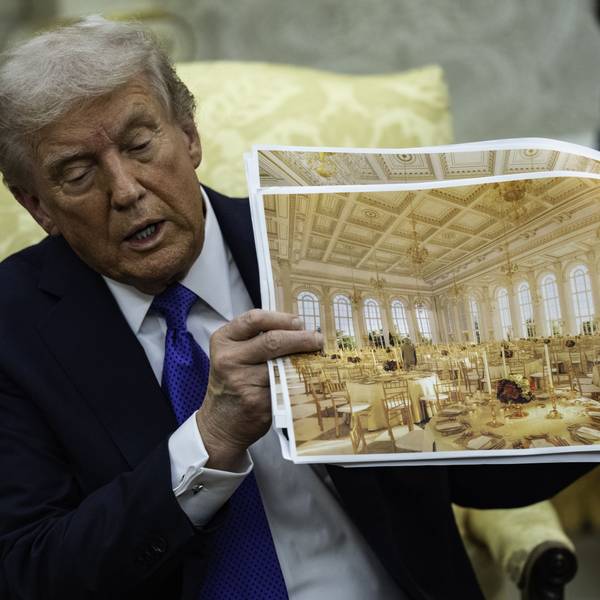
“Every day the war continues, prices climb higher and will stay there for months after it ends,” said Jacquez. “As Americans continue to rank cost of living and inflation as their most important issues, Trump is more focused on finishing his billion-dollar ballroom than lowering prices for American families.”













No comments:
Post a Comment
Note: Only a member of this blog may post a comment.