■ Opinion
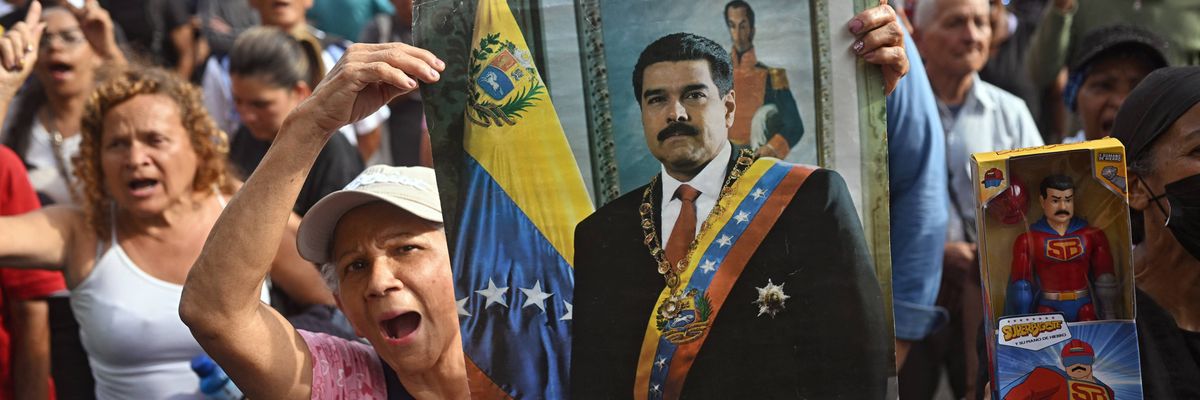
A woman holds a portrait of Venezuelan President Nicolas Maduro during a gathering in Caracas on January 3, 2026, after US forces kidnapped him.
(Photo by Federico PARRA / AFP via Getty Images)
The intervention machine is rigging the world for US big business interests, at the price of Global South dignity and agency.
By Tamara Pearson
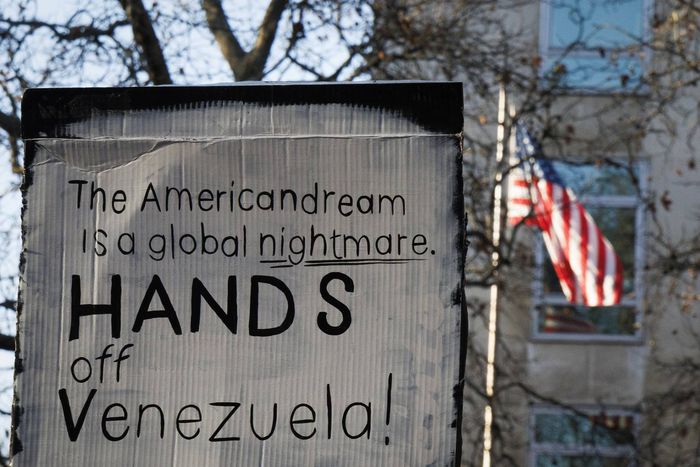
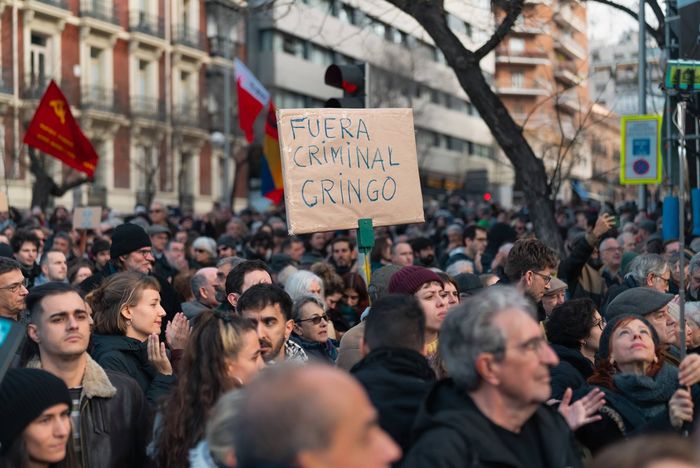
With its violent military intervention into Venezuela—a country where I once lived—the US has begun this year with entitled and undisguised imperialism. The unapologetic kidnapping of Nicolas Maduro and of Celia Flores (not just a wife as the media refers to her, but also former head of the National Assembly) and killing of at least 40 Venezuelans aims to cement and normalize the US standard operating procedure for international relations as violence and control. It will take Venezuela’s oil and other crucial minerals, and to hell with Global South self-determination, agency, and ownership.
I remember when I lived in Venezuela, and we talked about what we would do if the US attacked. We were already facing other kinds of attacks, including basic food shortages orchestrated by private companies, destabilization attempts, right-wing violence, and English-language mainstream media lies. The conversation particularly came up around elections, when the shortages and destabilization typically increased, and US attacks felt less hypothetical.
Even then, though, we would balance the very real and long history of violent US interventions in Latin America with skepticism. How could they kill innocent people and bomb what felt like to me the closest thing to paradise? Venezuela was never a utopia; there were mistakes and much work to do, but the Andean mountains were intensely green, the coastal waters a peaceful turquoise, the nights full of fairy fog that you could see drifting down the streets. The days were full of the laughter of the tiny children I taught through our participatory education project. We solved our own local problems as an organized community, turned empty lots into community gardens, and there was always political debate and high levels of political literacy. People knew their constitution, often by heart, knew the laws, and the news. Venezuelans had an infinite urge to dance, even on moving buses or after two-day long meetings. How could anyone consider destroying that world? It felt inconceivable. It didn’t make sense, and it still doesn’t.
Yet we all know that beautiful Gaza, with its beaches, shops, delicious zaatar bread, hospitals, books, and resilient people, has been turned into rubble and whole families wiped out. The US-led destruction of Afghanistan and Iraq ruined people, communities and saw key cultural and archaeological sites irreparably damaged, and artifacts looted. I live in Mexico now, and here alone, the US has used NAFTA and the so-called “War on Drugs” to militarize this beautiful country and systematically turn it into a vast grave (with 131,000 forced disappearances) and into an obedient neoliberal production line for nearshoring US companies. So, in Venezuela, I guess we should have been less skeptical. Friends there messaged me on Saturday in shock, their ears ringing from the sounds of bombs. New Year’s weekend wasn’t meant to be this.
However, throughout 2025, the US had asserted itself more openly as global police chief at the service of big business. It “negotiated” (aka pressured) a “ceasefire” in the Democratic Republic of Congo which would give it access to the country’s highly sought-after tech minerals and metals. It has supported Israel’s genocide in Gaza, bombed Nigeria, and killed Venezuelans with complete impunity. It closed its borders to refugees in violation of international law, and breached migrant and human rights within its own borders. It also bombed Syria, Iraq, Iran, Yemen, and Somalia. It carried out or was partner to 622 overseas bombings in total, and also intervened in manipulative ways, such as Trump’s comments days before the Honduran election in November that led to the victory of the right-wing candidate he backed, or the US role in the international “Gang Suppression Force” in Haiti.
While global institutions like the International Criminal Court and the United Nations have demonstrated their ineffectiveness at doing anything at all about the illegal US sanctions against Cuba, the genocide in Gaza, or climate destruction, Trump has been able to fortify the US as a force that actually decides international affairs.
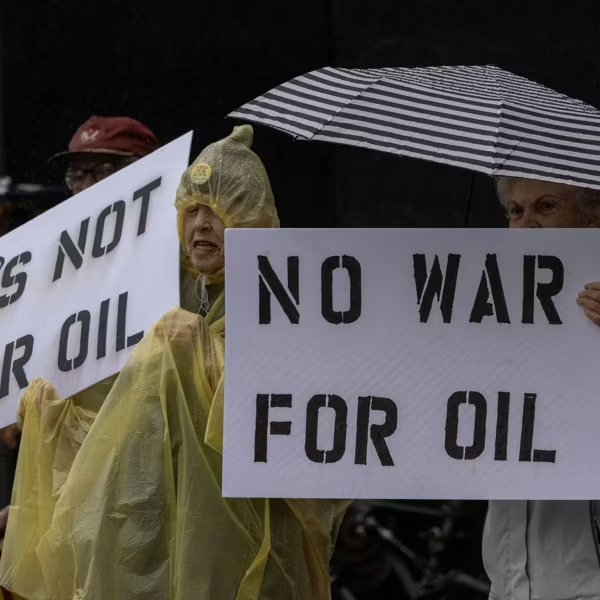
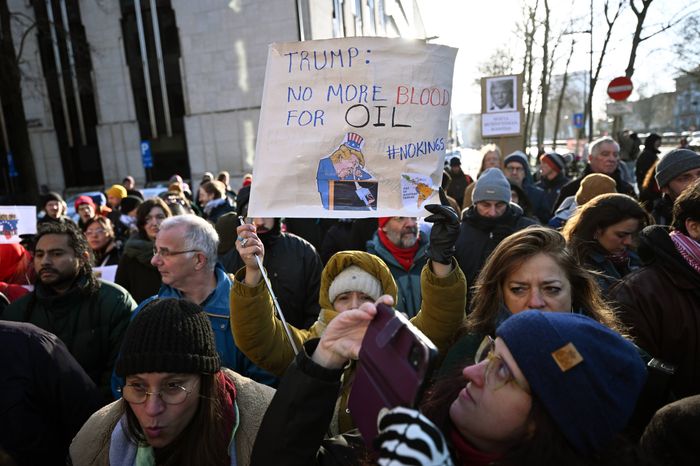
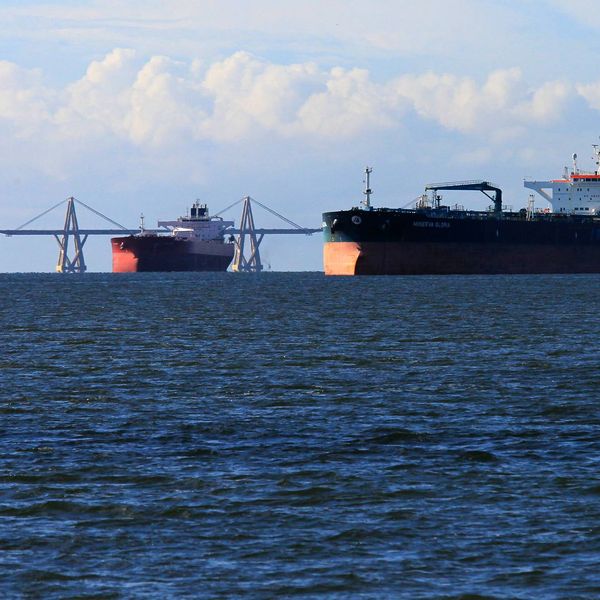
In his press conference Saturday, Trump said the US would be selling Venezuelan oil. Though he laid the groundwork for the military intervention into Venezuela with evidence-free talk of drug cartels and “narcoterrorists”—murdering more than 100 people in cold blood on boats in the Caribbean and eastern Pacific—most people knew this was always about regaining control over the country with the largest known oil reserves. However, Venezuela also represents defiance. The US has sanctioned the country for such behavior for over a decade, killing or contributing to the deaths of over 40,000 people in 2017–18 alone.
The US doesn’t just treat the Global South as a resource buffet. In order to secure its access to natural resources, it wants the governments of less powerful nations at its beck and call. Venezuela, especially during the 2010s and through initiatives like CELAC, was playing a role of uniting Latin America against such dominance and towards independence and social and economic alternatives.
The bombing of Venezuela, beyond the oil itself, is about US control over Latin America and part of a right-wing pushback against social movements, grassroots empowerment, and alternatives to violent capitalism. Beyond Bukele in El Salvador and Milei in Argentina, in 2025 the right wing also won in Bolivia, Honduras, and Chile. With Trump’s backing, these “leaders” are furthering racist, homophobic, sexist, and privatization agendas.
Normalizing empire and global human rights violations
Beyond the horrific event itself, the events of January 3 are part of a move towards normalizing a global state of danger, insecurity, human rights abuses, and disregard for international law. It does not matter what anyone thinks of Maduro; whether he won the 2025 election is an important discussion for another place and time. The US has no right to determine the heads of other countries. It wants to be, but is not the world boss, and beyond that, has no moral standing to decide or control anything.
But Saturday’s move, as a continuation of US policy in 2025, upholds military intervention as a solution to problems. It is a signal to wayward countries to obey. Such imperialism not only kills people, in the long term it perpetuates racist tropes of Global South countries that can’t run themselves, while legitimizing US- and Euro-centrisim that stipulates their monopoly on wisdom and democracy. Imperialism scares its victims into silence and submission and cements a global apartheid dynamic where some regions are politically and financially controlled, subjected to unlivable wages and to resource robbery. Through debt systems and trade and income inequalities, rich countries have drained $152 trillion from the Global South since 1960.
The intervention machine is rigging the world for US big business interests, at the price of Global South dignity and agency. For invaded and intervened countries, there are hidden impacts as well; lower self-worth and an unsubstantiated belief that one’s education, art, and inventions are inferior, disillusion with organizing and movements, and often, a need to migrate that is then met with rejection by those forces causing that need—as of course is the case with the US and Venezuela.
The Venezuelan people are not a threat. The country doesn't even produce or traffic significant amounts of illicit drugs. In reality, much of the cruelty and harm globally is coming from the US. The Trump government and the US elites are the ones committing human rights violations, shirking democracy by orchestrating coups like the one on Saturday morning, violating international law and destroying moral decency with the extrajudicial killing of people in Venezuelan boats under the pretext of opposing drug trafficking. With Saturday's attack, the US furthers its and Israel's impunity for war crimes, abuses, and violations.
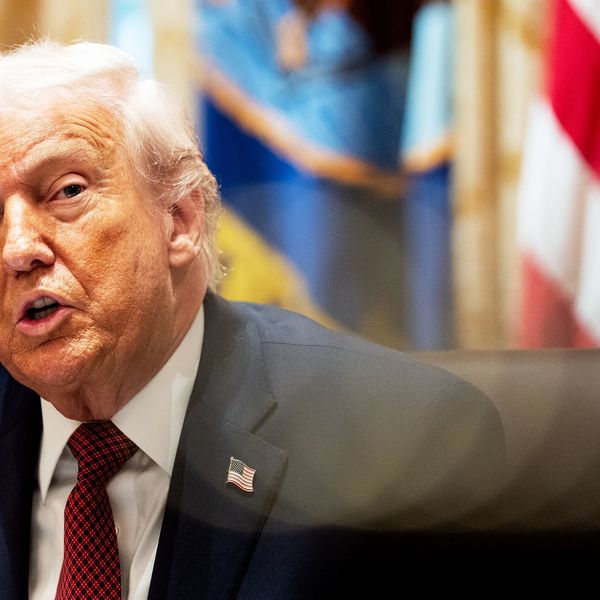
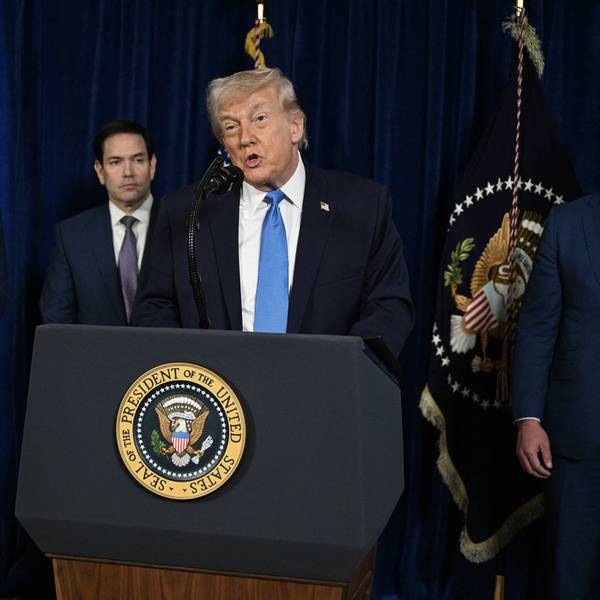
US Secretary of State Marco Rubio looks on as US President Donald Trump speaks to the press following US military actions in Venezuela, at his Mar-a-Lago residence in Palm Beach, Florida, on January 3, 2026.
(Photo by Jim WATSON / AFP via Getty Images)
With all our disasters at home, it’s a safe bet we’re not wanted in Venezuela for our management expertise. In fact, most Venezuelans don’t want us there at all.
By Richard Eskow
Read it in the news:
“Economic Confidence Drops to 17-Month Low”
—Gallup, December 4, 2025
“Satisfaction with U.S. healthcare costs is the lowest Gallup has recorded … since 2001.”
—Gallup, December 15, 2025
“ACA credits expire, leading to sharp rise in health insurance premiums.”
—WANF TV Atlanta, January 1, 2026
“We’re going to run (Venezuela) until such time as we can do a safe, proper, and judicious transition.”
—Donald Trump, January 3, 2026
The commentary pretty much writes itself. As surely as night follow day, the Trump Administration was bound to do something to distract Americans from their well-founded economic fears—especially from a health cost crisis Trump’s party just made vastly worse. And all that Venezuelan oil looks mighty attractive from an oligarch’s perspective.
But “run Venezuela”? Shouldn’t they do a better job running this country first? Let’s start with healthcare. The Affordable Care Act is what programmers used to call a “kludge”; it’s a Rube Goldberg contraption whose goal is to mitigate the pain caused by America’s so-called healthcare “system.” America’s healthcare crisis can’t truly be fixed until the profit motive is removed.
Nevertheless, the ACA has provided at least some healthcare coverage to millions of people. That’s better than nothing—much better. The premium tax credits are a wealth transfer from the public to the private sector. But without them—and with no other system in place—millions of people will soon face disastrous monthly premium hikes. If they don’t pay them—and many won’t be able to afford it—they’ll face financial ruin if they become sick or injured.
We can recognize the flawed nature of the ACA and still see that these Republican cuts are inhumane and indefensible.
“We can’t afford it,” the Republicans argue. But that raises the obvious question: If not, then how can we afford to “run Venezuela”? Besides, they’ve got work to do right here.
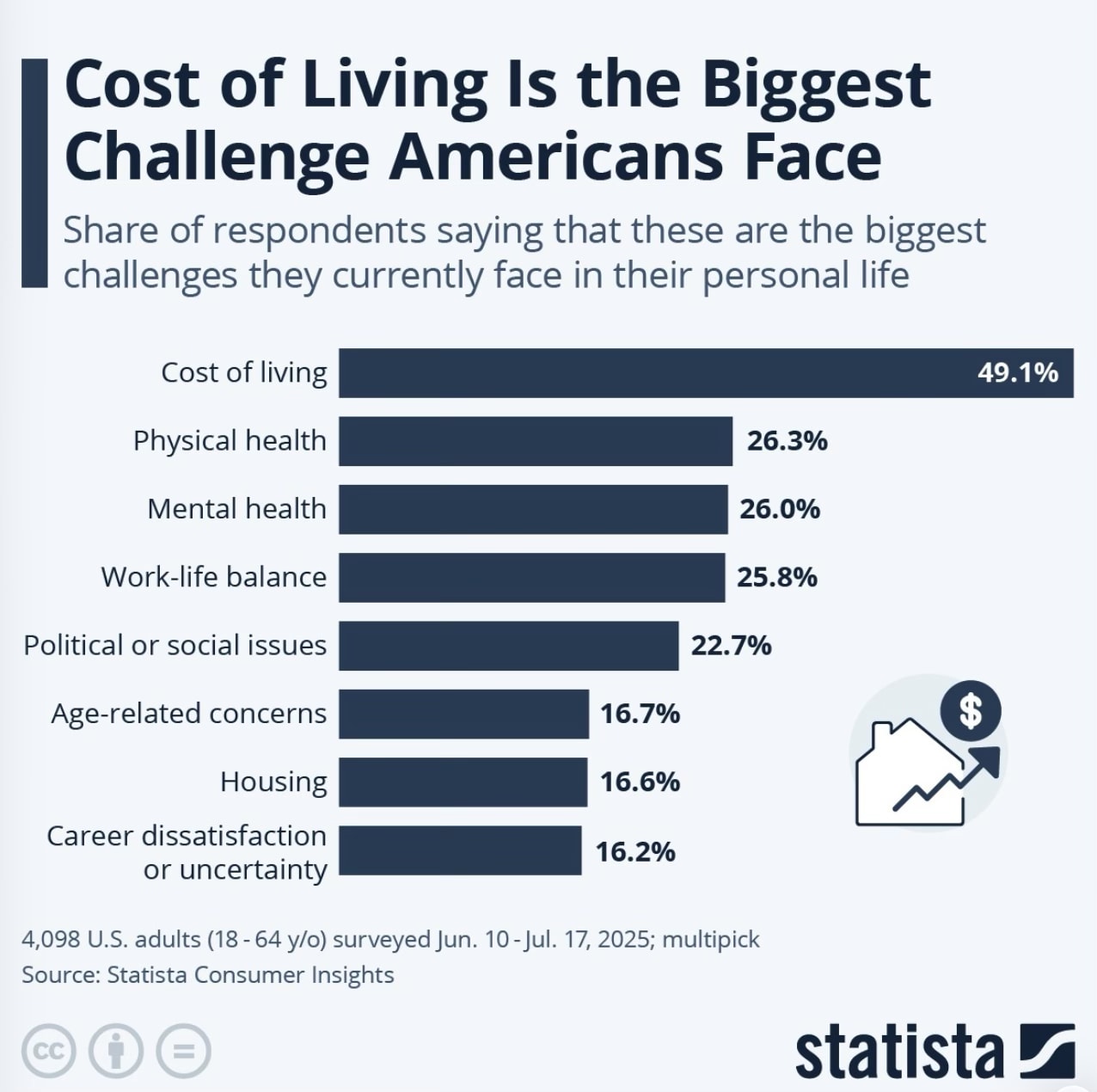
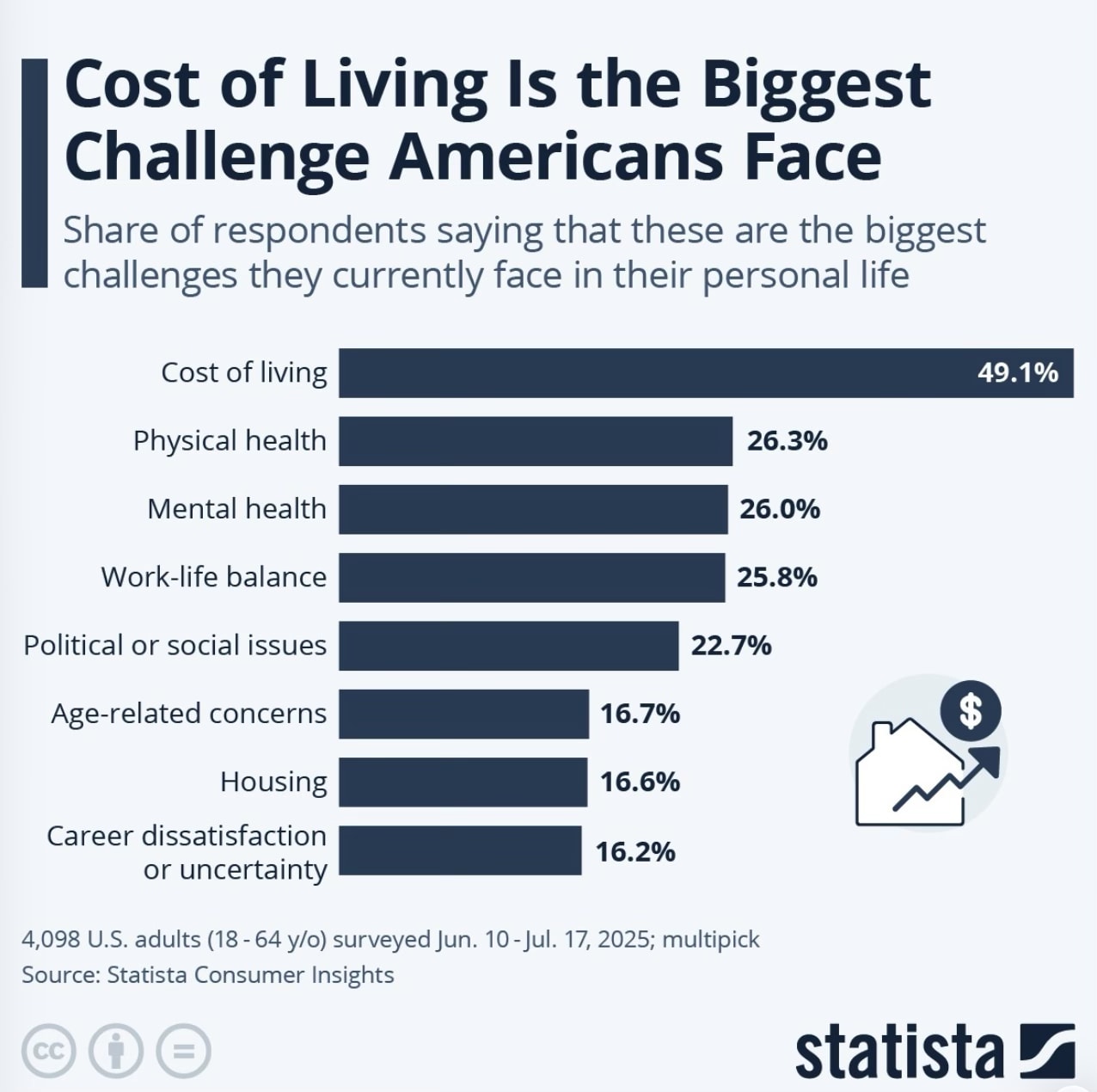
Sure, the economy is doing pretty well—for the investor class. But even that limited success is hanging by a thread. It’s driven by an AI bubble that will almost certainly burst, wreaking economic havoc when it does. Meanwhile, millions of households are struggling with the cost of living (click on images to expand):
 Visual Capitalist/Statista
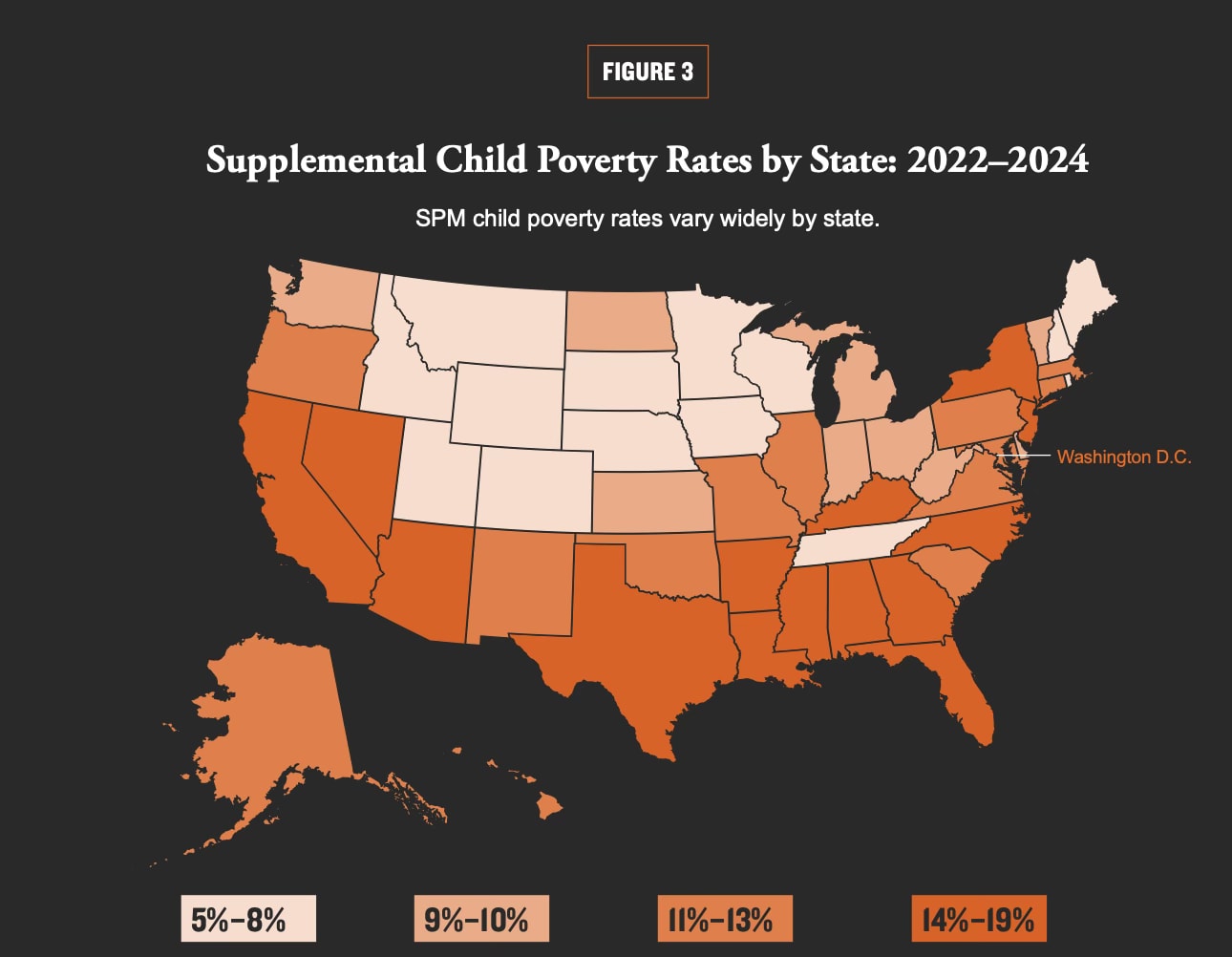
More than 43 million Americans live in poverty, including one child in seven:
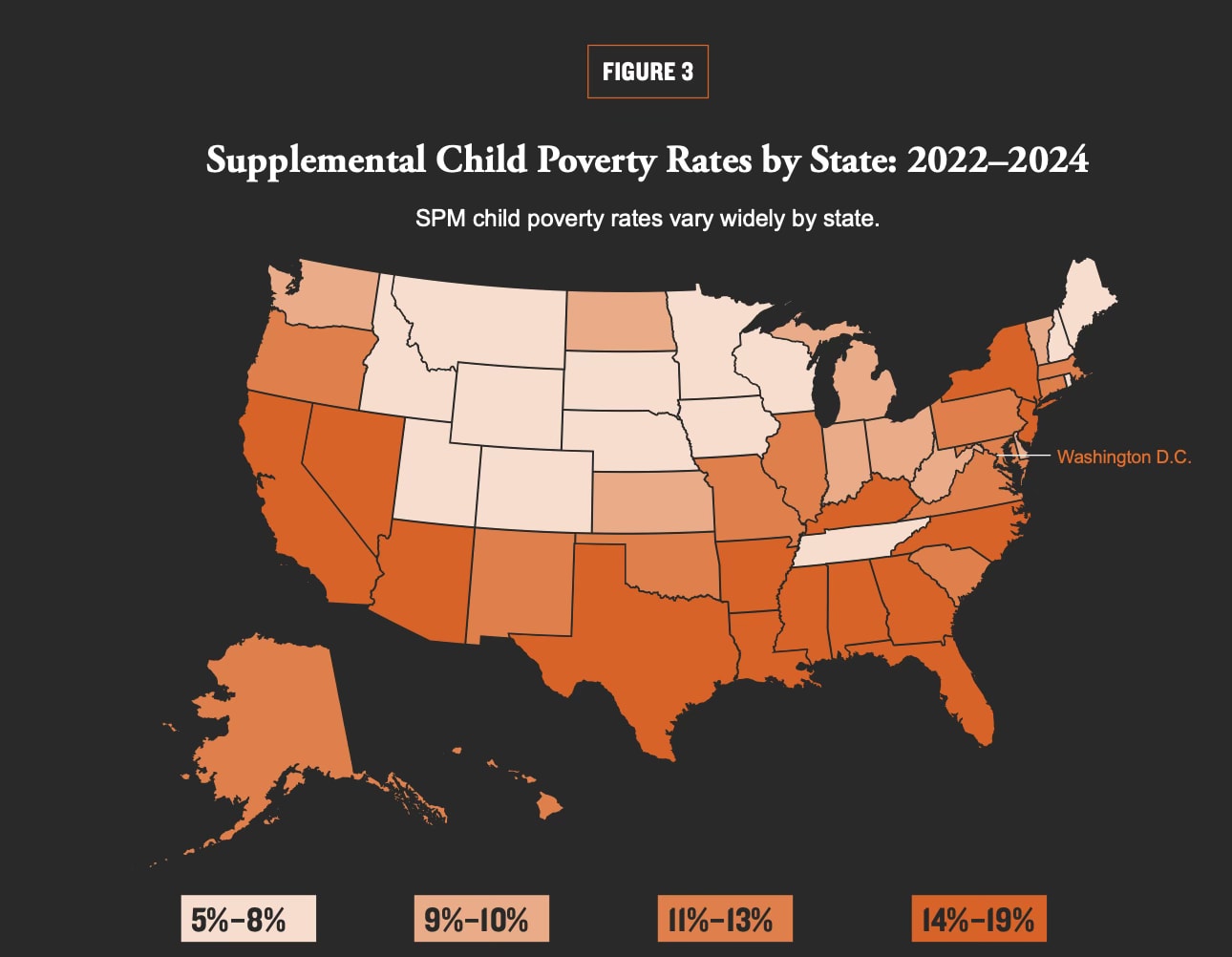 Source: Annie E. Casey Foundation
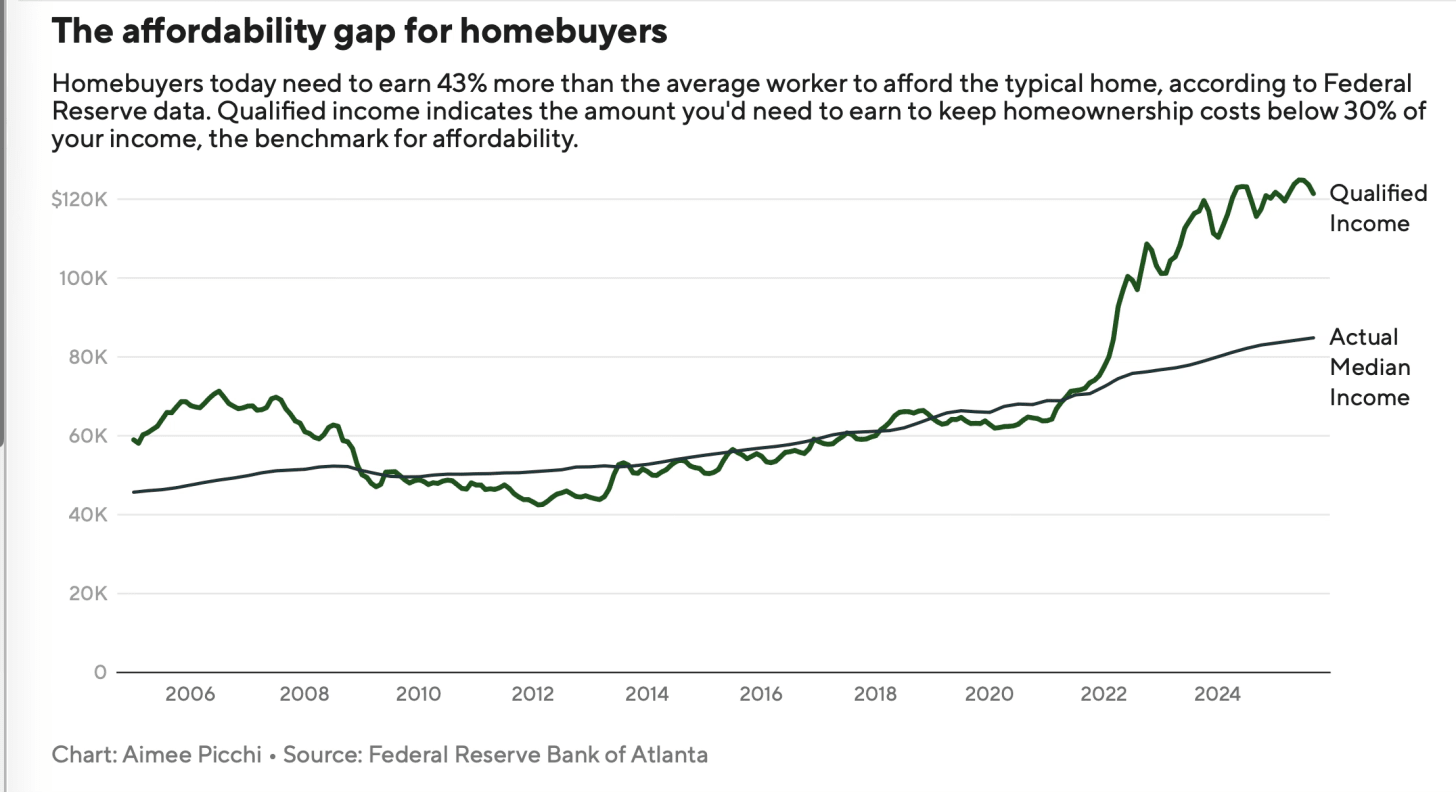
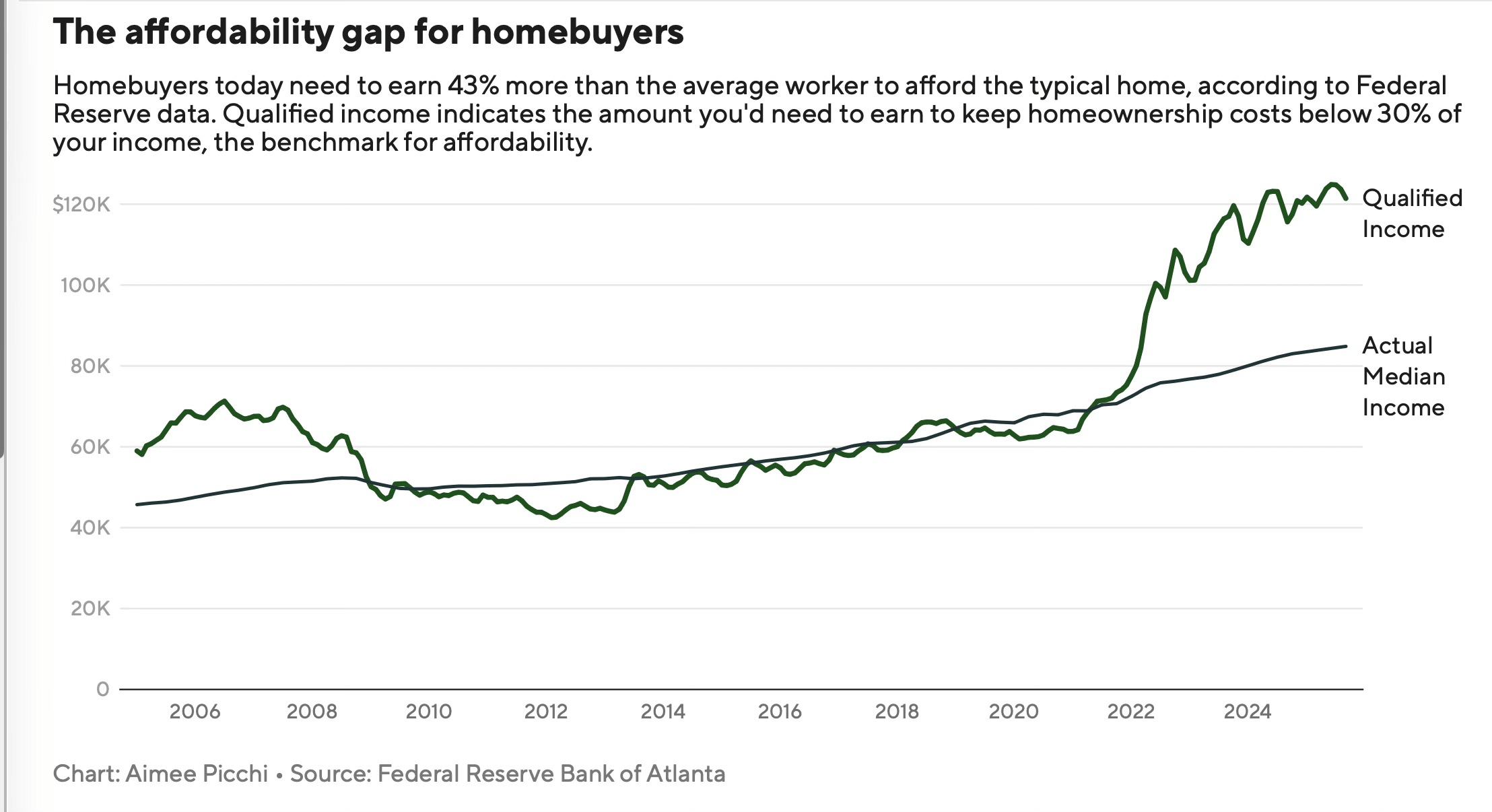
The housing shortage is causing widespread pain as homes become increasingly unaffordable for most workers:
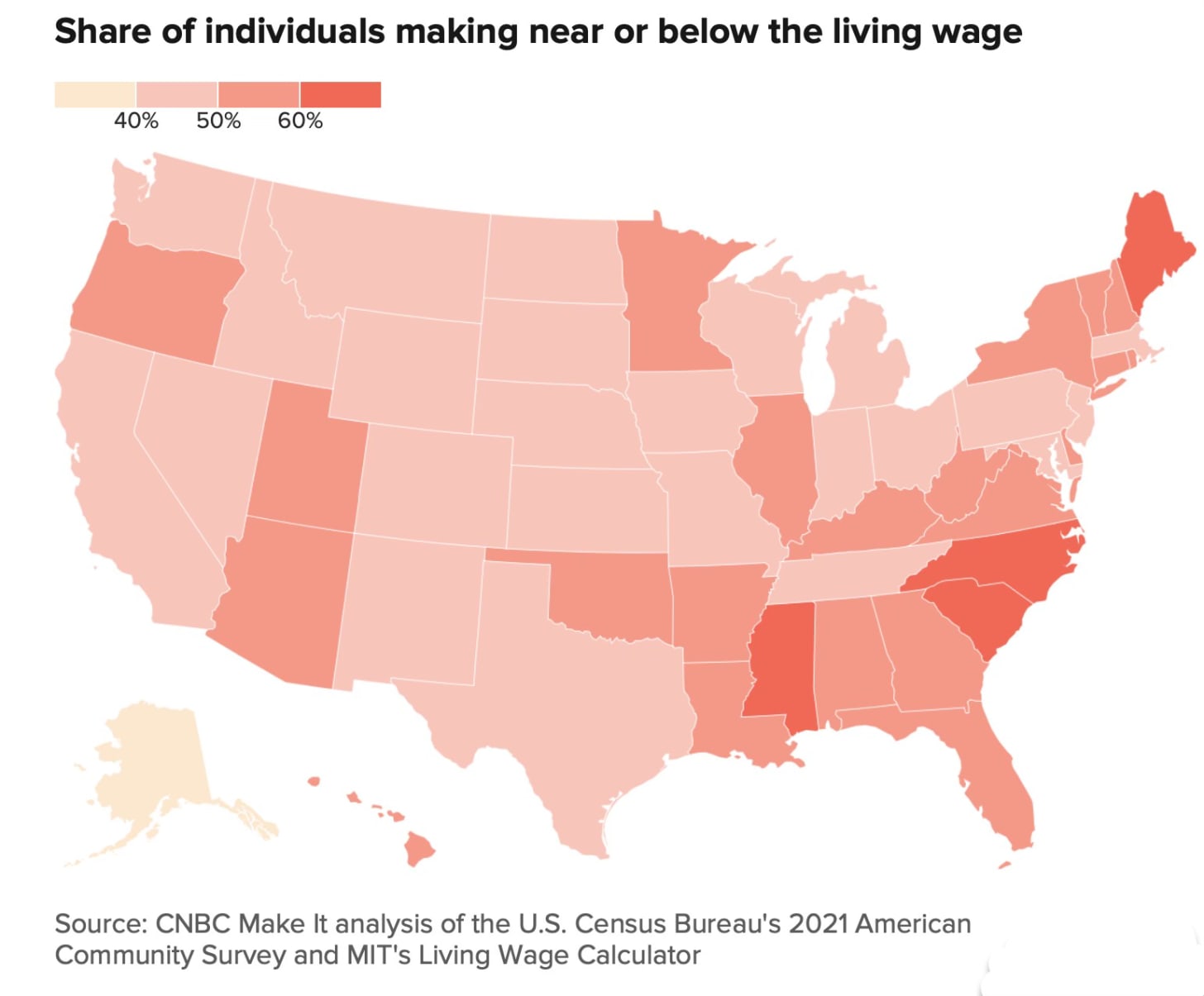
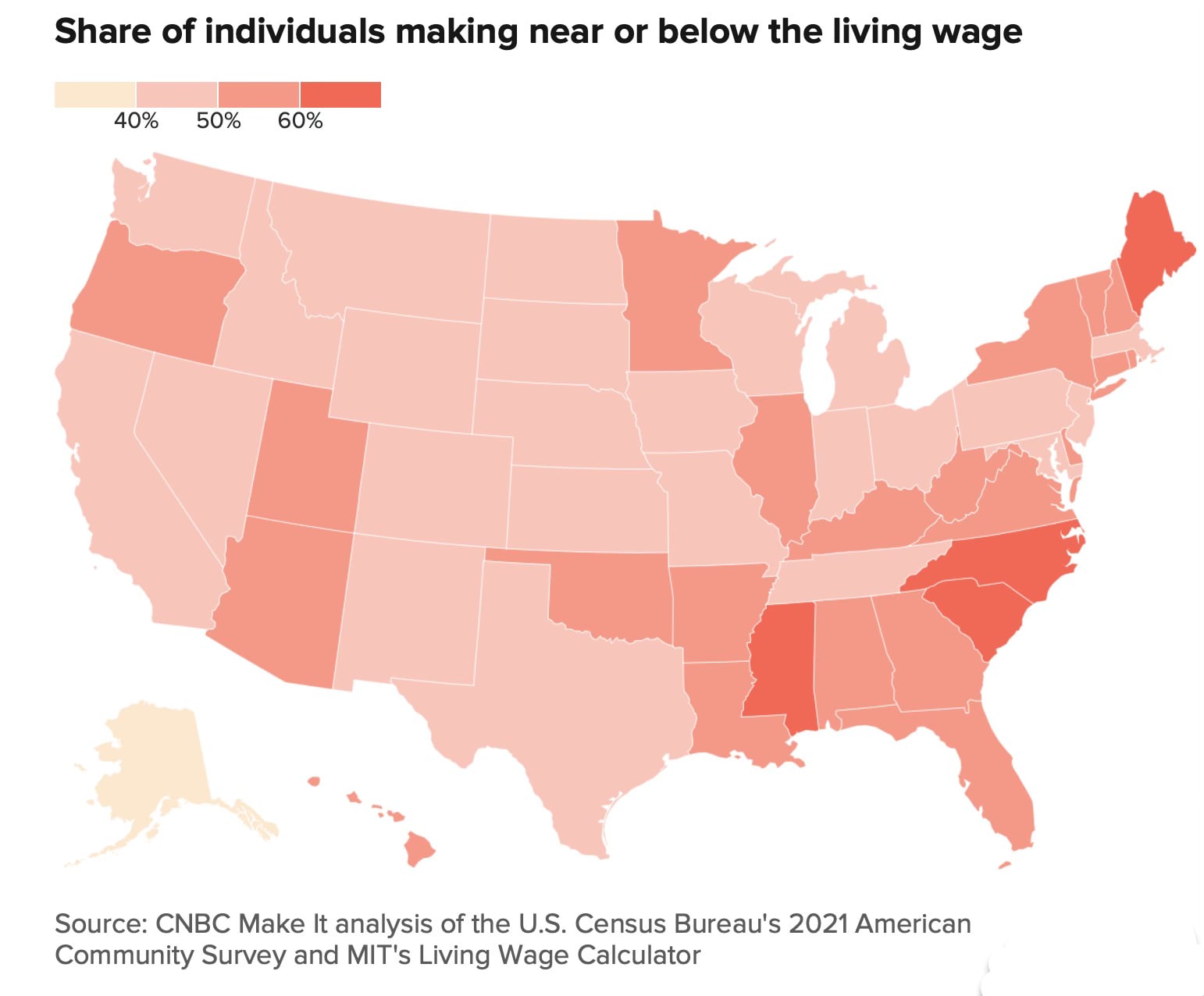
The labor outlook is “cooling,” as the economists say. But even that doesn’t count the most critical element of the job market, which is the ability to find jobs that actually pay a living wage:
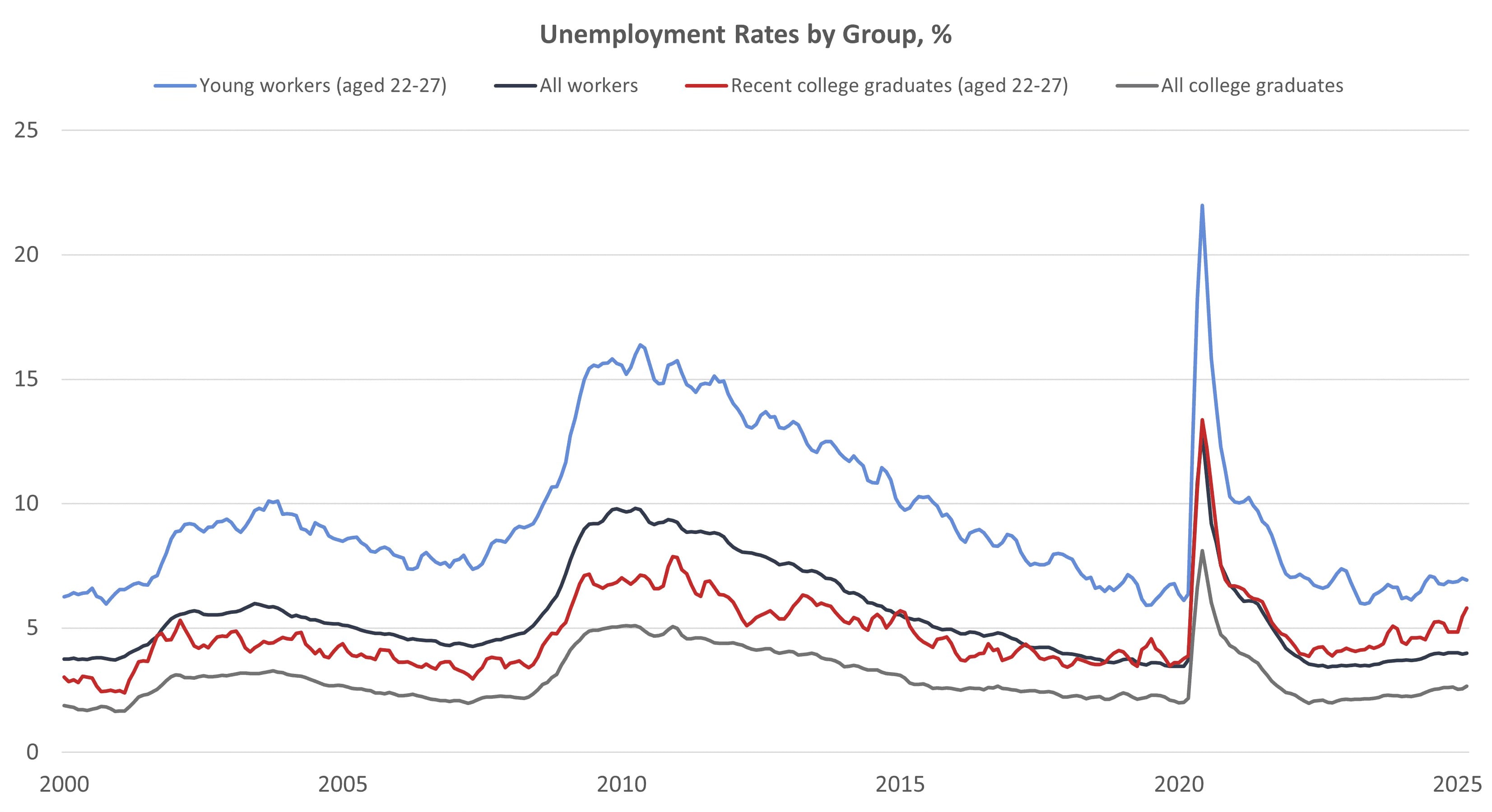
Young people are especially hard-hit:
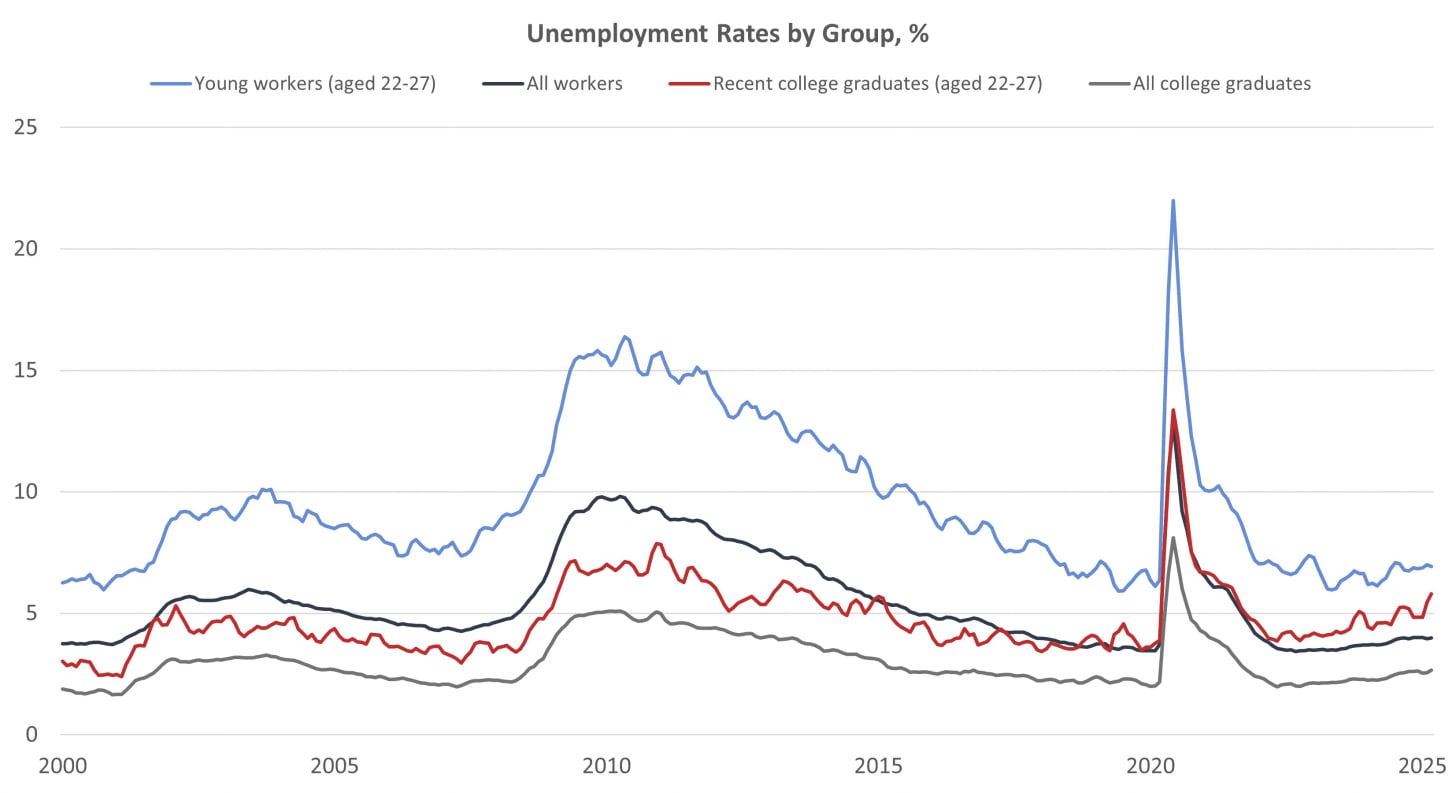
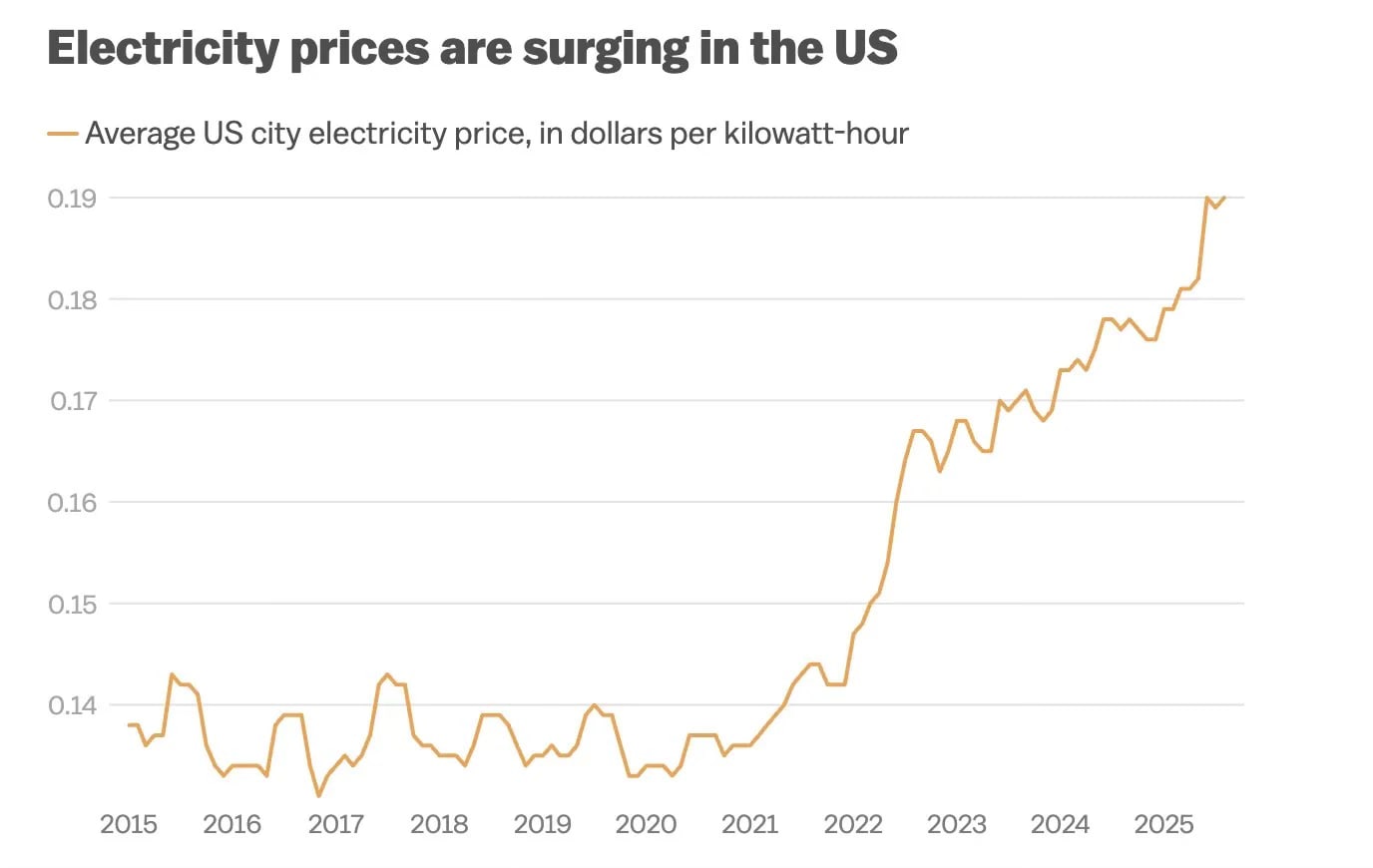
“Energy affordability” is a growing crisis, too. The average American household paid $124 per month more on its utility bill in the first nine months of 2025 and rates are still rising, with no end in sight:
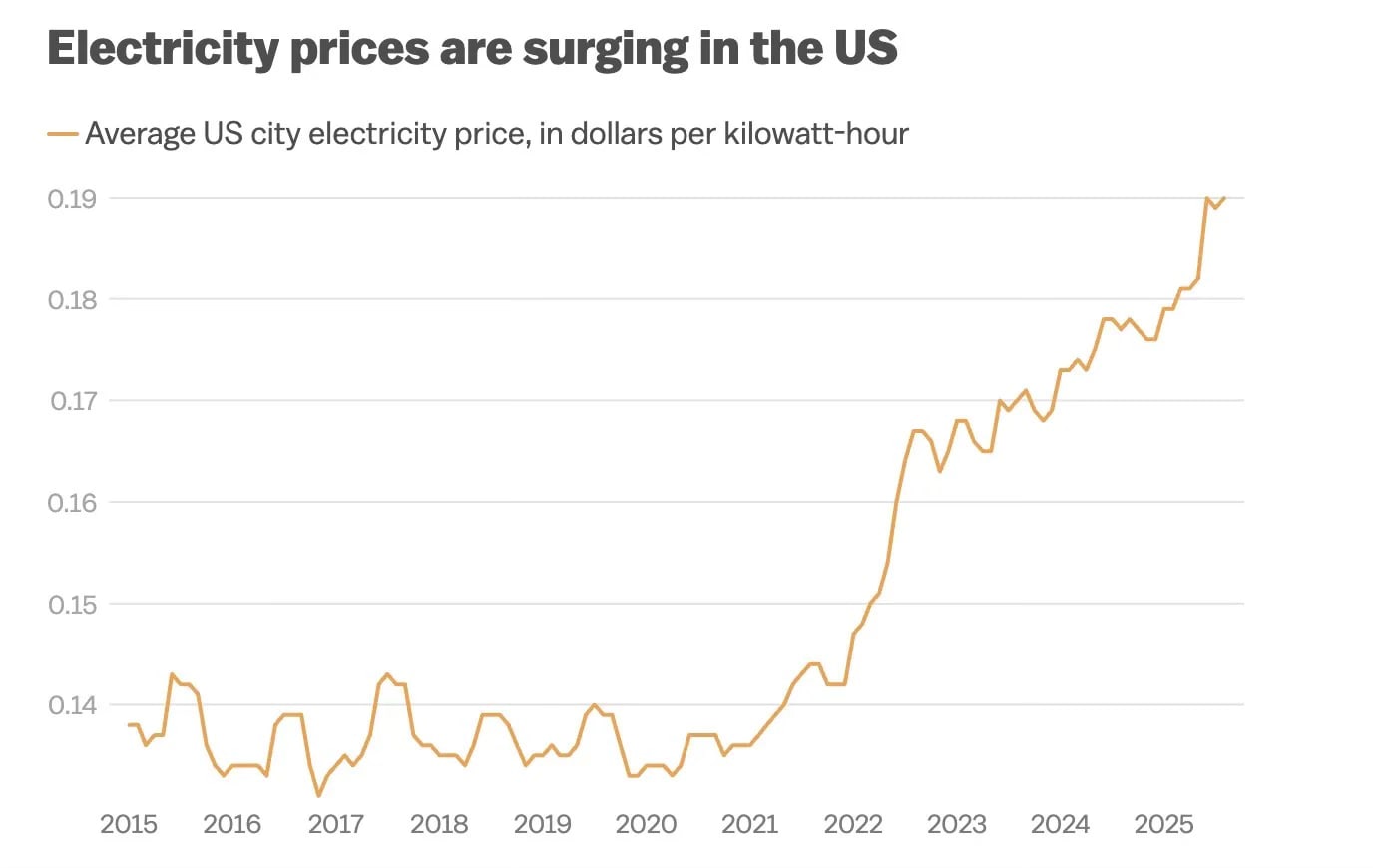
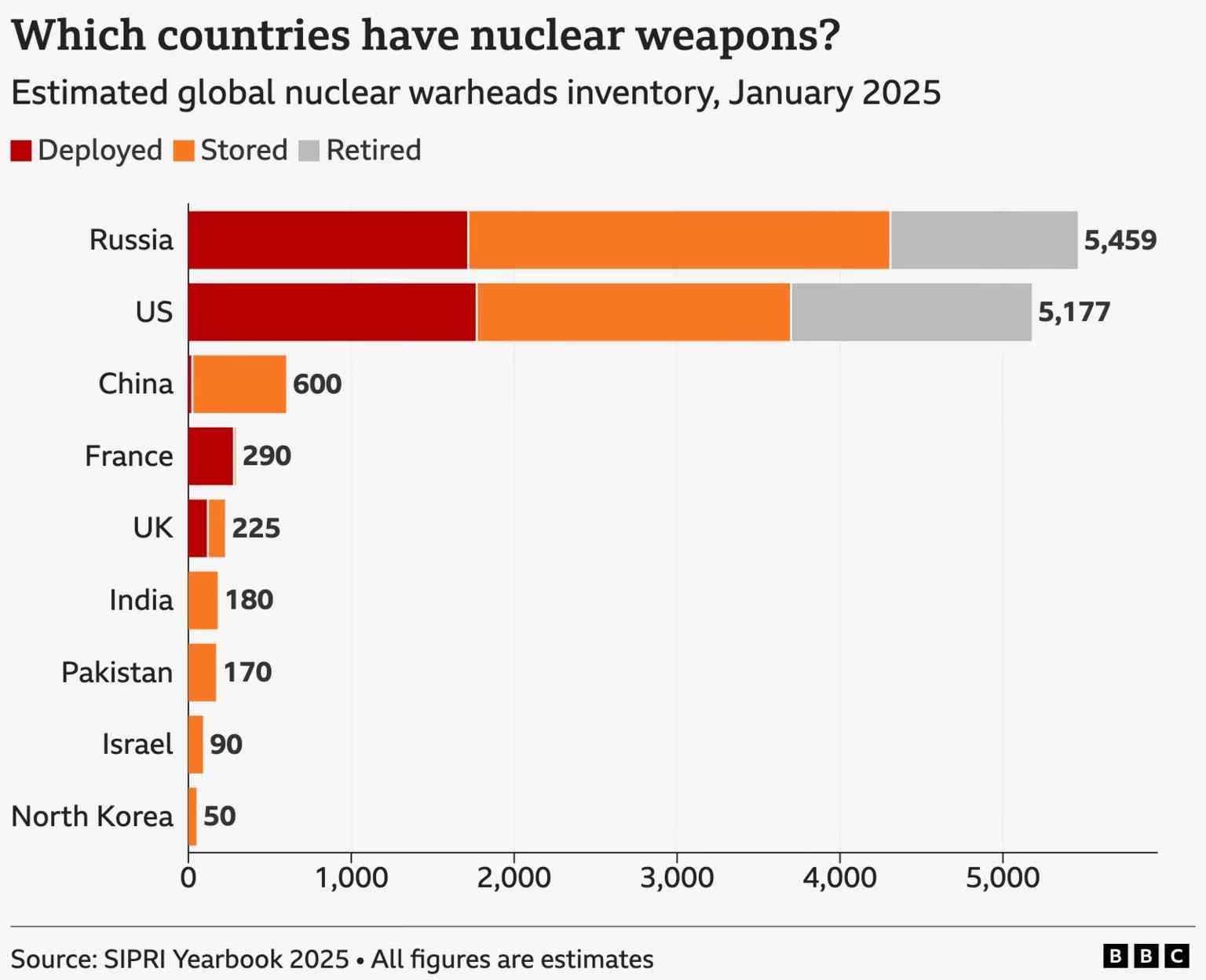
Oh, and the New START treaty will expire in a few weeks, leaving the world with no meaningful limits on the possibility of a new nuclear arms race:
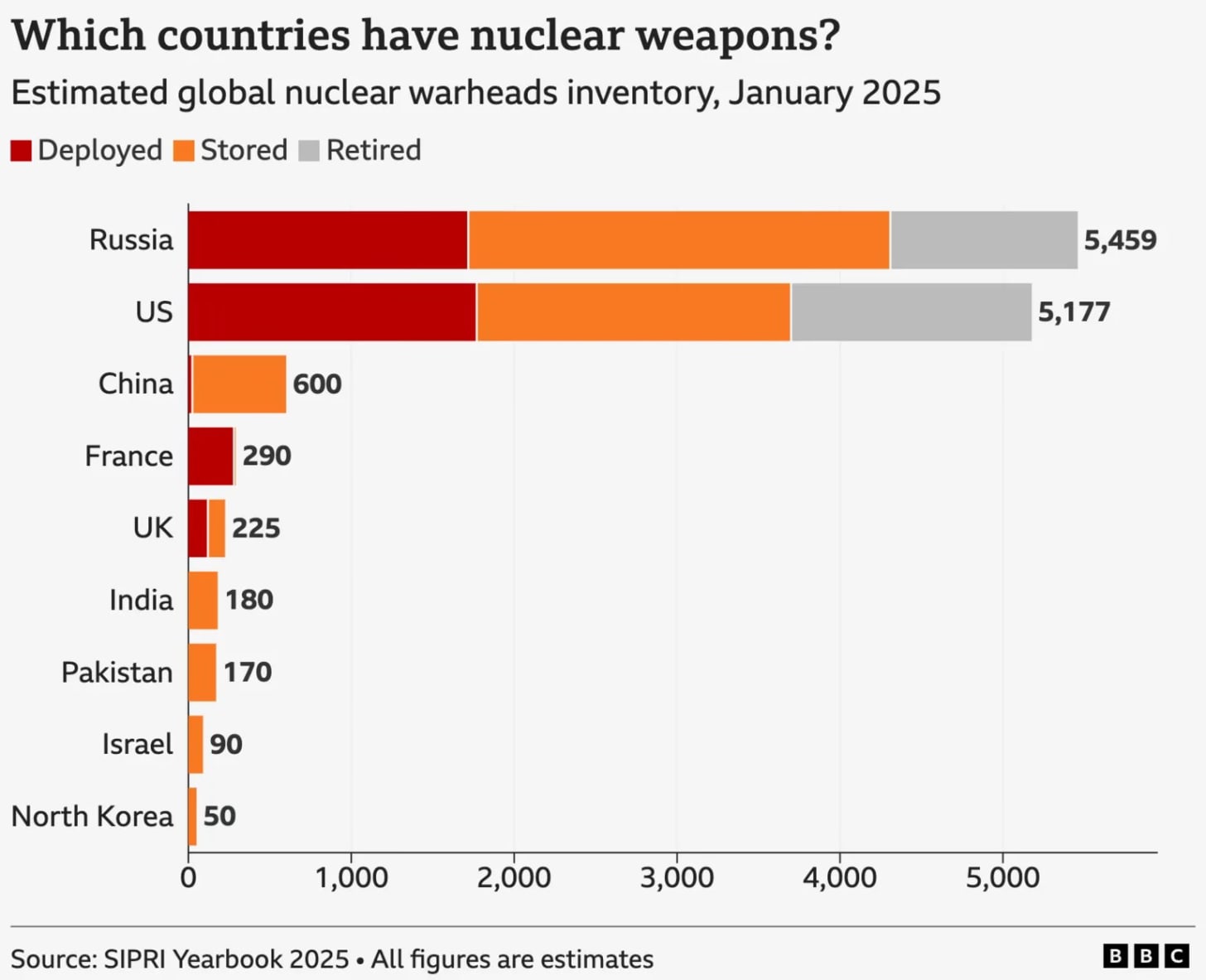
Nuclear catastrophe? It’s not impossible. Doesn’t that warrant some attention from this country’s leaders?
You get the idea. With all these problems to solve, our leaders have decided the right thing to do is—invade Venezuela. That won’t be an easy ride. It’s a country of 28 million people and its terrain that includes jungles, deserts, and mountains.
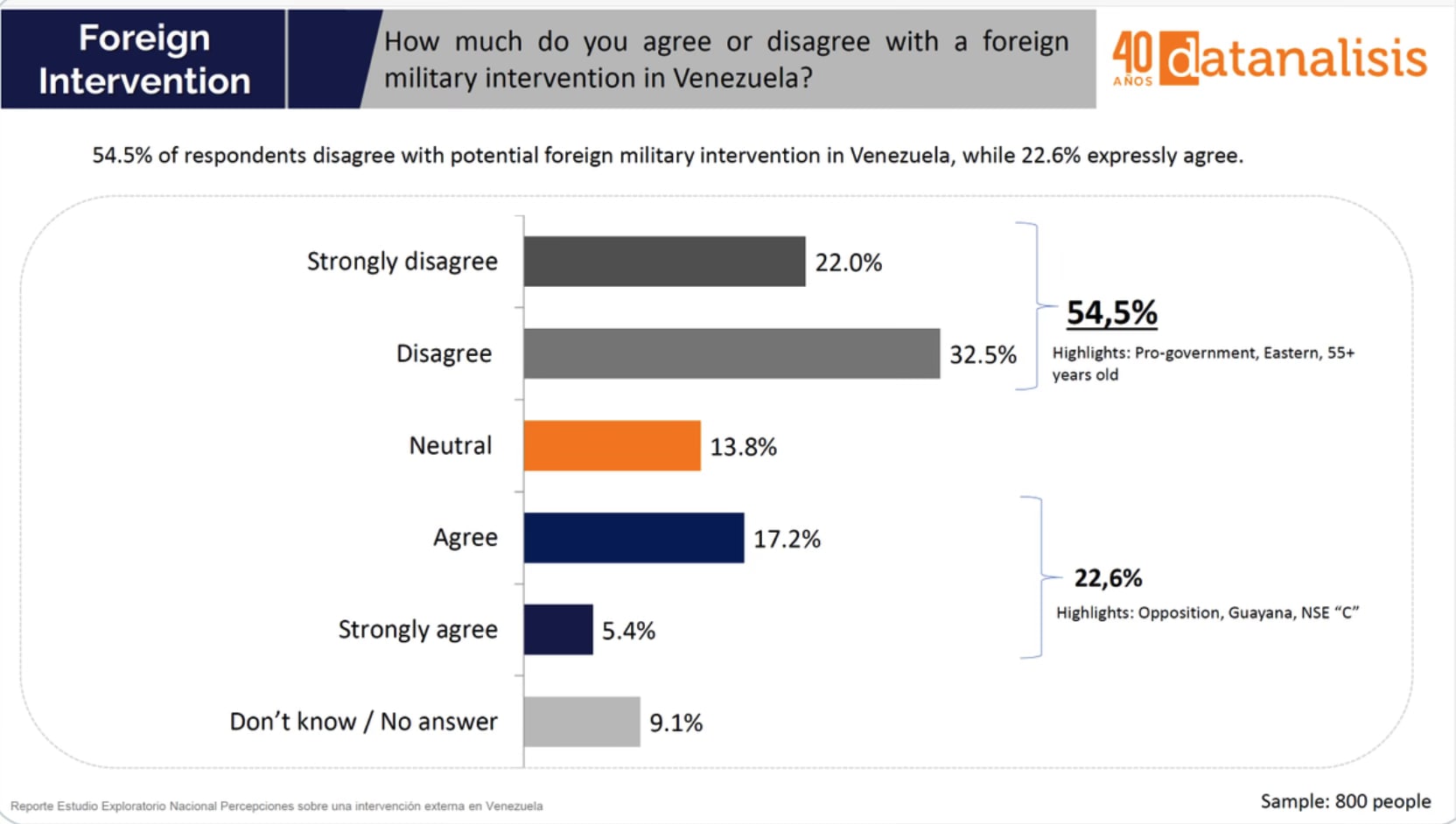
With all these disasters at home, it’s a safe bet we’re not wanted in Venezuela for our management expertise. In fact, most Venezuelans don’t want us there at all:
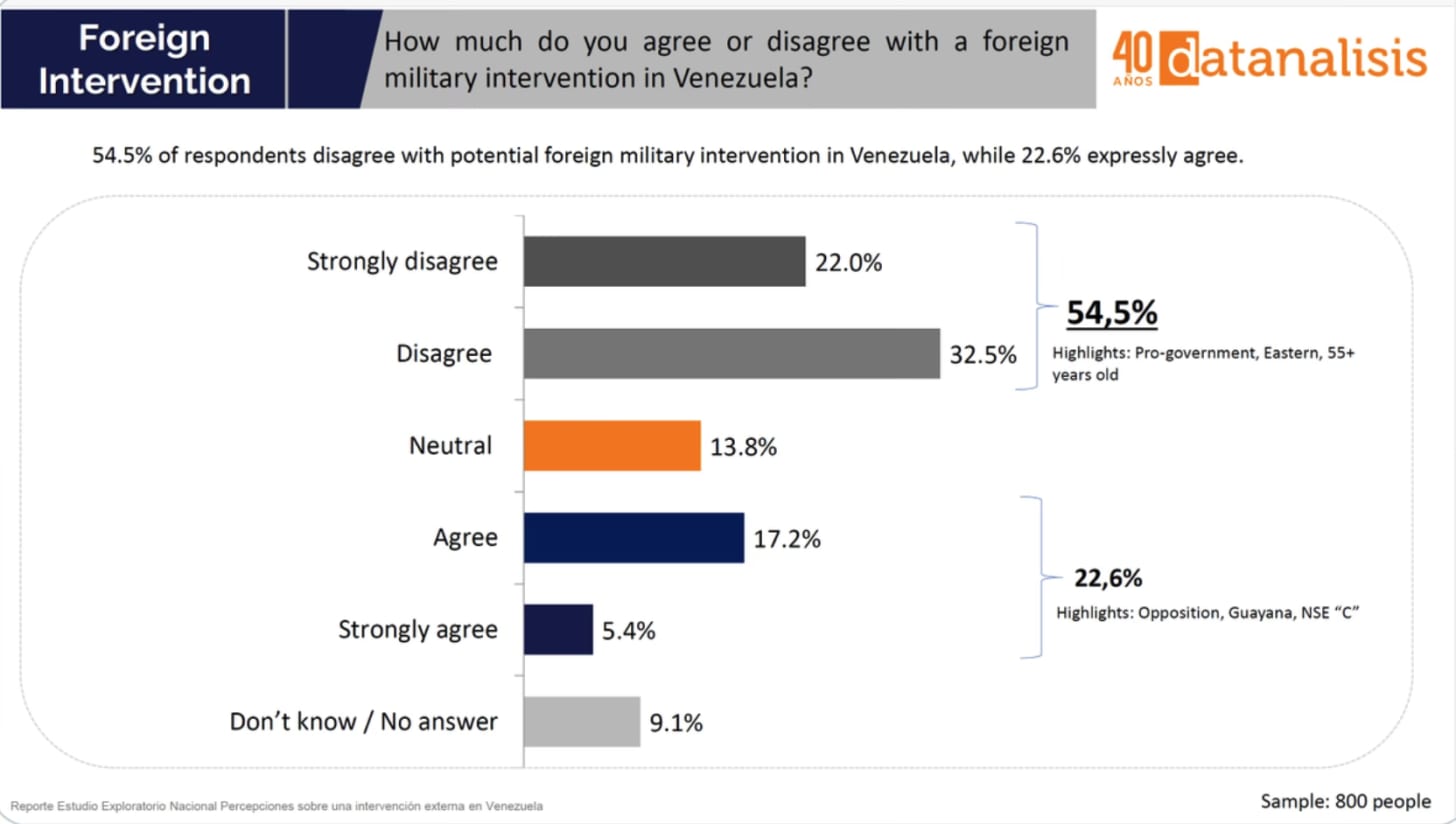
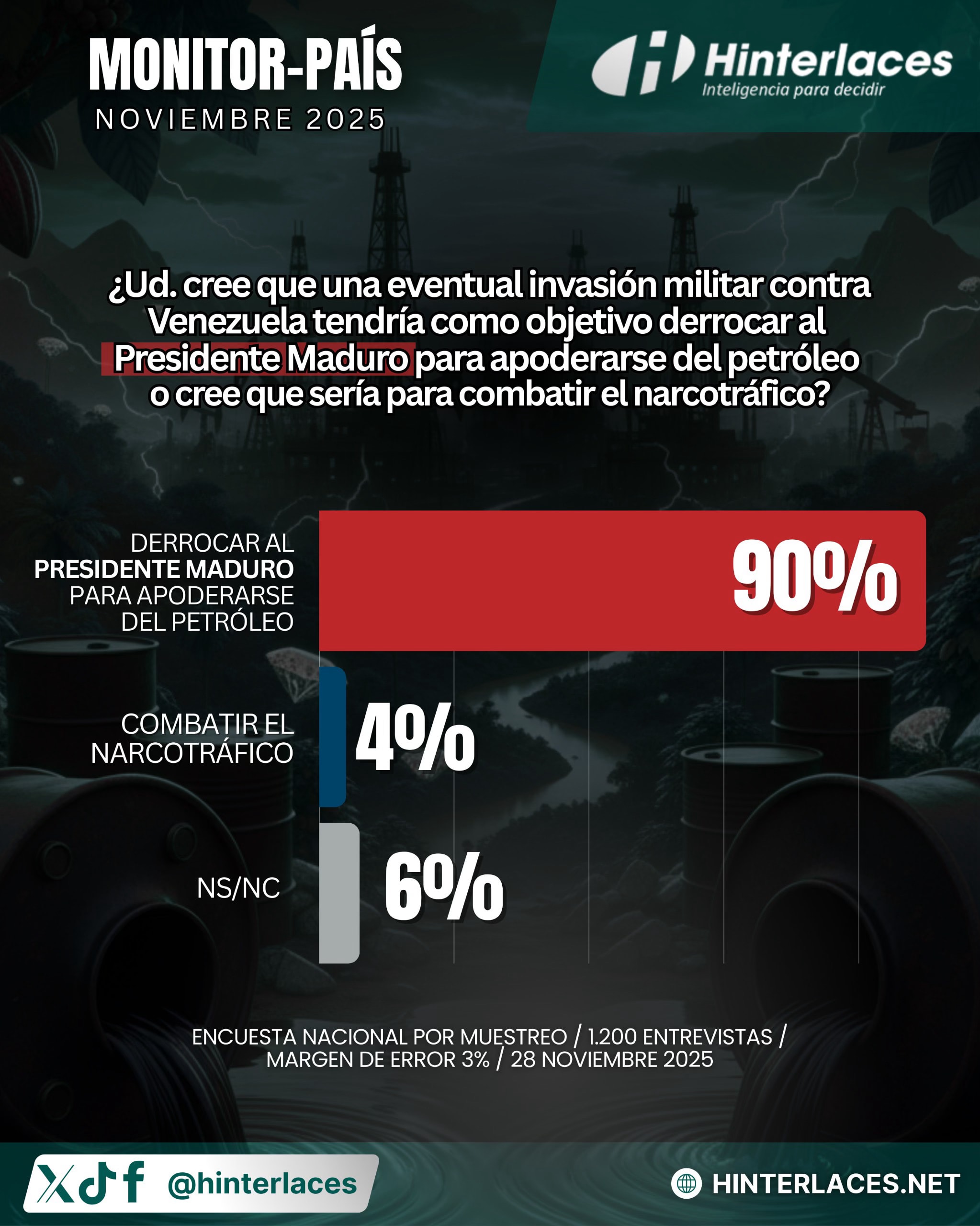
Most Venezuelans think the US is only doing it “because of the oil”:
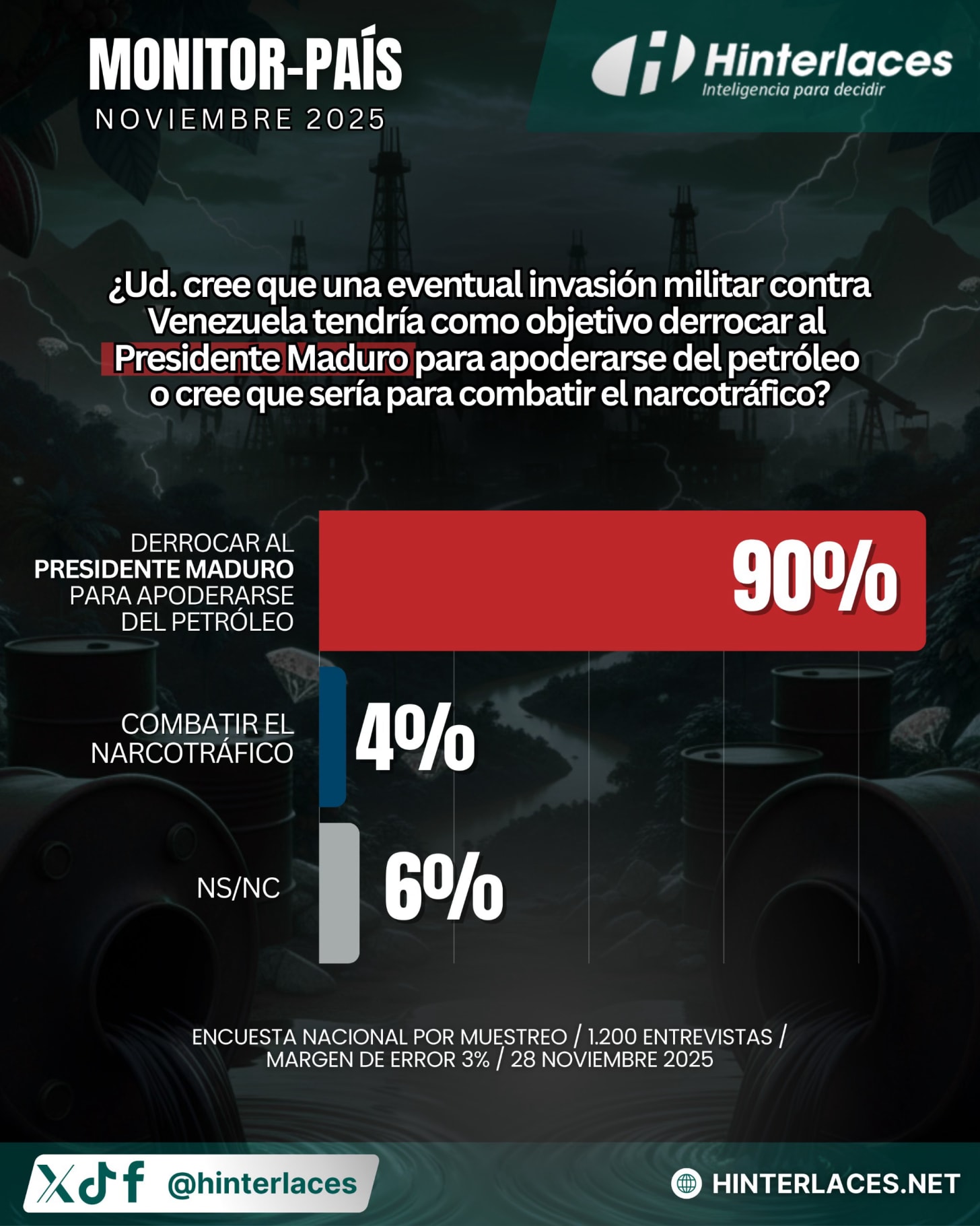
The question, translated: “Do you believe that a potential military invasion against Venezuela would aim to overthrow the president in order to seize the oil, or do you think it would be to combat drug trafficking?” The headline: “90% believe that an invasion would aim to overthrow Maduro because of the oil.”
To be fair, we are only doing it because of the oil. Mostly, anyway.
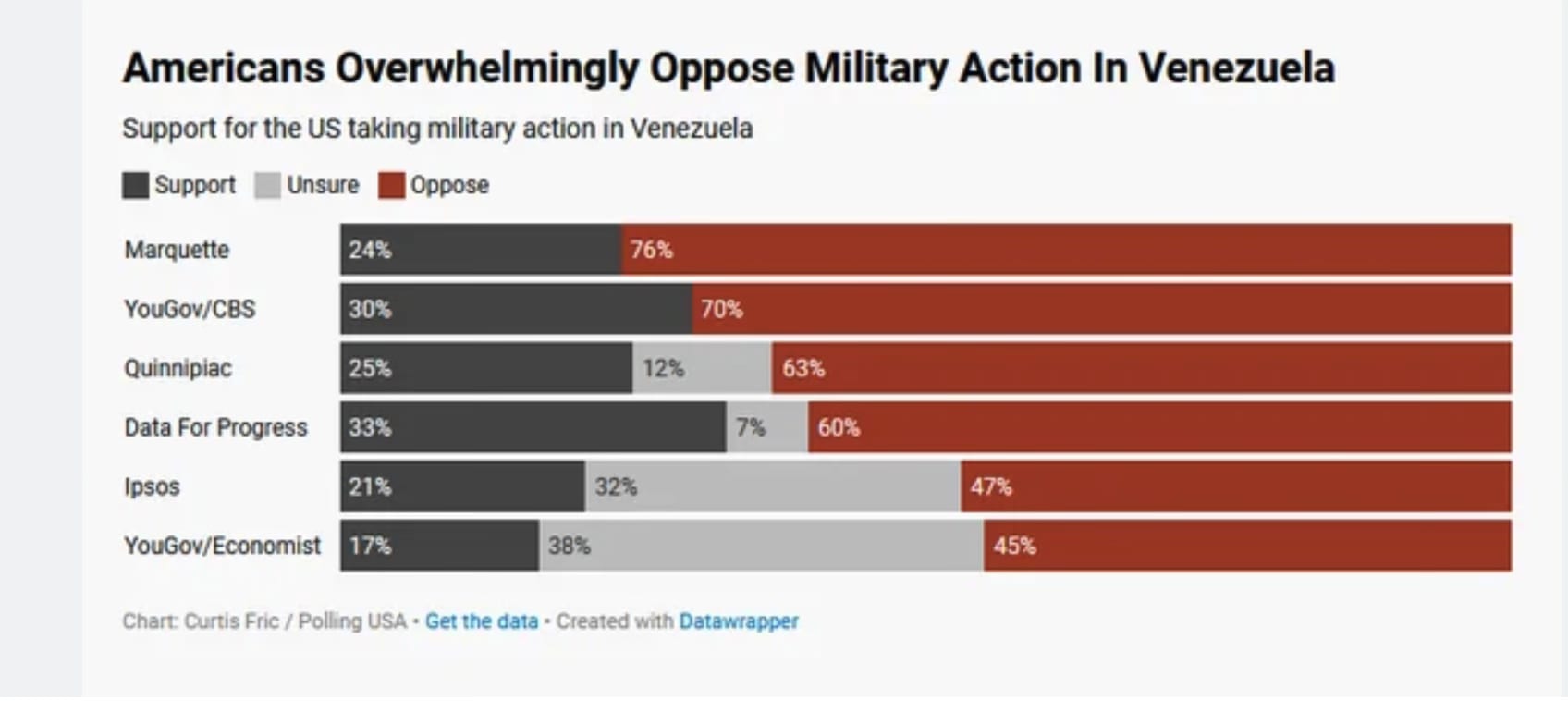
Most Americans don’t want us in Venezuela, either:
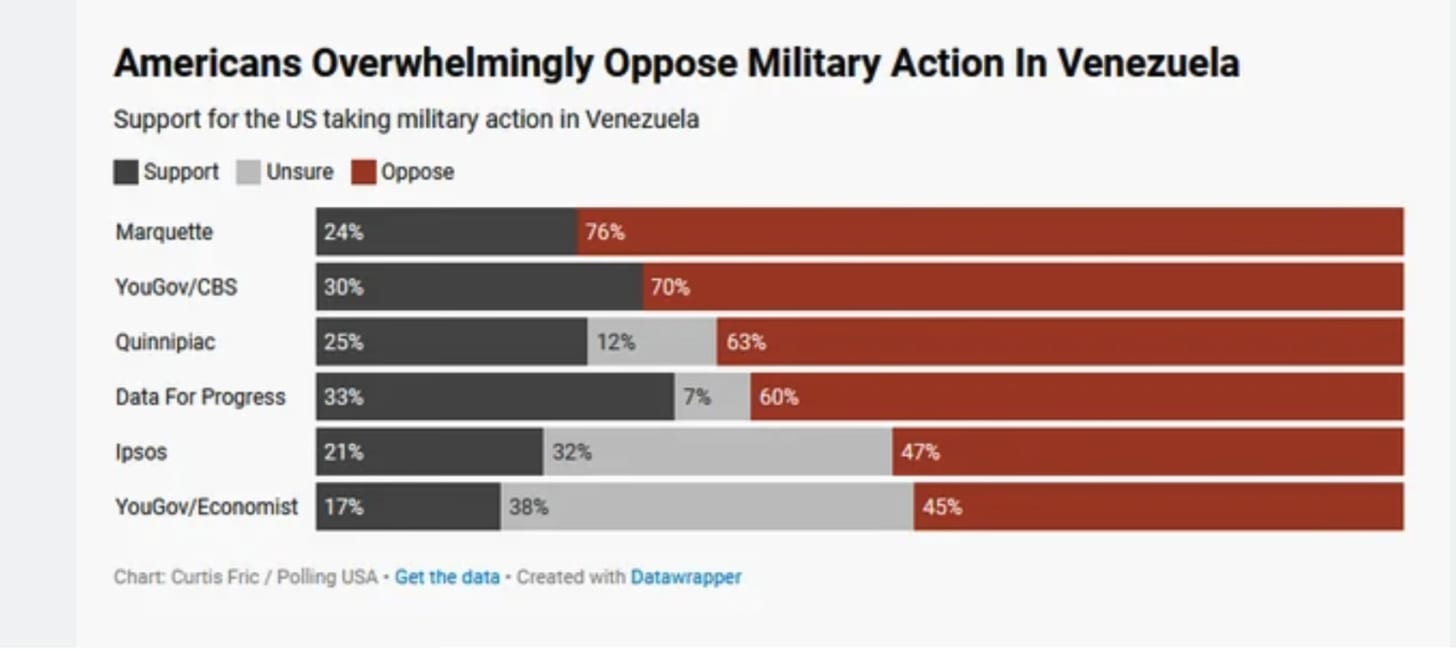
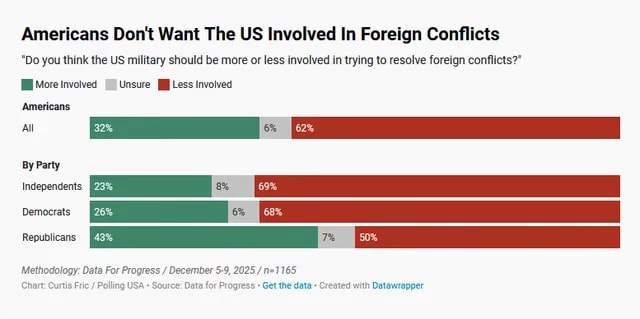
In fact, most Americans are sick of our government’s seemingly endless addiction to foreign military adventurism:
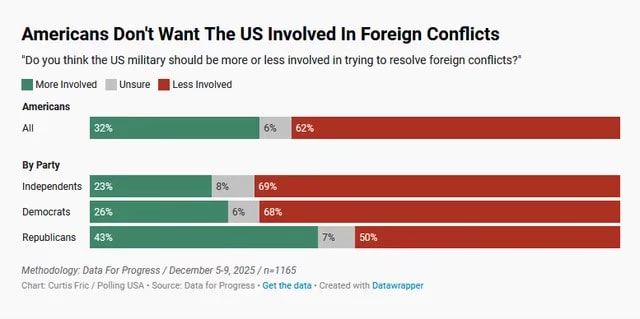
And yet, here we are.
This is a desperate resource grab by Trump and the other overseers of this dying economic system. It’s also an obvious and deliberate distraction from the many problems here in the United States. And we all know they’re doing it for their benefit, not ours.
Like the saying goes: it’s all about the grift. But at what price for the rest of us?
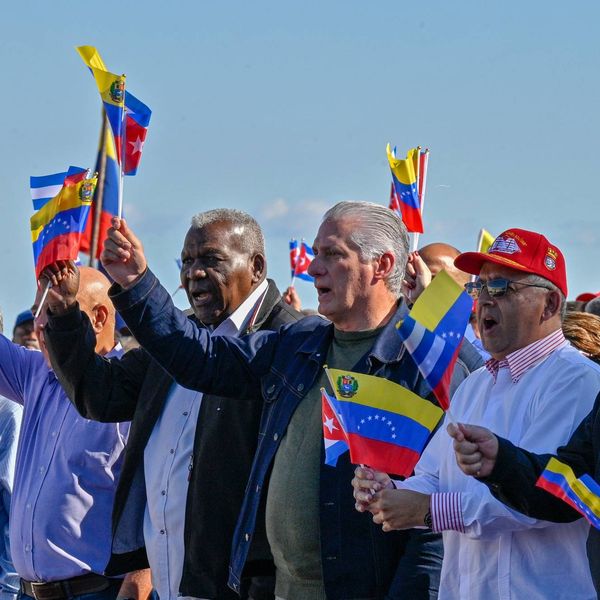
Supporters of Venezuela’s President Nicolas Maduro raise their clenched fists as they gather in the streets of Caracas on January 3, 2026, after US forces kidnapped him. President Donald Trump said Saturday that US forces had captured Venezuela’s leader Nicolas Maduro after bombing the capital Caracas and other cities in a dramatic climax to a months-long standoff between Trump and his Venezuelan arch-foe.
(Photo by Federico PARRA / AFP via Getty Images)
This press conference wasn’t just about Venezuela. It was about whether American empire can say the quiet part out loud again, whether it can openly claim the right to govern other nations and expect the world to shrug.
By Michelle Ellner
I listened to the January 3 press conference with a knot in my stomach. As a Venezuelan American with family, memories, and a living connection to the country being spoken about as if it were a possession, what I heard was very clear. And that clarity was chilling.
The president said, plainly, that the United States would “run the country” until a transition it deems “safe” and “judicious.” He spoke about capturing Venezuela’s head of state, about transporting him on a US military vessel, about administering Venezuela temporarily, and about bringing in US oil companies to rebuild the industry. He dismissed concerns about international reaction with a phrase that should alarm everyone: “They understand this is our hemisphere.”
For Venezuelans, those words echo a long, painful history.
Let’s be clear about the claims made. The president is asserting that the US can detain a sitting foreign president and his spouse under US criminal law. That the US can administer another sovereign country without an international mandate. That Venezuela’s political future can be decided from Washington. That control over oil and “rebuilding” is a legitimate byproduct of intervention. That all of this can happen without congressional authorization and without evidence of imminent threat.
To hear a US president talk about a country as something to be managed, stabilized, and handed over once it behaves properly, it hurts. It humiliates. And it enrages.
We have heard this language before. In Iraq, the United States promised a limited intervention and a temporary administration, only to impose years of occupation, seize control of critical infrastructure, and leave behind devastation and instability. What was framed as stewardship became domination. Venezuela is now being spoken about in disturbingly similar terms. “Temporary Administration” ended up being a permanent disaster.
Under international law, nothing described in that press conference is legal. The UN Charter prohibits the threat or use of force against another state and bars interference in a nation’s political independence. Sanctions designed to coerce political outcomes and cause civilian suffering amount to collective punishment. Declaring the right to “run” another country is the language of occupation, regardless of how many times the word is avoided.
Under US law, the claims are just as disturbing. War powers belong to Congress. There has been no authorization, no declaration, no lawful process that allows an executive to seize a foreign head of state or administer a country. Calling this “law enforcement” does not make it so. Venezuela poses no threat to the United States. It has not attacked the US and has issued no threat that could justify the use of force under US or international law. There is no lawful basis, domestic or international, for what is being asserted.
But beyond law and precedent lies the most important reality: the cost of this aggression is paid by ordinary people in Venezuela. War, sanctions, and military escalation do not fall evenly. They fall hardest on women, children, the elderly, and the poor. They mean shortages of medicine and food, disrupted healthcare systems, rising maternal and infant mortality, and the daily stress of survival in a country forced to live under siege. They also mean preventable deaths, people who die not because of natural disaster or inevitability, but because access to care, electricity, transport, or medicine has been deliberately obstructed. Every escalation compounds existing harm and increases the likelihood of loss of life, civilian deaths that will be written off as collateral, even though they were foreseeable and avoidable.
What makes this even more dangerous is the assumption underlying it all: that Venezuelans will remain passive, compliant, and submissive in the face of humiliation and force. That assumption is wrong. And when it collapses, as it inevitably will, the cost will be measured in unnecessary bloodshed. This is what is erased when a country is discussed as a “transition” or an “administration problem.” Human beings disappear. Lives are reduced to acceptable losses. And the violence that follows is framed as unfortunate rather than the predictable outcome of arrogance and coercion.
To hear a US president talk about a country as something to be managed, stabilized, and handed over once it behaves properly, it hurts. It humiliates. And it enrages.
And yes, Venezuela is not politically unified. It isn’t. It never has been. There are deep divisions, about the government, about the economy, about leadership, about the future. There are people who identify as Chavista, people who are fiercely anti-Chavista, people who are exhausted and disengaged, and yes, there are some who are celebrating what they believe might finally bring change.
But political division does not invite invasion.
Latin America has seen this logic before. In Chile, internal political division was used to justify US intervention, framed as a response to “ungovernability,” instability, and threats to regional order, ending not in democracy, but in dictatorship, repression, and decades of trauma.
In fact, many Venezuelans who oppose the government still reject this moment outright. They understand that bombs, sanctions, and “transitions” imposed from abroad do not bring democracy, they destroy the conditions that make it possible.
This moment demands political maturity, not purity tests. You can oppose Maduro and still oppose US aggression. You can want change and still reject foreign control. You can be angry, desperate, or hopeful, and still say no to being governed by another country.
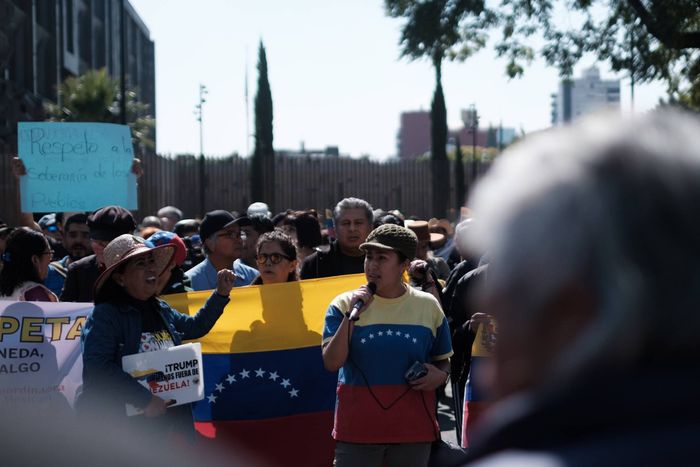
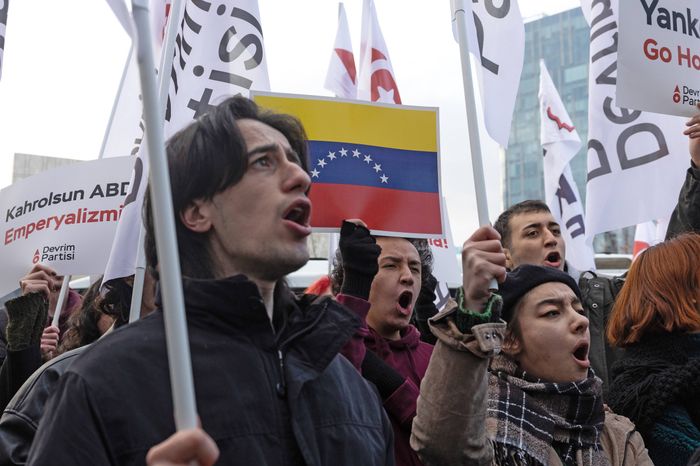
Venezuela is a country where communal councils, worker organizations, neighborhood collectives, and social movements have been forged under pressure. Political education didn’t come from think tanks; it came from survival. Right now, Venezuelans are not hiding. They are closing ranks because they recognize the pattern. They know what it means when foreign leaders start talking about “transitions” and “temporary control.” They know what usually follows. And they are responding the way they always have: by turning fear into collective action.
This press conference wasn’t just about Venezuela. It was about whether empire can say the quiet part out loud again, whether it can openly claim the right to govern other nations and expect the world to shrug.
If this stands, the lesson is brutal and undeniable: sovereignty is conditional, resources are there to be taken by the US, and democracy exists only by imperial consent.
As a Venezuelan American, I refuse that lesson.
I refuse the idea that my tax dollars fund the humiliation of my homeland. I refuse the lie that war and coercion are acts of “care” for the Venezuelan people. And I refuse to stay silent while a country I love is spoken about as raw material for US interests, not a society of human beings deserving respect.
Venezuela’s future is not for US officials, corporate boards, or any president who believes the hemisphere is his to command. It belongs to Venezuelans.
An aerial view shows the 100-megawatt solar thermal project at Jinta multi-energy complementary base, developed by China Green Development Investment Group (CGDG), on August 1, 2025 in Jiuquan, Gansu Province of China.
(Photo by Cao Hongzu/VCG via Getty Images)
By every measure, shifting from fossil fuels to electrification, renewables, and energy efficiency and conservation is far more beneficial to most people than following the same fossil-fueled road.
By David Suzuki,Ian Hanington
There’s good news and bad news on the climate front. Unfortunately, the bad news is horrific, as accelerating extreme weather-related events and other unfolding climate catastrophes show. But there are signs of hope. We just have to stop dragging our feet.
“We are already facing danger,” a scientists’ statement from the November COP30 climate summit in Belém, Brazil warned, adding, “COP30 has a choice—to protect people and life or the fossil fuel industry.”
Too many governments, including Canada’s, appear to be leaning toward the latter.
“We need to start, now, to reduce CO2 emissions from fossil fuels, by at least 5% per year,” the scientists wrote. “This must happen in order to have a chance to avoid unmanageable and extremely costly climate impacts affecting all people in the world.”
The only ones who benefit from continuing to exploit polluting, climate-altering fossil fuels are greedy industry profiteers and short-sighted politicians who would trade human health, economic resilience, and survivability for a handful of short-term jobs and limited economic boosts.
Studies show that “rising heat is killing roughly one person per minute, and air pollution from the burning of fossil fuels claims an estimated 2.5 million lives every year,” DW news reports. It was also “costing as much as $304 billion in global economic losses last year.”
We’ve already passed one climate “tipping point,” with warming oceans causing irreversible mass coral reef die-offs, and we’re nearing others, including Amazon rainforest devastation and collapse of crucial ocean currents.
Coral reefs support one-quarter of all marine life, and the Amazon rainforest has more animal and plant species than any other terrestrial ecosystem. It also regulates global climate and weather and holds one-quarter of the planet’s available freshwater. Ocean currents also regulate global climate and weather.
Even though emissions continue to rise as the world refuses to halt fossil fuel development and forest and wetland destruction, investments in and growth of renewable energy technology are exceeding expectations, now outpacing fossil fuel investments.
DW reports that “in 2024, the world experienced its largest-ever increase in renewable energy generation, which now provides 40% of global electricity. In the first half of this year solar and wind exceeded all demand growth for electricity, surpassing coal for the first time.” Solar capacity is doubling every three years. Wind power has tripled since 2015. The International Energy Agency reports that global renewable energy investments exceeded US$2 trillion last year, double the amounts committed to coal, oil, and gas.
To increase energy security in the face of a growing global energy crisis and reduce their reliance on increasingly expensive, inefficient fossil fuels, countries that import oil, gas, and coal are rapidly advancing electrification and renewables.
Analysis from COP30 also shows that “sticking to three key climate promises—on renewables, energy efficiency, and methane—would avoid nearly 1°C of global heating and give the world hope of avoiding climate breakdown,” the Guardian reports.
But the world continues to burn dirty, polluting coal, gas, and oil at deadly rates and has increased subsidies to the fossil fuel industry—the most profitable enterprise in history!
Canada has failed to live up to its promise to phase out fossil fuel subsidies. The federal and provincial governments are supporting expanded development of methane gas exploitation and liquefaction, and are proposing pipelines to ship more dirty bitumen from the Alberta oil sands to British Columbia ports for export, where it will be burned in other countries and not counted in our emissions reporting.
Canada’s expansion of liquefied “natural” gas production is not only economically suspect, it also makes methane-reduction pledges more difficult to meet, as LNG is almost entirely methane, and leaks and emissions occur at every step of the process, from fracked extraction and transport to liquefaction and burning.
Although 160 countries, including Canada, have signed a Global Methane Pledge, promising to cut methane emissions by 30% from 2020 levels by 2030, emissions continue to rise and countries, including Canada, continue to underreport them.
By every measure, shifting from fossil fuels to electrification, renewables, and energy efficiency and conservation is far more beneficial to most people than following the same fossil-fueled road. The only ones who benefit from continuing to exploit polluting, climate-altering fossil fuels are greedy industry profiteers and short-sighted politicians who would trade human health, economic resilience, and survivability for a handful of short-term jobs and limited economic boosts.
Regardless of what roadblocks fossil-fuelled governments throw in the way, the renewable energy revolution is unstoppable.












No comments:
Post a Comment
Note: Only a member of this blog may post a comment.