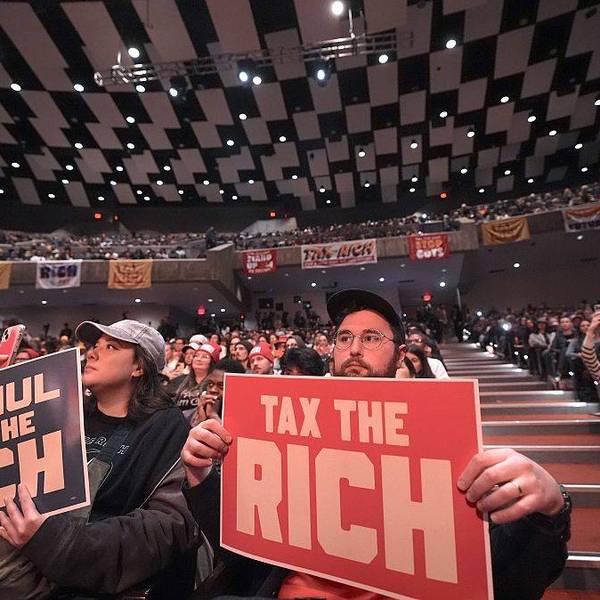
"Local hospitals and emergency rooms could shut their doors forever because billionaires insist on paying less than the rest of us," said Emmanuel Saez, the French economist who designed California's wealth tax proposal. |
|
The architect of California’s wealth tax proposal called out The Washington Post and its multibillionaire owner, Amazon founder Jeff Bezos, on Thursday for peddling what he said is “misinformation” to readers.
Emmanuel Saez, a French economist and professor at the University of California, Berkeley, who was tapped by California’s largest union to design the tax proposal, singled out an opinion piece by the Washington Post editorial board from earlier this week that argues the proposal would backfire and cost California billions of dollars in tax revenue each year.
Saez said the article contains glaring falsehoods and omits key information about the proposal, which aims to create a one-time tax of 5% on the total assets of California’s roughly 200 billionaire residents in order to recoup about $100 billion in revenue for healthcare, food assistance, and education stripped from the state by last year’s Republican federal budget legislation, which will hand $1 trillion in tax breaks to the wealthiest 1% of Americans over the next 10 years.
The piece, published on Monday with the headline “California already losing with billionaire tax referendum,” argues that even if California voters don’t ultimately approve the measure, “the specter of such a wealth tax has already cost the state more in lost future revenue from income taxes than it would raise” due to an exodus of wealthy people from the state—an oft-used but weakly substantiated talking point by opponents of the measure.
The Post cited a paper by Jared Walczak, a visiting fellow at the California Tax Foundation, which it said demonstrates that billionaire flight “will cost California’s state government somewhere between $3.5 billion and $4.5 billion every year in other tax collections, and up to $19 billion in lost [gross domestic product].”
But Saez argued that his study makes a “basic mistake” by “modeling a mobility response of billionaires to a permanent annual and recurrent 5% wealth tax.” In reality, though, the tax would be imposed only once and would apply to any billionaires who resided in the state after January 1, 2026, which has already passed, so it no longer creates an incentive to move.
Saez argued that in any case, “Walczak’s estimation of the California income tax paid by billionaires who have threatened to leave is also wildly exaggerated.”
Walczak’s figure for lost tax revenue, he said, hinges on the idea that the three richest men who’ve threatened to leave the state, Google co-founders Sergey Brin and Larry Page, and Meta CEO Mark Zuckerberg, pay $1.7 billion in California income taxes each year.
“If only they paid so much!” Saez quipped.
“In reality, using Securities and Exchange Commission data on stock sales, stock donations, dividends, and executive compensation, we can directly estimate that they paid only [$269 million] in California income tax in 2025, 6.3 times less than Walczak’s assumption,” he said, citing a paper he co-wrote in March responding to a similar argument by a conservative think tank.
He cited tax data showing that the tech tycoons—who own a combined $810 billion according to Forbes—only collectively paid about [$22 million] per year on average between 2019-25, with Brin and Page paying no taxes on their wealth from stock in Google’s parent company Alphabet during three of those years because they didn’t sell stock, get dividends, or receive executive compensation. This is despite 90% of their wealth coming from those holdings.
“The one-time wealth tax finally makes them contribute in proportion to their enormous wealth gains,” Saez said.
The Post also claimed that the Service Employees International Union (SEIU) United Healthcare Workers West, the union leading the charge in support of the referendum, is “pretend[ing] that the tax is needed to save California’s health system from ‘collapse’” and is instead dishonestly using that framing to covertly pursue the “redistribution of wealth.”
But Saez said that the federal cuts of roughly $20 billion annually are already having devastating effects on Californians that could be alleviated with more tax revenue.
As a result of the cuts, “more than 400 California hospitals have already laid off more than 3,400 healthcare workers as of mid-March, with a second wave of layoffs expected as funding cuts tied to recent federal policy changes are phased in over the next several years,” he said. “Statewide, projections show the cuts could result in the loss of up to 145,000 healthcare jobs, impacting hospitals, clinics, and home care providers alike.”
Eighty-three more hospitals in California may be at risk of closing due to the federal funding cuts, according to a recent nationwide analysis by Public Citizen. But Saez said the billionaire’s tax would go a long way toward closing the gap.
“Right now, California’s billionaires pay much lower tax rates than what working families pay out of every paycheck,” Saez said.
Despite claims otherwise by the Post editorial board—which last month ran another piece arguing that due to progressive taxation, “the rich already pay more than their fair share”—according to the Institute on Taxation and Economic Policy, at all levels of government from 2018-20, billionaires paid just 24% of their total income in taxes, while the US-wide average was 30%. This disparity arises largely due to loopholes that allow the rich to avoid taxes on business and investment gains that are not sold.
“Local hospitals and emergency rooms could shut their doors forever because billionaires insist on paying less than the rest of us,” Saez said.
Debru Carthan, the executive vice president of SEIU-United Healthcare Workers West, said it was not surprising that the Post “completely ignores that the billionaire tax would keep hospitals from closing and healthcare costs from skyrocketing for millions of Californians” because it is “a crisis that comes as a direct result of the tax breaks handed out to Jeff Bezos and his buddies.”
Since the return of Donald Trump to the presidency, the Amazon founder has taken a much heavier hand over the content of his flagship paper, including its opinion section, which he last year mandated to exclusively publish pieces on economics that promote “personal liberties and free markets,” leading to the resignation of opinion editor David Shipley.
But Saez marveled at how blatant Bezos’ thumb on the scale has appeared in his paper’s coverage of California’s billionaire wealth tax and similar proposals, which it has denounced on several other occasions.
“Are readers meant to take this seriously?” Saez asked. “'Board of billionaire-owned paper comes out against tax on billionaires’? Everyone knows this board makes political decisions at the behest of Jeff Bezos, but this one is the most transparent of them all.”
"Saying so privately to some big donors is very different than publicly calling for transparency from the DNC, which is badly needed," said Norman Solomon of RootsAction, which has led calls for the release. |
|
"Performative dipshittery, wrapped in fictional jingoism, delivered by an incompetent drunk wearing the clothes of an adolescent boy," said one critic of Hegseth's video. |
|
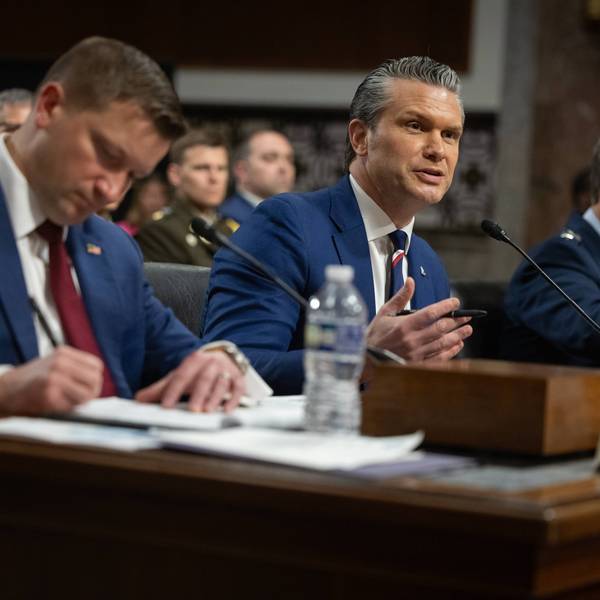
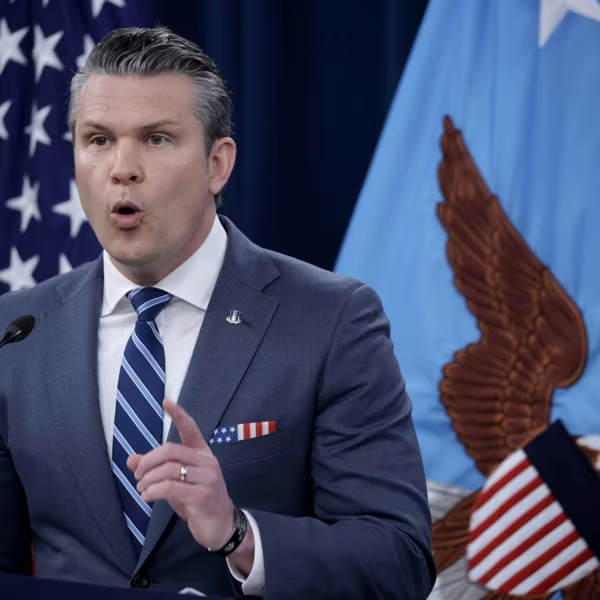
US Defense Secretary Pete Hegseth drew instant ridicule on Thursday after he released a video touting President Donald Trump’s proposed $1.5 trillion military budget as a fiscally responsible plan that is “putting the American taxpayer first.”
At the start of the video, Hegseth accuses defense contractors of bilking the Pentagon for expenses such as factory construction, while also constantly charging more for cost overruns.
Hegseth then claims that Trump has brought together a group of private-sector negotiators whom he’s labeled “Deal Team Six” to lay down the law on the defense industry and save the US taxpayer money.
Hegseth never explains how it is possible that the president and his “Deal Team Six” are saving US taxpayers money while at the same time asking US taxpayers to fund a $1.5 trillion military budget that would be over 50% more than the 2025 US defense budget and more than four times the money spent on defense by China, the world’s second biggest defense spender.
Regardless, Hegseth wrote in a social media post that the $1.5 trillion budget would be “a FISCALLY RESPONSIBLE INVESTMENT in our Arsenal of Freedom—ensuring our military remains the most lethal fighting force in the world.”
Critics of the Trump administration erupted in mockery after seeing the Hegseth video.
“Spread this lame ass video everywhere,” wrote Pod Save America co-host Tommy Vietor, a former National Security Council staffer under President Barack Obama. “I want every voter to know that Trump has requested a $1.5 TRILLION Pentagon budget. Shut up if you want better healthcare or for Social Security to remain solvent. All you get is more bombs to drop on Iranian schools.”
Indigo Olivier, a reporter for The New Republic, said Democrats could make the proposed Trump budget a winning issue given how many other problems—including the rising costs of gasoline, groceries, and healthcare—that the Trump administration seemingly has no interest in addressing.
“I would love to hear Democrats talk about Pentagon price gouging with even half the energy they devote to Hasan Piker,” she wrote. “The administration pushing a $1.5 trillion defense budget somehow becoming the face of anti-waste messaging is political malpractice.”
Former Rep. Justin Amash (R-Mich.) described Trump’s proposed Pentagon budget as “hundreds of billions more in waste and fraud—at taxpayer expense.”
“Remember when this administration pretended it was going to bring down the national debt?” Amash asked.
Former Republican political strategist Jeff Timmer delivered an even harsher assessment of Hegseth’s video, which he labeled “performative dipshittery, wrapped in fictional jingoism, delivered by an incompetent drunk wearing the clothes of an adolescent boy.”
Journalist Patrick Henningsen ripped Hegseth for delivering a “desperate, dumbed-down message” that he predicted would “go down in history as one of the biggest own-goals yet—and the worst pieces of war propaganda we’ve ever seen.”
Steven Kosiak, nonresident fellow at the Quincy Institute for Responsible Statecraft, wrote an analysis last month of Trump’s proposed $1.5 trillion military budget in which he said, “It is difficult to overstate just how massive an increase in defense spending this would represent, or how unhinged it seems to be from reality and sober policymaking.”
"Instead of swindling taxpayers to pay for his gilded ballroom and finding new ways to give CEO billionaires tax breaks, Trump should focus on ending his war on Iran," said Sen. Ed Markey. |
|
An updated analysis released Thursday finds that President Donald Trump’s illegal war with Iran will cost Americans significant money at the gas pump this year.
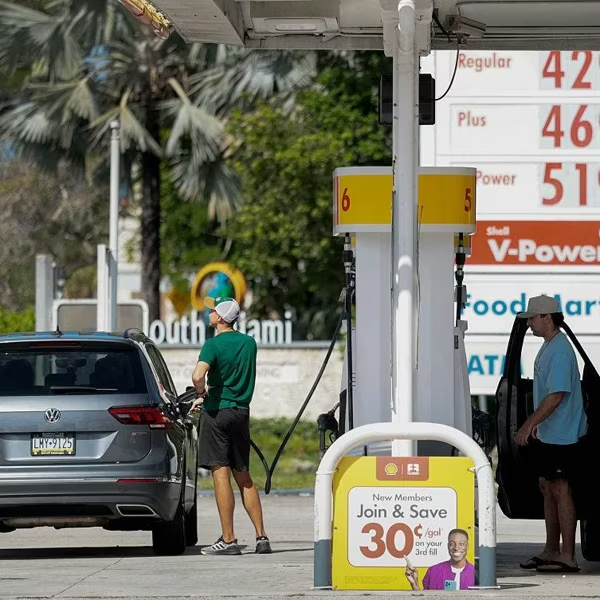
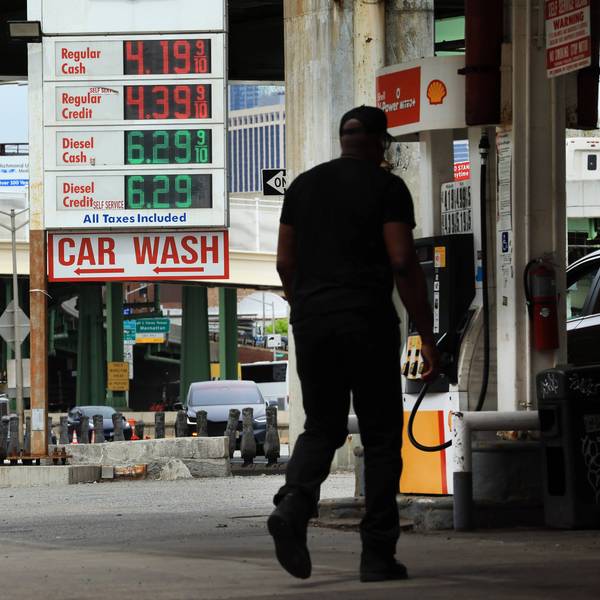
The report, released by the office of Sen. Ed Markey (D-Mass.), projects that if gas prices remain at their current level of over $4.50 per gallon, it will cost a US drivers an extra $73.06 per month—or $876 per year—to fill up their cars compared to what they were paying before Trump attacked Iran in late February.
For a family with two cars, this would mean forking over an extra $1,753 for gas this year.
The analysis also notes this projection is “likely an underestimate” since “many analysts predict gasoline prices will rise higher without a permanent end to the war.”
The report highlights how Trump’s Iran war is likely to bolster Big Oil’s profits, which had been steadily declining since 2022, when they exploded in the wake of Russia’s invasion of Ukraine.
Climate and renewable energy organizations have repeatedly called on the US Congress to pass a windfall tax on Big Oil profits for the duration of the war, which they said could be used to provide relief to consumers and invest in clean energy infrastructure.
In a statement accompanying the report, Markey blasted Trump for both the Iran war and his broader economic mismanagement.
“American small businesses and families cannot afford Trump’s crushing bump at the pump—all thanks to the President’s illegal war on Iran,” said Markey, the top Democrat on the Senate Small Business Committee. “Americans have to figure out how to make ends meet while Trump slashes affordable healthcare, dismantles clean energy networks, and doubles down on his tariff taxes.”
“Instead of swindling taxpayers to pay for his gilded ballroom and finding new ways to give CEO billionaires tax breaks,” Markey added, “Trump should focus on ending his war on Iran and ending the pain on Main Street.”
"These rising costs are hitting us at the wrong time here," said one farmer of the high prices of diesel and fertilizer. |
|
US Agriculture Secretary Brooke Rollins on Thursday claimed American farmers are heading toward a “golden age,” even as President Donald Trump’s policies are increasingly driving them into financial distress.
During an appearance on Fox Business, Rollins discussed Trump’s upcoming meeting with Chinese President Xi Jinping to talk trade between the two countries.
“For our farmers and our ranchers, for farm security, for food security, making sure our farmers can prosper as they move into what will hopefully be a golden age under this president, these trade deals are very important,” Rollins said. “But the president also understands that the over-reliance on a country like China has massive implications from a national security standpoint.”
American farmers took a big financial hit in 2025 after China cut off purchases of US soybeans in retaliation for Trump’s “Liberation Day” tariffs.
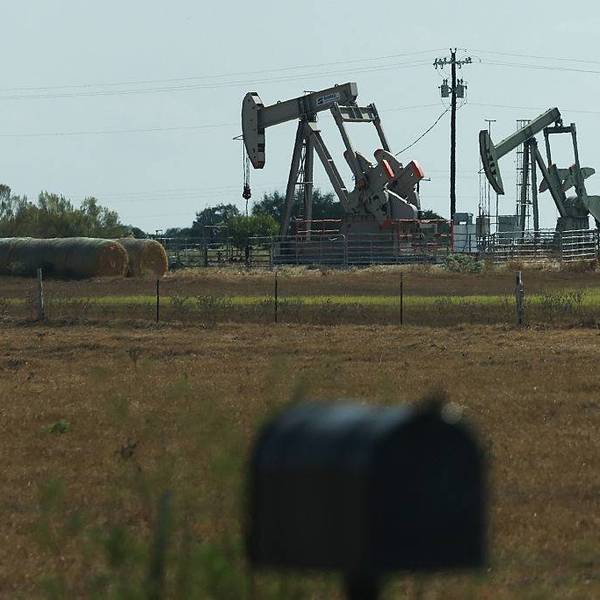
The problems facing US farmers have gotten even worse since Trump illegally launched a war with Iran in late February, as the prices of fertilizer and diesel soared after Iran shut down the Strait of Hormuz.
According to a Monday report from Wisconsin Public Radio, there is little immediate relief coming for US farmers even if Trump ends his war with Iran and the Strait of Hormuz immediately reopens.
Shawn Arita, associate director of the Agricultural Risk Policy Center, told WPR that price projections show fertilizer prices will likely remain high throughout the rest of the year.
In fact, even if the strait were to reopen soon, the center projects that fertilizer prices will remain 13% higher than they were before the war started through all of next year and into 2028.
“We have seen that even in the most optimistic scenario,” Arita explained, “we’re going to see elevated prices on the nitrogen as well as phosphate side that continues on through the fall and moving into 2027.”
Bill Knudson, agriculture economist at Michigan State University, told WPR that it will also take time to get shipping back to normal should the strait reopen soon because there are still an estimated 2,000 vessels stranded there that will take time to clear out.
“You’re not going to see a return to normal for several months, even if the Strait of Hormuz was opened relatively quickly,” Knudson explained, “because you’ve got to get all those ships out of there.”
The Guardian on Thursday published interviews with US farmers who explained how the combined hit of the president’s trade wars and the Iran war have hurt them financially.
New York-based farmer Blake Gendebien told The Guardian that “these rising costs are hitting us at the wrong time here,” as the price of offroad diesel has nearly doubled since last April.
“It’s a massive cost for farmers that are already barely, barely getting by,” Gendebien explained.
North Carolina-based cotton farmer Julius Tillery told The Guardian that he’s had to overhaul his planting process this year to minimize his use of diesel fuel.
“I’m very careful on my planting dates,” said Tillery, who also revealed he’s been eating more ramen noodles to save money. “I can’t afford to plant crops in bad climates, so the production window becomes smaller.”













No comments:
Post a Comment
Note: Only a member of this blog may post a comment.