
05 August 25
****SATIRE FROM ANDY BOROWITZ! ****
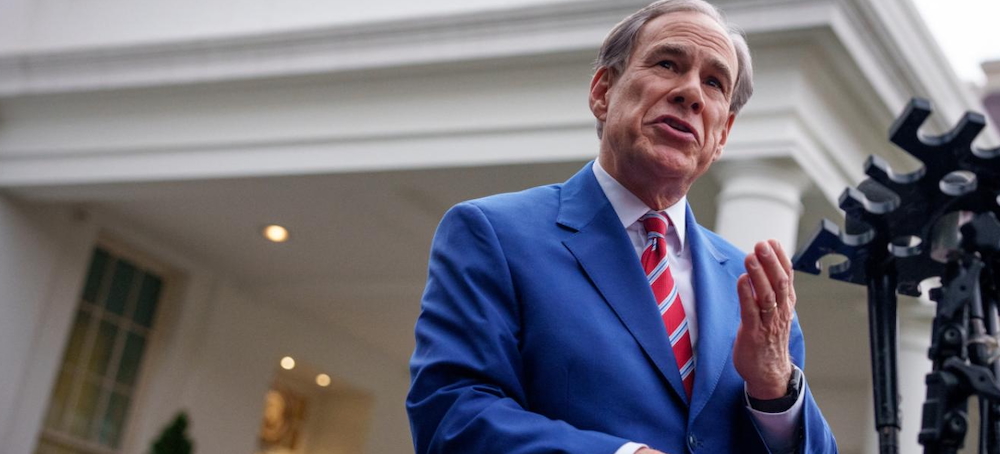
"The article below is satire. Andy Borowitz is an American comedian and New York Times-bestselling author who satirizes the news for his column, 'The Borowitz Report'."
y fellow Americans:
As you may know, 51 cowardly Democrat legislators are on the run from Texas. They are shirking their duty to rid our glorious state of the representative government that has plagued us for far too long.
These Democrats could be anywhere. They could be in your town. They could be hiding under your bed. More likely, they are at a farmer’s market, selecting artisanal pickles.
The following are tips to help you identify Democrats in your midst:
Democrats are often seen carrying tote bags featuring the logos of PBS, NPR, Doctors Without Borders and other subversive organizations.
Democrats can be found in Starbucks, ordering beverages with oat milk, or salads with quinoa. (Note: Democrats are the only people who like quinoa.)
Democrats do not eat cats and dogs, but they do rescue them.
Someone driving a car with a bumper sticker that says RELEASE THE EPSTEIN FILES could be a Democrat, but it could also be a member of QAnon. If the car stereo is playing Bruce Springsteen, it’s a Democrat.
If you see someone with any of these identifying characteristics, remember: Democrats are dangerous. Some may be armed with concealed pocket Constitutions.
To help bring these fugitives to justice, immediately report your sighting to Texas Attorney General Ken Paxton. He will be standing by at one of his three primary residences.
God Bless America,
Gov. Greg Abbott
****LAWLESS MASKED ICE GESTAPO JEOPADIZE U.S. CITIZENS *****
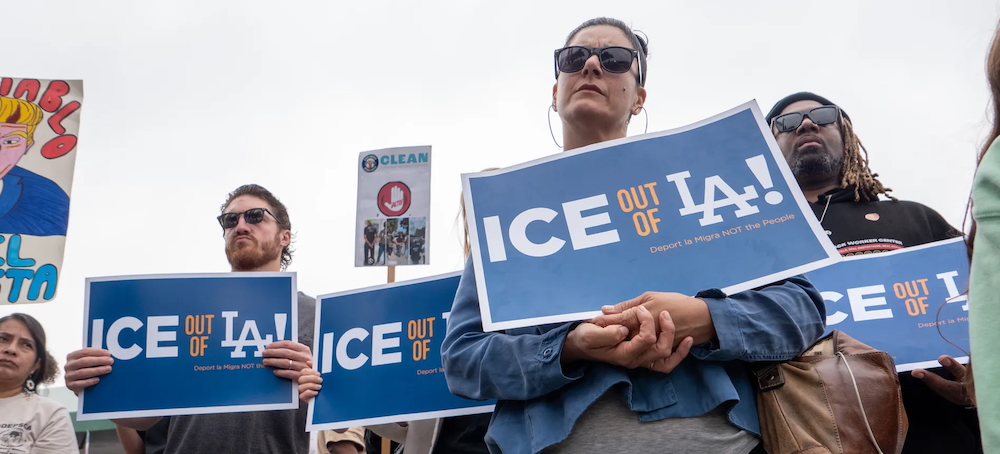 Protesters gather outside a Los Angeles car wash where workers were detained by ICE agents. (photo: Spencer Platt/Getty Images)
Exclusive: Andrea Velez and Adrian Martinez recount their capture by immigration officers and its effects on their lives
At 9.20am on 24 June in downtown Los Angeles, the 32-year-old was heading into work at a footwear company when the men in gator masks jumped out of their car and started chasing vendors and other people on the street, she recalled. As people fled, Velez froze and held onto her bag.
Suddenly, she recalled, one of the men slammed her to the ground and placed her into his car. The men had “Police” vests, but otherwise were in plainclothes and didn’t identify themselves. She didn’t know why they had taken her.
The men, it turned out, were Immigration and Customs Enforcement (Ice) deportation officers. They were looking to question people about “whether they were lawfully present” in the US, an agent later wrote. Velez is a US citizen who grew up in downtown, not far from the incident.
“They just came out ready to attack anyone,” said Velez, in her first interview since her arrest. “I thought they were kidnapping me.”
A day after her arrest, the Department of Justice (DoJ) charged Velez with assaulting an officer, which could carry a 20-year sentence. The claim was shocking to Velez, who is 4ft 11in and said she had not laid hands on anyone.
She is one of many southern California residents swept up as the Trump administration has aggressively jailed and prosecuted protesters, as well as civilians who film and object to Ice arrests and bystanders caught up in haphazard raids.
Ice detained more than 2,000 immigrants in the region in June. Bill Essayli, the Trump-appointed US attorney for the region, has prosecuted at least 18 people on claims they interfered with immigration arrests, with most defendants accused of assault. Prosecutors have been forced to dismiss at least five of those felony cases, including the one against Velez. The Guardian revealed last week that the justice department also dropped felony assault cases against four anti-Ice demonstrators after officers made false and misleading statements about events captured on film.
’She was just standing there’
Before her arrest, Velez was not protesting Ice – she was simply in the wrong place at the wrong time, she said. The graduate of the local Cal Poly Pomona university and lifelong LA resident said her mother and sister had dropped her off by her office just as Ice officers arrived at the intersection.
After she was forced into the Ice agents’ car, she spotted Los Angeles police department (LAPD) officers, left the vehicle and ran toward them, she said: “I thought they would help me.”
She told an LAPD officer she thought the men were kidnapping her: “If I did something wrong, I’d rather have you arrest me. I trust people with uniforms.”
Bystander footage taken from a nearby building shows what happened next: an LAPD officer holds on to Velez as one of the Ice agents runs up and handcuffs her. She does not appear to resist, but the Ice officer picks her up and carries her off the ground across the street. In another clip, a witness is heard saying, “This girl was just standing there … they are causing chaos.”
A third video shows LAPD shielding the Ice officers from civilians filming and protesting her arrest. Velez is seen trying to give her mother’s phone number to a bystander.
She later learned her mother and 17-year-old sister had witnessed the incident, but felt powerless to intervene.
Back in the Ice agents’ car, Velez said the officer driving appeared furious about how the incident had played out: “He was screaming in rage.”
She overheard him on the phone discussing “how many bodies they had gotten”, she said, and referring to her as an “alleged US citizen”.
’They make it seem like we’re … criminals’
Velez and Luis Hipolito, a 23-year-old man later charged as her co-defendant, were taken to a parking structure. Video of Hipolito’s arrest later published by the LA Times showed four agents had aggressively detained him by piling on top of him and using pepper spray. As the two waited to be processed, Velez said she saw his face was swollen, he was having trouble seeing, his shirt was bloody and he appeared to be convulsing and hyperventilating.
His requests for medical attention were initially denied, she said: “He was in pain, but they were like: ’It’s no big deal, you will get over it.’” Even as he struggled, he tried to comfort her: “He was making me feel safe.” Eventually, he was taken away in an ambulance, she said. Meanwhile, she saw ambulances going in and out of the federal jail nearby, which frightened her.
She said officers later forced her to pose for a photo where several of them stood in a line holding her with their backs to the camera, an unusual mugshot setup that has since become commonplace for DHS press releases and X.com posts: “They make it seem like we’re really bad criminals, the worst of the worst, when we’re just regular people.”
Velez was placed in the Metropolitan detention center, the downtown federal jail that has become the site of protests. There, other incarcerated women took care of her.
Staff did not give her water and she learned from other residents that she had to buy a cup, but having been detained just hours before, she had no money on her account. She also couldn’t buy utensils to eat. One woman on her way out donated her cup and spork to Velez.
After two nights in jail, she was brought to court on assault charges.
In an affidavit filed by the justice department, Joseph Arko, an agent working for a homeland security taskforce investigating “immigration crimes”, said the Ice officers had stopped in downtown to “question two inpiduals about whether they were lawfully present” in the US. As one inpidual fled, one of the officers alleged Velez “stepp[ed] into his path and extend[ed] one of her arms in an apparent effort to prevent him from apprehending the male”, Arko summarized. The officer claimed she was so “abrupt”, “he could not stop his momentum” and her arm “struck” him in the face.
Velez was stunned to read the allegations: “I never hit anyone. I’ve never hurt anybody, ever. Everyone who knows me knows the kind of person I am. I’m quiet, reserved, always doing the right thing, always following rules.”
Sixteen days after her arrest, the DoJ moved to dismiss the charges against her.
Velez’s lawyer, Diane Bass, said she had requested body-worn footage and witness statements before the dismissal: “I never got them. That tells me they did not have the evidence they needed and this was a false and unlawful arrest. It is a shocking and disgusting travesty of justice, and no human, never mind an American citizen, should ever be treated like that.”
The DoJ, US attorney’s office, Ice and DHS did not respond to detailed inquiries about Velez’s case. A spokesperson for the bureau of prisons, which runs the jail, did not respond to questions about her account, saying in an email its mission is to “operate facilities that are safe, secure, and humane”.
LAPD said in a statement after Velez’s arrest that officers initially responded to the area due to 911 calls about a “possible kidnapping” and that it was “not involved” in her detention. The department said its role on scene was “maintaining order”, and a spokesperson last week declined to comment further on her case, pointing to an earlier statement saying LAPD is “not involved in civil immigration enforcement”.
Other detained citizens are still fighting their charges, including Hipolito, whose attorney did not respond to requests for comment.
’What they were doing was wrong’
Adrian Martinez, 20, was jailed on 17 June while immigration officers were conducting “roving patrol duties” in Pico Rivera, a 90% Latino city in south-east LA. On break outside his job at Walmart, he saw border patrol agents moving to detain an older janitor. The agents, records showed, targeted the custodial worker after he started running away from them.
Witness footage shows a masked, plainclothes officer with an assault rifle shoving Martinez, who is heard saying the man they are detaining is a “hard worker”. At least five officers end up pushing Martinez to the ground and grabbing him by the neck as they force him into their car, the footage shows. Essayli, the US attorney, posted Martinez’s photo on social media the following day, saying he was arrested for “punching a border patrol agent in the face”. The footage does not show him punching an officer.
Essayli’s office did not, however, charge Martinez with assault, but rather “conspiracy to impede a federal officer”. The justice department complaint included no reference to punching. Still, Greg Bovino, border patrol chief for parts of southern California, falsely claimed on X.com that Martinez “caught a federal case for assault”.
Essayli’s office did not respond to inquiries about Martinez’s case.
“I just wanted to speak up for that guy, it was not right, it was like they were kidnapping him,” Martinez told the Guardian. “What they were doing was wrong. They were bothering a poor old man who was just working … I was just using words and they started attacking me.”
Martinez was taken to a parking structure by the federal jail where, he said, he was held for hours. Officers would not let him call his mother, he said. “They were not believing me when I said I was a US citizen.” He said he was most worried about his family not knowing his whereabouts and anxious about his father’s car, which he left at work.
When officers interrogated him at the parking structure, they tried to get him to admit to assault, he said. “I never put my hands on anybody. Why is my own government lying saying I tried to assault someone? It’s scary.”
Martinez’s knee, shoulders and back were injured and bruised from the arrest, made worse by sleeping on a metal bed in jail for three days, he added.
Weeks after the incident, KCAL News reported that one of the border patrol agents involved in Martinez’s arrest, Isaiah Hodgson, had himself been arrested. The LA district attorney said on 7 July that Hodgson, 29, was off-duty and intoxicated at a restaurant when he entered a woman’s bathroom and then refused to leave the business when security told him guns were not allowed on the property. He was charged with several crimes, including resisting arrest, felony battery of an officer and exhibiting a firearm in public.
Martinez’s attorneys said they were still investigating Hodgson’s exact involvement in Martinez’s arrest.
“I don’t wish bad on him and I pray for his family,” Martinez said of the border patrol agent’s arrest. “But it just shows their abuse of power. He felt like he had a right to have his firearm in a restaurant while he’s not even on duty.”
Jaime Ruiz, a border patrol spokesperson, said the agency does not comment on pending litigation. Hodgson’s attorneys did not respond to inquiries.
Ciaran McEvoy, a US attorney’s office spokesperson, pointed to an X.com post from Essayli defending the “great work being done by our amazing federal prosecutors”. His office has filed more than 50 criminal complaints since early June against people accused of assaulting or interfering with immigration officers, and nine of those people have since been indicted by grand juries, Essayli wrote. McEvoy declined to provide a full list of the cases.
Essayli’s post added: “When there are reactive arrests, like we had during the riots, it’s not uncommon for a complaint to be dismissed so that law enforcement can conduct additional investigation and collect more evidence.”
The US attorney general Pam Bondi defended Essayli in a statement, calling him a “friend” and “champion for law and order who has done superlative work to prosecute rioters” in LA. And Tricia McLaughlin, DHS assistant secretary, added in an email: “Our agents, officers, and prosecutors will continue to work together to keep Americans safe, and we will follow the facts, evidence, and law.”
’I don’t feel safe’
Even though Martinez never faced assault charges, Walmart terminated him after his arrest, citing “gross misconduct”, records show. He has remained out of work and anxious about his future while the charges loom. Walmart declined to comment.
He had hoped to get his truck driving license, but now is unsure if he can.
Garrett Miller, one of his attorneys, condemned the US attorney and border patrol officials for making false punching allegations about Martinez and never correcting them: “They used their platforms for political gain, at Adrian’s expense, and he lost his job because of it.”
Injuries sustained during his arrest forced Martinez to wear a leg brace for weeks after and he still has pain when he walks, he says. Despite the government crackdown, he said he hoped people continue to “speak out when something is not right”.
After her charges were dismissed, Velez felt some relief, but she said she was still riddled with fear that Ice could target her. She was also shaken by images of the vendors and workers who she saw being detained for deportation: “These were people just heading into work, going about their days. We don’t know where they were being taken, and it just broke my heart that they may never see their families again.”
Velez has been working remotely since her arrest, terrified of returning to downtown.
She does virtual therapy, no longer goes on morning runs and never leaves home by herself: “I don’t feel safe knowing they can randomly attack and take you.”
 "More than 72.5 million Americans rely on Social Security for benefits." (photo: Kevin Dietsch/Getty Images)
Treasury Secretary Scott Bessent spills the beans: Trump was lying all along
here’s a nihilistic attitude that permeates the Republican Party these days, an apparent belief that nothing matters anymore. Iowa Sen. Joni Ernst said it best when speaking to her constituents about Medicaid cuts: “We are all going to die.” They aren’t even trying to hide it anymore.
Ten years ago, when Donald Trump emerged on the political scene as a presidential candidate, he did something a bit different than most other Republicans had done in their campaigns. He promised he would not touch Social Security, Medicare and Medicaid. For decades, cutting these programs had been at the core of GOP identity. Instead, he pledged to go after Obamacare and eliminate it immediately. “It will be so easy!” he said. That seemed to appease the small government fanatics on the right, at least temporarily. Many of them had been scalded by the failed attempt to partially privatize Social Security in 2005, and the subsequent financial crisis a few years later had illustrated, in living color, the tremendous risk of putting Americans’ guaranteed retirement into the stock market.
Trump, though, was still an outlier. At the same time he made his bold promise, New Jersey Gov. Chris Christie and Florida Sen. Marco Rubio were frontrunners for the Republican nomination — and both were campaigning on plans to cut benefits and raise the retirement age. Their positions were met with delirious excitement by some members of the Beltway press. After all, the man who patented and popularized the negative narrative about Social Security and Medicare bankrupting the country was the sainted Ronald Reagan, who built his political career on it.
Long before Twitter and TikTok, Reagan was a consummate showman who adroitly used the technology of the mid-1960s to spread the anti-government gospel. In 1964, while he was campaigning for Arizona Sen. Barry Goldwater, the Republican nominee for president, Reagan gave a speech titled “A Time for Choosing,” which was televised and made into a record. In the address, he argued that Social Security was a bad deal for average Americans:
A young man, 21 years of age, working at an average salary — his Social Security contribution would, in the open market, buy him an insurance policy that would guarantee 220 dollars a month at age 65. The government promises 127. He could live it up until he’s 31 and then take out a policy that would pay more than Social Security. Now are we so lacking in business sense that we can’t put this program on a sound basis, so that people who do require those payments will find they can get them when they’re due — that the cupboard isn’t bare?
Reagan’s “young man” would be 82 today, and he would very likely be grateful for the guaranteed income provided by the program. There’s no doubt he would be happy his 21-year-old self hadn’t been tasked with “investing” for his old age, since the boom-and-bust cycles he experienced would have likely forced him to start over more than once.
Despite the success of Social Security, Medicare and Medicaid, the GOP has never given up on cutting the social safety net — and eliminating it if at all possible. In many ways, that goal has been their basic organizing principle, even though it’s always been extremely unpopular. They’re still doing it too, even though they have now taken up Trump’s tactic of simply lying and assuring people they aren’t doing what they’re doing.
That’s part of the plan too. Back in 1981, Reagan proposed major cuts to Social Security. But he largely abandoned his plans after a sharp backlash. This led the libertarians at the Cato Institute to call for a “Leninist” strategy and be ready to pounce when the opportunity arose.
The institute’s Project on Social Security Privatization aimed to prepare the public to accept the idea of transitioning to private accounts they could invest in the markets. After his reelection in 2004, President George W. Bush declared he would spend his political capital on it. After debuting his plan in the 2005 State of the Union address, he barnstormed the country in support of it — and the idea flamed out like a SpaceX rocket.
Apparently, it’s time to try again. Yes, Republicans staged a full-blown tantrum back in 2023 when President Joe Biden suggested in his State of the Union address that they wanted to cut the program. But nobody believed their denials, since 75% of congressional Republicans had endorsed the cuts the previous summer. (They had even proposed work requirements for seniors.)
That plan didn’t go anywhere. But it does show that, no matter what they say or what their Dear Leader may ordain, the overall goal is not coming off the menu. In fact, they’ve recently hatched another deceptive plan to get the job done. We know this because Treasury Secretary Scott Bessent spilled the beans just the other day.
One provision of the “One Big Beautiful Bill Act” was called “Trump Accounts,” which are new retirement savings accounts for babies that supposedly will be opened with a $1000 contribution from the federal government. At an event hosted by Breitbart News, Bessent suggested the accounts would be so popular that people will demand the government replace Social Security with it. “In a way, it is a backdoor for privatizing Social Security,” he said.
The White House quickly walked back his comments, saying that they have no intention of privatizing Social Security, yadda, yadda yadda. As Sen. Ron Wyden, D-Ore., said about Bessent’s little truth bomb, “Between Bessent’s comments and the harm DOGE has already done to the agency, it’s clear Trump was lying all along about protecting Social Security.”
Donald Trump, lying? This should come as no surprise. Promise or no promise, it’s clear the GOP has not changed its goal one bit — and the fight to protect Social Security and the social safety net should remain the essential mission of the Democratic Party.
***PUTIN OWNS TRUMP & TRUMP GENUFLECTS & BETRAYS UKRAINE!****
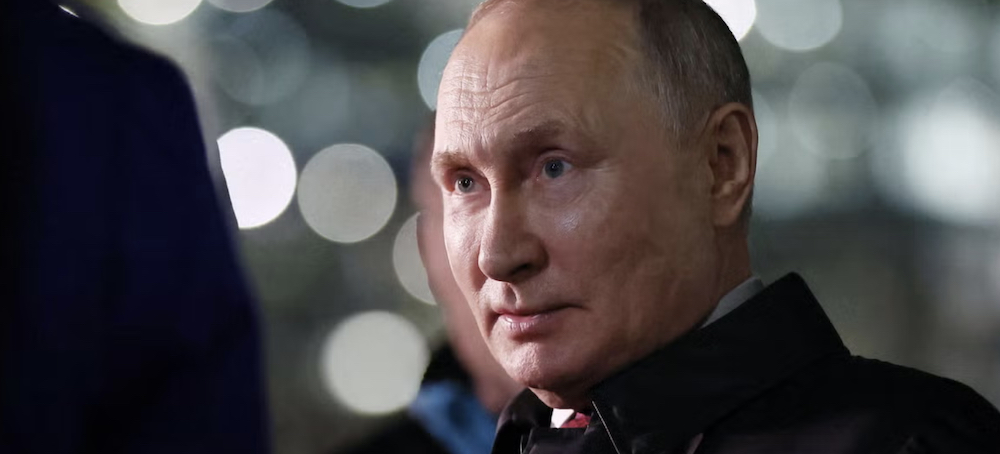 Russian President Vladimir Putin. (photo: Getty Images)
Russian president drags his heels in response to Donald Trump’s Aug. 8 ultimatum for a ceasefire.
The statement issued by Kremlin spokesperson Dmitry Peskov on Monday is the latest effort by Moscow to avoid serious negotiations, after U.S. President Donald Trump demanded that Russia agree to a ceasefire by Aug. 8 or face tariffs. Trump had originally given Russia a 50-day deadline, but shortened it after saying he was “disappointed” with Putin.
Peskov told reporters “the president himself does not rule out” meeting directly with Ukrainian President Volodymyr Zelenskyy — “after the necessary work is done at the expert level and the necessary distance has been covered.” He said this work “has not yet been done.”
Zelenskyy called for a meeting with Putin last week after the Kremlin chief toyed with the subject of further peace talks before noting that Russian troops were “advancing on the entire front line.”
“We understand who calls the shots in Russia, and thus Ukraine is once again offering to move beyond technical talks — not to exchange statements, but to actually meet at the level of leaders,” Zelenskyy said in a post on X on Aug. 1.
The Kremlin has repeatedly dangled the prospect of negotiations with Ukraine to end the war, while setting out opaque and improbable conditions, using the delays to continue its barrage of its neighbor and take more territory.
Trump said his special envoy, Steve Witkoff, would visit Russia in the coming days. Peskov said “we are always happy to see Mr. Witkoff in Russia.”
***WITKOFF IS AN INCOMPETENT BOOB!***
****FAILING AFRICA!****
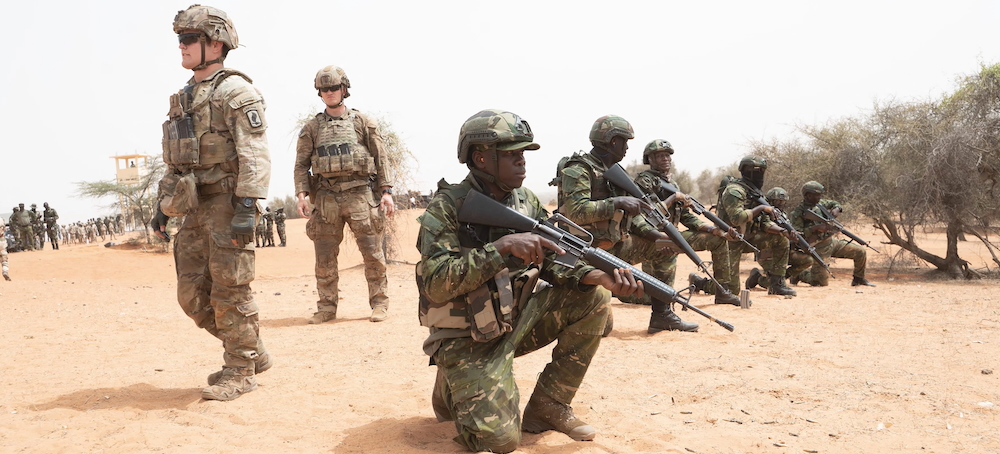 Senegalese, Dutch, Mauritanian, Ivorian, and American soldiers take part in an exercise at the Colonel Thierno Ndiaye Tactical Training Center during the joint multinational exercise African Lion 2025 in Dodji, Senegal, on May 15, 2025. (photo: Seyllou/AFP/Getty Images)
A new Pentagon report sheds light on AFRICOM’s disastrous counterterrorism campaigns.
A new Pentagon report offers the grimmest assessment yet of the results of the last 10 years of U.S. military efforts on the continent. It corroborates years of reporting on catastrophes that U.S. Africa Command has long attempted to ignore or cover up.
Fatalities from militant Islamist violence spiked over the years of America’s most vigorous counterterrorism efforts on the continent, with the areas of greatest U.S. involvement — Somalia and the West African Sahel — suffering the worst outcomes.
“Africa has experienced roughly 155,000 militant Islamist group-linked deaths over the past decade,” reads a new report by the Africa Center for Strategic Studies, a Pentagon research institution. “Somalia and the Sahel have now experienced more militant Islamist-related fatalities over the past decade (each over 49,000) than any other region.”
“What many people don’t know is that the United States’ post-9/11 counterterrorism operations actually contributed to and intensified the present-day crisis and surge of violent deaths in the Sahel and Somalia,” Stephanie Savell, director of the Costs of War Project at Brown University, told The Intercept, referencing the frequent targeting of minority ethnic groups by U.S. partners during counterterrorism operations.
The U.S. provided tens of millions of dollars in weapons and training to the governments of countries like Burkina Faso and Niger, which are experiencing the worst spikes in violent deaths today, she said. “In those critical early years, those governments used the infusion of U.S. military funding, weapons, and training to target marginalized groups within their own borders, intensifying the cycle of violence we now see wreaking such a devastating human toll.”
U.S. Africa Command acknowledged The Intercept’s questions about the report and its findings but did not answer them.
Terrorist groups are also gaining ground at an exponential rate. “The past year has also seen militant Islamists [sic] groups in the Sahel and Somalia expand their hold on territory,” according to the Africa Center. “Across Africa, an estimated 950,000 square kilometers (367,000 square miles) of populated territories are outside government control due to militant Islamist insurgencies. This is equivalent to the size of Tanzania.” And as militant groups have expanded their reach, Africans have paid a grave price: a 60 percent increase in fatalities since 2023, compared with deaths from 2020 to 2022, according to the report.
Even these grim statistics don’t capture the true size and scope of U.S. counterterrorism failures. In 2002 and 2003, the U.S. was just beginning its decadeslong effort to provide billions of dollars in security assistance, train many thousands of African military personnel, set up dozens of outposts, dispatch its own commandos on a wide range of missions, create proxy forces, launch drone strikes, and even engage in ground combat with militants in Africa. In those years, the State Department counted a total of just nine terrorist attacks, resulting in a combined 23 casualties across the entire continent. Last year, there were 22,307 fatalities from militant Islamist violence in Africa. This represents an almost 97,000 percent increase. Somalia and the Sahel saw the most acute violence.
U.S. Special Operations forces were first dispatched to Somalia in 2002, followed by military aid, advisers, private contractors, bases, helicopters, and drones. The Pentagon was well aware of fundamental flaws with U.S. military operations in the Horn of Africa as early as 2007, according to a study conducted for the military that was obtained exclusively by The Intercept. Almost two decades later, U.S. troops are still conducting counterterrorism operations there against the Islamist militant groups al-Shabaab and the Islamic State.
Earlier this year, the U.S. carried out an attack in Somalia that one top U.S. commander called the “largest airstrike in the history of the world.” The Trump administration has already conducted 54 attacks in Somalia in 2025, exceeding the total number of strikes by the Biden administration last year. This mirrors the spike in attacks during President Donald Trump’s first term. Despite, or perhaps because of these relentless attacks, al-Shabaab’s “capabilities have expanded in the past year,” according to the Africa Center, and its annual revenues — up to $200 million — are “on par with Somalia’s federal member states.”
“Somalia faces Africa’s most enduring militant Islamist group with al-Shabaab sustaining extremist violence since it was established in 2006,” according to the Africa Center analysis. “Somalia has seen a spike in violence linked to al Shabaab since 2023. … The 6,224 fatalities linked to al Shabaab over the past year are double that of 2022.”
The findings are even more damning for West Africa, where an increasing number of nations are plagued by terrorist groups that have grown, splintered, reconstituted, and spread across the region. Under the black banners of Islamist militancy, men on motorcycles and armed with AK-47s thunder into villages to impose their harsh brand of Sharia law and terrorize, assault, and kill civilians. Attacks by these militants and government atrocities against civilians in response have destabilized Burkina Faso, Mali, and Niger and, increasingly, threaten bordering countries such as Côte d’Ivoire, Guinea, Senegal, Mauritania, and Togo.
“The Sahel has experienced a sustained high level of lethality tied to militant Islamist groups in recent years,” reads the new Africa Center report. “The nearly 10,500 average annual deaths over the past 3 years are more than double the 4,900 annual fatalities experienced between 2020 and 2023. This represents a sevenfold increase in annual fatalities since 2019.”
As violence spiraled in the region over the past decades, at least 15 officers who benefited from U.S. security assistance were key leaders in a dozen coups in West Africa and the greater Sahel including Burkina Faso (in 2014, 2015, and twice in 2022) and Mali (in 2012, 2020, and 2021).
The U.S. has poured billions of dollars in military assistance into Burkina Faso, Mali, and its neighbors over roughly two decades, enabling human rights abuses by providing weapons and training to militaries that have terrorized civilians, according to the United Nations, human rights advocacy groups, and the U.S. State Department. The Africa Center found that Malian and allied security forces were responsible for 82 percent of all civilian fatalities over the past year. In Burkina Faso, the figure was 41 percent.
In 2023, The Intercept reported from neighboring Niger on the failure of 20 years of counterterrorism efforts, the spread of Islamist militancy, and abuses of minority ethnic groups by U.S. partner forces. AFRICOM pretended the problems did not exist and said the U.S. was “further[ing] our mutual security goals.” But Niger has been “experiencing a rapid deterioration in its security since the military coup against the democratic government of President Mahmoud Bazoum in 2023,” according to the Africa Center. Left unsaid was that at least five leaders of that coup d’état received American assistance. Since then, fatalities linked to militant Islamist violence have quadrupled, including a 49 percent increase in civilian deaths in Niger over the past year.
The Africa Center’s new analysis echoed a grim assessment of security on the African continent offered by AFRICOM chief Gen. Michael Langley during a June press conference with various media outlets, including The Intercept. The West African Sahel, he said, was now the “epicenter of terrorism,” and the gravest terrorist threats to the U.S. homeland were “unfortunately right here on the African continent.”
Katherine Ebright, counsel at the Brennan Center for Justice and one of the foremost experts on secret military efforts in Africa, noted that the U.S. continued to double down on expenditures of blood and treasure without measuring the effectiveness of its counterterrorism initiatives. “Clearly, there’s been too little congressional and public oversight of these military efforts to determine whether they are strategic and effective,” she told The Intercept, noting that the Department of Defense long delayed compliance with a law that requires it to monitor and evaluate its work with partner forces.
Ebright pointed out that during the Biden administration the Pentagon finally published a first-of-its-kind analysis of its long-running counterterrorism efforts in the Sahel. The findings spotlighted shortcomings that have contributed to mass displacement, humanitarian crises, coups, atrocities, and the deaths of around 155,000 Africans.
Trump’s effort to scuttle the U.S. Agency for International Development and slash funding to the United Nations and other foreign aid this year have further exacerbated humanitarian crises that have deepened over the last two decades. One recent Lancet study warned that USAID funding cuts “could result in more than 14 million additional deaths by 2030, including 4·5 million deaths among children younger than 5 years.”
The United Nations recently warned that almost 30 million people across the Sahel “require life-saving aid and humanitarian protection in 2025.” But only 8 percent of the required $4.3 billion in humanitarian funding had been received by May, forcing aid agencies to reduce assistance to 8.8 million of the most vulnerable people.
The Pentagon report on efforts in the Sahel found, notably, that traditional, nonmilitary diplomacy and aid are necessary tools for addressing the economic and governance problems that allow militant groups to proliferate. It also determined that U.S. military involvement was “insufficient for fundamentally changing the security environment” and that traditional U.S. “security cooperation programs are unlikely to lead to notable changes in the security environment.”
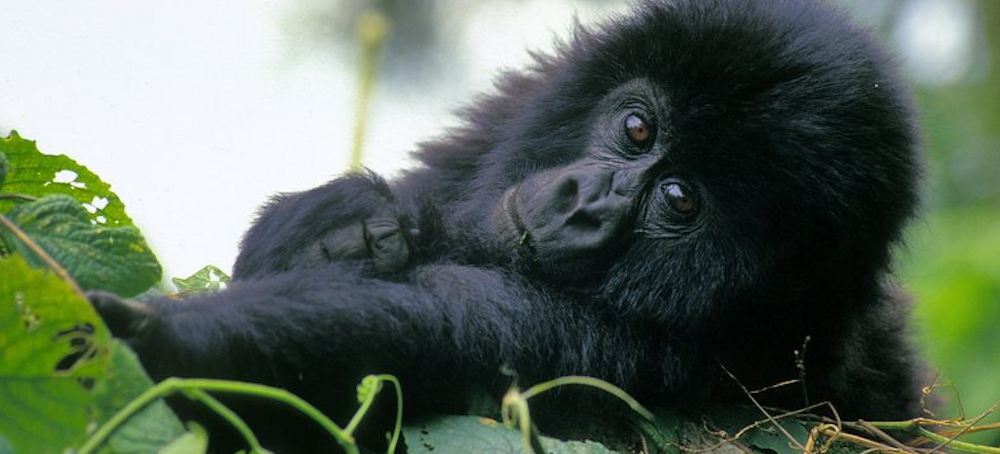 Baby mountain gorilla in the Virunga National Park. (photo: Christian Kaiser/Greenpeace)
DRC’s government began an auctioning round for 52 oil blocks — in addition to three that had been previously awarded — threatening 64 percent of the country’s pristine forest, according to a new report by Earth Insight: Forests to Frontlines: Oil Expansion Threats in the DRC.
“Towering rainforest canopies, winding river systems, and vast carbon-rich peatlands make the Democratic Republic of Congo (DRC) one of the most ecologically significant places on Earth. Home to the second-largest tropical rainforest on the planet, the DRC harbors an astonishing wealth of biodiversity including elephants, great apes, endemic birds, and thousands of plant species that thrive in its intact ecosystems,” a press release from Earth Insight said. “Its Cuvette Centrale peatlands store massive amounts of carbon, critical to fighting climate change. The landscapes that form this rich mosaic of life are also a lifeline for millions of people, supporting local livelihoods, cultural identity, and climate resilience.”
It is estimated that the area being auctioned off is home to about 39 million people, including many forest-based and Indigenous communities who depend on the tropical forests and rivers for their survival.
“Imagine: 39 million Congolese people… and 64% of our forests could be directly affected by the awarding of these oil blocks,” said Pascal Mirindi, Notre Terre Sans Pétrole’s campaign coordinator, as The Guardian reported. “And all this while the government is promoting the Kivu-Kinshasa ecological corridor. Where is the logic? Where is the coherence? We are reminding our leaders that the Congolese people are the primary sovereign. We will not remain silent while certain people organise themselves to sell off our future.”
Oil blocks overlap with 20.5 million acres of protected areas, 21.3 million acres of Key Biodiversity Acres and 165.1 million acres of intact tropical forests. Meanwhile, 72 percent of the recently established Kivu-Kinshasa Green Corridor intersects with oil blocks. This jeopardizes its ecological integrity and undermines its sustainable development credibility as a climate solution.
The majority of Cuvette Centrale — the largest tropical peatland complex in the world and a critical carbon sink that stores roughly 30 gigatons of carbon — is also part of the newly designated oil blocks and at extreme risk of degradation.
“The ecological health of the DRC is deeply intertwined with the health of the planet, playing an outsized role in regulating the global climate and preserving biodiversity. Yet despite strong national and international opposition, the DRC has continued to pursue fossil fuel development across ecologically sensitive areas. In 2022, the government launched a controversial auction for 30 oil and gas blocks, many of which overlapped with protected areas, peatlands, and Indigenous and local lands,” Earth Insight said.
The latest round of auctions is a drastic expansion of the controversial 2022 auction and is a direct threat to the DRC’s conservation goals, undermining its global commitments to the protection of biodiversity and climate action.
“The DRC’s new oil licensing round calls into question the country’s stated commitment to environmental protection and social progress. Rather than steering away from fossil fuel expansion, the government has dramatically widened the reach of oil concessions, putting at risk the ecological integrity of the Congo Basin,” Earth Insight said. “More than half of the country (53%) is now covered by oil blocks, threatening vast areas of ecological importance, disrupting local livelihoods, and threatening lands of cultural and spiritual significance, undermining the country’s potential for sustainable development.”
The report proposes that “[i]n line with the demands of Congolese Civil Society,” the DRC government and its international partners cancel the 2025 licensing round and stop all future hydrocarbon expansion.
It also asks that the rights of local communities and Indigenous Peoples be respected and upheld, and that donor support and international financing be aligned with the country’s commitments to biodiversity, rights and climate. It highlights the need for communities and civil society to be involved in environmental governance, decision-making and monitoring, with a guarantee of meaningful participation and transparency.
“Oil and gas development in these fragile ecosystems would have devastating impacts on biodiversity, communities, land rights and the global fight against climate change,” said Anna Bebbington, an Earth Insight research manager, as reported by The Guardian.
The Earth Insight report is a partnership with DRC-based Coalition des Organisations de la Société Civile pour le Suivi des Reformes et de Action Publique (CORAP) and Our Land Without Oil, along with Rainforest Foundation UK.


No comments:
Post a Comment
Note: Only a member of this blog may post a comment.