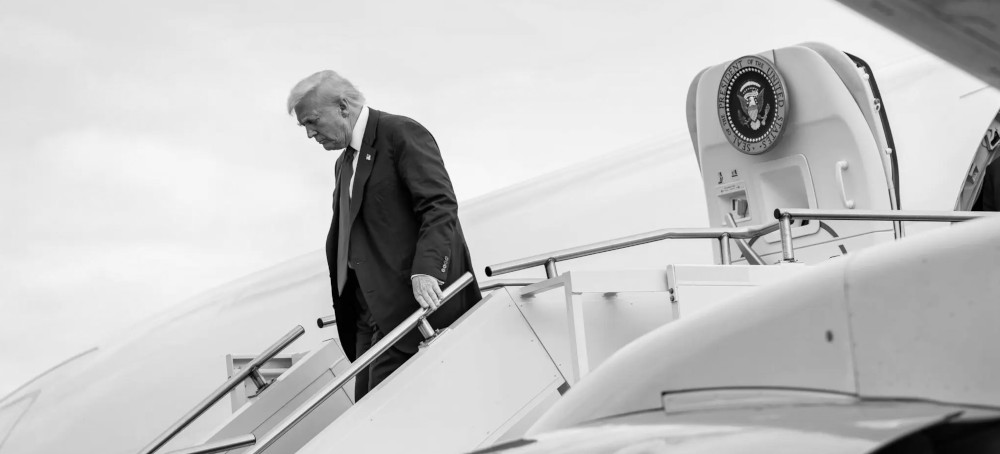
Six months after Trump bragged about a “historic” realignment, voters from across the political spectrum have soured on the president. As is almost always the case with newly elected presidents, Trump was exaggerating his victory and his mandate. By historic standards, it was a modest win (at best). He won the popular vote, and swept swing states, but did so narrowly. Still, he was right to crow—and Democrats were right to panic. Trump really had made significant inroads with many long-standing Democratic constituencies: young people, Black voters, and Arab Americans, in particular. While Kamala Harris trotted out past presidents and celebrities like Oprah and Beyoncé, Trump made strategic alliances with bro-y podcasters (Joe Rogan), disgraced rappers (Kanye), and kooks (RFK Jr. stans). Democrats were not only out of power; their entire electoral playbook was in tatters. If Trump could hold onto his new voters while maintaining his sizable, doggedly loyal MAGA base, the party was screwed. Today, just six months into Trump’s second term, things look very different. Voters still hate Democrats: A Monday Wall Street Journal poll found that 63 percent of voters had an unfavorable view of the party, the lowest figure on record. But, increasingly, voters hate Trump too. A lot. And it’s not just his new voters: Trump’s MAGA base is showing signs of wavering for the first time since the January 6 insurrection, thanks to his handling of the controversy over Department of Justice files related to the late financier Jeffrey Epstein, the convicted pedophile and accused sex trafficker who was Trump’s close friend for nearly two decades. Everywhere you look, Trump’s support is collapsing. The credulous Beltway press has long depicted Trump as a singular marketing genius: the “Michael Jordan of name-calling” and the country’s arch purveyor of political merchandise (hats with 40-year-old slogans on them). There is a touch of truth to this; Trump has a Barnumesque knack for generating attention, and his tendency to play to the crowd means he can run laps around most focus group–tested messaging. But it has always been overstated. The nicknames are almost all clumsy and cringeworthy (just look at “Panican”); his political slogans have a (similarly) remarkably low hit rate. In both cases, his winners—or at least those with a long shelf life, such as “Build the Wall,” “Crooked Hillary,” and “Make America Great Again”—date back to the early days of his first presidential run. Trump’s real talent isn’t for moving voters to where he is but identifying where voters are—and then saying what other political leaders are too afraid to say. His rapid rise within the Republican Party came from simply recognizing that the party’s voters were significantly further to the right on immigration than most of the party’s presidential candidates. Trump parroted back to voters what they were already saying about undocumented immigrants, and he rapidly rose in the polls. More recently, Trump has succeeded by pushing messages that resonated with groups whose loyalty to the Democratic Party was less than absolute. In 2024, he argued that the political elite was out of touch; that it took young, Black, and Latino voters for granted; and that he—given his unorthodox foreign policy, to describe it favorably—could end the genocide in Gaza. He also shrewdly aligned with Robert F. Kennedy Jr., a scion of the nation’s most famous Democratic family whose base was loosely correlated with support for Democrats: Trump won his endorsement by promising him real power, and likely won a substantial number of votes as a result. In 2016, Trump asked a group of Black voters a rhetorical question: “What the hell do you have to lose?” It was a message that didn’t really resonate in 2016—but it did to a much greater extent in 2024. Trump doubled his support with Black voters, from 8 to 15 percent. But already, there seem to be regrets among this group. In January, just 44 percent of Black voters disapproved of Trump’s presidency; as of early July, 72 percent did. This is happening with other groups as well. In 2024, he improved his margins among young voters and ran roughly even with Harris with men under 30; his approval rating with young voters now stands at just 28 percent—down 27 points in just six months. Arab Americans who helped Trump win Michigan are furious over his handling of Gaza and his numerous travel bans targeting the Middle East. And although there isn’t recent polling specific to Kennedy supporters’ opinion of Trump, there is clear evidence of growing angst among his allies—Laura Loomer, most prominently—that Kennedy is being stymied by those in Trump’s orbit with ties to Big Pharma. It isn’t just casual Trump voters who are backing away, however. His own base is fiercely critical of his handling of the “Epstein files”—the name for the Department of Justice case documents relating to Epstein’s sex crimes, which are believed to include the names of many prominent figures, Republicans and Democrats alike. Fewer than two in 10 Republicans approve of Trump’s handling of the files, while 82 percent want them to be released in full. This isn’t just a minor issue, either—it gets to the heart of Trump’s appeal to these voters. Their ironclad support is based on the fact that they doggedly believe that he is different from the other corrupt politicians and deep staters in Washington, and that he is committed to eradicating those people from the government. His failure to follow through on his (admittedly half-hearted) promise to release these files has rattled his core supporters, even as he is ramping up an unprecedented deportation regime. There are signs that all of this is going to get worse too. Trump has no way out of the Epstein problem; he can either continue to stonewall, which makes him look guilty, or he can release everything, which may make him look even guiltier. Prices are rising again, thanks to a tariff strategy that makes no sense whatsoever and amounts to yet more inflation for the American consumer. The massive tax cut for the rich Trump just signed into law will soon have to be paid for by stripping poor people of their health care and jacking up costs for those on the Affordable Care Act exchanges. The situation in Gaza is worse than it has been in two and a half years. His deportation regime, which will only expand under the new budget law, is causing widespread horror and outrage in communities across the country. The Democrats, of course, still have a problem: No one likes them either. Their base is justifiably furious with Democratic leadership’s failure to do much to stop Trump and, relatedly, its inability to settle on an effective message about an increasingly authoritarian administration. Swing voters are still down on the party, which they blame (unfairly) for post-Covid inflation and (fairly) for propping an octogenarian Joe Biden when he was clearly unfit for the job. But that may be something Democrats don’t really have to start worrying about until they retake power in some form, perhaps after next year’s midterm elections. For now, all that really matters is that Trump’s support is tanking—and he looks powerless to halt the slide, let alone reverse it.
In firing the head of the agency that collects employment statistics, the president underscored his tendency to suppress facts he doesn’t like and promote his own version of reality. Don’t like an intelligence report that contradicts your view? Go after the analysts. Don’t like cost estimates for your tax plan? Invent your own. Don’t like a predecessor’s climate policies? Scrub government websites of underlying data. Don’t like a museum exhibit that cites your impeachments? Delete any mention of them. Mr. Trump’s war on facts reached new heights on Friday when he angrily fired the Labor Department official in charge of compiling statistics on employment in America because he did not like the latest jobs report showing that the economy isn’t doing as well as he claims it is. Mr. Trump declared that her numbers were “phony.” His proof? It was “my opinion.” And the story he told supposedly proving she was politically biased? It had no basis in fact itself. The message, however, was unmistakable: Government officials who deal in data now fear they have to toe the line or risk losing their jobs. Career scientists, longtime intelligence analysts and nonpartisan statisticians who serve every president regardless of political party with neutral information on countless matters, such as weather patterns and vaccine efficacy, now face pressure as never before to conform to the alternative reality enforced by the president and his team. Mr. Trump has never been especially wedded to facts, routinely making up his own numbers, repeating falsehoods and conspiracy theories even after they are debunked and denigrating the very concept of independent fact-checking. But his efforts since reclaiming the White House to make the rest of government adopt his versions of the truth have gone further than in his first term and increasingly remind scholars of the way authoritarian leaders in other countries have sought to control information. “Democracy can’t realistically exist without reliable epistemic infrastructure,” said Michael Patrick Lynch, author of the recently published “On Truth in Politics” and a professor at the University of Connecticut. “Anti-democratic, authoritarian leaders know this,” he said. “That is why they will seize every opportunity to control sources of information. As Bacon taught us, knowledge is power. But preventing or controlling access to knowledge is also power.” The British philosopher Francis Bacon published his meditations on truth and nature more than four centuries before Mr. Trump arrived in Washington, but history is filled with examples of leaders seeking to stifle unwelcome information. The Soviets falsified data to make their economy look stronger than it was. The Chinese have long been suspected of doing the same. Just three years ago, Turkey’s autocratic leader fired his government’s statistics chief after a report documented rocketing inflation. Mr. Trump’s advisers defended his decision to fire the Labor Department official, saying he was only seeking accuracy, and they released a list of recent job estimates that were later revised. While revisions of job creation estimates are normal, they argued without evidence that recent ones indicated a problem. The bureau’s “data has been historically inaccurate and led by a totally incompetent inpidual,” Taylor Rogers, a White House spokesman, said on Saturday. “President Trump believes businesses, households and policymakers deserve accurate data when making major policy decisions, and he will restore America’s trust in this key data.” Mr. Trump has spent a lifetime trying to impose his facts on others, whether it be claiming that Trump Tower has 10 more floors than it actually has or insisting that he was richer than he actually was. He went so far as to sue the journalist Timothy L. O’Brien for $5 billion for reporting that Mr. Trump’s net worth was less than he maintained it was. The future president testified in that case that he determined his net worth based in part on “my own feelings.” (The suit was dismissed.) His fast-and-loose approach to numbers and facts finally caught up with him last year when he was found liable for fraud in a civil case in which a judge found that he used his annual financial statements to defraud lenders and ordered him to pay what has now exceeded $500 million with interest. Mr. Trump has appealed the ruling. During his first term as president, Mr. Trump chastised the National Park Service for not backing up his off-the-top-of-his-head estimate of the crowd size at his inauguration. He used a Sharpie pen to alter a map to argue that he was right to predict that a hurricane might hit Alabama, and federal weather forecasters were rebuked for saying it would not. Most explosively, he pressured Justice Department officials to falsely declare that the 2020 election was corrupt and therefore stolen from him even after they told him there was no evidence of widespread voter fraud. This second term, however, has seen Mr. Trump go further to force his facts on the government and get rid of those standing in the way. After just six months of his return to office, the Union of Concerned Scientists, a nonprofit advocacy group, counted 402 of what it called “attacks on federal science,” nearly double its count from the entire first term. Gretchen T. Goldman, president of the union and a former science adviser to President Joseph R. Biden Jr., said federal agencies like the Bureau of Labor Statistics, whose director was fired by Mr. Trump on Friday, are meant to operate more independently to avoid the politicization of data collection and reporting. “Firing the top statistical official sends a clear signal to others across the government that you are expected to compromise scientific integrity to appease the president,” she said. “This puts us in dangerous territory far from an accountable and reality-based government.” Mr. Trump’s team has aggressively sought to steer information emerging from the federal government since January if it contradicted the president. The top aide to Tulsi Gabbard, Mr. Trump’s director of national intelligence, ordered intelligence analysts to rewrite an assessment on the Venezuelan government’s relationship with the gang Tren de Aragua that undermined the president’s claims. Ms. Gabbard later fired two intelligence officials because she said they opposed Mr. Trump. Mr. Trump and his allies assailed the nonpartisan Congressional Budget Office for projecting that his tax and spending legislation would add trillions of dollars to the national debt and offered his own numbers instead. “I predict we will do 3, 4, or even 5 times the amount they purposefully ’allotted’ to us,” he said, referring to growth expected to be stimulated by tax cuts, which he insisted would “cost us no money.” Mr. Trump called the budget office “Democrat inspired and ’controlled,’” even though it is nonpartisan and Republicans have majorities in both chambers of Congress. In recent days, Mr. Trump has sought to rewrite the history of the 2016 election when, according to multiple intelligence reports and investigations, including by Republicans, Russia intervened in the campaign with the goal of helping him beat Hillary Clinton. Ms. Gabbard released documents that she claimed showed that in fact President Barack Obama orchestrated a “yearslong coup and treasonous conspiracy” against Mr. Trump, even though the documents she released did not prove that. Federal officials have gotten the hint. Throughout the government, officials have sought to remove references to topics like “persity” that might offend Mr. Trump or his team and to revise presentation of history that might in his view case the country in a negative light. After Mr. Trump ordered the National Park Service to remove or cover up exhibits at its 433 sites across the country that “inappropriately disparage Americans,” employees have flagged displays on slavery, climate change and Native Americans for possible deletion. Just last week, the Smithsonian Institution confirmed that it had removed Mr. Trump from an exhibit on impeachment at the National Museum of American History, despite the fact that he is the only president to have been impeached twice. The exhibit was changed to say that “only three presidents have seriously faced removal,” referring to Andrew Johnson, Richard M. Nixon and Bill Clinton — with no mention of Mr. Trump. The Smithsonian, which has been under pressure from Mr. Trump to eliminate “anti-American ideology,” as he put it in an executive order, said in a statement that it had made the change after reviewing the “Limits of Presidential Power” section of the exhibit, which also includes sections on Congress, the Supreme Court and public opinion. Because the other sections had not been updated since 2008, the Smithsonian said it decided to revert the impeachment section back to its 2008 version, even though it now presents a false account of history. After The Washington Post and other outlets reported about the change, the Smithsonian on Saturday said the exhibit would be “updated in the coming weeks to reflect all impeachment proceedings in our nation’s history.” The president’s decision to fire Erika McEntarfer, the commissioner of the Bureau of Labor Statistics, came just hours after her office issued its monthly report showing that job growth in July was just half as much as last year’s average. The bureau also revised downward the estimated job creation of the two previous months. Mr. Trump erupted at the news and ordered her dismissed, claiming on social media that the numbers were “RIGGED in order to make the Republicans, and ME, look bad.” He offered no proof but just said it was “my opinion.” Both Democrats and Republicans criticized the move, including Mr. Trump’s labor statistics chief in his first term, William W. Beach, who wrote on social media that it was “totally groundless” and “sets a dangerous precedent.” Speaking with reporters before heading to his New Jersey golf club for the weekend, Mr. Trump asserted bias on the part of Dr. McEntarfer, who was appointed by Mr. Biden and confirmed by a large bipartisan vote in the Senate, including Vice President JD Vance, then a senator. The example Mr. Trump offered as evidence was flatly untrue. “Days before the election, she came out with these beautiful numbers for Kamala,” Mr. Trump said, referring to his opponent, Vice President Kamala Harris. “Then right after the election — I think on the 15th, Nov. 15 — she had an eight or nine hundred thousand-dollar massive reduction.” What he meant was that the bureau revised downward its estimate of how many jobs had been created by 800,000 or 900,000 only after the election so as not to hurt Ms. Harris’s chances of victory. Except that it actually happened the exact opposite way. Dr. McEntarfer’s bureau revised the number of jobs created downward by 818,000 in August 2024 — before the election, not after it. And the monthly report her bureau released just days before the election was not helpful to Ms. Harris but instead showed that job creation had stalled. The White House offered no comment when asked about the president’s false account. “It’s a post-factual world that Trump is looking for, and he’s got these sycophants working for him that don’t challenge him on facts,” said Barbara Comstock, a former Republican congresswoman from Virginia. But firing the messenger, she said, will not make the economy any better. “The reality is the economy is worse, and he can’t keep saying it’s better,” she said. “Joe Biden learned that; people still experience the experience they have, no matter how much” you tell them otherwise.
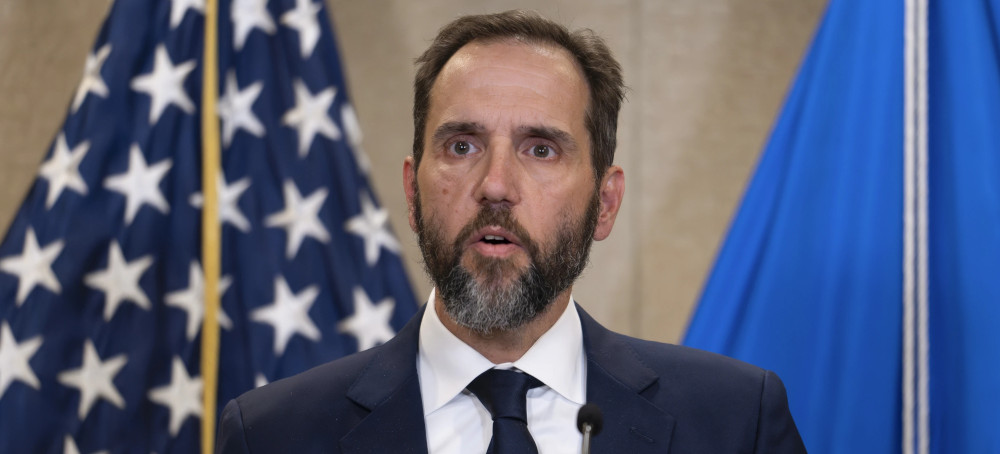
The Office of Special Counsel confirmed Saturday that it was investigating Smith on allegations he engaged in political activity through his inquiries into Trump. Smith was named special counsel by then-Attorney General Merrick Garland in November 2022 and his special counsel title is entirely distinct from the agency now investigating him. The office has no criminal enforcement power but does have the authority to impose fines and other sanctions for violations. It was not clear what basis exists to contend that Smith’s investigations were political in nature or that he violated the Hatch Act, a federal law that bans certain public officials from engaging in political activity. Sen. Tom Cotton, an Arkansas Republican, had earlier this week encouraged the office to scrutinize Smith’s activities and had alleged that his conduct was designed to help then-President Joe Biden and his vice president Kamala Harris, both Democrats. Smith brought two cases against Trump, one accusing him of conspiring to overturn the results of the 2020 presidential election and the other of hoarding classified documents at his Mar-a-Lago estate in Florida. Both were brought in 2023, well over a year before the 2024 presidential election, and indictments in the two cases cited what Smith and his team described as clear violations of well-established federal law. Garland has repeatedly said politics played no part in the handling of the cases. Both cases were abandoned by Smith after Trump’s November win, with the prosecutor citing longstanding Justice Department policy prohibiting the indictment of a sitting president. There was no immediate indication that the same office investigating Smith had opened investigations into the Justice Department special counsels who were appointed by Garland to investigate Biden and his son Hunter. The White House had no immediate comment on the investigation into Smith, which was first reported by The New York Post. The office has been riven by leadership tumult over the last year. An earlier chief, Hampton Dellinger, was abruptly fired by the Trump administration and initially sued to get his job back before abandoning the court fight. Trump selected as his replacement Paul Ingrassia, a former right-wing podcast host who has praised criminally charged influencer Andrew Tate as a “extraordinary human being” and promoted the false claim that the 2020 election was rigged. A Senate panel was set to consider his nomination at a hearing last month, but it was pulled from the agenda. Trump’s trade representative, Jamieson Greer, is serving as acting head of the office.
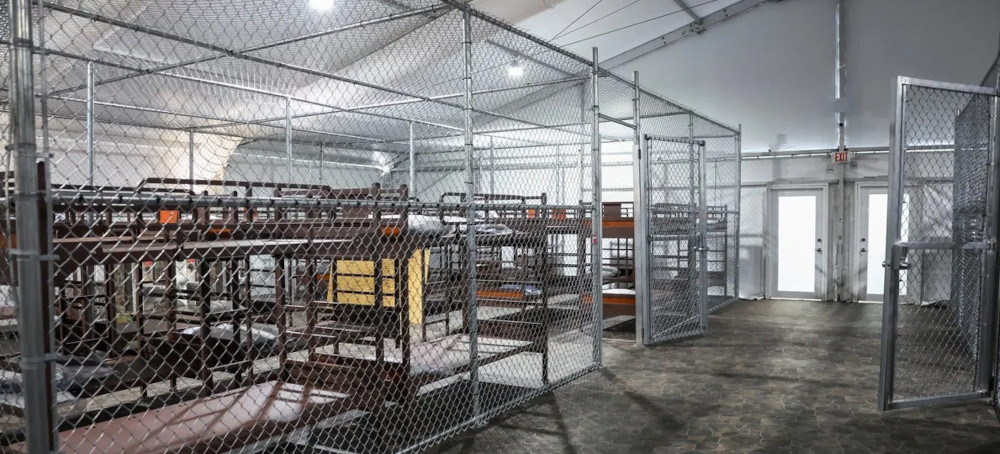
“Since my life no longer belongs to me, it’s up to them to decide whether I live or die,” detainee Pedro Lorenzo Concepción, 44, told El País from inside the facility. State officials run the Florida detention camp, housing migrants in a series of hastily assembled tents and chain link enclosures on a converted airstrip as they await federal immigration court and potential deportation by U.S. Immigration and Customs Enforcement. The Independent has contacted the Florida Division of Emergency Management, one of the state agencies overseeing the facility, for comment. Concepción, who came to the U.S. from Cuba in 2006 but lost his permanent resident status after going to prison, has been in detention since being arrested on July 8 after a check-in at a Florida Immigration and Customs Enforcement office, according to his family. The Independent has contacted ICE for comment. On July 22, he went on hunger strike and has collapsed multiple times inside Alligator Alcatraz. During the strike, he was taken to Miami’s Kendall Hospital, according to his family, where he said he sat in handcuffs as doctors tried to get him to eat, but he refused. “I don’t want food, I refuse any treatment,” reads a document he signed about his protest, obtained by El País. “I didn’t even ask to be taken to the hospital, because I’m fighting for my family and all Cubans, and I belong where my people are, in prison, suffering the same hardship they are.” The Independent has contacted Kendall Hospital for comment. Concepción’s wife said she’s worried he could be deported back to Cuba without her or the couple’s two children. “In a minute, your life falls apart,” she told the paper. “It’s been 19 years of being together.” Concepción, who said he was shackled and left on a floor at Alligator Alcatraz for more than 10 hours upon his arrival, is not the only one to complain of alleged poor conditions at the facility, which federal officials say they plan to support with millions in reimbursement funds and use as a model for future detention centers. Other inmates say they have faced poor sanitation and other brutal conditions inside the facility, which sits in the middle of a sweltering swamp. “They only brought a meal once a day and it has maggots,” Leamsy “La Figura” Izquierdo, a Cuban artist who was housed at the facility, told CBS News. “They never take of the lights for 24 hours. The mosquitoes are as big as elephants.” The facility is facing lawsuits on environmental and civil rights grounds, with lawyers accusing officials of largely barring them from being able to speak with detainees. Deportation flights for detainees held at the facility have begun, state officials announced last week. Earlier this month, Florida news outlets found that among those held at Alligator Alcatraz, only about one-third had a past criminal record, despite officials touting the prison as being designed to hold the worst of the worst.
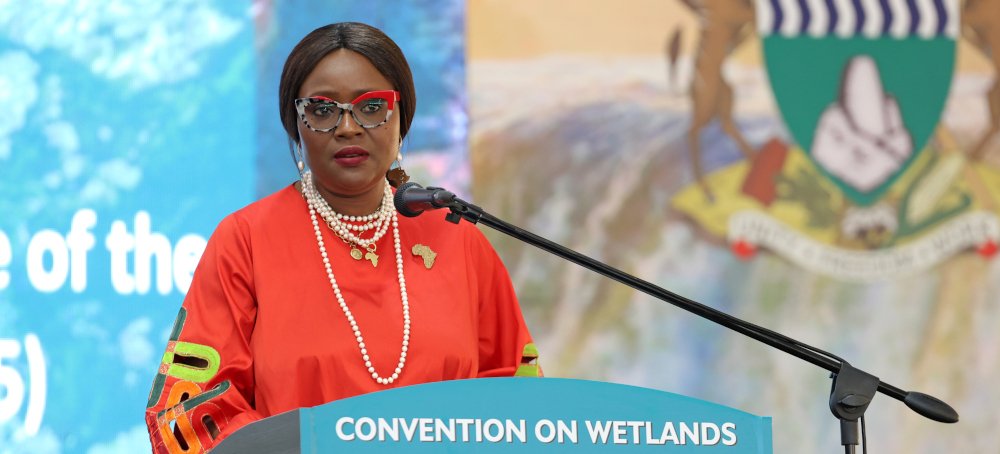
More than 170 countries have gathered to save critical ecosystems. But the U.S. was a no-show for most of the summit and Russia said it will withdraw from the wetlands treaty. Wetlands underpin all life on Earth, supplying fresh water, oxygen, habitat and food. Yet since 1970 more than 35 percent of wetlands have been lost or degraded at a pace three times faster than losses experienced within forests. The U.N. gathering known as the 15th meeting of the conference of the Contracting Parties of the Convention on Wetlands (COP15), one of the oldest global environmental protection treaties, comes just weeks after scientists released a dire warning about the destruction and declining health of global wetlands, describing the decline as an overlooked crisis that threatens food and water security, and worsens climate change. “We need to do things faster and more effectively,” Hector Aponte, president of the Society of Wetland Scientists Professional Certification Program, said this week. But despite warnings and calls to scale up finance for wetlands protection, delegates to the wetlands’ COP15 have so far refused to increase the budget to assist countries’ conservation and restoration efforts, and have deadlocked on the details of the next five-year strategic plan, which will guide wetlands protection. It also didn’t take long for geopolitics to roil the weeklong meeting. On the second day, the delegates from Russia announced the country’s intention to withdraw from the treaty—the first nation to do so. The delegates claimed the conference had become politicized, and they left. At the prior wetlands conference in 2022, countries passed a resolution to set up monitoring of Ukrainian wetlands harmed during Russia’s ongoing war. This year, Ukrainian representatives moved to extend the monitoring and called for Russia to release a Ukrainian wetlands scientist held as a political prisoner. European and other Western countries expressed support for the new resolution amid procedural debates. Brazil, Cuba, Indonesia, Iran, China and Venezuela opposed it. “We want to reiterate that the core mission of the convention is wetland conservation and protection,” the Chinese delegation said at the summit. “Political issues will distract us.” Canada, speaking in support of the resolution, said there was nothing political about seeking to continue technical monitoring of damage to Ukraine’s wetlands. Line Rochefort, professor at Université Laval and director of the Peatland Ecology Research Group, said Russia’s withdrawal could have major implications for climate change mitigation. Russia is home to one of the world’s largest shares of peatlands, a type of wetland that sequesters more carbon than any other type of ecosystem. “It is sad for the future of the planet and the next generation,” Rochefort said. Russia’s move follows U.S. President Donald Trump’s second withdrawal from the Paris climate accord. At the wetlands conference, two chairs marked “United States” sat empty in the plenary hall for days because the country for the first time had not sent a delegation. On July 30, the second-to-last day of the summit, one U.S. representative finally arrived and delivered a striking message: In conference documents, the U.S. government wanted no mention of climate change; diversity, equity and inclusion; gender; the United Nations’ sustainable development goals; or “zero growth.” Because the United States did not participate in the normal convention process, its suggestions could not be integrated into official documents. The U.S. Department of State did not respond to questions from Inside Climate News earlier this month about the government’s plans for attendance or whether the United States remained committed to the goals of the nonbinding treaty: the conservation and “wise use” of wetlands. Since January, through a combination of Trump’s executive orders, legislative rollbacks and court rulings, the United States has gutted federal wetlands protections. While the United States and Russia were largely absent from the talks, China’s presence in Victoria Falls is outsized. The country sent about 90 delegates. Some environmentalists have criticized the wetlands treaty as lacking enforcement power, but conference attendees stressed the convention’s achievements, including the creation of more than 2,500 protected Ramsar wetlands sites. The treaty is also known as the Ramsar convention since it was signed in Ramsar, Iran, in 1971. Attendees also argue that it’s never been more important for countries to have a space to cooperate and share knowledge on wetlands conservation. Disengagement by the United States from the world’s worsening, and shared, environmental problems comes as many developing countries at the meeting described grave impacts on their people caused by wetland loss, and related problems like climate change. Last year, much of southern Africa experienced a punishing drought, amplified by climate change, that caused widespread famine and stressed ailing wetlands in the region. Zimbabwean delegate Felix Chidavaenzi told Inside Climate News this week that such disasters show that the African continent is facing the worst impacts of global environmental crises, despite contributing very little to those problems. Africa, he noted, has contributed about 3 percent of the world’s greenhouse gas emissions. He said wealthy countries ought to consult low-income nations about their needs in tackling these crises, instead of imposing ideas on them. “To come out of these catastrophes, the voices of Africa need to be amplified,” Chidavaenzi said. “We all know the Global North is responsible for what is happening now.” The most recent deterioration of wetlands is occurring in Africa, the Caribbean and Latin America. That’s because Europe and North American countries destroyed much of their wetlands during industrialization. Other long-standing differences between wealthy and low-income countries, apparent in prior conference processes, reemerged this week, with developing countries calling for Western nations to pay for wetland conservation projects. “The contracting parties of the Ramsar Convention need to have an honest conversation about resource mobilization,” Brazilian delegate Patrick Luna told Inside Climate News. Sierra Leone delegate Samuel Ibrahim Kobba said that his country, one of the world’s poorest, has lacked the resources to complete an accounting of the nation’s wetland resources. “If you do a comparative analysis of wetlands in countries around the world, others do better than African countries because they have resources,” Kobba said. “The gap is big.” That’s why global coordination is key to protecting wetlands and solving worsening environmental problems, several delegates said. “Above all, we must rekindle the spirit of cooperation and solidarity that brought us together in the first place—and show that multilateralism can still deliver real, concrete results,” said Luna, who heads the biodiversity division at Brazil’s foreign ministry. China attempted to emphasize its climate profile this week by setting up the conference’s largest exhibit, showcasing Beijing’s mangrove restoration efforts and its 22 accredited “wetlands cities.” China, however, is one of the countries opposed to increasing the wetlands convention’s budget, which has remained unchanged for 15 years as rising inflation reduced its buying power. The United States is the treaty’s largest donor, contributing 22 percent of its budget. Limited funding for the wetlands meeting has impacted grassroots communities and civil society groups. Compared to climate and biodiversity conferences that advocates say attract more funds for nongovernmental attendees, few such nonprofit organizations are in Victoria Falls this week. “My heart is breaking. The true voices should be here,” said Kim Diana Connolly, professor and vice dean at the University at Buffalo School of Law and co-chair of World Wetland Network, a global alliance of more than 150 grassroots civil society groups. The organization also puts out a widely cited survey on the insights of communities living near and within wetlands. Connolly said she’s received messages from members saying they wanted to be at the conference but lack the funds to travel. That includes youth activists, who have been pressing for greater inclusion in the convention. Thandeka Ndlela, network co-lead of Youth Engaged in Wetlands, said the convention should include more diverse youth participation, including young Indigenous people. She’d also like to see governments step up commitments to wetland restoration, recognize traditional knowledge and include youth in the convention’s monitoring processes—issues, she said, that “deeply affect our future.” “For us, success looks like structures that allow young people to contribute meaningfully beyond the conference halls,” Ndlela said. Uganda has taken a lead in elevating the role local communities play in wetlands protection, introducing a widely-supported resolution on the importance of cultural values. “In Uganda, we protect wetlands because of our cultural values,” said Asadhu Ssebyoto, a senior wetlands officer in Uganda’s Ministry of Water and Environment. “We want to ensure that the world recognizes the significance of culture in relation to wetlands.” This involves documenting communities’ stories, traditional ways of life and their ecological knowledge, Ssebyoto said. Many customs and belief systems, such as restricting access to sacred water bodies at specific times of the year, often align with insights about the ecosystem, like the breeding patterns of certain species. Despite the critical knowledge encoded in these practices, communities face increasing threats from dominant religions, urbanization and other societal pressures, Ssebyoto said. Other high-profile topics at the COP15 highlight cities’ potential to protect urban wetlands, aligning wetland conservation with global climate and biodiversity goals, and encouraging governments to include wetlands in national conservation policies. The biggest driver of wetland loss is land conversion for industrial agriculture and urban development. Pollution and climate change also play a growing role in water bodies’ decline. Delegates will meet until Thursday and are still pressing to create a new five-year plan, increase governments’ financial commitments, and pass a resolution about wetlands restoration as a solution to climate change. |




No comments:
Post a Comment
Note: Only a member of this blog may post a comment.