Saturday, August 30, 2025
■ The Week in Review
"This is about workers showing up and demanding what workers deserve all across the country," said Randi Weingarten, president of the American Federation of Teachers.
By Stephen Prager • Aug 29, 2025
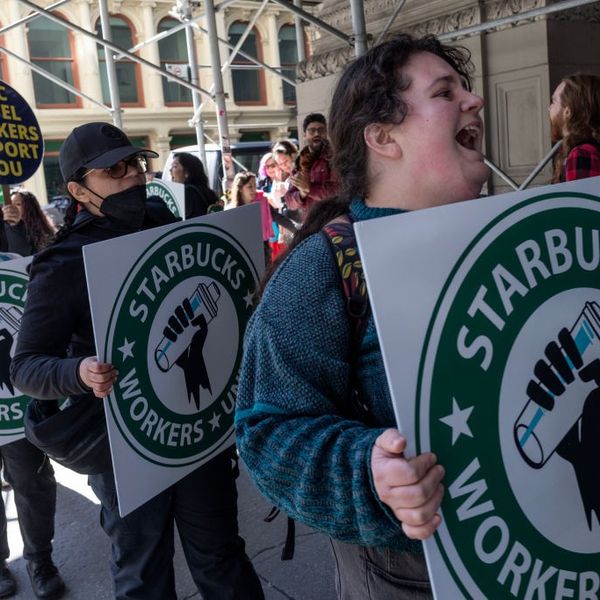
Unions and progressive organizations are planning nearly 1,000 "Workers Over Billionaires" demonstrations across the United States this Labor Day to protest President Donald Trump's assault on workers' rights.
The day of national action has been organized by the May Day Strong coalition, which includes labor organizations like the AFL-CIO, American Federation of Teachers, and National Union of Healthcare Workers, as well as advocacy groups like Americans for Tax Fairness, Indivisible, Our Revolution, and Public Citizen.
"Labor and community are planning more than a barbecue on Labor Day this year because we have to stop the billionaire takeover," the coalition says. "Billionaires are stealing from working families, destroying our democracy, and building private armies to attack our towns and cities."
Since coming into office, the Trump administration has waged war on workers' rights. Among many other actions, his administration has stripped over a million federal workers of their right to collectively bargain in what has been called the largest act of union busting in American history and dramatically cut their wages.
He has also weakened workplace safety enforcement, eliminated rules that protected workers against wage theft, and proposed eliminating the federal minimum wage for more than 3.7 million childcare and home workers.
Despite Trump's efforts, Americans still believe in the power of collective action. According to a Gallup poll published Thursday, 68% of Americans say they approve of labor unions, the highest level of support since the mid-1960s.
"Just like any bad boss, the way we stop the takeover is with collective action," the coalition says on its website.
The May Day Strong coalition previously organized hundreds of thousands of workers to take to the streets for International Workers Day, more commonly known as "May Day." On Monday, rallies are once again expected across all 50 states.
Four months later, their list of grievances has grown even longer, with Republicans having since passed a tax cut expected to facilitate perhaps the largest upward transfer of wealth in US history, featuring massive tax breaks for the wealthy paid for with historic cuts to the social safety net.
"There are nearly 1,000 billionaires in the country with a whopping $6 trillion, and that is still not enough for them," said Saqib Bhattie, executive director of the Action Center on Race and the Economy, another group participating in the protests. "They are pushing elected officials to slash Medicaid, [Supplemental Nutrition Assistance Program] benefits, and special education funding for schools in order to fund their tax breaks. We need to claw back money from the billionaire. We need to push legislation to tax billionaires at the state and local levels. We need to organize to build the people power necessary to overcome their money."
The group also plans to respond to Trump's lawless attacks on immigrants and his militarized takeovers of American cities.
"This Labor Day," said Lisa Gilbert, co-president of Public Citizen, "we continue the fight for our democracy, the fight for the soul of our nation, the fight against the vindictive authoritarian moves Trump and the billionaire class aimed at stealing from working people and concentrating power."
"This is about workers showing up and demanding what workers deserve all across the country," said Randi Weingarten, president of the American Federation of Teachers. "This Labor Day is really different, because it's not just labor unions, as important as we may be to the workers we represent. It has to be all workers and all working families saying enough. Workers and working families deserve the bounty of the country."
May Day Strong will host a national "mass call" online on Saturday. The locations of the hundreds of protests on Monday can be found using the map on May Day Strong's website.
One labor leader called it "another clear example of retaliation against federal employee union members who have bravely stood up against his anti-worker, anti-American plan to dismantle the federal government."
By Jessica Corbett • Aug 28, 2025
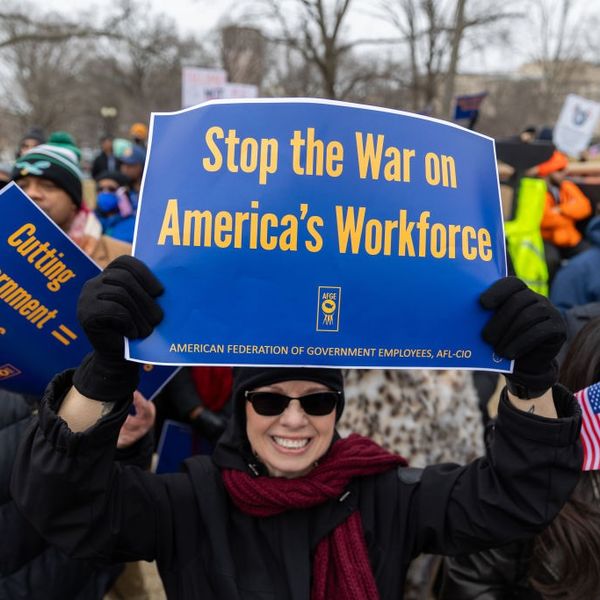
In the lead-up to Labor Day in the United States, President Donald Trump on Thursday escalated his attack on the union rights of federal employees at a list of agencies with an executive order that claims to "enhance" national security.
Trump previously issued an order intended to strip the collective bargaining rights from hundreds of thousands of government employees in March, provoking an ongoing court fight. A federal judge blocked the president's edict—but then earlier this month, a panel from the US Court of Appeals for the 9th Circuit allowed the administration to proceed.
Government agencies were directed not to terminate any collective bargaining agreements while the litigation over Trump's March order continued, but some have begun to do so, according to Government Executive. On Monday, the 9th Circuit said in a filing that it would vote on whether the full court will rehear the case.
Amid that court fight, Trump issued Thursday's order, which calls for an end to collective bargaining for unionized workers at the Bureau of Reclamation's hydropower units; National Aeronautics and Space Administration; National Environmental Satellite, Data, and Information Service; National Weather Service; Patent and Trademark Office; and US Agency for Global Media.
Like the earlier order, this one cites the Civil Service Reform Act of 1978. As Government Executive reported Thursday:
Matt Biggs, national president of the International Federation of Professional and Technical Engineers, whose union represents a portion of NASA's workforce along with the American Federation of Government Employees, suggested that the administration's targeting of NASA—IFPTE's largest union—was in retaliation for its own lawsuit challenging the spring iteration of the executive order, filed last month.
"It's not surprising, sadly," Biggs said. "What is surprising is that on the eve of Labor Day weekend, when workers are to be celebrated, the Trump administration has doubled down on being the most anti-labor, anti-worker administration in US history. We will continue to fight in the courts, on the Hill, and at the grassroots levels against this."
Everett Kelley, national president of the American Federation of Government Employees (AFGE), which also sued over the March order, said that "President Trump's decision to issue a Labor Day proclamation shortly after stripping union rights from thousands of civil servants, a third of whom are veterans, should show American workers what he really thinks about them."
"This latest executive order is another clear example of retaliation against federal employee union members who have bravely stood up against his anti-worker, anti-American plan to dismantle the federal government," Kelley declared, taking aim at the president's so-called Department of Government Efficiency (DOGE).
"Several agencies including NASA and the National Weather Service have already been hollowed out by reckless DOGE cuts, so for the administration to further disenfranchise the remaining workers in the name of 'efficiency' is immoral and abhorrent," the union leader said. "AFGE is preparing an immediate response and will continue to fight relentlessly to protect the rights of our members, federal employees, and their union."
"We need congress to intervene," said one of the CDC officials who stepped down this week.
By Brad Reed • Aug 28, 2025
Staff members at the Centers for Disease Control and Prevention headquarters in Atlanta, Georgia on Thursday staged a mass walkout in a show of support for three top officials who resigned in protest this week.
The three officials in question—Demetre Daskalakis, Daniel Jernigan, and Debra Houry—resigned on Wednesday night to protest the ouster of former Centers for Disease Control and Prevention (CDC) Director Susan Monarez, who had just been confirmed weeks ago by the US Senate.
All three officials came to the CDC headquarters to clear out their offices and, as they left the building on Thursday afternoon, were followed out by hundreds of workers who cheered them and thanked them for their work at the agency.
Marissa Sarbak, a reporter with NBC Atlanta, posted a video showing the crowds that had gathered to support the departing officials.
Sam Stein, a journalist at The Bulwark, reported that Houry gave a short speech outside the building in which she warned that the agency was in danger of falling apart and that more resignations would be coming soon unless drastic changes were made.
"We need congress to intervene," she emphasized.
Jernigan, who until Wednesday has served as the director of the CDC's National Center for Emerging and Zoonotic Infectious Diseases, told The Washington Post that his "last straw" was being forced to work with David Geier, who has long pushed false theories linking childhood vaccinations to autism.
"The current administration has made it very difficult for me to stay," said Jernigan, who has nearly two decades of experience working at the CDC. "We have been asked to revise and to review and change studies that have been settled in the past, scientific findings that were there to help guide vaccine decisions."
Monarez was reportedly pushed out by Health Human Services (HHS) Secretary Robert F. Kennedy Jr., who, like Geier, has also in the past pushed conspiracy theories linking vaccines to autism.
Kennedy's decision to oust Monarez has drawn bipartisan concern. Sens. Patty Murray (D-Wash.) and Tina Smith (D-Minn.) have both called on President Donald Trump to fire Kennedy, while Sen. Bill Cassidy (R-La.) called for HHS to postpone its scheduled Advisory Committee on Immunization Practices meeting, given what he described as "serious allegations" that have been made by the resigned CDC officials.
The effort furthers the goals of the Heritage Foundation, which has launched a plan to "identify and target Wikipedia editors" using a number of underhanded tactics.
By Stephen Prager • Aug 28, 2025
A pair of House Republicans is moving forward with an investigation that will seek to reveal the identities of Wikipedia editors who have edited articles to include information that portrays Israel negatively.
On Wednesday, Rep. James Comer (R-Ky.), chair of the House Oversight Committee, and Rep. Nancy Mace (R-S.C.), chair of the House Subcommittee on Cybersecurity, Information Technology, and Government Innovation, sent a letter to the Wikimedia Foundation, the nonprofit that owns the free encyclopedia.
The representatives asked Wikimedia's CEO, Maryana Iskander, for "assistance in obtaining documents and communications regarding individuals (or specific accounts) serving as Wikipedia volunteer editors who violated Wikipedia platform policies as well as your own efforts to thwart intentional, organized efforts to inject bias into important and sensitive topics."
The letter requested information about "nation state actors" or "academic institutions" that may have been involved in efforts to "edit or influence content identified as possibly violating Wikipedia policies."
A spokesperson for the Wikimedia Foundation told The Hill that they were reviewing the request.
"We welcome the opportunity to respond to the committee's questions and to discuss the importance of safeguarding the integrity of information on our platform," the spokesperson said.
The GOP investigation coincides with a long-standing objective of the far-right Heritage Foundation, which has accused Wikipedia of anti-conservative bias and promoting content that portrays Israel in a negative light, and sought to unmask the identities of the internet users who run it.
The letter sent by Comer and Mace requests that Wikimedia provide Congress with "records showing identifying and unique characteristics of accounts (such as names, IP addresses, registration dates, user activity logs) for editors" who have been "subject to actions" by Wikipedia's Arbitration Committee, which resolves internal disputes between editors.
It was, in essence, a request by Congress for Wikipedia to "dox" many of its editors.
"In the culture of Wikipedia editing, it is common for individuals to use pseudonyms to protect their privacy and avoid personal threats," wrote tech writer and Wikipedia expert Stephen Harrison for Slate in February. "Revealing an editor's personal information without their consent, a practice known as doxing, is a form of harassment that can result in a user's being permanently banned from the site."
Of chief concern to the legislators is investigating Wikipedia's handling of content related to Israel. They cited a report from the Anti-Defamation League (ADL), a pro-Israel lobbying group, which the legislators said "raised troubling questions about potentially systematic efforts to advance antisemitic and anti-Israel information in Wikipedia articles related to conflicts with the state of Israel."
The ADL report makes the allegation that 30 "bad-faith" Wikipedia editors, whose identities are not public, were collaborating to edit pages about the Israel-Palestine conflict by "spotlighting criticism of Israel and downplaying Palestinian terrorist violence and antisemitism," and in the process violating Wikipedia's commitment to neutrality.
That report, however, has been heavily criticized, including by some of the academics it cited. In a piece for The Forward, Shira Klein, whose research on Wikipedia's documentation of the Holocaust appears in the report, said the ADL "inaccurately" used her work, and the work of others, as part of its "ramped-up efforts to police public discourse about Israel," and quoted other researchers who felt the same.
Klein described the study's interpretation of the facts as "very skewed" and said it was reliant "on a faulty premise: that criticism of Israel or Zionism is inherently antisemitic."
"To establish foul play, the ADL would need to demonstrate that Wikipedia content about Israel and Zionism regularly expresses as fact ideas that diverge from broadly held scholarly opinions on the matters in question," Klein said. "But where is the evidence of editors repeatedly misrepresenting or contradicting peer-reviewed literature? There is none. The report simply wants us to take the ADL's word for it."
The ADL's report, as well as a similar report from the Atlantic Council alleging that Wikipedia editors had conspired to spread pro-Kremlin propaganda, are the sole pieces of evidence cited by Comer and Mace in their request for identifying information on Wikipedia's editors.
However, right-wing efforts to undermine Wikipedia's independence and attack the privacy of its editors go back much further.
In January, documents obtained by The Forward's Arno Rosenfeld revealed a secret plan by Heritage, the think tank behind the authoritarian Project 2025 playbook, to "identify and target Wikipedia editors" who the organization said were "abusing their position."
Among the methodologies it directed Heritage employees to use include "analyzing text patterns, usernames, and technical data through data breach analysis, fingerprinting, [human intelligence], and technical targeting."
The targeting methods also included "creating fake Wikipedia user accounts to try to trick editors into identifying themselves by sharing personal information or clicking on malicious tracking links that can identify people who click on them."
According to Rosenfeld, "The Heritage Foundation sent the pitch deck outlining the Wikipedia initiative to Jewish foundations and other prospective supporters of Project Esther, its roadmap for fighting antisemitism and anti-Zionism."
Jewish Voice for Peace has described Project Esther as Heritage's "blueprint for using the federal government and private institutions to dismantle the Palestine solidarity movement and broader US civil society, under the guise of 'fighting antisemitism.'"
"Even if you take issue with how the site is currently framing the conflict, that doesn't justify Heritage's plan," Harrison wrote. "Targeting Wikipedia editors personally, instead of debating their edits on the platform, marks a dangerous escalation."
Coming amid the Trump administration's crackdowns against campus protests and efforts to deport immigrants over pro-Palestine speech, critics have described the House Republican investigation as the latest GOP attempt to censor criticism and the spread of unflattering information about Israel.
Adam Johnson, a co-host for the political podcast Citations Needed, described it in a post on X as "House Republicans working with the ADL and Atlantic Council to discipline Wikipedia into parroting the Israeli and NATO line."
Johnson noted that this push was coming as the clear majority of Americans, including an overwhelming number of Democrats, now oppose US support for Israel, with many now believing the country is committing a genocide.
"Rather than end the genocide," Johnson said, "the response instead is to continue firing, doxing, smearing, and attempting to censor inconvenient narratives."
One ACLU expert said the move sets "a terrible precedent that would only embolden dictators and autocrats and dangerously weaken respect for human rights at home and abroad."
By Jessica Corbett • Aug 28, 2025
The ACLU on Thursday condemned President Donald Trump's administration for refusing to participate in a United Nations mechanism "that calls for each UN member state to undergo a peer review of its human rights records."
The president's decision to ditch the Universal Periodic Review (UPR) follows a February executive order withdrawing from various world bodies, including the United Nations Human Rights Council (UNHRC), which he previously abandoned during his first term.
"The Trump administration's decision to boycott the UPR puts the US among the ranks of the worst violators of human rights," said Jamil Dakwar, director of the ACLU's Human Rights Program. "This move is a chilling attempt to evade accountability, setting a terrible precedent that would only embolden dictators and autocrats and dangerously weaken respect for human rights at home and abroad."
"The ACLU will continue to hold the Trump administration accountable for US human rights obligations and calls on Congress and state and local elected officials to join the fight to defend human dignity and everyone's basic rights and freedoms as promised by the Universal Declaration of Human Rights," Dakwar added.
The Trump administration has faced mounting criticism since the February order, including after it missed an August 4 deadline to submit a national report in preparation for the next cycle of the UPR, set to take place in November.
After that deadline passed, the UPR Project at the United Kingdom's Birmingham City University and the UPR Academic Network released a joint statement noting that the US "participated in its previous three cycles of UPR in 2010, 2015, and 2020 and engaged as a recommending UN member state from the UPR's inception in 2008 until recently."
"The UPR is a nonconfrontational, cooperative mechanism which enables constructive dialogue between states on human rights. It is also a method of national self-reflection involving dialogue between civil society and the state," the signatories stressed, calling on the US to resume cooperation and other UN member states, UNHRC President Jürg Lauber, and the wider international community "to take appropriate steps and measures" encouraging the administration to do so.
The Lebanese Center for Human Rights (CLDH) reshared that statement on social media Thursday, declaring that the US position is "threatening global human rights accountability and international dialogue," and this is a "critical moment for human rights!"
The ACLU and CLDH comments came after Agence France-Presse confirmed the Trump administration's refusal to participate in the review, reporting on a Thursday letter that the US mission sent to UN High Commissioner for Human Rights Volker Türk.
According to AFP:
Thursday's letter said that the UPR system, which was created after the establishment of the rights council in 2006, was meant to be "based on objective and reliable information and conducted in a manner that ensures equal treatment" of all countries.
"However, this is not the case today," it charged, adding that "the United States objects to the politicization of human rights across the UN system, as well as the UN's unrelenting selective bias against Israel."
It also accused the UN of "ignoring human rights abuses in China, North Korea, Cuba and Venezuela," which it said had "tarnished the UPR process" and other rights council mechanisms.
UNHRC spokesperson Pascal Sim told the news agency that "since the inception of the UPR in 2008, the secretariat has occasionally received requests from states to postpone reviews," often due to national crises, and the council will discuss how to proceed on the US review when it meets for a month beginning September 8.
Thursday's letter and the backlash come after US Secretary of State Marco Rubio and his department put out an annual report on other nations' human rights conditions earlier this month—a day after a coalition of LGBTQ+ and human rights groups sued over the administration's delay in releasing the congressionally mandated publication.
Amanda Klasing, Amnesty International USA's national director of government relations and advocacy, said at the time that the report made "clear that the Trump administration has engaged in a very selective documentation of human rights abuses in certain countries." Other critics highlighted Israel as an example of this.
Charles Blaha, a former State Department official who now serves as a senior adviser at DAWN, which advocates for democracy and human rights in the Middle East, called it "functionally useless for Congress and the public " and "nothing more than a pro-Israel document."
While acknowledging that "hunger is a real issue in Gaza," the US ambassador to the UN repeated a debunked claim that the world's leading authority on starvation lowered its standards to declare a famine.
By Brett Wilkins • Aug 27, 2025
Every member nation of the United Nations Security Council except the United States on Wednesday affirmed that Israel's engineered famine in Gaza is "man-made" as 10 more Palestinians died of starvation amid what UN experts warned is a worsening crisis.
Fourteen of the 15 Security Council members issued a joint statement calling for an immediate Gaza ceasefire, release of all remaining hostages held by Hamas, and lifting of all Israeli restrictions on aid delivery into the embattled strip, where hundreds of Palestinians have died from starvation and hundreds of thousands more are starving.
"Famine in Gaza must be stopped immediately," they said. "Time is of the essence. The humanitarian emergency must be addressed without delay and Israel must reverse course."
"We express our profound alarm and distress at the IPC data on Gaza, published last Friday. It clearly and unequivocally confirms famine," the statement said, referring to the Integrated Food Security Phase Classification's declaration of Phase 5, or a famine "catastrophe," in the strip.
"We trust the IPC's work and methodology," the 14 countries declared. "This is the first time famine has been officially confirmed in the Middle East region. Every day, more persons are dying as a result of malnutrition, many of them children."
"This is a man-made crisis," the statement stresses. "The use of starvation as a weapon of war is clearly prohibited under international humanitarian law."
Israel, which is facing a genocide case at the UN's International Court of Justice, denies the existence of famine in Gaza. Israeli Prime Minister Benjamin Netanyahu and former Defense Minister Yoav Gallant are wanted by the International Court of Justice for alleged war crimes and crimes against humanity, including murder and forced starvation.
The 14 countries issuing the joint statement are: Algeria, China, Denmark, France, Greece, Guyana, Pakistan, Panama, the Republic of Korea, the Russian Federation, Sierra Leone, Slovenia, Somalia, and the United Kingdom.
While acknowledging that "hunger is a real issue in Gaza and that there are significant humanitarian needs which must be met," US Ambassador to the UN Dorothy Shea rejected the resolution and the IPC's findings.
"We can only solve problems with credibility and integrity," Shea told the Security Council. "Unfortunately, the recent report from the IPC doesn't pass the test on either."
Shea also repeated the debunked claim that the IPC's "normal standards were changed for [the IPC famine] declaration."
The Security Council's affirmation that the Gaza famine is man-made mirrors the findings of food experts who have accused Israel of orchestrating a carefully planned campaign of mass starvation in the strip.
The UN Palestinian Rights Bureau and UN humanitarian officials also warned Wednesday that the famine in Gaza is "only getting worse."
"Over half a million people currently face starvation, destitution, and death," the humanitarian experts said. "By the end of September, that number could exceed 640,000."
"Failure to act now will have irreversible consequences," they added.
Wednesday's UN actions came as Israel intensified Operation Gideon's Chariots 2, the campaign to conquer, occupy, and ethnically cleanse around 1 million Palestinians from Gaza, possibly into a reportedly proposed concentration camp that would be built over the ruins of the southern city of Rafah.
The Gaza Health Ministry (GHM) on Wednesday reported 10 more Palestinian deaths "due to famine and malnutrition" over the past 24 hours, including two children, bringing the number of famine victims to at least 313, 119 of them children.
All told, Israel's 691-day assault and siege on Gaza has left at least 230,000 Palestinians dead, maimed, or missing, according to the GHM.
"The Trump administration's move to gut this bedrock protection is nothing more than a handout to logging interests at the expense of clean water, wildlife, and local communities," said one advocate.
By Julia Conley • Aug 27, 2025
The U.S. Department of Agriculture on Wednesday moved to rescind a conservation policy dating back nearly 25 years that has protected more than 45 million acres of pristine public lands, as the Trump administration announced a public comment period of just three weeks regarding the rollback of the "Roadless Rule."
The rule, officially called the 2001 Roadless Area Conservation Rule, has protected against the building of roads for logging and oil and gas drilling in forest lands including Alaska's Tongass National Forest, the nation's largest national woodland.
Agriculture Secretary Brooke Rollins said in June as she announced her intention of repealing the rule that the administration aims to "get more logs on trucks," in accordance with President Donald Trump's executive order calling for expanded logging in the nation's forests. The president has asserted more trees must be cut down to protect from wildfires, a claim that's been rejected by environmental groups that note fires are more likely to be ignited in areas where vehicles travel.
The public comment period on rescinding the Roadless Rule is set to open this week and end September 19.
The environmental legal firm Earthjustice, which has fought to defend the Roadless Rule for years, including when Trump moved to exempt the Tongass from the regulation during his first term, noted that roadless forests provide vulnerable and endangered wildlife "with needed habitat, offer people a wide range of recreational activities, and protect the headwaters of major rivers, which are vital for maintaining clean, mountain-fed drinking water nationwide."
"If the Roadless Rule is rescinded nationally, logging and other destructive, extractive development is set to increase in public forests that currently function as intact ecosystems that benefit wildlife and people alike," said the group.
Gloria Burns, president of the Ketchikan Indian Community, said the people of her tribe "are the Tongass."
"This is an attack on Tribes and our people who depend on the land to eat," said Burns. "The federal government must act and provide us the safeguards we need or leave our home roadless. We are not willing to risk the destruction of our homelands when no effort has been made to ensure our future is the one our ancestors envisioned for us. Without our lungs (the Tongass) we cannot breathe life into our future generations."
Garett Rose, senior attorney at the Natural Defenses Resource Council, said Rollins and Trump have declared "open season on America's forests."
"For decades, the Roadless Rule has stood as one of America's most important conservation safeguards, protecting the public's wildest forests from the bulldozer and chainsaw," said Rose. "The Trump administration's move to gut this bedrock protection is nothing more than a handout to logging interests at the expense of clean water, wildlife, and local communities. But we're not backing down and will continue to defend these unparalleled wild forests from attacks, just as we have done for decades."
The Alaska Wilderness League (AWL) noted that 15 million acres of intact temperate rain forest, including the Tongass and the Chugach, would be impacted by the rulemaking, as would taxpayers who would be burdened by the need to maintain even more roads run by the US Forest Service.
The service currently maintains more than 380,000 miles of road—a system larger than the US Interstate Highway System—with a "maintenance backlog that has ballooned to billions in needed repairs," said AWL.
"More roads mean more taxpayer liability, more wildfire risk, and more damage to salmon streams and clean water sources," added the group.
"No public lands are safe from the Trump administration, not even Alaska's globally significant forests," said Andy Moderow, senior director of policy at AWL. "Rolling back the Roadless Rule means bulldozing taxpayer-funded roads into irreplaceable old growth forest, and favoring short-term industry profits over long-term, sustainable forest uses. The Roadless Rule is one of the most effective, commonsense conservation protections in U.S. history. Scrapping it would sacrifice Alaska's public lands to the highest bidder."
Drew Caputo, vice president of litigation for lands, wildlife, and oceans at Earthjustice, emphasized that the group "has successfully defended the Roadless Rule in court for decades."
"Nothing will stop us," he said, "from taking up that fight again."
In a race that bodes well for Democrats' hopes in 2026, Catelin Drey won by championing "affordable housing, childcare, and healthcare, strong public schools, and bodily autonomy," wrote one progressive Iowa journalist.
By Stephen Prager • Aug 27, 2025
Democrats have broken the GOP stranglehold over Iowa's statehouse with a resounding win in a special election for the state Senate on Tuesday.
In the Sioux City-area district that Donald Trump carried by more than 11 points in 2024 and which had been won by Republicans for 13 consecutive years, Democrat Catelin Drey is projected to have won a convincing 55% of the vote over her Republican opponent, Christopher Prosch.
By taking the vacant seat, Democrats not only added to the mounting evidence for a coming anti-Trump backlash in the midterms, but also ended the Republican supermajority in Iowa's state Senate, which has allowed the GOP to spend the past three years curtailing abortion rights, stripping civil rights protections from transgender people, and chipping away at public education.
Additionally, the Democrats have thrown up a barrier to Republican Gov. Kim Reynolds, who needs a supermajority to confirm appointments and will now require some measure of bipartisan approval.
Like other successful Democratic candidates, Drey's message focused on affordability, with a special emphasis on the cost of living for families. Her slogan was "Iowa's Senate needs more moms."
"She has highlighted issues of particular importance to young parents," wrote Laura Belin for the progressive Iowa politics site Bleeding Heartland. "Affordable housing, childcare, and healthcare, strong public schools, and bodily autonomy."
Drey seized on outrage toward Republican attempts to defund public schools. Teachers, she said in one ad, "shouldn't have to rely on GoFundMes just to do their jobs."
"One takeaway from the Iowa special election: don't listen to centrist Democrats on education," said Jennifer Berkshire, an education writer for The Nation and the New Republic. "Catelin Drey made defending and funding public schools a focal point of her campaign and called for rolling back Iowa's controversial school voucher program."
Drey's victory adds to the already mounting pile of evidence that backlash towards President Donald Trump, whose approval ratings have skidded to near-record lows in recent weeks, will manifest at the ballot box next November.
G. Elliott Morris, a political data journalist, wrote Wednesday in his Strength in Numbers newsletter that "there have been plenty of special elections" this year, with "all of them suggesting a pretty sizable leftward shift in the electoral environment since November 2024."
Citing data from The Downballot's special election tracker, Morris wrote:
On average in 2025, Democratic candidates in special elections are running about 16 percentage points ahead of Kamala Harris’s margin versus Donald Trump in last year’s presidential election. That is 5-6 points higher than the average Democratic overperformance in 2017.
These crushing results, Democratic strategists say, are the reason behind Republicans' frantic efforts to ratchet up gerrymandering in states like Texas, where they control the state legislature.
"If you're wondering why Republicans are gerrymandering the fuck out of red states," said Democratic fundraiser Mike Nellis, "Democrats just flipped a Trump [+11] Iowa Senate seat. That's what they're afraid of."
With Drey's victory, Iowa Democrats have now won four consecutive special elections held in the state, flipping two other Republican-held seats. Riding that wave of optimism, they now have their sights set on a greater target: Iowa's two-term senator Joni Ernst, who comes up for reelection in 2026.
Defeating Ernst would be a significant boost to Democrats' efforts to regain control of the Senate in 2026. That effort may have been helped along by Ernst herself, who responded to questions at a town hall earlier this year about her support for savage cuts to healthcare in the GOP's One Big Beautiful Bill Act by callously remarking, "Well, we are all going to die."
An internal poll published Tuesday showed Democratic state senator Zach Wahls, one of many Democrats vying for the party's nomination, edging Ernst out in a hypothetical general election. Other polls show the race to be within the margin of error.
In a video posted to X, Wahls said Tuesday's Democratic victory is further evidence that "the state is in play," after not having elected a Democratic senator since 2008.
"Iowans are sick of the inability of the current administration and politicians like Joni Ernst to deal with rising costs. They are sick of the corruption, and they are ready for change," Wahls said. "We are going to flip this US Senate seat, the exact same way that Catelin Drey flipped her state Senate seat."
"Reckless tariff policy is wreaking warrantless chaos on our economy, with grocery giants shifting market uncertainty onto consumers," said Accountable.US president Caroline Ciccone.
By Stephen Prager • Aug 26, 2025
As leading grocery chains increase prices on essentials, they are blaming US President Donald Trump's tariffs for raising the cost of living for households across the country.
According to the Consumer Price Index, the price of food has increased by 3% in the past year, with meats, poultry, fish, and eggs getting 5.6% more expensive from June 2024 to June 2025.
In a poll published this month by the Associated Press and the National Opinion Research Center, 90% of Americans reported that they considered the cost of groceries a source of stress, with 53% describing it as a "major" source of stress.
In earnings calls and public statements, executives of many of America's largest and most profitable grocery retailers are citing Trump's tariffs as justification for passing on the costs to consumers, according to a new report released on Tuesday by Accountable.US.
In a first-quarter earnings call in May, Walmart CEO Doug McMillon said that while the company was better positioned than others to absorb the cost of tariffs, they would still "result in higher prices" for consumers. Since then, some grocery items at America's largest retailer have shown 40% hikes that have outraged consumers, fueling calls for a boycott.
On another call Thursday, McMillon said, "We've continued to see our costs increase each week, which we expect will continue into the third and fourth quarters."
"Trump's tariffs are making groceries more expensive," said Accountable.US. "Everyday Americans pay the cost while corporations and the wealthy profit."
Costco's chief financial officer, Gary Millerchip, told shareholders in May that the company "saw inflation as a result of tariffs because we import certain fresh items from Central and South America."
Kroger's CFO, Todd Foley, projected similar hikes to fresh food prices beginning in March. Though Foley said the impact would not likely be as significant as those experienced by their international competitors, he said the tariffs would likely cause "mid-single digit effects" on the costs of produce imported from Mexico and Canada.
Albertsons CEO Susan Miller has acknowledged that the company is raising prices on some goods to compensate for tariffs. But it has also turned the screws on its suppliers, demanding that they eat the cost of the new levies.
In the American Prospect, David Dayen described the latter as an example of how the tariffs were helping monopolies consolidate their power.
"Albertsons holds a significant market share in the grocery market, particularly in the western United States," he wrote. "Independent grocers, however, typically don't have the same ability to dictate terms to suppliers, and therefore will have to take whatever they can get."
Many of the companies currently raising prices have previously been caught or even admitted to price-gouging consumers to take advantage of inflation in the wake of the Covid-19 pandemic. The tariffs, a regressive tax that Trump has suggested as a way to offset the massive tax cuts given to the wealthy, have further exacerbated that pain.
"While Trump grants massive tax cuts to massive corporations and the ultra-rich," said Accountable.US President Caroline Ciccone, "his reckless tariff policy is wreaking warrantless chaos on our economy, with grocery giants shifting market uncertainty onto consumers."
DOGE officials have been responsible for "serious data security lapses" that risk the safety "of over 300 million Americans' Social Security data," the whistleblower complaint said.
By Brad Reed • Aug 26, 2025
A new whistleblower complaint is alleging that employees of the Department of Government Efficiency put Americans' Social Security data at risk by uploading it to a cloud server that was vulnerable to hacking.
The whistleblower complaint, which was filed by the Government Accountability Project on behalf of Social Security Administration (SSA) chief data officer Charles Borges, alleges that Department of Government Efficiency (DOGE) officials have been responsible for "serious data security lapses" that "risk the security of over 300 million Americans' Social Security data."
The report contends that Borges has evidence of a wide array of wrongdoing by DOGE employees, including "apparent systemic data security violations, uninhibited administrative access to highly sensitive production environments, and potential violations of internal SSA security protocols and federal privacy laws by DOGE personnel."
At the heart of Borges's complaint is an effort by DOGE employees to make "a live copy of the country's Social Security information in a cloud environment" that "apparently lacks any security oversight from SSA or tracking to determine who is accessing or has accessed the copy of this data."
Should hackers gain access to this copy of Social Security data, the report warns, it could result in identity theft on an unprecedented scale and lead to the loss of crucial food and healthcare benefits for millions of Americans. The report states that the government may also have to give every American a new Social Security number "at great cost."
As noted by The New York Times, Borges did not document any confirmed breaches of the cloud system set up by the DOGE employees, but he did say that there have been "no verified audit or oversight mechanisms" to monitor DOGE's use of the data.
Andrea Meza, director of campaigns for Government Accountability Project and attorney for Borges, said that her client felt he could not remain silent given the risk to Americans' personal information.
"Mr. Borges raised concerns to his supervisors about his discovery of a disturbing pattern of questionable and risky security access and administrative misconduct that impacts some of the public's most sensitive data," she said. "Out of a sense of urgency and duty to the American public, he is now raising the alarm to Congress and the Office of Special Counsel, urging them to engage in immediate oversight to address these serious concerns."
While DOGE was established with the stated goal of protecting Americans from waste and fraud in the US government—including at the SSA, which President Donald Trump has baselessly claimed wrongly sent benefits to hundreds of thousands of undocumented immigrants—former Labor Secretary Robert Reich said DOGE is "potentially exposing Americans to more" fraud.
Alex Lawson, executive director of the advocacy organization Social Security Works, blasted DOGE and its former leader, Tesla and SpaceX owner Elon Musk, for what he described as blatant theft.
"Elon Musk and his DOGE minions stole the American people's private Social Security data," said Lawson. "This was no accident. They come from Silicon Valley, where tech bros are furiously competing to see whose AI can gobble up the most data. Musk's nearly $300 million in contributions to Trump's campaign, along with buying Twitter and making it a de facto Trump campaign apparatus, were an investment—and now all of us are paying the price."
The official Social Security Works account on X delivered a terse three-word response to the whistleblower report: "This is criminal."
The new order, he says, would essentially allow "random fascist vigilantes" to "sign up to be a Brownshirt" for Trump's militarized occupation forces.
By Stephen Prager • Aug 26, 2025
An executive order signed Monday by US President Donald Trump may permit "random fascist vigilantes" to help him crack down on protests across the country, according to one prominent civil rights lawyer.
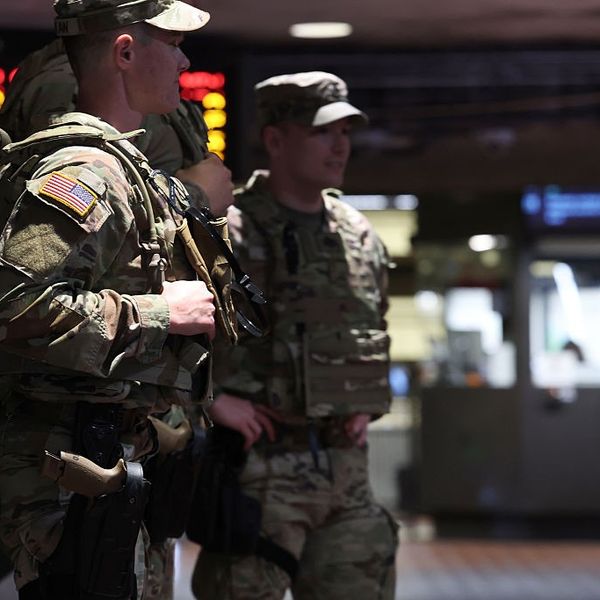
The new order, which comes amid wider concern about Trump's militarized takeover of Washington, DC, directs Secretary of Defense Pete Hegseth to ensure that each state's National Guard is equipped to "assist Federal, State, and local law enforcement in quelling civil disturbances and ensuring the public safety."
To that end, it orders the secretary to create a "standing National Guard quick reaction force" that "can be deployed whenever the circumstances necessitate," not just in the nation's capital but in "other cities where public safety and order has been lost."
Monday's order calls for the creation of "an online portal for Americans with law enforcement or other relevant backgrounds and experience." Agency heads then "shall each deputize the members of this unit to enforce federal law."
Alec Karakatsanis, the executive director of the Civil Rights Corps, described it in a post on X as "an online portal to permit random fascist vigilantes to join soldiers," adding that it was "one of the scariest things I've seen in US politics in my adult life."
Earlier this month, the Washington Post reported on an internal memo discussing the creation of a "quick reaction force," which outlined its objectives in clearer detail.
It called for 600 National Guard troops to be "on standby at all times so they can deploy in as little as one hour," to "American cities facing protests or other unrest." It did not specifically mention the involvement of civilians.
Lisa Gilbert, co-president of the pro-democracy advocacy group Public Citizen, said on Monday that the executive order represents a dangerous expansion of Trump's authoritarian takeover.
"Freedom of speech and the right to assembly are foundational constitutional rights, and the Posse Comitatus Act prevents the use of the military domestically," Gilbert warned in a statement. "The moves outlined in this overreaching and unnecessary executive action undercut those foundational rights and are egregious steps by a wanna-be-dictator who is placing the pursuit of power above the well-being of our country."
During his second term, Trump has maintained friendly relations with far-right militia groups. He pardoned over a thousand people involved in the violent insurrection of January 6, 2021, including members of the militant Proud Boys group, which Trump infamously told to "stand back and stand by" amid 2020's racial justice protests in American cities.
He has also met with its leader, Enrique Tarrio, who, along with Oath Keepers militia leader Stewart Rhodes, had previously suggested after his pardon that their groups could help Trump serve "retribution" upon his enemies.
The Oath Keepers also notably used the same term "quick reaction force" to refer to its efforts to transfer weapons across state lines to have them ready in DC to help with efforts to overturn Trump's election loss on January 6.
Earlier this month, the Trump administration—attempting to swell the ranks of Immigration and Customs Enforcement—eliminated degree requirements for new recruits, lowered the minimum age to 18, and introduced a fat $50,000 signing bonus, along with student loan relief.
In The Atlantic, technology reporter Ali Breland noted that members of the Proud Boys he'd been monitoring "seemed to be particularly pleased by the government's exciting career opportunity."
Since Trump took over law enforcement in Washington, DC, onlookers have described and documented countless egregious civil rights violations.
Jesse Rabinowitz of the DC-based National Homeless Law Center has described the dystopian scene on the ground in a post on X.
"There are full-on police checkpoints most nights," he said. "Every day, multiple friends see ICE kidnapping people. Daycares are scared to have kids go on walks due to ICE."
According to research by the libertarian Cato Institute published earlier this month, one in five people arrested by ICE have been Latinos with no criminal past or removal orders against them from the government, which they called a "telltale sign of illegal profiling."
Karkatsanis warns that through his latest order, Trump has created a "vigilante portal" where anyone can "sign up to be a Brownshirt to brutalize poor people, immigrants, people of color, and anyone else who might dare to, say, go to a protest."
He says that it "should be a nonstop emergency news alert," but that "instead, mainstream news and Democrats are barely mentioning it."
"It's another sign of just how out of touch Democratic Party leadership is today," said one supporter of the resolution.
By Brad Reed • Aug 26, 2025
The Democratic National Committee on Tuesday voted down a resolution calling for a suspension of military aid to Israel in the midst of a famine in Gaza that is a direct result of Israel's near-total blockade on humanitarian aid.
The resolution in question would have urged elected members to call for an immediate ceasefire in the Gaza conflict, as well as an arms embargo on Israel. It also would have urged the recognition of Palestine as a state, following the examples of countries such as France and Australia, which have announced intentions to formally recognize Palestine next month.
The resolution was rejected in a voice vote, with the "nays" strong enough to see it struck down. Five abstentions were recorded.
NOTUS reports that, in the wake of the resolution's failure, DNC Chairman Ken Martin announced that he "was forming a task force to continue discussion of the issue, indicating that the committee planned to consider a new resolution about the issue at a later date."
But following the declaration of famine in Gaza, and with US support for Israel clearly violating the country's own laws—including Section 620I of the Foreign Assistance Act, which bars the US from providing military aid to countries that are blocking humanitarian aid—the rejection of the resolution incensed its supporters.
Sophia Danenberg, a delegate from Washington state who spoke in favor of the Israeli arms embargo resolution, said she believes Democratic voters "want to hear a louder, stronger statement, and this isn't the time for subtlety."
She acknowledged the atrocities committed by terrorist organization Hamas in its attack on Israel on October 7, 2023, but she said that this "does not justify the actions of this right-wing [Israeli] regime—massacring and starving and slaughtering the Palestinian people."
Danenberg added that the DNC could be "losing the future of the Democratic Party by not being courageous" on the issue of Israel's assault on Gaza, which has killed at least 62,819 Palestinians, orphaned tens of thousands of children, and created the world's largest population of child amputees.
Margaret DeReus, the executive director of IMEU Policy Project, was even more scathing in her denunciation of the DNC for voting down the resolution and directly called out the influence of pro-Israel groups that have spent millions to defeat progressives like former Rep. Cori Bush (D-Mo.), one of the first Democratic lawmakers to demand a ceasefire after Israel began its assault on Gaza in 2023.
"It's another sign of just how out of touch Democratic Party leadership is today that dark money groups like [Democratic Majority for Israel]—that have spent millions in Democratic primaries to unseat progressives who stand for human rights for all people—were consulted ahead of DNC Chair Ken Martin's decision to introduce his bland resolution, while advocates for Palestinian rights who represent most Democrats were once again shut out and ignored," she said. "Sadly, this has been standard practice for a historically unpopular Democratic leadership that will not win elections until it decides to become a political party that actually listens to its voters."
Organizer Asra Nizami noted that "members acknowledged getting hundreds of calls and emails" about supporting the resolution, but voted it down nonetheless.
"This party keeps digging its own grave. And it's owned by AIPAC," said Nizami, referring to the pro-Israel American Israel Public Affairs Committee, which donated more than $24 million to Democratic candidates in 2024.
As Common Dreams reported last month, public support for Israel's US-backed bombardment of Gaza has plummeted in recent months, with just 8% of Democratic voters supporting the action.
Josh Ruebner, IMEU Policy Project's policy director, accused Democrats of being "wildly out of touch with their base who overwhelmingly want to block bombs to Israel and end US complicity in its genocide of Palestinians as shown by poll after poll."
James Zogby, founder and president of the Arab American Institute (AAI) and former member of the DNC executive committee, told Common Dreams that even though he had lobbied in favor of the resolution calling for the arms embargo, he was still pleased with the outcome of Tuesday's meeting.
The DNC, Zogby said, had a discussion about the issue of Israel-Palestine that he said never heard before. He said that what Ken Martin did by withdrawing his resolution and instead creating a task force to discuss the issue further "remarkable" given the party's historic position.
Zogby credited the heroic efforts by Allison Minnerly, the 26-year-old new DNC member from Florida who introduced the arms embargo, for her "incredible work" in bringing people together on the issue, generating many thousands of direct emails and calls to members of the resolution committee. The outcome was not what she and others hoped for, said Zogby, but Martin's decision on the weaker of the two resolutions and the creation of the task force should be seen as a "big deal" and "incredible" progress in the fight for Palestinian rights inside the party.
Sen. Elizabeth Warren said the president's attack on Federal Reserve Governor Lisa Cook "blatantly violates the Federal Reserve Act, and any court that follows the law will overturn it."
By Jon Queally • Aug 26, 2025
Federal Reserve Governor Lisa Cook is standing firm against an "illegal" attempt by President Donald Trump to fire her as economists warn his latest attack will only further undermine the independence of an institution designed to be insulated from the personal whims of the executive branch due to the instability, even the optics of such efforts could have.
After Trump posted a letter on social media Monday night that he claimed to have sent to Cook, stating she was fired "effective immediately," critics pointed out that the president does not have such authority, despite his claim that the statute allows him the power if "cause" is determined.
Trump cited alleged "mortgage fraud" by Cook, but those charges have come from Trump's own political allies and have not been substantiated or adjudicated in any formal or legal process.
In a Monday statement responding to Trump's letter, Cook insisted Trump could not fire her under these circumstances and would not willingly step aside.
"President Trump purported to fire me 'for cause' when no cause exists under the law, and he has no authority to do so," Cook said. "I will not resign."
Cook, alongside Fed Chairman Jerome Powell, is among those on the board who have resisted Trump's continued harassment when it comes to lowering federal interest rates.
Critics of Trump's move against Cook—including Democratic lawmakers, economists, progressive advocates, and financial experts—said what the president is attempting has serious and far-reaching implications, both for the rule of law and the economy.
"Trump is desperately looking for a scapegoat to cover for his own failure to lower costs for Americans and firing Lisa Cook is his latest move," said Sen. Elizabeth Warren (D-Mass.) in response to the development. "It's an authoritarian power grab that blatantly violates the Federal Reserve Act, and any court that follows the law will overturn it."
Alvaro Bedoya, a former member of the Federal Trade Commission and now a senior advisor at the American Economic Liberties Project, warned journalists covering the story to make sure they get the language correct when reporting.
"The President has not fired Lisa Cook," Bedoya noted. "The President is *trying* to illegally fire her."
Jeff Hauser, founder and executive director of the Revolving Door Project, a watchdog and advocacy group, placed the blame for Trump's latest unlawful scheme squarely at the feet of institutions—namely, the US Supreme Court, the media, and the Federal Reserve itself—which have allowed the president to act beyond the law time after time.
"Failing institutions and their weak leaders have emboldened Trump to pursue control of the Federal Reserve," said Hauser. "Attacking Board Governor Lisa Cook is part of this larger strategy. If the country, and its economy is to survive, these players must find a spine and stop enabling Trump’s authoritarian behavior."
Nigel Green, CEO of global financial advisory giant deVere Group, warned Tuesday that the combination of Trump's incessant intervention, calls for the Federal Reserve's chairman Jerome Powell to lower rates or be fired, Powell's own refusal to more loudly defend the body's independence—including at this month's summit in Jackson Hole, Wyoming—and now the attempted ouster of Cook are all leading to dangerous ripples in the world economy that could be difficult to fix.
"Trump's decision to remove a sitting Fed governor has shaken confidence in the institution that underpins the world's financial system," Green said in a statement. "Investors are reacting because the independence of the central bank is critical to market stability, and any sign of political capture raises alarm bells everywhere."
Green rebuked Powell for missing the chance to speak out in Jackson Hole and assure global markets that economic fundamentals, and not the personal desires and political interests of Trump, were being used to set fiscal policy in the world's largest economy. "Instead, he chose to focus narrowly on the near-term policy path," said Green. "The silence on independence has left markets exposed, and investors are filling the vacuum with speculation. This speculation is highly damaging."
CNBC reports that stock futures slipped on Tuesday morning in the wake of Trump's attacks, as short-term Treasury yields fell, but trade analysts worried more about the long-term impacts.
"In the immediate term, markets will probably get over the Cook news fairly quickly (assuming this is a discrete event and Trump doesn't attempt to fire Powell), turning its attention back [to other fundamentals], but the Fed's independence is undeniably being undermined, a process with negative long-term consequences," said Adam Crisafulli, founder of Vital Knowledge, a financial industry podcast.
Rohit Chopra, former director of the Consumer Financial Protection Bureau (CFPB) under Joe Biden, accused Trump and his administration of seeking to "transform the financial regulators from independent watchdogs into obedient lapdogs that do as they're told."
Skanda Amarnath, the executive director of Employ America and a former Fed economist, told The Guardian that "wrecking institutions with unlawful behavior and pathetic power grabs come with costs to Americans. The dollar continues to weaken as American governance continues to erode. That means higher prices for all commodities. Chair Powell must ensure that Lisa Cook is not removed as a result of these arbitrary and capricious actions from the president."
Meanwhile, economist Dean Baker couldn't help reference Trump's own troubled past with financial documents related to the value of real estate holdings:
Economist and former labor secretary Robert Reich warned that Trump's continued chaotic economic policies—including a tariff regime that is hurting investors, small business owners, and regular US consumers all at once; huge taxgiveaways to the rich while ripping healthcare and other safety net programs away from working people; and destroying regulatory systems that bring safety and stability to the economy—will ultimately lead to Trump's demise.
What Reich chose to label "fascism capitalism," he wrote in a blog post Tuesday morning, "will be Trump’s downfall because his arbitrary and mercurial decisions are making the private sector nervous about investing in the US economy, causing global lenders to demand a higher risk premium for lending to the US, and pushing the economy toward both inflation and recession—so-called 'stagflation.'"
"If nothing else brings him down, the economy surely will," predicted Reich.


















No comments:
Post a Comment
Note: Only a member of this blog may post a comment.