
04 October 25
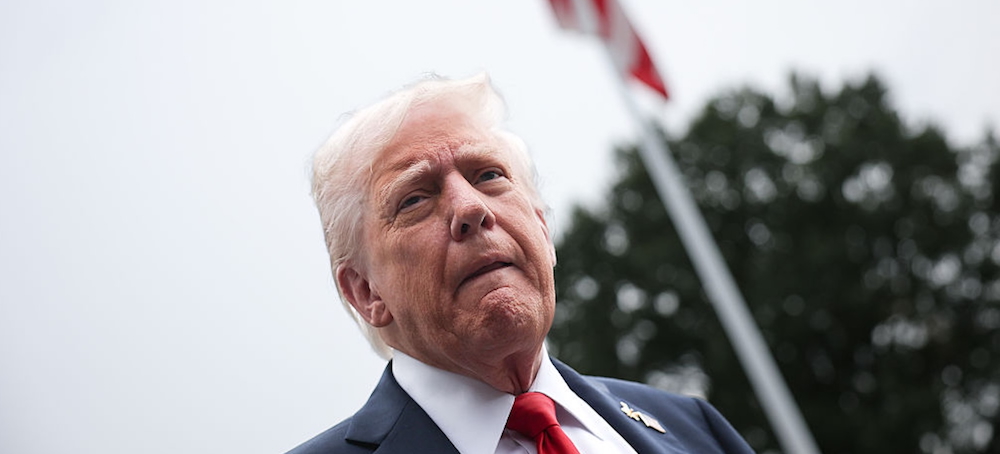
As the shutdown shifts the focus, JD Vance waits in the wings
This is different. The government has shut down for the third time during a Trump presidency. Though Republicans also control the House and Senate — and GOP appointees hold a majority on the Supreme Court — Trump says the budget impasse is still the fault of the radical left and former President Joe Biden. In other words, Trump is a victim — at least according to Presidential Pep Secretary Karoline Leavitt.
The president wants to use American cities as training grounds for the U.S. military. ICE agents are spreading chaos, beating and detaining American citizens. Trump is talking about nuclear war, calling it the “N” word. He has Health and Human Services Secretary Robert F. Kennedy Jr., the minister of plagues, spreading disinformation about health care. Christian Nationalists are engaged in an ongoing purge of anyone in government who doesn’t see things their way. Defense Secretary Pete Hegseth, Trump’s dog of war, has instituted some of the most racist regulations seen in the military since it was integrated nearly 80 years ago.
“Pete Hegseth is talking about grooming standards and how many pull ups he can do? I mean, it’s so embarrassing,” Janessa Goldbeck, CEO of the Vet Voice Foundation told me on the podcast “Just Ask the Question.” Thousands on social media made the same observation, noting that Trump isn’t exactly physically fit himself. “I’m not thrilled with this administration’s complete abdication of our true national security priorities,” she added. “I see Trump and this administration setting the military up to be the bad guys.”
Trump’s actions are those of a despot trying to seize total power. But there’s a deeper reason why recently he’s sounding even more maniacal. He is the proverbial New York sewer rat, cornered and lashing out in a desperate attempt to survive. He also knows he is becoming more vulnerable. But it’s not just his own mortality, shrinking mental acuity and the Jeffrey Epstein case that is scaring him.
Perhaps just as much, or even more, than Epstein, what most recently set Trump off is a criminal case he already beat in court but is still causing him to howl like a wild animal with its leg caught in a trap. On June 8, 2023, he was indicted on 37 felony counts in federal court in Miami. It was an historic moment — the first time a former U.S. president faced federal charges. Those stemmed from the FBI’s raid on Mar-a-Lago in August 2022, which uncovered dozens of boxes of highly classified documents stored in insecure settings.
Before being dismissed by U.S. District Judge Aileen Cannon on fallacious grounds in July 2024, it was considered one of the strongest criminal cases against Trump. He’s apparently still so worried about the case that he’s trying to put up costly roadblocks against someone who has only a chance of getting the information released.
After Trump had the confiscated material returned to him earlier this year, I filed a FOIA request through attorney Mark Zaid for materials seized during the FBI Mar-a-Lago raid that were later returned to Trump. I believe the information is of such vital public importance that we filed suit and petitioned for expedited service. This still means it could take anywhere from two to four years before the case is even heard.
If that were to fail? Well, Trump — in a sweet coincidence — recently released whatever information the government has on Amelia Earhart’s disappearance in 1937. That’s how transparent our government is. It only takes around 80 years.
The president’s response to my request was to tell me I had to pay $50,000 in a bond just to be able to ask for the service. If the petition were denied, I would still have to forfeit the $50,000.
I wonder: If I put it in a paper bag and gave it to Trump’s border czar Tom Homan, would that work? Remember, this is the administration that claims to be “the most transparent administration in history.”
I’ve often wondered if Trump sits up nights laughing to himself and ruminating over his favorite over-the-top lie as he consumes a Big Mac. Does he still have enough mental acuity to think deeply about his burger and his career favorite lie? You know, before he summons someone to bring him a diet soda.
These days, he’s not what he once was. He’s usually late to work and early to bed, and he spends his weekends golfing. As Trump grows older and increasingly more mentally incontinent, he sits in a stew of his own political flatulence while he mumbles incoherent random phrases “Like nothing ever seen before,” while blaming “the violent radical left” and “fake media,” along with a dozen other imagined enemies. Like a good bill collector, he always closes with “Thank you for your attention to this matter.”
Still, Trump and his Project 2025 cabal won’t be happy until the entire nation is reduced to the socioeconomic levels of rural eastern Kentucky or southern Mississippi. They won’t stop until no one is able to question them.
That would enable Trump to retire to his modern-day plantation, Mar-a-Lago, and enjoy the infamous spa where Epstein “stole” an underaged worker — and caused Trump to end his bromance with the deceased sex offender. The estate was also the site of Puff Donny’s worst prosecutorial nightmare, at least until a judge loyal to Trump dismissed the case. Like most Trump debacles, the Mar-a-Lago disaster was of his own making.
After losing to Biden in 2020, Trump left the White House like an angry tenant who didn’t get back his deposit. During the last week of his first term, reporters — myself included — witnessed his staff walking out with all sorts of odds and ends, including but not limited to paintings, other art work and office furnishings. It was like watching looters in a riot. We saw Trump himself boarding Marine One on the South Lawn while an ant-train of young staffers carried boxes to the helicopter.
Moving out of the White House is a cumbersome endeavor for all presidents. On the last day of the administration, it takes a fleet of moving vans, a large work force and much back-breaking labor to move one president out of the White House and another one in over a span of about six hours.
With such chaos, it isn’t unusual for some papers to end up leaving the White House that should have stayed. Within weeks — and sometimes months, and occasionally even later — the National Archives reaches out to retrieve the government’s property, and the ex-president finds the appropriate staffer to hunt down whatever is needed so it can be returned.
Not in Trump’s case. His story about the classified documents has changed more often than some people change their underwear. He had a lawyer write a letter and tell everyone he’d given everything back. Rumors leaked that he was brandishing highly classified information — some of it about Iran — to visitors, and that he was moving it around so his lawyers couldn’t find it. Some of it was infamously found in a Mar-a-Lago bathroom.
Trump then denied he had any materials, which were of course found during the FBI search, so then he said the bureau had planted it. Finally, Trump admitted he had it, but he said he had declassified it before leaving the White House without telling anyone or adhering to any process – basically through a political Vulcan mind meld, so he could keep whatever he wanted.
Agents seized more than 13,000 government documents from Trump, among which they found 103 classified government documents. Eighteen documents were marked top secret, and one of those sets had the control system protocol “top secret/SCI,” or sensitive compartmented information.
Less than two years later, Cannon dismissed the case. Special Counsel Jack Smith appealed the dismissal, but following Trump’s election to the presidency last November, Smith’s office dropped the appeal.
That would seem to be the end of it. Trump beat the odds.
But here’s where it gets fun.
Once he took office in January for a second time, the Department of Justice arranged for the material seized in the August 2022 search to be returned to Trump. On February 28, 2025, as Trump boarded an Air Force One flight from Joint Base Andrews in Maryland headed to Mar-a-Lago, boxes were loaded onto the plane. He issued a statement: “The Department of Justice has just returned the boxes.”
That’s when I filed my FOIA request. “I don’t think anyone expected that,” a current White House staffer told me. “Well, maybe some of the lawyers did.”
That would explain the reaction from the DOJ. The lawyers’ request for the $50,000 bond came in a Washington federal court filing, and it’s a startling example of “pay-to-play” justice. Worse, it’s pay-to-have-the-chance-to-play justice.
“Never in over 30 years of law practice have I seen the government so blatantly seek to intimidate FOIA requesters by threatening tens of thousands of dollars of fees merely because we sought our statutory legal rights to expedite processing of documents,” Zaid, my attorney, explained. “This case seeks production of the documents retrieved by the FBI from Mar-a-Lago that were said to be classified but President Trump and his allies say are not. One must question what threat we pose by simply requesting expedited processing of these records. Could it be they are actually classified and President Trump did violate the law?”
Trump’s fear is palpable, and like a New York sewer rat, that’s when he’s at his most dangerous. “This is nothing short of a $50,000 shakedown demand merely to expedite release of the ’definitely not classified’ records that Mr. Trump concealed from the Government at Mar-a-Lago,” Zaid’s co-counsel Brad Moss said. “This is not 1920s Chicago and Mr. Trump is not Al Capone. We will not accede to this demand and we will contest it vigorously in court.”
Add it to the list of things scaring Trump and driving his desire for total control before he loses all command of his mental and physical health. Chalk it up to JD Vance and Project 2025 to try and solidify power.
On Wednesday, as the government shutdown took hold, it was Vance who appeared in the Brady Briefing Room to field questions. Not Trump. The vice president was an effective (and younger) liar untethered by the scandals of his boss. Vance blamed the shutdown on radical left Democrats who want to give illegal immigrants health care. It’s a blatant lie, but he was more energetic delivering it, which, to some of the MAGA crowd, makes him more believable.
I’d say to check that signpost up ahead — our next stop is the Twilight Zone. But I think that’s just the vice president’s bearded visage.
Trump’s fear and his declining health show us, at the very least, that Vance is capable of pinch hitting for the sultan of political swat.
That is ultimately everyone’s greatest concern. On Thursday, Trump reportedly told Congress that the U.S. is in a state of “armed conflict” with drug cartels. If Vance can step up and, in the words of his own staff after Wednesday’s press briefing, “look very presidential,” then the administration’s despotic nature will continue to amp up even as Donald Trump continues to wind down.
At some point in the not-to-distant future, I was told by a source close to Trump, there is a growing fear that someone in his own inner-circle may whisper the words “25th Amendment,” end the Trump presidency and usher in “The Age of Ultron” — I mean Vance.
That, more than anything else, has Puff Donny scared
The Terrifying New Memo Trump Could Use to Go After His Opposition
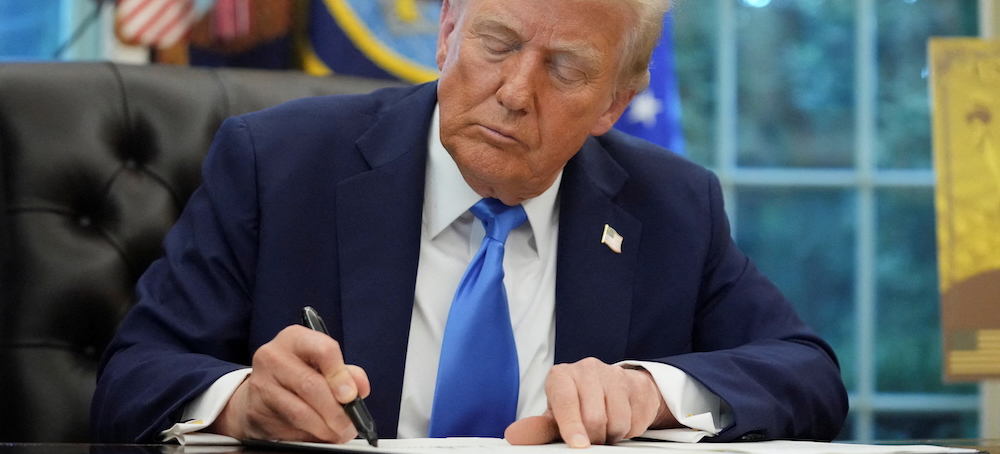 U.S. President Donald Trump signs an executive order in the Oval Office at the White House in Washington, D.C. (photo: Ken Cedeno/Reuters)
The president railed against the “enemy from within” to generals this week. NPSM-7 could enable the administration to go after anything they see as “anti-American”
“Our history is filled with military heroes who took on all enemies — foreign and domestic,” Trump said. “You know that phrase very well. That’s what the oath says: foreign and domestic. Well, we also have domestic. George Washington, Abraham Lincoln, Grover Cleveland, George Bush, and others all used the armed forces to keep domestic order and peace. … Now they like to say, Oh, you’re not allowed to use the military.”
Trump went on, in that speech, to refer to both “the enemy from within,” and a new war — “a war from within” — that generals would be asked to fight in.
In case there was any ambiguity about which enemies here in United States the president is intent on targeting — either with the military or other arms of the federal government — a national security directive published the week before his speech spelled it out: Anyone who is not with him, will be considered against him — and against the United States.
On September 25, the White House released “NSPM-7,” a sweeping order targeting “anti-fascist,” “anti-Christian,” “anti-capitalist,” and “anti-American” speech, as well as speech that expresses “support for the overthrow of the United States Government; extremism on migration, race, and gender; and hostility towards those who hold traditional American views on family, religion, and morality.”
The memo announced a new strategy “to investigate and disrupt networks, entities, and organizations that foment political violence so that law enforcement can intervene in criminal conspiracies before they result in violent political acts.”
There is little debate that political violence is on the rise, and a recent poll showed that increasing numbers of Americans view such violence as necessary “to get the country back on track.”
The problem is that the vast majority of political violence of it is not coming from the places that Trump, via NSPM-7, is ordering federal law enforcement to look. The week before Trump’s new memo went out, the Department of Justice removed a report from its website that showed “the number of far-right attacks continues to outpace all other types of terrorism and domestic violent extremism.”
“Since 1990, far-right extremists have committed far more ideologically motivated homicides than far-left or radical Islamist extremists, including 227 events that took more than 520 lives,” the now-archived report reads. “In this same period, far-left extremists committed 42 ideologically motivated attacks that took 78 lives.”
White House Deputy Press Secretary Abigail Jackson inadvertently cited similar statistics when she posted a chart with the headline, “Left-wing terrorism climbs to 30-year high” — a chart that shows that, since 2016, there have been almost four times as many attacks by right-wing terrorists as attacks by left-wingers.
The scrubbed report cites a U.S. Department of Homeland Security threat assessment concluded that these extremists “are an acute threat,” adding that “COVID-19 pandemic-related stressors, long-standing ideological grievances related to immigration, and narratives surrounding electoral fraud will continue to serve as a justification for violent actions.”
But the same week as Trump’s speech, and amid the administration’s new crackdown, Kash Patel, the director of the FBI, announced that the agency has cut ties with both the Anti-Defamation League and the Southern Poverty Law Center — two of the nation’s leading anti-hate groups, devoted to combating anti-semitism and white nationalism, respectively. (This, after a lobbying campaign by a right-wing influencers.)
The SPLC, in particular, is known for its efforts to track violent extremists and hate groups, expertise that previous administrations had called on to assist their own investigations. (“For decades, we have shared data and analysis with the public to protect civil rights and hold extremists accountable,” a spokesperson for SPLC said in a statement to Rolling Stone. “We remain committed to exposing hate and extremism as we work to equip communities with knowledge and defend the rights and safety of marginalized people.”)
Now, instead of investigating the homegrown individuals and groups that are vastly more likely to commit terrorism in the U.S., the federal government is primed to go after individuals and, potentially, nonprofit, political, and civil rights groups who voice opposing views.
Rep. Ro Khanna (D-Calif.), who ran for Congress in 2003 against the Patriot Act, called NSPM-7 an even “greater infringement on freedoms.” In an email to Rolling Stone, Khanna wrote, “the threat of retaliation is intended to silence people and give the administration the authority to go after political opponents.”
The ACLU sounded a similar alarm, with Hina Shamsi, director of the nonprofit’s National Security Project, calling NSPM-7’s strategy of targeting speech “a shameful and dangerous move.”
“After one of the most harrowing weeks for our First Amendment rights, the President is invoking political violence, which we all condemn, as an excuse to target non-profits and activists with the false and stigmatizing label of ’domestic terrorism,’” Shamsi said in a statement.
A slew of law firms have issued their own guidance warning about the expansive threat posed by the memo, while more than 3,000 nonprofits have raised their own concerns about the memo, publishing an open letter criticizing NSPM-7.
“This attack on nonprofits is not happening in a vacuum, but as a part of a wholesale offensive against organizations and individuals that advocate for ideas or serve communities that the president finds objectionable, and that seek to enforce the rule of law against the federal government,” the nonprofits’ letter read. “Whether the target is a church, an environmental or good government group, a refugee assistance organization, university, a law firm, or a former or current government official, weaponizing the executive branch to punish their speech or their views is illegal and wrong.”
Matthew Sanderson, director of the political law group at Caplin … Drysdale, one of the law firms that issued guidance about NSPM-7, said that while the operative aspects of the memo are tailored, specifically, to investigate “political violence, terrorism, or conspiracy against rights,” he was struck by the language White House Deputy Chief of Staff Stephen Miller used at a press conference announcing the directive. “He used the term ’whole of government’ several times, and so I don’t think this is a mere messaging vehicle, as some executive orders are,” Sanderson says. “I think this means something and will have lasting consequences.”
How NSPM-7 will ultimately be enforced is yet to be seen, but if there are three things that Donald Trump has made clear since returning to power, they are that he is not timid about going after his enemies — as Sen. Adam Schiff (D-Calif), New York Attorney General Tish James, former FBI Director James Comey, and many others can attest — that he is willing to shut-down speech he doesn’t like — just ask Jimmy Kimmel — and that he is absolutely itching to send in the troops to American cities.
Speaking in Memphis — the latest Democratic-led city where Trump is sending the National Guard to, and a city where crime in the city hit a 25-year low in September — Miller drove home just how lopsided a fight with an emboldened Trump administration might be. “The gangbangers that you deal with — they think they’re ruthless? They have no idea how ruthless we are. They think they’re tough? They have no idea how tough we are,” Miller said. “They think that they’re hardcore? We are so much more hardcore than they are — and we have the entire weight of the United States government behind us. What do they have?”
Elie Honig | An Epic Courtroom Mismatch Is Looming in the Comey Case
 Former FBI director James Comey speaks during a Senate Intelligence Committee hearing, on Capitol Hill, in Washington, D.C. (photo: Andrew Harnik/AP)
If the case reaches trial — and it might not, given how President Trump has teed up Comey’s selective prosecution motion with his serial public rants — watch for Fitzgerald to mop the floor with Trump’s unqualified loyalist turned prosecutor. Fitzgerald is as good as it gets, a legendary trial tactician who has repeatedly won jury verdicts in the highest-stakes courtroom showdowns of the past 30 years. And Halligan — I’ll try to be nice here — is a charlatan. (I tried.)
If the Comey case reaches trial, Fitzgerald likely will find himself squaring off against Halligan — who, as you read this, is working her tenth day as a prosecutor. (She started last Monday.) The New York Times reported that Halligan made her first-ever court appearance on the Comey matter. She originally went to the wrong courtroom and, when she did find the right place, stood on the wrong side of the judge. Halligan appeared baffled by basic paperwork relating to the indictment, eventually confusing the magistrate judge by presenting two different indictments. I don’t fault Halligan at all; I was just as clueless at the end of my second week on the job.
How, then, did Halligan — who was primarily an insurance lawyer — get the prestigious post as U.S. attorney for the Eastern District of Virginia? Two ways. First, the original prosecutor, Erik Siebert — an experienced DoJ professional who leans conservative and had been put in place by Trump himself — resigned under pressure because he didn’t firmly believe the evidence supported charges against Comey and others on Trump’s enemies list. And, second, Halligan is an unflinching Trump loyalist. She joined the president’s private legal team in 2022 and later oversaw the Trump White House’s review of Smithsonian Museum exhibits to eradicate “corrosive ideology.” Federal prosecutors come to the job with a range of prior experience, but I’m not sure I’ve ever seen a U.S. attorney who has done so little of substance before landing the top job.
Fitzgerald was a prosecutorial prodigy, beginning his career at age 27 in the U.S. Attorney’s Office for the Southern District of New York in 1988. He spent the next 13 years taking down mobsters and international terrorists, including the “Blind Sheikh” Omar Abdel Rahman and others who bombed the World Trade Center in 1993, and associates of Osama bin Laden who bombed two U.S. embassies in Africa in 1998. In 2001, when a U.S. senator from Illinois needed a new U.S. attorney for the Chicago area and asked FBI director Louis Freeh to identify the best prosecutor in the country, Freeh responded, “Patrick Fitzgerald.” President George W. Bush then nominated Fitzgerald as the U.S. attorney for the Northern District of Illinois, and the Senate confirmed him unanimously.
Fitzgerald became a national presence in December 2003, when he was named special counsel to investigate the Bush administration’s leak of the identity of CIA operative Valerie Plame. That appointment was made by the deputy attorney general of the United States — Jim Comey, who had grown up as an SDNY prosecutor alongside Fitzgerald. Upon the appointment, NBC News ran a piece titled “Pat Fitzgerald: The Steely-Eyed Sleuth,” which cast him as “a prosecutor with no discernible political bent” who “blended toughness and flexibility,” worked exhausting hours, remembered every detail, and was “enormously fair.” Even as Fitzgerald probed the Bush administration, the president publicly praised him as “a very thorough person” who had “conducted his investigation in a dignified way.”
I know dozens of people who have worked with Fitzgerald — I started at the SDNY three years after he left — and have heard nothing but raves. In an interview for my new book, Peter Zeidenberg, who worked on the prosecution team in the Plame case, told me Fitzgerald first met with the staff (which had already been investigating the case for about a month) on a Friday; by Monday, Zeidenberg recalled, “he knew as much about the case as anyone else.” Zeidenberg summed up: “All the accolades about Pat are accurate and deserved.” (Except, perhaps, one: In 2005, Fitzgerald was named to People magazine’s “Sexiest Men Alive” list, losing out on the top slot to Matthew McConaughey. Fitzgerald was ribbed by colleagues for years over his inclusion on the list, and he publicly groaned with embarrassment about the so-called honor.)
Fitzgerald has inspired awe with his courtroom work. During closing arguments in the blockbuster 2007 false-statements trial of Lewis “Scooter” Libby (which arose from the Plame case), the gifted defense lawyer Ted Wells ended his closing argument with a dramatic flourish: “Don’t sacrifice Scooter Libby … I give him to you. Give him back to me. Just give him back,” Wells implored the jury, choking back a sob. Fitzgerald hopped to his feet and delivered a pointed rebuttal that ended with his own variation on Wells’s dramatic conclusion: “He stole the truth from the judicial system. Give truth back.” Zeidenberg told me Fitzgerald improvised the line, which mirrored and rebutted Wells’s final plea to the jury. Despite the convoluted nature of the false-statements charges and the opposition of one of the nation’s finest defense lawyers in Wells, Fitzgerald won a conviction. (Libby’s sentence was later commuted by Bush, and Trump issued a full pardon in 2018.)
I can attest from my own experience that the quality of courtroom lawyering absolutely can swing the outcome of criminal trials. At times, I won convictions where I thought that better defense lawyering might have given the jury pause. And I lost a couple cases in part because of remarkable performances by defense counsel. In some cases, the evidence is so strong that any semi-competent federal prosecutor can obtain a conviction (though it’s not yet clear whether Halligan qualifies on that measure). In others, where the evidence is short of overwhelming, a verdict can go either way, and courtroom presentation can make all the difference.
And the Comey prosecution looks shaky at best. Halligan reportedly convinced only 14 of 23 grand jurors to find probable cause for the two counts that comprise the Comey indictment. (The grand jury rejected a third count altogether.) If Halligan could barely win a majority of grand jurors’ votes with a low burden of proof (probable cause) and no defense counsel present — good luck proving the case to a unanimous jury, beyond a reasonable doubt, with Fitzgerald bringing his decades of courtroom experience to bear on the defense side.
Fitzgerald retired from the active practice of law when he left a large national law firm in 2023. He has spent the past few years living quietly out of the spotlight. But now he returns dramatically to defend his close friend in a case with unimaginably high stakes — for Comey, the Justice Department, and the president alike. And the prosecutor across the courtroom is nowhere near up to the task.
37 People Arrested and American Kids Separated From Parents After ICE Raid at Chicago Apartments
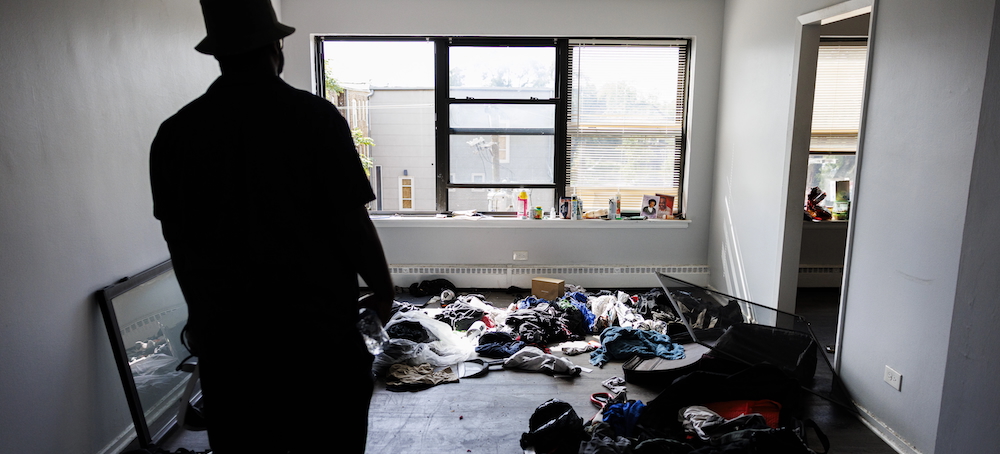 Dan Jones stands in his living room where his personal items can be seen scattered and mixed with strangers’ belongings in the building where federal immigration agents raided and detained immigrants during an overnight operation at 7500 S. South Shore Drive. (photo: Anthony Vazquez/Sun-Times)
“I’ve been on military bases for a good portion of my life,” said Darrell Ballard, who lives in the building next door. “And the activity I saw – it was an invasion.”
Ballard recalled seeing residents detained outside the building for hours, after seeing a Black Hawk helicopter flying over the five-story building in the city’s South Shore neighborhood and military-sized vehicles and agents filling the parking lot early Tuesday morning.
All were part of a multiagency operation that led to the arrest of 37 undocumented immigrants, most of them from Venezuela but also including people from Mexico, Nigeria and Colombia, a Department of Homeland Security spokesperson told CNN.
In the past weeks, federal agents have been deployed on the streets of Chicago and have arrested more than 800 undocumented immigrants since September 8 during what the administration has titled “Operation Midway Blitz,” according to a news release from DHS.
It is unclear if those arrested at the South Shore apartment building are included in that number.
The building was targeted because it was “known to be frequented by Tren de Aragua members and their associates,” and two people arrested are believed to be members of the Venezuelan criminal gang, according to DHS. A number of others arrested had criminal histories that included aggravated battery and possession of a controlled substance, the agency said.
Illinois Gov. JB Pritzker condemned the federal operations in a statement released Friday.
“Federal agents reporting to Secretary Noem have spent weeks snatching up families, scaring law-abiding residents, violating due process rights, and even detaining U.S. citizens. They fail to focus on violent criminals and instead create panic in our communities,” the governor said.
Shattered windows marked the apartment building as seen in photos from the aftermath of the raid. Hallways were lined with debris and plastic bags while clothing, wall decor and lamps became piles of litter inside apartment units. CNN has reached out to the apartment building managers for comment.
People detained no matter their status
Tenants said it appears everyone in the building was detained by federal officers, including US citizens.
“It was scary, because I had never had a gun in my face,” Pertissue Fisher, who lives in the building, told CNN affiliate WLS. “They asked my name and my date of birth and asked me, did I have any warrants? And I told them, ’No, I didn’t.’”
Fisher said she was handcuffed anyway, before being released around 3 a.m. and was told anyone with an outstanding warrant, even if it was unrelated to immigration, would not be released.
At least one US citizen with an active narcotics warrant was arrested during the operation and turned over to the Chicago Police Department, DHS said.
Ballard said the majority of those he saw handcuffed outside were Black residents and “quite a few” were detained for two to three hours.
Four children who are US citizens with undocumented parents were taken into custody, DHS said, including a child who was allegedly found with a Tren de Aragua member.
“For their own safety and to ensure these children were not being trafficked, abused or otherwise exploited, these children were taken into custody until they could be put in the care of a safe guardian or the state,” a DHS spokesperson said.
Across the country, US-born children have become collateral damage in the Trump administration’s unprecedented crackdown on undocumented immigrants. CNN identified more than 100 US citizen children, from newborns to teenagers, who have been left stranded without parents because of immigration actions this year, according to a review of verified crowdfunding campaigns, public records and interviews with families, friends, immigration attorneys and other advocates.
Another neighbor, Eboni Watson, said she and others ducked for cover when hearing several flash bangs go off.
“They was terrified. The kids was crying. People was screaming. They looked very distraught. I was out there crying when I seen the little girl come around the corner, because they was bringing the kids down, too, had them zip tied to each other,” Watson told WLS, recalling trucks and military-style vans were used to separate adults from their children.
In its statement addressing the raid, DHS noted it was still gathering information about those arrested “due to the size” of the operation and will provide more information.
“Federal law enforcement officers will not stand by and allow criminal activity flourish in our American neighborhoods,” DHS said.
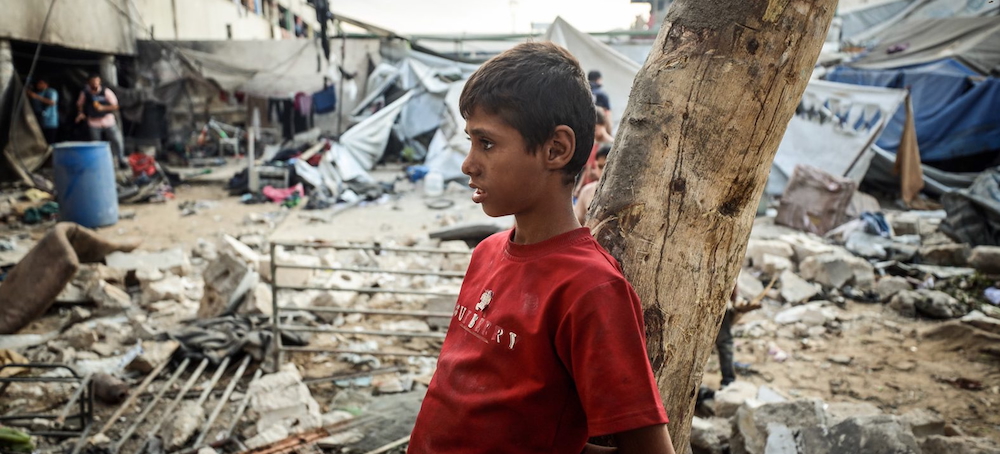 A boy rests on a tree near the al-Farabi school in Gaza City after an Israeli airstrike on September 7, which killed multiple people, including children. (photo: Majdi Fathi/NurPhoto/Getty Images)
Gaza is becoming a graveyard without the luxury of graves.
The news is filled with horror: reports of families being killed in Gaza, tents being targeted, carpet bombardments, sometimes accompanied by graphic images and video. Often, I read the names of streets I’ve walked on and buildings I’ve passed by, and I see images of people who were once my neighbors or classmates.
This has been my routine, every day, since October 7, 2023. Sometimes, in the middle of the night, I check the news again before going back to sleep.
When I read about an Israeli airstrike near my family, my heart freezes. I text family members and feel better if the message goes through. When it doesn’t, I worry until they write back. More than once, they’ve never written back.
The aid distribution sites of the Gaza Humanitarian Foundation, an American foundation backed and funded by both Israel and the United States, have become known as “kill zones” in Gaza. When I learn anyone in my family goes to one, my heart freezes again, until they return. At these “kill zones,” Israeli soldiers or contractors use loudspeakers or quadcopters to give instructions on how and where to move. Then, almost every day, Israeli forces open fire at Palestinians trying to get aid, killing dozens. In August alone, 2,615 Palestinians were killed across the Gaza Strip; according to the Ministry of Health in Gaza, 1,117 of them were lining up for aid.
The Israeli military says it is planning more sites in the south of Gaza.
While a nightmare continues daily for Palestinians in Gaza, life around Palestinians living abroad goes on. We must go to work, attend to our families, run daily errands. Sometimes a random person will ask where me and my friends are from. Once they know we are from Gaza, they express rage at what is happening. Their words are another reminder of the nightmare, that I have family facing genocide. Then, they go back to their lives.
GAZA CITY: A PILE OF RUBBLE
As Israel prepares to invade and destroy what remains of Gaza City, we witness the destruction of our memories of Gaza. The Israeli military is destroying every stone.
Tens of thousands of Palestinians have left Gaza, but most are still there. They can’t afford to be displaced. The prices for everything needed to move and settle in the central area of Gaza or the western part of Khan Younis and survive — a car, a tent, food— have skyrocketed and fluctuated. Diesel gas was $36 a liter in late July, compared to less than $2 before Oct. 7, 2023, for example, and 40 diapers at the time cost almost $150, compared to $8.61 before the genocide began. Then, there is the fatigue and hunger from two years of Israeli bombardment and starvation.
Israel has turned our city into rubble, our beautiful memories of family gatherings into tragic ones.
My sister was murdered on August 7, along with her family. Her surviving child, Noor, 14, shared a photo of herself with her mother, father and two sisters at the beach. Now, she has fractures in her hand from the explosion that killed her family. Her life, like the lives of everyone in Gaza, has changed forever. The sea, once a place of solace, is now another reminder of a life that isn’t.
The amount of trauma we carry is too heavy to explain. Our steps feel too heavy to carry us. The people of Gaza have been through too much for any human to handle. This trauma has accumulated over 77 years of Israeli brutality. Gaza is becoming a graveyard without the luxury of graves.
UNKNOWN TO THE WORLD, KNOWN TO THEIR FAMILIES
At the end of August, I saw video of Palestinians who had been shot dead lying lifeless under the Gaza Valley Bridge, which connects Gaza City to central Gaza. The day before, I read about a group of young Palestinian men who had been besieged by Israeli forces who after beating them, executed them. I wondered if this was them. They were executed while trying to get aid. Their identities are now referred to as “unknown,” but they were known to their families, who had hoped they would return, with or without food.
Recently, I called my brother, Ismail, in Gaza. He answered on the fifth try. The area around him was dark; there has been no electricity in Gaza for 22 months. Gaza used to get its electricity from Egypt and Israel, in addition to the Gaza Power Plant, which Israel bombed multiple times. On October 7, 2023, per the instructions of Israel’s energy Minister Israel Katz, Israel stopped allowing fuel shipments into Gaza for the power plant. Palestinians have become dependent on solar cells for electricity.
My brother looks exhausted and gaunt. I tr y to make him laugh. Despite the horrible conditions, it is still easy to make him laugh. If he, like my other siblings, disappears, then our last memory will be laughter.
Every international humanitarian law and institution is failing.
It seems as if every family in Gaza is waiting in line for their own death.
We believe everyone in Gaza will lose their lives and that every home will be reduced to rubble. For two years, we have screamed.
The Kids Who Sued America Over Climate Change Aren’t Done Yet
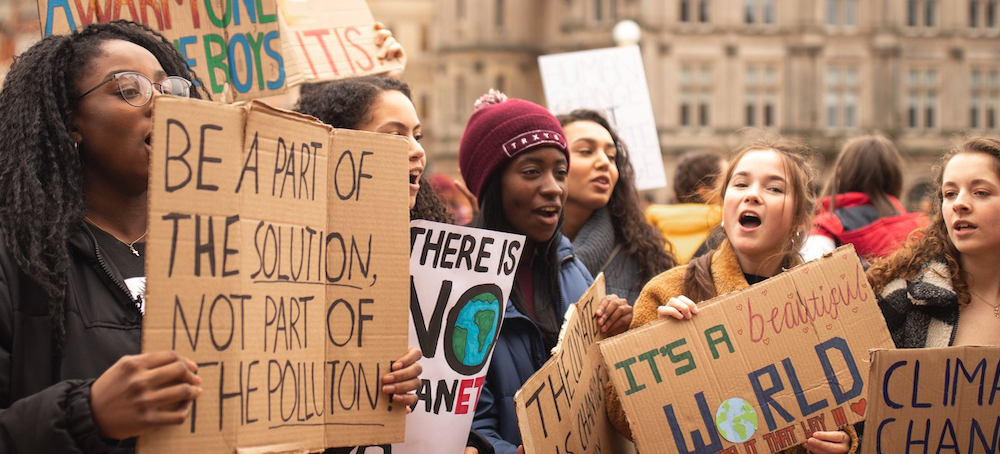 A youth climate protest. (photo: Callum Shaw/AP)
They want an international human rights body to hold the U.S. accountable — and are spotlighting Indigenous communities on the frontlines.
Now, 15 of those same Juliana plaintiffs, including four Indigenous plaintiffs, are taking their case internationally in the hopes that the global community will pressure the U.S. government to act.
Last week, they filed a petition at the Inter-American Commission on Human Rights, a seven-member commission that for decades has evaluated human rights violations across 35 countries in the Americas. Kelly Matheson, an attorney at Our Children’s Trust who worked on the petition, said the case is about the “U.S. government’s unrelenting perpetuation of a fossil fuel energy system despite knowing for over 50 years that the emission of fossil fuels was catastrophic for human rights.”
The plaintiffs include Jaime Butler, who was forced to move off the Navajo Nation’s reservation in 2011 due to drought and water scarcity, and in 2014 had to evacuate her home in Flagstaff, Arizona, to escape the Oak Creek Canyon wildfire.
“She remembers times when there was enough water on the reservation for agriculture and farm animals, but now the springs they once depended on year-round are drying up, and it is no longer possible to engage in the traditional farming activities that once sustained her community,” the petition says. “She fears for her family members, all of whom live on the reservation, who will also be displaced from their land, which will further erode her culture and way of life and disrupt her family and community connections.”
The Navajo Nation declared a drought emergency in June and the problem is expected to worsen.
Their petition cites a recent opinion by the Inter-American Court of Human Rights that concluded the climate crisis threatens Indigenous peoples’ rights, including their right to cultural life, and lists several Indigenous plaintiffs like Butler whose lands and waters have been harmed by a warming atmosphere. “These are merely examples of the many cultural rights violations experienced by Indigenous youth throughout the United States from its fossil fuel energy system and the climate pollution it creates,” the petition says.
The Juliana plaintiffs’ petition asks the commission not only to rule on whether the youths’ rights were violated, but also to issue recommendations to the U.S. regarding climate change.
Maria Antonia Tigre, director of global climate change litigation at the Sabin Center for Climate Change Law at Columbia Law School, said it can sometimes take a decade for the commission to issue rulings. However, she said the case is still significant because the commission is the only international forum that is available to challenge the U.S. on its climate policies. “It’s another way for this to be part of the discourse and to show that something is being done about it and there is accountability, even though it does take a while,” she said.
Several international courts, including the International Court of Justice, the International Tribunal for the Law of the Sea, and Inter-American Court of Human Rights, have issued rulings concluding that countries have an obligation to mitigate climate change, but the U.S. has long rejected their jurisdiction.
In his first eight months in office, President Donald Trump has also pulled the U.S. out of many climate-related United Nations agreements and organizations, including stopping funding for the U.N. Framework Convention on Climate Change, and reneged on the 2015 Paris Agreement, a major climate treaty that sought to limit the severity of global warming. But the U.S. is still a member of the Organization of American States, a regional network of 35 countries in the Americas that was established in 1948 to promote peace, democracy and development. The Inter-American Commission on Human Rights, where the petition from the Juliana plaintiffs was filed, was established as part of the regional network to promote and protect human rights.
The Trump administration has also sought to end data collection on greenhouse gases, cut funding for domestic climate research, and fueled climate denialism.
“This ’climate change,’ it’s the greatest con job ever perpetrated on the world,” Trump said at the United Nations last week. “All of these predictions made by the United Nations and many others, often for bad reasons, were wrong. They were made by stupid people that have cost their countries fortunes and given those same countries no chance for success. If you don’t get away from this green scam, your country is going to fail.”
The U.S. is an outlier in that perspective on climate. The global community has long recognized the scientific consensus that climate change is caused by the burning of fossil fuels, and that producing fewer greenhouse gas emissions is necessary to stem the warming of the planet. “Climate change is an unprecedented challenge of civilizational proportions,” the U.N. General Assembly said in a resolution backed by more than 100 countries two years ago. “The well-being of present and future generations of humankind depends on our immediate and urgent response to it.”
A favorable ruling from the Inter-American Commission on Human Rights would set a precedent from Canada to Patagonia, Matheson said, and add to a growing consensus in international courts that countries have a legal obligation to fight the climate crisis.
“Do we understand that the Trump administration won’t take that seriously? Yes. Do we understand that the Trump administration won’t abide by the recommendations or the authoritative decisions of these bodies? Yes, but the next administration might,” she said.
“Long term, it could help,” Matheson said of the U.S. “No matter what, it will help globally.”
PO Box 2043 / Citrus Heights, CA 95611


No comments:
Post a Comment
Note: Only a member of this blog may post a comment.