Tuesday, October 14, 2025
■ Today's Top News
"That's 27 lives taken without even a semblance of a legal justification under domestic or international law," said one critic of the boat strikes.
By Brad Reed
President Donald Trump, who in recent days has been lobbying to receive a Nobel Peace Prize, announced on Tuesday afternoon that he had ordered a lethal US military strike against yet another boat off the coast of Venezuela.
In a post on his Truth Social network, Trump said that Defense Secretary Pete Hegseth on Tuesday morning “ordered a lethal kinetic strike on a vessel affiliated with a Designated Terrorist Organization (DTO) conducting narcotrafficking.”
Trump then claimed that “intelligence” had “confirmed” that the boat was engaged in illegal drug trafficking, although he provided no evidence to back up this claim.
Six passengers aboard the boat were killed in the attack, the president claimed.
Trump has now repeatedly ordered the American military to use deadly force against boats in international waters that are allegedly engaged in drug smuggling. Many legal scholars, including some right-wing experts who in the past have embraced expansive views of presidential powers, consider such strikes illegal.
Rep. Pramila Jayapal (D-Wash.) condemned Trump’s attack, which she noted was the fifth time the president had ordered a strike on a purported drug-trafficking vessel.
“Using the military to execute alleged criminals with no due process or input from Congress is brazenly unconstitutional and damaging to our democracy,” she wrote in a social media post.
Attorney George Conway, a former Republican who broke with the party over its support of Trump, said there was absolutely zero doubt that Trump’s strikes on the boats were acts of murder.
“That’s 27 flat-out murders,” he wrote in a post on X, referring to the total body count resulting from the president’s boat strikes. “That’s 27 lives taken without even a semblance of a legal justification under domestic or international law.”
Kenneth Roth, former director of Human Rights Watch, said that Trump could face criminal prosecution for attacking the boats.
“Trump keeps ordering the summary killing of people in boats off the coast of Venezuela,” Roth wrote. “Whether drug traffickers or not (we have no idea), these are murders. If on Venezuelan territory, the International Criminal Court could prosecute.”
Richard Painter, who was an ethics lawyer in former President George W. Bush’s White House, similarly described the strikes as “murder” and “a violation of US as well as international law.”
According to The Associated Press, the strikes against boats have unnerved the Venezuelan government, which believes the US is preparing to launch a regime-change war against it. Venezuelan Defense Minister Vladimir Padrino last week even went so far as to tell his citizens to be prepared for a potential invasion during a televised appearance.
“I want to warn the population: We have to prepare ourselves because the irrationality with which the US empire operates is not normal,” he said, according to the AP. “It’s anti-political, anti-human, warmongering, rude, and vulgar.”
Journalist David Sirota writes that the cases, each firmly backed by the Trump administration, are aimed at "incinerating any remaining deterrents to pay-to-play corruption."
By Stephen Prager
Fifteen years after the Citizens United ruling opened the gates for corporate money to flow into US elections, the Supreme Court will soon hear another pair of cases that journalist David Sirota says are aimed at “eliminating the last restrictions on campaign donations and obstructing law enforcement’s efforts to halt bribery.”
One of the cases, National Republican Senatorial Committee v. Federal Elections Commission (FEC), was launched in 2022 by then-Ohio Senate candidate JD Vance (R-Ohio), now the vice president of the United States, and several other Republicans, who argued that limits on coordinated spending violated the First Amendment.
The limits in question, which were imposed after the Watergate scandal, put a cap on the amount of money that outside donors can spend in direct coordination with their favored candidates.
“Though Citizens United unleashed a 28-fold increase in election spending, the ruling preserved the legality of campaign contribution limits,” wrote David Sirota in Rolling Stone on Tuesday. “If those rules are killed off, party committees could become pass-through conduits for big donors to circumvent donation limits and deliver much larger payments in support of lawmakers who can reward them with government favors.”
In 2001, the court, then presided over by Chief Justice William Rehnquist, upheld the limits by a margin of 5-4, with Justice David Souter writing in the majority opinion, “there is little evidence” that they “have frustrated the ability of political parties to exercise their First Amendment rights to support their candidates.”
This time, Republicans in all three branches of government have seemed to work in tandem to get the law overturned.
In a highly unusual move, the Trump administration’s Department of Justice has refused to defend the FEC. And contrary to his job as the federal government’s lawyer, Solicitor General John Sauer—who also served as President Donald Trump’s lawyer in the case that granted him “presidential immunity” from prosecution last year—has joined the Republican plaintiffs in calling for the Supreme Court to strike down the law.
Without the government to defend the law, the Supreme Court was put in charge of appointing an amicus curiae—“friend of the court”—lawyer to take up the FEC’s defense.
The justices chose Roman Martinez, a member of a group run by the right-wing Federalist Society who has spent most of his career working for Republican presidential campaigns and has clerked for conservative Justice Brett Kavanaugh and later Chief Justice John Roberts during the time he was deliberating Citizens United. Since 2016, when Martinez went into private practice, he “has led high-profile cases for corporate clients and political lobbying interests,” according to The Lever.
The most notable of these was a case last year before the Supreme Court that overturned the Chevron doctrine, which had given government agencies leeway to interpret ambiguous statutes as they saw fit. Martinez, who has described himself as an opponent of “government overreach,” called Chevron “a doctrine that puts the thumb on the scale in favor of the government.”
While experts have said they still believe Martinez will take his job seriously, having an outsider defend the coordinated spending limits puts the defense at a structural disadvantage: “It’s very different than when an agency with decades of expertise is defending their own law,” said Tara Malloy of the Campaign Legal Center.
Lever reporters Jared Jacang Maher and Katya Schwenk described the case as a “Citizens United 2.0” that, if successful, would further obliterate limits on campaign spending:
Since 2022, party committees reported $241 million in coordinated spending, compared to over $858 million in "independent" expenditures on individual campaigns. Striking the coordinated-expenditure cap could shift vast sums into direct, mega donor-driven collaborations between parties and candidates.
At the same time, the court is also hearing a case, Sittenfeld v. United States, with wide-ranging implications for the government’s ability to prosecute politicians who accept bribes. The case was brought by former Cincinnati City Councilman PG Sittenfeld, who was caught accepting a $20,000 campaign contribution in exchange for supporting a local development project.
Though Sittenfeld is a Democrat, he has already been pardoned by Trump and is challenging his conviction with pro bono representation from the DC law firm Jones Day, which has served as counsel for Trump’s campaigns as well as the Republican National Committee and helped defend Trump’s cases to overturn his loss in the 2020 election.
“Those circumstances and all that legal firepower make clear that this is less about one shady municipal deal and more about broadening a string of rulings making it increasingly impossible to prosecute public corruption cases,” Sirota argued.
The court already narrowed the definition of bribery substantially last year when it ruled that statutes criminalizing overt “quid pro quo” deals between politicians and donors did not ban “gratuities”—gifts of value given to politicians after an act has already been performed. This was notably the exact form of corruption that conservative Justices Samuel Alito and Clarence Thomas participated in when they received substantial gifts from billionaire right-wing donors.
“Sittenfeld’s appeal aims to take the Supreme Court’s legal assault on anti-bribery laws even farther,” Sirota said. “In legal briefs, his lawyers are offering a novel theory: They insinuate that pay-to-play culture is now so pervasive that it should no longer be considered prosecutable.”
One brief even cites Trump himself as a primary example of this endemic corruption: On the campaign trail in 2024, he directly asked oil executives for $1 billion in campaign cash, pledging to do favors for the industry in return. Sittenfeld’s lawyers argue that a “prosecutor could doubtless present this meeting alone as at least ambiguous evidence of a quid pro quo” and lament that “politicians are open to prosecution if they say anything during these often informal, unscripted conversations that can be read to even hint at a possible quid pro quo.”
Sirota said these two cases follow the same tactics used during Citizens United, using a small dispute over a technicality to legislate major changes to campaign finance law that could never get through Congress.
“It’s the same dynamic today,” he says. “Conservative groups behind today’s two new cases undoubtedly hope that their spats over the esoterica of campaign finance and bribery law prompt the even-more-conservative court to not merely mediate these specific conflicts, but to issue broad rulings instead incinerating any remaining deterrents to pay-to-play corruption.”
"I have held over 20 town halls in every corner of Maine, from Rumford to Madawaska to Portland," said Graham Platner. "Everywhere I hear the same thing: People are ready for change."
By Julia Conley
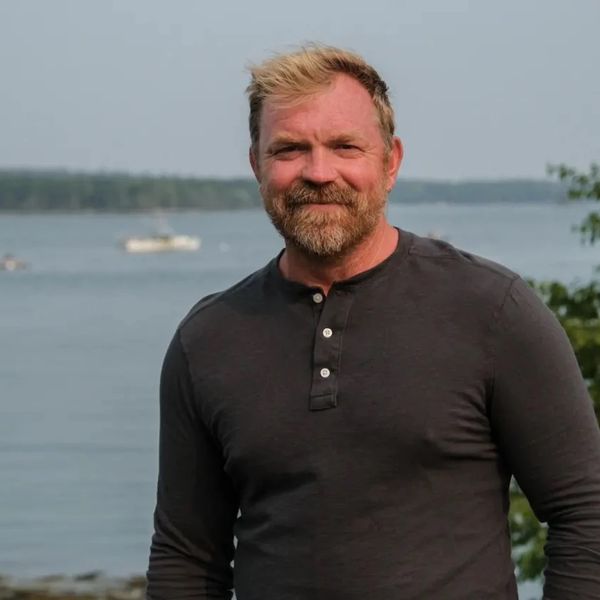
After weeks of speculation and reports that Democratic Senate Leader Chuck Schumer was privately calling on Maine Gov. Janet Mills to enter the race to unseat longtime Republican lawmaker Susan Collins—despite considerable energy surrounding the candidacy of progressive veteran and oyster farmer Graham Platner—Mills announced her primary run Tuesday.
Mills highlighted her public sparring with President Donald Trump earlier this year and positioned her run as one that would focus on standing up to “bullies” like Trump, who threatened to cut off Maine’s federal funding if it allowed transgender youths to play on team sports that correspond with their identities.
She also pledged to “fight back” against efforts by Trump and Republicans in Congress—including Collins, who has represented Maine since 1997—to slash healthcare for millions of Americans while handing out tax cuts to corporations and the richest Americans.
“This election is going to be a simple choice: Is Maine going to bow down, or stand up?” said Mills.
But before Mainers decide whether to stick with Collins or unseat her in favor of a Democratic senator, they are set to choose the Democratic nominee next June—and despite being a political novice, Platner has generated excitement across the state since announcing his candidacy in August.
Platner has centered his campaign on naming “the enemy” shared by Mainers and Americans from all walks of life: not immigrants, transgender people, or other frequent targets of the Trump administration, but the oligarchy. He’s also been unapologetically outspoken in his condemnation of the US-backed Israeli assault on Gaza and over the weekend said that should he win a Senate seat, “there will be consequences” for those who have led federal immigration agents’ violent incursion in US cities.
Platner has garnered endorsements and enthusiasm from lawmakers including Sens. Bernie Sanders (I-Vt.)—who recently criticized reports that Schumer was pushing for a Mills run—and Chris Murphy (D-Conn.), who called his campaign “pretty impressive” and “killer” recently.
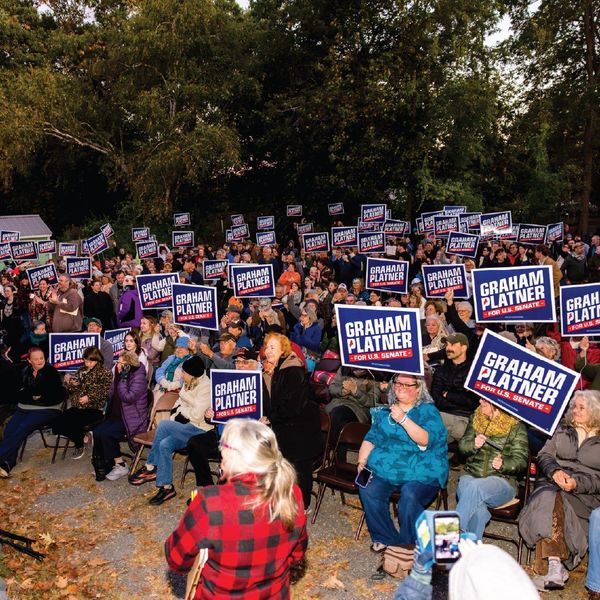
He’s also proven to be a formidable fundraiser, pulling in more than $4 million since launching his campaign in August, and has spoken to overflow crowds in cities and towns across Maine.
Recent polling has shown Platner outperforming Mills by 21 points among Trump voters, 13 points among voters aged 18-44, and 10 points in rural parts of northern and western Maine.
On Tuesday, Platner released a statement welcoming Mills “into this race” and focusing on the fight to unseat Collins.
“I have held over 20 town halls in every corner of Maine, from Rumford to Madawaska to Portland,” he said. “Everywhere I hear the same thing: People are ready for change. They know the system is broken and they know that politicians who have been working in the system for years, like Susan Collins, are not going to fix it.”
But he also released his own ad, pledging to keep up the momentum in order to “retake our party and turn it back into the party of the working class.”
“We either organize and build power and fight, or we lose,” Platner told a crowd in the video.
Ryan Grim of Drop Site News posited that the entrance of Mills into the race could be “to Platner’s advantage” and may underscore his independent streak.
“By beating her (and Schumer) Platner can solidify the impression that he is independent of the party, whose brand is fatally toxic,” said Grim.
"The 2025 Forest Declaration Assessment is out and can broadly be summarized as, 'We suck,'" said one climate scientist.
By Brett Wilkins
The world’s governments are falling far short of their goal to tackle forest destruction by the end of the decade, according to a key annual report published Monday.
At the 2021 United Nations Climate Change Conference, or COP26, in Scotland, 145 countries adopted the Forest Declaration, pledging to end deforestation and forest degradation and restore 30% of all degraded ecosystems by 2030.
Annual Forest Declaration Assessment reports—which are published by a coalition of dozens of NGOs—track progress toward achieving the objectives established at COP29. Although stopping and reversing deforestation by 2030 is crucial to averting the worst consequences of the climate and biodiversity crises, every annual report has highlighted how the world is failing to adequately protect its forests.
This year is no different. According to the 2025 Forest Declaration Assessment, “in 2024, forests continued to experience large-scale destruction, with nearly 8.1 million hectares permanently lost globally.”
“Primary tropical forests continue to be cleared at alarming rates, with 6.73 million hectares lost last year alone, releasing 3.1 billion metric tons of greenhouse gases,” the report continues. “Losses in forested Key Biodiversity Areas reached 2.2 million hectares, up 47% from the previous year, threatening irreplaceable habitats.”
The assessment notes:
Deforestation remains overwhelmingly driven by clearance for permanent agriculture, accounting for an average of about 86% of global deforestation over the past decade, with other drivers such as mining exerting growing pressure. Because deforestation commodities are both consumed domestically and exported internationally, deforestation represents a systemic problem; national land-use policies and practices are deeply intertwined with global demand. This highlights the urgent need for structural change in how production and trade are regulated, monitored, and ultimately governed.
Furthermore, according to the report, “financial flows are still grossly misaligned with forest goals, with harmful subsidies outweighing green subsidies by over 200:1,” and “despite new pledges, the flow of funds to forest countries and local actors remains far below what’s necessary to deliver on 2030 goals.”
“‘Global forests remain in crisis’ is not the headline we hoped to write in 2025,” the publication states. “As the halfway point in the decade of ambitious forest pledges, this year was meant to be a turning point. Despite the indispensable role of forests, the verdict is clear: We are off track.”
The news isn’t all bad—the report highlights how “restoration efforts are expanding, with at least 10.6 million hectares hosting forest restoration projects worldwide. But global data remain too fragmented to determine whether the world is recovering forests at the scale required.”
The assessment offers the following recommendations for policymakers:
- Governments must act to value forests, including through regulations and pricing in the real cost of deforestation;
- Action must become integrated, not siloed, as the climate emergency, biodiversity crisis, and social inequality are all interconnected; and
- Decision-making must be inclusive and participatory, as rapid progress toward 2030 forest goals requires the participation of Indigenous peoples, local communities, women, and civil society.
“At the halfway point to 2030, the world should be seeing a steep decline in deforestation,” the assessment says. “Instead, the global deforestation curve has not begun to bend.”
The new Forest Declaration Assessment comes ahead of next month’s UN climate conference, or COP30, in Belém, located in the Brazilian Amazon.
“This COP30 is extremely crucial for us to move these pledges to actions,” Sassan Saatchi, founder of the non-profit CTrees and a former NASA scientist, told Climate Home News on Tuesday.
“The nice thing about COP30 being in Belém,” Saatchi added, “is that there is a recognition that the Global South has really come forward to say: ’We are going to solve the climate problem, even though we may not have been historically the cause of this climate change.‘”
"We are here tonight because we are ready to turn the page on the cynical, broken, politics of the past,” said New York Attorney General Letitia James.
By Julia Conley
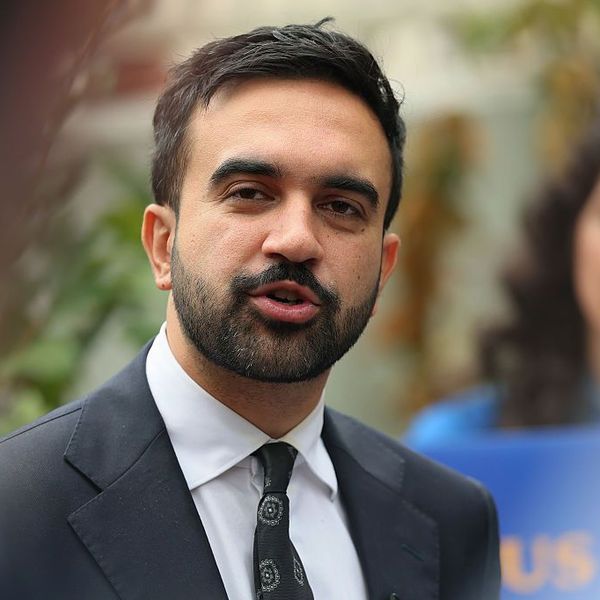
Standing at a podium that displayed the words, “Our Time Has Come,” Democratic New York City mayoral candidate Zohran Mamdani and allies made clear on Monday night that the sign referred not only to working people across the five boroughs, but to people across the US whose interests have been abandoned by the political establishment in favor of corporations and billionaires.
Speakers at the rally included leaders who have emerged as targets of the Trump administration, such as New York Attorney General Letitia James, and people who have worked in government at the federal level, in the case of former Federal Trade Commission (FTC) Chair Lina Khan, and their comments suggested a focus that goes beyond the city and its upcoming election on November 4.
Khan, who spearheaded the Biden administration’s efforts to protect Americans from corporate greed in the form of “junk fees” and megamergers, spoke out against “modern-day robber barons,” and made clear that both major political parties are to blame for an economy where corporations and the ultrarich “wield extraordinary power.”
“They hold enormous control over our paychecks, our bills, our time, and our futures,” said Khan, who has sharply criticized the Trump administration for settling with Amazon in a customer deception case and for letting oil executives “off the hook” in a price-fixing scandal.
“But the good news is that nothing about any of this is inevitable,” added Khan.
Mamdani has centered his campaign on making the city more affordable by expanding his fare-free public bus pilot program, providing universal no-cost childcare, and establishing a city-run network of grocery stores to compete with for-profit companies—and has reached out to New Yorkers from all walks of life, spending a day walking the length of Manhattan as well as using social media to engage with voters.
With top Democrats like Senate Minority Leader Chuck Schumer (NY) and House Minority Leader Hakeem Jeffries (NY) refusing to endorse the party’s candidate to lead the largest city in the nation, the mayoral race has teed up one of the latest battles between the party’s progressive wing and the entrenched establishment—one that will hopefully send a resounding message to the party’s leadership, said Khan.
“The days of Democratic leaders choosing to ally with titans of industry over working people are over,” she said.
Despite his decisive loss in the Democratic primary in June, disgraced former Democratic Gov. Andrew Cuomo is running as an independent and is trailing Mamdani by double digits as he strives to make the state Assembly member’s support for Palestinian rights a centerpiece of the campaign.
The tactic, also employed by Cuomo during the primary, has proven unsuccessful so far, with polls showing that support from the city’s Jewish voters helped Mamdani win in June by more than 13 points. At the rally on Monday night, the crowd at one point erupted in cheers of, “Free, free Palestine!”
Mamdani turned his attention to Cuomo’s enthusiastic participation in the oligarchic political system that’s seen the former governor court the wealthy, including billionaire financier Bill Ackman, and tell rich donors in the Hamptons that he expected help from President Donald Trump to win the general election.
In the city and nationwide, Mamdani said, “we are an existential threat to billionaires who think they can buy our democracy.”
The mayoral campaign represents “a choice between a mayor for those straining to buy groceries or those straining to buy an election,” he said.
The state lawmaker condemned the president’s anti-immigrant escalation, which has been on display in recent weeks in cities including Chicago and Portland, Oregon, and his attacks on protesters who hold anti-fascist views as well as left-wing groups that dissent against the president’s agenda.
“We are in a period of political darkness,” Mamdani said. “Donald Trump and his [Immigration and Customs Enforcement] agents are snatching our immigrant neighbors from our city right before our eyes. His authoritarian administration is waging a scorched-earth campaign of retribution against any who dared oppose him.”
“And again and again,” he added, “Trump has broken the promise he made to the American people that he would fight for the working class by taking on the cost-of-living crisis.”
James joined the rally in her first public appearance since she was indicted by Trump’s personal-attorney-turned-federal-prosecutor, US Attorney Lindsey Halligan, last week on allegations of bank fraud. Having successfully prosecuted the president for fraud, James has been a top target of Trump during his second term.
Along with defiantly speaking out against the indictment, which she called the weaponization of “justice for political gain,” James said that as mayor, Mamdani would come to the defense of freedoms and institutions that are under attack across the US.
“We are here tonight because we are ready to turn the page on the cynical, broken, politics of the past,” said James. “We are witnessing the fraying of our democracy, the erosion of our system of government... This, my friends, is a defining moment in our history.”
The report from investment bank Goldman Sachs comes as President Donald Trump is piling up even more tariffs on imported goods.
By Brad Reed
New research from investment bank Goldman Sachs affirms, as progressive advocates and economists warned, that US consumers are bearing the brunt of President Donald Trump’s trade wars.
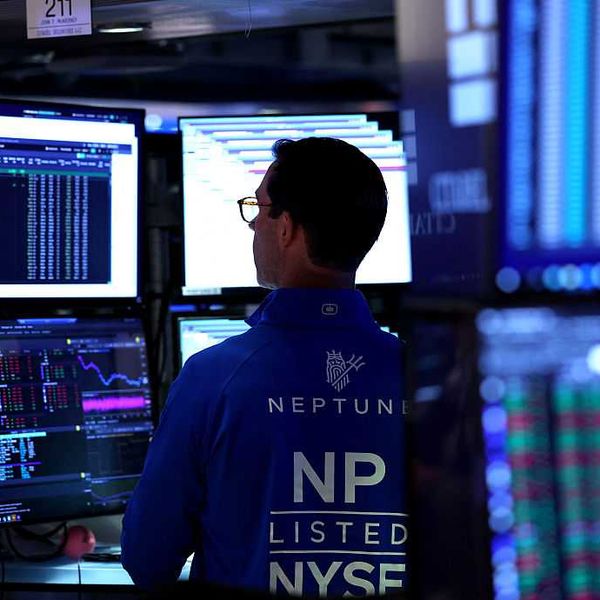
As reported by Bloomberg on Monday, economists at Goldman released an analysis this week estimating that US consumers are shouldering up to 55% of the costs stemming from Trump’s tariffs, even though the president has repeatedly made false claims that the tariffs on imports exclusively tax foreigners.
Goldman’s research also found that US businesses will pay 22% of the cost of the tariffs, while foreign exporters will pay just 18% of the cost. Additionally, Goldman economists estimate that Trump’s tariffs “have raised core personal consumption expenditure prices by 0.44% so far this year, and will push up the closely watched inflation reading to 3% by December,” according to Bloomberg.
Despite all evidence that US consumers are shouldering the costs of the tariffs, the Trump administration has continued to insist that they are exclusively being paid by foreign countries.
During a segment on NBC‘s “Meet the Press” last month, host Kristen Welker cited an earlier Goldman estimate that 86% of the president’s tariffs were being paid by US businesses and consumers, and then asked US Treasury Secretary Scott Bessent if he accepted that the tariffs were taxes on Americans.
“No, I don’t,” Bessent replied.
As Common Dreams reported in August, executives such as Walmart CEO Doug McMillon have explicitly told shareholders that while they are able to absorb the cost of tariffs, Trump’s policy would still “result in higher prices” for customers.
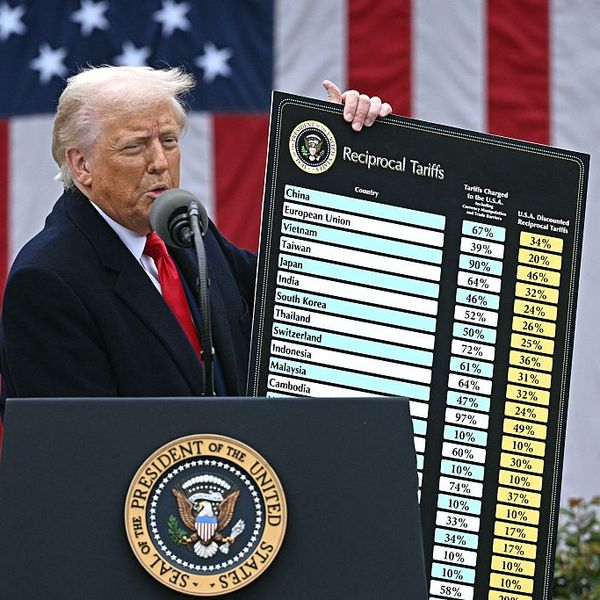
Goldman’s report comes as Trump is piling up even more tariffs on imported goods that will ultimately be paid by US consumers as companies raise prices.
According to The New York Times, tariffs on a wide range of products including lumber, furniture, and kitchen cabinets went into effect on Tuesday, and the Trump administration has also “started imposing fees on Chinese-owned ships docking in American ports.”
The administration has claimed that the tariffs on lumber are necessary for national security purposes, although some experts are scoffing at this rationale.
Scott Lincicome, vice president of general economics at libertarian think tank the Cato Institute, told the Times that the administration’s justification for the lumber tariffs are “absurd.”
“If war broke out tomorrow, there would be zero concern about American ’dependence’ on foreign lumber or furniture, and domestic sources would be quickly and easily acquired,” he said.