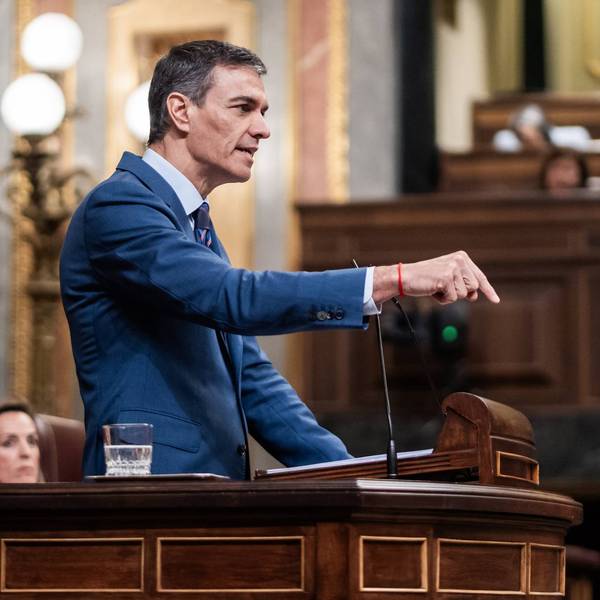
"While others open wounds, we want to mend them and cure them," said Spanish Prime Minister Pedro Sánchez. |
|
Arriving in Spain on Friday for a two-day visit that will center on a gathering of progressive leaders from more than 100 political parties across five continents, Brazilian President Luiz Inácio Lula da Silva emphasized that the summit was not “an anti-Trump meeting.”
But the contrast between US President Donald Trump’s violent foreign and domestic policies and the international meeting, which will focus on wage inequality and electoral strategy for progressives, was unmistakable as Spanish President Pedro Sánchez opened the gathering at a press conference in Barcelona on Friday.
“We want to double our efforts to work for peace and for a reinforced multilateral order. While others open wounds, we want to mend them and cure them,” said Sánchez.
Da Silva—who is commonly called Lula—and Sánchez, as well as other leaders who will be attending the weekend event, have spoken out forcefully against Trump’s policies and the rise of the far right in the US, Germany, Italy, and other European countries.
Sánchez has refused to allow US fighter planes to use Spanish military bases for missions in the US-Israeli war on Iran and closed the country’s airspace to American military aircraft—plus doubled down on his condemnation of Trump and Israeli Prime Minister Benjamin Netanyahu’s war even after the US president threatened Spain with a trade embargo.
Lula expressed solidarity with Pope Leo this week after the pontiff denounced the Iran war, and Mexican President Claudia Sheinbaum, who will also attend the meeting, took aim last month at Trump’s claim that her country is the “epicenter of cartel violence”—blaming the US for the flow of illegal weapons into Mexico.
Lula emphasized that the 3,000 attendees of the summit, which will include the IV Meeting in Defense of Democracy as well as a gathering called the Global Progressive Mobilization on Saturday, will “discuss the state of democracy, to see what went wrong and what we have to do to repair it.”
The Brazilian president added that “Brazil and Spain are side by side in the trenches together.”
“We are an example that it is possible to find solutions to problems without giving into the empty promises of extremism,” said Lula. “Democracy must go beyond just voting and bring real benefits to people’s lives.”
Sánchez added that “in a world that doubts and fragments, Spain and Brazil open a new chapter convinced that our countries have something the world needs: the strength to build bridges where others raise walls.”
The Global Progressive Mobilization meeting will include roundtables dedicated to discussing economic inequality and other issues at a time when, as one report showed earlier this month, the richest 0.1% of people on the planet are stashing more than $2.8 trillion in tax havens—more than the wealth owned by the entire bottom 50% of humanity.
The economic hardships of working people have only been exacerbated by the war on Iran, which has sent global energy prices soaring.
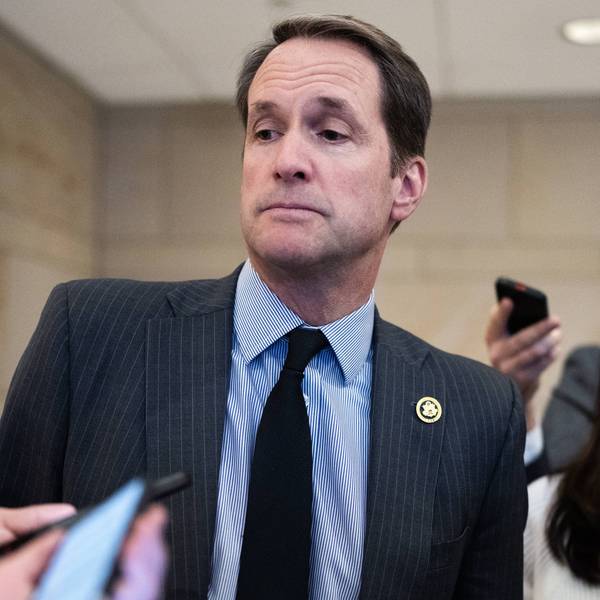
US Sen. Chris Murphy (D-Conn.) is the only federal US official planning to attend the gathering, while New York City Mayor Zohran Mamdani—who has swiftly taken steps toward enacting a universal childcare program and announced a plan to tax second homes valued at over $5 million since taking office in January, is scheduled to participate virtually.
Also on Saturday, Lula and Sánchez will host the IV Meeting in Defense of Democracy, a summit first held in 2024 with the aim of combating “extremism, polarization, and misinformation.”
European Council President António Costa, South African President Cyril Ramaphosa, Colombian President Gustavo Petro, and leaders from Albania, Ghana, and Lithuania are among those attending the meeting on democracy.
Lula said the large number of attendees is evidence that progressive governments are winning more influence around the world despite the rise of authoritarian political parties.
“Our flock is growing. We must give hope to the world,” said Lula. “Otherwise, what happened with [Nazi leader Adolf] Hitler is going to happen.”
Economist Gabriel Zucman, who joined Mamdani this week in publishing an op-ed calling for an end to regressive tax systems and highlighting a proposal for a 2% tax on the wealth of those with more than €100 million, or $117 million, expressed hope that the global left is amassing power by building a cooperative international movement.
“The good news is that, from Zohran Mamdani and [Congresswoman] Alexandria Ocasio-Cortez in New York to Pedro Sánchez in Spain, from Lula in Brazil to [Green Party Leader] Zack Polanski in the UK, we may be seeing the early signs of a new cross-border alliance taking shape against global oligarchy,” said Zucman. “And I have no doubt that in this fight—the defining battle of the 21st century—democracy will prevail. See you in Barcelona this weekend to press ahead!”
"The economic havoc wreaked by this war has damaged virtually every sector imaginable, and we need the BLS to factor in the full implications of what the war will mean for the American economy," the senator wrote. |
|
As President Donald Trump’s war in Iran fuels inflation across the US economy, Sen. Ed Markey wrote to the acting head of the US Bureau of Labor Statistics to demand updated consumer price data that accounts for these costs.
Markey (Mass.), the ranking Democrat on the Senate Committee on Small Business and Entrepreneurship, already wrote the acting commissioner of BLS, William Wiatrowski, once on March 9, to demand price updates back when the war was just over a week old. He said he received no response.
In a follow-up letter sent Friday, Markey said that in the intervening weeks, “the impact of the crisis has deepened considerably,” with repeated blockages to the critical Strait of Hormuz disrupting the global trade of oil and other commodities.
Even with the strait reopened amid a tentative 10-day ceasefire between Israel and Lebanon, Iran has indicated it will not hesitate to close the waterway again if that agreement—which is already fraying after less than 24 hours—falls apart.
“The economic havoc wreaked by this war has damaged virtually every sector imaginable, and we need the BLS to factor in the full implications of what the war will mean for the American economy,” Markey wrote.
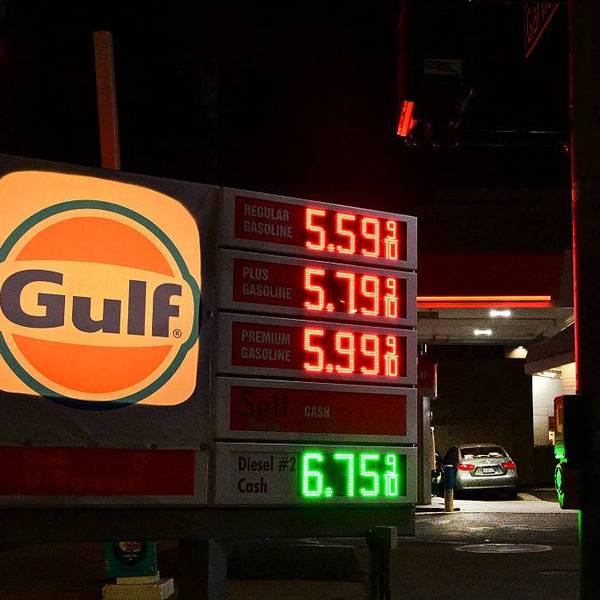
He pointed out that since his last letter, average gas prices in the US had surpassed $4.00 per gallon, a 40% increase since the US and Israel launched the first attacks against Iran on February 28.
Citing data from the US Energy Information Administration, Markey wrote that “small businesses and individual car owners are struggling with the prospect of more than $540 per vehicle in added annual gas costs.”
Beyond gas, he pointed to other steep price hikes: Fertilizer prices have shot up 30% since the war began, costs he warned would be pushed to consumers at grocery stores in the coming months. Where a month ago, grocery bills were predicted to rise 3% this year, the latest report from the Department of Agriculture now projects a more than 6% increase.
This is on top of rising transport costs due to higher jet fuel and diesel prices, which have led airlines to jack up baggage costs and shipping companies like UPS, Amazon, and FedEx to raise delivery fees.
“Increased transportation costs affect virtually every facet of the supply chains our economy relies on,” Markey said. “And yet, we have yet to hear any concrete plan from the administration regarding an end to the conflict, a solution to alleviate these costs, or any attempt at providing relief for Americans.”
In recent days, Trump and his underlings have brushed aside concerns about sharp price hikes due to the war.
At an economic event in Las Vegas on Thursday, Trump described them as “fake inflation because of the fuel, the energy prices.” He’s previously suggested that price hikes from the war “didn’t matter” to him because they’re “short-term” and that Americans concerned about their pocketbooks should care more about the threat of Iran.
Trump’s approval rating on the economy hit its lowest point ever recorded this week, with just 40% approving of his handling of the economy compared to 59% disapproving in a Navigator Research poll published Thursday. In that same poll, more than two-thirds of Americans (68%) said the economy was in either “poor” or “not so good” shape.
When asked about these dismal polling numbers by a reporter on Thursday, Trump’s top economic adviser, Scott Bessent, shrugged it off, saying that “in their heart of hearts,” Americans “feel good” about the economy, and that he was “not sure what they’re telling the survey people.”
(FWIW: I PREVIOUSLY POSTED 'SCOTT BESSENT HALLUCINATING' !)
“Understandably, Americans remain skeptical that President Trump has a plan of any kind,” Markey said. “They cannot afford to fly blind, as Trump apparently elects to.”
The senator said: “Facing thousands of dollars in higher prices for gasoline, groceries, and utilities—not to mention the hundreds of billions of their taxpayer money that Trump is requesting to pay for the war itself—American families and small businesses must budget and plan for the future. BLS must put forward consumer price projections that reflect the disastrous consequences of Trump’s illegal war.”
"Any attempt to evade the subpoena must be met with measures to hold Ms. Bondi in contempt of Congress," said Rep. Robert Garcia. |
|
Allies of fossil fuel companies are celebrating the development as a step toward "stopping the endless wave" of lawsuits against the climate-wrecking industry. |
|
Meanwhile, Israel responded to Trump's purported prohibition of Israeli attacks on Lebanon by attacking the country.c |
|










No comments:
Post a Comment
Note: Only a member of this blog may post a comment.