Monday, November 24, 2025
■ Today's Top News
"We will not let them die ignored," said the Repairers of the Breach president. "We will not let their deaths go unregistered on the conscience of this nation and this state, and among the people."
By Julia Conley
Surrounded by cardboard “tombstones” that displayed likely causes of death of thousands of people in the United States under Republican policies, Bishop William J. Barber II on Monday gave a eulogy in Raleigh, North Carolina, honoring those who are being directly targeted by the Trump administration’s cuts to healthcare, public health funding, and other essential government programs.
The word “eulogy,” he said, comes from the Greek word “eulogia,” and means “good words.”
“But the question is, what is the ‘good word’ when people shouldn’t be dead?” asked the president of the grassroots group Repairers of the Breach and the co-chair of the Poor People’s Campaign, adding that the people he was speaking about are projected to die in the coming year solely due to “policy violence.”
“We will not let them die ignored,” said Barber. “We will not let their deaths go unregistered on the conscience of this nation and this state, and among the people.”
Barber spoke at the flagship event of Repairers of the Breach’s regular Moral Mondays prayer protest, while supporters in more than 15 states including Alabama, Pennsylvania, Kentucky, Ohio, and Texas also delivered eulogies for those who are expected to die as a result of the $186 billion in cuts to the Supplemental Nutrition Assistance Program (SNAP), $1 trillion in cuts to Medicaid, and funding slashed by the One Big Beautiful Bill Act (OBBBA) that was passed in July.
Roughly 51,000 people are expected to die annually as they lose access to SNAP and Medicaid, as well as those whose healthcare costs will skyrocket if Affordable Care Act subsidies are allowed to expire at the end of the year. People with disabilities and low-income senior citizens are also expected to be impacted by OBBBA provisions that will make it harder for them to access Medicare Savings Programs.
because we are fighting for the life of those who yet remain,“ said Barber. ”When they passed the Big Ugly Deadly Destructive Bill—don’t ever call it the Beautiful Bill—when they passed it, it represented a death sentence.“
Barber noted that Republicans were able to pass the law after lying about “waste and fraud and abuse” in the federal programs that rely on them for healthcare and food assistance.
“They had to tell a lie to keep their promise to the wealthiest people in America,” said the bishop, referring to thousands of dollars in annual tax cuts for the richest households that are included in the OBBBA.
Sloan Meek, who has cerebral palsy and relies on Medicaid, also gave a statement.
“I feel a lot of fear and worry right now that every cut and rate reduction to Medicaid will change my whole life,” said Meek. “Having disabilities does not mean I am sick, but it does mean I need consistent treatment and care to stay healthy. I do not want to become sick. I do not want to lose my community. I do not want to lose my voice. I do not want to be forced out of my home to live and receive care from a bunch of strangers. I do not want to die because of a political issue. These are the fears I share with every disabled person using Medicaid in North Carolina right now. I would like to ask every legislator to please see us as having valuable and important lives that are worth supporting.”
The event also took aim at the Trump administration’s actions weakening the Federal Emergency Management Agency (FEMA)—with the federal government denying and delaying states’ disaster assistance requests—and President Donald Trump’s mass deportation campaign, which most recently unleashed federal agents on North Carolina communities from Charlotte to Raleigh.
The tombstones that flanked Barber read, “I lost Medicare,” “I was disappeared,” “I lost medical research,” “FEMA did not respond.”
“The big, bad, deadly budget bill proved that Washington lawmakers are more than willing to kill tens of thousands of people to line the pockets of the wealthy—but now even that level of destruction and death wasn’t enough,” said Barber in a statement ahead of the event. “Lawmakers are now allowing healthcare subsidies to expire, forcing millions of people to come up with more money for health plans—or die trying. And the Trump administration just unleashed its masked army of ICE agents to terrify and abduct immigrants in Charlotte and Raleigh.”
“One of the grandest, cruelest ironies is that many of the leaders greenlighting these deadly policies profess to be Christian. I’m not sure what Bible they’re reading, but my Bible tells me to protect all people—including poor people and foreigners—without condition or judgment,” Barber continued. “We cannot stay silent in this moment.”
Barber said the event was being held two days before Repairers of the Breach was preparing to send an open letter to every member of the North Carolina General Assembly, calling for the body to hold an “emergency session and vote to tell Congress and the president to take hands off the people of North Carolina, to reverse policies that will hurt 307,000 North Carolinians that will lose Medicaid, that will cause 375,000 to lose food stamps.”
On Monday evening, the organization was planning another event to call on Congress and the White House “to immediately cease and desist” their attacks on Latino and immigrant communities across the country, deploying “Liberty Vans”: mobile rapid-response command centers staffed by volunteer lawyers and campaigners to provide support to communities targeted by Immigration and Customs Enforcement operations.
“When people are being gouged at the checkout aisle, on their phone bills, and in their rents, it’s clear that the market is failing,” Lewis said.
By Stephen Prager
As Avi Lewis moves forward with his bid to become the next leader of Canada’s New Democratic Party, the progressive activist, filmmaker, and journalist, announced his first major policy proposal on Monday: an array of “public options” for groceries, housing, phone bills, and other necessities aimed at combating Canada’s cost-of-living crisis.
After two failed parliamentary bids in 2021 and 2025, the Vancouver-based Lewis in September launched his bid to take Canada’s leftmost party in a more economically populist direction following a series of defeats under its long-serving, Jagmeet Singh.
He hopes his laser focus on corporate greed, which he says is driving Canada’s cost-of-living crisis, will help set him apart from other front-runners, including Edmonton Member of Parliament Heather McPherson and British Columbia union leader Rob Ashton.
“It’s a moral outrage that so many people in Canada can’t afford the basics of a dignified life at a time when corporate profits are only skyrocketing,” Lewis said as he unveiled an array of new proposals Monday. “When people are being gouged at the checkout aisle, on their phone bills, and in their rents, it’s clear that the market is failing.”
Lewis called for the creation of a public not-for-profit grocery store chain that would operate coast to coast to combat the growing crisis of food insecurity.
According to data published earlier this year by the Canadian Income Survey, approximately 10 million Canadians—over 25%—lived in food-insecure households in 2024, nearly doubling since 2021 amid skyrocketing food prices.
Lewis described it as a “market failure” that so many Canadians could struggle to pay for food while Galen Weston, the owner of Canada’s largest grocery chain, Loblaw, has a net worth of over $18 billion.
Lewis called for the government to create “a low-cost alternative to the big grocery chains, using a high-volume, warehouse-style model supported by local and regional food hubs.” He likened the proposal to Mexico’s chain of state-owned grocery stores and the government-run commissaries that provide affordable food to US servicemembers and their families, both of which cost less on average than shopping at major grocery chains.
“Think Costco—but run as a public service,” Lewis explained in a policy document.
Lewis proposed a similar solution for the cost of cell phone and internet service, which are higher in Canada than in other peer countries.
Attributing this to “an oligopoly of telecom providers that dominate cellphone and internet services in Canada and gobble up smaller competitors,” he proposed that the nation create a network of public telecom providers modeled after SaskTel. This publicly owned company serves the province of Saskatchewan and has led to “substantially lower” prices for customers than in other parts of Canada, according to the nation’s Competition Bureau.
To combat the spiking cost of rent and a growing homelessness crisis, Lewis also pledged that his NDP would once again prioritize the construction of public housing, which Canada built prolifically until the early 1990s.
He pledged that under his leadership, Canada would establish a public builder to create a million new units of social, co-op, non-profit, and supportive homes within five years.
Lewis also championed the return of nationwide postal banking as an antidote to the predatory fees and interest rates of Canada’s financial institutions.
He plans to leverage the nation’s national postal service, which is already the only option for financial services in many remote parts of the country, as a competitive alternative to Canada’s six largest banks, which brought in more than $50 billion in profits last year, and to predatory payday loan and check-cashing companies.
Finally, he proposed the reestablishment of Canada’s government-owned nonprofit pharmaceutical company, Connaught Labs, which created and cheaply mass-produced life-saving vaccines and other medications like insulin for free public distribution. The company was privatized in the 1980s under former Conservative Prime Minister Brian Mulroney.
“During the Covid pandemic, for-profit pharmaceutical companies made billions while countries competed with one another for vaccine supplies instead of distributing them globally to stop the virus’s spread across borders,” Lewis said.
He said that his new version of Connaught would invest in the public development of innovative pharmaceuticals, such as mRNA vaccines and cancer immunotherapies, and share that technology with low-income countries.
“It’s time to take the power back from the price-fixing corporate cartels that have a stranglehold on our economy and put it in the hands of the people,” Lewis said. “It’s time to build a new generation of public options to reduce costs and raise our quality of life.”
Lewis described his “next generation” of public options as following in the footsteps of those pursued by NDP-led provincial governments.
“Whether it’s public auto insurance in Manitoba, the agricultural land reserve to protect food security in British Columbia, a public telecom provider in Saskatchewan, or, of course, Medicare, our party has created public institutions that continue to make people’s lives better and more affordable decades after their creation.”
“The cost of living crisis we face today demands bold solutions,” he added. “That means expanding public ownership to lower bills and improve services while creating good union jobs in the process.”
"Each year Americans are at greater risk from dangerous bacteria and diseases because human medicines are sprayed on crops," one expert said, calling out industry for the "recklessness and preventable suffering."
By Jessica Corbett
Just a month after the head of the World Health Organization warned that “antimicrobial resistance is outpacing advances in modern medicine, threatening the health of families worldwide,” a coalition of conservation, farmworker, and public health groups on Monday petitioned the Trump administration to ban the use of crucial drugs as pesticides.
The legal petition provides a list of “active ingredients that are themselves, or whose use can promote cross-resistance to, medically important antibiotics/antifungals,” and requests that the US Environmental Protection Agency (EPA) cancel registrations under the Federal Insecticide, Fungicide, and Rodenticide Act of all products that contain them.
“Research is clear that the use of antibiotics and antifungals as pesticides poses a threat to public health because it contributes to the evolution of pathogens that are resistant to medicine,” the petition states, referring to what are often called “superbugs.”
“Petitioners make this request because of the critical nature of these drugs and drug classes to human and veterinary medicine, along with scientifically established concerns related to increasing resistance and declining efficacy rates as a result of prophylactic and other uses of these antimicrobials outside of the medical field,” the filing continues.
“More than 2.8 million antimicrobial-resistant infections occur in the United States each year, resulting in more than 35,000 deaths.”
Noting that the use of antibiotic pesticides also “directly threatens the well-being of humans and animals through contamination of food supplies and crops,” the filing adds that “petitioners believe that the most effective way to safeguard human and environmental health is to disallow the use of these ingredients in pesticide products.”
The petitioners are the Antibiotic Resistance Action Center at George Washington University, Californians for Pesticide Reform, Center for Environmental Health, Center for Biological Diversity, Center for Food Safety, CRLA Foundation, Friends of the Earth US, Pesticide Action & Agroecology Network, UNI Center for Energy & Environmental Education, and US Public Interest Research Group.
“Each year Americans are at greater risk from dangerous bacteria and diseases because human medicines are sprayed on crops,” said Nathan Donley, environmental health science director at the Center for Biological Diversity, in a statement. “This kind of recklessness and preventable suffering is what happens when the industry has a stranglehold on the EPA’s pesticide-approval process.”
Donley and other campaigners have previously called out the Trump administration for spouting pesticide companies’ talking points in the September Make America Healthy Again report, installing an ex-industry lobbyist in a key EPA post, and doubling down on herbicides including dicamba and atrazine—the latter of which is commonly used on corn, sugarcane, and sorghum in the United States, and last week was labeled probably carcinogenic to humans by a WHO agency.
Underscoring the urgent need for EPA action, the new petition highlights that “more than 2.8 million antimicrobial-resistant infections occur in the United States each year, resulting in more than 35,000 deaths,” according to a 2019 report from the US Centers for Disease Control and Prevention (CDC).
Citing another CDC report, the filing points out that “the Covid-19 pandemic only exacerbated the issue due to longer hospital stays and increased inappropriate antibiotic use, leading to an upsurge in the number of bacterial antibiotic-resistant hospital-onset infections by 20%.”
Globally, antimicrobial resistance “has increased in 40% of the pathogen-antibiotic combinations monitored for global temporal trends between 2018 and 2023, with annual relative increases ranging from 5% to 15%,” according to the WHO analysis released last month. By the end of that period, “approximately 1 in 6 laboratory-confirmed bacterial infections worldwide were caused by bacteria resistant to antibiotics.”
WHO Director-General Tedros Adhanom Ghebreyesus stressed that “we must use antibiotics responsibly, and make sure everyone has access to the right medicines, quality-assured diagnostics, and vaccines. Our future also depends on strengthening systems to prevent, diagnose, and treat infections and on innovating with next-generation antibiotics and rapid point-of-care molecular tests.”
"This case was not about justice or the law; it was about targeting Attorney General James for what she stood for and who she challenged," said Letitia James' lawyer.
By Jake Johnson
A federal judge on Monday threw out criminal cases against former FBI Director James Comey and New York Attorney General Letitia James, ruling that President Donald Trump’s handpicked prosecutor was illegally installed.
Judge Cameron McGowan Currie, a Clinton appointee, wrote in her Monday orders that former White House official Lindsey Halligan “has been unlawfully serving” as interim US attorney for the Eastern District of Virginia and that “all actions flowing” from her appointment “constitute unlawful exercises of executive power and must be set aside.”
Halligan is a Trump loyalist with no prior experience as a prosecutor—something that quickly became apparent as she made glaring mistakes in pursuit of charges against Comey and James, frequent targets of the president’s ire. The charges against Comey and James were widely seen as flimsy and politically motivated.
Halligan was installed in late September, just two days after Trump fired off a since-deleted social media post complaining about the lack of action against Comey and James. Currie highlighted the post in her order.
“Lindsey Halligan is a really good lawyer, and likes you, a lot,” Trump wrote, directing his message at Attorney General Pam Bondi. “We can’t delay any longer, it’s killing our reputation and credibility.”
Halligan’s predecessor, Erik Siebert, resigned under pressure from the Trump administration for declining to seek indictments against Comey and James. Siebert privately voiced concern that there wasn’t enough evidence to pursue charges.
Currie ruled that Halligan’s Trump-directed appointment violated 28 US Code § 546 and the Appointments Clause of the Constitution. The Comey and James cases were dismissed without prejudice, meaning the Trump administration could try to install a new prosecutor to revive the charges—though the statute of limitations in Comey’s case expired at the end of September.
Democracy Docket notes that Halligan “is the fourth Trump-appointed acting US attorney deemed to be serving unlawfully.”
James, who brought a civil suit against Trump in 2022 for “fraudulent and misleading asset valuations,” said Monday that she was “heartened by today’s victory and grateful for the prayers and support I have received from around the country.”
“I remain fearless in the face of these baseless charges as I continue fighting for New Yorkers every single day,” James added.
Abbe David Lowell, James’ attorney, said Monday that “this case was not about justice or the law; it was about targeting Attorney General James for what she stood for and who she challenged.”
“We will continue to challenge any further politically motivated charges through every lawful means available,” said Lowell.
"Fuck you and your investigation," replied Sen. Ruben Gallego in defense of fellow Arizona Democratic Sen. Mark Kelly.
By Brad Reed
The US Department of Defense on Monday announced it was launching an investigation into a Democratic senator who had participating in a video warning active-duty troops to not follow illegal orders given by President Donald Trump.
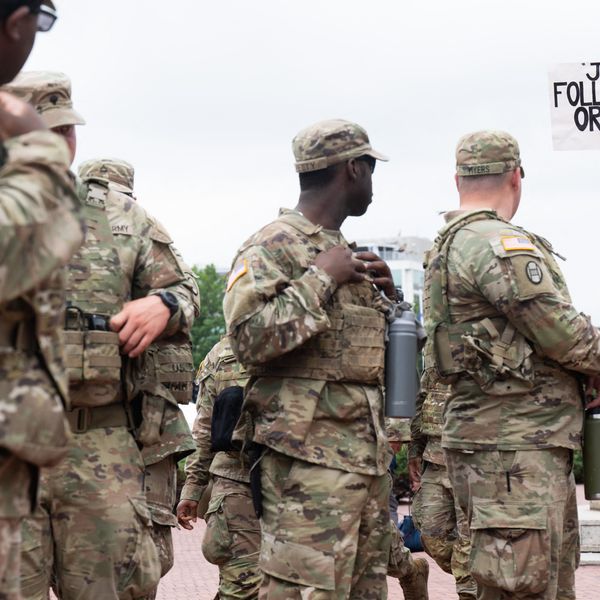
In a social media post, the DoD said it had “received serious allegations of misconduct” against Sen. Mark Kelly (D-Ariz.), a retired US Navy captain who was one of several Democrats with backgrounds in national defense to speak out against the president potentially giving unlawful orders that pit the US military against American civilians.
As a result of the investigation, the DoD said that Kelly could be recalled to active duty to face potential court-martial proceedings for violating the Uniform Code of Military Justice (UCMJ).
“All servicemembers are reminded that they have a legal obligation under the UCMJ to obey lawful orders and that orders are presumed to be lawful,” the DoD said. “A servicemember’s personal philosophy does not justify or excuse the disobedience of an otherwise lawful order.”
In addition to Kelly, Sen. Elissa Slotkin (D-Mich.) and Reps. Chris Deluzio (D-Penn.), Maggie Goodlander (D-NH), Chrissy Houlahan (D-Md.), and Jason Crow (D-Colo.) appeared in the video.
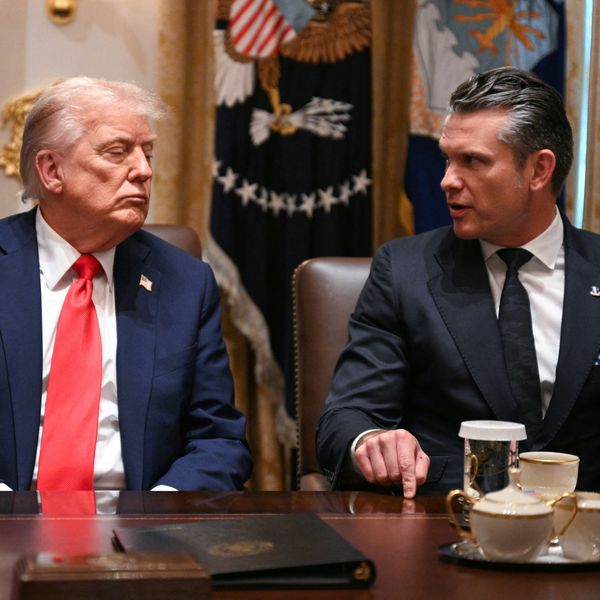
In a follow-up social media post, Defense Secretary Pete Hegseth attacked the Democrats in the video as the “seditious six” and said that Kelly had been singled out for investigation because he was the only member who was still subject to UCMJ given his status as a retired Naval officer.
“As was announced, the Department is reviewing his statements and actions, which were addressed directly to all troops while explicitly using his rank and service affiliation—lending the appearance of authority to his words,” wrote Hegseth. “Kelly’s conduct brings discredit upon the armed forces and will be addressed appropriately.”
Trump has been calling for the prosecution of the six Democrats who appeared in the video for the last several days, and he even went so far as to say in one Truth Social post they deserve to be executed for “SEDITIOUS BEHAVIOR, punishable by DEATH!”
Shortly after the Pentagon announced its investigation into Kelly, he responded with a lengthy social media post in which he defended his service record and vowed not to back down despite threats from the Trump administration.
“If this is meant to intimidate me and other members of Congress from doing our jobs and holding this administration accountable, it won’t work,” he said. “I’ve given too much to this country to be silenced by bullies who care more about their own power than protecting the Constitution.”
Sen. Ruben Gallego (D-Ariz.) responded on X with a much shorter five-word post that read, “Fuck you and your investigation.”
"It should come as no surprise by now that the president who campaigned on keeping the US out of wars and then promptly bombed Iran has now found another conflict in which to embroil the country."
By Jake Johnson
New survey results show that Americans strongly oppose US military action against Venezuela as the Trump administration privately weighs options for land strikes against the South American country—as well as possible covert action targeting the government of President Nicolás Maduro.
The CBS News/YouGov survey, published on Sunday, found that 70% of Americans—including 91% of Democrats and 42% of Republicans—are against the “US taking military action in Venezuela,” and a majority don’t believe a direct attack on Venezuela would even achieve the Trump administration’s stated goal of reducing the flow of drugs to the United States.
The poll also found that a slim majority, 53%, support “using military force to attack boats suspected of bringing drugs into” the US, even as human rights groups and United Nations experts say such attacks—which have killed more than 80 people since early September—are grave violations of US and international law.
The survey data came amid reports that the Trump administration is set to launch “a potentially deadly new phase” of its campaign against Maduro’s government, which has responded to the US president’s threats and military buildup in the Caribbean with a large mobilization of troops and weaponry.
Citing two unnamed US officials, Reuters reported on Sunday that “covert operations would likely be the first part of the new action against Maduro.” The outlet quoted one anonymous official as saying Trump is “prepared to use every element of American power” to achieve his stated goals in the region.
On Monday, as the New York Times reported, the chairman of the US Joint Chiefs of Staff is set to visit “Puerto Rico and one of the several Navy warships dispatched to the Caribbean Sea to combat drug trafficking as the Trump administration weighs the possibility of a broader military campaign against Venezuela.”
Gen. Dan Caine, the top US military officer, has “been a major architect of what the Pentagon calls Operation Southern Spear, the largest buildup of American naval forces in the Caribbean since the Cuban Missile Crisis and the blockade of Cuba in 1962,” the Times added.
Also on Monday, the Trump administration formally designated Maduro and top officials in his government members of a foreign terrorist organization, a move that the White House believes expands US military options in Venezuela.
While polling data has consistently shown that the US public opposes military intervention in Venezuela by significant margins, Republicans in Congress have thus far blocked action to prevent the Trump administration from attacking the country and bombing vessels in international waters without lawmakers’ approval.
Al Jazeera columnist Belén Fernández wrote Sunday that “it should come as no surprise by now that the president who campaigned on keeping the US out of wars and then promptly bombed Iran has now found another conflict in which to embroil the country.”
“And as is par for the course in US imperial belligerence, the rationale for aggression against Venezuela doesn’t hold water,” Fernández added. “For example, the Trump administration has strived to pin the blame for the fentanyl crisis in the US on Maduro. But there’s a slight problem—which is that Venezuela doesn’t even produce the synthetic opioid in question.”
Late last week, a group of House Democrats led by Seth Moulton of Massachusetts announced a new legislative effort aimed at preventing the Trump administration from attacking Venezuela without congressional authorization.
The bill, titled the No Unauthorized Force in Venezuela Act, would bar the White House from spending federal funds on military action against Venezuela absent specific congressional approval.
“We owe our service members clarity, legality, and leadership—not threats, not chaos, and not another unnecessary conflict,” said Moulton. “This legislation draws the line the president refuses to draw. It protects our troops, reasserts Congress’ constitutional role, and ensures we do not sleepwalk into another ill-advised war.”


















No comments:
Post a Comment
Note: Only a member of this blog may post a comment.